VOOZH about

URL: https://www.chevron.com/what-we-do/energy/fuels/renewable-fuels-in-transportation

โ‡ฑ Renewable Fuels in Transportation โ€” Chevron


skip to main content

one future, many routes

As we look toward tomorrow, how can we reduce transportation emissions intensity? Many lower carbon energy solutions, enabled to scale by well-designed policies, are needed to make meaningful progress.


lower carbon solutions for conventional engines

our solution

weโ€™re working on options for how transportation is fueled

Chevron is working to help create a range of renewable fuels as both drop-ins and full substitutions for existing fuels.


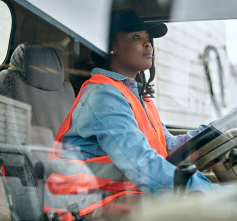
trucking

Lowering carbon intensity of existing fleets with renewable fuels.

๐Ÿ‘ Image

trucking

lowering carbon emissions in commercial fleets with renewable fuels

With increased demand for delivery comes increased emissions โ€”26% of the entire sector. For commercial managers, Chevron can deliver bio-based diesel, renewable natural gas and hydrogen as solutions for existing fleets.

  1. bio-based diesel

    Chevron produces a wide range of high-quality renewable diesel and biodiesel fuels. We aim to grow our renewable fuels capacity to 100,000 barrels per day by 2030.

    learn more

  2. renewable natural gas

    Chevron has invested $28 million in the Adopt-a-Port initiative, which provides carbon-negative renewable natural gas to truck operators serving the ports of Los Angeles and Long Beach.

    learn more

  3. hydrogen

    In 2021, Chevron announced a collaboration with global power and hydrogen technologies leader Cummins. The goal: to help develop commercially viable hydrogen transportation solutions for both heavy- and light-duty vehicles.

    learn more

automotive

Developing lower carbon intensity fuels for the road.

๐Ÿ‘ Image

automotive

developing lower carbon solutions for drivers

SUVs, four-doors, and even two-seaters collectively account for 75% of transportation CO2 emissions. Reducing emissions from road trips and daily commutes takes a variety of solutions, which will include hydrogen and compressed natural gas.

  1. hydrogen

    In collaboration with Iwatani, Chevron plans to construct 30 hydrogen fueling sites in California by 2026. And in 2021, an alliance was formed with Toyota aimed at developing a viable, large-scale hydrogen business.

    learn more

  2. compressed natural gas

    Our plan is to open 30 compressed natural gas stations by 2025. Weโ€™ve also partnered with Mercuria to own and operate their network of 60 compressed natural gas stations across the U.S.

    learn more

aviation

Exploring sustainable aviation fuel.

๐Ÿ‘ Image

aviation

producing sustainable aviation fuel for lower CO2 emissions

Air travel is energy-intense and hard to electrify. It's also the fastest growing source of transportation CO2 emissions. Chevron was one of the first to coprocess biofeedstocks to produce jet fuel with renewable content in the U.S. In 2021, we produced an initial test batch of sustainable aviation fuel.

  1. sustainable aviation fuel

    Chevron partnered with Delta and Google to track sustainable aviation fuel test batch emissions using cloud-based technology. Weโ€™re also part of the Clean Skies for Tomorrow Coalition, which works to accelerate the use of SAF for a reduction in greenhouse gases.

    learn more

marine

Reducing CO2 emissions intensity for maritime.

๐Ÿ‘ Image

marine

developing viable fuel alternatives for fleets and common carriers

Commercial shipping is responsible for almost 90% of global trade. But all those ships release about one billion metric tons of CO2 into the air. Through the use of bio-based diesel, Chevron is developing viable alternatives for fueling seaborne vessels.

  1. bio-based diesel

    Chevron offers a wide range of high-quality renewable diesel, biodiesel and bio-residual fuels. We aim to grow our renewable fuels capacity to 100,000 barrels per day by 2030.

    learn more

rail

Delivering lower rail emissions intensity with bio-based diesel.

๐Ÿ‘ Image

rail

working to fuel the future of rail with renewable fuels

  1. bio-based diesel

    Union Pacific began a pilot by running four locomotives in Southern California purely on Chevron Renewable Energy Groupโ€™s bio-based diesel blend. Itโ€™s the first time in Union Pacificโ€™s history that a train is powered solely by renewable fuels.

    learn more

  2. hydrogen

    Chevron tested with Progress Rail and BNSF Railway to determine the performance of hydrogen fuel for rail. They aim to design and build prototype hydrogen-powered locomotives and develop the fuel technology and infrastructure to make it possible.

    learn more

Chevron is working on offering the lower carbon intensity solutions our customers are seeking. Our relationships, projects and fuel advancements all help drive toward that end: progress today toward transportation for tomorrow.

feedstocks

cultivating lower carbon intensity fuels

Providing high-quality, lower carbon intensity fuels as part of the energy mix on energy-intense feedstocks. We have used 15 different types of feedstock and continue to work alongside agricultural and other suppliers and innovators to develop new and novel sources of feedstock.

card 1 of 1,

soybean oil

click for more content
Soybean oil is one example of a oil seed crop that is used for various industrial applications and as well as to produce bio-based diesel. As part of a joint venture with Bunge, Chevron is working to establishing a reliable supply chains from farmer to fueling stations with a variety of oil seed crops.
card 1 of 1,

peanuts

click for more content
Theyโ€™re not only good for trail mix. Peanuts helped revolutionize the transportation sector, with their oil fueling the worldโ€™s first diesel engine. Today, Chevron is collaborating with scientists at Texas A&M AgriLife to explore again using peanut oil as a renewable feedstock.
card 1 of 1,

inedible animal fats

click for more content
Various inedible animal fats, like beef tallow, pork grease, chicken fat and others can be used to create renewable fuels.
card 1 of 1,

distillers corn oil

click for more content
During corn ethanol production, corn is fermented and the ethanol is boiled off. The remaining distilled mixture can be processed into one of the lowest-rated carbon intensity feedstocks available. We then use it to produce bio-based diesel.
card 1 of 1,

cover crops

click for more content
Chevron has invested in CoverCress Inc. to develop a lower carbon intensity feedstock from cover crops that can be grown between the normal planting rotations of corn and soy. Chevron and Bunge acquired Chacraservicios, which has developed proprietary strains of camelina and provides another cover crop option.
card 1 of 1,

used cooking oil

click for more content
A use for fryer oil that goes way beyond making fries and other foods. The product is made up of a variety of vegetable oils and animal fats. Used cooking oil that used to go to landfills is instead collected as a feedstock to create bio-based diesel.
card 1 of 1,

canola oil

click for more content
Similar to soybean oil, canola oil is a feedstock that comes from the seeds of the canola plant. It can be used in oleochemicals for various industrial applications. Chevon uses it to produce high-quality bio-based diesel.
card 1 of 1,

novel feedstocks

click for more content
Chevron has invested in other new and novel sources of feedstocks including Pongamia, algae and even insect larva and continues to evaluate new areas of potential supply.

policy position

progress toward a lower carbon road ahead

We support policies that guide the scaling of lower carbon intensity solutions for the transportation sector. Lowering transportation emissions intensity helps put us on the road to a lower carbon future.