
The 9 Foundations of a Healthy Building
The idea of a healthy building has been made too complicated. We know how to make buildings healthy. There are a few simple foundations.


Ventilation
Meet or exceed local outdoor air ventilation rate guidelines to control indoor sources of odors, chemicals and carbon dioxide. Filter outdoor and recirculated air with a minimum removal efficiency of 75% for all particle size fractions including nano. Avoid outdoor air intakes at street level or near other outdoor sources of pollutants. Commission systems, conduct regular maintenance and monitor ventilation in real-time to prevent and resolve ventilation issues promptly.

Air Quality
Choose supplies, office supplies, furnishings and building materials with low chemical emissions to limit sources of volatile and semi-volatile organic compounds. Check for legacy pollutants such as lead, PCBs and asbestos. Limit vapor intrusion by using a vapor barrier. Maintain humidity levels between 30-60% to mitigate odor issues. Conduct annual air quality testing. Respond to and evaluate occupant concerns.

Thermal Health
Meet minimum thermal comfort standards for temperature and humidity and keep thermal conditions consistent throughout the day. Provide individual level thermal control, where possible. Survey the space and occupants regularly to identify zones that underperform. Respond to and evaluate occupant concerns. Commission systems, conduct regular maintenance and monitor temperature and humidity in real-time to prevent and resolve thermal comfort issues promptly.

Moisture
Conduct regular inspections of roofing, plumbing, ceilings and HVAC equipment to identify sources of moisture and potential condensation spots. When moisture or mold is found, immediately address moisture source and dry or replace contaminated materials. Identify and remediate underlying source of the moisture issue.

Dust & Pests
Use high efficiency filter vacuums and clean surfaces regularly to limit dust and dirt accumulation, which are reservoirs for chemicals, allergens, and metals. For homes, take off shoes at the door to limit tracking in dirt. Develop an integrated pest management plan with a focus on preventative measures such as sealing entry points, preventing moisture buildup and removing trash. Avoid pesticide use, if possible. Train building management how to respond to pest problems and complaints.

Safety & Security
Meet fire safety and carbon monoxide monitoring standards. Provide adequate lighting in common areas, stairwells, emergency egress points, parking lots and building entryways. Manage points of egress and the physical perimeter. Be situationally aware through video monitoring, interactive patrols and incident reporting. Maintain a holistic emergency action plan and mechanism for communication to building occupants.

Water Quality
Meet the U.S. National Drinking Water Standards at point-of-use. Test water quality regularly. Install water purification system for removal of contaminants, if necessary. Ensure residual disinfectant levels are sufficient to control microbes, but not in excess. Prevent water stagnation in pipes.

Noise
Protect against outdoor noises such as traffic, aircraft and construction. Control indoor sources of noise such as mechanical equipment, office equipment and machinery. Provide spaces that minimize background noise to 35db for unoccupied work and learning areas, and a maximum reverberation time of 0.7 seconds.

Lighting & Views
Provide task lighting for comfortable viewing. Provide direct lines of sight to exterior windows from all workstations. Provide as much daylighting and/or blue-enriched lighting as possible without introducing glare. Incorporate nature and nature-inspired design indoors.
How it all started
The idea for “The 9 Foundations of a Healthy Building” arose from many interactions with real estate professionals, building owners, hospital administrators, facilities directors, homeowners, and academic colleagues over the past several years.
In the discussions, we realized that we, the public health community, have failed to translate our research into actionable information. The richness of the public health literature was invisible to key decision-makers.
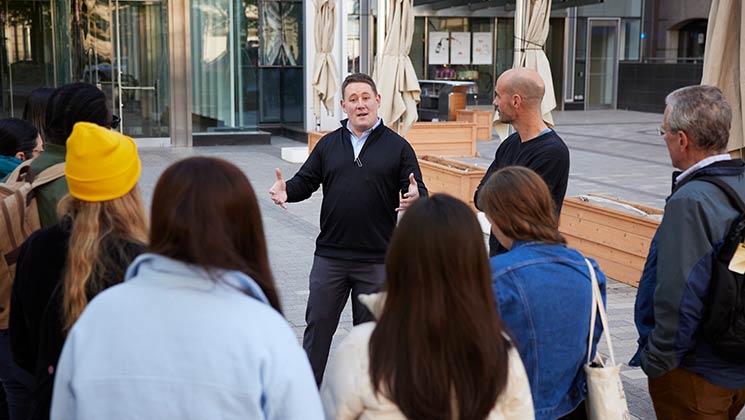

Moreover, in these presentations and meetings, we often heard: “Your research is exciting, but I can’t take a scientific paper into my meeting and convince a building owner or manager to do things differently. I need a short summary.” Thus, the 9 Foundations of a Healthy Building project was born.
Interested in learning more?
Download our free report:
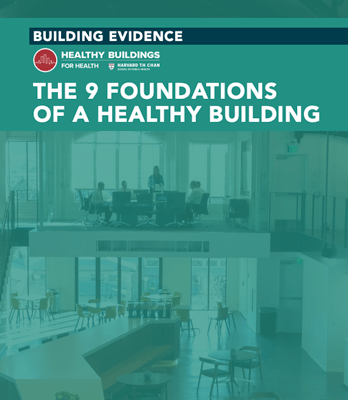
“The 9 Foundations of a Healthy Building”.
Join the Healthy Buildings Movement
Buildings represent one of the greatest public health opportunities of this century. Help us turn this opportunity into reality and join the Healthy Buildings Movement today! A gift to the Healthy Buildings Program is a gift to improve the lives of all people, in buildings and beyond, everywhere, every day.
Support Our Research