

Quick Take
- Prospective owners must manage a 100-pound canine that demands a 60-minute minimum of daily exercise.
- The Siberian Husky line triggers zinc-responsive dermatosis, a condition linked to skin failures.
- Despite high intelligence, these dogs fail obedience training by adopting a contradictory stubbornness found in the Samoyed.
- The Alusky remains essential for search and rescue, a scouting process necessary due to its sled-pulling history.
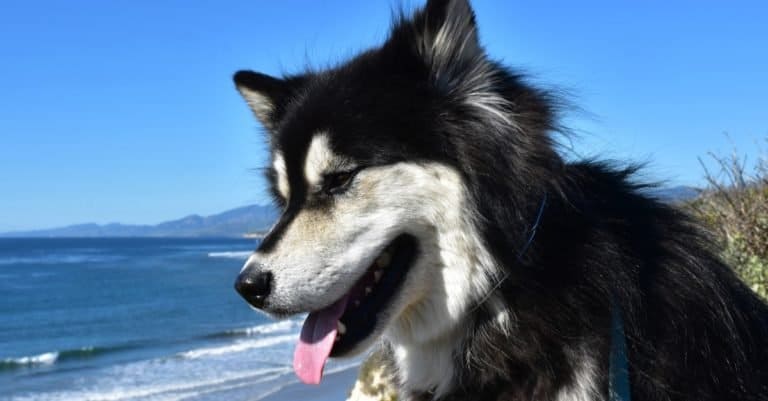
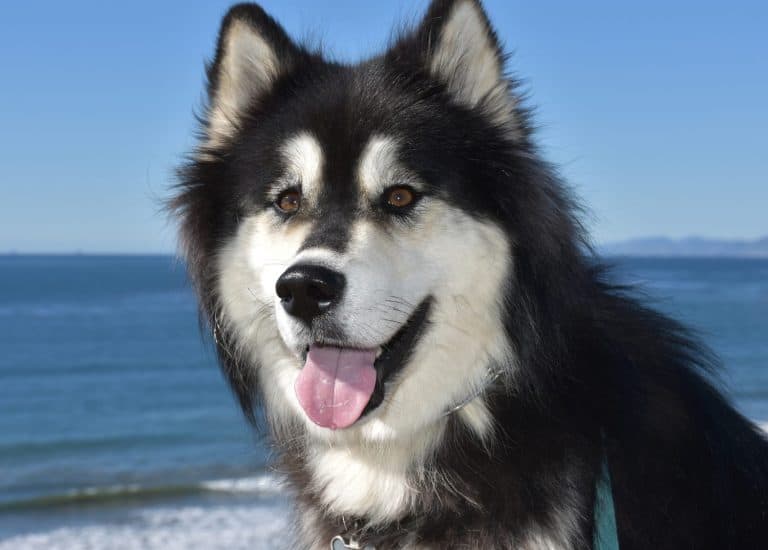
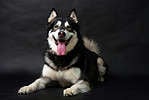
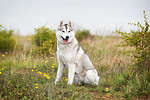
Breed a Siberian Husky with an Alaskan Malamute, and you get another dog that loves the cold weather! Specifically, you have a hybrid dog known as an Alusky. Aluskies are friendly, social dogs with a lot of energy to spare. These dogs are strong-willed and often used for pulling carts and sleds like their well-known parents. They need to be where the action is and suffer from separation anxiety when left alone. Socialized Aluskies are good with kids and other dogs.
3 Pros and Cons of Owning an Alusky
| Pros | Cons |
|---|---|
| Fun-Loving Aluskies love to run and play with their owners and are always up for a fun game of fetch, chase, tag, or hide-and-seek. | Needs Daily Exercise Aluskies have a lot of energy and need at least 60 minutes of exercise a day to stay healthy. |
| Good With Kids Socialized Aluskies are good with children. But small children should be watched around this canine due to its large size and tendency to get overexcited. It could accidentally knock a small child off balance. | High Maintenance Grooming Routine It needs to be brushed at least three times a week to maintain its appearance. |
| Affectionate Though these crossbreed dogs need plenty of exercise, they like to cuddle on the sofa with family members as well. | A Cold-Weather Dog This dog is not appropriate for someone who lives in an area with humid, hot weather. It thrives in an average to cold climate. |
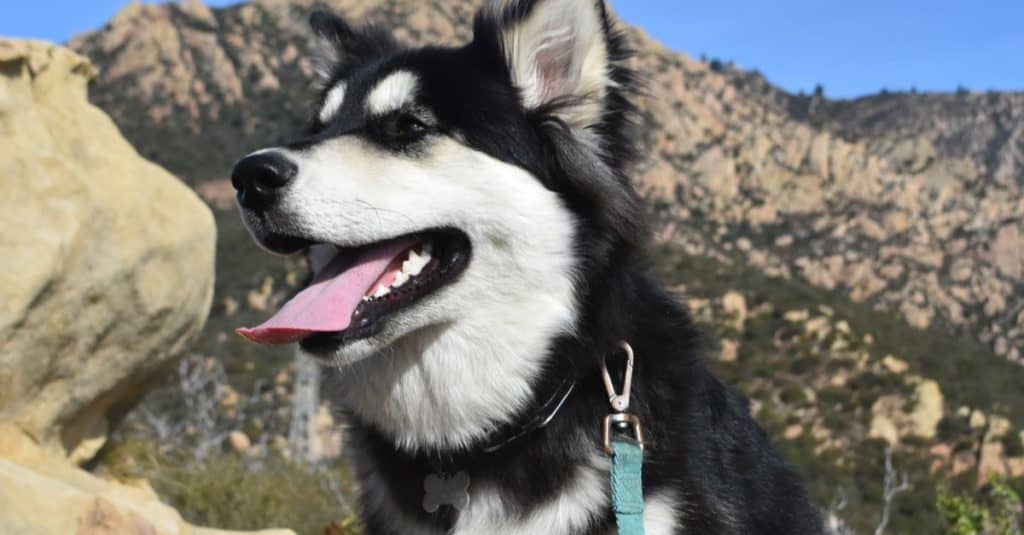
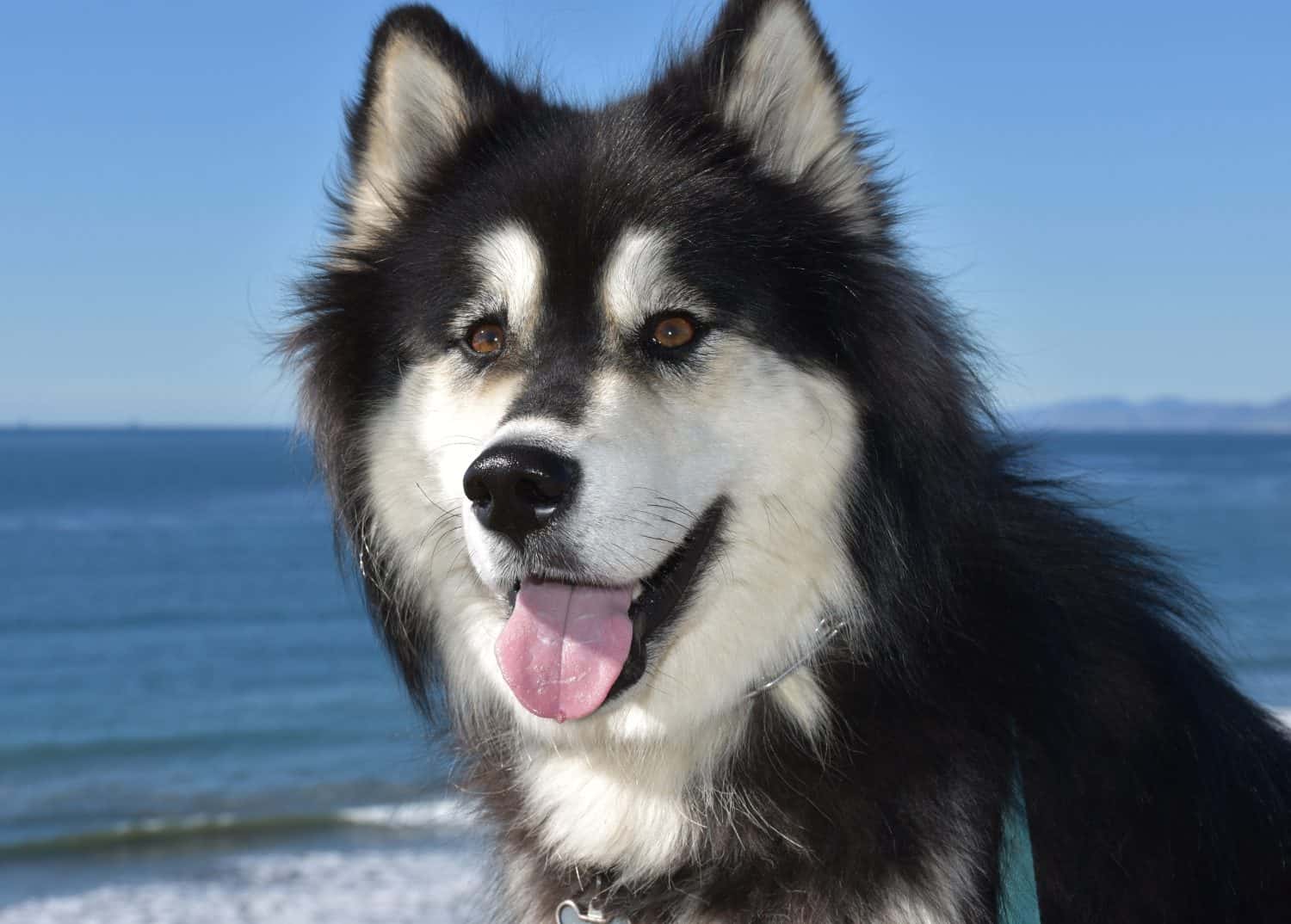
Aluskies love to run and are always ready for a fun game of fetch or chase.
©DejaVuDesigns/Shutterstock.com
Evolution and Origins
Though it’s uncertain exactly when the Alusky was first developed, this hybrid was created by breeders in the U.S. who wanted a dog with the best qualities of both purebred parents. The Alaskan Malamute and Siberian Husky are two of the three breeds of the Alaskan sled dog (the third being the Samoyed).
The Alaskan Malamute originated in the Arctic region of Alaska, bred by the Mahlemut Inuits to hunt, haul heavy loads over long distances, and guard their homes. In the late 1800s, during the gold rush, these dogs pulled sleds carrying prospectors’ supplies and tools. The breed was recognized by the American Kennel Club in 1935. While the Alaskan Malamute continues to be used as a sled dog, it is also a popular family pet.
Siberian Huskies were first present in the 19th century in Siberia, used by the Chukchi people as working sled dogs and pets. They were known for winning sledding races in the early 1900s but gained much more attention in 1925 when a sled dog team — led by Balto, likely the most famous Siberian Husky in history — delivered 300,000 units of diphtheria antitoxin to Nome, Alaska, ending its diphtheria epidemic. Siberian Huskies were recognized by the American Kennel Club in 1930.
Apart from being family pets, Aluskies today work as sledding, carting, and racing dogs, transporting freight, and assisting in search and rescue missions.
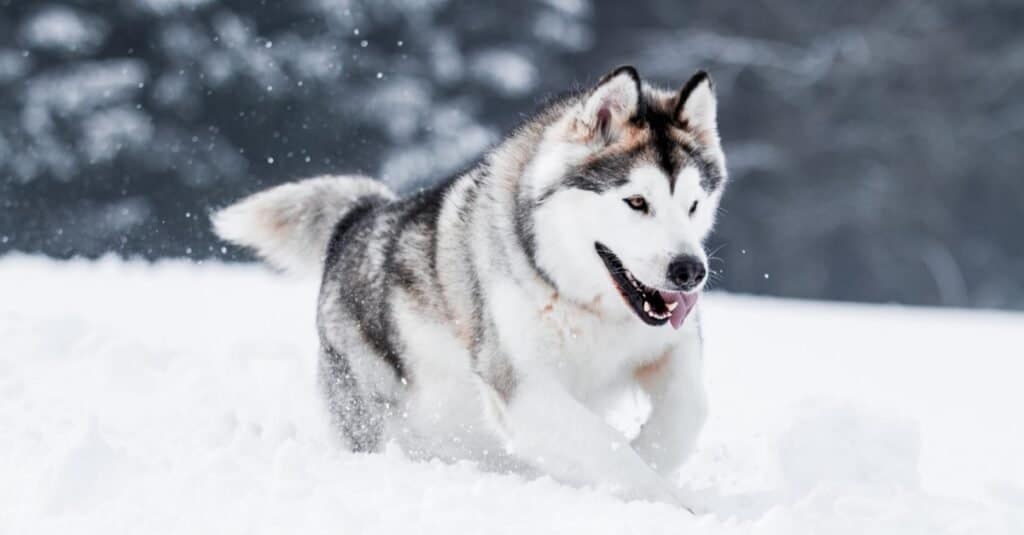
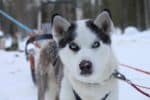
The Alusky’s parent breed, the Alaskan malamute, is a snow dog of great stamina and strength.
©Aneta Jungerova/Shutterstock.com
Size and Weight
This dog with its thick, double coat can grow to a height of 28 inches and weigh as much as 100 pounds, full-grown. Alusky puppies that are 7 weeks old weigh around 12 pounds. These crossbreed dogs are considered full-grown between 12 and 15 months old.
Common Health Issues
Aluskies have some common health issues. One of them is hip dysplasia. Essentially, hip dysplasia means a dog has a dislocated hip joint. Limping, hopping, and awkward running are all symptoms. Hip dysplasia is hereditary and can be passed down by either an Alaskan Malamute or a Siberian Husky. Responsible breeders who know they have a purebred dog with hip dysplasia won’t breed it. Medications and changes in an exercise routine are both treatments for this condition.
A second common health issue of this hybrid dog is cataracts. This is a clouding of the lens that can cause partial and sometimes total blindness. Surgery is a treatment for cataracts that interfere with a canine’s daily activities.
Ear infections are another health issue. This dog has thick fur around its ears. Dirt, dust, and debris can build up in the ear, causing a bacterial infection. A vet can prescribe medication to clear up this type of infection. Also, an owner can make cleaning their Alusky’s ears a part of the grooming routine in an effort to prevent infections.
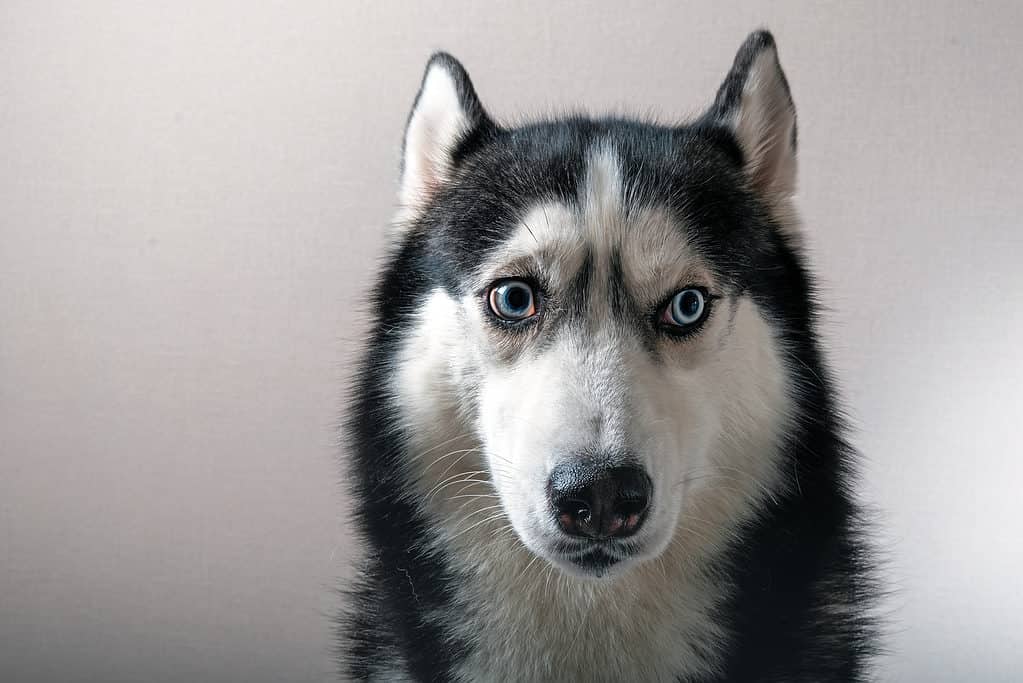
Parent breed the Siberian Husky can pass down hip dysplasia to an Alusky.
©Konstantin Zaykov/Shutterstock.com
Temperament and Behavior
Alusky owners are very likely to use the word friendly when describing the personality of their pooch. These canines are glad to see anyone who stops by the household. Their behavior is playful and energetic. Aluskies love to run, jump, and explore. They also love to dig, which is why it’s best to have a fence that’s planted deep in the ground to prevent any escapes.
Loyalty is one of the most significant traits of this canine. A new owner will quickly notice this dog following them wherever they go. This dog is ideal for an active family that wants an equally energetic pet.
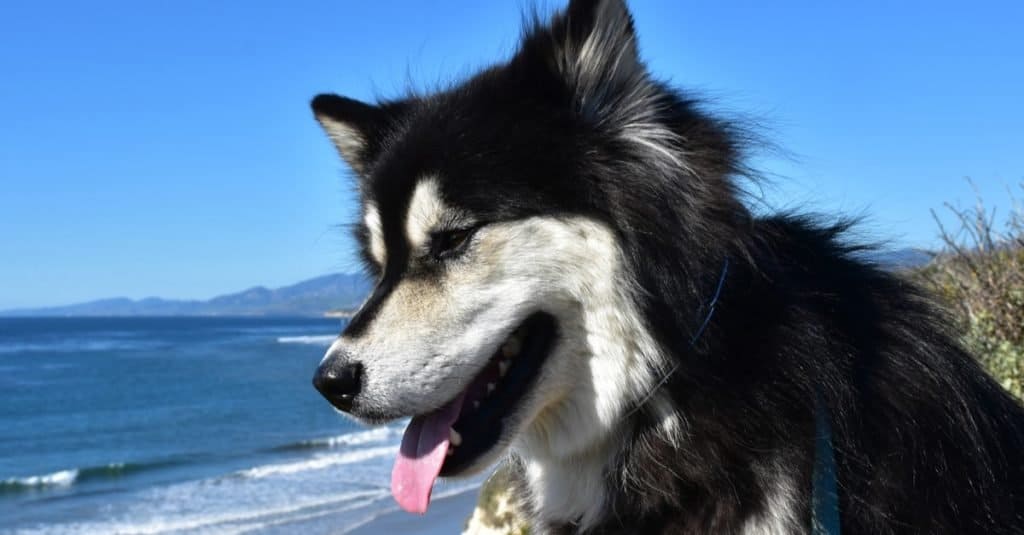
Aluskies are friendly and playful.
©DejaVuDesigns/Shutterstock.com
How to Take Care of an Alusky
In order to take great care of an Alusky puppy or adult dog, it’s best to learn about its diet, exercise, grooming, and healthcare requirements. That way, an owner has the information necessary to make wise decisions when caring for this pooch. Of course, Alusky puppies and adult dogs need different types of care. Here are some factors to keep in mind.
The Best Dog Food
Giving Alusky puppies and adult canines the proper diet may help to head off various common health conditions. Consider the nutrients involved in this dog’s daily diet:
Alusky puppy food: Chicken or fish are excellent sources of high-quality protein for this puppy. Protein contributes to a healthy coat, joints, muscles, and cartilage, important for a dog prone to hip dysplasia. Fat is a must in this puppy’s diet to supply them with enough energy to learn and explore. Omega-3 fatty acids contribute to a strong heart and a healthy immune system. Vitamin A supports healthy eyes, and calcium builds strong teeth and bones.
Alusky adult dog food: Protein in the form of high-quality fish, poultry, or meat maintains strong muscles and joints in this large dog. A limited amount of fat provides an adult Alusky with the energy it needs without adding extra pounds to its frame. Vitamin C serves as an antioxidant that decreases inflammation. Vitamin A in an adult Alusky’s diet helps to maintain eye health. Calcium keeps this pet’s teeth and bones strong as it grows older. The fiber in their diet helps these dogs maintain proper digestion.
Maintenance and Grooming
How much does an Alusky shed? Well, both its Siberian Husky and Alaskan Malamute parents are big shedders, so it should come as no surprise that Aluskies are too. Their beautiful double coat keeps these snow dogs warm and dry. This amount of shedding requires an owner to brush their Alusky at least three times a week.
One of the most valuable grooming tools this dog owner can have is a slicker brush. This brush removes loose and dead hair from its coat. A brush with soft boar’s hair bristles can be used to stir up the natural oils in this canine’s coat. After finishing with the soft brush, your Alusky’s coat of black, brown, white, silver, or gray will look shiny and healthy.
Another essential step in an Alusky’s grooming routine is to clean its ears. Dust, mud, and dirt can become trapped in the hair around its ears, possibly leading to an ear infection. Using a soft cloth, carefully clean the sensitive skin inside the dog’s ears with a cleaning solution designed for this purpose. Plus, their nails need to be trimmed about once a month.
Some Aluskies have a skin condition called zinc-responsive dermatosis. This is a common issue with the Siberian Husky as well. Symptoms are redness, bald patches, and scaly skin. This condition is an indication that the dog doesn’t have enough zinc in its diet, or its body is not absorbing it in the right way. A veterinarian can help to resolve this issue.
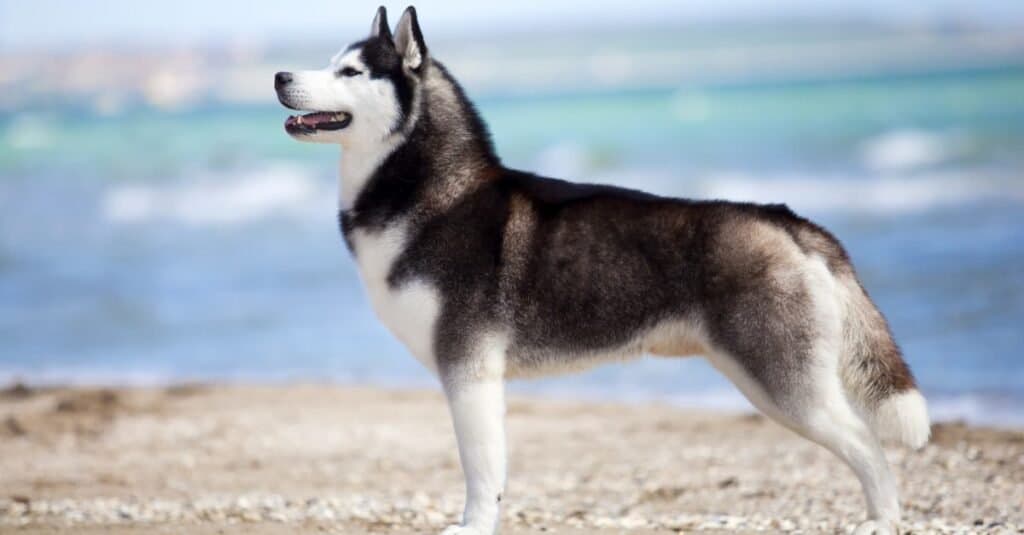
The Alusky is a big shedder like its parent breed, the Siberian Husky.
©Sbolotova/Shutterstock.com
Training
Aluskies are intelligent dogs, but they can be somewhat stubborn during training. They are similar to the Samoyed, another snow dog that has a reputation for being smart, but stubborn during obedience training. Patience and lots of positive words are needed during a training session. They will learn if an owner puts in the time and effort.
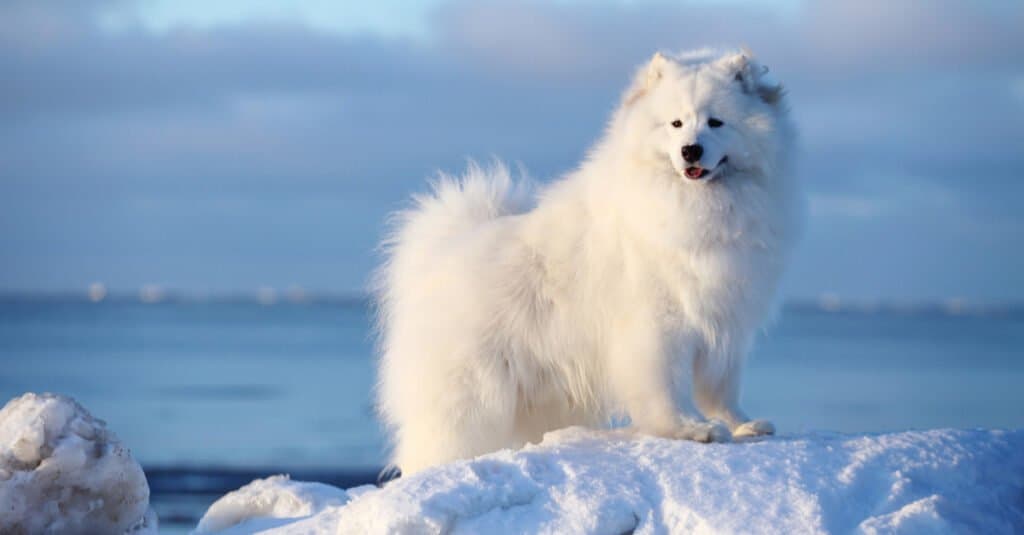
Aluskies are similar to Samoyeds in the stubbornness they show during training.
©Ilya Barmin/Shutterstock.com
Exercise
An Alusky needs at least 60 minutes of exercise each day. After all, these dogs are known for their sled-pulling abilities! If you don’t have a sled that your Alusky can pull, they love running on trails in the woods, playing in a dog park, or exploring a nearby field. Keep in mind that these are cold-weather dogs. Trying to jog with your dog or give it strenuous exercise on a hot and humid day can be dangerous to this canine. It can become overheated very quickly.
These dogs are large in size, so they are not suitable pets for people who live in apartments.
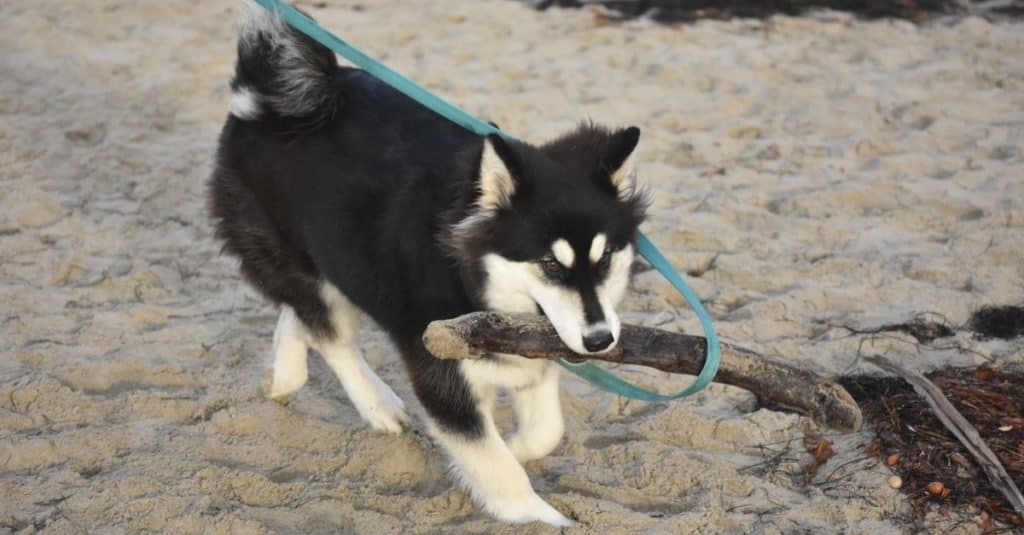
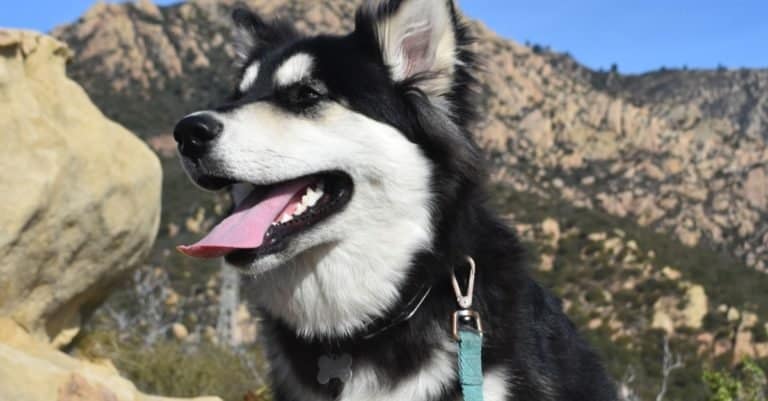
Aluskies need daily exercise and love exploring different environments.
©DejaVuDesigns/Shutterstock.com
Puppies
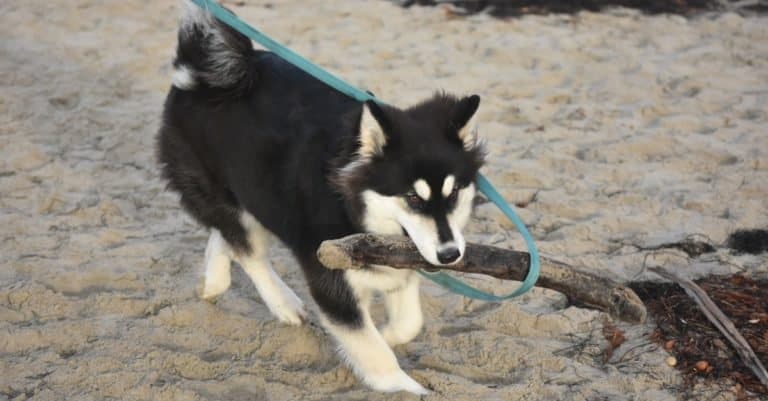
Aluskies are large puppies that grow into large dogs. So, giving them a spacious, enclosed area to explore is necessary for this pup to get its energy out and build muscle at the same time.
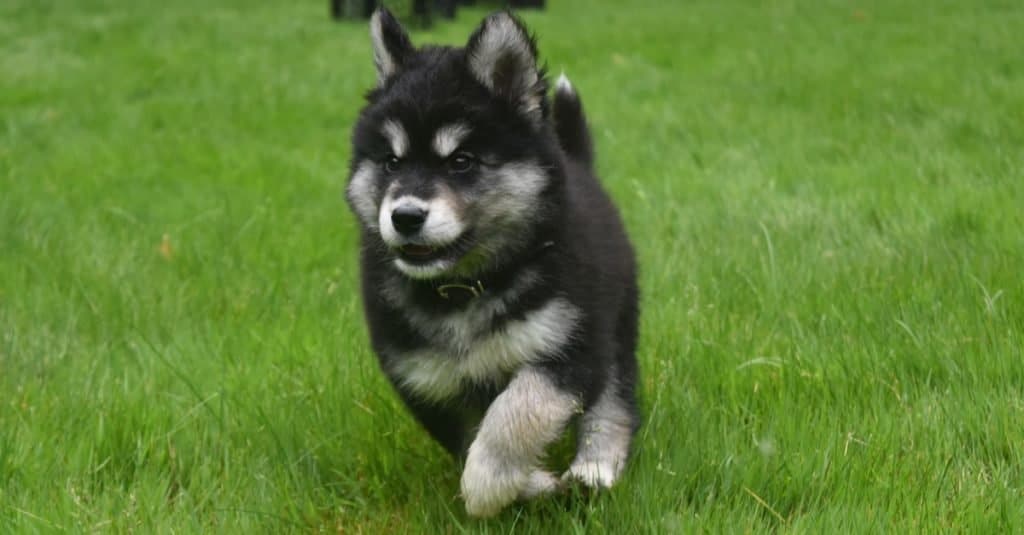
Even when the Alusky is a puppy, it is a big dog.
©DejaVuDesigns/Shutterstock.com
Alusky and Children
A socialized Alusky is likely to be good with children. One thing to remember is that this dog is big in size. They love to get excited and start racing around. A toddler or small child who steps in its path may get knocked over in all the excitement. So, supervising this dog with small kids is certainly recommended.
Dogs Similar to the Alusky
Some dogs similar to the Alusky include the Samoyed, the Keeshond, and the Collie.
- Samoyed: Samoyeds and Aluskies have stubborn sides when it comes to obedience training. In terms of size, a Samoyed is shorter and lighter than an Alusky.
- Keeshond: Keeshonds and Aluskies have friendly, loyal temperaments. Both dogs can have a coat that includes a mixture of many of the same colors, including black, cream, dark gray, silver, brown, and white. Keeshonds are smaller in size.
- Collie: Collies and Aluskies have friendly temperaments and are intelligent. However, Collies weigh less than Aluskies.
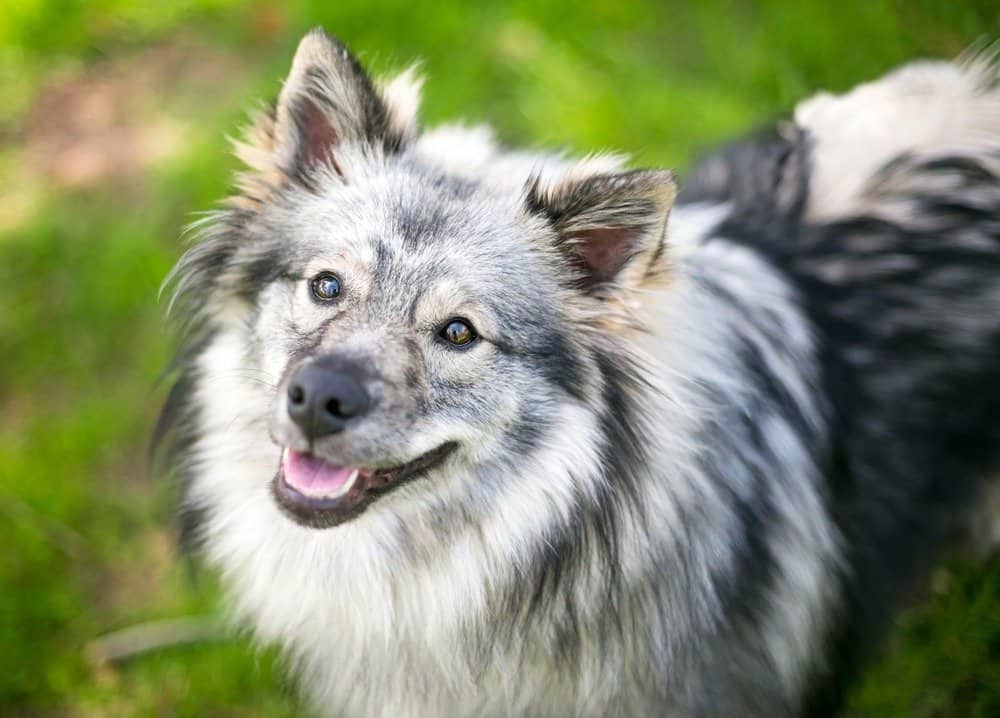
A Keeshond is similar to an Alusky but smaller.
©Mary Swift/Shutterstock.com