A
Species Profile

Apple Moth

Epiphyas postvittana

Tiny leafroller, huge orchard impact
Jordan Roper/Shutterstock.com

Apple Moth Distribution

Click a location to explore more animals from that region

Invasive Species
Loading map...

At a Glance

Wild Species
Also Known As LBAM, apple leafroller, Australian leafroller
Diet Herbivore
Activity Crepuscular+
Lifespan 70 years
Status Not Evaluated
Did You Know?

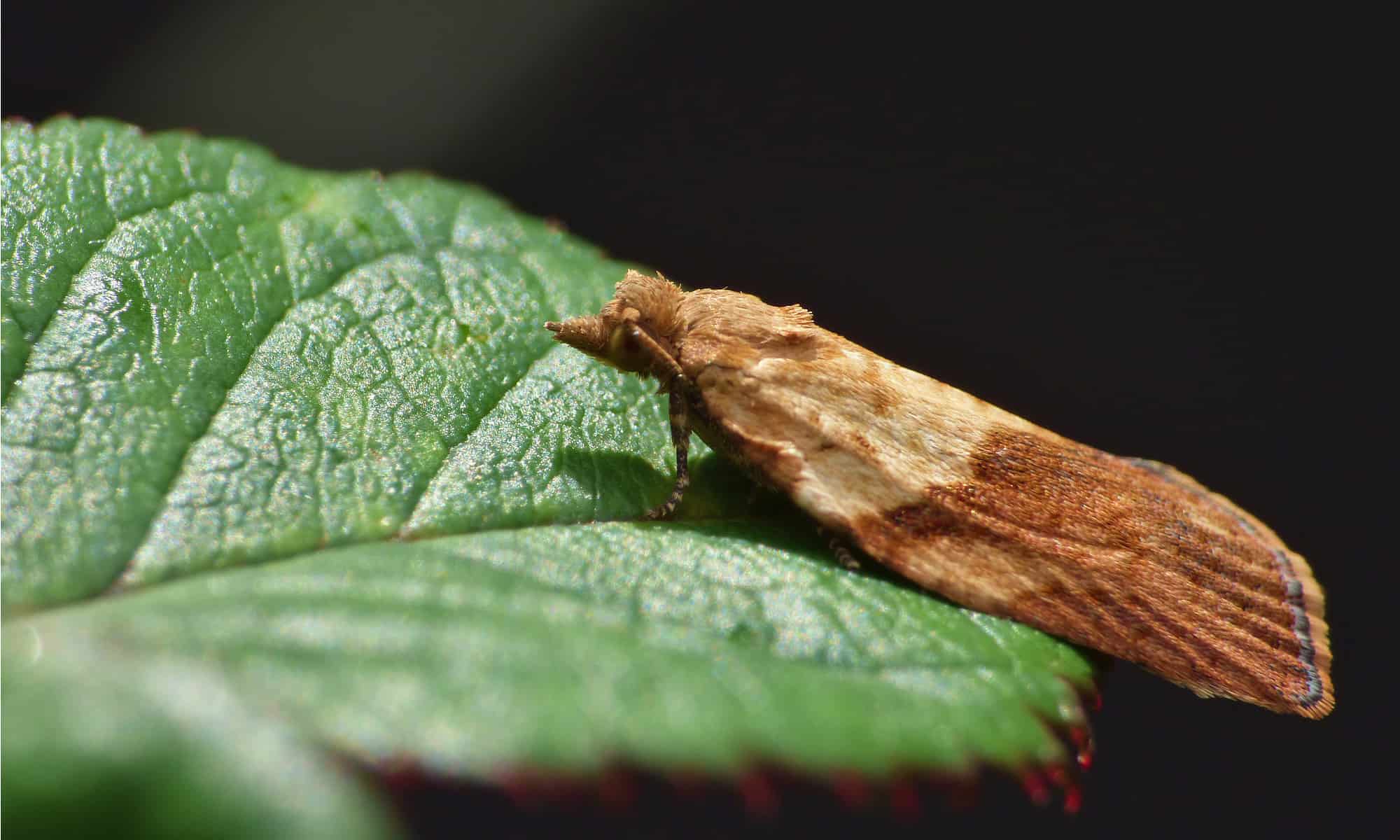
Adults are small: wingspan typically ~1.6-2.5 cm; the forewing pattern is variable but often shows a darker median band typical of many Tortricidae leafrollers.

Scientific Classification

A tortricid leafroller moth; the caterpillars roll and web leaves and may feed on buds, flowers, and fruit surfaces of many host plants, including apple.

Kingdom
Animalia
Phylum
Arthropoda
Class
Insecta
Order
Lepidoptera
Family
Tortricidae
Genus
Epiphyas
Species
Epiphyas postvittana

Distinguishing Features

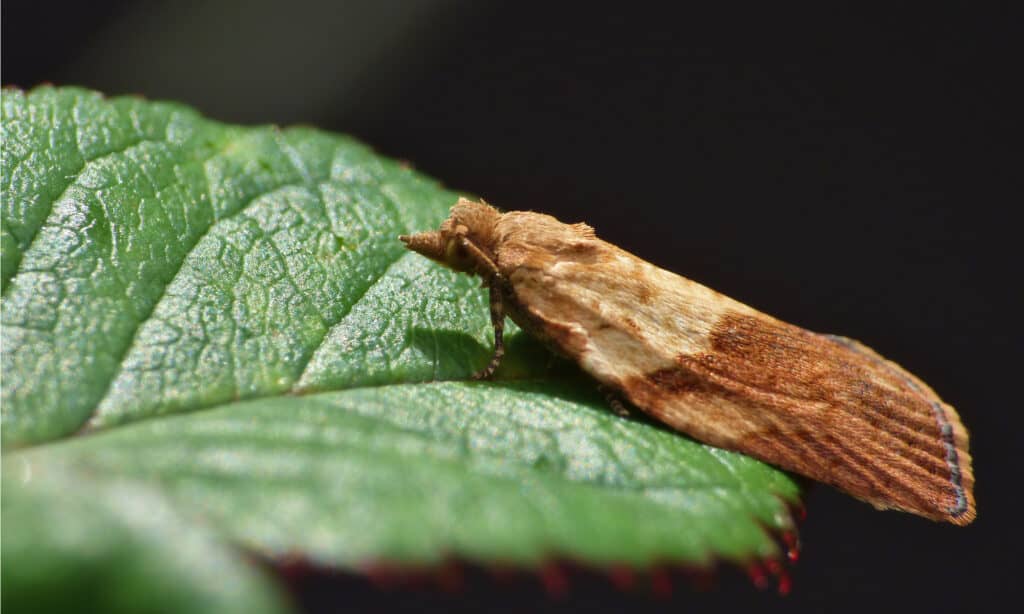
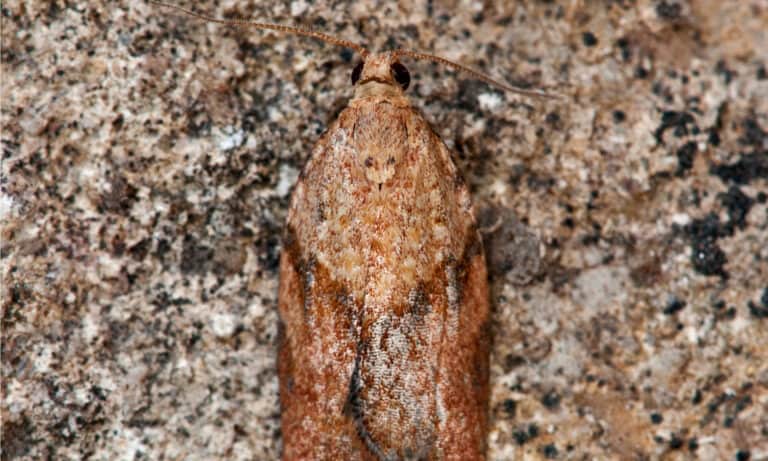
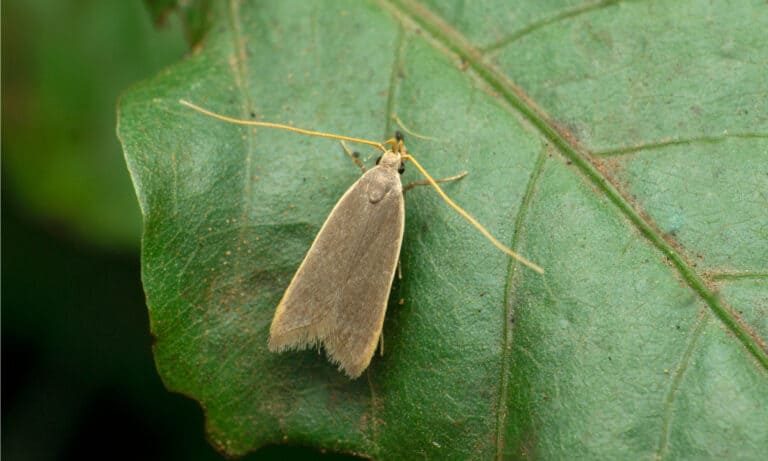
  • Adult: small moth with variable light-brown/tan forewings, often with darker mottling/banding typical of leafrollers (Tortricidae).
  • Larva: greenish caterpillar that lives in a rolled or webbed leaf shelter ('leafroller').
  • Feeding signs: rolled leaves tied with silk; superficial fruit damage/scarring in orchards.

Did You Know?

Adults are small: wingspan typically ~1.6-2.5 cm; the forewing pattern is variable but often shows a darker median band typical of many Tortricidae leafrollers.

Larvae are the damaging stage: caterpillars tie/roll leaves with silk and feed while concealed, often scarring fruit surfaces when shelters touch fruit.

A single female can lay eggs in flat, overlapping "shingle-like" masses; published reports commonly note total fecundity in the hundreds of eggs per female under favorable conditions.

Development is strongly temperature-dependent: in mild climates it can complete multiple generations per year (often ~2-4), while cooler areas may have fewer; overwintering commonly occurs as larvae.

It is notably polyphagous-recorded from hundreds of host plant species across many families-so it can persist even when apples aren't available.

Monitoring and control often rely on species-specific sex-pheromone lures (identified for E. postvittana and widely used in traps) to detect flights and time management.

Its pest status is as much about trade as biology: detections can trigger quarantine actions and export restrictions for fruit and nursery stock.

Unique Adaptations

  • Silk-based "portable refuge": leaf rolling/webbing creates a protected microhabitat that reduces predation and desiccation while letting the larva feed with minimal exposure.
  • Polyphagy (broad host range): physiological flexibility to feed on many unrelated plants helps the species persist in orchards and surrounding vegetation and aids invasiveness.
  • Camouflage through pattern variability: the adult's light-brown, variably banded forewings resemble dead leaves/bark, improving concealment in orchards and gardens.
  • Pheromone-guided mate finding: highly specific sex-pheromone communication enables long-distance location of mates at low population densities-also making pheromone disruption/monitoring effective management tools in Tortricidae.
  • "Leafroller" body plan: like many Tortricidae, larvae have strong chewing mandibles and behaviorally reinforced shelter-building rather than relying on speed or toxins.

Interesting Behaviors

  • Leaf-rolling shelter building: larvae silk-tie leaf edges or adjacent leaves and feed from inside the rolled/webbed "hideout," emerging mostly to expand the shelter or move to new foliage.
  • Fruit-surface feeding: larvae may feed on buds, flowers, and the skin of developing fruit-often where leaves are webbed against the fruit-leading to cosmetic scarring that downgrades market value.
  • Nocturnal adult activity: adults are typically most active at dusk/night; males fly to female pheromone plumes, a behavior exploited by pheromone-baited monitoring traps.
  • Host-switching across seasons: because it can use many plant species, populations can move among orchard trees, hedgerows, ornamentals, and weeds as different hosts flush new growth.
  • Typical tortricid resting posture: adults hold wings roof-like over the body, blending into bark/leaf litter-one reason leafroller moths are often noticed only when trapped or reared from rolled leaves.

Cultural Significance

Lightbrown apple moth (Epiphyas postvittana) is a key pest in apple farming and biosecurity. It drives leafroller monitoring with pheromone traps, fruit checks, and pest management. When introduced, it can cause quarantines, trade limits, eradication efforts, and harm to economies and shipping.

Myths & Legends

Naming origin as a practical "orchard nickname": the common name 'lightbrown apple moth' reflects growers' experience-an inconspicuous brown moth whose hidden larvae roll leaves and blemish apples-turning a field identification cue into a lasting name.

The Lightbrown Apple Moth (Epiphyas postvittana) became a biosecurity symbol, showing how global trade moves tiny plant hitchhikers and sparking public fights over getting rid of it versus long-term control.

Lightbrown Apple Moth (Epiphyas postvittana) links to moth old stories about night signs and candlelight, and in orchards a sudden rush in traps signals a new leafroller flight and need for action.

Gardeners often teach a simple rule: "rolled leaves mean something lives inside." This useful story helps people find leafroller caterpillars, like the Lightbrown Apple Moth (Epiphyas postvittana), in silk shelters.

Conservation Status

NE Not Evaluated

Has not yet been evaluated against the criteria.

Population Unknown

Life Cycle

Birth 35 larvas
Lifespan 70 years

Lifespan

In the Wild 42โ€“270 years
In Captivity 38โ€“150 years

Reproduction

Mating System Polygynandry
Social Structure Solitary
Breeding Pattern Transient
Fertilization Internal Fertilization
Birth Type Internal_fertilization

Lightbrown apple moth (Epiphyas postvittana) females release a sex pheromone to call males, who fly in. Courtship is brief. Adults mate multiple times (polygynandry) with internal fertilization and spermatophore transfer. Eggs are laid on host plants; no care.

Behavior & Ecology

Social No standard group name Group: 1
Activity Crepuscular, Nocturnal
Diet Herbivore Apple (Malus domestica) foliage and fruit surface (commonly recorded host; species is a major apple pest)
Seasonal Hibernates

Temperament

Non-aggressive; no territorial defense reported.
Larvae are sheltering/cryptic: remain within rolled leaves and retreat when disturbed.
Adults are evasive and primarily focused on mate-finding and oviposition rather than interaction with conspecifics.

Communication

None known No acoustic signaling reported for this species
Chemical (primary): female sex-pheromone calling; the major component widely reported for Epiphyas postvittana is (E)-11-tetradecenyl acetate (E11-14:Ac), used for long-range attraction of males.
Tactile/contact cues during courtship and copulation Short-range antennal and body contact typical of moth mating
Silk-mediated shelter construction by larvae Environmental modification rather than true signaling, but it can incidentally affect conspecific spacing by creating/occupying rolled-leaf microhabitats
Plant- and host-odor mediated orientation: adults and larvae use host-plant chemical cues for habitat/feeding/oviposition site selection, which indirectly structures local aggregation patterns when hosts are patchy.

Habitat

Biomes:
Temperate Forest Mediterranean Temperate Grassland Temperate Rainforest Tropical Rainforest Tropical Dry Forest
Terrain:
Coastal Island Plains Hilly Valley
Elevation: Up to 3937 ft

Ecological Role

Polyphagous herbivorous leafroller (phytophagous insect) and economically important horticultural pest; also a prey/host resource in food webs.

Transfers plant biomass to higher trophic levels (food for predators such as spiders and predatory insects) Hosts parasitoids (e.g., hymenopteran parasitoids) that contribute to natural biological control Influences plant fitness and crop quality through foliar and fruit-surface damage (ecosystem disservice in managed systems)

Diet Details

Other Foods:
Apple Grapevine leaves and fruit clusters Citrus Stone fruits Pear Kiwi Tea Blueberry Strawberry Ornamental broadleaf hosts +4

Human Interaction

Domestication Status

Wild

The lightbrown apple moth (Epiphyas postvittana) is a wild moth with no domestication history. People rear it in labs for quarantine, pheromone, host use research, and monitoring, including mating disruption studies. Tortricidae moths like this are orchard and vineyard pests, quarantine risks via plant trade, integrated pest management (IPM) targets, and occasional nuisances attracted to lights.

Danger Level

Low
  • Does not bite or sting; no venom; primary risk is indirect (economic/agricultural damage).
  • Potential mild allergy/asthma irritation from moth scales or contact with larval silk/frass in sensitive individuals (non-specific lepidopteran exposure).
  • Main human health risk is indirect exposure associated with control efforts (e.g., pesticide use in affected crops).

As a Pet

Not Suitable as Pet

Legality: Lightbrown Apple Moth (Epiphyas postvittana) is often regulated as a quarantine pest outside its native range. Moving or keeping live moths across state or national borders may need permits or be illegal. Check local rules.

Care Level: Moderate

Purchase Cost: Up to $50
Lifetime Cost: $20 - $200

Economic Value

Uses:
Agricultural pest (orchards, vineyards, ornamentals) Quarantine/regulatory significance IPM/pheromone monitoring and mating-disruption market Research organism (invasion biology, host breadth, chemical ecology)
Products:
  • Negative value: crop losses and management costs in apples and many other hosts (larvae roll/web foliage; feed on buds/flowers; scar fruit surfaces).
  • Pheromone lures/traps used for detection and monitoring (species-specific sex pheromone-based management).
  • Biological control services and IPM programs (parasitoids/predators; reduced-risk insecticide programs) implemented in affected regions.

Relationships

Predators 8

Common green lacewing Chrysoperla carnea
Seven-spotted lady beetle Coccinella septempunctata
Common earwig Forficula auricularia
Paper wasp Polistes dominula
Orb-weaver spider Araneus diadematus
Egg parasitoid wasps Trichogramma
Larval parasitoid wasp Dolichogenidea
Tachinid parasitoid flies Trigonospila

Related Species 6

Ashworth's tortrix Epiphyas ashworthana Shared Genus
White triangle leafroller Epiphyas cerussata Shared Genus
Summer fruit tortrix moth Adoxophyes orana Shared Family
Codling moth Cydia pomonella Shared Family
Obliquebanded leafroller Choristoneura rosaceana Shared Family
European fruit-tree leafroller Archips podana Shared Family

Ecological Equivalents 5

Animals that fill a similar ecological role in their ecosystem

Codling moth Cydia pomonella In pome-fruit orchards, codling moth and Epiphyas postvittana co-occur: codling moth larvae bore into fruit cores, while Epiphyas postvittana larvae feed on fruit surfaces and in rolled leaves. Both species are monitored and managed using pheromone trapping, mating disruption, insect growth regulators, and parasitoids.
Summer fruit tortrix moth Adoxophyes orana A polyphagous tortricid leafroller with very similar larval behavior (leaf rolling and webbing; feeding on buds, leaves, and fruit surfaces) and an overlapping host range in fruit production systems.
Apple ermine moth Yponomeuta malinellus Shares orchard habitat and timing on apple; larvae are foliar feeders that web leaves. The ermine moth forms communal webs, whereas Epiphyas postvittana typically ties or rolls leaves, but both create similar defoliation pressure and attract similar natural enemies (birds, predatory insects, parasitoids).
Apple clearwing moth Synanthedon myopaeformis An apple-orchard pest whose larvae damage woody tissues (borers) rather than leaves; ecologically linked through the shared crop system, pesticide and biocontrol programs, and orchard-edge refuges that influence population dynamics.
Obliquebanded leafroller Choristoneura rosaceana Occupies an almost identical functional niche in orchards and vineyards as other generalist leafrollers: larvae roll and tie leaves and feed on foliage and fruit surfaces. Often managed with the same monitoring (pheromone traps) and selective insecticides or biocontrol approaches.

The Light Brown Apple Moth is one of the most invasive species of moths that flood our fruits and vegetables.

As they are to grow up to 10 mm in length, apple moths burrow themselves and create their homes inside of leaves and the majority of common fruits. The apple moth was originally found in Australia, as well as being commonly found in the United States and Western European regions. They are identifiable while containing dark brown markings along with their pale yellow/light brown appearance. This moth is also known as โ€œApple Leafrollerโ€ or โ€œLBAMโ€ for short. 

Apple Moth Species, Types, and Scientific name 

Apple Moths are polyphagous insects that fall into the family Tortricidae, also falling into the order Lepidoptera. This order also involves other common moths such as the codling moth or the miller moth. The scientific name for the Light Brown Apple Moth is Epiphyas postvittana, with Epiphyas being also the name of their genus. 

Apple mothโ€™s first made their appearance in Australia as its home of origin, then throughout early 2000 the growth in population with these insects made their way into The United States territory making up about 80% of the country, along with many European Territories being also inhabited. 

Apple moths, especially larvae, are found inside/around many growing apple farms and have been found to burrow inside millions of fruits. You can identify them by their light brown color with a few dark brown marks across their body. 

There are more than 1,000 different moth species within the Tortricidae family, but only one type of moth is the Light Brown Apple Moth. It is very hard to see the difference between this moth and its family members. There are a few ways of distinction, which would be through the color and shape of the wings. 

Appearance: How To Identify Apple Moth 

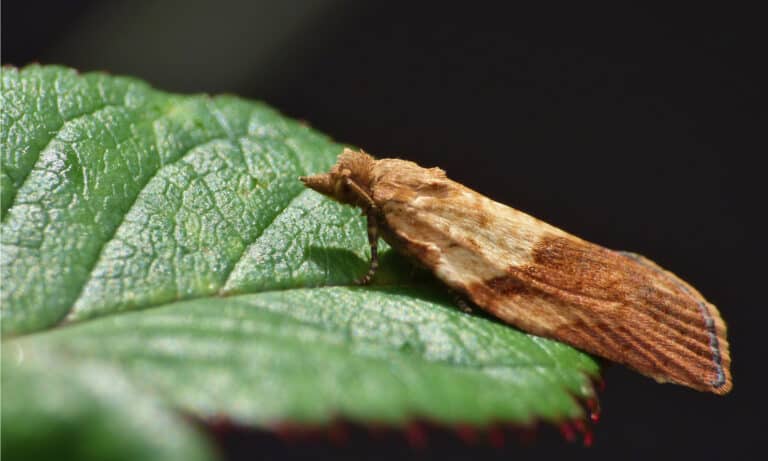
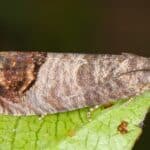
The Light Brown Apple Moth has part of its appearance already within its title, as it is painted light brown with pale yellow mixed. You can identify the Apple Moth separate from its family members by the dark brown markings on the tip of its wings and its back. The wings as well have a distinctive long and rounded shape but while not flying you can see the dark brown on the tips very clearly. This feature separates the Apple Moth from other Tortricidae members. 

Considering these moths are not prey to any other animal or species, they do not have any kind of defensive mechanisms. Apple Moths only have sensors within their antennas, which can detect any danger or threat to them. 

Apple moths are nocturnal creatures, they tend to be more active at night which is also when they start their mating rituals. Typically they will fly up to 600 meters (1969 ft) but not farther than 100 meters (328 ft) to mate. The female Apple Moth will mate and lay eggs between 6-10 days of life, then carry between 3-21 days.

The Apple Moth grows to about 10 mm (ยผ inch) in a resting state. Compared to the largest moth on record which is the Hercules Moth (27 cm/11 inch), the Apple Moth makes a very small appearance! It weighs only 1-30 g or 0.03 ounces.

Habitat: Where to find The Apple Moth

Although The Apple Moths originated in Australia, they can also be found in Europe (Northwestern), North America, and of course the whole of Oceania. If you have fresh fruits or untreated agriculture, especially within a garden, you will most definitely find some either nested or hiding between leaves. Look out for apples or grapes with holes or strange brown cocoons that are in or around the fruit. Always clean and inspect all of your fresh produce before purchasing or picking to make sure they are free of any pests. 

Diet: What do Apple Moths eat? 

Apple Moths mainly eat fruits and vegetables, although there are a large number of foods they can be found in mainly pome fruits (apples, pears, etc), grapes, stone fruit, and citrus. Not only this but they are also found eating into stems of trees/plants which you could find in tree nurseries often. This causes damage to those plants as they grow. Although solitary, these moths will gather in places where food is plentiful and can infest over 200 plant species and about $2,000 worth of fresh produce daily. 

What Eats Apple Moths?

Apple Moths, typically in their larvae/cocoon state, are eaten by birds and spiders. However, they are also the prey of parasitic wasps and some beetles. 

Prevention: How to get rid of The Apple Moth 

It is very difficult to rid of these pests especially since they have created a lot of issues in the production of fresh fruits. They have destroyed millions of dollars worth of plants and food and it can be very difficult to stop the reproduction of these creatures. If you want to prevent them from infesting your home gardens or even tree nurseries, there are a few traps that are created specifically for the Light Brown Apple Moth that you can place along your garden rows and near your growing trees. These traps can be simply called โ€œMoth Trapsโ€ and depending on the kind you would like, there are hanging options or ground options. Make sure to follow the instructions thoroughly to complete your task successfully! 

Some other forms of control that have been used are smothering oils, mating disruption, pesticides, and predator use. The oils are used to smother the moths and their eggs. Mating disruption is when synthetic pheromones are released in different areas to confuse the male moths, thereby disrupting the mating. In some countries such as Australia and New Zealand, a parasitic wasp is released that lays its eggs inside the moth larva. When they hatch they then eat the larvae and help reduce damage.

Another good way is to constantly check on your fruits and thin out the production. Make sure to clean out all of the rotten fruits you can find and check for holes that are typically already destroyed by the Apple Moth. 

Apple Moth Life Cycle

The main issue with apple moths is that they are generational. This means there is no break in their reproduction throughout the year. There is no โ€œresting stageโ€ during winter. In warmer climates, they continue to reproduce year-round, while in cooler climates reproduction is slowed down but not stopped completely.

Apple moths typically start mating between 6-10 days of adulthood, and the female can lay between 2-170 eggs each time they mate. Throughout their lives, females can produce between 300 and 1,500 eggs which are laid on the smooth leaves of their host plants. 

These eggs will hatch around 5-30 days after being laid and the larvae will emerge. This caterpillar will feed be in its larval stage for about 6-8 weeks although in warmer temperatures it can be as short as 3 weeks before they pupate. It will form a silk cover over itself to protect it while feeding. Larger larvae will also use silk threads to hang from to move themselves on to other host plants.

Once it pupates, it will last about 1-4 weeks again depending on climate, then after a few days of emerging, the cycle will continue.

Up Next:

View all 325 animals that start with A

Sources

  1. Wikipedia / Accessed May 12, 2022
  2. Butterfly Conservation / Accessed May 12, 2022
  3. IDTools / Accessed May 12, 2022
  4. UC Riverside / Accessed May 12, 2022
  5. CDFA / Accessed May 12, 2022

About the Author

Alan Lemus

Alan is a freelance writer and an avid traveler. He specializes in travel content. When he visits home he enjoys spending time with his family Rottie, Opie.
Connect:

Thank you for reading! Have some feedback for us?

Contact the AZ Animals editorial team

Related Articles You May Find Interesting

How Snow Flies Survive Subzero Cold with Special Antifreeze Proteins


Apple Moth FAQs (Frequently Asked Questions)

Apple Moths are not dangerous in direct contact, but they are harmful to foods and you must avoid consumption of any affected fruits at all costs. 

The Apple Moth has 6 legs total.

Usually, it takes experts to examine the moth to determine if it is the Apple Moth, but typically you can tell by the dark brown marks on the edge of its wings.

Set moth traps throughout the infested area, along with making sure to clean out all old and rotten fruits to maintain the upkeep of your gardens or nurseries.

Apple Moths have infested a very large amount of crops and trees. Especially in the State of California it has become a very serious situation ruining millions of dollars worth of crops along with the very famous redwood and cypress trees. There is a continuous quarantining/trapping for these pests to be regulated.