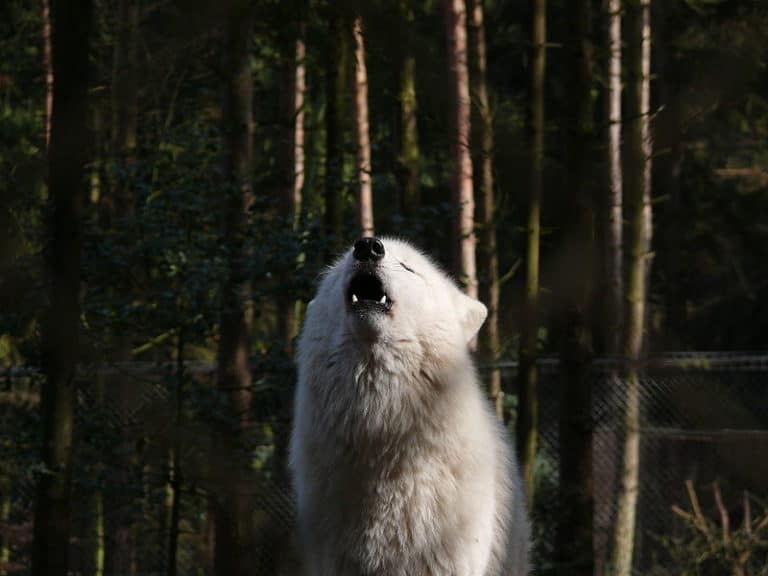
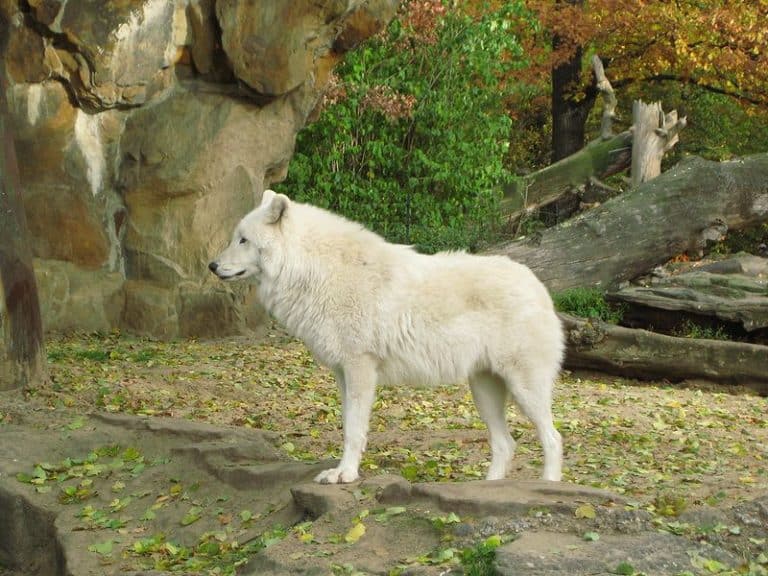
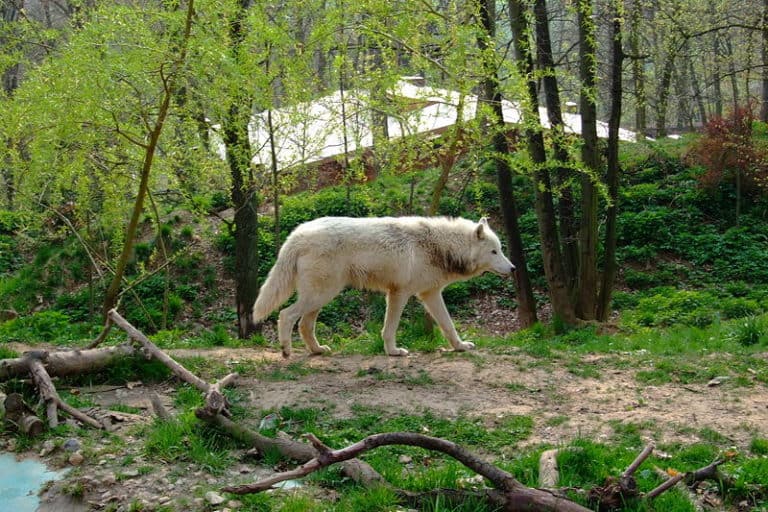

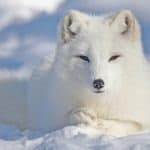
A
Species Profile

Arctic Wolf

Canis lupus arctos

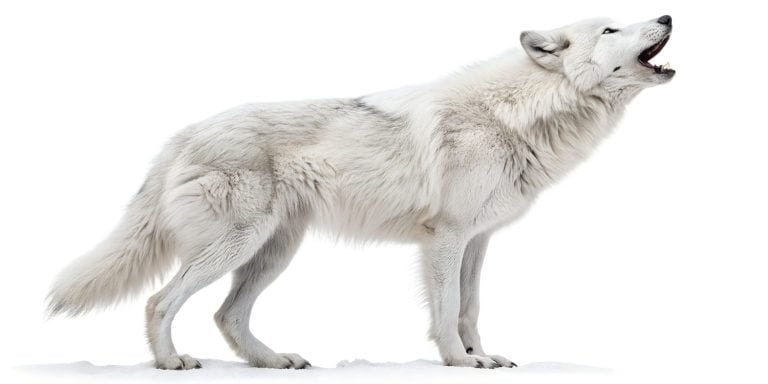
Built for the High Arctic
Ber'Zophus, CC BY-SA 2.5, via Wikimedia Commons

Arctic Wolf Distribution

Click a location to explore more animals from that region

Endemic Species
Loading map...

Found in 1 state/province

Size Comparison

Human 5'8"
Arctic Wolf 2 ft 4 in

Arctic Wolf stands at 41% of average human height.

At a Glance

Wild Species
Also Known As Polar wolf, White wolf, Snow wolf
Diet Carnivore
Activity Cathemeral+
Lifespan 7 years
Weight 54 lbs
Status Not Evaluated
Did You Know?

Taxon: Canis lupus arctos (Pocock, 1935); native to the Canadian High Arctic Archipelago and N Greenland.

Scientific Classification

A large canid and subspecies of the gray wolf adapted to the High Arctic; typically pale/white-coated, living in sparsely vegetated polar deserts and tundra where it hunts large ungulates and smaller prey and may scavenge.

Kingdom
Animalia
Phylum
Chordata
Class
Mammalia
Order
Carnivora
Family
Canidae
Genus
Canis
Species
Canis lupus

Distinguishing Features

  • Usually white to pale cream coat (helpful camouflage on snow/ice)
  • Compact ears and muzzle relative to some other wolf populations (cold adaptation)
  • Thick double coat and heavy seasonal insulation
  • Typically remote-range ecology with low human contact compared to many other wolf populations

Physical Measurements

Males and females differ in size

Height
2 ft 7 in (2 ft 4 in – 2 ft 11 in)
2 ft 2 in (1 ft 12 in – 2 ft 6 in)
Length
5 ft 5 in (4 ft 3 in – 6 ft 7 in)
4 ft 12 in (4 ft 5 in – 5 ft 7 in)
Weight
121 lbs (88 lbs – 154 lbs)
79 lbs (68 lbs – 95 lbs)
Tail Length
1 ft 4 in (12 in – 1 ft 8 in)
1 ft 2 in (12 in – 1 ft 4 in)
Top Speed
31 mph
About 50 km/h (estimate)

Appearance

Primary Colors
Secondary Colors
Skin Type Arctic Wolf (Canis lupus arctos) has a very dense double coat: short warm underfur and longer guard hairs. It sheds fur each season. Thick paw pads and fur between toes protect from ice and snow.
Distinctive Features
  • Extremely dense winter double coat (underfur + long guard hairs) providing high insulation and wind resistance-key High-Arctic thermoregulatory adaptation.
  • Compact, cold-adapted proportions relative to more temperate gray-wolf ecotypes: generally shorter ears and a relatively shorter muzzle reduce surface area and convective heat loss (Allen's rule trend; varies among individuals and populations).
  • Broad, well-furred feet with robust pads; fur between toes can improve insulation and purchase on snow/ice.
  • Seasonal appearance shift: winter coat longer/paler; summer coat shorter and may show more gray/agouti tipping and more cream/tan staining.
  • Facial mask is typically faint or absent compared with many temperate gray-wolf populations; overall contrast is low for snow/tundra camouflage.
  • An Arctic Wolf (Canis lupus arctos) in low-prey polar desert and tundra gets very thin by late winter, gets fatter after summer prey pulses, and often scavenges when kills are rare.
  • Pack-associated wear: broken/abraded guard hairs on muzzle and forelegs can be common in adults during periods of intensive scavenging/feeding on carcasses and through den excavation/maintenance during the short summer breeding season.

Sexual Dimorphism

Arctic wolves (Canis lupus arctos) have small size differences between males and females: males are larger in body mass, skull, and neck/shoulder muscles; females are smaller. Subspecies data are limited, and size changes seasonally (lean in late winter, fuller after summer).

  • Typically heavier-bodied with broader head and more pronounced neck/shoulder ruff when in winter coat.
  • Greater average shoulder/forequarter musculature; can look more 'blocky' in profile, especially in winter pelage.
  • Typically smaller and more gracile head/neck proportions; winter ruff usually less bulky.
  • Lactation/denning season may coincide with a leaner appearance and localized fur thinning/wear around teats during pup rearing (seasonal, individual-dependent).

Did You Know?

Taxon: Canis lupus arctos (Pocock, 1935); native to the Canadian High Arctic Archipelago and N Greenland.

Gestation is ~63 days (typical for gray wolves; Mech & Boitani 2003), timing births to late spring/early summer food pulses.

Arctic wolves can gorge after a kill-up to ~9 kg of meat in a meal has been reported for gray wolves (Mech & Boitani 2003), useful when prey is scarce.

High-Arctic packs are often small (commonly a breeding pair plus 1-6 others), consistent with low prey density and wide spacing of ungulates (Mech 2007).

Primary large prey across its range includes muskox (Ovibos moschatus) and Arctic caribou/Peary caribou (Rangifer tarandus), with Arctic hare and lemmings as important alternate prey (Mech 2007).

Individuals and packs can range extremely widely; reported pack home ranges in the High Arctic can be on the order of thousands of km² (e.g., ~2,600 km² reported for an Ellesmere Island pack; Mech 1997).

Unique Adaptations

  • Insulation: dense double coat (guard hairs + underfur) and heavy winter pelage reduces convective heat loss in persistent wind and subzero temperatures (general wolf cold-climate adaptation; Mech & Boitani 2003).
  • Allen's-rule body proportions: relatively smaller ears and shorter extremities than many temperate canids reduce surface-area heat loss-especially advantageous in polar desert conditions (general mammalian ecogeography applied to Arctic wolves).
  • Energetic buffering: ability to fast for extended periods and then gorge when a kill occurs; critical where prey encounters can be widely spaced (Mech & Boitani 2003; Mech 2007).
  • Footing on snow/ice: broad, furred feet and splayed toes improve traction and weight distribution on snow crust and sea ice edges (general wolf morphology noted in cold regions).
  • Seasonality synchronization: breeding and pup-rearing timed so peak lactation and pup growth align with short summer productivity and higher prey vulnerability (wolf reproductive ecology; Mech & Boitani 2003).
  • Behavioral thermoregulation: curling, tail-to-nose resting posture and using terrain/windbreaks to reduce exposure during storms (commonly described wolf behavior in cold environments).

Interesting Behaviors

  • Low-density hunting strategy: long, purposeful travel between prey patches, with opportunistic hunting and frequent scavenging when kills are rare (Mech 2007).
  • Muskox hunting tactics: testing herd defenses, targeting calves or weakened adults, and using repeated rushes to create separation-high effort but high payoff in a prey-poor landscape (Mech 2007).
  • Seasonal diet switching: more small prey (hares/lemmings) and scavenging when ungulates are inaccessible or dispersed; greater reliance on ungulates when available (Mech 2007).
  • Denning behavior: use of well-drained sites (raised ground, slopes, or gravelly areas) and repeated use of traditional den areas when conditions allow; pups typically remain near dens early in life (general wolf pattern; Mech & Boitani 2003).
  • Pack structure under extreme conditions: often one breeding female, cooperative pup care, and flexible group size that can shrink after hard winters (Mech 2007).
  • Communication adapted to open landscapes: long-distance howling for contact/spacing, plus scent marking along travel corridors despite strong winds and low shrub cover (general wolf ecology; Mech & Boitani 2003).

Cultural Significance

Arctic Wolf (Canis lupus arctos) appears in Indigenous northern stories as a respected hunter and teacher, standing for endurance, family cooperation, and the line between wild and human life. It shapes ungulate behavior and gives scavengers food even where few live.

Myths & Legends

Amarok (Inuit tradition): a great solitary wolf-like being that hunts at night and punishes those who hunt alone or break community norms-often used as a cautionary story emphasizing respect and cooperation.

Sköll and Hati (Norse mythology): two wolves who chase the Sun and the Moon across the sky; at Ragnarök they catch them, signaling cosmic upheaval-an enduring northern-European wolf legend tied to darkness and winter.

Wolf-as-ancestor/helper themes (various Inuit and circumpolar narratives): stories in which wolves guide hunters, reveal the rules of respectful hunting, or blur boundaries between wolves and dogs, reflecting close observation of canid behavior in northern lifeways.

Roman foundation legend (broader wolf lore): the she-wolf who nurses Romulus and Remus-one of the most influential wolf stories in Western culture, shaping the wolf as a symbol of guardianship and origin.

European werewolf traditions (Northern/Eastern Europe): folktales of humans becoming wolves (often during winter or under enchantment), reflecting fear/respect for wolves and the harshness of long, dark seasons.

Conservation Status

NE Not Evaluated (subspecies not assessed by IUCN; the species Canis lupus is assessed as Least Concern, global population trend: stable)

Has not yet been evaluated against the criteria.

Population Unknown

Protected Under

  • IUCN: subspecies not separately assessed; parent species Canis lupus is listed as Least Concern on the IUCN Red List (with a reported global stable trend).
  • CITES: Canis lupus is generally included in Appendix II (with some populations subject to stricter controls); trade is regulated at the species level rather than by subspecies.
  • Canada: Protected from killing within National Parks under the Canada National Parks Act (e.g., Quttinirpaaq National Park on Ellesmere Island lies within the subspecies' Canadian High Arctic range). Outside parks, wolves are managed under territorial wildlife legislation and regulations (e.g., Nunavut/NWT frameworks) rather than listed as a threatened taxon.
  • Greenland: Harvest and wildlife management are regulated under Greenlandic government hunting and management rules; protections are primarily regulatory/management-based rather than IUCN subspecies-based listing.

Life Cycle

Birth 3 pups
Lifespan 7 years

Lifespan

In the Wild 3–13 years
In Captivity 12–20 years

Reproduction

Mating System Monogamy
Social Structure Cooperative Breeder
Breeding Pattern Long Term
Fertilization Internal Fertilization
Birth Type Internal_fertilization

Arctic wolf (Canis lupus arctos) packs usually have one dominant breeding pair; helpers care for pups. Females come into heat once a year, mate in late winter (about March), pregnancy ~63 days, pups born late spring. Litters ~4–6 but often smaller; pair bonds last years; extra-pair pups rare.

Behavior & Ecology

Social Pack Group: 4
Activity Cathemeral, Crepuscular
Diet Carnivore Muskox (Ovibos moschatus), particularly vulnerable calves and weakened individuals

Temperament

Highly social and cooperative within the pack; strong in-group affiliative behaviors (greeting, muzzle-licking, play among young) support cohesion [Mech & Boitani 2003].
Territorial and defensive toward conspecific intruders; intensity varies with prey availability and presence of pups (peak defense during denning/pup-rearing) [Mech & Boitani 2003].
In hunted or disturbed areas, Arctic wolves are cautious and keep their distance. In remote High Arctic places like Ellesmere Island, some are less afraid and may approach and check out people.
Seasonally shifting tolerance: increased within-pack tolerance and provisioning during pup-rearing; increased aggression during competition at carcasses or during inter-pack encounters [Mech & Boitani 2003].
Arctic Wolf (Canis lupus arctos): wild wolves usually live about 6–8 years, many die sooner; some reach ~13 years in the wild and over 16 in captivity—estimates mostly for gray wolves, not specific to subspecies.

Communication

Howls (long-distance contact, territorial advertisement, reunion/coordination; can be individual or chorus howls) [Mech & Boitani 2003].
Barks (alarm/acute arousal), bark-howls (escalated warning/territorial contexts) [Mech & Boitani 2003].
Growls/snaps (close-range agonistic signals over space, rank, or food) [Mech & Boitani 2003].
Whines/whimpers (appeasement, solicitation, pup care), yelps (pain/submission) [Mech & Boitani 2003].
Scent marking via raised-leg urination, ground-scratching, and fecal deposits along travel routes and boundaries; functions in territorial advertisement and reproductive signaling [Mech & Boitani 2003].
Body postures and facial expressions (tail carriage, piloerection, ear position, muzzle/tension displays) for dominance/submission and conflict avoidance [Mech & Boitani 2003].
Tactile/affiliative signals: muzzle licking (often toward breeders), greeting ceremonies, play-bows and play-chases (especially among pups/yearlings) [Mech & Boitani 2003].
Den-site and rendezvous-site use as an information hub: repeated visits, scent accumulation, and vocal exchanges coordinate pup care and regrouping; timing and frequency vary with prey movement and daylight regime (24-h light in summer promotes more evenly distributed activity) [Mech 1988; Mech & Boitani 2003].

Habitat

Biomes:
Tundra Marine Freshwater Wetland Desert Cold Boreal Forest (Taiga) Temperate Forest Temperate Grassland Alpine +3
Terrain:
Island Plains Plateau Coastal Rocky
Elevation: Up to 8530 ft 2 in

Ecological Role

Apex predator and facultative scavenger in High Arctic tundra/polar-desert food webs.

Top-down regulation of herbivore populations (especially muskox and, locally, caribou), influencing grazing pressure and tundra vegetation dynamics (Mech & Boitani 2003). Selective removal of vulnerable individuals (calves, senescent, injured), potentially reducing disease transmission and increasing prey population fitness (Mech & Boitani 2003). Carrion provisioning: wolf kills and scavenging redistribute nutrients and provide food subsidies to Arctic scavengers (e.g., foxes, ravens, gulls) in nutrient-poor ecosystems (Mech & Boitani 2003). Nutrient translocation across the landscape via carcass deposition and feces, creating localized fertility hotspots in otherwise low-productivity polar deserts (general wolf ecosystem effects synthesized in Mech & Boitani 2003).

Diet Details

Main Prey:
Muskox Arctic hare Collared lemming Peary caribou Arctic birds Marine-derived carrion

Human Interaction

Domestication Status

Wild

The Arctic wolf (Canis lupus arctos) is a wild gray wolf subspecies and was never domesticated. Dogs came from other gray wolf groups through a long process beginning at least 14,000 years ago, not from C. l. arctos. People mostly hunted or trapped them; now there is research, park protection, and little conflict.

Danger Level

Low
  • Bites/attacks are possible but are rare in wild wolves; most documented serious incidents across wolves involve habituation, food-conditioning, captive animals, or rabies (Linnell et al., 2002; McNay, 2002).
  • In the Arctic wolf's remote range, direct encounters are uncommon; risk can increase if wolves become habituated to humans at field camps, communities, or feeding/garbage sources (notably discussed in High Arctic research contexts; Mech, 2000).
  • Disease transmission risk (e.g., rabies in canids) is low but non-zero; standard wildlife precautions apply.

As a Pet

Not Suitable as Pet

Legality: Arctic Wolf (Canis lupus arctos) is usually illegal or very limited as a private pet. Many U.S. and Canadian areas require wildlife permits and limit ownership to zoos, sanctuaries, or research. Rules can differ for wolf-dog hybrids.

Care Level: Expert Only

Purchase Cost: Up to $5,000
Lifetime Cost: $30,000 - $120,000

Economic Value

Uses:
Historical fur value Cultural significance (Indigenous knowledge, stories, and traditional use where applicable) Scientific research value (behavioral ecology in low-disturbance systems) Ecotourism/photography value (rare, location-dependent) Wildlife management and conservation value
Products:
  • pelts/fur (historically; regulated/limited and jurisdiction-dependent today)
  • guided wildlife viewing/photography (where accessible)
  • film/photography/media content
  • research outputs (long-term population and behavioral datasets; e.g., High Arctic field studies-Mech, 2000)

Relationships

Predators 4

Human Homo sapiens
Polar Bear Ursus maritimus
Grizzly Bear Ursus arctos horribilis
Wolverine Gulo gulo

Related Species 8

Gray Wolf Canis lupus Shared Species
Domestic dog Canis lupus familiaris Shared Species
Northwestern Wolf Canis lupus occidentalis Shared Species
Coyote Canis latrans Shared Genus
Golden Jackal Canis aureus Shared Genus
Ethiopian Wolf Canis simensis Shared Genus
Red Wolf Canis rufus Shared Genus
Arctic Fox Vulpes lagopus Shared Family

Ecological Equivalents 4

Animals that fill a similar ecological role in their ecosystem

Arctic Fox Vulpes lagopus Share High Arctic tundra and polar desert habitat and both hunt and scavenge, overlapping on small prey like lemmings and carrion. Wolves can leave carcasses that provide food for foxes; foxes also sometimes use the same dens and exploit seasonal prey booms.
Wolverine Gulo gulo Occupies similar cold, low-productivity environments, relies heavily on carrion and scavenging, and exhibits wide-ranging movements; can be a competitor at carcasses and a threat to unattended wolf pups at dens in some regions.
Polar Bear Ursus maritimus Top predator and dominant scavenger in parts of the High Arctic. Overlaps with wolves at marine mammal and ungulate carcasses along coasts and sea-ice edges, and can displace wolves from carrion; scavenging interactions are documented in Arctic field observations.
Grizzly Bear Ursus arctos horribilis Where ranges overlap near the Arctic tundra-boreal interface, grizzly bears compete with wolves for ungulate carcasses and can displace them; both are large, wide-ranging predators and scavengers with a seasonal reliance on carrion and ungulate prey.
👁 Image

“An Arctic wolf makes its home in places where the temperature can drop well below freezing.”

Arctic wolves live in Greenland, Alaska, Iceland, and Canada. But, these wolves live in caves and not dens like other types of wolves. Their short noses and small ears help to maintain their body heat on the tundra. The territory traveled by an Arctic wolf can add up to hundreds of miles.

Arctic Wolf Top Facts
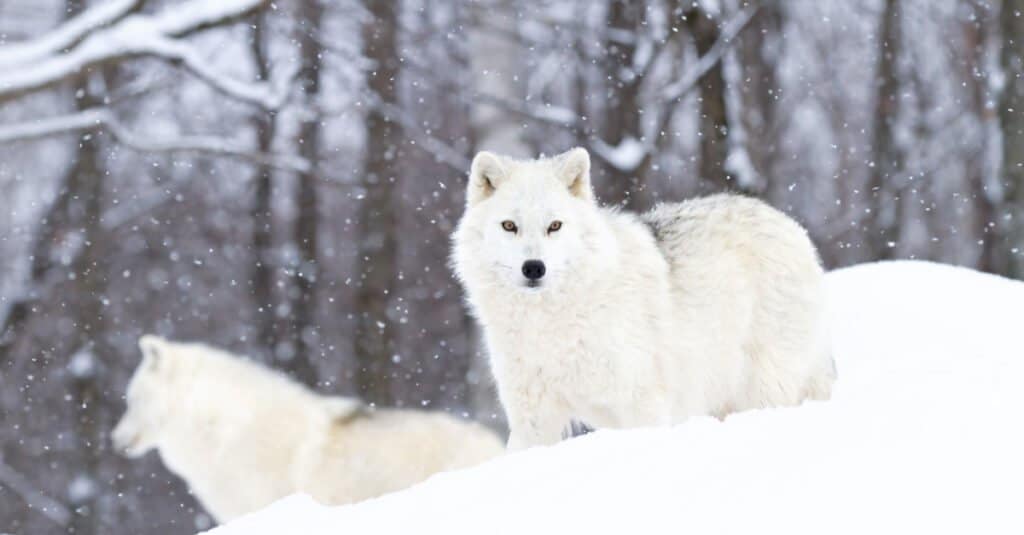
👁 tibetan mastiff vs wolf

These wolves travel in groups or packs of about six.

©Jim Cumming/Shutterstock.com

• These wolves travel in groups or packs of about six

• They live about 7 years in the wild

• They have a thick, white coat that’s insulated against very cold temperatures

• Wolf pups are born with blue irises that change to yellow/gold as they grow older

You can read more incredible facts about the Arctic wolf.

Scientific Name

👁 Image

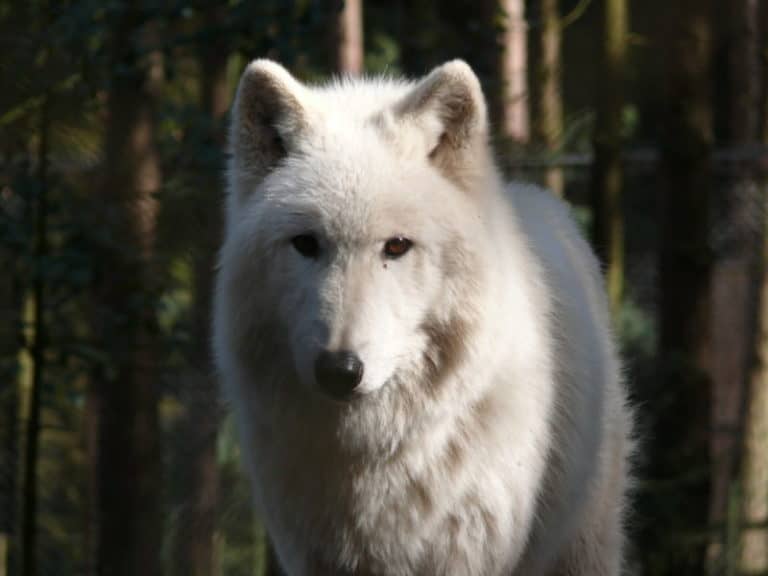
Arctic wolf is the common name of this mammal though it’s sometimes called a polar or white wolf.

©Jean-michel DEMIMIEUX / Creative Commons – Original / License

Arctic wolf is the common name of this mammal though it’s sometimes called a polar or white wolf. Its scientific name is Canis Lupus Arctos. It belongs to the Canidae family and its class is Mammalia.

Its scientific name Canis means dog while lupus means wolf. The word Arctos refers to a polar region. The Arctic wolf doesn’t have a subspecies, but it is a close relative of the grey wolf.

Evolution and Origins

Arctic wolves are said to have come from and evolved from a lineage of other canids around 50 million years ago. In fact, scientists believe that arctic wolves were very isolated during certain times as they evolved. For example, they believe that Arctic wolves were isolated during the Ice Age and it was during that time period that they developed the adaptations needed to survive in extreme weather conditions such as the Arctic.

Appearance and Behavior
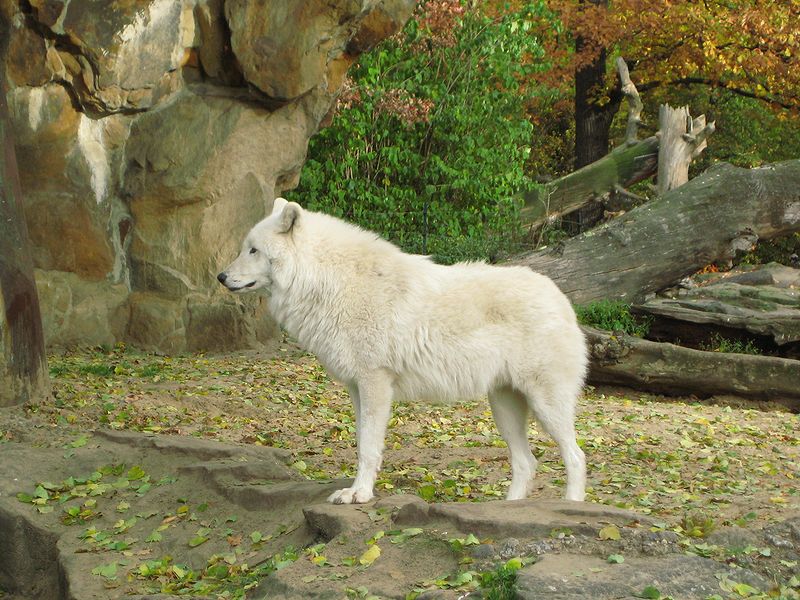
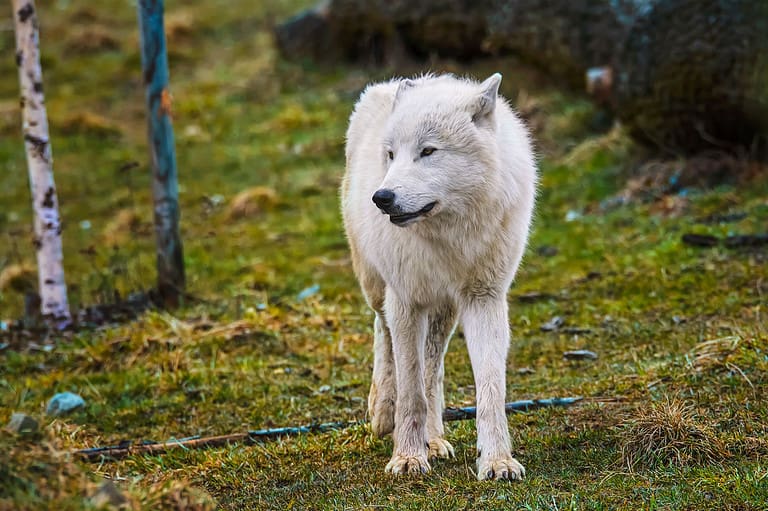
👁 Arctic wolf standing in the grass
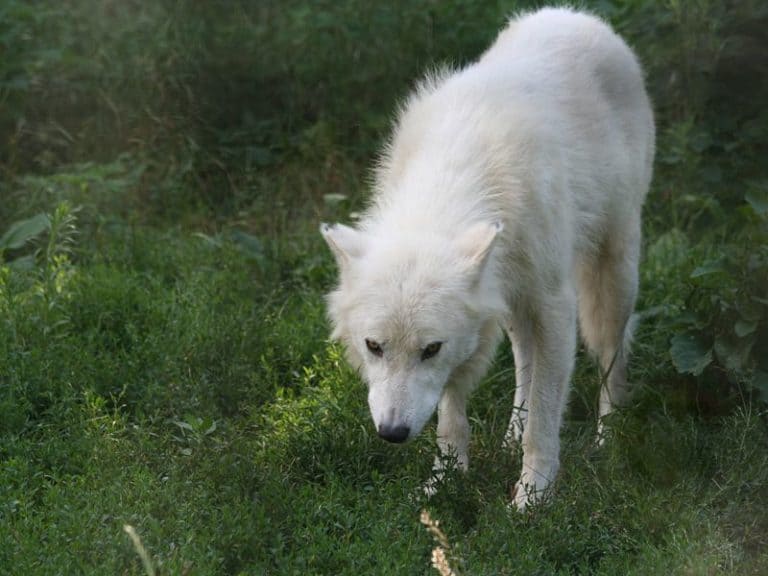
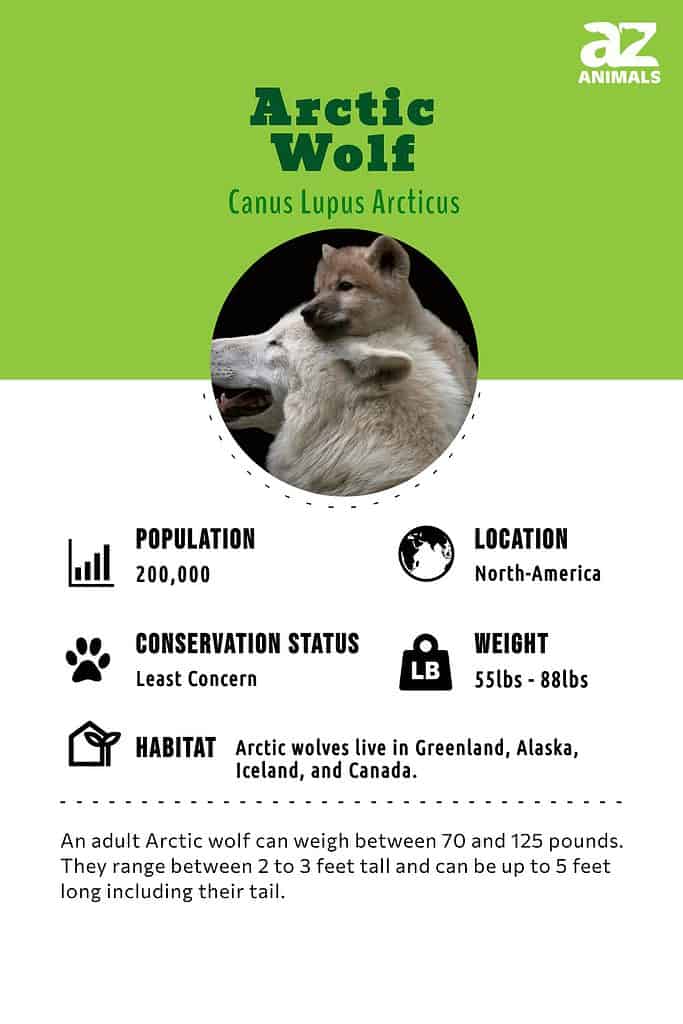
An adult Arctic wolf can weigh between 70 and 125 pounds.

An adult Arctic wolf can weigh between 70 and 125 pounds. A 70-pound wolf is equal to the weight of 4 adult Dachshunds. They range between 2 to 3 feet tall and can be up to 5 feet long including their tail. Think of the average Christmas tree. An Arctic wolf’s body is about three-quarters as long as that tree.

The white or sometimes grayish coat of this wolf has two layers. The upper layer gets thicker as the temperature drops in the tundra. The layer of fur closest to the wolf’s skin is waterproof. The waterproof layer of fur helps this wolf to stay dry and maintain its body heat in subzero temperatures.

Along with their insulated fur coats, Arctic wolves have paws with thick pads allowing them to walk on frozen ground. Plus, these pads give them traction on the slippery surfaces they walk and run on. Arctic wolves run while hunting muskoxen or other prey. The fastest recorded speed of an Arctic wolf is 46 mph.

You may think of a wolf as a solitary animal, but Arctic wolves travel in packs of six or so. These wolves live in incredibly cold climates, so they rarely encounter people. Normally, people don’t want to travel to these cold places! They are not aggressive animals unless they are defending their territory from a wolf or another animal.

Habitat
👁 Image

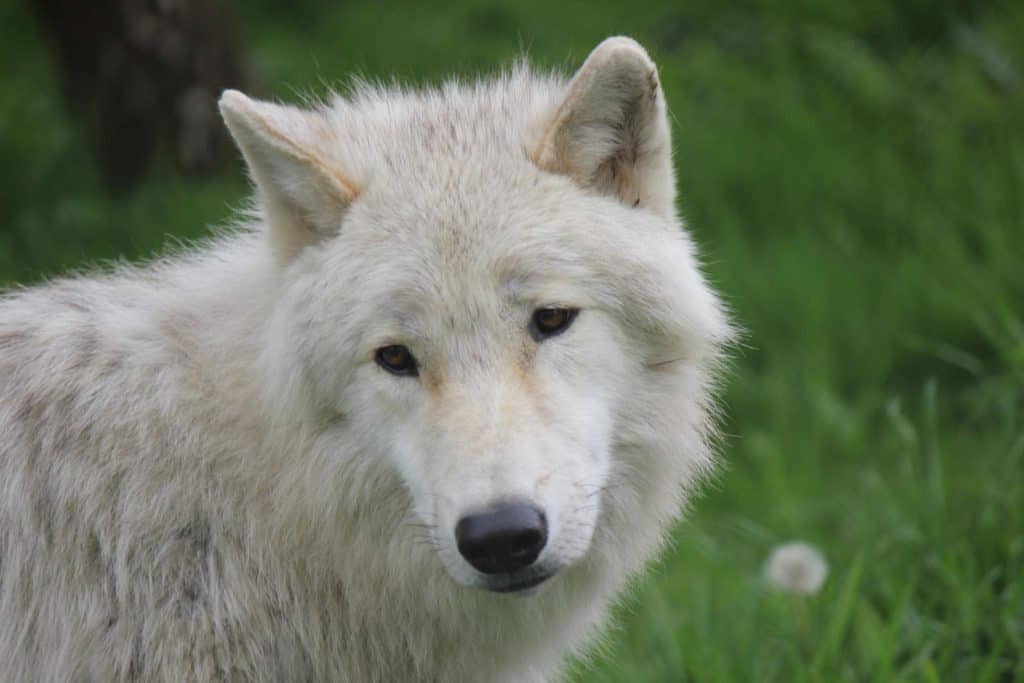
Arctic wolves live in northern Canada, Greenland, Alaska, and Iceland.

©Nigel Hoult / CC BY 2.0, Flickr – Original / License

Arctic wolves live in northern Canada, Greenland, Alaska, and Iceland. They live in these Arctic regions year-round. Furthermore, these regions have dark periods that last about 5 months. So, Arctic wolves have adapted to living in the dark as well as the cold.

Instead of living in dens in the ground, Arctic wolves live in caves or seek shelter in outcroppings of rocks. The ground in these Arctic areas is always frozen making it impossible for them to dig traditional dens.

Diet
👁 Image
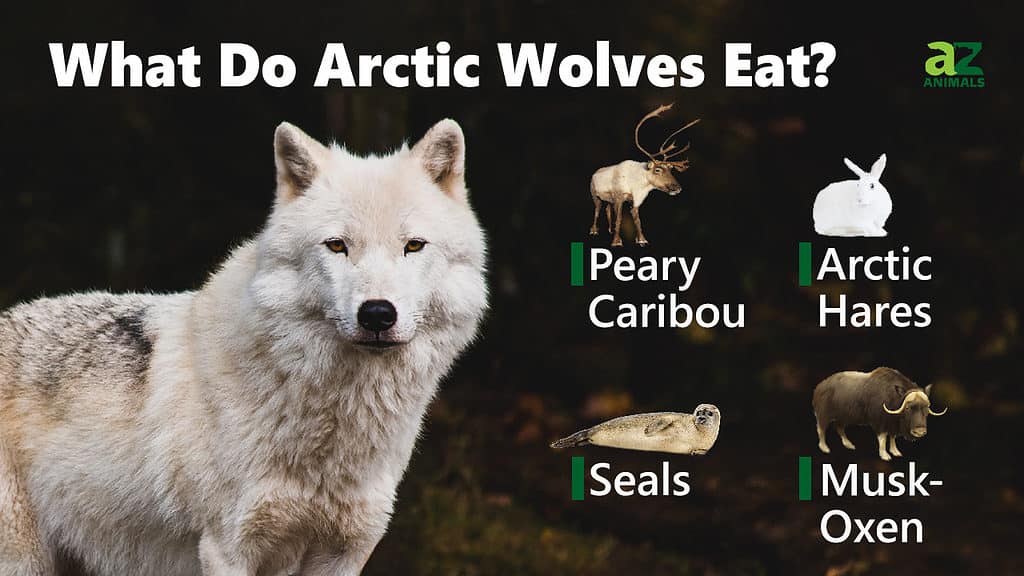
Arctic wolves eat caribou, arctic hares, seals, and musk oxen.

What do Arctic wolves eat? Arctic wolves eat Arctic hares, caribou, lemmings, and muskoxen. An Arctic wolf is smaller than its close relative, the gray wolf. So, you may be wondering how a single Arctic wolf could hunt and kill large mammals. The answer is: They don’t hunt alone.

A pack of wolves will work together to single out a weak member of a herd of caribou or muskoxen to capture. A large mammal will be eaten by a pack of wolves over the course of a week or so. An Arctic wolf is able to eat about 20 pounds of animal meat in one feeding period. Think of 20 pounds of meat as weighing the same as two big gallon cans of paint.

Predators and Threats
👁 Image

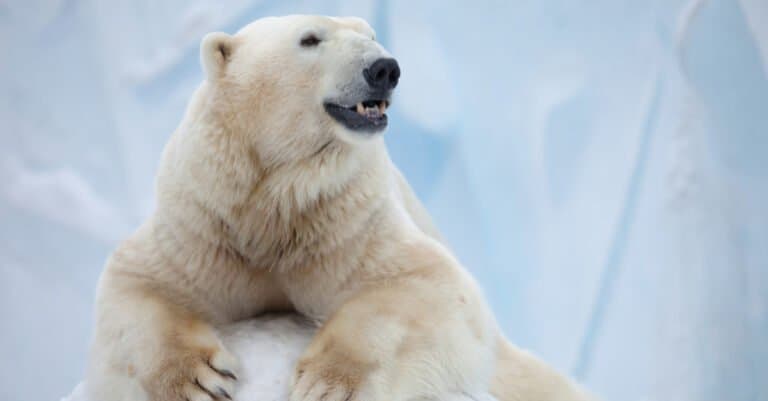
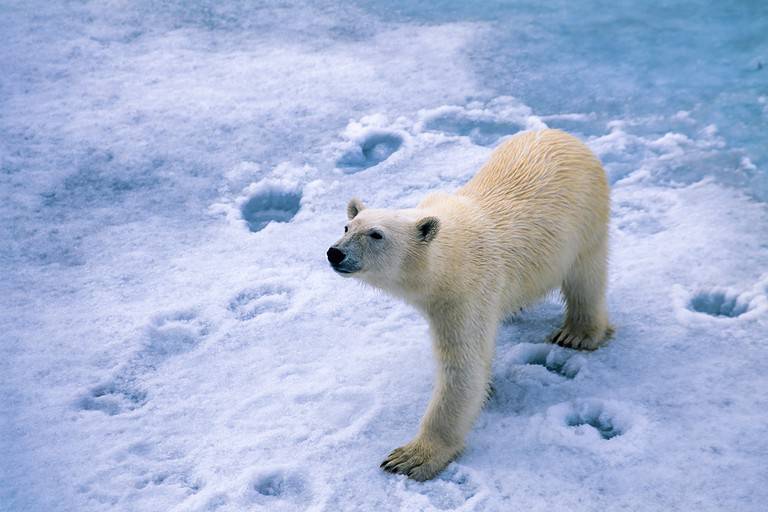
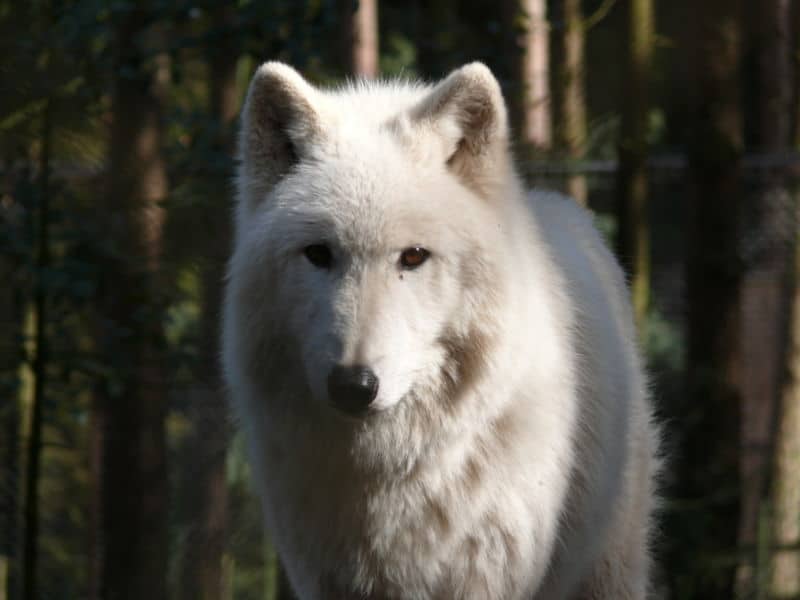
Polar bears are the only animal predators of Arctic wolves.

©Gunnar Ries, CC BY-SA 2.5, via Wikimedia Commons – Original / License

Polar bears are the only animal predators of Arctic wolves. If a young wolf cub wanders out of the cave, it can be killed by a bear or another wolf. When humans venture out to where the Arctic wolves live, they pose a threat to them as well.

An Arctic wolf can survive for 4 or 5 months without eating. It can survive on fat stored in its body. But, it must eventually have nourishment in order to survive this harsh climate. If a wolf is in a weakened condition due to hunger, it may be attacked by other wolves.

The official conservation status of the Arctic wolf is Least Concern. Because they live in such a harsh environment, they are not endangered or threatened by hunters and their habitat is not at risk.

Reproduction, Babies, and Lifespan
👁 White Arctic wolf with a cute and playful wolf cub (Canis lupus arctos) on the head. Closeup of wild animals isolated on black background.

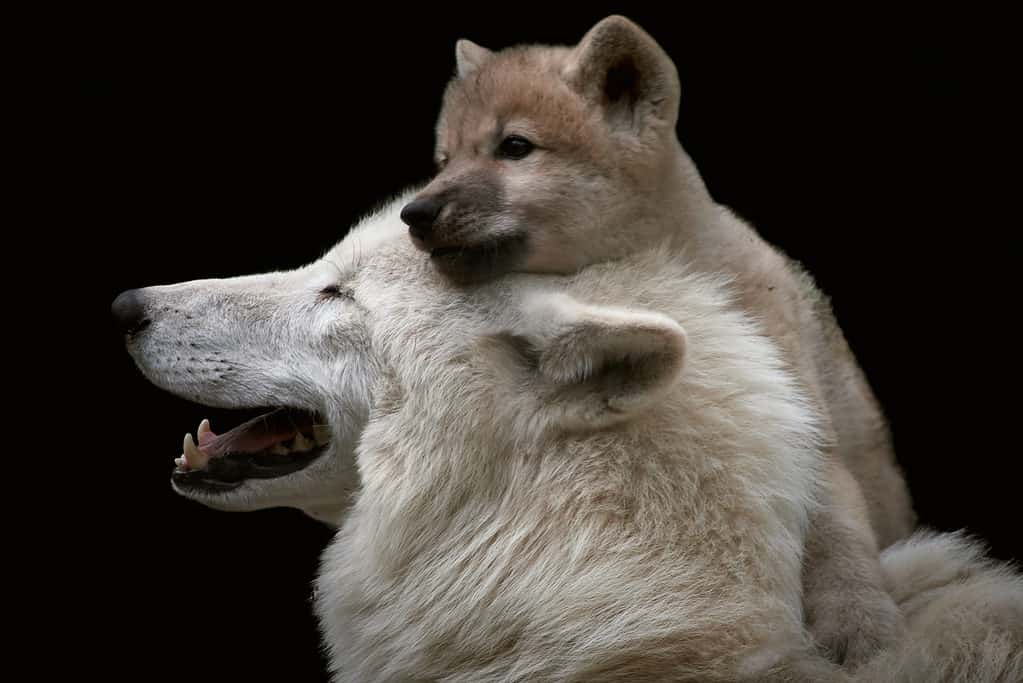
Newborn pups have dark fur and blue irises that change to yellow as they grow older.

©Thomas Marx/Shutterstock.com

In a pack of Arctic wolves, only the alpha of the pack will mate with the beta female. Arctic wolves are known to stay with one mate. This helps to control the number of wolf pups also called whelps, so there will be adequate food available to them. The gestation period is 63 days and the mother gives live birth to 2 to 3 wolf pups.

Newborn pups have dark fur and blue irises that change to yellow as they grow older. They weigh about 3 to 4 pounds when they’re born, but quickly start to gain more. Arctic wolves give birth later on in the month of May and sometimes early June. This is different from gray wolves. Gray wolves give birth in the month of April and usually have 4 to 5 pups in a litter.

They are born with their eyes and ears closed but are able to see and hear within about 12 to 14 days. The pups can crawl around a bit especially when they want to nurse from their mother. In a few weeks, the pups start to nibble on small pieces of chewed food brought to them by their mother.

Arctic wolf pups stay in the cave or den with their mother for about 6 weeks. After 6 weeks, they join in the activities with the pack and are full-grown adults by 8 months. Generally, grown pups stay with the same pack for years.

The average lifespan of male and female Arctic wolves is about 7 years in the wild and 20 years in captivity. One of the most common reasons for the early death of an Arctic wolf is a lack of available food in the harsh climate. There may be a limited amount of food that’s taken by the alpha male and beta females in a pack. Another reason for early death is injury.

An Arctic wolf may be injured during a hunt and the injury can become infected. Though there is no recorded age for the oldest Arctic wolf, the oldest known wolf in the world is a Canadian wolf named Maddie. She is 19 years old and grew up in a wolf sanctuary.

Population

The population of Arctic wolves is about 200,000. They are not considered to be a threatened species and are officially listed as Least Concern. The main reason that Arctic wolves aren’t threatened is they live on the frozen tundra where very few humans travel and where very few other animals can survive.

One of the largest populations of these wolves is found in northern Alaska.

View all 325 animals that start with A
How to say Arctic Wolf in ...
English
Arctic wolf
Spanish
Lobo ártico
French
Loup arctique
Danish
Polarulv
German
Polarwolf
Italian
Lupo artico
Dutch
Poolwolf
English
Arktisk ulv
Polish
Wilk polarny
Portuguese
Lobo Árctico

Sources

  1. David Burnie, Dorling Kindersley (2011) Animal, The Definitive Visual Guide To The World's Wildlife / Accessed November 4, 2008
  2. Tom Jackson, Lorenz Books (2007) The World Encyclopedia Of Animals / Accessed November 4, 2008
  3. David Burnie, Kingfisher (2011) The Kingfisher Animal Encyclopedia / Accessed November 4, 2008
  4. Richard Mackay, University of California Press (2009) The Atlas Of Endangered Species / Accessed November 4, 2008
  5. David Burnie, Dorling Kindersley (2008) Illustrated Encyclopedia Of Animals / Accessed November 4, 2008
  6. Dorling Kindersley (2006) Dorling Kindersley Encyclopedia Of Animals / Accessed November 4, 2008
  7. David W. Macdonald, Oxford University Press (2010) The Encyclopedia Of Mammals / Accessed November 4, 2008

About the Author

Rebecca Bales

Rebecca is an experienced Professional Freelancer with nearly a decade of expertise in writing SEO Content, Digital Illustrations, and Graphic Design. When not engrossed in her creative endeavors, Rebecca dedicates her time to cycling and filming her nature adventures. When not focused on her passion for creating and crafting optimized materials, she harbors a deep fascination and love for cats, jumping spiders, and pet rats.
Connect:

Thank you for reading! Have some feedback for us?

Contact the AZ Animals editorial team

Related Articles You May Find Interesting

👁 Image
Education

Exploring Arctic Animals: A Unit on Survival, Warmth, and Adaptation

👁 Wolf pack
Articles

Wolves Are Stealing Cougar Kills in Yellowstone — And the Big Cats Are Quietly Changing Their Hunting Strategy


Arctic Wolf FAQs (Frequently Asked Questions)

Arctic wolves are carnivores. These wolves live in areas where the temperatures can drop well below zero. This makes it difficult for plants and other vegetation to grow. So, Arctic wolves must eat the prey that’s available to them in their frozen environment. Peary caribou, muskoxen, lemmings and Arctic hares are all food sources for Arctic wolves.

There are approximately 200,000 Arctic wolves left in the world today.

No. It’s never a good idea to keep a wild animal as a pet. This is especially true for an Arctic wolf. Even if someone were to find a cute Arctic wolf pup, they must remember that the pup will grow into an adult wolf. It will someday weigh around 130 pounds and develop strong jaws made to eat large mammals on the tundra. If a wolf is brought up in captivity, it should be in a zoo or wolf sanctuary where experts know how to care for it safely.

Arctic wolves are not dangerous unless they feel threatened. These wolves mark their territory and can become aggressive if other wolves or people are trespassing into that territory. Otherwise, these wolves like to stay hidden while traveling with the other members of their pack.

Arctic Wolves belong to the Kingdom Animalia.

Arctic Wolves belong to the phylum Chordata.

Arctic Wolves belong to the class Mammalia.

Arctic Wolves belong to the family Canidae.

Arctic Wolves belong to the order Carnivora.

Arctic Wolves belong to the genus Canis.

Arctic Wolves are covered in Fur.

Arctic Wolves live in grass plains and tundra forests.

Arctic Wolves prey on deer, elk, and moose.

Predators of Arctic Wolves include humans.

The average litter size for an Arctic Wolf is 4.

Arctic Wolves are incredibly versatile and adaptive!

The scientific name for the Arctic Wolf is Canus Lupus Arcticus.

Arctic Wolves can live for 7 to 10 years.

An Arctic Wolf can travel at speeds of up to 46 miles per hour.