





A
Species Profile

Armadillo

Cingulata

Built like a tank, born to dig
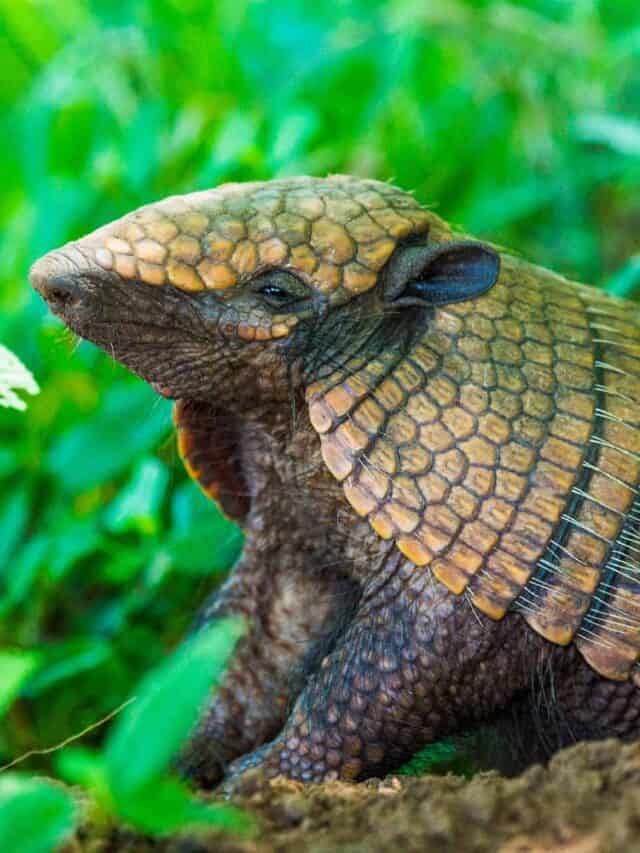
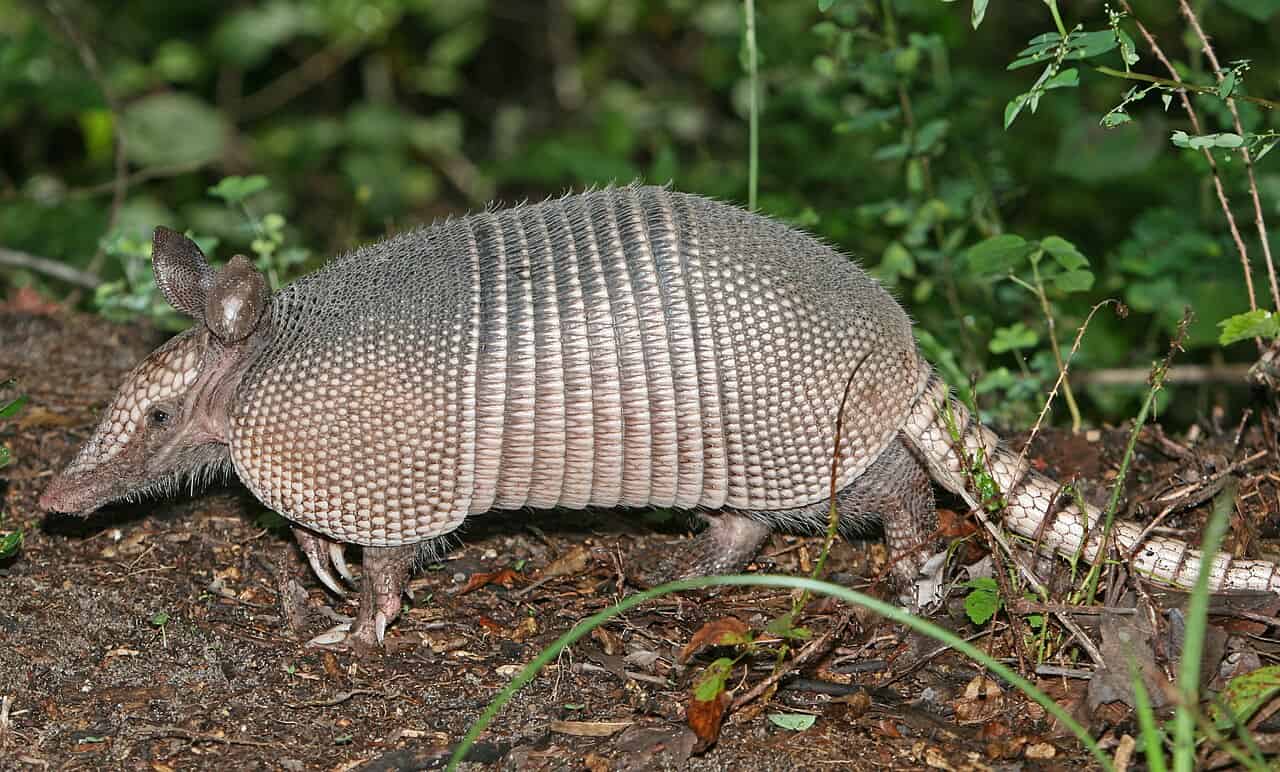
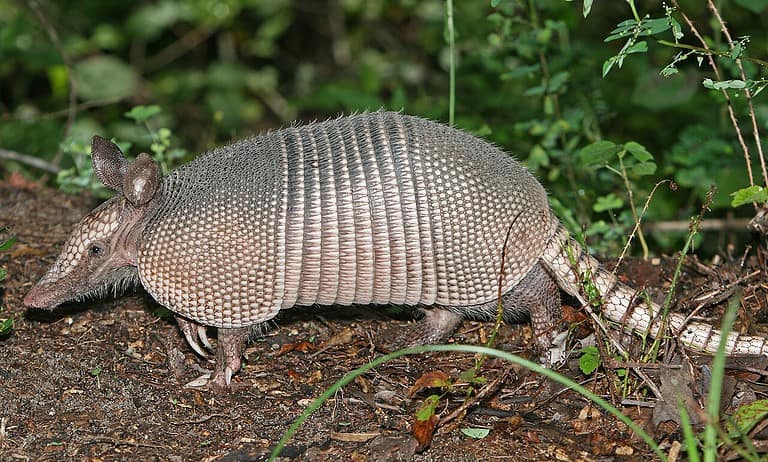
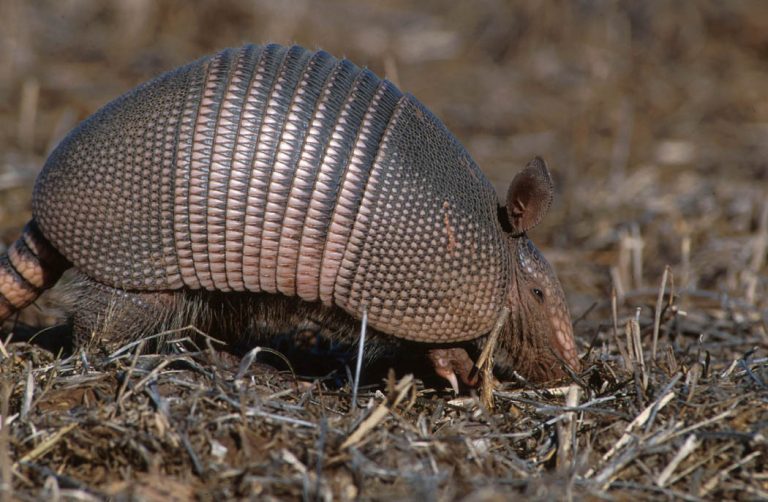
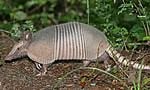
http://www.birdphotos.com, CC BY 3.0, via Wikimedia Commons

Armadillo Distribution

Click a location to explore more animals from that region

Endemic Species
Loading map...

Size Comparison

Human 5'8"
Armadillo 8 in

Armadillo stands at 12% of average human height.

At a Glance

Order Overview This page covers the Armadillo order as a group. Stats below are general traits shared across the order.
Also Known As Dillo, Tatu, Tatou, Quirquincho, Pichi, Mulita
Activity Nocturnal+
Lifespan 8 years
Weight 33 lbs
Status Not Evaluated
Did You Know?

Size range across the order: from the pink fairy armadillo (~12-15 cm body; ~85-150 g) to the giant armadillo (~75-100 cm body; often 30-50+ kg).

Scientific Classification

Order Overview "Armadillo" is not a single species but represents an entire order containing multiple species.

Armadillos are armored placental mammals characterized by a bony dermal carapace (bands/plates), strong digging claws, and diets that often include insects and other invertebrates. They are native to the Americas and vary widely in size, habitat, and behavior.

Kingdom
Animalia
Phylum
Chordata
Class
Mammalia
Order
Cingulata

Distinguishing Features

  • Bony armored shell (carapace) made of osteoderms
  • Powerful forelimbs and claws adapted for digging and burrowing
  • Elongated snout; many species have reduced dentition suited to invertebrate feeding
  • Generally solitary behavior with strong reliance on scent and hearing
  • Some species (notably Tolypeutes) can roll into a ball for defense

Physical Measurements

Males and females differ in size

Height
โ™‚ 10 in (2 in โ€“ 10 in)
โ™€ 10 in (3 in โ€“ 1 ft 8 in)
Length
โ™‚ 2 ft 6 in (6 in โ€“ 4 ft 11 in)
โ™€ 1 ft 12 in (5 in โ€“ 4 ft 11 in)
Weight
โ™‚ 13 lbs (0 lbs โ€“ 132 lbs)
โ™€ 11 lbs (0 lbs โ€“ 119 lbs)
Tail Length
โ™‚ 10 in (1 in โ€“ 1 ft 10 in)
โ™€ 8 in (1 in โ€“ 1 ft 10 in)
Top Speed
31 mph

Appearance

Primary Colors
Secondary Colors
Skin Type Carapace of bony osteoderms overlain by keratin scutes, with sparse to moderate hair between plates and under the belly (hairiness varies by species). Limbs have thick skin and strong keratin claws for digging.
Distinctive Features
  • Order-level size range (smallest to largest members): head-body length roughly ~10-100 cm; tail length ~2.5-50 cm; mass ~0.085-60 kg (substantial variation across species and habitats).
  • Lifespan range across the order: commonly ~4-15+ years in the wild (species- and predation-dependent); in captivity some species can reach ~20+ years under favorable care.
  • Defining armor: bony dermal plates (osteoderms) forming a carapace; typically includes rigid shoulder and pelvic shields with 3-13 movable bands in between (band count and flexibility differ among species).
  • Armadillo species defend themselves in different ways: many dig or hide in burrows and thick cover; only some can roll into a tight ball, while others run, burrow, or wedge into burrow entrances.
  • Fossorial adaptations shared across the order: powerful forelimbs, enlarged claws (often especially prominent on the middle digits), robust shoulder girdle, and behaviors centered on digging for food and shelter.
  • Head/face traits: elongated snout with strong sense of smell; small eyes; ears range from short/rounded to large and upright depending on species and climate (thermoregulation and hearing needs vary).
  • Teeth: reduced, peg-like dentition without enamel; suited to crushing soft-bodied prey rather than chewing tough plant matter (diet breadth still varies by species).
  • Geographic distribution: native to the Americas, from the southern/central United States through Mexico, Central America, and much of South America to Argentina/Uruguay region; some populations occur beyond historic ranges via human-associated spread.
  • Habitat breadth: occurs in deserts and semi-arid scrub, grasslands/savannas, dry forests, tropical rainforests, floodplains, and human-modified landscapes; burrow use is widespread but burrow depth/complexity varies by species and soil type.
  • Activity patterns: many species are nocturnal or crepuscular (often to avoid heat and predators), but some are more diurnal in cooler seasons/latitudes; flexibility varies among species and local conditions.
  • Sociality: commonly solitary outside breeding and maternal care; densities and tolerance of conspecifics vary, and burrow sharing can occur in some contexts but is not universal.
  • Diet generalization with explicit variation: often invertebrate-focused (ants, termites, beetle larvae, worms), but many are opportunistic omnivores that may include carrion, small vertebrates, fungi, and fruit/plant material depending on species, season, and habitat.
  • Armadillos have big differences in reproduction across the order: gestation and litter size vary; some lineages make many young from one egg by polyembryony, while others do not.
  • Thermoregulation constraints: generally limited tolerance for cold due to low metabolic rate and armor/skin properties; this influences activity timing and northern range limits, with considerable interspecific variation in cold tolerance.
  • Locomotion and escape: capable of short bursts of speed; some species perform rapid jumping/leaping when startled; many rely on immediate digging to evade predators.
  • Human-wildlife interactions: can be affected by road mortality, habitat conversion, and hunting; some species adapt to disturbed habitats while others are more sensitive-responses vary greatly across the order.

Sexual Dimorphism

Sexual dimorphism is generally subtle across the order and often not obvious without measurements; where present it commonly involves slight size/mass differences and differences in external genitalia. Strength of dimorphism varies among species and populations.

โ™‚
  • Often slightly larger or heavier in some species/populations (not universal).
  • Externally visible genitalia; in some cases males may show proportionally broader head/neck or more robust forelimbs tied to competition/digging (variable, typically modest).
โ™€
  • Often slightly smaller in some species/populations (not universal).
  • Prominent mammae when lactating; body condition changes with pregnancy/lactation more apparent than fixed color/pattern differences.

Did You Know?

Size range across the order: from the pink fairy armadillo (~12-15 cm body; ~85-150 g) to the giant armadillo (~75-100 cm body; often 30-50+ kg).

Only the three-banded armadillos (Tolypeutes) can roll into a tight, near-perfect ball; most other armadillos cannot fully close up.

Many species are expert diggers; their burrows can become important shelters used by other animals (a form of "ecosystem engineering").

Diet varies by species and habitat, but many eat lots of ants, termites, beetles, grubs, and other invertebrates; some also take fruit, fungi, small vertebrates, or carrion.

Some armadillos can cross water: the nine-banded armadillo may swim by buoyancy control (gulping air) or walk along the bottom.

Reproduction is diverse: the nine-banded armadillo is famous for frequently producing identical quadruplets from one fertilized egg (polyembryony).

Their "armor" is real bone in the skin (osteoderms) covered by keratin-flexible in bands in many species, more rigid in others.

Unique Adaptations

  • Osteoderm carapace: a bony dermal armor of plates and/or bands that balances protection with mobility (degree of flexibility varies among species).
  • Fossorial toolkit: enlarged shoulder/forelimb muscles and strong, curved claws specialized for digging, tearing into termite mounds, and excavating burrows.
  • Low metabolic rate and relatively low body temperature for a mammal (variable among species), supporting energy-efficient lifestyles but increasing sensitivity to cold.
  • Specialized skulls/teeth: many have reduced or absent enamel and simplified teeth suited to crushing soft-bodied prey rather than slicing.
  • Water-crossing strategies in some species (not all): buoyancy control or bottom-walking expands access to new foraging areas and dispersal routes.
  • Robust sense of smell and tactile foraging behaviors that compensate for limited vision in many species.

Interesting Behaviors

  • Burrow building and "bolt-to-burrow" escape: many species rely on rapid digging and existing tunnels for safety; burrow depth/complexity varies widely by species and soil type.
  • Mostly solitary lifestyles: many are encountered alone outside breeding, but activity timing varies (often nocturnal/crepuscular; some more diurnal in cooler seasons/regions).
  • Foraging by smell and touch: with generally poor eyesight, many root through leaf litter and soil, probing and ripping open insect nests.
  • Defensive tactics differ across the order: three-banded armadillos roll up; others wedge into burrows, present armored backs, or sprint for cover.
  • Thermal/seasonal shifts: in cooler weather some species become more daytime-active; in heat they may restrict activity to night or use burrows to avoid temperature extremes.
  • Habitat flexibility at the order level: across Cingulata, species occur in forests, savannas/cerrado, dry scrub, wetlands edges, and grasslands-behavior and diet shift accordingly.

Cultural Significance

Armadillos (Cingulata) shape culture across the Americas. Their name means 'little armored one.' In South America their shells link to music like the charango. The nine-banded armadillo is a Southern symbol and Texas' small mammal, used in disease research; stories call them hardy, clever diggers.

Myths & Legends

A common Andes story says the first charango, a small Andean lute, used an armadillo shell for its back so local players could copy Spanish string instruments, made because of need or rules.

In Tupi-Guarani folktales from South America, the tatu (armadillo, Cingulata) uses burrows and armor to escape or outlast larger predators, acting as a small, clever trickster.

Brazilian and Paraguayan countryside tales often pair the tatu (armadillo) with foxes (raposa) or jaguars (onรงa). Its digging and stubbornness help it win contests or escape, showing it is crafty and tough.

Early colonial writers called armadillos (Cingulata) 'armored' for their shell. The image of a living suit of armor entered folk stories and symbols, meaning protection and endurance across regions.

Looking for a specific species?

Nine-banded armadillo

Dasypus novemcinctus

This is the armadillo most widely encountered and most often meant in general references to "armadillos," especially in North and Central America due to its broad range and frequent human contact.

  • Order-level size range: from the pink fairy armadillo (~12-15 cm body length; ~0.08-0.12 kg) to the giant armadillo (~75-100+ cm body length; often ~20-50 kg).
  • Order-level lifespan range: commonly ~4-8 years in the wild for smaller species, up to ~12-20+ years reported in some larger/longer-lived species (especially in captivity).
  • Order-level ecology/behavior: most are solitary, nocturnal or crepuscular, and strongly fossorial; diets are generally insect-heavy but vary widely (some are more omnivorous), and habitat use spans deserts/grasslands to tropical forests.
  • This species is notable for frequent polyembryony (often producing genetically identical quadruplets).
  • It has expanded its range northward in recent history and is a common roadkill species in parts of its range.

You might be looking for:

Nine-banded armadillo

35%

Dasypus novemcinctus

Widespread species in the Americas; the most commonly encountered armadillo, especially in the southern United States.

Giant armadillo

20%

Priodontes maximus

Largest living armadillo; primarily nocturnal and associated with forests and savannas in South America.

View Profile

Southern three-banded armadillo

15%

Tolypeutes matacus

Notable for being able to roll into a tight ball; found in central South America.

Pink fairy armadillo

10%

Chlamyphorus truncatus

Tiny, elusive desert-dwelling armadillo from Argentina with a distinctive pinkish carapace.

View Profile

Screaming hairy armadillo

8%

Chaetophractus vellerosus

Hairier armadillo species known for vocalizations when handled; occurs in parts of Argentina, Bolivia, and Paraguay.

Life Cycle

Birth 1 pup
Lifespan 8 years

Lifespan

In the Wild 3โ€“16 years
In Captivity 4โ€“25 years

Reproduction

Mating System Promiscuity
Social Structure Solitary
Breeding Pattern Seasonal
Fertilization Internal Fertilization
Birth Type Internal_fertilization

Armadillos (Cingulata) are generally promiscuous, often polygynous. They are solitary; males mate with multiple females. Fertilization is internal and breeding is seasonal. They are not cooperative breeders. Confidence in this generalization is moderate.

Behavior & Ecology

Social No stable group name (typically solitary) Group: 1
Activity Nocturnal, Crepuscular, Diurnal, Cathemeral
Diet Insectivore Ants and termites (especially in the most specialized species; many others still prioritize soft-bodied soil insects).

Temperament

Generally wary and non-aggressive; most conflicts are avoided rather than escalated, with a strong tendency to flee, freeze, or retreat into cover/burrows.
Primary defenses across the order are physical and behavioral: reliance on the armored carapace, rapid digging/burrowing, wedging into soil, and evasive bursts of speed; some species also employ startle/leap responses when surprised.
Tolerance of conspecifics is usually low outside breeding and maternal-care periods, but overlap in space use and occasional burrow sharing/serial use can occur, especially where shelter is limited.
Foraging ecology is commonly solitary and opportunistic (often insectivory/omnivory), with individualistic search patterns; variation across the order includes differences in habitat (from forests to grasslands to semi-deserts) and degree of dietary specialization.
Season and local climate shape daily activity: many armadillo species are more active at night when it is hot, more active by day when cool, and some are cathemeral.
Size and lifespan vary widely in Cingulata: adults weigh 0.1โ€“50 kg and body length is 12 to over 100 cm (tail adds length). Smaller species live shorter lives; larger often live longer.
Lifespan varies widely by species and context (wild vs. captivity), commonly on the order of ~4-20+ years across the order, with higher survival typically associated with larger-bodied species and protected/captive conditions.

Communication

low grunts and snorts during close interactions
squeals/screams when threatened, handled, or in intense encounters
soft contact sounds between mother and young in some species
olfactory communication via scent glands and scent marking E.g., rubbing/marking substrates, burrow entrances
urine/feces cues used in spacing and individual recognition
tactile cues such as nudging, brief nose-to-body investigation, and mother-young contact in the burrow
substrate-borne vibrations/noise from digging and scratching that can incidentally signal presence nearby
limited visual signaling; posture/orientation and movement (approach/avoidance) function as simple social cues

Habitat

Biomes:
Tropical Rainforest Tropical Dry Forest Savanna Desert Hot Desert Cold Mediterranean Temperate Grassland Temperate Forest Alpine Wetland +4
Terrain:
Plains Hilly Plateau Valley Coastal Riverine Rocky Sandy Muddy +3
Elevation: Up to 14763 ft 9 in

Ecological Role

Fossorial insectivore and soil-disturbing ecosystem engineer with variable omnivorous supplementation across species.

Regulation of soil-invertebrate populations (notably ants/termites and other insects) Soil turnover, aeration, and mixing of organic material via digging and burrowing Creation of burrows/refugia used by other animals (habitat provisioning) Occasional seed dispersal when fruits are consumed Nutrient cycling through disturbance of litter/soil and concentration of organic matter around burrows

Diet Details

Main Prey:
Ants Termite Beetles and beetle larvae Insect larvae and pupae Earthworm Spider Scorpion Millipedes and centipedes Snails and slugs Small soil and litter invertebrates +4
Other Foods:
Fallen fruit and berries Tubers, roots, and other underground plant parts Seeds Fungi Carrion

Human Interaction

Domestication Status

Wild

Armadillos (Cingulata) are wild mammals and are not domesticated. They have not been bred for farming, work, or long-term pets. People sometimes hold them briefly for rehab, zoos, or science, but that is not domestication. Humans more often hunt them for meat, use their shells for crafts, and study the nine-banded armadillo in leprosy research.

Danger Level

Low
  • scratches/puncture wounds from strong digging claws if handled improperly
  • bites (uncommon but possible when restrained)
  • zoonotic disease risk in some contexts (e.g., Hansen's disease association in certain regions/species; general wildlife parasites/pathogens such as ticks/fleas and enteric bacteria)
  • traffic hazards from sudden road crossings and collisions (risk to drivers as well as animals)
  • property damage from burrowing (trip hazards; undermining soil/structures in localized cases)

As a Pet

Not Suitable as Pet

Legality: Laws vary by country, state, or province. Many places ban private keeping of native wildlife without rehab, science, or display permits. Where allowed, armadillos are called exotic and may need permits; disease risks (Hansen's disease) add restrictions.

Care Level: Expert Only

Purchase Cost: Up to $2,000
Lifetime Cost: $5,000 - $30,000

Economic Value

Uses:
Food (subsistence/bushmeat in parts of range) Traditional crafts/curios (use of carapace/leather in some areas) Biomedical/scientific research (notably leprosy/Hansen's disease studies in certain species) Ecotourism/wildlife viewing Pest control benefits (invertebrate consumption) Nuisance/pest costs (burrowing damage to lawns, crops, levees; vehicle collisions/roadkill)
Products:
  • meat (local/subsistence markets where practiced/allowed)
  • leather and carapace-based crafts (regionally)
  • research specimens/data (regulated, ethical sourcing dependent)
  • wildlife tourism value (guided viewing, protected area attraction)

Relationships

Predators 12

Jaguar Panthera onca
Puma Puma concolor
Ocelot Leopardus pardalis
Jaguarundi Herpailurus yagouaroundi
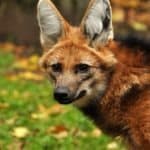
Maned wolf Chrysocyon brachyurus
Coyote Canis latrans
Gray fox Urocyon cinereoargenteus
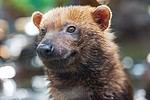
Bush dog Speothos venaticus
Harpy eagle Harpia harpyja
Crested caracara Caracara plancus
Boa constrictor Boa constrictor
Human Homo sapiens

Related Species 5

Anteaters Vermilingua Shared Class
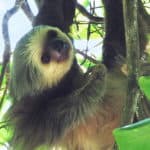
Sloths Folivora Shared Order
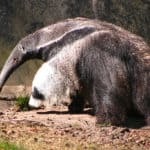
Giant anteater Myrmecophaga tridactyla Shared Class
Southern tamandua Tamandua tetradactyla Shared Class
Brown-throated three-toed sloth Bradypus variegatus Shared Order

Ecological Equivalents 4

Animals that fill a similar ecological role in their ecosystem

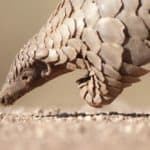
Pangolin Manidae Convergent evolution: armored body covering and frequent specialization on ants and termites; both use strong claws to tear into insect nests. Pangolins are scaly placental mammals from the Old World and are not closely related.
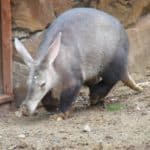
Aardvark Orycteropus afer Occupies a similar niche as a digging insectivore that targets ants and termites and constructs extensive burrows; differs by being an Afrotherian with distinct anatomy.
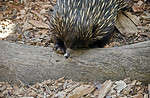
Echidna Tachyglossidae Comparable ant- and termite-feeding and digging lifestyle in some habitats; ecologically similar despite being egg-laying monotremes.
True moles Talpidae Share a burrowing/soil-foraging role and have strong forelimb digging adaptations, although moles are typically more specialized subterranean insectivores.

Types of Armadillo

20

Explore 20 recognized types of armadillo

Nine-banded armadillo Dasypus novemcinctus
Seven-banded armadillo Dasypus septemcinctus
Southern long-nosed armadillo Dasypus hybridus
Greater long-nosed armadillo Dasypus kappleri
Hairy armadillo Dasypus pilosus
Northern long-nosed armadillo Dasypus sabanicola
Yepes's mulita Dasypus yepesi
Six-banded armadillo Euphractus sexcinctus
Large hairy armadillo Chaetophractus villosus
Screaming hairy armadillo Chaetophractus vellerosus
Pichi Zaedyus pichiy
Southern three-banded armadillo Tolypeutes matacus
Brazilian three-banded armadillo Tolypeutes tricinctus
Giant armadillo Priodontes maximus
Greater naked-tailed armadillo Cabassous tatouay
Southern naked-tailed armadillo Cabassous unicinctus
Chacoan naked-tailed armadillo Cabassous chacoensis
Northern naked-tailed armadillo Cabassous centralis
Pink fairy armadillo Chlamyphorus truncatus
Greater fairy armadillo Calyptophractus retusus

โ€œThe armadillo is the only known mammal to have a fully developed shell.โ€

Resembling an armor-plated vehicle, the armadillo is outfitted with formidable protection against its natural adversaries and predators, which are unable to pierce the tough hide. This natural defense has enabled this creature to thrive for millions of years across the Western Hemisphere. Very few mammals can match its sheer resilience and survivability.
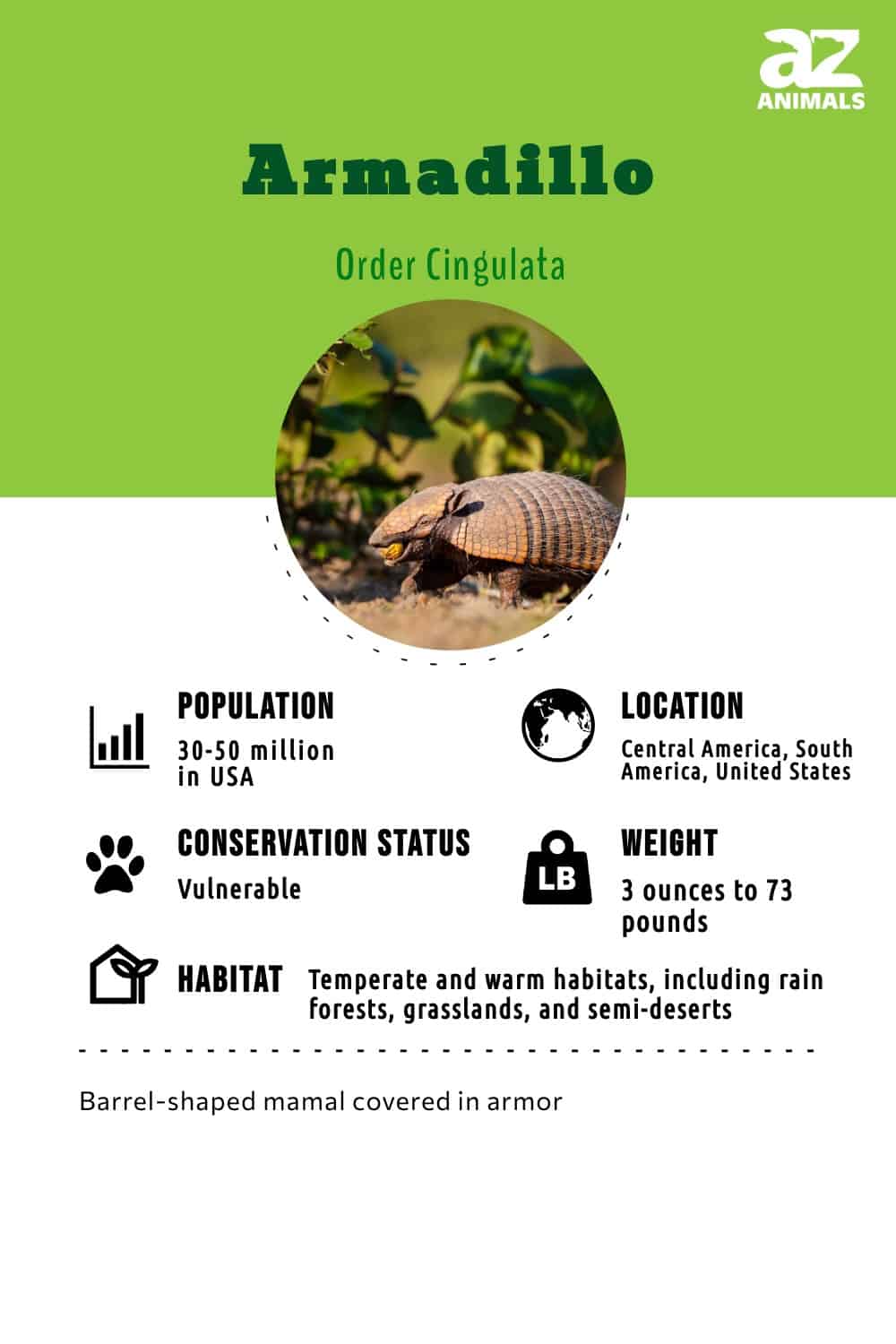
๐Ÿ‘ Armadillo infographic

Incredible Armadillo Facts

  • The armored shell consists of overlapping scales known as scutes. These scales are made from keratin, a protein also found in hair and nails. Evidence suggests that this keratin is actually just modified skin that evolved for defensive protection.
  • Armadillos are animals that are naturally susceptible to several human diseases, including leprosy.
  • In human societies, armadillos are animals that have been traditionally used as food, clothing, and even musical instruments, and they are symbolic creatures in many different cultures. Rudyard Kipling brought this animal to greater worldwide prominence in his short story โ€œThe Beginning of the Armadillosโ€ from his 1902 childrenโ€™s book Just So Stories, in which it was featured as a symbol for cleverness.
  • A group of gigantic armadillos with spiky club-shaped tails once roamed across the Americas beginning around 20 million years ago. Formally known as the glyptodonts, it is believed that they were as big as a Volkswagen Beetle. Despite their enormous size, they were actually grazing herbivores that lacked canine teeth. They appeared to go extinct around the last ice age more than 10,000 years ago.
Watch on YouTube

Scientific Name

๐Ÿ‘ Armadillo
Armadillos are relatively fast.

The term armadillo is derived from a Spanish word meaning โ€œlittle armored one,โ€ which was given by Spanish colonialists and explorers who spotted the unusual creature upon their travels through the Americas. The Aztecs had their own term for this creature: ayotochin, a word meaning turtle-rabbit.

Modern armadillos belong to the order Cingulata, a Latin word meaning girdle. It is believed that this order originated some 60 million years ago when South America was more isolated from the North American landmass. The entire order was once far more diverse, containing a multitude of different armored animals.

Today, there are only two major subfamilies of armadillos remaining: the Chlamyphoridae and the Dasypodidae. Of the two, Chlamyphoridae is the most populated. Only one genus of Dasypodidae remains, though it contains the widespread nine-banded armadillo. More distantly, the armadillo is related to anteaters and sloths.

Origins and Evolution
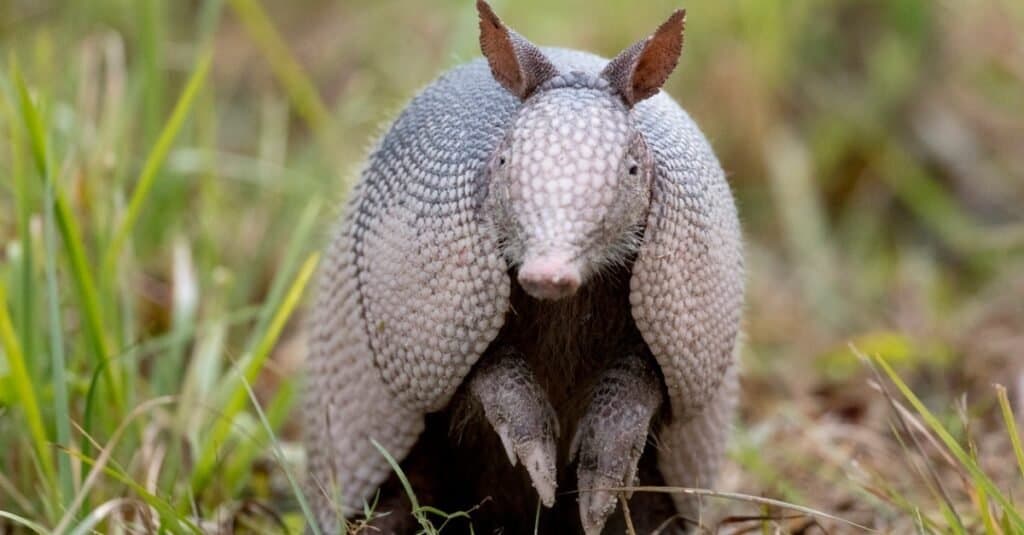
๐Ÿ‘ Are Armadillos Mammals

Nine-Banded Armadilloโ€™s armored appearance makes it look reptilian, but this almost hairless animal is a mammal.

ยฉiStock.com/6381380

Together, armadillos (order Cingulata) and sloths and anteaters (order Pilosa) make up the superorder Xenarthra. These animals first evolved around fifty million years ago in what is now South America.

The ancestors of the armadillo, the glyptodon and panocthus, were quite large compared to todayโ€™s armadillos and had tough shells. You may have seen a glyptodon in the movie Ice Age, where they were depicted as the size of a Volkswagen Beetle. While modern armadillos have downsized, they still have the same protective shell of their ancient relatives.

Due to their protective bony armor, armadillos were able to thrive until a land bridge connected North and South America. This allowed large canine and feline predators to move southward and hunt the native animals, resulting in seventy percent of them becoming extinct. Even though the armadillosโ€™ shells are made of bone, they are thin enough that even a medium-sized dog can easily break through them.

The armadillo has proved to be a very resilient species, surviving the introduction of North American predators and even expanding its territory as far north as the Ohio river valley. The beautiful armadillo was an example of this species, being almost identical to the nine-banded armadillo we know today but much larger. Its fossilized scutes have been uncovered across the midwestern United States.

Approximately 11,000 years ago, armadillos in North America ceased to exist for an unknown cause. In the mid-1800s, they reemerged near the Rio Grande and gradually migrated to the southeast and midwest portions of the United States. Unfortunately, their growth has been hindered by their weak tolerance to cold temperatures and lack of fat, making them susceptible to freezing when exposed to cold temperatures, even briefly. Nevertheless, they have had no problem relocating to warmer climates and are believed to be present in the US in the amount of 30 to 50 million.

Appearance
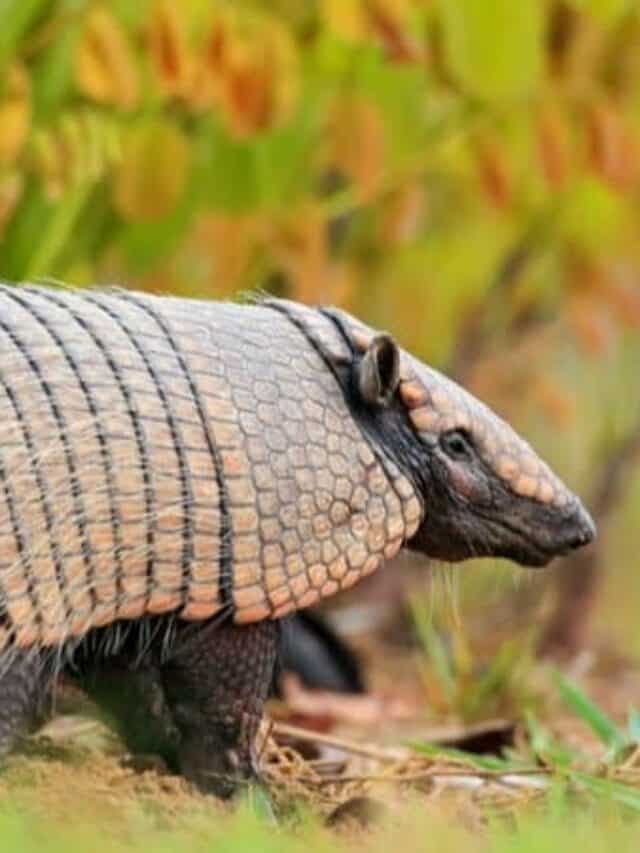
๐Ÿ‘ Top 10 Animals That Have Shells - armadillo
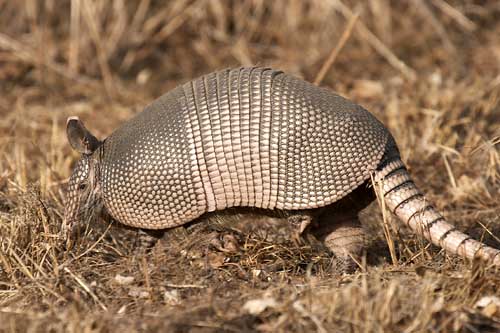
Armadillos have long tails and sharp claws for digging.

Armadillos look a bit like armored opossums (though unrelated) with their pointed snouts, short legs, long tails, sharp claws, and big ears. These creatures are commonly known for their rather plain gray or brown appearance, but in fact, some armadillos have pink, red, or even yellow coloring. They also vary widely in size. The smallest is the pink fairy armadillo at a mere 5 inches long, whereas the largest is the giant armadillo at an impressive 59 inches and 120 pounds in weight. This is the size of some larger dogs. Giant armadillos also have up to 100 teeth and six-inch claws.

Shell

The armadilloโ€™s most prominent feature, the scaly-looking shell, provides armor-like protection against predators. The armor covers most of the head and body and sometimes the legs as well. Despite popular misconception, only one species, the three-banded armadillo, can roll into a ball. The other species dig deep into the ground with their sharp claws to protect their softer parts from damage when threatened by a predator. The number of armored bands on the shell varies by species. In fact, many species are named after the number of bands.

Behavior

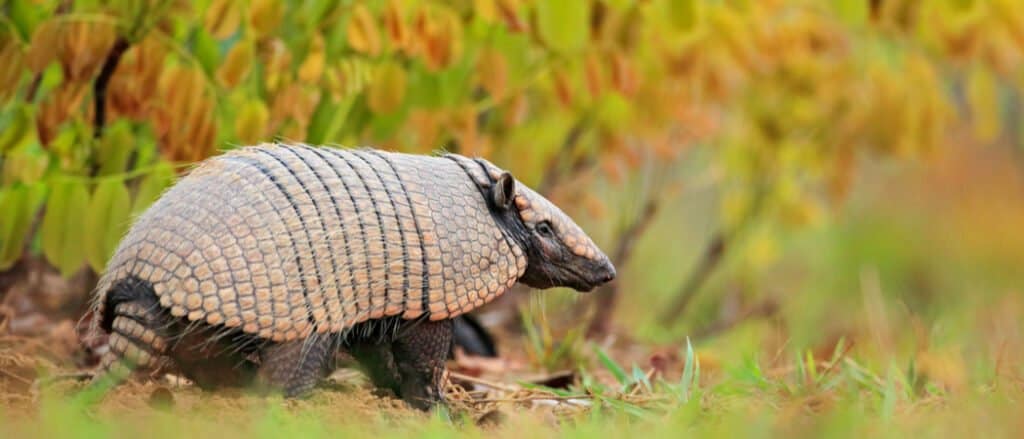
๐Ÿ‘ Armadillo walking on a dirt path

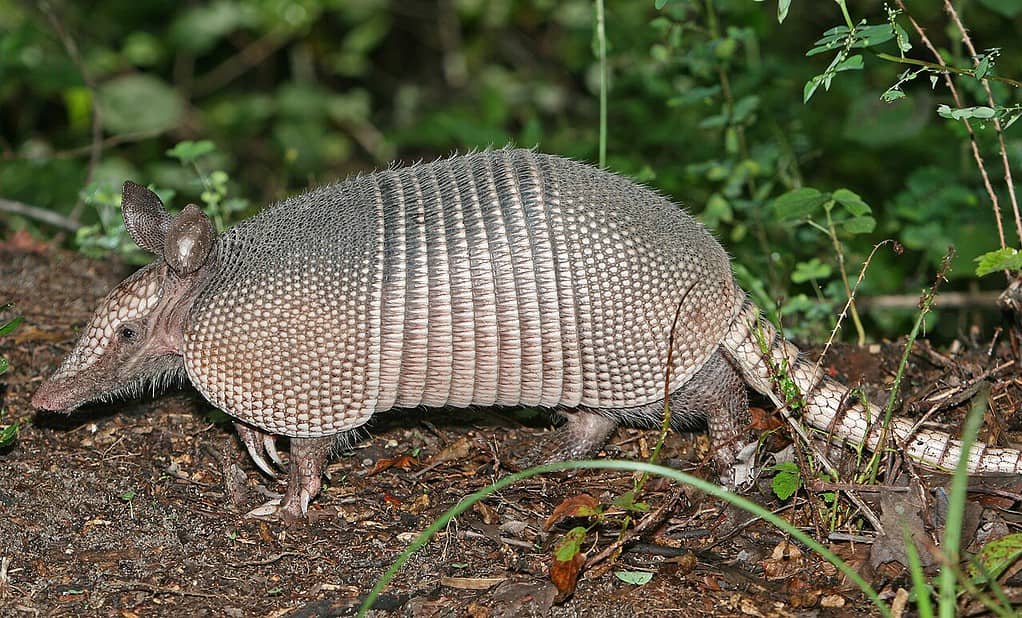
A Nine-banded Armadillo in the Green Swamp, central Florida.

ยฉhttp://www.birdphotos.com, CC BY 3.0, via Wikimedia Commons โ€“ Original / License

Armadillos are very gifted diggers. By using their sharp claws, they can create massive burrows in the ground to serve as a safe and comfortable home, where, lined with leaves and vegetation, they sleep for up to 16 hours a day. In fact, they are such proficient diggers that their abandoned burrows are sometimes inhabited by snakes, rabbits, skunks, rats, and many other animals. Other potential sources of armadillo nests include hollow logs and long grasses or shrubs.

The digging ability also serves another important purpose: it is the main means of locating food in the ground. This is bolstered by their superior sense of smell, which makes up for their relatively poor eyesight. They can easily sniff out hidden food beyond the sight of most animals. Moreover, long sprouts of hair on their skin (though not their shell) allow them to feel their way around narrow gaps and enclosed environments. Like the anteater, the armadillo has a remarkably long tongue to suck up its prey, hiding deep within the ground.

Armadillos have incredibly flexible social arrangements that may change depending on the situation. Most of the time, they enjoy a solitary existence, especially when they come out at night to hunt and forage for food (they are mostly nocturnal animals). But they will sometimes congregate together for several different reasons. The first reason for coming together is to find a mate for the breeding season. The second reason is that they will often huddle together in their burrows to keep warm during cold bouts. Because of a low average body temperature and metabolic rate, they are extremely intolerant to cold weather. For this reason, prolonged periods of cold can be a death sentence.

Read here to find out if armadillos are dangerous.

Habitat
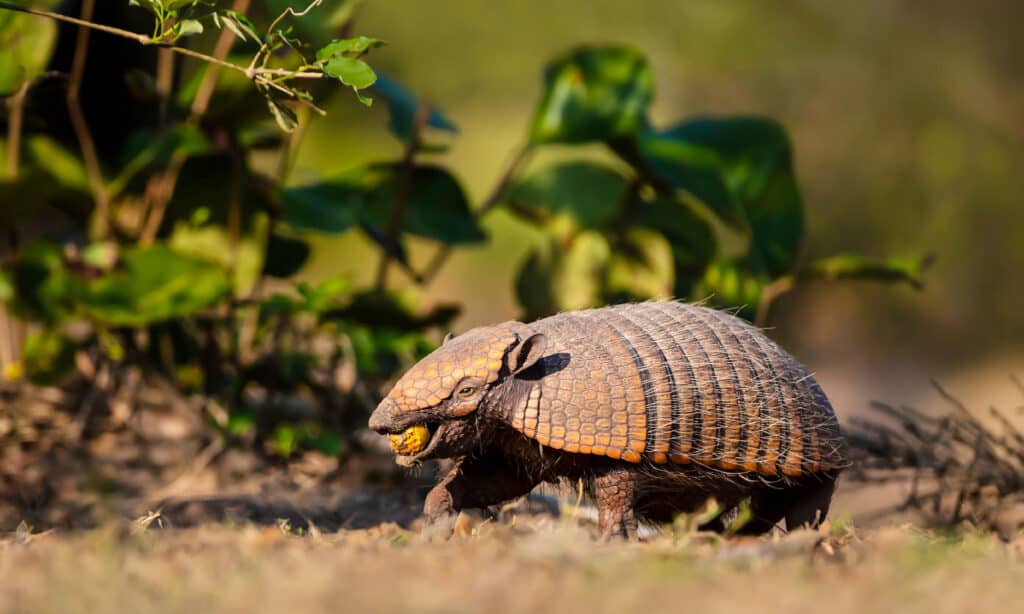
๐Ÿ‘ Six-banded armadillo (Euphractus sexcinctus) eating

Armadillos live in Central and South America and the United States.

ยฉGiedriius/Shutterstock.com

Armadillos are almost exclusively endemic to Central America and South America. The only exception is the nine-banded species, which is also found in the United States. They are completely absent from Africa, the Eurasian supercontinent, and the Australian area. The greatest variation of this species is found around the Paraguay region. This is due to the fact that it evolved in South America and only slowly migrated out to the rest of the hemisphere. It is possible that armadillos will continue to expand northward into the northern United States and Canada as the climate warms.

Armadillos live in grasslands, rainforests, wetlands, and semi-desert regions of the Americas. These ecosystems provide plenty of places with sandy or loose soil for easy digging and excavation. However, because of their diverse diet, these creatures are capable of surviving in a large number of different ecosystems and habitats.

Population
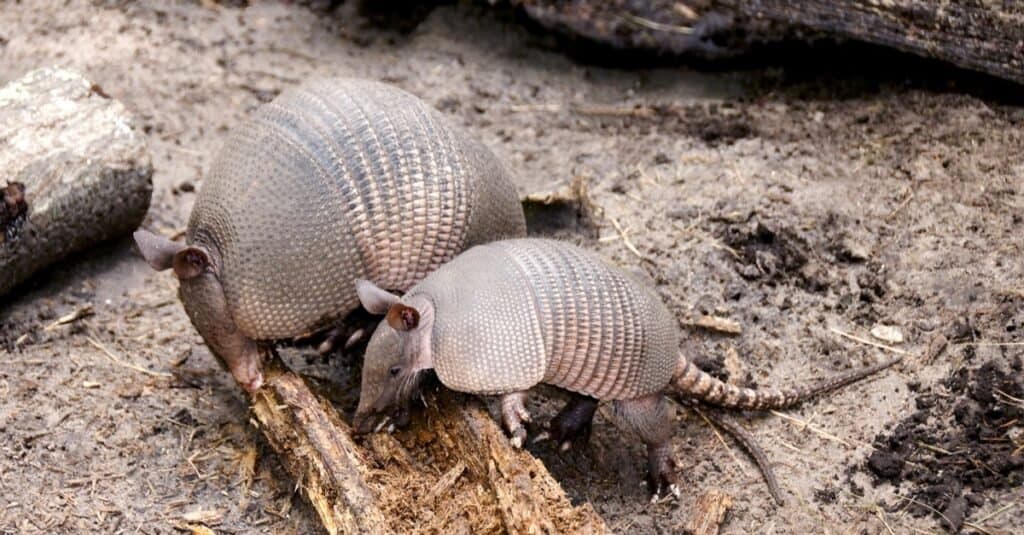
๐Ÿ‘ Are Armadillos Mammals baby

Armadillos give birth to live young. They typically have large litters of up to 15 baby armadillos. Their babies are called pups.

ยฉRose Waddell/Shutterstock.com

Although exact population numbers remain unknown, the armadillo, as a group, appears to be in relatively strong health. According to the IUCN Red List, most species are listed as least concern, and yet some are facing the prospect of steep decline. The giant armadillo and the Brazilian three-banded armadillo are both vulnerable to extinction. Population numbers may be decreasing due to the destruction of their natural habitat across South America. Conservationists have focused their efforts on reducing habitat loss and deliberate deaths from hunting and poisoning.

Diet
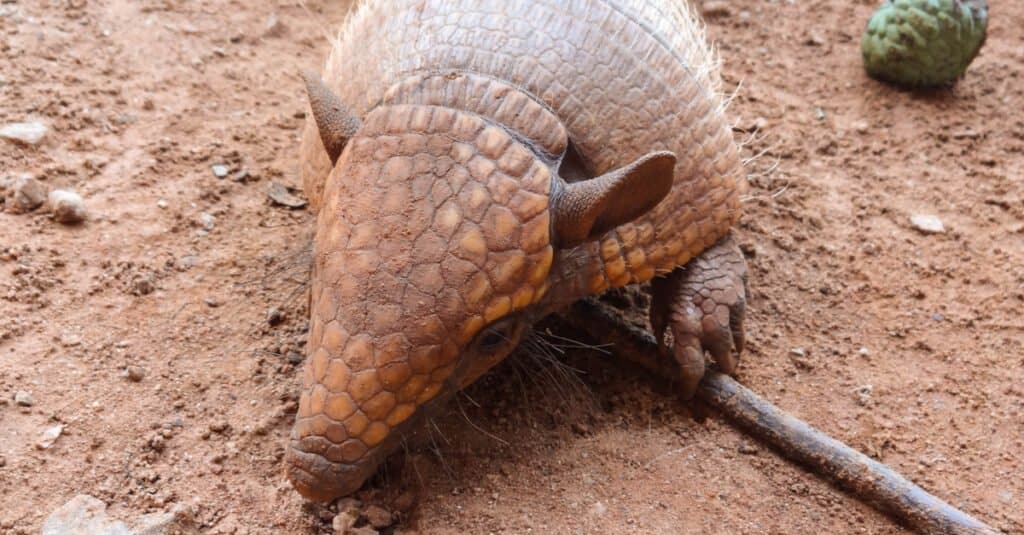
๐Ÿ‘ Animals that Eat Insects โ€“ Naked-Tailed Armadillo

The Northern naked-tailed armadillo spends most of its time in tunnels underground and mainly feeds on ants and termites.

ยฉYara Oliveira/Shutterstock.com

Armadillos have adapted to rely on a nearly inexhaustible food source, spending most of the day foraging for invertebrates and larvae. Ants and termites appear to be a favorite meal for many species of armadillo, but they will also eat beetles, cockroaches, wasps, spiders, snails, scorpions, and much more. Other sources of food include fruits, vegetation, eggs, small reptiles and amphibians, and carrion.

Lacking sharp incisors or canines, their short, flat teeth are well-suited for consuming small, crunchy animals and plant matter. Combined with their long tongues, armadillos can consume an impressive amount of food per day. They are generally helpful for humans as they dispose of insects and pests that can harm crops. However, armadillos can inadvertently destroy crops themselves by digging around in the dirt. For this reason, some farmers have considered them a nuisance.

Predators
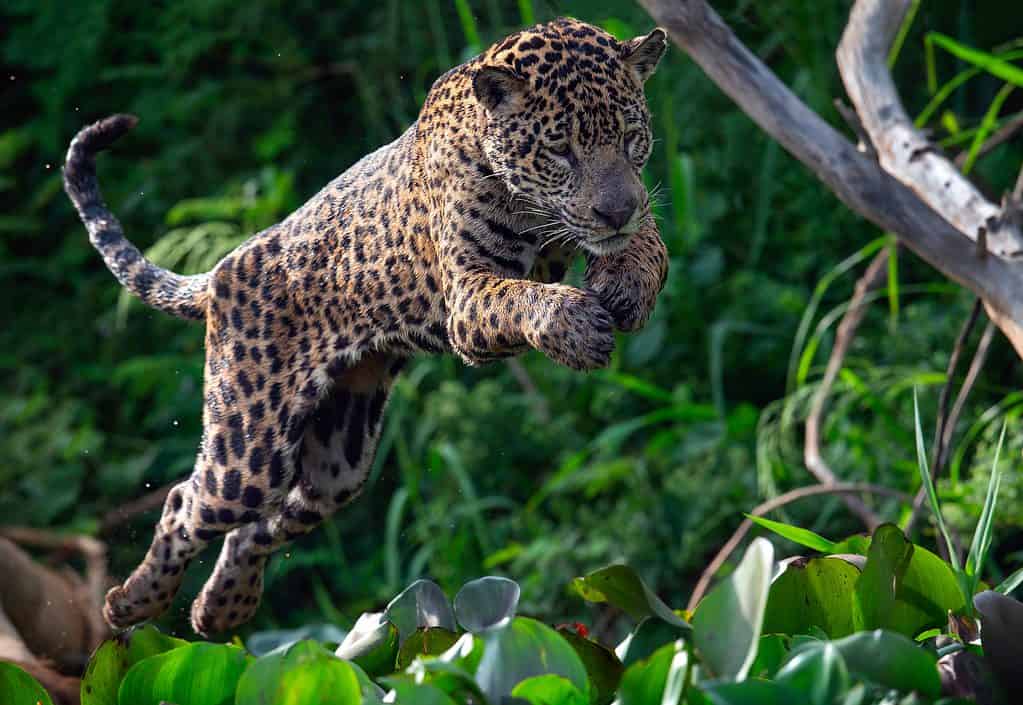
๐Ÿ‘ Jaguar

Jaguars move at high speeds and can reach up to 80 miles per hour and can easily catch and eat an Armadillo.

ยฉSergey Uryadnikov/Shutterstock.com

Armadillos face danger from all kinds of predators, including jaguars, coyotes, bobcats, wolves, bears, and large hawks, and other birds of prey. The armored shell is obviously its main means of defense. If this fails, then it may try to lash out with its sharp claws, attempt to play dead, or simply run away. Although it may not look like it, the armadillo is actually an agile runner and jumper, capable of making a quick escape. One species of armadillo, the nine-banded, can actually float across the water by taking in enough air to make its entire body buoyant.

Throughout human history, these animals have often been hunted as a source of food or for their parts, especially in South America. During the Great Depression, they sometimes became a last resort for desperate and hungry people. They were described as โ€œHoover hogsโ€ by those who blamed the president for their economic struggles.

Armadillos are also vulnerable to many other types of human activity, including road accidents, poisoning, or extermination. The biggest threat to the continued existence is the loss of rainforests, wetlands, and other habitats across South America. The armadillo is resilient and capable of adapting to many different situations, but it is gradually being pushed out of its natural habitat.

Reproduction, Babies, and Lifespan
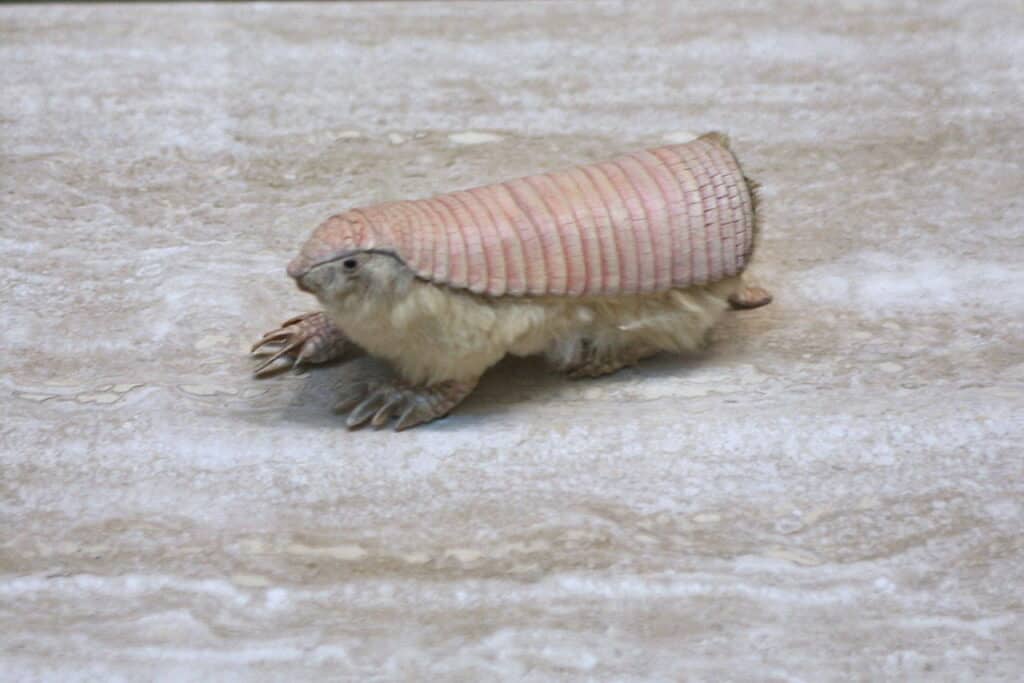
๐Ÿ‘ Pink Fairy Armadillo (Chlamyphorus truncatus)

Armadillos can have up to 15 babies at once.

ยฉCliff / CC BY 2.0 โ€“ Original / License

The armadilloโ€™s breeding season varies by species and region. Some armadillos can breed year-round, while others only breed at specific times of the year. Males rely on their strong sense of smell to locate a potential mate. One species, the yellow or six-banded armadillo, engages in a truly elaborate courtship ritual in which the female will run from her male suitors. After the fastest male catches her, they will mate even as the female continues running.

There are other unique and bizarre aspects to armadillo anatomy and reproduction. The male, for instance, has one of the largest penis sizes to body lengths among all mammals. The females also have the ability to delay the implantation of the egg after copulation until food is more plentiful. And compared to other mammals of a similar size, armadillos are truly prolific breeders. The seven-banded armadillo can produce between eight and 15 identical babies, or pups, at a time. The nine-banded armadillo can produce four identical babies. However, some species may only produce one or two pups at a time.

Once conceived, the babies develop quickly. After a gestation period of only two to five months, the young pups are born. At first, their skin is soft and vulnerable, but they develop hardened armor over a matter of weeks. They are then weaned during a two- to four-month period. Within a year, they reach full sexual maturity and are ready to venture out on their own.

Depending on the species, armadillos have a lifespan lasting anywhere between four and 30 years. In captivity, they have been known to live even longer. However, some species may not be suited for captivity and tend not to live very long in zoos or wildlife centers.

In the Zoo

20 Types of Armadillos

๐Ÿ‘ Top 10 Animals That Have Shells - armadillo

There are 20 different species of armadillos.

ยฉOndrej Prosicky/Shutterstock.com

Armadillos are incredible creatures that originated in South America. Like humans, they are mammals. Contrary to popular belief, armadillos are neither rodents nor marsupials and have no relation to opossums. There are a total of twenty distinct species of armadillos. Here they are:

GenusScientific NameArmadillo Common Name
CalyptophractusCalyptophractus retususGreater fairy armadillo
ChlamyphorusChlamyphorus truncatusPink fairy armadillo
CabassousCabassous chacoensisChacoan naked-tailed armadillo
CabassousCabassous tatouayGreater naked-tailed armadillo
CabassousCabassous centralisNorthern naked-tailed armadillo
CabassousCabassous unicinctusSouthern naked-tailed armadillo
ChaetophractusChaetophractus nationiAndean hairy armadillo
ChaetophractusChaetophractus villosusHairy armadillo
ChaetophractusChaetophractus vellerosusLittle hairy armadillo
DasypusDasypus kappleriGreat long-nosed armadillo
DasypusDasypus pilosusHairy long-nosed armadillo
DasypusDasypus sabanicolaLlanos long-nosed armadillo
DasypusDasypus novemcinctusNine-banded armadillo
DasypusDasypus septemcinctusSeven-banded armadillo
DasypusDasypus hybridusSouthern long-nosed armadillo
EuphractusEuphractus sexcinctusSix-banded armadillo
PriodontesPriodontes maximumGiant armadillo
TolypeutesTolypeutes tricinctusBrazillian three-banded armadillo
TolypeutesTolypeutes matacusSouthern three-banded armadillo
ZaedyusZaedyus pichiyDwarf armadillo
View all 325 animals that start with A
How to say Armadillo in ...
Danish
Bรฆltedyr
German
Gรผrteltiere
English
Armadillos
Spanish
Dasypodidaees
Finnish
Vyรถtiรคiset
French
Tatou
Hungarian
Tatu
Italian
Dasypodidaeit
Dutch
Gordeldieren
English
Beltedyr
Polish
Pancerniki
Portuguese
Tatu
Swedish
Bรคltdjur

Sources

  1. San Diego Zoo
  2. Alfred L. Gardner for Britannica
  3. National Geographic
  4. Patricia Edmonds for National Geographic

About the Author

Ashley Haugen

Ashley Haugen is the editor of A-Z Animals. She's a lifelong animal lover with an affinity for dogs, cows and chickens. When she's not immersed in A-Z-Animals.com (her favorite editorial job of her 25-year career), she can be found on the hiking trails of Middle Tennessee or hanging out with her family, both human and furry.
Connect:

Thank you for reading! Have some feedback for us?

Contact the AZ Animals editorial team

Related Articles You May Find Interesting

Scientists Are Putting Tiny GPS Trackers on Box Turtles, and What They Find Could Help Save Them

A Tiny Terrapin Hatchling Brings Hope for a Critically Endangered Species


Armadillo FAQs (Frequently Asked Questions)

There are currently more than 20 living species of armadillos in the world, most of them located in South America. However, dozens more extinct species have been documented from the fossil record.

Armadillos can sometimes be a nuisance to humans, but if you want to remove an armadillo from your land, then you should do it in a safe and humane manner by contacting a local wildlife service.

Armadillos pose very little risk to humans, but they are sometimes carriers of diseases, so you should try not to handle them yourself.

If not accustomed to the presence of humans, armadillos are skittish and shy. They almost always keep their distance from people. If you see an armadillo, it is a good idea to leave it alone.

Armadillos are Omnivores, meaning they eat both plants and other animals.

Armadillos belong to the Kingdom Animalia.

Armadillos belong to the phylum Chordata.

Armadillos belong to the class Mammalia.

Armadillos belong to the family Dasypodidae.

Armadillos belong to the order Cingulata.

Armadillos belong to the genus Dasypus.

Armadillos are covered in Boney Plates.

Armadillos live in the United States.

Armadillos live in forests and grasslands.

Armadillos prey on insects, ants, and termites.

Predators of Armadillos include bears, wolves, and coyotes.

Armadillos have armored plated skin and can curl into a ball.

The average number of babies an Armadillo has is 4.

The Armadillo can curl into a hard, protective ball!

The scientific name for the Armadillo is Dasypodidae.

Armadillos can live for 4 to 12 years.

An Armadillo can travel at speeds of up to 30 miles per hour.

The main differences between an aardvark and an armadillo are their range, body structure, defense mechanism, and order. While aardvarks are natives of Africa, belonging to the Tubulidentata order, armadillos belong to the Cingulata and are found mainly in the Americas. Aardvarks have short furs that cover their body while armadillos have a bony armor called osteoderm around their body.

The key differences between an armadillo and an anteater are size, armor, hair, diet, feeding, and number of species.