

B
Species Profile

Blood Python

Python brongersmai

Short tail. Heavy muscle. Red power.
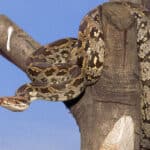
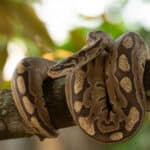
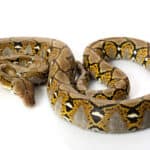
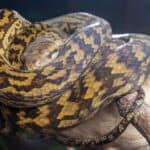
dwi putra stock/Shutterstock.com

Blood Python Distribution

Click a location to explore more animals from that region

Loading map...

At a Glance

Wild Species
Also Known As short-tailed python, red short-tailed python
Diet Carnivore
Activity Nocturnal+
Lifespan 15 years
Weight 22 lbs
Did You Know?

Despite modest length, it's one of the heaviest pythons for its size (very thick-bodied, short-tailed "python brick" build).

Scientific Classification

A heavy-bodied, terrestrial python known for its rich red/brown coloration and robust build; a nonvenomous constrictor popular in the reptile trade.

Kingdom
Animalia
Phylum
Chordata
Class
Reptilia
Order
Squamata
Family
Pythonidae
Genus
Python
Species
brongersmai

Distinguishing Features

  • Very stout, muscular body with relatively short tail (short-tailed python group)
  • Variable but often vivid reddish tones; patterned blotches/banding
  • Broad head with pronounced heat-sensing labial pits typical of pythons
  • Primarily terrestrial; often remains hidden and can be defensive when disturbed

Physical Measurements

Males and females differ in size

Length
492 ft 2 in (393 ft 8 in – 656 ft 2 in)
5 ft 3 in (3 ft 11 in – 7 ft 10 in)
Weight
13 lbs (7 lbs – 26 lbs)
26 lbs (11 lbs – 55 lbs)
Tail Length
8 in (6 in – 12 in)
8 in (5 in – 12 in)
Top Speed
1 mph
Blood python estimated sprint speed

Appearance

Primary Colors
Secondary Colors
Skin Type Dry, keratinized skin with overlapping smooth, glossy scales; enlarged belly scutes for traction; paired heat-sensing pits on the upper and lower lips, as in pythons (Python brongersmai).
Distinctive Features
  • Very heavy-bodied, muscular build with a notably short tail relative to total length (a hallmark of the short-tailed python group).
  • Adult total length commonly ~120-180 cm; larger individuals reported to about ~240 cm (Barker & Barker, 2006; O'Shea, 2007).
  • Robust girth for length; compared with many other pythons, appears 'stocky'/barrel-bodied rather than elongate.
  • Broad, somewhat triangular head distinct from the neck; relatively small eyes; prominent labial scales bearing heat pits.
  • Color variability by locality and individual: can range from vivid blood-red to duller reddish-brown/chocolate-brown; contrast with dark blotches may be strong or muted depending on saturation.
  • Predominantly terrestrial, lowland-associated appearance/ecology; frequently linked to swampy/peat forest, riverine edges, and other humid lowland habitats in Southeast Asia (species accounts in Barker & Barker, 2006; IUCN assessments where applicable).
  • Nonvenomous constrictor morphology and behavior: ambush-oriented body plan; kills prey by constriction rather than venom (general Pythonidae biology; summarized for the species in Barker & Barker, 2006).
  • Longevity: commonly ~20-30 years in captivity, with reports into the high-20s/30+ years under long-term care (Barker & Barker, 2006; major husbandry references).

Sexual Dimorphism

Females are generally larger/heavier-bodied than males; males typically have proportionally longer tails and more prominent cloacal spurs (a common python dimorphism described for short-tailed pythons in Barker & Barker, 2006).

  • Smaller average adult body size and mass than females (population-dependent).
  • Proportionally longer tail (relative to total length).
  • Cloacal spurs often relatively more evident; used in courtship.
  • Typically attain greater total length and substantially greater girth/mass (stockier overall appearance).
  • Proportionally shorter tail (relative to total length).
  • Body profile often appears broader/heavier through mid-body, especially in mature breeding females.

Did You Know?

Despite modest length, it's one of the heaviest pythons for its size (very thick-bodied, short-tailed "python brick" build).

Published maximum total length is about 2.6 m; most adults are ~1.5-2.1 m, with females typically larger/heavier than males.

Color is highly variable-individuals can be brick red, rusty orange, chestnut, or dark brown, often with strong pattern contrast when young.

It is an egg-layer; females coil around the clutch and brood/guard it until hatching (a classic python trait).

Taxonomy is in flux: many modern sources place it in the genus Malayopython (Malayopython brongersmai), though it's still widely listed as Python brongersmai.

It's native to Southeast Asia's lowlands (especially Sumatra and the Malay Peninsula) and is strongly associated with swampy/river-edge habitats.

It is listed under CITES Appendix II due to heavy international trade (skins and pets).

Unique Adaptations

  • Short-tailed python morphology: an unusually thick trunk and relatively short tail (a hallmark of the short-tailed python group), suiting a ground-based, ambush lifestyle in dense lowland cover.
  • Robust cranial/neck musculature: supports powerful initial prey seizure and rapid coiling-useful for subduing strong, struggling rodents.
  • Heat-sensing labial pits: infrared-sensitive pits along the lips help detect warm-blooded prey in dim light or dense vegetation.
  • Cryptic, variable coloration: red-to-brown palettes can blend with leaf litter, peat-stained swamp margins, and reddish soils-effective camouflage for sit-and-wait hunting.
  • Flexible jaw/ligament system: extreme gape and "walking" jaw motion allow swallowing large prey whole relative to head size.
  • Physiology adapted to feast-or-famine: python metabolism and organ function can scale after feeding, enabling efficient digestion of infrequent large meals.

Interesting Behaviors

  • Ambush predation: commonly waits motionless along forest-floor trails, swamp edges, and rodent runways, striking at close range.
  • Constrictor kill strategy: seizes prey with recurved teeth and rapidly coils; prey typically includes rats and other small mammals, plus birds.
  • Primarily terrestrial: tends to move low and steady rather than climbing, using its mass for leverage in tight spaces and thick cover.
  • Defensive displays: when stressed it may "huff" (forceful exhalations), hold a tight S-curve, and deliver fast, short-range strikes.
  • Long fasting ability: like many pythons, can go extended periods between meals, relying on low metabolic demand and energy stores.
  • Maternal brooding: females remain with eggs, tightening coils for protection and helping stabilize incubation conditions until hatch.
  • Crepuscular/nocturnal activity is common in the wild, especially in hot lowland climates where daytime exposure risks overheating.

Cultural Significance

Blood python (Python brongersmai) is known in parts of Indonesia and Peninsular Malaysia, feared and respected as a swamp and forest edge predator. It is important in a regulated skin (leather) trade and kept by reptile hobbyists worldwide for its red-brown colors and compact, heavy body.

Myths & Legends

In Malay and Indonesian stories, great serpents or dragons are powerful, sometimes protective spirits tied to water, fertility, and hidden wealth — a link often used for large pythons like the blood python (Python brongersmai).

Python guardian/omen stories: in village folklore across parts of the Malay world, very large pythons are sometimes described as place-guardians of wetlands or old groves; encounters may be interpreted as warnings to respect certain sites.

In Southeast Asian stories, people tell of giant, man-eating pythons that swallow livestock or people. These tales are not about one species but often link to big, thick pythons near swamps and plantations.

The species name Python brongersmai honors Dutch snake scientist Leo Brongersma, and the common name "blood python" comes from its bright brick-red color that made it famous in the pet trade and culture.

Conservation Status

NT Near Threatened

Likely to qualify for a threatened category in the near future.

Population Decreasing

Protected Under

  • CITES Appendix II (Python brongersmai; international commercial trade is permitted but regulated via permits/controls).
  • Range-state protections/controls vary; in parts of the range, take and trade may be regulated through permitting/quotas and wildlife laws rather than full protection (implementation/enforcement variable).

Life Cycle

Birth 15 hatchlings
Lifespan 15 years

Lifespan

In the Wild 10–20 years
In Captivity 15–30 years

Reproduction

Mating System Polygynandry
Social Structure Solitary
Breeding Pattern Transient
Fertilization Internal Fertilization
Birth Type Internal_fertilization

Blood python (Python brongersmai) is a solitary, heavy-bodied, ground python. Mating is short and seasonal with multiple mates possible; males search for females. Females lay about 12–30 eggs, coil and shiver to incubate about 55–65 days. Adults about 1.5–2.1 m long; live 20+ years.

Behavior & Ecology

Social Solitary Group: 1
Activity Nocturnal, Crepuscular
Diet Carnivore rats (Rattus spp.)

Temperament

Sedentary, heavy-bodied, terrestrial ambush predator (sit-and-wait strategy); typically remains concealed for long periods and strikes at close range when prey approaches (Shine et al., 1999).
Blood python (Python brongersmai) is usually defensive when bothered up close, often hissing loudly and striking quickly; some tolerate handling, but many become more defensive when confined or restrained, often reported in captivity.
Across habitats, blood python (Python brongersmai) is solitary and hides to ambush, including disturbed areas; they come out more at night when exposed, more at dawn/dusk under dense cover; defense varies by individual and handling.
Blood pythons (Python brongersmai) live long for snakes—often over 15 years in captivity, sometimes over 20—and have slow interactions and little social contact except during breeding.

Communication

Hissing (expelled-air threat sound) during defensive displays.
Chemosensory signaling: tongue-flicking and vomeronasal detection of prey, predators, and reproductive cues; pheromone trails are the primary mechanism for mate-finding in pythons and are the most plausible mechanism for P. brongersmai pair formation Supported generally for Pythonidae; see e.g., Mason & Parker, 2010; Shine et al., 1999
Tactile communication during courtship and copulation Body alignment, cloacal contact); physical contact is the main close-range channel once partners meet (Pythonidae reproductive behavior; Shine et al., 1999
Vibration/mechanosensory detection through substrate Responses to footsteps/ground-borne vibrations), supporting defensive behavior and prey/predator awareness in a terrestrial ambush snake (general snake sensory biology; see e.g., Young, 2003

Habitat

Biomes:
Tropical Rainforest Wetland Freshwater
Terrain:
Plains Riverine Coastal Island Muddy
Elevation: Up to 2132 ft 7 in

Ecological Role

Terrestrial mesopredator (mammal-focused constrictor) in Sundaic lowland ecosystems and human-modified landscapes.

Suppresses populations of small mammals (notably rodents), potentially reducing crop/pest pressure and disease-vector abundance. Transfers energy from small endotherms to higher trophic levels; juveniles and adults can serve as prey for larger predators, linking trophic layers. Influences small-mammal behavior and local community structure via predation risk (top-down effects).

Diet Details

Main Prey:
Rats Small rodents Shrew Ground-foraging birds

Human Interaction

Domestication Status

Wild

Danger Level

Moderate
  • Bites and deep lacerations: strong strike and large, recurved teeth; defensive biting is a noted issue in this species' husbandry literature (e.g., Barker & Barker, 2006).
  • Handling injury risk: powerful constriction can cause bruising/sprains; while human fatalities are not a typical documented risk for this size class, unsupervised handling (especially around children) is inappropriate.
  • Zoonotic disease: Salmonella exposure risk typical of reptiles (hand hygiene required).
  • Allergic reactions or infection secondary to bites/scratches if not promptly cleaned and medically evaluated.

As a Pet

Not Suitable as Pet

Legality: Laws vary. Blood python (Python brongersmai) is legal in many places if bought legally, but often needs permits or follows “large constrictor” rules. CITES Appendix II controls cross-border trade—check local import/export rules.

Care Level: Experienced

Purchase Cost: $200 - $2,000
Lifetime Cost: $3,000 - $12,000

Economic Value

Uses:
Pet trade (captive-bred and wild-sourced where legal) Leather/skins (regional, regulated) Local subsistence/commerce (meat/byproducts in parts of range) Education/display (zoos, reptile parks)
Products:
  • live animals (pet market; morph/line-bred individuals in captivity)
  • skins/leather goods (where legally sourced and traded)
  • husbandry services and supplies (caging, heating, feeders, veterinary care)
  • public exhibition/educational programming

Relationships

Predators 6

King cobra Ophiophagus hannah
Water monitor Varanus salvator
Crested serpent eagle Spilornis cheela
Changeable hawk-eagle Nisaetus cirrhatus
Estuarine crocodile Crocodylus porosus
Humans Homo sapiens

Related Species 7

Sumatran short-tailed python Python curtus Shared Genus
Borneo short-tailed python Python breitensteini Shared Genus
Burmese python Python bivittatus Shared Genus
Indian python Python molurus Shared Genus
Ball python Python regius Shared Genus
Reticulated python Malayopython reticulatus Shared Family
Amethystine python Simalia amethistina Shared Family

Ecological Equivalents 5

Animals that fill a similar ecological role in their ecosystem

Sumatran short-tailed python Python curtus Very similar in lifestyle and hunting: a ground-dwelling, heavy-bodied ambush constrictor inhabiting lowland forests, swamps, and disturbed areas; feeds on small to medium mammals and ground-dwelling birds. Often confused in the pet and leather trades.
Borneo short-tailed python Python breitensteini Close ecological relative in the 'short-tailed python' complex. Stout and primarily terrestrial, often found in wet lowlands (swamps and peatlands); eats similar mammals and defends itself by camouflage or hiding followed by sudden close-range strikes.
Ball python Python regius Shares a terrestrial/semifossorial ambush niche as a sit-and-wait constrictor that eats rodents and birds, remains hidden in burrows, is smaller on average, and is often compared in captivity.
Boa constrictor Boa constrictor Ecological analog: a nonvenomous constrictor that commonly employs ambush predation on mammals and birds and uses heavy musculature to subdue prey. Not closely related (boid vs pythonid), but convergent in trophic role as a mid-to-upper-level terrestrial predator.
Green anaconda Eunectes murinus Both are wetland constrictors that ambush prey and kill by strong coiling, and are very thick-bodied. Green anacondas are more aquatic, but both eat similar mammals and birds in wet lowlands.

“Blood pythons are popular pets and captive bred individuals are easy to handle.”

Up and about at dusk or dawn, the blood python, also known as the red blood python, is a crepuscular animal. These are non-venomous creatures active between morning and evening hours. (The list includes bobcats, chinchillas, mice, wombats, and possums.)

5 Amazing Blood Python Facts

  • Once considered aggressive and unpredictable, it came to be the behavior was the result of adult snakes caught in the wild and held in captivity.
  • Breeders, herpetoculturists and snake enthusiasts love the blood python due to the snake’s relatively small size and its striking color and pattern morphs.
  • The specific species name, brongersmai, comes from Dutch herpetologist Leo Brongersma.
  • Today, the blood python thrives in protected habitats and human-modified habitats.
  • There’s a tube at the bottom of the snake’s mouth that allows the blood python to breathe while it swallows food.

Where to Find Blood Pythons

The blood python is a non-venomous, medium-sized snake. You can find it in Thailand, the Malay Peninsula, Sumatra, and other small, outlying islands.

There have also been reports of the red blood python in other countries such as Singapore. This is likely the result of an introduction by humans.

Blood pythons are found on palm plantations, in tropical forests and swamps, and in marshes. They’re ground-dwelling predators that wait patiently on forest floors. The animals can hide for hours waiting for prey.

Shy and nocturnal, the red blood python is solitary, interacting only during mating season.

Types of Blood Pythons

The blood python family consists of three types. These are the blood python, the Borneo short tail, and the Sumatran short tail.

All the species average about five feet in length size with the blood python capable of getting larger. Of the threesome, the Sumatran gets props for a better temperament than its cousins.

Blood Python

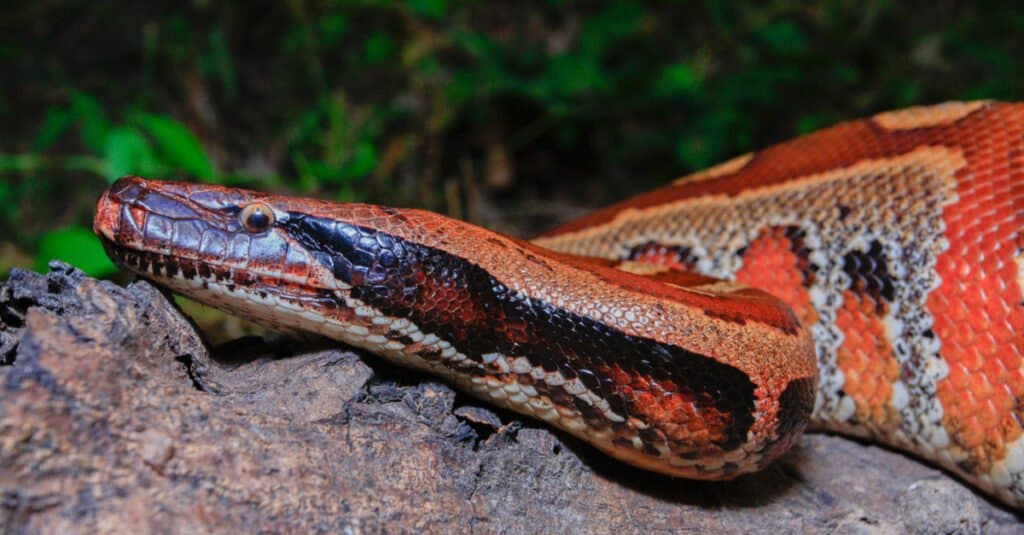
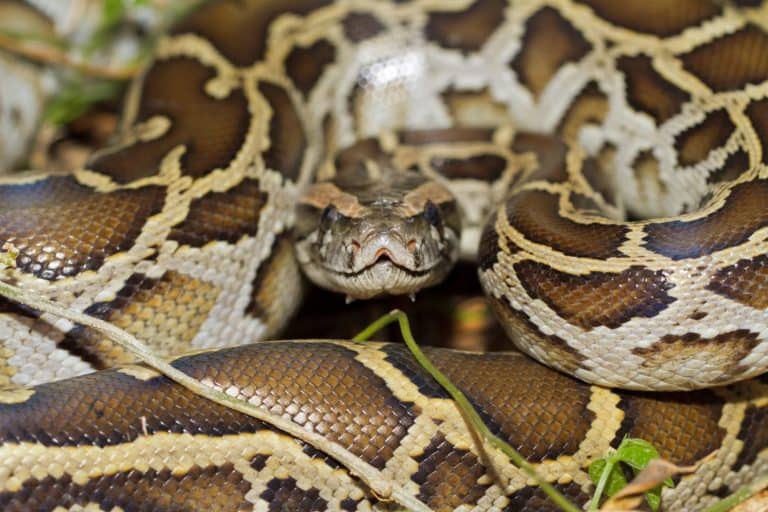
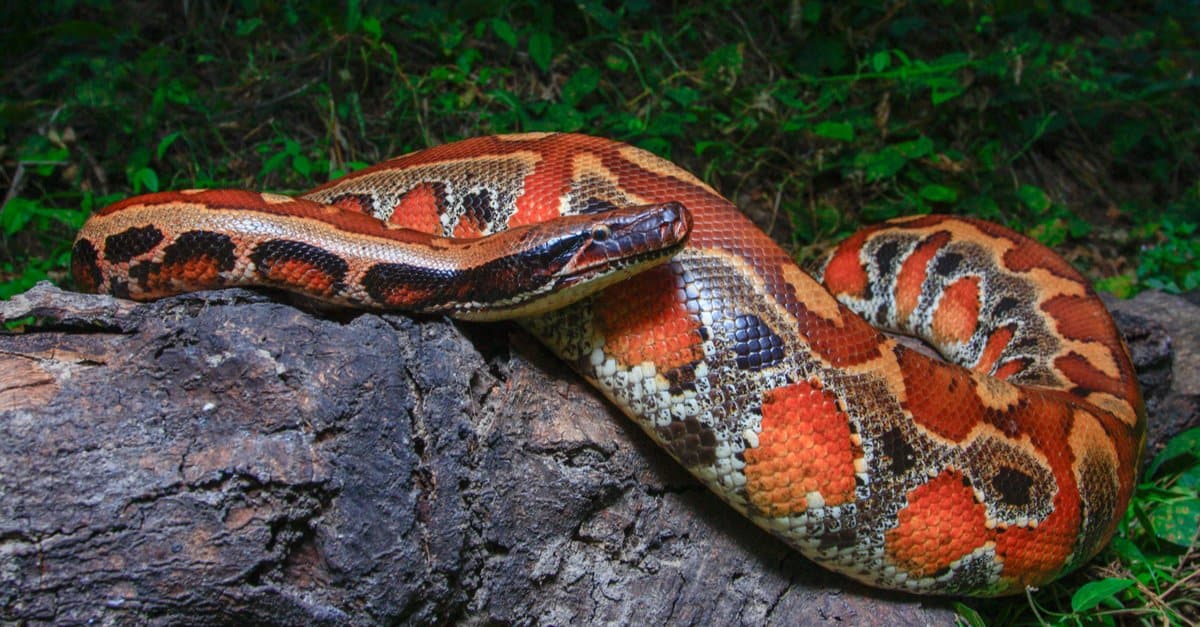
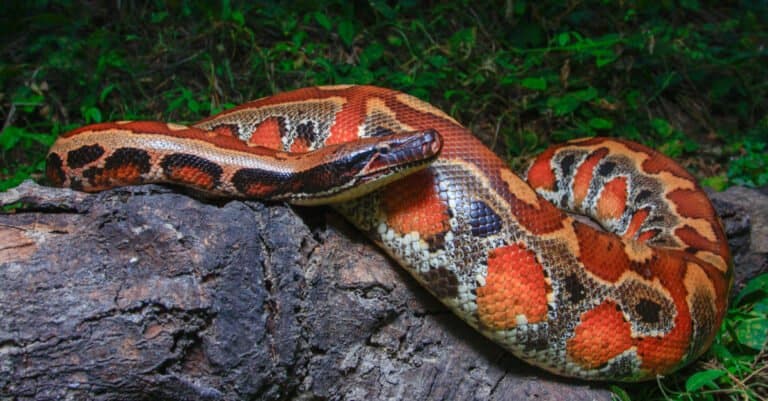
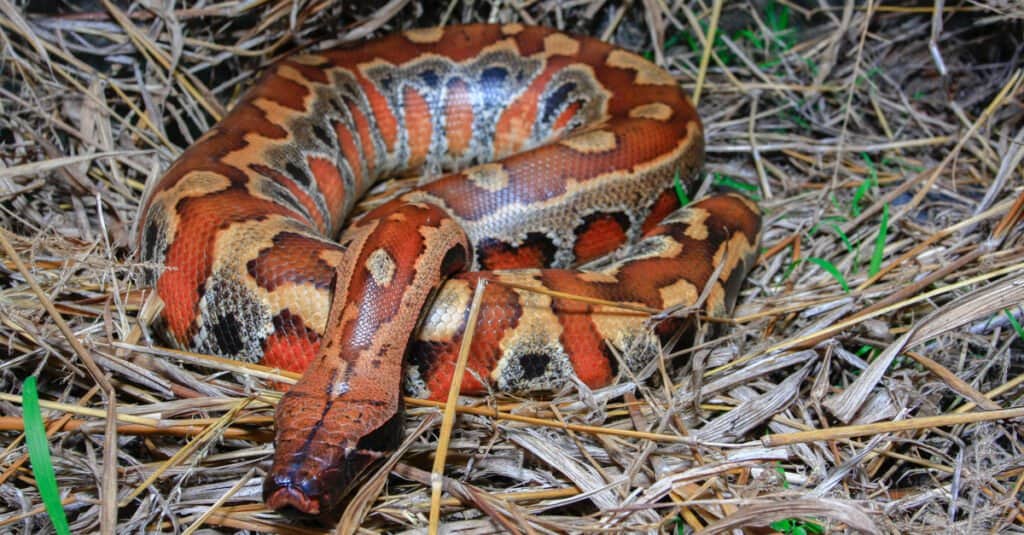
The non-venomous blood python comes in a range of colors, browns, yellows, tans, cherry, and bright reds. Red blood python identification marks include stripes or blotches of tan, gold, orange or black. The belly is often white and sometimes has small markings.

Sumatran Short Tailed Python

The Sumatran short tail has colors that range from dark gray to brown and black. The Sumatran is the smallest of the species. The short tail is located in Sumatra, the Lingga Islands, Kalimantan, and the Bangka Islands.

Borneo Short Tail Python

These creatures come in darker colorations from tans to browns. They have what’s called color morphs that include stripes and ultra-breit. (The ultra-breit represents a trait of unique offspring.) While also called “Borneo blood pythons,” the reptile community discourages the practice to minimize cross-confusion.

Blood Python Scientific Name

The blood python, or Python brongersmai, was once named Python curtus brongersmai. Scientists reconsidered the classification after mistakenly considering the blood python a subspecies of Python curtus. In Thailand, they call the subspecies ngoo lahm pad ped.

The non-venomous reptiles are of the order Squamata and belong to the family Pythonidae. The blood family consists primarily of the blood python, the Borneo short tail python, and the Sumatran short tail python.

Blood Python Population & Conservation Status

Blood pythons are prey for their leather scales. It’s estimated almost 10,000 creatures get killed a year for their skins. The red blood python is also threatened by novices trying to make the snake a pet. Improper care is stifling the population in parts of the world.

The facts are, despite these hazards, the blood python isn’t listed as threatened or endangered. It’s believed populations are increasing. In some parts of the world, this is due to the blood python’s established community in palm oil plantations which attracts rodents, one of the snake’s major prey.

Unfortunately, the same plantations are a leading source of rainforest destruction in regions like Indonesia and Malaysia. That’s negatively impacting other species like Asian elephants and orangutans, creatures that are on endangered lists.

How To Identify the Blood Python: Appearance and Description

The adult blood python grows up to a size of eight feet in length. It can be heavy because of its muscular build. Females tend to be longer. The blood-red colors are the result of its scales.

How to identify a Blood Python:

  • Richly colored in bright oranges, reds and reddish-brown
  • Identification on bodies entails tan to yellow stripes or blotches running the length of the body
  • Along the sides and back are brown and black spots
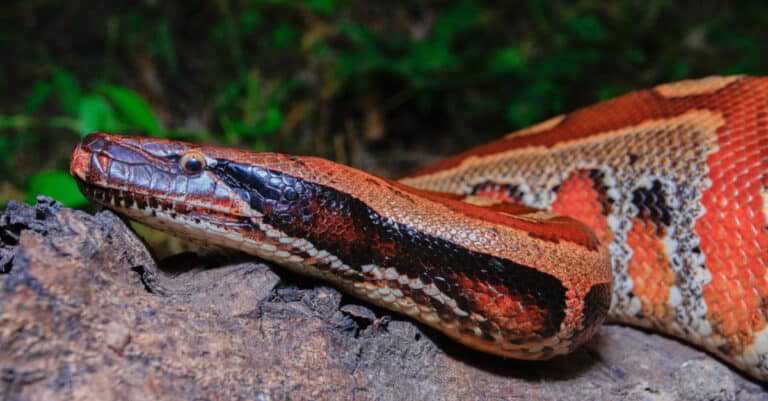
  • Head marked with dark brown “V” shape blotch with a line down the center
  • No marks down the center of the belly
  • Shiny, smooth scales

Blood Python Pictures
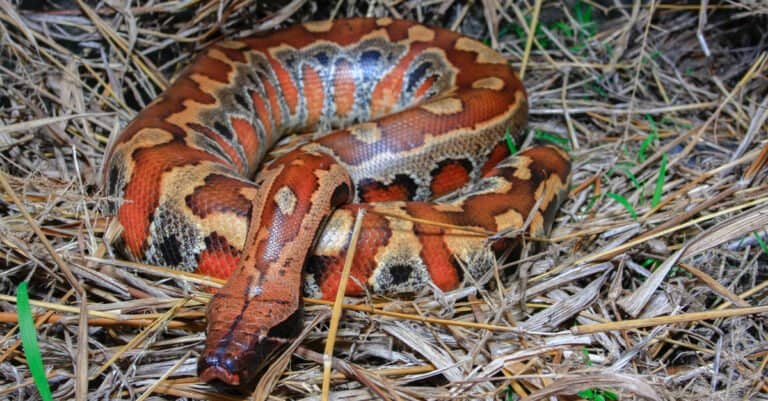
👁 Blood Python in grass
The Sumatran Red Blood Python, Python brongersmai, lying on the grass. The Red blood python are colored in bright oranges, reds, and reddish-brown scales.

©dwi putra stock/Shutterstock.com

👁 Blood Python
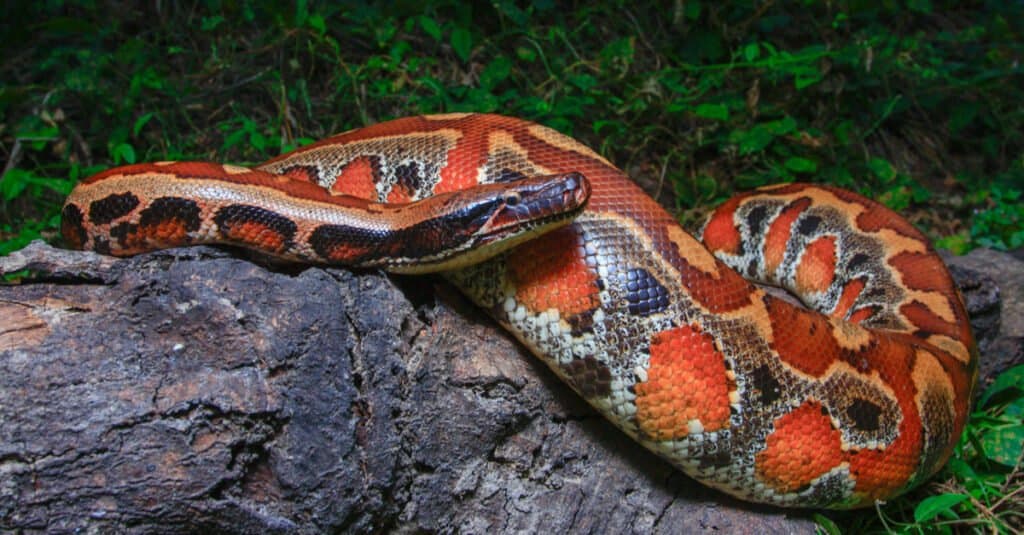
The adult blood python grows up to a size of eight feet in length. It can be heavy because of its muscular build.

©dwi putra stock/Shutterstock.com

👁 Blood python on rock
The non-venomous blood python comes in a range of colors, browns, yellows, tans, cherry, and bright reds.

©wi putra stock/Shutterstock.com

Blood Python Venom: How Dangerous Are They?

If well-bred, this is a relatively passive animal and makes for a perfect pet. Big enough to impress but not large enough to be a threat.

Red blood pythons are constrictors but they do not have a venom that harms humans. In fact, all species in the Pythonidae family are non-venomous.

Blood Python Behavior and Humans

Misinformation and early interaction with humankind have built one heck of a fearsome reputation. “Nasty,” “savage” and “aggressive” are several words associated with the snake.

They certainly have an intimidating appearance. But the blood python’s seeming aggression is more anxiety than anything. In actuality, the python’s first reaction to a threat is to turn tail and run.

When four comfort and basic qualifications are met, the snakes have a calm demeanor.

  • Proper husbandry
  • Good breeding from a pro
  • Captive-bred
  • An infrequent diet

The red blood python is muscular and strikes hard and fast. While they avoid biting, bite they will if there’s a perceived threat. And facts are that bite will leave a lasting impression.

Though they have the potential to be great house pets, breeders strongly advise the inexperienced snake keeper to keep their distance from this reptile.

Keeping the Blood Python as a Pet

If you want to keep a red blood python, it’s important to create an ecosystem that hits all the right husbandry care requirements.

Here are a few reminders to put on your checklist.

Opaque Walls

Breeders and enthusiasts promote tubs as the best cage. The python appreciates the opaque walls as a secure haven.

Cool Temperatures

Too hot and you’re going to see how the blood python got its bad rep. The snakes prefer cool temps. Aim for ambient temps of 78–82 degrees Fahrenheit. Going over 85 will irritate your python.

Keep It Dark

Regardless of tank size, constant and bright light promotes stress in the snake. If you use a light, turn it off at night. The snake has a circadian rhythm and creating a day/night cycle promotes well-being. Keep a nice dark place in the cage. The blood python is naturally reclusive and likes to hide.

Appropriate Humidity

Breeders find the healthiest blood python is happiest at an average of 60 percent ambient humidity. You can help with a thick layer of damp moss and a nice large water bowl. Check with your breeder as the criteria can change based on location and enclosure.

Adequate Ventilation

The tub close to the substrate should have ventilation holes. Otherwise, ammonia, a by-product of urine decomposition, won’t escape. Your snake could end up with a respiratory infection.

Meals

The large blood python has a slow metabolic system. Meals should be infrequent. A diet of a large rat every three weeks will do. Yearlings need a meal every 10 to 14 days.

Handling

Don’t start handling your new pet for at least three to four weeks. They need time to settle and will not care for change that comes too soon.

Tank Size

Hatchlings and juveniles need smaller tank sizes. Adults are best in an enclosure at least 48 x 24 inches. Go for biggest the tank size you can afford and store. Get a good lid. Snakes are notorious escape artists.

Similar Animals

View all 452 animals that start with B

Sources

  1. USGS / Accessed January 20, 2022
  2. Utah's Hogle Zoo / Accessed January 20, 2022
  3. Snake Facts / Accessed January 20, 2022
  4. Reptile Direct / Accessed January 20, 2022
  5. Lehigh Valley Zoo / Accessed January 20, 2022
  6. Reptile Roommate / Accessed January 20, 2022
  7. Millennium Reptiles / Accessed January 20, 2022
  8. Reptiles Magazine / Accessed January 20, 2022
  9. Animalia / Accessed January 20, 2022
  10. Monkeyfrog / Accessed January 20, 2022
  11. Lehigh Valley Zoo / Accessed January 20, 2022
  12. Wikipedia / Accessed January 20, 2022
  13. IUCN / Accessed January 20, 2022
  14. Reptiles / Accessed January 20, 2022

About the Author

A-Z Animals Staff

AZ Animals is a growing team of animals experts, researchers, farmers, conservationists, writers, editors, and -- of course -- pet owners who have come together to help you better understand the animal kingdom and how we interact.
Connect:

Thank you for reading! Have some feedback for us?

Contact the AZ Animals editorial team

Related Articles You May Find Interesting


Blood Python FAQs (Frequently Asked Questions)

No, they are non-venomous. The snake’s bite can scratch, puncture, bruise, and create deep internal damage.

The snakes are known to remain unbelievably still for long periods when hunting. Red blood pythons are predatory, striking fast when food gets close.

The blood python can be aggressive if its comforts aren’t met. Another identification for the snakes is a propensity for severe anxiety, making them easily spooked.

The blood python’s habitat is found in Sumatra, the Malay Peninsula, Thailand, and on smaller islands in the region.

Blood pythons prey on mammals smaller in size and the occasional bird. The vast majority of the snake’s diet is rodents. The non-venomous snakes take out their prey via constriction before chowing down.

Wild-caught specimens don’t adapt well to cohabitation. Captive-bred animals make affectionate pets.

Well taken care of, the lifespan of the python is up to 25 years.

Prices for the snake go everywhere. They can start at $100. Creatures with specialty morphs can run into thousands. Shop carefully to get a good price.