B
Species Profile

Blowfly

Calliphoridae

Nature's cleanup crew in metallic armor
Cherdchai Chaivimol/Shutterstock.com

At a Glance

Family Overview This page covers the Blowfly family as a group. Stats below are general traits shared across the family.
Also Known As Bottle fly, Bottle flies, Bluebottle, Blue bottle fly, Greenbottle, Green bottle fly, Cluster fly
Diet Scavenger
Activity Diurnal+
Lifespan 21 years
Weight 0.0002 lbs
Status Not Evaluated
Did You Know?

Many blow flies can detect carrion odors from far away using highly sensitive smell receptors.

Scientific Classification

Family Overview "Blowfly" is not a single species but represents an entire family containing multiple species.

Blow flies (family Calliphoridae) are typically medium-to-large flies, often metallic blue/green, many of which breed in carrion, feces, or decaying organic matter; some species cause myiasis (infestation of living tissue). They are ecologically important decomposers and are widely used in forensic entomology to help estimate time since death.

Kingdom
Animalia
Phylum
Arthropoda
Class
Insecta
Order
Diptera
Family
Calliphoridae

Distinguishing Features

  • Robust-bodied dipteran flies, often with metallic sheen (blue/green/bronze)
  • Bristly (setose) bodies; well-developed calypters typical of many higher flies
  • Rapid colonizers of carrion; larval development (maggots) in decomposing tissues
  • Some lineages have obligate or facultative parasitic larvae (myiasis)

Physical Measurements

Males and females differ in size

Weight
0 lbs (0 lbs – 0 lbs)
Top Speed
9 mph
About 5–15 km/h

Appearance

Primary Colors
Secondary Colors
Skin Type Chitinous exoskeleton (cuticle). Adults have hard, bristly bodies with short hairs and stronger bristles, and membranous wings. Larvae are soft, legless maggots with tough cuticle and rear spiracles, pupating in a hard puparium.
Distinctive Features
  • Measurements (family-wide range, generalized): adults typically ~0.4-1.8 cm body length (smallest to largest calliphorids); robust-bodied relative to many other flies. Larvae can reach roughly ~0.5-2+ cm before pupation depending on species and food availability.
  • Complete metamorphosis (egg → three larval stages → pupa/puparium → adult). Development speed depends on temperature, food type, and species; egg-to-adult often ~1–6+ weeks, but pupae that survive winter can extend it to months.
  • Adult blow flies usually live about 1-8+ weeks in the wild, but the life cycle from egg to adult death can be a few weeks to many months if diapause/overwintering occurs.
  • Many blow flies commonly eat carrion and are among the first to arrive at carcasses, while others use feces, rotting plants, garbage, or live in forests, alpine, temperate, or coastal habitats.
  • Ecological roles (family-level): major decomposers and nutrient recyclers; larvae often drive rapid breakdown of animal remains. Adults may also visit flowers/nectar or fluids and can act as incidental pollinators or vectors of microbes.
  • Medical/veterinary relevance (variable across the family): some species cause myiasis (infestation of living tissue or wounds), while many others are strictly saprophagous and do not attack living hosts.
  • Forensic relevance (common at family level): because many species predictably colonize remains and develop at temperature-dependent rates, Calliphoridae are widely used in forensic entomology for post-mortem interval estimation-species-level differences and local ecology strongly affect interpretation.
  • Adult morphology: single pair of functional wings (Diptera), strong flight, large compound eyes, and typically conspicuous calypters/squamae; antennae short with arista. Bristly thorax and abdomen are typical.
  • Larval morphology: cylindrical, tapered maggots with mouth hooks; posterior spiracles and associated plates are key identification features (often used in forensics), but details vary among genera/species.

Sexual Dimorphism

Often subtle at the family level and mainly in head/eye configuration and genitalia; coloration is frequently similar between sexes, though size and bristle patterns can vary within and among species. Degree of dimorphism varies across the diverse genera in Calliphoridae.

  • In many species, males have more closely spaced or meeting compound eyes (holoptic or near-holoptic), giving a broader-looking upper face.
  • Male terminalia (genital structures) differ and are a primary basis for species-level identification; externally this may appear as a differently shaped abdominal tip.
  • Sometimes slightly smaller or more slender than females in the same species (not universal).
  • In many species, females have more widely separated compound eyes (dichoptic), with a broader frons.
  • Female ovipositor/terminal segments are adapted for egg laying; externally the abdominal tip can appear differently shaped than males.
  • Often slightly larger or more robust-bodied in some species due to egg production (variable).

Did You Know?

Many blow flies can detect carrion odors from far away using highly sensitive smell receptors.

Their metallic blue/green sheen is often structural coloration-light interacting with microscopic surface layers.

Different species colonize a carcass at different times, a key reason they're central to forensic entomology.

Some calliphorids are bird-nest parasites (e.g., Protocalliphora), with larvae feeding on nestling blood.

Certain species can cause myiasis in livestock, wildlife, and occasionally humans-ranging from accidental to obligate parasitism.

Sterile insect technique has been used against major pest blow flies in some regions, showing how population genetics can be applied in control.

Medical maggot therapy uses blow fly larvae (in controlled clinical settings) to remove dead tissue and help clean chronic wounds.

Unique Adaptations

  • Powerful chemosensory system tuned to decay-related volatiles (e.g., sulfur- and nitrogen-containing compounds), enabling long-distance location of breeding sites.
  • Fast, temperature-sensitive development: egg → larva → pupa → adult can be completed in roughly ~10-60+ days depending on species and conditions; cold can extend development to months via diapause.
  • Larval mouth hooks and enzyme-rich secretions that efficiently break down soft tissues; some larvae also produce antimicrobial compounds that suppress competing microbes.
  • Metallic cuticle (often structural) that may aid signaling, species recognition, and durability; coloration varies widely across the family, including non-metallic forms.
  • High reproductive output: females of many species lay large batches of eggs, supporting rapid exploitation of ephemeral resources like carcasses.
  • Puparium formation: the hardened last larval skin protects the pupa, improving survival in soil or debris while metamorphosis occurs.

Interesting Behaviors

  • Rapid colonization of fresh remains: many species arrive within minutes to hours, but timing varies strongly by climate, habitat, and species.
  • Egg-laying in clusters in nutrient-rich sites (carrion, wounds, feces, rotting vegetation); some species prefer specific tissues or microhabitats.
  • Larval "maggot masses" form while feeding; their collective movement and heat generation can speed development and decomposition.
  • Seasonal strategies: many temperate species overwinter as adults, pupae, or larvae; others stay active year-round in warm climates.
  • Resource partitioning: multiple calliphorid species can use the same carcass while differing in arrival time, preferred body regions, or temperature tolerance.
  • Parasitism vs. scavenging: while many are saprophagous decomposers, some are facultative or obligate parasites of living vertebrate tissue (myiasis), and some specialize on birds in nests.
  • Adult feeding varies: many adults visit flowers, sap flows, or dung for energy and protein; some need protein meals to mature eggs.

Cultural Significance

Blow flies (Calliphoridae) show up in art as signs of death and decay but are key in forensic entomology to estimate time of death. They cause myiasis, recycle nutrients as decomposers, aid maggot therapy, and help insect and microbe research.

Myths & Legends

Name origin (English): "blow fly" is commonly linked to meat being "blown" (i.e., covered with fly eggs/larvae), a long-standing observation in traditional food preservation and butchery lore.

Historical anecdote (17th c.): Francesco Redi's classic experiments with covered vs. uncovered meat-often involving blow flies-became famous in the history of science for challenging spontaneous generation.

In 19th-century Europe, early forensic writings about the order of insects on corpses, including blow flies (Calliphoridae), helped make "bluebottles" a common symbol of death scenes.

In ancient Mediterranean stories, gods had names and roles to keep flies away (for example Zeus called “Averter of Flies”). These tales treat flies in general, not Calliphoridae specifically.

In Europe, people have long linked "bluebottle" flies (metallic calliphorids) with nearby decay or death in local sayings and superstition. It is a cultural link, not one single unified legend.

Conservation Status

NE Not Evaluated (family-level hub; conservation status varies widely among species)

Has not yet been evaluated against the criteria.

Population Unknown

Looking for a specific species?

Bluebottle blow fly

Calliphora vicina

One of the most commonly referenced "blow flies/bluebottles" in general usage and forensic entomology literature, especially across temperate regions; frequently encountered around carrion and urban environments.

  • Commonly associated with carrion and used in forensic entomology to help estimate post-mortem intervals (development is strongly temperature-dependent).
  • Typically metallic blue to blue-gray adults; often among the earlier colonizers of remains in cool/temperate conditions (timing varies by region and season).
  • Life stages (eggs/larvae/pupae) are often identified and aged in forensic casework; accurate identification matters because development rates differ among species.
  • Adults can also visit flowers and sugar sources, so they may function as incidental pollinators while still being strongly attracted to decomposing resources.

You might be looking for:

Common green bottle fly

25%

Lucilia sericata

Metallic green blow fly; important in forensic entomology and medical maggot therapy.

Bluebottle fly

22%

Calliphora vomitoria

Large blue blow fly common in temperate regions; often associated with carrion.

Secondary screwworm

18%

Cochliomyia macellaria

New World blow fly whose larvae commonly develop in carrion and wounds.

New World screwworm fly

15%

Cochliomyia hominivorax

Obligate parasite causing myiasis; major veterinary significance (eradicated from many regions).

Hairy maggot blow fly

12%

Chrysomya rufifacies

Warm-climate blow fly; larvae predatory on other maggots; forensic relevance.

Life Cycle

Birth 150 larvas
Lifespan 21 years

Lifespan

In the Wild 10–28 years
In Captivity 10–35 years

Reproduction

Mating System Polygynandry
Social Structure Aggregation Group
Breeding Pattern Transient
Fertilization Internal Fertilization
Birth Type Internal_fertilization

Blow flies (Calliphoridae) usually mate with many partners (polygynandry). Mating often occurs in groups at carcasses, waste, or flowers. Fertilization is internal; females store sperm. Pairings are brief and there is no parental care.

Behavior & Ecology

Social Swarm Group: 50
Activity Diurnal, Crepuscular, Cathemeral
Diet Scavenger Carrion and other decaying animal tissues (especially for larvae); adults often prefer nectar/honeydew for energy.
Seasonal Hibernates

Temperament

Opportunistic, resource-driven behavior: adults rapidly locate and exploit ephemeral resources (especially decaying organic matter), leading to frequent but short-lived crowding rather than stable social bonds.
Generally non-aggressive toward conspecifics; competition is mainly scramble competition for access to oviposition sites and food. In dense aggregations, interference (jostling, displacement) can occur but is not organized dominance in a group-living sense.
Blow flies (Calliphoridae) live in many ways: many breed on dead animals or decay, some on feces, some visit flowers for nectar and pollen, and some larvae are parasitic (myiasis).
Family-wide measurement generalization: adult body size ranges from small to large flies across Calliphoridae (roughly ~0.4-1.6+ cm body length across the family), with substantial variation among genera and sexes.
In blow flies (Calliphoridae), growth is usually fast—days to weeks in warm weather. Adults often live about 1–4 weeks; in cold they may slow, diapause, or overwinter, making total life span months.

Communication

Wingbeat/flight-tone buzzing Incidental sound used in close-range interactions and during flight; not complex acoustic calls
Chemical cues: strong reliance on olfaction for long-range attraction to carrion/decay odors (kairomones), plus pheromones and contact chemoreception influencing mating and oviposition.
Visual cues: attraction to high-contrast landmarks, resource-associated cues, and conspecific presence; used in mate finding and site selection Importance varies by habitat/light conditions
Tactile/contact cues: antennal and leg contact during courtship and mating; contact chemoreceptors help assess substrates and mates.
Microhabitat cues: temperature, humidity, and substrate condition strongly shape aggregation, oviposition choice, and larval mass formation; larvae also respond to chemical gradients within the substrate.
Vibration/substrate cues (limited): movement within larval masses and on substrates can contribute to local clustering, though evidence and strength of this channel vary across species.

Habitat

Biomes:
Tropical Rainforest Tropical Dry Forest Savanna Desert Hot Desert Cold Mediterranean Temperate Grassland Temperate Forest Temperate Rainforest Boreal Forest (Taiga) Tundra Alpine Freshwater Marine Wetland +9
Terrain:
Mountainous Hilly Plateau Plains Valley Coastal Island Riverine Volcanic Karst Rocky Sandy Muddy +7
Elevation: -3937 in – 14763 ft 9 in

Ecological Role

Decomposer-associated scavengers and nutrient recyclers; also important colonizers of carrion with strong forensic relevance, with some species acting as parasites/pathogens of vertebrates via myiasis.

Rapid breakdown of carrion and other animal wastes, accelerating nutrient cycling Food-web support (larvae and adults as prey for birds, reptiles, mammals, and other insects) Pollination/flower visitation in species that frequently feed on nectar Forensic indicator value: predictable colonization and development on remains used to estimate post-mortem interval Waste reduction/cleanup in human-modified habitats (where breeding occurs in refuse, feces, or animal byproducts)

Diet Details

Main Prey:
Carrion Dead invertebrates and other animal remains Necrotic tissue in wounds
Other Foods:
Nectar Pollen Honeydew Fruit juices and sugary plant exudates Plant sap and other carbohydrate-rich liquids

Human Interaction

Domestication Status

Wild

Blow flies (Calliphoridae) are not domesticated. Human contact is mostly accidental: some species live near people, homes, waste, and livestock. People also use them on purpose for forensic work, research colonies, and some medical and veterinary uses like maggot therapy, using specific reared larvae. Some species are tied to humans, others are wild specialists.

Danger Level

Moderate
  • Myiasis risk: some calliphorid species can infest living tissue/wounds (risk ranges from negligible for many species to significant for a minority, especially in vulnerable individuals or poor wound hygiene)
  • Mechanical transmission: adults visiting feces/carrion may transfer microbes to food or surfaces; the magnitude varies by setting and sanitation
  • Food contamination and nuisance: attraction to garbage, carrion, and animal waste can lead to infestations indoors/outdoors; more common in synanthropic species
  • Allergy/irritation: fly activity around eyes/nose/mouth and contact with larvae or frass can cause irritation in sensitive people
  • Occupational exposure: higher interaction risk for livestock workers, wildlife handlers, mortuary/forensic personnel, and waste-management staff

As a Pet

Not Suitable as Pet

Legality: Generally legal to keep as insects in many places, but local rules may restrict possession/transport of live flies or larvae (especially species implicated in livestock myiasis) and shipping biological specimens; permits may be required for research or interstate/international movement.

Care Level: Expert Only

Purchase Cost: Up to $50
Lifetime Cost: $10 - $300

Economic Value

Uses:
Public health/pest management Livestock/veterinary impact Forensic science Research and education Ecosystem services
Products:
  • Forensic entomology evidence: larval/pupal development data used to estimate post-mortem interval (PMI) (varies widely by species, temperature, and region)
  • Ecosystem service: rapid decomposition and nutrient recycling from carrion and waste (importance varies by habitat and local species assemblage)
  • Costs/impacts: livestock losses and treatment expenses from myiasis-causing species; contamination/spoilage risks in food-handling environments
  • Pest-control markets: insecticides, traps, sanitation services, and monitoring programs driven partly by blow fly nuisance and health concerns
  • Research/teaching value: reared colonies for developmental biology, physiology, and ecology studies (only some species readily cultured)

Relationships

Predators 11

Robber fly Asilidae
Dragonflies and damselflies Odonata
Praying mantis Mantodea
Spiders Araneae
Swallows and martins Hirundinidae
Flycatcher Tyrannidae
Bat Chiroptera
Frogs and toads Anura
Lizard Squamata
Ants Formicidae
Parasitoid wasps Hymenoptera

Related Species 6

Flesh flies Sarcophagidae Shared Order
Bot flies Oestridae Shared Order
Cluster flies and relatives Polleniidae Shared Family
Woodlouse flies Rhinophoridae Shared Order
Rhiniid flies Rhiniidae Shared Order
House flies and relatives Muscidae Shared Order

Ecological Equivalents 6

Animals that fill a similar ecological role in their ecosystem

Flesh fly Sarcophagidae Often exploit the same resources — carrion, feces, and wounds — and strongly overlap with blow flies in decomposition ecology and forensic entomology. Many are larviparous, contrasting with the mostly egg-laying Calliphoridae.
House fly Musca domestica Share synanthropic habitats and are attracted to decomposing organic matter; frequently co-occur at waste sites, manure, and carcasses, though house flies are typically less specialized on carrion than many blow flies.
Carrion beetles Silphidae Use carrion as a breeding and feeding resource and can interact with blow fly larvae through competition and predation during decomposition succession.
Rove beetle Staphylinidae Common predators and scavengers in carcass communities, often preying on fly eggs and larvae and thereby affecting blow fly recruitment and development.
Dermestid beetles Dermestidae Arrive later in the decomposition process to feed on dried tissues. They overlap with blow flies in carcass ecosystems but typically occur at different decomposition stages.
Dung beetles Scarabaeinae Share the broader niche of decomposer/filth-associated insects, especially for blow fly species that develop in feces or manure.

Types of Blowfly

20

Explore 20 recognized types of blowfly

Common green bottle fly Lucilia sericata
Australian sheep blowfly Lucilia cuprina
Bluebottle blow fly Calliphora vicina
Bluebottle blow fly Calliphora vomitoria
Oriental latrine fly Chrysomya megacephala
Hairy maggot blow fly Chrysomya rufifacies
Old World screwworm fly Chrysomya bezziana
New World screwworm fly Cochliomyia hominivorax
Secondary screwworm Cochliomyia macellaria
Black blow fly Phormia regina
Bronze bottle fly Lucilia caesar
Green bottle fly Lucilia illustris
Tropical green bottle fly Lucilia eximia
Blue bottle fly Calliphora livida
Lesser bluebottle fly Calliphora loewi
Cluster blow fly Pollenia rudis
Brown blow fly Protophormia terraenovae
Latreille's blow fly Chrysomya latifrons
Chrysomya albiceps Chrysomya albiceps
Auchmeromyia senegalensis (Congo floor maggot fly) Auchmeromyia senegalensis

Blowflies go by many names, including carrion flies, bluebottles, or greenbottles. All 1,900 known species of blowfly belong to the family Calliphoridae. Most blowflies possess a shiny metallic blue or green coloring and characteristic hairlike bristles. In the environment, blowflies serve an important role as pollinators and recyclers of dead organic material. That said, they also transmit disease and cause millions of dollars in damage to various industries every year. 

5 Blowfly Facts

  • On average, adult blowflies live anywhere from two weeks to one month. 
  • The name blowfly comes from the old English term “flyblown,” or meat covered in fly eggs. 
  • Maggot debridement therapy uses laboratory-raised maggots to clean wounds that won’t heal conventionally, such as certain ulcers and post-surgical wounds. 
  • A blowfly can smell dead animals and other carrion up to one mile away. 
  • Forensic investors sometimes use blowflies in forensic science to estimate the time elapsed since death when examining a dead body. 
👁 Blowfly

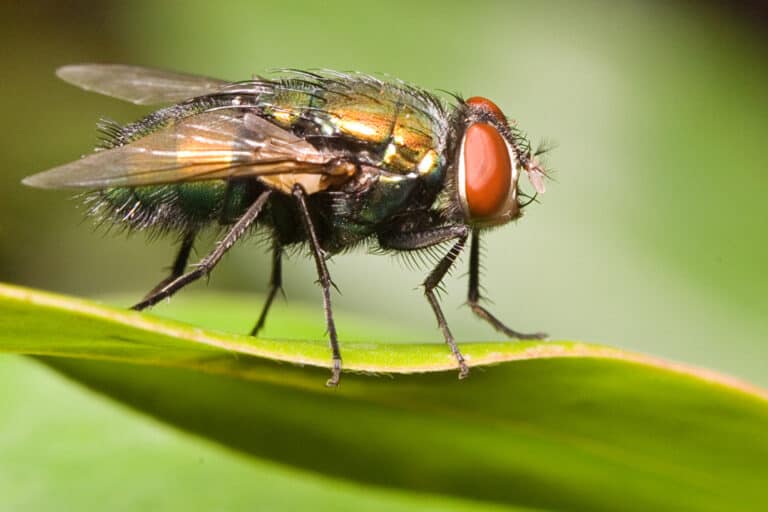
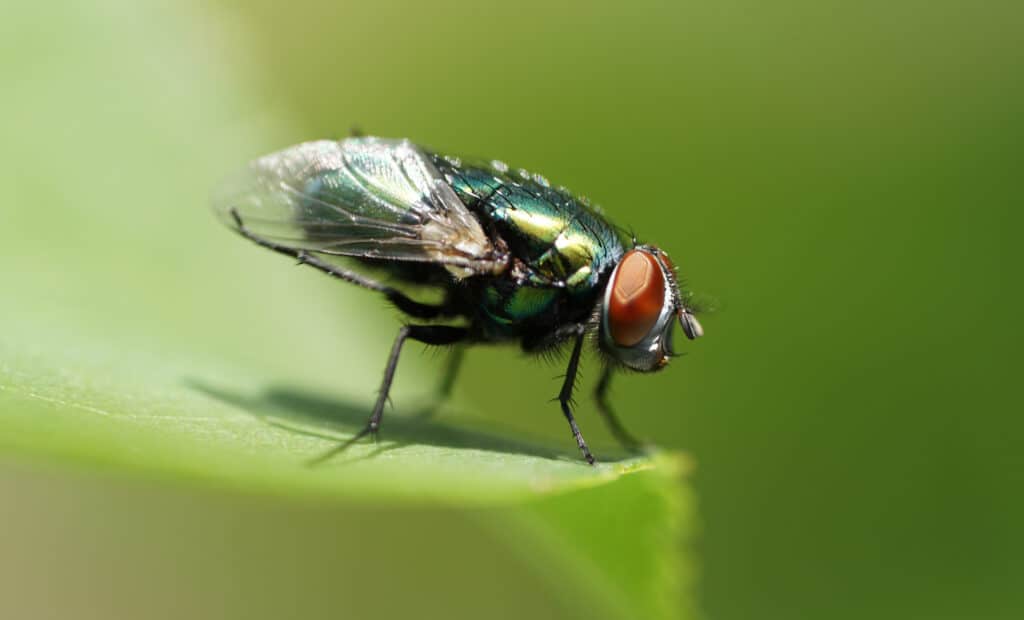
All 1,900 described blowfly species are members of the family Calliphoridae.

©Moni.ka/Shutterstock.com

Blowfly Species, Types, and Scientific Name

Blowflies belong to the fly order Diptera, which includes over 125,000 known species and an estimated 1,000,000 species. In addition to blowflies, Diptera also contains well-known species such as horseflies, hoverflies, and craneflies. 

All 1,900 described blowfly species are members of the family Calliphoridae. The family name translates roughly to “descended from the bearer of beauty.” It derives from the Latin word Cali, meaning “fairest” or “beautiful,” the Greek word phoros, meaning “bearer,” and the Latin suffix idae, meaning “descended from.” The family shares its name with the subfamily Calliphorinae and the genus Calliphora, the type genus of the family. French entomologist and physician Andre Jean Baptist Robineau-Desvoidy formally named the blowfly in 1830. While the reason for this name remains unknown, it likely has to do with the blowfly’s vibrant metallic blue and green coloration.

The blowfly’s common name stems from the old English term “flyblown.” At the time, people used the term to refer to meat covered in flies’ eggs. Some sources also contend the “blow” part of “blowfly” stems from the appearance of rotting animal carcasses. When carcasses become infected with maggots, they develop a bloated (blown) look. The term “blow” has been in use for over 500 years, with the earliest mentions stemming from several of William Shakespeare’s plays, including The Tempest, Antony and Cleopatra, and Love’s Labour’s Lost. 

The blowfly family includes six major subfamilies: Bengaliinae, Calliphorinae, Chrysomyinae, Helicoboscinae, Luciliinae, and Melanomyinae. Too many genera and species exist to list them all here. That said, here are a few of the most well-studied blowfly genera:

  • Abago
  • Amenia
  • Cynomya
  • Bengalia
  • Booponus
  • Calliphora
  • Chrysomya
  • Cochliomya
  • Cochliomyia
  • Compsomyiops
  • Cordylobia
  • Cyanus
  • Eumesembrinella
  • Lucilia
  • Melinda
  • Nesodexia
  • Phormia
  • Protocalliphora
  • Protophormia
  • Trypocalliphora
👁 blowfly

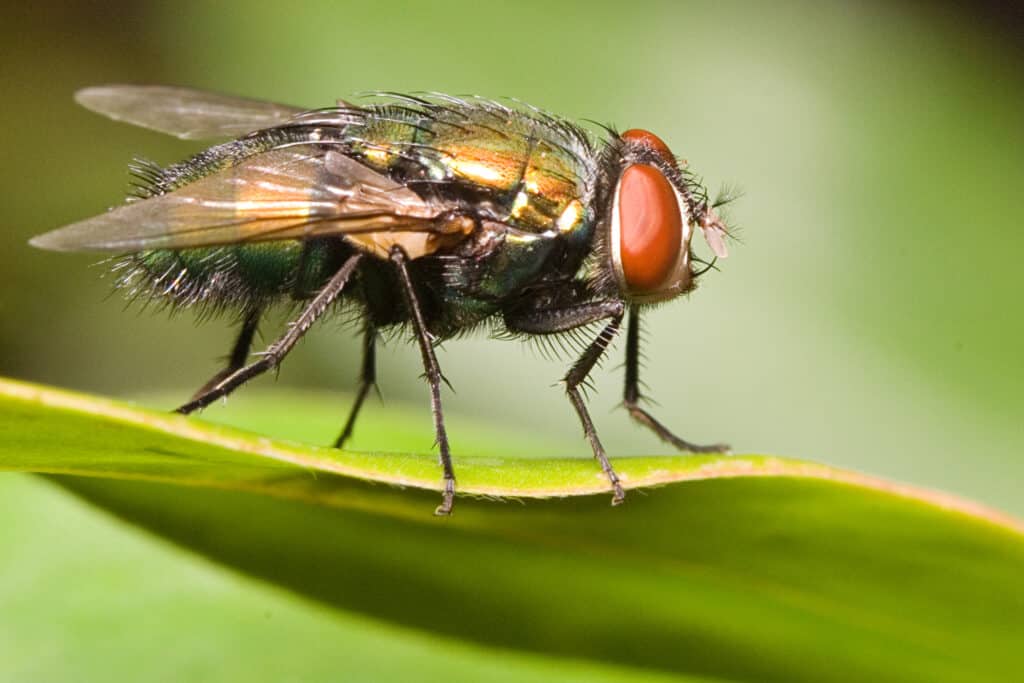
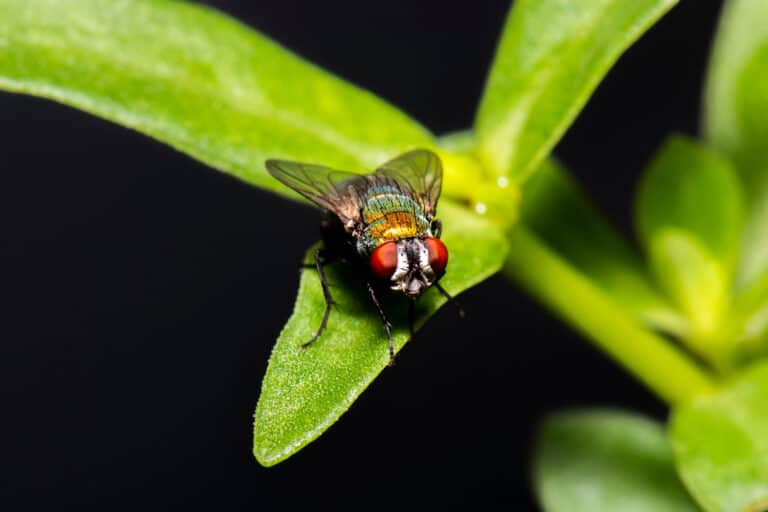
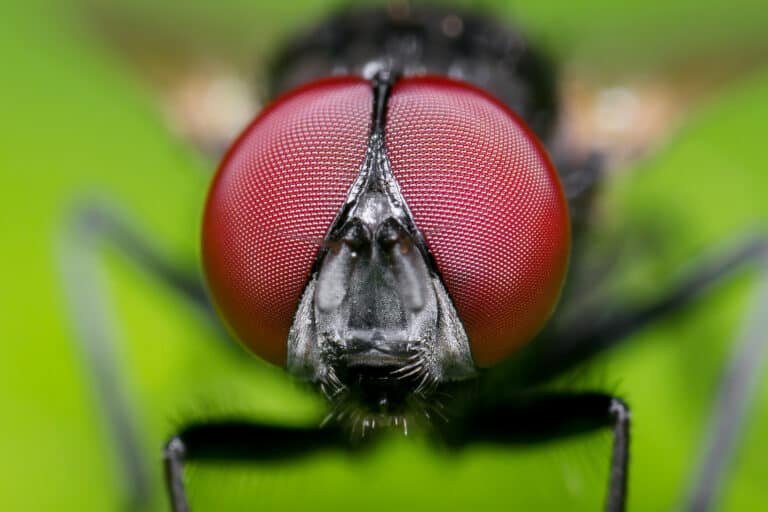
Blowflies vary wildly in color, but most feature a metallic blue or green thorax and abdomen.

©Martin Pot1579531252/Shutterstock.com

Appearance: How to Identify Blowflies

In terms of size, adult blowflies measure between 0.125-0.625 inches long. That said, most adult blowflies range from 0.3-0.4 inches long. Blowflies vary wildly in color, but most feature a metallic blue or green thorax and abdomen. Other standard colors include black and bronze.  

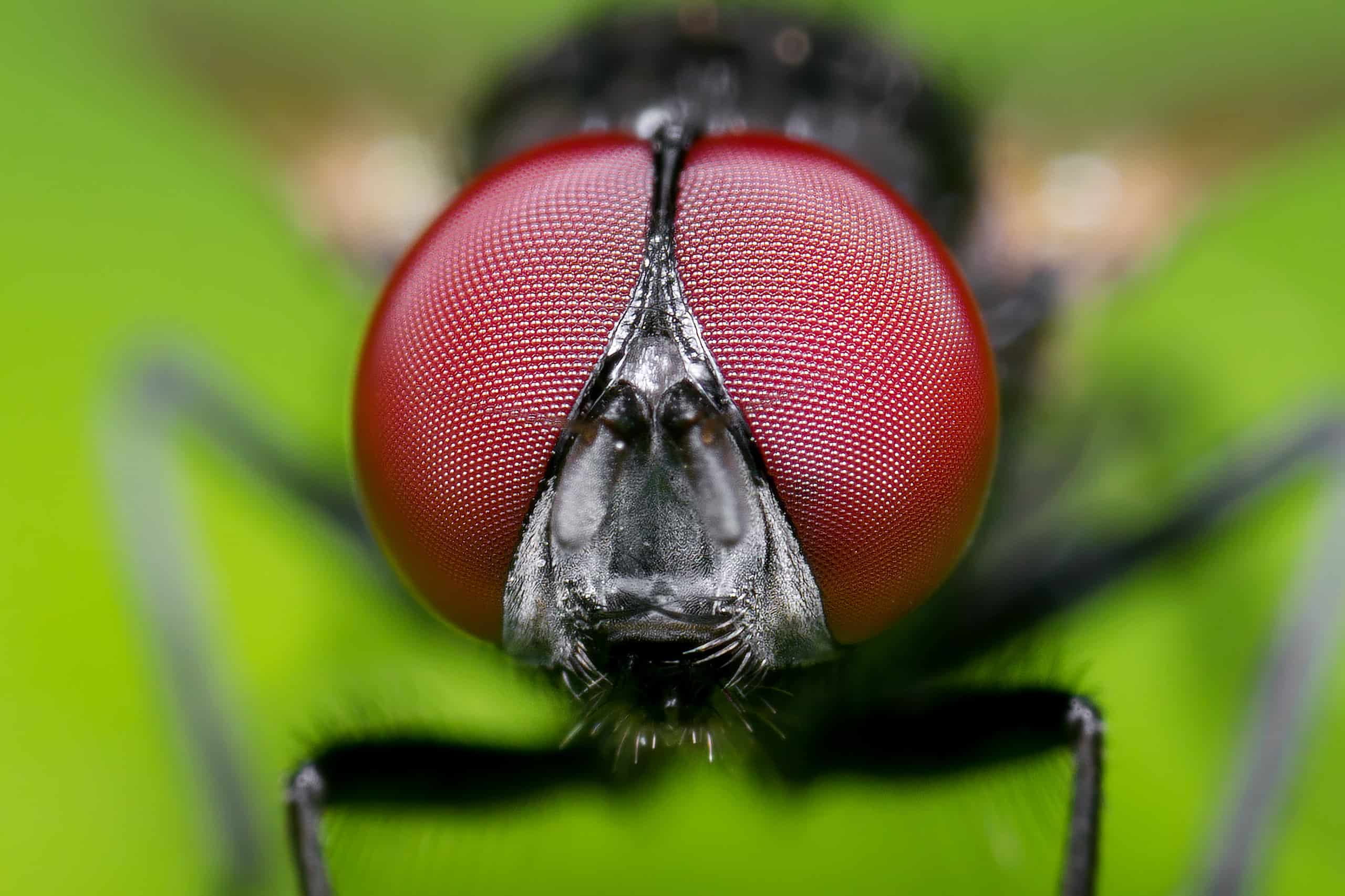
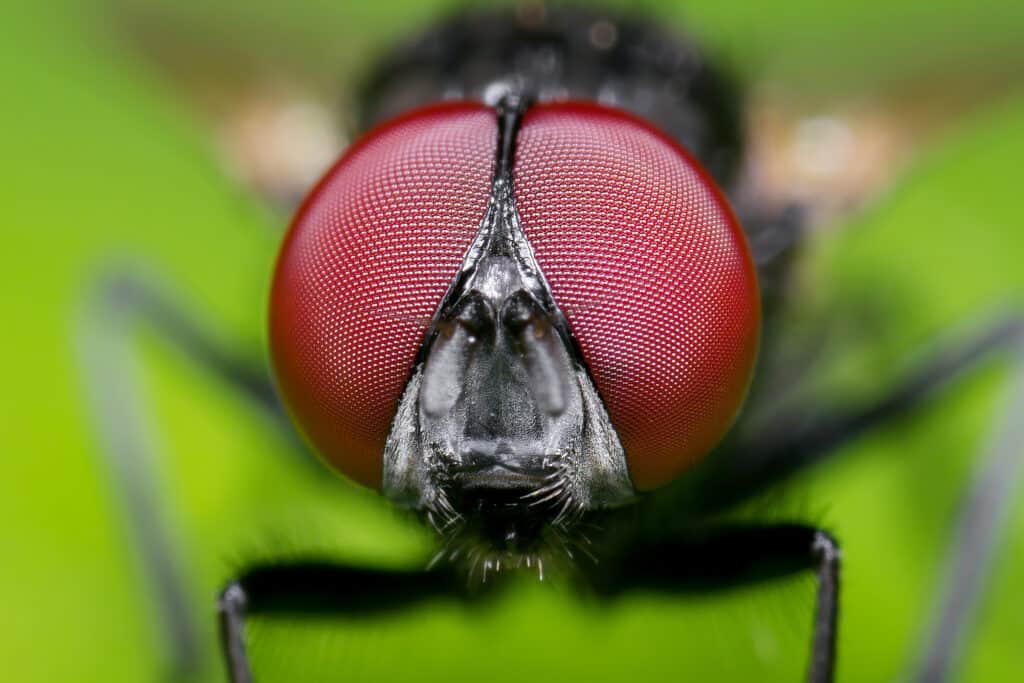
Blowflies possess antennae with three segments and an aristate, a bristle connected to the third segment. The second segment of the antennae has distinctive grooves. The abdomen usually measures slightly smaller than the thorax. All blowflies sport hairlike bristles on the legs, thorax, and abdomen. Experts use these bristles’ size, arrangement, color, and shape to distinguish between different species. Like all true flies, blowflies possess one pair of wings, large compound eyes, and spongelike mouthparts. 

Meanwhile, blowfly maggots appear like small, white, or yellow worms. Maggots vary in size from 0.35-0.86 inches long. They are equipped with hooklike mouthparts, and each body segment features hairlike, fleshy tubercles. 

Habitat: Where to Find Blowflies

Blowflies enjoy a cosmopolitan distribution and can be found in almost every country on Earth. Although you can find blowflies worldwide, the greatest species diversity exists in Latin and South America, Africa, and Southern Europe. Although they can survive in various habitats, blowflies are typically found in tropical and subtropical areas. They prefer areas with damp, loose soil where larvae can thrive. While some species prefer cooler temperatures and shade, others do better in hot, humid temperatures. Additionally, seasonal variation also exists, with some species becoming more active in summer while others are more often found in winter. 

You can often find blowflies in and around dead animals or other dead organic materials. Common locations where blowflies congregate include garbage dumps, meat processing plants, restaurants, and farms. You can also often find them around trash cans or inside homes. When found inside a house, this usually indicates the presence of dead or diseased pests such as rats or mice. 

Diet: What Do Blowflies Eat?

Blowflies are attracted to strong odors. An adult blowfly can detect rotting meat up to one mile away. Due to their attraction to strong smells, they often act as pollinators for strong-smelling flowers. They rely on the carbohydrates collected from the nectar of these plants to fuel their flight. 

Blowflies feed on various decaying and dead organic substances, including garbage and rotting vegetation. Blowflies gather most of their calories from animal carcasses and feces, depending on the species. Female blowflies lay their eggs inside the carcasses of dead animals or dung, as their maggots require such environments to grow and develop. 
👁 Bluebottle blowfly

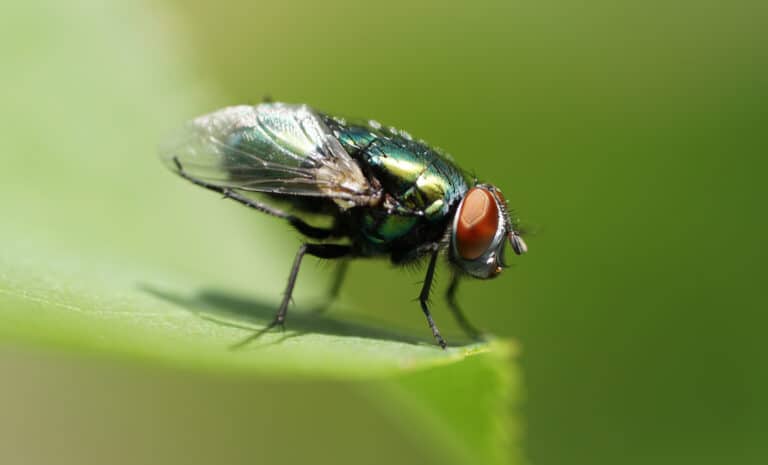
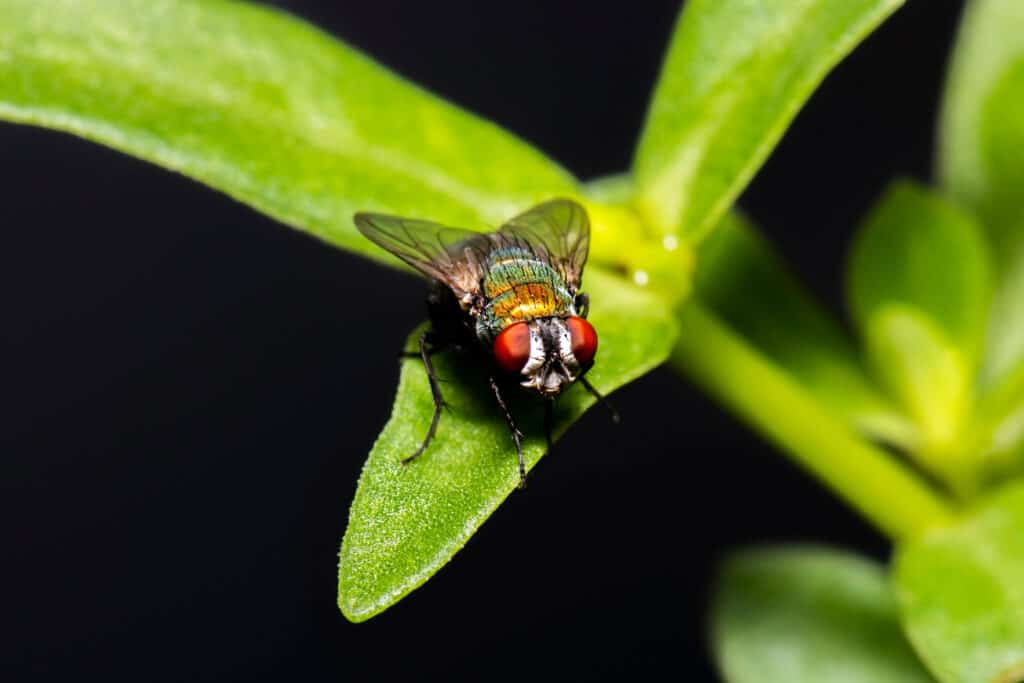
The best way to prevent blowflies is to dispose of animal carcasses and feces properly.

©Rob D the Baker/Shutterstock.com

Prevention: How to Get Rid of Blowflies

You can prevent and get rid of blowflies in a variety of ways. The most popular methods include chemical and cultural controls. The best results usually occur when you employ numerous methods simultaneously.  

The best way to prevent blowflies is to dispose of animal carcasses and feces properly. Animal carcasses should be buried at least 12 inches under the ground or placed in a sealed trash bag. To keep blowflies away from trash cans, close trash cans when not in use and clean cans regularly. You can also use blowfly traps — such as sticky or ultraviolet light traps — to reduce blowfly numbers. 

Numerous chemical products exist that ward off blowflies. You can spray these insecticides around your home or business. Most commercial insecticides contain components that attract the flies and poisons that kill the flies once ingested.

View all 452 animals that start with B

Sources

  1. https://livestockvetento.tamu.edu/insectspests/blow-fly-calliphoridae/
  2. https://agrilifeextension.tamu.edu/asset-external/controlling-blow-flies/
  3. https://hortnews.extension.iastate.edu/blow-and-flesh-flies

Thank you for reading! Have some feedback for us?

Contact the AZ Animals editorial team

Related Articles You May Find Interesting


Blowfly FAQs (Frequently Asked Questions)

Numerous animals prey on blowflies, including spiders, frogs, beetles, and birds. 

A single female blowfly can lay anywhere from 150-500 eggs at a time, although 200-300 eggs are more common. 

Unlike horseflies, blowflies do not bite humans. However, certain species can transmit dangerous conditions. Blowfly maggots can infest living animals and cause a parasitic condition known as myiasis. Adult blowflies can also transmit diseases such as dysentery. 

On average, the blowfly life cycle takes 3-4 weeks to complete. Blowfly eggs can hatch within just eight hours or a few days. Upon hatching, maggots take 4-10 days to mature into the adult stage. Finally, adult blowflies can live anywhere from two weeks to a month.