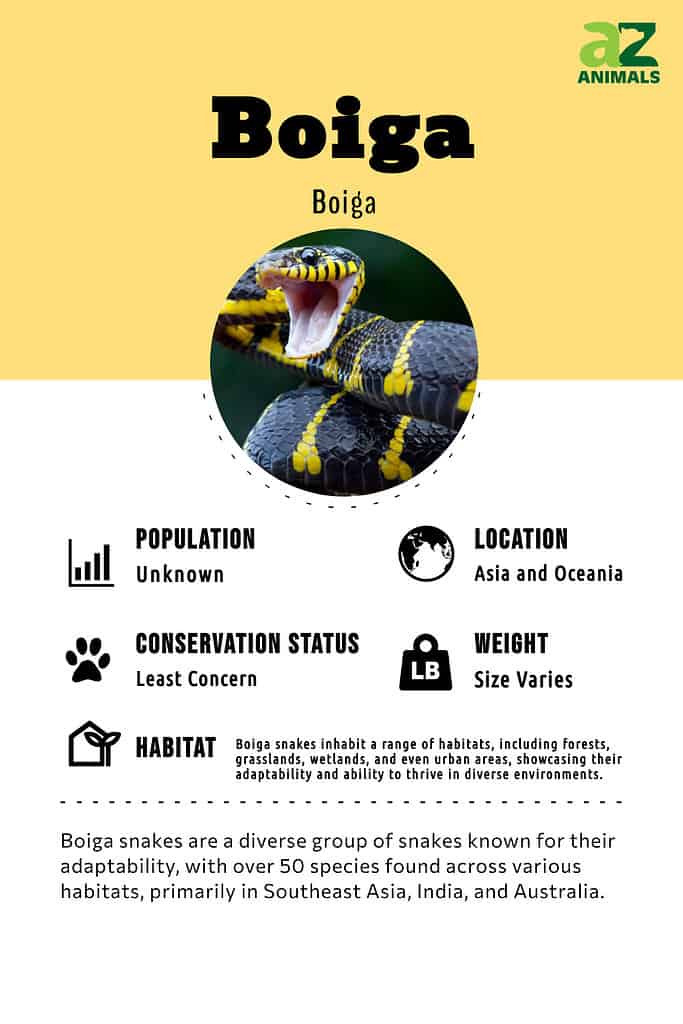
The Boiga is a genus of snakes that are members of the Colubridae family.
They are native to Asia, Australia, and India, but they have spread to many other parts of the world. These snakes are highly adaptable and able to survive in many varied environments. Boiga snakes are mildly venomous.
3 Fun Facts About Boiga Snakes
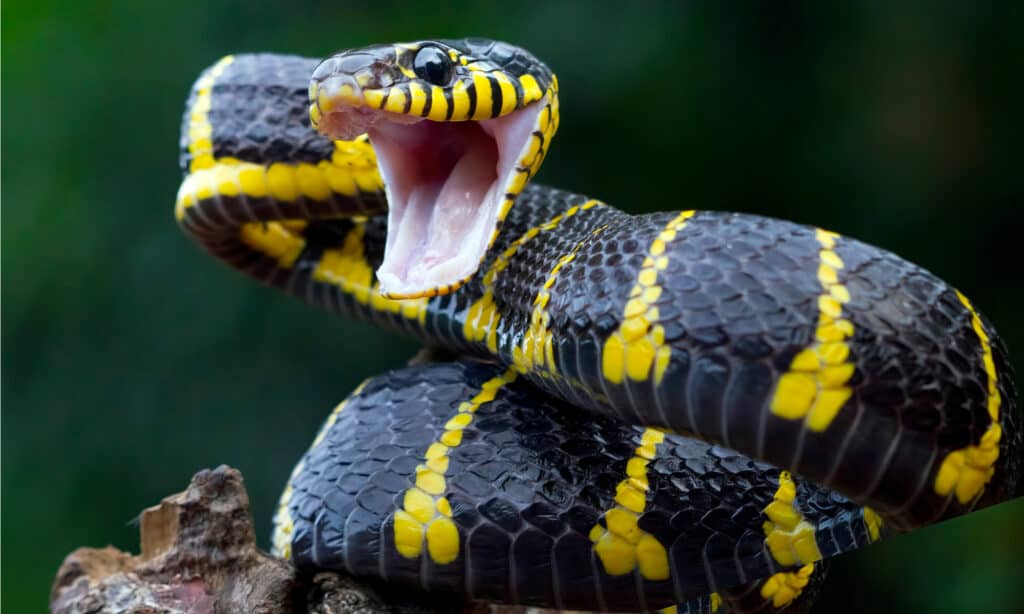
Due to their large eyes, these snakes are commonly referred to as cat snakes or cat-eyed snakes.
©Kurit afshen/Shutterstock.com
• Because of their big eyes, they are also known as cat snakes or cat-eyed snakes.
• Despite being venomous, they are popular as exotic pets.
• There are more than 50 species of Boiga, and there are hundreds of sub-species.
Where To Find Them
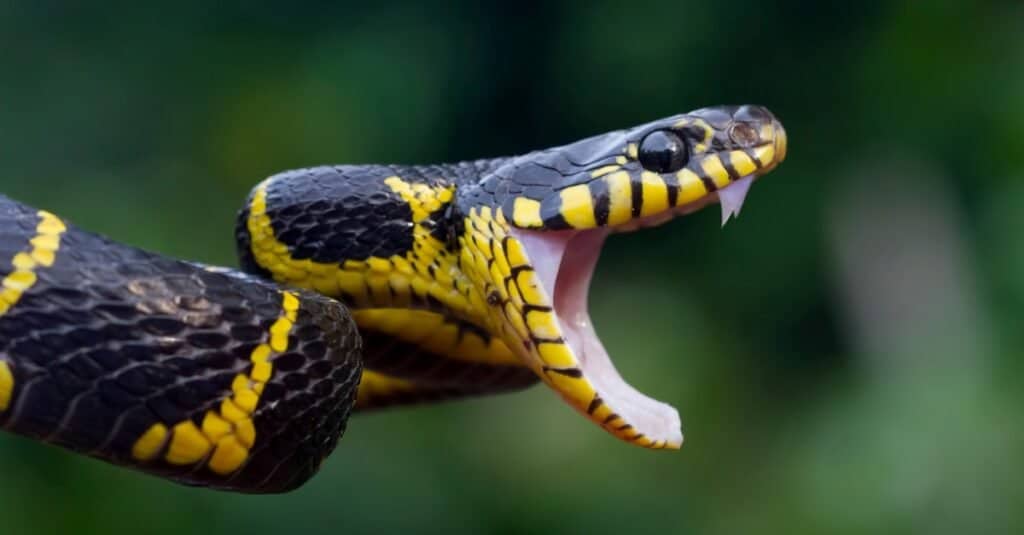
Boigas thrive in warm and humid habitats, yet their remarkable adaptability allows them to thrive in various environments, contributing to their widespread population within their range.
©Kurit afshen/Shutterstock.com
Boigas prefer a warm, humid habitat, but they are highly adaptable. Their hardiness has ensured they are well-populated in their range.
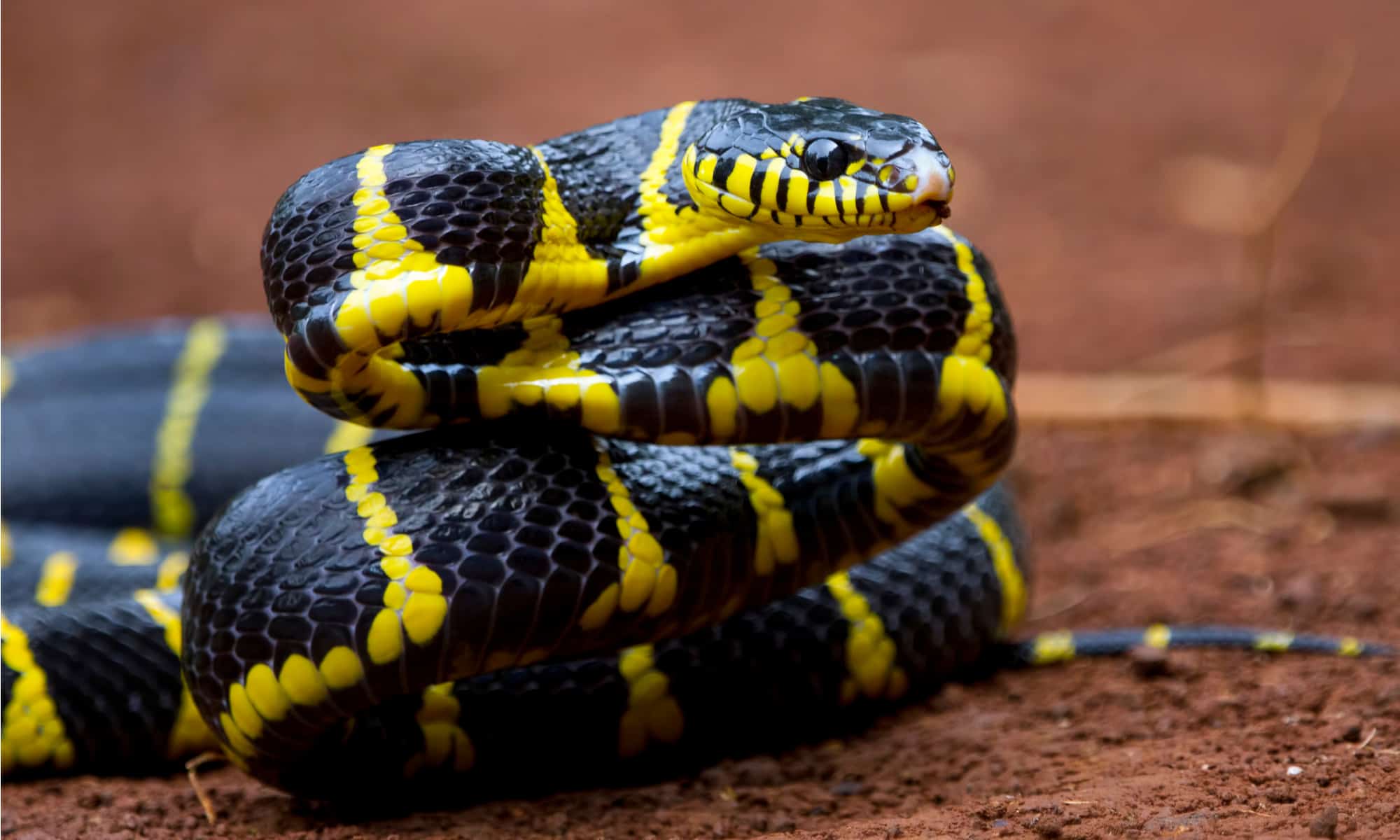
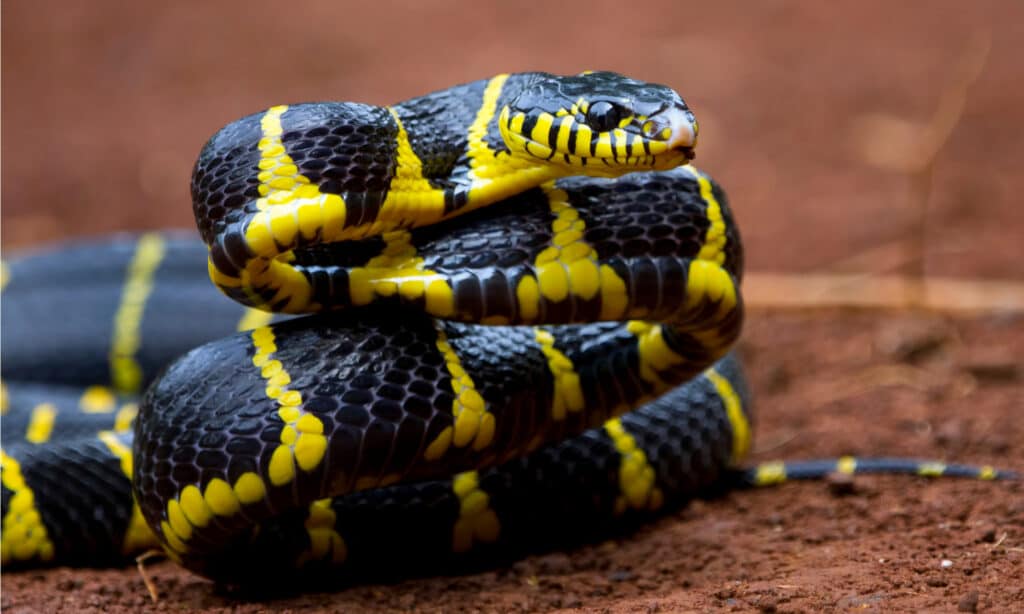
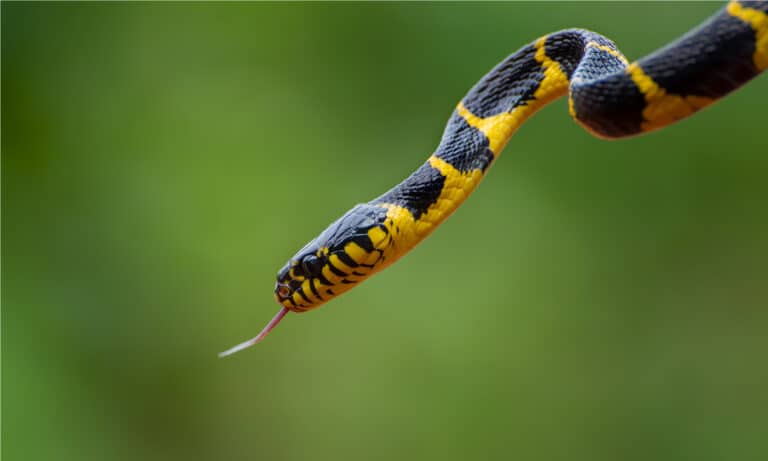
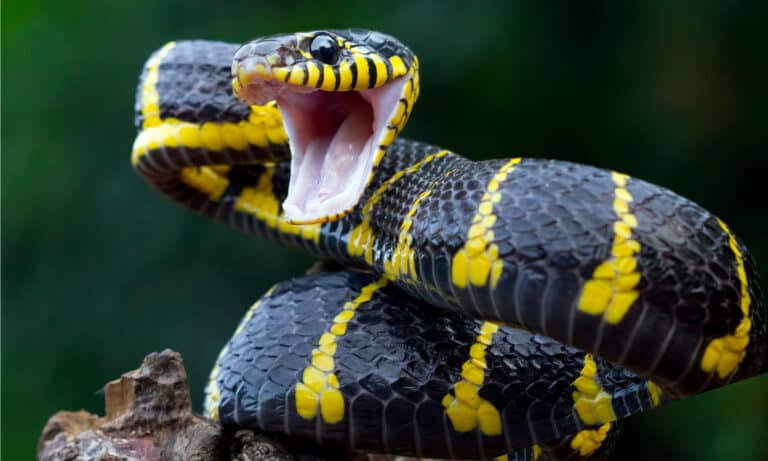
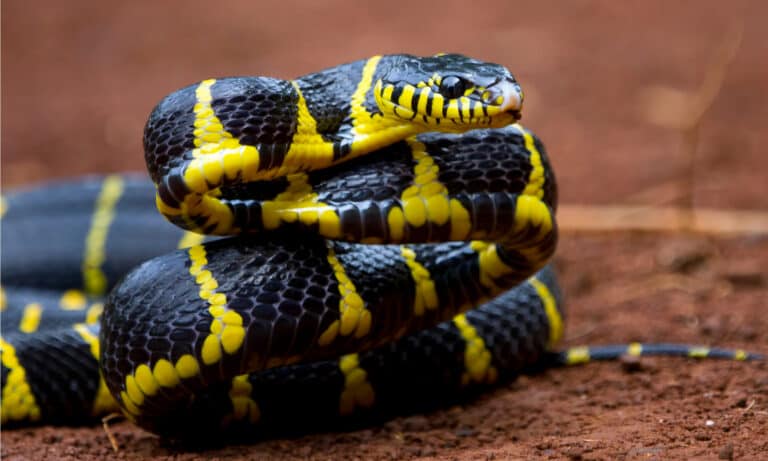
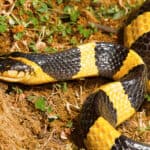
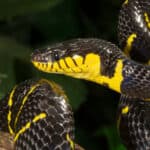
Members of this genus make good zoo exhibits because they tend to be large and vividly colored. One example is Boiga dendrophila divergence, also known as the Luzon mangrove snake or the gold-ringed cat snake. It is a striking snake with shiny, smooth black scales and vivid yellow bands. This snake is at the Buffalo Zoo.
This snake species is part of a breeding nursery at the Moscow Zoo.
Boiga melanota, the western mangrove cat snake, is native to Thailand and one of the species that live in areas protected by national parks in Thailand. This snake is known for its glossy black background and large yellow bands. It is one of the biggest cat snake species in Asia. These national parks are also home to Boiga dendrophila divergens and several other cat snakes.
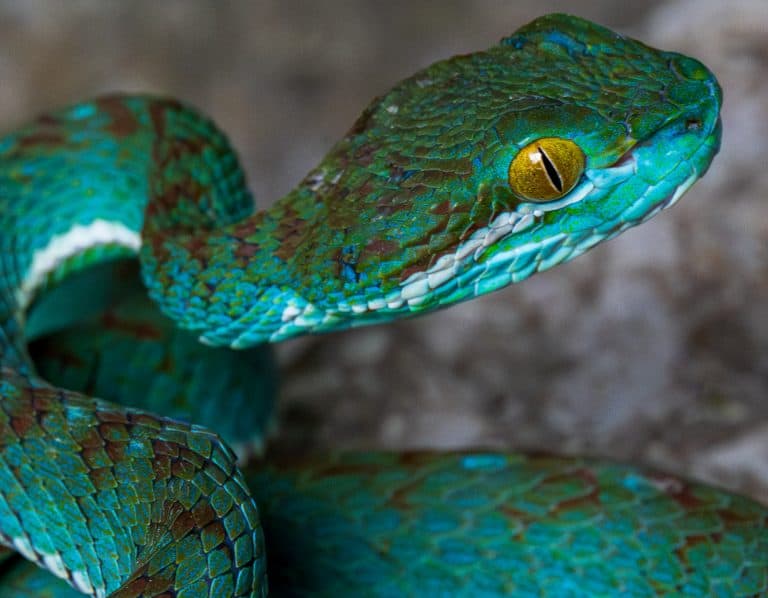
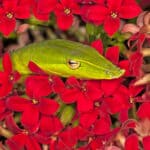
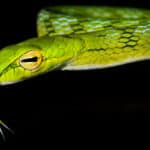
The green cat snake (Boiga cyanea) is a bright green snake with dark blue or black patches. This is another common, widespread member of the Boiga family. Boiga cyanea is native to most of Indonesia.
Scientific Name
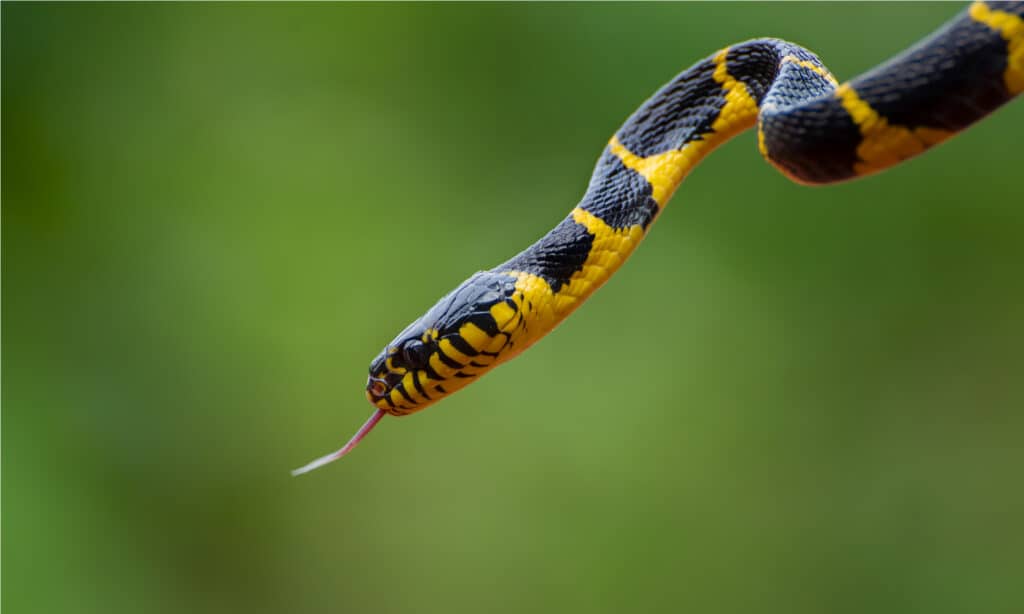
The Boiga snake encompasses a diverse group of snakes, with over 50 known species identified to date.
©DSlight_photography/Shutterstock.com
Since Boiga is a genus and not a specific species of snake, the name Boiga covers many different snakes.
There are more than 50 species of Boiga snake, and they include:
• Boiga andamanensis: Andaman cat snake
• Boiga angulata: Leyte cat snake
• Boiga barnesii: Barnes’ cat snake
• Boiga nigriceps: Black-headed cat snake
• Boiga blandinii: Blanding’s tree snake
• Boiga siamensis: Gray cat snake
• Boiga ochracea: Tawny cat snake
• Boiga ceylonensis: Sri Lanka cat snake
• Boiga cyanea: Green cat snake
• Boiga cynodon: Dog-toothed cat snake
• Boiga dendrophila divergens: Gold-ringed cat snake, mangrove snake
Evolution and Origins
The Boiga genus comprises species that are indigenous to Southeast Asia, India, and Australia, but their remarkable resilience and adaptability have enabled them to establish populations in numerous other suitable habitats worldwide.
Originating from Papua New Guinea, the brown tree snake inadvertently made its way to Guam in the 1940s as a result of unintentional introduction through U.S. military transportation following World War II.
Reportedly, this snake sustains itself by preying on lizards, small birds, their eggs, and small mammals, while its venom is generally classified as mild in terms of potency.
Population and Conservation Status
The snake is classed as “least concern” for conservation status by the IUCN Redlist.
One species of Boiga snake, the brown tree snake (Boiga irregularis) has become a highly invasive pest after being introduced to the island of Guam. The snake was introduced to the island by accident, and it wreaked havoc on the island’s ecology and economy. The snakes have no natural predators on the island, and they have destroyed many native species of birds, mammals, and reptiles.
These snakes have decimated local rodent populations, which means trees and plants are slow to germinate. These trees depend on rodents to pollinate their seeds.
Since 2010, the Guam and United States governments have been using “mouse bombs,” which are dead mice filled with acetaminophen, a pain reliever that is deadly to snakes. Airplanes fly overhead and drop the poisoned mice onto areas populated by the snakes.
The government also employs snake detection dogs who inspect all cargo that leaves Guam. Authorities want to make sure other islands don’t get any brown tree snakes that could have the same impact. These dog teams and their handlers work 24-hour shifts to inspect every item before it leaves the island.
In 2021, conservationists reported that these efforts were finally having some effect. Brown tree snake populations have declined. The work is ongoing, however. In 2021, the U.S. government authorized $4 million to fight the brown tree snake problem.
How To Identify: Appearance and Description
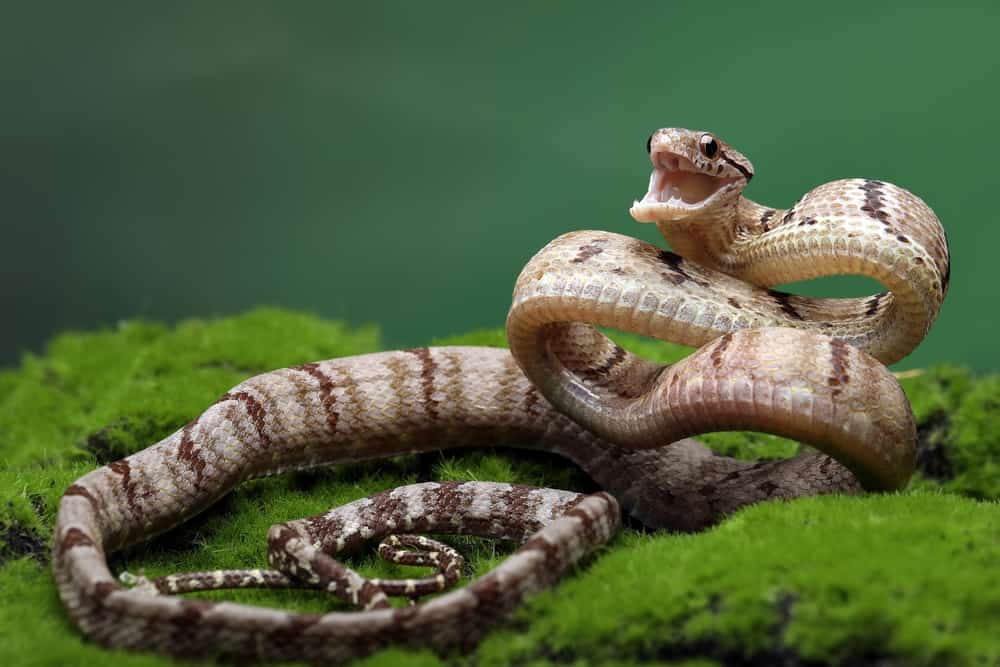
Dog-toothed Cat Snake (Boiga cynodon) is a snake endemic to South East Asia.
©Lauren Suryanata/Shutterstock.com
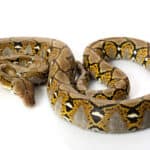
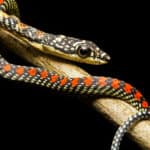
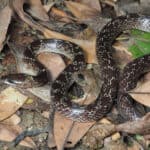
The Boiga, also known as the cat snake, is a long, slender snake with a large head. They vary greatly in appearance among species but typically have black backgrounds with bronze or yellow bands. Some are spotted, however, and others are solid in color.
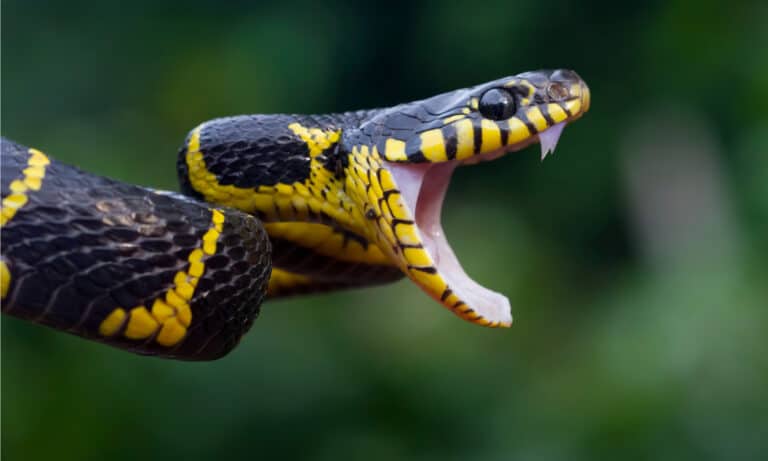
Their distinctive feature is that they are opisthoglyphous, which means their fangs are in the back of their heads.
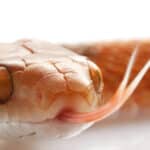
Boiga snakes grow 2 to 3 feet long on average. They have large eyes and long, forked tongues.
Venom: How Dangerous Are They?
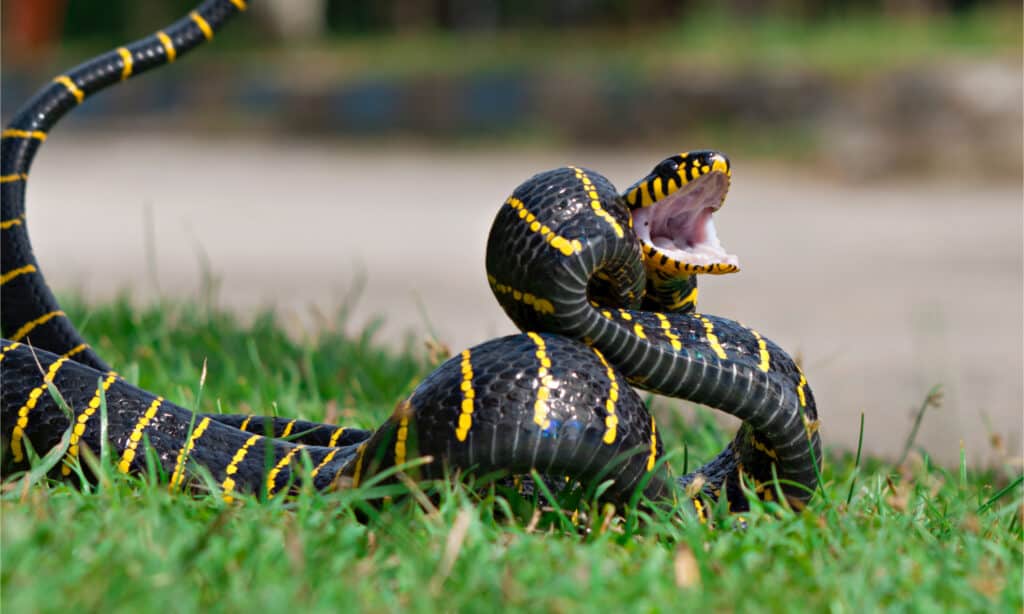
While venom toxicity levels may differ among various Boiga snake species, it is noteworthy that no known Boiga snakes possess venom that is considered lethal to humans.
©Fernandha Theory/Shutterstock.com
Boigas are classed as mildly venomous. Venom toxicity, like other characteristics, varies among species, but there are no known Boiga snakes that have deadly venom. Some species, including the mangrove snake and brown tree snake, can cause swelling and pain when they bite.
Behavior and Humans
These snakes tend to be striking in size and color. For this reason, they are popular among people who keep exotic snakes as pets. They also make good pets because they are hardy, adaptable, and able to handle the stress of transportation well.
Boiga snakes are not aggressive, but they will bite if they are disturbed or threatened.
Striking Snakes
The Boiga genus includes many striking snakes with vivid coloring. These snakes are members of the Colubridae family, which is the largest of all snake families. Although they are classed as mildly venomous, it’s smart to avoid their bites, which can be painful.