




B
Species Profile

Briard

Canis lupus familiaris

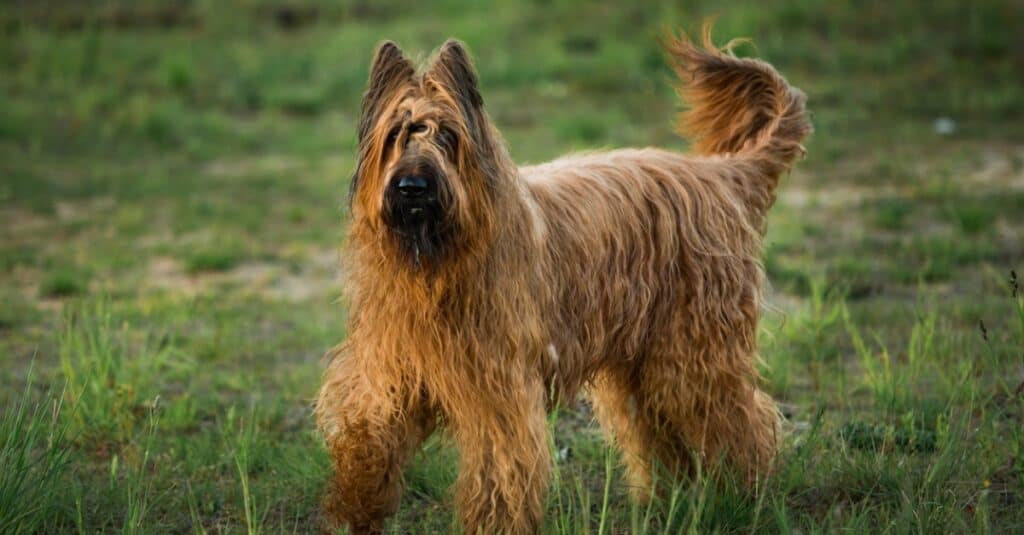
Shaggy French guardian with heart
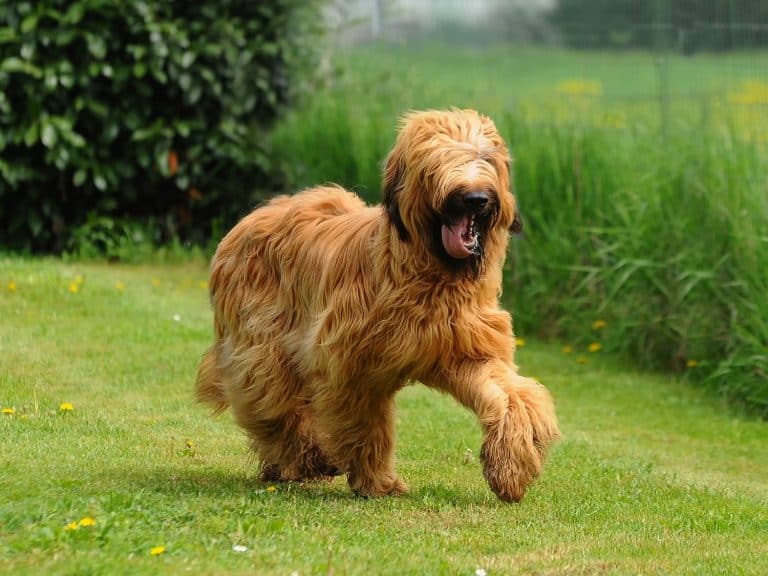
hsunny/Shutterstock.com

Briard Distribution

Click a location to explore more animals from that region

Origin Location

This map shows the native origin of the Briard. As a domesticated species, they are now found worldwide.

Loading map...

Size Comparison

Human 5'8"
Briard 2 ft

Briard stands at 36% of average human height.

At a Glance

Domesticated
Also Known As Berger de Brie, Chien de Berger de la Brie, Briard Shepherd, Brie Sheepdog
Diet Omnivore
Activity Diurnal+
Lifespan 4 years
Weight 40 lbs
Status Not Evaluated
Did You Know?

"Briard" is commonly linked to France's Brie region; the breed is also called the "Shepherd of Brie".

Scientific Classification

The Briard is a large, long-coated French herding breed developed for guarding and driving sheep. It is known for its shaggy double coat, strong herding/guardian instincts, and typically has characteristic double dewclaws on the hind legs.

Kingdom
Animalia
Phylum
Chordata
Class
Mammalia
Order
Carnivora
Family
Canidae
Genus
Canis
Species
lupus

Distinguishing Features

  • Large, robust herding dog with long, wavy coat
  • Often has prominent facial hair (beard/eyebrows) giving a “shaggy” outline
  • Historically a flock guardian and herder; alert and protective temperament
  • Double dewclaws on the hind legs are a notable breed hallmark

Physical Measurements

Males and females differ in size

Height
2 ft 2 in (2 ft – 2 ft 3 in)
1 ft 12 in (1 ft 10 in – 2 ft 1 in)
Length
3 ft 9 in (3 ft 5 in – 4 ft 1 in)
3 ft 8 in (3 ft 5 in – 3 ft 11 in)
Weight
84 lbs (71 lbs – 99 lbs)
66 lbs (55 lbs – 77 lbs)
Tail Length
1 ft 4 in (1 ft 2 in – 1 ft 6 in)
1 ft 5 in (1 ft 3 in – 1 ft 6 in)
Top Speed
25 mph
Steady trotter, not sprinter

Appearance

Primary Colors
Secondary Colors
Skin Type Domestic dog skin with a dense, long double coat (coarse, slightly wavy outer coat over a fine undercoat); skin is typically well-pigmented and protected but prone to mat-related irritation if grooming is neglected.
Distinctive Features
  • Long, shaggy, slightly wavy coat with a distinct beard and eyebrows; uniquely has double dewclaws on each hind leg.
  • Shaggy, long, slightly wavy double coat with heavy facial furnishings (notable beard/mustache and pronounced eyebrows), giving a rustic, 'untrimmed' working-dog appearance.
  • Characteristic double dewclaws on the hind legs (breed hallmark); feet are large with strong pasterns for endurance work.
  • Athletic, rectangular build with strong bone and a steady, ground-covering trot suited to all-day work; tail is long with a slight hook at the tip.
  • Temperament/care: intelligent, protective, and people-focused; needs early socialization and consistent training to channel guarding and herding drive (may try to 'herd' children/pets).
  • Exercise/enrichment needs are high for a companion dog (daily vigorous activity plus training or scent/obedience/herding-style games) to prevent boredom-related behaviors.
  • Grooming requirement is intensive: frequent brushing/combing to prevent mats in the dense furnishings and behind ears; routine coat checks after outdoor work; regular nail care is important due to dewclaws.
  • Briards can have hip dysplasia, progressive retinal atrophy (PRA), other inherited eye diseases (including congenital stationary night blindness), hypothyroidism, and a bloat risk; owners feed small meals and avoid hard exercise near meals.

Sexual Dimorphism

Males are typically larger and more heavily built than females, with a broader head and more pronounced neck/forechest; females tend to be slightly smaller and finer-boned while retaining the same coat type and hallmark dewclaws.

  • Usually taller/heavier with broader skull and stronger forechest.
  • Often a fuller ruff and heavier overall coat furnishings (individual variation).
  • Typically slightly smaller and more refined in head/neck and overall frame.
  • Often appears a bit lighter in build while maintaining the same shaggy coat and working outline.

Did You Know?

"Briard" is commonly linked to France's Brie region; the breed is also called the "Shepherd of Brie".

Many Briards have double dewclaws on each hind leg-traditionally valued for traction and stability while working.

The coat is a long, dry, slightly wavy double coat designed to protect against weather and rough vegetation.

Briards were developed to both drive and guard flocks, combining herding ability with watchdog instincts.

Their expressive, eyebrow-like facial furnishings help shield eyes from dust and brush while moving through pasture.

As a domestic dog (Canis lupus familiaris), the Briard is a selectively bred form of the gray wolf (Canis lupus), shaped for cooperative work with humans.

Unique Adaptations

  • Hind double dewclaws: extra digits on the rear feet are a breed hallmark and historically associated with surefootedness in the field.
  • Protective coat architecture: a dense undercoat plus harsher outer coat helps insulate and shed debris; requires regular grooming to prevent mats.
  • "All-weather" working build: large, muscular frame and efficient trot suited for covering ground while driving and guarding stock.
  • Selective-breeding temperament shift from the base species: compared with gray wolves, Briards show enhanced human-directed cooperation, trainability, and reduced flight response-while retaining high vigilance and prey/herd drive.
  • Facial furnishings (beard/eyebrows): help deflect sun, dust, and grass seeds, supporting long days outdoors.

Interesting Behaviors

  • Gather-and-guide circling: may arc around people, kids, or other pets the way it would collect sheep.
  • Shadowing and "checking in": tends to keep the family in sight, moving room-to-room as a guardian habit.
  • Alert "boof" or watchful stance: quick to signal new sounds or visitors, often holding a steady, assessing posture.
  • Mouthing/heel-nipping tendency (especially in juveniles): a herding carryover that needs early redirection.
  • Problem-solving persistence: will test gates, latches, and routines-great for work, challenging without training.
  • Strong body awareness: many Briards place paws deliberately and use their hindquarters confidently, especially in uneven terrain.

Cultural Significance

In France the Briard (Shepherd of Brie; Canis lupus familiaris) is part of rural heritage, a two-job sheepdog that drove and guarded flocks. Abroad it is a symbol of traditional European herding and is valued as a devoted family guardian and serious working dog.

Myths & Legends

French breed lore often calls the Briard "the heart wrapped in fur," a traditional saying that reflects its reputation for deep loyalty and protective devotion.

A long-circulated French anecdote credits Briard-type sheepdogs with notable wartime service as messengers and sentries, reinforcing the breed's legend as a steadfast guardian in difficult conditions.

In rural French stories, the Briard (Berger de Brie), Canis lupus familiaris, is a shaggy shepherd dog that watches at night and seems to sense danger or intruders before people, an old farm belief.

The name "Shepherd of Brie" is itself part of the breed's origin story, linking the dog to the storied landscapes and farming identity of the Brie region and nearby French countryside traditions.

Conservation Status

NE Not Evaluated

Has not yet been evaluated against the criteria.

Population Stable

Life Cycle

Birth 8 pups
Lifespan 4 years

Lifespan

In the Wild 2–6 years
In Captivity 8–13 years

Reproduction

Mating System Polygynandry
Social Structure Managed Domestic
Breeding Pattern Not Applicable
Fertilization Managed Selective
Birth Type Internal_fertilization

Briard (Canis lupus familiaris) breeding is managed by humans. Not pair‑bonded; both sexes can mate with multiple partners (polygynandry) if unmanaged. Breeders pick mates and timing and provide care; other dogs don't help raise pups.

Behavior & Ecology

Social Pack Group: 4
Activity Diurnal, Crepuscular
Diet Omnivore Animal-protein-forward meals (e.g., chicken, beef, lamb, fish) with added fats/omega-3s supporting skin/coat; many Briards are especially food-motivated by meat-based treats.

Temperament

Confident, steady guardian demeanor; typically reserved with strangers but devoted to family
High trainability with an independent streak; responds best to consistent, fair handling rather than harsh correction
Strong herding drive (circling, gathering, controlling movement); may attempt to manage household activity if bored
Alert and vocal watchfulness; can become territorial without early socialization and clear boundaries
Good working stamina; needs daily physical exercise plus mental enrichment (training, problem-solving, scentwork)
Sensitive to isolation; prolonged under-stimulation can lead to barking, pacing, or destructive behavior
Briards risk hip dysplasia and joint problems; avoid high-impact exercise while growing and keep lean. They can get bloat—manage meals and avoid exercise near meals. Some lines have eye disease—check vision and pick tested breeders.
Coat-care requirement: long double coat mats easily; regular brushing/line-combing and hygiene trims support comfort and sociability

Communication

Alert barking Often sustained when guarding territory
Low growl for warning/boundary-setting
Whining or "talking" sounds for attention or anticipation
Play barks during social interaction
Body-blocking and "checking" (stepping into paths) to control movement; common herding-derived signal
Circling/gathering motions; staring/eye contact to influence direction Less intense than some eye-herding breeds but present
Leaning, pawing, and muzzle-nudging for affiliation or to request interaction
Erect/forward posture and tail carriage changes to signal vigilance; relaxed loose posture for friendliness
Scent investigation and marking typical of domestic dogs; uses location-checking/patrolling as a guarding routine
Mouthy/heel-oriented gestures (usually inhibited nips) can appear when aroused; best redirected to trained cues and appropriate outlets

Habitat

Biomes:
Temperate Forest Temperate Grassland Mediterranean Boreal Forest (Taiga) Tundra Alpine Desert Hot Desert Cold Savanna Tropical Dry Forest Tropical Rainforest Freshwater Wetland Marine +8
Terrain:
Plains Hilly Valley
Elevation: Up to 16404 ft 3 in

Ecological Role

Domesticated omnivorous canid functioning primarily as a human-associated working breed (herding/guardian) rather than a wild predator.

Livestock guarding and flock management (deterring predators and reducing losses) Human companionship and working partnership Occasional pest deterrence around farms/homesteads (discouraging rodents/mesopredators)

Diet Details

Main Prey:
Small mammals Birds and eggs Carrion
Other Foods:
Plant matter from human-provided foods Vegetables Fruits

Human Interaction

Domestication Status

Domesticated

Canis lupus familiaris: domestic dogs come from gray wolves, shaped by people for tame behavior and work. The Briard, a French herding and flock-guarding breed, was bred for driving sheep, guarding, a large athletic body, a long dense double coat, and hind double dewclaws. Briards are independent, protective, and need much grooming and training.

Danger Level

Moderate
  • Protective/territorial behavior can lead to defensive bites if the dog is poorly socialized, mishandled, or pushed past thresholds.
  • Herding/guardian instincts may produce nipping, body-blocking, or chasing of running children, cyclists, or visitors without training.
  • Large size and strength increase risk of injury from jumping, knocking over, or leash pulling.
  • Reduced visibility from heavy facial coat can contribute to startle responses if not managed (regular grooming, clear handling cues).

As a Pet

Suitable as Pet

Legality: Generally legal as a domestic dog breed in most jurisdictions. May be subject to local rules affecting all dogs (licensing, leash laws) and, in some places, housing/insurance restrictions or breed-focused policies; check city/county and landlord/HOA regulations.

Care Level: Experienced

Purchase Cost: $1,000 - $3,000
Lifetime Cost: $20,000 - $50,000

Economic Value

Uses:
Companion animal ownership Working/herding services Breeding and showing Professional grooming Training and behavior services Veterinary and preventive care economy
Products:
  • puppies from registered breeders and rescues (acquisition/adoption)
  • stud services and breeding program value
  • herding/farm work value (livestock movement, property presence)
  • conformation, obedience, and herding-trial participation
  • grooming services (coat maintenance, de-matting, bathing, trimming)
  • training packages (puppy socialization, obedience, behavioral consults)
  • pet supplies (high-quality diet, crates, leashes, enrichment toys)

Relationships

Predators 4

Gray wolf Canis lupus
Eurasian brown bear Ursus arctos arctos
Eurasian lynx Lynx lynx
Golden jackal Canis aureus

Related Species 8

Gray wolf Canis lupus Shared Species
Domestic dog Canis lupus familiaris Shared Species
Dingo Canis lupus dingo Shared Species
Coyote Canis latrans Shared Genus
Golden jackal Canis aureus Shared Genus
Ethiopian wolf Canis simensis Shared Genus
African golden wolf Canis lupaster Shared Genus
Red fox Vulpes vulpes Shared Family

Ecological Equivalents 6

Animals that fill a similar ecological role in their ecosystem

Domestic dog Canis lupus familiaris Briard is a people-directed herding and guardian dog (Canis lupus familiaris) bred to be easy to train, to control flocks, and to exhibit strong guardian instincts. It has a long shaggy coat, fixed double rear dewclaws, and higher care needs.
Beauceron Canis lupus familiaris French pastoral working breed from similar farm livestock-guarding and herding traditions. Often compared with Briards as a smoother-coated, more upright, high-drive counterpart; both breeds were historically used to drive and guard flocks.
Bearded Collie Canis lupus familiaris Shaggy-coated herding breed with similar coat type and maintenance demands, occupying a comparable niche of driving and managing livestock with high handler engagement.
Old English Sheepdog Canis lupus familiaris Large, long-coated drover/herder type. Overlaps strongly in management niche (moving stock and providing farm-guardian presence) and requires similarly intensive grooming.
Pyrenean Shepherd Canis lupus familiaris French herding breed from pastoral systems. Shares the working role of flock management, though typically smaller and more energetic, illustrating a similar ecological job partitioned by size and style.
German Shepherd Dog Canis lupus familiaris Herding-derived working dog commonly used for guarding, patrol, and handler-directed control. Overlaps with Briard in trainability, protective instincts, and need for structured work.

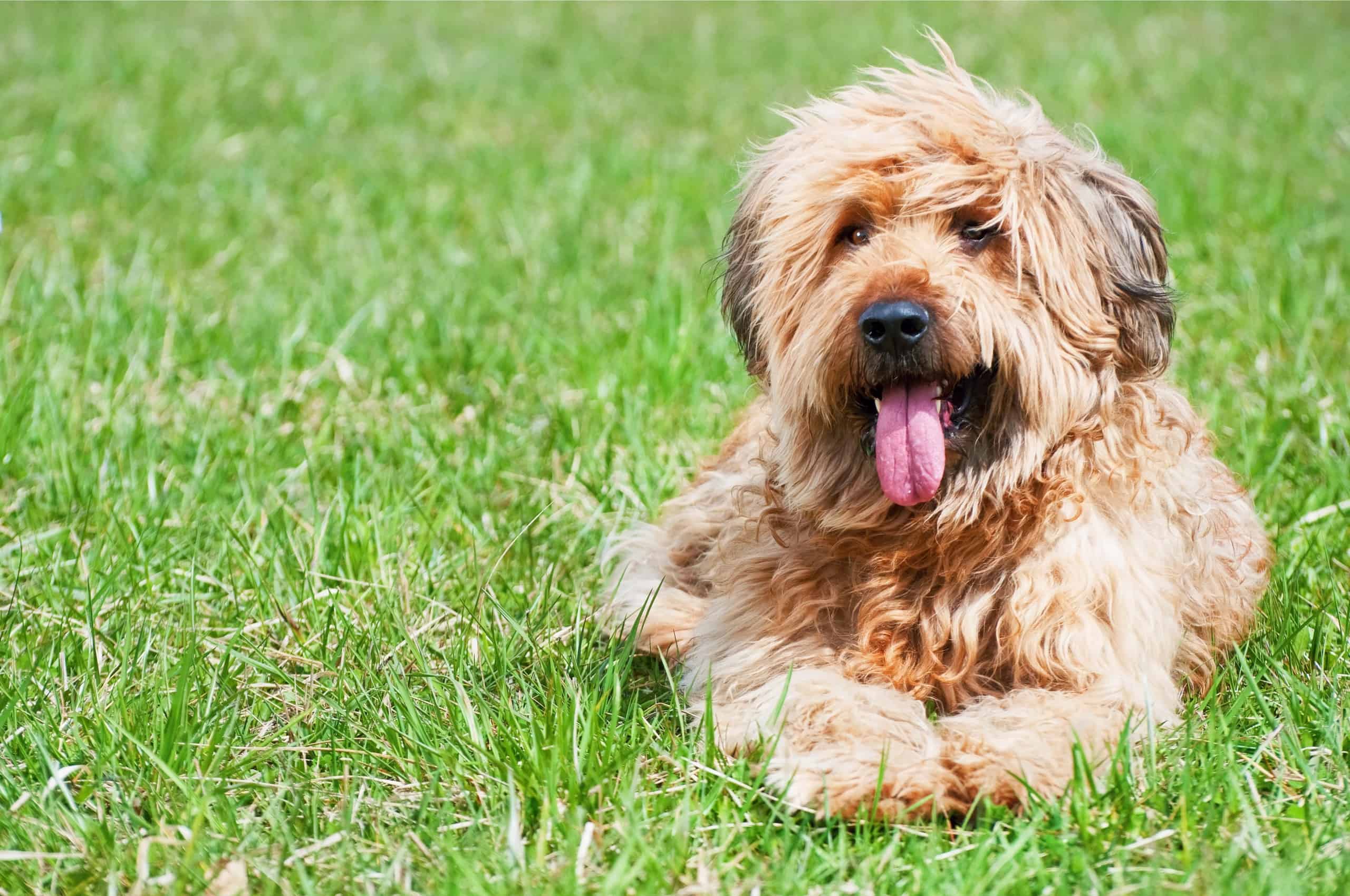
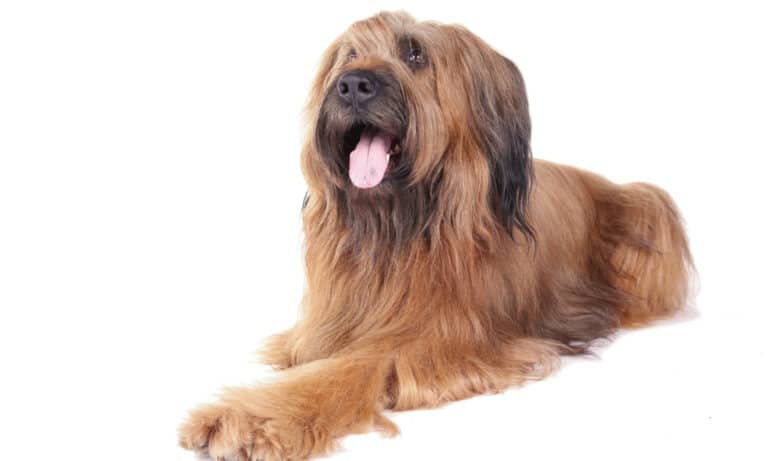
One of the shaggiest sheepdogs, the Briard is well-known and beloved for its distinctive, lengthy coat. These handsome dogs were first bred in the Brie region of France centuries ago, traditionally used to herd and defend sheep. Despite their long bangs, Briards have keen eyesight for keeping a watchful eye on their flocks or their families if they don’t have any sheep handy. Their number one job is to be an exemplary family member with a job to do, either by choosing a lengthy run to keep up with their highly active needs or being a supervisor of children. 

These head-turning dogs strut like supermodels and know they’re in charge, but give them lots of love and structure, and they’ll be as driven to please and succeed as any modern CEO. Early training is key to their success in a family; daily grooming, exercise, and mental challenges will make them fiercely loyal companions for years to come.

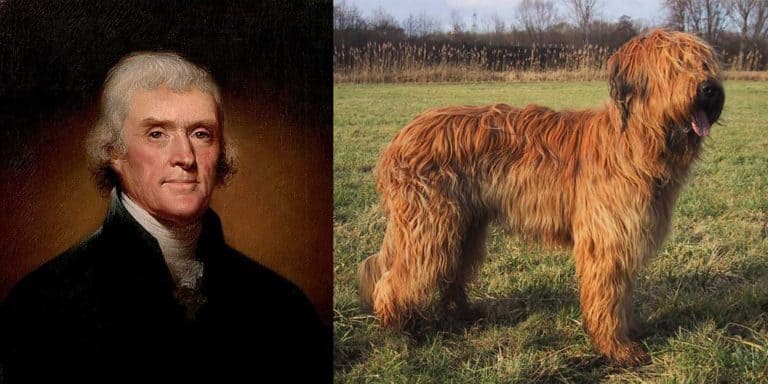
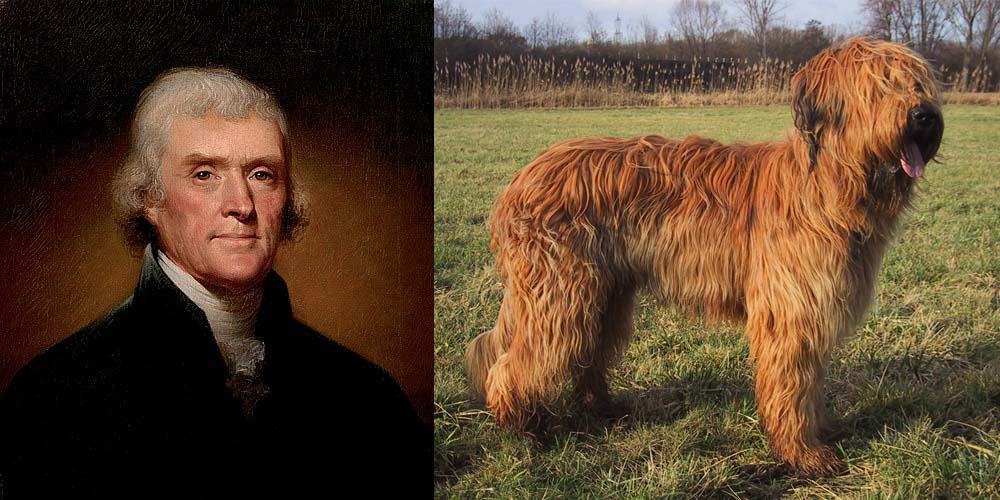
According to some historians, Marquis de Lafayette first brought the Briard to North America. Others credit Thomas Jefferson with first importing the breed.
👁 Image
Thomas Jefferson is credited with first importing the breed to the USA.

The Best Dog Food For Briard

Briards benefit from high-quality dog food, either kibble or wet food, that best fits whatever stage of life they are in. As both puppies and throughout their adult life, Briards have high energy and require plenty of exercise to keep in top shape. This lifestyle requires a high-protein diet with plenty of nutrients to help maintain muscle stability and aerobic function. 

Some Briards can quickly gain weight without nutritional oversight, which can stress joints, cause back discomfort, and increase the likelihood of weight-related health issues like heart disease or digestive disorders. Maintaining a balanced diet with regular feeding schedules and minimal snacking is key.

Briards are also very clever and may try to herd you to the treat cabinet more often than not. When in doubt, be sure to check with your vet to learn how to regulate the best meals, snacks, and feeding times for your dog’s weight

3 Pros and Cons of Owning a Briard

Pros!Cons!
Beautiful dog with glossy coat: Your Briard is sure to stand out in a crowd as one of the most beautiful dog breeds.Requires lots of maintenance: These dogs require lots of maintenance, including daily brushing and extensive grooming.
Loyal and very intelligent: These smart canines can easily learn tricks and become fiercely loyal to their owners.Thinks it’s the boss: Without proper training, Briards can easily think they’re the alpha dog.
Great with kids: Briards are excellent with children and treat them with gentle affection.Exercise needed: Briards require regular exercise and mental stimulation to stay healthy, so make sure your lifestyle can accommodate their needs.
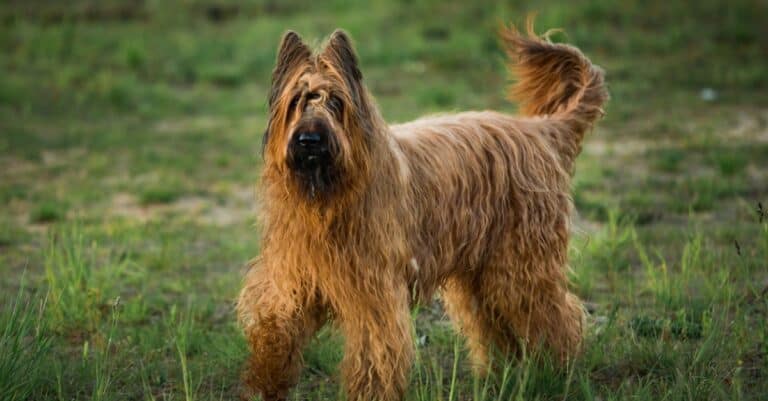
👁 scruffy Briard standing in the grass

The Briard was developed in France centuries ago to herd and guard sheep and other livestock.

©iStock.com/Aleksandr Zotov

Briard Size and Weight

According to major breed standards, Briard males typically stand 23 to 27 inches tall at the shoulder and weigh between 70 and 100 pounds, while females are usually 22 to 25.5 inches tall and weigh 55 to 85 pounds.

Briard Common Health Issues

Briards usually live to reach 12 years of age, and while they’re generally healthy, they do have a few breed-specific health issues to watch.

Congenital stationary night blindness and progressive retinal atrophy are both genetically inherited eye diseases that lead to eventual blindness. These eye issues aren’t painful for your pup and can be accommodated, but working with a breeder who checks for and avoids these issues is essential.

Large breed dogs like Briards are also prone to osteoarthritis, which can cause pain in the hips, knees, and elbows. Owners can manage this and other joint-related conditions, like hip and elbow dysplasia, with joint supplements like chondroitin and glucosamine.

Briard Temperament

Fans of the breed describe Briards as a “heart wrapped in fur.” These dogs are deeply affectionate with their families and love kids with fierce loyalty. As sheepdogs, Briards might consider kids part of their flock and devote their energies to protecting and ensuring their wellness. This might include nipping when they try to herd you or your children, but this behavior is easily curbed with proper training and regular exercise.

These pups are high energy, with herding and hunting built into their DNA, and quickly bond with other animals. The American Kennel Club classifies Briards as herding dogs, and they love nothing more than having a job to do. This includes fetching a ball, protecting their family, and keeping their loved ones together in the same room.

How To Take Care of a Briard 

New pet owners learning how to raise and care for Briards must consider a range of unique factors specific to the breed. Daily brushing, high levels of physical and mental exercise, and socialization all contribute to a happy Briard’s life.
👁 Briard dog, portrait of french shepherd in outdoors.

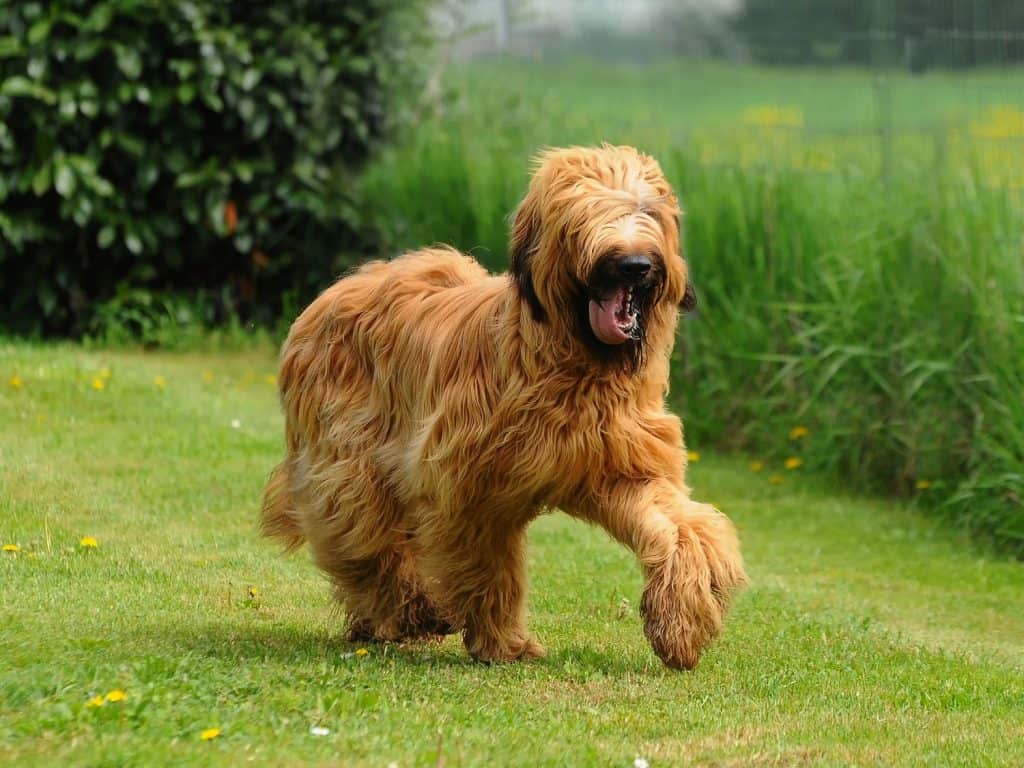
The Briard should be brushed daily to prevent matting.

©Ricantimages/Shutterstock.com

Maintenance And Grooming

These dogs are medium-shedders, which may be surprising considering the level of grooming they require. The breed is renowned and recognizable thanks to its bushy eyebrows, long-haired coat, and shaggy beard. Daily brushing is a must to prevent matting, while extensive grooming is required on a regular schedule.

Regularly cleaning their ears, trimming nails, and daily teeth brushing are also important parts of keeping your Briard clean and healthy.

Training

Disciplined and consistent training makes all the difference in a happy and healthy relationship with your Briard pup. Positive reinforcement is a must, as Briards thrive on positive energy and rewards for jobs well done. They were bred to herd and protect, which can make them destructive if not appropriately challenged with mental enrichment and exercise. A game of tag or a hide-and-seek adventure for hidden treats keeps these dogs guessing, and mental exercise helps curb unwanted behavior such as chewing up footwear or furniture. 

Because these dogs are so intelligent, training can be a breeze. Briards can easily and quickly learn tricks and excel in all sorts of dog sports and agility trials. Group training or time on a herding farm allows them to express their herding instincts and will go a long way to keeping them happy.

Exercise

As high-energy herders, Briards need to jump, run, play, or otherwise keep up with physical exercise to keep them stimulated and healthy. At least an hour a day is required, and changing up your routine from fetch in the backyard to a jog around the park will keep your pup guessing and excited. They love the action, and Briards will love you all the more for adding some variety to their lives. 

Puppies

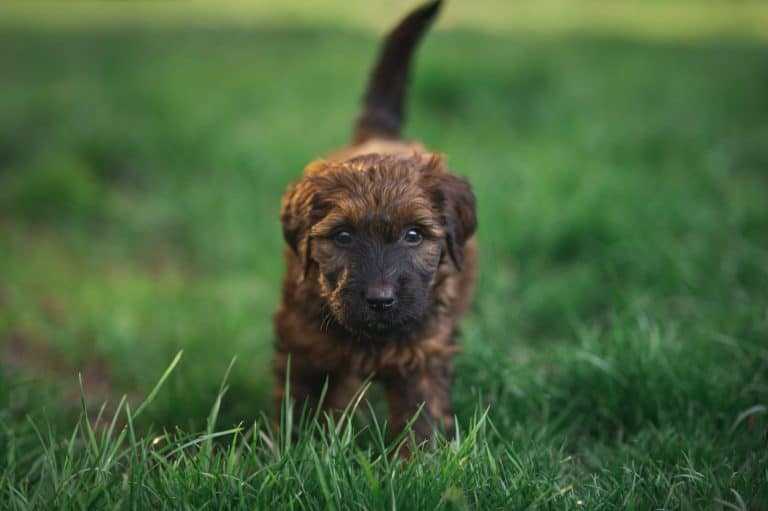
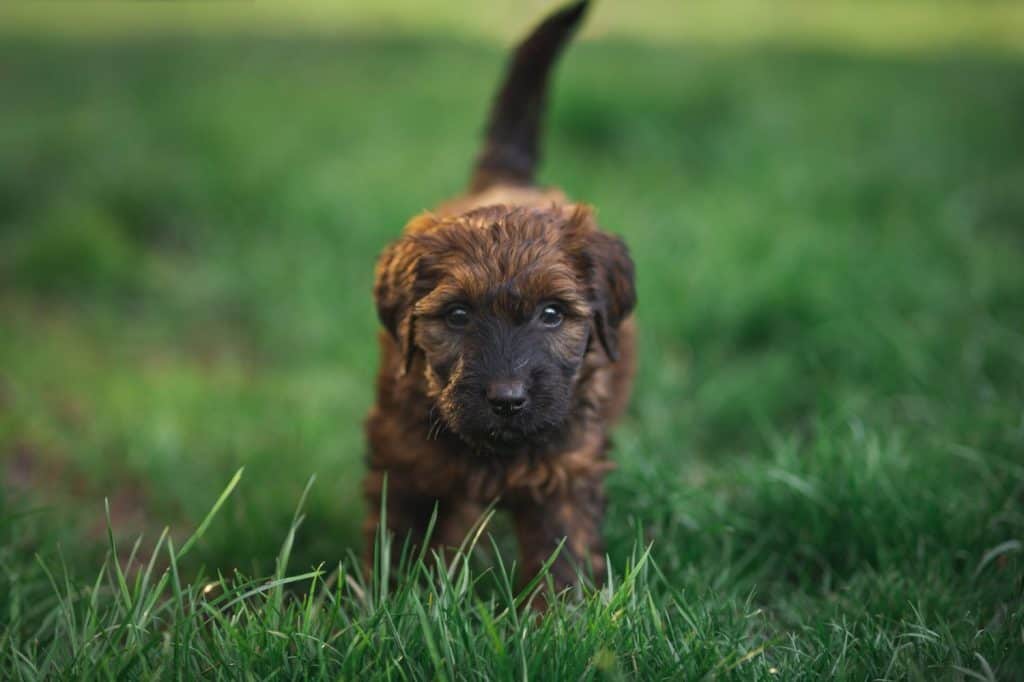
Socialization is an essential component of training your new Briard pup. Acclimating them to new people and experiences when they’re puppies will help them become more accepting and curious as older dogs. 

Establishing a training schedule with a clear hierarchy of command will set Briard puppies at ease, with the understanding that you are the Alpha. Briards learn quickly and have excellent memory, even when they’re young, and can start learning tricks at just a few months of age. Taking them to a puppy training class will also get them to interact with other puppies and teach them how to play nicely with one another.
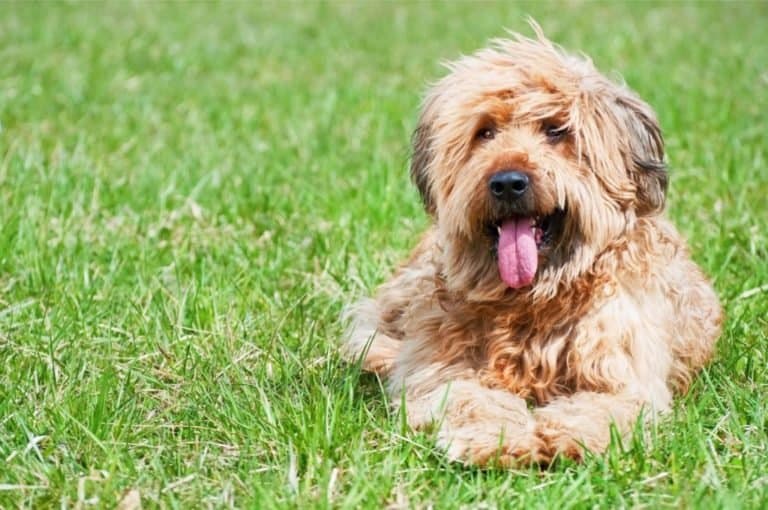
👁 Little briard puppy standing in the middle and looking into the camera

You should start training your Briard when they are still puppies. They are very intelligent dogs.

©ms.yenes/Shutterstock.com

Briard And Children

Briards are loving, playful companions that make for excellent family dogs and caretakers of children. They are naturally protective and often consider the children part of their flock, for which they bear the responsibility of protection and overseeing. They can be slightly bossy and prone to nipping kids to keep them in line, but this can be trained and prevented at an early age.

Dogs similar to the Briard

The Briard is closely related to several sheepdog breeds, including the Bearded Collie, the Belgian Shepherd, and the Collie.

  • Bearded collie: These shaggy pups bear a physical likeness to the Briard due to their shaggy coats and maintenance requirements.
  • Belgian shepherd: This herding dog is also responsible for keeping sheep in line, but in Belgium instead of France.
  • Collie: The collie is a beautifully-haired and playful herding dog originally from Scotland’s hills.
View all 452 animals that start with B

Sources

  1. American Kennel Club / Accessed October 1, 2022
  2. European Union of Briards / Accessed October 1, 2022
  3. Purina / Accessed October 1, 2022
  4. Chewy / Accessed October 1, 2022
  5. American Kennel Club / Accessed October 1, 2022

About the Author

Shanti Ryle

Shanti Ryle is a content marketer with nearly a decade's experience writing about science, real estate, business, and culture. Her work has been featured in Forbes, Wall Street Journal, Global Finance and Banking, Weedmaps News/Marijuana.com, and other publications. Her favorite animal (by far) is the Pembroke Welsh Corgi!

Thank you for reading! Have some feedback for us?

Contact the AZ Animals editorial team

Related Articles You May Find Interesting


Briard FAQs (Frequently Asked Questions)

Briards make for excellent family pets. Their family is this dog’s top priority, and they form deep bonds with fellow household members. They have tons of energy, can keep up with kids, and play all day long. They can sometimes be wary of outsiders and should be managed in unfamiliar scenarios.

While their coats are long and beautiful, Briards are considered low- to non-shedding dogs. However, their fur can tangle and matt easily, requiring daily upkeep and extensive maintenance. If you don’t have time for regular care, you may want to consider another breed.

The average lifespan of a Briard is about 12 years, though they can live up to 14 or 15 with proper nutrition and regular, healthy exercise.