
B
Species Profile

Buffalo

Syncerus caffer

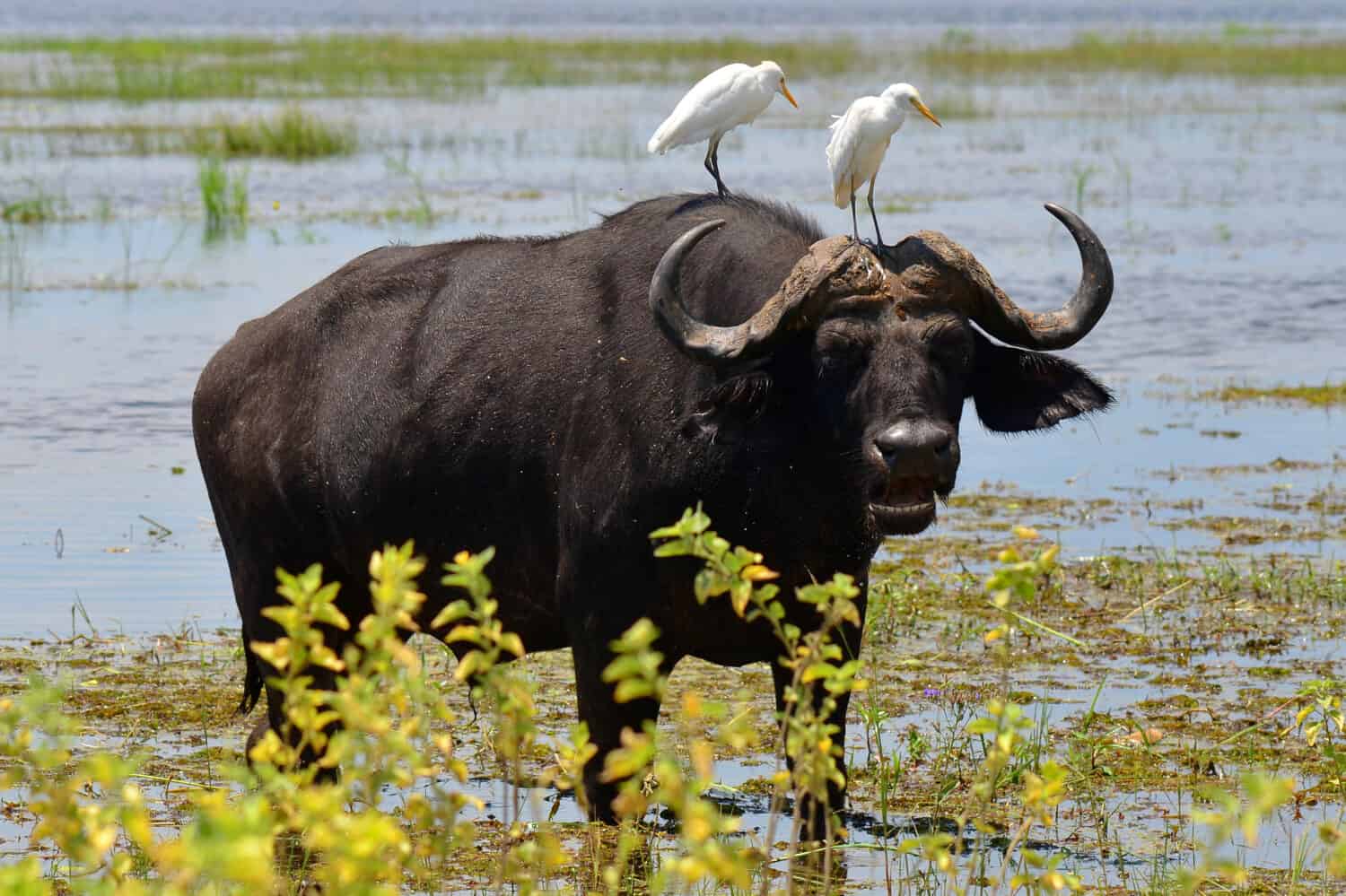
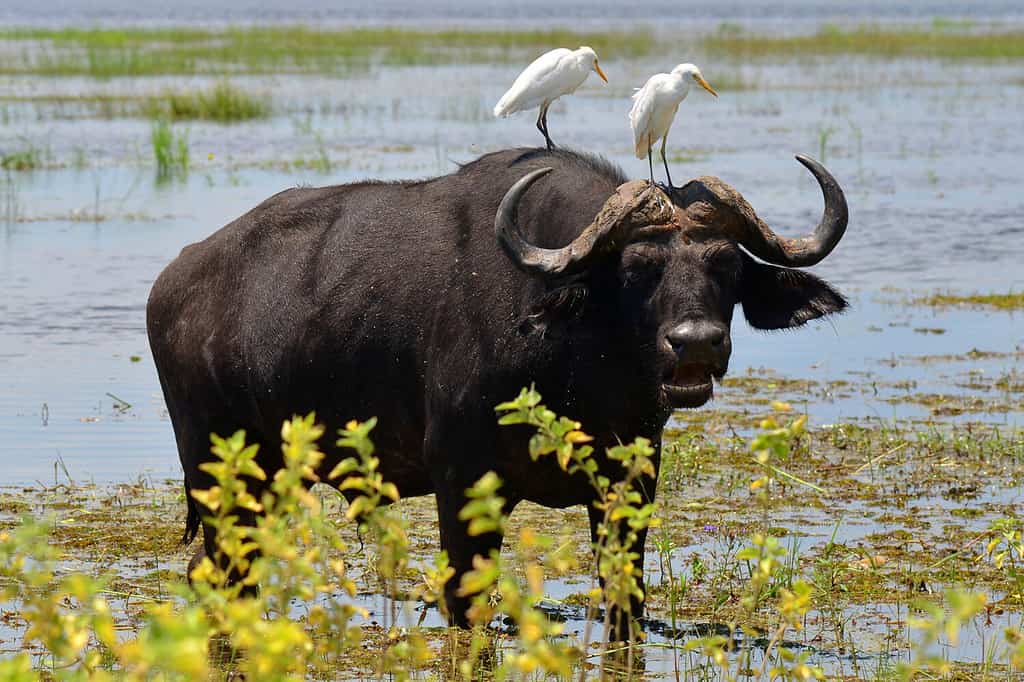
Horn-bossed guardians of the savanna
Karel Gallas/Shutterstock.com

Size Comparison

Human 5'8"
Buffalo 4 ft 7 in

Buffalo stands at 81% of average human height.

At a Glance

Wild Species
Also Known As Cape buffalo, African buffalo, Savanna buffalo, Black buffalo
Diet Herbivore
Activity Cathemeral+
Lifespan 18 years
Weight 900 lbs
Did You Know?

Adult males weigh about 425-870 kg; females about 300-600 kg (IUCN/Kingdon mammal references).

Scientific Classification

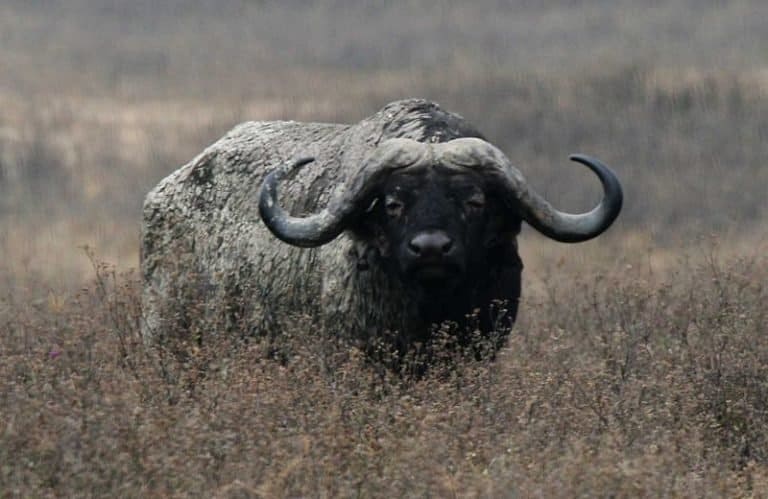
The African buffalo (Syncerus caffer) is a large, social wild bovine of sub-Saharan Africa. It forms herds, is a major grazer in savannas and woodlands, and is known for strong herd defense and dangerous encounters with predators and humans.

Kingdom
Animalia
Phylum
Chordata
Class
Mammalia
Order
Artiodactyla
Family
Bovidae
Genus
Syncerus
Species
Syncerus caffer

Distinguishing Features

  • Massive horn bases forming a “boss” in males
  • Stocky, dark-bodied wild bovine
  • Highly social herding behavior
  • Not a bison; different genus and horn shape

Physical Measurements

Males and females differ in size

Height
4 ft 11 in (4 ft 3 in – 5 ft 7 in)
4 ft 3 in (3 ft 11 in – 4 ft 7 in)
Length
11 ft 10 in (9 ft 2 in – 14 ft 9 in)
Weight
1,543 lbs (1,102 lbs – 1,984 lbs)
1,146 lbs (937 lbs – 1,543 lbs)
Tail Length
0 in (0 in – 0 in)
2 ft 9 in (2 ft 6 in – 3 ft 3 in)
Top Speed
35 mph
running

Appearance

Primary Colors
Secondary Colors
Skin Type Short coarse hair
Distinctive Features
  • Mass 300-900 kg; shoulder height 1.0-1.7 m.
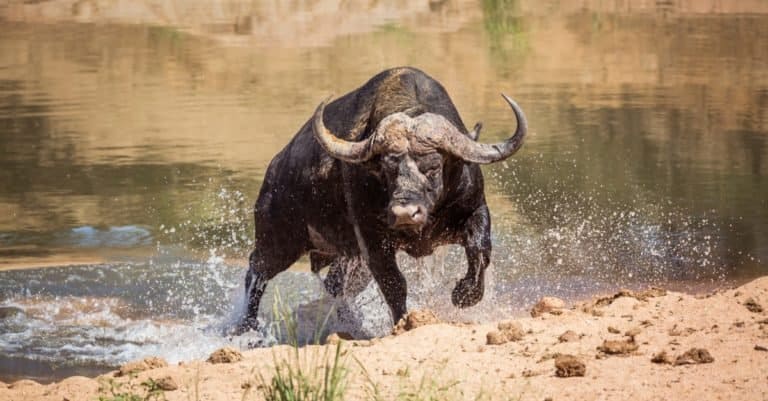
  • Broad, fused horn boss on mature males dominates the forehead.
  • Horns sweep outward then upward; span can approach ~1 m.
  • Stocky, deep-chested body with relatively short, sturdy legs.
  • Large ears with noticeable fringed hair along the margins.
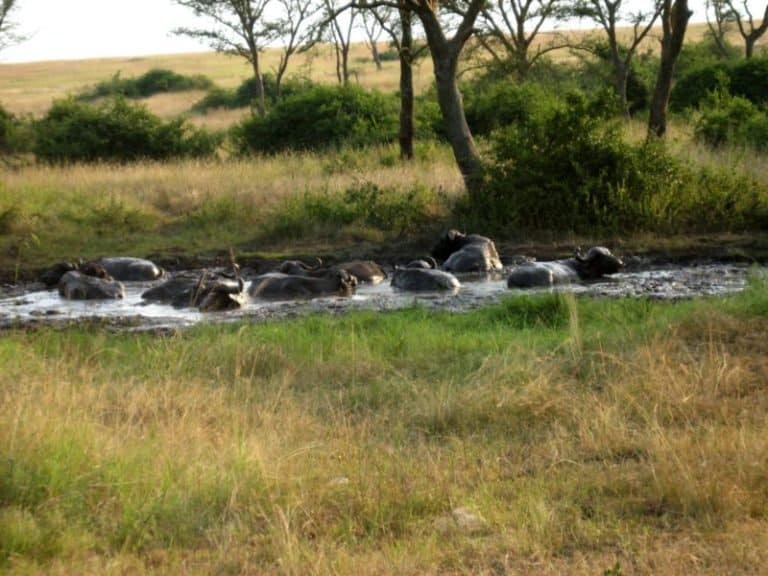
  • Dark, thick skin; frequent mud wallowing adds dusty gray appearance.
  • No shoulder hump; distinguishes it from true bison.
  • Herd defense: adults form a protective ring around calves.
  • Primarily grazer; broad muzzle suited to cropping savanna grasses.
  • Wild lifespan commonly ~11-18 years; captivity up to ~25 years.

Sexual Dimorphism

Males are typically heavier (≈500-900 kg) and develop a broad, fused horn boss; females are lighter (≈300-600 kg) with narrower, usually unfused bosses and slimmer horns. Both sexes carry horns (Estes 1991; Kingdon 2015).

  • Boss heavily fused, broad "helmet" across the forehead.
  • Horn bases thicker; wider spread and heavier curvature.
  • Neck and forequarters more muscular; head appears blockier.
  • Older males often sparsely haired, giving a grayer look.
  • Boss less fused; forehead looks narrower and less armored.
  • Horns generally thinner, less massively flared at the bases.
  • Overall body smaller, more lightly built than adult bulls.
  • Facial profile appears less massive due to slimmer horn bases.

Did You Know?

Adult males weigh about 425-870 kg; females about 300-600 kg (IUCN/Kingdon mammal references).

Shoulder height ranges roughly 1.0-1.7 m; head-body length about 1.7-3.4 m in adults.

Mature bulls develop a fused horn "boss"; horn spread can reach about 1.6 m in large males.

Herds often number 50-500, but can exceed 1,000 in highly productive ecosystems like Serengeti-Mara.

Gestation is about 340 days; usually one calf is born, and weaning commonly occurs around 6-9 months.

Wild longevity is often about 11-18 years; captive individuals can live beyond 20 years in zoos.

Not bison or Asian water buffalo: it's Syncerus caffer, never domesticated, and a classic "Big Five" species.

Unique Adaptations

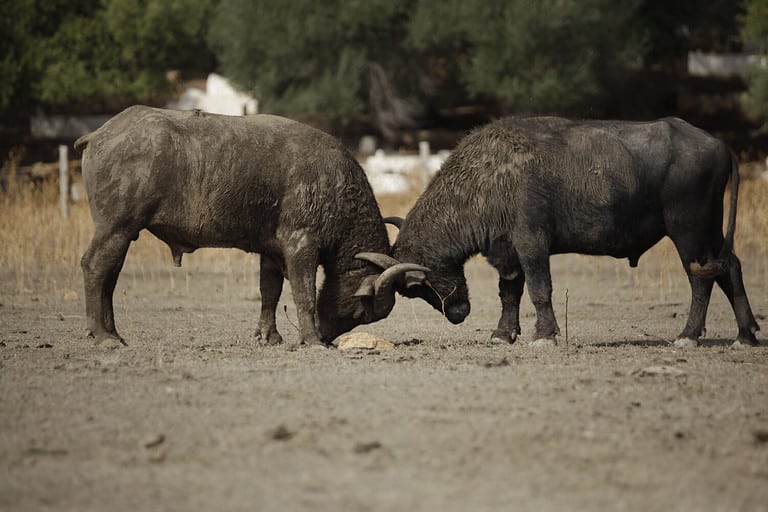
  • The horn boss plus thick frontal bones act like a helmet, reducing injury during head-to-head clashes among bulls.
  • A large, efficient rumen allows digestion of coarse C4 savanna grasses and sustained bulk grazing.
  • Broad, strong hooves improve stability on wet floodplains and heavy black-cotton soils.
  • Group living provides layered vigilance: multiple adults scan while others feed, lowering individual predation risk.
  • Mud-bathing and a dark, sparse coat help with thermoregulation and insect deterrence in hot, open habitats.

Interesting Behaviors

  • Herd defense is coordinated: adults form a front, face outward, and keep calves central during predator confrontations.
  • Fission-fusion grouping occurs: breeding herds, bachelor groups, and solitary old bulls use different habitats.
  • They graze mainly at dawn and dusk, then ruminate in shade during midday heat.
  • Mobbing behavior is common: herds rush predators, sometimes disrupting lion hunts and aiding attacked herd-mates.
  • Buffalo repeatedly use mud wallows, coating skin to cool down and reduce biting flies and parasites.

Cultural Significance

In southern Africa, local names meaning "buffalo" symbolize strength and fearless resolve in praise poetry and clan epithets. Buffalo imagery appears in regalia and remains iconic in safari history and conservation economies.

Myths & Legends

In regional praise poetry, powerful leaders are likened to the buffalo, whose closing horns and charges represent irresistible courage.

In widespread Bantu folktales, the Hare outwits a stronger Buffalo through clever traps, teaching that intelligence can defeat brute force.

A common savanna tale cycle pits Buffalo against Lion/Leopard in contests of power; Buffalo's fearlessness wins respect despite consequences of pride.

Hunters' oral traditions across parts of Africa treat the buffalo as a "judge" of bravery, with stories where disrespect brings dangerous retribution.

Conservation Status

NT Least Concern

Likely to qualify for a threatened category in the near future.

Population Decreasing

Protected Under

  • National wildlife laws
  • Protected areas regulations

Life Cycle

Birth 1 calf
Lifespan 18 years

Lifespan

In the Wild 11–22 years
In Captivity 15–29 years

Reproduction

Mating System Polygynandry
Social Structure Aggregation Group
Breeding Season Year-round; peaks during rainy season
Breeding Pattern Transient
Fertilization Internal Fertilization
Birth Type Internal_fertilization

In mixed herds, dominant bulls compete and mate with multiple receptive cows, while subordinate males may also sire calves. Estrus lasts ~24 hours; internal fertilization follows, with gestation about 340 days. No pair-bond forms; females rear calves.

Behavior & Ecology

Social Herd Group: 200
Activity Cathemeral, Crepuscular
Diet Herbivore green grass

Temperament

Gregarious
Highly vigilant
Defensive
Aggressive

Communication

contact grunts
alarm snorts
bellows
body postures
horn displays
tail and ear signals
collective mobbing
scent cues

Habitat

Biomes:
Savanna Tropical Dry Forest Tropical Rainforest Wetland Freshwater
Terrain:
Plains Hilly Plateau Valley Riverine
Elevation: Up to 13123 ft 4 in

Ecological Role

Keystone bulk grazer and major prey base

grassland maintenance nutrient cycling seed dispersal habitat heterogeneity

Diet Details

Other Foods:
Red oat grass Guinea grass Bermuda grass Thatched grasses Signal grasses Sedges Rushes Acacias (leaves, shoots) Bushwillows (leaves) Herbs and forbs +4

Human Interaction

Domestication Status

Wild

Not domesticated. Unlike domestic cattle (Bos taurus and Bos indicus), Syncerus caffer has resisted domestication due to aggressive temperament and poor tractability; it is kept in zoos and on game ranches, while wild populations are managed in national parks and other protected areas.

Danger Level

Extreme
  • Goring and trampling during close approach
  • Charges when wounded or cornered
  • Herd defense of calves against people
  • Vehicle collisions in unfenced areas
  • Zoonoses: bovine tuberculosis spillover risk

As a Pet

Not Suitable as Pet

Legality: Generally illegal; where allowed requires strict exotic/wildlife permits.

Care Level: Expert Only

Purchase Cost: $5,000 - $20,000
Lifetime Cost: $60,000 - $250,000

Economic Value

Uses:
Tourism Hunting Ranching Research Conservation
Products:
  • trophies
  • meat
  • hides

Relationships

Predators 5

Lion Panthera leo
Spotted hyena Crocuta crocuta
Nile crocodile Crocodylus niloticus
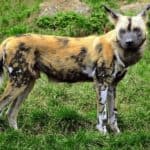
African wild dog Lycaon pictus
Leopard Panthera pardus

Related Species 8

Forest buffalo Syncerus caffer nanus Shared Genus
West African savanna buffalo Syncerus caffer brachyceros Shared Genus
Central African savanna buffalo Syncerus caffer aequinoctialis Shared Genus
Cape buffalo Syncerus caffer caffer Shared Genus
Giant buffalo (extinct) Syncerus antiquus Shared Genus
Water buffalo Bubalus bubalis Shared Family
American bison Bison bison Shared Family
Domestic cattle Bos taurus Shared Family

Ecological Equivalents 4

Animals that fill a similar ecological role in their ecosystem

Blue wildebeest Connochaetes taurinus Large herd-forming grazer of savannas; predator-targeted prey.
Plains zebra Equus quagga Abundant grazer sharing grasslands; strong anti-predator grouping.
Hippopotamus Hippopotamus amphibius Heavy grazer with group defense; overlaps near rivers and floodplains.
Common eland Taurotragus oryx Very large bovid; mixed feeder using savanna-woodland mosaics.

Increasingly threatened by human development


What this lumbering African bovine lacks in style, it makes up for in substance. Not to be confused with American bison, the African Buffalo is an animal that can adapt to a wide variety of habitats, runs up to 37 miles per hour, and literally cannot be tamed. Over their roughly two-decade lifespan, they hang around in herds that “vote,” while grazing on lands that are increasingly threatened by human development.
 

👁 Image

Top Facts

The African buffalo is the largest bovine species in Africa. Except for their characteristic horns, they look like regular cattle. But these animals are not docile like most cattle–they are one of the most dangerous animals you can encounter in the wild, and they are responsible for as many as 200 human deaths per year.

With that said, here are a few other facts:

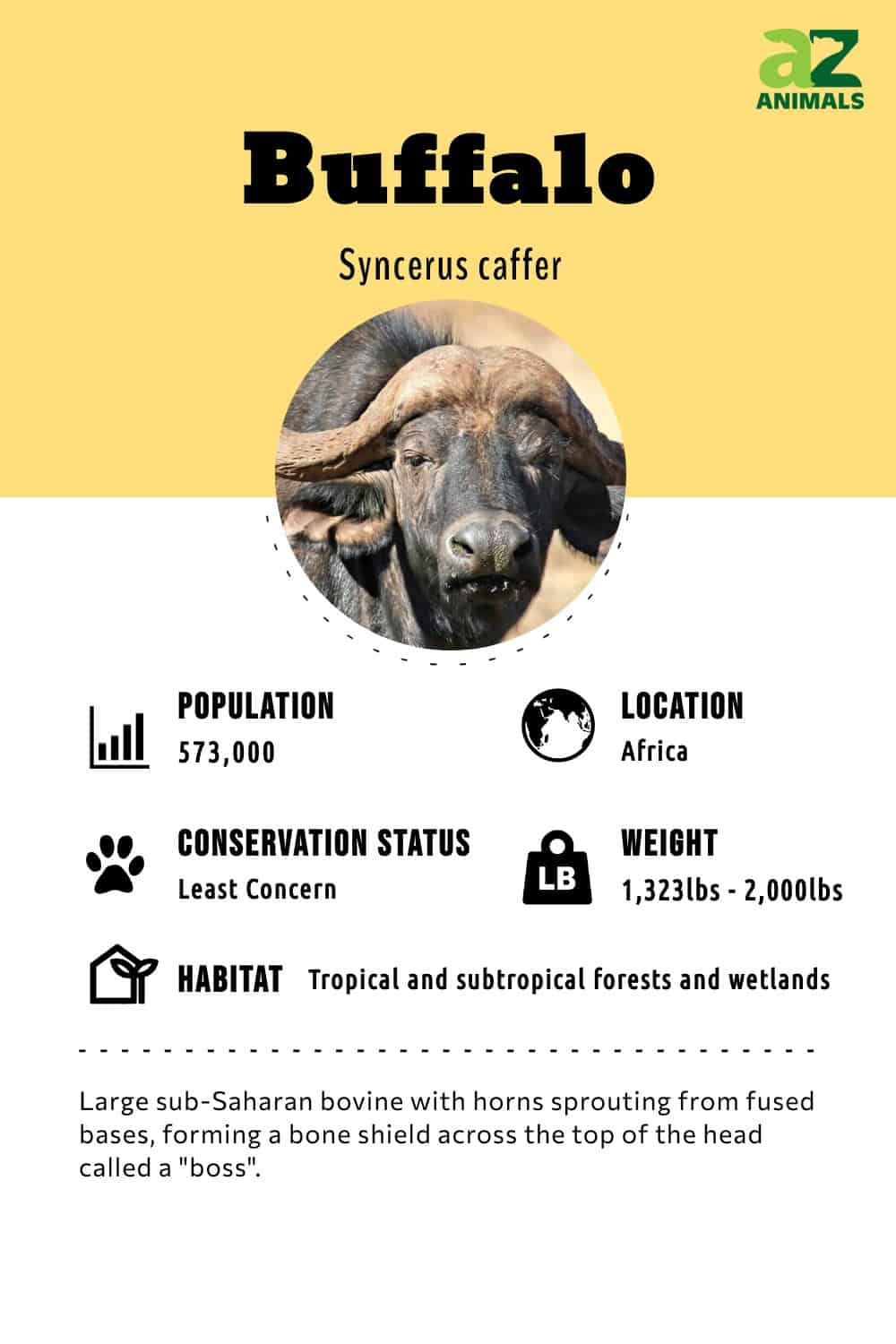
  • Who’s the boss?: The base of the male buffalo’s unique, curving horns grows to meet at the top of its head, forming a kind of helmet called a “boss.”
  • Herd mentality: Buffalo herds use a kind of “vote” to decide which direction to move next!
  • Distant family: Though all members of the family bovinae, “buffaloes” are only from Africa and should not be confused with the American Bison or water “buffaloes!”

You can check out more incredible facts about buffalos.

Scientific Name

The scientific name for the African Buffalo is Syncerous Caffer. “Syncerous” is greek, meaning “top together,” a reference to the large horn bases on the male buffalo that appear joined on the top of the head. “Caffer” comes from the Latin “Country of the Kaffirs,” a reference to Africa as a whole.
👁 World's Scariest Animal: Cape Buffalo
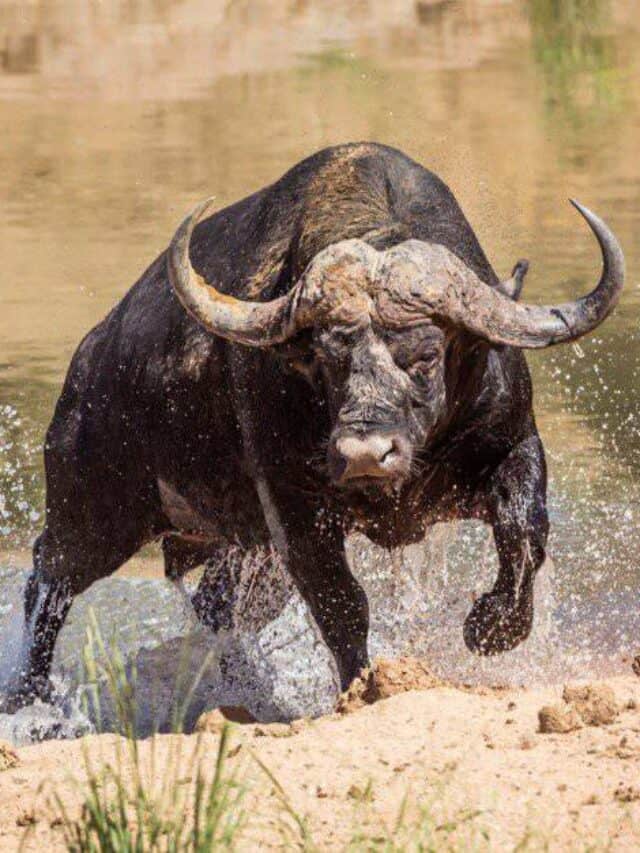
Cape buffalo, despite weighing as much as a ton, can race up to 40 mph, jump up to 6 feet vertically and can quickly pivot to combat predators.

Evolution

Scientific research has shown that there were two main lineages of the African buffalo existent 100,000 years ago–the Cape Buffalo and the African forest buffalo. There is also evidence of the subspecies for West African and Central African subspecies evolving 10,000 years ago. African buffalo have a smaller ancestor they evolved from that migrated into Africa between 5 to 6 million years ago.

Types of Buffalo

There are four subspecies of African buffalos listed below:

  • African Forest Buffalo (Syncerus caffer nanus) – Located in forests of Central and West Africa; smallest subspecies of African buffalo; also called dwarf buffalo or the Congo buffalo; red in color.
  • Cape Buffalo (Syncerus caffer caffer) – Located in Southern and East Africa; largest subspecies of African buffalo.
  • West African Savanna Buffalo (Syncerus caffer brachyceros) – Also called Sudan buffalo; mid-sized subspecies; lives in savannas and floodplains of parts of West Africa.
  • Central African Savanna Buffalo (Syncerus caffer aequinoctialis) – Lighter in color than other subspecies; sometimes called Nile buffalo; lives in savannas and floodplains of Central and East Africa.
  • Mountain Buffalo (Syncerus caffer mathewsi) – Also called the Virunga buffalo; inhabits the mountains of Rwanda, Uganda, and Democratic Republic of Congo.
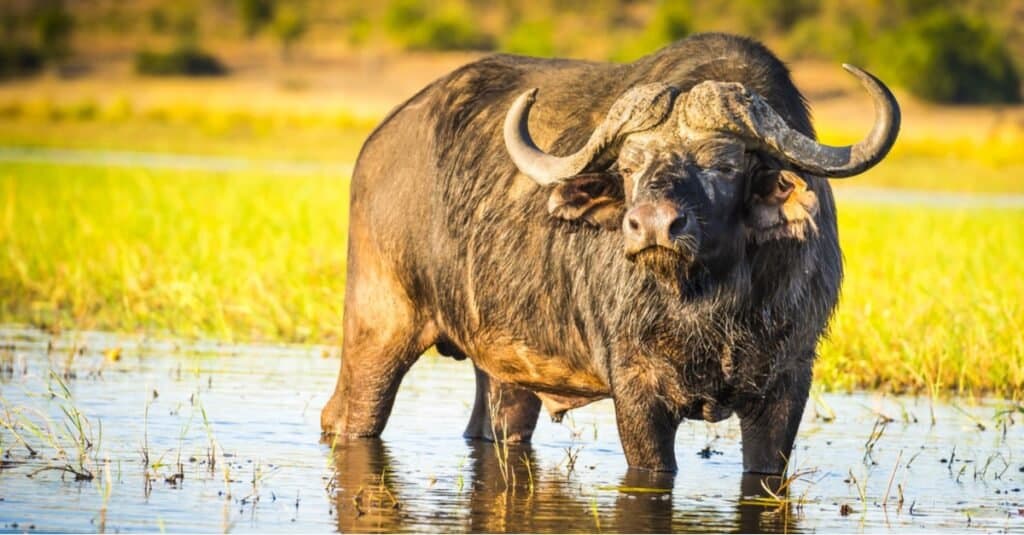
👁 Safari Animals You MUST See: Cape Buffalo

The Cape buffalo is the largest subspecies of African buffalo.

©THP Creative/Shutterstock.com

Appearance and Behavior

All African buffalo are large and cattle-like animals, though they don’t share a close genetic link to cattle. The males average 1,600 pounds as adults–about as big as a four-wheeler! They also stand about five feet tall at the shoulder and reach as long as seven feet from nose to tail. Despite their size, a charging buffalo can reach up to 37 miles per hour.

African buffalo also have a terrible reputation for being ornery. Estimates vary, but deadly attacks by cape buffalo have earned it the nickname “black death.” In one infamous case, an experienced South Africa-based hunting guide was killed by a buffalo–a member of the same herd as a buffalo the guide, himself, had just shot. For this reason, trophy hunters have listed the African buffalo as one of the top five most dangerous (and, therefore, prized) creatures to hunt.

Despite this reputation, research has also found herds of African buffalo to be somewhat democratic and altruistic. Herd movements, for example, undergo a kind of a “vote” where females lay in the direction they want to move, with the most popular direction becoming the one the herd moves next. Herds will also band together to protect calves from attacks. They’ll even look out for other adults in the herd.

African buffaloes come in four varieties. These include the cape, West Africa savanna, Central Africa savanna and forest buffalo, and are mostly distinguished by their horn shape and relative size. The most common are the Cape buffalos, with a dark-brown coating of short, coarse fur and large, distinctive horns that curl downward and back up, similar to a ram. Savanna buffalo are similar to Cape buffalo, but with slightly shorter horns and a wide range of fur styles ranging from light brown to virtual black. Forest buffalo are generally smaller than the others, with lighter brown (or even reddish) fur and shorter horns. Younger savanna buffalo sometimes have light brown fur as well, but most forest buffalo keep theirs into adulthood.

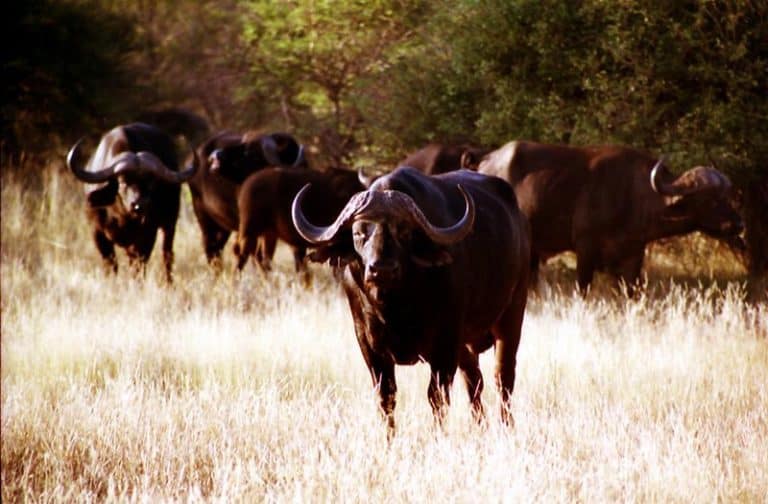
Buffaloes are animals that congregate in large herds, with each herd featuring anywhere from 50 to 500 members. Sometimes herds will join to create temporary super-herds, numbering in the thousands, to keep lions and other predators from easily singling out single members to attack. Any herd is typically made up of females and their calves.

Males will periodically form “bachelor groups,” smaller herds of adult males only. Even these herds, however, will separate into younger males and older males. The oldest males tend to prefer solitude.
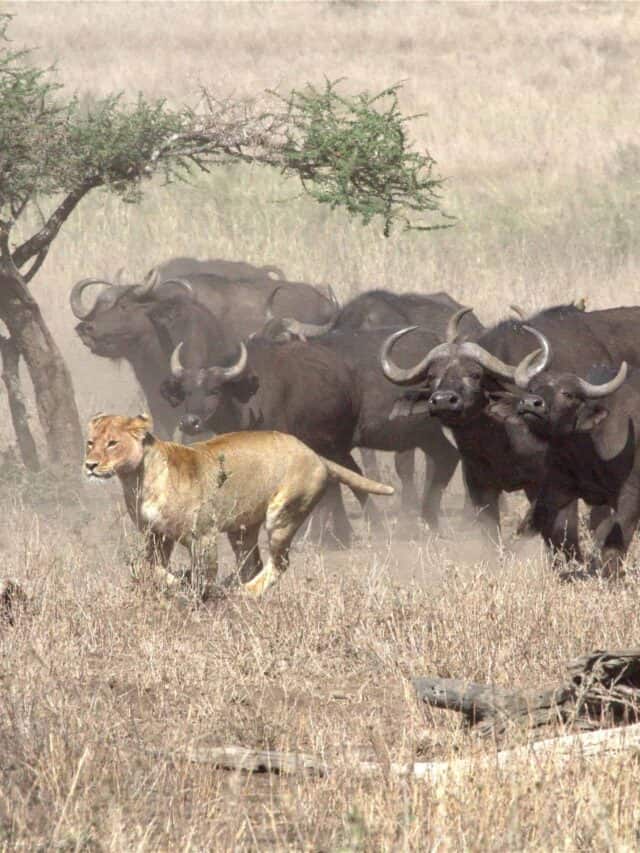
 

👁 buffalo herd vs lion
African buffalo typically congregate in herds fro 50 to 500.

Relationship to other “buffaloes”

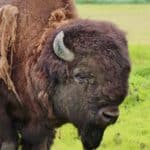
Despite similar names, African buffaloes are not the same as “buffaloes” in other parts of the world. These include the water buffalo in Asia and the American bison, often called a “buffalo.” It only takes a close look to see how much different bison are from buffaloes–American bison have smaller, differently-shaped horns, thicker fur (often with a “beard!”), a hump at the shoulders and a completely different head shape.

Water buffalo, meanwhile, share a number of other features, but have some big differences. Unlike their African cousins, water buffalo are largely domesticated. This means they are used, specifically throughout China and India, similar to how cows and oxen are used in other parts of the world. Though African buffalo are sometimes hunted for meat, their unpredictable attitude has prevented them from ever being tamed. Almost all water buffaloes in the world are tamed, and virtually all African buffaloes are wild.
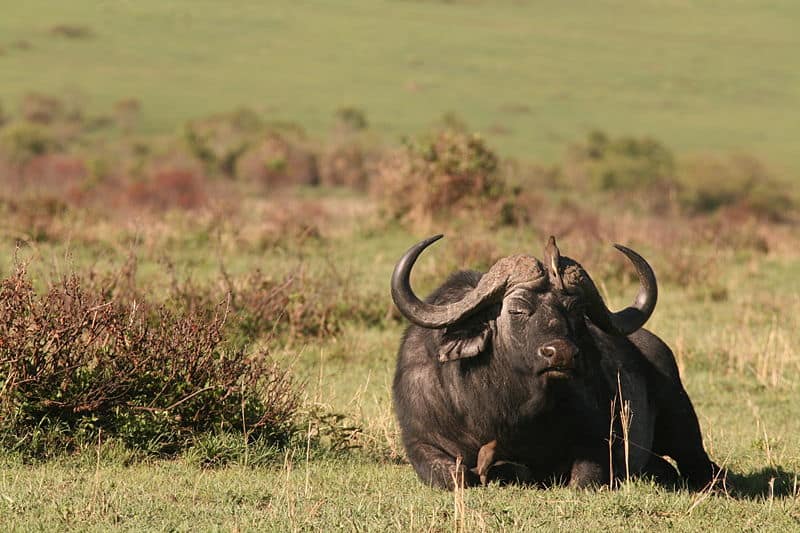
 

👁 Image

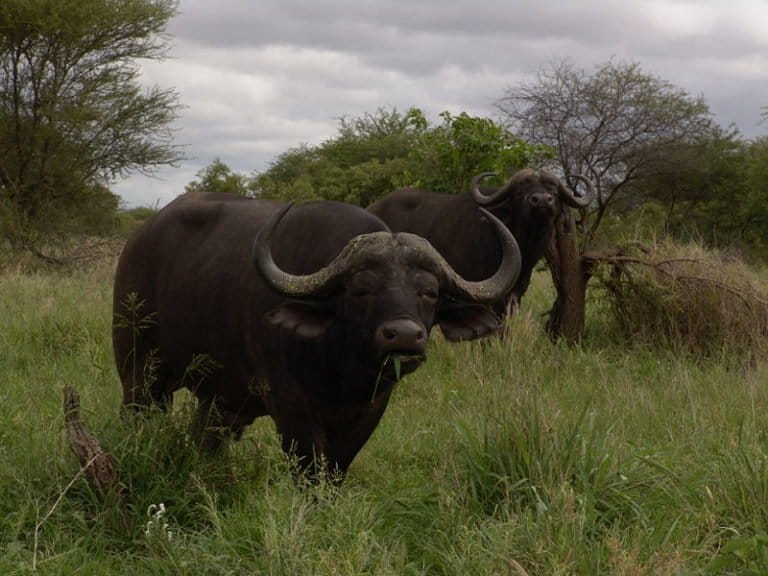
The African Buffalo has never been domesticated due to its unpredictable nature.

©Nicolas Barcet / Creative Commons – Original

Habitat

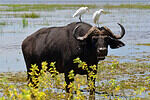
African buffalo can survive almost anywhere there is water. This includes swamps, semi-arid brushland and forests. They live throughout the continent of Africa, particularly central and southern Africa. Countries include Sierra Leone, Ghana, Cameroon, Kenya, Central African Republic, South Africa, Botswana and more.
 

Diet

Despite their sometimes violent nature, buffaloes don’t eat meat. Like many hooved animals, they spend their waking moments grazing on plants. Though they only have a very distant evolutionary link to cows and other bovines, buffalo will chew cud just like a cow. That means, they will spit up grass from earlier to re-chew and extract more nutrients.

Unlike other grazing animals, African buffalo graze mostly at night. They appear to do this, in part, because buffalo have a hard time regulating their body temperature.
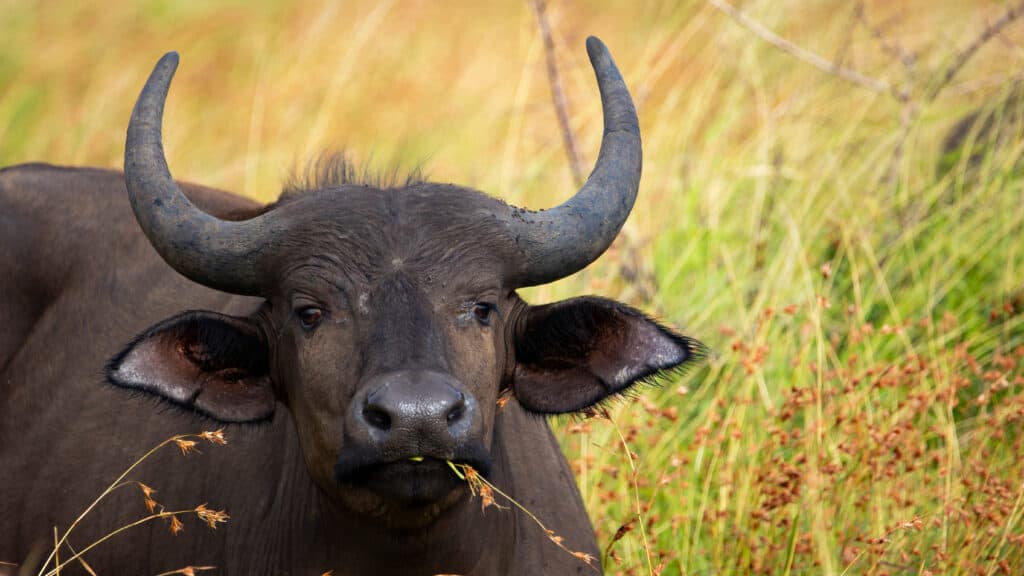
 

👁 Buffalo calf

African buffalo most often graze at night partially because they struggle to regulate their body temperature.

©Jurgens Potgieter/Shutterstock.com

Predators and Threats

Though buffalo face a number of predators in the wild, their biggest threats are humans and food sources. Buffalo spend most of their day grazing, making them susceptible to starvation during droughts. Meanwhile, their prized status by hunters means there’s no shortage of big game safaris that target them. Africa’s natural hunters–particularly, lions and packs of wild dogs–pose a constant threat to buffalo that get separated from the herd.

The biggest threat to African buffalo, however, is irresponsible human development. Development, such as carving out cropland or clearing fields for housing and city expansion, cuts up the habitats of the buffalo, making it harder to find food. Since buffalo spend most of their day eating, this can quickly affect populations. It can also put humans at danger from buffalo, as buffalo tear up crops, knock down fences, and spread disease to livestock.
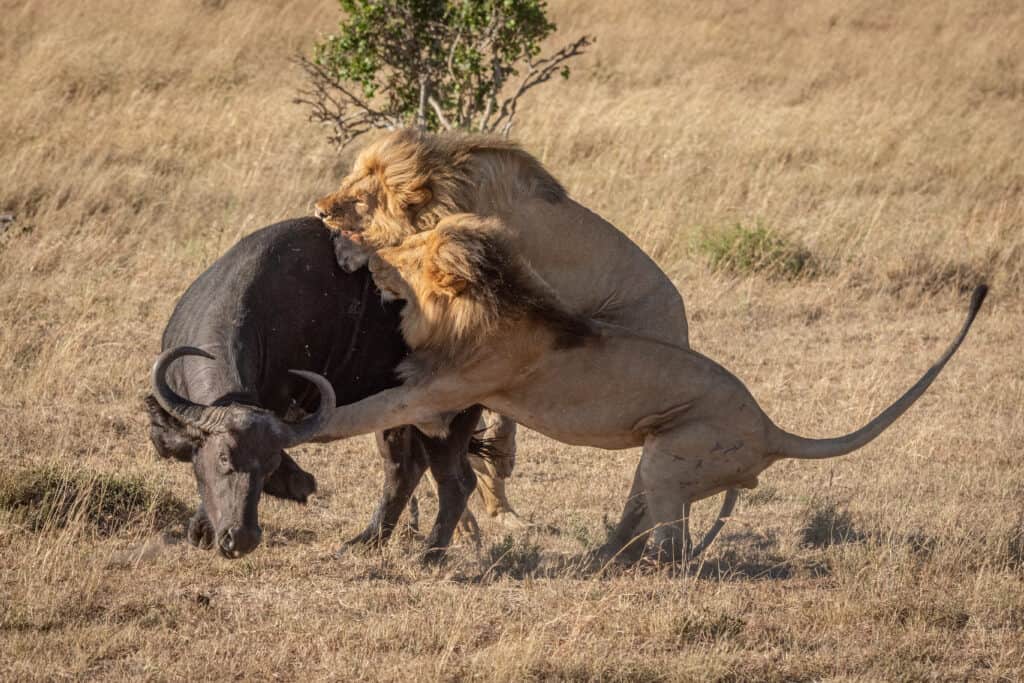
 

👁 Two males lions attack buffalo

Lions are one of the natural predators of African buffalo.

©nwdph/Shutterstock.com

Reproduction, Babies, and Lifespan

The African buffalo gives birth to approximately one calf every few years. Mothers remain pregnant for as much as a full year–longer than humans, even! After giving birth, the calf will remain dependent on the mother for as much as another year. Though male buffalo will take no direct role in upbringing, the calves emit a specific cry that will bring all members of the herd to their rescue.

After birth, calves take another four to five years to reach maturity. After maturing, females will typically remain with the herd where they were born, while males will leave for one of the “bachelor” herds. Females will typically begin having offspring around this time.

In the wild, buffaloes typically live for 10-22 years, while living almost 30 years in captivity.
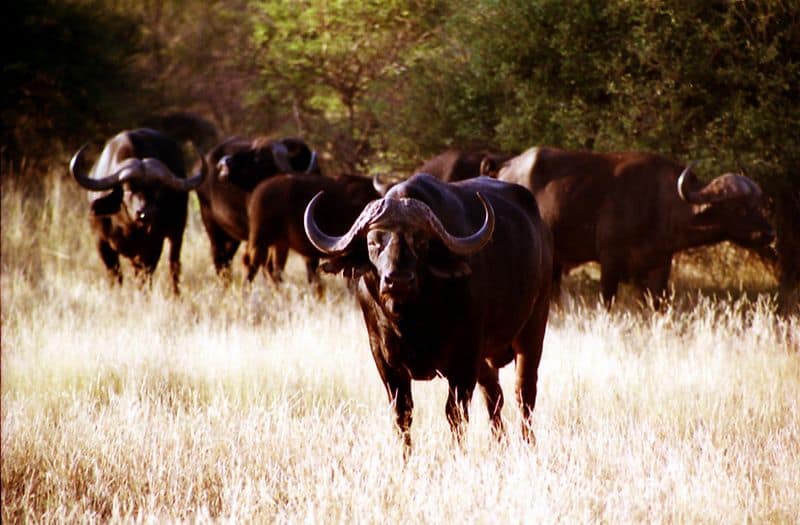
 

👁 Image

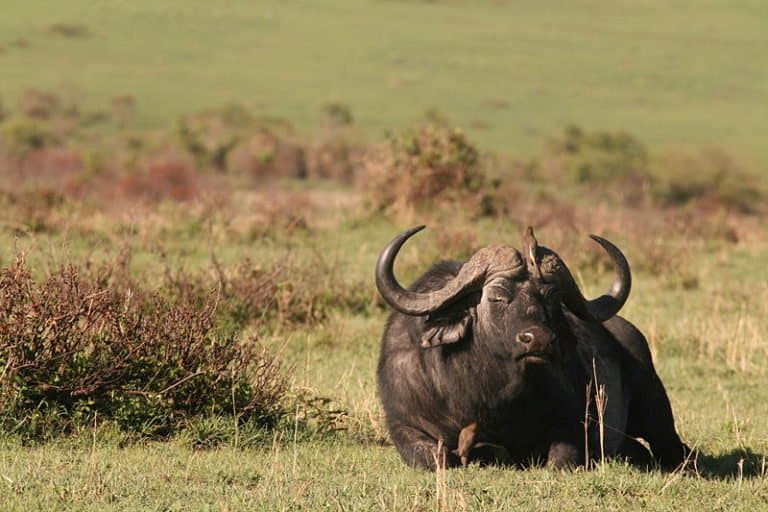
African Buffalo ten to live 10-22 years in the wild and up to 30 years in captivity.

©Stefan Ehrbar / Creative Commons – Original

Population

Buffaloes enjoy a healthy population throughout Africa, but numbers are declining. In the last decade, the International Union for the Conservation of Animals (IUCN) has changed the buffalo’s status from “Least Concern” to “Near Threatened.” This decline is attributed to farming practices that destroy their grazing lands, as well as threats from prize hunters and meat poachers.

View all 452 animals that start with B
How to say Buffalo in ...
Czech
Buvol africký
German
Afrikanischer Büffel
English
African Buffalo
Spanish
Syncerus caffer
Finnish
Kafferipuhveli
French
Buffle d'Afrique
Hungarian
Kafferbivaly
Italian
Syncerus caffer
Japanese
アフリカスイギュウ
Dutch
Kafferbuffel
Polish
Bawół afrykański
Portuguese
Búfalo-africano
Swedish
Afrikansk buffel
Turkish
Afrika mandası
Chinese
非洲水牛

Sources

  1. David Burnie, Dorling Kindersley (2011) Animal, The Definitive Visual Guide To The World's Wildlife / Accessed December 16, 2008
  2. Tom Jackson, Lorenz Books (2007) The World Encyclopedia Of Animals / Accessed December 16, 2008
  3. David Burnie, Kingfisher (2011) The Kingfisher Animal Encyclopedia / Accessed December 16, 2008
  4. Richard Mackay, University of California Press (2009) The Atlas Of Endangered Species / Accessed December 16, 2008
  5. David Burnie, Dorling Kindersley (2008) Illustrated Encyclopedia Of Animals / Accessed December 16, 2008
  6. Dorling Kindersley (2006) Dorling Kindersley Encyclopedia Of Animals / Accessed December 16, 2008
  7. David W. Macdonald, Oxford University Press (2010) The Encyclopedia Of Mammals / Accessed December 16, 2008

About the Author

Abby Parks

Abby Parks has authored a fiction novel, theatrical plays, short stories, poems, and song lyrics. She's recorded two albums of her original songs, and is a multi-instrumentalist. She has managed a website for folk music and written articles on singer-songwriters, folk bands, and other things music-oriented. She's also a radio DJ for a folk music show. As well as having been a pet parent to rabbits, birds, dogs, and cats, Abby loves seeking sightings of animals in the wild and has witnessed some more exotic ones such as Puffins in the Farne Islands, Southern Pudu on the island of Chiloe (Chile), Penguins in the wild, and countless wild animals in the Rocky Mountains (Big Horn Sheep, Mountain Goats, Moose, Elk, Marmots, Beavers).
Connect:

Thank you for reading! Have some feedback for us?

Contact the AZ Animals editorial team

Related Articles You May Find Interesting

Lion Explodes From the Grass, but This Kudu Has Other Plans

👁 elephant
Articles

World Wildlife Day 2026: How Losing Just One Species Can Trigger Ecosystem Collapse

Lion vs. Tiger: Why This “Epic Encounter” Would Never Happen in the Wild


Buffalo FAQs (Frequently Asked Questions)

They are not. The American Buffalo is actually a “bison.” In taxonomy, African buffalo and bison come from two distinct evolutionary paths, connected only by the same subfamily that also includes antelope, yaks and cattle.

African buffalo do not end up on farms. Though they share many features with other types of livestock, their unique temperament has made them impossible to tame. Some will poach the buffalo for meat, but this is a dangerous task for even the most experienced hunters.

Buffalo are Herbivores, meaning they eat plants.

Buffalo belong to the Kingdom Animalia.

Buffalo belong to the phylum Chordata.

Buffalo belong to the class Mammalia.

Buffalo belong to the family Bovidae.

Buffalo belong to the order Artiodactyla.

Buffalo belong to the genus Syncerus.

Buffalo are covered in Hair.

Buffalo live in woodland and grass pastures.

Buffalo have shoulder humps and large, curved horns.

Buffalo eat grass, shrubs, and leaves.

Predators of Buffalo include humans, lions, and crocodiles.

The average litter size for a Buffalo is 1.

Buffalo have no real natural predators!

The scientific name for the Buffalo is Syncerus Caffer.

Buffalo can live for 15 to 22 years.

A Buffalo can travel at speeds of up to 22 miles per hour.

The greatest differences between a buffalo and a wildebeest include their morphology, behavior, and location.

Buffaloes are large, partially migratory ungulates with a brown, black, or reddish color and large horns that form a boss on the animals’ heads from most of sub-Saharan Africa. Wildebeests are smaller ungulates with gray or brown hair and stripes in some cases with a shaggy mane and a head carried above the shoulders that live in migratory herds in the southern third of Africa.

The main difference between beefalo and a buffalo is that beefalo is a hybrid between cattle and buffalo, while buffalo is a species of bovid that are native to the Americas.