C
Species Profile

Clouded Leopard

Neofelis nebulosa

Built for the treetops, cloaked in clouds
Vearl Brown / Creative Commons

Size Comparison

Human 5'8"
Clouded Leopard 1 ft 8 in

Clouded Leopard stands at 30% of average human height.

At a Glance

Wild Species
Also Known As Tree tiger, Tiger of the Trees, Clouded cat, Harimau dahan, Ghost cat
Diet Carnivore
Activity Nocturnal+
Lifespan 11 years
Weight 23 lbs
Status Vulnerable
Did You Know?

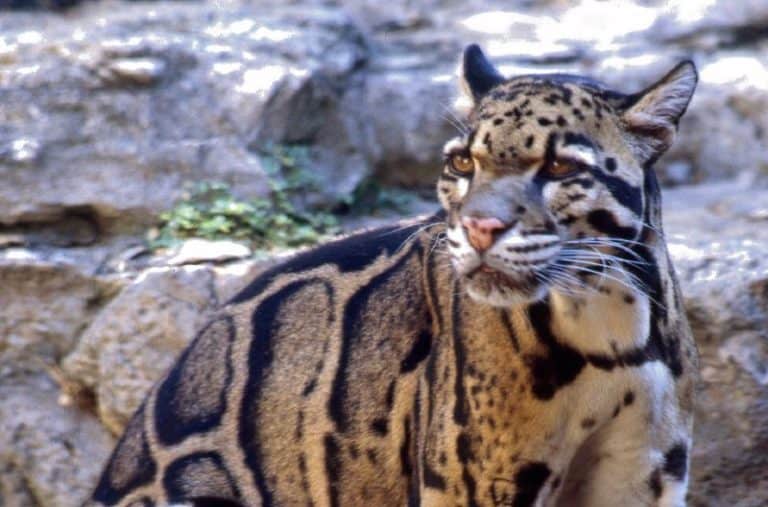
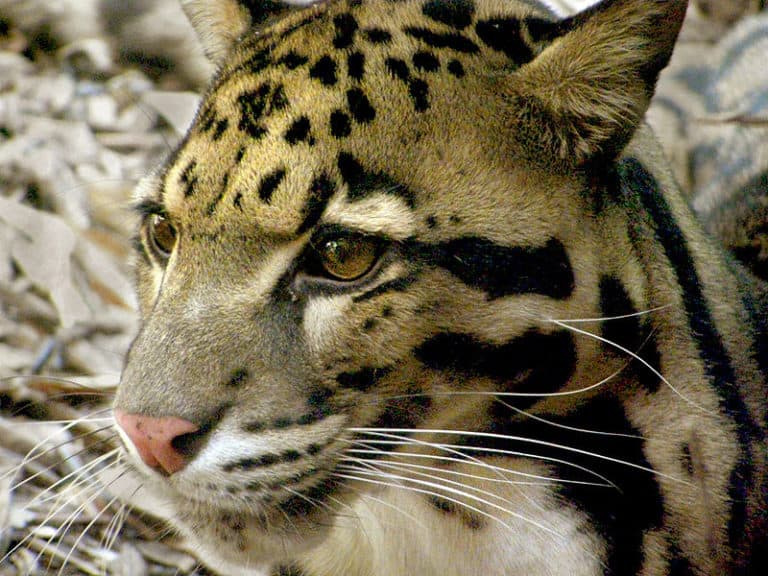
Its cloud-shaped blotches are edged in black and help break up its outline in dappled forest light.

Scientific Classification

A medium-sized Asian wild cat known for large cloud-shaped coat markings and exceptional climbing ability; part of the pantherine lineage but in its own genus (Neofelis).

Kingdom
Animalia
Phylum
Chordata
Class
Mammalia
Order
Carnivora
Family
Felidae
Genus
Neofelis
Species
Neofelis nebulosa

Distinguishing Features

  • Large, irregular ‘cloud’ blotches on the coat
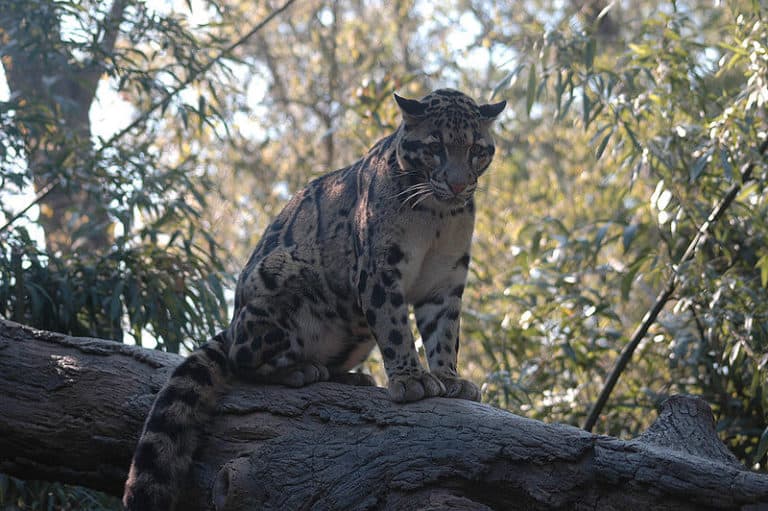
  • Very long tail aiding balance in trees
  • Relatively short legs and large paws for climbing
  • Unusually long upper canine teeth relative to skull size
  • Primarily forest-associated, often arboreal

Physical Measurements

Males and females differ in size

Height
1 ft 1 in (10 in – 1 ft 4 in)
1 ft 9 in (1 ft 8 in – 1 ft 10 in)
Length
5 ft 5 in (4 ft 3 in – 6 ft 6 in)
4 ft 9 in (3 ft 12 in – 5 ft 7 in)
Weight
42 lbs (35 lbs – 51 lbs)
28 lbs (24 lbs – 31 lbs)
Tail Length
2 ft 6 in (2 ft – 2 ft 12 in)
2 ft 4 in (1 ft 12 in – 2 ft 7 in)
Top Speed
40 mph
About 64 km/h (unconfirmed)

Appearance

Primary Colors
Secondary Colors
Skin Type Dense mammalian fur (short-to-medium length) over pliable skin; coat adapted to humid tropical/subtropical forests.
Distinctive Features
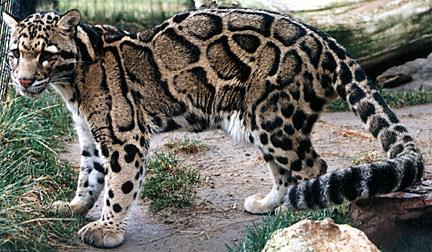
  • Signature cloud-shaped flank blotches: large, irregular 'clouds' outlined in black-diagnostic for Neofelis nebulosa and visually distinct from Panthera pardus rosettes and from the Sunda clouded leopard (Neofelis diardi).
  • Proportionally very long tail used for balance in trees: tail length ~61-91 cm; head-body length ~68-108 cm (commonly reported species ranges in field references such as Sunquist & Sunquist 2002 and subsequent felid compendia).
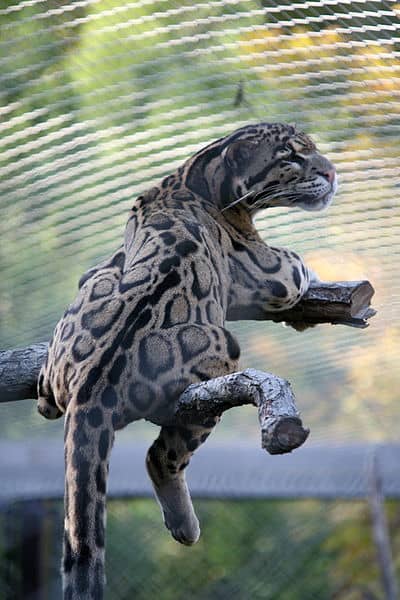
  • Large paws with strong, curved claws and flexible ankles enabling exceptional climbing and controlled descent; capable of climbing down head-first-an arboreal-associated adaptation frequently noted in behavioral accounts of the species.
  • Relatively short, broad muzzle and large canines for body size (historically noted as among the longest relative canine lengths in felids), giving a robust, 'pantherine-like' skull profile despite being a medium-sized cat.
  • Facial markings: bold black stripes from forehead toward cheeks and from eyes toward ears; pale/whitish muzzle and chin increase contrast.
  • Tail shows dark rings/bands (often 8-10+ visible bands), with a darker tip; functions as a counterbalance during arboreal movement.
  • Clouded Leopard (Neofelis nebulosa) coat pattern helps it hide in dappled light of Asian evergreen and mixed forests. Deforestation and poaching reduce sightings and hurt populations.

Sexual Dimorphism

Sexual size dimorphism is present but modest; males average larger/heavier than females, while coat pattern and coloration are broadly similar between sexes.

  • Typically heavier and more robust: adult male mass commonly reported ~16-23 kg (with broader head/neck).
  • Slightly larger average head-body dimensions within the published range (overlaps extensively with females).
  • Typically lighter: adult female mass commonly reported ~11-16(-20) kg; overall more gracile build.
  • No consistent sex-specific coat pattern differences documented; cloud markings remain comparable in form and contrast.

Did You Know?

Its cloud-shaped blotches are edged in black and help break up its outline in dappled forest light.

Upper canines can reach ~4 cm, among the longest (relative to skull size) of any living cat-earning the nickname "modern sabertooth."

It has an exceptionally long tail (61-91 cm), nearly matching its head-body length (68-108 cm), for balance on branches.

Flexible ankle joints let it climb down trees headfirst-rare among big cats.

Gestation is about 85-93 days, and litters are 1-5 cubs (often 2-3).

It was recognized as distinct from the Sunda clouded leopard in 2006; the Sunda species lives on Borneo and Sumatra, not the mainland.

Unique Adaptations

  • Clouded camouflage: large "cloud" rosettes with dark outlines provide disruptive camouflage in evergreen and mixed forests.
  • Extreme climbing toolkit: broad paws, strong forelimbs, and highly mobile ankle joints improve grip and maneuverability on bark and branches.
  • Long balancing tail: 61-91 cm tail acts as a counterweight for turns, leaps, and narrow-branch travel.
  • Low-slung, powerful build: relatively short legs and robust body aid climbing leverage and sudden pounce power.
  • Enlarged canines: upper canines up to ~4 cm support a deep, securing bite on struggling prey in close quarters.
  • Pantherine lineage in its own genus: part of the pantherine cat subfamily but placed in its own genus, reflecting a distinct evolutionary path among big-cat relatives.

Interesting Behaviors

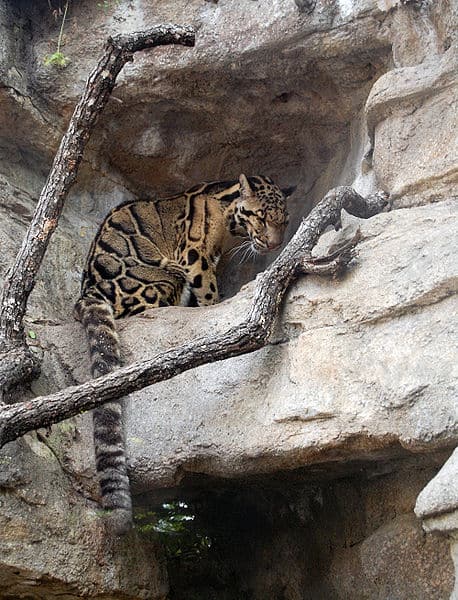
  • Arboreal travel and resting: frequently uses trees for moving, stalking, and resting, not just as escape cover.
  • Headfirst descent: uses flexible ankles and strong grip to back down or descend headfirst along trunks.
  • Ambush hunting: relies on stealth and short bursts from cover; typical prey includes primates, deer-sized ungulates, pigs, porcupines, and birds (varies by region).
  • Solitary spacing: adults are mostly solitary and communicate via scent-marking (urine spraying, scraping) and vocalizations.
  • Crepuscular/nocturnal activity: activity peaks often occur at night and twilight in many camera-trap studies, though it can be active by day in secure forests.
  • Caching and tree use around kills: may drag smaller prey into cover and can use fallen logs/low branches as feeding sites in dense habitat.

Cultural Significance

Clouded leopard (Neofelis nebulosa) is a symbol of remote, intact forests. Its cloud-like coat shapes local names. It is a key species for protecting lowland evergreen forests and shows how mainland and Sunda clouded leopards reveal hidden forms of life.

Myths & Legends

Naming lore in science: the scientific species name means "cloudy," reflecting early naturalists comparing its coat to cloud formations; this "cloud cat" imagery has persisted in common names across many languages.

"Tree tiger" tradition: in parts of its range, local hunters' lore and colonial-era natural histories referred to it as a "tree tiger," reflecting its reputation for powerful arboreal hunting and uncanny movement through the canopy.

Taiwan Indigenous stories treat the clouded leopard (Neofelis nebulosa), once living on Taiwan, as a forest spirit and guardian. Many communities had rules against hunting it, showing its lasting cultural importance.

Popular stories in museums and field guides call the clouded leopard (Neofelis nebulosa) a 'modern sabertooth' because of its long canines. That idea made people very interested before genetic studies showed its true relatives.

Conservation Status

VU Vulnerable

Facing a high risk of extinction in the wild.

Population Decreasing

Protected Under

  • CITES Appendix I (international commercial trade generally prohibited)
  • India: Wildlife (Protection) Act, 1972 (Schedule I)
  • Nepal: National Parks and Wildlife Conservation Act, 1973
  • Malaysia: Wildlife Conservation Act 2010
  • Thailand: Wild Animal Reservation and Protection Act (B.E. 2562, 2019)
  • China: Wildlife Protection Law (national protection framework)

Life Cycle

Birth 2 cubs
Lifespan 11 years

Lifespan

In the Wild 7–12 years
In Captivity 11–17 years

Reproduction

Mating System Polygynandry
Social Structure Solitary
Breeding Pattern Transient
Fertilization Internal Fertilization
Birth Type Internal_fertilization

Clouded leopard (Neofelis nebulosa) are mainly solitary. Mating is polygynandrous (many males and females mate): males overlap several females and females may accept multiple males. Females raise cubs alone. Gestation 85–93 days; litters 1–5 (usually 2–3).

Behavior & Ecology

Social Solitary Group: 1
Activity Nocturnal, Crepuscular, Cathemeral
Diet Carnivore Small ungulates, especially muntjacs where available.

Temperament

Elusive and cryptic; tends to avoid humans and open areas, contributing to low direct encounter rates in the wild (IUCN Red List; Sunquist & Sunquist 2002).
Territorial/spacing behavior consistent with solitary felids; likely maintains individual home ranges with core areas and uses scent marks to reduce direct conflict (Nowell & Jackson 1996; Sunquist & Sunquist 2002).
High scansorial (climbing) tendency; uses trees and rugged structure for travel, resting, and concealment, which can reduce social contact and favor solitary spacing (Sunquist & Sunquist 2002).
Clouded leopards (Neofelis nebulosa) are mostly active at night with dawn and dusk peaks, but can be active day and night; activity varies with prey, disturbance, and habitat.

Communication

Purring Documented in clouded leopards in captivity; typical close-range contact vocalization in felids) (Sunquist & Sunquist 2002
Hissing and growling Threat/defensive signals) (Nowell & Jackson 1996; Sunquist & Sunquist 2002
Snarling/spitting during aggressive encounters Nowell & Jackson 1996
Loud calling/yowling associated with estrus and mate attraction Reported for captive and inferred for wild felids; described for the species in major felid references) (Nowell & Jackson 1996; Sunquist & Sunquist 2002
Chuff/prusten-like exhalation reported in pantherine-lineage cats and described for clouded leopards in husbandry/behavioral accounts Sunquist & Sunquist 2002
Scent marking via urine spraying on vegetation/vertical objects to advertise presence and reproductive status Nowell & Jackson 1996; Sunquist & Sunquist 2002
Scrape marking Ground scrapes often paired with urine/feces) as a long-lasting territorial signal (Nowell & Jackson 1996
Fecal deposition/latrine-like use along travel routes Reported for many solitary felids; included in clouded leopard field sign descriptions) (Nowell & Jackson 1996
Rubbing/cheek-marking on substrates Depositing facial gland scents) (Sunquist & Sunquist 2002
Visual body signals at close range Posture, tail and ear position, facial expressions) typical of felids and used in agonistic and courtship contexts (Sunquist & Sunquist 2002

Habitat

Biomes:
Tropical Rainforest Tropical Dry Forest Temperate Forest
Terrain:
Mountainous Hilly Plateau Valley Plains Riverine
Elevation: Up to 9842 ft 6 in

Ecological Role

Mid-sized apex/mesopredator in Asian forest ecosystems (depending on presence of larger carnivores such as tigers/leopards), regulating populations of small-medium vertebrates, particularly primates, rodents, and small ungulates.

Top-down control of prey populations (reducing overbrowsing/overgrazing pressure by limiting small-ungulate abundance) Regulation of rodent populations (potentially reducing seed predation and crop-edge pest pressure) Shaping prey behavior and habitat use (risk effects) that can influence forest regeneration dynamics Maintaining trophic structure and contributing to biodiversity stability in intact forest food webs

Diet Details

Main Prey:
Muntjac Mouse-deer Deer Wild pig Primates Porcupine Tree squirrels and other rodents Birds Civets and other small carnivores +3

Human Interaction

Domestication Status

Wild

Clouded leopard (Neofelis nebulosa) is not domesticated or tamed and is kept only in zoos and conservation breeding programs. They are hard to care for because they get stressed easily and breed poorly; zoos now use careful pairing and special enclosures. They live alone, are active at dawn, dusk, and night, climb trees well, and avoid people.

Danger Level

Moderate
  • Direct attacks on humans are uncommon in the wild due to secretive behavior and low encounter rates, but the species is a capable predator and can inflict severe injury if cornered or handled.
  • High risk of serious bites/scratches during capture, transport, veterinary procedures, or private-keeping attempts; requires specialized restraint/containment.
  • Potential zoonotic risks associated with handling wild felids (e.g., bacterial infections from bites/scratches), though the primary hazard is traumatic injury.

As a Pet

Not Suitable as Pet

Legality: Clouded leopard (Neofelis nebulosa) is not a suitable pet. Laws vary, but private keeping is usually banned or only allowed for licensed zoos or sanctuaries with permits, cages, insurance, and inspections.

Care Level: Expert Only

Purchase Cost: $10,000 - $25,000
Lifetime Cost: $150,000 - $400,000

Economic Value

Uses:
Conservation/flagship species value Ecotourism and wildlife tourism (where reliably viewable) Zoo exhibition and conservation-breeding programs Negative economic impacts via livestock/poultry depredation in edge habitats Illegal wildlife trade (skins and other parts) and enforcement costs
Products:
  • non-consumptive economic value (zoo display, education programs, conservation fundraising)
  • tourism revenue linked to protected-area wildlife viewing
  • illicit products historically include skins and body parts used in illegal trade (not legitimate products)

Relationships

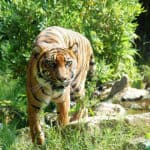
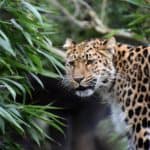
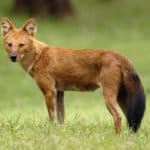
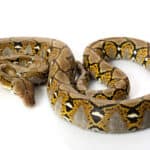
Predators 4

Tiger Panthera tigris
Leopard Panthera pardus
Dhole Cuon alpinus
Reticulated python Malayopython reticulatus

Related Species 5

Sunda clouded leopard Neofelis diardi Shared Genus
Leopard Panthera pardus Shared Family
Tiger Panthera tigris Shared Family
Lion Panthera leo Shared Family
Snow leopard Panthera uncia Shared Family

Ecological Equivalents 5

Animals that fill a similar ecological role in their ecosystem

Sunda clouded leopard Neofelis diardi A similar forest-loving, tree-climbing mid-sized cat. Both ambush prey in closed-canopy forests and often take tree-dwelling animals such as primates and small hoofed mammals.
Leopard Panthera pardus Overlap in Asian forests and forest edges as ambush predators; both use dense cover and eat prey ranging from small mammals to hoofed animals. The Clouded Leopard (Neofelis nebulosa) is more arboreal and smaller (11–23 kg).
Marbled cat Pardofelis marmorata Similar 'forest-climber' niche: strongly arboreal, inhabits Southeast Asian evergreen forests, uses trees for travel and resting, and hunts small vertebrates. The ecological resemblance is driven by shared dependence on intact forest structure rather than close taxonomy (they belong to different genera).
Dhole Cuon alpinus Shares much of the same forested landscape and overlaps in medium-sized prey (small ungulates). It differs by being a pack-hunting canid rather than a solitary ambush felid, but is an important ecological comparator for prey competition where both persist in Asian forests.
Golden cat Catopuma temminckii Comparable forest mesopredator in South and Southeast Asia with overlapping prey types (small mammals, birds, small ungulates) and similar habitat use in dense forests; both are sensitive to forest loss and fragmentation (IUCN assessments).

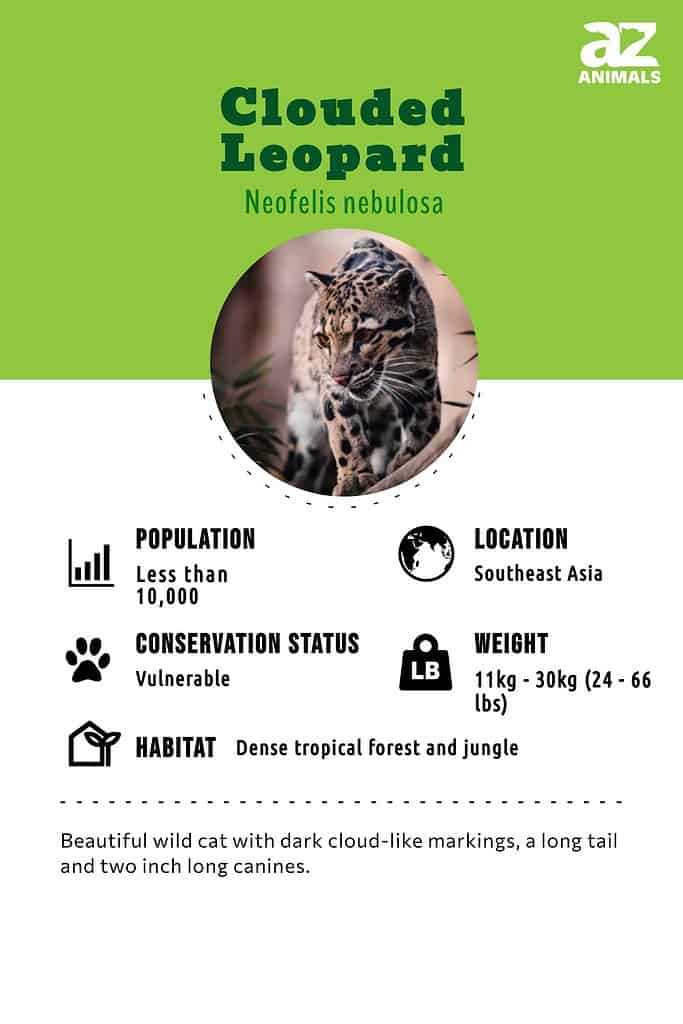
The clouded leopard is a medium-sized feline that inhabits the dense tropical jungles of Southeast Asia. The clouded leopard is the smallest of the world’s big cats and despite its name, it is not actually that closely related to Leopards and is instead believed by many to be an evolutionary link between big cats and small cats. Clouded leopards are incredibly shy animals and coupled with their highly nocturnal lifestyle has meant that little is known about their behavior in the wild as they are very rarely seen.
👁 Image

Species

The clouded leopard has recently been split into two separate species which are the clouded leopard (found on the mainland) and the Sunda clouded leopard (Borneo and Sumatra). Both species are already very rare with numbers constantly declining due to the hunting of them for their meat and fur, along with the loss of vast areas of their tropical forest habitat.

Anatomy and Appearance

👁 Image

The tail of the clouded leopard is extra long to help it balance while moving through the trees.

©Nancy Vandermey / Creative Commons – Original

The clouded leopard is one the most distinctive of all the big cats and one of the most beautiful. As their name suggests, they have yellow to grey colored coats patterned with large, cloud-like markings that are lined with black and dark in the center. Their small but stocky bodies are supported by short legs and like other cat species (besides the Cheetah), the clouded leopard is able to retract its claws into the skin on its toes to keep them sharp. One of the most distinctive features of the clouded leopard is its rather long canines which can grow up to two inches long, making them about the same length as those of a Tiger. They have two broad black bars on the back of their neck and black rings that run the length of their incredibly long tail. The tail of a clouded leopard can reach 65cm in length and is used to help the animal to balance whilst moving about in the trees.

Evolution
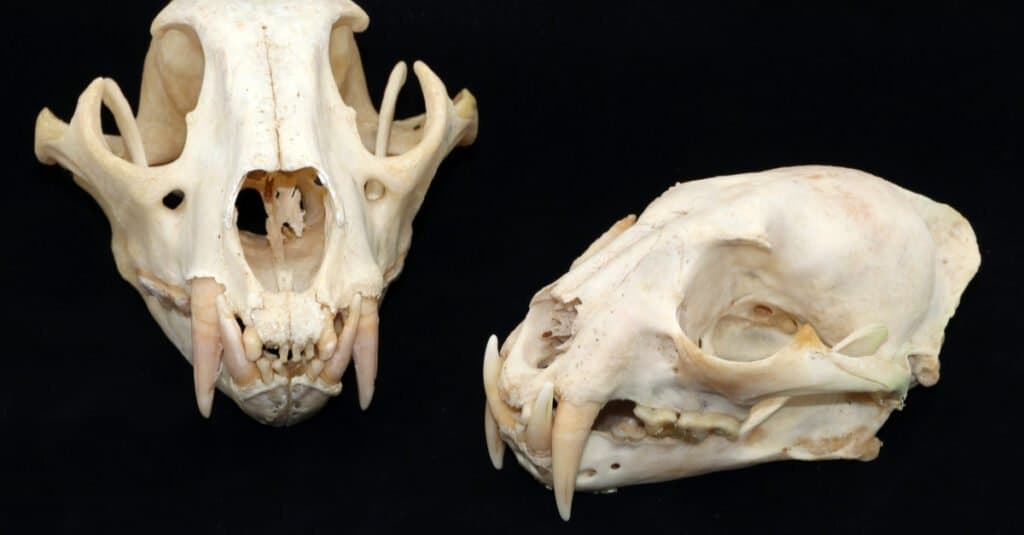
👁 Clouded Leopard Teeth - Clouded Leopard Skull

The clouded leopard is believed to be the first cat to diverge from the common ancestor of the Felidae.

©Various images/Shutterstock.com

Fossil records and DNA evidence indicate that the clouded leopard forms an evolutionary link between the big cats, Pantherinae, and small and domestic cats, Felinae. This increase in taxonomic diversity began in the Miocene around 14.45 to 8.38 million years ago in Asia. The clouded leopard is believed to be the first cat to diverge from the common ancestor of the Felidae 9.32 – 4.47 million years ago. The clouded leopard crossed from mainland Asia via a submerged land bridge to Borneo and Sumatra during the Pleistocene and became isolated – diverging into the two current species 2 – 0.93 million years ago.

Distribution and Habitat
👁 Image

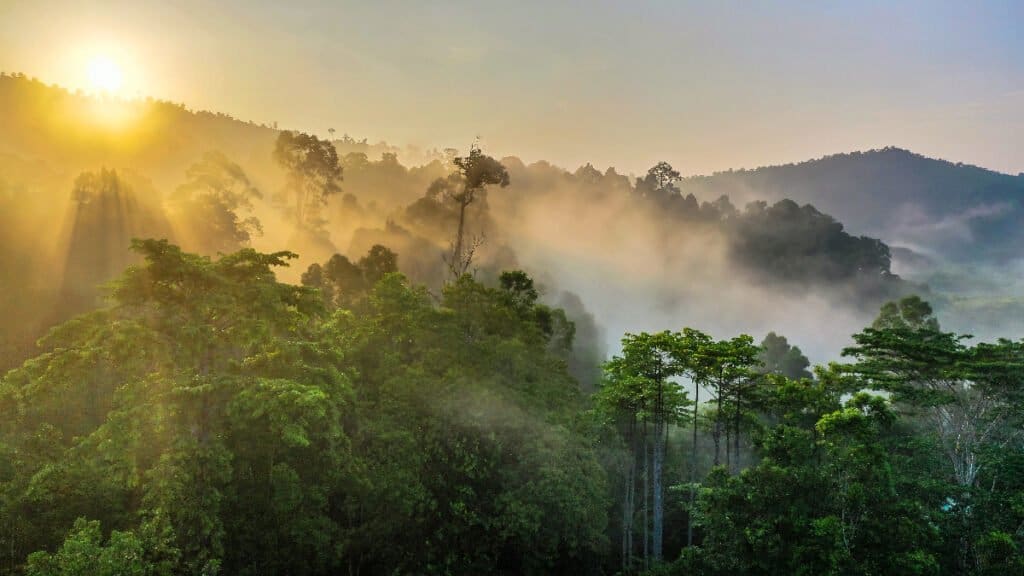
Borneo is home to the oldest rainforests in the world and has the largest population of clouded leopards.

©BorneoRimbawan/Shutterstock.com

The clouded leopard is native to Southeast Asian countries including India, Southern China, Burma, Nepal, throughout Indochina, and on the islands of Borneo and Sumatra. It was once also found in Taiwan but is now widely thought to be extinct there. Clouded leopards spend nearly all their lives in the trees and so prefer dense forest habitats including both tropical and subtropical forests and jungles, and at altitudes of up to 2,000 meters. However, despite seemingly only being found in very dense rainforest, the clouded leopard has also been recorded in a variety of other habitats including in tall grasslands in Nepal and in the mangrove swamps of Borneo. The highest population is thought to reside on the island of Borneo but they are threatened throughout their natural range by deforestation to clear land for agriculture or by loggers.

Behavior and Lifestyle
👁 Image

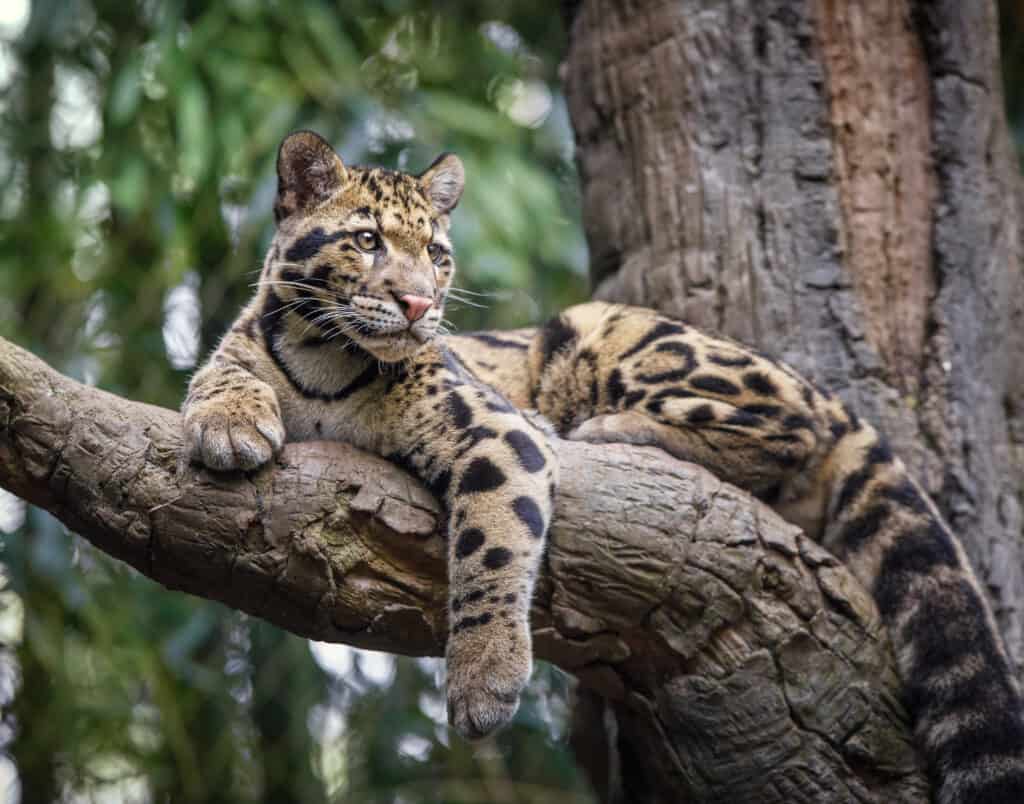
Clouded leopards rest high in the trees during the day and hunt at night.

©jdross75/Shutterstock.com

The Clouded leopard is an incredibly shy and elusive animal that rests high in the trees during the day and actively hunts under the cover of night. They are territorial animals that move just over a mile a day throughout their home range which varies from 50 to more than 120 square miles in size, depending on the region. They are incredibly agile climbers that can speed up trunks and climb about easily in the branches. They have also been observed running head first back down tree trunks and moving along horizontal branches by hanging underneath, using their tails for balance. The Clouded leopard is a solitary animal that marks its territory using urine and scratch marks on trees, however, very little is actually known about their social behavior in the wild.

Reproduction and Life Cycles
👁 Image

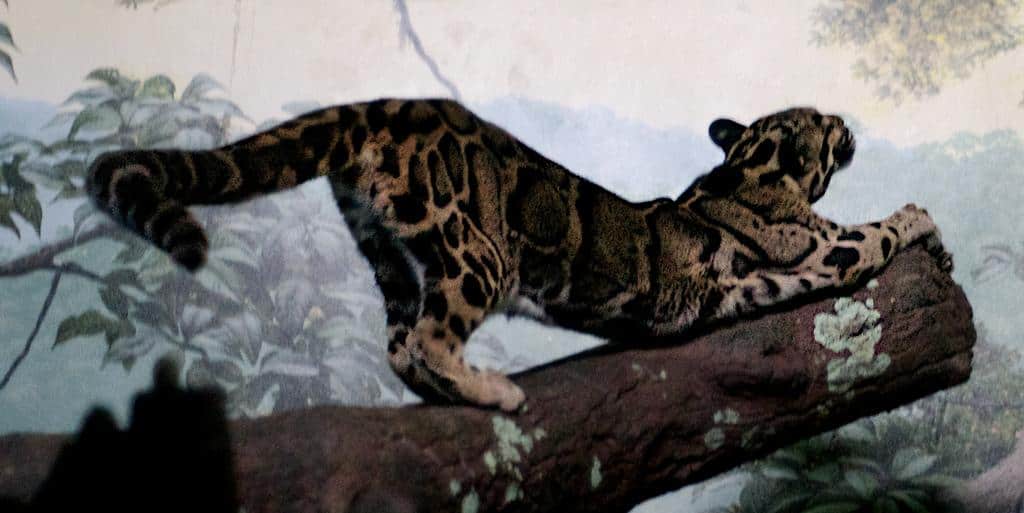
Clouded leopards can live up to 17 years in captivity but little is known about their lifespan in the wild.

©Charles Barilleaux / Flickr – Original

Clouded leopard kittens are born in the summer months after a gestation period that lasts for around 3 months. Between one and five kittens are born blind and the large spots on their fur are completely dark in color and don’t develop adult coloration for about six months. Clouded leopard kittens open their eyes by the time they are around 10 days old and are fully active at five weeks of age, beginning to learn how to hunt with their mother shortly afterward. Although they are eating solid food by the time they are 10 weeks of age they are not fully weaned until nine months, when they become independent and leave their mother to establish a territory of their own. Clouded leopards are known to get to 17 years old in captivity but little is known about the extent of their lifespan in the wild due to their incredibly elusive nature.

Diet and Prey
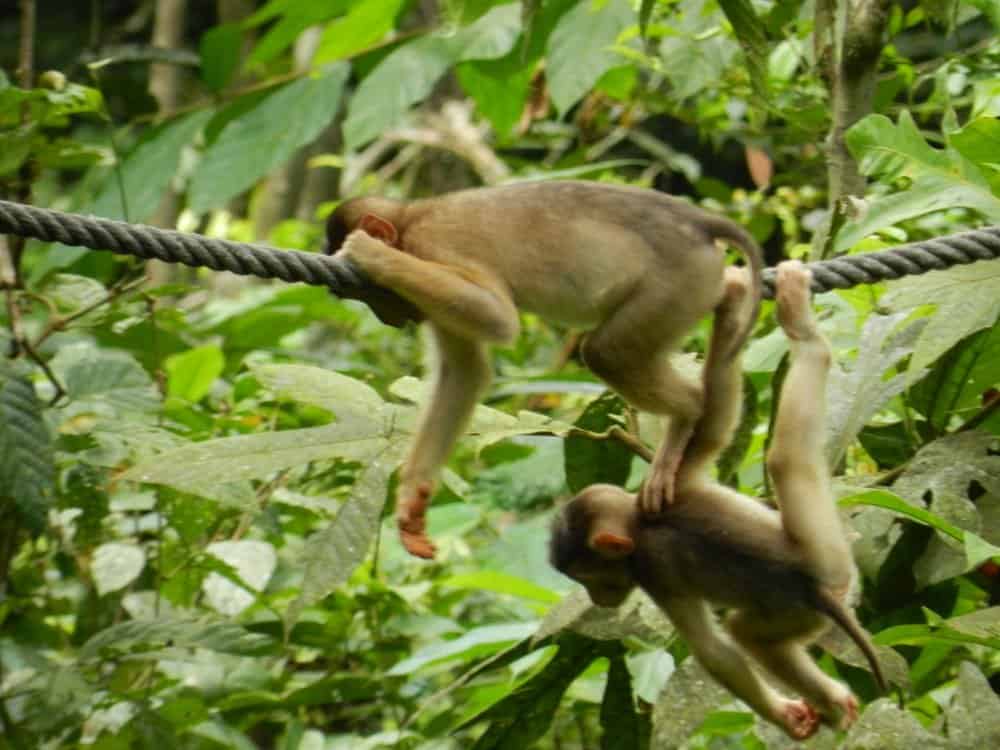
👁 Image

Clouded leopards prey on Pig-Tailed Macaques and other small primates.

©Millie Bond – Copyright A-Z Animals

The clouded leopard is a carnivorous animal that only hunts and eats other animals in order to gain the nutrition it needs to survive. Their preferred prey species is quite dependent on the region where they live as those clouded leopards found in Thailand favor rodents, Ground Squirrels and Porcupines whereas individuals elsewhere more readily hunt primates including Pig-Tailed Macaques, Gibbons, and Proboscis Monkeys. Clouded leopards are nocturnal hunters that either come down to the ground to stalk their prey or lie waiting on a branch to pounce on their victim below. They are also known to hunt birds, Deer, Cattle, young Wild Boars, and livestock such as Chickens and Goats in areas close to human habitation when food in the jungle is hard to find. Clouded leopards are known to retire to the trees once having eaten to rest and let their meal digest.

Predators and Threats
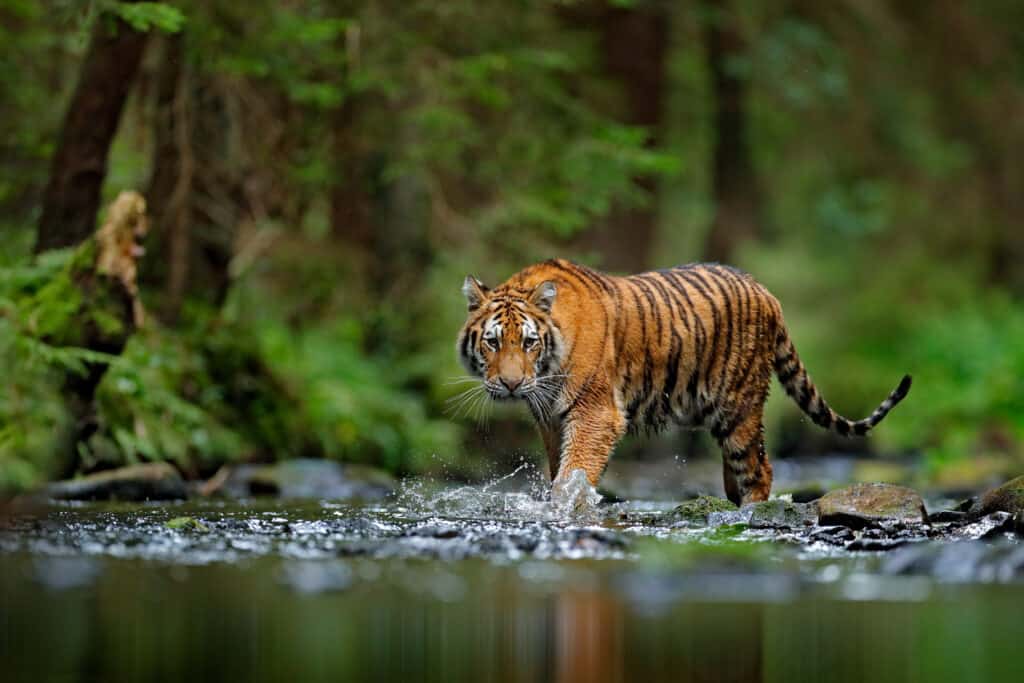
👁 tiger

Tigers sometimes prey on clouded leopards but humans are their biggest threats.

©Ondrej Prosicky/Shutterstock.com

Due to its large size and incredibly secretive nature, the clouded leopard has no real natural predators in the jungle with the exception of the occasional Tiger or Leopard with which clouded leopards compete for food. People are the primary threat to clouded leopards as they are hunted for meat and their beautiful pelts, which is a particular problem in certain areas. They are also severely threatened by habitat loss as vast areas of their natural forest habitats are being deforested either to log the tropical timbers or to clear land for agriculture including the planting of oil palm plantations. Increasing levels of human activity, in general, are also pushing the remaining populations deeper still in the forests, making it even harder for experts to try and study them.

Interesting Facts and Features
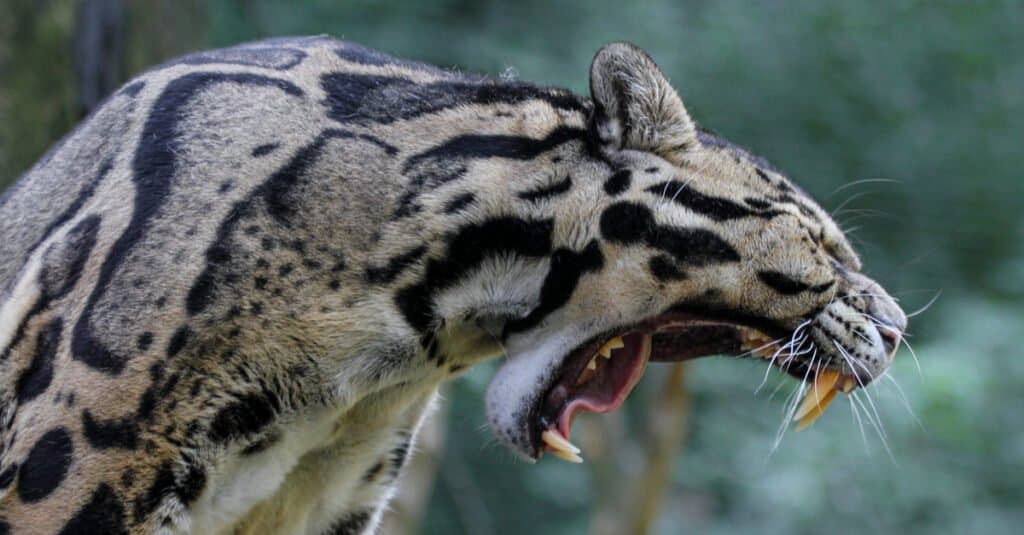
👁 Clouded Leopard Teeth: Canines

Clouded leopards have unusually long canine teeth up to two inches long.

©Adalbert Dragon/Shutterstock.com

The cloud leopards’ diet is comprised mostly of smaller prey species including rodents and primates. This disproves the previous theory that the animal’s size and large canines were adaptations for hunting larger prey. Although the clouded leopard is thought to only hunt in the dead of night, some individuals have been observed leading a more crepuscular lifestyle and more actively hunting in the early morning or at dusk. Despite the hunting and trading of the clouded leopard now being banned, the practice still continues as people are after their beautifully patterned fur. This is often used in the making of fur coats with just one coat needing the pelts of around 25 clouded leopard individuals to produce it.

Relationship with Humans
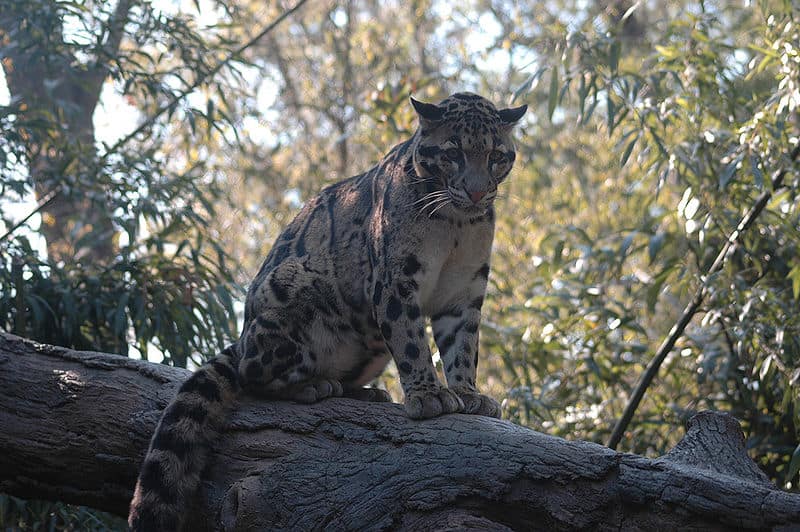
👁 Image

In spite of conservation efforts – people still hunt the clouded leopard for its beautiful pelt.

©Cathleena Beams / Creative Commons – Original / License

People have hunted the clouded leopard for food for many years but also for its body parts. Its beautiful pelt is highly sought after and its bones and canines are often sold to both native people and outsiders for use in medicine and for decorative purposes. Despite being banned, the hunting and trading of their body parts still continue today but the biggest threat to the world’s clouded leopard populations is their rapidly dwindling range. Vast areas of ancient forests are being cleared every day for logging or to make way for palm oil plantations. Land in these regions is often cleared illegally which has devastating consequences in areas that are home to some of the rarest and most unique species on the planet.

Conservation Status and Life Today
👁 Image

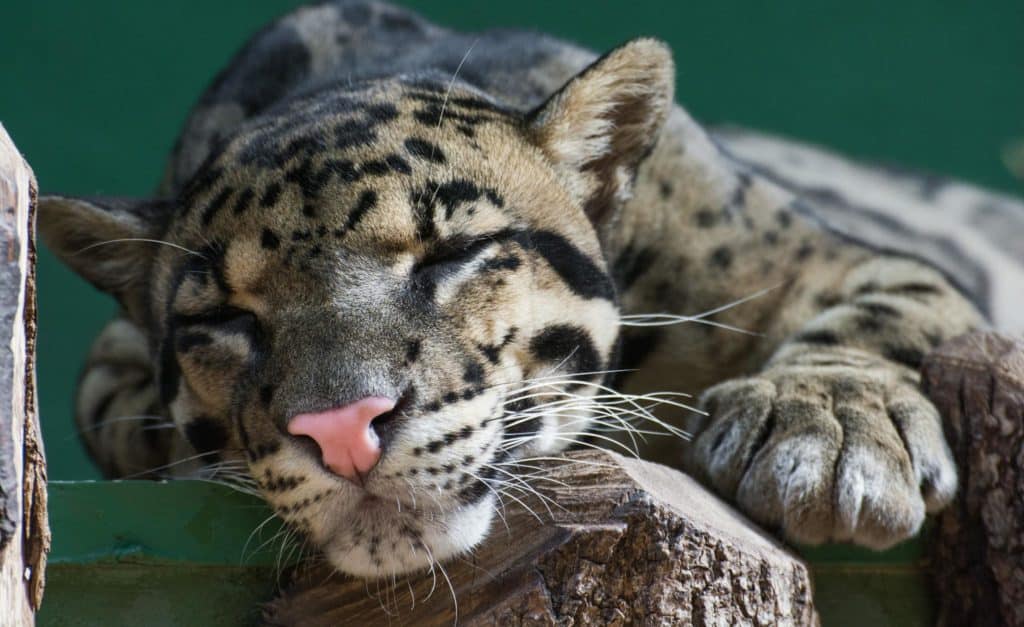
Clouded leopards are listed as Vulnerable to extinction.

©Soren Wolf / Flickr – Original

Today, both species of clouded leopards are listed by the IUCN as animals that are Vulnerable to extinction from their natural habitats in the near future. It is estimated that there are fewer than 10,000 mature clouded leopard individuals left in the wild, with the highest densities thought to be found on the tropical island of Borneo. However, population numbers are continuing to decline throughout their natural range due to habitat loss and the hunting of them for their fur, with the species having already become extinct from its native habitats in Taiwan.

View all 386 animals that start with C
How to say Clouded Leopard in ...
Bulgarian
Димен леопард
Czech
Levhart obláčkový
Danish
Træleopard
German
Nebelparder
English
Clouded Leopard
Esperanto
Nubleopardo
Spanish
Neofelis nebulosa
Finnish
Puuleopardi
French
Panthère nébuleuse
Hebrew
נמר ערפילי מצוי
Croatian
Oblačasti leopard
Hungarian
Ködfoltos párduc
Indonesian
Macan dahan
Italian
Neofelis nebulosa
Japanese
ウンピョウ
Latin
Neofelis
Dutch
Nevelpanter
English
Treleopard
Polish
Pantera mglista
Portuguese
Leopardo-nebuloso
Swedish
Trädleopard
Turkish
Dumanlı pars
Vietnamese
Báo gấm
Chinese
雲豹

Sources

  1. David Burnie, Dorling Kindersley (2011) Animal, The Definitive Visual Guide To The World's Wildlife / Accessed September 29, 2009
  2. Tom Jackson, Lorenz Books (2007) The World Encyclopedia Of Animals / Accessed September 29, 2009
  3. David Burnie, Kingfisher (2011) The Kingfisher Animal Encyclopedia / Accessed September 29, 2009
  4. Richard Mackay, University of California Press (2009) The Atlas Of Endangered Species / Accessed September 29, 2009
  5. David Burnie, Dorling Kindersley (2008) Illustrated Encyclopedia Of Animals / Accessed September 29, 2009
  6. Dorling Kindersley (2006) Dorling Kindersley Encyclopedia Of Animals / Accessed September 29, 2009
  7. David W. Macdonald, Oxford University Press (2010) The Encyclopedia Of Mammals / Accessed September 29, 2009
  8. Clouded Leopard Information / Accessed September 29, 2009
  9. Sunda Clouded Leopard Information / Accessed September 29, 2009

About the Author

Lisha Pace

After a career of working to provide opportunities for local communities to experience and create art, I am enjoying having time to write about two of my favorite things - nature and animals. Half of my life is spent outdoors, usually with my husband and sweet little fourteen year old dog. We love to take walks by the lake and take photos of the animals we meet including: otters, ospreys, Canadian geese, ducks and nesting bald eagles. I also enjoy reading, discovering books to add to my library, collecting and playing vinyl, and listening to my son's music.

Thank you for reading! Have some feedback for us?

Contact the AZ Animals editorial team

Related Articles You May Find Interesting

👁 Image
Articles

Panamanian Golden Frogs Return To The Wild After Decades

A Leopard Tried to Hunt Like a Monkey and Paid for It in a Wild Midair Fall

Meet the Strongest Bird on the Planet That Looks Like a Human in a Costume


Clouded Leopard FAQs (Frequently Asked Questions)

Clouded leopards and snow leopards have several key differences. First, the clouded leopard has larger canines relative to its body size than a snow leopard. Second, its smaller and is more prone to climbing trees while snow leopards hunt high in the mountains.

Clouded Leopards are Carnivores, meaning they eat other animals.

Clouded Leopards belong to the Kingdom Animalia.

Clouded Leopards belong to the class Mammalia.

Clouded Leopards belong to the phylum Chordata.

Clouded Leopards belong to the family Felidae.

Clouded Leopards belong to the order Carnivora.

Clouded Leopards are covered in Fur.

Clouded Leopards belong to the genus Neofelis.

Clouded Leopards live in southeastern Asia.

Clouded Leopards live in dense tropical forests and jungles.

Predators of Clouded Leopards include tigers, leopards, and humans.

The average number of babies a Clouded Leopard has is 3.

Clouded Leopards have canines that can be two inches long!

The scientific name for the Clouded Leopard is Neofelis nebulosa.

Clouded Leopards can live for 11 to 17 years.

There are 2 species of Clouded Leopard.

The biggest threats to the Clouded Leopard are hunting and habitat loss.

The Clouded Leopard is also called the Sunda clouded leopard.

There are less than 10,000 Clouded Leopards left in the world.

A Clouded Leopard can travel at speeds of up to 40 miles per hour.

The main differences between an ocelot and a clouded leopard are their size, evolutionary history, distribution, and habitat.