
D
Species Profile

Daniff

Canis lupus familiaris

Gentle giant, built to guard
SpockfoundWaldo/Shutterstock.com

Daniff Distribution

Click a location to explore more animals from that region

Origin Location

This map shows the native origin of the Daniff. As a domesticated species, they are now found worldwide.

Loading map...

At a Glance

Domesticated
Also Known As Dog, Domestic dog, Canine, K-9, Pooch, Pup, Puppy, Man's best friend
Diet Omnivore
Activity Diurnal+
Lifespan 12 years
Weight 100 lbs
Status Not Evaluated
Did You Know?

A Daniff is a modern "designer mix," typically a Great Dane x (English) Mastiff, so looks can vary widely between lithe and blocky.

Scientific Classification

The Daniff is a large-to-giant domestic dog hybrid (designer mix) produced by crossing a Great Dane with a Mastiff, typically aiming for a very large, strong companion/guardian-type dog with a short coat and substantial build.

Kingdom
Animalia
Phylum
Chordata
Class
Mammalia
Order
Carnivora
Family
Canidae
Genus
Canis
Species
Canis lupus familiaris

Distinguishing Features

  • Very large/giant size with heavy bone and broad chest
  • Short coat; color varies widely (fawn, brindle, black, etc.) depending on parents
  • Head often mastiff-like (broad muzzle) with Great Dane height/leg length
  • Temperament commonly described as gentle/affectionate but protective; varies by lineage and training

Physical Measurements

Males and females differ in size

Height
โ™‚ 3 ft 4 in (6 in โ€“ 3 ft 8 in)
โ™€ 2 ft 4 in (2 ft 2 in โ€“ 2 ft 7 in)
Length
โ™‚ 4 ft 11 in (4 ft 5 in โ€“ 5 ft 7 in)
Weight
โ™‚ 3 lbs โ€“ 243 lbs
โ™€ 123 lbs (99 lbs โ€“ 150 lbs)
Tail Length
โ™‚ 1 ft 5 in (1 ft 2 in โ€“ 1 ft 8 in)
โ™€ 1 ft 5 in (1 ft 2 in โ€“ 1 ft 8 in)
Top Speed
25 mph
Many dogs about 40 km/h

Appearance

Primary Colors
Secondary Colors
Skin Type Short, dense, close-lying coat over thick skin; skin may be tighter (Dane-leaning) or moderately loose with some neck/chest dewlap (Mastiff-leaning). Minimal feathering; low-to-moderate shedding with seasonal increases.
Distinctive Features
  • Domestic dog hybrid (designer cross), not a wild Canis form; markedly diverges from the base wild canid body plan (wolf) with heavier bone, broader chest, and more pronounced head/jowl structure.
  • Giant-breed frame: very tall and/or massively built; deep, wide chest; substantial musculature and thick limbs.
  • Head often blocky with a relatively shorter muzzle than a wolf; jowls may be moderate-to-prominent, especially in Mastiff-dominant individuals.
  • Facial mask is common; ears typically medium and drop/rose (rarely fully erect, unlike wolves).
  • Tail usually long and heavy, carried low-to-level; coat is typically short and sleek rather than the longer, weather-adapted double coat of wild wolves.
  • Breed-typical care needs (giant-breed): controlled growth diet as a puppy, joint-protective conditioning, and exercise moderation during juvenile growth (avoid excessive impact/jumping).
  • Common health considerations (giant-breed risks): hip/elbow dysplasia, osteoarthritis propensity, dilated cardiomyopathy risk, and heightened bloat/GDV susceptibility due to deep chest-feeding management and monitoring are important.
  • Skin/coat maintenance: generally easy (weekly brushing), but individuals with looser skin/jowls may need fold and drool hygiene; nails and paw care are important due to body weight.

Sexual Dimorphism

Males are typically larger and more massive through head/neck and overall frame; females are often slightly smaller with a somewhat finer head and less jowl/dewlap. Degree varies widely because Daniff is a mixed-breed cross.

โ™‚
  • Greater average height and weight; heavier bone and thicker neck/shoulders.
  • Broader skull and more pronounced jowls/dewlap in Mastiff-leaning males.
  • More robust chest and forequarter musculature.
โ™€
  • Slightly smaller overall size; comparatively lighter head/neck.
  • Often a more refined outline and less pronounced dewlap/jowl development.
  • May appear longer-legged/leaner when Great Dane traits predominate.

Did You Know?

A Daniff is a modern "designer mix," typically a Great Dane x (English) Mastiff, so looks can vary widely between lithe and blocky.

Giant-breed pups grow fast; their bones and joints develop for a long time, so controlled exercise matters more than "tiring them out."

Many Daniffs inherit the Dane's height and the Mastiff's breadth, often combining a tall frame with a wide chest.

Their short coat is usually easy to groom, but they can be heavy shedders seasonally despite the coat length.

Domestic dogs are dichromatic: they have two types of cone photoreceptors and see colors mainly in the blue and yellow range rather than the full red-green spectrum typical of humans.

Dogs with a deep, narrow chest (for example, Great Danes) have a higher risk of gastric dilatation-volvulus (bloat), so owners should learn the warning signs.

Temperament often blends watchful calm (Mastiff) with more playful sociability (Great Dane), but early training shapes outcomes.

Unique Adaptations

  • Giant-body scaling: heavy bone, large muscles, and wide chest suited to deterrence and presence rather than sustained sprinting.
  • Short, dense coat: low grooming complexity and good tolerance for mild climates, but less insulation in extreme cold.
  • Compared with wolves, domestic dogs have enhanced ability to digest starch, linked to increased copy number and expression of the AMY2B (pancreatic amylase) gene, reflecting adaptation to starch-rich diets associated with domestication.
  • Enhanced ability to digest starch compared with wolves, linked to increased copy number and expression of the AMY2B (pancreatic amylase) gene in many domestic dogs.
  • Sensitivity to human communicative cues: domestic dogs are especially skilled at following human social signals (such as pointing and gaze direction), reflecting adaptation to living closely with people.

Interesting Behaviors

  • "Leaning" and full-body cuddling: they may press their weight into people as a bonding and reassurance behavior.
  • Doorway and perimeter patrol: many choose vantage points (hallways, windows) to monitor the home without constant barking.
  • Slow-to-warm appraisal: they may pause to assess strangers, then relax once they see friendly cues from the family.
  • Big-dog zoomies: brief bursts of clumsy speed, often followed by a long nap-especially in young adults.
  • Mastiff-style "blocking": positioning their body between family and a perceived concern rather than lunging or chasing.
  • Food motivation with a soft temperament: many respond best to calm, reward-based training rather than harsh corrections.

Cultural Significance

Daniffs are dogs made by crossing Mastiffs and Great Danes to get large size, friendship, and guard traits. They stand for protection and steadiness, and remind owners about space needs, training, and regular health care.

Myths & Legends

In Britain, mastiff-type dogs appear in stories of loyal guardians. The tale of a mastiff guarding Sir Piers Legh after Agincourt made English mastiffs symbols of devoted estate protection.

Great Danes became linked to aristocratic hunting culture in Europe; historical anecdotes describe large "boar hounds" kept by nobles, feeding the enduring legend of the Dane as a regal hunter-guardian despite today's companion role.

In European folklore, black dogs are strange nighttime protectors or bad signs (the British "Black Dog" stories). Though not about specific breeds, giant dark mastiff- or Dane-shaped dogs get this image.

In Roman-era accounts and later medieval storytelling, massive war and guard dogs were portrayed as fearless protectors of camps and homesteads-an archetype often mapped onto mastiff-descended dogs in popular imagination.

Across many mythologies, dogs appear as guardians or guides, such as Cerberus, the multi-headed hound that guards the entrance to the Underworld in Greek mythology.

Conservation Status

NE Not Evaluated

Has not yet been evaluated against the criteria.

Population Stable

Life Cycle

Birth 8 pups
Lifespan 12 years

Lifespan

In the Wild 10โ€“13 years
In Captivity 10โ€“13 years

Reproduction

Mating System Polygynandry
Social Structure Managed Domestic
Breeding Pattern Not Applicable
Fertilization Managed Selective
Birth Type Internal_fertilization

Canis lupus familiaris (Daniffโ€”Great Dane ร— Mastiff) has internal fertilization, but Daniffs are bred by people with managed, selective pairings. Giant size raises birthing, bone and joint, and heart risks, so vet checks and careful breeding are needed.

Behavior & Ecology

Social Pack Group: 4
Activity Diurnal, Crepuscular, Cathemeral
Diet Omnivore Meat-forward meals (beef or chicken-based) with moderate fat and controlled portions; highly palatable meaty treats used for training.

Temperament

Breed context (distinguishing from the base species/wolf): highly human-directed social bonding; reduced rigid dominance hierarchy vs wolves; frequent use of barking/attention-seeking signals; generally lower wariness and higher tolerance for close living and handling.
Daniff hallmark: gentle, affectionate 'giant companion' demeanor with a calm, steady baseline in the home when adequately exercised and mentally engaged.
Guardian tendency: watchful, protective, and sometimes territorial-more likely to 'post up' between family and unfamiliar people; requires proactive socialization to avoid over-guarding or reactivity.
Trainability: intelligent but can be stubborn/slow-to-mature; responds best to positive reinforcement and clear routines. Harsh methods often increase avoidance, shutdown, or defensive behavior.
Sociability spectrum (HUBS variation): some individuals are friendly with strangers (often Great Dane-leaning), while others are reserved and slow-to-warm (often Mastiff-leaning).
Energy level: moderate; enjoys bursts of play followed by long rest periods. Adolescents may be clumsy/high-arousal due to rapid growth and size.
Often good with familiar children and household pets if raised together, but size and limited self-control mean supervision is needed. Prey drive is usually lower than in many hunting breeds, yet varies by dog.
Sensitivity/handling: many Daniffs tolerate grooming and veterinary handling if conditioned early; some show handling sensitivity around feet, ears, or when startled from rest (resource/space guarding can appear without training).
Breed-specific care requirements (behavior-linked): needs early leash skills, polite greetings, and door/visitor routines to prevent jumping/pressure-leans; structured rest and quiet spaces help prevent over-arousal.
Health concerns affecting behavior/activity: predisposition to orthopedic pain (hip/elbow dysplasia, cruciate injury) can reduce tolerance and increase irritability; giant-breed fatigue and heat sensitivity can limit activity duration.
Major medical risks common to the hub: bloat/GDV (requires meal management and post-meal rest), cardiomyopathy risk (exercise intolerance possible), and joint developmental issues-support with controlled growth diet, weight management, and low-impact exercise.

Communication

Deep bark Alarm/territorial and attention-seeking
Low growl/rumble Warning, discomfort, resource/space guarding
Whine/whimper Proximity-seeking, frustration, separation distress
Grumble/groan Contentment or mild protest, common in giant breeds
Howl Occasional; often in response to sirens/other dogs
Play barks Shorter bursts during play
Leaning/'body block' positioning Affiliation and guarding; very characteristic in Mastiff-type mixes
Proximity seeking and following 'velcro' behavior with preferred person
Posture changes: tall stance, forward weight shift, chest-out to assess strangers
Facial expressions and eye contact: soft gaze with family; hard stare when uncertain
Tail carriage and wag style: low/slow wag when unsure; broad wag with relaxed hips when friendly
Ear and head position shifts to signal interest, uncertainty, or warning
Scent marking Urine marking outdoors; more frequent in intact males
Licking and muzzle nuzzling for affiliation/appeasement
Pawing/nudging to solicit attention
Play bows and exaggerated side-steps to initiate play, often followed by short chase bursts

Habitat

Biomes:
Temperate Forest Temperate Grassland Boreal Forest (Taiga) Tundra Alpine Mediterranean Desert Hot Desert Cold Savanna Tropical Rainforest Tropical Dry Forest Temperate Rainforest Wetland Freshwater Marine +9
Terrain:
Plains Hilly Valley Coastal Mountainous
Elevation: Up to 16404 ft 3 in

Ecological Role

Human-commensal omnivorous canid (companion/guardian) with limited natural predation; functions mainly within human-managed ecosystems.

companionship and social bonding with humans property/stock guarding and deterrence of intruders or predators pest deterrence (discouraging rodents/mesopredators around homes/farms) scavenging of food waste when unmanaged (can influence local nutrient cycling and wildlife interactions)

Diet Details

Main Prey:
Small mammals Birds Carrion and food waste
Other Foods:
Berries and other fruits Vegetables Grasses

Human Interaction

Domestication Status

Domesticated

Canis lupus familiaris is a fully domesticated animal from gray wolf ancestors, shaped by people for tameness, being trainable, and work. The Daniff (Great Dane ร— Mastiff) is a modern designer mix: very large, short coat, combines Dane height and Mastiff mass and guarding instinct. They need training, space, vet care, and follow leash, insurance, and housing rules.

Danger Level

Moderate
  • Bite risk typical of large dogs, especially if under-socialized, poorly supervised with children, or managed inconsistently
  • Injury from size/strength (knock-downs, pulling on leash), even without aggression
  • Protective/territorial behavior may escalate if not trained and socialized early
  • Higher consequence severity compared with smaller breeds due to mass and jaw strength
  • Public-safety concerns increase if the dog is allowed to roam, is intact and poorly managed, or is trained for aggression

As a Pet

Suitable as Pet

Legality: Canis lupus familiaris (domestic dog) is usually legal as a pet, but local laws that target some breeds, landlord or HOA rules, insurance rules, and leash or muzzle rules may apply. Check local and rental/insurance rules.

Care Level: Experienced

Purchase Cost: $300 - $2,500
Lifetime Cost: $25,000 - $80,000

Economic Value

Uses:
Companionship/pet ownership Home and property deterrence/guard-type roles Veterinary and preventive health services demand Breeding (designer-mix market) and puppy sales Pet supply consumption (large-breed food, crates, beds, vehicles/ramps)
Products:
  • Puppies (companion market)
  • Stud services (where practiced)
  • Training services (obedience/behavior support)
  • Large-breed food and supplements
  • Veterinary services (growth/joint management, anesthesia-capable clinics for giant breeds)

Relationships

Predators 6

Gray wolf Canis lupus
Coyote Canis latrans
Cougar Puma concolor
Brown bear Ursus arctos
American black bear Ursus americanus
Human Homo sapiens

Related Species 7

Gray wolf Canis lupus Shared Genus
Coyote Canis latrans Shared Genus
Golden jackal Canis aureus Shared Genus
African golden wolf Canis lupaster Shared Genus
Dhole Cuon alpinus Shared Family
African wild dog Lycaon pictus Shared Family
Red fox Vulpes vulpes Shared Family

Ecological Equivalents 6

Animals that fill a similar ecological role in their ecosystem

Daniff Canis lupus familiaris The domestic dog (Canis lupus familiaris) is a domesticated subspecies of the gray wolf (Canis lupus); it has close genetic ties, can interbreed and produce fertile offspring, and shares many inherited ecological and behavioral traits.
Great Dane Canis lupus familiaris Occupies a similar niche as a very large companion/guardian-type dog; contributes height, longer legs, and often a more athletic build compared with heavy mastiff types.
English Mastiff Canis lupus familiaris Fills a similar niche as a powerful guardian/estate dog; shares a calm demeanor, protective tendencies, heavy bone structure, and short-coat care requirements.
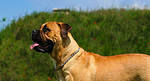
Bullmastiff Canis lupus familiaris Occupies a similar niche as a large protective companion, emphasizing guarding drive and compact power, with comparable training and management needs.
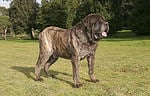
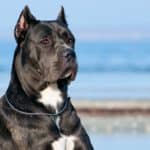
Cane Corso Canis lupus familiaris Functionally similar: a large, confident guardian breed that requires experienced handling, early socialization, and consistent training.
Kangal Canis lupus familiaris Also known as the Anatolian Shepherd Dog. Comparable ecological role as a large guardian, especially of livestock and property; selected for deterrence rather than prey-drive hunting.

The Daniff is a recent American mixture of two large-breed dogs, the great Dane and the mastiff, breeds with ancient origins in Tibet and the Middle East. The original breeds were developed for hunting large game, but over the years have become more popular as companion animals. Despite their imposing size, Daniffs are not aggressive and make gentle, playful, and loyal family pets. They get along very well with children and other animals. At the same time, they are protective and make great watchdogs, intimidating potential intruders as much by their size as their bark. On the downside, they are expensive to maintain, but many families will find the investment well worth it.

3 Pros and Cons of Owning a Daniff

ProsCons
Good protectors. Although they are gentle giants, strangers will find their size and deep barks intimidating. This combination is ideal for someone looking for a trustworthy guard dog.Expensive. Giant breed dogs are expensive to maintain. They eat an enormous amount of food and have high vet bills because of the health conditions endemic to large breeds.
Great with kids and pets. Daniffs are affectionate toward children and other animals. They do have herding instincts and a love of rambunctious play, though, and can bowl over small children and animals with their size.Separation anxiety. Daniffs donโ€™t like to be left alone. If left for an extended time, they will act out by barking and destroying things.
Low-maintenance coats. Daniffs are a smooth-haired breed that should be brushed weekly, and more often when shedding. Some of them inherit wrinkly skin from their mastiff side. These should be wiped with a damp washcloth and dried thoroughly to prevent infection.Separation anxiety. Daniffs donโ€™t like to be left alone. If left for an extended time they will act out by barking and destroying things.

The Best Dog Food for Daniffs

Dog owners of any breed are recommended to provide their pet with a high-quality dog food made with natural ingredients and as few artificial additives and low-nutritional fillers as possible. Spending more on better quality food is an important part of preventative healthcare that can save you expensive vet bills in the future.

It is also best to provide foods specially formulated for the developmental stage of your dog: puppy, adult, or senior. Follow the recommended portions closely and do not feed your dog table scraps, as they can have a tendency toward obesity if overfed or given calorie-rich people food.

Size and Weight

Daniffs are considered a giant-breed dog with an average height of 27 to 33 inches and a weight of 115 to 190 pounds. Their large size can predispose them to problems with their bones and joints.

Common Health Issues

Daniffs can inherit the health issues that are most common to their parent breeds: great Danes and mastiffs. Hybrid breeds do tend to be hardy, but it is unpredictable how healthy an individual puppy will turn out to be.

Some of the issues most frequently reported are bloat, hip and elbow dysplasia, heart issues, cancer, eye problems, skeletal issues, and hypertrophic osteodystrophy. Itโ€™s important to keep your dog on a good diet throughout its developmental stages and have regular veterinary checkups to catch any issues early on.

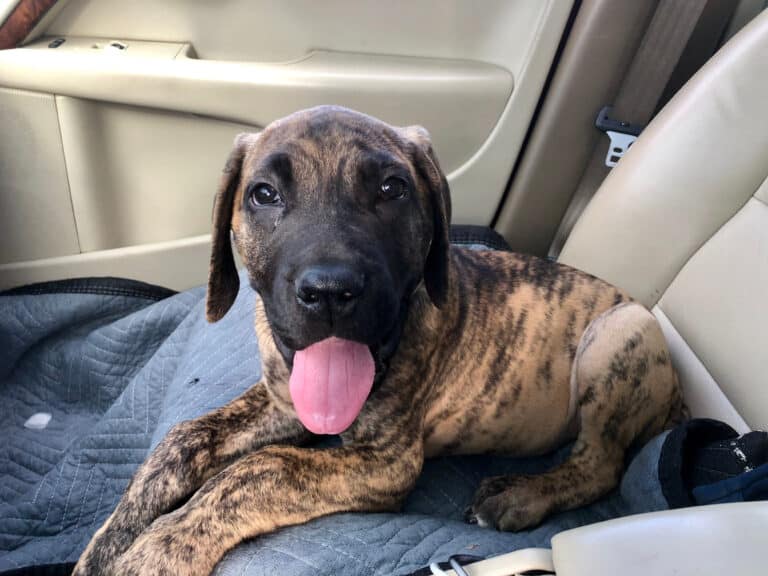
๐Ÿ‘ young daniff dog

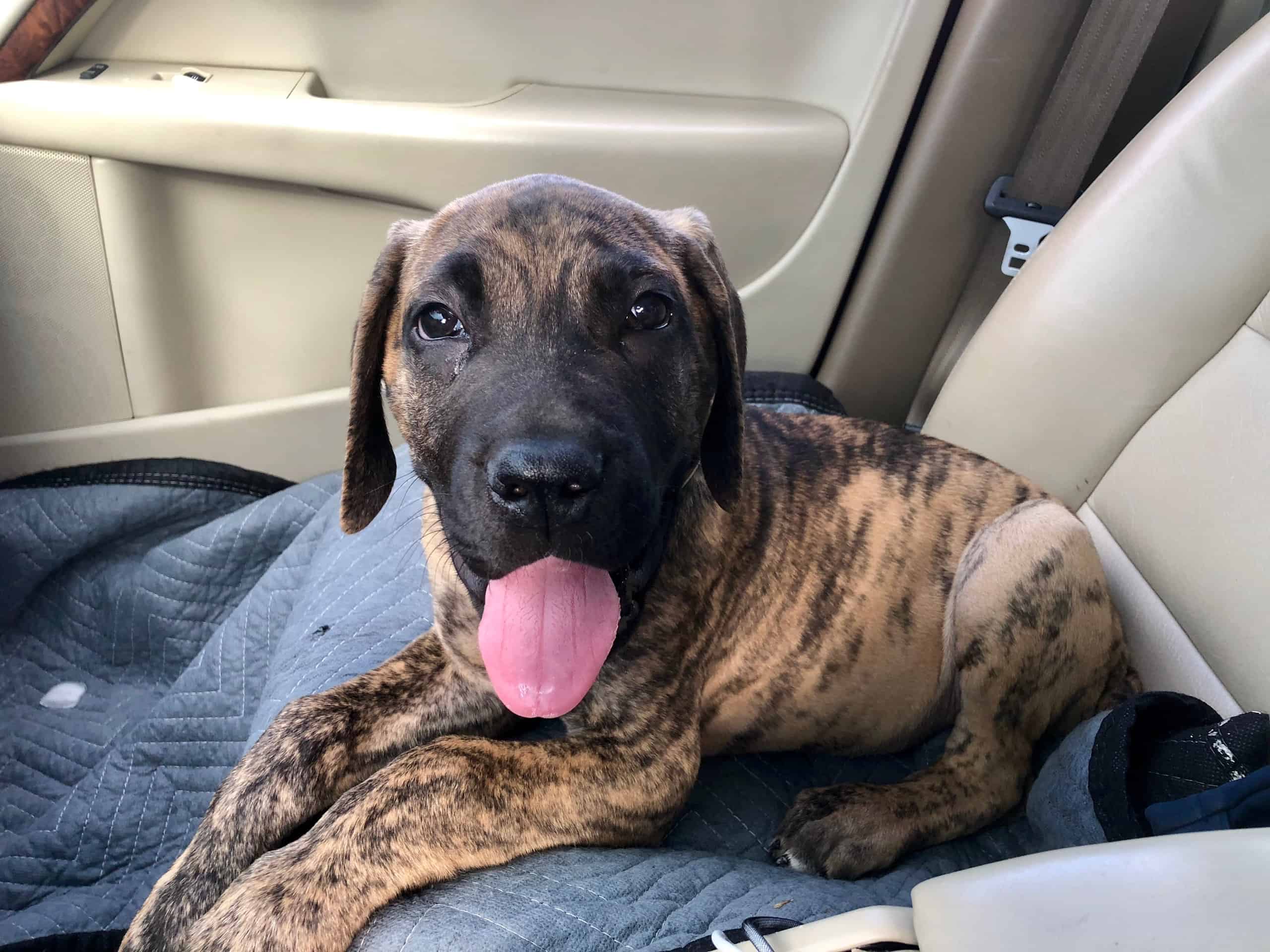
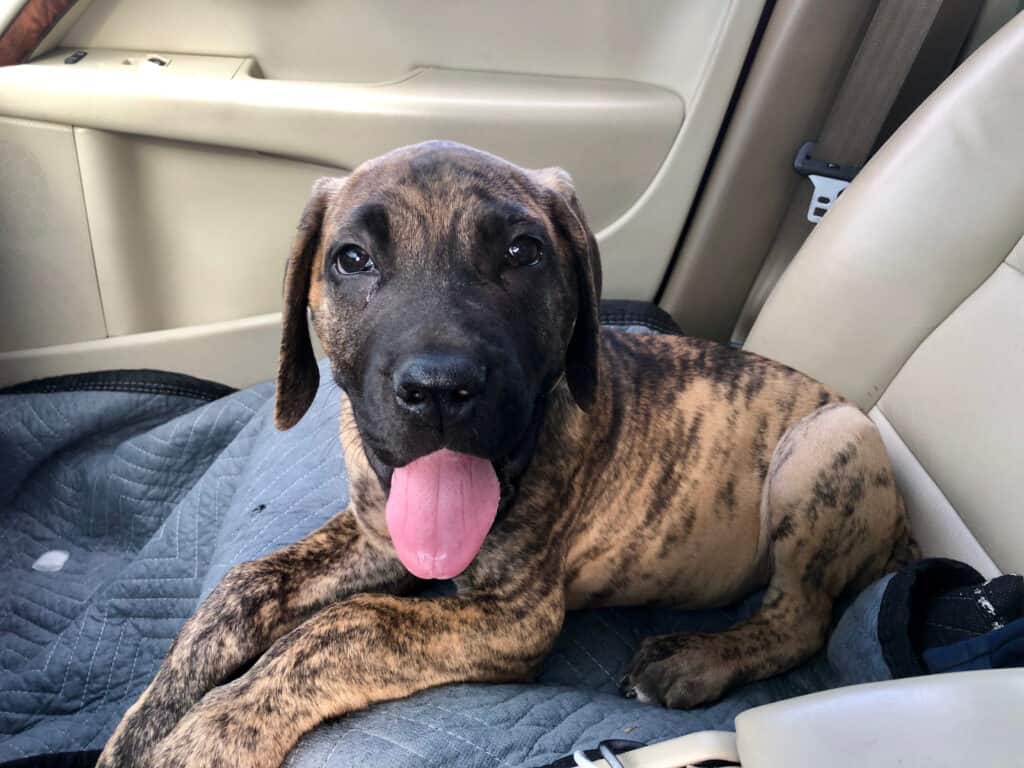
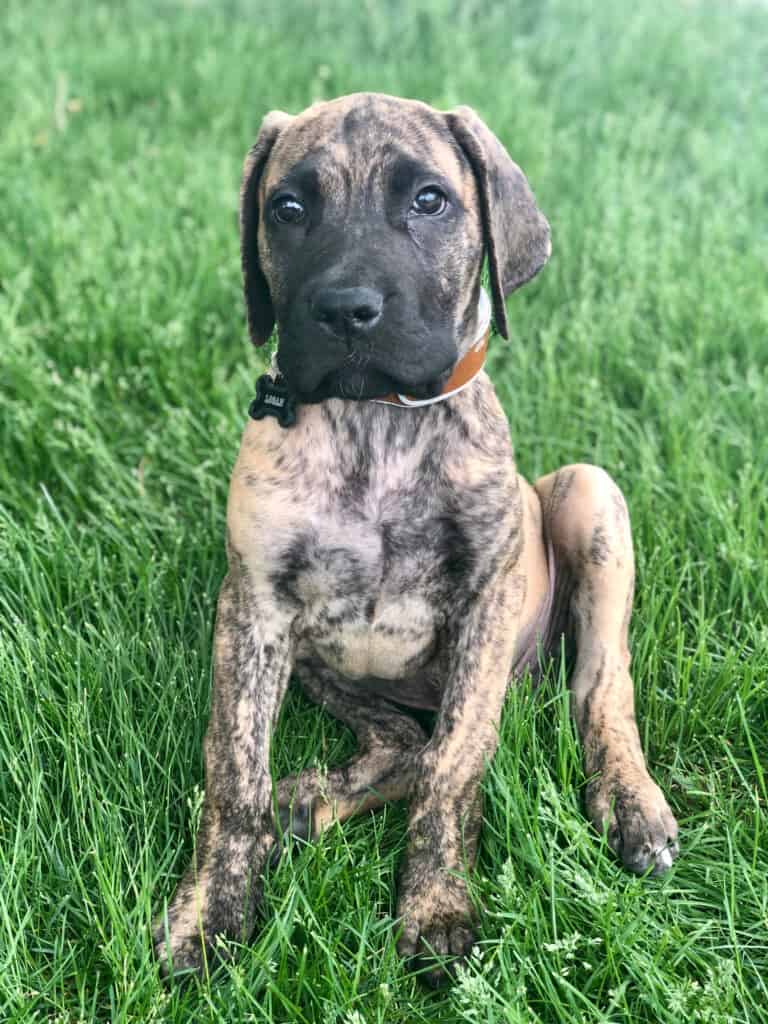
The Daniff comes in many colors and has a very low-shedding coat.

ยฉSpockfoundwaldo/Shutterstock.com

Temperament and Behavior

To people unfamiliar with the breed, a Daniff can be highly intimidating with its large size and deep voice. It is protective of its family but will only show aggression when it feels threatened. If youโ€™re friendly, you might actually find it more likely youโ€™ll get knocked down and kissed all over the face than bitten.

Puppies will bond strongly with their humans, including children, whom they adore. They also adjust well to other pets, including dogs and cats. Some training is required to help them learn good manners and not overwhelm others with the size and enthusiasm of their love. Daniffs can have a stubborn streak, but they are also quite eager to please. Love, positive reinforcement, and consistency are the keys to effective training.

How to Take Care of a Daniff

Maintenance and Grooming

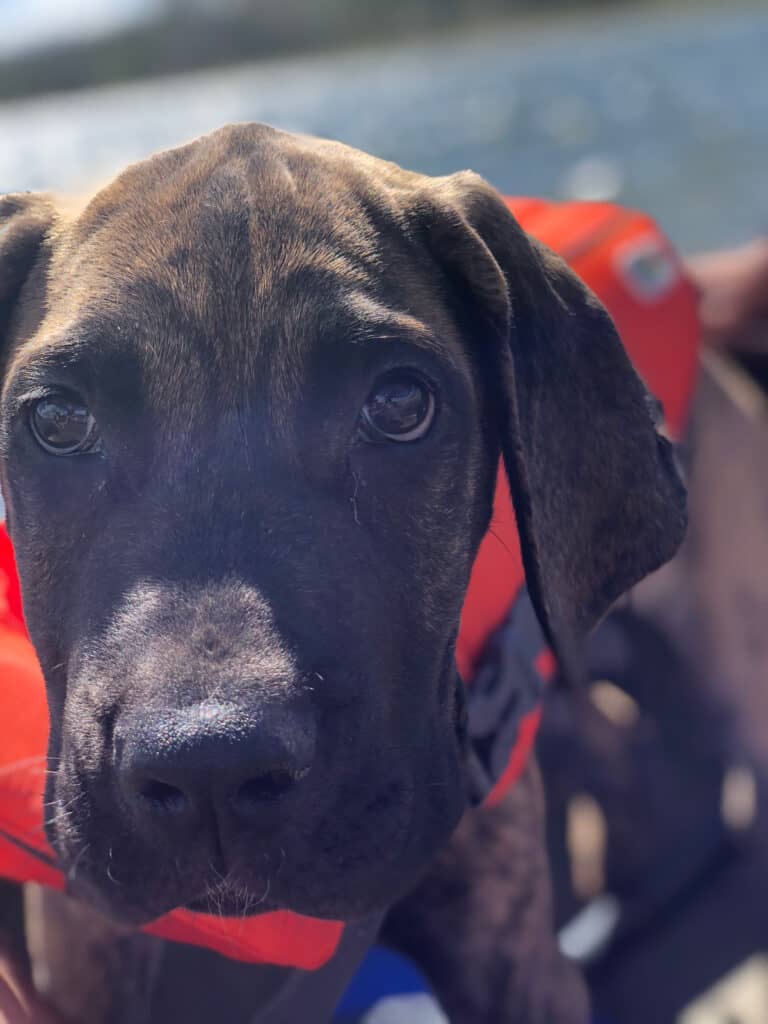
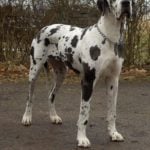
Daniffs have short, soft fur that is relatively low maintenance. They come in six colors: fawn with a black mask, brindle, blue, black, harlequin (white with irregular patches all over), and mantle (black and white with solid black on their backs, like a blanket).

This breed has a very low-shedding coat, but the size of the animal means that even this low level of shedding will leave a lot of hair and dander around your house. In normal times, they should be brushed once a week, but during the shedding season, two or more times may be required to control the hair.

Some puppies inherit wrinkled skin from their mastiff ancestors. The wrinkles should be periodically cleaned by wiping with a damp washcloth, making sure to dry the area thoroughly to prevent bacterial growth between the folds.

Nail clipping can be a real challenge in an adult dog that decides it doesnโ€™t like it. Because they can be difficult to control physically once they get large, itโ€™s important early in puppyhood to get them accustomed to having their paws held and their nails clipped. This can be an early, regular practice, even if it is just โ€œpretendโ€, to help them be more comfortable with the experience.

Training

Daniffs are very intelligent, loving, and eager to please. Most of the time, they are quite submissive. However, at times they can be stubborn. Itโ€™s important to start obedience training with them as early as possible, as a poorly trained adult can be quite unmanageable as a pet. If you feel ill-equipped to train your puppy yourself, invest in professional training. One way or another, training is an absolute must with this breed.

One advantage of a training program with other dogs is that it will help them socialize with other pups and humans. Their protective instincts are one of their strengths, but they have to learn the difference between friends and potential threats, remembering that you are in charge and taking their cues from you.

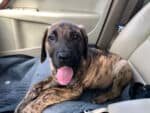
๐Ÿ‘ daniff pup

A Daniff puppy needs to be socialized from a young age.

ยฉSpockfoundwaldo/Shutterstock.com

Exercise

Daniff puppies are energetic and require a moderate amount of exercise. Two long walks a day are recommended, along with playtime in a fenced yard. They enjoy playing chase, tag, and catch with their humans as well. Theyโ€™re very social and will act out with behaviors such as chewing and barking if left alone too long.

Despite their size, they are still really indoor dogs at heart and will want to sleep with you in the house at night rather than in a kennel. At the same time, these are not great pets for cramped apartment living. The ideal environment for them is a large home with a fenced backyard where a family member will be home most of the time.

Daniffs and Children

Daniffs are loving and affectionate toward children and other animals, such as dogs, cats, rabbits, etc. They have a low prey instinct and will tolerate smaller beings very well without deliberately hurting them. They are affectionate toward children and other animals. They love rambunctious play, though, and can bowl over small children and animals with their size. Parents should provide supervision until their children are old enough not to be hurt by the Daniffโ€™s enthusiastic nature.

Dogs Similar to the Daniff

  • English mastiff: This dog is similar in size to the Daniff but has a much shorter life expectancy of only six to 10 years. Mastiffs drool and shed more than Daniffs.
  • Great Dane: Great Danes are similar in size to Daniffs. Danes shed more but are easier to groom and have somewhat better health. Nevertheless, Danes do have a shorter life expectancy of only seven to 10 years.
  • American Pit Bull Terrier: Pit bulls are much smaller than Daniffs and live longer, up to 16 years. They are slightly less friendly with children and strangers, but have similar intelligence and trainability as the Daniff.
View all 446 animals that start with D

Sources

  1. Dogtime / Accessed November 22, 2022
  2. Perfect Dog Breeds / Accessed November 22, 2022
  3. Wag! / Accessed November 22, 2022
  4. Hepper / Accessed November 22, 2022
  5. DogLearn / Accessed November 22, 2022
  6. Petsmont / Accessed November 22, 2022
  7. Petguide / Accessed November 22, 2022
  8. K9ofmine / Accessed November 22, 2022

About the Author

Drew Wood

Drew is a college professor and freelance writer who graduated from the University of Virginia. His travels have taken him to 25 countries and 44 states, where he has enjoyed learning about wildlife in a wide range of environments. In addition to his love of animals, he enjoys scary movies, landscaping, strategy games, and philosophical discussions over a cup of coffee. He is also an emotional support human to a neurotic Spanish Water Dog and a hyperactive Chihuahua mix.

Thank you for reading! Have some feedback for us?

Contact the AZ Animals editorial team

Related Articles You May Find Interesting


Daniff FAQs (Frequently Asked Questions)

Initial purchase price of a daniff puppy is $600-$900. Annual maintenance, veterinary care, and food is approximately $1,440 a year. They eat a lot and have some health issues that will require regular veterinary attention.

Yes, they are protective, affectionate, playful, and gentle with kids and other pets. However, they are very large animals and are clumsy, have herding instincts, and can get over-excited and knock kids down without meaning to hurt them. So parents should closely supervise interactions between this dog and small children.

The average life expectancy of a daniff is eight to 12 years.