D
Species Profile

Dinopithecus

Dinopithecus

The giant baboon of ancient Africa
Sammy33/Shutterstock.com

Dinopithecus Distribution

Click a location to explore more animals from that region

Endemic Species
Loading map...

Found in 1 country

Size Comparison

Human 5'8"
Dinopithecus 2 ft 2 in

Dinopithecus stands at 38% of average human height.

At a Glance

Genus Overview This page covers the Dinopithecus genus as a group. Stats below are general traits shared across the genus.
Diet Omnivore
Activity Diurnal+
Lifespan 22 years
Weight 60 lbs
Status Not Evaluated
Did You Know?

Dinopithecus was among the largest known fossil members of the baboon-and-mandrill (papionin) lineage.

Scientific Classification

Genus Overview "Dinopithecus" is not a single species but represents an entire genus containing multiple species.

Dinopithecus is an extinct cercopithecid primate (Old World monkey) within the papionin lineage—close to modern baboons and mandrills. It is notable for its very large body size among fossil papionins and is primarily known from southern African fossil sites dating to the late Neogene/early Quaternary (Pliocene–Pleistocene).

Kingdom
Animalia
Phylum
Chordata
Class
Mammalia
Order
Primates
Family
Cercopithecidae
Genus
Dinopithecus

Distinguishing Features

  • Extinct Old World monkey (cercopithecid), papionin/baboon relative
  • Notably large-bodied compared with many other fossil and living baboon-like monkeys
  • Known from Pliocene–Pleistocene fossil deposits in southern Africa
  • Classification is at genus level; species-level assignments and validity can vary by author

Physical Measurements

Males and females differ in size

Height
2 ft 6 in (2 ft 2 in – 2 ft 9 in)
2 ft 2 in (1 ft 6 in – 2 ft 7 in)
Length
5 ft 9 in (4 ft 7 in – 6 ft 7 in)
5 ft 3 in (3 ft 11 in – 6 ft 3 in)
Weight
88 lbs (55 lbs – 110 lbs)
88 lbs (44 lbs – 154 lbs)
Tail Length
2 ft 6 in (1 ft 12 in – 2 ft 11 in)
2 ft 4 in (1 ft 8 in – 2 ft 9 in)
Top Speed
25 mph
Estimated top speed 35–50 km/h

Appearance

Primary Colors
Secondary Colors
Skin Type Skin with dense guard hairs and underfur. Face likely sparsely haired with a dark, tough muzzle like large terrestrial papionins. Calloused palms/soles and ischial callosities possible; soft tissues not preserved.
Distinctive Features
  • Extinct fossil papionin (Old World monkey; Cercopithecidae) from southern Africa, late Neogene to early Quaternary (Pliocene-Pleistocene).
  • Overall build likely robust and strongly terrestrial in proportions, broadly baboon-like (Papio) but larger-bodied on average; exact locomotor/soft-tissue traits vary by species-level interpretation.
  • Skull and jaw proportions indicate a large-faced, powerful-jawed papionin; exact facial coloration, presence/absence of a mane, and detailed pelage patterning are not directly knowable from fossils.
  • Adults are usually thought to weigh about 20–60+ kg, varying by species, sex, and method. Length estimates are less certain but likely matched or exceeded large modern baboons.
  • Lifespan (not directly known; inferred from close living papionins): likely on the order of ~15-30 years typical for large cercopithecids, with a potential upper bound in the low-to-mid 30s under favorable conditions; substantial uncertainty applies.
  • Likely mostly ground-dwelling in open woodland and savanna, ate plants and some animals when available, grazing vs browsing varied by place and time, and groups may have been papionin-like.

Sexual Dimorphism

Probably pronounced, as in many papionins: males larger and more robust with relatively larger canines and cranial muscle-attachment development. The magnitude varies with which species are recognized within Dinopithecus and with fossil sampling; dimorphism is inferred rather than directly measured from complete population samples.

  • Larger overall body size and more robust limb/torso proportions (inferred genus-wide).
  • Relatively larger canines and more massive jaws (common papionin pattern; consistent with robust cranio-dental morphology).
  • More strongly developed cranial crests/ridges for jaw-muscle attachment may have been more frequent in males (inferred, varies with preservation and taxonomy).
  • Smaller average body size with less robust cranio-dental proportions than males (inferred).
  • Less pronounced canine size and cranial muscle-attachment expression compared with males (inferred).
  • Potentially subtler external display traits (e.g., mane/ruff if present at all) than males, though any such soft-tissue traits are speculative at genus level.

Did You Know?

Dinopithecus was among the largest known fossil members of the baboon-and-mandrill (papionin) lineage.

It lived in southern Africa during the late Neogene/early Quaternary (Pliocene-Pleistocene), alongside early human relatives at some sites.

Its genus name means "terrible/huge ape" (Greek roots), reflecting its impressive size in the fossil record.

Most evidence comes from skulls, jaws, and teeth-so diet and behavior are inferred by comparing its anatomy to living baboons and other papionins.

Scientists still debate how many valid species belong in Dinopithecus and how some fossils should be classified among giant papionins.

Its fossils help reconstruct ancient African ecosystems-especially open woodland/savanna mosaics where large terrestrial monkeys could thrive.

Unique Adaptations

  • Very large body size for a papionin, which can reduce predation risk and expand the range of foods that can be processed-though it also increases energy needs.
  • Robust cranio-dental anatomy (notably powerful jaws/teeth in many specimens) consistent with heavy chewing and dietary flexibility in variable Pliocene-Pleistocene environments.
  • Papionin-style dental design well-suited to mixed diets; tooth wear patterns and jaw form are key evidence used to infer feeding ecology (with ongoing debate).
  • Likely pronounced sexual dimorphism (common in baboon-like primates), suggested by size variation in fossils-important for interpreting measurements and taxonomy.

Interesting Behaviors

  • Likely highly terrestrial (ground-dwelling), inferred from papionin relationships and the general ecology of large baboon-like monkeys; degree of climbing vs. ground use may have varied by habitat.
  • Probably lived in social groups (as in most papionins), but exact group size, mating system, and male-female roles are not directly known from fossils.
  • Likely a flexible forager: papionins commonly combine plant foods (fruits, seeds, underground storage organs) with opportunistic animal foods; exact balance in Dinopithecus probably shifted with local seasonality and site ecology.
  • May have used strong jaws and large teeth to process tougher foods during dry seasons (a common papionin strategy), though the extent of "hard-object feeding" is debated.
  • Likely followed water and productive patches across open landscapes-behavior typical of large-bodied, wide-ranging primates; how far-ranging it was remains uncertain.

Cultural Significance

Dinopithecus has no role in modern culture but is important in South African paleontology as the "giant baboon" found with early hominins. Its fossils help museums and researchers show how primates adapted to Pliocene–Pleistocene climate and habitat changes and baboon evolution.

Myths & Legends

Dinopithecus itself is known only from fossils, so it has no direct ancient folklore; however, baboons (its living relatives) feature widely in African storytelling.

In several southern African folktale traditions, baboons are portrayed as clever, meddlesome, or punished tricksters-stories often used to explain distinctive baboon traits (such as hairless skin patches or facial coloration).

Modern popular accounts sometimes nickname Dinopithecus the "giant baboon," echoing a long human tendency to frame unfamiliar primates through familiar, story-rich animals like baboons and monkeys.

Conservation Status

NE Not Evaluated (extinct fossil genus; not assessed on the IUCN Red List)

Has not yet been evaluated against the criteria.

Population Unknown

Protected Under

  • Protection is effectively via paleontological/heritage protection for fossils and fossil-bearing sites rather than wildlife law (e.g., South Africa's National Heritage Resources Act, 1999, which regulates excavation, collection, and export of paleontological material).
  • Some fossil localities occur within or near protected areas, which can indirectly safeguard sites; protection varies by jurisdiction and site management.

Looking for a specific species?

Giant baboon (Dinopithecus)

Dinopithecus ingens

D. ingens is the best-known and most frequently cited species in the genus and is commonly what is meant in popular and comparative discussions of the extinct, very large-bodied papionin Dinopithecus from southern Africa.

  • Time & place (genus-wide): known primarily from southern African sites dating to the late Neogene-early Quaternary (Pliocene-Pleistocene), with species differing by locality and age across the region.
  • Body size (genus-wide range, fossil estimates): among the largest papionins; estimated adult body mass broadly ~35-80 kg across the genus (uncertainty is substantial because estimates derive from fragmentary skeletal material and scaling).
  • Measurements (generalized across the genus): inferred head-body lengths roughly ~0.7-1.1 m and shoulder heights ~0.5-0.8 m, with notable sexual dimorphism likely (as in many papionins) and real inter-species variation possible.
  • Lifespan (inferred range across the genus): likely broadly comparable to large modern papionins-approximately ~20-35 years maximum (wild vs. favorable conditions), but direct fossil lifespan data are not available.
  • Dinopithecus probably mostly lived on the ground in savanna and woodland edges and were omnivores. They ate tough plants, grasses, insects, and sometimes small animals; diets varied by species and place.

You might be looking for:

Dinopithecus ingens

60%

Dinopithecus ingens

Very large baboon-like species from South Africa; often regarded as the best-known Dinopithecus species.

Dinopithecus quadratirostris

25%

Dinopithecus quadratirostris

Another described Dinopithecus species (taxonomy varies by author); distinguished by craniofacial features suggested by the name 'square snout'.

Papio (baboons)

15%

Papio

Modern baboon genus; a close living relative and common point of comparison for Dinopithecus fossils.

View Profile

Life Cycle

Birth 1 infant
Lifespan 22 years

Lifespan

In the Wild 15–30 years

Reproduction

Mating System Polygynandry
Social Structure Aggregation Group
Breeding Pattern Transient
Fertilization Internal Fertilization
Birth Type Internal_fertilization

Dinopithecus, an extinct large papionin known from fossils, likely lived in groups, showed strong male–female size differences, and probably had polygynandry (many males and females mating), with short mate-guarding bouts; all inferences are uncertain.

Behavior & Ecology

Social Troop Group: 25
Activity Diurnal, Crepuscular
Diet Omnivore Seasonal fruits and energy-rich seeds/nuts (shifting toward underground storage organs and tougher vegetation when fruit is scarce).

Temperament

Highly social with pronounced dominance hierarchies likely in both sexes (common across papionins), including coalitionary behavior; intensity of aggression vs tolerance probably varied with local ecology and group density.
Males were likely larger than females, showing strong male-male competition and clear status signals. Dinopithecus size ranged about 25–60+ kg (uncertain), based on papionin fossils.
Opportunistic and behaviorally flexible foragers; likely bold/terrestrial-leaning in more open habitats but potentially more cautious in wooded mosaics-variation expected across the genus' southern African sites and time spans.
Longevity inferred from living analogs: typical adult lifespan on the order of ~15-25+ years (uncertain; fossil taxa cannot be measured directly), with strong effects of predation, injury, and social rank likely.

Communication

Grunts/contact calls to maintain spacing and social cohesion within a troop Inferred from papionin similarity
Barks and sharp alarm calls Terrestrial primate anti-predator communication typical of papionins
Screams/raucous threat calls during aggression, mating competition, or intergroup encounters.
Facial expressions Threat yawns, staring), body postures, and rapid approach/retreat displays for dominance and conflict management (papionin-typical
Tactile communication via grooming, embracing/holding, and infant handling to reinforce bonds and alliances; emphasis and partner choice likely varied by sex/kin structure.
Visual signaling using size/posture and possible color/soft-tissue cues (not preserved) analogous to baboons/mandrills; intensity likely greater in larger-bodied, more dimorphic members.
Possible limited scent/urine marking and anogenital presentation as social/sexual signals (common in Old World monkeys), though extent is uncertain for the genus.

Habitat

Biomes:
Savanna Temperate Grassland Temperate Forest Wetland
Terrain:
Hilly Plateau Plains Valley Riverine Karst Rocky +1
Elevation: Up to 6561 ft 8 in

Ecological Role

Large-bodied, terrestrial omnivorous primate acting as both plant consumer and invertebrate/small-vertebrate predator within savanna-woodland mosaics.

seed dispersal (via fruit consumption and movement across the landscape) seed predation (reducing/structuring seed survival for some plants through hard-seed consumption) invertebrate population regulation (especially social insects and larvae) soil disturbance and nutrient cycling (digging for roots/tubers/bulbs and trampling in foraging areas) trophic link between plant productivity and higher-level predators/scavengers (as potential prey and carcass resource)

Diet Details

Main Prey:
Termites and other social insects Beetles and other insects Other invertebrates Bird eggs and nestlings Small vertebrates
Other Foods:
Seasonal fruits Seeds and hard nuts Young leaves and shoots Grasses and sedges Roots, tubers, and bulbs Flowers and buds bark/gum exudates +1

Human Interaction

Domestication Status

Wild

Dinopithecus is an extinct large Old World monkey from southern Africa (Pliocene-Pleistocene). It was never domesticated; humans know it only from fossils. Adults were very large (roughly 30–60+ kg), with males much bigger than females. It likely lived in ground groups in open woodland-savanna and ate many foods (plants, roots, insects, small animals).

As a Pet

Not Suitable as Pet

Legality: Not applicable: Dinopithecus is extinct and cannot be kept as a pet. Fossil trade and ownership are controlled by national heritage rules, permits, and export/import laws, which vary by country and often limit excavation, sale, and export.

Care Level: Expert Only

Purchase Cost:
Lifetime Cost:

Economic Value

Uses:
Scientific research Education Museum exhibition Cultural/natural heritage management
Products:
  • fossil specimens (curated in museums/universities; sometimes subject to regulated private trade depending on jurisdiction)
  • replica casts and 3D prints for teaching/exhibits
  • scientific publications, outreach content, and educational materials

Relationships

Predators 7

Lion Panthera leo
Leopard Panthera pardus
Sabertooth cat Dinofelis
Machairodont sabertooth Megantereon spp.
Spotted hyena Crocuta crocuta
African crocodile Crocodylus niloticus
Large eagles Aquila spp.

Related Species 7

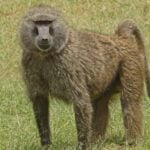
Olive baboon Papio anubis Shared Family
Chacma baboon Papio ursinus Shared Family
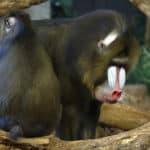
Mandrill Mandrillus sphinx Shared Family
Drill Mandrillus leucophaeus Shared Family
Gelada Theropithecus gelada Shared Family
Sooty mangabey Cercocebus atys Shared Family
Gray-cheeked mangabey Lophocebus albigena Shared Family

Ecological Equivalents 5

Animals that fill a similar ecological role in their ecosystem

Baboons Papio spp. Closest modern ecological analogue: large-bodied, mostly terrestrial papionins that forage omnivorously in savanna/woodland mosaics. Dinopithecus likely overlapped in broad habitat use and ground-based foraging, with variation by site and time.
Mandrill and drill Mandrillus sphinx; Mandrillus leucophaeus Large papionins with powerful jaws and broad omnivory. Useful analogues for interpreting robust cranio-dental adaptations and mixed plant/animal diets, though Mandrillus species are more forest-associated than many inferred Dinopithecus settings.
Gelada Theropithecus gelada Another large papionin that illustrates how extreme terrestriality and specialized grazing can evolve within Papionini. Dinopithecus appears less specialized for grazing than geladas, highlighting niche variation among large papionins.
Patas monkey Erythrocebus patas Terrestrial savanna monkey that travels long distances on the ground and experiences predator exposure in open habitat. Provides an ecological parallel for locomotor and anti-predator pressures, although the patas monkey is smaller and more cursorial.
Macaques Macaca spp. Comparably flexible, omnivorous cercopithecids occupying many environments; useful for generalizing diet breadth and behavioral plasticity. Note that Dinopithecus belonged to the papionin lineage and may have been more strongly terrestrial.

Types of Dinopithecus

2

Explore 2 recognized types of dinopithecus

Giant baboon Dinopithecus ingens
Short-jawed Dinopithecus Dinopithecus brachygnathus

Description & Size

The Dinopithecus is an extinct genus, the name of which means “terrible ape”. They were a large primate closely related to the baboon.  They lived in South Africa and Ethiopia from the Pliocene to the Pleistocene Epochs. Because they were only found in certain areas, it is believed they lived in specific habitats.

One of the largest known baboons in the history of the world, Dinopithecus was approximately twice the size of the largest baboons alive today. Males are estimated to have been 1.5 meters (5 feet) tall at the shoulder. Females were smaller than that, at 1.2 meters (4 feet). The Dinopithecus males tended to weigh around 46 kilograms (about 100 pounds), while the females weighed 29 kilograms (about 63 pounds) on average. Despite knowledge of Dinopithecus, currently, only partial remains have been found. Because of this, its appearance can only be approximated.

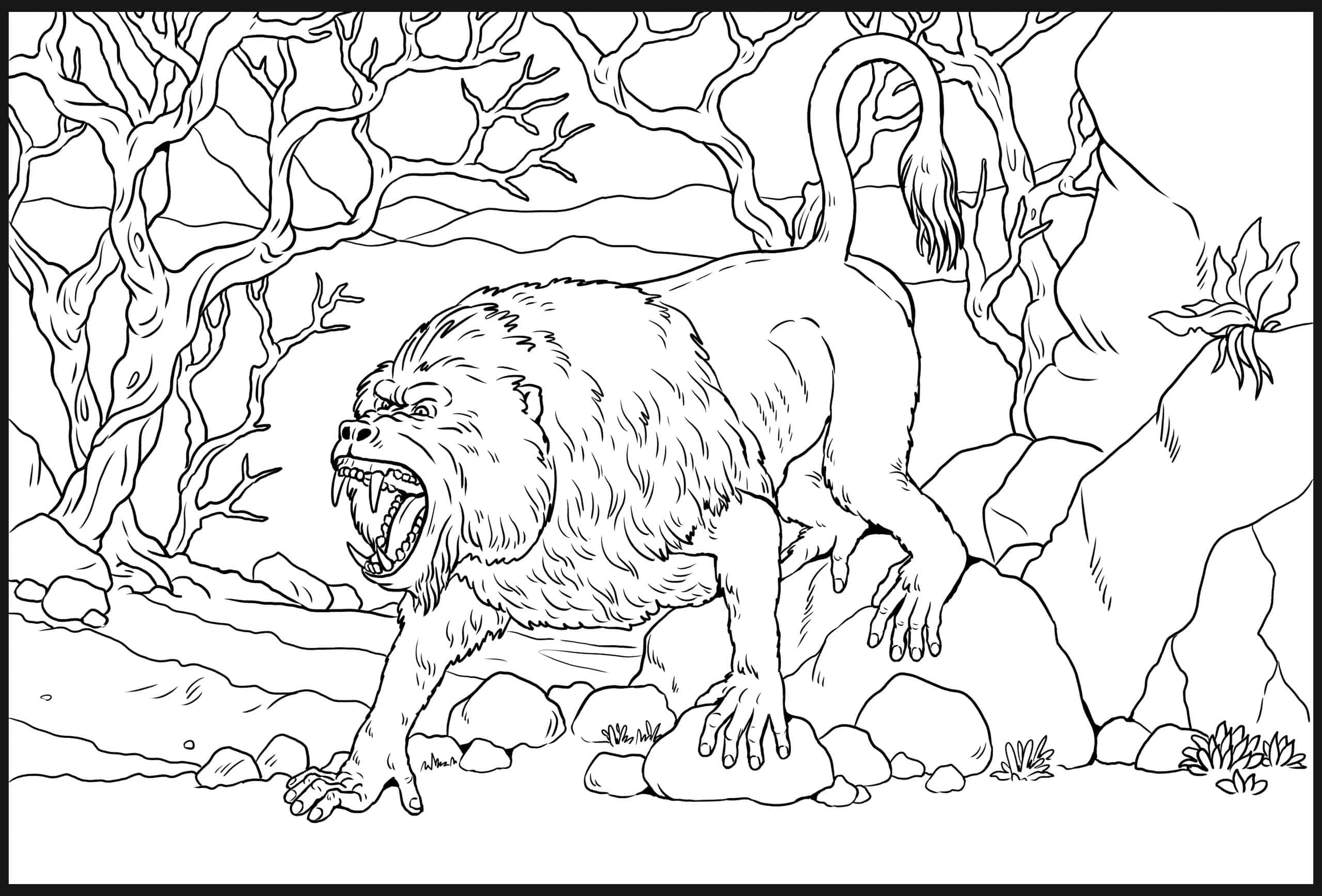
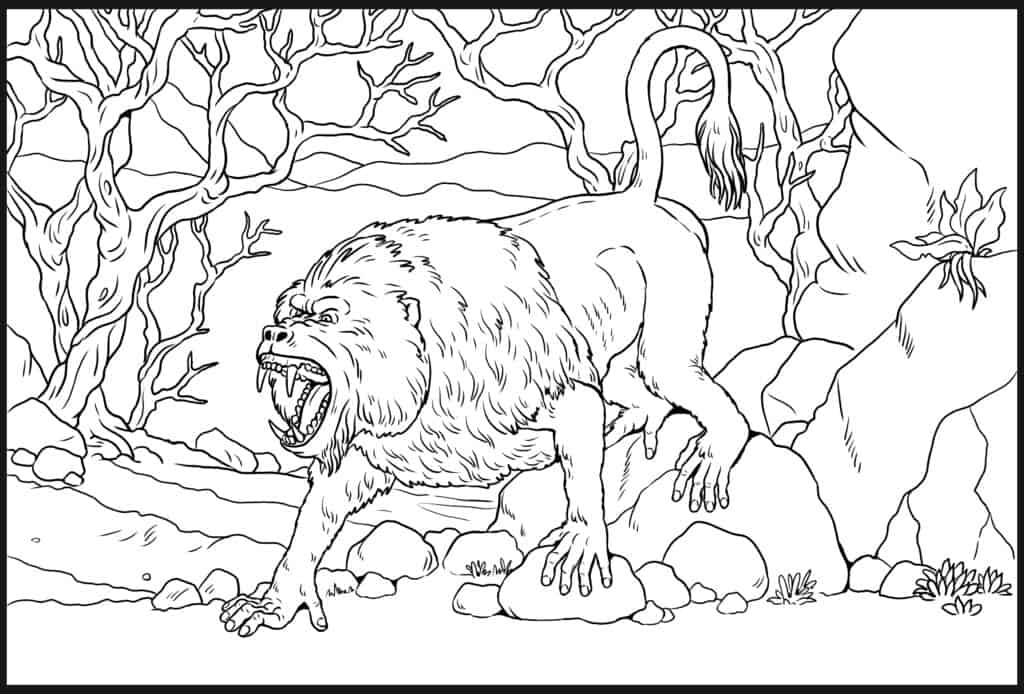
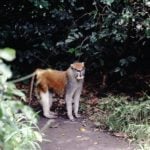
👁 Image

An approximation of the appearance of Dinopithecus.

©Sammy33/Shutterstock.com

Diet – What Did Dinopithecus Eat?

Details on what Dinopithecus ate are largely unknown. It is believed that they had a much more varied diet than current baboons, possibly due to climate changes at the time. Studies on the shape of their teeth indicate Dinopithecus probably had a coarse diet, primarily consisting of underground storage organs, fruits, and other savanna resources.

Dinopithecus are believed to have been omnivorous creatures. If so, they highly likely supplemented their diet of plants with meat; however, it is unknown what specifically.

Habitat – When and Where It lived

Dinopithecus lived in South Africa and Ethiopia during the Pliocene and the Pleistocene Epochs. They were most commonly found in the Ethiopian area of the Matabaietu Formation.

They also likely lived around water holes, as they weren’t suited to travel long distances for water. A home near water is essential for any baboon as it can ensure safety. It’s possible that the Dinopithecus, like the hamadryas baboon, lived near cliff faces but occasionally would find shelter in trees. Like the yellow baboon, they may have inhabited savannas and light forests.

In a study by Caroline M. Bettridge and Robin Dunbar, it was found that due to their size, they would have to have lived in very specific climates to ensure they could get enough food to survive. Generally, fossils of the Dinopithecus are rarely seen outside of the small caves where they are found in South Africa.

Threats And Predators

Exact predators of the Dinopithecus are unknown. The best candidates for what could have been their primary predators are large, sabre-toothed cats, such as Dinofelis and Machairdodus.

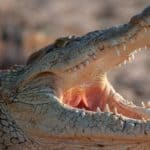
In addition to prehistoric big cats, relatives of the modern crocodile – like Crocodylus thorbjarnarsoni – also could have been great predators of this large primate. Crocodylus thorbjarnarsoni are known for having grown to very large sizes with powerful bites and armored skin. With such features, they easily would have been capable of killing a Dinopithecus.

Discoveries and Fossils – Where It was Found

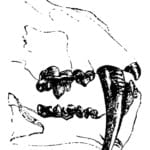
The Dinopithecus fossils are known to be broken and incomplete, forcing paleontologists to make common guesses on how this genus lived.

Fossils from the early Pleistocene age have been found in several sites in South Africa. It is known from having been found in caves in the country, such as Swartkrans and Sterkfontein

Extinction – When Did It Die Out?

The Dinopithecus are thought to have gone extinct during the Pleistocene Epoch, which took place between 2,580,000 and 11,700 years ago.

Climate changes caused the size of Dinopithecus to become its downfall. Food became more scarce as climate changed, and the Dinopithecus required large quantities of food to stay healthy.
View all 446 animals that start with D

Sources

  1. Georgia Journal of Science / Accessed September 1, 2022
  2. International Journal of Primatology / Published December 1, 2012 / Accessed September 1, 2022
  3. Wikipedia

About the Author

Kristin Hitchcock

Kristin is a writer at A-Z Animals primarily covering dogs, cats, fish, and other pets. She has been an animal writer for seven years, writing for top publications on everything from chinchilla cancer to the rise of designer dogs. She currently lives in Tennessee with her cat, dogs, and two children. When she isn't writing about pets, she enjoys hiking and crocheting.

Thank you for reading! Have some feedback for us?

Contact the AZ Animals editorial team

Related Articles You May Find Interesting


Dinopithecus FAQs (Frequently Asked Questions)

The Dinopithecus lived from the Pliocene to the Pleistocene Epochs. They have only been found in a specific area of South Africa, showing that they were very specific about their climate and habitat.

The Dinopithecus was estimated to have been up to 5 feet tall at the shoulder, which is very large for a primate, much more a baboon.