
D
Species Profile

Dinosaurs

Dinosauria

One name, a million body plans
Orla/Shutterstock.com

Dinosaurs Distribution

Click a location to explore more animals from that region

This map shows coastal regions where Dinosaurs are found.

Loading map...

Found in 28 countries

๐Ÿ‡ฆ๐Ÿ‡ถ Antarctica ๐Ÿ‡ฆ๐Ÿ‡ท Argentina ๐Ÿ‡ฆ๐Ÿ‡บ Australia ๐Ÿ‡ง๐Ÿ‡ท Brazil ๐Ÿ‡จ๐Ÿ‡ฆ Canada ๐Ÿ‡จ๐Ÿ‡ฑ Chile ๐Ÿ‡จ๐Ÿ‡ณ China ๐Ÿ‡ฉ๐Ÿ‡ช Germany ๐Ÿ‡ฉ๐Ÿ‡ฟ Algeria ๐Ÿ‡ช๐Ÿ‡ฌ Egypt ๐Ÿ‡ช๐Ÿ‡ธ Spain ๐Ÿ‡ซ๐Ÿ‡ท France ๐Ÿ‡ฌ๐Ÿ‡ง United Kingdom ๐Ÿ‡ฎ๐Ÿ‡ณ India ๐Ÿ‡ฎ๐Ÿ‡น Italy ๐Ÿ‡ฏ๐Ÿ‡ต Japan ๐Ÿ‡ฐ๐Ÿ‡ท South Korea ๐Ÿ‡ฐ๐Ÿ‡ฟ Kazakhstan ๐Ÿ‡ฒ๐Ÿ‡ฆ Morocco ๐Ÿ‡ฒ๐Ÿ‡ณ Mongolia ๐Ÿ‡ฒ๐Ÿ‡ฝ Mexico ๐Ÿ‡ณ๐Ÿ‡ฆ Namibia ๐Ÿ‡ณ๐Ÿ‡ฟ New Zealand ๐Ÿ‡ท๐Ÿ‡บ Russia ๐Ÿ‡น๐Ÿ‡ญ Thailand ๐Ÿ‡น๐Ÿ‡ณ Tunisia ๐Ÿ‡บ๐Ÿ‡ธ United States ๐Ÿ‡ฟ๐Ÿ‡ฆ South Africa

Size Comparison

Human 5'8"
Dinosaurs 4 ft 11 in

Dinosaurs stands at 87% of average human height.

At a Glance

Order Overview This page covers the Dinosaurs order as a group. Stats below are general traits shared across the order.
Also Known As Dino, Terrible lizards, Prehistoric reptiles, Prehistoric beasts, Mesozoic reptiles, Mesozoic beasts
Activity Diurnal+
Lifespan 20 years
Weight 90000 lbs
Status Not Evaluated
Did You Know?

Dinosaurs are defined by anatomy and ancestry-not by size; the smallest were chicken-sized (or smaller), while the largest rivaled blue whales in mass.

Scientific Classification

Order Overview "Dinosaurs" is not a single species but represents an entire order containing multiple species.

Dinosaurs (Dinosauria) are a major group of archosaur reptiles that dominated terrestrial ecosystems during the Mesozoic Era (Triassic, Jurassic, Cretaceous). They diversified into many forms including bipedal carnivores (theropods), long-necked giants (sauropodomorphs), and heavily armored or horned herbivores (thyreophorans and ceratopsians). Non-avian dinosaurs went extinct at the end of the Cretaceous (~66 million years ago), while birds survive as living dinosaurs.

Kingdom
Animalia
Phylum
Chordata
Class
Reptilia
Order
Dinosauria

Distinguishing Features

  • Erect limb posture with legs held under the body (distinct from many earlier reptiles)
  • Great diversity of body plans: bipedal and quadrupedal forms; herbivores and carnivores
  • Many lineages show evidence of feathers or filamentous integument (especially theropods)
  • Egg-laying with extensive nesting behavior in many groups; parental care in some taxa
  • Phylogenetically, birds are nested within theropod dinosaurs

Physical Measurements

Males and females differ in size

Height
โ™‚ 6 ft 7 in (1 in โ€“ 39 ft 4 in)
โ™€ 6 ft 7 in (2 in โ€“ 32 ft 10 in)
Length
โ™‚ 9 ft 10 in (2 in โ€“ 114 ft 10 in)
โ™€ 16 ft 5 in (2 in โ€“ 114 ft 10 in)
Weight
โ™‚ 220 lbs (0 lbs โ€“ 88.2 tons)
โ™€ 1,102 lbs (0 lbs โ€“ 77.2 tons)
Tail Length
โ™‚ Up to 49 ft 3 in
โ™€ 6 ft 7 in (0 in โ€“ 49 ft 3 in)
Top Speed
199 mph
Dinosaur speeds vary widely

Appearance

Primary Colors
Secondary Colors
Skin Type Dinosauria had different skin: many had scales, some had bony skin plates called osteoderms. Many theropods (and all birds) had feathers. Birds are living dinosaurs.
Distinctive Features
  • Scope note (hub/order level): Dinosauria includes a vast range of body plans and ecologies across the Mesozoic (Late Triassic through end-Cretaceous). Non-avian dinosaurs went extinct ~66 Ma; birds survive as the only living dinosaurs.
  • Upright, parasagittal gait is a hallmark: limbs held under the body (distinct from many sprawling reptiles), with lineages evolving obligate bipedality (many theropods, some ornithischians) and quadrupedality (sauropods, many ornithischians).
  • Sizes in Dinosauria vary: length ~0.3 m to over 35 m; height 0.1โ€“0.3 m (small bipeds) to 10โ€“12+ m in giant sauropods; mass under 1 kg to 50,000โ€“80,000+ kg in largest sauropodomorphs.
  • Lifespan (inferred from bone histology and growth patterns): small dinosaurs grew up quickly and lived about 5โ€“15 years; mediumโ€“large about 15โ€“40+ years; largest maybe 50โ€“70+ years, with much variation and uncertainty.
  • Diet/ecology (highly variable): included carnivores (many theropods), herbivores (sauropodomorphs and most ornithischians), and omnivores/insectivores; occupied roles from small ground foragers and fast-running predators to massive high-browsing megaherbivores and heavily armored grazers.
  • Dinosaur head ornaments and armor varied: horns and frills (ceratopsians), domes (pachycephalosaurs), plates and spikes (stegosaurs), osteoderms and club tails (ankylosaurs), and cranial crests for display, species recognition, sound, or heat control.
  • Feathers and filament-like coverings were common in theropods and in birds; they likely helped with insulation, display, sitting on eggs and, in birds, powered flight. Most non-avian dinosaurs lived on land.
  • All dinosaurs laid eggs. Many groups show nesting colonies, brooding, and parental care, especially some theropods and ornithischians. Care probably ranged from little to long, depending on their group and environment.
  • Locomotion and behavior: ranged from slow-moving, column-limbed giants to agile runners; trackways suggest some species formed groups/herds, but solitary living also likely occurred-sociality varies and is often hard to infer for specific taxa.
  • Thermoregulation: metabolic physiology likely spanned a continuum; many lines show evidence consistent with elevated growth rates compared with many living reptiles, but exact endothermy/ectothermy states vary and remain debated at order-wide scale.
  • Not dinosaurs: pterosaurs (Pterosauria) are flying archosaurs but outside Dinosauria; marine reptiles such as ichthyosaurs, plesiosaurs, and mosasaurs are separate reptile groups and not dinosaurs.

Sexual Dimorphism

Sexual dimorphism in Dinosauria is possible but not well supported. Many dinosaurs had horns, crests, frills, or plates that might differ by sex, age, or species. Fossils are hard to read because differences can reflect growth (ontogeny), individuals, or species.

โ™‚
  • In some taxa, potentially larger or more elaborate display structures (e.g., cranial crests, horns, frills, tail ornaments), though often not testable without large sample sizes.
  • Potentially more pronounced display coloration/feather ornamentation in feathered theropods/birds (strongest support in living avian dinosaurs; mostly inferential for non-avian dinosaurs).
โ™€
  • In some taxa, potentially more robust pelvic canal or subtle skeletal correlates related to egg-laying (rarely diagnostic and controversial in many fossils).
  • Potentially reduced ornamentation in some species, though differences may instead reflect age or species-level variation rather than sex.

Did You Know?

Dinosaurs are defined by anatomy and ancestry-not by size; the smallest were chicken-sized (or smaller), while the largest rivaled blue whales in mass.

Birds are theropod dinosaurs, meaning Dinosauria is not entirely extinct.

Not all dinosaurs were scaly: many theropods had feathers or feather-like coverings; others had armor plates, spikes, or thick hides.

Dinosaurs lived on every continent, including Antarctica, across the Triassic, Jurassic, and Cretaceous.

"Dinosaurs" are not the same as pterosaurs (flying reptiles) or marine reptiles like plesiosaurs and mosasaurs-those were separate reptile lineages.

Many dinosaurs laid eggs in nests; fossil sites preserve clutches, eggshell microstructure, and in some cases brooding postures.

The end-Cretaceous extinction was global and abrupt in geologic terms; it removed non-avian dinosaurs but many other groups survived, including birds, crocodilians, and mammals.

Unique Adaptations

  • Upright, pillar-like limb posture with legs held under the body (a key dinosaur trait) enabling efficient walking and running compared with sprawling reptiles.
  • Highly diverse hip and pelvis arrangements (major lineages include theropods and sauropodomorphs vs. ornithischians), reflecting different locomotor and digestive strategies.
  • Feathers and feather-like integument evolved in multiple dinosaur lineages (best documented in many theropods), later enabling powered flight in birds; other dinosaurs evolved scales, bony armor, and keratin coverings.
  • Extreme size range: from tiny, lightly built forms to giant long-necked sauropods with air-filled bones and bird-like respiratory structures that reduced weight and improved oxygen flow.
  • Specialized feeding machinery: repeated evolution of beaks, complex tooth replacement patterns, and in some ornithischians dense "dental batteries" for high-throughput plant processing.
  • Defensive innovations such as osteoderm armor, tail clubs, spikes, thickened skull domes, and elaborate horns/frills-often combining protection with display.
  • Rapid growth in many taxa (shown by bone microstructure), though growth rates and maturity ages varied strongly with body size and lineage.

Interesting Behaviors

  • Feeding strategies ranged widely: large-bodied herbivores cropped tough plants, some had dental "batteries" for grinding, and carnivores used different bite styles (slicing teeth, crushing bites, or grasping forelimbs)-with omnivory also present in some lineages.
  • Locomotion varied from fully bipedal runners (many theropods and early ornithischians) to massive quadrupeds (many sauropods and armored dinosaurs), with some groups shifting stance over evolutionary time.
  • Sociality shows strong variation: trackways and bonebeds suggest herding or group living in some herbivores, while many species may have been solitary; evidence differs by taxon and locality.
  • Reproduction commonly involved egg-laying and nest building; multiple groups show evidence consistent with parental care (guarding nests, brooding, or tending young), but the degree of care likely ranged from minimal to intensive.
  • Communication and display were likely important: crests, horns, frills, plates, and possible vocal/visual signals suggest mate choice and species recognition across multiple subgroups.
  • Seasonal movement is suggested in some regions by growth rings in bones, population structure, and trackway patterns, but long-distance migration was not universal.
  • Predator-prey dynamics spanned everything from small-insect hunters to apex predators, and from lightly built grazers to heavily armored or horned herbivores-ecosystems were structured by many niches, not a single "typical" dinosaur.

Cultural Significance

Dinosaurs (Dinosauria) shape how people think about Earthโ€™s very old past, extinction, and evolution. Their fossils help museum science, education, films, and toys, and show mass extinction, past climate change, and that birds are living dinosaurs linking us to the Mesozoic.

Myths & Legends

China's long tradition of "dragon bones" (fossil bones and teeth collected from the ground) treated such remains as the physical traces of dragons and used them in traditional remedies and lore.

In parts of medieval and early modern Europe, large fossil bones were commonly interpreted as the remains of giants or dragons, fitting into Christian and local legends about monstrous creatures and ancient heroes.

Greek and Roman writers recorded stories of giant beings (Titans and giants) and marvels of enormous bones; later European naturalists sometimes linked newly found fossils to these older giant legends.

In some Indigenous North American stories, big bones and ancient creature remains became tales of powerful beings like thunderbirds or great water monsters, with fossils seen as real signs of those old animals.

Mongolian and Central Asian desert folklore includes tales of fearsome "dragon" or monster remains in the badlands; these stories were later echoed by travelers encountering fossil-rich landscapes that naturally suggested ancient beasts.

The word "dinosaur" itself (coined in 1842 from Greek roots meaning "terrible/lizard") became a cultural label for awe-inspiring ancient animals, inspiring 19th-century "dragon-like" reconstructions that fed public legends around their size and ferocity.

Conservation Status

NE Not Evaluated

Has not yet been evaluated against the criteria.

Population Unknown

Protected Under

  • CONSERVATION LANDSCAPE (across Dinosauria): The order as a whole is not assigned a single IUCN category; non-avian dinosaurs are extinct (end-Cretaceous), while living dinosaurs (birds) span the full modern spectrum from LC to CR, with some lineages recently extinct historically. Common cross-cutting threats to at-risk living members include habitat loss, invasive species, hunting/trade, climate change, and pollution; notable high-risk examples occur among island endemics, seabirds, and large-bodied specialists (many assessed as EN/CR).
  • CITES listings apply to many bird taxa, especially parrots, raptors, and other groups affected by international trade (varies by species and Appendix).
  • Protected areas, key biodiversity areas, and site-based protections (e.g., breeding colonies, wetlands under national frameworks and international agreements such as Ramsar) are central tools for conserving threatened avian dinosaurs.
  • Migratory species protections in some regions (e.g., international flyway agreements and national acts such as the U.S. Migratory Bird Treaty Act; regional instruments like the EU Birds Directive) provide additional legal coverage for many populations.

Looking for a specific species?

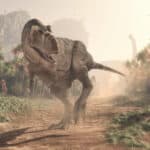
Tyrannosaurus

Tyrannosaurus rex

In popular culture and general usage, "dinosaur" is most often exemplified by large predatory theropods-especially Tyrannosaurus rex-making it the most commonly referenced single species when people say "a dinosaur."

  • Late Cretaceous apex predator in western North America (Laramidia), ~68-66 million years ago
  • Exceptionally robust skull and teeth; among the highest bite-force estimates for terrestrial animals
  • Evidence supports a mix of active predation and scavenging, as in many modern large predators
  • Part of Theropoda, the lineage that also includes living birds (avian dinosaurs)
View Tyrannosaurus Profile

You might be looking for:

Modern birds (living dinosaurs)

20%

Aves (within Dinosauria)

The only extant dinosaur lineage; derived theropods.

Tyrannosaurus (T. rex)

18%

Tyrannosaurus rex

Large Late Cretaceous tyrannosaurid theropod predator from western North America.

View Profile

Triceratops

14%

Triceratops horridus

Large ceratopsid herbivore with three facial horns; Late Cretaceous North America.

Velociraptor

12%

Velociraptor mongoliensis

Small dromaeosaurid theropod from Late Cretaceous Mongolia; feathered, agile predator/scavenger.

View Profile

Stegosaurus

10%

Stegosaurus stenops

Plated stegosaurid herbivore from the Late Jurassic of North America.

Brachiosaurus

10%

Brachiosaurus altithorax

Large long-necked sauropod herbivore from the Late Jurassic of North America.

View Profile

Apatosaurus

8%

Apatosaurus louisae

Diplodocid sauropod herbivore from the Late Jurassic of North America.

Ankylosaurus

8%

Ankylosaurus magniventris

Heavily armored ankylosaurid herbivore from the Late Cretaceous of North America.

Life Cycle

Birth 10 hatchlings
Lifespan 20 years

Lifespan

In the Wild 1โ€“100 years

Reproduction

Mating System Data Deficient
Social Structure Aggregation Group
Breeding Pattern Seasonal
Fertilization Internal Fertilization
Birth Type Internal_fertilization

Behavior & Ecology

Social Varies (herd, colony, mob, family group) Group: 12
Activity Diurnal, Cathemeral, Crepuscular, Nocturnal
Seasonal Migratory 43,496 mi

Temperament

Highly variable across Dinosauria due to extreme diversity in body size, diet, and habitat use (small, agile forms to giant megaherbivores; predators to grazers/browsers; terrestrial to semi-aquatic-adjacent lifestyles).
Body-size range across the order (smallest to largest members): from very small, bird-sized dinosaurs (~<1 m total length; <1 kg) to the largest sauropods (>25-30+ m; tens of tonnes).
Lifespan range across the order (inferred from growth rings/histology and scaling): from fast-growing small-bodied species likely living ~5-15 years to large-bodied taxa commonly ~20-50+ years (and potentially longer in the largest forms).
Temperament likely ranged from skittish/cryptic in small prey species to bold/territorial in large herbivores and apex predators; many species likely showed context-dependent aggression (breeding season, nest defense, competition at resources).
Dominance hierarchies and ritualized competition are plausible in many taxa (e.g., display structures like crests, frills, horns, domes), reducing costly fights; some lineages show evidence consistent with intraspecific combat and display-driven social ranking.
Parental care varied widely: from minimal post-oviposition care in some taxa to nest guarding and extended juvenile association in others; colonial nesting suggests at least some degree of site fidelity and social tolerance.

Communication

Low-frequency booms/bellows Plausible in many large-bodied taxa via air-sac systems or resonating crests
Hisses/snorts and breathy exhalation sounds General reptile-like vocal repertoire likely in many non-avian dinosaurs
Chirps/whistles/calls Especially plausible in feathered theropods and avian dinosaurs; complex vocal learning is most strongly supported in birds
Alarm calls/contact calls Inferred behaviorally for gregarious taxa, though exact sound types are uncertain
Visual displays: posture, head/neck movements, tail flags, feather displays, and use of crests/frills/horns for signaling species identity, mate choice, and threat displays.
Tactile communication: nudging, flank contact, and parent-offspring contact at nests; in avian dinosaurs, preening/allopreening behaviors are plausible.
Substrate-borne signals: stomping, tail slaps, or ground vibrations-especially in large taxa-potentially used in long-distance or low-visibility contexts Speculative but plausible
Chemical cues: olfaction was important in many dinosaurs; intentional scent marking is uncertain but possible in some lineages More speculative than visual/acoustic signaling
Spatial/behavioral signaling: coordinated movement in groups (alignment, following, synchronized travel) functioning as social information transfer in herds or migrating aggregations.

Habitat

Biomes:
Tropical Rainforest Tropical Dry Forest Savanna Desert Hot Desert Cold Mediterranean Temperate Grassland Temperate Forest Temperate Rainforest Boreal Forest (Taiga) Tundra Alpine Freshwater Marine Wetland +9
Terrain:
Plains Riverine Valley Coastal Hilly Plateau Mountainous Island Sandy Muddy Rocky Volcanic Karst +7
Elevation: Up to 19685 ft 1 in

Ecological Role

Multi-trophic terrestrial vertebrate megafauna and mesofauna spanning primary consumers through apex predators, with strong niche partitioning across habitats (floodplains, forests, coastal plains) and through time (Triassic-Cretaceous).

Primary production transfer via large-bodied herbivory (bulk consumption of Mesozoic vegetation) Top-down regulation of vertebrate communities via predation Carrion processing and nutrient recycling (via facultative scavenging and carcass utilization) Habitat modification/engineering (trampling, browsing pressure, creation of grazing/browsing mosaics) Plant community shaping and potential seed/propagule dispersal (especially where fruits/seeds were consumed) Linking terrestrial and aquatic food webs in semi-aquatic/piscivorous forms

Diet Details

Main Prey:
Dinosaurs Small vertebrates Fish and other aquatic vertebrates Insects and other invertebrates Eggs and hatchlings Carrion
Other Foods:
Foliage and browse Horsetails and other riparian low-growing plants Flowering plants Fruits and seeds Aquatic plants and algae

Human Interaction

Domestication Status

Semi domesticated

Dinosauria includes extinct nonโ€‘avian dinosaurs and living birds. Nonโ€‘avian dinosaurs died about 66 million years ago and were never domesticated; living birds are domesticated or bred by humans. Humans interact with dinosaurs by studying fossils, museums and tourism, and with birds through poultry and egg farming, pets, conservation, hunting, and disease control.

Danger Level

High
  • Extinct non-avian dinosaurs: hypothetical direct risk would span low to extreme depending on species size and predatory behavior; in reality, modern risk comes from field hazards during fossil hunting (remote terrain, heavy equipment, heat/cold exposure).
  • Living dinosaurs (birds): bites/pecks and claw injuries (notably from large birds such as cassowaries/ostriches/emus); aggressive territorial behavior during breeding seasons; farm and aviary injury risks.
  • Zoonoses associated with birds and poultry handling (e.g., salmonellosis, campylobacteriosis, avian influenza exposure in outbreak contexts) and allergen/respiratory risks from dander/droppings in enclosed spaces.
  • Vehicle strikes and aviation hazards (bird-aircraft collisions), which are among the most consequential human-bird conflicts.

As a Pet

Not Suitable as Pet

Legality: Non-avian dinosaurs are extinct and cannot be kept. Living dinosaurs (birds): laws vary by place and species. Poultry and pet birds often legal with welfare rules; wild natives need permits; trade in protected species regulated; some places ban large ratites.

Care Level: Expert Only

Purchase Cost: Up to $5,000
Lifetime Cost: $500 - $200,000

Economic Value

Uses:
Food and agriculture (living dinosaurs) Materials and byproducts Scientific research and education Tourism and recreation Media and merchandising
Products:
  • meat (poultry, game birds)
  • eggs
  • feathers/down
  • fertilizer/guano (in some contexts)
  • breeding stock and companion birds
  • pest control services and ecosystem services (wild birds)
  • museum exhibits and educational programming
  • fossils and casts (legal trade varies; regulated/illegal in many contexts)
  • paleontological fieldwork and geo-tourism
  • films/books/games/toys and brand licensing

Relationships

Predators 6

Tyrannosaurus Tyrannosaurus rex
Allosaurus Allosaurus fragilis
Spinosaurus Spinosaurus aegyptiacus
Deinosuchus Deinosuchus hatcheri
Sarcosuchus Sarcosuchus imperator
Repenomamus Repenomamus giganticus

Related Species 7

Crocodilians Crocodylia Shared Class
Pterosaurs Pterosauria Shared Class
Lizards and snakes Squamata Shared Class
Turtles Testudines Shared Class
Nile crocodile Crocodylus niloticus Shared Class
Chicken Gallus gallus domesticus Shared Class
Common ostrich Struthio camelus Shared Class

Ecological Equivalents 5

Animals that fill a similar ecological role in their ecosystem

African bush elephant Loxodonta africana Cenozoic analog to large sauropods and ornithischian megaherbivores: a bulk feeder that produces landscape-level impacts and can move long distances; differs in being a warm-blooded mammal with mammalian dentition.
White rhinoceros Ceratotherium simum Analog to large-bodied grazing and browsing herbivores among ornithischians: heavy build, head-down feeding posture, and strong predator deterrence; differs from dinosaur cranial ornamentation in horn structure and in metabolism.
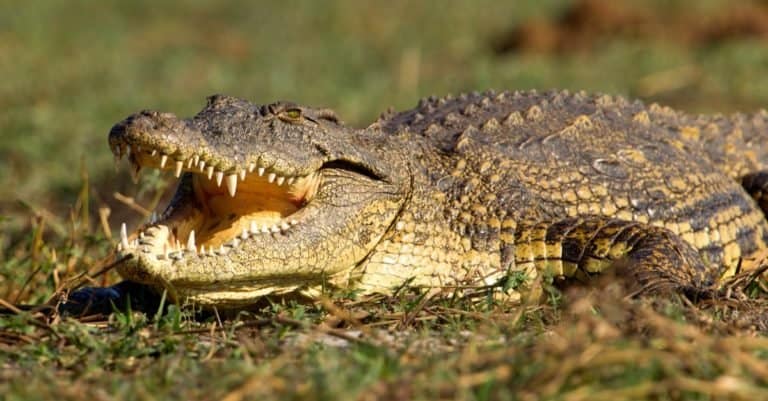
Nile crocodile Crocodylus niloticus Ecological analog to some dinosaur-era semiaquatic/shoreline predators and scavengers, and more generally to archosaur predatory roles: uses ambush tactics, has a powerful bite, and is an opportunistic feeder; differs by being a crocodilian rather than a dinosaur.
Komodo dragon Varanus komodoensis Rough analog for mid-sized terrestrial predators and scavengers: engages in active foraging, uses stealth and ambush tactics, and has an opportunistic diet; differs in being a squamate with very different posture and locomotor mechanics.
Common ostrich Struthio camelus Analogous to cursorial, long-legged dinosaur morphotypes (e.g., ornithomimosaurs): exhibits high-speed running, uses open habitats, and relies on visually oriented foraging; differs by being a modern bird with wings and feathers throughout.

Types of Dinosaurs

17

Explore 17 recognized types of dinosaurs

Tyrannosaurus Tyrannosaurus rex
Triceratops Triceratops horridus
Stegosaurus Stegosaurus stenops
Ankylosaurus Ankylosaurus magniventris
Diplodocus Diplodocus carnegii
Brachiosaurus Brachiosaurus altithorax
Allosaurus Allosaurus fragilis
Velociraptor Velociraptor mongoliensis
Spinosaurus Spinosaurus aegyptiacus
Iguanodon Iguanodon bernissartensis
Parasaurolophus Parasaurolophus walkeri
Maiasaura Maiasaura peeblesorum
Pachycephalosaurus Pachycephalosaurus wyomingensis
Microraptor Microraptor gui
Archaeopteryx Archaeopteryx lithographica
Chicken Gallus gallus domesticus
Common ostrich Struthio camelus

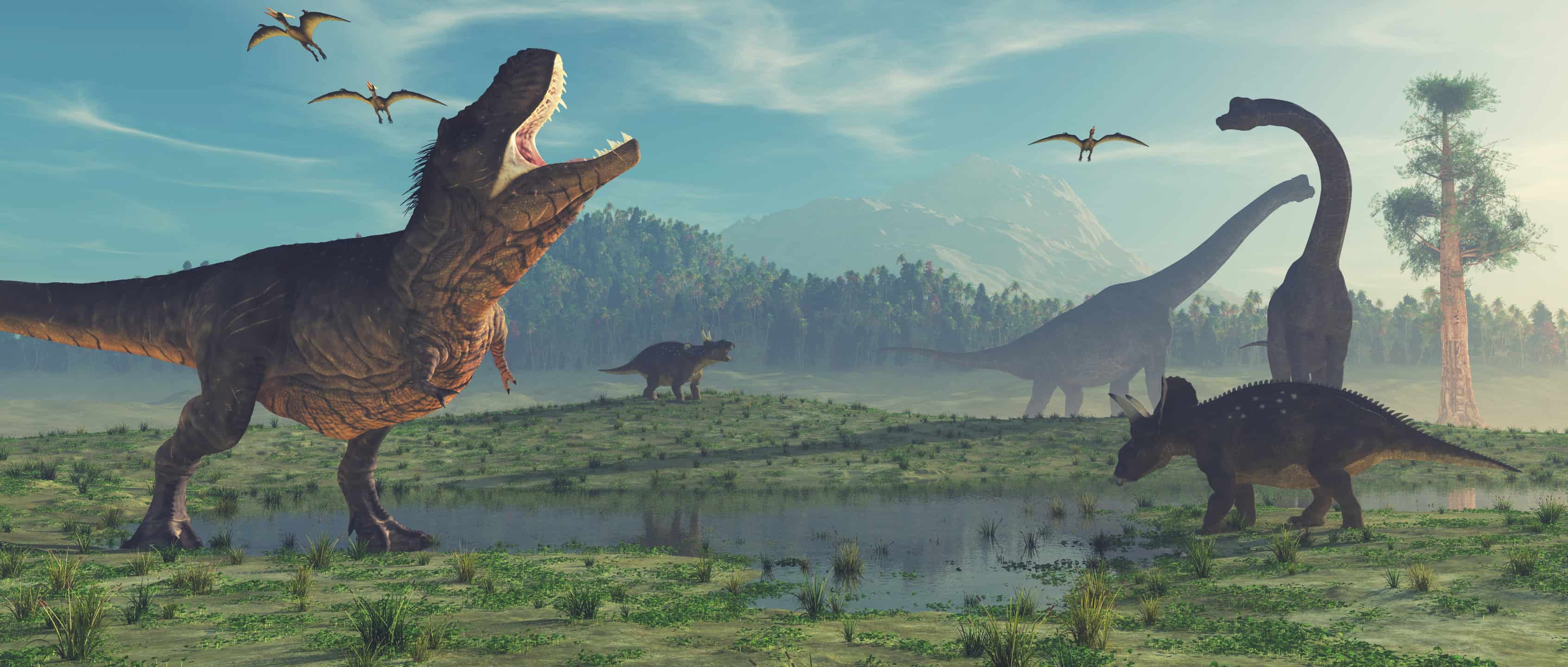
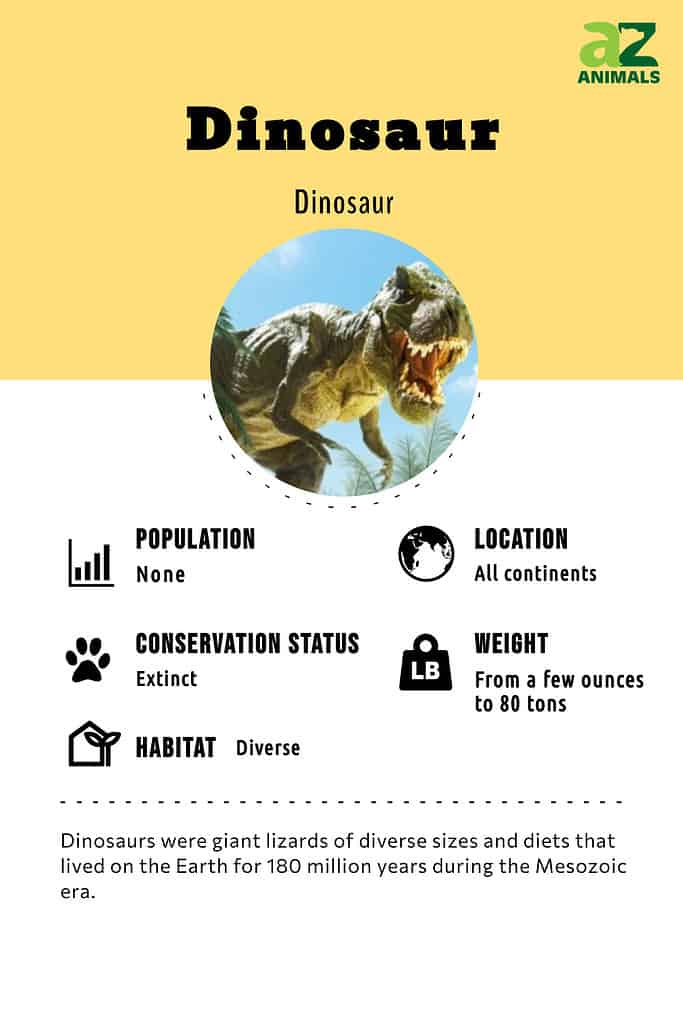
Dinosaurs lived throughout the Mesozoic era, starting 245 million years ago.
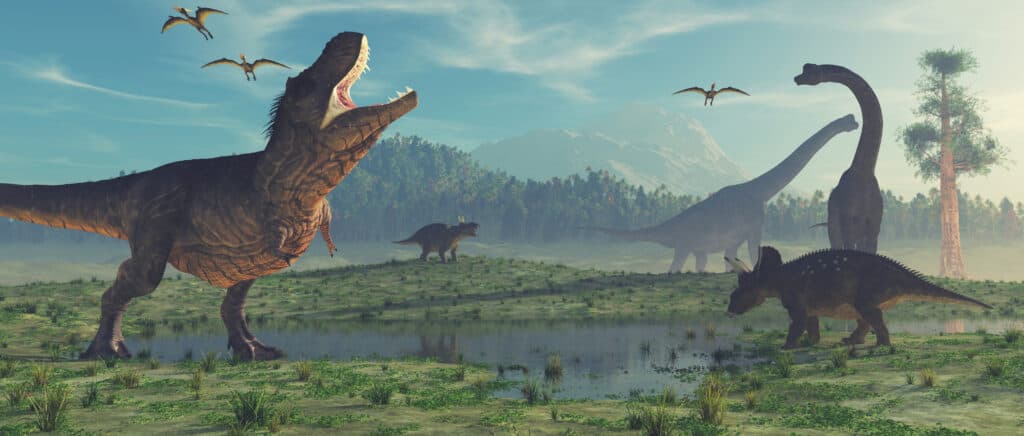
๐Ÿ‘ Image

Introduction

Dinosaurs are a large, extinct group of reptiles that lived during the Mesozoic era, starting roughly 245 million years ago. They lasted about 180 million years through the Triassic, Jurassic, and Cretaceous periods. The large variations among the dinosaurs allowed them to survive Earthโ€™s harsh environments when all the continents were still together. It is possible that they experienced continental drifting before they mysteriously disappeared 65-66 million years ago.

Description and Size
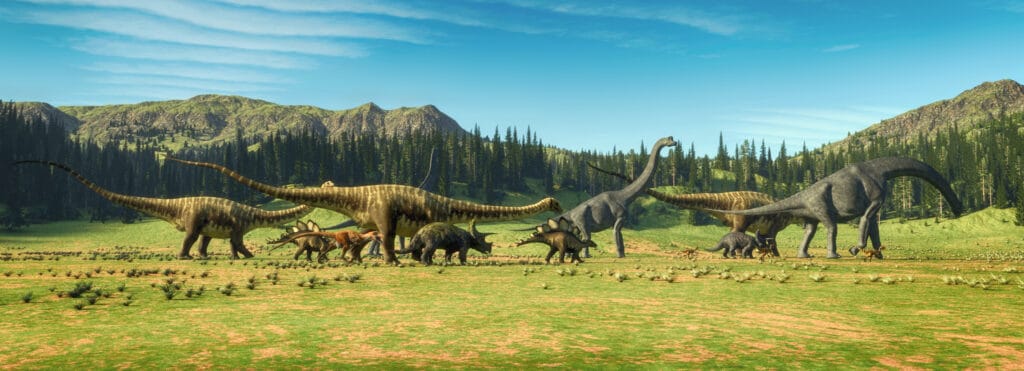
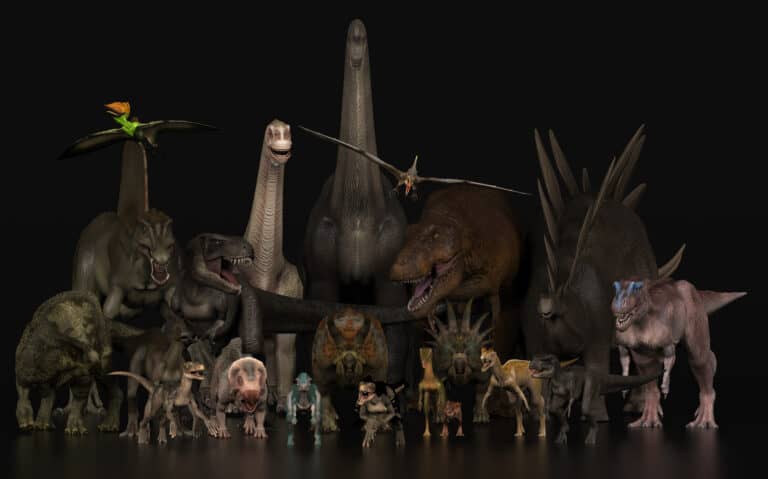
๐Ÿ‘ Variety of Dinosaurs

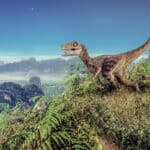
Dinosaurs were all vertebrates with textured skin, and they are grouped into avian dinosaurs and non-avian dinosaurs.

ยฉOrla/Shutterstock.com

These creatures ranged in size. The smallest, Oculudentavis, was just half an inch and weighed less than an ounce. Scientists are still debating whether it was a bird or a lizard. The largest dinosaur might have been the Argentinosaurus that was 98-115 feet in length and weighed 66-83 tons. Another contender is the titanosaur Patagotitan mayorum reaching 122 feet in length and weighed 70 tons.

This diverse group was all vertebrates with textured skin. Classification divides them into avian dinosaurs and non-avian dinosaurs. The avian variety are those that possess wings and fly, and all others are non-avian.

Dinosaurs ranged in size, appearance, and habits depending on the species. There have been over 700 valid species of dinosaur discovered so far.

Diet
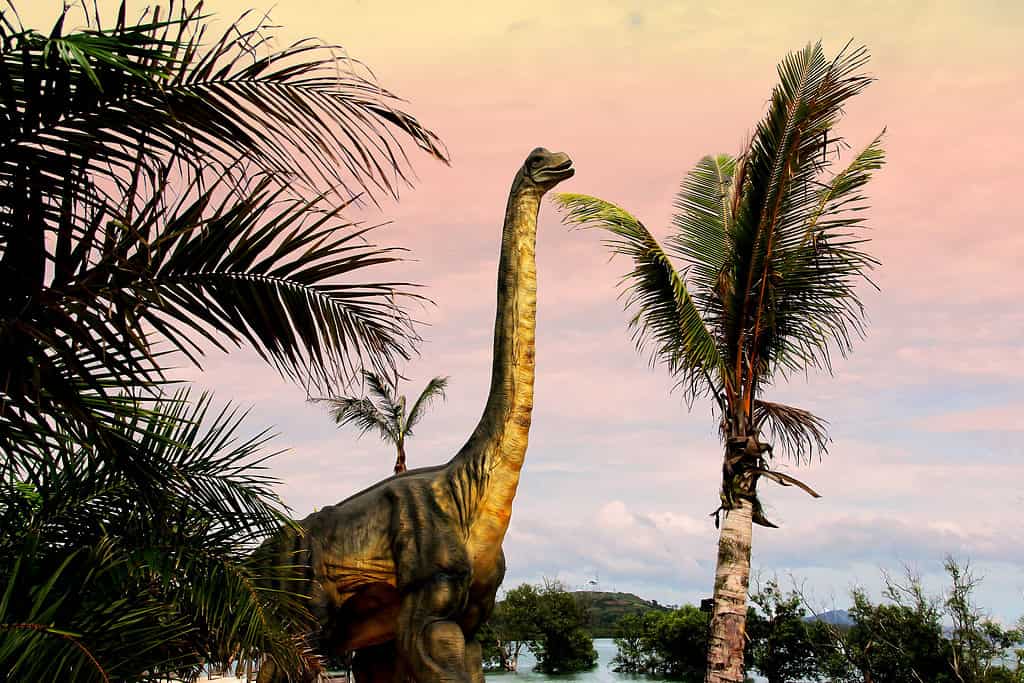
๐Ÿ‘ Sauropod

Sauropods, on of the best-known types of dinosaurs were herbivores characterized by long tails, long necks, and small heads.

ยฉthaloengsak/Shutterstock.com

Dinosaurs were classified as either carnivores, herbivores, or omnivores. Those such as the T-Rex were carnivores and likely preyed on other dinosaurs as a meal. Others like the Brachiosaurus was an herbivore that lived off vegetation.

Some ate both plants and meat in their diet because their digestive tract could digest both types of foods and absorb the nutrients. Herbivores likely ate twigs and seeds from plants to grind down on the material for better digestion due to their flat teeth.

Their diverse diet is species specific and scientist determine it based on teeth structures. Carnivores had large and defined canines, whereas herbivores have flat, squared-off teeth. Omnivores have a mixture of both, but the canines were less defined than carnivorous dinosaurs.

Habitat
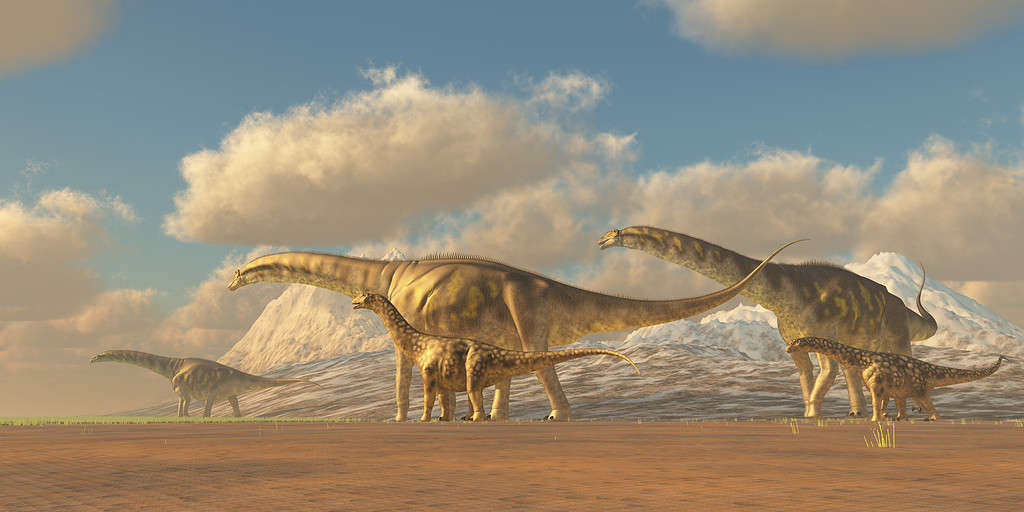
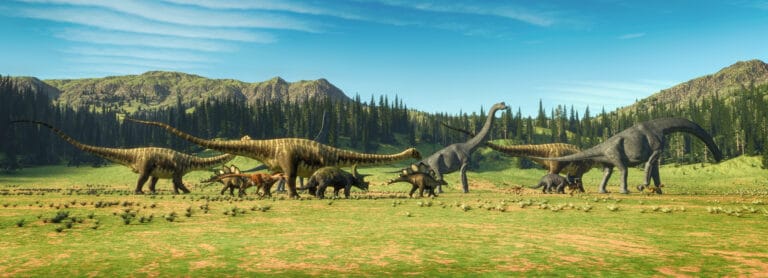
๐Ÿ‘ Argentinosaurus dinosaur

A herd of Argentinosaurus, possibly the largest of the dinosaurs, walks towards more fertile vegetation to eat and water to drink.

ยฉCatmando/Shutterstock.com

Dinosaurs inhabited all of the continents during the Triassic Period of the Mesozoic Era 230 million years ago. The continents were still together during this time. Their fossils have also been found throughout the world. This indicates they roamed the entire Earth; however, some species were more plentiful in certain areas than others.

All the continents were arranged into one supercontinent known as Pangea. It slowly broke apart after dinosaurs had been inhabiting it for 165 million years. The habitat ranged from dry desert lands, where the Troodon and Allosaurus dinosaurs lived, to the forests and richly vegetated areas where dinosaurs like th Lambeosaurus lived.

Others, such as the Plesiosaurs, lived in the ocean. There were both terrestrial and aquatic species that roamed the various forests, deserts, and oceans of the world.

Threats And Predators

A dinosaurโ€™s main threat was other dinosaurs, lack of food and resources, along with natural disasters. Some had a predatory nature and would hunt other dinosaurs for food, whereas some species would consume vegetation and rely on the surrounding environment to provide food from them. If too many carnivores were in one area, their food sources would quickly deplete faster than their prey could reproduce.

Discoveries and Fossils
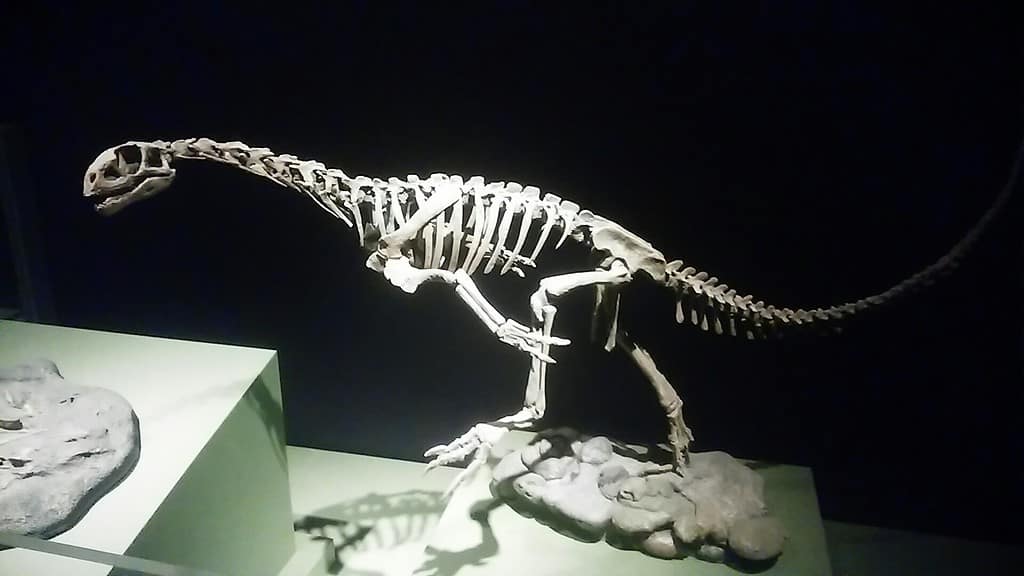
๐Ÿ‘ Chilesaurus diegosuarezi dinosaur skeleton

Chilesaurus diegosuarezi dinosaur skeleton.

ยฉใ‚ฑใƒฉใƒˆใƒ—ใ‚นใƒฆใ‚ฆใ‚ฟ, CC BY-SA 4.0 via Wikimedia Commons โ€“ Original / License

The first dinosaur fossil was discovered in England in 1676 by Robert Plot. It was called the Megalosaurus. The fossil was not given a name until scientists started studying it in the 1820s. It was named by William Buckland.

Over the years, paleontologists and scientists have been discovering plenty of well-preserved fossils that give us better insight into how these creatures lived and looked. So far, paleontologists have discovered over 700 different dinosaur species; however, there are believed to be many more awaiting discovery.

Extinction

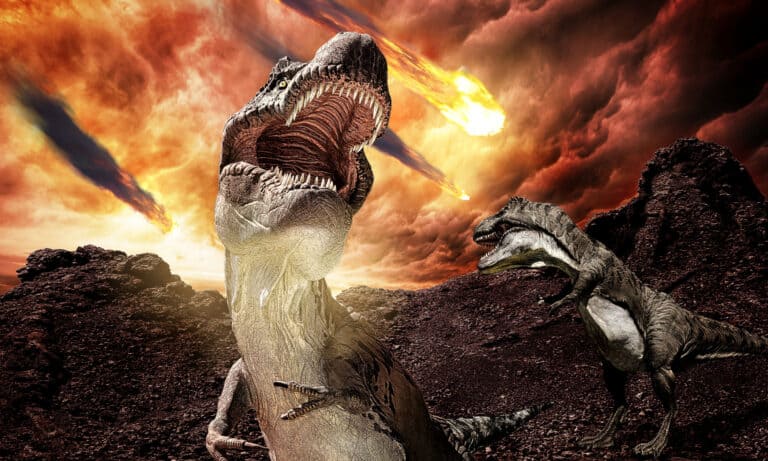
Dinosaurs went extinct 65 million years ago at the end of the Cretaceous Period after roaming the earth for 165 million years. The reason behind their extinction is still a mystery, but scientists have formed various scenarios that could be the reason for their extinction, such as an asteroid strike known as the Paleogene mass extinction. Other theories include weakened ecosystems, continental drift, carbon or sulfur dioxide poisoning, or perhaps extreme climate change.

The most agreed-upon theory is the asteroid impact that caused the catastrophic global impact. The asteroid could have affected the earthโ€™s climate as one of its long-term effects.
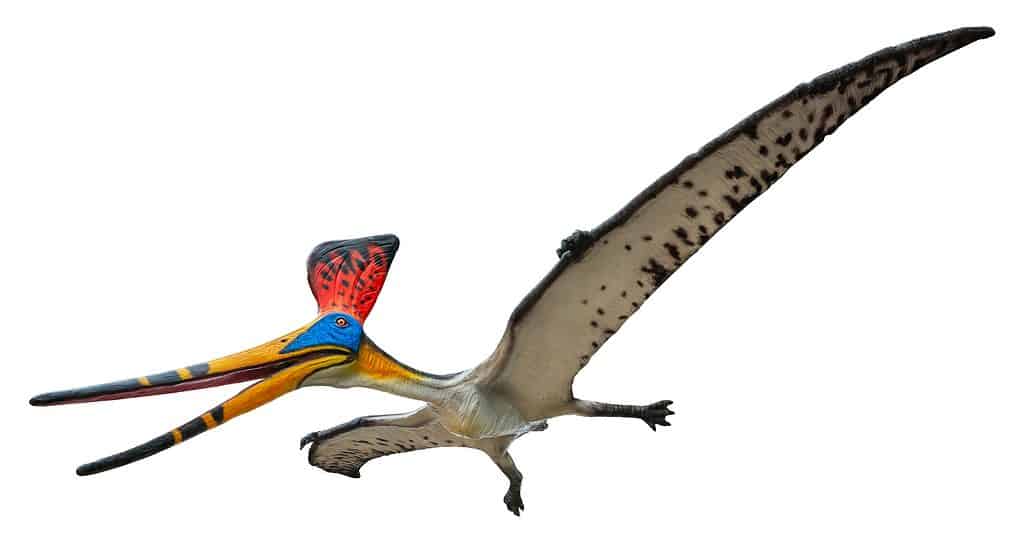
๐Ÿ‘ Pteranodon

An avian dinosaur, Pteranodon, was one of the largest flying dinosaurs. It lived in mid-America during the Late Cretaceous period.

ยฉYuRi Photolife/Shutterstock.com

Similar Animals

Surprisingly, there are still some animals that roam the earth today that are either closely related to dinosaurs or have a striking resemblance. The similarities are from the shared DNA and similar bone structure as discovered by scientists and researchers.

These are similar animals to the dinosaur:

  • Chickens- Both dinosaurs and chickens share similar DNA along with a similar bone structure.
  • Crocodiles- They come from the same ancestor as dinosaurs, which are reptiles.
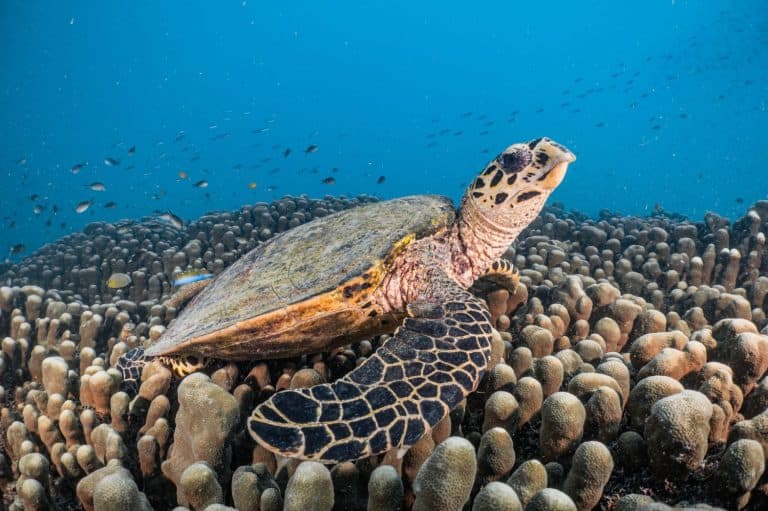
  • Turtles- Scientists believed turtles coexisted with dinosaurs.
  • Lizards- Both dinosaurs and lizards are reptiles with four limbs, lay eggs, and live on land.
  • Sharks- The megalodon was a prehistoric shark that likely lived with dinosaurs and is a descendant of modern sharks.
View all 446 animals that start with D

Sources

  1. Wikipedia / Accessed September 27, 2022
  2. Student share / Accessed September 27, 2022
  3. Science focus / Accessed September 27, 2022

About the Author

Sarah Psaradelis

Sarah is a writer at A-Z Animals primarily covering aquatic pets, rodents, arachnids, and reptiles. Sarah has over 3 years of experience in writing and researching various animal topics. She is currently working towards furthering her studies in the animal field. A resident of South Africa, Sarah enjoys writing alongside her pets and almost always has her rats perched on her shoulders.
Connect:

Thank you for reading! Have some feedback for us?

Contact the AZ Animals editorial team

Related Articles You May Find Interesting

Steve Irwinโ€™s Legacy: How One Zookeeper Changed Our Relationship with Wildlife Forever

Ancient Sponge Discovery Could Change the Story of Earthโ€™s First Animals


Dinosaurs FAQs (Frequently Asked Questions)

Dinosaurs were alive 230 million years ago during the late Triassic Period of the Mesozoic Era.

Dinosaurs ranged in size from as small as 17.5 inches to as large as 120 feet depending on the species of dinosaur. The smallest dinosaur was the Epidexipteryx hui and the largest was the Argentinosaurus.