
D
Species Profile

Donkey

Equus asinus

Sure-footed partner of people
Geza Farkas/Shutterstock.com

Donkey Distribution

Click a location to explore more animals from that region

Invasive Species
Origin Location

This map shows the native origin of the Donkey. As a domesticated species, they are now found worldwide.

Loading map...

Size Comparison

Human 5'8"
Donkey 3 ft 11 in

Donkey stands at 69% of average human height.

At a Glance

Domesticated
Also Known As donkey, ass, burro, jenny, jack, jennet, neddy
Diet Herbivore
Activity Diurnal+
Lifespan 15 years
Weight 480 lbs
Status Not Evaluated
Did You Know?

Chromosomes: donkey 2n=62; horse 2n=64-hybrids (mules/hinnies) are usually sterile due to mismatched pairing.

Scientific Classification

The domestic donkey is a domesticated equid used worldwide as a working and companion animal; it descends primarily from African wild asses and is closely related to horses and zebras.

Kingdom
Animalia
Phylum
Chordata
Class
Mammalia
Order
Perissodactyla
Family
Equidae
Genus
Equus
Species
Equus asinus

Distinguishing Features

  • Compact equid with long ears and a braying vocalization
  • Upright mane (not a forelock like many horses)
  • Tail tufted at the end (unlike horses’ full-haired tails)
  • Often has a dark dorsal stripe and sometimes shoulder stripe (cross)
  • Hardy, efficient foragers adapted to dry environments

Physical Measurements

Males and females differ in size

Height
3 ft 11 in (2 ft 11 in – 5 ft 3 in)
3 ft 11 in (2 ft 11 in – 4 ft 7 in)
Length
4 ft 3 in (3 ft 3 in – 5 ft 3 in)
6 ft 1 in (5 ft 3 in – 7 ft 1 in)
Weight
551 lbs (176 lbs – 1,058 lbs)
441 lbs (331 lbs – 661 lbs)
Tail Length
1 ft 6 in (12 in – 1 ft 10 in)
1 ft 6 in (1 ft 2 in – 1 ft 10 in)
Top Speed
15 mph
Donkey top speed 24 km/h

Appearance

Primary Colors
Secondary Colors
Skin Type Domestic donkey (Equus asinus) has a mammal's skin with a short, close coat that gets thicker in cold weather. Hide is tough. Mane is short and upright. Tail has short dock hair with a tuft.
Distinctive Features
  • Size varies a lot by breed. Adult height is usually about 0.9–1.5 m at the withers (miniature to large); weight about 80–480 kg depending on breed and body condition.
  • Long ears (proportionally longer than in horses; a key thermoregulatory and auditory trait inherited from arid-adapted wild ass ancestors).
  • Prominent dorsal stripe and frequent shoulder cross; occasional zebra-like leg barring-visual traits shared with wild asses and reflecting close relationship within Equus (asses vs. horses; zebras show stronger striping).
  • Tail ends in a distinct tuft; unlike horses, much of the tail length is not covered in long hair.
  • Short, upright mane; generally lacks the long, flowing mane common in many horse breeds.
  • Hooves are typically narrower and more upright with very hard horn; donkeys are notably sure-footed on rough/rocky terrain, reflecting adaptation to dry, rugged landscapes.
  • Head often shows lighter 'mealy' muzzle/eye rings; throat/underside may be paler than flanks.
  • Donkeys make a loud two-part bray (not a horse neigh), are cautious (often called stubborn), have good memory for places, high endurance, and serve as pack, draft, and riding animals in arid and mountain areas.
  • Typical captive/domestic lifespan is ~25-30 years, with reports of individuals reaching ~40+ years under good care. (Source: The Donkey Sanctuary-donkey lifespan; commonly cited husbandry references)

Sexual Dimorphism

Sexual dimorphism is present but generally subtle in domestic donkeys; differences are more pronounced with intact males and depend on breed, nutrition, and management.

  • Males (jacks) average slightly larger/heavier in many populations; intact males may develop a thicker neck/crest and more robust head/forequarters.
  • Behavioral dimorphism: intact males more likely to show territorial/aggressive displays, vocalization, and marking behaviors (especially when females are present).
  • Females (jennies) typically slightly smaller on average; mammary development/teat enlargement is evident during lactation.
  • Behavioral tendency toward strong maternal bonding and protective behavior around foals (management-dependent).

Did You Know?

Chromosomes: donkey 2n=62; horse 2n=64-hybrids (mules/hinnies) are usually sterile due to mismatched pairing.

Gestation is long: ~360-375 days (about 12 months), typically producing a single foal.

Size varies widely by breed: ~90-160 cm at the withers; body mass commonly ~80-450 kg (miniature to large draft types).

Longevity: commonly ~25-30 years; individuals can reach 40+ years with good care (reported in veterinary husbandry records).

Domestic donkeys descend primarily from African wild asses (Equus africanus); genetic studies show at least two major maternal lineages consistent with multiple domestication events in NE Africa (e.g., Beja-Pereira et al., 2004; Rossel et al., 2008).

As hindgut fermenters (like horses and zebras), donkeys can maintain condition on relatively fibrous, low-quality forage compared with many livestock species.

The classic coat mark-the "dorsal stripe" (often with a shoulder cross) is common and is shared with some wild-ass relatives, reflecting ancestral patterning in Equus.

Unique Adaptations

  • Arid-land physiology: compared with horses, donkeys are generally more conservative with water and can tolerate dehydration better, reflecting ancestry in African drylands (documented in comparative equid physiology literature).
  • Long pinnae (ears): increase hearing sensitivity and aid heat dissipation by providing a large, vascular surface area for thermoregulation.
  • Tough, upright hooves and careful foot placement: contribute to notable sure-footedness on rocky or uneven terrain-key for pack and trail work.
  • Efficient fiber use: a large cecum/colon supports hindgut fermentation, extracting energy from coarse grasses and browse where some grazers lose condition.
  • Seasonally flexible coat: many donkeys develop a thicker winter coat; shedding is strongly influenced by photoperiod and nutrition.
  • Disease/parasite resilience varies by region and management, but many local landraces are adapted to endemic heat, sparse forage, and long walking distances.

Interesting Behaviors

  • Cautious "stop-and-assess" responses: donkeys often pause and evaluate novel footing or threats, a strategy linked to survival in rocky/arid habitats (often misread as "stubbornness").
  • Powerful vocalizations: the donkey bray ("hee-haw") combines inhaled and exhaled components and is used for long-distance contact, arousal, and social signaling.
  • Strong social bonds: domestic donkeys form stable pair bonds and friendship groups; mutual grooming (allo-grooming) is common among familiar companions.
  • Dust bathing and rolling: frequent in dry ground to remove ectoparasites and condition the coat, especially in warm weather.
  • Resource/territory defense: individuals may guard favored feeding or resting areas and can be assertive toward unfamiliar canids-one reason they're sometimes used as livestock guardians.
  • Crepuscular flexibility: activity patterns can shift with heat, workload, and human schedules; in hot climates they often rest more during midday.
  • Feral-style vigilance: in semi-free ranging settings, groups may show sentinel-like scanning behavior, especially in open landscapes.

Cultural Significance

Domestic donkey, Equus asinus, have helped people since the 4th millennium BCE in Northeast Africa as pack animals, carrying water, grain, and trade goods. They are symbols of rural work, appear in religious stories, and still haul loads, give milk, and serve as companions and therapy animals.

Myths & Legends

Balaam's donkey (Hebrew Bible, Numbers 22): a donkey sees an angel blocking the road and speaks to rebuke the prophet, a story often told about perception, humility, and moral restraint.

King Midas' donkey ears (Greek mythology): after judging a musical contest, Midas is cursed with donkey ears-an enduring tale about taste, pride, and public shame.

Aesop's fables of "the ass" (ancient Greek tradition): stories such as "The Ass in the Lion's Skin" and "The Ass and the Lapdog" use donkeys to teach lessons about identity, envy, and self-knowledge.

Apuleius' "The Golden Ass" (Roman-era Latin novel): a man transformed into a donkey experiences hardship and revelation before restoration-one of antiquity's most famous donkey-centered narratives.

"Donkeyskin" (fairy tale tradition popularized by Charles Perrault): a magical donkey that produces gold becomes central to a princess's escape and disguise.

In parts of Europe and the Middle East, the back stripe and shoulder cross on donkeys are seen as a holy sign, linked in local Christian stories to the Nativity donkey and Holy Week parades.

Conservation Status

NE Not Evaluated

Has not yet been evaluated against the criteria.

Population Stable

Life Cycle

Birth 1 foal
Lifespan 15 years

Lifespan

In the Wild 5–25 years
In Captivity 25–40 years

Reproduction

Mating System Polygyny
Social Structure Managed Domestic
Breeding Pattern Transient
Fertilization Internal Fertilization
Birth Type Internal_fertilization

Domestic donkey (Equus asinus) reproduce by internal fertilization; males often breed with many females (polygyny), guard and defend them. Females cycle seasonally (about 21–28 days, estrus 5–9 days), gestation ~12 months, usually one foal.

Behavior & Ecology

Social Herd Group: 6
Activity Diurnal, Crepuscular, Cathemeral
Diet Herbivore Coarse, high-fiber grasses and browse (low-energy, fibrous forage).

Temperament

Generally cautious and risk-assessing (often 'freeze-and-assess' rather than immediate flight typical of horses), especially in novel situations; this is widely described in donkey handling and welfare literature (Svendsen, 1997/2009; The Donkey Sanctuary).
Socially affiliative with preferred partners; common behaviors include mutual grooming (allogrooming), close following, and synchronized resting/foraging in stable groups.
Can be strongly protective: jennies may defend foals; some individuals show interspecific aggression toward perceived predators (reported in guardian-donkey use against canids), though reliability varies by individual and management.
Adult males may show territorial or mate-guarding behaviors (biting, neck-grabbing, chasing) during breeding or when mixed with cycling females; castration typically reduces but does not always eliminate these behaviors.
High habituation to routine and place; stress increases with isolation, abrupt regrouping, pain, or resource competition-important across working-equid hubs (welfare assessments commonly note depression-like withdrawal with chronic stress/pain).

Communication

Bray Two-phase 'hee-haw'): long-distance contact call; used for separation, reunion, arousal, and advertising. Donkey brays are acoustically distinct from horse neighs and carry over long distances (described in Svendsen, 1997/2009; reviewed in equid communication literature including Moehlman, 2002
Snort/blow: short explosive exhalations associated with alerting/arousal and investigation of stimuli.
Squeal: high-intensity call associated with aggression, pain, sexual arousal, or conflict E.g., during introductions or competition
Grunt/growl-like low vocalizations: often during close-range social interactions, mild irritation, or handling; described in practical ethograms for donkeys Svendsen, 1997/2009
Olfactory signaling: sniffing/nares contact, investigation of urine/feces, and flehmen response to reproductive/novel odors; dunging/latrine use can occur in some settings More common in some feral equids), supporting spatial/individual information transfer (Moehlman, 2002
Visual signaling: highly expressive ear positions (forward/sideways/pinned), head/neck carriage, tail posture, and body orientation used to regulate distance, indicate attention, or signal threat/submission.
Tactile communication: allogrooming, mutual rubbing, and nose-to-body contact for bonding and reassurance; also biting/neck-grabbing in aggression or sexual contexts.
Spatial/behavioral cues: following/leading, blocking movement, and approach-avoidance dynamics used to manage hierarchy and access to resources in groups, especially around feed/water in domestic hubs.

Habitat

Biomes:
Desert Hot Desert Cold Mediterranean Temperate Grassland Savanna Tropical Dry Forest Temperate Forest Alpine +2
Terrain:
Plains Hilly Plateau Valley Mountainous Coastal Island Rocky Sandy +3
Elevation: -3386 in – 14763 ft 9 in

Ecological Role

Primary consumer (grazer/browser) and vegetation modifier in human-managed and feral settings.

Converts fibrous plant biomass into manure, contributing to nutrient cycling and soil organic matter inputs. Vegetation management via grazing/browsing pressure that can suppress some dominant grasses/shrubs and maintain open habitats in some landscapes. Seed dispersal primarily through endozoochory (via dung) and epizoochory (on hair/hooves) for some plant species. Creates trails and disturbed microsites that can influence plant recruitment and habitat structure (context-dependent, can be beneficial or harmful).

Diet Details

Other Foods:
Pasture grasses coarse grasses Grass hay Forbs Shrub leaves and twigs straw

Human Interaction

Domestication Status

Domesticated

Domestic donkey (Equus asinus) comes mainly from African wild asses, especially Nubian and Somali types. Archaeology shows people began keeping and using donkeys in northeast Africa about 5,000–6,000 years ago. DNA studies show several maternal lines, so donkeys were domesticated from more than one wild-ass group.

Danger Level

Moderate
  • Kicks and strikes (hind-leg kicks can cause severe blunt trauma and fractures; highest risk during restraint, farriery, or when startled)
  • Bites (less common than kicks, but can cause lacerations and crush injury)
  • Crush/handling injuries (being pinned against fences/walls; rope burns during leading/tying)
  • Zoonotic/infectious risks are generally low but include exposure to dermatophytosis (ringworm) and other opportunistic infections; risk depends on husbandry and biosecurity

As a Pet

Suitable as Pet

Legality: Domestic Donkey (Equus asinus) is legal to keep as livestock in most countries and US states but is often regulated by local zoning, animal welfare and equine health rules (e.g., health certificates/Coggins). Owners must check local rules and acreage/shelter needs.

Care Level: Moderate

Purchase Cost: $100 - $2,500
Lifetime Cost: $20,000 - $60,000

Economic Value

Uses:
Draft/transport labor Smallholder agriculture support Breeding (mule production) Companion/therapy/education Ecosystem services (conservation grazing) Animal products
Products:
  • pack and cart traction services
  • mules (hybrid offspring via breeding programs)
  • milk (niche dairy; sometimes used for cosmetics/medical nutrition niches)
  • meat (regional markets)
  • hides/skins (including supply chains for donkey-hide gelatin)
  • manure for fertilizer/biogas feedstock (smallholder use)

Relationships

Predators 6

Gray wolf Canis lupus
Coyote Canis latrans
Mountain lion Puma concolor
Lion Panthera leo
Spotted hyena Crocuta crocuta
Dingo Canis lupus dingo

Related Species 10

African wild ass Equus africanus Shared Genus
Asiatic wild ass Equus hemionus Shared Genus
Kiang Equus kiang Shared Genus
Domestic horse Equus ferus caballus Shared Genus
Przewalski's horse Equus ferus przewalskii Shared Genus
Plains zebra Equus quagga Shared Genus
Grevy's zebra Equus grevyi Shared Genus
Mountain zebra Equus zebra Shared Genus
Bactrian camel Camelus bactrianus Shared Kingdom
Rhinoceros Rhinoceros unicornis Shared Order

Ecological Equivalents 5

Animals that fill a similar ecological role in their ecosystem

Asiatic wild ass Equus hemionus Closest wild niche analogue: an arid- and semi-arid-adapted equid that forages on sparse grasses and forbs and travels long distances between water sources; exhibits a similar digestive strategy (hindgut fermentation) and the social spacing/territoriality typical of wild asses.
African wild ass Equus africanus Primary ancestral niche analogue: a desert-to-semi-desert equid. The domestic donkey retains many ass traits linked to this ecology, such as efficient water use, relatively strong heat tolerance compared with many horses, vigilance/anti-predator braying, and group cohesion.
Domestic horse Equus ferus caballus Overlap in human-managed roles (pack, traction, companion) and in the grazing niche. However, donkeys typically tolerate poorer forage and are more browser-prone than many horse types, which affects pasture use and feeding management.
Dromedary camel Camelus dromedarius Convergent role and habitat use in arid regions as a working animal. Both are commonly used for transport and pack work where water and forage are limited, although camelids are foregut fermenters and are substantially larger.
Llama Lama glama Similar human-utilized niche as a pack/working animal in rugged terrain. Both are sure-footed, social, and can be managed extensively, though each is adapted to different climatic extremes: the llama to the high-altitude Andes, and the donkey to a broader range from arid to temperate zones.

Donkey Breeds

11

Explore 11 recognized breeds of donkey

Companion / Light Driving (1)

Miniature Mediterranean Donkey Origin: Mediterranean region (widely developed in the United States as a registry type)

Working (4)

Catalan Donkey Origin: Catalonia (Spain)
Andalusian Donkey Origin: Andalusia (Spain)
Ragusano Donkey Origin: Sicily (Italy)
Dezhou Donkey Origin: Shandong (China)

Working (draft/breeding For Mules) (1)

American Mammoth Jackstock (Mammoth Donkey) Origin: United States

Working (mule Production Historically) (1)

Martina Franca Donkey Origin: Apulia (Italy)

Working (mule Production/traction Historically) (1)

Poitou donkey Origin: France

Working (pack/transport) (1)

Nubian Donkey Origin: Northeast Africa (Egypt/Sudan region)

Working / Conservation (1)

Amiata Donkey Origin: Tuscany (Italy)

Working / General Purpose (1)

Standard Donkey Origin: Worldwide (type widely distributed)

While donkeys are thought to be stubborn, they are actually highly intelligent creatures that can form tight bonds with humans.

Donkeys are members of the horse family, although donkeys and horses represent two very different species. After domestication in Egypt and North Africa, where they were used for meat and milk, they evolved to become working beasts used to carry people or packages. They are slower than horses but are more surefooted.

Historians believe that the domestication of donkeys increased the mobility of pastor cultures in the ancient world. Equipped with a social and calming nature, donkeys get along well with other domesticated mammals and can also be excellent companions for people with physical or mental disabilities.

Donkey Facts
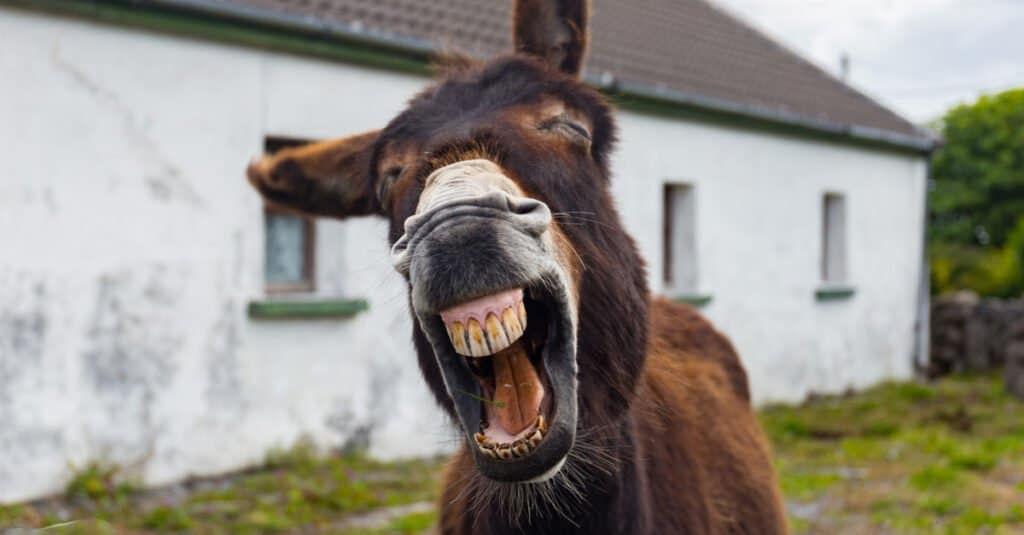
👁 Donkey Teeth - Donkey with Mouth Open

Donkeys are intelligent creatures with exceptional memories.

©ElDuderino/Shutterstock.com

  • Donkeys are stronger than horses of the same size.
  • In open empty spaces, like a desert, the braying of donkeys can be heard from around 60 miles away.
  • Contrary to popular belief, donkeys are intelligent creatures with exceptional memories. They can even recall people and other animals that they haven’t seen in years.
  • Donkeys are sociable and can form strong bonds with other donkeys within a herd and even become best of friends. Donkeys help other donkeys if they become disabled like blind or lame.
  • Donkeys are often referred to as burros. In Spanish, the word burrito means ‘little donkey’, which also refers to Mexican food that resembles the packs that donkeys carry.
  • Donkeys graze throughout the day and like a diet low in protein and high in fiber.
  • Female donkeys are called jennys, males are called jacks, castrated males are called geldings, and a mare ready to breed is called a broodmare.
  • Donkeys were commonly referred to as asses until about 1785 when the word slowly began falling out of use because of its pejorative context.
  • Startled donkeys will freeze or move a few steps away when they are scared to assess their situation instead of running away, a characteristic that gives them their undeserved reputation for being stubborn.

You can read more incredible facts about donkeys.

Scientific Name
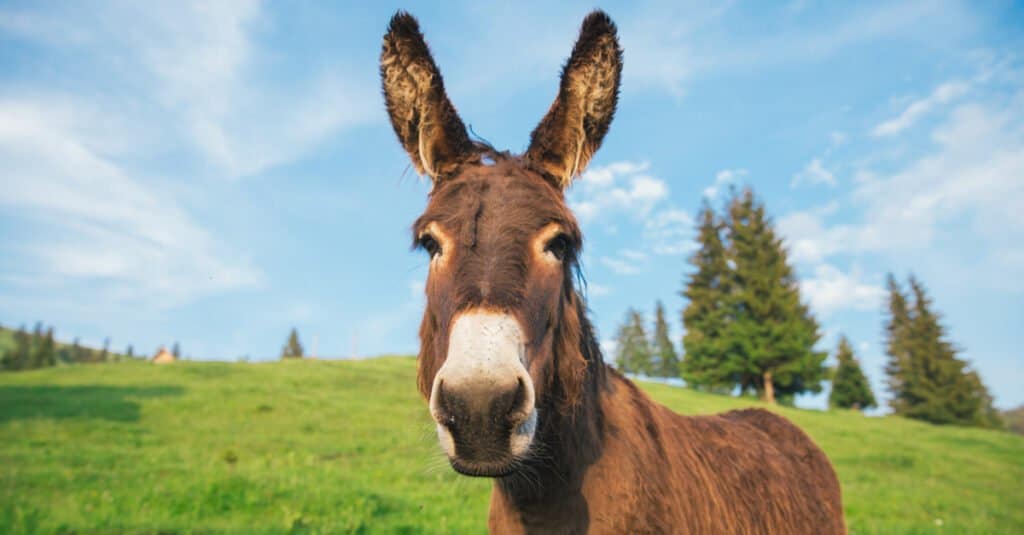
👁 12 Animals of Christmas From Around the World - donkey

The classification of these animals is within the family

Equidae

and the genus

Equus

©Angyalosi Beata/Shutterstock.com

The classification of these animals is within the family Equidae and the genus Equus – meaning horse in Latin. There are two main types of wild donkeys: Asian donkeys, whose range stretches from the Red Sea to Northern India and Tibet, resulting in several subspecies, and the African branch of the species. Among the Asian subspecies in the classification are Equus hemionus hemippus (Syrian Wild ass) and Equus hemionus khur (Indian wild ass).

All modern domesticated donkeys have the scientific name Equus africanus asinus and have descended from African wild asses located primarily in Northern Africa between the Mediterranean Sea and the Sahara Desert.

The Evolution and Origins

The African wild ass which is also known as the Equus africanus is the wild ancestor of the donkey we known today. Because some of the eaiest donkeys were found in ancient Egypt, archaelogists have concluded that these donkeys were domesticated from the Nubian Wild Ass or the E. africanus africanus by the villagers who lived in the Egyptian Nile Valley.

Donkeys evolved and began to become domesticated about 5,000 years ago. Donkeys and Horses also share a common ancestor that dates about to close to 4 million years ago.

Appearance and Behavior
👁 Donkey in grassland

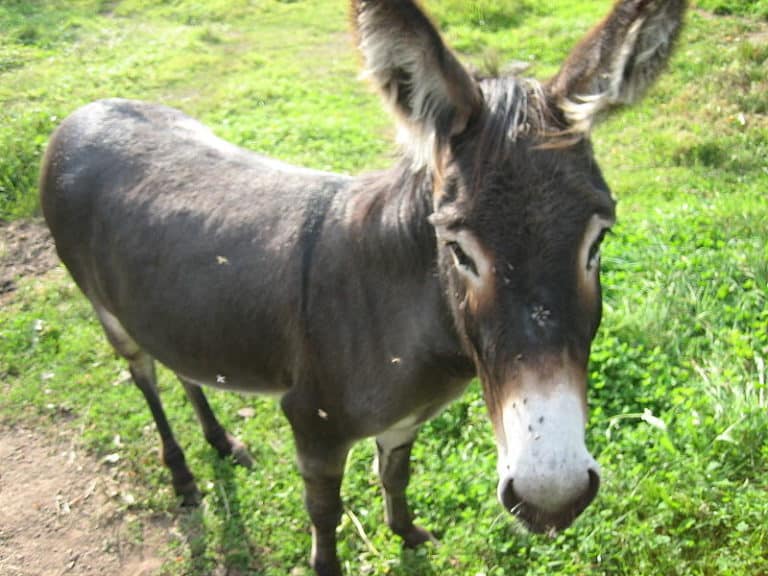
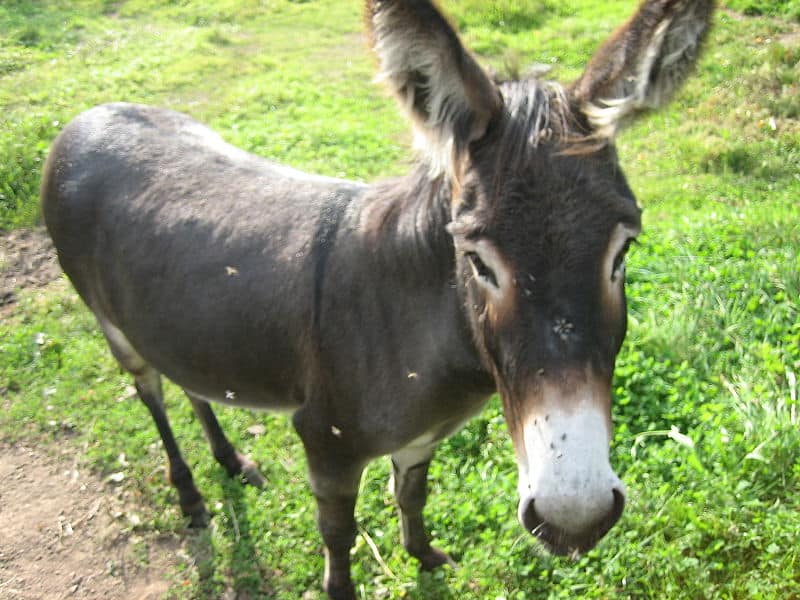
There are many different species of wild donkey that comes in different sizes and colors

©Antoine Moreau / Free Art License – Original

These animals come in many different sizes and colors. Wild species grow to about 49 inches from hoof to shoulder and weigh about 551 lbs. Domesticated donkeys come in different sizes, depending on how they are bred.

They are typically 36 inches to 48 inches from hoof to shoulder, weighing from 400 to 500 lbs. The Sicilian donkey is the smallest, reaching only 24 inches while the ass of Mallorca is about 62 inches. The Mammoth Stock, the largest domestic breed, is 56 inches from hoof to shoulder and weighs about 950 lbs.

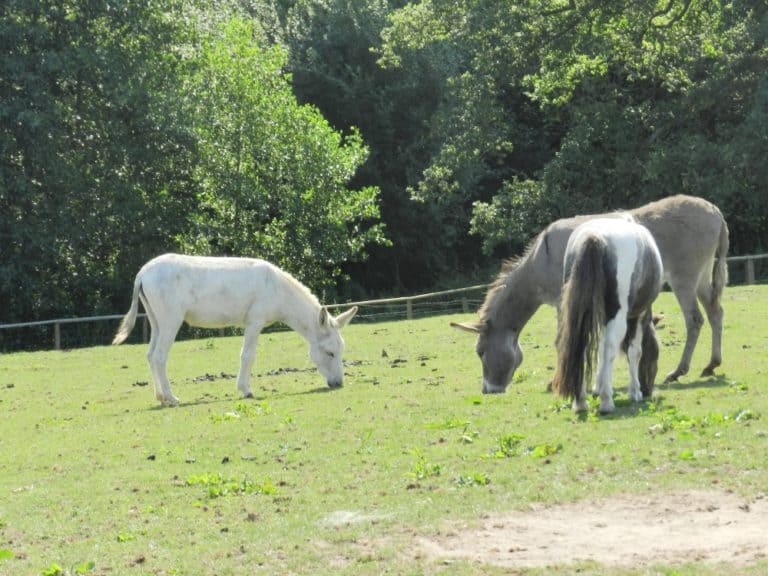
Color ranges for these animals range from white and gray to black. Grey is the most common color, followed by brown, black, and roan (white with a mixture of other pigmented hairs). Most usually have a dark stripe of fur down their backs from mane to tail and across their shoulders.

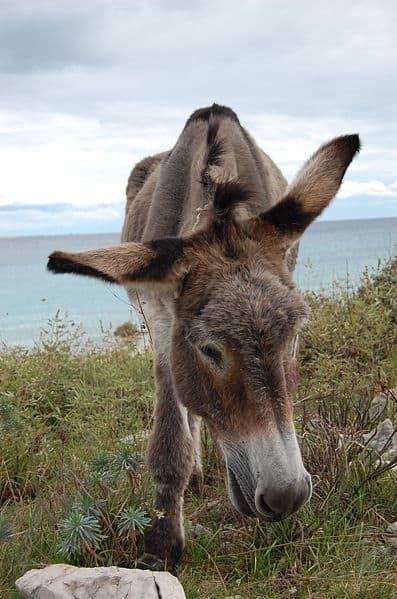
They have short, upright manes with a tail that is more similar to that of a cow than that of a horse. They have very long ears that are dark at the tip and the base. Their large ears also help cool donkeys by using them in a fan-like manner.

These animals enjoy the company of other donkeys and often bond with other individuals. When their kind is not present, they will often bond with horses, mules, and other small stock. Once a human has earned their confidence, they are often willing and companionable partners. Because of their ability to form strong bonds, separating a bonded donkey pair can cause stress leading to hyperlipidemia, a blood condition that can result in a heart attack or stroke.

Although they have a reputation for stubbornness, this trait is a self-preservation characteristic, which is why it is difficult to force a donkey into doing something that it perceives as dangerous. Their body language is also less expressive than those of horses, so they can be hard to read. A slight widening of their eyes can be misread as a curiosity when it means stress or fear.

A lack of movement when viewing an object that they fear is part of their reduced flight response. They will often defend themselves by biting, striking with the front hooves, or kicking with the hind legs.

These animals are known to be intelligent as well as cautious, friendly, playful, and eager to learn, which usually begins from the moment they’re born and continues throughout their lifetimes.

Domesticated donkeys are more territorial than horses, which is why they are sometimes used to guard herds of sheep and goats against predators, often stomping on anything that they feel is a threat. In many parts of the world where horses cannot easily survive or where there is extreme poverty, they are the primary beasts of burden and sources of transportation.

They rest during the hottest part of the day and are more active in the morning and evening when they travel with the herd and eat.

Habitat
👁 African Donkey, Equus asinus, picture taken in Tanzania

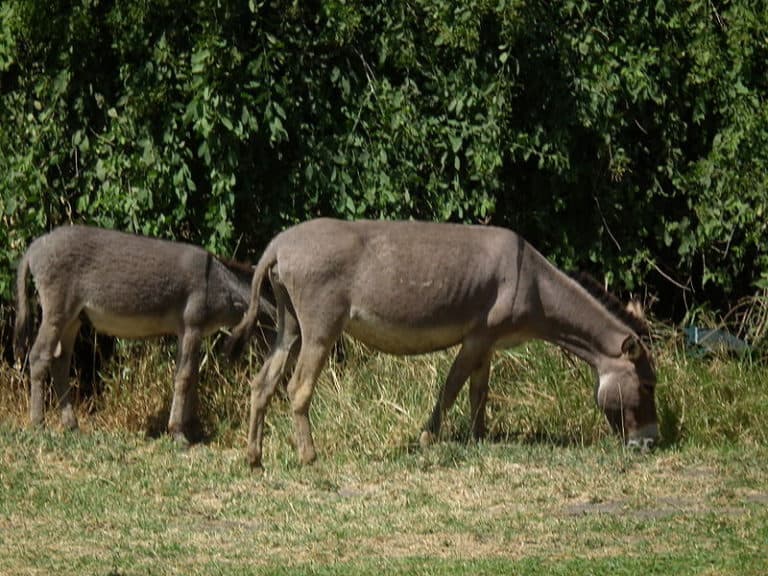
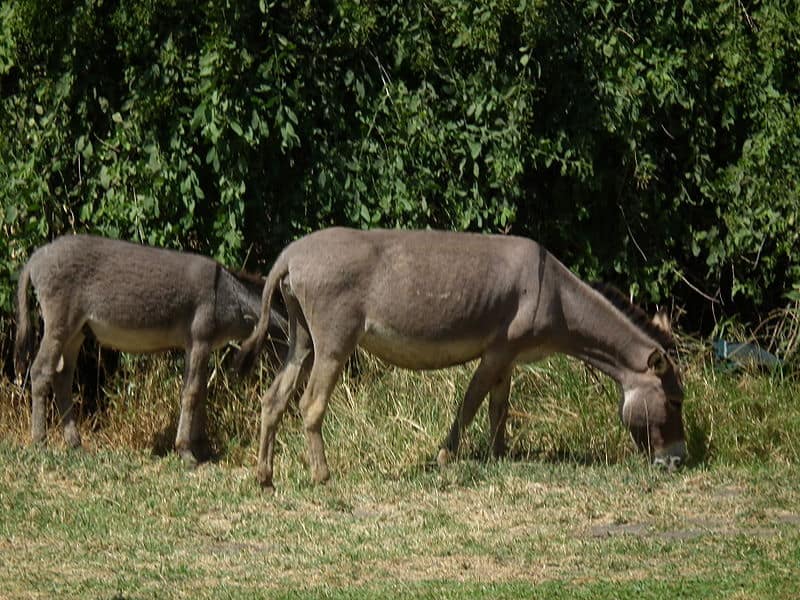
African Donkey, Equus asinus, picture taken in Tanzania

©Nevit Dilmen, CC BY-SA 3.0, via Wikimedia Commons – Original / License

Domesticated donkeys are found all over the world in many different cultures, but if given their preference, they are best adapted for warm, dry areas – particularly marginal desert areas. This adaptation has provided them with hardy immune and digestive systems. Wild donkeys are usually solitary and do not form harems, with each adult establishing a home range. One jack may dominate breeding over a wide area.

If a domesticated donkey becomes feral and can choose its home, it will look for a warm place to live. Wild donkeys live in deserts and savannahs in northern Africa, the Arabian Peninsula, and the Middle East. These animals also live in Turkey, China, and in northern areas of Pakistan, India, Nepal, and Bhutan. Their loud calls, also known as bray, and be heard over three kilometers and may act as a way for donkeys to keep in touch with each other in the wild.

Diet
👁 What Do Donkeys Eat Infographic
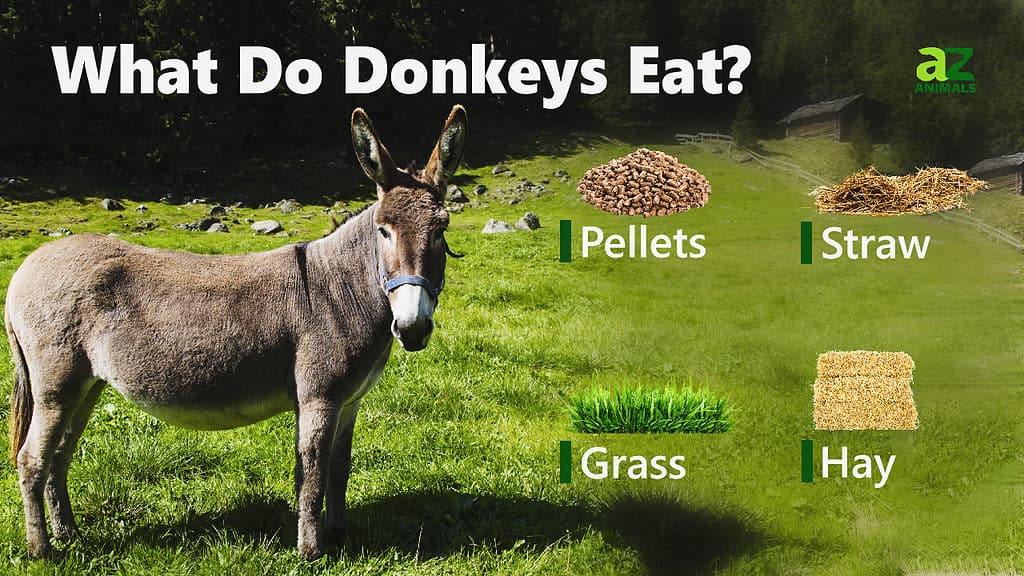
What Do Donkeys Eat Infographic

These animals are herbivores, meaning they eat no meat. They enjoy a variety of foods, including hay, oats, grains, and grasses, but they will also eat shrubs and desert plants in certain areas. Their large lips allow them to grab plants and pull them into their mouths where they rip them apart with large front teeth and grind them before swallowing.

These voracious eaters can consume as much as 6,000 lbs of food each year. Their immense appetites can become a problem if they become feral and take over the food supply from local creatures.

Predators and Threats
👁 Animals that sweat – donkeys

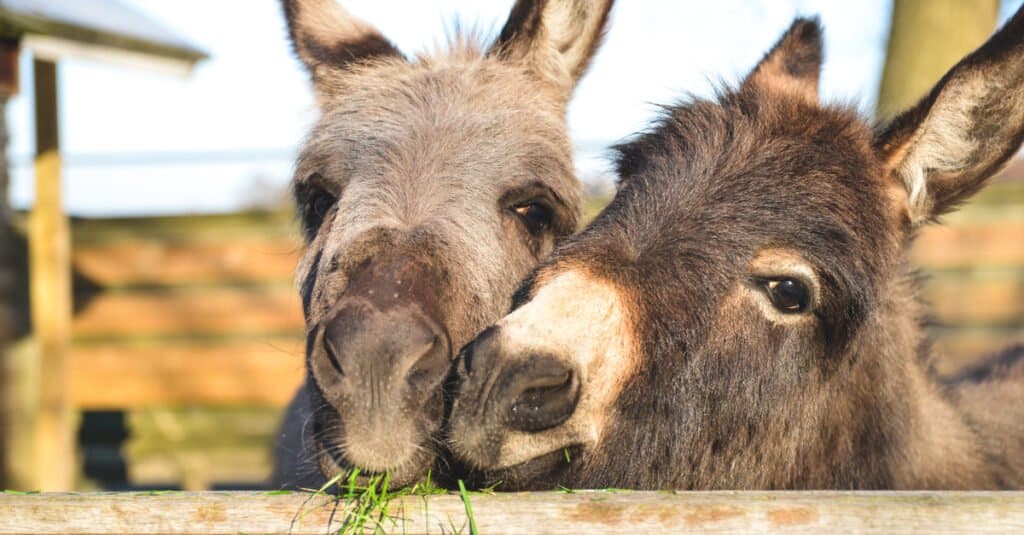
Donkey population could fall due to rising demand for donkey hides used in traditional Chinese medicine

©babeaudufraing/Shutterstock.com

Some estimate that the world’s donkey population could fall by half within the next five years to meet the rising demand for donkey hides used in traditional Chinese medicine. In 2006, the world had a donkey population of approximately 41 million.

The worldwide number appears to continue to decrease even among domesticated donkeys as some poachers have raided domestic herds in some areas to satisfy the need for donkeys to create the gelatin-based traditional medicine called ejiao.

In the wild, donkey predators include foxes, wolves, and lions.

Donkey Reproduction, Babies, and Lifespan

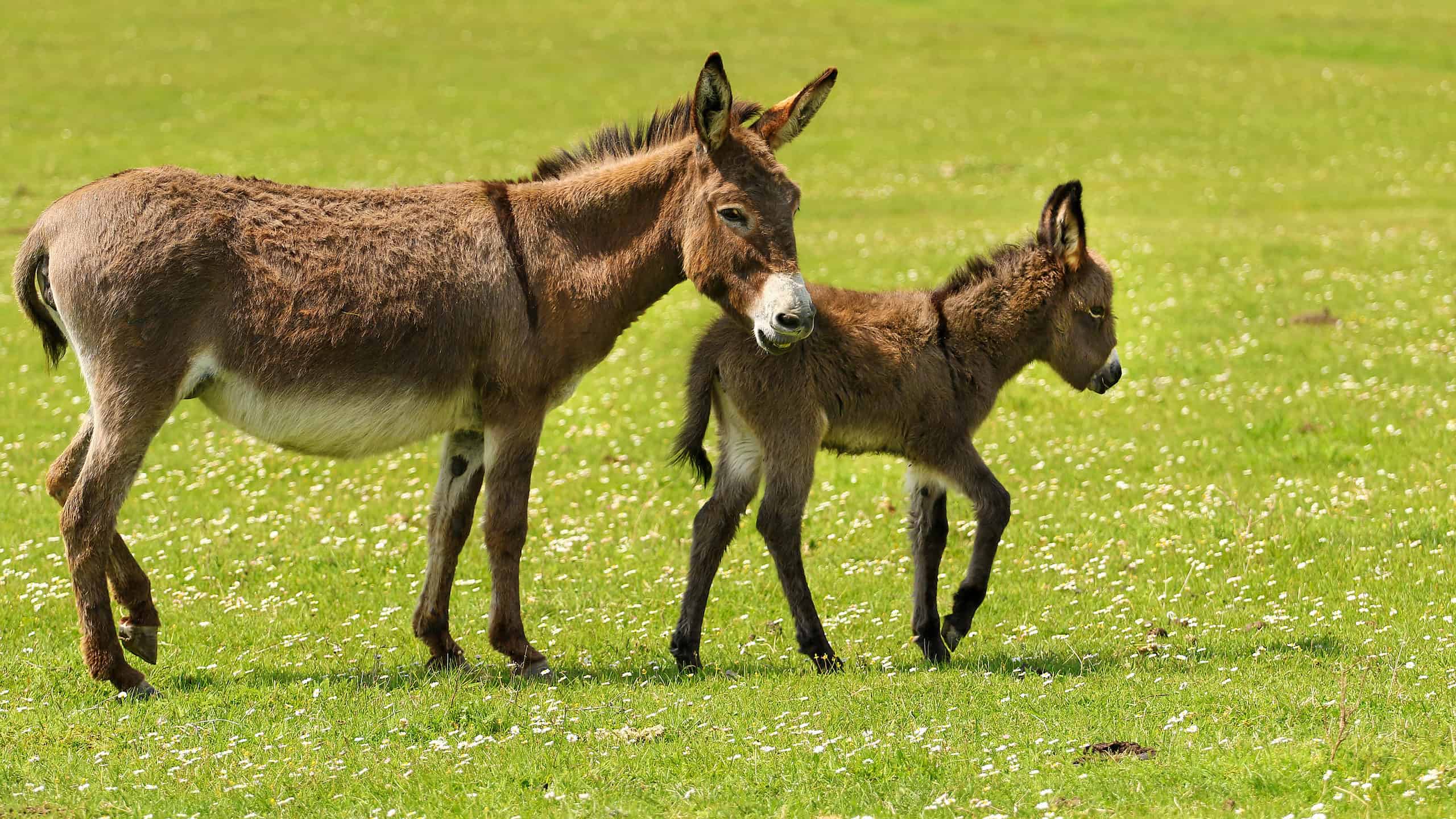
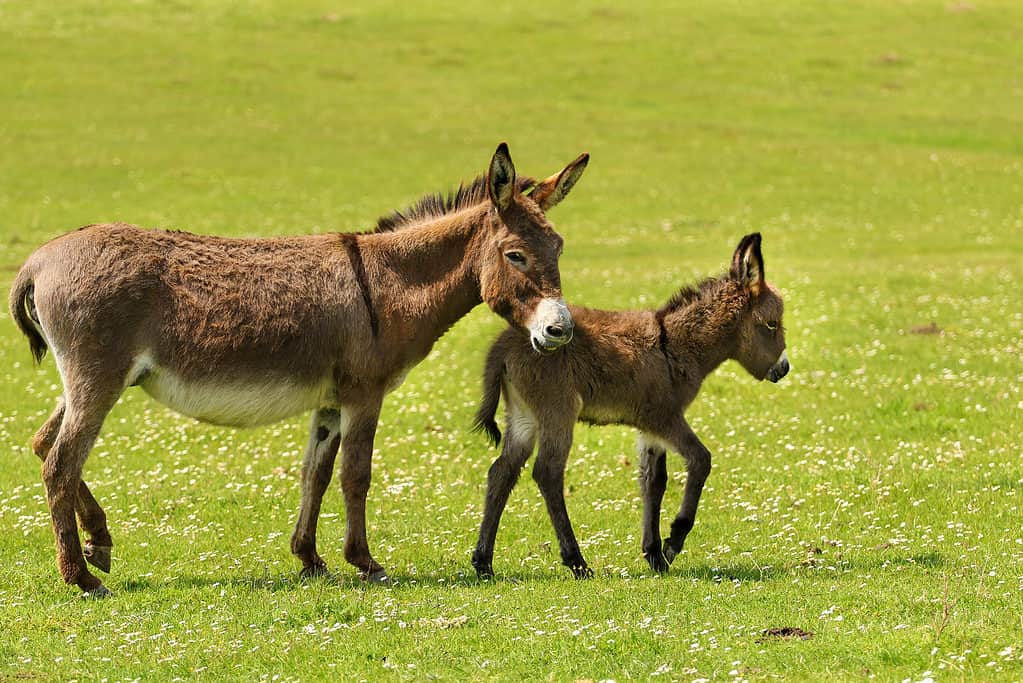
👁 Mother and newborn baby donkeys on the floral meadow

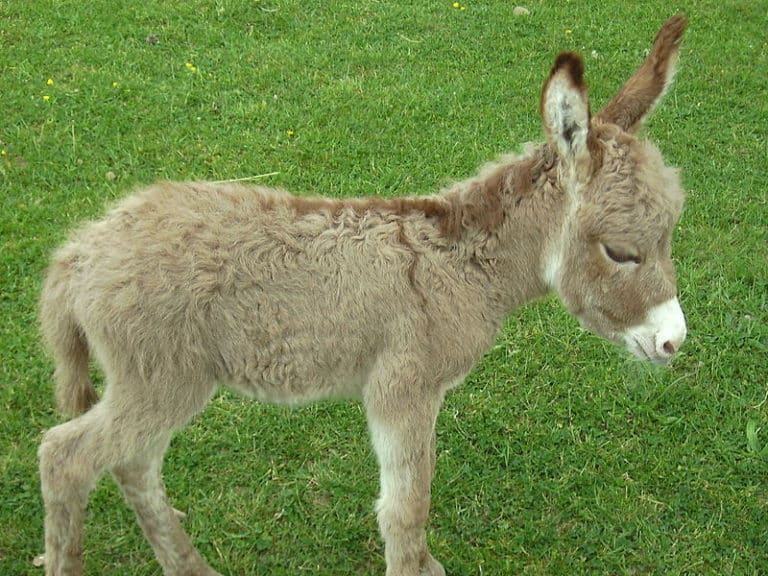
Mother and newborn baby donkeys on the floral meadow

©Geza Farkas/Shutterstock.com

A female donkey, called a jenny, is pregnant for about 12 months; however, gestation varies among different species from 11 months to 14 months. Jennies usually birth a single foal, with twins being rare.

Although jennies come into heat within about 10 days of giving birth, their reproductive tract is not normal at that point, and they usually don’t breed again until one or two cycles have passed. Some breeds do not come into estrus (also known as heat) when they have a foal at their side. The average reproduction rate for domesticated donkeys is three foals over four years.

Foals weigh between 19 and 30 pounds (about as heavy as a small dog) and can stand and nurse 30 minutes after birth. Jennies are very protective of their foals, who are weaned at about five months. A donkey can mate when it reaches two years of age.

Donkeys are picky about who is in their herd, yet they don’t care who they mate with and often breed with other members of the Equus family. The offspring between a jackass and a mare is called a mule, which is also valued as a working and riding animal. Less common is the offspring between a stallion and a jenny, known as a shiny. Both types of crossbreed are usually sterile. Donkeys can also breed with zebras with the offspring most often called a zonkey.

The average lifespan for a donkey is 27-40 years, however, they can live for much longer. The oldest donkey on record was a female domesticated donkey in the U.S. who lived to be 54.

Donkey Population

More than 50 million donkeys inhabit the world with most of them domesticated, living primarily in underdeveloped countries where they work or carry cargo. Despite their great numbers, few animals within each breed are purebred.

Several wild donkey species are on the edge of extinction. The International Union for the Conservation of Nature (IUCN), indicates that the African wild ass is critically endangered, with only 23 to 200 adults remaining. Asian wild asses (also known as Asiatic wild asses) are classified as near threatened, with a population of about 28,000. Most threats come from humans, either directly or through indirect habitat loss. 

List of Different Types of Donkeys

American Mammoth Donkey: The American Mammoth donkey was created by crossbreeding several different imported breeds of donkeys which includes the Marjorcan, Catalan, and the Andalusian.

Standard Donkey: Interestingly enough, the standard donkey is known to fight off predators and guard other animals.

Miniature Donkey: Miniature donkeys are good companion animals. They can live over 35 years old and their short height makes them easy to handle and care for.

American Spotted Ass: Many donkeys don’t have spots, however, there is one breed that does and they are a result of various breeds of donkeys.

Andalusian Donkey: These types of donkeys were actually so treasured in their home country of Spain that they were only allowed to export them in 1785 and not sooner like many other breeds.

Catalan Donkey (Catalonian): This breed of donkey is endangered and there are now only 851 left in Spain.

Balearic Donkey (Majorcan, Mallorquin): The Balearic donkey or sometimes called the Majorcan or the Malloriquin, is lighter and smaller than the Catalan

African Wild Ass: This breed of donkey is known as the modern donkey and are often grouped into the donkey category.

Poitou Donkey: There are very few of this breed of donkey found in North America. Actually, there are only about 400 of these donkey still alive today.

Burro: The burro population in Mexico is plenty, and there are about 3 million burros in Mexico! The term burro actually means donkey in Spanish.

Maltese Donkey: Maltese donkeys were brought to America and were important to the establishment of the American mammoth donkey.

Donkey and Cross-Breeding
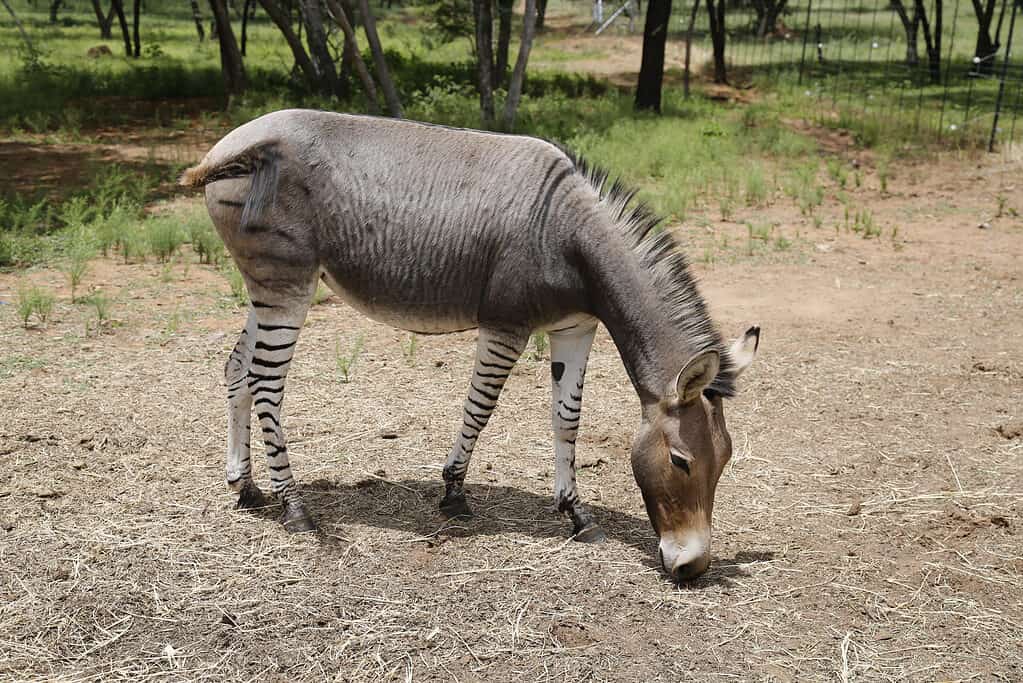
👁 A zebroid,also known as, zedonk, zorse, zebra mule, zonkey, and zebmule

A zebroid,also known as, zedonk, zorse, zebra mule, zonkey, and zebmule

©Shllabadibum Bubidibam/Shutterstock.com

Donkeys are one of the most frequently used draft animals, history shows them going back to ancient Egypt around 6000 years when they were used for milk and meat. However, the first hybrid donkey shows up in history in the 3rd millennium BCE. The first hybrid was called Kunga and was believed to have been bred during the time of the Syrian and Mesopotamian dynasties.

Kunga was a crossbreed between domesticated females and a wild Syrian Ass. At the time, they were supposedly considered to be a symbol of wealth and even used to pull battle wagons and even the chariots ridden by the kings. They were even given as gifts and buried with their owners. However, with the domestication of wild horses and their subsequent breeding with donkeys, Kungas slowly faded from history.

Similarly, there are many donkey hybrids that are used as draft animals:

  1. Mules: Cross between a male donkey (jack) and a female horse.
  2. Hinny: Cross between a male horse and a female donkey (jenny).
  3. Zonkey: When a male zebra is bred with a female donkey.

It’s important to note that these cross-bred species are sterile and do not produce offspring. They are very useful as draft animals because most of the time the mules and zonkeys inherit their strength from the male horses.

View all 446 animals that start with D
How to say Donkey in ...
Bulgarian
Магаре
Catalan
Ase
Czech
Osel africký
English
Donkey
Esperanto
Azeno
Spanish
Burro
Finnish
Aasi
French
Âne
Croatian
Magarac
Italian
Asino / Somaro / Ciuco
Japanese
ロバ
Dutch
Ezel
Polish
Osioł domowy
Portuguese
Asno,Burro
English
Măgar
Turkish
Eşek
Chinese

Sources

  1. David Burnie, Dorling Kindersley (2011) Animal, The Definitive Visual Guide To The World's Wildlife / Accessed November 10, 2008
  2. Tom Jackson, Lorenz Books (2007) The World Encyclopedia Of Animals / Accessed November 10, 2008
  3. David Burnie, Kingfisher (2011) The Kingfisher Animal Encyclopedia / Accessed November 10, 2008
  4. Richard Mackay, University of California Press (2009) The Atlas Of Endangered Species / Accessed November 10, 2008
  5. David Burnie, Dorling Kindersley (2008) Illustrated Encyclopedia Of Animals / Accessed November 10, 2008
  6. Dorling Kindersley (2006) Dorling Kindersley Encyclopedia Of Animals / Accessed November 10, 2008
  7. David W. Macdonald, Oxford University Press (2010) The Encyclopedia Of Mammals / Accessed November 10, 2008

About the Author

Rebecca Bales

Rebecca is an experienced Professional Freelancer with nearly a decade of expertise in writing SEO Content, Digital Illustrations, and Graphic Design. When not engrossed in her creative endeavors, Rebecca dedicates her time to cycling and filming her nature adventures. When not focused on her passion for creating and crafting optimized materials, she harbors a deep fascination and love for cats, jumping spiders, and pet rats.
Connect:

Thank you for reading! Have some feedback for us?

Contact the AZ Animals editorial team

Related Articles You May Find Interesting


Donkey FAQs (Frequently Asked Questions)

While donkeys are in the same family as horses, there are some key differences. Donkeys were domesticated from the wild ass in Africa and are generally smaller and slower than horses.

Donkeys are herbivores who eat mainly grass, grains, and hay. They have large appetites and teeth suited for eating a plant-based diet.

Donkeys are descended from Nubian and Somali wild asses. These animals were first domesticated in Western Asia and Egypt somewhere between 6000 B.C. and 5000 B.C.

One difference is: donkeys are a specific species in the horse family, while mules are a cross between a female horse and a male donkey, also known as a jack, which explains the term jackass.

Donkey meat is commonly eaten in China and is technically called poopy – although most people just call it donkey meat. It is said to have a full, gamey flavor that is similar to beef.

Dogs resemble coyotes, which can threaten donkeys. However, once a donkey learns that a dog means no harm, it will usually begin to get along with a dog.

Miniature donkeys are quiet, easy to handle, affectionate, and enjoy the company of humans. Many people consider them to make good pets if they have the space and time to care for them.

A donkey’s natural environment, where they must travel and constantly search for food, keeps them naturally stimulated. Domesticated donkeys live in a restricted environment, which can lead them to overfeed, become boredom, and have poor social interaction.

Donkeys belong to the Kingdom Animalia.

Donkeys belong to the phylum Chordata.

Donkeys belong to the class Mammalia.

Donkeys belong to the family Equidae.

Donkeys belong to the order Perissodactyla.

Donkeys belong to the genus Equus.

Donkeys are covered in Fur.

Donkeys live in arid forests and deserts.

Donkeys have stocky bodies.

Donkeys eat grass, weeds, and vegetables.

Predators of Donkeys include foxes, wolves, and lions.

The average litter size for a Donkey is 1.

Donkeys were first domesticated 5,000 years ago!

The scientific name for the Donkey is Equus Asinus.

Donkeys can live for 15 to 30 years.

A Donkey can travel at speeds of up to 15 miles per hour.