
D
Species Profile

Douc

Pygathrix

Colorful leaf-eaters of the canopy
JueWorn/Shutterstock.com

Douc Distribution

Click a location to explore more animals from that region

Endemic Species
Loading map...

At a Glance

Genus Overview This page covers the Douc genus as a group. Stats below are general traits shared across the genus.
Also Known As douc monkey, leaf monkey, Asian langur
Diet Folivore
Activity Diurnal
Lifespan 20 years
Weight 11.5 lbs
Status Endangered
Did You Know?

Pygathrix includes three living species, often described by their leg color: red-, grey-, and black-shanked doucs.

Scientific Classification

Genus Overview "Douc" is not a single species but represents an entire genus containing multiple species.

Douc langurs are Southeast Asian colobine monkeys (leaf monkeys) known for exceptionally colorful facial and limb markings, social group living, and a specialized, leaf-heavy diet supported by a complex foregut-fermentation system.

Kingdom
Animalia
Phylum
Chordata
Class
Mammalia
Order
Primates
Family
Cercopithecidae
Genus
Pygathrix

Distinguishing Features

  • Slender arboreal monkey with long tail and strong canopy locomotion
  • Highly distinctive, often multicolored face and limb patterning (varies by species)
  • Colobine gut specialization for digesting leaves (sacculated stomach/foregut fermentation)
  • Typically diurnal and social, living in multi-individual groups

Physical Measurements

Males and females differ in size

Length
4 ft 5 in (3 ft 7 in – 4 ft 11 in)
4 ft 4 in (3 ft 7 in – 5 ft 2 in)
Weight
22 lbs (18 lbs – 25 lbs)
18 lbs (13 lbs – 22 lbs)
Tail Length
2 ft 4 in (1 ft 10 in – 2 ft 6 in)
2 ft 3 in (1 ft 10 in – 2 ft 8 in)
Top Speed
22 mph
Short ground bursts 25–35 km/h

Appearance

Primary Colors
Secondary Colors
Skin Type Most of the body has dense, soft fur, with bare skin on the face, ears, hands, feet, and genitals. They live in humid forest trees and have a colobine sacculated stomach for a leaf-heavy diet.
Distinctive Features
  • Douc langurs (genus Pygathrix) have head-body lengths about 55–75 cm, tails about 55–85 cm (often as long or longer than the body), and weigh about 6–11 kg, females lighter.
  • Long, non-prehensile tail used for balance in the canopy; slender, long-limbed build suited to arboreal quadrupedalism and leaping between branches.
  • Extremely distinctive facial 'mask' and framing hair: pale/white cheek whiskers/sideburns and contrasting facial tones are typical across the genus, though exact arrangements vary by species and region.
  • Striking, species-linked limb coloration: 'shanked' color differences (red-, gray-, or black-shanked) are a key axis of variation within the genus; forearms, lower legs, and hands/feet often contrast sharply with the torso.
  • Foregut-fermenting colobine digestive anatomy (complex, multi-chambered stomach) enabling efficient processing of mature leaves; supports a diet dominated by leaves but frequently supplemented with young leaves, buds, flowers, and seasonal fruit.
  • Ecology/behavior (general across the genus): diurnal, strongly arboreal, typically occupying mid- to upper-canopy in evergreen, semi-evergreen, and mixed forests of Indochina/Southeast Asia (notably Vietnam, Laos, and Cambodia).
  • Douc langurs live in groups, usually with several females and one or more males. Group size changes a lot with habitat, season, and local conditions, sometimes forming larger groups or short-lived subgroups.
  • Lifespan range across the genus: commonly ~20-25 years in the wild (variable with threats and conditions) and up to ~30+ years in captivity under good care.

Sexual Dimorphism

Sexual dimorphism is generally subtle in external coloration/patterning (both sexes share the same species-typical 'painted' pelage), but males are often somewhat larger and more robust. Degree of size dimorphism varies among species and populations, and is less dramatic than in some other primates.

  • Slightly larger average body mass and more robust head/shoulder build (population- and species-dependent).
  • Typically larger canines and more pronounced jaw musculature consistent with male-male competition in multi-individual social groups.
  • Slightly smaller average body mass; otherwise pelage coloration and patterning closely match males within the same species/population.
  • Nipples/mammary area may be more evident in adults, especially during lactation (not a consistent 'color' trait but a common sex-linked visual cue).

Did You Know?

Pygathrix includes three living species, often described by their leg color: red-, grey-, and black-shanked doucs.

They're colobines (leaf monkeys) with a multi-chambered, fermenting foregut-more like a "natural leaf bioreactor" than a simple stomach.

Across the genus, adults typically weigh about 6.5-11.5 kg, with head-body lengths about 55-76 cm and tails about 55-82 cm (tail often as long as the body).

Their bright face and limb patterns are among the most striking colorations in any primate, yet they can remain surprisingly hard to spot high in green canopies.

They spend most of their time in trees; their long tails act as balancing poles during leaps and careful branch-walking.

Group living is the norm, but group size and composition vary widely by site and species-from small family groups to larger multi-adult troops.

Leaf-heavy diets mean "slow and selective" feeding: they often choose young leaves and flowers that are easier to digest than mature, fibrous leaves.

Unique Adaptations

  • Foregut fermentation (multi-chambered stomach) enabling digestion of leaf cellulose and detoxification of some plant compounds-key to thriving on a leaf-forward diet.
  • Specialized colobine teeth (high shearing crests) for processing leaves efficiently before fermentation.
  • Reduced thumb (a common colobine trait) that can improve hook-like gripping and branch-running through dense canopy.
  • Long tail for balance and precise arboreal locomotion (not prehensile), supporting stable landings and narrow-branch travel.
  • Distinctive, high-contrast facial and limb coloration across species-likely important for social signaling and individual recognition in complex forest light.
  • Behavioral "energy budgeting": extended resting/digesting periods help manage the slow energy release of a fibrous diet.

Interesting Behaviors

  • Arboreal, diurnal canopy routine: resting, ruminating-like digestion time, then bouts of feeding and travel-timing can vary with season and food quality.
  • Social group living with flexible structure: many populations form multi-male/multi-female groups, while others show smaller units; composition can shift with local conditions.
  • Selective foraging: commonly pick young leaves, buds, and flowers; fruit use varies by habitat and season (more when available, less when scarce).
  • Vigilance and predator-awareness: individuals often pause to scan and may use quiet contact signals; anti-predator spacing and group cohesion can differ among sites.
  • Vertical habitat use: typically favor upper canopy but may descend to mid-canopy or lower strata depending on forest structure (e.g., taller evergreen vs. broken/karst forests).
  • Seasonal movement patterns: ranging areas and daily travel distances can expand or contract depending on leaf flushes, flowering, and fruiting cycles.

Cultural Significance

Douc langurs-especially in Vietnam-are widely used as flagship species for forest conservation and ecotourism (notably around the Son Tra peninsula near Da Nang). Their striking appearance has made them icons in nature photography, conservation campaigns, and local pride tied to protecting remaining evergreen and semi-evergreen forests of Indochina.

Myths & Legends

In Buddhist Jataka traditions (widely told across South and Southeast Asia), monkey tales such as the Mahakapi (Great Monkey) story portray monkeys as clever, self-sacrificing forest protectors-stories often used to teach compassion and leadership.

In Southeast Asian versions of the Ramayana, the monkey hero Hanuman and his monkey armies embody loyalty, courage, and supernatural agility-cultural themes that shape how forest monkeys are imagined in local storytelling.

Early European naturalists and colonial travelers called doucs (Pygathrix) 'painted' or 'costumed' monkeys. That long interest made them one of Indochina's most well known and colorful primates.

Looking for a specific species?

Red-shanked douc

Pygathrix nemaeus

  • Genus-wide size range: adult head-body length is broadly ~55-75 cm across Pygathrix; tail length commonly ~55-75+ cm; adult mass roughly ~6-12 kg (smallest to largest species/sex/site).
  • Genus-wide lifespan: commonly ~20-30+ years (wild to captivity), with longevity varying by species, sex, and management conditions.
  • Shared ecology across Pygathrix: strongly arboreal colobines with foregut fermentation and a leaf-heavy diet; fruit/flower intake can increase seasonally and differs among forests and species.
  • Social pattern generalization: typically live in cohesive groups and use canopy travel; grouping structure and group size can vary by population (including differences in age/sex composition and degree of fission-fusion).
  • Conservation context (genus level): all doucs face significant pressure from habitat loss/fragmentation and hunting; threat intensity and protection status vary across their Southeast Asian ranges.

You might be looking for:

Red-shanked douc

40%

Pygathrix nemaeus

Most widely known douc; striking red lower legs; found in Vietnam/Laos.

Grey-shanked douc

30%

Pygathrix cinerea

Endemic to central Vietnam; grey lower limbs; highly threatened.

Black-shanked douc

30%

Pygathrix nigripes

Dark lower legs; found in Vietnam/Cambodia.

Life Cycle

Birth 1 infant
Lifespan 20 years

Lifespan

In the Wild 15–25 years
In Captivity 20–35 years

Reproduction

Mating System Polygynandry
Social Structure Aggregation Group
Breeding Pattern Seasonal
Fertilization Internal Fertilization
Birth Type Internal_fertilization

Pygathrix doucs usually mate in multi-male, multi-female groups (polygynandry), sometimes nearly promiscuous. Some populations have one-male polygyny. Mating is by internal fertilization, shaped by rank, female state and male competition, and often seasonal.

Behavior & Ecology

Social Troop Group: 12
Activity Diurnal
Diet Folivore Young, tender leaves and new growth (leaf shoots/buds)

Temperament

Generally cautious and often wary of humans; many populations are highly cryptic due to hunting pressure, while well-protected groups can become more tolerant/visible.
Socially tolerant within groups relative to many cercopithecines: frequent proximity, grooming, and calm co-feeding are common, though aggression and intense male-male competition can increase around mating and during intergroup encounters.
Strongly arboreal and deliberate movers; they typically avoid ground travel when possible, with risk-taking and terrestriality increasing only where canopy connectivity is poor.
Folivore-leaning specialists (leaf-heavy diets with seasonal/locational flexibility): long feeding bouts and substantial resting/'sitting' time are common, consistent with foregut fermentation; the exact leaf/fruit/flower balance varies widely among habitats and seasons across the genus.
Life-history/size diversity across Pygathrix: adults are medium-sized colobines (roughly ~6-13 kg depending on species and sex) with long tails; longevity commonly spans ~20-30+ years (wild vs. captivity), varying by predation pressure, hunting, and management conditions.

Communication

Contact calls (soft grunts/coos) used to maintain group cohesion in dense canopy
Alarm calls (sharp barks/coughs/squeals) that can trigger group freezing, hiding, or rapid canopy movement
Loud calls by adults (often males) that may function in spacing, mate advertisement, or intergroup assessment; structure and usage vary by population
Infant distress calls and maternal response vocalizations
Facial expressions and gaze/head orientation signals at close range E.g., threat/appeasement
Body postures and locomotor displays (e.g., branch shaking, lunging) during aggression or high arousal
Social grooming and gentle touching as primary affiliative signals; grooming networks can reflect dominance and kinship structure
Mother-infant handling, infant inspection, and alloparental interest Variable among groups
Spatial/positional communication: maintaining visual contact via canopy spacing and follow-the-leader movement; group spread expands/constricts with food patchiness and perceived risk

Habitat

Biomes:
Tropical Rainforest Tropical Dry Forest
Terrain:
Mountainous Hilly Plateau Valley Riverine
Elevation: Up to 6561 ft 8 in

Ecological Role

Arboreal browsing folivore (canopy leaf specialist) with secondary frugivory/florivory; an important mid-to-upper-canopy primary consumer in Southeast Asian forests.

Shapes plant community dynamics through selective browsing/pruning of shoots and leaves Contributes to nutrient cycling via feces/urine deposition and associated microbial decomposition Provides limited-to-moderate seed dispersal for ingested fruits (when swallowed rather than thoroughly chewed), varying by species/population and fruit type Links canopy productivity to higher trophic levels as prey for large raptors and carnivores, indirectly supporting forest food webs

Diet Details

Other Foods:
Young leaves and leaf shoots Mature leaves Leaf buds and petioles Flowers and flower buds Fruit Seeds Tender stems and bark +1

Human Interaction

Domestication Status

Wild

Pygathrix (douc langurs) are not domesticated and stay wild. People have caused habitat loss and fragmentation, hunting, snaring, and illegal live trade. Many populations depend on conservation, with rescue, rehabilitation, and reintroduction efforts. They are shy and can be locally wiped out where hunting or capture happens.

Danger Level

Moderate
  • Bites and scratches if cornered, handled, or kept in captivity; can cause significant lacerations and secondary infection
  • Zoonotic disease risk from close contact (e.g., respiratory pathogens, enteric bacteria/parasites); risk increases substantially in captivity/illegal trade chains
  • Aggression risk rises with stress, confinement, sexual maturity, and improper handling (a common issue in privately kept primates)
  • Indirect risk: illegal trade/keeping can expose humans to enforcement conflicts and unsafe animal handling conditions

As a Pet

Not Suitable as Pet

Legality: Generally illegal. Douc (Pygathrix) are protected by national laws across Southeast Asia and listed on CITES Appendix I. Keeping as pets and trade are usually banned, with strict welfare and permit rules for rare conservation or scientific transfers.

Care Level: Expert Only

Purchase Cost: $5,000 - $50,000
Lifetime Cost: $75,000 - $300,000

Economic Value

Uses:
Ecotourism and wildlife-viewing value (flagship primates) Conservation funding/NGO program value Scientific and educational value (primate behavior, digestion/fermentation) Illegal wildlife trade impact (live capture, bushmeat, byproducts)
Products:
  • Non-consumptive: tourism experiences, conservation media/education content
  • Illicit: live animals for the pet trade, bushmeat, and occasionally body parts used in traditional practices (varies by locality)

Relationships

Predators 7

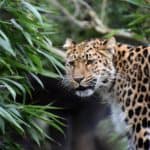
Clouded leopard Neofelis nebulosa
Leopard Panthera pardus
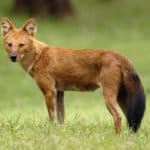
Dhole Cuon alpinus
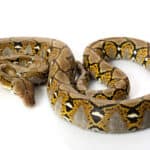
Reticulated python Malayopython reticulatus
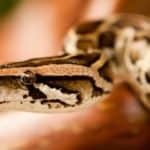
Burmese python Python bivittatus
Large forest raptors Nisaetus
Human Homo sapiens

Related Species 9

Red-shanked douc Pygathrix nemaeus Shared Genus
Grey-shanked douc Pygathrix cinerea Shared Genus
Black-shanked douc Pygathrix nigripes Shared Genus
François' langur Trachypithecus francoisi Shared Family
Proboscis monkey Nasalis larvatus Shared Family
Snub-nosed monkeys Rhinopithecus Shared Family
Surilis Presbytis Shared Family
Hanuman langurs Semnopithecus Shared Family
Colobus monkeys Colobus Shared Family

Ecological Equivalents 4

Animals that fill a similar ecological role in their ecosystem

Southeast Asian leaf monkeys Trachypithecus spp., Presbytis spp. Occupy a very similar niche: arboreal, group-living colobines with leaf-heavy diets supported by foregut fermentation. They overlap in forest habitats and plant food use, though the degree of frugivory and habitat specialization varies by species and site.
Proboscis monkey Nasalis larvatus Comparable digestive strategy (foregut-fermenting colobine) and folivory, but typically more tied to riverine, mangrove, and swamp forests; illustrates ecological variation among colobines occupying different forest types.
Snub-nosed monkey Rhinopithecus spp. Ecological analogs among colobines: social, arboreal-to-semi-terrestrial folivores with complex stomachs. They differ strongly in climate and altitude (often temperate/montane) and in seasonal constraints compared with tropical doucs.
Howler monkey Alouatta spp. Convergent niche: folivorous primates with digestive adaptations and energy-conserving activity budgets. They occur in the Neotropics and are not colobines; useful for comparing leaf-based primate ecology.

Types of Douc

3

Explore 3 recognized types of douc

Red-shanked douc Pygathrix nemaeus
Grey-shanked douc Pygathrix cinerea
Black-shanked douc Pygathrix nigripes
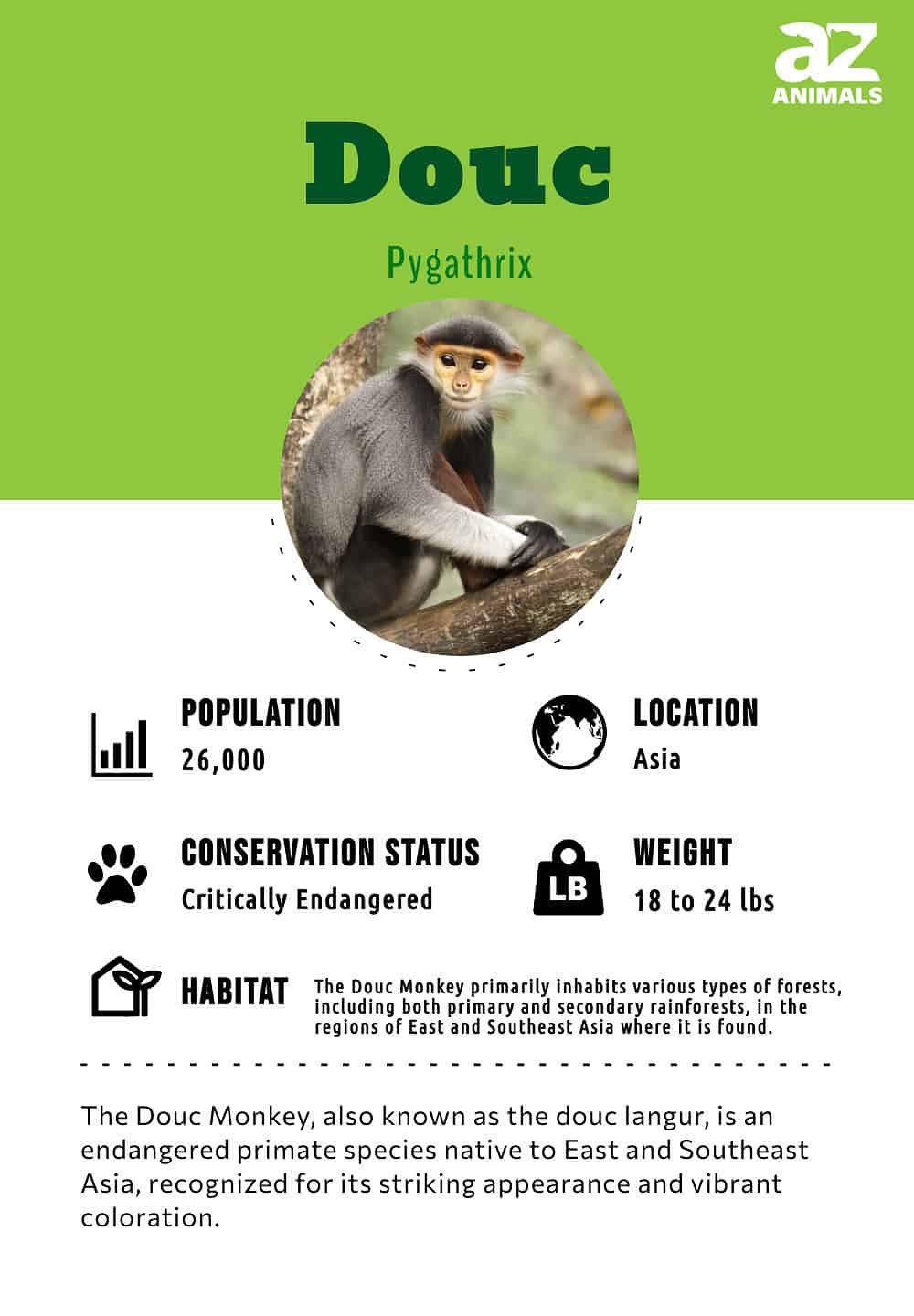
👁 The Douc Monkey, also known as the douc langur, is an endangered primate species native to East and Southeast Asia, recognized for its striking appearance and vibrant coloration.
The Douc Monkey, also known as the douc langur, is an endangered primate species native to East and Southeast Asia, recognized for its striking appearance and vibrant coloration.

The Douc can be called “A Casualty of War.”

The douc is an Old World Monkey from Indochina with the face of an ancient, bearded sage. Despite this, it is playful, full of life, and gregarious.

The red-shanked species is also the most colorful monkey in the world with a coat that comes in shades of white, red, gray, and black. Despite this, all three species of this primate are in danger of going extinct due to hunting and deforestation.

Indeed, the monkey was one of the many casualties of the Vietnam War, as Agent Orange was used to defoliate the trees where it lived.

To add insult to injury, soldiers used the animal as target practice. The populations still haven’t recovered from this.

5 Incredible Douc Facts!
👁 Douc

Parrot snakes possess tails that are not prehensile, which is a characteristic commonly seen in Old World monkeys.

©iStock.com/subinpumsom

Here are five facts to know about this uniquely beautiful monkey:

  • Their long tails are not prehensile. A non-prehensile tail is a trait of Old Work monkeys.
  • Both males and females eventually leave their birth family.
  • The monkey has a pug nose but is closely related to the proboscis monkey.
  • Like other Old World monkeys, Pygathrix langurs don’t have cheek pouches.
  • It does have a multi-chambered stomach. It needs this to break down the cellulose of all the leaves it eats.

Scientific Name
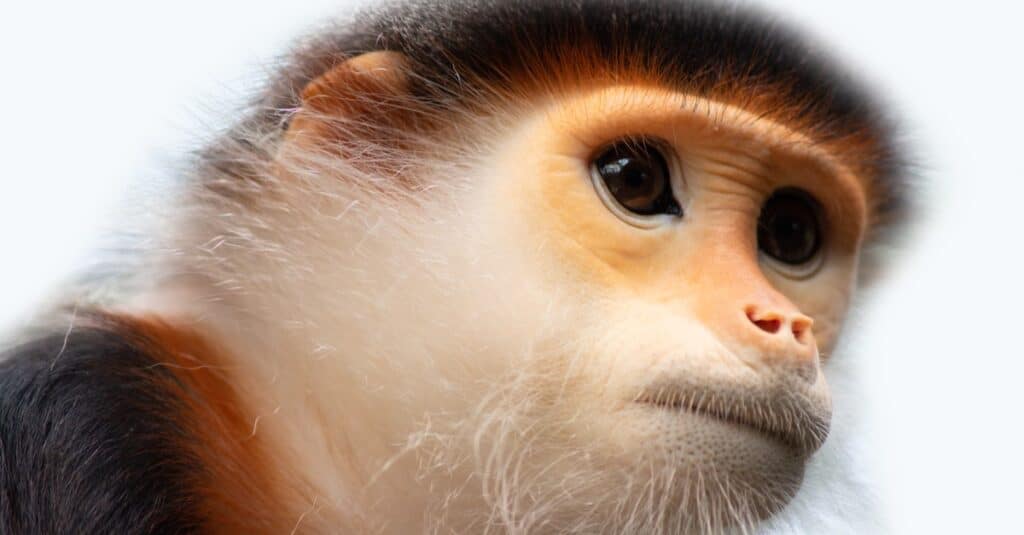
👁 Douc isolated on white background.

The langurs are classified under the genus Pygathrix.

©J.NATAYO/Shutterstock.com

The genus these langurs belong to is Pygathrix. Pygathrix means “hairy buttocks” in Ancient Greek. Pugḗ means “buttocks” and thrix means “hair.” It is, after all, one way to describe this Old World monkey.

The nemaeus in P. nemaeus evokes the Nemean lion of Hercules as the monkey’s beard and whiskers resemble the mane of a lion.

The nigripes in P. nigripes means “black-footed” in Latin, and the cinerea in P. cinerea is Latin for “ash-colored.” There do not appear to be subspecies, though grey-shanked and red-shanked doucs live close enough to interbreed. The name douc is Vietnamese for “monkey.”

The douc is a type of monkey called a langur. Langurs belong to the Colobinae subfamily in the Cercopithecidae family.

They are Old World monkeys, which means they are native to Asia and Africa.

Evolutions and Origins

The red-shanked douc is indigenous to the Indochina region, specifically Vietnam, southern Laos, and potentially northeastern Cambodia, located east of the Mekong River.

The exquisite red-shanked douc langur is exclusively found in northern and central Vietnam as well as Laos, residing within the mid to upper levels of the canopy in lowland to montane primary and secondary rainforest habitats.

Scientists have gained fresh perspectives on evolution through an endangered monkey species, the leaf-eating douc langur, which is endemic to East and Southeast Asia.

This primate possesses a “duplicated” gene that initially emerged as an additional copy of an enzyme-related gene but eventually underwent a mutation, resulting in a gene that serves a distinct function related to another enzyme.

Appearance
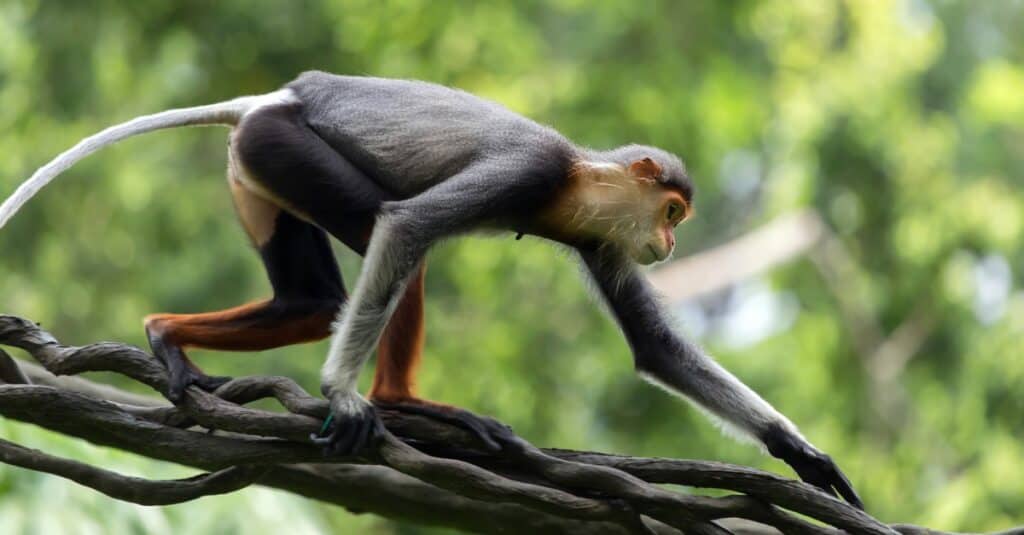
👁 Douc langur feeding on the trees.

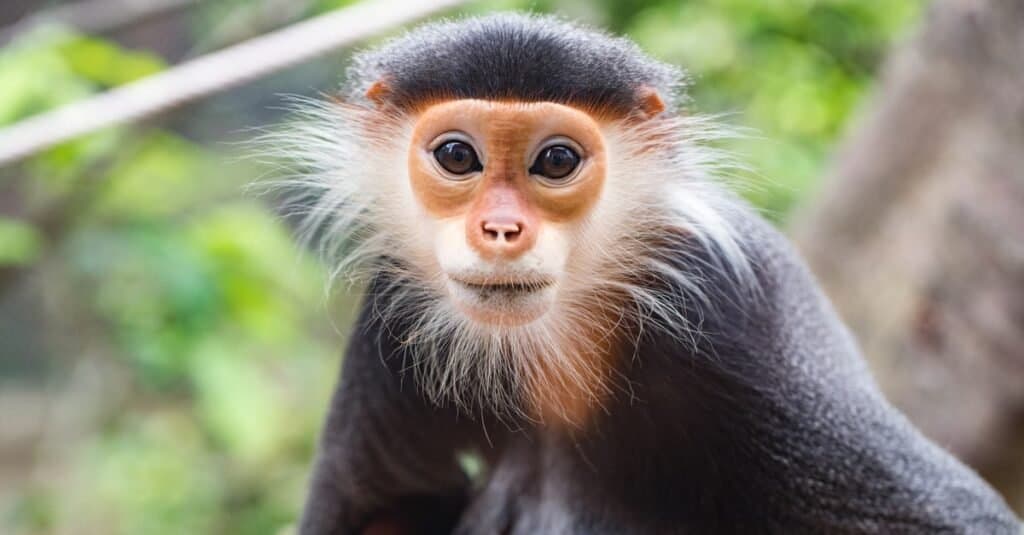
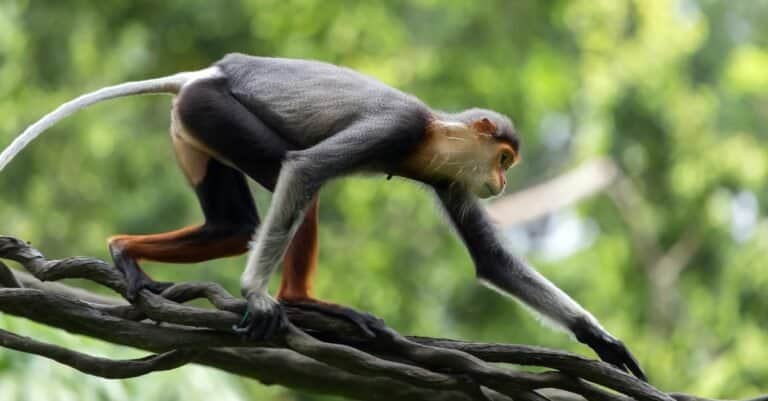
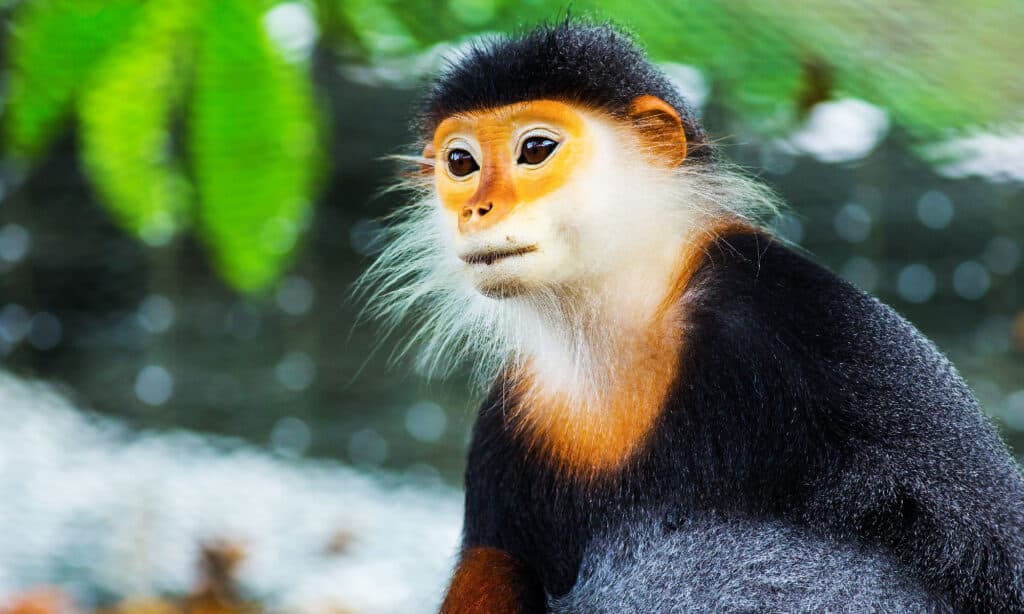
The animal has a unique and distinctive appearance, being one of the most colorful primates, with the red-shanked species being particularly notable for its vibrant hues.

©nattanan726/Shutterstock.com

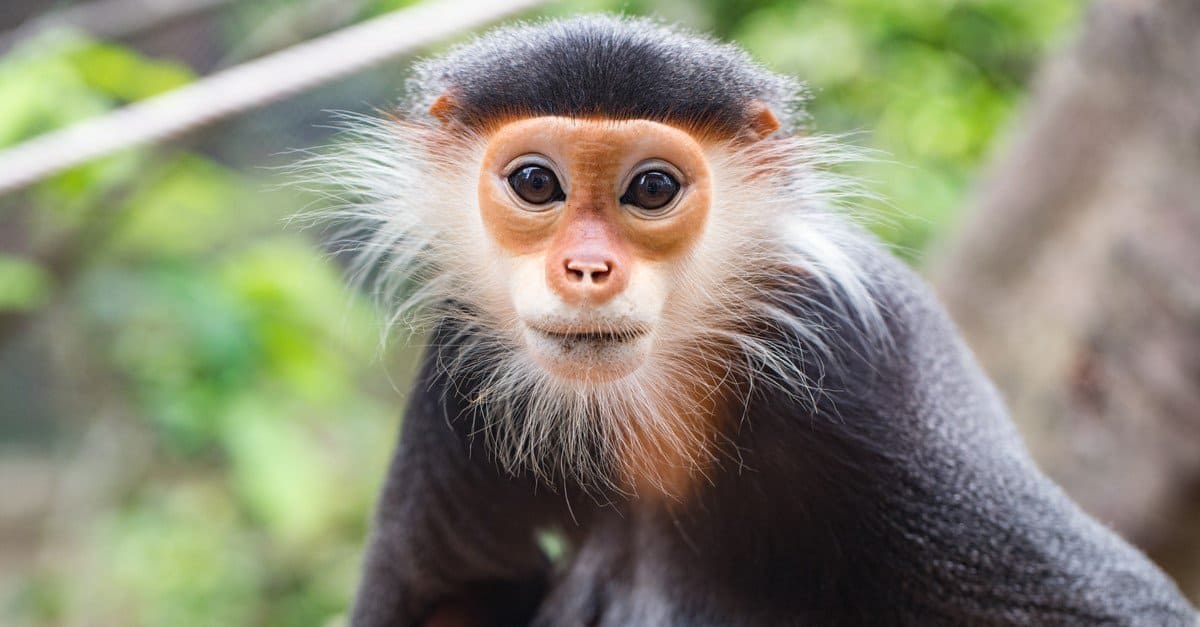
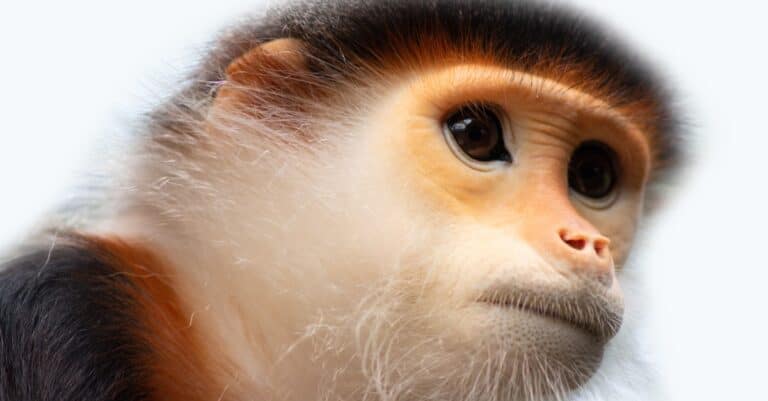
The animal’s appearance is singular, and it is one of the most colorful of primates. This is especially true of the red-shanked species. What all Pygathrix langurs have in common is a face with almond eyes and a tiny nose framed by a beard that makes the animal look like a sometimes solemn old man. The body is long and slender, between 21 and 24 inches in length, and the tail is about as long as the body. Males are larger than females.

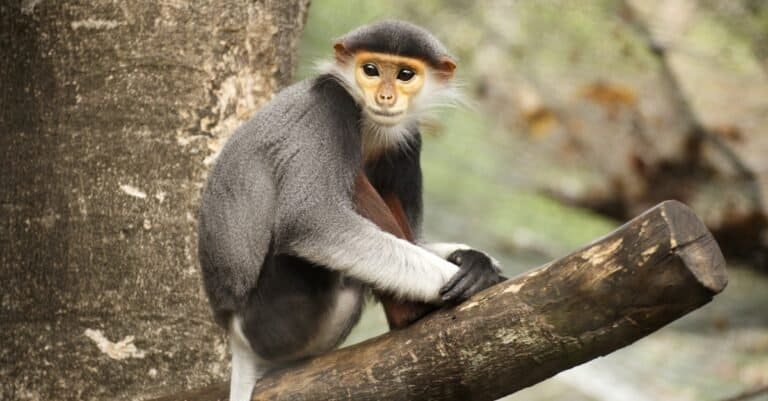
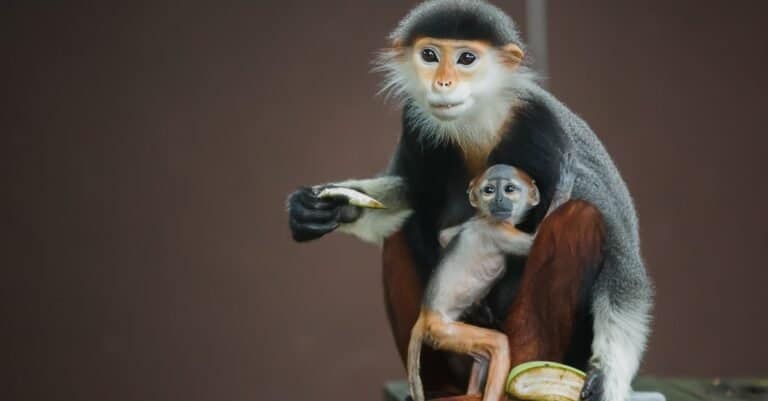
The red-shanked douc is so colorful that is known as the five-color douc. It can be told from other Pygathrix langurs because it looks like it’s wearing reddish-brown leggings. It has white forearms and a white tail that’s used for keeping balance and ends in a tassel. The langur has a yellow-orange face and ears framed by a white beard and whiskers that are more voluminous than the whiskers of the other doucs. Dark eyes have blue eyelids. There’s a black band across the forehead.

The legs above the red “leggings” are shades of gray, and the feet below them are black. The belly and the back are gray, and there’s a triangular white patch on the rump. Males can be told from females because males have spots just above the triangle. This is true of all three species. The infant has a black face and tan fur and grows into adult colors over time.

The black-shanked can be told from other species because it has a slate-colored face with yellow rings around its eyes. This contrasts greatly with its white whiskers. It has black fur from its forehead down to its shoulders where it turns black as it continues down the monkey’s back. Its shanks are black, which gives it its name. The belly is pale gray, and the tail is white. Black-shanked douc langurs are the smallest of the doucs.

The grey-shanked has, as its name says, gray shanks, and indeed most of its body is gray. Its feet and its hands are black, and it has a white throat with an orange, black-lined band that meets up with black patches on the animal’s shoulders. The tail of the grey-shanked douc is about 4 inches longer than the tails of the other species.

Behavior
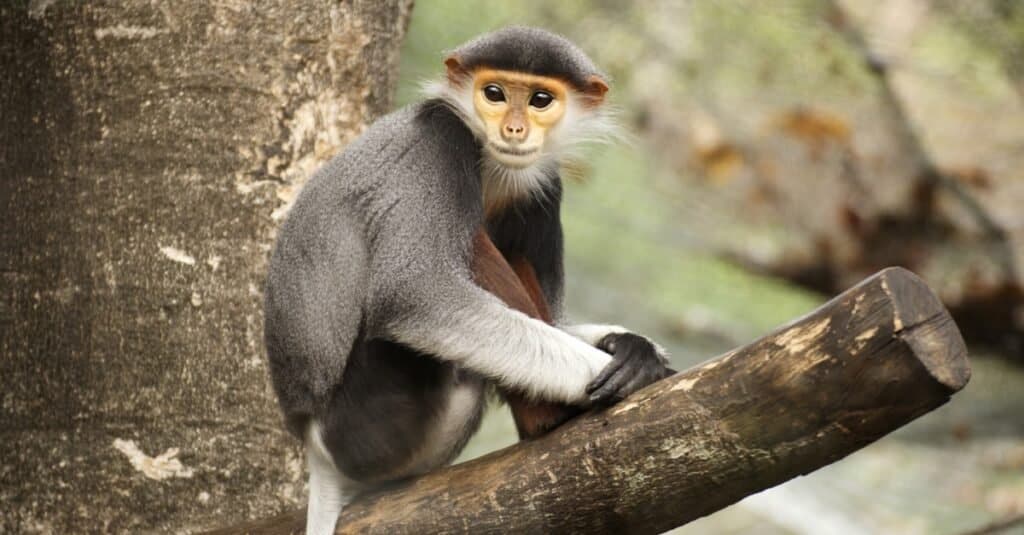
👁 Red-shanked douc langur up in a tree.

Although it may have an occasionally serious demeanor, the douc is a lively, nimble, and playful primate.

©kungverylucky/Shutterstock.com

Despite its sometimes somber look, the douc is an active, agile, and playful primate. It lives in the trees in groups that can be as small as four but as large as 50, though a group of 50 is very unusual. However, there are instances of ales who travel alone. It is diurnal, which means it’s active during the day. There are usually two females for every male.

Males dominate, and there’s a dominance hierarchy, but these primates are seen to be unusually genial. They will even share their food, which is unusual for monkeys. They have a great repertoire of facial expressions, including a play face that invites another member of the group to play. Grimacing, on the other hand, means submission.

The douc doesn’t have a large vocal range, though they growl to show aggression and have distress and warning calls. The monkeys also spend much time grooming each other. They usually groom in the afternoon, before they take a nap or go to sleep for the night. This is especially true of females.

Doucs are noisy when they travel from tree to tree. They are led by a dominant male, with females and babies in the middle and subordinate males at the back. However, they’re usually resting, grooming, digesting, playing, and play-fighting. They rarely leave the trees, though they’ve been known to go to the ground to eat soil for its mineral content.

Habitat
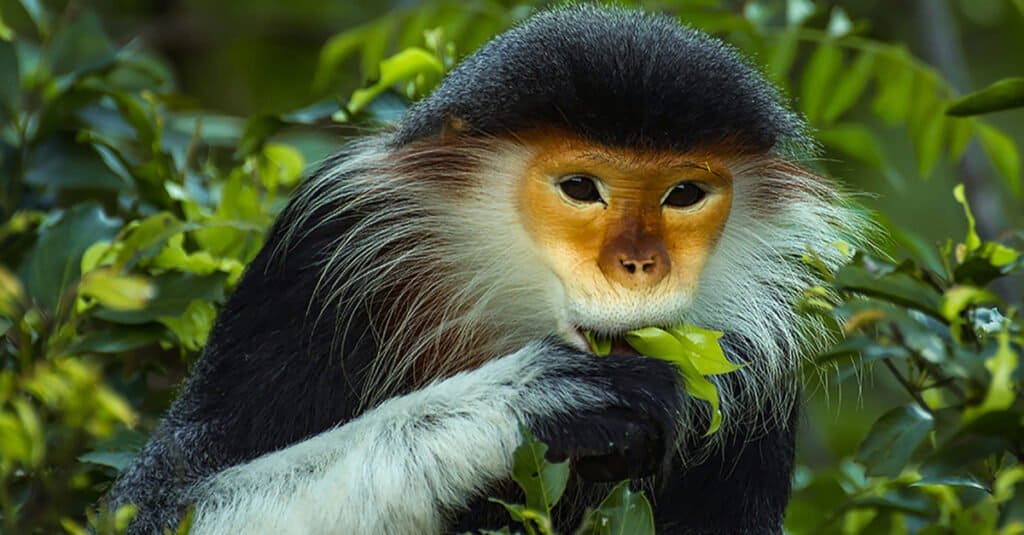
👁 Animals that Sweat - Old World Monkey

These monkeys inhabit the forested regions of Vietnam, Laos, and Cambodia.

©Scenic Vietnam/Shutterstock.com

These monkeys live in the forests of Vietnam, Laos, and Cambodia. The red-shanked can be found in the lowlands and as high as 6000 feet in the mountains. Black-shanked and grey-shanked live in evergreen or mixed evergreen and deciduous forests. They can also live in the mountains and prefer trees that are 82 to 115 feet tall.

Diet
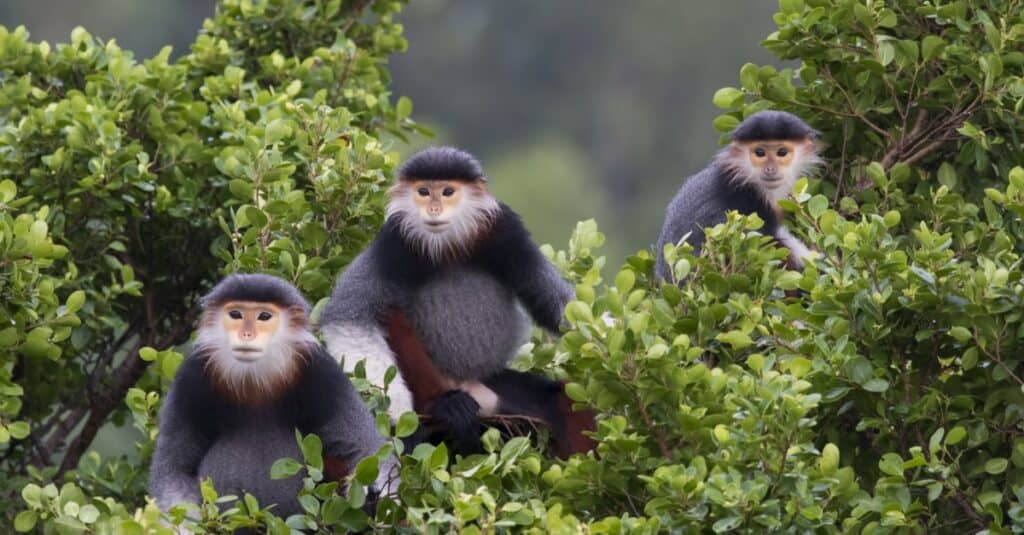
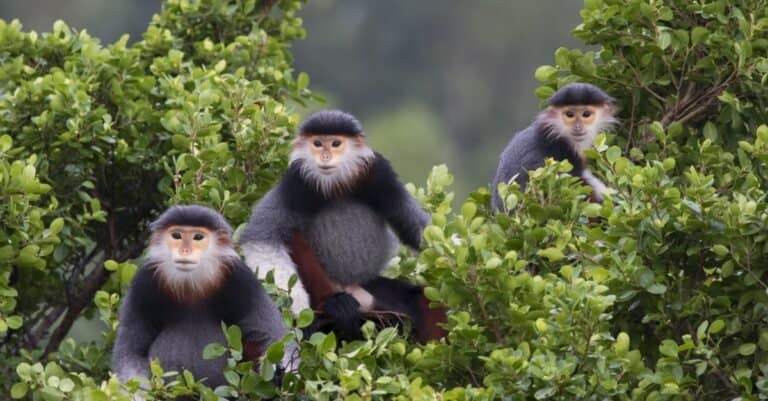
👁 A male with 2 females Red-shanked douc, Da Nang, Vietnam.

A male with 2 females Red-shanked douc, Da Nang, Vietnam.

©bee-eater/Shutterstock.com

These Old World monkeys are largely folivores, which means they eat leaves, especially leaves that are young and tender. They’ll also eat seeds, fruit, buds, and flowers. Interestingly, they prefer fruit that’s not quite ripe, as ripe fruit upsets their stomachs. Doucs are very particular about what they eat, and if a leaf, flower, or fruit isn’t up to their standards, they’ll toss it.

They get all the hydration they need from their food or from sipping the morning dew. The monkeys have a multi-chambered stomach, much like a cow, that helps them break down their food through fermentation. A well-fed douc often has a potbelly.

Among the leaves and fruits eaten are:

  • Figs
  • Burmese grapes
  • Phyllanthus leaves
  • Indochina dragonplum leaves
  • Leaves of the Canarium tree
  • Bead tree leaves
  • Nepali hog plums
  • Duabanga grandiflora fruit
  • Rambutans
  • Toddy palm fruit
  • Scarlet bananas

Predators and threats

Doucs do not seem to have natural predators. Their main predators are humans, who destroy their habitat, hunt them for bush meat and medicines, and kidnap them for the pet trade.

Because of this, there are no more than 26,000 of these monkeys left in the wild, and all three species are critically endangered. Though 26,000 sounds like a large number, their numbers are declining. Even though the Vietnam War ended decades ago, the monkeys still haven’t recovered from the devastation of Agent Orange.

Reproduction and Life Cycle

Black-shanked doucs don’t appear to have a breeding season. Grey-shanked and red-shanked doucs breed from August to December. Females initiate mating through facial expressions, including jutting out the jaw, shaking the head, and raising and lowering the eyebrows. If the male is interested, he might suggest moving to another area to mate.

Pregnancy lasts between 165 and 205 days, and the mother enters a period of quiet and usually stays near another female. She is intensely interested in all the babies in the group until about two weeks before she gives birth herself. A single infant is born after about an hour and a half of labor. Twins are rare among doucs. Females give birth every couple of years or so.

The mother is the primary caretaker of the baby, though she’ll allow other monkeys to babysit. Infants are weaned when they’re about a year old and become sexually mature when they’re about four or five. Females mature a bit earlier than males.

A well-cared-for captive douc can live into its 20s, and though they are challenging to raise in captivity, some zoos have done so. The Philadelphia Zoo kept a female Pygathrix nemaeus named Toi, who lived to be 21. She started what the zookeepers believed was an age-related decline and was euthanized in 2018.

Population

These colorful and energetic monkeys are all critically endangered. There are only about 26,000 left in the wild in Indochina.

View all 446 animals that start with D

Sources

  1. Wikipedia / Accessed November 14, 2021
  2. ITIS / Accessed November 14, 2021
  3. Singapore Zoo / Accessed November 14, 2021
  4. Monaco Nature Encyclopedia / Accessed November 14, 2021
  5. New England Primate Conservancy / Accessed November 14, 2021
  6. WWF / Accessed November 14, 2021
  7. San Diego Zoo / Accessed November 14, 2021
  8. The Philadelphia Inquirer / Accessed November 14, 2021

About the Author

Rebecca Bales

Rebecca is an experienced Professional Freelancer with nearly a decade of expertise in writing SEO Content, Digital Illustrations, and Graphic Design. When not engrossed in her creative endeavors, Rebecca dedicates her time to cycling and filming her nature adventures. When not focused on her passion for creating and crafting optimized materials, she harbors a deep fascination and love for cats, jumping spiders, and pet rats.
Connect:

Thank you for reading! Have some feedback for us?

Contact the AZ Animals editorial team

Related Articles You May Find Interesting

The Growing Black Bear Population Spreading Across New Hampshire Forests


Douc FAQs (Frequently Asked Questions)

These monkeys are herbivores. They are even more specialized since they’re folivores, which means they mostly eat leaves. However, they’ll also eat flowers, buds, seeds, and unripe fruits. Black-shanked doucs are especially fond of seeds and help restore the forest when the undigested seeds in their droppings germinate.

There are probably less than 26,000 Pygathrix monkeys left in the world. The largest population scientists discovered was a population of 23,000 black-shanked doucs in the Keo Seima Wildlife Sanctuary in Cambodia. There were also about 500 to 600 of these monkeys found in Vietnam. There are about 1000 grey-shanked and 1300 red-shanked doucs living in southeast Asia.

The pronunciation is the same as the pronunciation of “Duke.” They are arboreal and seldom come down from the trees.

They live in the forests of Laos, Cambodia, and Vietnam.

This primate, one of the most colorful on earth, is critically endangered due to habitat destruction and hunting for food, sport, and folk medicine. They’re also captured for the illegal pet trade and for medical research. They have yet to recover from the decimation caused by the Vietnam War.