E
Species Profile

Elk

Cervus canadensis

Hear the mountains bugle: wapiti
twildlife/Shutterstock.com

Elk Distribution

Click a location to explore more animals from that region

Invasive Species
Loading map...

Found in 23 locations

๐Ÿ‡จ๐Ÿ‡ฆ British Columbia Canada ๐Ÿ‡จ๐Ÿ‡ฆ Alberta Canada ๐Ÿ‡จ๐Ÿ‡ฆ Saskatchewan Canada ๐Ÿ‡จ๐Ÿ‡ฆ Manitoba Canada ๐Ÿ‡บ๐Ÿ‡ธ Washington United States ๐Ÿ‡บ๐Ÿ‡ธ Oregon United States ๐Ÿ‡บ๐Ÿ‡ธ California United States ๐Ÿ‡บ๐Ÿ‡ธ Idaho United States ๐Ÿ‡บ๐Ÿ‡ธ Montana United States ๐Ÿ‡บ๐Ÿ‡ธ Wyoming United States ๐Ÿ‡บ๐Ÿ‡ธ Utah United States ๐Ÿ‡บ๐Ÿ‡ธ Colorado United States ๐Ÿ‡บ๐Ÿ‡ธ New Mexico United States ๐Ÿ‡บ๐Ÿ‡ธ Arizona United States ๐Ÿ‡บ๐Ÿ‡ธ Nevada United States ๐Ÿ‡บ๐Ÿ‡ธ South Dakota United States ๐Ÿ‡บ๐Ÿ‡ธ North Dakota United States ๐Ÿ‡ฒ๐Ÿ‡ฝ Mexico ๐Ÿ‡ท๐Ÿ‡บ Russia ๐Ÿ‡จ๐Ÿ‡ณ China ๐Ÿ‡ฐ๐Ÿ‡ฟ Kazakhstan ๐Ÿ‡ฐ๐Ÿ‡ฌ Kyrgyzstan ๐Ÿ‡ฒ๐Ÿ‡ณ Mongolia

Size Comparison

Human 5'8"
Elk 3 ft 11 in

Elk stands at 69% of average human height.

At a Glance

Wild Species
Also Known As Wapiti, American elk, Rocky Mountain elk, Manitoban elk, Tule elk, Roosevelt elk
Diet Herbivore
Activity Crepuscular+
Lifespan 12 years
Weight 500 lbs
Status Least Concern
Did You Know?

Adult bulls typically weigh 320-500 kg; cows about 225-270 kg, making wapiti larger than mule deer.

Scientific Classification

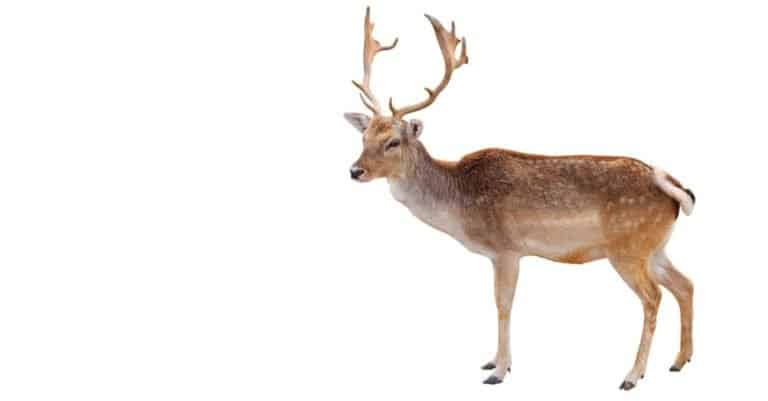
The elk or wapiti (Cervus canadensis) is a large deer native to North America and eastern Asia, known for malesโ€™ impressive antlers and autumn rut bugling. It inhabits forests, parklands, and mountain meadows, forming sexually segregated herds outside the breeding season.

Kingdom
Animalia
Phylum
Chordata
Class
Mammalia
Order
Artiodactyla
Family
Cervidae
Genus
Cervus
Species
canadensis

Distinguishing Features

  • Large deer; males with long, sweeping antlers
  • Pale rump patch contrasted with darker body
  • Males give loud rutting โ€œbugleโ€ calls
  • Sexual size dimorphism; bulls notably larger

Physical Measurements

Males and females differ in size

Height
โ™‚ 4 ft 5 in (3 ft 11 in โ€“ 4 ft 11 in)
โ™€ 4 ft 3 in (3 ft 7 in โ€“ 4 ft 11 in)
Length
โ™€ 6 ft 7 in (5 ft 7 in โ€“ 7 ft 7 in)
Weight
โ™‚ 838 lbs (705 lbs โ€“ 1,102 lbs)
โ™€ 507 lbs (375 lbs โ€“ 591 lbs)
Tail Length
โ™‚ 49 ft 3 in (32 ft 10 in โ€“ 72 ft 2 in)
โ™€ 6 in (5 in โ€“ 7 in)
Top Speed
45 mph
running

Appearance

Primary Colors
Secondary Colors
Skin Type Dense fur
Distinctive Features
  • Adult bulls 320-500 kg; cows ~225-270 kg (Geist 1998).
  • Head-body length 2.1-2.6 m; tail 10-22 cm (Nowak 1999).
  • Shoulder height commonly 1.0-1.5 m; long-legged, high-shouldered profile.
  • Cream rump patch bordered by darker hair; tail short and inconspicuous.
  • Seasonal molt: sleek summer coat; shaggy winter coat with thick underfur.
  • Bulls grow antlers annually; velvet shed late summer; cast in late winter.
  • Typical mature antlers 6 tines per side in many North American herds.
  • Rut (Sep-Oct): bulls bugle loudly, herd cows, and spar (Geist 1998).
  • Outside rut, sexes segregate; form cow-calf groups and bachelor bull groups.
  • Seasonal elevational migration between montane summer range and lower wintering areas.
  • Large dark throat mane on bulls; becomes most conspicuous during rut.
  • Broad, pale muzzle; keen scenting posture with head raised while alarmed.

Sexual Dimorphism

Strong dimorphism: bulls are larger, carry annually regrown antlers, and develop a dark neck mane; cows lack antlers and are smaller. During the rut, bulls bugle and defend harems, while cows remain quieter and group-focused.

โ™‚
  • Large branched antlers; velvet in summer, shed after rut.
  • Dark, shaggy neck and throat mane; thickens in autumn.
  • Heavier forequarters and deeper chest; more robust overall build.
  • Frequent rut bugling; wallowing and sparring commonly observed.
โ™€
  • No antlers; rounded head and cleaner neck profile.
  • Generally lighter build with narrower neck and chest.
  • Often leads cow-calf groups; strong vigilance and cohesion behavior.
  • Visible udder when lactating; calves closely shadow adults in groups.

Did You Know?

Adult bulls typically weigh 320-500 kg; cows about 225-270 kg, making wapiti larger than mule deer.

Bulls grow and shed antlers yearly; large racks can exceed 1.2 m and weigh around 14 kg.

Rut bugles are long, rising calls that advertise dominance and help keep harems together in September-October.

Gestation lasts about 240-262 days; newborn calves commonly weigh ~14-16 kg and hide for days.

Outside the rut, sexes segregate: cows form nursery herds while bulls often group separately or stay solitary.

Wild lifespan is commonly 10-13 years; individuals can reach 20+ years under human care.

Unique Adaptations

  • Antlers are the fastest-growing bone in mammals; velvet supplies blood and minerals until hardening before rut.
  • A specialized vocal tract produces the wapiti bugle-high whistle blended with low grunts from the larynx.
  • Four-chambered ruminant stomach lets elk convert fibrous grasses, sedges, and browse into energy efficiently.
  • Hollow, air-trapping guard hairs and dense underfur provide insulation for subfreezing winters at high elevations.
  • Large hooves and long legs improve travel through snow and steep terrain during migration and winter foraging.

Interesting Behaviors

  • During the rut, bulls wallow in muddy, urine-scented pits to broadcast status and attract cows.
  • Bulls herd estrous cows, chase rivals, and may spar by antler wrestling; serious fights can cause puncture wounds.
  • Cows give alarm barks and lead coordinated flight; nursery herds often place calves centrally when threatened.
  • Calves use "hider" strategy: they lie motionless and rely on camouflage while mothers forage nearby.
  • Many herds migrate seasonally between high-elevation summer range and lower winter range, tracking snow depth and forage.

Cultural Significance

For many Indigenous nations, elk provided meat, hides, sinew, and tools; elk teeth became prized regalia. Today wapiti are a flagship species for conservation, hunting traditions, and autumn wildlife tourism centered on rut bugling.

Myths & Legends

Lakota tradition includes the Elk Dreamers Society, rooted in sacred elk visions; members keep ceremonial songs and dances linked to elk power.

Plateau and Plains Coyote stories often feature Elk as a formidable rival-outwitting Coyote or escaping through strength and endurance.

In several Plains cultures, elk are closely tied to courtship and status; elk teeth adorn dresses and are celebrated in stories of prosperity.

In northern China and Manchuria, deer imagery symbolizes longevity and good fortune; velvet antler is revered in traditional lore and medicine.

Conservation Status

LC Least Concern

Widespread and abundant in the wild.

Population Increasing

Life Cycle

Birth 1 calf
Lifespan 12 years

Lifespan

In the Wild 10โ€“20 years
In Captivity 15โ€“25 years

Reproduction

Mating System Polygyny
Social Structure Harem Based
Breeding Season Late August-early November (peak September-October)
Breeding Pattern Seasonal
Fertilization Internal Fertilization
Birth Type Internal_fertilization

During the autumn rut (typically September-October), adult bulls compete and defend harems, mating with multiple cows during short estrus (~12-24 h). Fertilization is internal; gestation averages ~255 days and females usually rear a single calf without helpers.

Behavior & Ecology

Social Herd Group: 25
Activity Crepuscular, Cathemeral
Diet Herbivore grasses
Seasonal Migratory 31 mi

Temperament

Wary
Gregarious
Seasonally aggressive

Communication

bugles
barks
grunts
squeals
mews
scent marking
flehmen response
antler displays
body postures
chasing/parallel walk

Habitat

Deciduous Forest Coniferous Forest Forest Woodland Grassland Shrubland Alpine Meadow Mountain Wetland Marsh River/Stream Agricultural/Farmland Suburban +7
Biomes:
Temperate Forest Temperate Rainforest Boreal Forest (Taiga) Temperate Grassland Alpine Wetland
Terrain:
Mountainous Hilly Plateau Plains Valley Coastal Riverine +1
Elevation: Up to 13123 ft 4 in

Ecological Role

Large native herbivore shaping plant communities

vegetation regulation nutrient cycling seed dispersal prey-base support habitat heterogeneity

Diet Details

Other Foods:
Grasses (graminoids) Sedges Rushes Forbs (broadleaf herbs) Willow Aspen shoots and leaves Birch twigs and leaves Maple browse Conifer needles and twigs Bark Lichens Agricultural grains (where accessible) +6

Human Interaction

Domestication Status

Wild

Elk are not fully domesticated; they remain a wild cervid. Captive elk farming expanded in North America from the 1970s-1990s for venison, breeding stock, and velvet antler (e.g., Haigh & Hudson, 1993).

Danger Level

High
  • Vehicle collisions on roads
  • Aggressive bulls during rut
  • Antler goring and stomping
  • Defensive cow behavior near calves
  • Injury risk during handling/capture

As a Pet

Not Suitable as Pet

Legality: Generally illegal as pets; captive cervid permits required.

Care Level: Expert Only

Purchase Cost: $1,000 - $8,000
Lifetime Cost: $20,000 - $100,000

Economic Value

Uses:
Hunting Tourism Agriculture Research Conservation
Products:
  • meat
  • velvet
  • antler
  • hide

Relationships

Predators 5

Gray wolf Canis lupus
Cougar (Mountain lion) Puma concolor
Grizzly bear Ursus arctos
American black bear Ursus americanus
Coyote Canis latrans

Related Species 6

Red deer Cervus elaphus Shared Genus
Sika deer Cervus nippon Shared Genus
Altai wapiti (Siberian wapiti) Cervus canadensis sibiricus Shared Species
Moose Alces alces Shared Family
White-tailed deer Odocoileus virginianus Shared Family
Mule deer Odocoileus hemionus Shared Family

Ecological Equivalents 5

Animals that fill a similar ecological role in their ecosystem

Moose Alces alces Large cervid browser; overlapping forests and riparian habitats.
Mule deer Odocoileus hemionus Sympatric ungulate; seasonal migrations between elevations.
White-tailed deer Odocoileus virginianus Shares predators and diseases in mixed woodlands.
American bison Bison bison Grazing megaherbivore; shapes grassland-forb communities.
Pronghorn Antilocapra americana Open-country herbivore; predator-avoidance via speed.

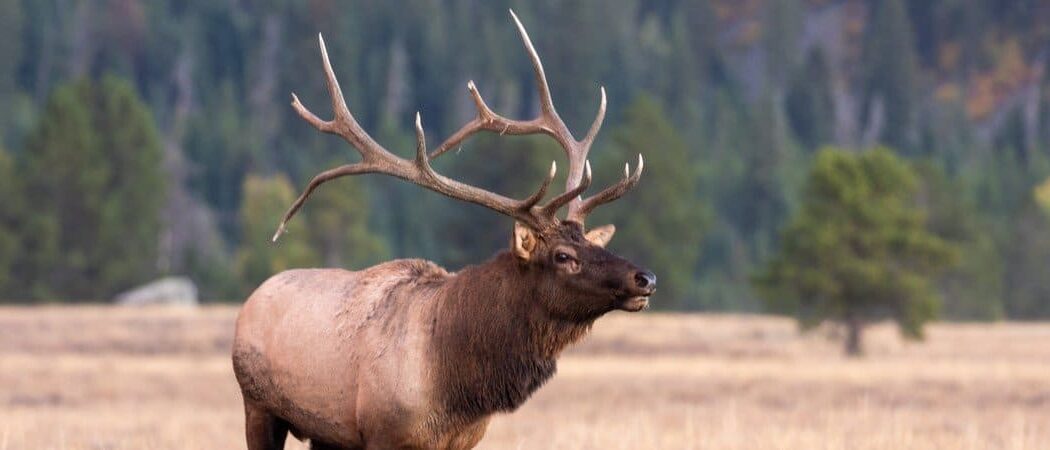
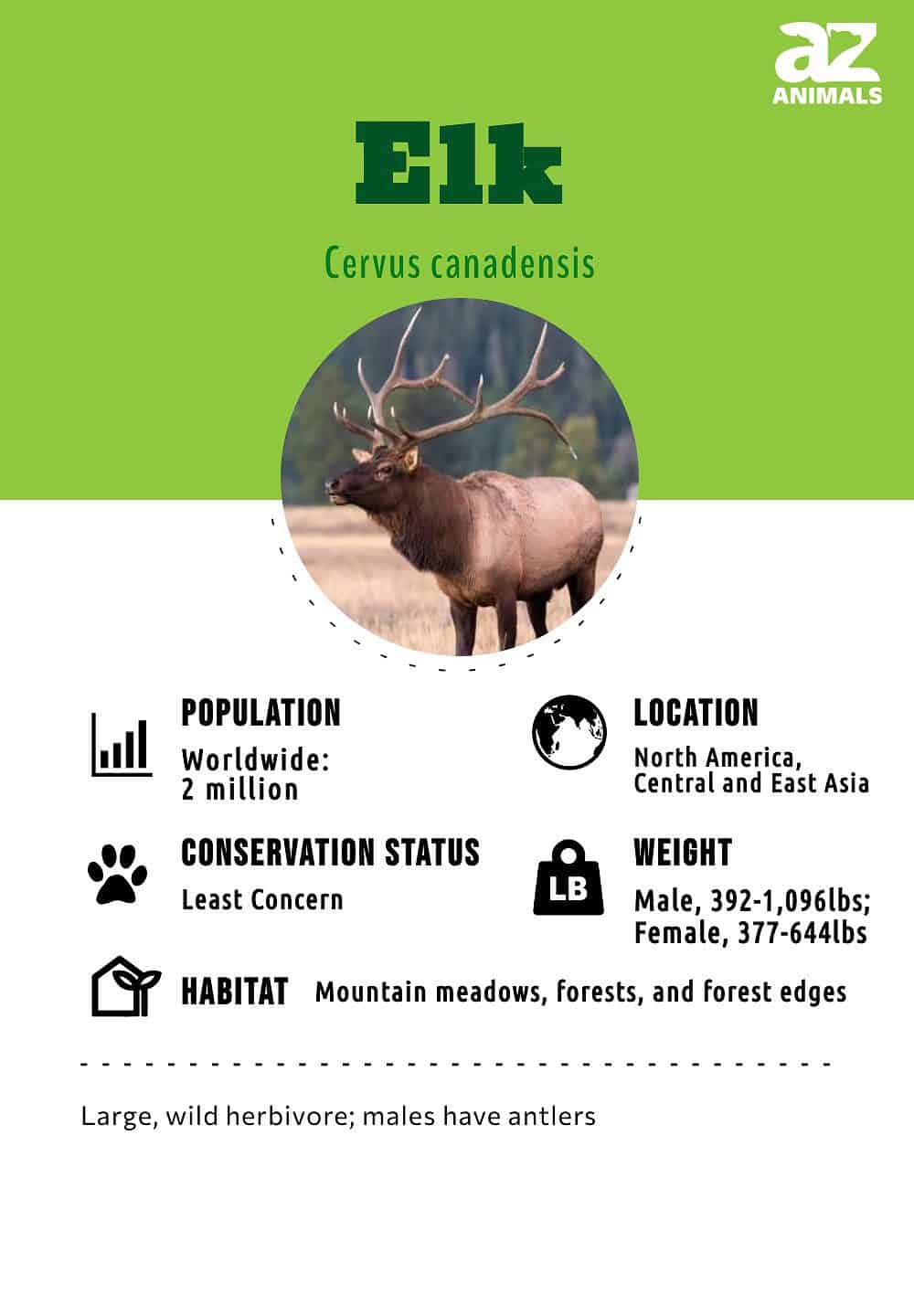
The elk, or wapiti, is one of the largest land-dwelling animals in North America, Central Asia, and East Asia, where it lives in mountain meadows, forests, and forest edges.
๐Ÿ‘ Image

The elk is the second-largest wild herbivore, or cervid, after the moose. The Rooseveltโ€™s elk, Tule elk, Rocky Mountain elk, and the Manitoban elk are four of the six North American subspecies that still exist in the wild, while the Eastern and the Merriamโ€™s Easter elk subspecies are extinct.

Elk are popular as hunting game, while its meat is a specialty in some restaurants and stores, and its antlers are used in novelty items and traditional East Asian medicine. Although some herds suffer from infectious disease, the general population is increasing and listed as Least Concern on the IUCN Red List.

5 Incredible Facts!

  • The male bugling sound is made from simultaneously roaring and whistling, as evidenced by their moving both their lips and their nostrils.
  • Elk consume an average of 9.1kg (20lbs) of vegetation every day.
  • Adult males (bulls) can run up to 40mph.
  • The elk is the unofficial mascot of Estes Park, Colorado, since it is one of the most often spotted wildlife there.
  • Wapiti (waapiti) is a word meaning โ€œwhite rumpโ€ in Shawnee and Cree.

You can check out more incredible facts about elk.
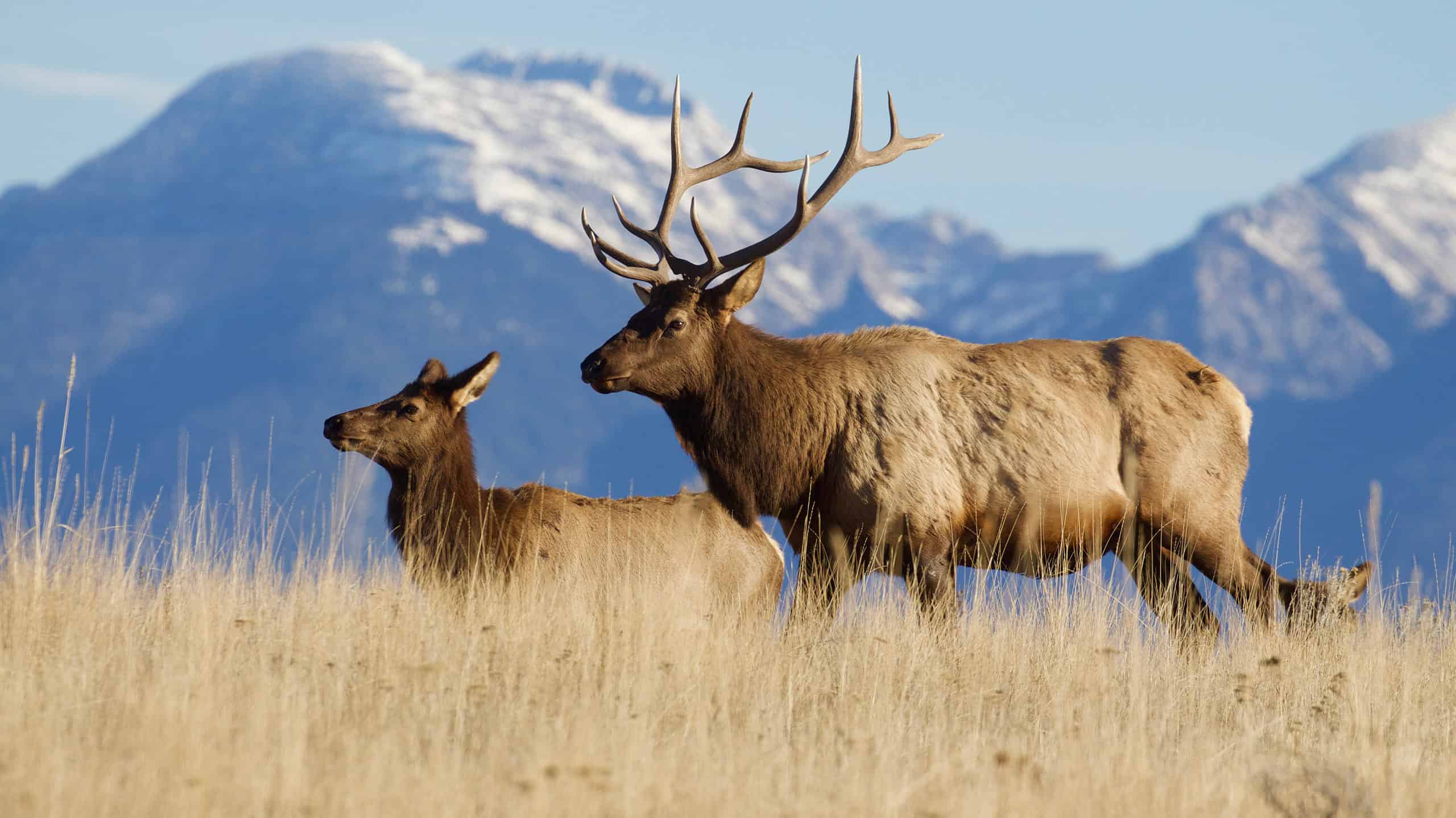
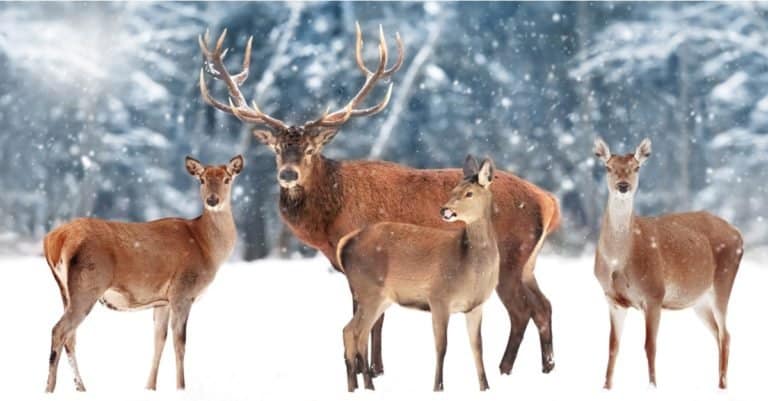
๐Ÿ‘ American Elk in front of the Rocky Mountains

American Elk, male (with antlers) and female in front of the Rocky Mountains

ยฉTom Reichner/Shutterstock.com

Scientific Name and Origins

These animals are often confused with the moose, not only because they look similar but because the moose (scientific name Alces alces or Cervus alces) is called โ€œelkโ€ in Eurasia. The scientific name of the elk is Cervus canadensis, with C. c. canadensis being the species type. There are 14 subspecies. Although they are both animals in the deer family Cervidae, the elk are in the subfamily Cervinae or Old World Deer, while the moose is in the subfamily Capriolinae (Odocoileinae) or New World deer.

The word โ€œelkโ€ historically had a meaning like โ€œlarge deer.โ€ English-speaking people in North America in the 17th century were familiar with the elkโ€™s relative, the red deer (Cervus elaphus) but not the moose, so they gave the name โ€œelkโ€ to Cervus canadensis, also referred to as โ€œred deer.โ€ Linguistically, the romanized ancient Greek word for the Latin Alces (moose) was รกlkฤ“, which during the Early Middle Ages in the 8th century was called elch, elh and eolh in Old English. It then became elk, elcke or elke in Middle English or the Latinized alke. The Asian subspecies of elk are sometimes called maral, though the word mainly applies to the Caspian red deer, a red deer subspecies (Cervus elaphus maral).

Elk are related to an ancient breed of red deer in Asia, and are still called red deer there. They came to North America across the Bering Strait about 120,000 years ago, as did the caribou and other animals. Between 5,000 to 10,000 years ago, they advanced as far as Colorado, and there may have been as many as 10 million elk in North America when European settlement began.

Types

North American elk

  • C. canadensis roosevelti (Rooseveltโ€™s elk)
  • C. canadensis nannodes (Tule elk)
  • C. canadensis manitobensis (Manitoban elk)
  • C. canadensis nelsoni (Rocky Mountain elk)
  • C. canadensis canadensis (Eastern elk; extinct for over a century)
  • C. canadensis merriami (Merriamโ€™s Easter elk; extinct for over a century)

Eastern Asian elk (wapiti)

  • C. c. sibiricus (Altai wapiti)
  • C. c. songaricus (Tian Shan wapiti)
  • C. c. xanthopygus (Manchurian wapiti)
  • C. c. alashanicus (Alashan wapiti)

Central Asian red deer (Southern group)

  • C. c. macneilli (Sichuan deer)
  • C. c. kansuensis (Kansu red deer)
  • C. c. wallichii (Tibetan red deer)
  • C. c. hanglu (Kashmir stag)

Recent DNA studies indicate there are really no more than three or four subspecies, with the American forms and even the Siberian elk (C. canadensis sibiricus) all seeming to belong to one subspecies (C. canadensis canadensis). The Chinese subspecies are all treated as one distinct species.
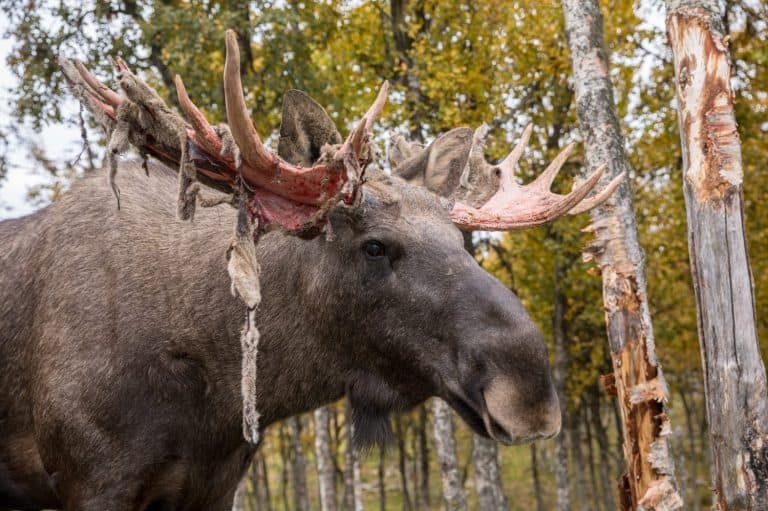
๐Ÿ‘ moose

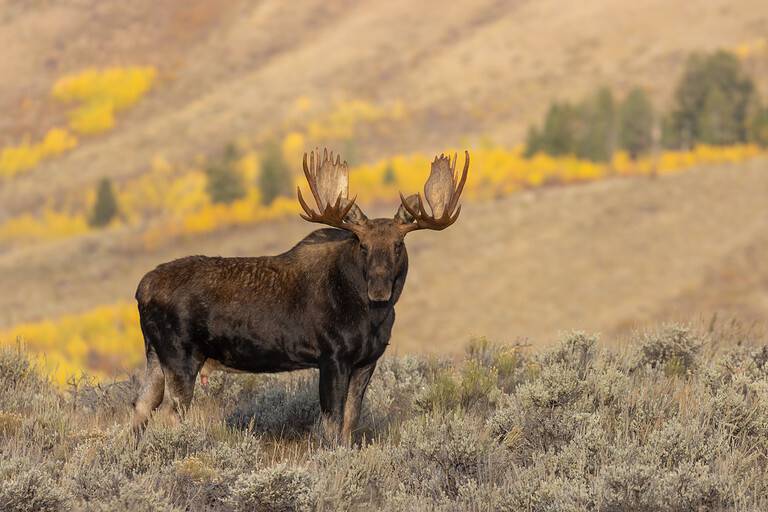
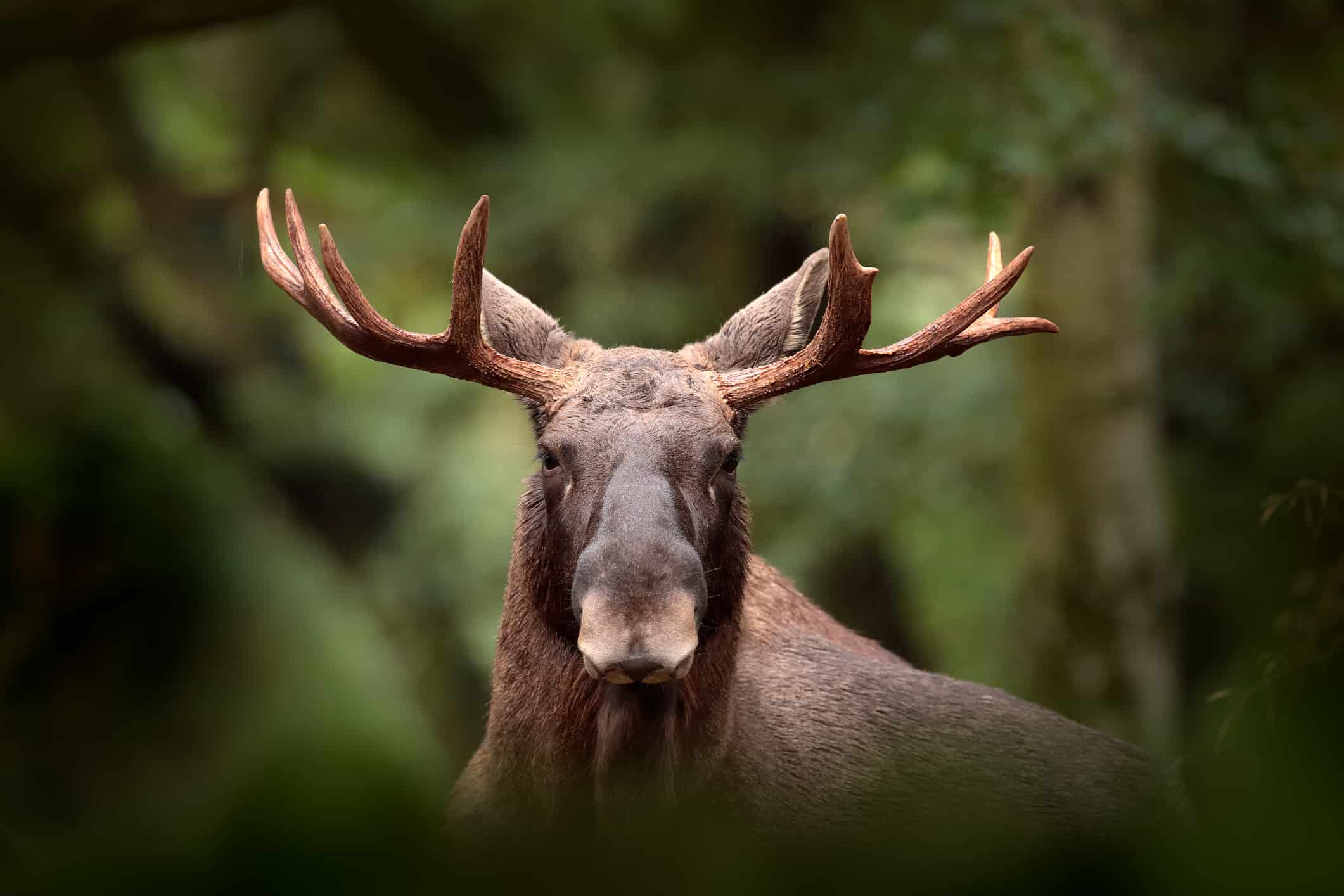
Elk males have large antlers coverd by a velvet that is shed in the summer.

ยฉiStock.com/Ondrej Prosicky

Appearance

The 14 subspecies are all thought to be variations of the same species with slight differences in appearance and behavior known as climate-related lifestyle factors. All have thick bodies with short tails, small and defined rump patches, and slender legs. They have a shoulder height of 0.75-1.5m (2ft 6in-4ft 11in) with a nose-to-tail length of 1.6-2.7m (5ft 3in-8ft 10in). Males weigh 178-497kg (392-1,096lbs) while females weigh 171-292kg (377-644lbs).

The exception is the largest subspecies, Rooseveltโ€™s elk, where the largest males can weigh up to 600kg (1,300lbs) but on average 318-499kg (701-1,100lbs) with females weighing 261-283kg (575-624lbs). Tule elk also have a different weight, with males weighing 204-318kg (450-701lbs) and females weighing 170-191kg (375-421lbs). All elk grow a thick winter coat during the fall, but only male and female North American elk have thin neck manes.

All male animals have antlers that are made of bone and grow 2.5cm, or about an inch a day. The antlers can grow over 20 inches in length! During growth, a layer of velvet covers them. They shed the velvet covering in the spring after the antlers are done developing. Since testosterone drives the formation of antlers, when the testosterone level drops in late winter and early spring, the antlers shed. Some antlers have multiple tines. North American and Siberian elk both have the largest antlers and the Altai wapiti has the smallest, with Rooseveltโ€™s antlers weighing 18kg (40lbs).

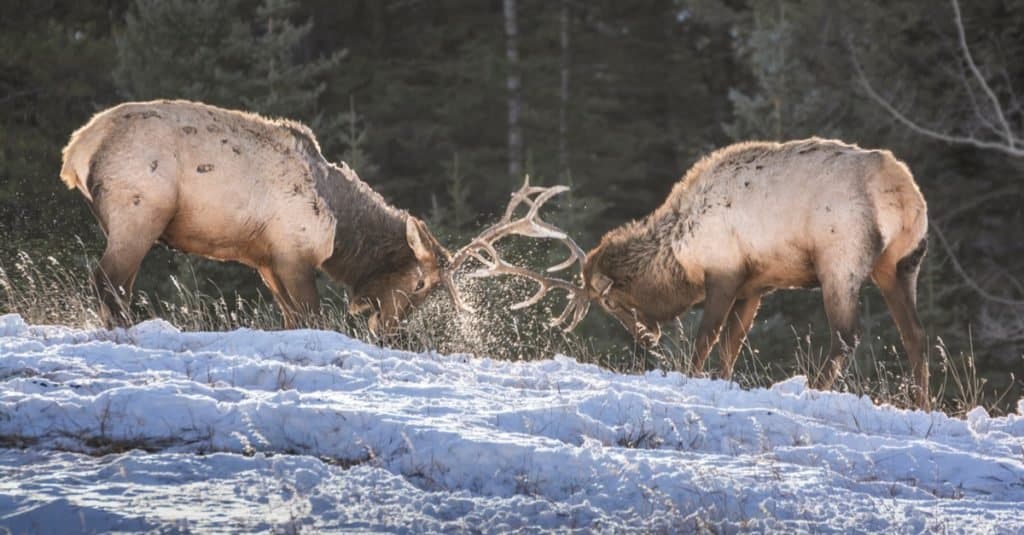
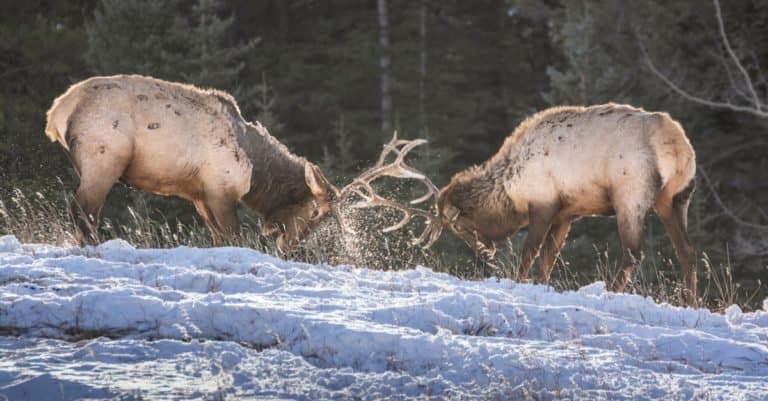
๐Ÿ‘ Sparring Elk in Banff National Park, Alberta, Canada.

Sparring Elk in Banff National Park, Alberta, Canada.

ยฉJames Gabbert/Shutterstock.com

Behavior

Males are called bulls and female elk are called cows. These animals are some of the most social deer species, with group sizes during the summer reaching up to 400 individuals. Adult males and females segregate themselves into different herds during most of the year, with female herds being larger and males creating small groups or being solitary. Young bulls live in female herds or with older, less aggressive bulls.

During mating season, bulls engage in rutting behavior and compete for females which they include in harems of 20 or more cows. They try to intimidate rivals with bugling and antler displays, continuing on with antler wrestling. They may also dig wallows or holes in the ground to urinate in and roll themselves, giving them a unique smell to attract cows. Bulls also defend their harem from other males and predators and herd them when they stray from the harem.

The bullsโ€™ vocalization, called bugling, can reach 4000 Hz. They do it by blowing air from the opening between the vocal folds (the glottis) through the nostrils. They can also create deeper pitched sounds of 150 Hz through the larynx.

Elk rub against trees and other objects to shed their winter coats by early summer. Like several deer species, they migrate into higher altitudes in the spring and retreat in the fall, creating summer and winter ranges. They travel up to 169mi (270km) during their longest migration in the continental U.S.
๐Ÿ‘ Image

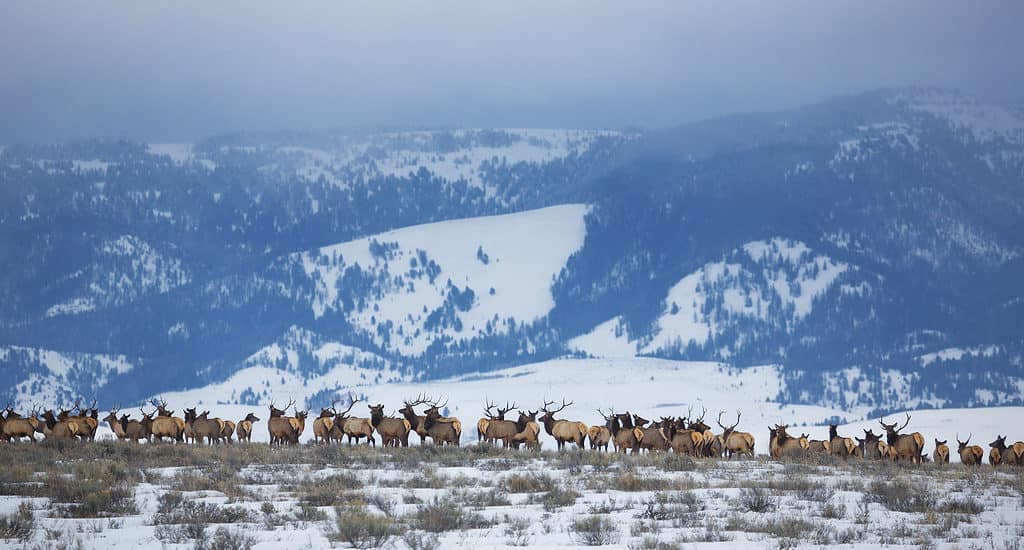
American elk have recovered in Colorado due to the efforts of local communities, conservationists, and hunters.

ยฉChase Dekker/Shutterstock.com

Habitat

The animalโ€™s native habitat is Eastern Asia and North America but was introduced to Central Asia. It had a far wider habitat range in prehistoric times, which included Europe. The species lives in mountain meadows, forests, and forest edges.

There have been elk in New Zealand since 1909 when President Theodore Roosevelt made a gift of a herd of 20 animals that were released on the South Island. Now the elk are hunted as a commercial sport, but they are obviously classed as North American elk.

In addition, elk were introduced to Argentina in the early 1900s, but they are now considered an invasive species, competing for food with native animals.

Diet

As ruminants, these animals have four-chambered stomachs. But while moose and white-tailed deer are mainly browsers, elk are mainly grazers. They feed in the morning and evening and seek shelter to digest. During winter, they travel to wooded areas for greater availability of food. Their diets are herbivorous, consuming native grasses year-round, tree bark in winter, and shrubs and tree leaves and sprouts in summer. Each day they eat 9.1kg (20lbs) of vegetation on average.
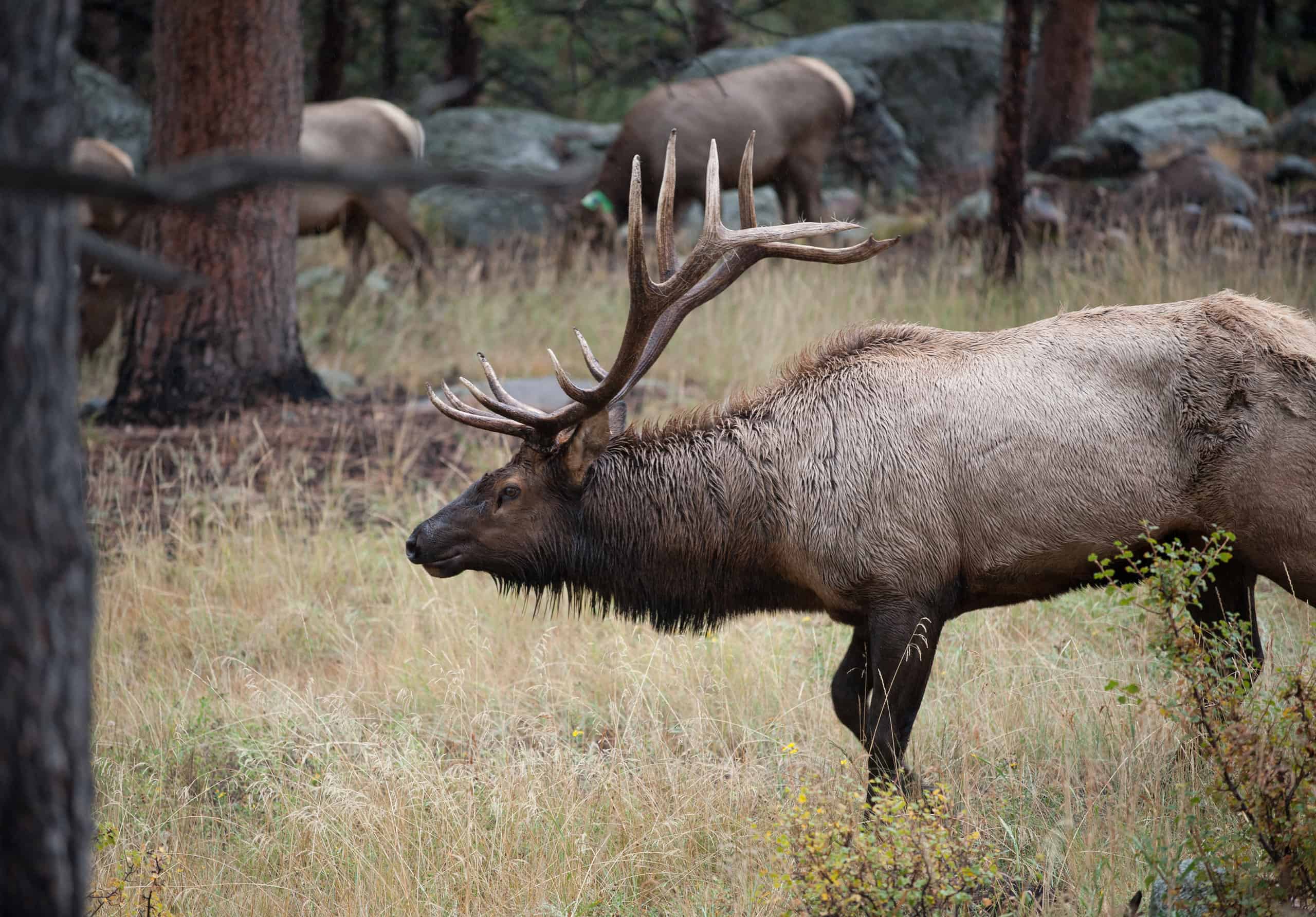
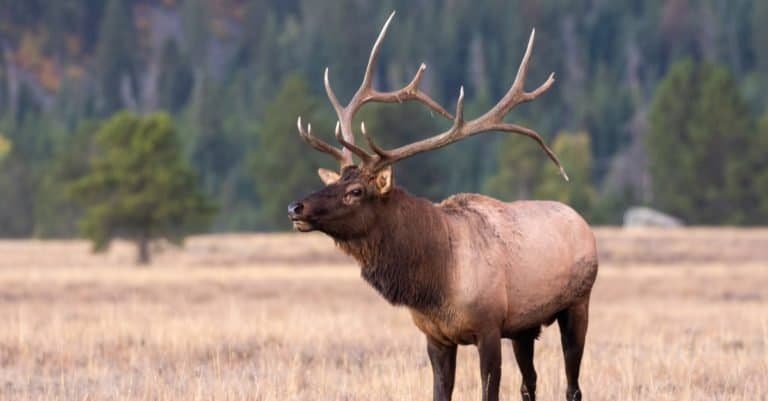
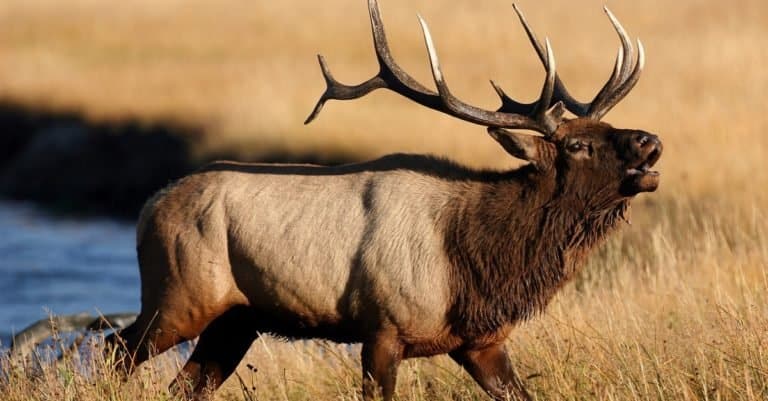
๐Ÿ‘ A large bull North American elk standing in an open meadow

Elk have a number of predators among large mammals like bears, but they are also hunted by humans and attacked by diseases.

ยฉTony Campbell/Shutterstock.com

Predators and Threats

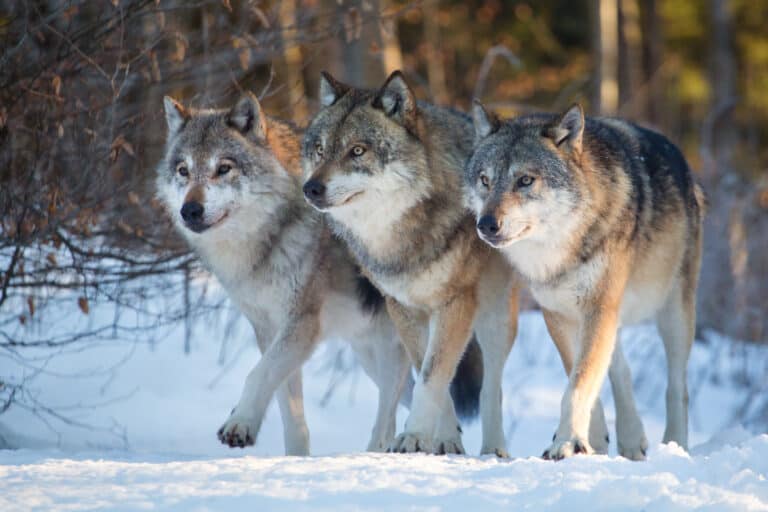
Typical predators of these animals are wolves, coyotes, brown bears, North American black bears, Asiatic black bears, cougars, and Siberian tigers. Coyote packs, brown bears, and black bears are the main predators of elk calves, with brown and black bears being the top predators. The killing of young cows affects population growth more than that of bulls or calves. Bulls are weakened by chasing females and fighting other males in late winter, or when they have lost their antlers, and so are more likely to be preyed upon by wolves then. However, elk can decrease predation by changing to browsing instead of grazing, the main difference being the change from wooded areas with their heads up to open areas with their heads down.

Other threats to these animals are several bacterial infectious diseases and parasites, with some being transmittable to livestock. The main host of the brainworm or meningeal worm (Parelaphostrongylus tenuis) is the white-tailed deer, which is not affected, but the worm is fatal for elk. Elk can also consume the same parasite through snails and slugs which are intermediate hosts.

Other fatal parasites are the liver fluke (Fascioloides magna) and the lungworm Dictyocaulus viviparus. The chronic wasting disease is transmitted by prions (pathogenic agents) and affects their brain tissue. It can be transmitted through consuming elk antler velvet, which in humans results in the variant Creutzfeldtโ€“Jakob disease.

A bacterial disease called brucellosis in the U.S. only exists in Yellowstone. It can transmit to domesticated cattle, bison, and horses and cause infertility, spontaneous abortions, and decreased milk production. In humans, it results in undulant fever and flu-like symptoms which can persist for years. Gastrointestinal parasites include Eimeria sp. and Ostertagia sp. Another disease of concern is elk hoof disease, which is connected to treponeme bacteria and causes hoof deformities leading to extreme lameness.

For humans, elk are also not only a hunting game species, but their antlers are often used in traditional Chinese medicine, with antler velvet used as an aphrodisiac to increase well-being and testosterone for both men and women. The meat is available in some restaurants and grocery stores. It is higher in protein, lower in fat and cholesterol, and leaner than chicken, pork, and beef, as well as being a good source of zinc, phosphorus, and iron.

Antlers are also used in novelty items such as artwork and furniture, with elk being raised for their antlers by Asian peoples. North America and New Zealand have many elk farms. Native Americans engaged in hunting elk to use their hides for tepee coverings, clothing, and footwear.
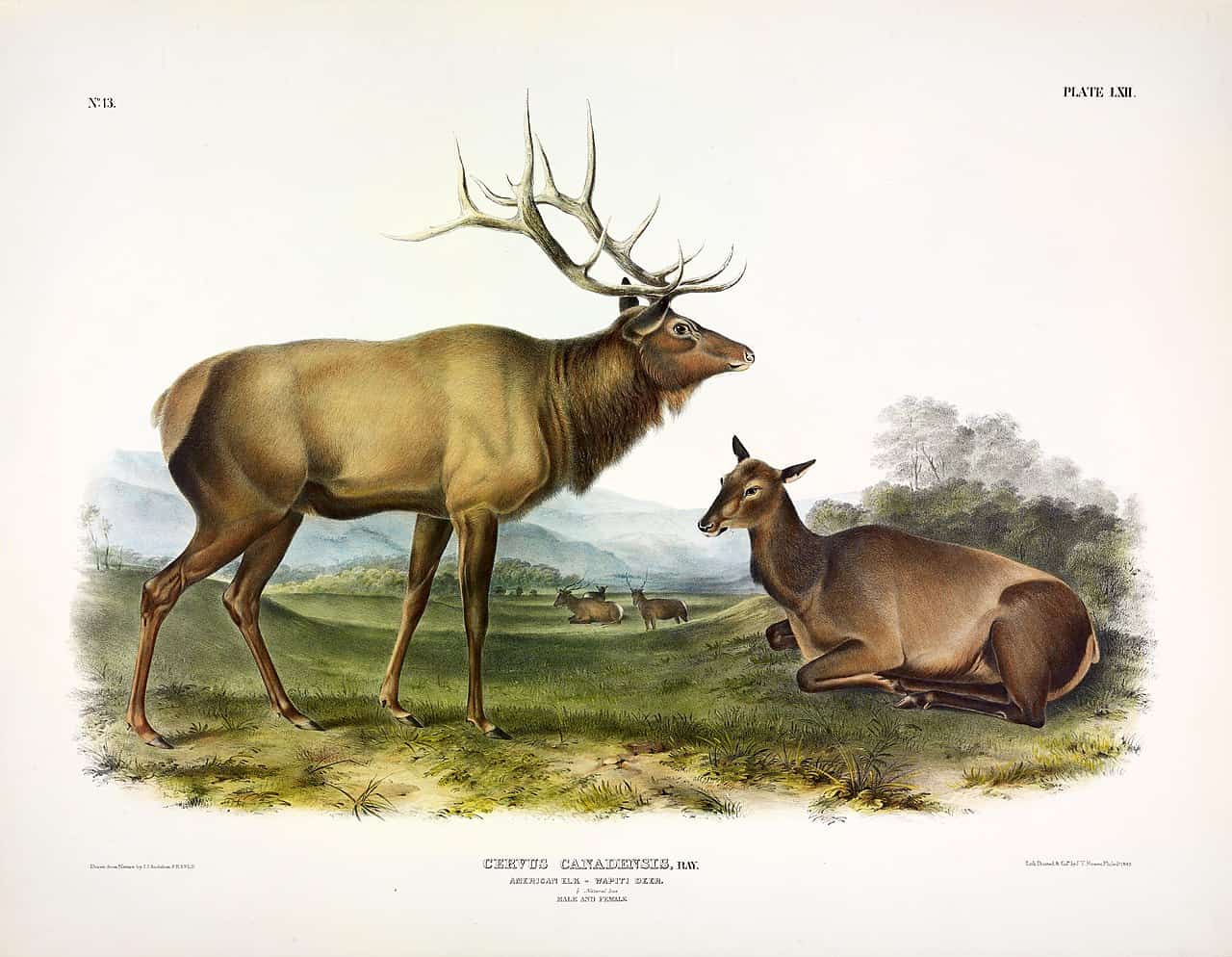
๐Ÿ‘ eastern elk

Cows usually produce only one calf at a time.

ยฉJohn James Audubon / public domain โ€“ Original / License

Reproduction and Life Cycle

Bulls and cows join each other during the mating season starting in late August and ending in early winter. Bulls make a dozen or more mating attempts during the cowsโ€™ short estrus lasting one or two days. Cows typically produce one, and occasionally two, offspring, which are called calves. Cows reproduce most often when they weigh at least 200kg (440lbs).

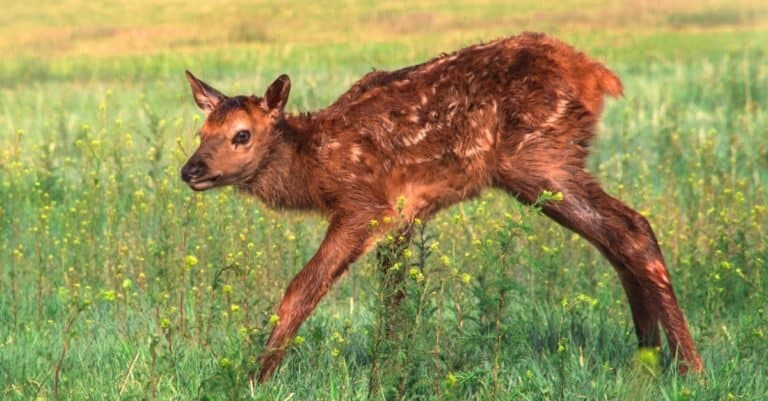
The gestation period is 240-262 days and the calves weigh between 15-16kg at birth. They are born with spots that they lose by the end of summer. Cows isolate themselves for birth and until the calf can flee from predators. Calves can join the herd after two weeks, and at two months are fully weaned. Before age three, elk leave their birth ranges. Their lifespan is 10-13 years and sometimes 15 years in the wild and 20 or more years in captivity.

Population

The population of elk herds in the Greater Yellowstone Ecosystem is about 40,000 individuals. There are 9,000-13,000 elk in the Teton herd, which migrate south from the southern parts of Yellowstone National Park and west from the Shoshone and Bridger-Teton National Forests to spend their winters on the National Elk Refuge. The population of Cervus canadensis is increasing and listed as Least Concern on the IUCN Red List.

View all 185 animals that start with E

Sources

  1. Wikipedia / Accessed May 27, 2021
  2. Rocky Mountain National Park / Accessed May 27, 2021
  3. Fossil Farms / Accessed May 27, 2021
  4. Animalia / Accessed May 27, 2021

Thank you for reading! Have some feedback for us?

Contact the AZ Animals editorial team

Related Articles You May Find Interesting

Wolves Are Stealing Cougar Kills in Yellowstone โ€” And the Big Cats Are Quietly Changing Their Hunting Strategy

The 5 Best Colorado Trails to See Moose and Elk in Their Natural Habitat


Elk FAQs (Frequently Asked Questions)

There are several important differences between elk and reindeer. Frist, elk are larger. Second, the two primarily live in different habitats, with reindeer surviving in much more northerly climates. Finally, reindeer have long been domesticated while elk are not domesticated.

Its taste is a cross between venison and beef.

Native grasses, forbs, shrubs, tree bark, and twigs.

Mountain meadows, forests, and forest edges.

No. Although they look similar and are both members of Cervidae (the deer family), they are in different subfamilies.

Elk are dangerous in large part due to the bullsโ€™ antlers which can impale their targets. They are also very heavy. Cows are dangerous during calving season, during which they are unpredictable and erratic, charging and stomping on animals they perceive as a threat.

They may occasionally eat eggs and baby ground-dwelling birds such as goslings.

Elk are herbivores. However, they can also be opportunistic carnivores, which would make them omnivores.

The most notable difference is their size. Elk are much larger than the average red deer in size and pure mass. While there are some subspecies of red deer that come close (the central Asian red deer, for example), elk are generally larger. Aside from size, elk and red deer donโ€™t share a common range: elk are found in North America, while red stags are found across Europe, North Africa, and some of the middle east. Both species have been introduced to various habitats around the world.

The greatest differences between a sambar deer and an elk are found in their morphology and range. Elk are large members of the deer family with a tan-colored body, a white rump patch and light hindquarters, a shaggy mane in the fall, and a small, short tail, but sambar deer have amber or yellow-brown coats, a black tail with a light underside that measures several inches, and a somewhat sparse mane. Elk are found throughout North America, parts of Asia, and parts of southeast Russia, but Sambar deer live throughout Southeast Asia and the Indian subcontinent.