




E
Species Profile

Eurasier

Canis lupus familiaris

Soft coat, steady heart.
Karen Appleby/Shutterstock.com

Eurasier Distribution

Click a location to explore more animals from that region

Origin Location

This map shows the native origin of the Eurasier. As a domesticated species, they are now found worldwide.

Loading map...

Size Comparison

Human 5'8"
Eurasier 1 ft 9 in

Eurasier stands at 31% of average human height.

At a Glance

Domesticated
Diet Omnivore
Activity Diurnal+
Lifespan 13 years
Weight 32 lbs
Status Not Evaluated
Did You Know?

The Eurasier was purpose-bred in Germany as a family companion, not for hunting or herding.

Scientific Classification

The Eurasier is a medium-sized spitz-type domestic dog breed originating in Germany, developed as a companion dog from crosses among Chow Chow, Wolfspitz (Keeshond), and later Samoyed lines.

Kingdom
Animalia
Phylum
Chordata
Class
Mammalia
Order
Carnivora
Family
Canidae
Genus
Canis
Species
Canis lupus familiaris

Distinguishing Features

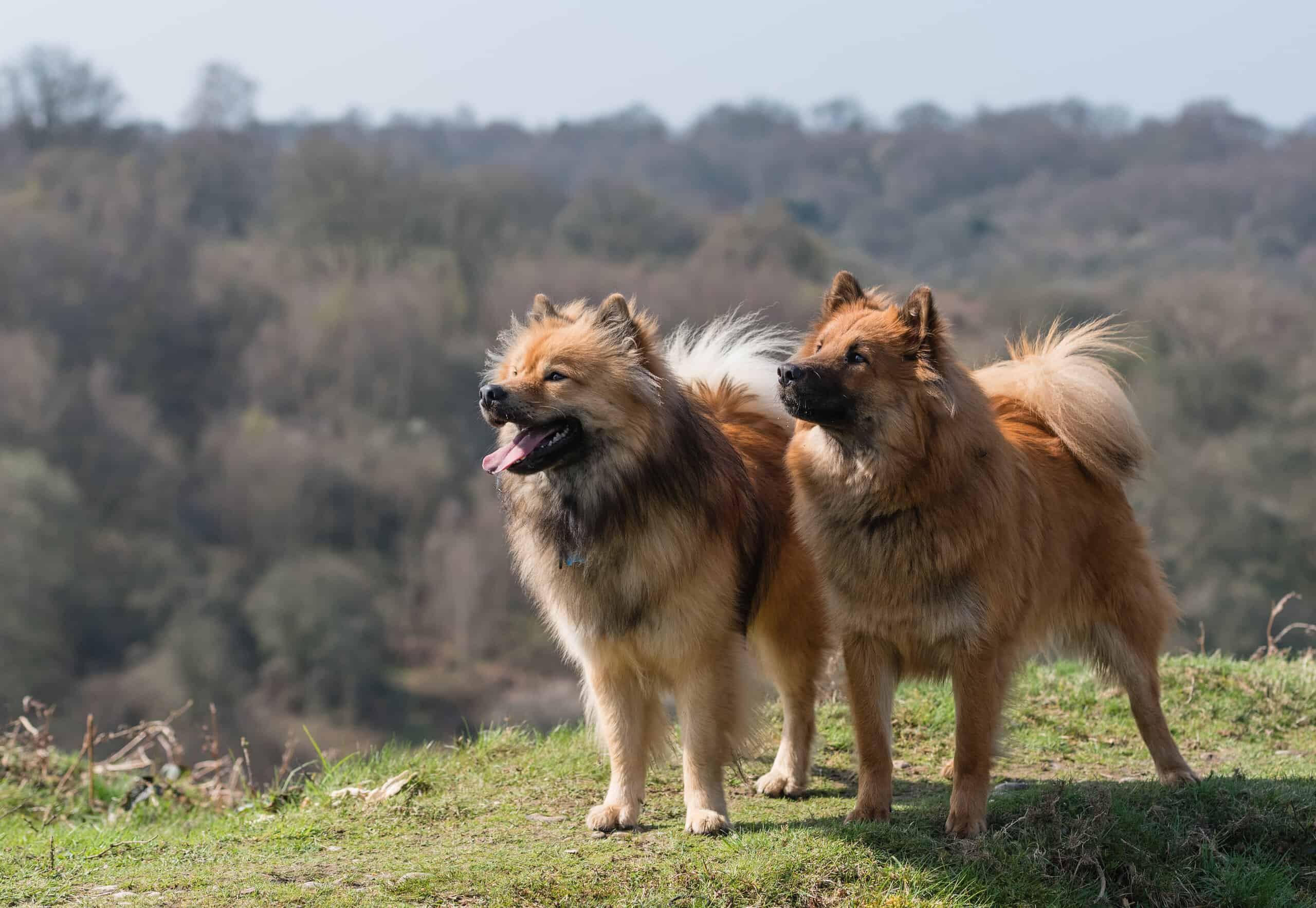
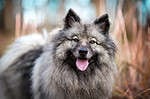
  • Spitz-type outline with dense double coat and neck ruff
  • Erect, triangular ears and a wedge-shaped head
  • Bushy tail typically carried curled over the back
  • Medium build (not toy-sized), balanced proportions
  • Coat colors vary; overall appearance often fox/wolf-like without being a wolf hybrid

Physical Measurements

Males and females differ in size

Height
โ™‚ 1 ft 10 in (1 ft 8 in โ€“ 1 ft 12 in)
โ™€ 1 ft 8 in (1 ft 7 in โ€“ 1 ft 10 in)
Length
โ™€ 2 ft 10 in (2 ft 6 in โ€“ 3 ft 3 in)
Weight
โ™‚ 60 lbs (51 lbs โ€“ 71 lbs)
โ™€ 49 lbs (40 lbs โ€“ 57 lbs)
Tail Length
โ™€ 11 in (9 in โ€“ 1 ft 1 in)
Top Speed
28 mph
Moderate top speed

Appearance

Primary Colors
Secondary Colors
Skin Type Domestic dog skin with a dense spitz-type double coat: a harsh, weather-resistant outer coat over a thick insulating undercoat; seasonal heavy shedding.
Distinctive Features
  • Breed context vs. base species (domestic dog): purpose-bred companion spitz developed in Germany (Chow Chow ร— Wolfspitz/Keeshond, later Samoyed), selected for stable temperament and family suitability rather than working/feral survival traits.
  • Spitz-type morphology: medium-sized, balanced frame; wedge-shaped head; small-to-medium erect triangular ears; almond-shaped eyes with a calm, alert expression.
  • Tail: high-set and carried curled or sickle-shaped over the back, with plume-like hair.
  • Coat: dense double coat with noticeable seasonal "blow" (undercoat shedding); a neck ruff is common, especially in males and in cooler seasons.
  • Temperament/behavior (appearance-adjacent handling note): typically reserved with strangers but not sharp; bonds closely to family-often carries a composed, quiet demeanor in posture and expression.
  • Common health concerns (breed-relevant): hip dysplasia, patellar luxation, hypothyroidism, and eye issues (e.g., distichiasis/entropion reported in some lines); responsible screening is standard in well-bred Eurasiers.
  • Eurasier (Canis lupus familiaris): Brush often in shedding seasons to prevent mats and manage undercoat; avoid harsh bathing; give daily exercise and mental play to stay lean; protect from heat with shade and water.

Sexual Dimorphism

Males are typically larger and more substantial with a more pronounced mane/ruff; females are usually lighter-boned with a slightly finer head and less prominent ruff. Differences are moderate rather than extreme.

โ™‚
  • Larger overall size and heavier bone; broader head and chest.
  • More pronounced neck ruff/mane and fuller tail plume (especially in winter coat).
  • Often a more 'bear-like' outline when in full coat (Chow-influenced fullness).
โ™€
  • Slightly smaller, lighter frame with a more refined head.
  • Ruff typically less pronounced; silhouette can appear more streamlined.
  • May show a slightly more delicate overall expression while retaining spitz ear/tail set.

Did You Know?

The Eurasier was purpose-bred in Germany as a family companion, not for hunting or herding.

It began as a Chow Chow ร— Wolfspitz (Keeshond) cross; Samoyed was added later to refine temperament and type.

Like many spitz breeds, it carries an insulating double coat and a tail that typically curls over the back.

Eurasiers often mature mentally a bit later than some breeds, becoming especially steady as adults.

Their coat colors can vary widely (e.g., wolf-gray, fawn, red, black), while certain patterns are restricted by breed standards.

Compared with many popular breeds, Eurasiers are relatively uncommon outside Europe, with controlled breeding programs emphasizing temperament and health.

Unique Adaptations

  • Spitz-type double coat: a dense undercoat plus harsher outer coat helps regulate temperature in cold and damp conditions-an inheritance from northern-type ancestors.
  • Curled tail carriage: helps protect tail tip and conserve warmth in cold climates (common across spitz breeds), while also serving as a visible social signal.
  • Erect ears and watchful posture: efficient sound localization and environmental awareness-traits shared broadly across domestic dogs but pronounced in spitz types.
  • Behavioral adaptation for companionship: selective breeding emphasized stable, family-oriented temperament over specialized working drive, distinguishing the Eurasier from many task-bred dogs.

Interesting Behaviors

  • "Velcro without chaos": many Eurasiers like staying near their people, but usually aren't hyperactive attention-demanders.
  • Reserved greeting style: they may watch first, then warm up-especially with strangers-reflecting their companion, not "social butterfly," nature.
  • Quiet communication: many use subtle body language (leaning, soft eye contact) more than constant barking.
  • Spitz-style scanning: they often choose a vantage point in the home/yard to calmly monitor activity.
  • Seasonal coat blow: heavy shedding periods can coincide with weather/daylight changes; owners often notice a dramatic "fur release."

Cultural Significance

The Eurasier (Canis lupus familiaris) is a modern German companion breed made to be a calm family dog by blending European spitz (Wolfspitz/Keeshond) and Asian spitz (Chow Chow), later refined with Samoyed. Breed clubs stress socializing and health.

Myths & Legends

A common origin tale says the Eurasier was planned in Germany as an "ideal family spitz," made by mixing Chow Chow dignity, Wolfspitz steadiness, and Samoyed sociability โ€” a modern breed legend.

People often call the breed's name a symbol "bridge" between East and West, tying the Chow Chow's East Asian roots and the European spitz line, giving the dog a story beyond genetics.

In German-speaking communities, spitz-type dogs are linked to folk ideas of watching the home; stories of them 'quietly keeping the household safe' explain why the Eurasier (Canis lupus familiaris) has a quiet, watchful nature.

Owners and breeders often tell an old story about spitz breeds: the faithful home dog kept for company, not work. Today the Eurasier (Canis lupus familiaris) is commonly put into that role.

Conservation Status

NE Not Evaluated

Has not yet been evaluated against the criteria.

Population Stable

Life Cycle

Birth 5 pups
Lifespan 13 years

Lifespan

In the Wild 12โ€“14 years
In Captivity 11โ€“15 years

Reproduction

Mating System Polygynandry
Social Structure Managed Domestic
Breeding Pattern Transient
Fertilization Internal Fertilization
Birth Type Managed_selective

Eurasier (Canis lupus familiaris) breeding is human-managed and functionally polygynandrous: planned, changing mates across heats. Internal fertilization with a copulatory tie. Pairing is short-term; pups are raised by the dam with human care, not cooperative pack help.

Behavior & Ecology

Social Pack Group: 5
Activity Diurnal, Crepuscular
Diet Omnivore Meat-forward, highly palatable animal-protein foods (e.g., poultry, beef, fish; typically via quality kibble/wet food with high animal-protein content).

Temperament

Companion-focused, people-attentive; typically calm indoors when needs are met (breed-distinguishing vs general domestic dog variability: often less hyper-social with strangers).
Reserved/aloof with unfamiliar people; tends toward watchfulness rather than sharp guarding; can alert-bark but is not usually a high-intensity protection breed.
Generally even-tempered and sensitive to harsh handling; responds best to positive reinforcement and consistency.
Moderate prey/chase drive varies by line and early exposure; leash reliability and recall benefit from early training (species context: inherited canid chase sequences persist in many dogs).
Dog sociability: often polite/neutral; may be selective with unknown dogs-early, controlled socialization is important to prevent fear-based reactivity.
Care requirements: medium energy-daily walks plus mental enrichment (sniffing games, training, chew outlets); coat requires regular brushing, heavier during seasonal sheds; avoid overbathing to protect coat/skin barrier.
Common health concerns (breed-specific emphasis): hip dysplasia, patellar luxation, hypothyroidism/thyroid issues, and some eye conditions (e.g., distichiasis/entropion reported in spitz breeds); deep-chested individuals can be at risk for gastric dilatation-volvulus (bloat)-use sensible feeding/exercise routines.

Communication

Alert barking Often brief/functional; many Eurasiers are less 'yappy' than some small companion breeds
Whining/whimpering for attention, frustration, or discomfort Common domestic dog signal
Growling as a distance-increasing warning; important to respect rather than punish to prevent escalation.
Howling is possible but typically less frequent than in more primitive or northern breeds; may occur in response to sirens or group excitement.
Sighs/grumbles during relaxation or mild protest Breed and individual variation
Body language: ear set, tail carriage (spitz tail), piloerection, freezing, and curved approaches to signal intent; Eurasiers often display subtle stress signals and benefit from handlers who read them well.
Facial signals: lip licking, yawning, head turns, soft/blinking eyes-often used to de-escalate or show uncertainty Common across domestic dogs
Affiliative contact: leaning, following/'velcro' behavior, nose nudges, pawing; strong in-family affiliation is typical for the breed.
Scent communication: urine marking, ground scratching, sniffing; domestic dogs rely heavily on olfaction for social information and spacing.
Play signals: play bow, bouncy gait, self-handicapping; Eurasiers may prefer calmer play styles and shorter bouts compared with higher-arousal breeds.

Habitat

Biomes:
Temperate Forest Temperate Grassland Boreal Forest (Taiga) Tundra Alpine Mediterranean Desert Hot Desert Cold Savanna Tropical Dry Forest Tropical Rainforest Wetland Freshwater Marine +8
Terrain:
Plains Hilly Valley Mountainous Coastal Island
Elevation: Up to 18044 ft 8 in

Ecological Role

Domesticated companion canid; ecologically functions as a human-associated omnivore. When roaming/feral, can act as an opportunistic mesopredator and scavenger affecting local wildlife and waste resources. As a managed pet, its primary role is social/functional within human environments rather than a natural food-web predator.

companionship and social support to humans localized pest deterrence/rodent control when allowed to hunt alert/sentinel behavior (deterrence via barking/presence) minor nutrient cycling via scavenging of food waste in unmanaged contexts

Diet Details

Main Prey:
Commercial dog food Dog Dog-safe treats
Other Foods:
Berries and other soft fruits Orchard fruit Grasses and other roughage Roots and tubers Cooked grains Vegetables

Human Interaction

Domestication Status

Domesticated

The Eurasier (Canis lupus familiaris) is a modern dog breed made in Germany in the 1960sโ€“1970s as a steady, family companion. Early crosses were Chow Chow and Wolfspitz/Keeshond (called 'Wolf-Chow'); later Samoyed was added. Eurasiers were bred for calm, stable company and moderate spitz looks, not for heavy work.

Danger Level

Low
  • Bite risk exists as with any dog, typically linked to poor socialization, fear, pain, or mishandling rather than breed-typical aggression
  • Large/medium dog knock-down risk (jumping, leash pulling) especially around children/elderly if untrained
  • Potential for resource guarding or stranger wariness if under-socialized (more likely to avoid than confront)

As a Pet

Suitable as Pet

Legality: Generally legal as a domestic dog breed in most jurisdictions; subject to standard local dog licensing, vaccination (e.g., rabies where required), leash laws, and housing/HOA rules. Not typically targeted by breed-specific legislation.

Care Level: Moderate

Purchase Cost: $1,500 - $3,500
Lifetime Cost: $15,000 - $35,000

Economic Value

Uses:
Companion animal market Breeding (registered purebred programs) Pet services (training, grooming, boarding, veterinary care) Sports/events (conformation, rally/obedience, therapy/CGC-type activities)
Products:
  • puppies from reputable breeders (health-tested lines)
  • stud services within regulated breeding programs
  • grooming services (coat blow-outs/seasonal shedding management)
  • training and behavior services (socialization, manners, reactivity prevention)
  • veterinary services (preventive care; screening for breed-associated issues)

Relationships

Predators 5

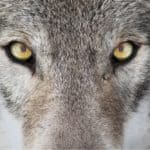
Gray wolf Canis lupus
Coyote Canis latrans
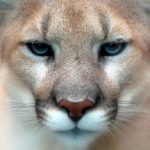
Cougar Puma concolor
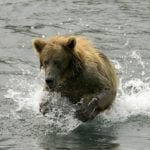
Brown bear Ursus arctos
Golden eagle Aquila chrysaetos

Related Species 6

Gray wolf Canis lupus Shared Genus
Coyote Canis latrans Shared Genus
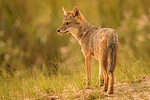
Golden Jackal Canis aureus Shared Genus
African golden wolf Canis anthus Shared Genus
Dhole Cuon alpinus Shared Family
Red fox Vulpes vulpes Shared Family

Ecological Equivalents 6

Animals that fill a similar ecological role in their ecosystem

Samoyed Canis lupus familiaris Spitz-type companion/working lineage with a dense double coat and a strong social bond to family. One of the foundational breeds used in Eurasier development, contributing coat texture, a softer expression, and biddability.
Chow Chow Canis lupus familiaris Spitz, ancient-type companion-guardian niche. Contributed to the Eurasier's plush coat, compact spitz outline, and typically more reserved, independent temperament compared with many modern pet breeds.
Keeshond Canis lupus familiaris Medium spitz companion/watchdog niche. Contributed to the Eurasier's size range, coat patterning (wolf-gray in some lines), and alert-but-not-aggressive household watchdog tendencies.
Finnish Lapphund Canis lupus familiaris Medium spitz with a thick coat adapted to cool climates. Similar family-oriented temperament and need for regular coat maintenance and daily enrichment, though Lapphunds are generally more overtly outgoing and working-driven.
Shiba Inu Canis lupus familiaris Occupies a compact spitz companion niche, characterized by strong cleanliness and independence. Shares comparable reservedness toward strangers and sensitivity to handling, although Eurasiers tend to be calmer and more handlerโ€‘soft than many primitive spitz.
Eurasier Canis lupus familiaris Bred in Germany from Chow Chow ร— Wolfspitz (Keeshond) with Samoyed blood. The Eurasier is a medium-sized, calm family spitz with a plush double coat. Prone to hip and elbow dysplasia, patellar luxation, thyroid disorders, and eye problems.

The Eurasier traces its roots back to 1960s Germany, where a small group of dog enthusiasts sought to create a breed that combined the best features of a chow chow and a wolfspitz, a type of Inuit dog. This so-called wolf-chow was later bred with Samoyeds to create the perfect, fluffy companion pup.

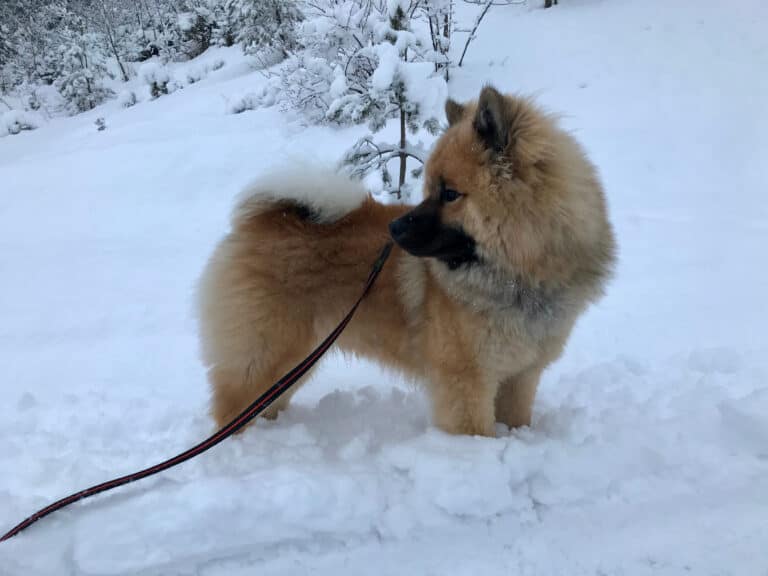
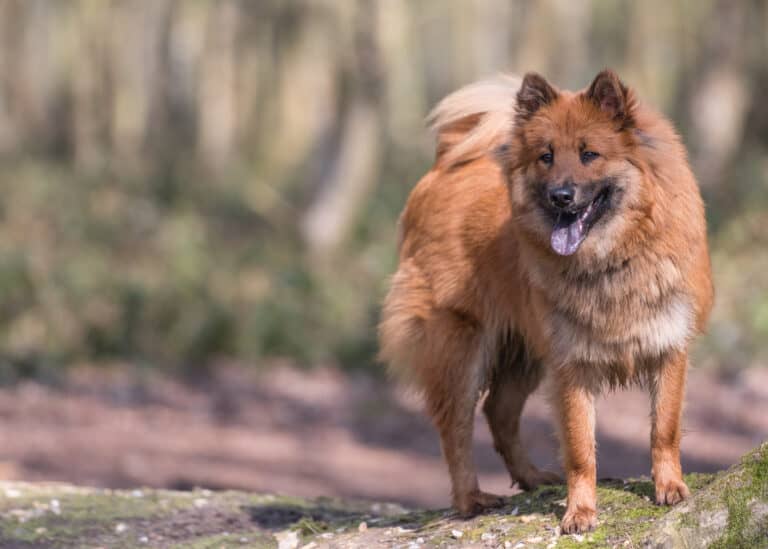
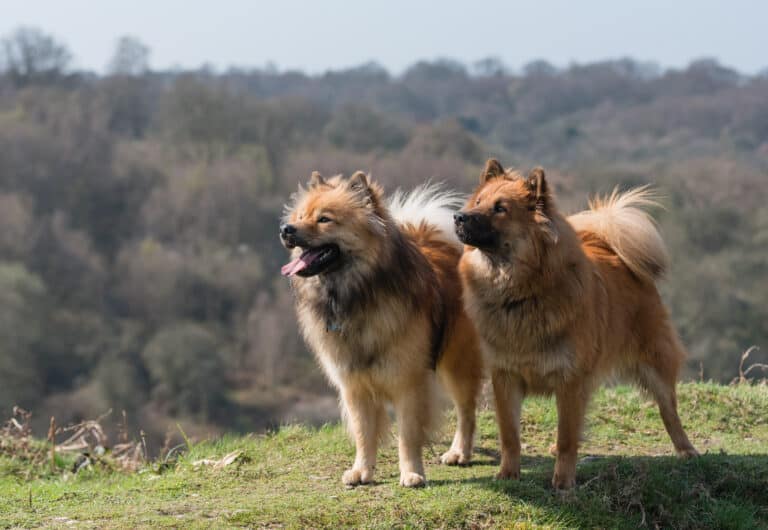
The result is a medium-sized dog with a thick coat in a variety of lovely colors such as white, russet, brown, gray, or black. Eurasiers can also feature pink, purple, or spotted tongues, thanks to their chow chow heritage. The Eurasier loves being close to its family and is much beloved for its calm, gentle temper and keen intelligence.

Easy to care for, adaptable, and quick to train, Eurasiers are highly suitable family and child-friendly pets.

Eurasiers got their unique name thanks to their European and Asian breeding background.

The Best Dog Food For Eurasier

The best food for Eurasier pups depends on a variety of dog-specific factors, such as age, health, weight, activity level, and budget. Most commercial dog chows provide detailed nutrition facts on the packaging to help guide your decision. You can also consult your veterinarian to confirm which dog food will be best for your petโ€™s needs.

Like all pups, Eurasiers deserve high-quality food with nutritious, wholesome ingredients and plenty of protein. These dogs can sometimes be picky eaters and enjoy variety in their diet.

As such, A-Z Animals recommends American Journeyโ€™s Salmon and Sweet Potato Grain-Free dog food. The brand contains clean, natural ingredients and plenty of vitamins that are essential to the Eurasier diet. Salmon is a good source of Omega-3s and healthy fats, which help prevent joint issues as your pup ages.

Pros and Cons of Owning a Eurasier

Pros:Cons:
Very family-oriented dogs:
Eurasiers are family-friendly and get along with kids of all ages.
Picky eaters:
You may have to spend more time and energy rotating out your pupโ€™s food.
Apartment friendly:
Thanks to their compact size, Eurasiers fit comfortably in even smaller apartments.

Moderate shedding needs routine brushing:
While they donโ€™t shed too much, youโ€™ll need to maintain a regular grooming routine.

Occasional barker
While Euraisers do bark, itโ€™s only occasionally โ€“ making them ideal for apartment living.
A rare breed: Only about 450 dogs are living in the world, so Eurasiers can be expensive to purchase.

Eurasier Size and Weight

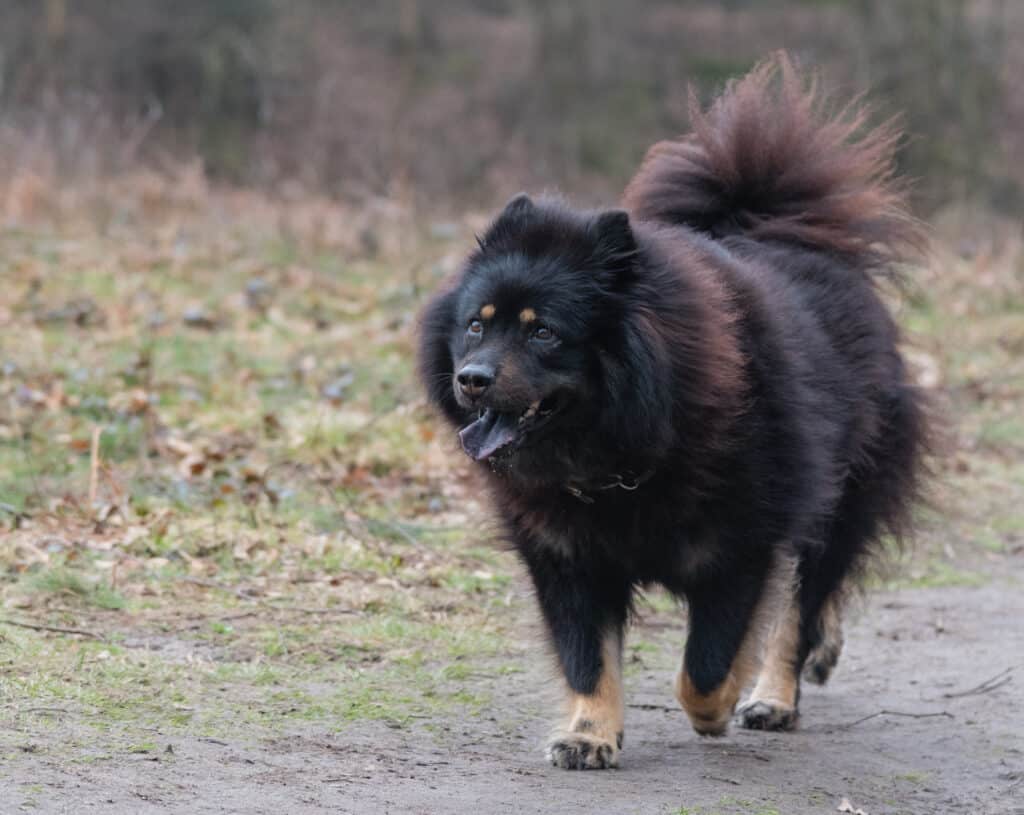
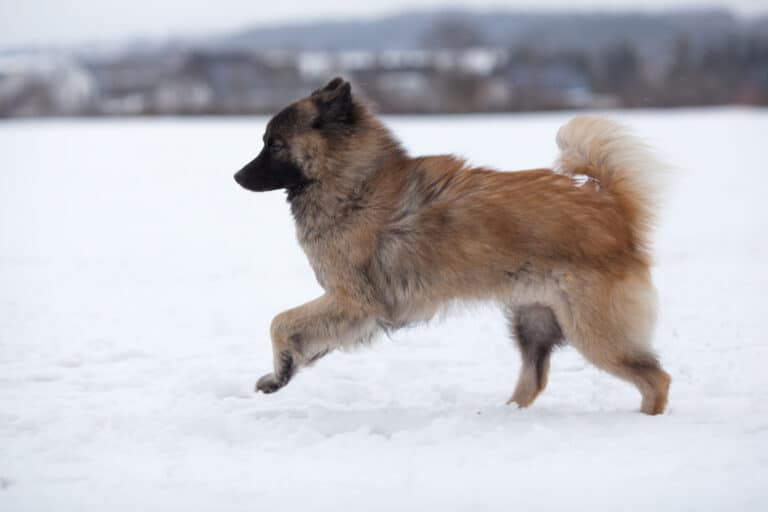
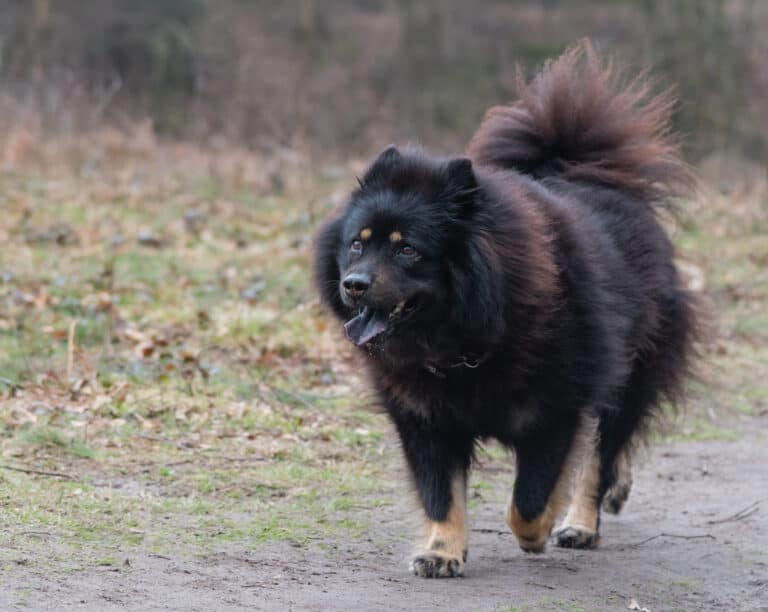
๐Ÿ‘ A Eurasier walks a path

Males average a height of 24 inches, while females average 22 inches tall.

ยฉKaren Appleby/Shutterstock.com

The Eurasier femaleโ€™s average height ranges between 19 and 22 inches, with males capable of growing about two inches taller. Males can weigh between 40 and 70 pounds when fully grown, and females weigh up to 60 lbs.

Height (Male)24 inches
Height (Female)22 inches
Weight (male)70 lbs.
Weight (female)60 lbs.

Eurasier Common Health Issues

While the breed is generally healthy, thereโ€™s a slight risk factor for a Eurasier to develop some hereditary diseases based on their parents and known in the origin breeds. Vets are generally aware of issues like hip dysplasia, hypothyroidism, and eye and lash disorders like ectropion and entropion. 

Eurasier Temperament

Eurasiers are sweet, calm, even-tempered dogs that get along with most people and other pets. Theyโ€™re watchful dogs and can be reserved around strangers without showing aggression or timidity. The breed forms strong family bonds and prefers to live indoors with its people.

Eurasiers benefit from consistent discipline and training, and thrive with positive reinforcement. They were bred as companion dogs and love to demonstrate their appreciation. Eurasiers enjoy outdoor activities of all sorts, especially adventures involving their families, but remain calm and quiet indoors.

How To Take Care of Eurasiers 

Eurasiers are relatively low-maintenance dogs but require some routine care to live happy and healthy lives. Moderate grooming and positive reinforcement training go a long way toward providing your dog with a rewarding life. 

Maintenance and Grooming

Euraisers should be brushed every one to two weeks to stay clean and happy. Regularly check for burrs or pests which can nestle in their long, dark coats, where they can cause damage and discomfort. Eurasiers shed their undercoats seasonally for a period of about three weeks. During this time, dogs should be regularly combed or brushed to minimize the shedding and accumulation of fur balls around the house. 

Owners should also regularly clean their dogโ€™s eyes and ears and check their paw pads for scratches or dirt. Regular nail trimming is essential, especially for dewclaws, so that your dog can walk comfortably.

Training

Eurasiers can be reserved towards strangers, despite their good-natured temperament; however, this can be easily overcome with early socialization and training. These dogs love to please their family and will learn tricks happily with positive reinforcement. As sensitive pups, Eurasiers donโ€™t do well with harsh reprimands โ€“ gentle, affectionate training will help them flourish and encourage them to learn.

Exercise

Pet owners should take their Eurasier on daily walks and arrange routine puppy playdates. With proper training, Eurasiers can walk off-leash and be reliably recalled. Some love fetch or agility activities, while others love to swim. Mental stimulation โ€” such as learning tricks or training to become a therapy dog โ€” also helps Eurasiers stay happy and healthy.

Puppies

This breed is extremely rare, with only a handful of Eurasier breeders in the United States. Mothers produce only four to eight puppies per litter, so it isnโ€™t easy to acquire a puppy without waiting more than a year. When raising a Eurasier, itโ€™s important to socialize and train them early to mitigate fear of strangers and help them get along with other animals.

Eurasier and Children

Eurasiers are calm, loving dogs and make excellent companions for kids of all ages, especially if theyโ€™re raised from puppyhood. They grow into medium-sized dogs that will tolerate mildly pushy children without becoming aggressive. Eurasiers are reserved around strangers and should be properly introduced to unfamiliar children with treats and affection before playing.

Dogs Similar to Eurasier

The Eurasier is related to the chow chow and Samoyed, from whom it is descended. The keeshond dog is also very similar to this breed.

  • Keeshond: These dogs share a medium-sized and extra fluffy coat with the Eurasier, as well as similar coloring.
  • Samoyed: Samoyeds helped contribute to the breedโ€™s genetic makeup and share size and fur length.
  • Chow Chow: Like Eurasiers, Chow Chows are amiable dogs that sometimes have purple or spotted tongues.

Popular names for Eurasier dogs include: 

  • Buddy
  • Milo
  • Molly
  • Luna
  • Riley
  • Toby
  • Mia
  • Bella
View all 185 animals that start with E

Sources

  1. Eurasier Club of Canada / Accessed October 21, 2022
  2. United States Eurasier Club / Accessed October 22, 2022
  3. UK Kennel Club / Accessed October 22, 2022
  4. American Kennel Club / Accessed October 22, 2022

About the Author

Shanti Ryle

Shanti Ryle is a content marketer with nearly a decade's experience writing about science, real estate, business, and culture. Her work has been featured in Forbes, Wall Street Journal, Global Finance and Banking, Weedmaps News/Marijuana.com, and other publications. Her favorite animal (by far) is the Pembroke Welsh Corgi!

Thank you for reading! Have some feedback for us?

Contact the AZ Animals editorial team

Related Articles You May Find Interesting


Eurasier FAQs (Frequently Asked Questions)

Eurasiers are a very rare breed of dog, with only a few hundred alive worldwide and around 150 in the U.S. If you purchase one from a reputable breeder, expect to pay up to $2,500 just for a puppy, not counting regular spending on food, vet checkups training, and toys.


These are calm and mild-mannered dogs that love children and socializing with their families. Theyโ€™re patient with excited kids and serve as faithful, affectionate companions. 


The average pup lives anywhere from 10 to 12 years with proper care, though many dogs live beyond this timeframe.