




F
Species Profile

Fennec Fox

Vulpes zerda

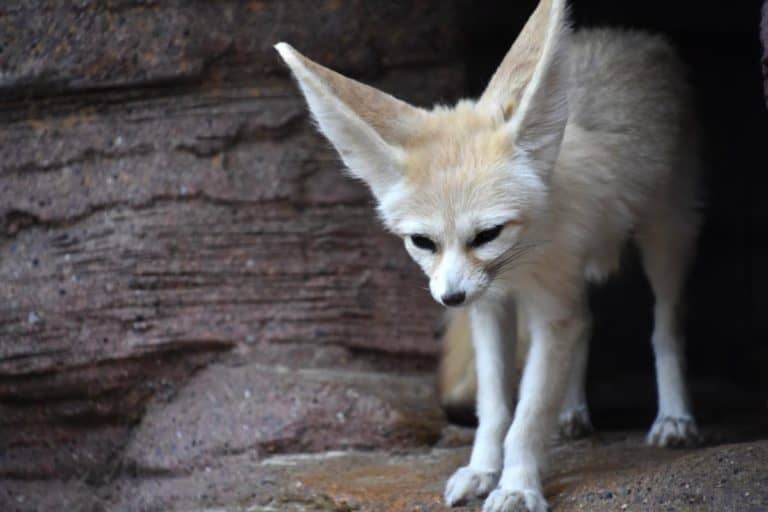
Big ears. Small fox. Sahara night.
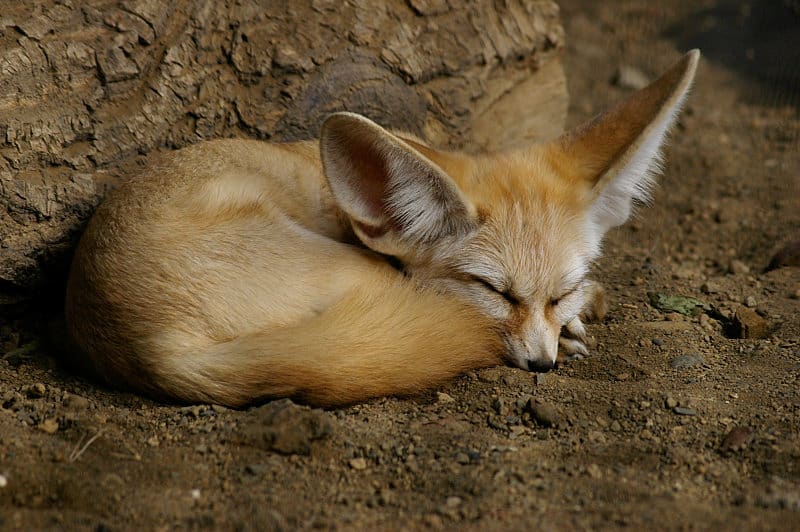
su neko / CC BY-SA 2.0, Flickr

Size Comparison

Human 5'8"
Fennec Fox 8 in

Fennec Fox stands at 12% of average human height.

At a Glance

Wild Species
Also Known As Fennec, Saharan fox, Desert fox, Sand fox
Diet Omnivore
Activity Nocturnal+
Lifespan 9 years
Weight 1.6 lbs
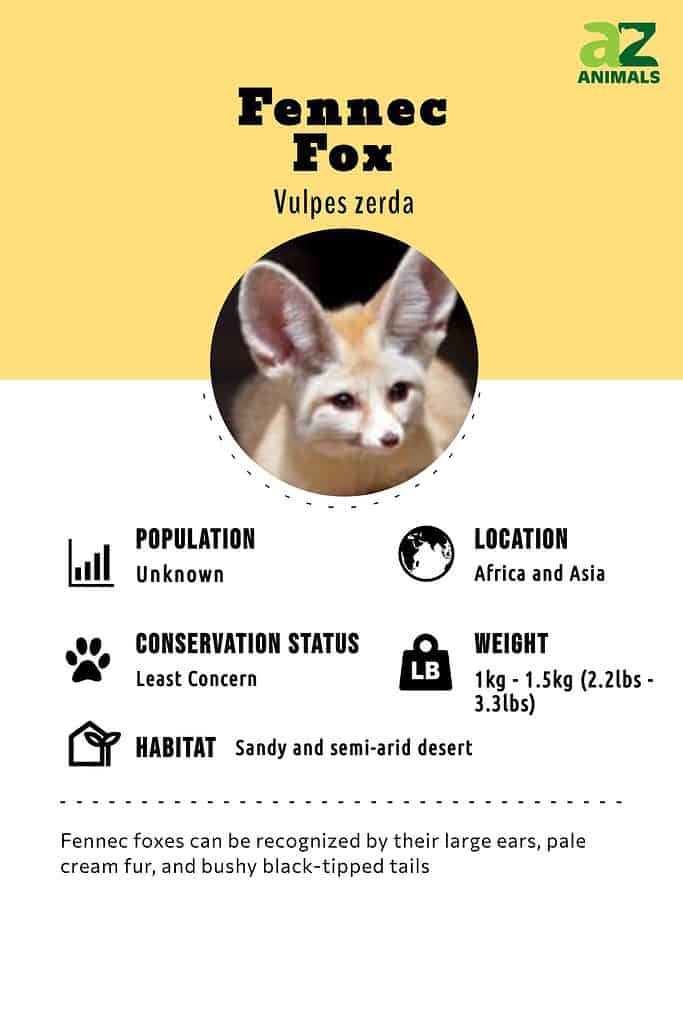
Status Least Concern
Did You Know?

Adults typically weigh about 0.68-1.6 kg, making it one of the smallest wild canids.

Scientific Classification

A small canid (true fox) famous for its very large ears and pale sandy coat; highly specialized for hot desert environments.

Kingdom
Animalia
Phylum
Chordata
Class
Mammalia
Order
Carnivora
Family
Canidae
Genus
Vulpes
Species
zerda

Distinguishing Features

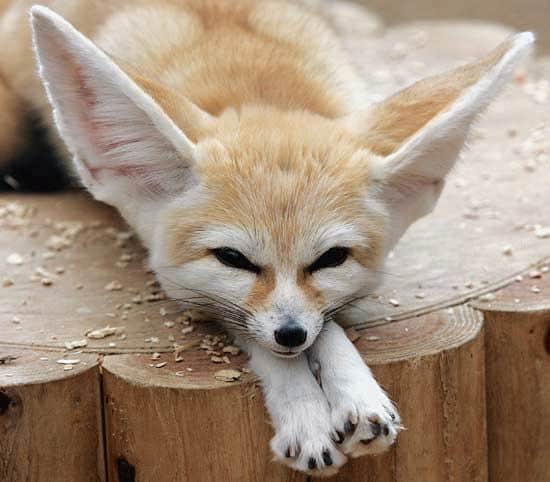
  • Very large ears relative to body size (heat dissipation and acute hearing)
  • Pale sandy coat for camouflage; thick fur also helps with cold desert nights
  • Small body size compared with many other foxes
  • Furred foot soles that aid movement on hot sand

Physical Measurements

Height
8 in (7 in – 9 in)
Length
1 ft 10 in (1 ft 5 in – 2 ft 4 in)
Weight
2 lbs (1 lbs – 4 lbs)
Tail Length
10 in (7 in – 1 ft)
Top Speed
20 mph
About 32 km/h

Appearance

Primary Colors
Secondary Colors
Skin Type Dense fur over skin (mammalian pelage): soft insulating coat suited for desert temperature swings; thick fur on the feet (hairy footpads) helps with hot sand and traction on dunes (commonly noted in species accounts).
Distinctive Features
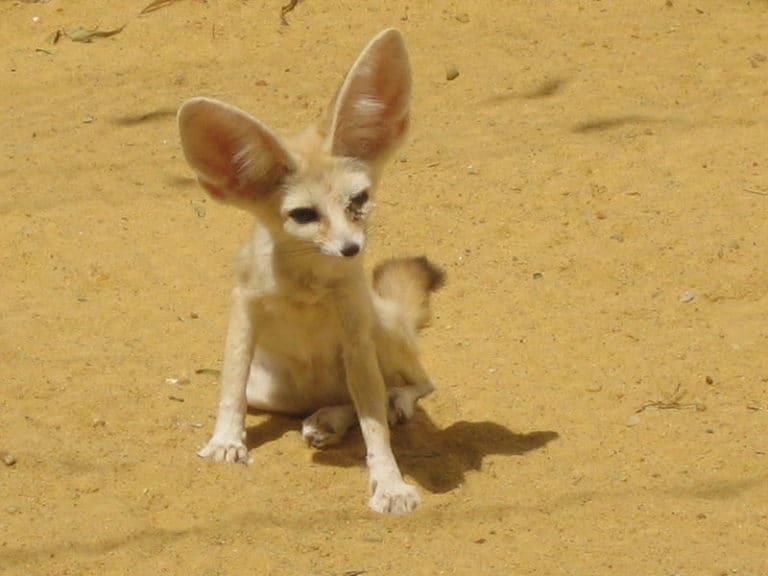
  • Oversized ears are the key silhouette trait: external ear length typically ~10-15 cm, disproportionately large for body size (commonly reported in species references such as Nowak and other mammal handbooks).
  • Small, compact canid: head-body length typically ~24-41 cm; tail length ~18-31 cm; shoulder height around ~20 cm; adult mass commonly ~0.68-1.6 kg (ranges widely reported across field guides/handbooks and species databases).
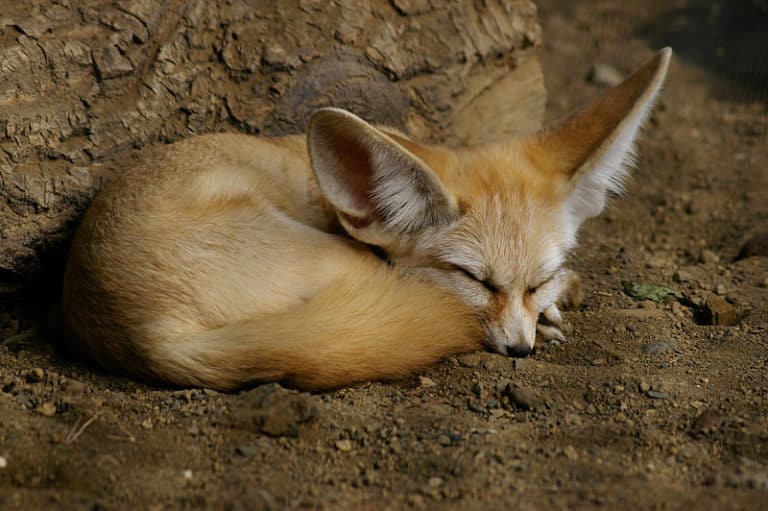
  • Bushy tail with frequent dark/black terminal tip; tail used for balance and may be wrapped around the body when resting in cooler desert nights.
  • Muzzle is short and pointed; eyes relatively large for a fox, visually consistent with nocturnal/crepuscular activity.
  • Paws are furred ('sand shoes')-dense hair on/around footpads helps insulate from hot sand and improves movement on loose dunes.
  • Nocturnal/crepuscular behavior cue: typically active at dusk/night, spending daytime in burrows in dunes or under sparse scrub (widely documented for the species).
  • Typical lifespan: about 10 years in the wild and up to 14 years in captivity. Values vary by source and care, and are commonly listed in zoo records and animal databases.

Sexual Dimorphism

Sexual dimorphism is subtle. Males are typically slightly larger/heavier on average, but coat color/pattern and ear proportions are essentially the same between sexes in most descriptions (commonly noted in species accounts such as ADW-style summaries).

  • Slightly larger average body mass and overall size; no consistent distinct coat-color differences from females reported in standard species descriptions.
  • Slightly smaller average body mass and overall size; otherwise same pale sandy coat, large ears, and tail-tip coloration as males.

Did You Know?

Adults typically weigh about 0.68-1.6 kg, making it one of the smallest wild canids.

Ear length is about 10-15 cm-so large they can look nearly head-sized, and they help dump heat in desert air.

Head-body length is ~24-41 cm; the bushy tail adds ~18-31 cm (often used as a wrap for warmth at rest).

Gestation is ~50-52 days; litters commonly 2-5 pups (reported up to 8).

Dense fur covers the foot pads, improving traction on loose dunes and insulating from hot sand.

Mostly nocturnal/crepuscular: activity peaks in cooler dusk-night hours to reduce heat stress and water loss.

Captive lifespan commonly reaches ~10-12+ years; wild longevity is generally lower due to predation and harsh conditions.

Unique Adaptations

  • Oversized ears with a large surface area aid heat dissipation; the same ears also enhance hearing for prey detection in open desert.
  • Pale, sand-colored coat provides camouflage in dunes and reflects sunlight; thicker winter underfur helps with cold desert nights.
  • Furred soles protect against hot substrates and sharp grit, and improve grip on loose sand.
  • Efficient water economy: can meet much of its hydration needs from prey and moisture-rich plant foods, reducing reliance on standing water.
  • Compact body and low mass reduce absolute heat load; denning behavior buffers extreme day-night temperature swings.
  • Kidney/physiology typical of desert-adapted canids: concentrates urine to conserve water (desert water-saving strategy).

Interesting Behaviors

  • Nocturnal dune hunting: uses acute hearing to pinpoint insects and small vertebrates under sand, then digs rapidly to seize prey.
  • Den-centered family life: lives in burrow systems in dunes or sandy soils; dens may have multiple entrances and can form extensive tunnel networks (reported on the order of ~10 m of passages).
  • Seasonal monogamy: pairs form during the breeding season; both parents may provision and guard pups.
  • Sand-bath grooming: rolls and digs in sand to clean fur and manage ectoparasites-useful where free water is scarce.
  • Food caching: may stash surplus prey items near the den to buffer unpredictable desert foraging.
  • Rich vocal and scent communication: barks, yaps, whines, growls, and scent marking help coordinate mates and family in low-visibility night conditions.

Cultural Significance

The fennec fox (Vulpes zerda) is tied to the Sahara and North Africa. It is a symbol of desert life and part of Algerian identity—Algeria's national football team is nicknamed “The Fennecs.” Its name links to an Arabic word for “fox.”

Myths & Legends

In North African and Arab folktales, fox characters—often just "the fox"—act as clever tricksters who fool bigger animals. These tales are set in deserts like the dunes and scrub where the fennec (Vulpes zerda) lives.

The Fennec fox (Vulpes zerda) name comes from an Arabic word for "fox." Its Sahara image is a modern symbol in North African stories and sports (e.g., Algeria's "Fennecs"), despite few old myths.

Early European natural history stories about the fennec fox (Vulpes zerda) stressed its huge ears and desert burrows, helping make it almost legendary as an animal 'made for the dunes' in later tales.

Conservation Status

LC Least Concern

Widespread and abundant in the wild.

Population Unknown

Protected Under

  • CITES Appendix II (international trade regulated)
  • National-level legal protection and hunting/trapping regulations vary by range country across North Africa/Sahara; the species also occurs in multiple protected areas within its range (IUCN Red List, range-country management context)
  • HUBS (group context-Canidae/fox-like canids): conservation status across the broader canid group ranges from Least Concern to Endangered/Critically Endangered. Common cross-cutting threats include habitat loss/fragmentation (agricultural expansion, urbanization, infrastructure), direct persecution/hunting, disease spillover (notably from domestic dogs), and human-wildlife conflict. Notable highly threatened canids (examples) include Ethiopian wolf (EN) and African wild dog (EN), while many widespread foxes are LC; several island/endemic canids show elevated risk due to small ranges and disease/invasive pressures.

Life Cycle

Birth 3 kits
Lifespan 9 years

Lifespan

In the Wild 6–10 years
In Captivity 10–14 years

Reproduction

Mating System Monogamy
Social Structure Socially Monogamous
Breeding Pattern Long Term
Fertilization Internal Fertilization
Birth Type Internal_fertilization

Fennec fox (Vulpes zerda) usually forms a stable male-female pair (social monogamy) that shares a den and raises pups with biparental care. Breeds mainly Jan–Feb, one litter per year (gestation ~50–52 days) of 2–5 pups; weaning 8–10 weeks. Helpers are uncommon.

Behavior & Ecology

Social Family group Group: 5
Activity Nocturnal, Crepuscular
Diet Omnivore Insects-particularly beetles (Coleoptera) and orthopterans (grasshoppers/locusts/crickets).

Temperament

Within-group affiliative and playful (social grooming, close den-sharing), especially between pair members and among juveniles
Wary/avoidant toward potential predators and unfamiliar stimuli; tends to rely on crypsis and rapid retreat to burrows rather than open aggression
Territorial around den systems with scent-marking and defensive chases at boundaries; intensity varies with breeding status and local resource distribution
High exploratory/foraging motivation at night; digging and object manipulation are common
Fennec fox (Vulpes zerda) often live in groups around dens but usually hunt alone at night; how much they stay together and accept each other changes with how much food there is and the season.

Communication

Barks/yaps used in alarm and territorial contexts Reported for Vulpes zerda in canid behavioral descriptions; Nowak 1999
Whines/whimpers in appeasement and parent-offspring contexts
Growls/snaps during close-range conflict E.g., food or den access
High-pitched screams/squeals reported during intense distress or aggressive encounters in captive/handled contexts
Scent marking: urine marking and fecal deposition around den and travel routes; use of anal gland secretions typical of canids for individual/territorial signaling Macdonald & Sillero-Zubiri 2004
Body posture and tail/ear signaling: exaggerated ear orientation, head-low/curved-body appeasement postures, and tail position as visual signals at close range
Tactile communication: social grooming and muzzle/face contact within pairs and between adults and pups; close huddling inside dens for cohesion and thermoregulation
Substrate/den cues: repeated use and maintenance of burrow entrances and pathways creates persistent spatial 'signposts' that reinforce territory use

Habitat

Biomes:
Desert Hot
Terrain:
Sandy Rocky Plains Plateau
Elevation: Up to 9842 ft 6 in

Ecological Role

Nocturnal desert mesopredator and omnivorous forager that links arthropod, small-vertebrate, and plant food webs.

Regulates desert arthropod populations (notably beetles and orthopterans) Predation pressure on small rodents and other small vertebrates Occasional seed dispersal via fruit consumption (endozoochory) Soil disturbance/bioturbation through digging for prey, roots, and burrow maintenance

Diet Details

Main Prey:
Insects Arthropods Small mammals Small reptiles Ground-nesting birds and chicks Eggs
Other Foods:
Fruits Berries and desert fruits Seeds Leaves and shoots of desert plants Roots and tubers

Human Interaction

Domestication Status

Wild

Fennec fox (Vulpes zerda) is a wild species, not truly domesticated. Humans capture and breed them for the exotic pet trade, keep them in zoos, and sometimes hunt or trap them. They are listed under CITES Appendix II. Small, nocturnal desert foxes that dig burrows, they are kept as wild/exotic captive animals.

Danger Level

Low
  • Bites/scratches (small canid but can deliver painful bites; higher risk when stressed or improperly handled)
  • Zoonotic disease potential typical of wild canids (risk depends on vaccination status, origin, and local disease ecology): rabies exposure risk where rabies is present; possible endoparasites/ectoparasites
  • Allergens/respiratory irritation from dander and strong scent-marking behaviors in captivity
  • Property damage and escape risk due to strong digging/burrowing behavior and high activity level (indirect human safety risk if the animal escapes and is exposed to traffic/predators or triggers nuisance control actions)

As a Pet

Not Suitable as Pet

Legality: Laws vary by country and area. Vulpes zerda is on CITES Appendix II, so export/import permits are needed. Some places allow pet fennecs with permits and housing rules; others ban them. Check local rules, CITES papers, and an exotic vet.

Care Level: Expert Only

Purchase Cost: $1,500 - $4,000
Lifetime Cost: $15,000 - $35,000

Economic Value

Uses:
Exotic pet trade (regulated) Zoo display and education Ecotourism/wildlife viewing (limited, region-dependent) Research and conservation education Local cultural/ornamental value (region-dependent)
Products:
  • Live animal sales from captive breeding operations (where legal)
  • Zoo exhibits/educational programming
  • Permitted wildlife tourism services

Relationships

Predators 6

Eurasian eagle-owl Bubo bubo
Golden eagle Aquila chrysaetos
Steppe eagle Aquila nipalensis
Caracal Caracal caracal
African golden wolf Canis lupaster
Dog Canis lupus familiaris

Related Species 12

Red fox Vulpes vulpes Shared Genus
Ruppell's fox Vulpes rueppellii Shared Genus
Kit fox Vulpes macrotis Shared Genus
Arctic fox Vulpes lagopus Shared Genus
Swift fox Vulpes velox Shared Genus
Corsac fox Vulpes corsac Shared Genus
Bengal fox Vulpes bengalensis Shared Genus
Blanford's fox Vulpes cana Shared Genus
Pale fox Vulpes pallida Shared Genus
Cape fox Vulpes chama Shared Genus
Golden jackal Canis aureus Shared Family
African golden wolf Canis lupaster Shared Family

Ecological Equivalents 5

Animals that fill a similar ecological role in their ecosystem

Ruppell's fox Vulpes rueppellii Small, desert-adapted fox occupying North African and Saharan arid habitats; similar nocturnality, burrowing behavior, and a diet dominated by small vertebrates and invertebrates, with water conservation achieved largely through moisture obtained from prey.
Kit fox Vulpes macrotis Convergent desert-fox niche in hot, arid landscapes (in North America): nocturnal, den-dependent, small-prey specialist with similarly enlarged ears for heat dissipation and prey detection. This reflects functional convergence rather than close-range sympatry.
Pale fox Vulpes pallida Occupies a Sahelian small-fox niche adjacent to Sahara ecosystems; opportunistically feeds on insects and rodents and uses burrows and cover to avoid daytime heat.
Sand cat Felis margarita Nocturnal desert predator occupying a similar trophic role (feeding on small vertebrates and insects) and sharing extreme aridity adaptations, including burrowing/denning, heat-avoidance behaviors, and reliance on prey for water.
Bat-eared fox Otocyon megalotis Another small canid with disproportionately large ears and a strong reliance on invertebrates; ecologically similar through insectivory and ear-mediated prey detection, although it is primarily a savanna/grassland species rather than Sahara-core.
👁 Image

Classification and Evolution
👁 Image

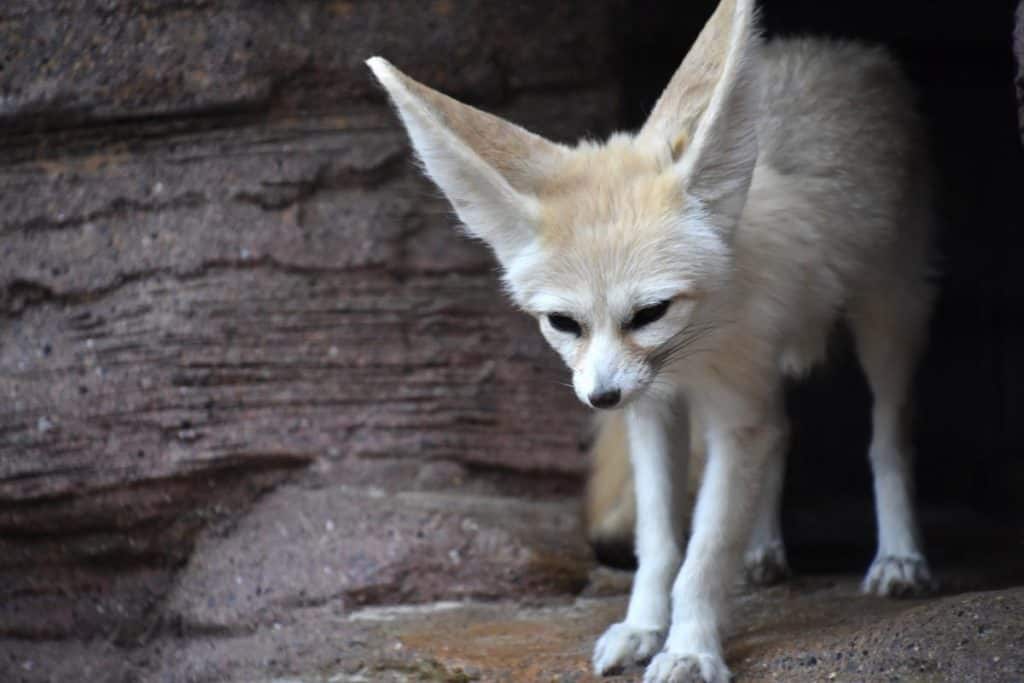
Fennec foxes prefer to avoid the scorching desert heat by hunting at night

©Millie Bond – Copyright A-Z Animals

The fennec fox is a small species of fox found in the deserts of North Africa. They are the smallest canine species but have the largest ears relative to their body size which are used to both aid their hearing and to help them to control their body temperature in the hostile environments in which they live. Fennec foxes are largely nocturnal animals as this both helps protect them from the scorching African heat and keeps them safe from predators during the day. Their adorable appearance has lead to them being kept as pets throughout much of their natural range and also overseas. Male fennec foxes are known as reynards and females are called vixens.

Anatomy and Appearance
👁 Animals that Stay Up All Night - Fennec-fox

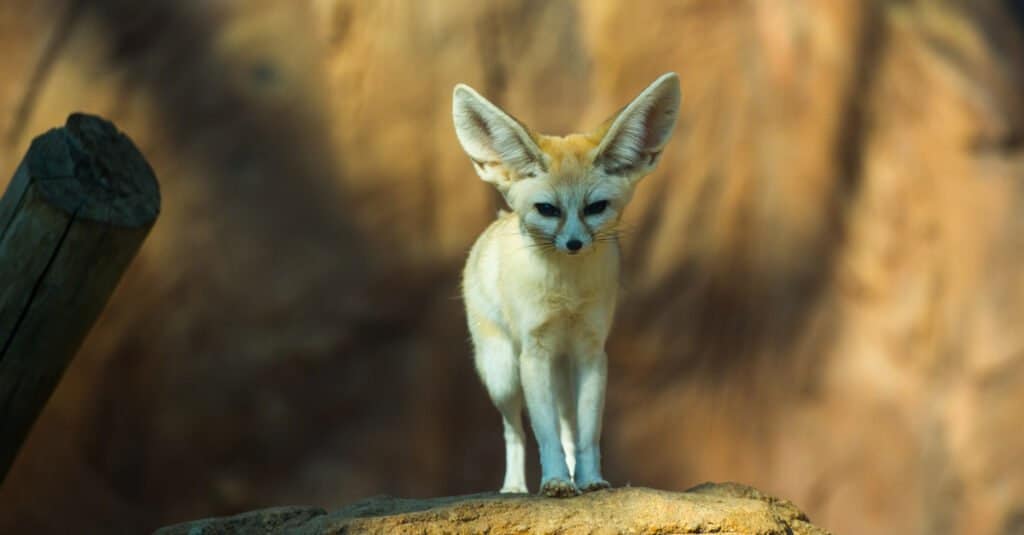
Fennec foxes’ pale fur helps reflect the desert heat away from them by day and keeps them warm at night

©DONGSEUN YANG/Shutterstock.com

Fennec foxes are the smallest species of fox found anywhere in the world growing up to 41cm in length and weighing just 1.5kg. They have long and bushy black-tipped tails that help to steer them when changing direction when running and also keep their nose and feet warm while they are curled up sleeping in their dens. Fennec foxes are animals with light, sandy coloured fur that helps to ensure they are well camouflaged when they are out on the sand. Their fur is long and thick which helps to keep them warm when the desert temperatures plummet at night but also keeps them cooler during the hot daytime hours as the colour also reflects the sun away from their bodies. The most distinctive feature of the fennec fox is their pointed oval, over-sized ears which can grow up to 15cm in length. Their large ears give the fennec fox incredibly sensitive hearing so they are able to find prey and also act as a temperature regulator to prevent them from getting too hot. Fennec foxes have long and sharp, curved claws that enable them to effectively dig their burrows with great speed.

Distribution and Habitat
👁 Image

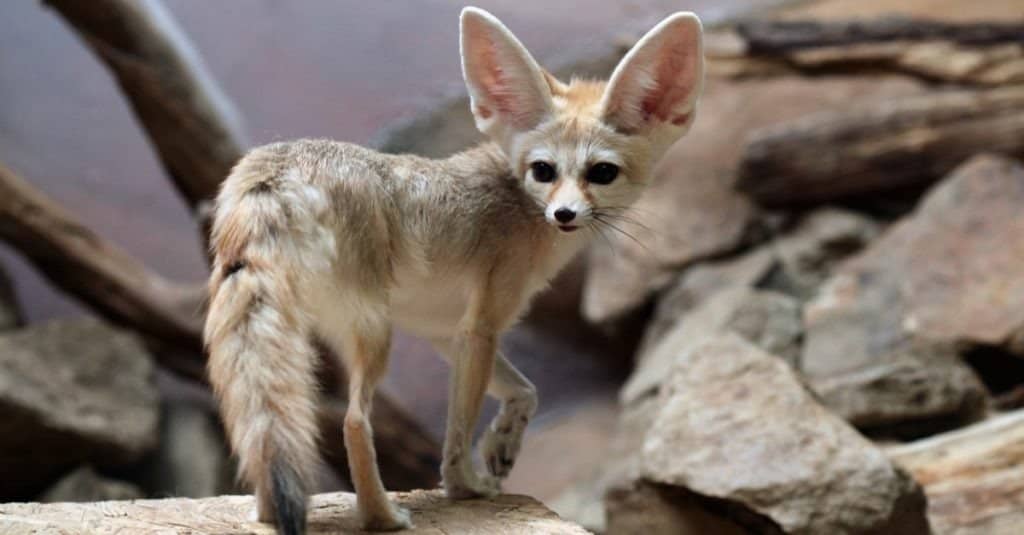
Fennec foxes can be found from Morocco to Egypt, from Niger to Sudan and even as far as Kuwait

©iStock.com/wrangel

Fennec foxes are animals that are found inhabiting both sandy and semi-arid desert regions across northern Africa and the northern Sinai peninsula. They have a relatively wide range from Morocco across to Egypt, south to north Niger and Sudan and east to Kuwait. Fennec foxes are found in both the Sahara and Nubian deserts, where they dig extensive underground burrows with sandy dunes thought to be the optimum habitat for them. Although little is really known about the exact distribution of wild fennec fox populations, they are not thought to be too threatened in their natural environments at this time as they are able to successfully survive in a range of desert environments from coastal regions to more sparse areas of inland deserts.

Behavior and Lifestyle
👁 Animals in Algeria - Fennec Fox

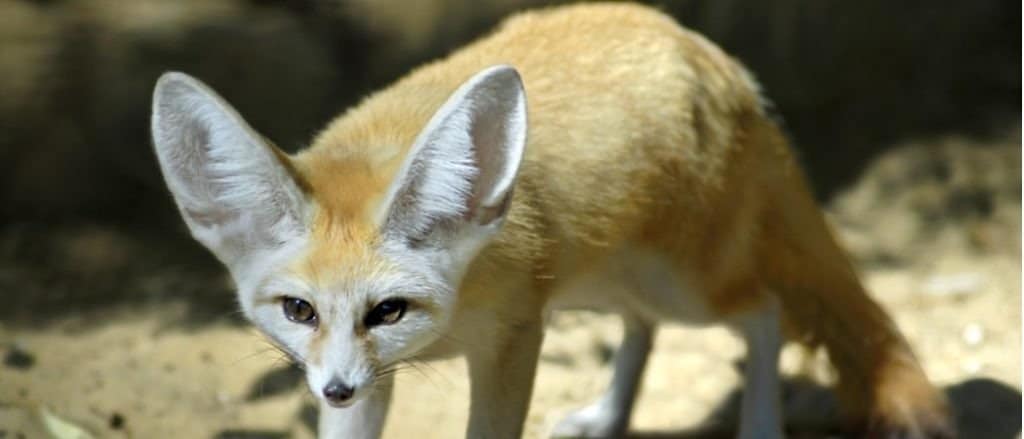
Fennec foxes are social animals unlike most other species of fox which are solitary

©Christian Musat/Shutterstock.com

Fennec foxes are largely nocturnal animals that tend to be most active during the cooler nights. The sandy colour of their thick fur means that they can more easily go unseen on the sand but they tend to avoid too much activity during the day due to the searing heat. Fennec foxes are unique amongst foxes as they are actually relatively social animals (other fox species are highly solitary only coming together to mate). They inhabit elaborate, inter-connecting burrows in small communities of up to 10 individuals with each individual or mating pair having their own territory within their underground community. Like other canines, male fennec foxes mark their territory with urine and become incredibly aggressive towards one another, particularly when competing for females during the mating season.

Reproduction and Life Cycles
👁 baby fennec fox kits

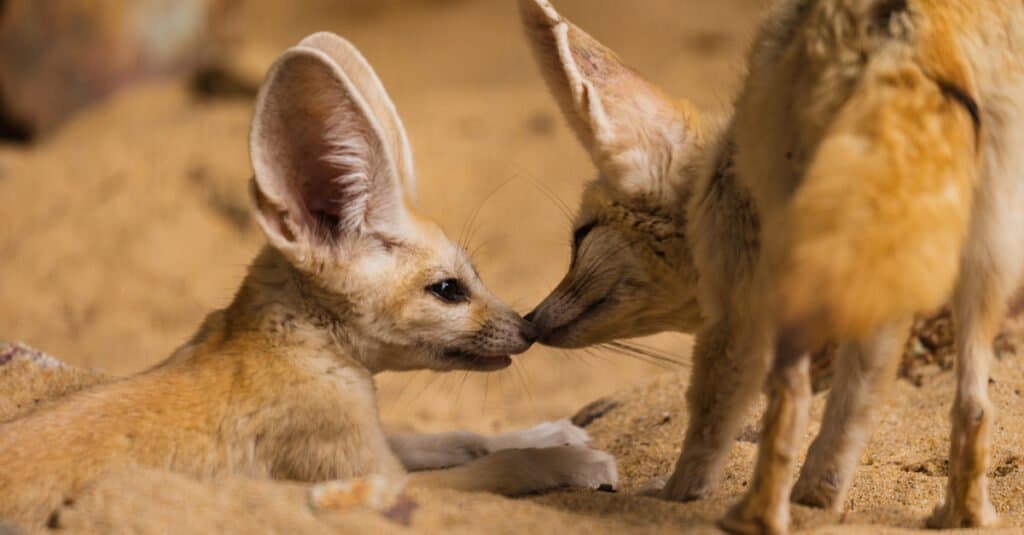
Fennec foxes mate for life and share living quarters all year long

©pianoman555/Shutterstock.com

Fennec foxes mate between January and March. Once they have found a mate, they mate for life with couples inhabiting the same part of the den for the whole year round. After a nearly two-month-long gestation period, the female fennec fox (vixen) gives birth to between 2 and 5 offspring that are known as kits. Born with grey skin and weighing just 50grams at birth, fennec fox kits suckle on their mother’s milk until they are about 5 weeks old when they start to be weaned onto more solid foods. Young fennec foxes remain in their maternal den protected by the female for their first two months with the adult male being temporarily evicted until the kits are older. Fennec foxes are fully mature by the time they are 11 months old and can live for up to 12 years in the wild.

Diet and Prey
👁 Image

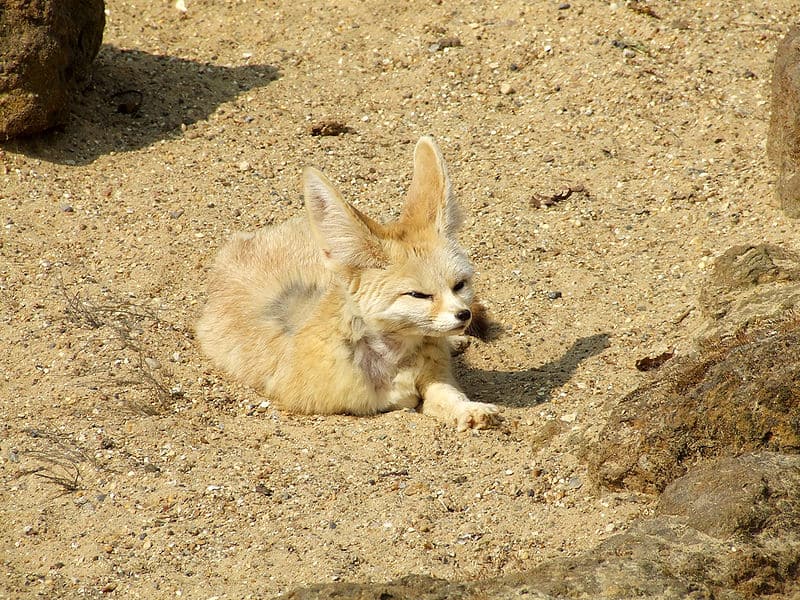
Fennec Foxes are omnivores and feed on plant matter as well as small animals

©Tim Parkinson / Creative Commons – Original

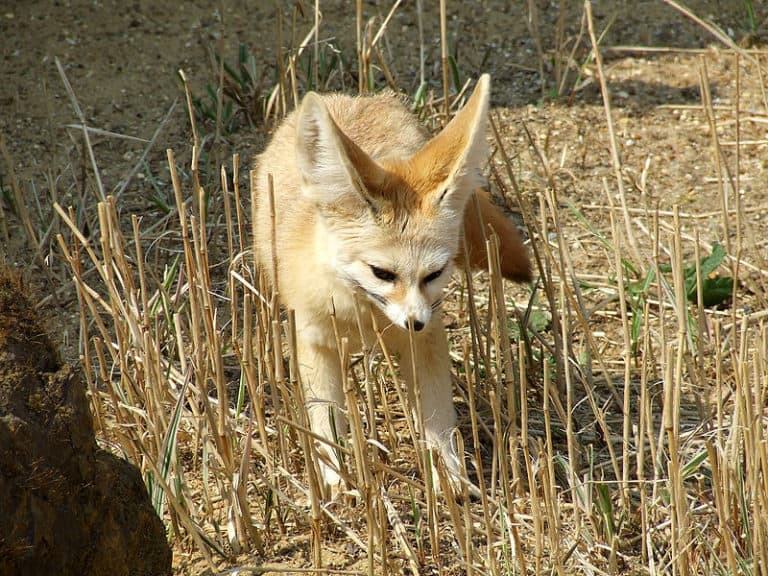
Fennec foxes are omnivorous animals that primarily hunt for food during the cooler nights. They eat a wide range of desert vegetation including grasses, roots, berries and fruit as well as insects, small reptiles and rodents in and on the sand. Using their incredibly sensitive hearing, they can hear their prey walking around on the soft sand or burrowing into it. Like many other desert dwelling creatures, fennec foxes are well adapted to living in such a dry environment and get almost all of the water that they need through the vegetation they eat. Their kidneys are specially developed to ensure that there is minimal water loss in their day to day lives.

Predators and Threats
👁 Types of Wild Dogs

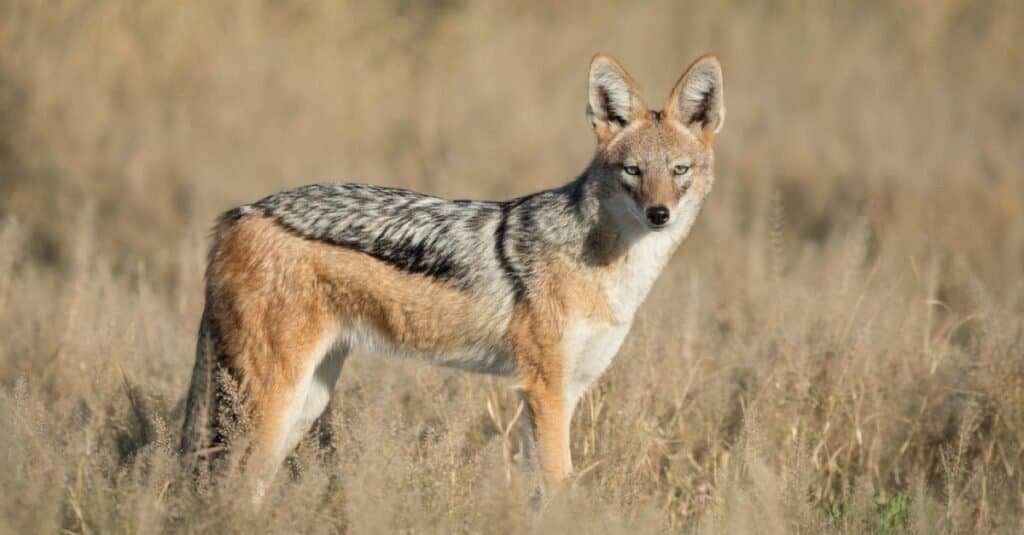
Jackals are one of fennec foxes’ few predators

©iStock.com/StuPorts

Due to their agile nature and the fact that they spend most of the daytime hours sleeping safely in their underground burrows, fennec foxes have very few common predators in their natural environment. Eagle owls are considered to be the main predator of the fennec fox but they are also thought to be preyed about by larger mammals too including hyenas, caracals, jackals and domestic dogs. Fennec foxes are often trapped and captured by people to be sold into the pet trade as well as being hunted by locals for their beautiful fur. In some regions, fennec foxes are also threatened by habitat loss from expanding human settlements.

Interesting Facts and Features
👁 Image

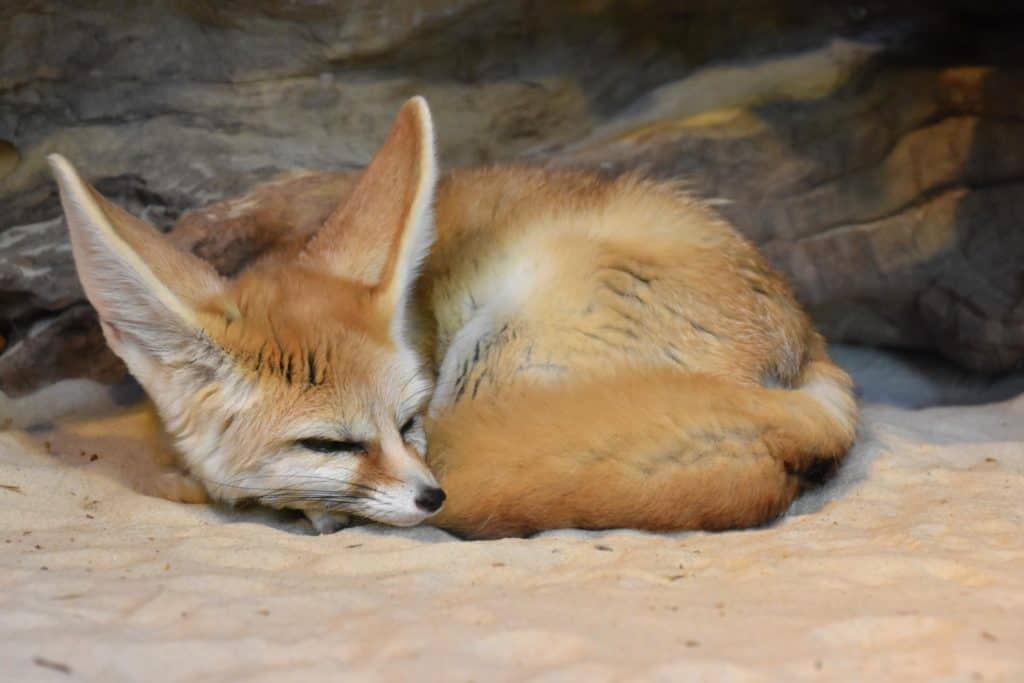
Fennec Foxes love to line their burrows with fur and feathers to provide an extra layer of comfort

©Millie Bond – Copyright A-Z Animals

Fennec foxes have many adaptations to help them to successfully survive in their desert environment and one of their most notable features is their furry feet. Their thick fur continues onto the soles of their feet to allow them to walk around on the scorching hot sand without a problem. Highly unusual amongst canines, the sociable nature of the fennec fox is quite a remarkable behavioral trait. These small communities are often referred to as either a skulk or a leash. Their extensive underground burrows provide each individual or mating pair with their own small territory within their community, where fennec fox individuals dig their own burrows which they line with soft materials including feathers and fur to ensure that they are warm and comfortable when they are sleeping during the day.

Relationship with Humans

👁 Image

Fennec foxes are rather popular in the exotic fur trade

©Chill Chillz/Shutterstock.com

The wide range of the fennec fox means that they only really come into contact with people in certain regions as they are able to successfully survive in the more remote and hostile regions of the desert. In areas where local human populations are expanding, fennec foxes are starting to be increasingly threatened by habitat loss as human settlements develop. Fennec foxes have long since been hunted by local people for their beautiful fur and are commonly captured and sold into the exotic pet trade all around the world.

Conservation Status and Life Today
👁 baby fennec fox portrait

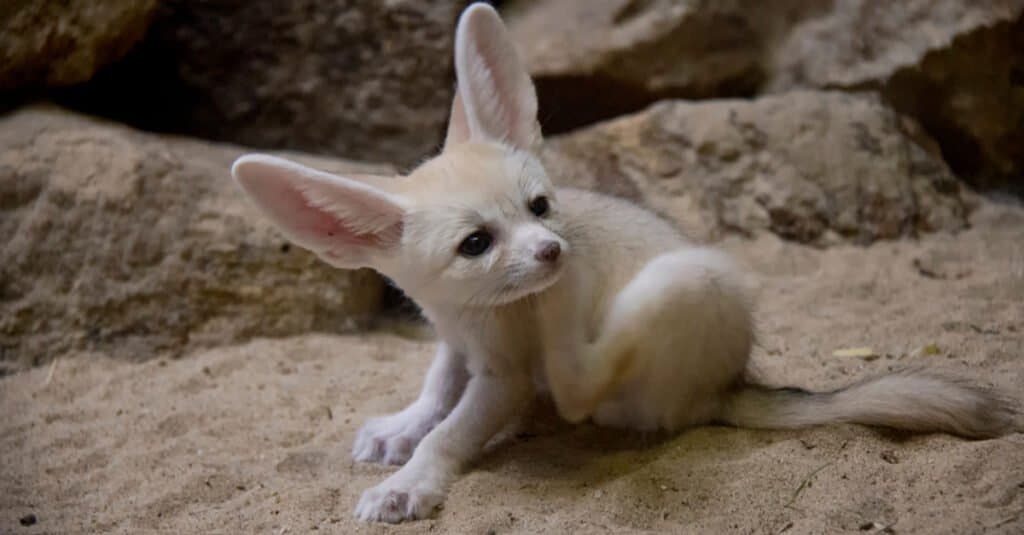
In spite of a shrinking habitat and hunting, the fennec fox is classified as least concern

©Lucie Bartikova/Shutterstock.com

The fennec fox has been classified by the IUCN as an animal that is of Least Concern from becoming extinct in the wild in the near future. Despite the fact that certain fennec fox populations are becoming increasingly threatened from habitat loss and hunting, there is currently no known range-wide threats resulting in population decline that would warrant them being placed into a threatened listing category.

View all 164 animals that start with F
How to say Fennec Fox in ...
English
fennec fox
French
fennec
German
Fennek
Bulgarian
фенек
English
Vulpes zerda
Catalan
Fennec
Czech
Fenek
Danish
Fennek
Esperanto
Feneko
Spanish
Fennecus zerda
Estonian
Fennekrebane
Finnish
Aavikkokettu
Galician
Vulpes zerda
Hebrew
פנק
Croatian
Pustinjska lisica
Hungarian
Sivatagi róka
Italian
Vulpes zerda
Japanese
フェネック
Latin
Vulpes zerda
Malay
Rubah fennec
Dutch
fennek
Polish
Fenek pustynny
Portuguese
Feneco
English
Fenec
Slovenian
Fenek
Swedish
Fennek
Turkish
Çöl tilkisi
Vietnamese
Cáo tai to châu Phi
Chinese
耳廓狐

Sources

  1. David Burnie, Dorling Kindersley (2011) Animal, The Definitive Visual Guide To The World's Wildlife / Accessed September 13, 2017
  2. Tom Jackson, Lorenz Books (2007) The World Encyclopedia Of Animals / Accessed September 13, 2017
  3. David Burnie, Kingfisher (2011) The Kingfisher Animal Encyclopedia / Accessed September 13, 2017
  4. Richard Mackay, University of California Press (2009) The Atlas Of Endangered Species / Accessed September 13, 2017
  5. David Burnie, Dorling Kindersley (2008) Illustrated Encyclopedia Of Animals / Accessed September 13, 2017
  6. Dorling Kindersley (2006) Dorling Kindersley Encyclopedia Of Animals / Accessed September 13, 2017
  7. David W. Macdonald, Oxford University Press (2010) The Encyclopedia Of Mammals / Accessed September 13, 2017
  8. National Geographic / Published September 14, 2017 / Accessed September 13, 2017
  9. IUCN Red List / Published January 1, 2015 / Accessed September 13, 2017

About the Author

Dana Mayor

I love good books and the occasional cartoon. I am also endlessly intrigued with the beauty of nature and find hummingbirds, puppies, and marine wildlife to be the most magical creatures of all.
Connect:

Thank you for reading! Have some feedback for us?

Contact the AZ Animals editorial team

Related Articles You May Find Interesting

The Growing Black Bear Population Spreading Across New Hampshire Forests


Fennec Fox FAQs (Frequently Asked Questions)

Fennec Foxes are Omnivores, meaning they eat both plants and other animals.

Fennec Foxes belong to the Kingdom Animalia.

Fennec Foxes belong to the class Mammalia.

Fennec Foxes belong to the phylum Chordata.

Fennec Foxes belong to the family Canidae.

Fennec Foxes belong to the order Carnivora.

Fennec Foxes are covered in Fur.

Fennec Foxes belong to the genus Vulpes.

Fennec Foxes live in North Africa.

Fennec Foxes live in sandy and semi-arid deserts.

Predators of Fennec Foxes include eagles, owls, hyenas, and jackals.

The average number of babies a Fennec Fox has is 3.

Fennec Foxes are found in the African Sahara Desert!

The scientific name for the Fennec Fox is Vulpes zerda.

Fennec Foxes can live for 10 to 14 years.

There is 1 species of Fennec Fox.

The biggest threats to the Fennec Fox are habitat loss and hunting.

The population size of the Fennec Fox is unknown.

A Fennec Fox can travel at speeds of up to 25 miles per hour.