F
Species Profile

Firefly

Lampyridae

Living lanterns with coded light
khlungcenter/Shutterstock.com

Firefly Distribution

Click a location to explore more animals from that region

Loading map...

Found in 34 countries

๐Ÿ‡ฆ๐Ÿ‡ท Argentina ๐Ÿ‡ฆ๐Ÿ‡บ Australia ๐Ÿ‡ง๐Ÿ‡ท Brazil ๐Ÿ‡จ๐Ÿ‡ฆ Canada ๐Ÿ‡จ๐Ÿ‡ฑ Chile ๐Ÿ‡จ๐Ÿ‡ณ China ๐Ÿ‡จ๐Ÿ‡ท Costa Rica ๐Ÿ‡ฉ๐Ÿ‡ช Germany ๐Ÿ‡ช๐Ÿ‡ฌ Egypt ๐Ÿ‡ช๐Ÿ‡ธ Spain ๐Ÿ‡ซ๐Ÿ‡ท France ๐Ÿ‡ฌ๐Ÿ‡ง United Kingdom ๐Ÿ‡ฌ๐Ÿ‡ท Greece ๐Ÿ‡ฎ๐Ÿ‡ฉ Indonesia ๐Ÿ‡ฎ๐Ÿ‡ณ India ๐Ÿ‡ฎ๐Ÿ‡ท Iran ๐Ÿ‡ฎ๐Ÿ‡น Italy ๐Ÿ‡ฏ๐Ÿ‡ต Japan ๐Ÿ‡ฐ๐Ÿ‡ช Kenya ๐Ÿ‡ฐ๐Ÿ‡ท South Korea ๐Ÿ‡ฒ๐Ÿ‡ฆ Morocco ๐Ÿ‡ฒ๐Ÿ‡ฝ Mexico ๐Ÿ‡ฒ๐Ÿ‡พ Malaysia ๐Ÿ‡ณ๐Ÿ‡ฌ Nigeria ๐Ÿ‡ต๐Ÿ‡ฌ Papua New Guinea ๐Ÿ‡ต๐Ÿ‡ญ Philippines ๐Ÿ‡ต๐Ÿ‡ฐ Pakistan ๐Ÿ‡ต๐Ÿ‡ฑ Poland ๐Ÿ‡ท๐Ÿ‡บ Russia ๐Ÿ‡น๐Ÿ‡ญ Thailand ๐Ÿ‡น๐Ÿ‡ท Turkey ๐Ÿ‡บ๐Ÿ‡ธ United States ๐Ÿ‡ป๐Ÿ‡ณ Vietnam ๐Ÿ‡ฟ๐Ÿ‡ฆ South Africa

At a Glance

Family Overview This page covers the Firefly family as a group. Stats below are general traits shared across the family.
Also Known As Glow-worm, Glowbug, Lightning beetle, Luciรฉrnaga
Diet Omnivore
Activity Nocturnal+
Lifespan 1.2 years
Weight 0.0003 lbs
Status Not Evaluated
Did You Know?

Size spans tiny to thumb-tip: adults are typically ~5-25 mm long across the family, with a few reaching ~30 mm; larvae are often similar in length.

Scientific Classification

Family Overview "Firefly" is not a single species but represents an entire family containing multiple species.

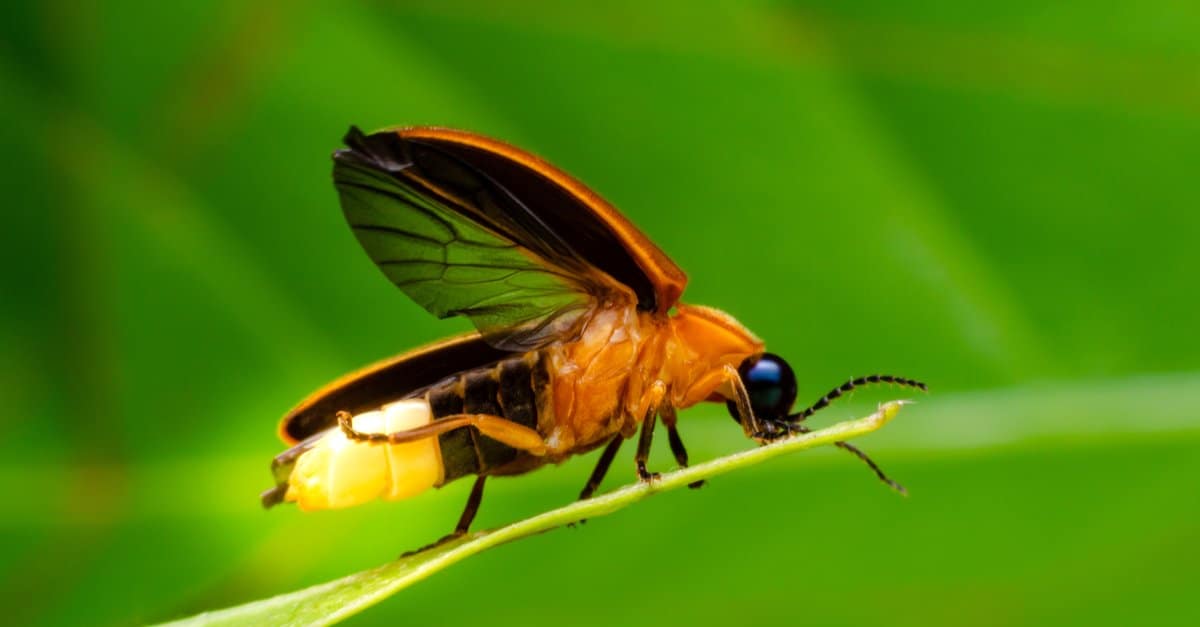
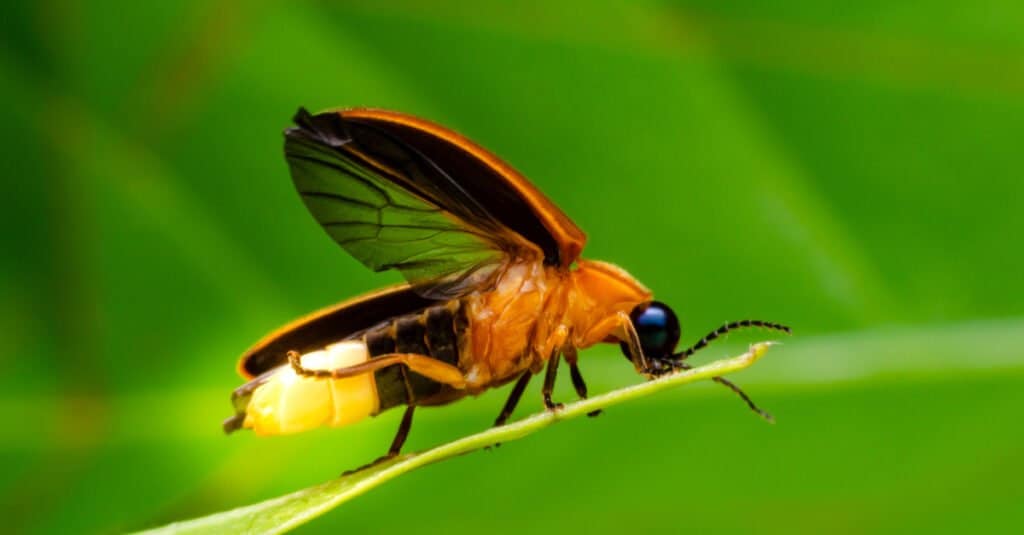
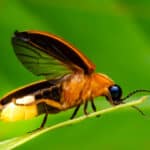
Fireflies are soft-bodied beetles best known for producing light (bioluminescence) used primarily in courtship signaling; many species have species-specific flash patterns.

Kingdom
Animalia
Phylum
Arthropoda
Class
Insecta
Order
Coleoptera
Family
Lampyridae

Distinguishing Features

  • Bioluminescent light organs (typically on the abdomen) used for signaling
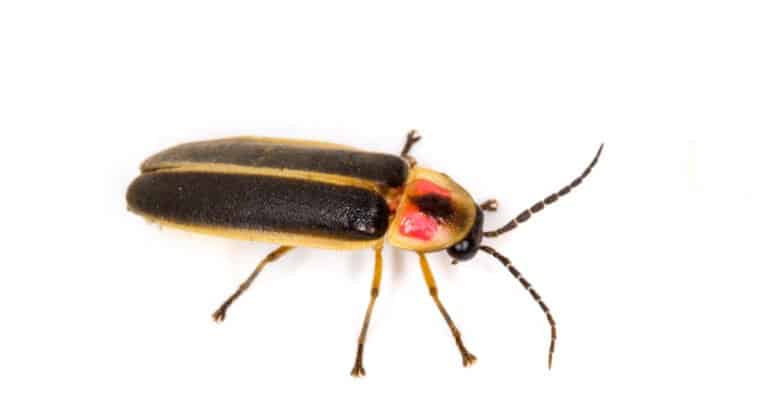
  • Adults are beetles (Coleoptera) with soft elytra; appearance varies widely by genus
  • Larvae (โ€œglowwormsโ€) are usually predatory on snails, slugs, and other invertebrates and may glow
  • Species often identifiable by flash pattern, timing, and habitat rather than color alone

Physical Measurements

Males and females differ in size

Length
โ™‚ 0 in (0 in โ€“ 1 in)
Weight
โ™‚ 0 lbs (0 lbs โ€“ 0 lbs)
โ™€ 0 lbs (0 lbs โ€“ 0 lbs)
Top Speed
5 mph
up to 8 km/h
Poisonous

Appearance

Skin Type Soft-bodied beetle with a thinner, chitin-based exoskeleton than many beetles. Many adults have elytra that can be soft or leathery. Larvae are long, flat, with tougher dorsal plates (tergites); cuticle remains chitin-based.
Distinctive Features
  • Family-level size range (adults): typically about 0.5-2.5 cm (5-25 mm) long across Lampyridae; larvae are elongate and are often a similar length to adults.
  • Overall form: adults are usually soft-bodied, somewhat flattened beetles with a pronotum that can partially cover the head; antennae vary from simple to serrate/pectinate depending on lineage and sex.
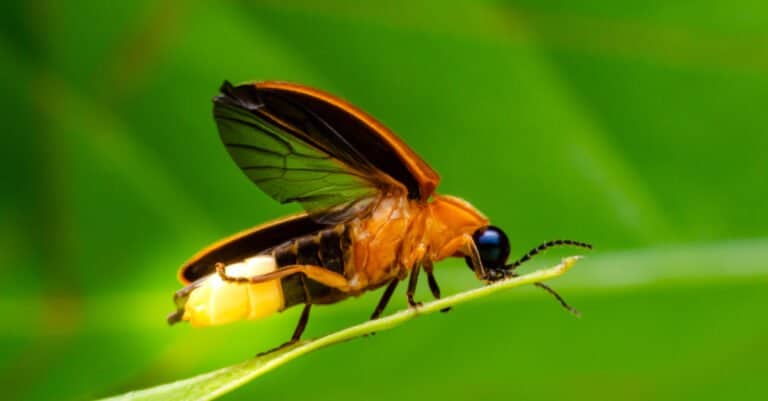
  • Bioluminescent organs ("lanterns"): commonly located on ventral abdominal segments (often the last 1-3 visible segments); light is produced via a luciferin-luciferase reaction requiring oxygen and cellular energy, with neural/physiological control enabling patterned flashes or glows.
  • Fireflies have many species-specific flash patterns (timing, pulse number, intensity, flight height). Others use steady glows, very faint light, or pheromones; some show synchronous flashing, but not all.
  • Eggs are laid in moist, protected spots. Larvae are predators that eat soft-bodied animals like snails, slugs, worms, and larvae, using digestive fluids to stun prey. They pupate in soil, leaf litter, or rotting wood.
  • Fireflies (Lampyridae) live in forests, grasslands, wetlands, riparian zones, mangroves, and human areas with moisture and prey. Larvae need humid leaf litter, soil, or rotting logs; adults fly in open areas, edges, or understory.
  • Feeding ecology variation: larvae are predominantly predatory; adults range from nectar/pollen feeders to non-feeding or minimally feeding (energy largely from larval reserves), with substantial variation across genera.
  • Daily activity variation: many are crepuscular/nocturnal with conspicuous light signals; others are diurnal and may have reduced bioluminescence, using chemical cues and visual markings instead.
  • Fireflies (Lampyridae) often live about 1โ€“3 or more years depending on species and climate; larvae grow for months to years, while adults usually live only about 1โ€“4 weeks, sometimes longer.
  • Defensive chemistry and signaling: many species combine bioluminescence with chemical defenses (distasteful/toxic compounds), using glow/flash as warning (aposematic) signaling; strength and role of this varies among species and life stages.
  • Conservation-relevant traits/threats (family-wide patterns): light pollution can disrupt mate-finding and courtship signaling; habitat loss/fragmentation (especially of moist larval habitats), pesticide exposure, and changes to hydrology can reduce populations-severity varies by species and local conditions.

Sexual Dimorphism

Sexual dimorphism in Lampyridae varies widely. Many males are winged and fly while signaling; females may be winged or reduced-wing and larviform (larva-like). Light organs and signaling differ: some females flash back, others stay still and glow or use scents.

โ™‚
  • Often fully winged with functional flight; frequently the more conspicuous aerial signaler in nocturnal species.
  • Antennae may be larger or more elaborate (e.g., more serrate/pectinate) in some lineages, consistent with increased chemosensory role; not universal across all species.
  • Light organs may be larger/more intensely used in flight displays in many species; flash pattern often optimized for long-range attraction.
โ™€
  • May be fully winged and similar to males in some species, or reduced-wing/flightless and larviform in others (strong dimorphism in those groups).
  • Often more sedentary during courtship; in many flashing species, females answer male flashes with species-specific timing from vegetation or ground-level perches.
  • In strongly dimorphic species, abdomen can appear broader and more segmented externally; lantern placement may be more visible ventrally when perched or glowing.

Did You Know?

Size spans tiny to thumb-tip: adults are typically ~5-25 mm long across the family, with a few reaching ~30 mm; larvae are often similar in length.

They're beetles, not flies: fireflies belong to Coleoptera (family Lampyridae).

Their light is chemical: luciferin + luciferase + oxygen (and ATP) produces "cold light" with very little wasted heat.

Not all adults flash: some species communicate by steady glows, some are active at dusk or day, and some have reduced or absent adult light.

Larvae are usually predators that can subdue snails, slugs, and worms using venomous digestive fluids.

Some species have dramatic sex differences: winged, flying males may court wingless or larviform, glowing females.

A few fireflies are deceptive hunters: in some genera (e.g., Photuris), females can mimic other species' flash codes to lure prey.

Unique Adaptations

  • Bioluminescent organs ("lanterns"): specialized abdominal tissues emit light; in different species, lantern placement and intensity differ (some glow strongly, others faintly).
  • Highly efficient light production: firefly bioluminescence converts much of its energy into visible light rather than heat-ideal for signaling.
  • Lucibufagins and other deterrents: many species contain defensive steroids that make them unpalatable; warning flashes/glows can reinforce this (aposematism).
  • Larval extra-oral digestion: larvae inject toxins/enzymes into prey (often snails/slugs), then consume liquefied tissues-an adaptation to hard-to-handle prey.
  • Larviform females (neoteny) in some species: females retain larva-like bodies, often remaining wingless and strongly glowing while males fly-showing major life-history variation within the family.
  • Optical and timing specialization: firefly eyes and neural circuits are tuned to detect brief flashes at particular wavelengths and rhythms, matching local species' signal "codes."

Interesting Behaviors

  • Species-specific "flash languages": many Lampyridae use precisely timed flashes (duration, color, rhythm, and altitude) so the right species finds the right mate; patterns vary widely among species and regions.
  • Female response signaling: in numerous species, flying males advertise; perched females answer after a characteristic delay-like a timed duet.
  • Synchronous displays (in some lineages): certain species form waves or bursts of coordinated flashing in suitable habitats, while many others never synchronize.
  • Larval hunting in the leaf litter: larvae patrol moist soil, stream edges, and forest floors at night, following slime trails and ambushing soft-bodied prey.
  • Chemical defense behaviors: adults and larvae may "bleed" droplets when disturbed (reflex bleeding), advertising distastefulness-often paired with a warning glow.
  • Predatory courtship mimicry: in some groups, predatory females imitate another species' courtship signal to capture males-behavior that varies by species and local prey availability.
  • Habitat-linked activity: many are most active on warm, humid evenings near wetlands and woodlands; others specialize in drier grasslands or forest canopies, and a minority are crepuscular/diurnal.

Cultural Significance

Fireflies (Lampyridae) are summer symbols of hope and beauty, inspiring poems, festivals (like Japan's Genji firefly, Luciola cruciata) and childhood memories. They are used to help protect dark skies. Threats: light pollution, wetland and habitat loss, pesticides, and loss of moist leafโ€‘litter; saving darkness and varied habitats is key.

Myths & Legends

Japan (The Tale of the Heike tradition): "Heike fireflies" (associated with the Heike firefly) were said to carry the souls of fallen Heike warriors, their lights flickering like spirits over summer waters.

Japan (Genji-Heike symbolism): the famed Genji firefly and Heike firefly became poetic emblems of the rival Genji and Heike clans, invoked in seasonal verse and cultural memory.

China (Jin dynasty study tale): in the story of Che Yin, fireflies were gathered in a gauze bag to provide light for reading-an enduring cultural anecdote about diligence and learning.

Native North America (widely told tribal motif): stories in several traditions describe fireflies as bringing stolen or carried "fire" to humans (or lighting the world) after animals first obtained flame.

European folk belief and fairy lore: in various local traditions, fireflies were imagined as tiny lantern-bearers-fairy lights or spirits carrying lamps through meadows on midsummer nights.

Looking for a specific species?

Common eastern firefly (often simply called "the firefly" in North America)

Photinus pyralis

This is one of the most widespread, frequently encountered, and commonly referenced 'lightning bug/firefly' species in popular North American usage; it strongly shapes the everyday meaning of the common name even though Lampyridae is globally diverse.

  • Lampyridae overview (not a single-species generalization): adult body length across the family is roughly ~2-30 mm (many commonly 5-25 mm), with substantial variation by genus and region.
  • Lampyridae overview: total life cycle commonly ranges from a few months to ~2-3 years depending on species and climate; the adult stage is typically short (days to a few weeks), with some exceptions.
  • Lampyridae overview: most species are crepuscular/nocturnal and use species-specific light signals for mate communication, but some are diurnal (using pheromones more than light) and some females are wingless/larviform and glow rather than flash.
  • In this featured species, males commonly perform airborne courtship flashing while females respond from vegetation, exemplifying flash-dialog courtship seen in many (but not all) lampyrids.
  • Many fireflies (including numerous Photinus) contain defensive steroids (lucibufagins) that deter predators; some predators (notably certain Photuris) can exploit firefly signals and/or sequester these chemicals.

You might be looking for:

Common eastern firefly

28%

Photinus pyralis

Widespread North American firefly; common in fields and yards; males produce characteristic flash patterns.

European glow-worm

22%

Lampyris noctiluca

European lampyrid in which adult females are flightless and glow strongly to attract males.

Japanese firefly (Genji firefly)

18%

Luciola cruciata

Iconic Japanese riverine species known for synchronized-looking displays along waterways.

Femme fatale firefly

12%

Photuris versicolor

North American genus/species complex; some females mimic other speciesโ€™ signals to lure and prey on males.

Life Cycle

Birth 100 larvas
Lifespan 1 year

Lifespan

In the Wild 0.3โ€“3 years
In Captivity 0.2โ€“2.5 years

Reproduction

Mating System Polygynandry
Social Structure Transient
Breeding Pattern Transient
Fertilization Internal Fertilization
Birth Type Internal_fertilization

Fireflies (Lampyridae) are usually polygynandrous: males and females mate with multiple partners in short, signal-based encounters using light or pheromones. Fertilization is internal by copulation; no parental care; mating sites vary.

Behavior & Ecology

Social Congregation Group: 50
Activity Nocturnal, Crepuscular, Diurnal, Cathemeral
Diet Omnivore Soft-bodied terrestrial snails and slugs (a very common larval prey across many Lampyridae; however, some species specialize on worms or other arthropods, and many adults feed little or not at all).
Seasonal Hibernates

Temperament

Generally non-aggressive toward conspecifics; interactions are dominated by courtship signaling rather than fighting
Predatory ecology is common in larvae (often hunting soft-bodied invertebrates such as snails/slugs/worms), while adult feeding ranges from predatory to nectar/pollen feeding to non-feeding depending on species
Strongly chemical-defended in many species (distasteful/toxic compounds), often coupled with conspicuous light displays that can function as warning signals; defensive strength and chemistry vary across lineages
Risk-avoidant and habitat-structure dependent (vegetation height, humidity, and light pollution strongly shape emergence and signaling behavior)

Communication

none known; communication is not vocal in typical firefly behavior
bioluminescent signaling is the hallmark across much of the family: species-specific flash/glow patterns (timing, pulse number, intensity, color, flight path) used primarily for courtship; some lineages use continuous glows rather than discrete flashes; some species are weakly luminous or non-luminous as adults and rely less on light
synchrony/chorusing in some taxa: males adjust flash timing based on neighbors, producing coordinated group displays in certain habitats; many species do not synchronize
pheromones/chemical cues: used for mate location/recognition in some groups (especially where light signaling is reduced), and for close-range assessment after visual contact
tactile cues during close courtship and mating Contact behaviors on vegetation/ground
chemical defense cues: release or presentation of defensive compounds (often distasteful) that deter predators; in many species, light can also function as an aposematic (warning) signal
range context across the family (not a single species): adult body length spans roughly ~0.2-2.5 cm; total life cycle commonly ranges from months to several years, with larvae often lasting ~1-2+ years (sometimes longer) and adults typically living weeks (occasionally longer), varying with climate and species

Habitat

Biomes:
Tropical Rainforest Tropical Dry Forest Savanna Mediterranean Temperate Grassland Temperate Forest Temperate Rainforest Boreal Forest (Taiga) Alpine Freshwater Wetland +5
Terrain:
Plains Valley Hilly Mountainous Plateau Riverine Coastal Island Karst Rocky Sandy Muddy +6
Elevation: Up to 13123 ft 4 in

Ecological Role

Predatory invertebrates (especially as larvae) that help structure leaf-litter/soil-surface food webs; adults in some species also function as minor/occasional flower visitors.

Biological control of soft-bodied invertebrates (notably snails/slugs and some pest larvae) Nutrient cycling support via predation within detritus/leaf-litter-associated food webs Food source for higher trophic levels (e.g., spiders, birds, amphibians-though chemical defenses reduce predation) Occasional pollination/flower visitation in species whose adults feed on nectar/pollen Bioindicators: presence/abundance can reflect habitat quality, light pollution, and pesticide impacts

Diet Details

Main Prey:
Terrestrial snails and slugs Earthworms and other annelid worms Soft-bodied insect larvae Small arthropods Firefly larvae
Other Foods:
Nectar Pollen Plant sap Honeydew

Human Interaction

Domestication Status

Wild

Lampyridae (fireflies/lightning bugs) are not domesticated. Across the family, human interaction has largely been observational (cultural appreciation, natural history study) and scientific (bioluminescence research). Some local, short-term keeping/collecting has occurred for curiosity, education, and research, but there is no established lineage of selective breeding comparable to domesticated animals.

Danger Level

Low
  • Generally harmless to handle; they do not sting and are not known to be important disease vectors.
  • Some Lampyridae (and look-alike beetles often confused with them) contain defensive chemicals; ingestion by pets or small children can cause illness-avoid eating/allowing pets to eat them.
  • Minor skin/eye irritation is possible if defensive secretions are mishandled (rare).

As a Pet

Not Suitable as Pet

Legality: Laws vary by place. Owning common native insects is often allowed, but collecting in parks or for protected species may be banned or need permits. Selling, shipping, import/export can be regulated. Check local and park rules before moving Lampyridae.

Care Level: Expert Only

Purchase Cost: Up to $50
Lifetime Cost: $10 - $300

Economic Value

Uses:
Biotechnology and biomedical research Education and outreach Ecotourism and nature tourism Cultural value (festivals, symbolism) Conservation and habitat stewardship (indicator species use)
Products:
  • luciferase/luciferin-based tools used in laboratory assays and imaging (derived from a few Lampyridae lineages; broader family value is as the source group for these bioluminescent systems)
  • guided firefly-watching tours and related local tourism services
  • educational materials and classroom/lab demonstrations (non-commercial, observational use)

Relationships

Predators 9

Bat Chiroptera
Spider Araneae
Orb-weaver spider Araneidae
Frogs and toads Anura
Lizards Squamata
Insectivorous birds Aves
Ants Formicidae
Ground beetle Carabidae
Praying mantis Mantodea

Related Species 9

Common eastern firefly Photinus pyralis Shared Family
Synchronous firefly Photinus carolinus Shared Family
Big Dipper Firefly Photinus pyralis Shared Family
Glow-worm Lampyris noctiluca Shared Family
Genji firefly Luciola cruciata Shared Family
Mangrove fireflies Pteroptyx Shared Family
Soldier beetles Cantharidae Shared Family
Click beetles Elateridae Shared Family
Glowworm beetles Phengodidae Shared Order

Ecological Equivalents 4

Animals that fill a similar ecological role in their ecosystem

Luminous click beetle Pyrophorus spp. Share terrestrial beetle bioluminescence used in signaling and defense and occupy overlapping nocturnal niches in parts of the Americas, but differ in flash organs and behaviorโ€”often producing steady glows rather than complex courtship flash codes.
Glowworm beetles Phengodidae Convergent use of bioluminescence; larvae are predatory on soft-bodied invertebrates, and many females are larviform, paralleling firefly larval ecology and some lampyrid female morphologies.
Fungus gnats Arachnocampa luminosa They use bioluminescence in dark habitats to attract prey rather than primarily for mate signaling; they share a nighttime light-based ecology despite not being closely related.
Bioluminescent millipedes Motyxia spp. Share aposematic bioluminescence (a warning signal) that deters predators, and overlap in nocturnal predatorโ€“prey dynamics, even though they are myriapods rather than insects.

Types of Firefly

12

Explore 12 recognized types of firefly

Common eastern firefly Photinus pyralis
Synchronous firefly Photinus carolinus
Big dipper firefly Photinus pyralis
Snappy single flash firefly Photuris lucicrescens
Blue ghost firefly Phausis reticulata
Northern woodland firefly Pyractomena borealis
Common glow-worm (European glow-worm) Lampyris noctiluca
Common European firefly Lamprohiza splendidula
Italian firefly Luciola italica
Genji firefly Luciola cruciata
Heike firefly Aquatica lateralis
Mangrove firefly Pteroptyx malaccae
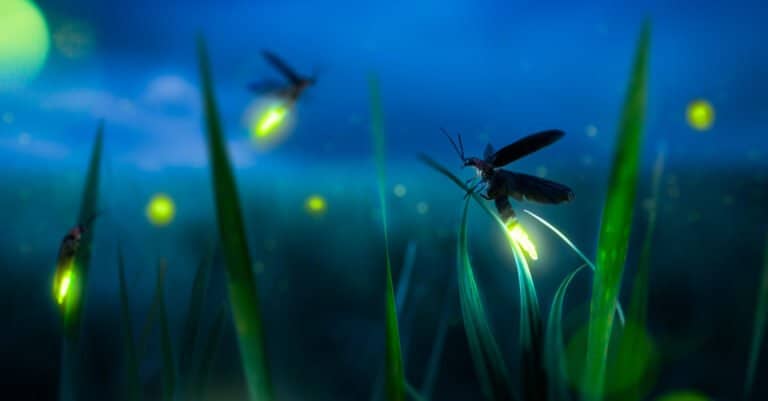
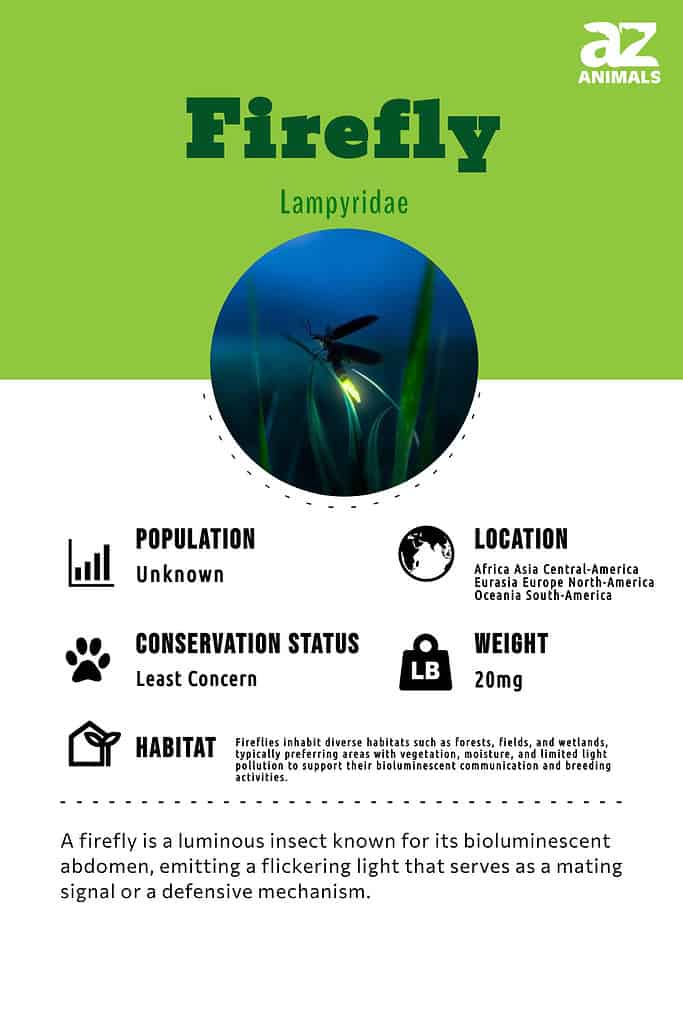
๐Ÿ‘ A firefly is a luminous insect known for its bioluminescent abdomen, emitting a flickering light that serves as a mating signal or a defensive mechanism.
A firefly is a luminous insect known for its bioluminescent abdomen, emitting a flickering light that serves as a mating signal or a defensive mechanism.

โ€œThe firefly is a family of light-emitting insects. They produce light through a chemical reaction of oxygen, calcium, energy, and a light-emitting molecule called luciferin.โ€œ

Fireflies are some of the most popular and beloved insects in the world. Basically, all firefly larvae can produce light, but many species lose this ability in adulthood. Only a small number of firefly species light up the night sky with their bioluminescent ability.

Bioluminescence means they can produce their light via a chemical reaction. Nearly all of the energy in this reaction is transformed into light, which makes fireflies one of the most efficient sources of light in the world. This article will cover some interesting facts about the habitat, diet, lifespan, and appearance of these glowing insects.

Species, Types, and Scientific Names
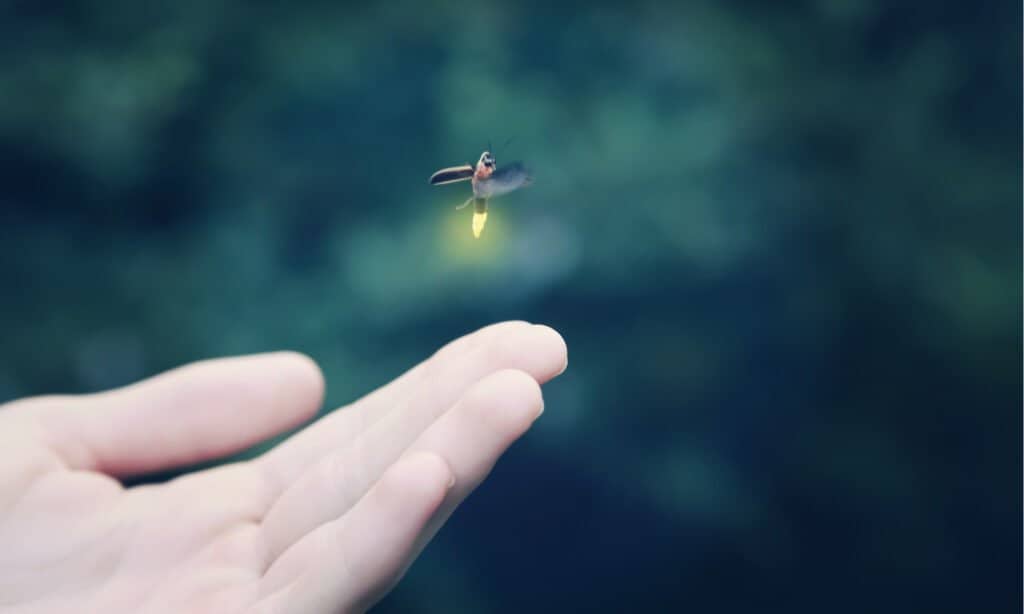
๐Ÿ‘ Firefly flying away from a child's hand,

ยฉSuzanne Tucker/Shutterstock.com

The scientific name for the firefly family is Lampyridae. The name is derived from the Latin term lampyris, which roughly translates to mean glowworm (even though glowworm refers exclusively to a firefly larva or wingless adult). There are many different types of fireflies, encompassing some 2,000 documented species. About 150 of them live in the United States and Canada alone.

Here are some of the most common subspecies:

  • Lampyris noctiluca
  • Luciola
  • Nipponoluciola cruciata
  • Luciola lateralis
  • Common eastern firefly
  • Photuris
  • Lampyris
  • Pteroptyx
  • Lampyrinae
  • Luciolinae
  • Pyractomena
  • Phausis reticulata
  • Winter firefly
  • Abscondita
  • Aspisoma
  • Inflata
  • Microphotus
  • Pleotomus
  • Cyphonocerinae
  • Amydetinae
  • Psilocladinae
  • Brachylampis

Evolution and Origins

Fireflies, an ancient group of insects, trace their origins back over 100 million years to a common ancestor of the two main lineages. However, fireflies are not the sole luminous insects in nature. There are also certain click beetles that possess the fascinating ability of bioluminescence, emitting light in a similar manner to fireflies.

Based on our research findings, we suggest that during the mid-Cretaceous forest, the common ancestor of fireflies underwent an evolutionary process.

This process involved the trade-off of its original function, which was most likely an aposematic warning display against nocturnal predation. As a result of this trade-off, the fireflies developed green light luciferase as a new adaptation.

Appearance
๐Ÿ‘ Image
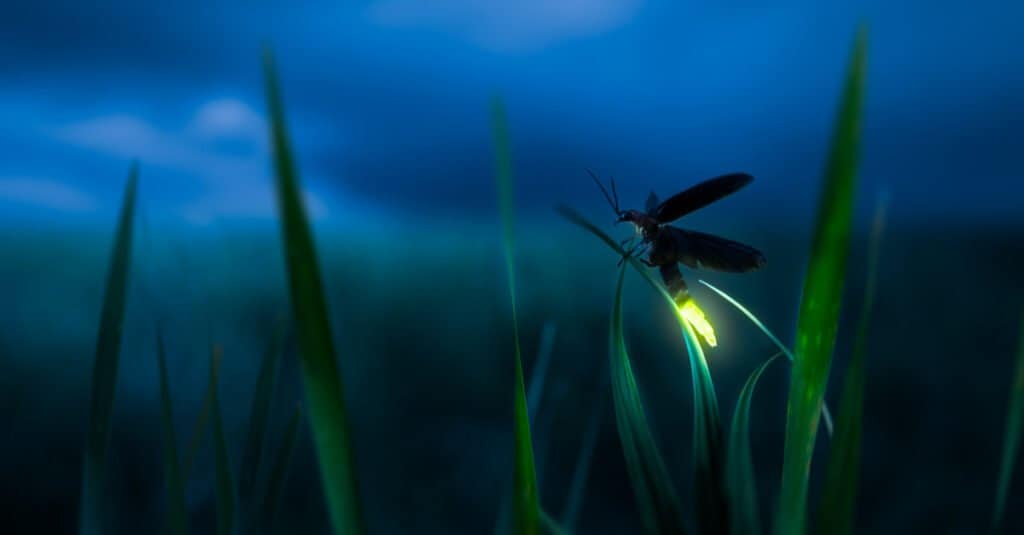
Not all species of fireflies have the ability to produce light.

ยฉFer Gregory/Shutterstock.com

The firefly is a type of soft-bodied beetle that generally ranges widely in size and appearance. Most species are characterized by long, cylindrical bodies, often sporting black or brown colors with yellow or red markings.

They have a pair of wings hidden beneath the hard shell cover, but in some species, the female is completely flightless and resembles the larval form. One such flightless female holds the record for the largest type of firefly in the world. It can easily reach the size of a human palm. However, most species are no more than one or two centimeters long.

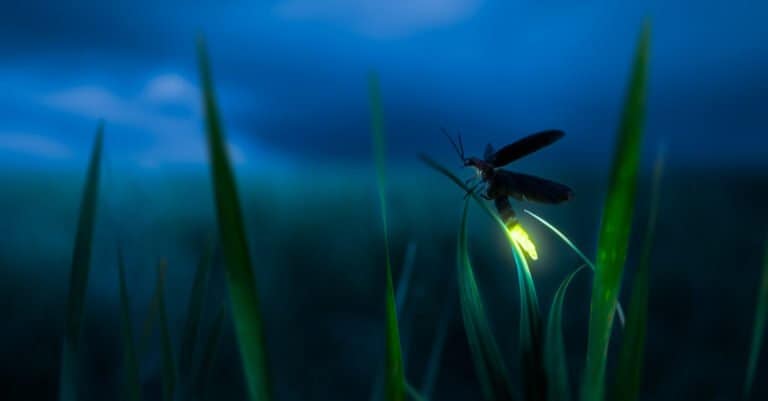
Fireflies create light for all kinds of different reasons: some are looking for mates, others are attempting to lure in prey, and yet others just want to warn away predators. The reasons can change depending on species and life stages. The cold light (which produces very little heat) is normally emitted from an organ near the end of the abdomen.

Colors can come in yellow, orange, or green, and each species generally has its unique flashing pattern, which can be synchronized to communicate in groups. One of the most interesting facts is that many species lose their bioluminescence as an adult; they are active during the day and use chemical pheromones instead of light to communicate with potential mates.

Before the firefly insect transforms into an adult, it passes through a few different life stages. The larva is the most common and longest-living of these stages. It has a long, segmented body, simple eyes, and no wings. The upper segments look a bit like overlapping plates; they are long and flat, extending over the sides of the bug. When itโ€™s ready to transform, the larva forms a large cocoon that encases the entire body.

Habitat

Lightning bugs are present all over the world except for the most extreme environments. They can be found most often populating forests, fields, meadows, and grasslands.

Adults are most active in the summer months and spend the winter in a state of reduced activity. Many firefly insects come out at night, but non-glowing species are active during the day.

Firefly populations are very healthy and widespread all over the globe. However, there is some evidence to suggest that firefly populations are on the decline. The cause might be related to light pollution, habitat loss, and pesticide use.

Once an area has been cleared of its natural habitat, that firefly population may be gone for good. It does not simply move to a new area.

Diet

The firefly does most of its feeding as a larva. When it transforms into an adult, its feeding patterns completely change. However, there are some facts about the fireflyโ€™s feeding behavior we still donโ€™t understand.

For a complete analysis of what fireflies eat, make sure to read our comprehensive guide โ€˜What Do Fireflies Eat?โ€™

What eats the firefly?

Fireflies are preyed upon by numerous other insects, reptiles, birds, and small mammals. However, most firefly species leave a very bad taste in the mouth. Some can even cause temporary sickness when consumed. This will usually dissuade most predators from attacking them.

What does the firefly eat?

Firefly larvae are completely carnivorous. They feed on snails, worms, and other insects. Some of them can inject a digestive substance directly into the prey that liquefies their organs. By the time they reach adulthood, they switch to an herbivorous lifestyle, feeding on the nectar and pollen; they may even help fertilize plants by spreading pollen from one flower to another.

However, there are notable exceptions. A few types of so-called โ€œfemme fatale firefliesโ€ mimic the signaling pattern of another firefly species in an attempt to lure the male and then consume him. Some adult fireflies do not eat at all before they die.

Prevention

Fireflies do not generally cause harm to anyone; itโ€™s best to just leave them alone. However, if the fireflies are bothering you in some manner, then you should remove them from your property in an ethical manner by capturing and then releasing them. Sprays or insecticides should never be used.

View all 164 animals that start with F

Sources

  1. Smithsonian magazine / Accessed January 1, 2022
  2. The National Wildlife Federation / Accessed January 1, 2022
  3. ThoughtCo. / Accessed January 1, 2022

About the Author

Rebecca Bales

Rebecca is an experienced Professional Freelancer with nearly a decade of expertise in writing SEO Content, Digital Illustrations, and Graphic Design. When not engrossed in her creative endeavors, Rebecca dedicates her time to cycling and filming her nature adventures. When not focused on her passion for creating and crafting optimized materials, she harbors a deep fascination and love for cats, jumping spiders, and pet rats.
Connect:

Thank you for reading! Have some feedback for us?

Contact the AZ Animals editorial team

Related Articles You May Find Interesting

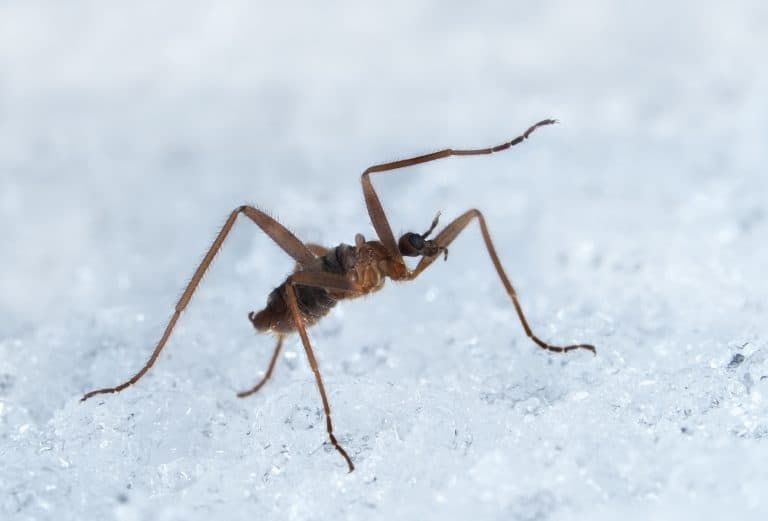
How Snow Flies Survive Subzero Cold with Special Antifreeze Proteins


Firefly FAQs (Frequently Asked Questions)

Fireflies do not generally pose any danger to people. They also do not cause any damage to crops, buildings, or other property.

The lightning bug has six legs like all other types of insects.

Adult fireflies are easy to identify. They usually come out at night during the summer and produce a strong glowing light. They are characterized by a long cylindrical body, a soft shell, and a pair of wings. Some species do not glow, but they otherwise look like normal firefly insects.

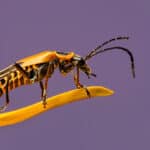
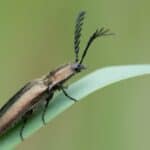
The firefly-mimicking longhorn beetle has evolved to resemble the firefly in size, shape, and colors, including the yellow-colored segments at the end of the abdomen (which do not actually glow). By mimicking the firefly, it hopes to fool predators into believing it is not very tasty. Fireflies also look somewhat similar to the closely related glowing click beetles.

The firefly is actually a type of beetle. The closest living relatives are click beetles and soldier beetles.

Fireflies use their bioluminescence to attract a mate or lure prey. The glowing may also serve as a potential warning to predators.

They do not generally bite or sting people.

Fireflies are found most often in forests, meadows, fields, and grasslands at night (and some during the day). Theyโ€™ve also adapted to life near homes, parks, and gardens.

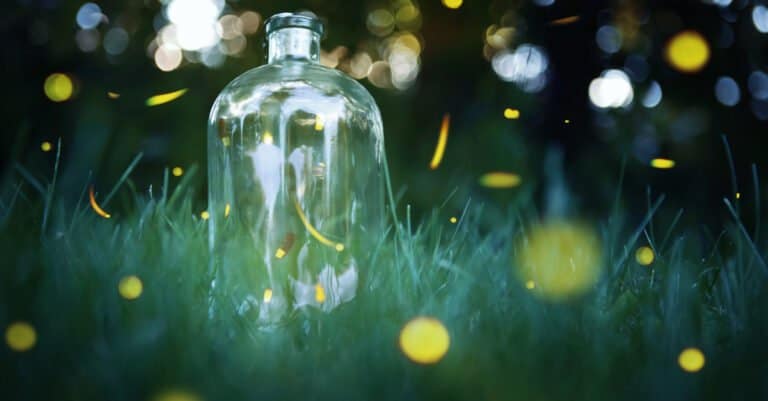
If youโ€™re interested in seeing a firefly up close, then you can capture one in a glass jar with holes in the lid and damp paper towels at the bottom to keep the air humid. Just remember to release them quickly afterward so they can continue to reproduce.

The firefly has a four-stage life cycle: the eggs, the larva, the pupa, and the adult. After a female lays up to 100 bioluminescent eggs in moist soil (like much or leaf litter) or vegetation, the larvae will usually hatch three to four weeks later and spend most of the summer consuming food. They will repeatedly molt their exoskeleton and become progressively larger. Many species burrow underground or find a hole or crevice to wait out the first winter (and sometimes a second-winter). They will emerge again in the spring and either continue to feed or begin their transformation into an adult.

When itโ€™s large enough to become a pupa, the firefly will construct a mud chamber in the soil or attach itself to a piece of tree bark and hang upside down by its hind legs. Its body is slowly broken down and then reassembled by a special group of transformative cells. The pupa stage generally lasts for a few weeks. After the firefly transforms into an adult, its main purpose is to seek out another mate. They do very little feeding, and some species do not eat at all. The adult form may only have a lifespan of a few months.

The average firefly lifespan is roughly 1 year in the wild. Fireflies typically only live for about two months as adults, but throughout their whole life cycle, it accounts for about a year or two.