









F
Species Profile

Frug

Canis lupus familiaris

Small dog, big snorts, bigger love.
Richard Oses Photography/Shutterstock.com

Frug Distribution

Click a location to explore more animals from that region

Origin Location

This map shows the native origin of the Frug. As a domesticated species, they are now found worldwide.

Loading map...

Size Comparison

Human 5'8"
Frug 12 in

Frug stands at 17% of average human height.

At a Glance

Domesticated
Also Known As Frenchie Pug, French Bulldog Pug mix, Frenchie–Pug hybrid, Pug Frenchie mix, Frenug
Diet Omnivore
Activity Diurnal+
Lifespan 5 years
Weight 13 lbs
Status Not Evaluated
Did You Know?

Frugs are designer crosses, not a standardized kennel-club breed, so size, ears, and coats vary widely.

Scientific Classification

The Frug is a designer mixed-breed dog produced by crossing a French Bulldog with a Pug. Like both parent breeds, it is typically a small companion animal and may inherit brachycephalic (short-nosed) traits and associated health considerations.

Kingdom
Animalia
Phylum
Chordata
Class
Mammalia
Order
Carnivora
Family
Canidae
Genus
Canis
Species
Canis lupus

Distinguishing Features

  • Compact small-bodied companion dog
  • Short muzzle; often brachycephalic
  • Possible facial wrinkles and underbite
  • Bat-like or folded ears (variable)
  • Curled or short tail (variable)

Physical Measurements

Males and females differ in size

Height
11 in (10 in – 1 ft 1 in)
Length
1 ft 8 in (1 ft 6 in – 1 ft 12 in)
Weight
23 lbs (18 lbs – 29 lbs)
18 lbs (13 lbs – 22 lbs)
Tail Length
3 in (2 in – 5 in)
3 in (2 in – 4 in)
Top Speed
15 mph
running

Appearance

Primary Colors
Secondary Colors
Skin Type Short coat
Distinctive Features
  • Designer French Bulldog × Pug cross; appearance varies widely between litters.
  • Compact, low-to-the-ground body; heavier-boned than many small companion dogs.
  • Brachycephalic face possible; shortened muzzle can affect breathing and stamina.
  • Facial wrinkles and nose fold may need regular cleaning to prevent irritation.
  • Ears may be bat-like, folded, or asymmetrical depending on parent traits.
  • Tail often screw or curled; can be tightly set over rump.
  • Large, round eyes; prone to dryness or injury if prominent.
  • Short, smooth coat; moderate shedding with seasonal increases.
  • Heat intolerance risk; require cool environments and cautious exercise.
  • Potential BOAS, allergies, and joint issues; maintain lean body condition.

Sexual Dimorphism

Sexual dimorphism is mild: males are often slightly larger with broader head and chest. Females tend to be a bit lighter and finer-boned, though individual variation is common in this mixed breed.

  • Slightly broader chest and thicker neck typical in adult males.
  • Heavier head and jowl development in some individuals.
  • May carry more muscle mass at similar height.
  • Slightly finer bone structure and narrower shoulders.
  • Often a lighter overall build at comparable height.
  • May show less pronounced head width and jowls.

Did You Know?

Frugs are designer crosses, not a standardized kennel-club breed, so size, ears, and coats vary widely.

Many inherit brachycephalic airways, making heat, humidity, and overexertion bigger risks than for wild Canis lupus.

Their short coats shed; weekly brushing and regular wrinkle cleaning can reduce odor, irritation, and skin infections.

Common concerns include BOAS, eye injuries, allergies, patellar luxation, and dental crowding from shortened jaws.

Most thrive as indoor companion dogs, preferring people time over long hikes or outdoor living.

A harness is usually safer than a collar, reducing pressure on the windpipe in short-muzzled individuals.

Unique Adaptations

  • Brachycephalic skull shape can shorten airways, trading endurance for a cute face-requiring careful temperature management.
  • Compact, muscular build supports indoor living and short walks compared with the roaming lifestyle of wild canids.
  • Human-focused temperament reflects domestication selection, emphasizing companionship over hunting and territorial behaviors.
  • Facial wrinkles and skin folds can trap moisture, needing routine cleaning to prevent dermatitis.
  • Short muzzle often increases dental crowding, making at-home tooth brushing and dental chews especially important.

Interesting Behaviors

  • Shadowing favorites from room to room, using close contact and attention-seeking to maintain social bonds.
  • "Snort-talking" vocalizations-snuffles, grumbles, and purr-like noises-often intensify during play or excitement.
  • Short, energetic zoomies followed by long naps; many prefer bursts of play over sustained running.
  • Face-rubbing and rolling on soft surfaces to scratch facial folds and scent-mark comfort zones.
  • Strong food motivation, which can aid training but also predisposes to begging and weight gain.

Cultural Significance

Frugs reflect modern "designer dog" culture, blending two iconic companion breeds linked to city life and social status. They highlight how selective breeding shapes Canis lupus familiaris into human-centered, indoor partners.

Myths & Legends

A famous story credits a Pug with saving William of Orange in 1572 by barking to warn of assassins, becoming a Dutch symbol.

Chinese tradition holds Pugs were cherished by emperors; palace keepers reportedly guarded their wrinkles, believed to resemble lucky characters.

French Bulldogs became a Parisian emblem among lace workers and artists; their bat-eared look spread through cafés and bohemian circles.

A historical anecdote says a prized French Bulldog, Gamin de Pycombe, was insured and lost on the Titanic, symbolizing elite pet-keeping.

Conservation Status

NE Not Evaluated

Has not yet been evaluated against the criteria.

Population Stable

Life Cycle

Birth 4 pups
Lifespan 5 years

Lifespan

In the Wild 2–8 years
In Captivity 9–14 years

Reproduction

Mating System Polygynandry
Social Structure Managed Domestic
Breeding Season Year-round; females cycle about twice yearly
Breeding Pattern Transient
Fertilization Managed Selective
Birth Type Internal_fertilization

Frugs are small companion dogs; brachycephalic traits can cause airway/heat issues and may necessitate assisted mating or C-section. As in domestic dogs, humans manage pairings; mating is brief with no stable pair bonds.

Behavior & Ecology

Social Pack Group: 3
Activity Diurnal, Crepuscular, Cathemeral
Diet Omnivore Chicken

Temperament

Affectionate
Sociable
Playful
Clownish
Stubborn
People-focused
Alert
Sensitive

Communication

barks
whines
grumbles
snorts
snuffles
body leaning
pawing
face licking
play bows
scent sniffing
HUBS: heat-avoidant rest

Habitat

Biomes:
Temperate Forest Boreal Forest (Taiga) Tundra Temperate Grassland Savanna Desert Hot Desert Cold Mediterranean Tropical Dry Forest Tropical Rainforest Alpine Freshwater Wetland Marine +8
Terrain:
Plains Hilly Coastal Valley Plateau Mountainous Island +1
Elevation: Up to 18044 ft 8 in

Ecological Role

Human-associated omnivore and companion animal

companionship pest deterrence human mental wellbeing

Diet Details

Main Prey:
Other Foods:
Rice Oats Pumpkin Sweet potato Carrots Apples Blueberries +1

Human Interaction

Domestication Status

Domesticated

Dogs were domesticated from gray wolves ~15,000-30,000 years ago for companionship, hunting, and guarding. The Frug is a modern designer cross (French Bulldog × Pug), bred mainly for small-companion temperament and appearance.

Danger Level

Low
  • nipping when frightened or handled
  • food guarding in some individuals
  • scratches from jumping or play
  • allergen exposure from dander
  • infected bite if poorly socialized

As a Pet

Suitable as Pet

Legality: Generally legal; some housing or breed rules may apply.

Care Level: Moderate

Purchase Cost: $500 - $2,500
Lifetime Cost: $15,000 - $40,000

Economic Value

Uses:
Companionship Therapy Breeding Petcare Tourism
Products:
  • puppies
  • stud
  • grooming
  • training
  • vetcare

Relationships

Predators 5

Coyote Canis latrans
Gray wolf Canis lupus
Cougar Puma concolor
Golden eagle Aquila chrysaetos
Red fox Vulpes vulpes

Related Species 8

Domestic dog Canis lupus familiaris Shared Genus
Gray wolf Canis lupus Shared Genus
Coyote Canis latrans Shared Genus
Golden jackal Canis aureus Shared Genus
Red fox Vulpes vulpes Shared Family
Raccoon dog Nyctereutes procyonoides Shared Family
French Bulldog (parent breed) Canis lupus familiaris Shared Genus
Pug (parent breed) Canis lupus familiaris Shared Genus

Ecological Equivalents 4

Animals that fill a similar ecological role in their ecosystem

Boston Terrier Canis lupus familiaris Small brachycephalic companion; similar exercise limits and heat sensitivity
Shih Tzu Canis lupus familiaris Apartment-friendly companion; needs routine grooming and dental care
Cavalier King Charles Spaniel Canis lupus familiaris Small indoor-oriented pet; moderate exercise and close human bonding
Domestic cat Felis catus Common household companion; thrives in human-built indoor environments

The adorable mixed frug descends from the French bulldog and the pug, two little purebred dogs with loads of personality. Also known as Frenchie pugs, these designer dogs are sweet and easygoing, boasting many of the distinctive desirable traits of the two breeds. 

Their fine coats come in cream, black, white, and fawn colorings, with each pup often taking on the unique characteristics of its parents’ appearance and temperament. No one knows how the frug appeared on the scene, but since they first appeared in the early 1990s, they’ve become one of the most sought-after designer dogs.

Their name might be unusual-sounding, but if you can get past that, frugs make much-beloved pets for single owners, families, and retirees alike.

The Best Dog Food

Frugs are small dogs that require the right nutrition to live a happy, healthy life. Your pup will benefit from a diet containing whole-food ingredients, free of artificial ingredients and unwanted byproducts. 

While it’s essential to consult with your veterinarian to determine your dog’s individual food needs, most frugs need only 1 to 1.5 cups of dry dog food each day, divided between two meals. These pups can easily overeat and gain weight without proper nutritional supervision, as they are on the smaller side. 

Real ingredients designed to support small-dog nutritional needs properly are your best bet to provide your frug the diet that’ll give them the best chance of a long, healthy life.

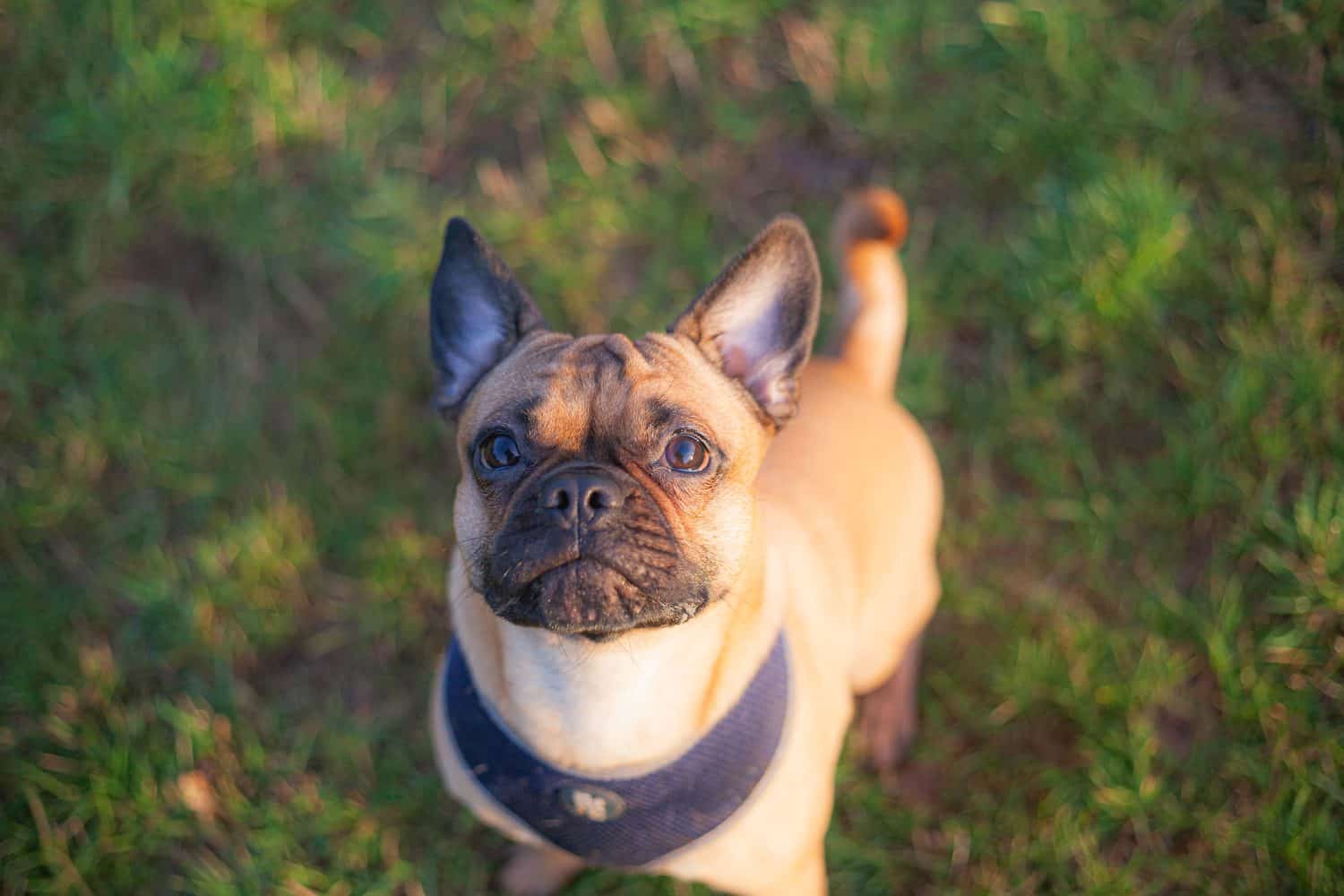
👁 Frug

Frugs are compact dogs loaded with personality.

©Bokehboo Studios/Shutterstock.com

Pros And Cons Of Owning a Frug

Pros:
Cons
:
Great with kids of all ages
These mild-mannered dogs love children and can handle pushy toddlers as easily as older kids.
Can be noisy
Frugs’ bark can be meaner than their bite, and these noisy dogs are sure to alert you when there’s a potential intruder.
Supremely cute
Both French Bulldogs and Pugs are adorable, so it’s no wonder their offspring are just as cute.
Snoring and breathing issues
The flat-faced snout can cause breathing issues for frugs, which can lead to more serious health concerns if not monitored.
Cost is relatively low maintenance
These dogs don’t need much in the way of grooming or exercise.
Requires patient training
Frugs can sometimes be stubborn and require a patient hand during training.

Size and Weight

On average, frug females range from 12 to 13 inches in height, while males grow as tall as 15 inches. These dogs are surprisingly hefty for their size, with females weighing up to 20 pounds and males weighing as much as 23 pounds at maturity. 

Common Health Issues

As is typical with designer dogs, frugs are susceptible to the same health concerns that affect their parents. There’s no guarantee that your individual pup won’t face genetic health concerns later on in life. 

Common health issues in frugs include breathing problems, glaucoma, hip dysplasia, and cataracts. The best protection against these and other health issues is to source your puppy from a reputable breeder. It’s also essential to regularly schedule checkups with your veterinarian to identify potential health problems early.

Temperament

Frugs thrive on attention and love spending as much time playing and relaxing with their humans as possible. This dog will follow its people around the house and craves cuddle time. While it can be odd to have a dog following you around when you may want privacy, the silly moods of these dogs all but guarantee entertainment. 

Frugs are easygoing and curious, happy to play with kids of all ages as long as the children know how to play appropriately with an animal. Frugs usually get along well with other dogs or pets.

How To Take Care of Frug 

Frugs require a bit more care than the average mutt, but pay it back in terms of companionship and affection. A tiny bit of grooming and early socialization will keep your pup happy, and despite the breed’s stubbornness, they can learn a host of tricks with proper training.

Maintenance And Grooming

Frug coats are typically short-to-medium length with a soft, silky texture. These dogs have a double coat that can sometimes lead to overheating, which should be closely monitored to prevent or not exacerbate any breeding problems. Brushing weekly or biweekly should keep a frug coat in tip-top shape, and they should only need a bath every few months.

Of note, frugs’ bulging eyes and big ears make them susceptible to infection, so be sure to pay unique attention to those areas during cleanings.

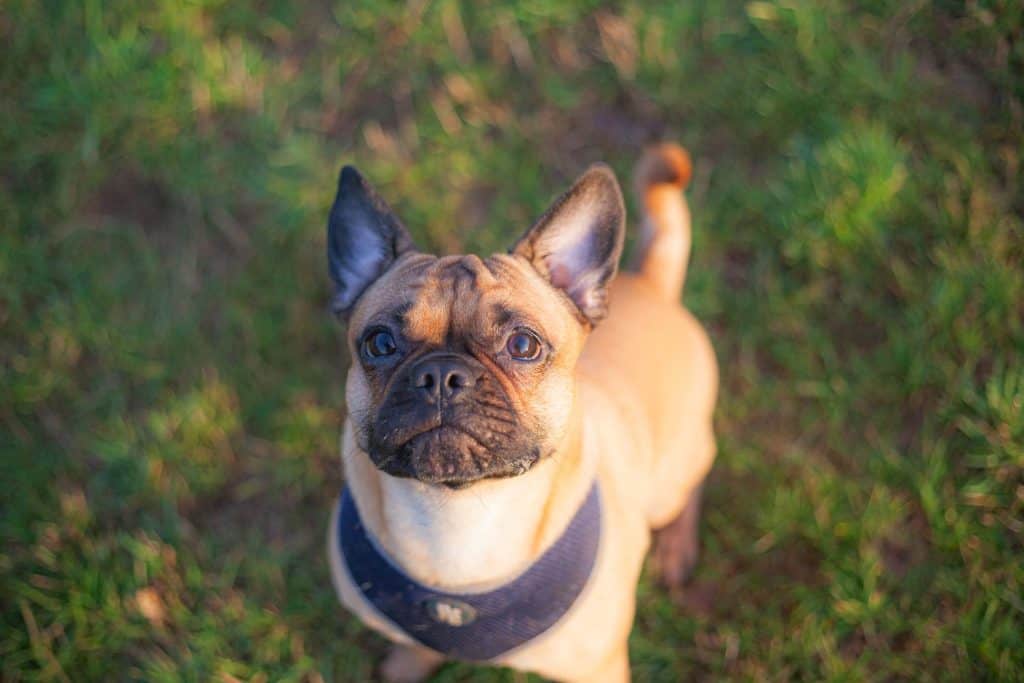
👁 frug on a rug

A frug is a crossbreed of a pug and a French bulldog. They are sometimes also referred to as “Frenchie pugs.”

©Bokehboo Studios/Shutterstock.com

Training

Frugs have a reputation for slight stubbornness and think they are the boss if not properly trained. Consistently and calmly training your puppy as early as possible can establish you as leaders of the pack and make future training easier. Reward-based training and positive reinforcement are good choices, yielding effective results that can be repeated across various tricks and commands. 

Frugs’ watchful, brave nature also makes them valuable watchdogs. They get along with people quickly, but you can train your pup to alert you to any suspicious activity outside your residence.

Exercise

Frugs thrive on moderate levels of exercise. A daily walk is adequate to keep them in shape and at a healthy weight. Don’t work these pups too hard, as their flat snouts make it hard to access enough oxygen for heavy activity. Instead, indoor toys and playtime will keep them happy in both houses and apartments. 

Puppies

As such small dogs, it’s no wonder frugs are tiny puppies. Frug pups are delicate and injure easily, requiring gentle care during handling. Avoid crowded places early in their lives, and gently introduce them to family and larger spaces. 

Early socialization and training yield exponentially successful results, ensuring your dog grows into a confident and obedient adult. Without early exposure to lots of new dogs, situations, and people, frugs may become anxious and reactive to others.

Frug And Children

Frugs love to please and thrive off of undivided attention, making them suitable companions for children. However, it’s recommended that adults supervise playtime, as a frug could be hurt or crushed by overly excited kids.

Dogs similar to Frug

The frug is closely related to its parent breeds, the French bulldog and the pug, as well as the fellow short-snouted dog, the Boston terrier. 

  • French bulldog: These non-sporting pooches are overtly affectionate and sport bulging eyes and giant ears.
  • Pug: A compact pooch, pugs share moderate yappiness and compact stature with their frug cousins.
  • Boston terrier: The friendly, devoted Boston terrier needs training early on to cultivate obedience and a happy temperament.
View all 164 animals that start with F

Sources

  1. American Kennel Club / Accessed October 22, 2022
  2. American Kennel Club / Accessed October 22, 2022
  3. Wagwalking / Accessed October 22, 2022

About the Author

Shanti Ryle

Shanti Ryle is a content marketer with nearly a decade's experience writing about science, real estate, business, and culture. Her work has been featured in Forbes, Wall Street Journal, Global Finance and Banking, Weedmaps News/Marijuana.com, and other publications. Her favorite animal (by far) is the Pembroke Welsh Corgi!

Thank you for reading! Have some feedback for us?

Contact the AZ Animals editorial team

Related Articles You May Find Interesting


Frug FAQs (Frequently Asked Questions)

French bulldog — pug mixes are one of the most beloved and popular designer breeds, and their popularity is reflected in the cost of frug puppies, which range from $1200 to as high as $2500.

Frugs are excellent with children of all ages, but kids can easily crush or hurt these small dogs due to their small size. As such, it’s crucial to properly instruct children on how to play with these pups.

Frugs are eager to please, loving, and likely to follow their owners around constantly. Their sweet nature and intelligence make them fun to raise, but they can be stubborn and loud barkers without proper socialization or training.

You can expect this breed to live anywhere from 12 to 15 years, though optimally healthy dogs can sometimes outlive this span.