
G
Species Profile

Gecko

Gekkonidae

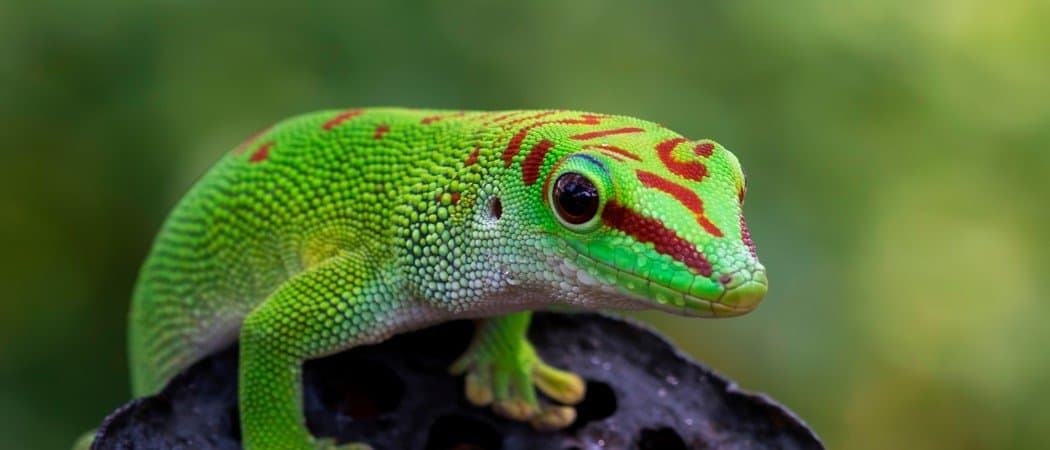
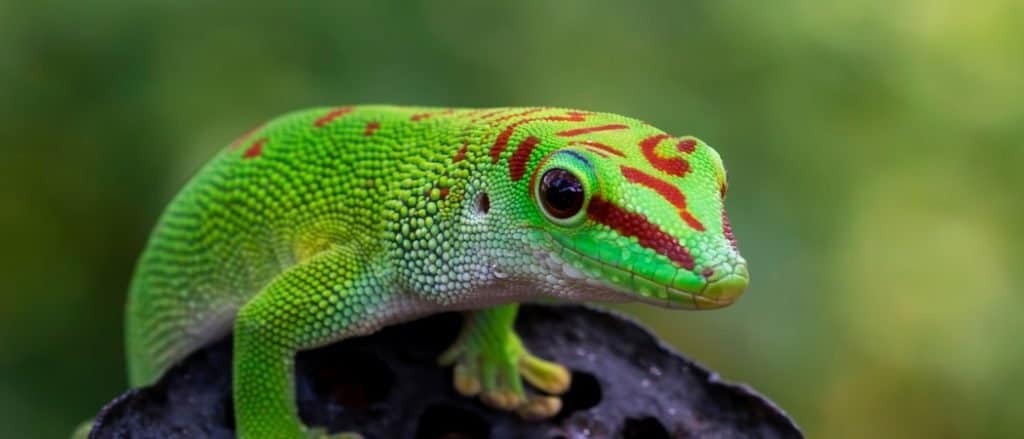
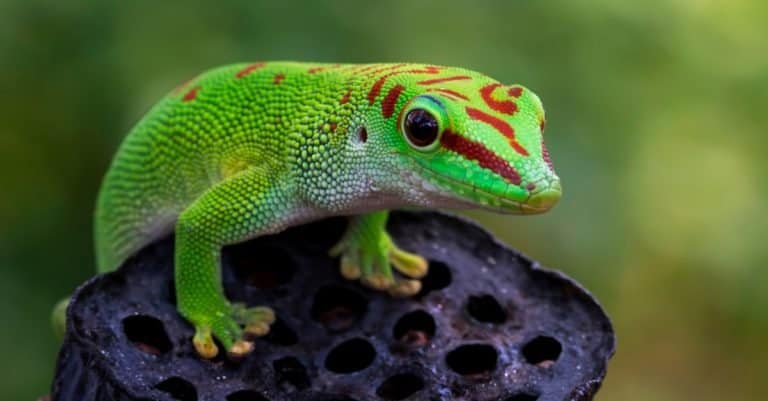
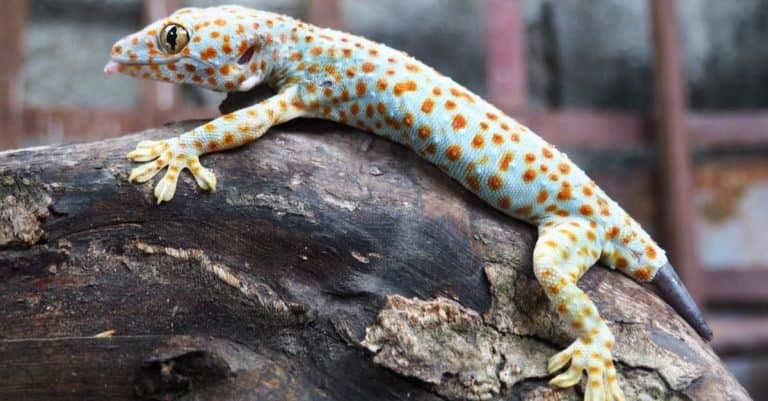
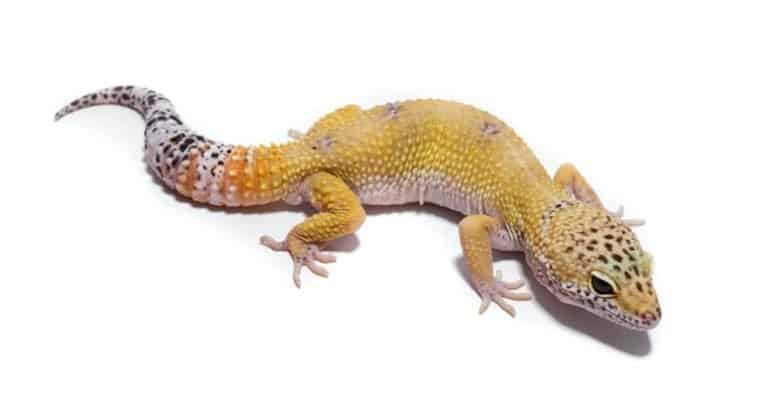
Tiny toes, big grip.
Kurit afshen/Shutterstock.com

Gecko Distribution

Click a location to explore more animals from that region

Invasive Species
Loading map...

Found in 70 countries

🇦🇪 United Arab Emirates 🇦🇫 Afghanistan 🇦🇴 Angola 🇦🇺 Australia 🇧🇩 Bangladesh 🇧🇳 Brunei Darussalam 🇧🇼 Botswana 🇨🇩 Democratic Republic of Congo 🇨🇮 Côte d'Ivoire 🇨🇲 Cameroon 🇨🇳 China 🇩🇿 Algeria 🇪🇬 Egypt 🇪🇸 Spain 🇪🇹 Ethiopia 🇫🇯 Fiji 🇬🇦 Gabon 🇬🇭 Ghana 🇬🇲 Gambia 🇬🇷 Greece 🇮🇩 Indonesia 🇮🇱 Israel 🇮🇳 India 🇮🇶 Iraq 🇮🇷 Iran 🇮🇹 Italy 🇯🇴 Jordan 🇯🇵 Japan 🇰🇪 Kenya 🇰🇭 Cambodia 🇰🇷 South Korea 🇱🇦 Lao People's Democratic Republic 🇱🇧 Lebanon 🇱🇰 Sri Lanka 🇱🇾 Libya 🇲🇦 Morocco 🇲🇬 Madagascar 🇲🇱 Mali 🇲🇲 Myanmar 🇲🇷 Mauritania 🇲🇺 Mauritius 🇲🇾 Malaysia 🇳🇦 Namibia 🇳🇨 New Caledonia 🇳🇪 Niger 🇳🇬 Nigeria 🇳🇵 Nepal 🇴🇲 Oman 🇵🇬 Papua New Guinea 🇵🇭 Philippines 🇵🇰 Pakistan 🇵🇹 Portugal 🇸🇦 Saudi Arabia 🇸🇧 Solomon Islands 🇸🇨 Seychelles 🇸🇩 Sudan 🇸🇬 Singapore 🇸🇳 Senegal 🇸🇾 Syria 🇹🇭 Thailand 🇹🇱 Timor-Leste 🇹🇳 Tunisia 🇹🇷 Turkey 🇹🇼 Taiwan 🇹🇿 Tanzania 🇺🇬 Uganda 🇻🇳 Vietnam 🇻🇺 Vanuatu 🇾🇪 Yemen 🇿🇦 South Africa

At a Glance

Family Overview This page covers the Gecko family as a group. Stats below are general traits shared across the family.
Activity Nocturnal+
Lifespan 7 years
Weight 0.3 lbs
Status Not Evaluated
Did You Know?

The family includes both nocturnal geckos with vertical pupils and fully diurnal "day geckos" with rounder pupils-behavior varies widely across Gekkonidae.

Scientific Classification

Family Overview "Gecko" is not a single species but represents an entire family containing multiple species.

Geckos (family Gekkonidae) are a large, diverse group of mostly small-to-medium lizards within Squamata, best known for climbing ability (in many species), nocturnal habits, and vocalizations (chirps/clicks) that are more common than in many other lizards.

Kingdom
Animalia
Phylum
Chordata
Class
Reptilia
Order
Squamata
Family
Gekkonidae

Distinguishing Features

  • Many species have adhesive toe pads with microscopic setae enabling climbing on smooth surfaces (not universal across all geckos).
  • Often nocturnal with large eyes; many lack eyelids and instead lick a transparent eye scale (spectacle).
  • Tails may be autotomized (dropped) to escape predators; regeneration is common.
  • Wide variety of coloration and skin textures; many are excellent at camouflage.
  • Vocal communication is relatively common compared with many other lizards.

Physical Measurements

Males and females differ in size

Length
6 in (2 in – 1 ft 4 in)
6 in (2 in – 1 ft 2 in)
Weight
0 lbs (0 lbs – 1 lbs)
Tail Length
3 in (1 in – 8 in)
3 in (1 in – 7 in)
Top Speed
12 mph
Up to 20 km/h

Appearance

Primary Colors
Skin Type Geckos (Gekkonidae) have fine granular scales, from smooth to wart-like bumps; many have sticky toe pads, reduced in sand-adapted types. Skin is delicate, tears easily, sheds in pieces and may be eaten.
Distinctive Features
  • Overall size range (smallest to largest in the family): roughly ~3-4 cm to ~35-40 cm total length (tail included), spanning tiny dwarf forms to large robust geckos; most species are small-to-medium.
  • Body proportions vary widely: from slender, long-tailed climbers to stout, big-headed forms; tails may be cylindrical, flattened, leaf-like, or thickened depending on ecology.
  • Geckos have large eyes. Many nocturnal species have vertical slit pupils and no eyelids, with a clear spectacle they lick to clean. Diurnal species often have round pupils.
  • Toe morphology: many (not all) have expanded toe pads enabling strong adhesion on smooth surfaces (including glass), driven by microscopic setae; pad shape and extent vary among genera/species and correlate with climbing specialization.
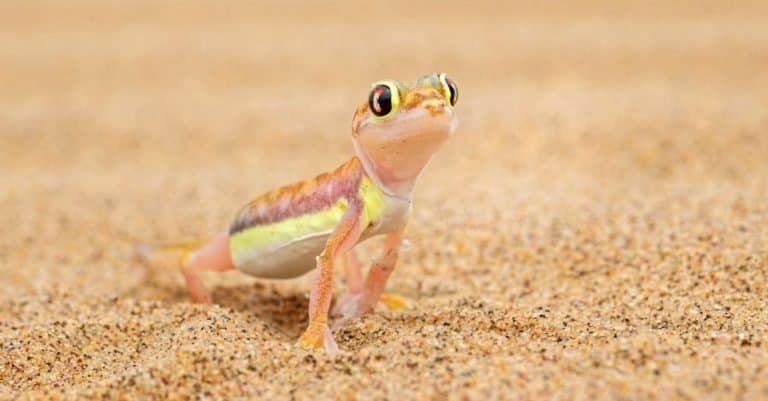
  • Climbing vs ground use: a large portion of the family is scansorial/arboreal, but there are also strongly terrestrial, saxicolous (rock-dwelling), and sand-adapted members; not all are adept smooth-surface climbers.
  • Tail autotomy is widespread: many can voluntarily shed the tail when threatened; regenerated tails often differ in shape/texture/color from the original, and some lineages have reduced autotomy or different break points.
  • Vocalizations: comparatively common for lizards-many species produce chirps, clicks, barks, or squeaks for territorial, courtship, or alarm contexts; frequency and complexity vary across taxa.
  • Digits/claws: most have claws (useful on rough surfaces); in pad-bearing species the claws may be partially recessed or positioned to aid climbing.
  • Ecology/behavior generalizations (with notable variation): many are nocturnal ambush foragers around vertical surfaces (trees, rocks, walls), but diurnal groups exist; diets are predominantly insectivorous/arthropod-based, with some species taking nectar/fruit or small vertebrates opportunistically.
  • Human association: multiple lineages readily occupy buildings and exploit artificial lights that attract insects; many others are habitat-specialists with minimal contact with people.
  • Lifespan range across the family: commonly ~3-10 years in the wild for many small species, with larger species and captive individuals often reaching ~10-20+ years (strongly species- and husbandry-dependent).

Sexual Dimorphism

Sexual dimorphism is common but variable across Gekkonidae. Differences may be subtle (especially in small species) or more pronounced in size, head shape, pore development, and display coloration depending on the lineage and mating system.

  • Hemipenal bulges at the tail base are often visible in adults; tail base tends to be broader.
  • Precloacal and/or femoral pores are commonly more developed and conspicuous in males (extent varies widely among taxa).
  • In many species, males have relatively larger heads/jaws and more robust necks, reflecting territoriality or male-male combat.
  • Some species show brighter or higher-contrast patterning in males, especially during breeding condition (not universal).
  • Often lack or have reduced precloacal/femoral pore prominence compared with males (varies by species).
  • In some species females are similar in size; in others females may be slightly larger-bodied (e.g., linked to egg production) while still having smaller heads than males.
  • Gravid females may show visible abdominal distension; otherwise external differences can be minimal in many species.

Did You Know?

The family includes both nocturnal geckos with vertical pupils and fully diurnal "day geckos" with rounder pupils-behavior varies widely across Gekkonidae.

Many species can vocalize (chirps, clicks, barks); geckos are among the most "talkative" lizards.

Adhesive toe pads work via millions of microscopic hairs (setae) that exploit van der Waals forces-no glue required.

Not all geckos are expert climbers: within the family, some species have reduced pads and rely more on claws and ground-dwelling habits.

Tail autotomy is common: many can drop the tail to escape, and later regrow it (often different in shape/color).

Some geckos thrive in human buildings (especially "house geckos"), turning porch lights into hunting grounds.

Diet isn't just insects: across the family, some species also take fruit, nectar, and pollen, and can act as pollinators in certain habitats.

Unique Adaptations

  • Adhesive toe pads (in many species): expanded lamellae covered in microscopic setae enable strong, reversible adhesion and rapid release; pad size and presence vary across the family.
  • Specialized vision: many nocturnal species have large eyes and low-light sensitivity; diurnal forms often have vivid color vision and strong visual signaling.
  • Spectacle "eyelid" and eye-licking: instead of movable eyelids, many have a clear protective scale over the eye and clean it by licking.
  • Tail autotomy and regeneration: a built-in break zone allows escape; the regrown tail often contains cartilage rather than the original vertebrae.
  • Skin and color strategies: across the family are cryptic bark/rock mimics, bold banded patterns, and in some lineages bright greens/reds used for daytime display.
  • Claws + pads toolkit: many combine adhesive pads with claws for mixed surfaces; in some ground/rock specialists, pads may be reduced and claws dominate.
  • Wide ecological flexibility: members occupy humid tropics, dry savannas, rocky deserts, islands, and cities-reflecting major adaptive radiation.

Interesting Behaviors

  • Nocturnal ambush hunting is widespread: many wait near lights or along walls to snatch moths, flies, and other insects-yet some lineages are active by day and hunt visually in full sun.
  • Vocal signaling is common: calls can function in territorial defense, mate attraction, and alarm; call types and loudness vary strongly among genera (some are notably loud).
  • Wall-and-ceiling locomotion: many species move with a rapid, "sticky-step" gait; others climb with claws on rough bark/rock rather than smooth surfaces.
  • Tail-based escape tactics: when threatened, many perform tail wagging/flicking, then may autotomize; the detached tail can twitch to distract predators.
  • Shelter fidelity: individuals often reuse the same cracks, bark hollows, or building crevices; some show strong site attachment when resources are reliable.
  • Human-commensal living (variable): certain species flourish around homes and urban areas, while many others remain strictly forest, rock, or desert specialists.
  • Reproduction is diverse but often includes paired, hard-shelled eggs; some species place eggs in communal sites where many females lay in the same protected spot.

Cultural Significance

Gekkonidae (geckos) are common and eat insects in warm homes, seen as helpful or linked to old beliefs. In South and Southeast Asia their calls are seen as omens. Some are used in trade and medicine, and their toe pads inspire sticky glues and climbing robots.

Myths & Legends

In parts of Southeast Asia, people read a house gecko (Gekkonidae) for when and how many times it chirps as omens—signs about luck, coming trips, or if something just said is true.

In parts of Indonesia and Malaysia, the loud "to-kay/to-kek" call of the tokay gecko is seen as meaningful, often counted or noted, and its sound became the gecko's common name in many languages.

Hawaiian family guardian spirit associations: in Hawaiian tradition, certain animals can serve as family guardian spirits; lizards, including gecko-like forms in local understanding, may be regarded as protective ancestral manifestations in some family lines.

Maori lizard-omen traditions: in Maori worldview, lizards (including geckos) appear in stories and beliefs as powerful spiritual signs, sometimes protecting, sometimes warning, tied to sacred rules and presence of gods or spirits.

Biblical/Levitical tradition: gecko-like lizards are named among "unclean" creeping animals in Levitical purity laws, reflecting a long-standing cultural categorization of house-dwelling reptiles in the ancient Near East.

Wall tiger in Chinese folk naming: a common Chinese term for gecko literally translates as "wall tiger," highlighting a traditional image of small but fierce, wall-clinging hunters in everyday speech.

Conservation Status

NE Not Evaluated (family-level taxa like Gekkonidae are not assessed as a single unit; member species span the full spectrum from Least Concern to threatened categories such as Vulnerable/Endangered/Critically Endangered, with some island endemics at highest risk and a number of Data Deficient species)

Has not yet been evaluated against the criteria.

Population Unknown

Protected Under

  • CITES regulation applies to selected gecko taxa (some species/genera in international pet trade are listed; coverage varies by country and taxon).
  • National wildlife protection laws in multiple range states protect certain endemic/threatened gecko species and regulate collection and export; enforcement and coverage vary widely.
  • Protected areas and habitat conservation programs are key safeguards for many forest and island endemics; invasive predator control and biosecurity are critical in some island systems.

Looking for a specific species?

Tokay gecko

Gekko gecko

Often the most iconic animal people mean by "gecko" in general usage (large size, loud calls, frequent in media and the pet trade), while still representing the broader gekkonid themes of climbing specialization, vocalization, and nocturnal habits (with many exceptions across the family).

  • Family-wide size diversity: from tiny dwarf species (~3-5 cm total length) to large geckos ~35-40 cm total length; body mass ranges from ~0.001 kg to ~0.3 kg depending on species.
  • Family-wide lifespan range (highly variable): commonly ~3-10 years in smaller species, and ~10-20+ years in larger species (especially in captivity with stable care).
  • Behavior/ecology across Gekkonidae: many are nocturnal and insectivorous, but there are prominent diurnal lineages (e.g., day geckos) and omnivorous/nectar-feeding tendencies in some arboreal forms.
  • Locomotion and habitat breadth: many species are exceptional climbers with adhesive toe pads, but some are more terrestrial/saxicolous and have reduced adhesion; habitats span deserts, forests, savannas, islands, and human buildings.
  • Reproduction varies: most are egg-layers with small clutches (often 1-2 eggs), and at least one well-known lineage includes parthenogenetic reproduction (e.g., mourning geckos).
View Tokay gecko Profile

You might be looking for:

Leopard geckos

22%

Eublepharidae

A distinct gecko family (includes the common leopard gecko); unlike many geckos, they typically lack adhesive toe pads and have movable eyelids.

Sphaerodactylid geckos (dwarf geckos)

18%

Sphaerodactylidae

Tiny New World geckos, including many of the world’s smallest lizards.

Diplodactylid geckos

16%

Diplodactylidae

Major Australasian gecko family (e.g., crested gecko lineage) often referred to as geckos in the pet trade.

Leaf-toed geckos

11%

Phyllodactylidae

A separate family of geckos distributed in warmer regions; many have expanded toe tips.

House gecko

10%

Hemidactylus frenatus

One of the most familiar commensal gecko species worldwide; often what people mean by “gecko” around buildings.

Life Cycle

Birth 2 hatchlings
Lifespan 7 years

Lifespan

In the Wild 2–20 years
In Captivity 5–30 years

Reproduction

Mating System Polygynandry
Social Structure Solitary
Breeding Pattern Transient
Fertilization Internal Fertilization
Birth Type Internal_fertilization

Behavior & Ecology

Social Aggregation Group: 2
Activity Nocturnal, Diurnal, Crepuscular, Cathemeral
Diet Insectivore Small-to-medium insects (commonly moths, crickets, and roaches; nectar/soft fruit in some day-gecko species)
Seasonal Hibernates

Temperament

Generally wary and avoidance-oriented (freeze, flee, hide), especially in exposed habitats
Often territorial around refuges and feeding sites; male-male aggression can include chasing, biting, and vocal threats
Tolerance ranges from highly intolerant (strongly defended retreats) to relatively tolerant in dense urban or shelter-limited settings
Predation-risk driven behavior is prominent: cryptic posture, tail autotomy as a last-resort defense, and rapid retreat to cover
Handling response varies widely across the family: some species are relatively tolerant, others are skittish and prone to defensive biting or loud distress calls

Communication

chirps
clicks
trills
squeaks
barks/short calls used in territorial or courtship contexts
distress calls in some taxa
chemical cues Skin and cloacal/femoral gland secretions; scent marking and individual/sex recognition in some species
visual displays: head-bobbing, body elevation, lateral postures, tail waving/flicking, gaping
tactile contact during courtship and mating; biting/holding can occur in mating interactions
substrate-borne vibrations or tapping in some contexts
color change/signaling in some lineages (not universal), used in dominance, stress, or courtship contexts

Habitat

Biomes:
Tropical Rainforest Tropical Dry Forest Savanna Desert Hot Desert Cold Mediterranean Temperate Grassland Temperate Forest Temperate Rainforest Alpine Wetland Freshwater +6
Terrain:
Coastal Island Plains Valley Hilly Mountainous Plateau Rocky Karst Sandy Riverine Volcanic Muddy +7
Elevation: Up to 14763 ft 9 in

Ecological Role

Predominantly small-to-medium insect predators (mesopredators) in terrestrial ecosystems; in some lineages also nectar/fruit visitors that can contribute to plant reproduction.

suppression of arthropod populations (including many pest insects in natural and urban environments) energy transfer from insects to higher trophic levels (important prey base for snakes, birds, and mammals) pollination support in nectar-feeding species (pollen transfer while visiting flowers) seed dispersal potential in fruit-feeding species (via pulp consumption and movement)

Diet Details

Main Prey:
Moths and other nocturnal flying insects Beetles Crickets and grasshoppers Flies and mosquitoes Cockroach Termites Ants Spiders Scorpion Centipedes and millipedes Snails and other small soft-bodied invertebrates +5
Other Foods:
Nectar Pollen Soft fruits Plant sap

Human Interaction

Domestication Status

Wild

Geckos (Gekkonidae) are not truly domesticated. Some house geckos (e.g., Hemidactylus, Gehyra) live near people, and many species are bred in captivity for pets—this is breeding in captivity, not true domestication. Accidental introductions make feral populations. People see geckos as insect control, pests, pet animals, or conservation and invasive-species concerns.

Danger Level

Low
  • Bites: generally minor, but larger, territorial species can deliver painful bites and may break skin.
  • Zoonotic risk: as with many reptiles, potential Salmonella transmission via handling or contaminated surfaces; risk is mitigated by hygiene and avoiding contact with high-risk individuals (young children, immunocompromised).
  • Allergens/irritants: droppings in homes can be a nuisance; cleaning should avoid aerosolizing dust.
  • Indirect risks: introduced/feral populations may contribute to ecological impacts that prompt control measures; this is an environmental risk rather than direct human injury.
  • Misuse/poor welfare: not a direct danger to humans, but improper handling and unsuitable housing can lead to stressed animals that bite or fail to thrive.

As a Pet

Suitable as Pet

Legality: Laws on keeping geckos (Gekkonidae) vary by place and species. Many captive-bred geckos are legal, but local protections, collecting bans, permits, CITES listings, or invasive rules may apply. Check local rules; prefer captive-bred.

Care Level: Moderate

Purchase Cost: $20 - $2,000
Lifetime Cost: $300 - $10,000

Economic Value

Uses:
Pet trade (captive-bred and, unfortunately in some places, wild-caught) Biomimetics/materials science (adhesive toe-pad research inspiring dry adhesives and robotics) Household insect control/commensal pest suppression (informal ecosystem service) Education/outreach (zoos, nature centers, classroom animals) Conservation programs (monitoring, habitat protection; sometimes head-starting/captive assurance for threatened endemics) Invasive species management costs (where introduced populations impact natives)
Products:
  • live animals for companionship/display
  • captive-breeding stock and morph/locale lineages (where applicable)
  • scientific data and biomimetic design insights (adhesion/surface interaction studies)
  • educational programming/exhibits featuring geckos

Relationships

Predators 7

Boomslang Dispholidus typus
Brown tree snake Boiga irregularis
House crow Corvus splendens
Barn owl Tyto alba
Black rat Rattus rattus
Domestic cat Felis silvestris catus
Brown anole Anolis sagrei

Related Species 6

House geckos Hemidactylus Shared Family
True geckos Gekko Shared Family
Day geckos Phelsuma Shared Family
Leaf-tailed geckos Uroplatus Shared Family
Wall geckos Tarentola Shared Family
Mourning geckos Lepidodactylus Shared Family

Ecological Equivalents 5

Animals that fill a similar ecological role in their ecosystem

Crested gecko Correlophus ciliatus Arboreal, largely nocturnal/crepuscular gecko occupying similar forest and human-adjacent niches, with convergent use of climbing adaptations. Belongs to a different family (Diplodactylidae).
Leopard gecko Eublepharis macularius Terrestrial, mostly nocturnal insectivore often compared to other geckos; shares many behaviors and ecological roles but lacks adhesive toe pads. Belongs to a different family, Eublepharidae.
Anoles Anolis spp. Small-to-medium, arboreal/scansorial insectivorous lizards that often occupy similar vertical microhabitats on trunks, walls, and foliage, especially in warm climates. They are typically diurnal and use different climbing mechanics.
Skinks Scincidae Many small insectivorous lizards overlap with geckos in ground-layer or rock-crevice niches and prey types. Some are nocturnal and share shelter-use patterns.
Tree frog Hylidae Insectivores that frequently forage on walls and vegetation at night in humid environments; share a similar prey base and microhabitat use, with toe-pad adhesion having evolved independently.

Types of Gecko

17

Explore 17 recognized types of gecko

Common house gecko Hemidactylus frenatus
Mediterranean house gecko Hemidactylus turcicus
Tropical house gecko Hemidactylus mabouia
Tokay gecko Gekko gecko
Smith's green-eyed gecko Gekko smithii
Gold dust day gecko Phelsuma laticauda
Giant day gecko Phelsuma grandis
Madagascar day gecko Phelsuma madagascariensis
Klemmer's day gecko Phelsuma klemmeri
Mourning gecko Lepidodactylus lugubris
Stump-toed gecko Gehyra mutilata
Moorish gecko Tarentola mauritanica
Ringed wall gecko Tarentola annularis
Chazalia's gecko Tarentola chazaliae
Panther gecko Paroedura picta
Satanic leaf-tailed gecko Uroplatus phantasticus
Giant leaf-tailed gecko Uroplatus fimbriatus

“Geckos can climb vertical walls and stroll across ceilings.”

Geckos have been around for at least 300 million years. Scientists have found geckos preserved in amber that dates back to the Cretaceous Period, and those specimens look remarkably like the gentle little lizards you’ll find in so many parts of the world today.

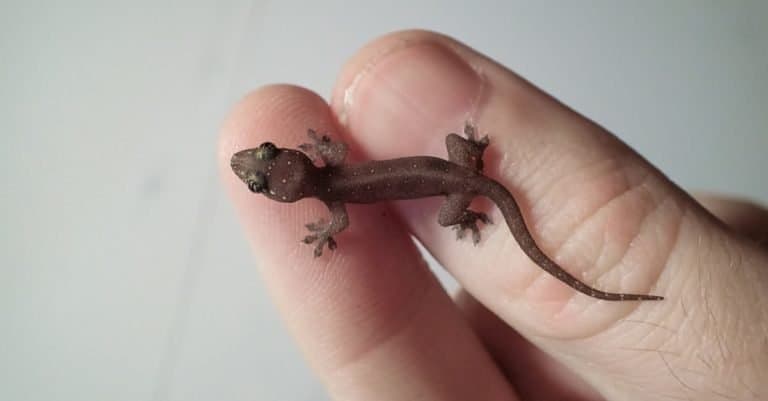
There are approximately 1,500 gecko species, and they vary in size from the Jaragua Sphaero dwarf gecko, which measures just three-quarters of an inch long and weighs less than one-hundredth of an ounce, to the New Caledonian giant gecko, which can grow to 17 inches and tips the scales at 10 ounces.

Geckos thrive in practically every habitat, including rainforests, mountains, and deserts, so long as average temperatures reach 72 degrees Fahrenheit.
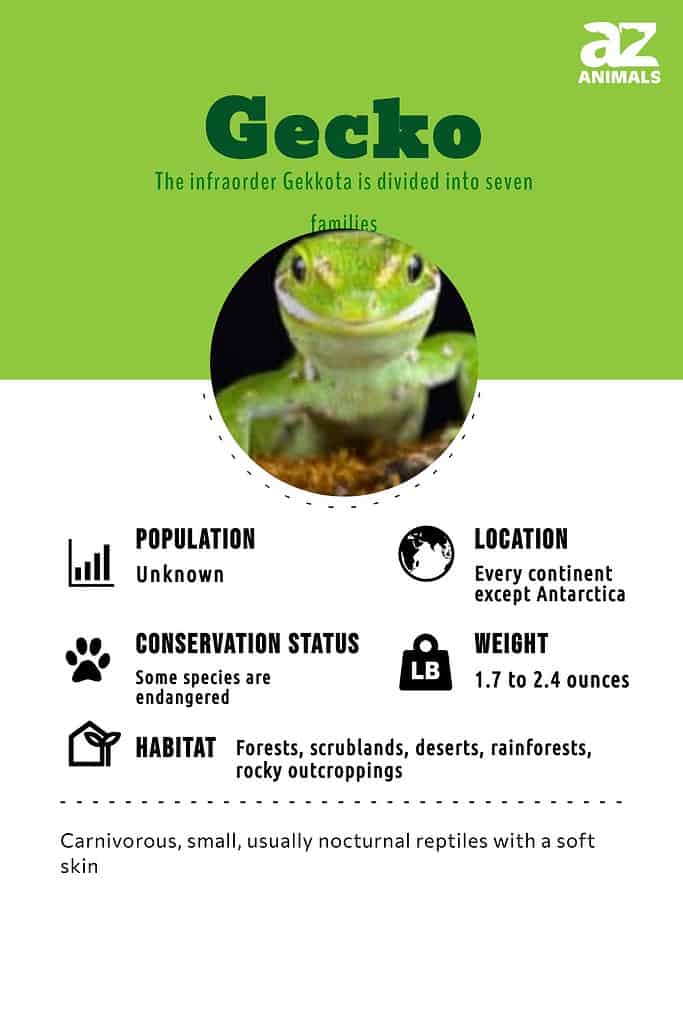
👁 Gecko infographic

5 Incredible Gecko Facts!

Besides their infamous appearance on a series of car insurance commercials, you may not know that much about geckos! They are amazing creatures and use their toes to help them stick to any surface besides Teflon.

Contrary to popular belief, geckos don’t necessarily have “sticky” toes that stick like glue. They cling to surfaces with ease thanks to what is known to nanoscale hairs known as setae. If you can imagine, 6.5 million setae on a single gecko can support enough force to hold the weight of two people.

Geckos’ eyes are at least 350 times more sensitive to light than the human eye.

Geckos are standouts among the reptile class in a number of respects:

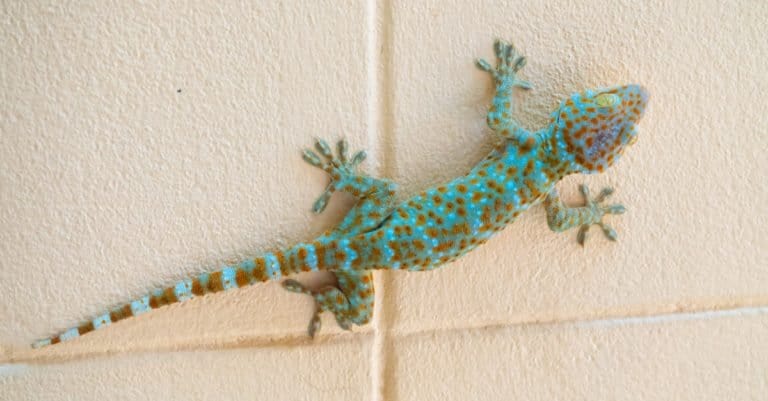
  • These reptiles can climb practically every vertical surface effortlessly thanks to the tensile suction created by hundreds of thousands of tiny hairs on their toes.
  • Geckos are the only lizards with true vocal cords.
  • These reptiles clean their eyes by licking them.
  • When they lose their tails to predators, they can regenerate new tails.
  • These reptiles replace their teeth by growing new ones every three to four months.

Scientific name
👁 Image

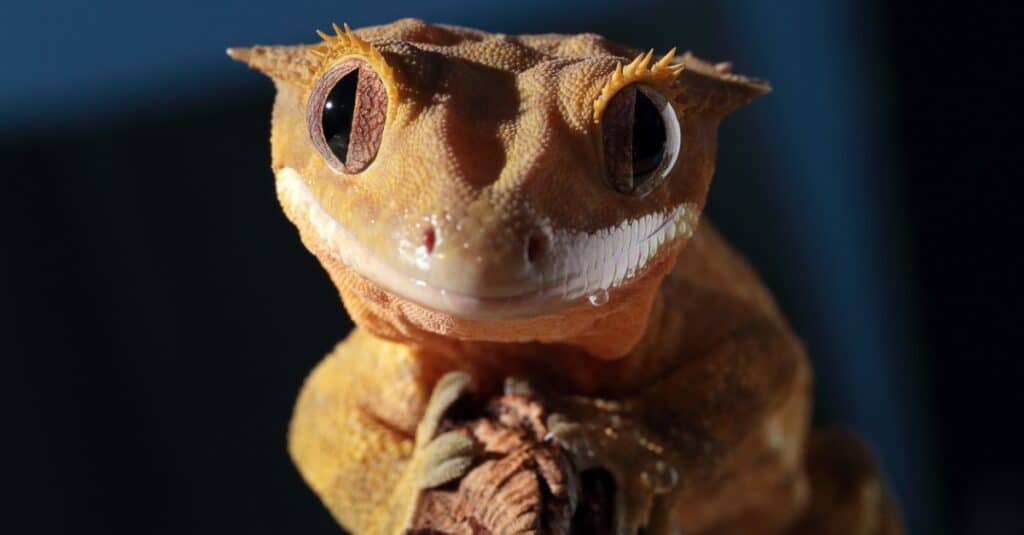
There are seven different families of geckos.

©iStock.com/MattiaATH

These animals belong to a taxonomic group that shares the designation “squamate reptiles.” “Squamate” is derived from the Latin word “squamatus,” which means scaly, although these reptiles themselves don’t have scales. They belong to the infraorder Gekkota, a name thought to derive from the Indonesian-Malay “gēkoq,” which is a transliteration of the sound this animal makes.

The infraorder Gekkota is comprised of seven families:

  • Diplodactylida: This family includes 137 species in Australia, New Zealand, and New Caledonia. Its scientific name is derived from the Greek words for double (“diplo”) and finger (“daktylos.”) The crested gecko, a popular pet, is a member of this family.
  • Carphodactylidae: Carphodactylidae is another family of Australian geckos, comprising 30 species. Its scientific name derives from the Greek words for finger and straw (“karphos”.)
  • Pygopodidae: Pygopodidae look like snakes but are really geckos. The family consists of 35 species, native to Australia and New Guinea. “Pygo” is a Greek word for rump while “podi” is the Greek word for feet, so the family’s name roughly means “feet in their bottom.”
  • Eublepharidae: Eublepharidae is a family of 30 species found in Asia, Africa, and North America. They are distinguished from other species by their moveable eyelids and their lack of adhesive toepads. This genus includes the leopard, the fat-tailed, and the clawed gecko.
  • Sphaerodactylidae: The Sphaerodactylidae family includes more than 200 species distributed throughout all parts of the world. The scientific name derives from the Greek words for round (“sphaero”) and finger (“dactyl.”)
  • Phyllodactylidae: “Phyllo” is the Greek word for leaf, and many of the 148 species that belong to this family are known as leaf-toed geckos. Phyllodactylidae is found in all parts of the world.
  • Gekkonidae: Gekkonidae, or the common gecko, is the most widespread family, containing more than 950 species. Well-known species include the house, the tokay, the leaf-tailed, and the day gecko.

Evolution and Origins
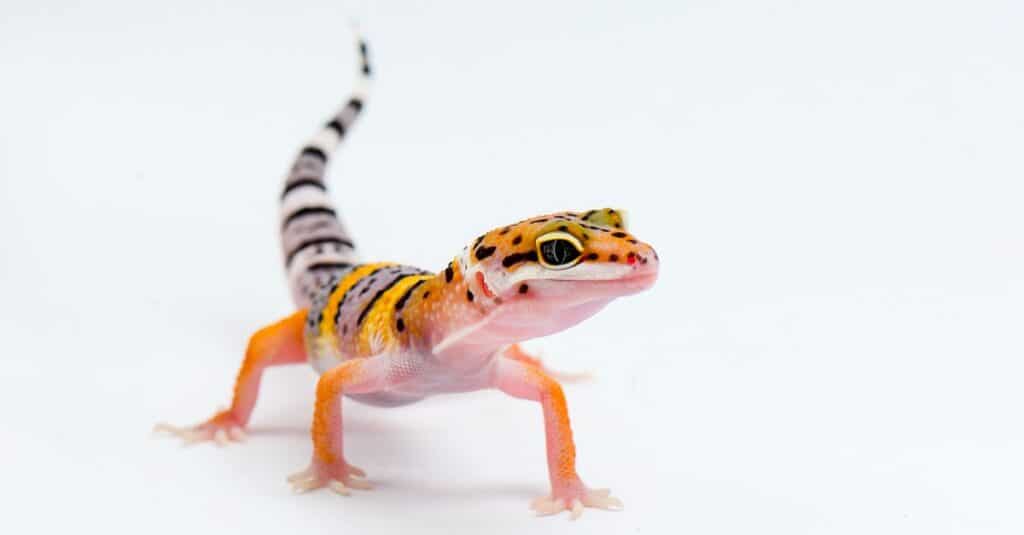
👁 Leopard Gecko on white background

Geckos have an amazing evolutionary history.

©DWI YULIANTO/Shutterstock.com

Researchers have traced the oldest known gecko fossil to 100 million years old. Reptiles are thought to have descended from a common ancestor, which can be dated back to the Carboniferous Period, which occurred between 300-350 million years ago. The oldest known reptile fossil is hylonomus, and it has been estimated to date back 315 million years.

The exact time when geckos developed their remarkable climbing feet is unknown. A fossil found 100 million years old showed the tail and feet of a gecko, including the setae, or tiny hairs on the feet. Other adaptations that have been observed in modern species, like camouflage and the leaf-tailed gecko’s distinct tail resembling a dried leaf, demonstrate how far they have come from their ancient ancestor.

Human beings have been in awe of the gecko for its ability to stick to virtually any surface. Its feet are able to do this by using Van Der Waals, an electrical attraction between molecules, and the structure that makes it possible is called setae, which consists of millions of individual hairs. Scientists have even been working to recreate these hairs in order to produce their own adhesives.

Humans have identified five distinct subfamilies of geckos, and there are currently over 2,000 known species of these reptiles in the world, according to the Global Gecko Association. Geckos come in various colors and shades, with some being able to blend in with their surroundings. Additionally, some female geckos have the remarkable ability to reproduce without a mate, such as the mourning geckos.

Geckos have adapted to their environment in many ways over time. Leopard geckos, for example, are unable to climb walls, but they can burrow to escape from extreme temperatures. Most geckos have the same type of feet and eyes, and they also have a defense mechanism that releases a bad smell and feces when attacked by predators. Geckos typically eat small insects such as cockroaches and worms as part of their diet. This wide range of adaptations is evidence of how the species has evolved over time to survive in different environments.

Appearance
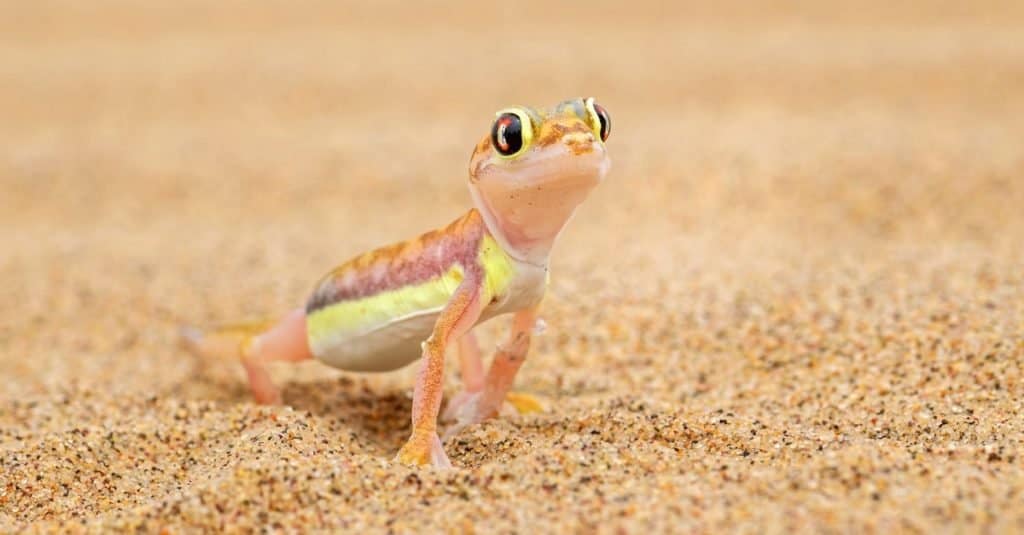
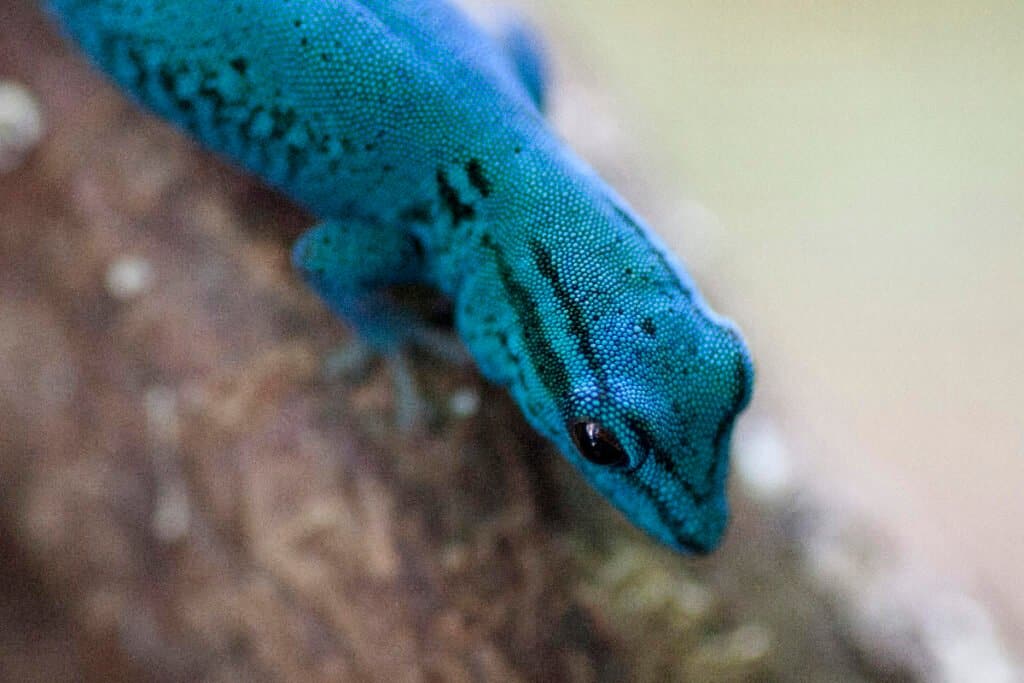
These reptiles are small lizards with stubby bodies, large heads, tails, and—except for members Pygopodidae family—prominent limbs. The animal’s color varies widely across species. The majority are grey or brown, the better to blend in with the rocks, sand, and dirt around them and so, to escape the notice of predators. However, the leopard gecko has bright yellow skin covered with brown spots. Some geckos are electric blue. The crested gecko is orange or red, while the tokay gecko has bright orange spots.

Their tails also vary widely in shape and morphology, depending upon the species. Some are long and tapering, while others are shorter and blunter or even globular. These reptiles store fat in their tails so they’ll have access to calories when food sources are scarce. Their tails have evolved to fall off easily when the animal is pursued by predators. When this happens, the animal will regenerate its tail. Their tails actually have their own nerve control center that allows the tail to move and lunge independently for up to half an hour after their separation from the body.

These reptiles have approximately 100 teeth. Their teeth don’t grind down because they replace their teeth every three to four months.

Their skin is covered with millions of infinitesimal, hairlike spines that are very soft to the touch. These spines trap water droplets that keep dust and other air contaminants away from the gecko’s skin. The microscopic hairs that cover their toes are called “setae.” These hairs work differently than the hair that covers the animal’s body. Setae are actually tiny enough to activate molecular Van der Waals forces that enable geckos to easily climb vertical surfaces, like walls, and even to move comfortably on ceilings.

Although a few species are active during the day, they are primarily nocturnal animals, and the design of their eyes shows it. All but a few species have translucent membranes covering their eyes instead of eyelids. They lick their eyeballs to keep them clean! (The leopard gecko is unique here in having moveable eyelids.) Their pupils are vertical, and their eyes can be up to 350 times as sensitive to light as human eyes. These lizards also have a sophisticated auditory system; they’re capable of hearing sounds pitched at high frequencies that other reptiles cannot hear.

Behavior
👁 Animal, Animal Body Part, Animal Eye, Animal Head, Animal Wildlife
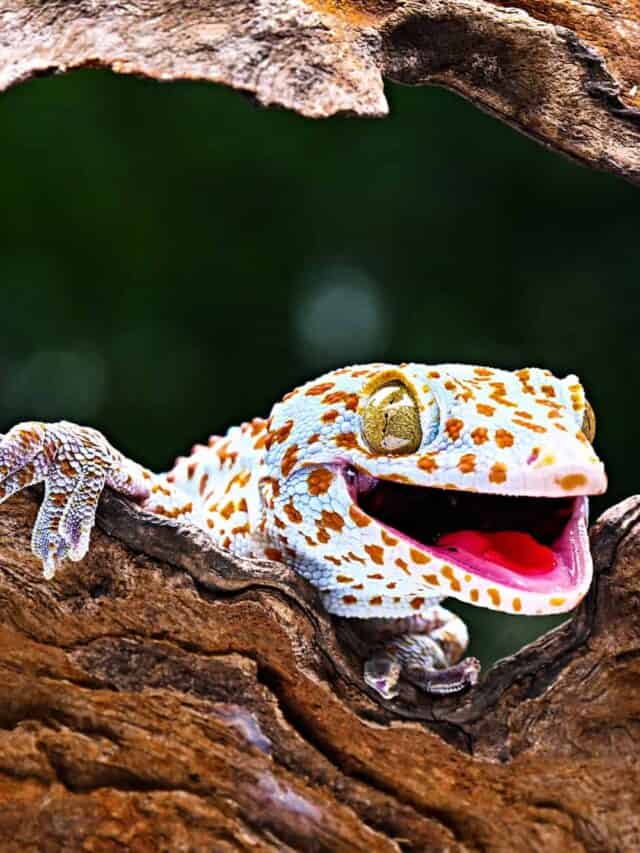
Geckos have true vocal cords and make lots of different noises to communicate.

Though these reptiles are not particularly social animals, they have a sophisticated vocal communication system when compared with other lizards. They have true vocal cords. They bark and chirp to define their territory, attract mates, and elude predators; they also hiss and emit high-pitch squeaks. The New Caledonian gecko has such a distinctive growl that native tribes of those islands dubbed it “the devil in the trees.” The leaf-tailed gecko of Madagascar emits a distress call that many liken to a child’s scream.

They also use their tails to communicate with other geckos. Slow, wiggling movements indicate awareness of another animal’s presence, while more vigorous shakes are defensive maneuvers designed to distract or evade predators.

Another characteristic of their behavior is their head shaking. This movement is associated with feeding, and it helps the animal pass food from its throat to its stomach.

Most species are nocturnal. The night is the time when they climb most actively. They kos are swift runners, too; flat-tailed house geckos have been clocked at three feet per second, and they can scamper over the surface of the water.

Habitat
👁 Crested Gecko - Striped Crested
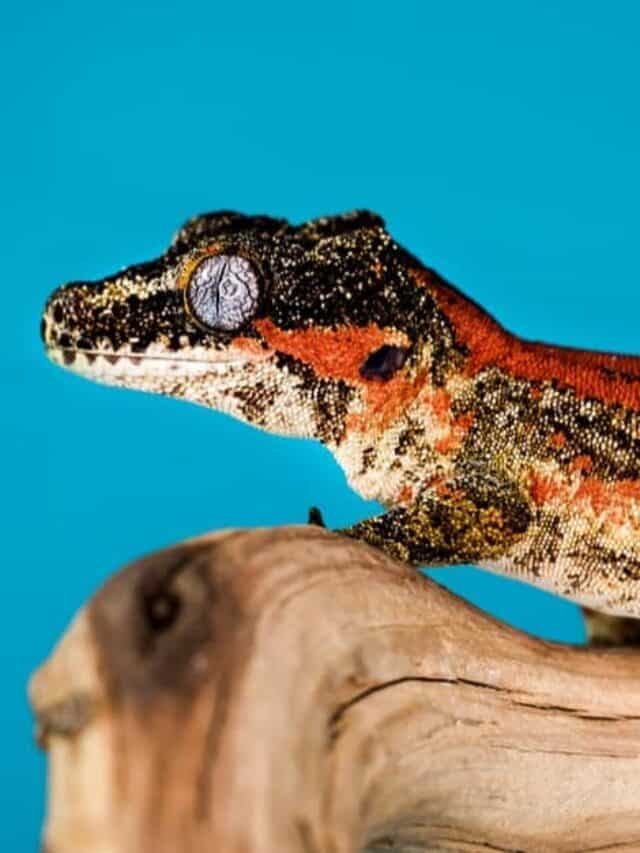
Geckos live in many different habitats around the world, including deserts, rainforests and rocky outcroppings.

These reptiles live in a variety of warm habitats on every continent of the globe except Antarctica. The immense amount of morphological variation found in different species reflects the ways that they have evolved to fit into their specific habitats. The Northland tree species, for example, owes its bright green color to the New Zealand forests and scrublands it inhabits. The leopard gecko, with its yellowish skin and black spots, blends in well with the semi-desert terrain of its native Pakistan, India, and Afghanistan. Red-spotted tokay species are well concealed in the lowland or submontane rainforests of southeast Asia while black-spotted tokay species have adapted to the rockier regions of Vietnam and China.

Diet
👁 What Do Geckos Eat
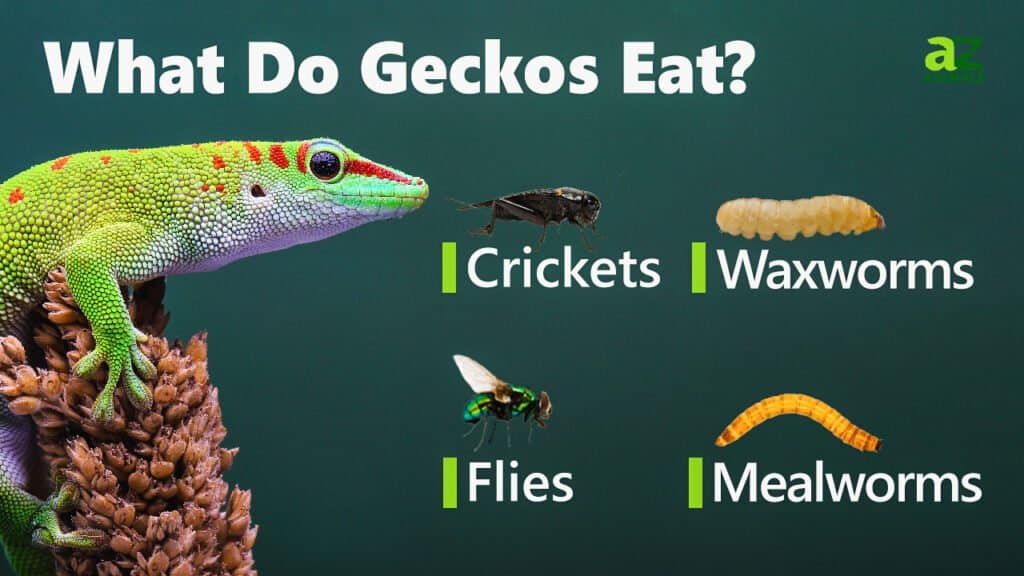
Geckos eat worms, insects, fruit, snails, and sometimes nectar.

These reptiles are primarily insectivores, but they also eat worms, fruit, and flower nectar. Leaf-tailed geckos like to snack on land snails. Large species of geckos, such as the New Caledonian gecko, have even been known to eat small birds and rodents.

What eats geckos?

Snakes, birds, spiders, and cats.

What do geckos eat?

Insects, worms, fruit, and flower nectar. For a complete guide on what geckos eat, give ‘What Do Geckos Eat: 15 Foods in their Diet’ a read!

Predators and Threats
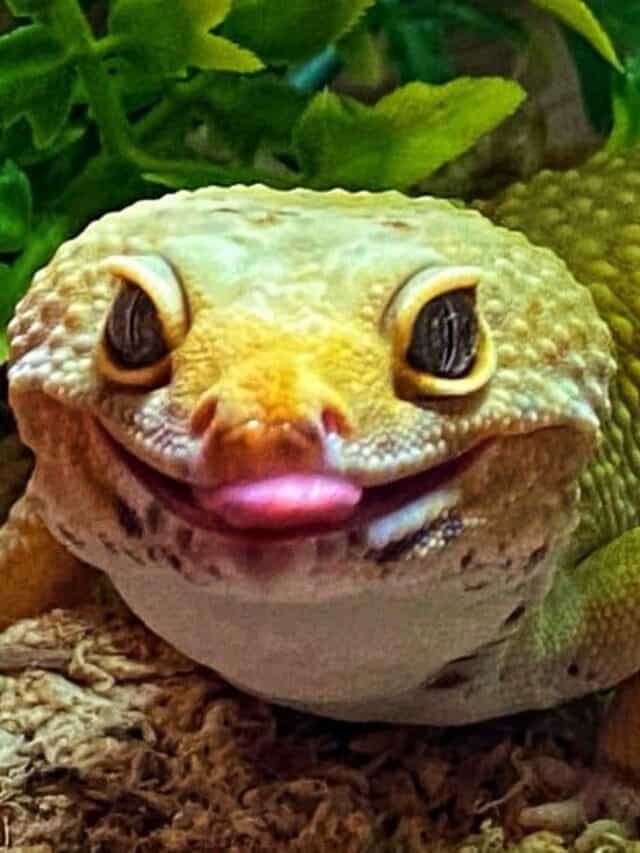
👁 leopard-gecko-smiling-sitting
Geckos have to watch out for predatory birds.

Predators include snakes, birds, spiders, and species introduced by humans, such as dogs and cats. In the tropical rainforests of northern South America, these animals are stalked by the much smaller goliath tarantula, which uses its venom to paralyze the gecko and liquefy its flesh. Raptor birds such as hawks and owls typically live in climates too cold for geckos, but when temperatures drop below freezing, and these birds travel south, these reptiles become a favorite prey.

Most species aren’t in danger of extinction, but a few species are on the International Union for Conservation of Nature’s Red List. The crested gecko of New Caledonia, for example, was thought to be extinct for many years after its initial sighting in 1866 until it was rediscovered in 1994. Two other New Caledonian species, Bavayia goroensis and Bavayia ornate, are on the Red List because mining activities are shrinking their habitats.

Reproduction and Life Cycle
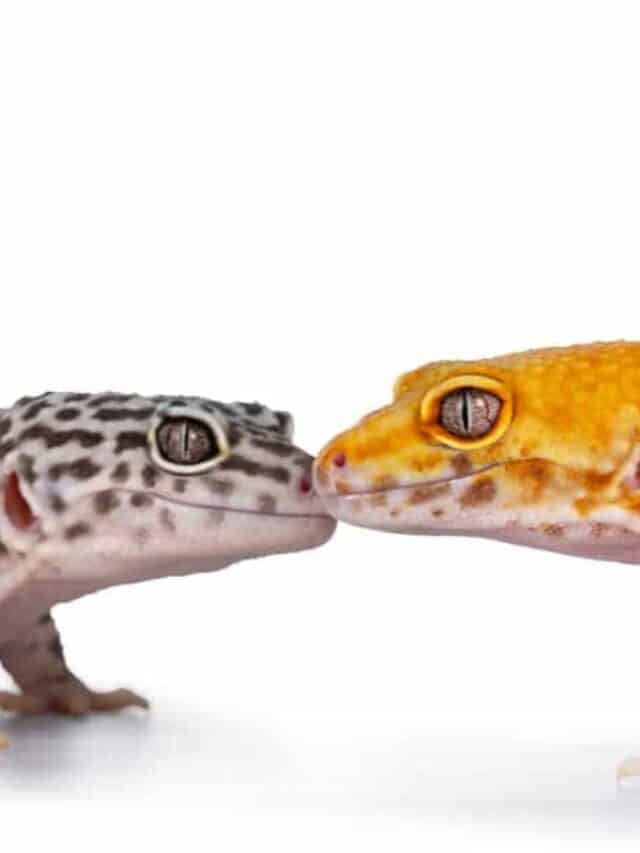
👁 different-leopard-gecko-morphs-facing-each-other-white-background
Male geckos attract a mate by vibrating their tails and making lovely noises.

Males attract females by making distinct mating sounds and by vibrating their tails. While mating, the male grasps the skin at the back of the female’s neck in his jaws and tucks his tail beneath her abdomen, bringing the animals’ cloacal openings in close proximity so that fertilization can occur. Some species, however, such as the mourning gecko found in Central and South America, can reproduce through parthenogenesis.

Most of these animals lay eggs. Gestation periods vary widely in length: The leopard gecko may lay her eggs 16 to 22 days after mating, while a harlequin gecko’s pregnancy can last three to four years. Forty-three species endemic to New Zealand give birth to live young.

The typical egg clutch size is two, and the eggs are laid on the ground beneath rocks and tree bark. Their eggs can take between 35 and 90 days to hatch. Females show no interest in eggs or hatchlings once they’ve laid their eggs. Though many hatchlings have body markings that are different from those of adults, they move, behave, and respond to their environments exactly like adults.

In captivity, these reptiles have relatively long lifespans. Leopard geckos, for example, typically live between 15 and 20 years. In the wild, they live for approximately five years if they aren’t preyed upon. A study in New Zealand found wild geckos that were believed to be at least 36 years old, which is substantially past the average lifespan of a gecko.

Population
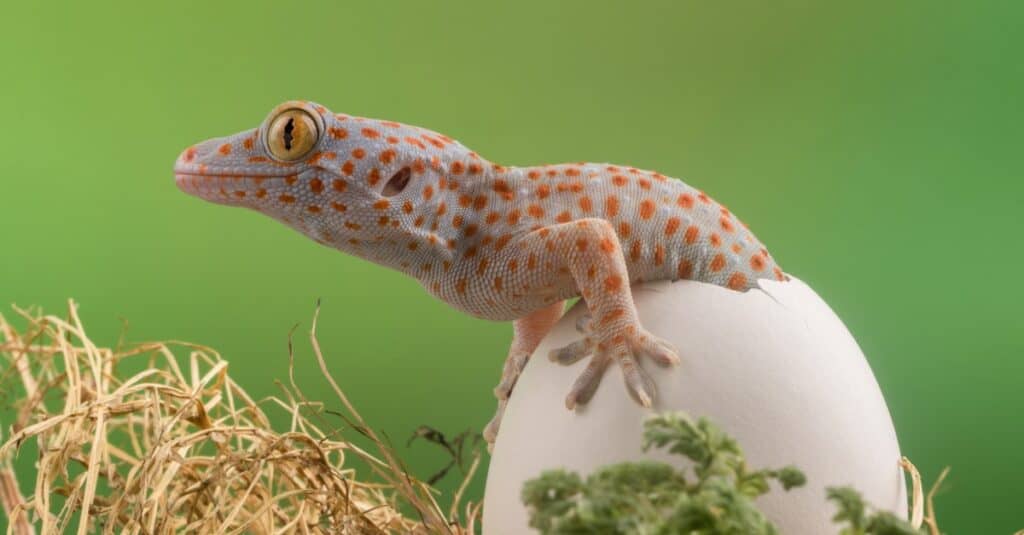
👁 Baby leopard gecko coming out from the egg.

Some species of gecko lay eggs, and other species give birth to live young.

©lessysebastian/Shutterstock.com

Scientists believe that these reptiles originated in Southeast Asia sometime during the Lower Cretaceous, but they are now found in large numbers in practically every place in the world where the average temperature is 72 degrees Fahrenheit or larger. It would be impossible to estimate the number of them currently on the planet.

Conservation
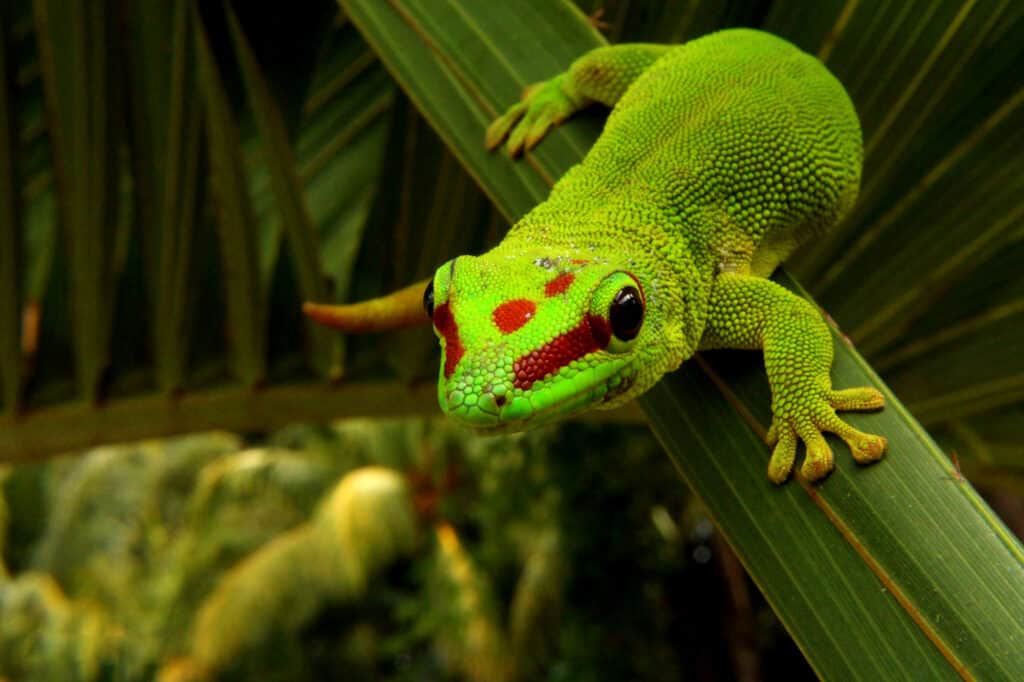
👁 Image

Several species of geckos are endangered due to habitat loss.

©Tallies/Shutterstock.com

Several species of geckos have been identified as endangered or critically endangered. These include the Achoque gecko (Gonatodes albogularis), Dwarf Gecko (Sphaerodactylus ariasae), and Okinawa Leaf-toed Gecko (Hemidactylus mabouia). The main threats to their survival include habitat loss due to urbanization, deforestation, and agricultural expansion, as well as pet trade collection for the exotic pet market and roadkill from increasing traffic in their habitats. Additionally, invasive species can compete with native geckos for food sources and nesting sites. To ensure these creatures remain on our planet, we must all work together to reduce our environmental impact through responsible land use practices like sustainable forestry management, wildlife conservation efforts such as research projects into population dynamics, and habitat protection initiatives like creating protected areas for vulnerable species.

Geckos In the Zoo

Every zoo that has a reptile house is likely to be exhibiting at least a few specimens. Zoos with noteworthy reptile collections include the San Diego Zoo, the Fort Worth Zoo, the Saint Louis Zoo, the Los Angeles Zoo, and the Bronx Zoo.

33 Types of Gecko
👁 Image

There are dozens of different types of geckos, each more beautiful than the last.

©iStock.com/Mauvries

  1. Crested Gecko
  2. Tokay Gecko
  3. Leopard Gecko
  4. Common House Gecko
  5. Gargoyle gecko
  6. African fat-tailed Gecko
  7. New Caledonia Giant Gecko
  8. Moorish Gecko
  9. Tropical House Gecko
  10. Mediterranean House Gecko
  11. Schlegel’s Japanese Gecko
  12. Golden Gecko
  13. Gold Dust Day Gecko
  14. Common Flat-tail Gecko
  15. Frog-eyed Gecko
  16. Jewelled Gecko
  17. Western Banded Gecko
  18. Henkel’s Leaf-tailed Gecko
  19. Helmethead Gecko
  20. East Indian Leopard Gecko
  21. Wheeler’s Knowtail Gecko
  22. Texas Banded Gecko
  23. Ocelot Gecko
  24. Lined Gecko
  25. Duvaucel’s Gecko
  26. Carrot-tail Viper Gecko
  27. Forest Gecko
  28. Indo-Pacific Gecko
  29. Short-fingered Gecko
  30. Cape Dwarf Gecko
  31. Harlequin Gecko
  32. Gibron’s Thick-toed Gecko
  33. Chinese Cave Gecko
View all 261 animals that start with G

Sources

  1. Wikipedia / Accessed March 3, 2021
  2. Live Science / Accessed March 3, 2021
  3. News BBC / Accessed March 3, 2021
  4. National Geographic Kids / Accessed March 3, 2021
  5. Pets on Mom / Accessed March 3, 2021
  6. Britannica / Accessed March 3, 2021
  7. Treehugger / Accessed March 3, 2021
  8. National Geographic / Accessed March 3, 2021
  9. Inside Science / Accessed March 3, 2021
  10. Smithsonian’s National Zoo & Conservation Biology Institute / Accessed March 3, 2021
  11. Pethelpful / Accessed March 3, 2021
  12. Most New Zealand / Accessed March 3, 2021
  13. JRank Science & Philosophy Encyclopedia / Accessed March 3, 2021
  14. Reptiles Magazine / Accessed March 3, 2021

About the Author

Heather Hall

Heather Hall is a writer at A-Z Animals, where her primary focus is on plants and animals. Heather has been writing and editing since 2012 and holds a Bachelor of Science in Horticulture. As a resident of the Pacific Northwest, Heather enjoys hiking, gardening, and trail running through the mountains with her dogs.

Thank you for reading! Have some feedback for us?

Contact the AZ Animals editorial team

Related Articles You May Find Interesting

The Growing Black Bear Population Spreading Across New Hampshire Forests

👁 Image
Articles

How Snow Flies Survive Subzero Cold with Special Antifreeze Proteins


Gecko FAQs (Frequently Asked Questions)

Geckos are Carnivores, meaning they eat other animals.

Geckos belong to the Kingdom Animalia.

Geckos belong to the class Reptilia.

Geckos belong to the phylum Chordata.

Geckos belong to the family Gekkonidae.

Geckos belong to the order Squamata.

Geckos are covered in scales.

Geckos live in rocky deserts and mountainous regions.

Geckos prey on insects, worms, and small birds.

Predators of Geckos include snakes, birds, and spiders.

The average number of babies a Gecko has is 2.

There are thought to be over 2,000 species of Gecko!

Geckos can live for 2 to 9 years.

A Gecko can travel at speeds of up to 30 miles per hour.

Geckos are small, nocturnal lizards found in all the warm parts of the world. They are known for their ability to scurry up vertical surfaces, and they are the only lizard species with true vocal cords.

Geckos are thought to have evolved in Southeast Asia some time during the Lower Cretaceous, but today, they can be found on every continent except Antarctica.

Snakes, birds, and spiders eat geckos.

No! Geckos are gentle creatures, though, in captivity, they have been known to nip humans from time to time if they’re feeling threatened because they’re being handled roughly.

Yes. Geckos make excellent terrarium pets. Crested geckos, leopard geckos, African fat-tailed geckos, gargoyle geckos, and the giant New Caledonian gecko are particularly popular.

The main differences between a salamander and a gecko include their size, skins, diet, habitat, and training. Geckos may be very similar to salamanders in body shape and color patterns, but that is where their similarities end. Geckos are reptiles with over 1,500 species, while salamanders are amphibians with over 550 species. Since the two animals are from different classes, they are expected to vary in reproduction processes. Unlike salamander eggs with no shell, geckos produce shelled, amniotic eggs that prevent them from desiccating.

There are a variety of gecko species across Texas that include:

  • Rough-tailed geckos
  • Common house geckos
  • Reticulated Geckos
  • Mediterranean Geckos
  • Texas banded geckos