





I
Species Profile

Iguana

Iguanidae

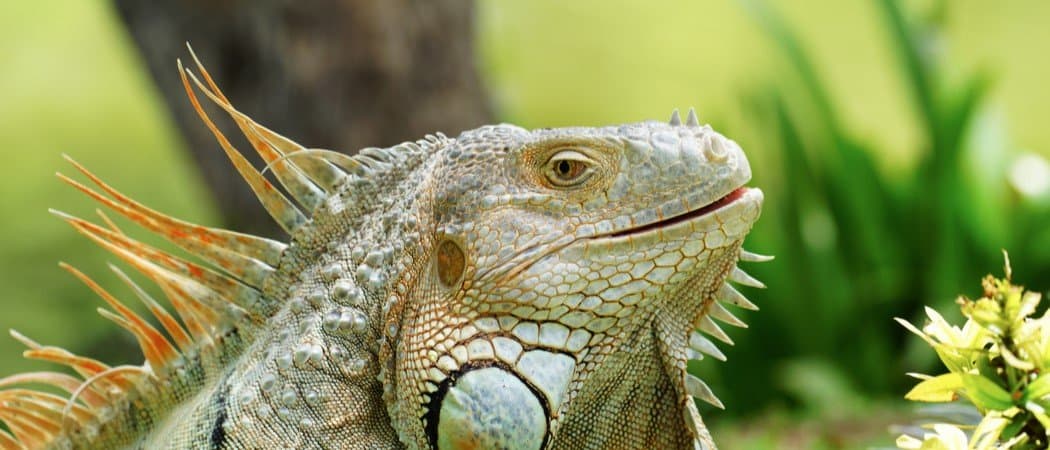
Sun-powered lizards of the Americas
Sanit Fuangnakhon/Shutterstock.com

Iguana Distribution

Click a location to explore more animals from that region

Invasive Species

This map shows coastal regions where Iguana are found.

Loading map...

Found in 28 countries

๐Ÿ‡ง๐Ÿ‡ท Brazil ๐Ÿ‡ง๐Ÿ‡ธ Bahamas ๐Ÿ‡ง๐Ÿ‡ฟ Belize ๐Ÿ‡จ๐Ÿ‡ด Colombia ๐Ÿ‡จ๐Ÿ‡ท Costa Rica ๐Ÿ‡จ๐Ÿ‡บ Cuba ๐Ÿ‡ฉ๐Ÿ‡ฒ Dominica ๐Ÿ‡ฉ๐Ÿ‡ด Dominican Republic ๐Ÿ‡ช๐Ÿ‡จ Ecuador ๐Ÿ‡ซ๐Ÿ‡ฏ Fiji ๐Ÿ‡ฌ๐Ÿ‡ฉ Grenada ๐Ÿ‡ฌ๐Ÿ‡ต Guadeloupe ๐Ÿ‡ญ๐Ÿ‡ณ Honduras ๐Ÿ‡ญ๐Ÿ‡น Haiti ๐Ÿ‡ฏ๐Ÿ‡ฒ Jamaica ๐Ÿ‡ฐ๐Ÿ‡พ Cayman Islands ๐Ÿ‡ฑ๐Ÿ‡จ Saint Lucia ๐Ÿ‡ฒ๐Ÿ‡ถ Martinique ๐Ÿ‡ณ๐Ÿ‡ฎ Nicaragua ๐Ÿ‡ต๐Ÿ‡ฆ Panama ๐Ÿ‡ต๐Ÿ‡ช Peru ๐Ÿ‡ธ๐Ÿ‡ป El Salvador ๐Ÿ‡น๐Ÿ‡จ Turks and Caicos Islands ๐Ÿ‡น๐Ÿ‡ด Tonga ๐Ÿ‡น๐Ÿ‡น Trinidad and Tobago ๐Ÿ‡บ๐Ÿ‡ธ United States ๐Ÿ‡ป๐Ÿ‡จ Saint Vincent and the Grenadines ๐Ÿ‡ป๐Ÿ‡ช Venezuela

At a Glance

Family Overview This page covers the Iguana family as a group. Stats below are general traits shared across the family.
Also Known As Garrobo, Leguan, Iguane
Diet Omnivore
Activity Diurnal+
Lifespan 15 years
Weight 15 lbs
Status Not Evaluated
Did You Know?

Adult size spans roughly ~25-40 cm to ~1.5-2.0 m total length across the family; mass ranges from well under 1 kg to ~8-10+ kg in the biggest species.

Scientific Classification

Family Overview "Iguana" is not a single species but represents an entire family containing multiple species.

Iguanidae is a family of primarily New World lizards commonly called iguanas and their close relatives, including large arboreal and terrestrial forms. Many are diurnal, rely on basking for thermoregulation, and include both herbivorous and omnivorous species.

Kingdom
Animalia
Phylum
Chordata
Class
Reptilia
Order
Squamata
Family
Iguanidae

Distinguishing Features

  • Robust lizard build; many species have a dorsal crest of spines
  • Strong limbs and claws (often excellent climbers in arboreal species)
  • Often a prominent dewlap and throat/cheek scales (varies by genus)
  • Diurnal basking behavior; many species show strong site fidelity

Physical Measurements

Males and females differ in size

Length
โ™‚ 328 ft 1 in (82 ft โ€“ 656 ft 2 in)
โ™€ 2 ft 7 in (10 in โ€“ 6 ft 7 in)
Weight
โ™‚ 6 lbs (0 lbs โ€“ 22 lbs)
โ™€ 3 lbs (0 lbs โ€“ 20 lbs)
Tail Length
โ™‚ 2 ft 2 in (5 in โ€“ 4 ft 7 in)
โ™€ 1 ft 10 in (6 in โ€“ 4 ft 3 in)
Top Speed
22 mph

Appearance

Primary Colors
Skin Type Reptilian skin has dry, hard keratin-covered scales that range from small, granular to large tuberculate forms depending on genus; many have a spiny dorsal crest, dewlap, and visible femoral pores.
Distinctive Features
  • Across iguana species, total length is usually 15โ€“200 cm (smallest adults near 15 cm; largest in big iguanas). Weight ranges from tens of grams to a few kilograms, biggest around 5โ€“10 kg or more.
  • Lifespan range: roughly ~5-30+ years across the family (smaller-bodied species usually shorter-lived; large iguanas and some island endemics often exceed ~15-20 years; captive longevity may exceed wild averages).
  • Iguanas are usually active by day and warm themselves in the sun, often basking. Some become active at dawn or dusk in hot deserts, and island species change timing with weather and tides.
  • Habitats across the family are diverse: arboreal forest-edge and riparian trees (many large iguanas), rocky outcrops and boulder fields (e.g., chuckwalla-like forms), arid scrub/desert flats, coastal zones, and notable island endemics (e.g., Galapagos and Fiji).
  • Iguanas range from mainly leaf- and fruit-eating adults with serrated teeth to young and some groups that eat more insects and animals; marine iguanas specialize in grazing on marine algae.
  • Long, laterally flexible tail used for balance, swimming (in some), and defense (tail-whipping); strong limbs with sharp claws for climbing or digging.
  • Display structures are common: gular dewlap, head bobbing/posturing, and often a dorsal crest of elongated spines; some taxa show pronounced jowls or casque-like head shapes, and a few have nasal protuberances/horns.
  • Reproduction is generally oviparous with seasonal breeding; many species dig nests in soil/sand, and communal nesting occurs in some populations. Clutch size varies widely across the family, broadly increasing with female body size.

Sexual Dimorphism

Sexual dimorphism is common but variable across Iguanidae. In many species, males are larger-bodied and more strongly ornamented, with enhanced display structures and more intense breeding coloration. The degree of dimorphism ranges from subtle (similar sizes/colors) to pronounced (large differences in head size, crest development, and seasonal color shifts).

โ™‚
  • Often larger overall size and more robust head/jaw musculature (jowls) in many species.
  • More prominent dorsal crest/spines and larger gular dewlap used in territorial and courtship displays.
  • Larger/more visible femoral pores and waxy secretions for scent marking.
  • More intense or contrasting coloration during breeding season (e.g., brighter oranges/yellows/blues in some taxa), and more frequent territorial display behavior.
โ™€
  • Typically smaller and less ornamented (crest/dewlap often reduced), though exceptions occur depending on species/ecology.
  • Coloration often less intense outside breeding contexts; some species show minimal sex-based color differences.
  • Gravid females may show distended abdomen seasonally; nesting behavior (digging/guarding vicinity in some) is a key sex-linked ecological role.

Did You Know?

Adult size spans roughly ~25-40 cm to ~1.5-2.0 m total length across the family; mass ranges from well under 1 kg to ~8-10+ kg in the biggest species.

Lifespans vary widely: some smaller iguanas may live about 10-15 years, while large island rock iguanas can live several decades (often about 25-50 years) in managed care.

Many are primarily herbivorous as adults, but several species (and many juveniles) take insects or other animal matter-diet can shift with age, season, and habitat.

They're mostly diurnal "sun lizards," using basking to thermoregulate; activity often tracks temperature and predator pressure.

Island radiations are a hallmark: Caribbean rock iguanas and Galapagos marine and land iguanas show how quickly iguana-family lizards can specialize in isolated habitats.

Visual communication is central-head-bobs, body postures, and dewlaps are common, but the exact signals and social systems differ among genera and habitats.

Some iguanids tolerate extreme heat (notably desert forms), while others thrive in humid forests or even forage underwater (marine iguana).

Unique Adaptations

  • Parietal ("third") eye: many iguanids have a light-sensitive organ on the top of the head that helps detect changes in light/shadow-useful for predator awareness.
  • Salt-handling specialization (in some lineages): marine iguanas have prominent nasal salt glands that help them excrete excess salts from a seaweed-based diet and seawater exposure.
  • Plant-digesting guts: many herbivorous iguanids rely on enlarged digestive tracts and microbial fermentation to extract nutrients from fibrous plant material; reliance and efficiency vary by species and diet.
  • Spines, crests, and dewlaps: used in display and deterrence; the size/shape of crests and dewlaps differs widely across the family and often shows strong sexual dimorphism.
  • Powerful claws and limb build: adaptations for climbing, gripping bark/rock, and digging nests or shelters (with different emphases in arboreal vs. desert/rock forms).
  • Tail functions: laterally compressed tails aid swimming in some taxa, while thick, muscular tails can be used for balance, defense, and (in some species) fat storage.

Interesting Behaviors

  • Basking-and-bolt daily routines: many iguanids alternate sunning for warmth with quick dashes to shade or cover; intensity and timing vary by climate (desert vs. rainforest vs. coastal).
  • Visual display "languages": head-bobs, push-ups, lateral body compression, and dewlap extension are used in territorial disputes and courtship; display styles differ among lineages.
  • Seasonal breeding and nesting: females of many species dig nests (often in sandy soil) and may travel to traditional nesting areas; some populations show nesting-site fidelity and occasional communal nesting.
  • Herbivory with selectivity: even broadly plant-eating species can be picky-choosing young leaves, flowers, and fruits; some opportunistically add insects or carrion depending on availability.
  • Arboreal vs. terrestrial lifestyles: some genera are strongly tree-dwelling and adept climbers, while others are ground-oriented rock and desert specialists; many use burrows, rock crevices, or tree hollows as refuges.
  • Predator evasion: rapid sprinting, diving into water (in some), tail-whipping, biting, and threat displays are common; many also rely on camouflage and staying motionless.

Cultural Significance

Iguanas (Iguanidae) live across the Americas and islands. The name came from a Caribbean word via Spanish. They are eaten in parts of Mexico and the Caribbean, kept as pets, and used in conservation. Galapagos marine iguanas are island icons; Caribbean rock iguanas help protect habitat from invasive predators.

Myths & Legends

Indigenous Caribbean naming legacy: An Indigenous Caribbean word for iguana was adopted into Spanish and later into English, carrying an Indigenous name into global usage.

In Galรกpagos stories from exploration books, Charles Darwin called marine iguanas "imps of darkness" during the HMS Beagle voyage, shaping a lasting Western image of the animals.

"Tree chicken" folk nickname: in parts of the Caribbean and adjacent regions, iguanas are popularly called "tree chicken," reflecting a long-standing cultural association with wild harvesting and local cuisine rather than a single written myth.

Galapagos marine iguanas were recorded during Charles Darwin's 1835 visit and written about in his Voyage of the Beagle. Their story helped make Galapagos wildlife central to tales of evolution and natural history.

Island-guardian associations (modern tradition): Caribbean rock iguanas are frequently portrayed in local and conservation storytelling as symbols of island uniqueness and resilience, often used in school programs and community identity campaigns.

Conservation Status

NE Not Evaluated

Has not yet been evaluated against the criteria.

Population Unknown

Protected Under

  • CITES controls apply to multiple Iguanidae lineages (e.g., genus-level listings such as Iguana spp., and many high-risk island taxa; exact appendices vary by taxon and jurisdiction)
  • National/provincial protected-species laws in range countries for threatened/endemic iguanas (varies by species and country)
  • Protected areas and island reserves are central for several of the most threatened taxa (e.g., conservation programs in the Galรกpagos and Caribbean islands)
  • Biosecurity, invasive-species control/eradication, and regulated captive-breeding/assurance colonies are common management tools for the most imperiled island populations

Looking for a specific species?

Green iguana

Iguana iguana

In everyday English, the common name "iguana" most often refers to the widely distributed and commonly kept Green Iguana, making it the best-known single species associated with the term.

  • Large, mostly arboreal, diurnal lizard; excellent climber and swimmer.
  • Primarily herbivorous as an adult (leafy greens, flowers, fruit), with juveniles often taking more animal matter incidentally.
  • Prominent crest and dewlap used in display; males can be strongly territorial in breeding season.
  • Broad native range across Central/South America with many introduced populations in warm regions.

You might be looking for:

Green Iguana

55%

Iguana iguana

The most familiar large arboreal iguana commonly kept as a pet; widespread in Central/South America and introduced elsewhere.

Lesser Antillean Iguana

15%

Iguana delicatissima

An island iguana of the Lesser Antilles; threatened and impacted by competition/hybridization with green iguanas.

Marine Iguana

12%

Amblyrhynchus cristatus

Galรกpagos endemic famed for marine algae feeding; often called an iguana in general usage though not in genus Iguana.

View Profile

Galรกpagos Land Iguanas

10%

Conolophus

Large terrestrial iguanas of the Galรกpagos; frequently referred to simply as โ€œiguanas.โ€

Desert Iguana

8%

Dipsosaurus dorsalis

A heat-tolerant iguanid of the southwestern US and Mexico; common in desert habitats.

Life Cycle

Birth 20 hatchlings
Lifespan 15 years

Lifespan

In the Wild 5โ€“30 years
In Captivity 8โ€“20 years

Reproduction

Mating System Polygyny
Social Structure Harem Based
Breeding Pattern Seasonal
Fertilization Internal Fertilization
Birth Type Internal_fertilization

Iguanidae (iguanas) are mainly polygynous: males defend territories or display to mate with several females. Some species have lek-like systems or populations where both sexes mate with many partners. Fertilization is internal; females lay eggs, often in seasonal or shared nests.

Behavior & Ecology

Social Aggregation/colony (context-dependent) Group: 4
Activity Diurnal, Crepuscular, Cathemeral
Diet Omnivore Tender young leaves and flowers; ripe seasonal fruits where available (and algae/seaweeds in marine-adapted members)
Seasonal Hibernates

Temperament

Primarily wary/avoidant toward threats (flight to cover, freezing, or dropping from perches in arboreal forms), with substantial individual and species variation
Seasonally territorial and more aggressive during breeding (especially adult males), including chasing, biting, and tail-whipping in escalated conflicts
Often tolerant of nearby conspecifics at high-value basking/feeding sites despite otherwise solitary tendencies
Strongly thermoregulation-driven behavior (basking, shuttling between sun/shade), influencing daily routines and social encounters
Habituation to humans can occur in some populations, producing bolder behavior; other populations remain highly skittish

Communication

hissing Common defensive signal
snorts/forceful exhalations Reported in some taxa; often associated with arousal or defense
low grunts or short sounds Infrequent; overall, most iguanids are not highly vocal compared to many birds/mammals
visual displays: head-bobbing, push-ups, body posturing, lateral compression to appear larger
dewlap extension and throat/neck inflation in display-capable taxa; signaling varies with morphology across the family
color change or display of brighter breeding coloration in some species/populations Intensity varies by species and season
tail use: tail-flicking, tail-whipping as threat/defense; sometimes used in intraspecific disputes
tactile interactions in courtship and combat (mounting, nudging, biting/holding), with escalation depending on contest intensity
chemical communication: scent cues via femoral pores/cloacal secretions; substrate rubbing and investigative tongue-flicking to assess conspecifics and territories

Habitat

Biomes:
Tropical Rainforest Tropical Dry Forest Savanna Desert Hot Mediterranean Temperate Forest Wetland Freshwater Marine +3
Terrain:
Coastal Island Riverine Plains Hilly Mountainous Valley Plateau Rocky Sandy Volcanic Karst +6
Elevation: Up to 6561 ft 8 in

Ecological Role

Primarily primary consumers (herbivores/browsers) with variable omnivory; important mid-level consumers in many New World ecosystems, especially islands and arid habitats.

vegetation shaping via browsing and pruning seed dispersal from fruit consumption (in species that eat fruit) nutrient cycling through concentrated fecal deposition occasional regulation of invertebrate populations where insect intake is substantial serving as prey for raptors, snakes, and mammalian predators, supporting food-web structure

Diet Details

Main Prey:
Insects Arthropods Snails and other small invertebrates Reptile and bird eggs and hatchlings Small vertebrates Carrion
Other Foods:
Leaves Young shoots and stems Flowers and buds Fruits Seeds Algae and seaweeds

Human Interaction

Domestication Status

Wild

Iguanidae are not domesticated; all species are wild, though some kept a long time in captivity can become tame with handling. Ways people interact include the pet trade (Iguana, Ctenosaura, Cyclura, Sauromalus), harvest for meat and eggs, ecotourism and conservation, and invasive or feral populations causing human wildlife conflict.

Danger Level

Moderate
  • Bites and deep scratches (large species can cause significant lacerations)
  • Tail-whip impacts and claw injuries during restraint/handling
  • Zoonotic disease risk (notably Salmonella from reptiles; hygiene essential)
  • Allergic reactions or asthma triggers from dander/substrate in enclosed setups
  • Public safety/property issues from large, free-roaming or feral animals (traffic hazards, garden/crop damage, burrowing that undermines structures in some contexts)

As a Pet

Not Suitable as Pet

Legality: Laws about keeping iguanas (Iguanidae) differ by country and species. Many are regulated or CITES-listed; island/endemic species are often illegal. Permits and local bans for non-native/invasive types may apply. Check identity and rules before getting one.

Care Level: Expert Only

Purchase Cost: $20 - $3,000
Lifetime Cost: $1,500 - $30,000

Economic Value

Uses:
Pet trade (captive-bred and, historically, wild-caught) Ecotourism/wildlife viewing (notably island endemics) Food (meat and eggs in some regions) Leather/skins and crafts (limited/variable, often regulated) Research and education (zoological collections, conservation programs)
Products:
  • live animals (pets, zoological collections)
  • meat and eggs (regional consumption for some taxa)
  • skins/leather and handicrafts (where legal)
  • tourism revenue tied to protected populations
  • conservation breeding/management services

Relationships

Predators 10

Harpy eagle Harpia harpyja
Red-tailed hawk Buteo jamaicensis
Great black hawk Buteogallus urubitinga
Boa constrictor Boa constrictor
Raccoon Procyon lotor
White-nosed coati Nasua narica
Cat Felis catus
Dog Canis lupus familiaris
American crocodile Crocodylus acutus
Human Homo sapiens

Related Species 8

Green iguanas Iguana Shared Genus
Marine iguana Amblyrhynchus cristatus Shared Family
Galรกpagos land iguanas Conolophus Shared Family
Spiny-tailed iguanas Ctenosaura Shared Family
Rock iguanas Cyclura Shared Family
Desert iguana Dipsosaurus dorsalis Shared Family
Chuckwallas Sauromalus Shared Family
Fiji iguanas Brachylophus Shared Family

Ecological Equivalents 4

Animals that fill a similar ecological role in their ecosystem

Uromastyx Uromastyx spp. Old World, diurnal, basking lizards that are largely herbivorous or omnivorous and occupy hot, arid habitats; ecologically similar to desert-adapted iguanids (e.g., Dipsosaurus, some Ctenosaura).
Agamas Agama spp. Convergent lifestyle: diurnal heliothermy (basking), visual display communication, and arboreal/rocky perching habits similar to many iguanids, though occurring in different regions.
Tegu Salvator spp. Large-bodied, terrestrial lizards that are often omnivorous and use burrows, overlapping niches with some large, ground-dwelling iguanids (notably Cyclura and some Ctenosaura) in disturbed and coastal habitats.
Leaf-eating skinks Corucia zebrata Arboreal folivory and reliance on basking and thermoregulation create a broadly similar functional niche to arboreal herbivorous iguanids, despite being unrelated and from different biogeographic realms.

Types of Iguana

34

Explore 34 recognized types of iguana

Green iguana Iguana iguana
Lesser Antillean iguana Iguana delicatissima
Marine iguana Amblyrhynchus cristatus
Galรกpagos land iguana Conolophus subcristatus
Santa Fe land iguana Conolophus pallidus
Pink land iguana Conolophus marthae
Fiji banded iguana Brachylophus fasciatus
Fiji crested iguana Brachylophus vitiensis
Lau banded iguana Brachylophus bulabula
Gau iguana Brachylophus gau
Desert iguana Dipsosaurus dorsalis
Common chuckwalla Sauromalus ater
Spiny chuckwalla Sauromalus hispidus
Peninsular chuckwalla Sauromalus klauberi
Angel Island chuckwalla Sauromalus slevini
Black spiny-tailed iguana Ctenosaura similis
Mexican spiny-tailed iguana Ctenosaura pectinata
Yucatรกn spiny-tailed iguana Ctenosaura defensor
Gulf Coast spiny-tailed iguana Ctenosaura acanthura
Cape spiny-tailed iguana Ctenosaura hemilopha
Utila spiny-tailed iguana Ctenosaura bakeri
Roatรกn spiny-tailed iguana Ctenosaura oedirhina
Guatemalan spiny-tailed iguana Ctenosaura palearis
Honduran spiny-tailed iguana Ctenosaura melanosterna
Oaxacan spiny-tailed iguana Ctenosaura oaxacana
Yellow-backed spiny-tailed iguana Ctenosaura flavidorsalis
Five-keeled spiny-tailed iguana Ctenosaura quinquecarinata
Rock iguana (Cuban rock iguana) Cyclura nubila
Rhinoceros iguana Cyclura cornuta
Anegada iguana Cyclura pinguis
Grand Cayman blue iguana Cyclura lewisi
Andros Island iguana Cyclura cychlura
San Salvador rock iguana Cyclura rileyi
Ricord's iguana Cyclura ricordii
๐Ÿ‘ Image

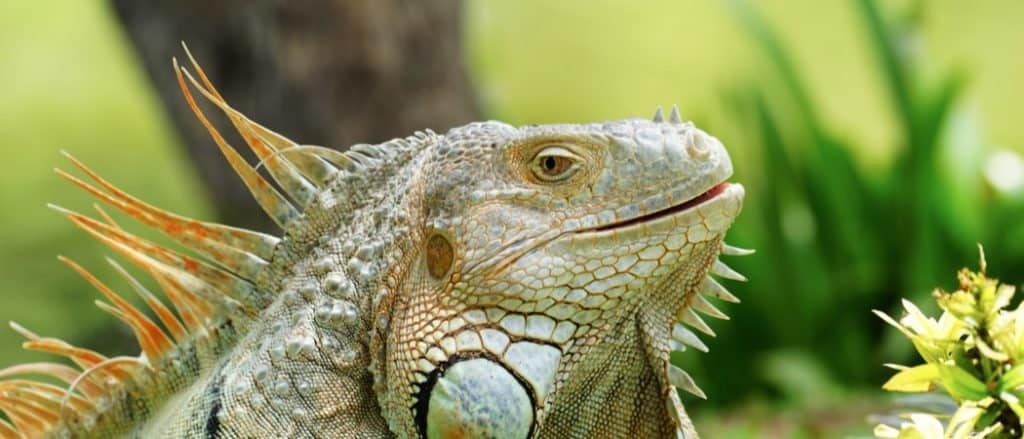
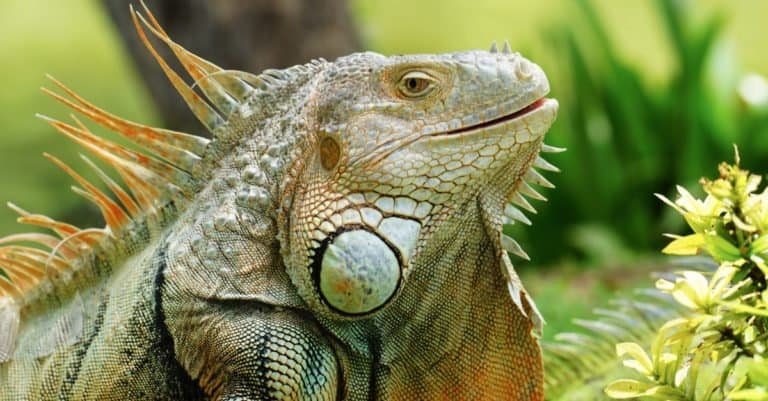
Native to the jungles of Central and South America and many islands in the Caribbean, Iguanas are large lizards that are also popular with Americans who want to keep them as pets.

The name iguana comes from the original Taino name for these lizards, iwana. Green iguanas are the most widely known species as they are often kept as pets.

Most pet iguanas have a low price. They are also considered nuisances in Puerto Rico and some parts of the United States, particularly Florida, where they have become an invasive species.

5 Incredible Iguana Facts!
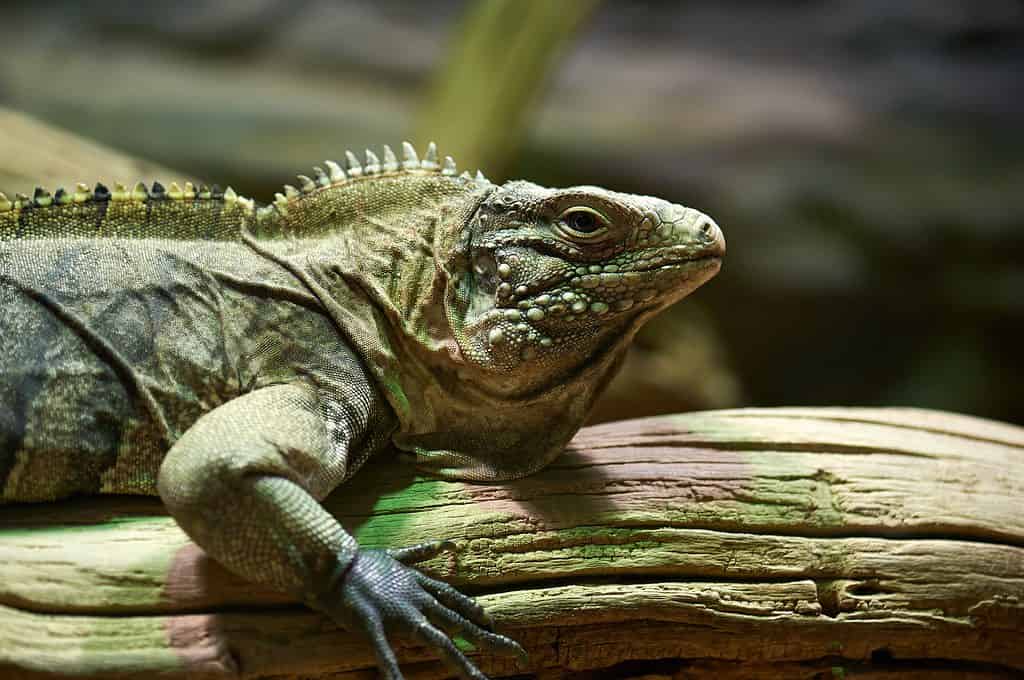
๐Ÿ‘ Jamaican iguana

The Jamaican iguana is the second largest animal native to Jamaica.

ยฉBohgan Zeleniuk/Shutterstock.com

  • Most iguanas have a parietal eye that is sensitive to changes in illumination, sending signals to the pineal gland that indicates the change between day and night. Iguanas also have a photopigment called parapinopsin that is sensitive to the difference between day and night.
  • They have a keen sense of eyesight, which allows them to navigate with ease. They also communicate with other iguanas with their eyes.
  • These animals can shed part of their tail when threatened by predators, allowing them to escape.
  • Marine iguanas that live in the Galapagos islands are excellent swimmers.
  • One of the most fun facts is that iguanas in Central and South America are sometimes called โ€œchickens of the tree.โ€

You can check out more incredible facts about iguanas.

Different Types of Iguanas

There are two main species of iguana:

  • Green iguana
  • Lesser Antillean iguana

However, there are ten different iguana morphs to look out for:

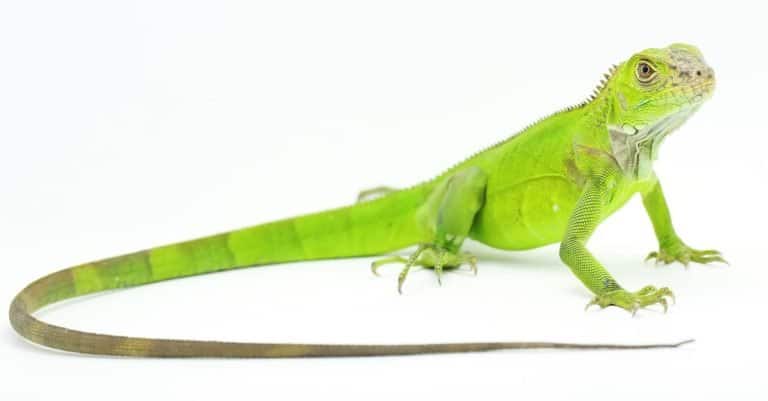
  • Green
  • Blue
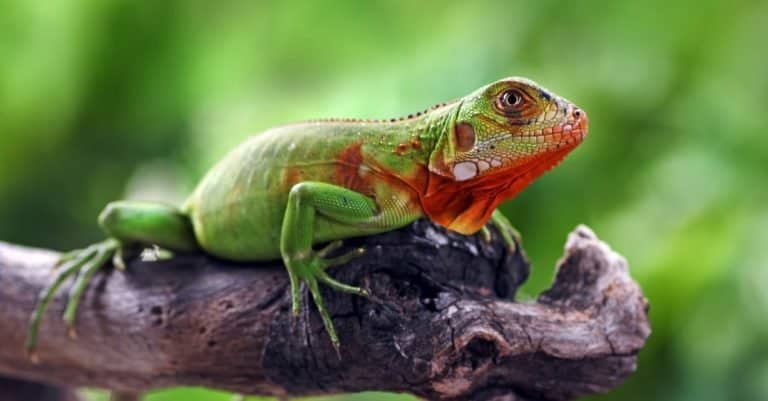
  • Red
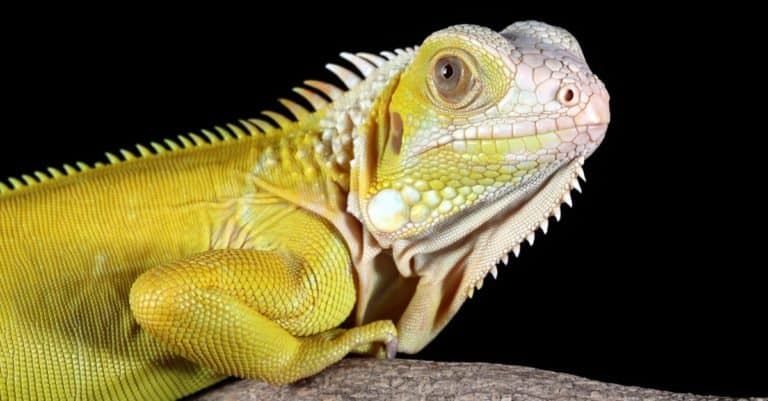
  • Albino
  • Orange
  • Snow
  • Black
  • Hypomelanistic
  • Black and White
  • Caribbean

Scientific Name

๐Ÿ‘ iguana

The scientific name of this animal is

Iguana iguana

.

ยฉSanit Fuangnakhon/Shutterstock.com

The scientific name of this animal is Iguana iguana. It most commonly refers to the green iguana that is distributed through much of the southern United States.

All iguanas are reptiles that are members of the order Squamata and the suborder Iguania and the family Iguanidae.

The rhino iguana, found primarily on the Caribbean island of Hispaniola, has the scientific name Cyclura cornuta.

The blue iguana has the scientific name Cyclura lewisi. Other genera include the desert iguana, Dipsosaurus dorsalis, and the marine, Amblyrynchus, and terrestrial, Conolophus, iguanas of the Galapagos Islands.

Evolution and Origins

Many believe that marine iguanas evolved from land iguanas brought to the Galapagos and adapted to survive on the land about 4.5 million years ago. Their short, blunt snouts and small, razor-sharp teeth are extremely helpful for scraping algae from rocks. Their flattened tails allow them to move easier through the water.

Appearance
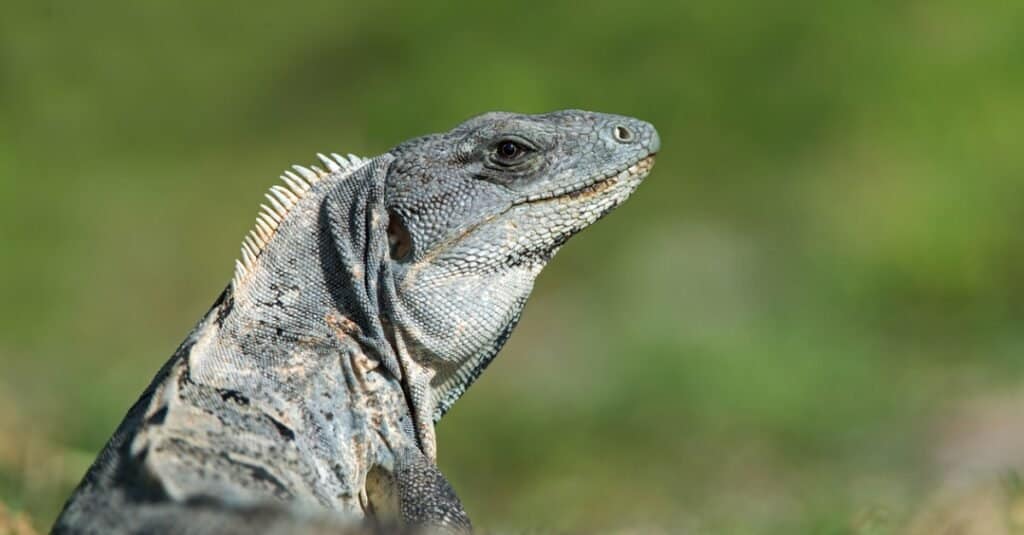
๐Ÿ‘ black-spiny-tailed-iguana-close-up

The different species of iguana have various sizes ranging from five to seven feet in length.

ยฉiStock.com/davemhuntphotography

The different species have various sizes ranging from five to seven feet in length. Their whiplike tails make up about half of their body length. The desert iguana is one of the smallest species at only 24 inches long. The blue iguana is the heaviest lizard, weighing up to 30 pounds.

These animals have varying scales that cover different parts of their bodies. Some have large round scales that are scattered around their necks among smaller, overlapping scales. Scales on the dorsal trunk are usually thicker and more tightly packed and can be a variety of colors.

These reptiles can be difficult to see as their coloration often allows them to blend in with the terrain, which helps them evade predators.

These animals vary in color, with some species sporting blue or grey skin. The American green iguana tends to become a more uniform green as they age.

Younger lizards have scales that vary between green and brown. The colors of individual iguanas can also vary based on the animalโ€™s mood, temperature, social status, or health.

Their skin tends to be darker in the morning when their body temperature is lower and pales as the day heats. Dominant males also tend to have darker coloration. Before courtship, some males become bright orange or golden.

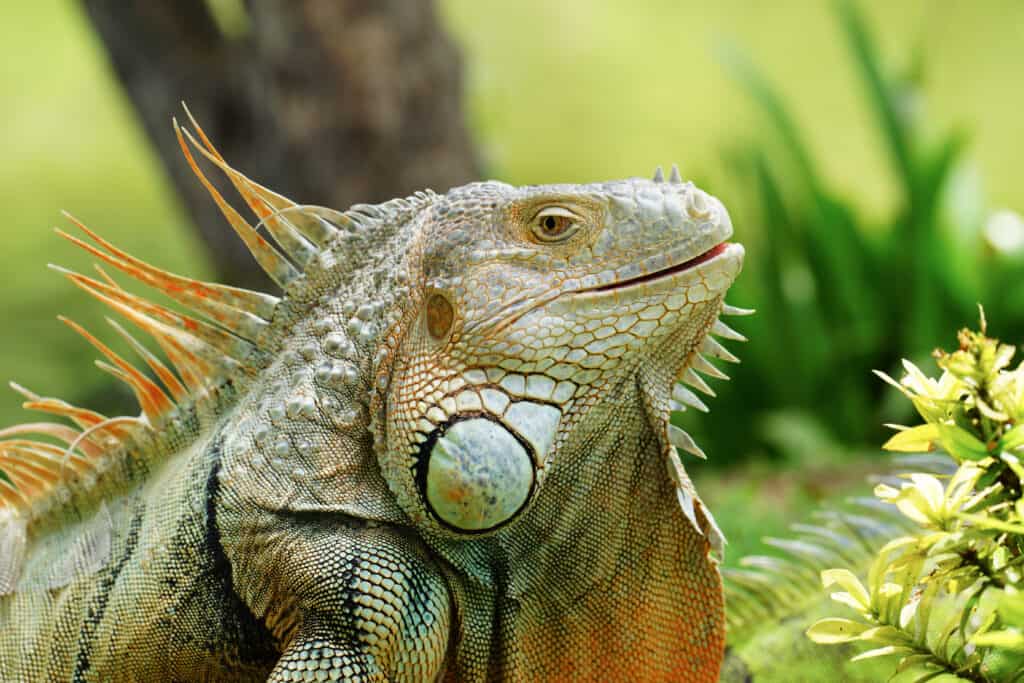
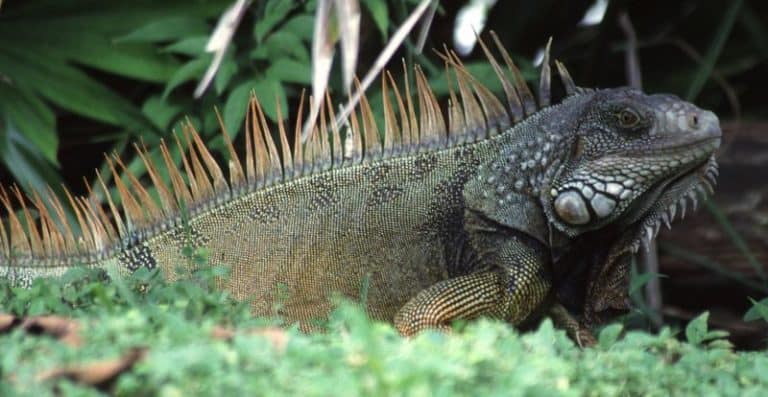
Distinguishing features also include a dewlap under the throat, which is particularly developed in males. They also have a dorsal crest on their backs that starts at the neck and ends at the tail.

Behavior
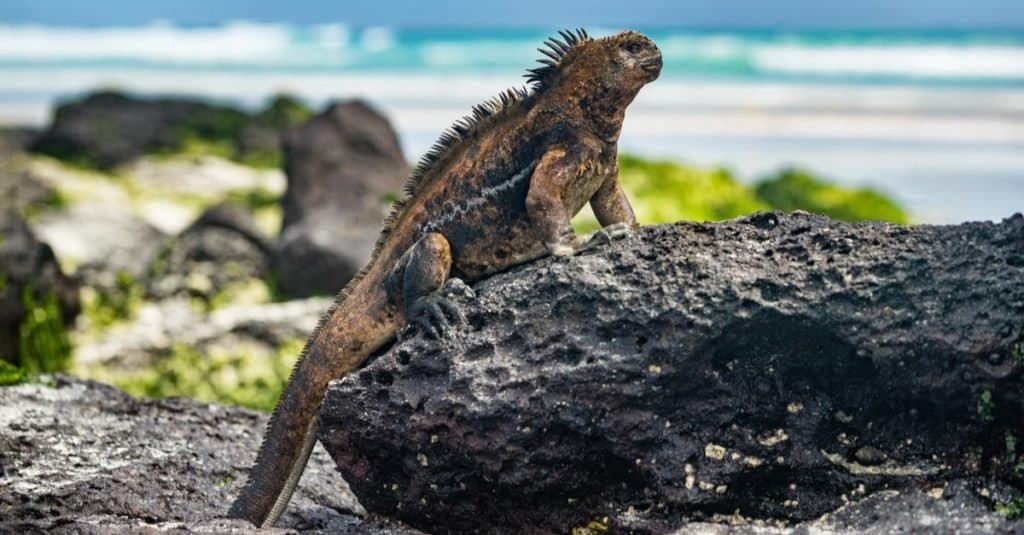
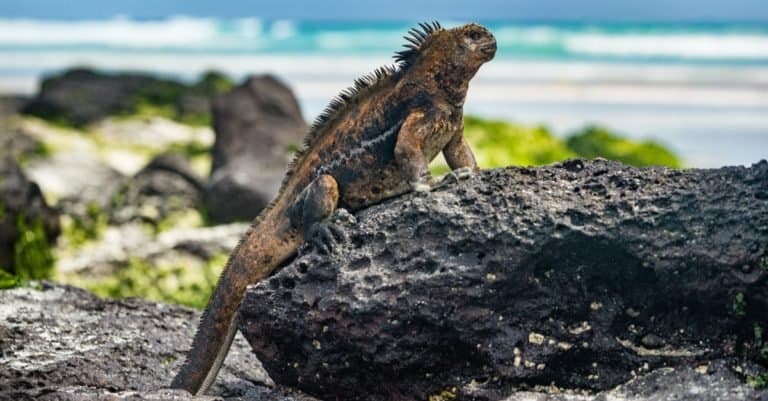
๐Ÿ‘ Galapagos Iguana heating itself in the sun resting on rock on Tortuga bay beach, Santa Cruz Island.

Captive iguanas tend to be more aggressive than wild iguanas. Biting injuries in the wild are rare but more common in captivity.

ยฉMaridav/Shutterstock.com

These animals have keen vision, which allows them to see shapes, shadows, colors, and movement at long distances. Their visual acuity allows them to navigate the terrain to locate food and communicate with other members of their species.

In the wild, they will seldom fight except when there arenโ€™t enough good places to sun themselves. Basking sites are important as warming themselves by sitting in direct sunlight is essential for body temperature and digestion.

Biting injuries in the wild are rare but in captivity, injuries are more common.

These animals sometimes travel considerable distances. Females often return annually to the same nesting sites and then travel back to their home territory after laying their eggs. Hatchlings also disperse over a wide area.

Habitat
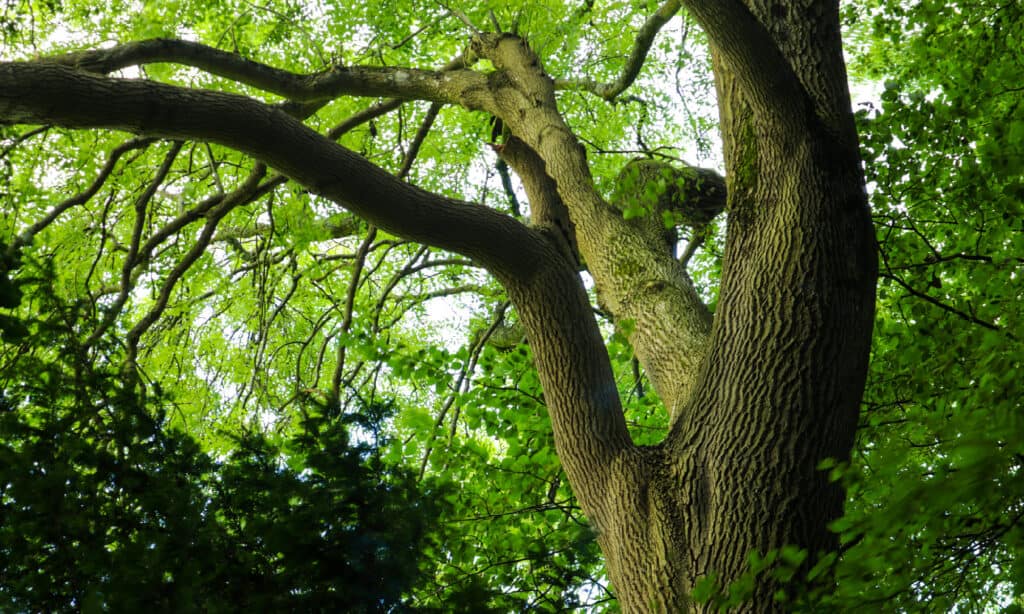
๐Ÿ‘ White Ash, Color Image, Environment, Environmental Conservation, Forest

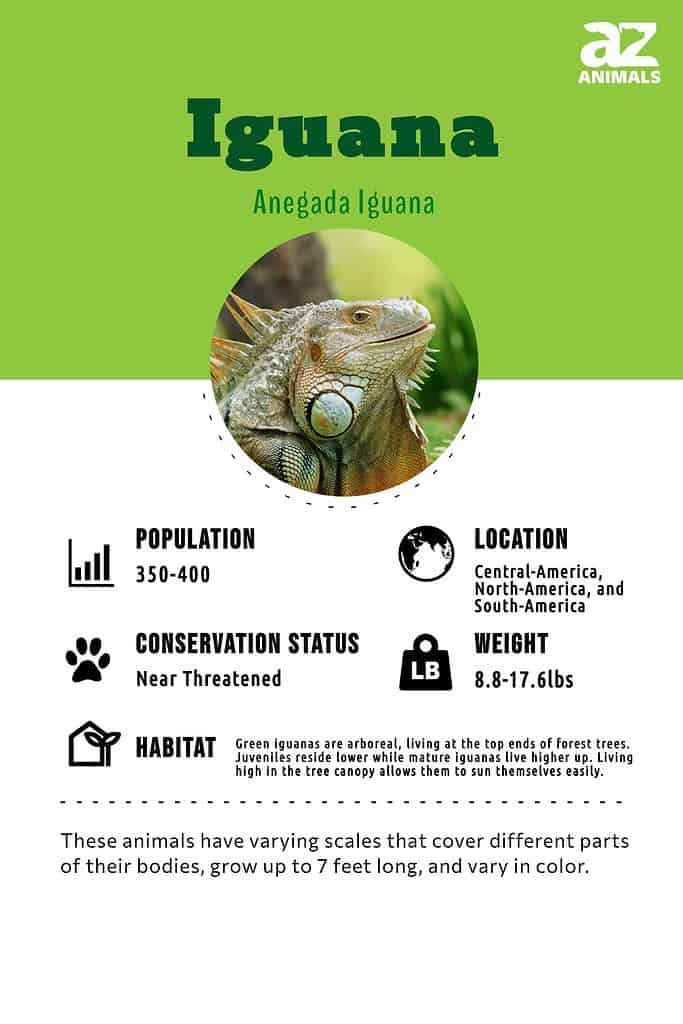
Green iguanas are arboreal, living at the top ends of forest trees.

ยฉiStock.com/Alex Montacute

Green iguanas are arboreal, living at the top ends of forest trees. Juveniles reside lower while mature iguanas live higher up. Living high in the tree canopy allows them to sun themselves easily.

They rarely descend to the forest floor except to lay eggs.

Although they prefer forests, green iguanas can adapt well to open areas. When near water, they will dive beneath the surface to evade predators.

When frightened, they usually freeze, thereby blending into their surroundings or hiding. These animals can drop off part of their tail, giving them a chance to escape. A new tail will sprout and regrow within a year, although it wonโ€™t reach its original size.

Diet

๐Ÿ‘ Image
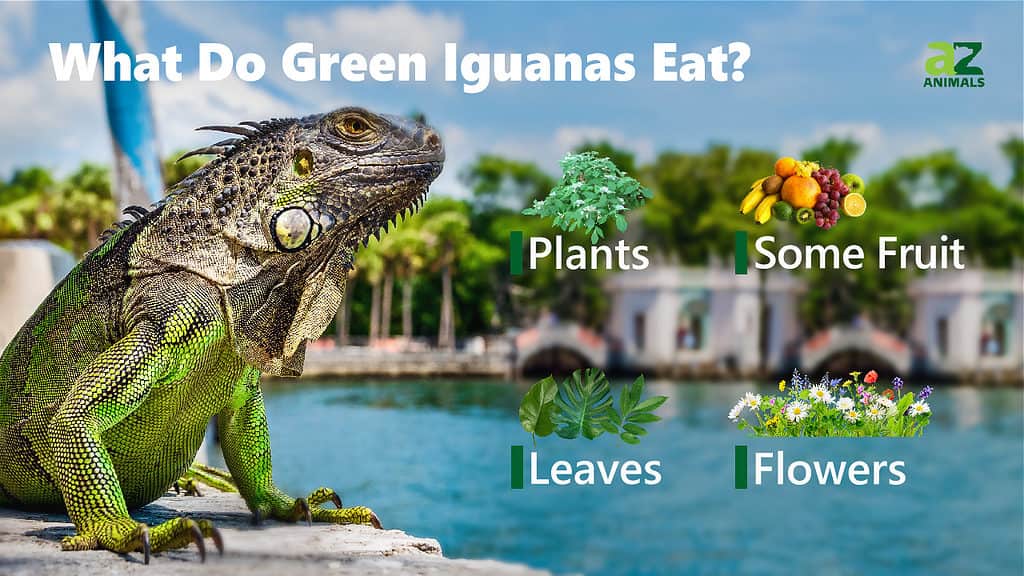
Iguanas eat plants, fruit, leaves, and flowers.

Although they are omnivores, most iguanas in the wild tend to eat a primary herbivore diet. Their favorite foods are the leaves, buds, flowers, and fruits of fig trees.

For the first two weeks following hatching, the young reptile eats the yolk from its eggs.

As young iguanas need a high amount of protein for adequate growth, they tend to eat more insects than adults. They may occasionally eat invertebrates or small amounts of carrion, although they prefer green leafy plants or ripe fruits.

These animals use their tongues to move their food so they can bite it into pieces small enough to swallow with little or no chewing. Older iguanas eat high calcium, low phosphorus diet. Low environmental temperatures inhibit iguanasโ€™ appetites.

Usually, eating occurs when temperatures are between 77 and 95 degrees Fahrenheit. Basking is important to digestion. These lizards may stop eating prior to shedding their skin and when they are about to lay their eggs.

Predators and Threats
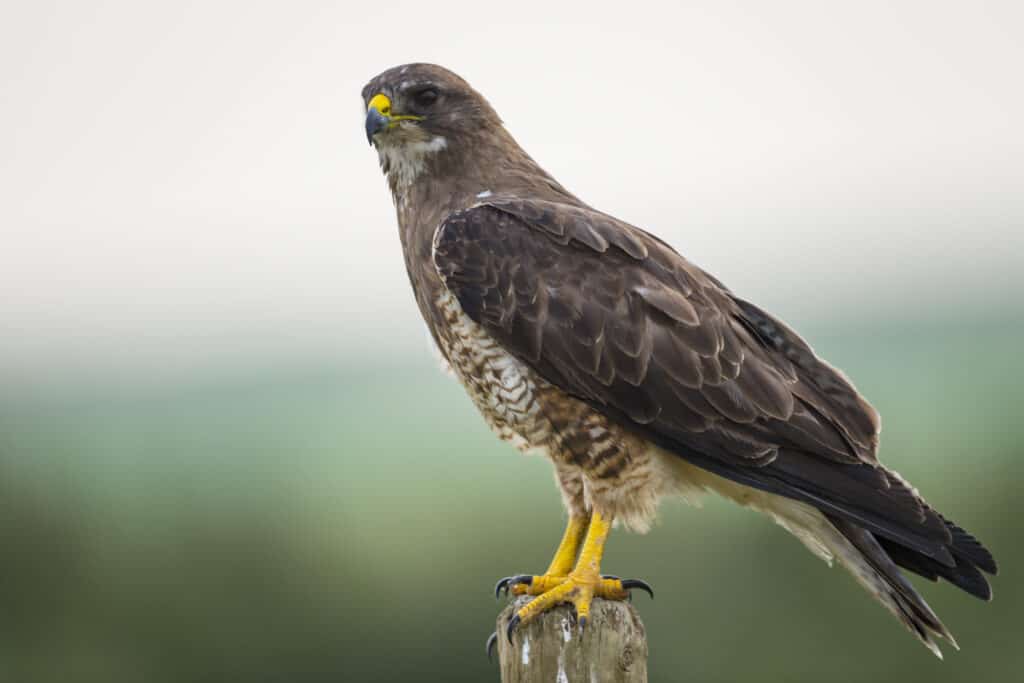
๐Ÿ‘ Image

Large birds such as hawks and owls prey on

ยฉBGSmith/Shutterstock.com

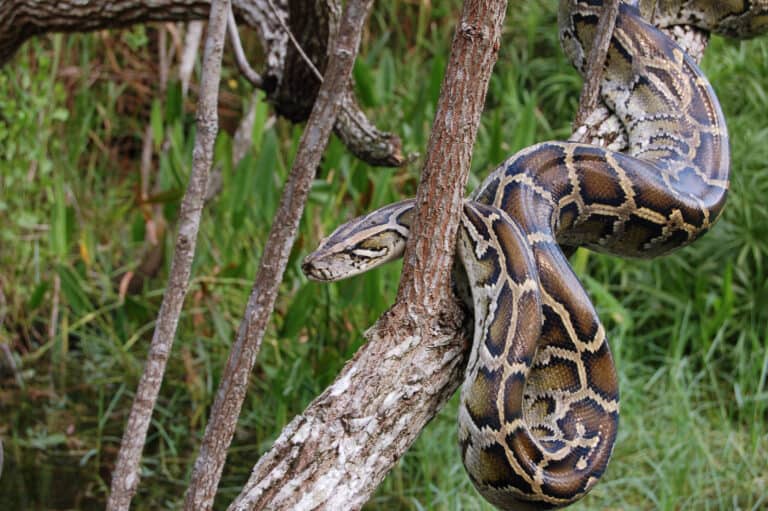
Large birds such as hawks and owls prey on juveniles. Dogs and feral cats also prey upon iguanas. Humans also consume these animals and their eggs and use these lizards as bait for crocodiles. The conservation status of most species of least concern as they are widespread.

Habitat destruction is another threat, particularly for the blue iguana that is native to the Cayman Islands. This species is listed as endangered because of its shrinking habitat. The rhino iguana is listed as endangered. Rhino iguanas only have a stable population on the island of Isla Beata.

Reproduction, Babies, and Lifespan
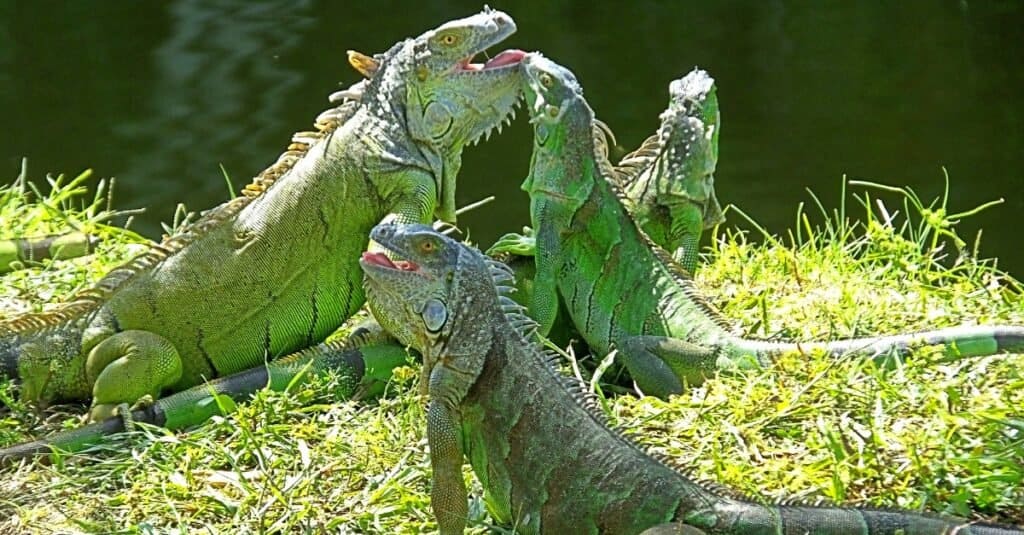
๐Ÿ‘ group-of-green-iguanas-by-a-lake

Females can store sperm from previous mates for several years if they cannot find suitable mates when ready to lay eggs.

ยฉiStock.com/passion4nature

These animals exhibit a promiscuous mating style. Courtship occurs during the dry season, with females controlling large territories where they make several nests.

Males compete for females by head bobbing, extending and retracting their dewlap, nuzzling and biting the necks of females, and sometimes even changing colors. Females will also display aggressive behavior if good nesting sites are limited.

Once a female selects a male, he marks his territory with a pheromone secreted from his hind limbs. Copulation occurs with the male straddling the female and sometimes biting her shoulder to hold her in place. The female then deposits her eggs among the nests she has created.

Females can store sperm from previous mates for several years if they cannot find suitable mates when ready to lay eggs.

Females lay eggs for approximately 65 days following mating. The number of eggs produced depends on her nutritional status, maturity, and her size. Females will deposit 10 to 30 leathery white or cream-colored eggs in each nest.

Nests are sometimes shared among females if nesting sites are limited. Incubation ranges from 90 to 120 days, so the eggs hatch during the wet season.

Hatchlings weigh less than a half-ounce at birth, but within three years can weigh just over two pounds. Mature animals usually weigh between nine and 13 pounds, but some can weigh as much as 17.5 pounds. Green iguanas reach sexual maturity between three and four years of age.

These animals can live for 15 to 20 years and even longer if cared for properly. At the same time, the San Diego Zoo indicates that some of them can live as long as 60 years. However, wild iguanas have an average lifespan of eight years.

Population

You wonโ€™t find an overall estimate of the population worldwide because many species have a considerable range and are not in danger of extinction. However, the island of Puerto Rico estimates its iguana population at four million, which means that there are approximately two iguanas for every human on the island.

The total population of marine iguanas in the Galapagos Islands is estimated at between 250,000 and 300,000.

Mating and Reproduction
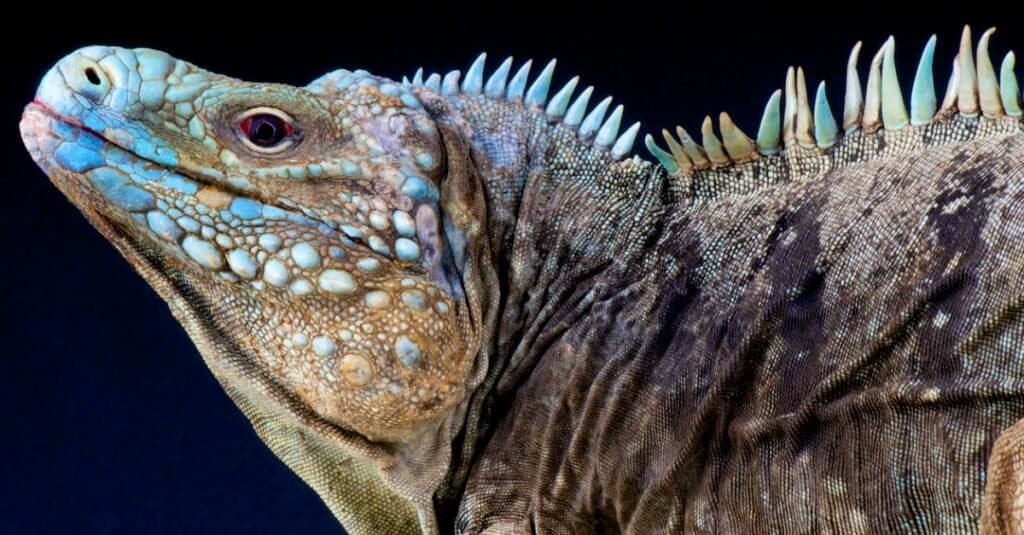
๐Ÿ‘ Largest iguanas - blue rock iguana

uanas tend to follow a mating style during mostly dry seasons.

ยฉiStock.com/reptiles4all

Iguanas tend to follow a mating style during mostly dry seasons. Mating during the dryer seasons helps to ensure that their offspring will hatch during wet or rainy seasons when food is easier to find.

Females tend to control larger areas where they make several different nests. make will then compete for the females in an area and mark their territory with a pheromonal sent from femoral pores on the dorsal side of their back limbs near their tales.

Male behavior during sexual competition involves head bobbing, extending, and retracting. They also will nuzzle and bite the necks of females and occasionally change color. Once a female has chosen a male, he will then straddle the female and holds her in place by biting her shoulder.

This can sometimes leave scars on females. However, after copulation, eggs are laid within those several nests and incubated. This low level of parental intervention with their offspring makes iguanas an example of r-strategy reproduction.

Iguanas in the Zoo

The San Diego Zoo and the San Diego Zoo Safari Park are home to American iguanas, including the desert iguana that is native to southern California, along with iguanas from other areas of the world, including some of the endangered blue iguanas.

The zoo has a ticket package price that allows visitors to see these animals in exhibits and more natural habitats at Safari Park. San Diego Zoo also has programs where you can learn facts about its iguana species.

San Diego was the first American zoo to hatch the critically endangered Anegada Island iguana. San Diego Zoo Global works with local governments and conservation organizations to help propagate the more vulnerable species.

Keepers use a technique called head starting, where eggs are incubated in a facility, and hatchlings are cared for in large pens.

When they are large enough to protect themselves, they are released into the wild. The zoo has also started conservation education programs on several Caribbean islands to give residents and visitors crucial facts about endangered iguanas.


View all 57 animals that start with I

Sources

  1. Animal Diversity Web / Accessed February 10, 2021
  2. Britannica / Accessed February 10, 2021
  3. San Diego Zoo / Accessed February 10, 2021
  4. VCA Hospitals / Accessed February 10, 2021
  5. Wikipedia / Accessed February 10, 2021
  6. CABI / Accessed February 10, 2021
  7. Galapagos Conservancy / Accessed February 10, 2021

About the Author

Rebecca Bales

Rebecca is an experienced Professional Freelancer with nearly a decade of expertise in writing SEO Content, Digital Illustrations, and Graphic Design. When not engrossed in her creative endeavors, Rebecca dedicates her time to cycling and filming her nature adventures. When not focused on her passion for creating and crafting optimized materials, she harbors a deep fascination and love for cats, jumping spiders, and pet rats.
Connect:

Thank you for reading! Have some feedback for us?

Contact the AZ Animals editorial team

Related Articles You May Find Interesting


Iguana FAQs (Frequently Asked Questions)

While both iguanas and chameleons are reptiles, they vary in some key ways. First, iguanas are larger than chameleons. They also have larger eyes and their tails are used differently.

Iguanas are Omnivores, meaning they eat both plants and other animals.

Iguanas belong to the Kingdom Animalia.

Iguanas belong to the class Reptilia.

Iguanas belong to the phylum Chordata.

Iguanas belong to the family Iguanidae.

Iguanas belong to the order Squamata.

Iguanas are covered in scales.

Iguanas live in lowland tropical rainforests near water.

Iguanas eat insects, fruit, and leaves.

Predators of Iguanas include hawks, eagles, and snakes.

The average number of babies an Iguana has is 3.

Iguanas use visual signals to communicate!

Iguanas can live for 15 to 20 years.

An Iguana can travel at speeds of up to 21 miles per hour.

These lizards are native to Central America and South America in countries like Brazil, Paraguay, and Mexico. They are also native to the islands of the Caribbean and West Indies. Humans are responsible for bringing them to various American states, including Florida, Texas, and Hawaii, where they have become an invasive species.

In captivity, iguanas require calcium-rich vegetables. Foods to consider include beet, collards, mustard and turnip greens, kale, parsley, bok choy, Swiss chard, alfalfa, romaine lettuce, Kohlrabi, and dandelion.

Iguanas will rarely bite and only then in self-defense. However, when they do attack humans, the bites are quite painful.

Green iguanas are friendly as pets but not in the same way that cats and dogs are. Some iguanas will try to escape if given a chance.

They canโ€™t kill you, but they can hurt you because of their sharp, serrated teeth. If an iguana attacks, it can produce serious injuries to the face, hands, legs, and ankles.

Unlike other reptiles such as snakes, iguanas are clean animals who stay away from their excrement, thereby maintaining a neutral smelling body.

Depending on the species, the price for iguanas can cost between $19.99 and $500.

Iguanas lay eggs.