


Summary
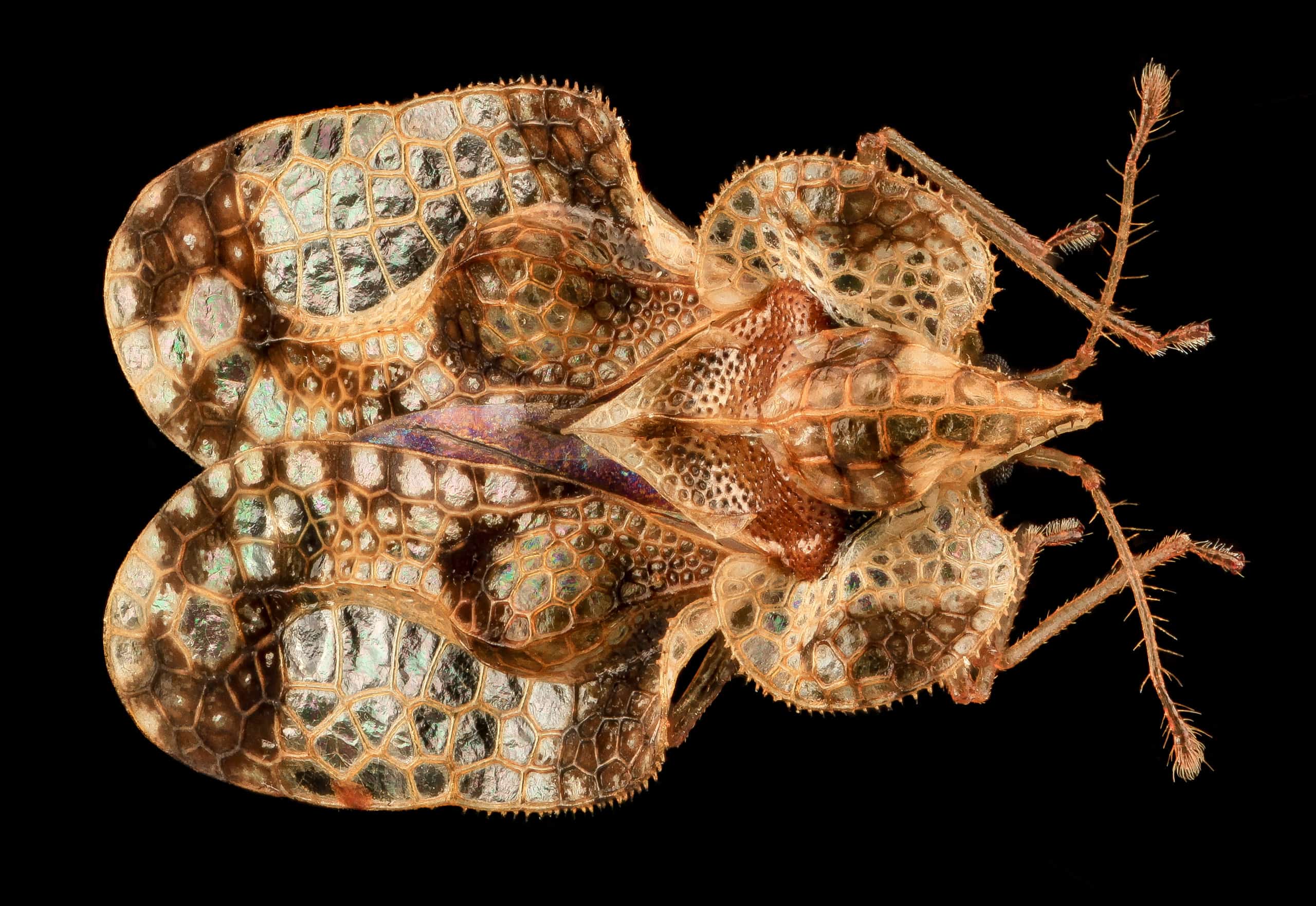
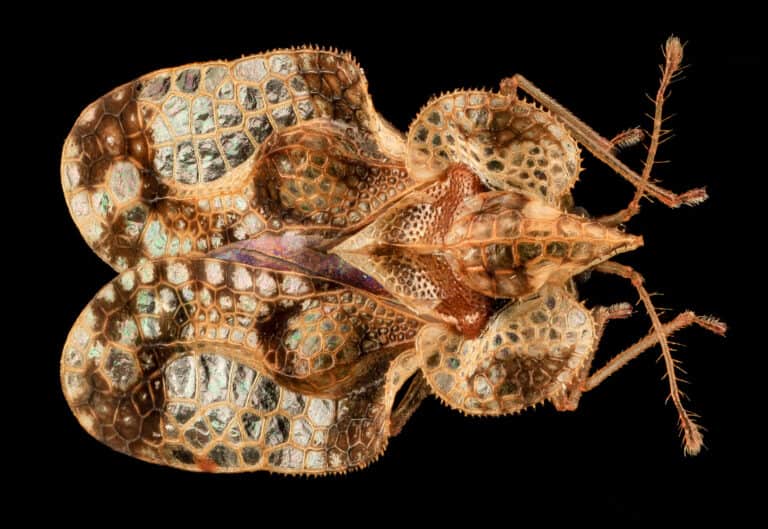
A common pest with a painful bite, the lace bug is a member of the family Tingidae. They get their name from their intricate, lace-like wings and pronotum. This bug are found worldwide and feed on a narrow range of host plants. They typically live their entire lives on the same plant, which they slowly drain sap and nutrients from using their needle-like mouthparts. Occasionally, they may fall onto people and deliver irritating bites that can cause adverse reactions such as dermatosis.
5 Lace Bug Facts
- Adults are incredibly small and measure no more than 10 millimeters (0.4 inches) long.
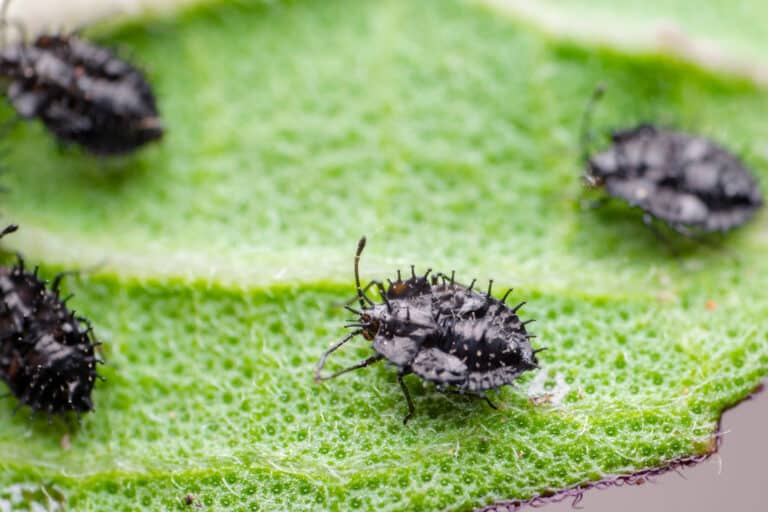
- Juvenile lace bugs resemble the adults except that they are smaller and lack wings.
- Some mothers display maternal care by defending their offspring from predators, with older mothers displaying the most aggressive behavior.
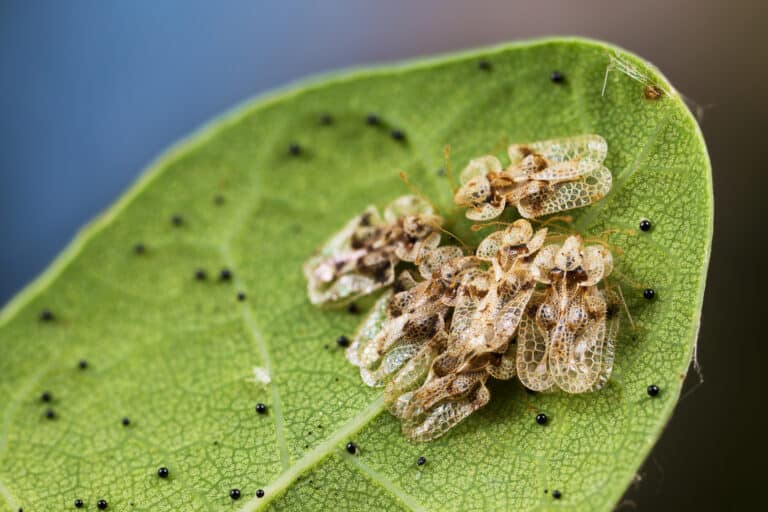
- Most lace bugs spend their entire lives on the same plant where they hatched, with some hardly ever moving from the same part of the plant.
- Their bites are mildly painful and can cause irritating skin conditions such as dermatitis.
Lace Bug Species, Types, and Scientific Name
To date, scientists have identified more than 2,000 unique species. However, the relationship between the families, subfamilies, and tribes remains unclear and not well-organized. All lace bugs belong to the “true bug” order Hemiptera, which also contains cicadas, aphids, leafhoppers, assassin bugs, and bed bugs. In turn, every known one resides in the family Tingidae. They get their common name from their delicate, intricate wings, which resemble lace. Some well-known species include the eggplant lace bug (Gargaphia solani), andromeda lace bug (Stephanitis takeyai), and sycamore lace bug (Corythucha ciliata). Generally speaking, the common name for each species derives from the host plants that they target.
Appearance: How to Identify Lace Bugs
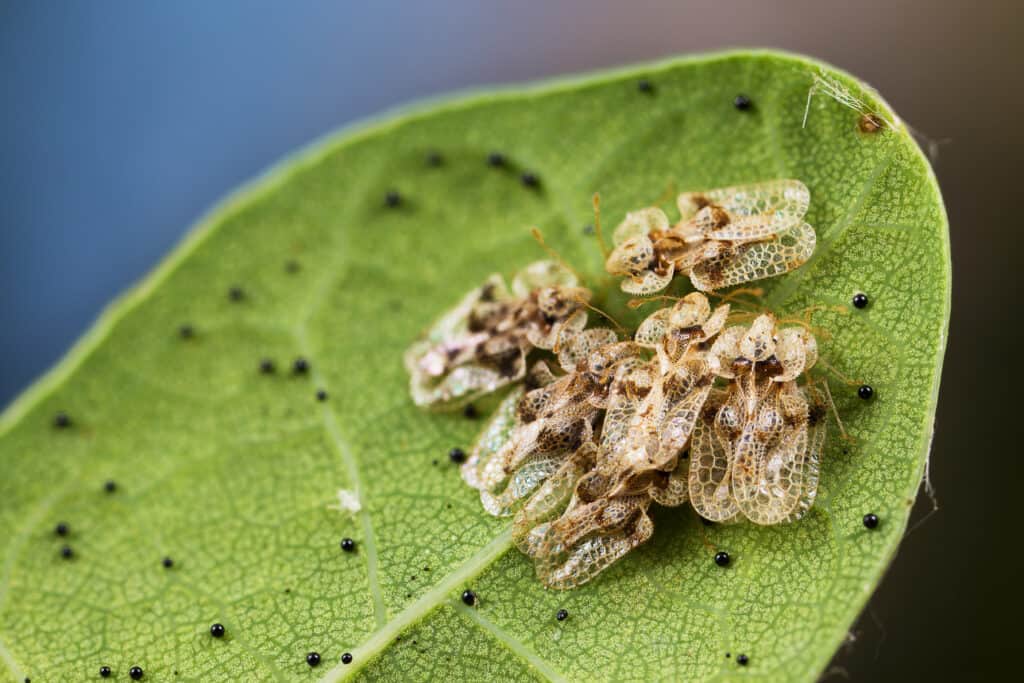
Most lace bugs spend their entire lives on the same plant where they hatched, with some hardly ever moving from the same part of the plant.
©Ferenc Speder/Shutterstock.com
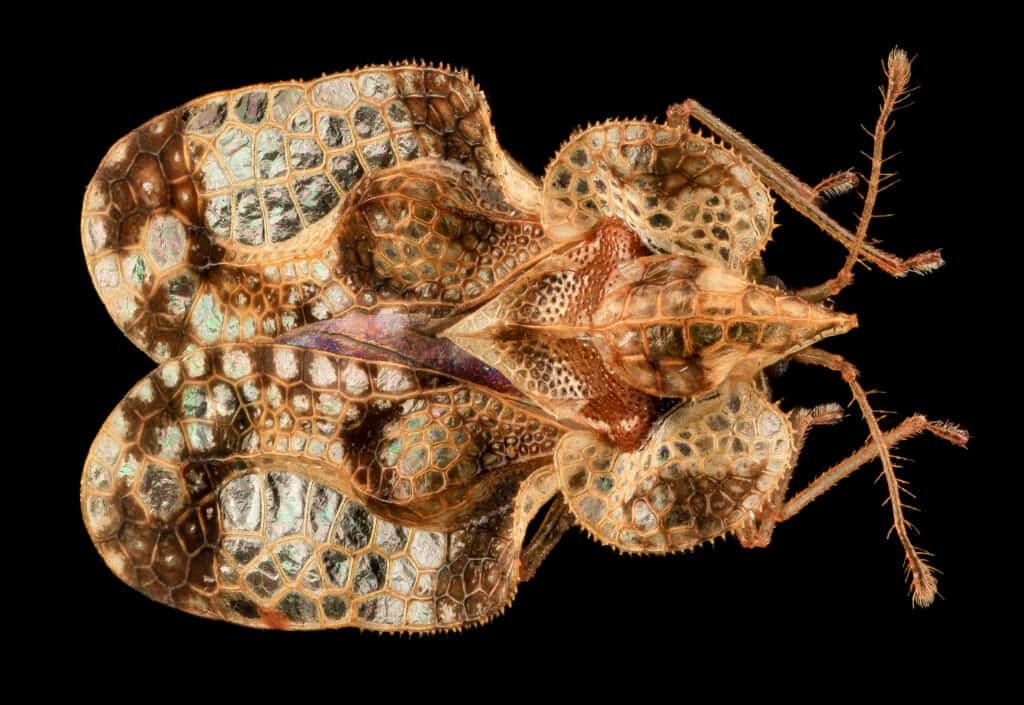
Theare incredibly small, with most specimens measuring between 0.08 and 0.39 inches long. Their bodies appear flat, roughly oval-shaped, and quite slender. A rounded pronotum, the dorsal segment of the thorax, represents one of the two distinguishing lace bug characteristics. The other defining feature concerns their delicate wings that resemble intricately stitched lace. Lace bugs begin life as nymphs and go through several stages known as instars. Adult and juveniles look roughly the same except for the fact that juveniles are smaller and lack wings. As they age, nymphs slowly grow in size and develop their distinctive lace-like wings. Nymphs also often feature tiny spines or spikes that they slowly lose as they develop. Depending on the species, they range in color from tan to cream to reddish-brown with a mottling of dark brown or black markings.
Habitat: Where to Find Lace Bugs
You can find them all over the world and in a wide range of environments. Generally speaking, you can find them anywhere that their host plants are present. This includes but is not limited to wooded areas, meadows, grasslands, forests, gardens, and parks. They tend to prefer hot, sunny areas, which provide their hosts with the nutrients the bugs require. Adults lay their eggs directly onto the leaves of their host plant. The eggs hatch within 1 or 2 weeks and feed on the leaves of the same plant where they were born. Usually, a lace bug will live its entire life on the same plant and often in the same general area where it hatched. Sometimes adults may overwinter in bark crevices or other protected alcoves until the arrival of spring. You’re most likely to find lace bugs underneath the leaves of their hosts, as this provides them with a means of evading some of their predators.
Diet: What Do Lace Bugs Eat?
They are herbivores that suck the sap from leaves using their sharp, needlelike mouthparts. They are highly selective eaters and typically feed on a single or very few host species. Hosts vary depending on the species and consist of a range of trees and shrubs. Some of the non-woody plants that serve as hosts for lace bugs include azaleas, rhododendrons, laurels, and andromedas. As for trees, hosts include sycamore, elm, oak, hackberry, and hawthorn. Meanwhile, some specifically target plants in the nightshade family, such as eggplant, tomato, potato, and horsenettle. They typically feed on the undersides of leaves, which eventually develop a silvery or bronzed appearance over time as the bugs deplete the leaves of nutrients. Although lace bugs occasionally bite people, their bite is not dangerous. That said, their bite may cause some minor pain or skin irritation, such as dermatitis.
Prevention: How to Get Rid of Lace Bugs
The first step to getting rid of them lies in detecting their presence. Lace bug-infested plants eventually develop a sickly, bronze or silvery appearance as they drain the foliage of their nutrients. You’ll want to check plants regularly – at least once every two weeks – to watch for signs of an infestation. As they prefer warm, sunny environments, you may want to consider planting or moving plants to shadier spots to discourage lace bugs. If you detect their presences, you can try to remove them using a high-pressure water spray from a garden hose. Otherwise, the only other serviceable method involves the use of pesticides or insecticides. However, these options may end up increasing the presence of other pests and ultimately prove unhelpful or counterproductive. To achieve the best results, you’ll want to contact a professional pest service to assist you with removing lace bugs.