Ladybird beetles, otherwise known as ladybugs, have been to outer space and had no problem catching prey in Zero-G.
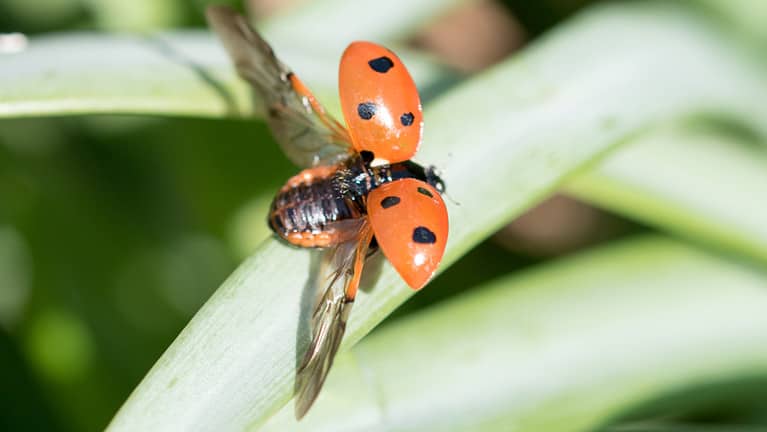
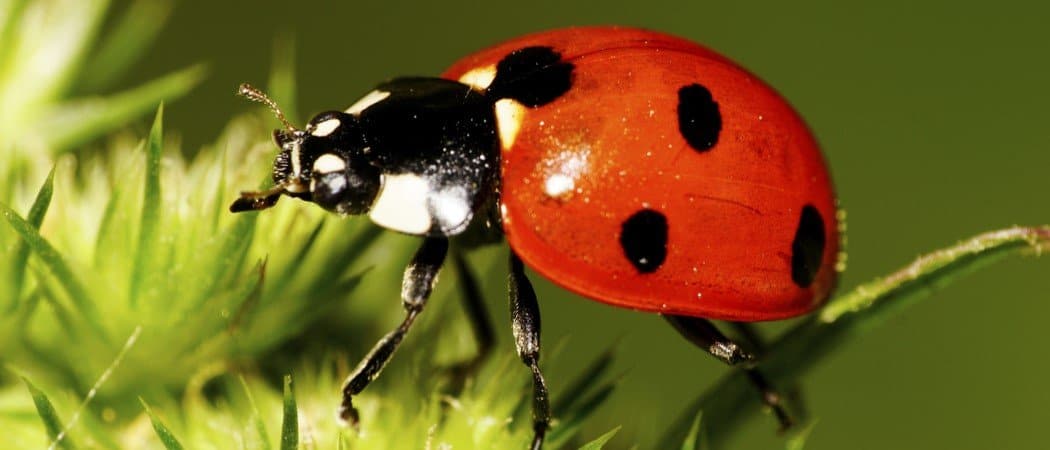
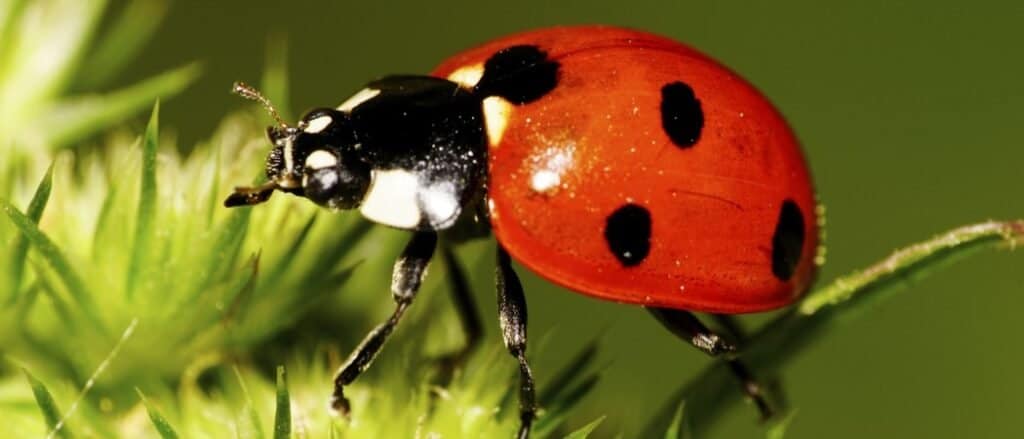
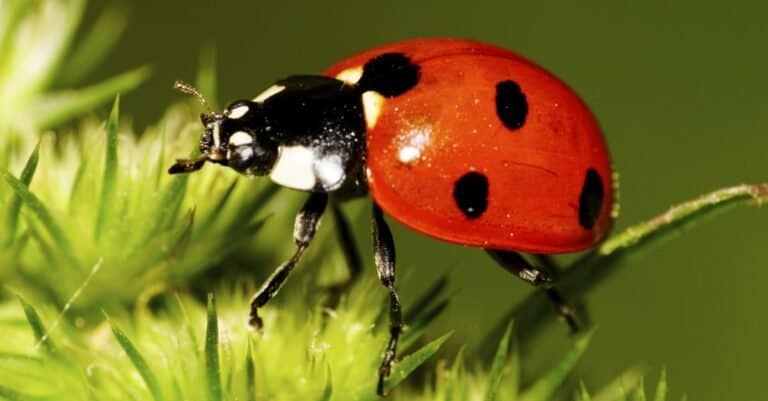
The typical description of the ladybug discusses the red shell and black spots, but there are many different patterns. In fact, the number of spots can even differentiate between the many species around today. They have a rather resilient body, ensuring that they can live in many different environments in North America and Europe.
Ladybird vs Ladybug
Ladybird beetles and ladybugs are the same insects. The difference is it’s called a ladybug in North America and a ladybird in the United Kingdom. Entomologists also consider ladybird being the more correct name for the insect, as it is not, in fact, a true bug but a beetle.
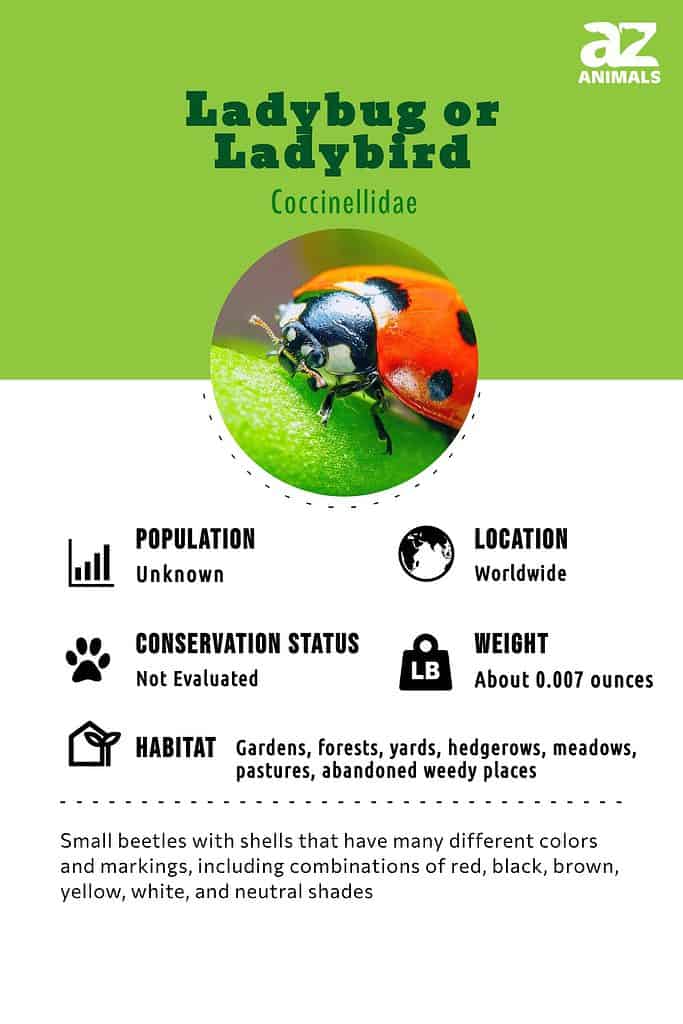
10 Incredible Ladybug Facts!
- The average lifespan of a ladybug is just 1-2 years.
- Their scientific name comes from a Latin word that means “scarlet.”
- These insects sometimes go by the name “ladybird,” which came from Britain’s description of it – “Our Lady’s bird.”
- The colorful beetles were not introduced to North America until the mid-1900s as a way to control the growing population of aphids.
- While they are incredibly helpful in the elimination of pests in gardens, an infestation of ladybugs on a farm can be harmful to crops.
- The number of spots on the ladybird’s back does not tell its age. That’s an old wives’ tale.
- If ladybirds form aggregations during the winter, they’ll gather on the south side of a structure such as a tree or a house to get the most sunlight.
- Ladybirds that go into diapause, the insect version of hibernation, break out of it when the temperature hits 55 degrees Fahrenheit.
- Coccinellids are colored as brightly as they are to dissuade predators, not to delight humans. If the predator persists, the insect releases toxins from its “knees.” This is called reflex bleeding.
- Several American states have the ladybird, or ladybug as their state insect. They are Massachusetts, New Hampshire, Tennessee, Delaware, New York and Ohio.
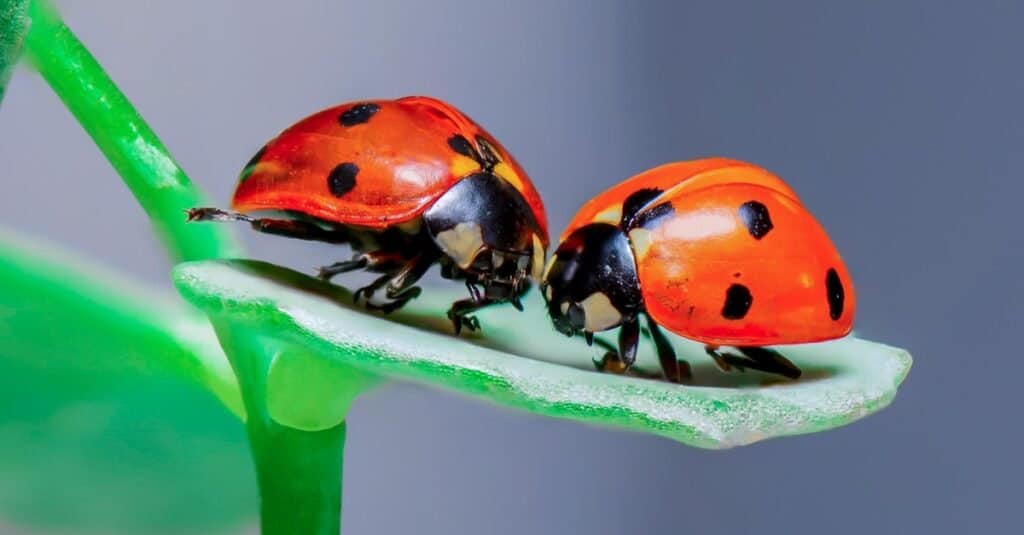
Coccinellids are colored as brightly as they are to dissuade predators.
Scientific Name
The scientific name for the ladybug is Coccinellidae, and their classification places them in the invertebrate category. Coccinellidae comes from the Latin word “coccineus,” which means scarlet – a clear tribute to the color of their exoskeleton. It is sometimes called a ladybird, which comes from a British expression for the insect. Many people took to calling the insect “Our Lady’s bird.”
The beetle gets its common name because it was associated with the Virgin Mary. Legend has it that a group of farmers was so plagued by aphids eating their crops that they prayed to the Virgin for help. When help arrived in the form of coccinellids, the beetles were known as “Our Lady’s beetles,” from then on.
Evolution and History
Through genetic sampling, it is thought that the ladybug dates back to the Cretaceous period. While the ladybug belongs to a group of mostly plant-eating beetles, this insect evolved its characteristics based on defensive evolutions of their prey and also adaptations of plant life. Fossils of ladybugs have been found that date back to the Eocene period, which dates back 50 million years.
Types of Ladybugs
Though most people are familiar with the typical red body and black spots, the ladybug is actually a category of over 5,000 different species. The species come in many different colors and markings, including combinations of red, black, brown, yellow, white, and neutral shades. They are primarily divided into the following categories:
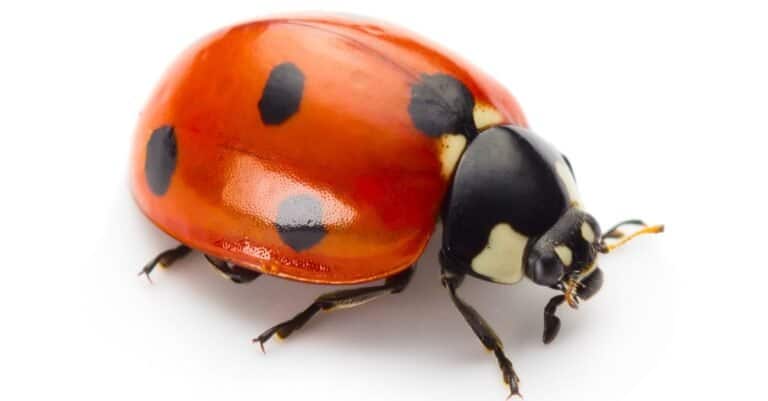
- Seven-spotted Ladybird – The Seven-spotted Ladybird is The seven-spotted ladybird the most populous ladybug found in Europe. They have a red shell and three spots per side and both sides share a large spot in the middle close to their head for a total of seven spots.
- Thirteen-spotted Ladybird – The thirteen-spotted ladybird ranges from red to orange and has thirteen total dark spots on their domed shells.
- Asian Ladybird – The Asian ladybird is also known as the harlequin and also as the Halloween beetle. This subspecies has many variations in color. As their name would imply, they originated in eastern Asia and have since been introduced in many parts of the world.
- Coleomegilla Maculate Ladybird – The Coleomegilla Maculate Ladybird is a large version of the ladybug and has many names such as pink spotted lady beetle, twelve-spotted lady beetle, and spotted lady beetle. They tend to have a pinkish color, and they can be used for bug control.
- Hippodamia Convergens Ladybug – The Hippodamia convergens Ladybug can often be called the convergent lady beetle. They are very prevalent in North America.
The elytra of many types of ladybirds are, indeed, scarlet, and the Virgin was sometimes depicted wearing a scarlet robe. The seven black dots on the insect’s elytra were supposed to represent her seven joys and seven sorrows, even though there are ladybird species that have more or less than seven spots. More ladybird species include:
1. Coleomegilla maculata
2. Coccinella novemnotata
3. Coccinella transversoguttata
4. Hippodamia convergens
5. Calvia quatuordecimguttata
6. Rhopalosiphum cerasifoliae
7. Rhopalosiphum maidis
8. Rodolia cardinalis
9. Coccinella californica
10. Psyllobora vigintiduopunctata
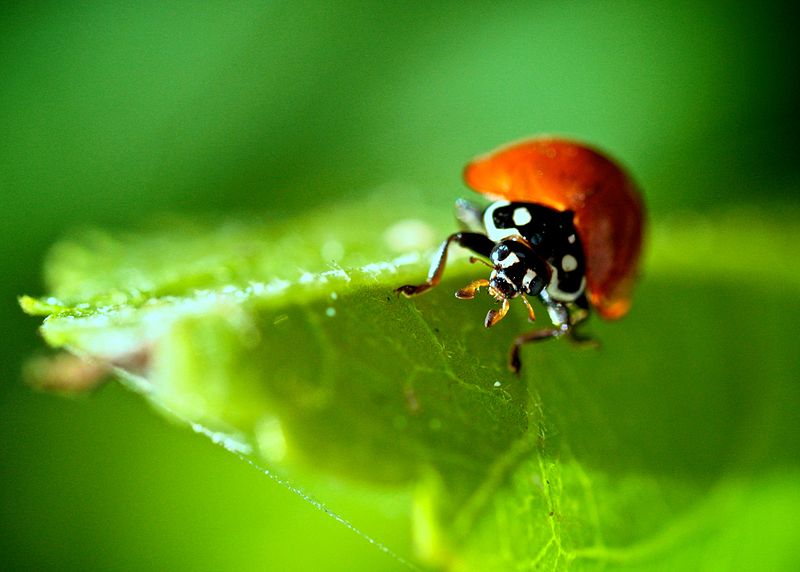
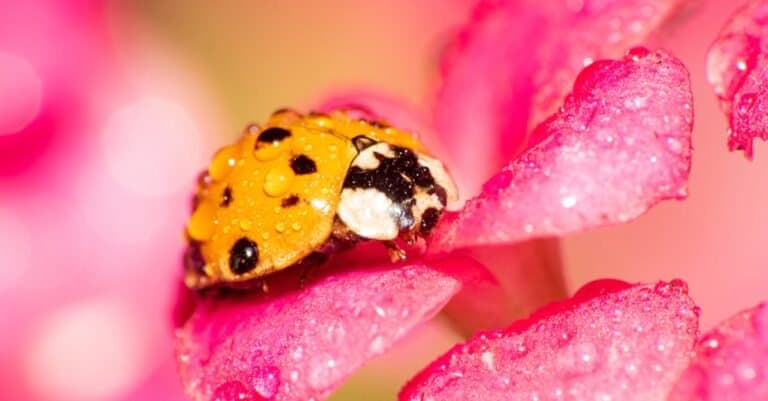
The species come in many different colors and markings, including combinations of red, black, brown, yellow, white, and neutral shades.
©Anderson Mancini / Creative Commons – Original
Appearance: How to Identify
When you imagine the appearance of a ladybug, colors like red and black typically come to mind. In fact, this traditional idea makes the ladybug (or ladybird) one of the most easily recognizable insects in the world. However, this description doesn’t come close to covering the 5,000 species that are out there today.
While every ladybug has an oval shell, six legs, and the cutest cheeks of any insect, they also are found in many shapes, sizes, and colors. Most of these insects are just a centimeter long, but they can be as small as 1 mm. Along with the traditional red shell and black dots, other species include:
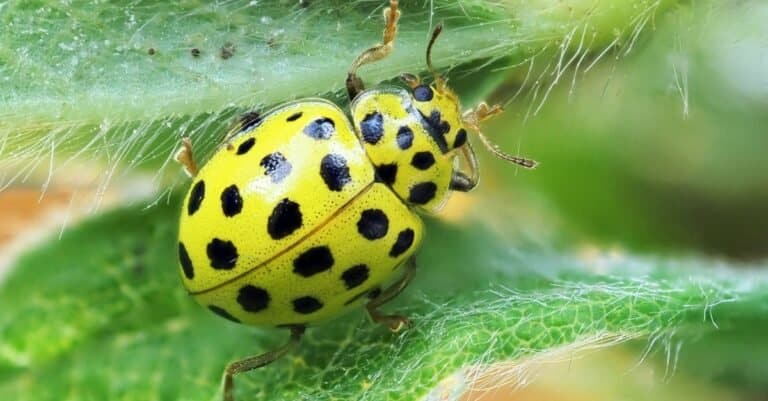
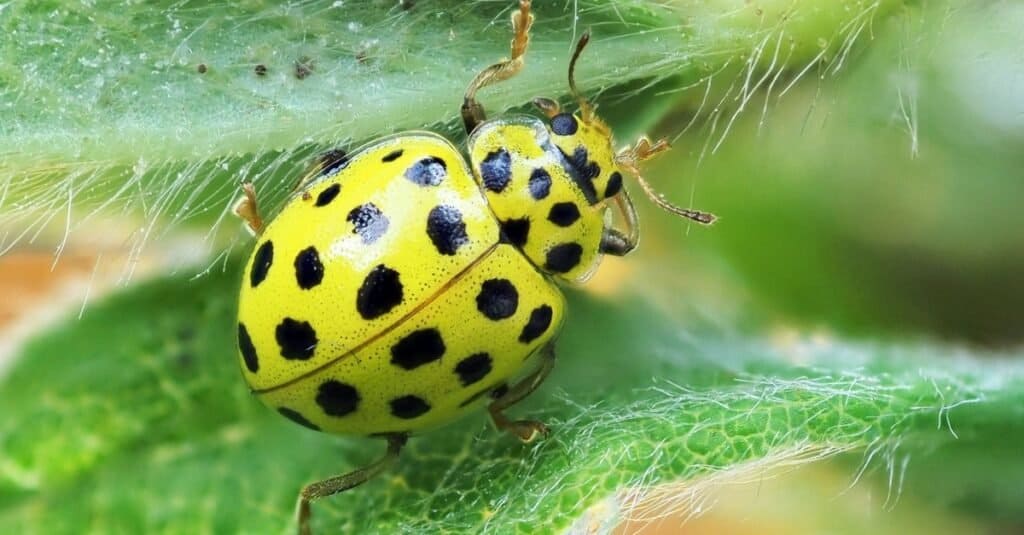
- Yellow shell with black dots (Psyllobora vigintiduopunc)
- Brown shell with cream-colored dots (Myrrha)
- Black shell with four red dogs (Scymnus)
- Pale yellow shell with small black dots (Adalia decempuncta)
- Red shell with one spot on either side (Two-spot ladybird)
Along their legs, their joints are specially designed to release a toxic fluid that can protect them from predators. Sometimes, they’ll even bite if they are threatened.
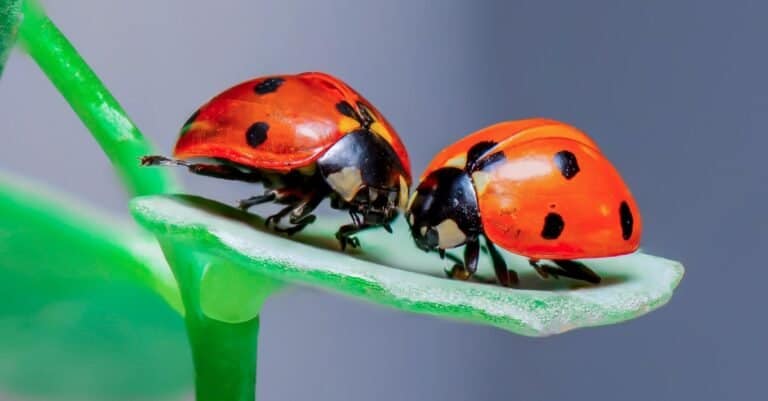
While it is easy to find one or two ladybugs, they typically are found in a group, which is called a loveliness. Part of the reason that these insects swarm together is to reproduce quickly and deal with limited food supplies during winter. Approximately half of this population is made of females, and they choose a mate while they are in their large group.
©L-N/Shutterstock.com
Habitat: Where to Find Them
Ladybugs can be found around the world, but they tend to live in Europe and North America. They were not introduced to North America until the middle of the 1990s, used to help with the aphid problems that were plaguing the entire region at the time. Since then, ladybugs seem to have found a place that they are happy to stay in. Of the 5,000+ species, the United States is specifically home to over 500 variations.
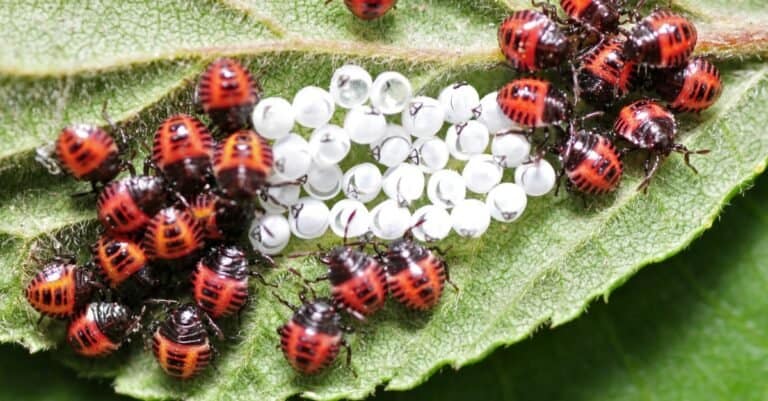
The ladybug’s flexibility in different habitats allows it to thrive. Just as easily as they will live in grasslands and forests, they’ll also collect in cities and suburbs. Some swarms can even be found along rivers. When they are ready to lay eggs, they will simply leave their larvae on the underside of a leaf.
As recently as 2018, scientists grew concerned over the dwindling population of certain insect species, considering the major impact that they have on the world’s ecosystems. Some of the reasons for the decline can be credited to the use of insecticides, pollution, and climate change. However, the resilience of many different habitats is part of the reason that there are still millions of these beetles found worldwide.
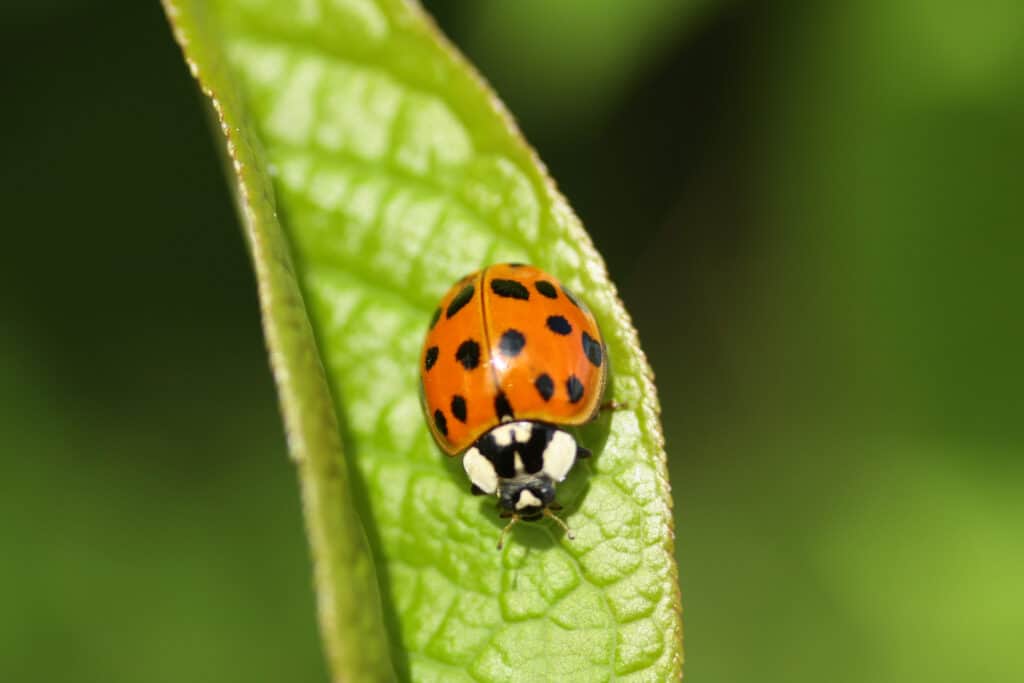
When they are ready to lay eggs, they will simply leave their larvae on the underside of a leaf.
©iStock.com/DE1967
Diet: What Do They Eat?
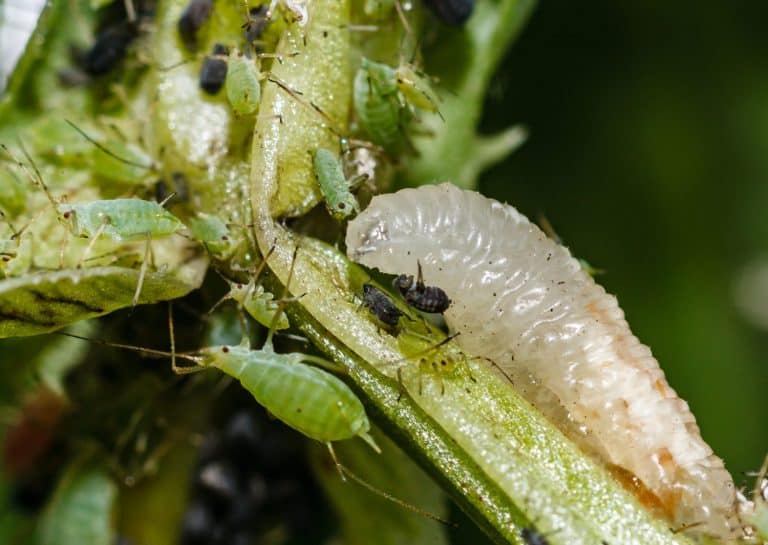
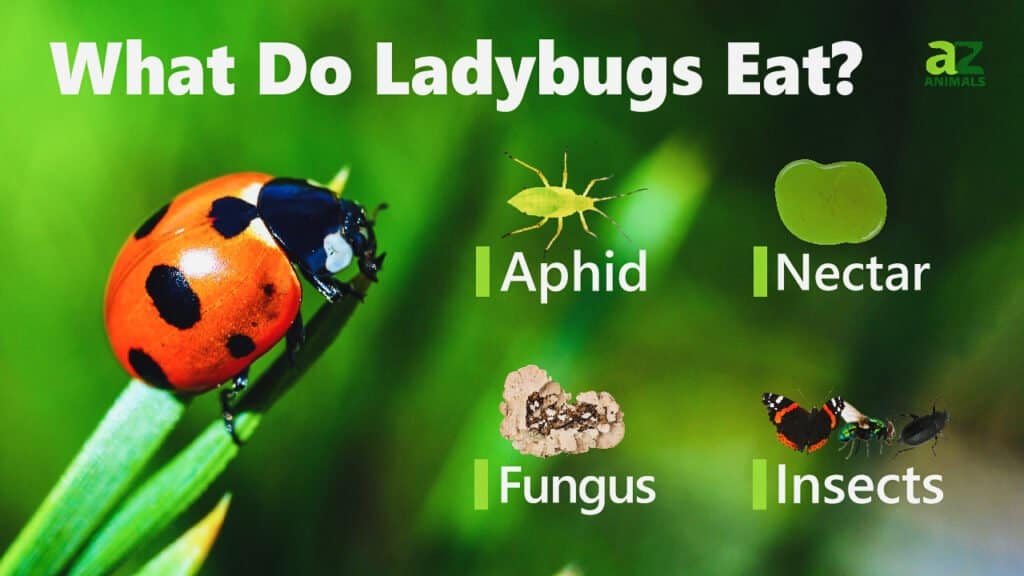
Ladybugs are omnivores, consuming both plants and other animals as their main source of nutrients. Primarily, they prefer to consume leaves, fungi, and other insects. Sometimes, they’ll even dine on mushrooms and mildew, but their primary diet is made of aphids. In fact, the ladybird consumes up to 50 aphids a day.
What eats ladybugs?
Birds consume ladybugs, but that’s hardly their only predator. They also are eaten as a part of the diet of frogs, wasps, spiders, and dragonflies. While they have many defenses against other animals, they are still rather small animals that cannot fight back as strongly as others.
What does a ladybug eat?
While the ladybird will consume some types of plants, their diet primarily consists of other insects (especially aphids). They’ll go after scales, mealy bugs, mites, leafhoppers, and other insects that are smaller than them. They will also eat the larvae of other insects.
Prevention: How to Get Rid of Them
Though the ladybug is mostly not harmful, having any beetles or insects in a home can be unsettling. They are safe to keep in a garden, but large infestations can damage a farm. If there is just a small group of ladybugs, sweeping or vacuuming them up is relatively safe. However, a massive infestation may need to be sprayed with soapy water. It is also safe to leave a bowl of soapy water where they collect.
While some people swear by the use of Diatomaceous Earth to clear out a colony, there are also many homemade traps that can work. Small LED lights can be set up in an area to attract the beetles into a funnel or box before they are moved somewhere safer.
Anyone with a green thumb and a disdain for ladybirds can plant mums around their home or porch. Apparently, as resilient as the beetles are, they absolutely hate the smell of these flowers, and they’ll likely choose a home without them instead. Natural repellants like lavender oil and citronella candles can also keep ladybugs and other insects away.
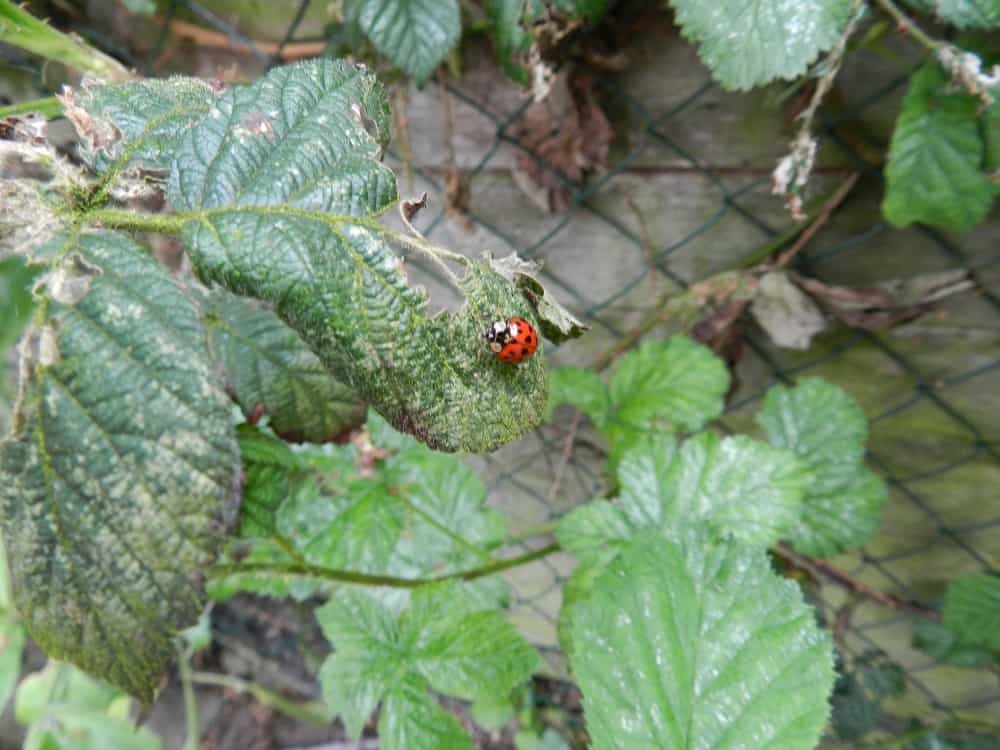
Natural repellants like lavender oil and citronella candles can keep ladybugs and other insects away.
©Millie Bond – Copyright A-Z Animals