L
Species Profile

Lemur

Lemuriformes

Lemurs: Madagascar's primate marvels
jenny genannt / Creative Commons

Lemur Distribution

Click a location to explore more animals from that region

Endemic Species
Loading map...

Found in 1 country

At a Glance

Order Overview This page covers the Lemur order as a group. Stats below are general traits shared across the order.
Also Known As Madagascar lemurs, Madagascan lemurs, Madagascar primates, Madagascan primates, prosimians
Diet Omnivore
Activity Diurnal+
Lifespan 15 years
Weight 9.5 lbs
Status Not Evaluated
Did You Know?

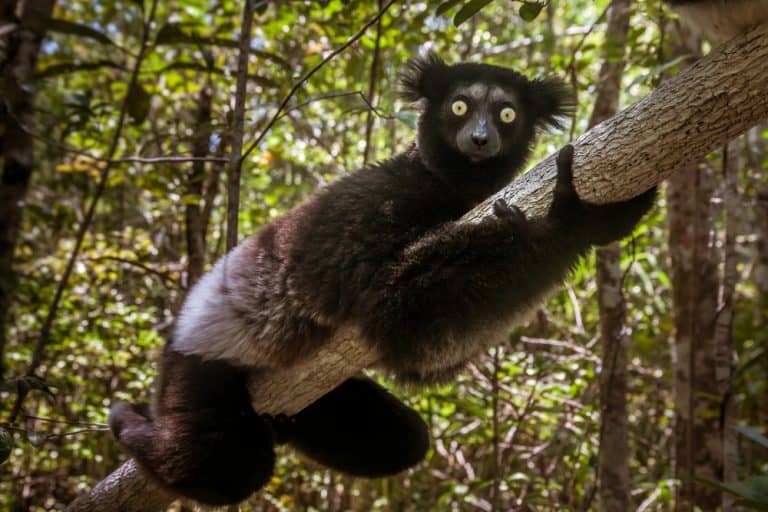
Size spans ~0.03 kg mouse lemurs to ~6-9 kg indri-the order includes some of the smallest and largest strepsirrhine primates.

Scientific Classification

Order Overview "Lemur" is not a single species but represents an entire order containing multiple species.

Lemurs are strepsirrhine primates endemic to Madagascar (and a few nearby islands). They comprise multiple families (e.g., Lemuridae, Indriidae, Cheirogaleidae, Lepilemuridae, Daubentoniidae) and show wide diversity in size, diet, and activity patterns (diurnal, nocturnal, and cathemeral).

Kingdom
Animalia
Phylum
Chordata
Class
Mammalia
Order
Primates

Distinguishing Features

  • Endemic radiation on Madagascar with many species and families
  • Strepsirrhine traits: typically a moist nose (rhinarium) and strong reliance on scent communication
  • Many have a toothcomb (lower incisors/canines) used in grooming/foraging
  • Diverse locomotion (vertical clinging/leaping, arboreal quadrupedalism, some terrestriality)

Physical Measurements

Males and females differ in size

Length
2 ft 6 in (8 in – 3 ft 7 in)
2 ft 6 in (8 in – 3 ft 11 in)
Weight
3 lbs (0 lbs – 21 lbs)
Tail Length
Up to 2 ft
1 ft 4 in (2 in – 2 ft 2 in)
Top Speed
19 mph
running

Appearance

Primary Colors
Secondary Colors
Skin Type Dense fur over most of body; moist naked rhinarium (strepsirrhine nose). Palms/soles are leathery with friction pads; external ears range from furred to prominent and sparsely haired, especially in smaller nocturnal forms.
Distinctive Features
  • Endemic strepsirrhine primates of Madagascar (and a few nearby islands); very high endemism, many threatened.
  • Toothcomb (lower incisors/canines) and a grooming claw are widespread shared traits across the order.
  • Scent marking is prominent: many have specialized scent glands (wrist/forearm/chest/genital) and strong olfactory communication.
  • Locomotion varies: many are arboreal; common modes include vertical clinging/leaping and quadrupedalism; a few are more terrestrial (e.g., ring-tailed lemurs).
  • Eyes/ears vary with activity pattern: nocturnal lemurs often have larger eyes and more conspicuous ears; diurnal forms often show stronger facial contrast.
  • Tail length is highly variable: many have long balancing tails, while indri have a very short or nearly absent tail.
  • Notable specializations occur in some lineages (e.g., aye-aye's elongated third finger and large incisors for percussive foraging).
  • Measurements (smallest→largest extant): ~9-75 cm head-body length; tail ~0-60+ cm; mass ~0.03-9.5 kg.
  • Lifespan range (varies by species and captivity): roughly ~8-30+ years; smaller nocturnal species trend shorter-lived than larger-bodied taxa.
  • Behavior/Ecology: activity can be nocturnal, diurnal, or cathemeral; diets range from frugivory/folivory to insectivory, gummivory, nectar-feeding, and specialized extraction foraging; sociality spans solitary foraging to multi-male/multi-female groups, with female dominance common in several species.

Sexual Dimorphism

Sexual dimorphism is often subtle in lemurs, but varies by family and species. Differences may involve body size, canine size, scent-gland development, and social dominance patterns (female dominance is common), rather than consistent, dramatic color dimorphism.

  • Often larger or more developed scent glands/marking behavior in several species.
  • In some taxa, slightly larger head or canine size; scrotal testes may be conspicuous seasonally.
  • May show more frequent territorial scent marking or inter-male competition cues (species-dependent).
  • Female dominance and priority access to resources is common in multiple species (behavioral dimorphism).
  • In some species, females are similar-sized or slightly larger; nipples become prominent during lactation.
  • May show stronger site fidelity or infant-carrying-associated coat wear patterns (context-dependent).

Did You Know?

Size spans ~0.03 kg mouse lemurs to ~6-9 kg indri-the order includes some of the smallest and largest strepsirrhine primates.

Most species are found only on Madagascar (plus a few nearby islands), making lemurs a global hotspot of endemism.

Many lemurs use a "toothcomb" (forward-tilted lower teeth) for grooming and sometimes feeding.

Activity patterns vary widely: nocturnal (e.g., mouse lemurs), diurnal (many sifakas), and cathemeral (active day and night; some brown lemurs).

Several lemurs show strong reliance on scent: territorial marking with specialized glands is common across multiple families.

Some dwarf lemurs (Cheirogaleidae) can enter prolonged torpor/hibernation-rare among primates.

Conservation status is critical: a large proportion of lemur species are threatened due to habitat loss, hunting, and fragmentation.

Unique Adaptations

  • Strepsirrhine sensory toolkit: a moist nose (rhinarium) and strong olfaction, paired with frequent scent marking across many lineages.
  • Toothcomb and grooming claw: shared anatomical traits used for social grooming and hygiene; critical in many species' daily routines.
  • Aye-aye specialization (Daubentoniidae): percussive foraging with an elongated middle finger to extract larvae from wood-one of the most distinctive feeding adaptations among primates.
  • Energy-saving strategies in Cheirogaleidae: some dwarf lemurs store fat (notably in the tail in certain species) and can enter extended torpor/hibernation during resource-scarce periods.
  • Powerful leaping anatomy in Indriidae: elongated hind limbs and grasping feet enable long vertical leaps through forest canopies.
  • Digestive flexibility: some folivorous lemurs rely on gut fermentation to process tough leaves, while fruit specialists track patchy seasonal resources.
  • Color/coat diversity and signaling: from cryptic nocturnal forms to boldly patterned species; tails range from very long (many Lemuridae) to extremely short (indri).

Interesting Behaviors

  • Scent marking and "scent communication" (via wrist/arm, chest, genital, or anal glands depending on species); used for territories, status, and reproductive cues.
  • Social diversity: some species are largely solitary (e.g., aye-aye; many sportive lemurs), others live in pairs (notably indri), and many form multi-male/multi-female groups (e.g., several Lemuridae).
  • Female dominance is common in several group-living lemurs (especially within Lemuridae), influencing feeding priority and social interactions-though it's not universal across all families.
  • Locomotion varies: vertical clinging and leaping is prominent in Indriidae (sifakas, indri), while others are more quadrupedal in trees; some show distinctive "sideways" hopping on the ground (sifakas).
  • Vocal communication ranges from quiet contact calls in some nocturnal species to powerful, far-carrying songs/roars in indri and other indriids.
  • Seasonal breeding and timing with resource peaks are widespread; many species show synchronized births tied to Madagascar's seasonal fruit and leaf availability.
  • Diet breadth is extreme: frugivory and folivory are common, but there are also insectivores, nectar feeders, gum feeders, bamboo specialists, and omnivores (patterns differ strongly by family and habitat).

Cultural Significance

In Madagascar, lemurs shape local identity and taboos. Some groups protect certain lemurs through old family rules; others fear species like the aye-aye. Lemurs are key to ecotourism and serve as symbol animals that help protect forests and biodiversity.

Myths & Legends

In Malagasy folklore the aye-aye is feared as an omen of bad luck or death. People say it can point a bony finger to curse someone, a belief that led people to harm them.

Indri as kin/ancestor (local tradition): the indri is associated in local stories with close kinship to humans; in some areas taboos discourage harming it.

Local name meaning "father of Koto": one traditional explanation links the indri's local name to a story connecting it to a child (Koto) and portraying it as a protective father figure.

The name 'lemur' was used by Carl Linnaeus from a Latin word meaning spirits of the dead, because some lemurs are active at night and have bright eyeshine, making them seem like night haunters.

Conservation Status

NE Not Evaluated (order-level hub). Across Lemuriformes, species statuses span from Least Concern (LC) to Critically Endangered (CR), with many Endangered/Critically Endangered taxa and several extremely range-restricted species at highest risk.

Has not yet been evaluated against the criteria.

Population Decreasing

Protected Under

  • CITES Appendix I (all lemurs listed; international commercial trade generally prohibited)
  • Madagascar national wildlife protection and hunting restrictions (varies by species and enforcement)
  • Occurrence in Madagascar's protected-area network (e.g., Madagascar Protected Areas System), though coverage and enforcement are uneven

Looking for a specific species?

Ring-tailed lemur

Lemur catta

  • Across lemurs (infraorder Lemuriformes), size range spans roughly from the smallest mouse lemurs (~30 g) to the largest indri (~7-9 kg), reflecting major ecological diversity.
  • Lifespan across the order varies broadly: small species often ~10-15 years (sometimes less in the wild), while larger lemurs can reach ~20-30+ years in captivity (species- and context-dependent).
  • Activity patterns vary by lineage and habitat: nocturnal (many Cheirogaleidae), diurnal (many Lemuridae/Indriidae), and cathemeral (some Eulemur), often shifting with seasonality and food availability.
  • Diets are highly flexible across the order: frugivory, folivory, insectivory, nectar-feeding, gum-feeding, and specialized extractive feeding (e.g., the aye-aye) occur; many are key pollinators and seed dispersers in Malagasy forests.
  • Social systems range from solitary or pair-living to multi-male/multi-female groups; female dominance is common in several lemur lineages but not universal across all families.

You might be looking for:

Ring-tailed Lemur

22%

Lemur catta

Iconic lemur with a banded tail; diurnal and highly terrestrial among lemurs.

Indri

14%

Indri indri

Largest living lemur; tailless with loud calls; family Indriidae.

View Profile

Aye-aye

14%

Daubentonia madagascariensis

Highly distinctive nocturnal lemur with an elongated middle finger; family Daubentoniidae.

View Profile

Sifakas

12%

Propithecus spp.

Leaping indriids known for vertical clinging and bounding locomotion.

Mouse Lemurs

10%

Microcebus spp.

Very small nocturnal lemurs; among the most species-rich lemur genera.

Life Cycle

Birth 2 infants
Lifespan 15 years

Lifespan

In the Wild 6–30 years
In Captivity 10–40 years

Reproduction

Mating System Polygynandry
Social Structure Aggregation Group
Breeding Pattern Seasonal
Fertilization Internal Fertilization
Birth Type Internal_fertilization

Across Lemuriformes, mating most often occurs in seasonal, multi-male/multi-female social settings with mate competition and brief estrus. However, the order includes pair-living (some closer to monogamy) and solitary species with more transient mating associations.

Behavior & Ecology

Social Troop Group: 8
Activity Diurnal, Nocturnal, Cathemeral, Crepuscular
Diet Omnivore Fruit (especially ripe, seasonally abundant fruit)
Seasonal Hibernates

Temperament

Diverse: body mass ~0.03 kg to ~9 kg; lifespan roughly ~8-30+ years (captivity often longer)
Generally cautious and predator-aware; vigilance and alarm-calling are common
Often strongly arboreal and territorial, with boundaries reinforced by scent and calls
Social tolerance varies widely, from solitary foragers to cohesive troops
In many diurnal lemurs, females frequently dominate feeding and aggression
Seasonally flexible behavior tied to Madagascar's variable rainfall and food pulses

Communication

Contact calls to maintain cohesion or spacing between neighbors
Alarm calls that vary by predator type Aerial vs terrestrial threats
Loud territorial songs/roars in some taxa, carrying long distances
Grunts, chirps, squeals, and infant distress calls used at close range
Extensive scent marking using specialized glands; urine marking in some species
Allogrooming and tactile contact to reinforce bonds and reduce tension
Visual displays (postures, tail signals, facial expressions) during aggression or courtship
Substrate signaling (leaps, branch shaking) and, in some taxa, percussive foraging cues

Habitat

Biomes:
Tropical Rainforest Tropical Dry Forest Savanna Wetland
Terrain:
Mountainous Hilly Plateau Plains Valley Coastal Island Riverine Volcanic Karst +4
Elevation: Up to 8530 ft 2 in

Ecological Role

Primarily arboreal consumers (fruit/leaf/invertebrate) that link plant production to higher trophic levels; roles vary from major seed dispersers and occasional pollinators to important leaf browsers and insect predators, depending on species and habitat seasonality.

seed dispersal (including long-distance dispersal in larger-bodied taxa) pollination for some flowering plants (nectar/flower feeding) regulation of insect populations (insectivory) shaping forest regeneration and plant community composition via selective feeding nutrient cycling and soil enrichment via feces/urine and occasional geophagy-related mineral transfer serving as prey supporting higher trophic levels (raptors, fossas, snakes), stabilizing food webs

Diet Details

Main Prey:
Insects Other arthropods Snails and other small invertebrates Small vertebrates Eggs and nestlings
Other Foods:
Fruit Leaves flowers and buds Nectar Seeds and pods Tree gums, resins and sap Fungi Bark and cambium +2

Human Interaction

Domestication Status

Wild

Lemurs (Lemuriformes) are wild, not domesticated primates from Madagascar. Some, like mongoose lemurs, were moved to nearby islands (Comoros). Humans have hunted them, changed their forests (logging, charcoal, farming), and have taboos that can protect or hurt them. Ecotourism and conservation (protected areas, rescue, captive breeding) affect them. Zoos keep but do not domesticate them.

Danger Level

Low
  • bites and scratches (can be serious due to bacterial infection risk)
  • zoonotic disease transmission risk when handled (general primate-associated pathogens; risk increases with illegal trade and poor hygiene)
  • aggression related to stress, breeding season, or captivity (varies widely by species and individual)
  • property damage or minor crop-raiding conflicts near forest edges (localized)

As a Pet

Not Suitable as Pet

Legality: Lemurs (Lemuriformes) are mostly illegal or not practical as private pets. Madagascar bans taking or keeping wild lemurs. Many are on CITES, so trade needs permits. Laws vary; permits or licenses are often required and keeping them is discouraged.

Care Level: Expert Only

Purchase Cost: $1,500 - $15,000
Lifetime Cost: $30,000 - $200,000

Economic Value

Uses:
Ecotourism Conservation funding and employment Education and zoological exhibits Scientific research value Local cultural significance Illegal wildlife trade (harmful/illicit) Subsistence hunting/bushmeat (localized and often illegal)
Products:
  • guided wildlife viewing and park tourism services in Madagascar
  • jobs and revenue linked to protected areas and community conservation
  • zoo and conservation breeding program participation (non-commercial, regulated transfers)
  • research outputs (behavioral ecology, evolution, conservation science)
  • public education programming and media featuring lemurs

Relationships

Predators 7

Fossa Cryptoprocta ferox
Madagascar harrier-hawk Polyboroides radiatus
Henst's goshawk Accipiter henstii
Madagascar tree boa Sanzinia
Madagascar ground boa Acrantophis
Ring-tailed mongoose Galidia elegans
Falanouc Eupleres goudotii

Related Species 4

Lorises Lorisidae Shared Family
Galagos Galagidae Shared Order
Tarsiers Tarsiidae Shared Order
Old World monkeys Cercopithecidae Shared Family

Ecological Equivalents 4

Animals that fill a similar ecological role in their ecosystem

Arboreal fruit- and leaf-eating monkeys Platyrrhini Occupy similar arboreal niches as medium-sized frugivores and folivores and serve as seed dispersers in tropical forests, though they occur on different continents and have different evolutionary origins.
Tree kangaroos Dendrolagus spp. Convergent arboreal folivore and frugivore lifestyle (forest canopy browsing), despite being marsupials rather than primates.
Kinkajou Potos flavus Nocturnal, arboreal frugivore that frequently travels in the canopy and uses tree hollows. Ecologically similar to some nocturnal and cathemeral lemurs in exploiting forest fruits.
Cuscus Phalangeridae Arboreal, often nocturnal folivores and frugivores; occupy similar roles in canopy feeding and resting-site use.

Types of Lemur

20

Explore 20 recognized types of lemur

Aye-aye Daubentonia madagascariensis
Indri Indri indri
Diademed sifaka Propithecus diadema
Verreaux's sifaka Propithecus verreauxi
Coquerel's sifaka Propithecus coquereli
Black-and-white ruffed lemur Varecia variegata
Red ruffed lemur Varecia rubra
Ring-tailed lemur Lemur catta
Brown lemur Eulemur fulvus
Red-fronted lemur Eulemur rufifrons
Black lemur Eulemur macaco
Crowned lemur Eulemur coronatus
Eastern woolly lemur Avahi laniger
Greater bamboo lemur Prolemur simus
Golden bamboo lemur Hapalemur aureus
Sportive lemur (Milne-Edwards') Lepilemur edwardsi
Fat-tailed dwarf lemur Cheirogaleus medius
Gray mouse lemur Microcebus murinus
Madame Berthe's mouse lemur Microcebus berthae
Giant mouse lemur Mirza coquereli

“Lemurs are found only on Madagascar.”

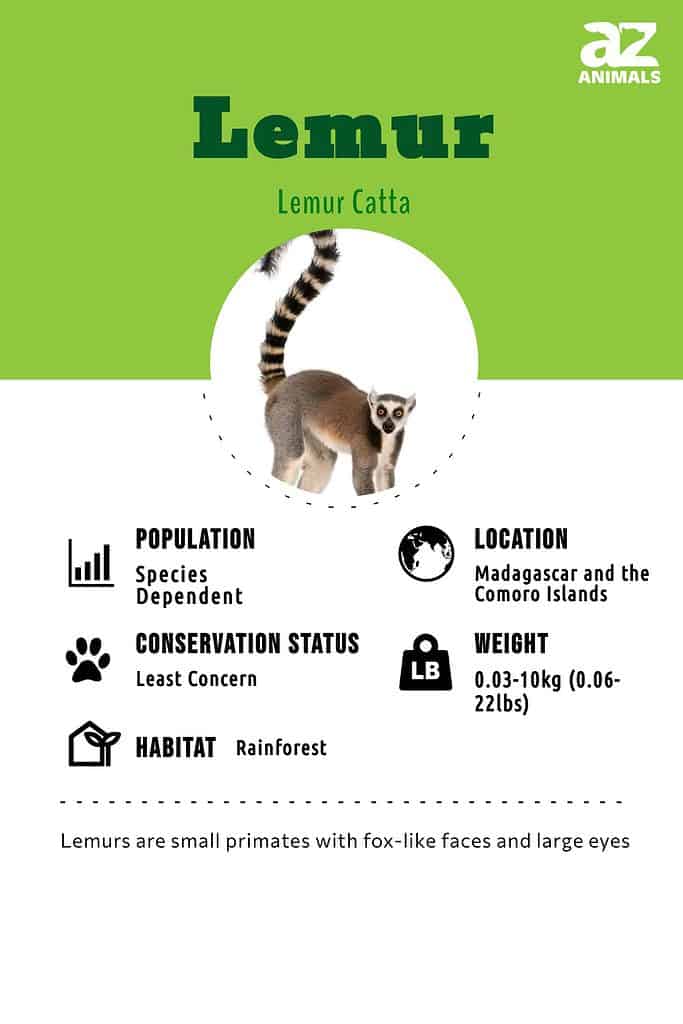
Lemurs are tiny species of primate that are only found on one group of islands: Madagascar and the Comoro Islands. This makes them one of most endangered groups of animals on earth. They have tiny bodies with long, thin tails. There are over 100 species of these mammals living on the islands.
👁 Image

Lemur Facts

  • Their scientific name means ghost, or spirit of the dead, due to their white faces and large, round eyes.
  • In the past, these creatures may have floated to Madagascar on “rafts” of vegetation.
  • There are over 100 species of lemur on Madagascar and the surrounding islands, including the gray mouse and the ring-tailed lemur.
  • The aye-aye is a unique species that uses its long middle finger to pry grubs and worms from the inside of trees.
  • Lemurs are one of the few species of animal to live in a matriarchal society, with one female leading the troop.

Scientific Name

Their scientific name lemur is a Latin word meaning “ghosts, specter of the dead.” This is due to these creatures’ bright white faces, large eyes, and nocturnal habits.

Different species have different scientific names. For example, the ring-tailed lemur’s scientific name is Lemur catta, where catta means “cat”. Another species, the gray mouse (or lesser mouse) lemur, has the scientific name Microcebus murinus. This name means “gray, small, long-tailed monkey.”

Types

There are 101 lemur species. The most popular of them have been listed below.

  • Ring-tailed lemur (Lemur catta): Extremely social and vocal, this primate is perhaps the most widely recognized member of its species. Its most notable feature is its striking tail covered in alternating bands of black and white fur.
  • Aye-aye (Daubentonia madagascariensis): Rather solitary, this lemur with dark fur, and large bat-like ears is known for its slender, bony fingers with which it pulls grubs out from tree trunks.
  • Blue-eyed black lemur (Eulemur flavifrons): These lemurs with light blue eyes are often covered in black or ginger fur. They are especially fond of pollen, fruit and honey and are known for their belligerent nature and fondness for squabbling with each other.
  • Coquerel’s sifaka (Propithecus coquereli): White fur, black faces and ears, and arms and chests covered in reddish fur, and golden or amber eyes, give this lemur a rather striking appearance. It is also arboreal and diurnal.
  • Eastern lesser bamboo lemur (Hapalemur griseus): Somewhat portly and covered in  silver reddish fur, this lemur lives among bamboo clusters.
  • Fat-tailed dwarf lemur (Cheirogaleus medius): Its main claim to fame is its status as the only tropical mammal which hibernates. However it does not regulate its body temperature during the process. The lemur itself has a rodent-like face and light brown fur.
  • Greater dwarf lemur (Cheirogaleus major): Found on the eastern coasts of Madagascar as well as its northern region, this arboreal lemur is known for its soft calls, preference for walking rather than leaping, and for carrying its young in its mouth.

The following species are also popular:

  • Golden-crowned sifaka (Propithecus tattersalli)
  • Golden bamboo lemur (Hapalemur aureus)
  • Golden-brown mouse lemur (Microcebus ravelobensis)
  • Greater bamboo lemur (Microcebus ravelobensis)
  • Madame Berthe’s mouse lemur (Microcebus berthae)
  • Red-fronted lemur (Eulemur rufifrons)
  • Red lemur (Varecia rubra)
  • Silky sifaka (Propithecus candidus)
  • Verreaux’s sifaka (Propithecus verreauxi)

Evolution

Although Madagascar is believed to have separated from East Africa 160 million years ago, the ancestors of the lemurs would come along much later approximately 100 million years later, to be precise.

Scientists believe that the fact that both Madagascar and Mozambique were located 1,650km further to the south than at present, enabled these primates to reach the island. Their more southward position meant lemurs’ ancestors were able to deal with a more powerful set of ocean currents flowing towards Madagascar, rather than the forceful marine movements which push outwards from the island today.

Approximately 10 million years after their arrival, lemurs separated from lorises.

About 20 million years ago, the currents changed as the continental plates moved northward, preventing the possibility of any new arrivals enabling the lemurs to develop in relative isolation.

Appearance

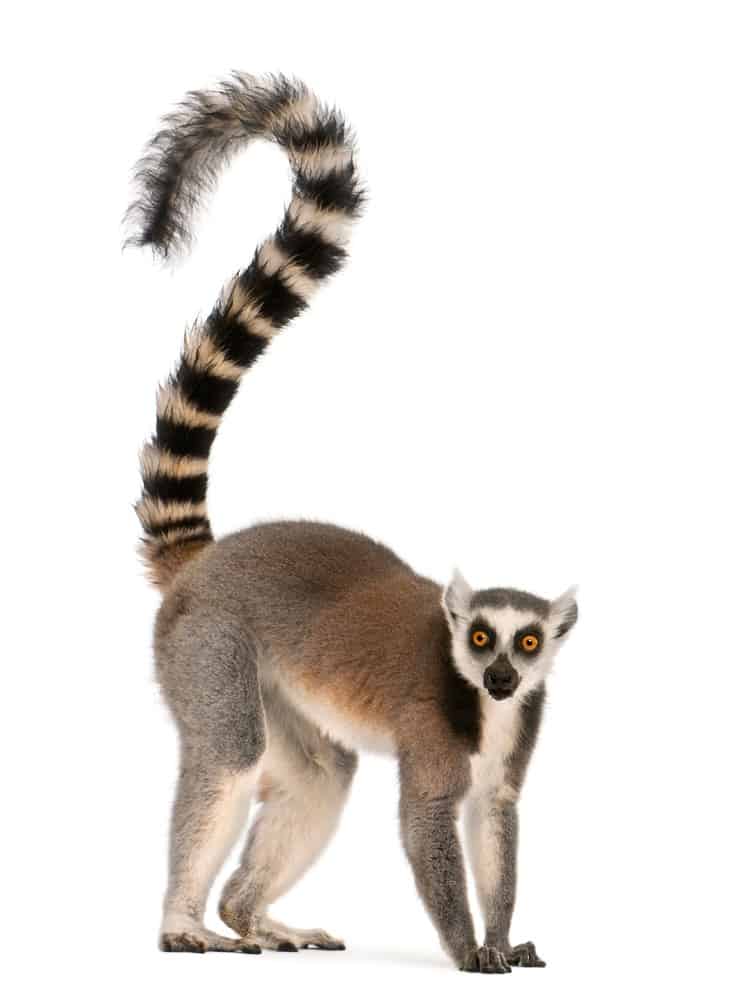
👁 Lemur isolated on white background

Lemurs do not have prehensile tails

©Eric Isselee/Shutterstock.com

A small species of primate, lemurs are animals that can grow to be about 3 inches to 28 inches long (excluding their tails) and weigh anywhere from less than a pound to 22 pounds. Their tails can be much longer than their bodies, and on average, they weigh about as much as a cat.

Lemurs are fox-like animals with narrow faces. They have pointed ears and a small, moist nose. Their fingers are adapted for gripping trees and fruit, and their sharp claws help them climb trees. Some have longer hind legs, built for jumping from branch to branch. Unlike other monkey species, lemurs do not have prehensile tails.

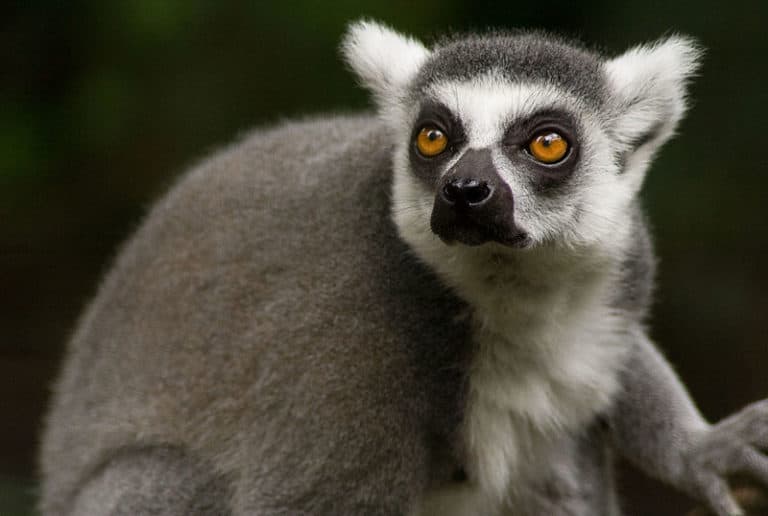
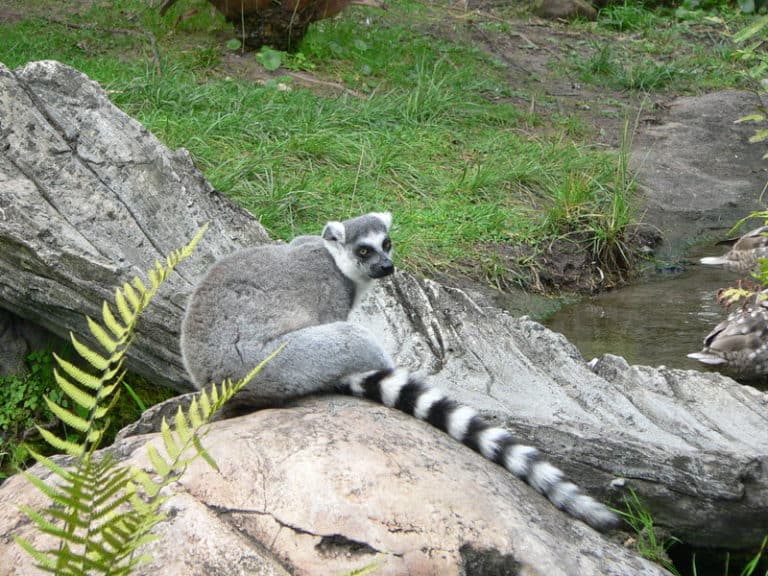
They vary greatly in appearance; their fur can be gray, brown, or black. They can be solid colored, or have features like ringed tails or white patterns. By far the most recognizable species is the ring-tailed lemur. Named for its ringed black and white tail, these lemurs have black skin, wide brown eyes, and gray coats. The lesser mouse lemur, or gray mouse lemur, has reddish-grey fur and, as the name suggests, looks a bit like a mouse. The lesser mouse lemur is one of the smallest lemur species.

One very unique species of lemur, called the aye-aye, is a small brown creature known for its orb-like eyes and long, prehensile middle finger. It uses this finger to dig grubs out of holes in trees and branches.

Behavior
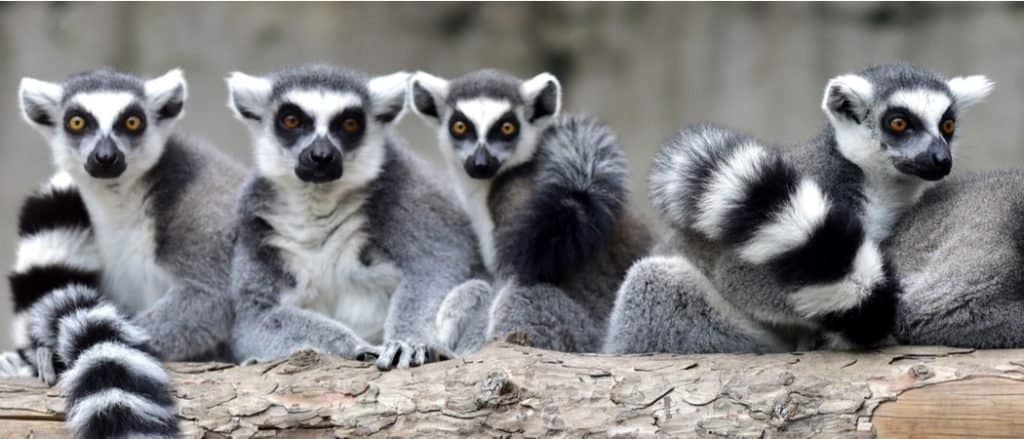
👁 Animals in Madagascar

Lemurs are social animals. However, their groups are matriarchal in nature

©Wang LiQiang/Shutterstock.com

These creatures spend most of their days flying through the trees, on the lookout for food. They live in groups called “troops.” These groups can be as small as 6 animals, or as large as 30. The group constantly looks out for its members, and they use alarm calls to alert each other to danger. These calls can vary depending on the species — some calls sound cat-like (ring-tailed), some sound like chirps (mouse), and some sound like grunts (brown).

These creatures are unique in that they live in a matriarchal society — one dominant female typically leads a group. She decides where the group sleeps and eats. These animals are better adapted for nocturnal life, which is the reason they have such large eyes. They sleep in nests made of leaves, or in the forks of trees.

The ring-tailed species is unique among these primates because they are mostly ground dwellers. They are the only species known to have ringed tails, which they use for communication. A tail held high can alert others to danger, even in the dense woodlands. They also mark their territory using scratches on trees, as well as by scent marking the area.

Lemur Habitat
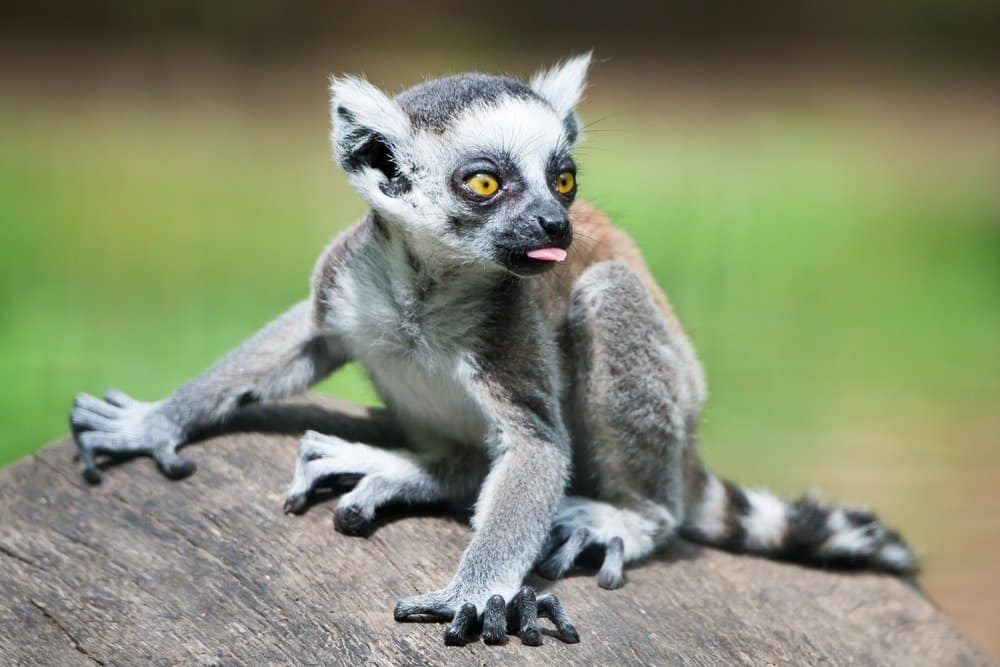
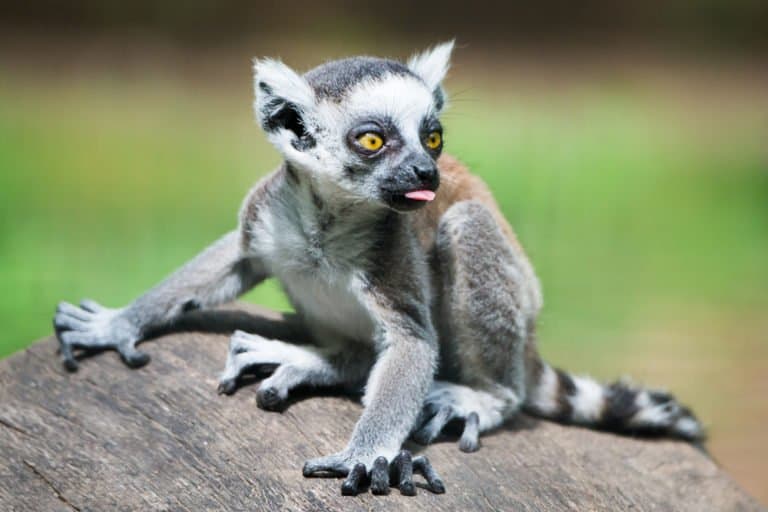
👁 Baby lemur

Lemurs are generally arboreal although one species is terrestrial

©Abeselom Zerit/Shutterstock.com

Madagascar and its surrounding islands are rather isolated. That means this species was able to evolve without any outside influence. It is said that lemurs may have floated to Madagascar form the mainland and evolved there. Madagascar is an island with a great amount of biodiversity, and may different habitats for these creatures to inhabit. Some areas are marshy, others are dry. Some are mountainous, and others are forested. Generally, they prefer to live in the trees. But each species evolved specifically to fit in the niche of its habitat on Madagascar and the Comoro Islands.

Lemur Diet
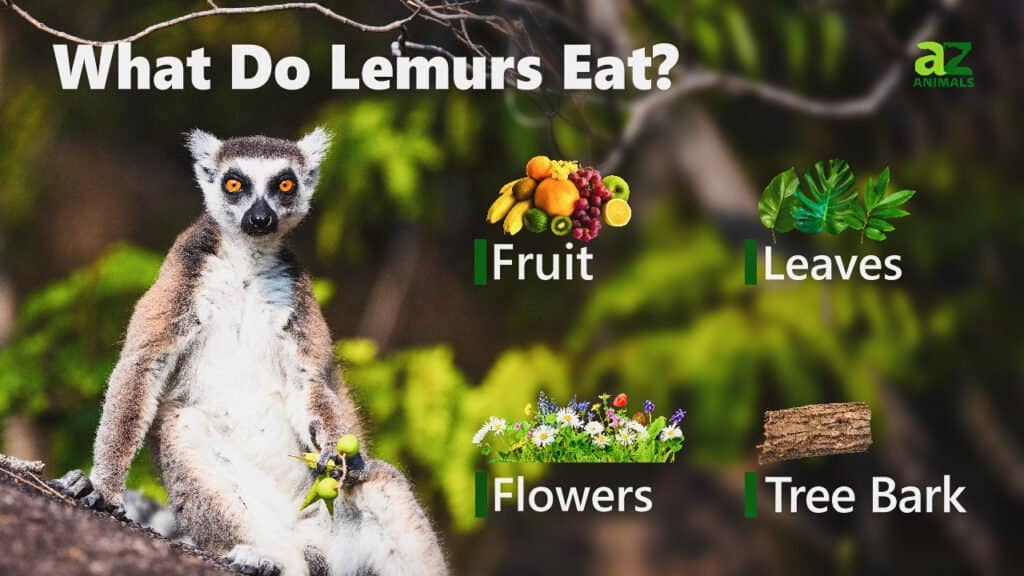
👁 What Do Lemurs Eat
Lemurs enjoy a truly varied diet

Larger species are generally herbivores. They prefer leaves, fruit, flowers, bark and tree sap. Smaller species become more omnivorous, chowing down on insects as well as fruit and leaves. Sometimes, they even decide to eat bird eggs or small birds themselves.

Lemur Predators and Threats
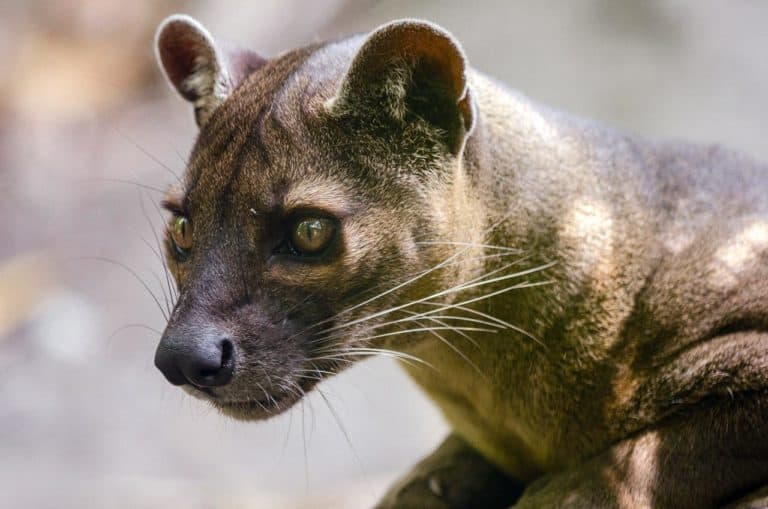
👁 Image
Fossas are lemurs’ main predators

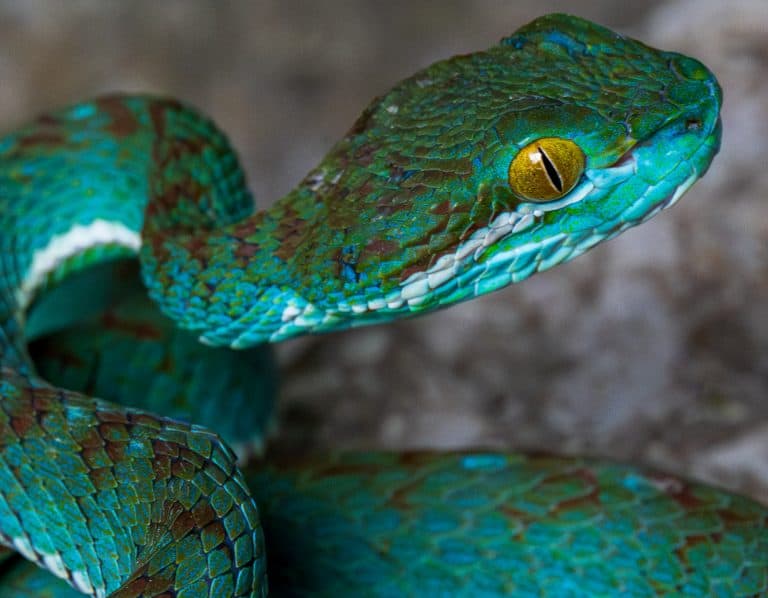
Madagascar’s top predator is the fossa, a relative of the mongoose that preys on many different species that live on the island. In addition, lemurs can fall prey to flying harrier hawks and boa constrictors as well.

Habitat loss is an enormous threat to every species on Madagascar, and the lemur is no exception. Illegal deforestation and mining have threatened lemur species, with 17 of them having gone extinct since humans arrived on Madagascar over 2,000 years ago. Hunting is also detrimental to these populations. Invasive species such as dogs and cats, which humans brought with them to Madagascar, are also a threat and generally disrupt the fragile ecosystem of the island.

As a species, they vary from vulnerable to critically endangered.

Reproduction, Babies, and Lifespan
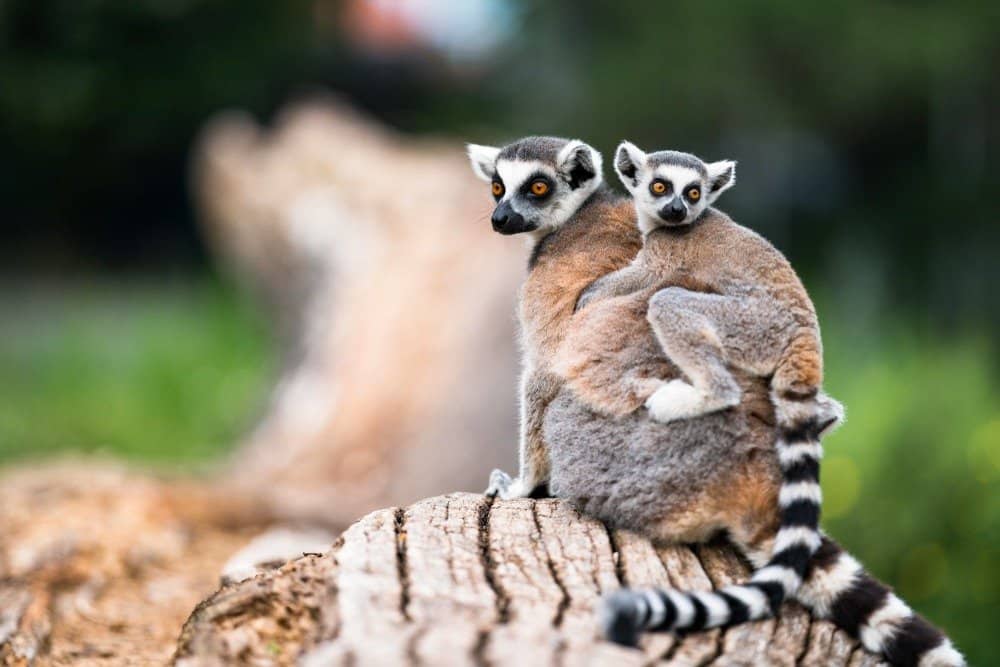
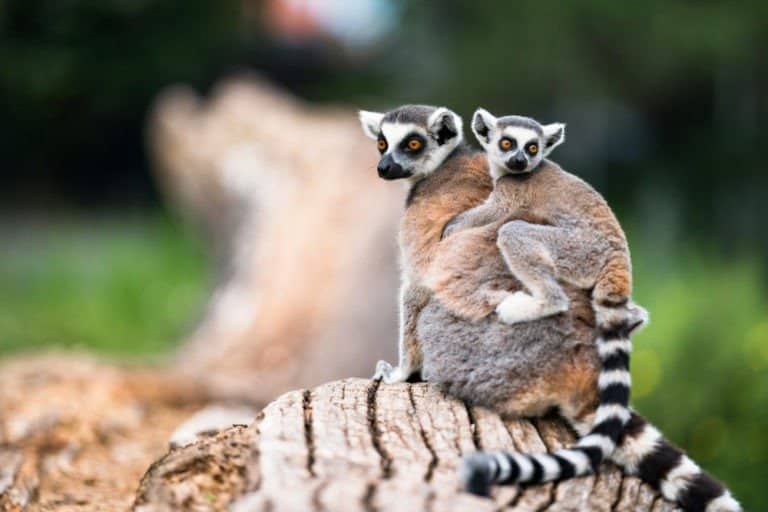
👁 Lemur mom and baby

Maternal care varies depending on the species

©Ondrej_Novotny_92/Shutterstock.com

Males will scent mark and quarrel over females during the mating season. In some species, females are fertile for only one day out of the entire year. Most only produce one baby per season, but some litters may contain as many as six young. Most gestation periods last between 2 and 5 months.

Young lemurs are known as pups, and typically cling to their mothers for the first few weeks of life. In some species, such as lesser mouse lemurs, the babies are not strong enough to hold on and must be carried around. Soon, the pups climb from the belly to the back. After three to four months, the pups are able to walk and climb by themselves and no longer need to hold on to their mothers.

Some species take a different approach: for the first month, mothers hide their young in large piles of foliage while they go forage. This allows the young to stay hidden. Once the first month of life is over, the young become too curious and active to stay put.

Lemurs are typically done growing after they reach 1.5 years of age. Some can live for as long as 30 years, however, lifespan varies depending on the species.

Population
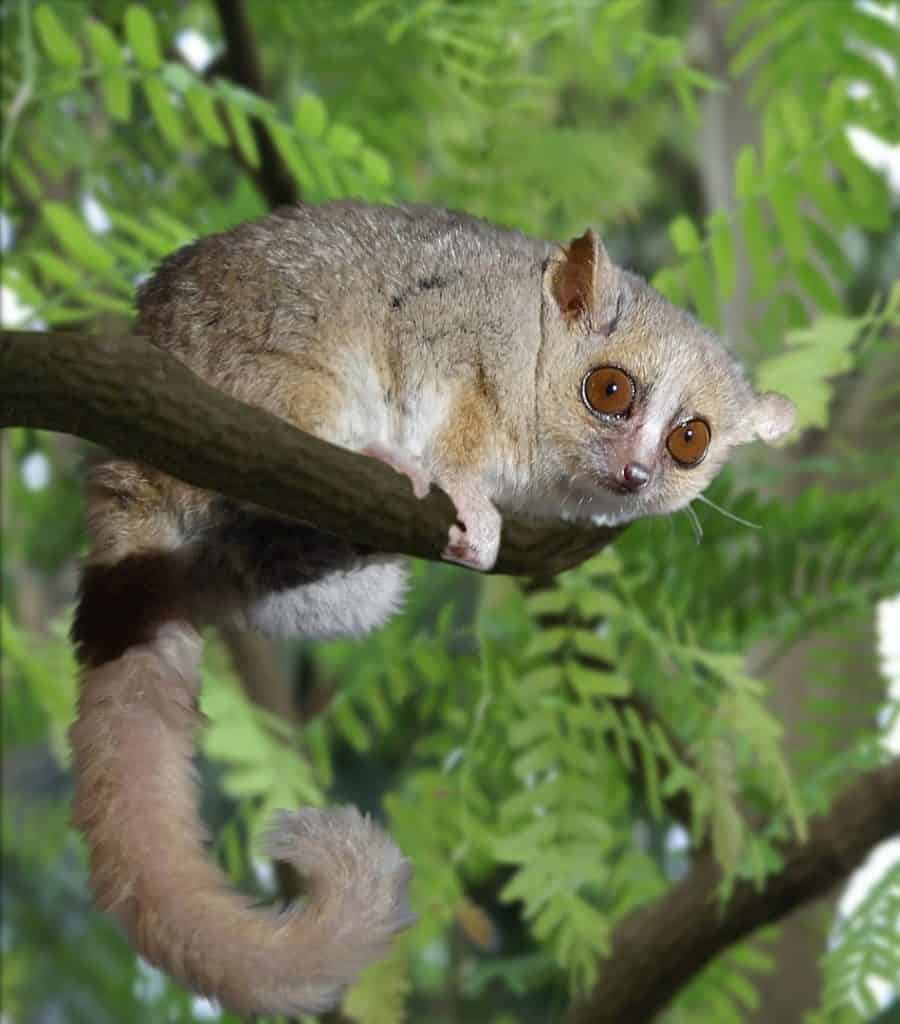
👁 Image

The number of lemur species which have thriving populations is rather low

©photographer: Gabriella Skollar; editor: Rebecca Lewis / CC BY-SA 3.0 – Original / License

Populations vary wildly between species depending on their conservation status. One species, known as the northern sportive lemur, is estimated to only have 18 living individuals remaining. Only 8% of lemurs are classified as “least concern.” All other species have experienced population decline due to the multiple threats to the biodiversity of Madagascar.

Lemurs in the Zoo

Ring-tailed lemurs are the most common variety found in zoos. The San Diego Zoo features five species, including ring-tailed and blue-eyed black lemurs. Other zoos that house lemurs as well as support conservation are the Akron Zoo in Ohio, and the Jacksonville Zoo and Naples Zoo in Florida.

View all 130 animals that start with L

Sources

  1. Britannica
  2. National Geographic
  3. San Diego Zoo
  4. Dictionary.com
  5. Merriam-Webster
  6. Wordsense
  7. Live Science
  8. Mom.com

About the Author

Dana Mayor

I love good books and the occasional cartoon. I am also endlessly intrigued with the beauty of nature and find hummingbirds, puppies, and marine wildlife to be the most magical creatures of all.
Connect:

Thank you for reading! Have some feedback for us?

Contact the AZ Animals editorial team

Related Articles You May Find Interesting

👁 Image
Articles

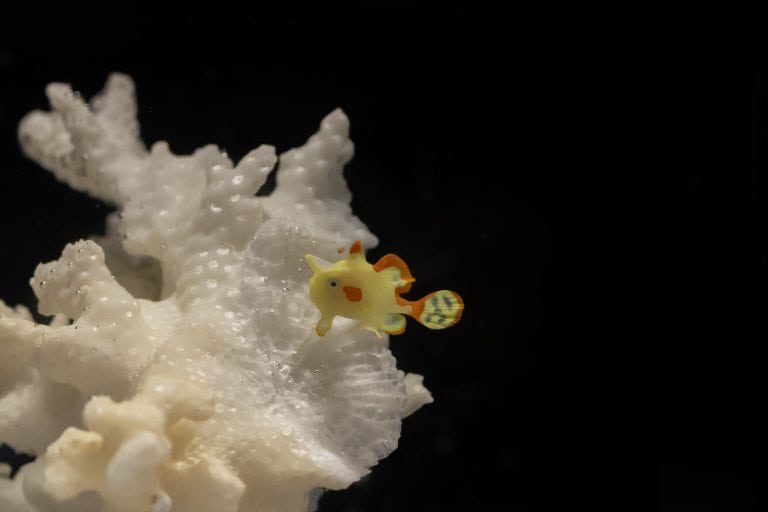
A Tiny “Walking” Fish Is a Big Breakthrough for Aquarium Science

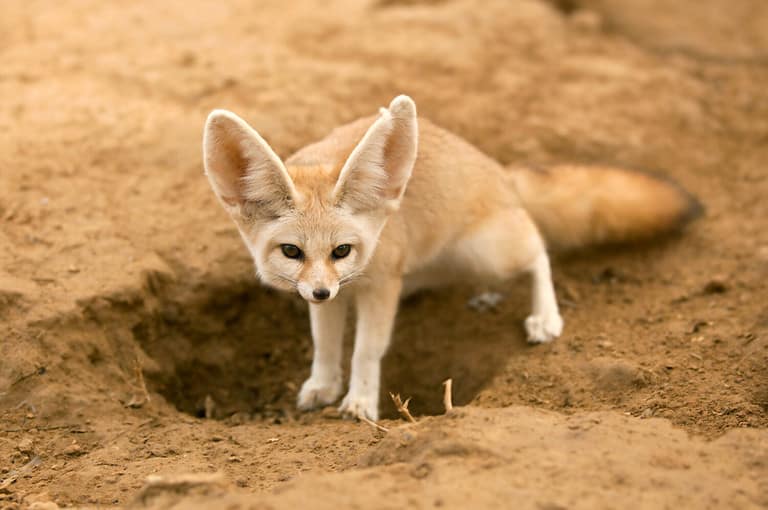
Why Desert Foxes Have Huge Ears (and Arctic Foxes Don’t): The Logic of Allen’s Rule


Lemur FAQs (Frequently Asked Questions)

Lemurs have one primary tongue, which is used for eating just as a human’s tongue is. However, lemurs also have a secondary tongue under their first tongue. This is made of stiff cartilage and is useful for grooming other lemurs as well as cleaning the lemur’s teeth.

Lemurs are generally small primates, no more than 22 lbs. They have large eyes, tiny but dexterous hands, and long tails that are often greater than or equal to the length of their bodies. They can be many different shades of brown, black, and red. One species, the ring-tailed lemur, is known for its black and white banded tail.

Lemurs are not dangerous to humans in the wild, but pet lemurs are a different story. It is surprisingly easy to own a pet lemur in most staes, and this can be disastrous to both the lemur and the owner. Lemurs need other lemurs to remain psychologically healthy, and lemurs who live by themselves can become extremely aggressive towards their caretakers. Lemur husbandry is best left to zoos and wildlife sanctuaries, where the lemurs can live in social groups with others of their kind.

Lemurs in the wild live in large complex social structures, where they groom each other and warn each other of danger. Though male lemurs quarrel during the mating season, lemurs are generally friendly towards others of their kind.

Lemurs live on the island of Madagascar and its surrounding islets. This island is off the southern coast of Africa. They can be found flying through the trees or, if they’re ring-tailed lemurs, living in large groups on the forest floor.

Lemurs are Omnivores, meaning they eat both plants and other animals.

Lemurs belong to the Kingdom Animalia.

Lemurs belong to the class Mammalia.

Lemurs belong to the phylum Chordata.

Lemurs belong to the family Lemuridae.

Lemurs belong to the order Primates.

Lemurs are covered in Fur.

Lemurs eat fruit, leaves, and insects.

Predators of Lemurs include hawks, fossas, and wild dogs.

The average number of babies a Lemur has is 3.

Lemurs are natively found on the island of Madagascar!

The scientific name for the Lemur is Lemur Catta.

Lemurs can live for 10 to 14 years.

A Lemur can travel at speeds of up to 12 miles per hour.