
L
Species Profile

Leopard

Panthera pardus

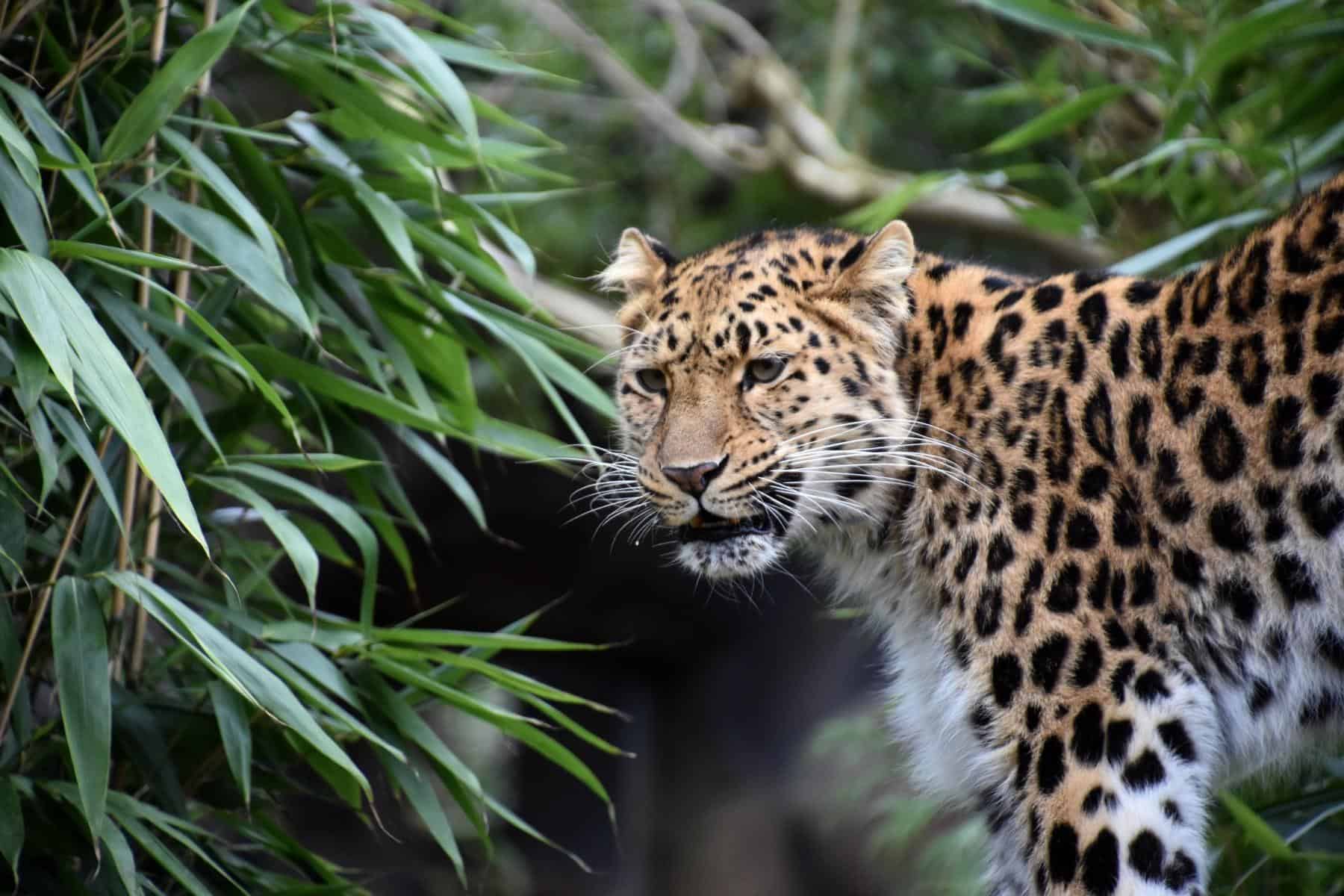
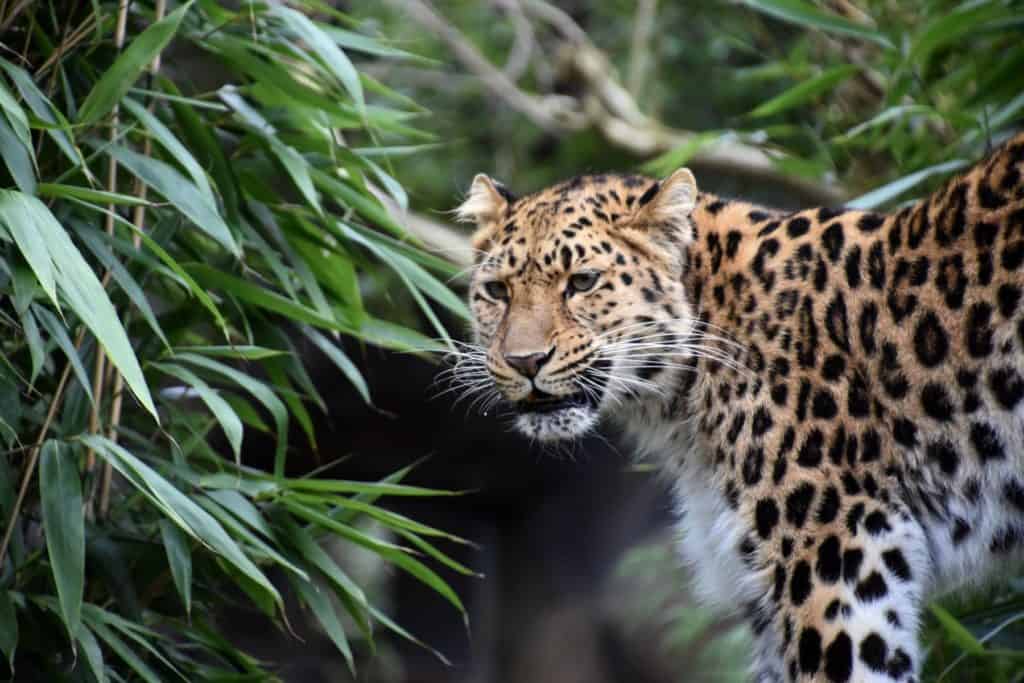
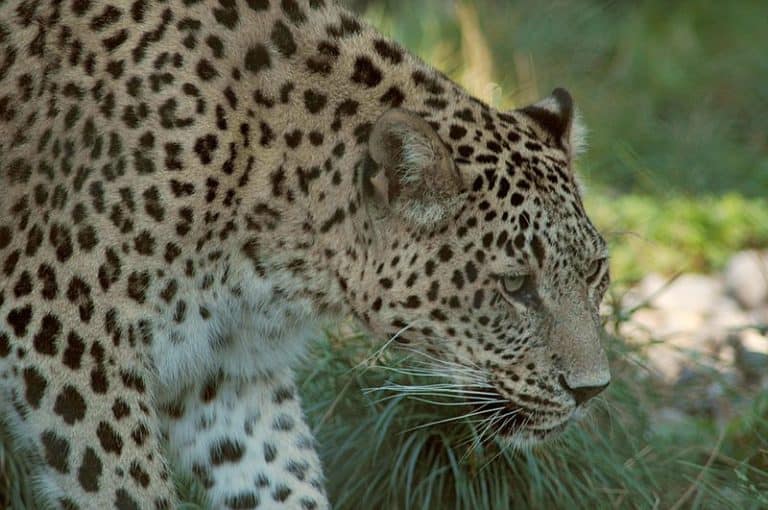
Rosettes in the shadows.
Millie Bond - Copyright A-Z Animals

Leopard Distribution

Click a location to explore more animals from that region

Loading map...

Found in 82 countries

๐Ÿ‡ฉ๐Ÿ‡ฟ Algeria ๐Ÿ‡ฆ๐Ÿ‡ด Angola ๐Ÿ‡ง๐Ÿ‡ฏ Benin ๐Ÿ‡ง๐Ÿ‡ผ Botswana ๐Ÿ‡ง๐Ÿ‡ซ Burkina Faso ๐Ÿ‡ง๐Ÿ‡ฎ Burundi ๐Ÿ‡จ๐Ÿ‡ฒ Cameroon ๐Ÿ‡จ๐Ÿ‡ซ Central African Republic ๐Ÿ‡น๐Ÿ‡ฉ Chad ๐Ÿ‡จ๐Ÿ‡ฉ Democratic Republic of Congo ๐Ÿ‡จ๐Ÿ‡ฌ Republic of Congo ๐Ÿ‡จ๐Ÿ‡ฎ Cรดte d'Ivoire ๐Ÿ‡ฉ๐Ÿ‡ฏ Djibouti ๐Ÿ‡ช๐Ÿ‡ฌ Egypt ๐Ÿ‡ฌ๐Ÿ‡ถ Equatorial Guinea ๐Ÿ‡ช๐Ÿ‡ท Eritrea ๐Ÿ‡ช๐Ÿ‡น Ethiopia ๐Ÿ‡ฌ๐Ÿ‡ฆ Gabon ๐Ÿ‡ฌ๐Ÿ‡ฒ Gambia ๐Ÿ‡ฌ๐Ÿ‡ญ Ghana ๐Ÿ‡ฌ๐Ÿ‡ณ Guinea ๐Ÿ‡ฌ๐Ÿ‡ผ Guinea-Bissau ๐Ÿ‡ฐ๐Ÿ‡ช Kenya ๐Ÿ‡ฑ๐Ÿ‡ท Liberia ๐Ÿ‡ฑ๐Ÿ‡พ Libya ๐Ÿ‡ฒ๐Ÿ‡ฌ Madagascar ๐Ÿ‡ฒ๐Ÿ‡ผ Malawi ๐Ÿ‡ฒ๐Ÿ‡ฑ Mali ๐Ÿ‡ฒ๐Ÿ‡ท Mauritania ๐Ÿ‡ฒ๐Ÿ‡ฆ Morocco ๐Ÿ‡ฒ๐Ÿ‡ฟ Mozambique ๐Ÿ‡ณ๐Ÿ‡ฆ Namibia ๐Ÿ‡ณ๐Ÿ‡ช Niger ๐Ÿ‡ณ๐Ÿ‡ฌ Nigeria ๐Ÿ‡ท๐Ÿ‡ผ Rwanda ๐Ÿ‡ธ๐Ÿ‡ณ Senegal ๐Ÿ‡ธ๐Ÿ‡ฑ Sierra Leone ๐Ÿ‡ธ๐Ÿ‡ด Somalia ๐Ÿ‡ฟ๐Ÿ‡ฆ South Africa ๐Ÿ‡ธ๐Ÿ‡ธ South Sudan ๐Ÿ‡ธ๐Ÿ‡ฉ Sudan ๐Ÿ‡ธ๐Ÿ‡ฟ Eswatini ๐Ÿ‡น๐Ÿ‡ฟ Tanzania ๐Ÿ‡น๐Ÿ‡ฌ Togo ๐Ÿ‡น๐Ÿ‡ณ Tunisia ๐Ÿ‡บ๐Ÿ‡ฌ Uganda ๐Ÿ‡ฟ๐Ÿ‡ฒ Zambia ๐Ÿ‡ฟ๐Ÿ‡ผ Zimbabwe ๐Ÿ‡น๐Ÿ‡ท Turkey ๐Ÿ‡ฌ๐Ÿ‡ช Georgia ๐Ÿ‡ฆ๐Ÿ‡ฒ Armenia ๐Ÿ‡ฆ๐Ÿ‡ฟ Azerbaijan ๐Ÿ‡ฎ๐Ÿ‡ท Iran ๐Ÿ‡ฎ๐Ÿ‡ถ Iraq ๐Ÿ‡ฎ๐Ÿ‡ฑ Israel ๐Ÿ‡ฏ๐Ÿ‡ด Jordan ๐Ÿ‡ฑ๐Ÿ‡ง Lebanon ๐Ÿ‡ธ๐Ÿ‡พ Syria ๐Ÿ‡ธ๐Ÿ‡ฆ Saudi Arabia ๐Ÿ‡พ๐Ÿ‡ช Yemen ๐Ÿ‡ด๐Ÿ‡ฒ Oman ๐Ÿ‡ฆ๐Ÿ‡ซ Afghanistan ๐Ÿ‡ต๐Ÿ‡ฐ Pakistan ๐Ÿ‡ฎ๐Ÿ‡ณ India ๐Ÿ‡ณ๐Ÿ‡ต Nepal ๐Ÿ‡ง๐Ÿ‡น Bhutan ๐Ÿ‡ง๐Ÿ‡ฉ Bangladesh ๐Ÿ‡ฑ๐Ÿ‡ฐ Sri Lanka ๐Ÿ‡จ๐Ÿ‡ณ China ๐Ÿ‡ท๐Ÿ‡บ Russia ๐Ÿ‡ฐ๐Ÿ‡ฟ Kazakhstan ๐Ÿ‡ฐ๐Ÿ‡ฌ Kyrgyzstan ๐Ÿ‡น๐Ÿ‡ฏ Tajikistan ๐Ÿ‡น๐Ÿ‡ฒ Turkmenistan ๐Ÿ‡บ๐Ÿ‡ฟ Uzbekistan ๐Ÿ‡ฒ๐Ÿ‡ฒ Myanmar ๐Ÿ‡น๐Ÿ‡ญ Thailand ๐Ÿ‡ฑ๐Ÿ‡ฆ Lao People's Democratic Republic ๐Ÿ‡ฐ๐Ÿ‡ญ Cambodia ๐Ÿ‡ป๐Ÿ‡ณ Vietnam ๐Ÿ‡ฒ๐Ÿ‡พ Malaysia ๐Ÿ‡ฎ๐Ÿ‡ฉ Indonesia

Size Comparison

Human 5'8"
Leopard 2 ft 2 in

Leopard stands at 38% of average human height.

At a Glance

Wild Species
Also Known As Panther, Black panther
Diet Carnivore
Activity Nocturnal+
Lifespan 13 years
Weight 90 lbs
Status Vulnerable
Did You Know?

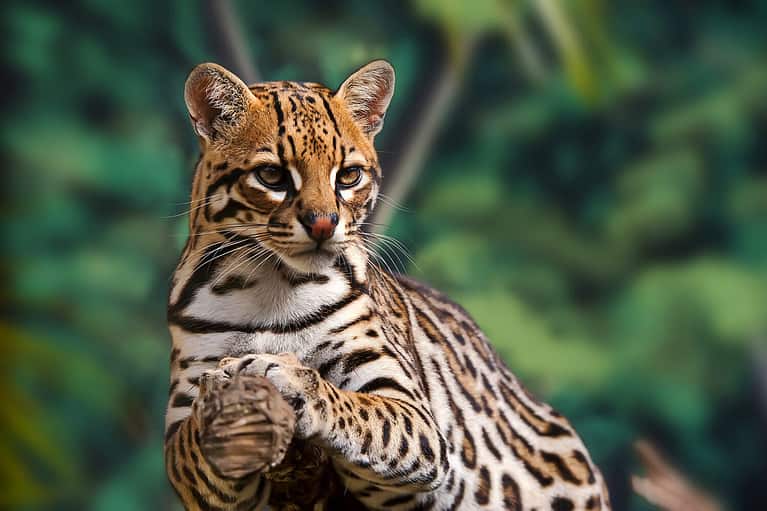
A leopard's coat shows **rosettes** (ring-like spots), unlike a cheetah's **solid, round spots** (Sunquist & Sunquist, 2002).

Scientific Classification

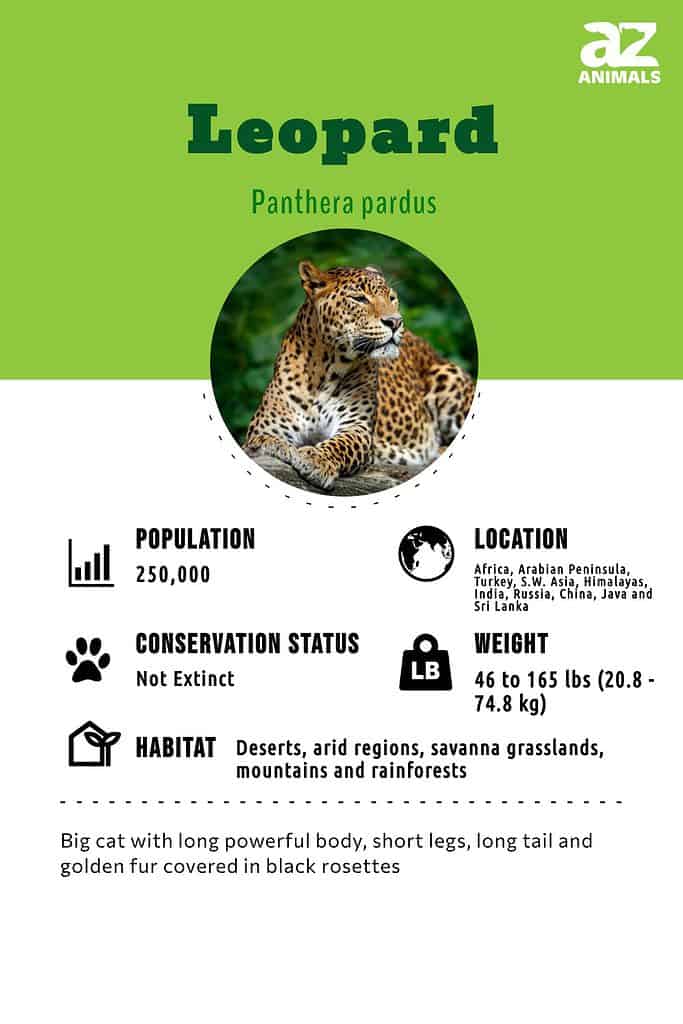
The leopard (Panthera pardus) is a large, spotted big cat (Felidae) known for adaptability across a wide range of habitats, powerful climbing ability, and characteristic rosette-patterned coat.

Kingdom
Animalia
Phylum
Chordata
Class
Mammalia
Order
Carnivora
Family
Felidae
Genus
Panthera
Species
pardus

Distinguishing Features

  • Rosette-shaped spots (rosettes) on a tawny coat; melanistic individuals are commonly called 'black panthers'
  • Stocky, muscular build with relatively long tail aiding balance
  • Excellent climber; often caches prey in trees to avoid scavengers
  • Highly adaptable diet and behavior; largely solitary and mostly nocturnal/crepuscular

Physical Measurements

Males and females differ in size

Height
โ™‚ 2 ft 2 in (1 ft 6 in โ€“ 2 ft 7 in)
โ™€ 1 ft 12 in (1 ft 8 in โ€“ 2 ft 4 in)
Length
โ™‚ 7 ft 9 in (4 ft 10 in โ€“ 9 ft 10 in)
โ™€ 6 ft 7 in (4 ft 11 in โ€“ 8 ft 2 in)
Weight
โ™‚ 132 lbs (68 lbs โ€“ 198 lbs)
โ™€ 68 lbs (37 lbs โ€“ 93 lbs)
Tail Length
โ™‚ 2 ft 9 in (1 ft 11 in โ€“ 3 ft 7 in)
โ™€ 2 ft 7 in (1 ft 12 in โ€“ 3 ft 3 in)
Top Speed
36 mph
running

Appearance

Primary Colors
Secondary Colors
Skin Type Short, dense fur with thick skin; coat length increases in colder habitats; whiskers prominent.
Distinctive Features
  • Coat marked by rosettes (not solid spots), providing camouflage in varied habitats.
  • Adult head-body length 90-190 cm; tail length 60-110 cm (IUCN/Stein et al., 2020).
  • Shoulder height commonly ~45-80 cm (species accounts summarized by IUCN/Stein et al., 2020).
  • Adult mass: males ~20.5-90 kg; females ~17-42 kg, varying strongly by region (IUCN/Stein et al., 2020).
  • Solitary, primarily crepuscular/nocturnal ambush hunter; stalk-and-pounce strategy (IUCN/Stein et al., 2020).
  • Frequently drags and caches prey in trees or dense cover, reducing kleptoparasitism (IUCN/Stein et al., 2020).
  • Highly arboreal-capable: powerful forelimbs and retractile claws enable climbing and carrying kills.
  • Range spans much of sub-Saharan Africa and parts of Asia (Middle East to South/Southeast Asia) (IUCN/Stein et al., 2020).
  • Habitat generalist: occurs in forests, savannas, shrublands, mountains, and semi-deserts (IUCN/Stein et al., 2020).
  • Wild lifespan typically ~12-17 years; up to ~23 years in captivity (zoo/managed-care records; summarized in major species references).
  • Conservation status: Vulnerable; major threats include habitat loss, prey depletion, poaching, and conflict killings (IUCN/Stein et al., 2020).
  • Melanistic individuals occur in some regions; rosettes may remain faintly visible in certain light.

Sexual Dimorphism

Males are substantially larger and more robust than females, with broader skulls and thicker neck/forequarters. Regional variation is strong, but male body mass and overall dimensions consistently exceed female values (IUCN/Stein et al., 2020).

โ™‚
  • Heavier body mass and larger overall size; can reach ~90 kg in largest populations.
  • Broader head and muzzle; thicker neck and forequarters.
  • Often larger territory and home-range than females (behavioral tendency).
โ™€
  • Smaller and lighter; commonly โ‰ค42 kg across populations.
  • More gracile head/neck profile and slimmer build.
  • Typically maintains smaller home ranges centered on hunting/denning areas.

Did You Know?

A leopard's coat shows **rosettes** (ring-like spots), unlike a cheetah's **solid, round spots** (Sunquist & Sunquist, 2002).

Adult size varies by region: **head-body 90-190 cm**, **tail 60-110 cm**, **shoulder height ~45-80 cm**; males typically larger (Nowak, 1999; Sunquist & Sunquist, 2002).

Typical mass: **males ~31-65 kg**, **females ~17-42 kg**, though some populations can be heavier (Nowak, 1999; Kingdon, 2015).

Leopards commonly **cache kills in trees**, using powerful forelimbs to drag carcasses away from lions, hyenas, and other scavengers (Sunquist & Sunquist, 2002).

They're extreme generalists: recorded habitats include **rainforest, savanna, mountains, deserts, and human-modified landscapes** across Africa and Asia (IUCN Red List, 2016).

Life expectancy is typically **~12-17 years in the wild** and **can exceed 20 years in captivity** (Nowak, 1999; zoo records summarized in multiple husbandry references).

Reproduction: **gestation ~90-105 days**; litters often **1-3 cubs** (range 1-4) (Nowak, 1999; Sunquist & Sunquist, 2002).

Unique Adaptations

  • **Rosette camouflage** breaks up the outline in dappled light (forest edges, scrub, savanna), aiding stealth more than uniform spots would (Sunquist & Sunquist, 2002).
  • Exceptional **climbing power and balance**: robust shoulders, retractile claws, and long tail support carrying and caching prey above ground (Kingdon, 2015).
  • Broad ecological tolerance: can persist from near sea level to highlands, and across very different rainfall/vegetation regimes-one reason it retains the widest habitat breadth among Panthera cats (IUCN Red List, 2016).
  • Sensory toolkit for low light: large eyes and a reflective layer behind the retina (common in many mammals) enhance night vision for hunting (Sunquist & Sunquist, 2002).
  • Flexible skull/jaw mechanics and strong neck musculature enable rapid killing bites and carcass transport (Nowak, 1999).

Interesting Behaviors

  • Mostly **solitary** outside mating and female-cub groups; adults maintain overlapping but defended core areas, with scent-marking (urine spraying, scraping) and vocal calls (Sunquist & Sunquist, 2002).
  • Often **nocturnal/crepuscular**, but activity shifts with prey availability and human disturbance; can become more nocturnal near people (IUCN Red List, 2016).
  • **Stalk-and-ambush hunting**: slow approach using cover, then a short burst to a throat bite (small prey) or suffocation grip (larger prey) (Sunquist & Sunquist, 2002).
  • Frequent **arboreal behavior**: resting in trees, scanning from branches, and moving kills upward to reduce kleptoparasitism (Sunquist & Sunquist, 2002).
  • Highly opportunistic diet: from rodents and birds to medium/large ungulates (e.g., impala, deer), and in some areas includes primates; also scavenges when safe (IUCN Red List, 2016; Kingdon, 2015).
  • Communication includes a distinctive rasping, "**sawing**" call used over distance, plus growls, snarls, and soft contact calls between mothers and cubs (Sunquist & Sunquist, 2002).

Cultural Significance

Leopard (Panthera pardus) stands for power, authority, and the wild's danger across Africa and parts of Asia. Leopard skins and images show status in royal dress and rites (West/Central African chiefs) and in modern national and sports symbols. In South Asia some villages honor and make offerings to big cats.

Myths & Legends

Leopard (Panthera pardus) in West and Central Africa are linked to chiefs and spiritual power. Leopard skins and designs are used in royal and ritual clothes as signs of power and rule, shown in studies.

In parts of India (especially Maharashtra and nearby regions), some villages venerate a local guardian deity associated with leopards; traditions include offerings and shrines aimed at maintaining peace between people and leopards.

Akan/Asante storytelling traditions include folktales where powerful forest animals-often including the **leopard**-interact with clever figures like Anansi, reflecting themes of strength, cunning, and social order (recorded in West African oral literature collections).

Historical accounts from West Africa describe the feared "Leopard Men", where leopard symbolism and masquerade were associated with secrecy, authority, and social control-part folklore, part colonial-era narrative layered onto real institutions.

In southern African oral traditions (recorded across multiple language groups), the leopard frequently appears as a formidable bush predator in cautionary tales that teach respect for wilderness boundaries and the costs of arrogance or carelessness.

Conservation Status

VU Vulnerable

Facing a high risk of extinction in the wild.

Population Decreasing

Protected Under

  • CITES Appendix I (Panthera pardus; with limited, quota-based exceptions for certain populations under CITES annotations)
  • National legal protection in many range states (species typically listed on protected wildlife schedules/regulations restricting hunting and trade)
  • HUBS (Felidae/large cats) summary: statuses span LC to CR; common threats include habitat loss/fragmentation, prey depletion, conflict killing, and illegal trade. Notable high-risk species include tiger (EN), snow leopard (VU), and Iberian lynx (VU, formerly CR).

Life Cycle

Birth 2 cubs
Lifespan 13 years

Lifespan

In the Wild 10โ€“17 years
In Captivity 15โ€“23 years

Reproduction

Mating System Polygynandry
Social Structure Solitary
Breeding Pattern Transient
Fertilization Internal Fertilization
Birth Type Internal_fertilization

Solitary adults; males' territories overlap several females and both sexes may mate with multiple partners during a 6-7-day estrus. Copulation is internal; gestation ~90-105 days, litters usually 1-3 cubs, with maternal-only care.

Behavior & Ecology

Social Leap Group: 1
Activity Nocturnal, Crepuscular, Cathemeral
Diet Carnivore Medium-sized antelopes/ungulates in the ~10-40 kg range (e.g., impala), which match the leopard's documented preferred prey-size window (Hayward et al., 2006).

Temperament

Elusive and risk-averse around humans; cryptic behavior increases in hunted landscapes.
Strongly territorial; females and males advertise and defend core areas (Nowell & Jackson 1996).
Opportunistic and adaptable hunter; diet breadth and activity timing shift with prey and competitors.
Intraguild avoidance: may shift to more nocturnal activity where lions/hyenas dominate (varies by site).
Typical wild lifespan reported ~12-17 years; up to ~23 years in captivity (Nowell & Jackson 1996).

Communication

Rasping cough-like 'sawing' call used for long-range spacing and mate attraction.
Growls, snarls, and hisses during aggression or close-range conflict.
Purrs and chuffs in close affiliative contexts E.g., mother-cub interactions
Moans/rasps during mating interactions; intensity varies with arousal.
Scent marking: urine spraying on vegetation/rocks; often combined with scraping.
Feces deposition at conspicuous sites (latrine-like use in some areas) for signaling presence.
Scrape marks and claw rakes on ground/trees as visual and olfactory territorial signals.
Cheek and body rubbing on objects to deposit scent from facial glands.
Visual signals: tail position, ear posture, and direct staring in threat displays at close range.

Habitat

Biomes:
Tropical Rainforest Tropical Dry Forest Savanna Desert Hot Desert Cold Mediterranean Temperate Grassland Temperate Forest Temperate Rainforest Alpine +4
Terrain:
Mountainous Hilly Plateau Plains Valley Coastal Riverine Rocky Sandy Island +4
Elevation: Up to 17060 ft 5 in

Ecological Role

Widespread adaptable apex/mesopredator (context-dependent) that structures prey communities and participates in intraguild interactions with other large carnivores (e.g., lions, hyenas) via competition, kleptoparasitism, and occasional scavenging.

Regulates populations of medium-sized herbivores and some meso-mammals (top-down control), influencing browsing/grazing pressure and vegetation dynamics Selective predation can remove vulnerable individuals (e.g., young, injured), potentially affecting prey demography and disease dynamics Provides carrion resources to scavengers and decomposers when kills are partially consumed or abandoned, supporting nutrient cycling Shapes prey behavior and space use (risk effects), contributing to trophic cascades in some systems

Diet Details

Main Prey:
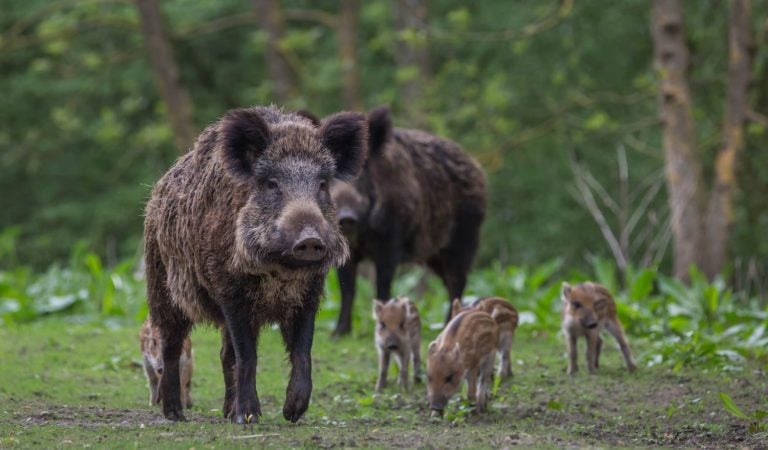
Medium-sized ungulates Impala Bushbuck Duiker Steenbok Chital Muntjac Juvenile large ungulates Wild boar and other suids Primates Rock hyrax Porcupines Hares and rabbits Rodents Ground birds Reptiles Livestock +11

Human Interaction

Domestication Status

Wild

Leopard (Panthera pardus) has never been domesticated. It is a wild apex/mesopredator, unlike the domestic cat. People have hunted leopards, kept them in zoos or private collections, killed them over livestock losses, and used them in culture. Some are hand-raised, but that is not domestication and often fails to curb adult aggression.

Danger Level

High
  • predatory attacks on people (rare overall but documented; risk increases where prey is depleted or individuals habituate to humans)
  • defensive attacks when surprised at close range, cornered, wounded, or when protecting cubs
  • conflict-related encounters near settlements due to livestock depredation and attraction to domestic animals
  • zoonotic/trauma risk in captive settings (bites/claw injuries; severe laceration/crush injuries)

As a Pet

Not Suitable as Pet

Legality: Leopard (Panthera pardus) keeping is usually illegal or highly restricted. Where allowed, strict permits are needed as a "dangerous wild animal." Laws vary by country/state; U.S. federal rules (USFWS, Captive Wildlife Safety Act) and many states, EU/UK require permits.

Care Level: Expert Only

Purchase Cost: $5,000 - $25,000
Lifetime Cost: $250,000 - $1,000,000

Economic Value

Uses:
Ecotourism and wildlife viewing Trophy hunting revenue (where legally permitted) Zoo and conservation-education value Illegal wildlife trade driver (costs: enforcement; biodiversity loss) Human-wildlife conflict costs (livestock losses; mitigation spending)
Products:
  • tourism services (safaris, guiding, park fees associated with leopard presence)
  • trophies (regulated hunting: skins/skulls under quota systems in some range states)
  • cultural goods/ornaments (historically leopard skins used as regalia; now widely restricted)
  • illegal trade items (skins, canines/claws, bones-varies regionally; prohibited under CITES controls)

Relationships

Predators 7

Lion Panthera leo
Tiger Panthera tigris
Spotted hyena Crocuta crocuta
African wild dog Lycaon pictus
Dhole Cuon alpinus
Nile crocodile Crocodylus niloticus
Human Homo sapiens

Related Species 10

Lion Panthera leo Shared Genus
Tiger Panthera tigris Shared Genus
Jaguar Panthera onca Shared Genus
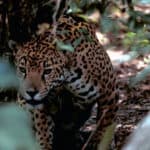
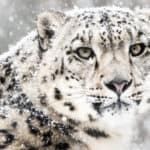
Snow leopard Panthera uncia Shared Genus
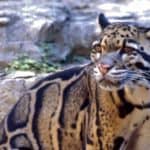
Clouded leopard Neofelis nebulosa Shared Family
Sunda clouded leopard Neofelis diardi Shared Family
Cheetah Acinonyx jubatus Shared Family
Cougar Puma concolor Shared Family
Caracal Caracal caracal Shared Family
Eurasian lynx Lynx lynx Shared Family

Ecological Equivalents 5

Animals that fill a similar ecological role in their ecosystem

Leopard Panthera pardus Solitary, tree-hauling ambush hunter in savanna and woodland, overlapping with cheetahs on medium antelopes. Its flexible diet and habits allow leopards to shift activity times and microhabitats to coexist.
Cougar Puma concolor Solitary predators, mostly active at dawn, dusk, or night. They ambush prey, use a variety of habitats, consume prey ranging from small to large animals, often cache (hide) kills, maintain large, flexible home ranges, and can adapt to areas near people.
Eurasian lynx Lynx lynx Forest-edge ambush predator that eats medium-sized ungulates (e.g., roe deer) and lagomorphs. Overlaps with leopards in parts of western and central Asia. Hunts by quiet stalking and short sprints, and can reduce numbers of other medium-sized predators.
Striped hyena Hyaena hyaena In parts of North Africa, the Middle East, and India, striped hyenas share landscapes with leopards and interact through scavenging and occasional interference competition at carcasses. Leopards mitigate kleptoparasitism by dragging or hoisting their kills; hyenas exploit carrion subsidies and can displace leopards at ground-level kills.
African wild dog Lycaon pictus Leopards (Panthera pardus) share medium antelope prey and savanna/woodland habitats with African wild dogs. There is strong competition: African wild dogs hunt in packs by chasing, while leopards hunt alone at night and cache kills in trees.

The leopard is a medium-sized wildcat that lives in a variety of different habitats across sub-Saharan Africa and southern Asia. Distinguished by their uniquely beautiful โ€œspottedโ€ coat, leopards are apex predators that ambush prey from a perch in the trees. This hunting method is unlike their big cat cousins who engage their prey in high-speed chases.
๐Ÿ‘ Image

Anatomy and Appearance

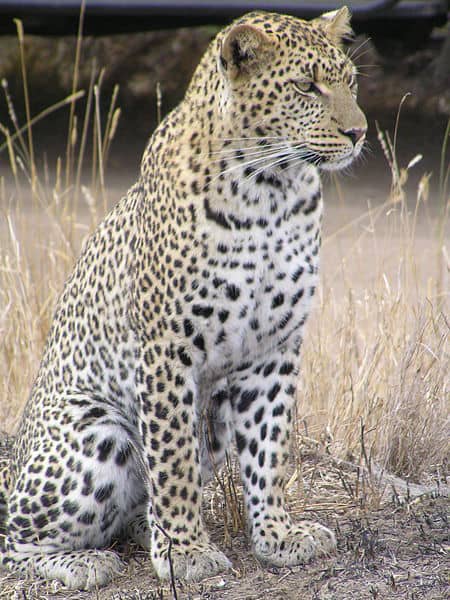
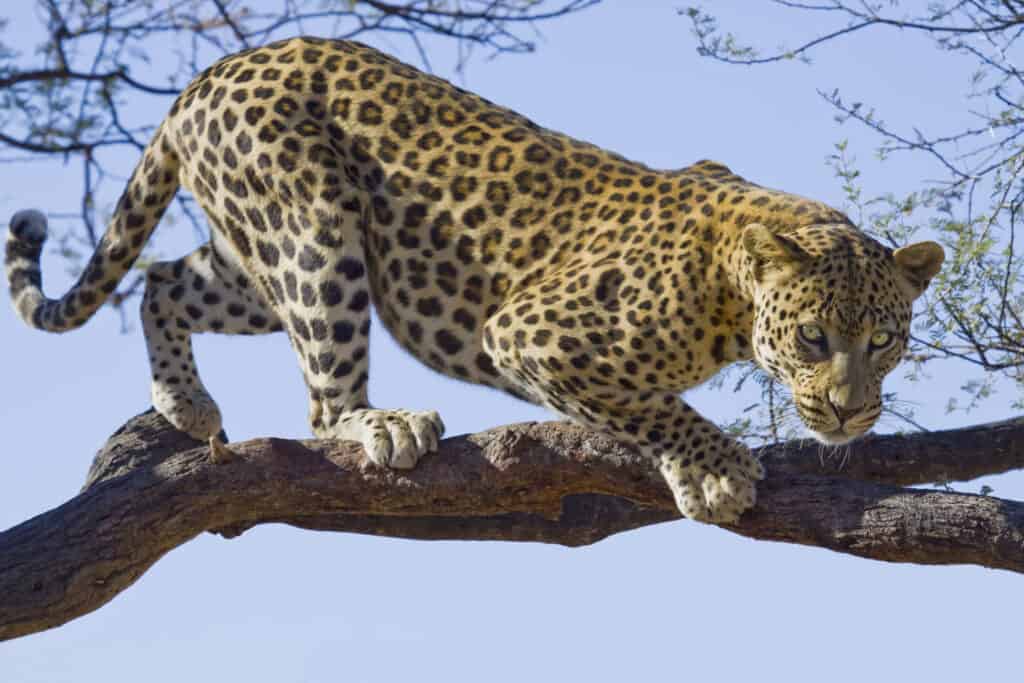
The leopard is an animal with a long, lithe body โ€” which powerful legs support โ€” and a long tail that they use for balance in the trees. Leopards can vary greatly in their coloration and markings depending on their surrounding habitat. Those on open grasslands have a light yellow, sun-bleached background coat. Meanwhile, those that live in forests tend to be darker to blend into the shade and have more markings for camouflage.
๐Ÿ‘ leopard

Leopards are incredibly strong and muscular animals and are able to pull themselves up trees using their legs and retractable claws.

ยฉiStock.com/lightstock

The dark, ring-like patterns that cover the leopardโ€™s coat are rosettes, which provide them with camouflage in their surrounding environment. Leopards are incredibly strong and muscular animals and are able to pull themselves up trees using their legs and retractable claws. Like many other feline species, the leopard is able to draw its claws into folds of skin on its paws. That ability ensures that their claws donโ€™t become blunt while the animal is walking about. Their remarkable eyesight and hearing give them a great advantage during night hunting.
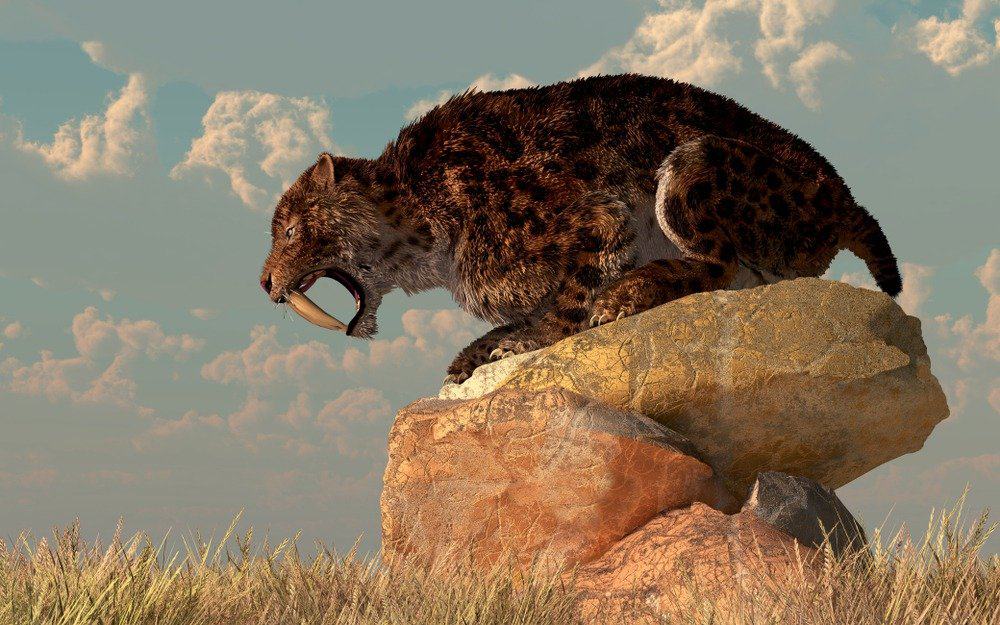
๐Ÿ‘ Saber-toothed tiger

The Saber-toothed tiger was an ancestor of all big cats โ€“ including the leopard.

ยฉDaniel Eskridge/Shutterstock.com

Evolution

The first mammals are believed to have lived 208 million years ago โ€” after the extinction of dinosaurs. The first carnivores came from animals known as miacoids about 60 million years ago. These tree dwellers were about the size of a domestic cat and had developed sharp crushing teeth. Miacoids are the oldest relative to the modern-day leopard.

Carnivores, or the Carnivora order, split into two sub-orders โ€” Caniformia and Feliformia โ€” around 40 million years ago. The Caniformia group was more bear-like and evolved into bears, dogs, weasels, raccoons, skunks, badgers, sea lions, walruses, and seals. Feliformia was more cat-like and evolved into cats, hyenas, and mongooses.

Proailurus, the genus of the oldest cat, lived 30 million years ago, the first fossils of which researchers discovered in France in 1879. This arboreal creature weighed around 25 pounds and had eight more teeth than modern cats. 20 million years ago, the direct ancestor of modern cats, Pseudaelurines, lived, according to the fossil record. Fossil records from the La Brea Tar Pits indicate that the saber-tooth tiger, Smilodon, lived in that area at least 2.6 million years ago. These big cats became extinct around 10,000 years ago.

Sub-Species

There are seven different subspecies of leopards. Each differs in appearance and geographic location, with the African leopard being the most common and widespread.
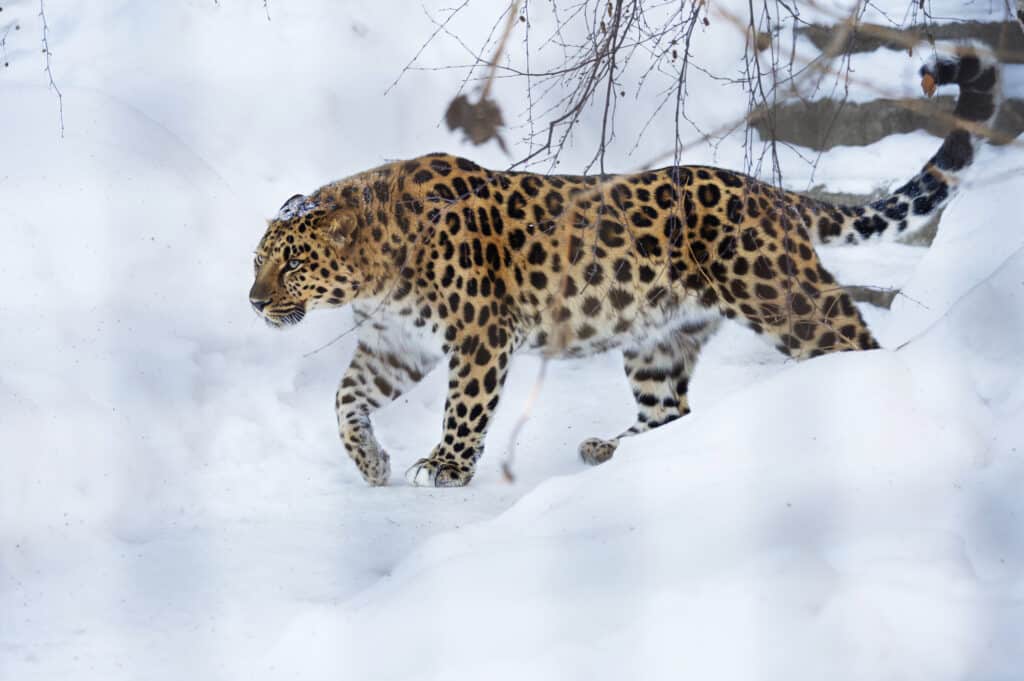
๐Ÿ‘ The Amur leopard

The Amur leopard is a unique sub-species that is under threat of extinction.

ยฉiStock.com/opposable-toothed mandibles

  • African leopards, Panthera pardus pardus, reside in a variety of African habitats, including deserts, forests, mountains, and coastlines. They are fast and agile, and they are able to carry heavy prey up trees with ease.
  • Amur Leopard, Panthera pardus orientalis, is native to southeastern Russia and northern China. This critically endangered animal is one of the rarest cats on earth.
  • Anatolian Leopard, Panthera pardus tulliana, is native to Iran, Turkey, the Caucasus, Azerbaijan, Georgia, Armenia, Iraq, Iran, Afghanistan, and Pakistan. The last official sighting of the Anatolian leopard occurred in 1974 after the animal was killed following an attack on a woman. Some scientists have declared it extinct while others believe there are still 10-15 Anatolian leopards in the wild.
  • Barbary Leopard, Panthera pardus panthera, sometimes called the North African leopard, lives in the Atlas Mountains of North Africa. Experts thought them to be extinct, but nonetheless, a small population survives.
  • Sinai Leopard, Panthera pardus jarvisi, is a critically endangered big cat native to the Arabian Peninsula. It lives in mountainous uplands and steppes.
  • South Arabian Leopard, Panthera pardus nimir, is also native to the Arabian Peninsula and is also critically endangered. It is the smallest member of the leopard family and adapted to life in the desert.
  • Zanzibar Leopard, Panthera pardus pardus, was a large African leopard who last lived on Unguja Island in Zanzibar, Tanzania. Declared extinct in the mid-1990s, the Zanzibar leopard was the islandโ€™s largest carnivore and an apex predator.
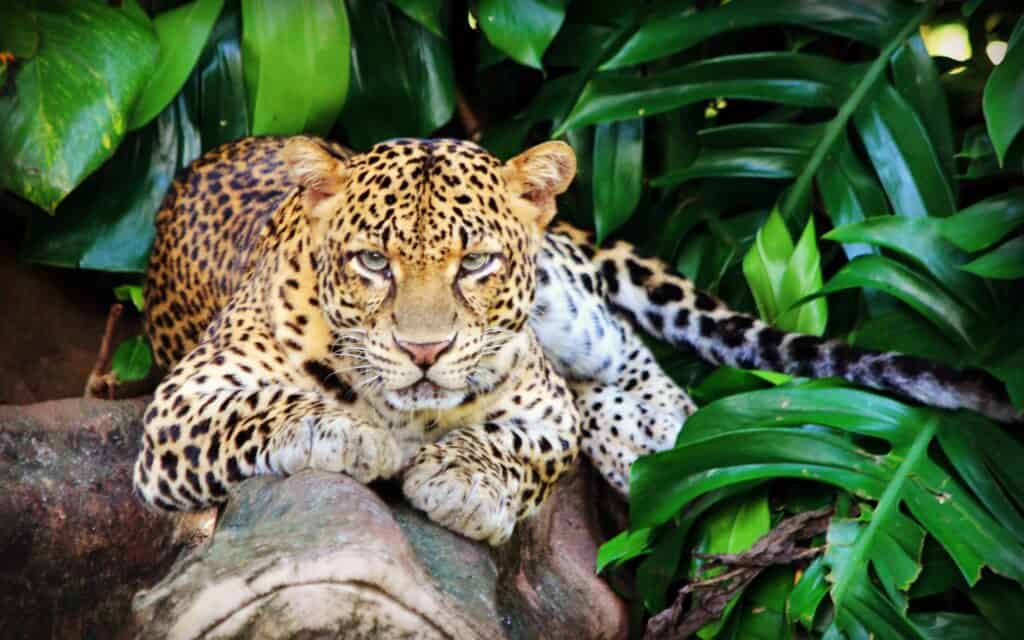
๐Ÿ‘ Javan leopard

The Javan leopard dwells on Java Island, Indonesia.

ยฉylq/Shutterstock.com

Habitat

Leopards have not only the widest range of all big cats, but they are also one of the most adaptable. In fact, they live in a variety of different habitats. They commonly call home areas throughout sub-Saharan Africa and southern Asia. There are also small and isolated populations of leopards inhabiting remote geographic locations in the Far East, Northern Africa, and Arabia. Provided there is a good source of cover and an ample supply of food, leopards will inhabit numerous habitats. Those include tropical rainforests, tree-lined savannas, barren deserts, and mountain highlands.

One of the reasons why experts believe they continue to survive successfully throughout much of their natural range is that leopards have adapted to the growing presence of people. In fact, they both live and hunt in areas close to urban activity. However, in some parts of their natural range, deforestation and growing settlements threaten populations with the loss of their habitat.
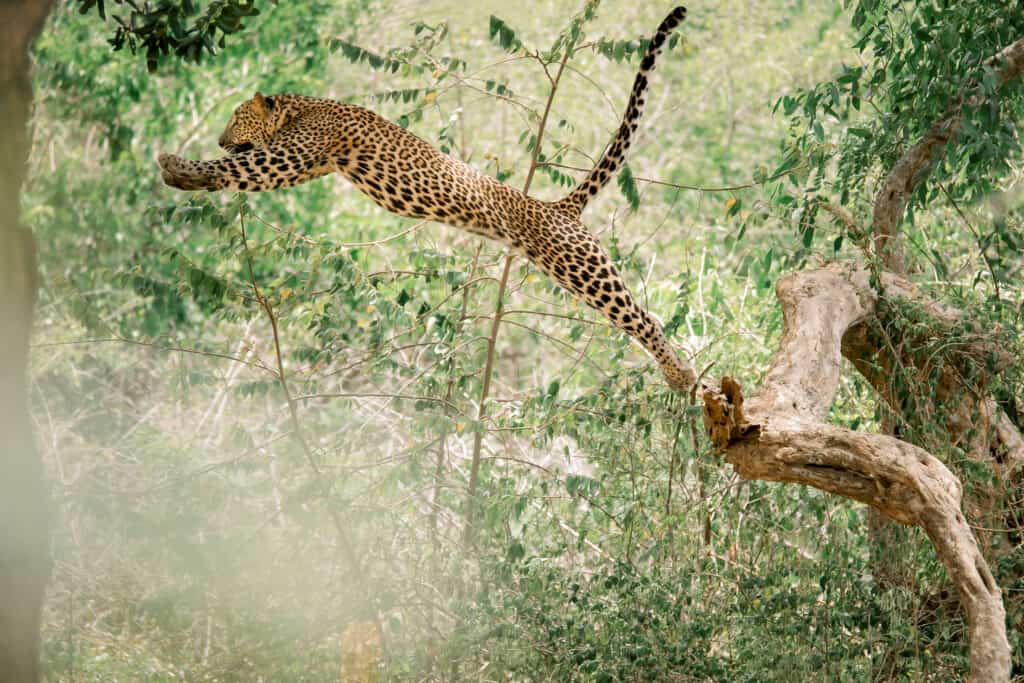
๐Ÿ‘ leopard

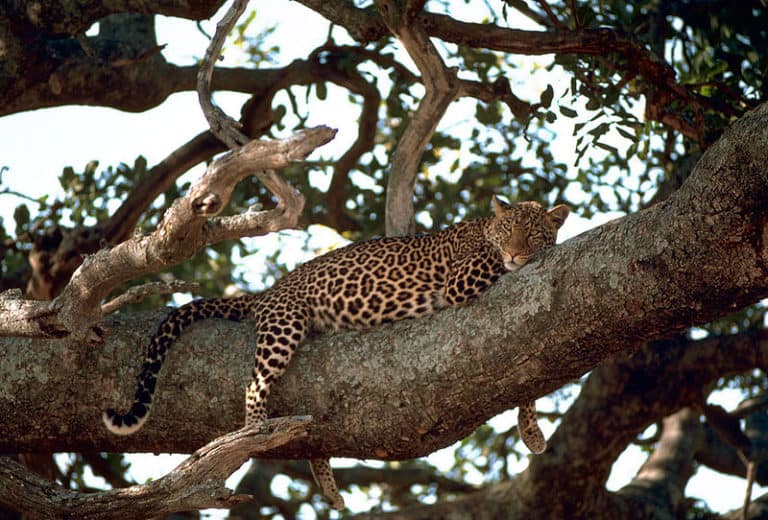
Leopards spend much of their time in trees, often waiting to jump down on unsuspecting prey.

ยฉPavith Malaka/Shutterstock.com

Behavior and Lifestyle

Leopards are solitary animals that hunt both on the ground and in the trees. They are excellent climbers, spending the majority of daytime hours resting in tree branches or under sheltered rocks. They are unique amongst large felines, as leopards rely heavily on being able to get close enough to their prey before ambushing it, rather than expelling vast amounts of energy in a high-speed chase. Once they catch and kill their prey, they drag it to safety either into dense vegetation or up a tree trunk and into the branches.

Leopards are solitary animals that mark their territory using scent markings and by producing rough, rasping calls, which some say sound like sawing through coarse wood. Home range sizes vary depending on the habitat and the food available but those of male leopards are significantly larger than those of their female counterparts, which often overlap the ranges of a number of both males and other females (sometimes by up to 40%).

Check out some incredible facts about leopards.
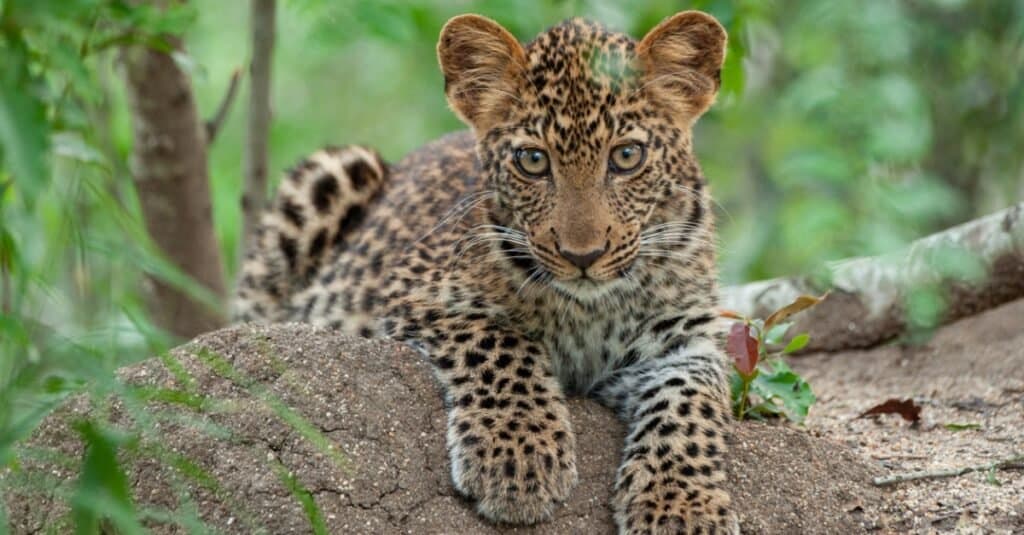
๐Ÿ‘ What Do Leopards Eat?

Baby leopards subsist on motherโ€™s milk for the first three months of life

ยฉiStock.com/RudiHulshof

Reproduction and Life Cycles

Throughout their natural range, leopards have no distinctive breeding season, with females instead being able to reproduce every couple of months. After a gestation period that lasts for around three months, the female leopard gives birth to between two and six cubs that are born blind and weigh about one pound. Leopard cubs are incredibly vulnerable in the wild. Because of that, they remain hidden in dense vegetation, into which their dark, woolly fur and blurry spots allow them to camouflage. They hide this way until they are able to follow their mother around at between 6 and 8 weeks of age.

Weaned at around 3 months old, leopard cubs will remain with their mother for another 18 months until she is ready to mate again and encourages their young to independently establish their own territories. Although male leopards live solitary lives except when mating, female leopardsโ€™ range tends to overlap their mothers. Leopards tend to live for between ten and fifteen years in the wild, depending on the habitat and the food supply available.
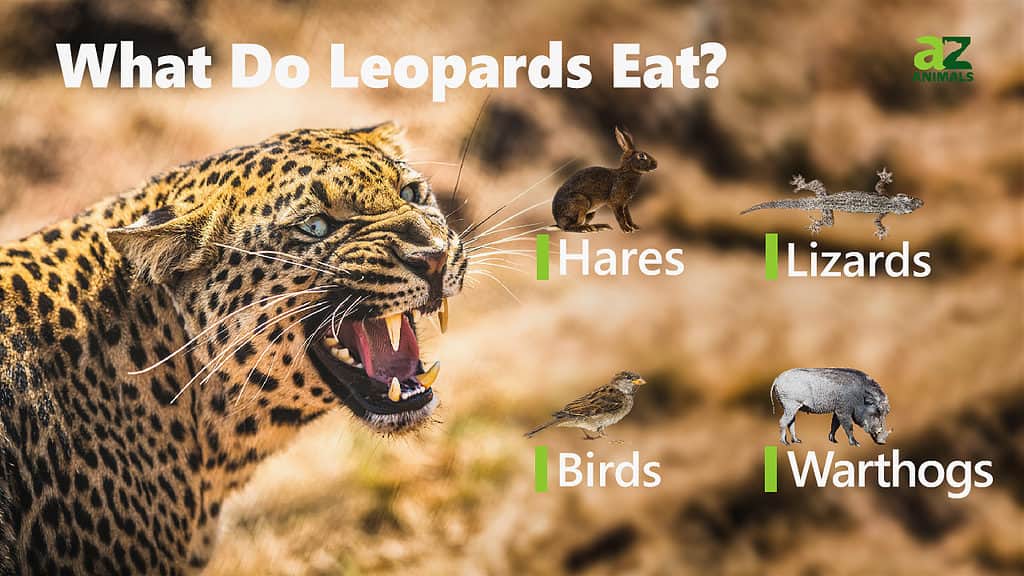
๐Ÿ‘ Image

Diet and Prey

Leopards primarily hunt medium-sized mammals such as deer and warthogs, and these cats often ambush this prey from the branches above or dense vegetation just meters away. The leopard also eats a wide variety of small prey, including birds, reptiles, and rodents. They even hunt dung beetles when larger animals are scarce.

By eating much smaller (and a wider variety) of prey, leopards are able to avoid intense competition for food from other large carnivores like tigers and hyenas, with which they share parts of their natural range. Leopards are incredibly strong and capable of taking prey much heavier than themselves. Such prey included antelopes. They then remarkably haul their meal into the safety of the branches to either eat it immediately or cache it for later.
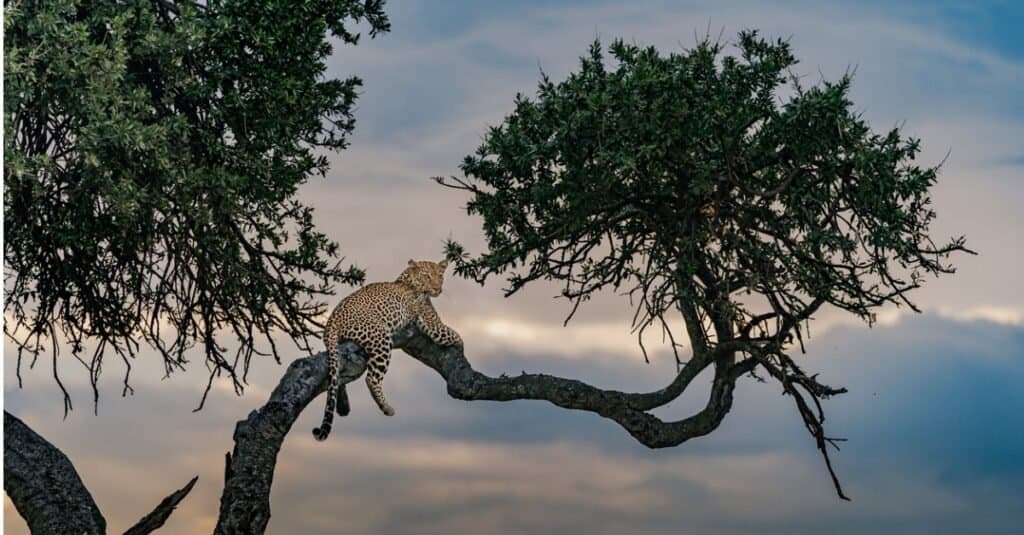
๐Ÿ‘ What Do Leopards Eat?

Because their uniquely skilled hunting methods place them at the top of the food chain, the biggest threat to leopards is other leopards.

ยฉiStock.com/Hermis Haridas

Predators and Threats

Due to the fact that the leopard is a stealthy and apex predator throughout its natural environment, generally, the biggest threat to adult leopards are other leopards, along with the occasional lion or tiger that can get close enough.

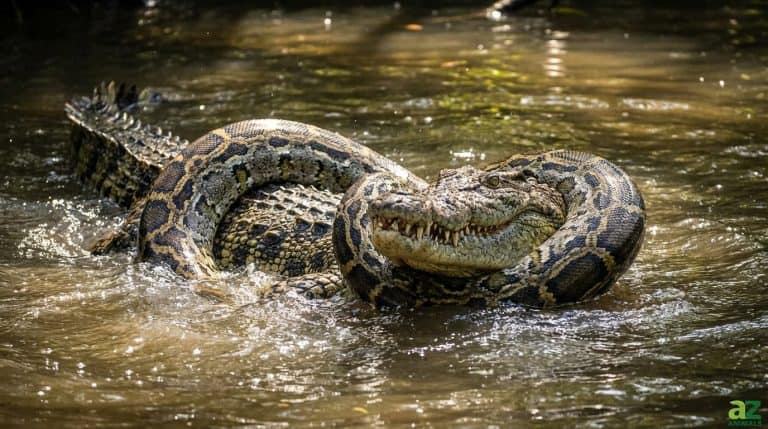
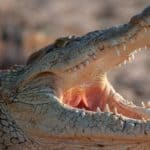
Nile crocodiles also pose a threat due to their immense strength, extreme aggression, and willingness to sink their fangs into anything. They have taken on leopards crossing bodies of water and won.
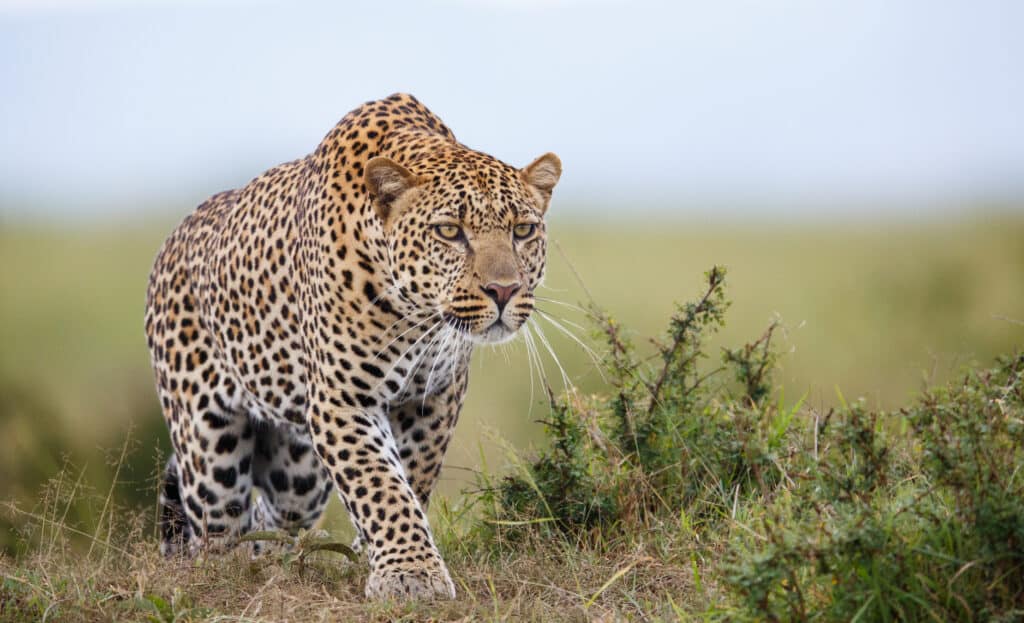
๐Ÿ‘ leopard

Leopards tend to live between ten and fifteen years in the wild, depending on the habitat and the food supply available.

ยฉiStock.com/UrmasPhotoCom

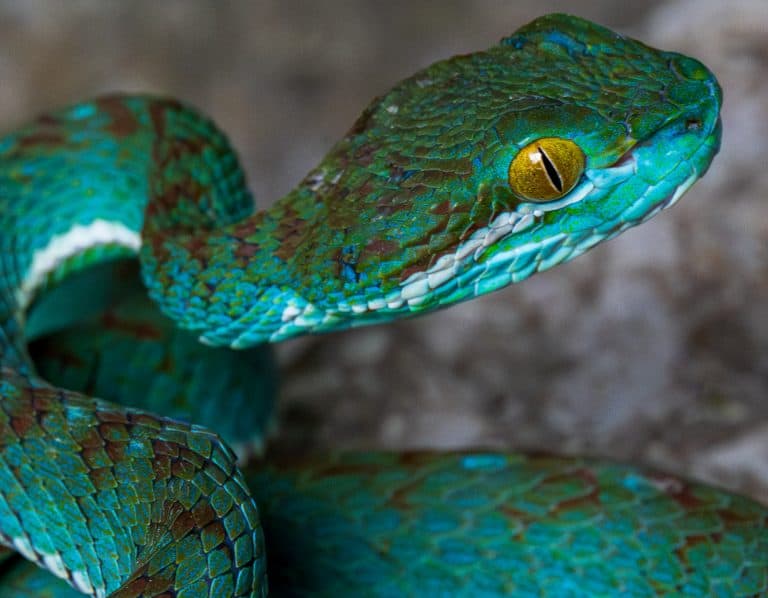
Pythons are another especially formidable foe and have in the past overpowered these beautiful apex predators.

Young leopard cubs however are much more vulnerable and the fact that they have numerous natural predators leads them to remain hidden in dense vegetation for their first couple of months. Although, it is during the times when their mother is off hunting that leopard cubs are most at threat from hyenas, jackals, lions, tigers, snakes, and birds of prey. Despite their adaptability to differing surroundings, leopard populations in parts of their natural range are declining due to habitat loss to the timber industry and agriculture and hunting by humans as trophies and for their meat and fur.
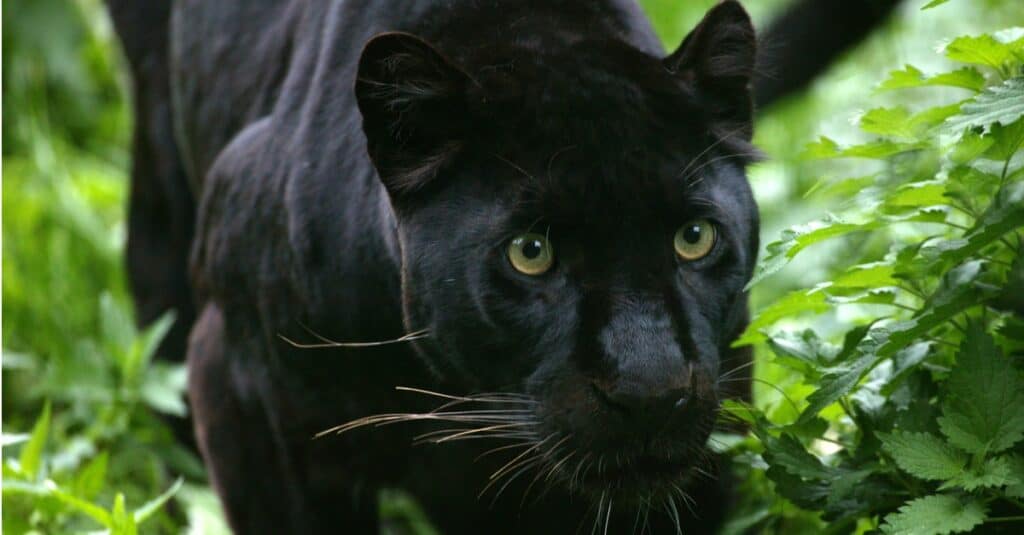
๐Ÿ‘ black-panther-waiting

The black panther is a leopard that has a completely black coat of fur, with occasional faint markings.

ยฉiStock.com/slowmotiongli

Interesting Facts and Features

Originally thought to be a hybrid of the lion and the jaguar, the leopard has been the subject of much genetic confusion and wasnโ€™t really distinguished properly until just over 100 years ago. Some of the confusion is thought to come from the black panther, which is a leopard that has a completely black coat of fur, with occasional faint markings.

This genetic mutation, melanism, causes large amounts of dark pigment to occur in the skin and fur, and a number of mammalian species exhibit it. Black panthers tend to occur most in dense forests with larger populations being found in southern Asia than in Africa and are born into a litter that also contains yellow cubs. Black panthers are actually fairly common and amazingly enough, researchers believe that up to 50% of the leopards found inhabiting the thick, tropical rainforests of the Malay Peninsula are black.
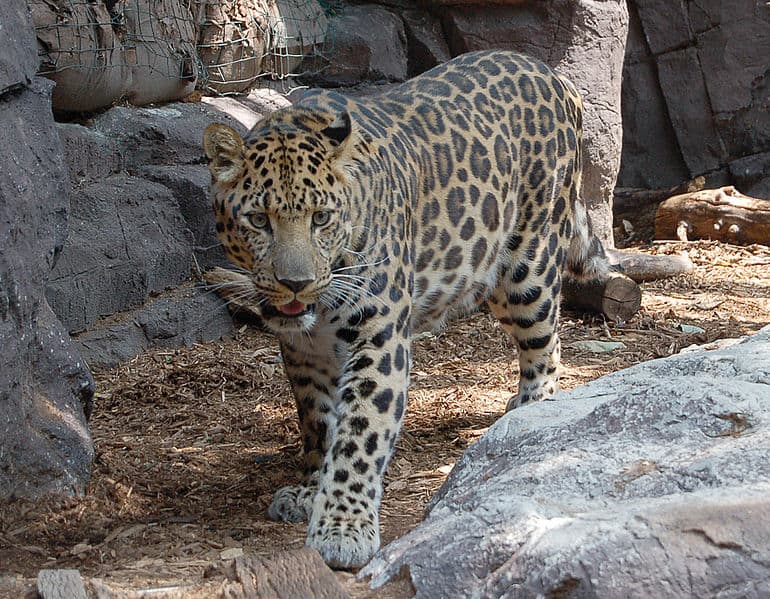
๐Ÿ‘ Image

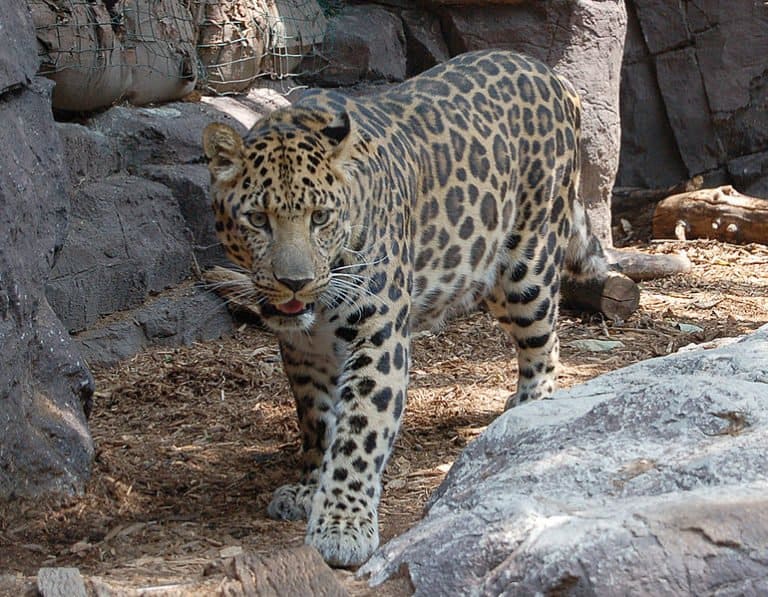
Amur Leopard at Philadelphia Zoo

ยฉDerek Ramsey (Ram-Man), CC BY-SA 2.5, via Wikimedia Commons โ€“ Original / License

Relationship with Humans

Since big game hunting took off in Africa, the leopard has been one of the most sought-after animals for hunters to kill. Because leopards are part of the African โ€œBig Fiveโ€ โ€” the most desirable animals for sports hunters โ€” trophy hunting has severely affected them in some areas. Locals who live near these big cats also often kill them for their meat and fur. Beyond that, many see them as pests to farms and livestock, due to their lack of fear of people, even though people seldom see them.

Despite their persecution, recent booms in the tourist industry in Africa have meant that more and more people are paying for the privilege to see one of these majestic animals in the wild. That brings money into local communities. Because of that, locals are now more willing to protect these cats, as leopards are providing an important and new-found source of good income for them.
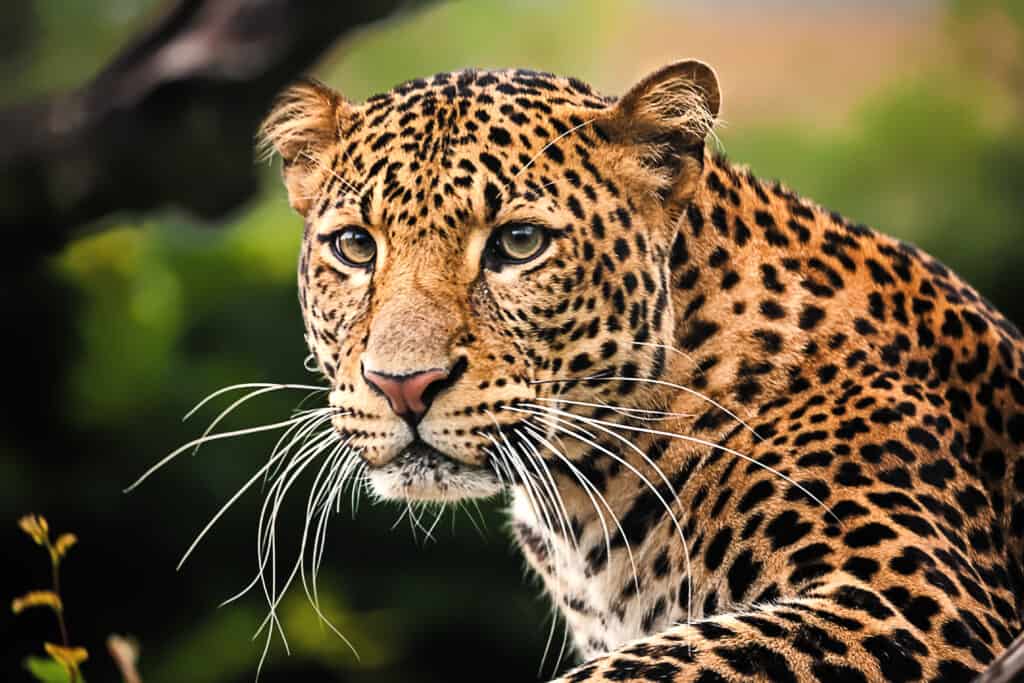
๐Ÿ‘ Javan Leopard

The Javan leopard is one of the most endangered animals in the world.

ยฉabxyz/Shutterstock.com

Conservation Status and Life Today

Today, the IUCN lists the leopard as being Not Extinct in its natural environment, as populations are stable throughout much of its range. A number of sub-species, however, are either Endangered or Critically Endangered in their native habitats and one is thought to now be extinct. This is due to the fact that these populations are either small or geographically isolated, and because local hunting and habitat loss severely affect them. For example, the Javan leopard from the Indonesian island of Java is one of the most endangered animals in the world. In a number of African countries, however, sport hunters still legally hunt leopards as trophies, with annual quotas allocated by CITES (The Convention on International Trade in Endangered Species).

View all 130 animals that start with L
How to say Leopard in ...
Bulgarian
ะ›ะตะพะฟะฐั€ะด
Catalan
Lleopard
Czech
Levhart skvrnitรฝ
Danish
Leopard
German
Leopard
English
Leopard
Esperanto
Leopardo
Spanish
Panthera pardus
Estonian
Leopard
Finnish
Leopardi
French
Lรฉopard (fรฉlin)
Hebrew
ื ืžืจ
Croatian
Leopard
Hungarian
Leopรกrd
Indonesian
Macan Tutul
Italian
Panthera pardus
Japanese
ใƒ’ใƒงใ‚ฆ
Latin
Pardus
Malay
Harimau Bintang
Dutch
Luipaard
English
Leopard
Polish
Lampart
Portuguese
Leopardo
English
Leopard
Slovenian
Leopard
English
Maung totol
Swedish
Leopard
Turkish
Pars
Vietnamese
Bรกo hoa mai
Chinese
่ฑน

Sources

  1. David Burnie, Dorling Kindersley (2011) Animal, The Definitive Visual Guide To The World's Wildlife / Accessed November 10, 2008
  2. Tom Jackson, Lorenz Books (2007) The World Encyclopedia Of Animals / Accessed November 10, 2008
  3. David Burnie, Kingfisher (2011) The Kingfisher Animal Encyclopedia / Accessed November 10, 2008
  4. Richard Mackay, University of California Press (2009) The Atlas Of Endangered Species / Accessed November 10, 2008
  5. David Burnie, Dorling Kindersley (2008) Illustrated Encyclopedia Of Animals / Accessed November 10, 2008
  6. Dorling Kindersley (2006) Dorling Kindersley Encyclopedia Of Animals / Accessed November 10, 2008
  7. David W. Macdonald, Oxford University Press (2010) The Encyclopedia Of Mammals / Accessed November 10, 2008
  8. About Leopards / Accessed November 10, 2008
  9. Leopard Information / Accessed November 10, 2008

About the Author

Lisha Pace

After a career of working to provide opportunities for local communities to experience and create art, I am enjoying having time to write about two of my favorite things - nature and animals. Half of my life is spent outdoors, usually with my husband and sweet little fourteen year old dog. We love to take walks by the lake and take photos of the animals we meet including: otters, ospreys, Canadian geese, ducks and nesting bald eagles. I also enjoy reading, discovering books to add to my library, collecting and playing vinyl, and listening to my son's music.

Thank you for reading! Have some feedback for us?

Contact the AZ Animals editorial team

Related Articles You May Find Interesting


Leopard FAQs (Frequently Asked Questions)

Leopards are Carnivores, meaning they eat other animals.

Leopards belong to the Kingdom Animalia.

Leopards belong to the phylum Chordata.

Leopards belong to the class Mammalia.

Leopards belong to the family Felidae.

Leopards belong to the order Carnivora.

Leopards belong to the genus Panthera.

Leopards are covered in Fur.

Leopards live in sub-Saharan Africa and southern Asia.

Leopards live in rainforests, grasslands, and mountainous regions.

Predators of Leopards include tigers, lions, and humans.

The average number of babies a Leopard has is 3.

Leopards spend much of their time high in the trees!

The scientific name for the Leopard is Panthera pardus.

Leopards can live for 10 to 15 years.

A baby Leopard is called a cub.

There are 7 species of Leopard.

The biggest threats to the Leopard are trophy hunting and habitat loss.

The Leopard is also called the panther.

A Leopard can travel at speeds of up to 30 miles per hour.

The biggest differences between a leopard and a panther are their size, color, and power. Panthers are larger than leopards since we are using the biologyof a jaguar to populate their physical statistics. Panthers can weigh upwards of 300lbs, but leopards max out at 198lbs. That disparity is significant and impactful in the fight.

A lion would win a fight against a leopard because it is stronger, has better defenses, and regularly deals with prey larger than the leopard.

A leopard would win a fight against a gorilla. It is too fast and vicious for a strong gorilla to fight off.


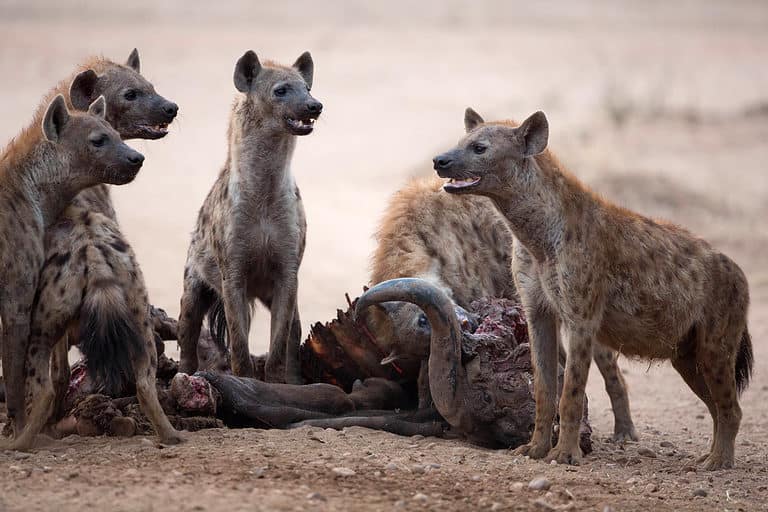
A leopard would win a fight against a hyena. The big cat is too skilled and deadly for the hyena to beat in a fight. Hyenas are used to fighting with backup in the form of their pack mates. However, they would come into this fight alone, putting them at an instant disadvantage.

Meanwhile, leopards live, hunt, and fight alone. Moreover, they take down big prey all by themselves. If the leopard was allowed to ambush the hyena, the fight would be over in seconds with the leopardโ€™s mouth around its enemyโ€™s neck.

In the battle of leopard vs tiger, the tiger would win. Tigers often prey on leopards to take their kill or in defense of their territory.