L
Species Profile

Lystrosaurus

Lystrosaurus

The beaked survivor of Earth's worst crisis
Warpaint/Shutterstock.com

Lystrosaurus Distribution

Click a location to explore more animals from that region

Loading map...

Size Comparison

Human 5'8"
Lystrosaurus 1 ft 6 in

Lystrosaurus stands at 26% of average human height.

At a Glance

Genus Overview This page covers the Lystrosaurus genus as a group. Stats below are general traits shared across the genus.
Diet Herbivore
Activity Diurnal+
Lifespan 15 years
Weight 200 lbs
Status Not Evaluated
Did You Know?

Lystrosaurus was a therapsid synapsid (on the mammal line), not a dinosaur.

Scientific Classification

Genus Overview "Lystrosaurus" is not a single species but represents an entire genus containing multiple species.

Lystrosaurus is an extinct genus of stout-bodied, herbivorous dicynodont therapsids (synapsids) that lived around the Permian–Triassic boundary. It is famous for its abundance in Early Triassic sediments and is often used as an indicator of post-extinction ecological recovery.

Kingdom
Animalia
Phylum
Chordata
Class
Synapsida
Order
Therapsida
Family
Lystrosauridae
Genus
Lystrosaurus

Distinguishing Features

  • Dicynodont (often interpreted as having a horny beak) with a barrel-shaped body
  • Typically portrayed with two tusks (a hallmark of many dicynodonts), though tusk development varies among taxa
  • Robust limb posture for a terrestrial lifestyle
  • Exceptionally common in some Early Triassic fossil assemblages ("Lystrosaurus Zone")

Physical Measurements

Males and females differ in size

Height
1 ft 6 in (10 in – 2 ft 11 in)
1 ft 6 in (12 in – 2 ft 4 in)
Length
3 ft 7 in (1 ft 12 in – 8 ft 2 in)
4 ft 11 in (2 ft 7 in – 8 ft 2 in)
Weight
66 lbs (15 lbs – 331 lbs)
132 lbs (33 lbs – 441 lbs)
Tail Length
0 in (0 in – 0 in)
8 in (4 in – 1 ft 2 in)
Top Speed
9 mph
running

Appearance

Primary Colors
Secondary Colors
Skin Type Thick, leathery skin inferred; pebbly/scaly texture plausible. Keratinous beak present; sparse hair or whiskers possible but unconfirmed for the genus.
Distinctive Features
  • Extinct dicynodont therapsid (synapsid), not a dinosaur; multiple Lystrosaurus species span Permian-Early Triassic.
  • Body proportions across genus: stout, barrel-chested torso; short neck; relatively short, strong limbs with sprawling-to-semi-erect stance.
  • Diagnostic head: broad dicynodont skull with keratinous beak; enlarged temporal openings; strong jaw musculature for cropping plants.
  • Tusks: a pair of upper tusks present in many species/individuals, reduced or absent in others; tusk size likely variable with age.
  • Size range across genus (inferred): ~0.5-2.5 m body length; ~0.3-0.9 m shoulder height; roughly ~10-250+ kg mass depending on species.
  • Tail generally short; head often proportionally large compared with body in smaller species.
  • Likely herbivorous/generalist feeder; beak suited to clipping tough vegetation, with a powerful palatal/jaw apparatus.
  • Ecology/behavior generalization: common in Early Triassic sediments and associated with post-extinction recovery; likely tolerant of harsh, seasonal environments.
  • Burrowing or denning behavior is frequently suggested (robust forelimbs and abundant individuals), but degree likely varied among species and habitats.
  • Lifespan (inferred, uncertain): roughly ~10-30 years across species, depending on body size and environmental stressors.

Did You Know?

Lystrosaurus was a therapsid synapsid (on the mammal line), not a dinosaur.

Fossils are so abundant in some Early Triassic rocks that Lystrosaurus is often called a classic "disaster taxon."

Species across the genus ranged from small, pig-sized forms to much larger, stockier animals.

Many species had a horny beak for cropping plants; some also carried a pair of tusks, while others show reduced or absent tusks.

Lystrosaurus fossils occur across former Gondwana (e.g., southern Africa, India, Antarctica), making the genus important in discussions of ancient continental connections.

Its post-extinction success makes it a key index fossil for tracking ecological recovery after the Permian-Triassic boundary event.

Studies of its bones suggest rapid growth and hard times-features consistent with survival in unstable Early Triassic environments.

Unique Adaptations

  • Dicynodont feeding toolkit: a keratinous beak combined with a powerful jaw joint and jaw muscles suited for shearing/processing fibrous plants; tusks (where present) may have aided display, digging, or stripping vegetation.
  • Stout, barrel-bodied build: a compact torso and strong limb girdles likely supported efficient, low-center-of-mass movement and digging/foraging behaviors in some species.
  • Respiratory/tolerance implications (inferred): its success in low-oxygen, high-stress Early Triassic settings has led researchers to propose physiological robustness; exact mechanisms differ by interpretation and cannot be pinned to one species.
  • Rapid growth signals: bone microstructure in lystrosaurids is commonly interpreted as indicating fast growth-an advantage when ecosystems are unstable and mortality is high.
  • Skull specialization: the distinctive dicynodont skull with reinforced snout and beak-supported palate region reflects specialization for powerful cropping; the prominence of tusks and skull proportions vary across Lystrosaurus species.

Interesting Behaviors

  • High-tolerance survivor ecology: across species, Lystrosaurus commonly appears in stressed, post-extinction habitats, suggesting generalist feeding and flexible living conditions; the degree of specialization likely varied by species and region.
  • Possible burrowing: several lines of anatomical and paleoenvironmental evidence have been used to argue that at least some species could dig or shelter in burrows; how widespread burrowing was across the genus remains debated.
  • Gregarious tendencies (possible): repeated mass accumulations of individuals in some deposits are consistent with herding, seasonal aggregation, or drought-related die-offs; different assemblages may reflect different behaviors.
  • Low browsing and ground foraging: the beak and jaw mechanics indicate cropping tough, low vegetation; species differences likely affected bite strength and diet breadth.
  • Semi-aquatic claims vs. terrestrial majority view: some hypotheses have suggested a water-associated lifestyle for certain populations, but most reconstructions treat the genus as primarily terrestrial; ecology may have varied with local climates and floodplain settings.

Cultural Significance

Lystrosaurus is a key fossil for the Permian–Triassic mass extinction and early Triassic recovery. It is very common in the Karoo Basin, helps match rock layers worldwide, and, found in places like Antarctica and India, supports Gondwana and continental drift ideas.

Myths & Legends

No known traditional folklore or ancient myth centers on Lystrosaurus, since it was only recognized through modern paleontology.

Naming story: the genus name is commonly translated as "shovel lizard," referring to its distinctive, robust snout and skull profile; it reflects early paleontologists' attempts to describe its unusual head shape.

Historical association: Lystrosaurus became a scientific icon of survival after catastrophe-frequently cited in popular science narratives about the end-Permian extinction and life's rebound in the Early Triassic.

Continental-connection lore in science history: its distribution across Gondwanan continents has been repeatedly highlighted in educational storytelling about how fossils helped people accept that continents were once joined.

Conservation Status

NE Not Evaluated

Has not yet been evaluated against the criteria.

Population Unknown

Looking for a specific species?

Lystrosaurus

Lystrosaurus murrayi

In popular and general scientific discussion, references to 'Lystrosaurus'-especially regarding Early Triassic abundance and post-Permian extinction recovery-most commonly center on the abundant South African material often attributed to Lystrosaurus murrayi (frequently discussed alongside L. declivis).

  • Measurements (genus-wide range across described species/populations): roughly ~0.6-2.5 m in total length and about ~15-90+ kg in mass (estimates vary by species, age class, and method).
  • Lifespan (genus-wide inference): likely on the order of ~10-25+ years, based on growth-ring (bone histology) inferences and comparisons with similarly sized, fast-growing herbivorous tetrapods; different species/populations probably differed with climate and resource availability.
  • Stout bodied with tusks or beaks, plant eaters that fed low on plants. Many groups ate tough plants, though diet varied by region and by how recovered the habitat was.
  • Common ecological pattern across the genus near the Permian-Triassic boundary: high local abundance in some Early Triassic deposits, interpreted as opportunistic dominance during ecosystem recovery; abundance and community role likely varied strongly by basin/region.
  • Lystrosaurus species showed different lifestyles: many likely dug or used shelters at least sometimes. Bones and some rock layers support this, but digging habits probably varied by species and place.
View Lystrosaurus Profile

You might be looking for:

Lystrosaurus murrayi

32%

Lystrosaurus murrayi

A well-known Early Triassic species, often cited in post–Permian extinction recovery faunas (notably South Africa).

Lystrosaurus declivis

28%

Lystrosaurus declivis

Commonly referenced Lystrosaurus species from the Early Triassic of southern Africa.

Lystrosaurus curvatus

20%

Lystrosaurus curvatus

A named species within the genus, discussed in Lystrosaurus taxonomy and variation.

Lystrosaurus georgi

12%

Lystrosaurus georgi

A species attributed to Lystrosaurus in some taxonomic treatments; less commonly cited in general references.

Life Cycle

Lifespan 15 years

Lifespan

In the Wild 8–25 years

Reproduction

Mating System Polygyny
Social Structure Aggregation Group
Breeding Pattern Seasonal
Fertilization Internal Fertilization
Birth Type Internal_fertilization

Direct evidence is lacking, but tusks and probable sexual dimorphism suggest male-male competition and access to multiple females (polygyny). Likely internal fertilization with seasonal, short-term pairings; no evidence for cooperative care beyond parental investment.

Behavior & Ecology

Social Herd Group: 8
Activity Diurnal, Crepuscular, Cathemeral
Diet Herbivore Low, soft ground vegetation (tender shoots/leaves), with some likely preference for easily cropped plants
Seasonal Hibernates

Temperament

Generally non-aggressive and tolerant at high densities when resources allow
Defensive when threatened; may use body positioning and tusk-like beak displays
Variable tolerance: crowding acceptable at water/refuge, more spacing while foraging
Likely stress-sensitive during drought or post-disturbance, increasing avoidance and flight responses

Communication

low-frequency grunts or booms (speculative) used at close range
short hisses/snorts associated with threat or displacement Speculative
juvenile contact calls (speculative) to maintain proximity in groups
visual displays: head-bobbing, body orientation, and size-posturing during disputes
tactile contact: nudging or flank-to-flank contact to coordinate movement
chemical cues: scent deposition from skin/cloacal secretions to mark routes or refuges Speculative
substrate cues: trampling and vibration from group movement aiding cohesion Speculative

Habitat

Biomes:
Temperate Grassland Temperate Forest Tundra Desert Cold Freshwater Wetland
Terrain:
Plains Valley Riverine Plateau Muddy Sandy
Elevation: Up to 8202 ft 1 in

Ecological Role

Dominant low-browsing primary consumer (terrestrial herbivore) in Permian-Triassic boundary and Early Triassic ecosystems

Converted primary production into prey biomass for large predators/scavengers Strong influence on vegetation structure via heavy grazing/browsing pressure Accelerated nutrient cycling through dung production and trampling Facilitated early successional plant communities in disturbed/post-extinction landscapes Likely contributed to seed/propagule dispersal indirectly (via movement and disturbance), though not specialized for fruit eating

Diet Details

Other Foods:
Low-growing herbaceous vegetation Ferns and fern allies Cycad and other seed-plant foliage Leaves and shoots of small shrubs and young woody plants Roots, tubers, and other below-ground plant parts Small plant stems and bark

Human Interaction

Domestication Status

Wild

Lystrosaurus is an extinct genus (Permian–Early Triassic) never domesticated. Humans only interacted after extinction: people found fossils (19th–20th centuries in southern Africa, Antarctica, India, China), studies use it as a marker of Permian–Triassic recovery and Early Triassic biostratigraphy, and museums show replicas. Genus: stout, tusked herbivorous dicynodonts, 0.6–2.5 m long, hardy, likely burrowers and sometimes social.

As a Pet

Not Suitable as Pet

Legality: Lystrosaurus is extinct and cannot be kept as a pet. Vertebrate fossils are often regulated: collecting, buying, selling, or exporting may need permits or be illegal, especially from public land.

Care Level: Expert Only

Purchase Cost:
Lifetime Cost:

Economic Value

Uses:
Paleontological research and biostratigraphy (Permian-Triassic boundary studies) Museum exhibition and science education Geoheritage, tourism, and local museum economies in fossil-rich regions Commercial fossil/replica market (legal and illegal components) Academic training (field schools, collections work)
Products:
  • Peer-reviewed research datasets (CT scans, histology, morphometrics)
  • Museum mounts, casts, and 3D-printed replicas
  • Educational media and textbooks featuring Lystrosaurus as a post-extinction indicator
  • Licensed replicas and models for classrooms/collectors
  • Geo-tourism experiences tied to fossil localities and museum displays

Relationships

Predators 5

Gorgonopsians Gorgonopsia
Moschorhinus Moschorhinus kitchingi
Proterosuchus Proterosuchus fergusi
Erythrosuchids Erythrosuchidae
Therocephalians Therocephalia

Related Species 4

Kwazulusaurus Kwazulusaurus shakai Shared Family
Dicynodon Dicynodon Shared Order
Kannemeyeria Kannemeyeria Shared Order
Placerias Placerias hesternus Shared Order

Ecological Equivalents 4

Animals that fill a similar ecological role in their ecosystem

Dicynodon Dicynodon spp. Broadly similar herbivorous dicynodont therapsids with robust bodies and beaked jaws. They overlap in plant-eating lifestyle, though many Dicynodon species are primarily Late Permian and may differ in size, habitat preference, and post-extinction success.
Kannemeyeria Kannemeyeria spp. Large-bodied Triassic dicynodont herbivores occupying a comparable megaherbivore niche, bulk-feeding on tough vegetation. Differs in generally larger size and in later Triassic dominance compared with the typically smaller-to-mid-sized Lystrosaurus species concentrated near the Permian–Triassic boundary.
Placerias Placerias hesternus Late Triassic dicynodont that occupied a similar barrel-bodied, bulk-herbivore niche and possessed a beaked feeding apparatus; an example of convergent ecology despite being younger and often larger than most Lystrosaurus species.
Wombats and pigs Vombatidae spp.; Sus scrofa Often compared in body plan and ecology—stout-bodied, ground-level herbivores/omnivores with strong forelimbs. These are used only as functional analogs (not close relatives), and Lystrosaurus ecology likely varied by species and region (e.g., degree of burrowing versus open foraging).

Types of Lystrosaurus

6

Explore 6 recognized types of lystrosaurus

Murray's Lystrosaurus Lystrosaurus murrayi
Declivis Lystrosaurus Lystrosaurus declivis
Curved Lystrosaurus Lystrosaurus curvatus
Georgi's Lystrosaurus Lystrosaurus georgi
Hedin's Lystrosaurus Lystrosaurus hedini
Oviceps Lystrosaurus Lystrosaurus oviceps

Lystrosaurus is one of the few terrestrial animals that survived one of the most significant extinction events in geologic history—the Permian-Triassic extinction. The animal was a pig-sized reptile that lived over 250 million years ago. At one point in the Early Triassic, it made up 95% of land vertebrates. Lystrosaurus fossil discovery became critical evidence for continental drift and land bridging. 

Description and Size 

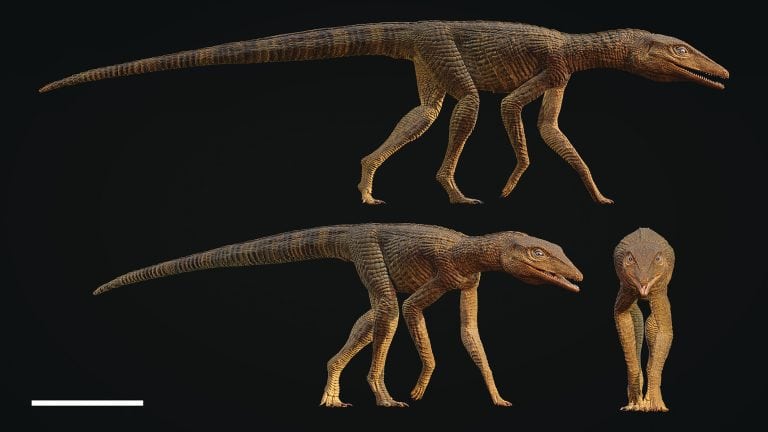
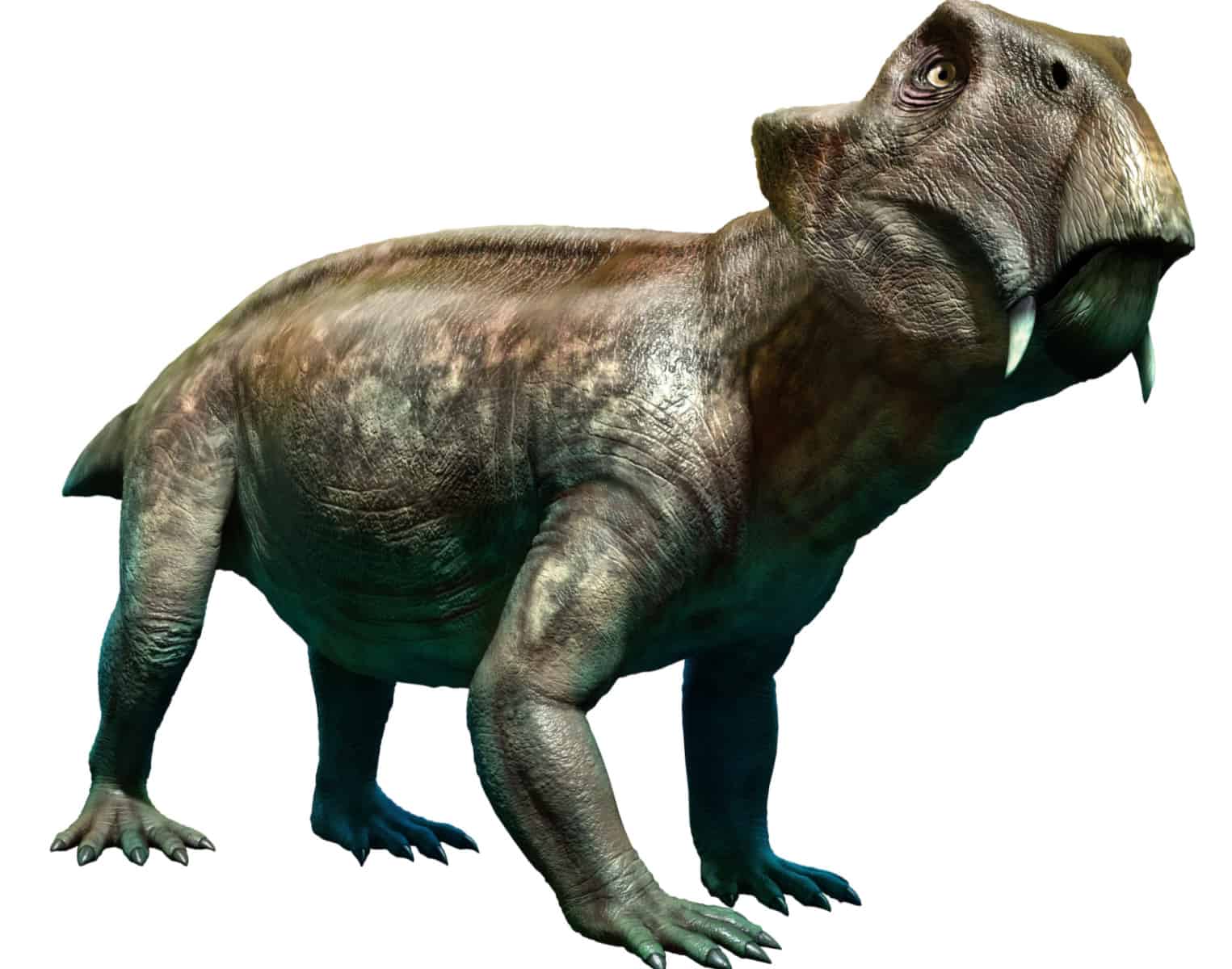
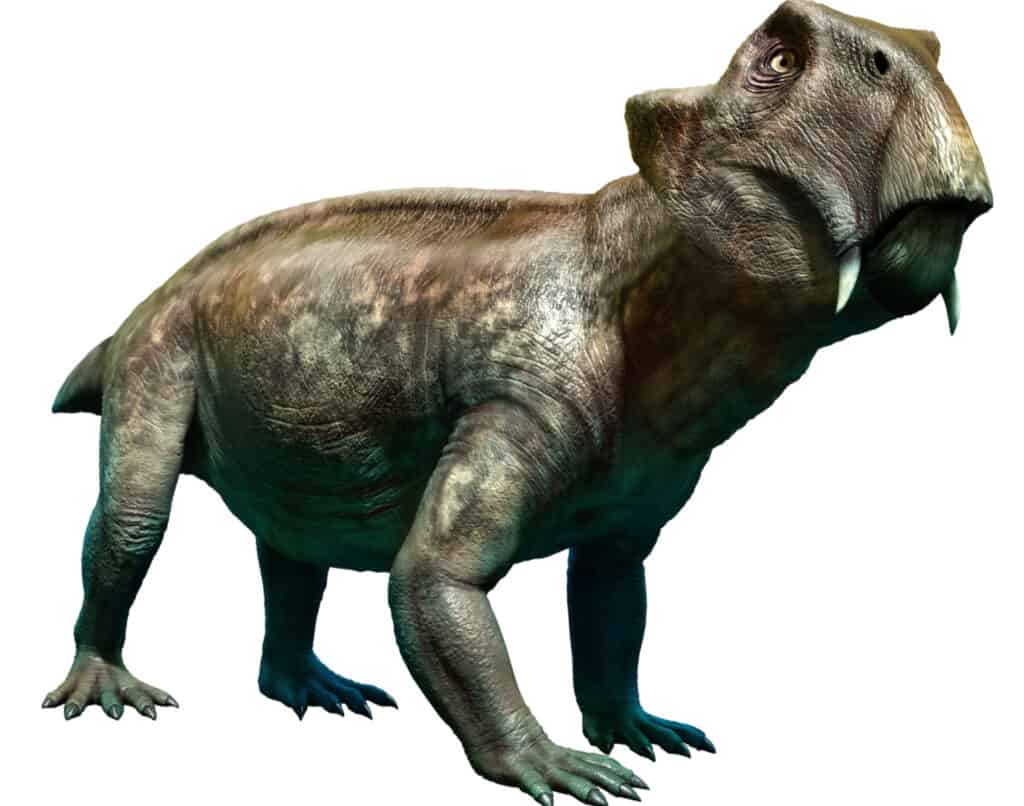
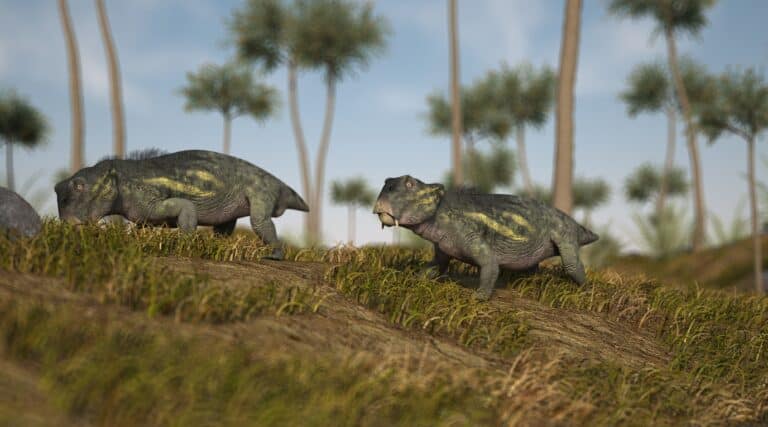
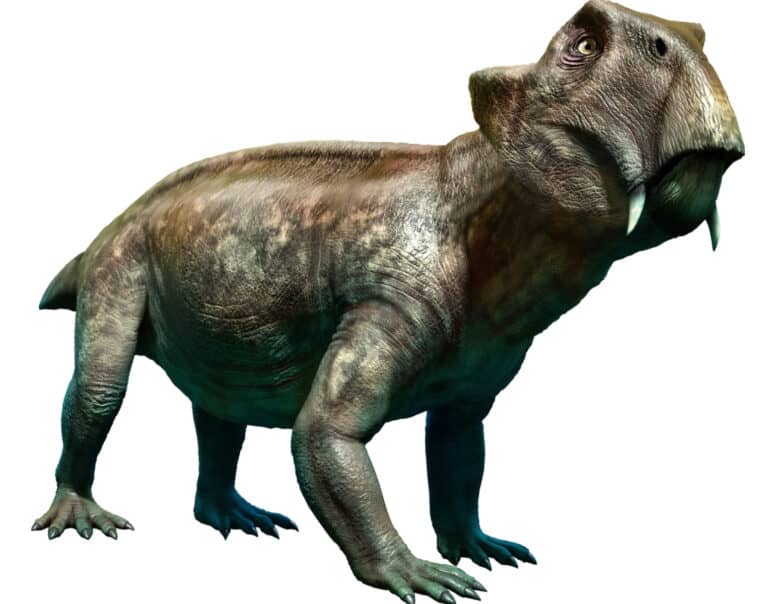
Lystrosaurus is an extinct genus of dicynodont therapsids from the Early Triassic and Late Permian periods. The name is from the Greek words “listron sauros,” meaning “shovel lizard.” Lystrosaurus measured 3–8 feet in length and weighed about 200 pounds. That is about the size of an average pig.

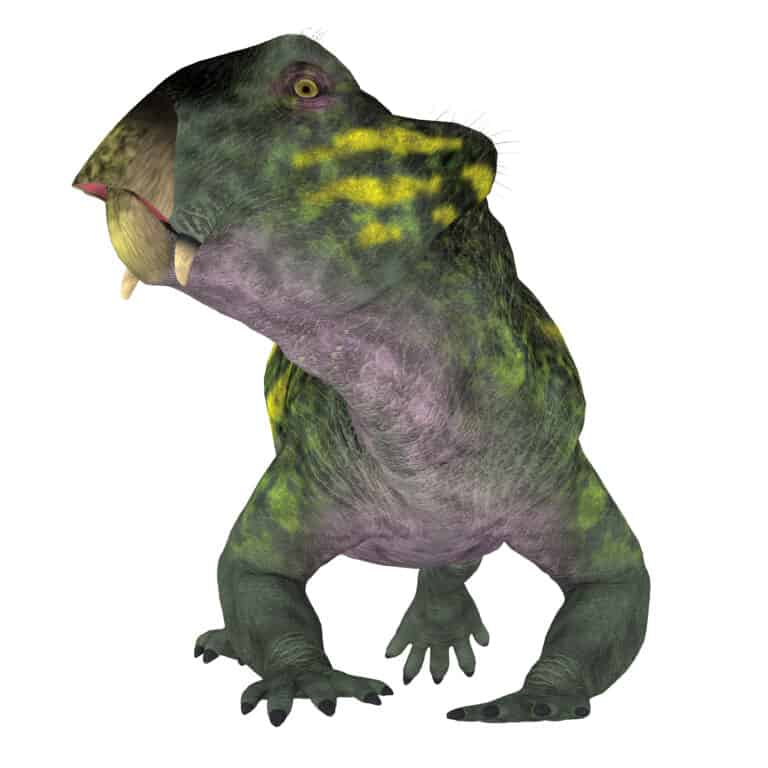
Lystrosaurus also had a sort of pig-like appearance; It had a short snout. However, the only teeth present were two tusk-like upper canines. They also had horny beaks similar to those of turtles for shearing off vegetation. The animal had dorsally located eye orbits, and its two tusks were set deeply in the upper jaw. Wears on the tusks indicate Lystrosaurus used them for digging and rooting out vegetation. 

The jaw joint was weak and moved in upward and backward motions during a shearing action instead of the usual up and down or sideways movement. The lower jaw could also slide forward and backwards, enabling Lystrosaurus to move vegetation easily into its mouth. The animal’s nostrils were high up on its curved snout, allowing it to feed in shallow waters or marsh and swamp habitats. 

Lystrosaurus also had a spreading posture and a short tail. There were five toes on each of its feet, and the front legs had large bones bigger than its rear ones. Like most tetrapods, Lystrosaurus walked around on all four feet, with their legs slightly splayed out to the sides like alligators’ legs. Their five sacral vertebrae were massive but not fused to each other or the pelvis. As a result, the back was rigid. Paleontologists believe Lystrosaurus was a powerful digger and burrower. 

Bone histology suggests that Lystrosaurus was a fast-growing animal. Mummified specimens from the Karoo Basin revealed that Lystrosaurus had dimpled, leathery, and hairless skin. 
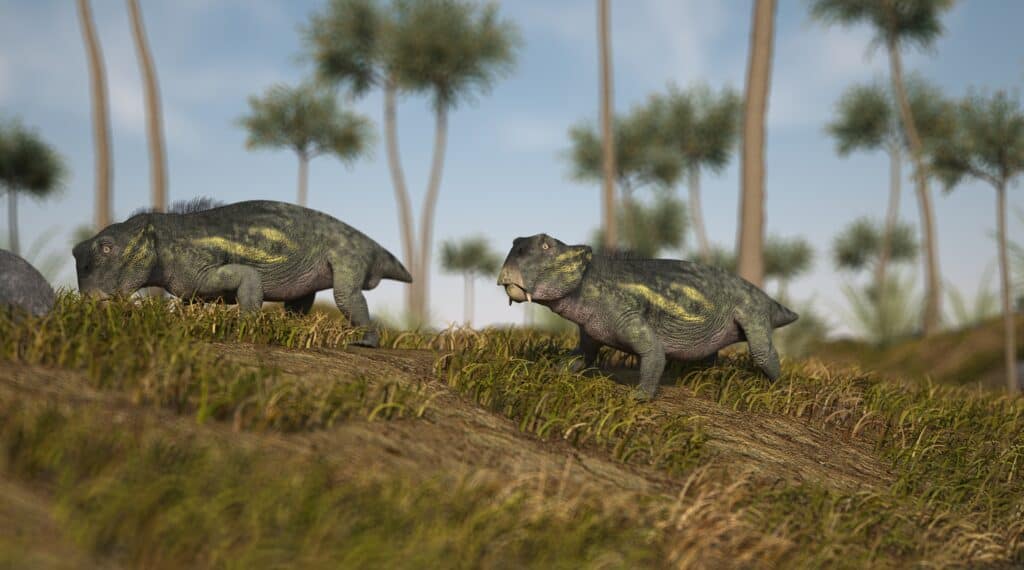
👁 Lystrosaurus
Lystrosaurus

had a sort of pig-like appearance, with a short snout and no teeth.

©Kostiantyn Ivanyshen/Shutterstock.com

Diet—What Did Lystrosaurus Eat? 

Lystrosaurus was an herbivore. The animal did not have teeth in the usual sense. Instead, it had two tusks that projected downwards from the maxilla for digging up the roots of plants. Apart from this, Lystrosaurus had horny beaks for shearing and snipping off vegetation above ground and used a horny second palate in their mouth to ground the vegetation. 

Since they lived in different ecosystems across a wide range of geographical locations, Lystrosaurus was adapted to eating different types of plants. Many species ate Dicroidium, an extinct genus of fork-leaved ferns that were abundant during the Permian and Triassic. Larger species, such as the Lystrosaurus maccaigi, probably evolved to rely on larger plants of the period, such as the Glossopteris flora. Unfortunately, this plant did not survive the Permian extinction. 

Habitat—When and Where Did Lystrosaurus Live? 

Lystrosaurus was widespread across southern continents, with a concentration of remains found in South Africa. Other specimens have been recovered from Russia, India, Mongolia, China, and Antarctica. Lystrosaurus lived in the Late Permian and Early Triassic periods, around 250 million years ago. Their fossil representation is also one of the most common fossil species dating from the Early Triassic. 

Threats and Predators 

Lystrosaurus had no threats and predators post the Permian–Triassic extinction. Also referred to as the Great Dying, the extinction event wiped out nearly 95% of all species on earth (including a few species of the Lystrosaurus genus). However, at least one unidentified species survived the mass extinction. Only the 5-foot-long Moschorhinus and the large Proterosuchus were big enough to prey on the Lystrosaurus species that lived into the Triassic.

The absence of predators and herbivore competition for the available food allowed Lystrosaurus to thrive without restraint. So much so that for a while, 95% of land vertebrates were Lystrosaurus, becoming the most common group of terrestrial vertebrates during the Early Triassic. 

Discoveries and Fossils 

Dr. Elias Root Beadle, an avid fossil collector and a Philadelphia missionary, discovered the first Lystrosaurus skull. He wrote to paleontologist Othniel Charles Marsh about his discovery but received no reply. However, Edward Drinker Cope, who was Marsh’s major rival, showed interest in the find and named Lystrosaurus in 1870. 

Most Lystrosaurus fossils were found in the Balfour and Katberg Formations of the Karoo Basin in South Africa. Although the initial estimate of discovered fossil species was 23 between the 1930s and 1970s, further studies in the 1990s recognized only six species. They include L. curvatus, L. declivis, L. platyceps, , L. maccaigi, L. oviceps and L. murrayi. Another study in 2006 downsized the list to four, merging fossils previously labeled as L. platyceps and L. oviceps as members of L. curvatus. Lystrosaurus maccaigi was the largest and most specialized species found only in sediments from the Permian Period. The species did not survive the Permian–Triassic extinction event.

On the other hand, L. curvatus was the least specialized and was found in a relatively narrow band of sediments from shortly before and after the extinction. A skull fragment subsequently identified as L. curvatus was discovered in Late Permian sediments in Zambia. For years, scientists believed L. curvatus did not live in the Karoo during the Permian, which led many to suggest they migrated from Zambia into the Karoo. However, a re-examination of the Karoo specimens identified some as L. curvatus. 

Extinction—When Did Lystrosaurus Die Out?

The Permian-Triassic extinction, also known as the Great Dying, wiped out a few Lystrosaurus species about 250 million years ago. However, some species did survive the extinction. Although some scientists have attributed their survival to luck, there are still speculations on how they survived the mother of all mass extinctions. Growth marks observed in some fossil tusks suggest that the Lystrosaurus species that lived in Antarctica could enter a state of prolonged sleep similar to hibernation. Apart from this, their burrowing lifestyle could have helped them survive in an atmosphere of stale air that made it difficult for most terrestrial species to breathe. Lystrosaurus species that survived the extinction event became the ancestor of many later dicynodonts like Placerias. 

Similar Animals to the Lystrosaurus

Similar animals to the Lystrosaurus include:

  • DimetrodonDimetrodon lived during the Early Permian, around 295–272 million years ago. Often mistaken for a dinosaur, Dimetrodon was a quadrupedal, sail-backed synapsid that weighed between 60-550 pounds. 
  • Cynodont — Cynodont is another extinct group of animals that evolved in the Late Permian Period and diversified further after the Permian–Triassic extinction event. Cynodonts are the ancestors of modern-day mammals. However, the cynodonts themselves went extinct during the Cretaceous Period.
  • PlaceriasPlacerias was one of the largest herbivores of the late Triassic. They weighed up to 2,400 pounds, and there are possible ecological and evolutionary parallels with the modern hippopotamus.  
View all 130 animals that start with L

Sources

  1. Wikipedia en.wikipedia.org/wiki/Lystrosaurus / Accessed November 13, 2022
  2. Fossil Fandom fossil.fandom.com/wiki/Lystrosaurus / Accessed November 13, 2022
  3. Study.com study.com/academy/lesson/lystrosaurus-facts-lesson-quiz.html / Accessed November 13, 2022
  4. Britannica britannica.com/animal/Lystrosaurus / Accessed November 13, 2022
  5. National Geographic nationalgeographic.com/science/article/lystrosaurus-the-most-humble-badass-of-the-triassic / Accessed November 13, 2022

About the Author

Abdulmumin Akinde

Abdulmumin is a pharmacist and a top-rated content writer who can pretty much write on anything that can be researched on the internet. However, he particularly enjoys writing about animals, nature, and health. He loves animals, especially horses, and would love to have one someday.
Connect:

Thank you for reading! Have some feedback for us?

Contact the AZ Animals editorial team

Related Articles You May Find Interesting

👁 Image
Articles

How Snow Flies Survive Subzero Cold with Special Antifreeze Proteins

Would You Pay Fifty Thousand Dollars to Clone Your Dog? Here’s How It Works


Lystrosaurus FAQs (Frequently Asked Questions)

Lystrosaurus was alive 250 million years ago. It lived through the Late Permian and Early Triassic periods.

An adult Lystrosaurus was about 3–8 feet long and weighed up to 200 pounds.

Lystrosaurus was a herbivore that ate small plant life. Although it was not high on the food chain, it thrived largely due to the absence of predators after the Permian–Triassic extinction.