M
Species Profile

Mamba

Dendroaspis

Speed in the trees, danger in the bite
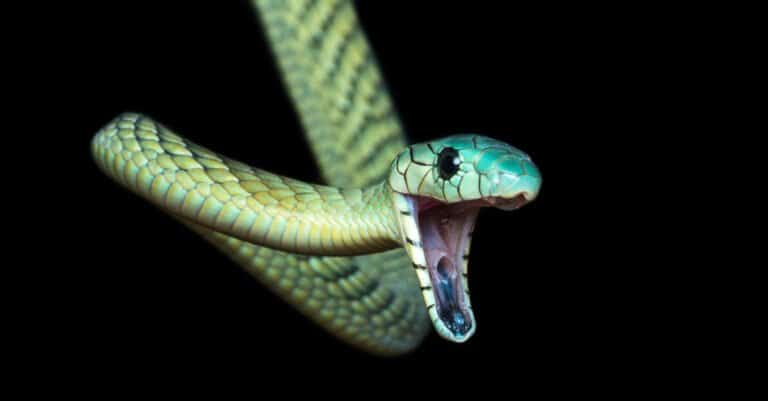
Dendroaspis angusticeps/Shutterstock.com

At a Glance

Genus Overview This page covers the Mamba genus as a group. Stats below are general traits shared across the genus.
Also Known As Black mamba, Green mamba, Jameson's mamba, Eastern green mamba, Western green mamba
Diet Carnivore
Activity Diurnal+
Lifespan 11 years
Weight 3.5 lbs
Status Least Concern
Did You Know?

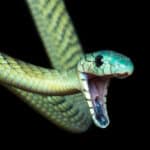
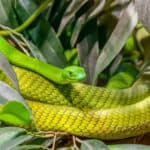
The genus Dendroaspis includes both mostly tree-dwelling green mambas and the more terrestrial black mamba-same lineage, different lifestyles.

Scientific Classification

Genus Overview "Mamba" is not a single species but represents an entire genus containing multiple species.

Mambas are highly venomous elapid snakes native to sub-Saharan Africa. They are slender, fast-moving, and often arboreal (especially the green mambas), with potent neurotoxic venom typical of many elapids.

Kingdom
Animalia
Phylum
Chordata
Class
Reptilia
Order
Squamata
Family
Elapidae
Genus
Dendroaspis

Distinguishing Features

  • Elapid snakes with fixed front fangs (proteroglyphous)
  • Slender, streamlined body and capable of rapid movement
  • Primarily diurnal; several species strongly arboreal
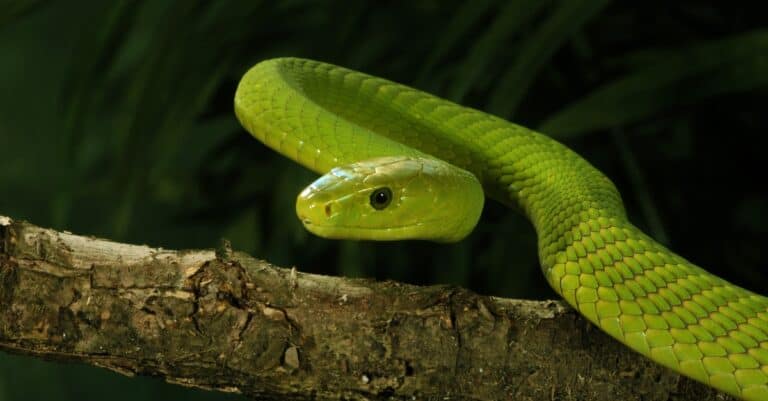
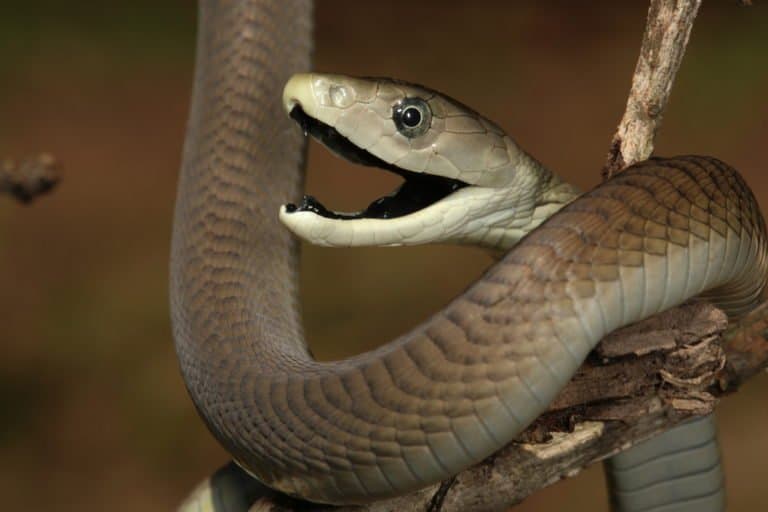
  • Color varies by species (black mamba is usually gray/olive-brown; green mambas are bright green)

Physical Measurements

Males and females differ in size

Length
7 ft 7 in (4 ft 7 in – 14 ft 9 in)
7 ft 3 in (3 ft 11 in – 14 ft 1 in)
Weight
3 lbs (1 lbs – 7 lbs)
2 lbs (1 lbs – 6 lbs)
Tail Length
1 ft 8 in (10 in – 3 ft 7 in)
1 ft 4 in (7 in – 2 ft 11 in)
Top Speed
12 mph
running
Venomous

Appearance

Primary Colors
Secondary Colors
Skin Type Smooth, glossy scales with a sleek, low-friction feel; typical elapid proteroglyphous (fixed front-fanged) dentition.
Distinctive Features
  • Overall size range across genus: ~1.4-4.5 m total length (smallest green mambas to largest black mambas).
  • Body form: very slender, long-tailed, lightweight build; narrow head with distinct neck and large eyes.
  • Habitat use varies by species: mostly arboreal in green mambas; more terrestrial/edge-using in black mamba, but capable climbers.
  • Activity is primarily diurnal; commonly alert, visually oriented hunters; can use rapid escape behavior when threatened.
  • Geographic range: sub-Saharan Africa, including coastal forests, woodlands, savannas, and forest edges depending on species.
  • Diet broadly overlaps: birds (including nestlings/eggs) and small mammals; arboreal species take more avian prey.
  • Reproduction: oviparous; clutch sizes vary among species, typically multiple eggs per breeding event.
  • Venom: predominantly neurotoxic elapid venom (often with additional cardiotoxic components); medically significant with potential for rapid systemic effects.
  • Lifespan range across genus: roughly ~8-14 years in the wild; up to ~15-20+ years reported in captivity, varying by species and conditions.

Sexual Dimorphism

Sexual dimorphism is generally subtle. Males often average slightly longer with proportionally longer tails, while females may be more robust-bodied; coloration differences are usually minimal or absent across species.

  • Slightly greater average total length in some populations
  • Longer tail relative to body length
  • May show more frequent roaming during breeding season
  • Often heavier-bodied at similar length
  • Shorter tail relative to body length
  • Gravid females show pronounced mid-body girth

Did You Know?

The genus Dendroaspis includes both mostly tree-dwelling green mambas and the more terrestrial black mamba-same lineage, different lifestyles.

Adult length across the genus spans roughly ~1.4-4.3 m, making mambas among Africa's longest venomous snakes.

Their venoms are primarily neurotoxic (typical of many elapids), acting quickly on nerves and breathing-why rapid medical care and antivenom are critical.

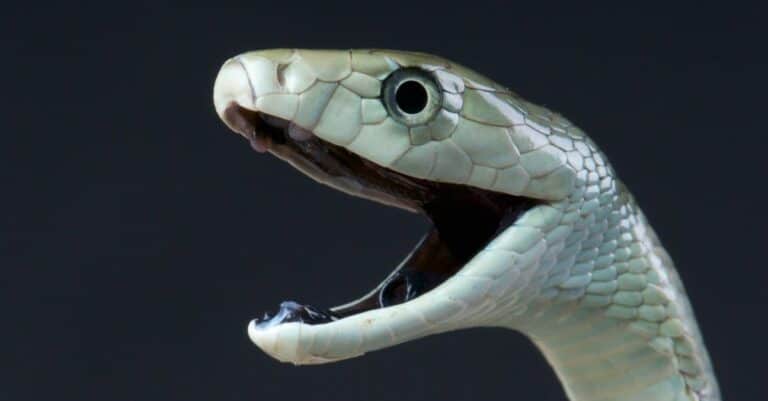
Green mambas are often brilliantly green for canopy camouflage, while "black mamba" refers to the dark interior of the mouth rather than body color.

Mambas are largely diurnal, active hunters with keen vision, unlike many ambush-focused snake groups.

All mambas are egg-layers (oviparous), with clutch sizes varying by species and conditions.

Unique Adaptations

  • Elapid delivery system: fixed front fangs efficiently inject venom, enabling fast subdual of agile prey like birds and rodents.
  • Neurotoxic venom chemistry: components such as dendrotoxins (notably studied from some mambas) and other neuroactive peptides target nerve signaling-medically significant and scientifically important.
  • Slender, lightweight build: a long, narrow body supports speed and (in green species especially) confident movement through branches and foliage.
  • Camouflage tuned to microhabitat: vivid greens in forest canopies versus more muted tones in the black mamba help concealment in different African landscapes.
  • High-performance locomotion: strong axial muscles and smooth scales support rapid straight-line movement and quick directional changes.
  • Large eyes and visual hunting: many mambas rely heavily on vision for daytime pursuit of prey.

Interesting Behaviors

  • Active, daytime foraging: many mambas patrol vegetation or ground edges in search of moving prey rather than waiting in ambush.
  • Arboreal vs. terrestrial split: green mambas commonly hunt and rest in trees, while black mambas often use ground routes, termite mounds, rocky outcrops, and thickets-though individuals can climb.
  • Prey differences by habitat: across the genus they take birds and eggs, small mammals, and other small vertebrates; proportions vary with forest vs savanna settings.
  • Rapid defensive displays: when threatened, they may raise the forebody, spread a narrow hood, gape (showing the mouth), and strike repeatedly if cornered.
  • Use of retreat and cover: despite their reputation, many encounters end with the snake fleeing to dense cover; tolerance and "stand their ground" behavior varies by species and situation.
  • Seasonal and site fidelity patterns: individuals may reuse favored refuges (tree hollows, dense vegetation, crevices), with activity influenced by temperature, rainfall, and prey availability.
  • Reproductive timing varies by region: mating and egg-laying seasons differ across sub-Saharan climates, so "breeding season" is not uniform for the genus.

Cultural Significance

Across sub-Saharan Africa, mambas (Dendroaspis) are met with fear and respect because their bites can kill quickly if not treated fast. They appear in snakebite warnings and in culture as symbols of speed, danger, and power.

Myths & Legends

Name origins: "mamba" is widely traced to southern African languages, entering broader usage through regional contact and colonial-era natural history writing.

Scientific naming story: Dendroaspis is often translated as "tree asp", reflecting early observations that several species are strongly arboreal.

Southern African snake-omens tradition: in some communities, snakes encountered near homesteads can be interpreted through spiritual/ancestral frameworks and treated with ritual caution-beliefs that may extend to dangerous species including mambas depending on local custom.

Modern legend-making: "black mamba" has become a contemporary cultural emblem-used in nicknames and stories to signify exceptional speed or lethality-showing how real animals can evolve into symbolic figures beyond biology.

Conservation Status

LC Least Concern (at the species level, all currently recognized Dendroaspis species are assessed as LC on the IUCN Red List; the genus itself is not typically assessed as a single unit).

Widespread and abundant in the wild.

Population Unknown

Protected Under

  • Occurrence in protected areas (national parks, forest reserves, and other conservation areas) across sub-Saharan Africa (coverage varies by species and country)
  • General national wildlife/environmental protection frameworks in range states (species-specific legal status and enforcement vary)

Looking for a specific species?

Black mamba

Dendroaspis polylepis

In English usage, the unqualified common name "mamba" most often evokes the black mamba because of its notoriety, broad recognition, and frequent reference in media and public safety contexts.

  • Genus-wide size range: mambas are generally large, slender elapids-roughly ~1.4 m at the smallest adult end (some green mamba individuals) up to ~4 m at the largest (exceptional black mamba specimens).
  • Genus-wide longevity: wild lifespans commonly fall around ~10-15+ years, with some individuals in captivity reaching ~20 years or more (varying by species and husbandry).
  • Shared ecology across Dendroaspis: diurnal, fast-moving, visually oriented hunters; many populations are strongly arboreal or semi-arboreal (especially the green mambas), while others are more terrestrial/edge-habitat oriented-there is real variation among species and even among populations.
  • Venom generalization: all mambas possess potent primarily neurotoxic elapid venoms; toxicity, venom yield, and clinical presentation can vary across the genus, and medical urgency is high for bites from any Dendroaspis species.
View Black mamba Profile

You might be looking for:

Black mamba

42%

Dendroaspis polylepis

Large, fast, highly venomous African mamba; interior of mouth is dark, giving the common name.

View Profile

Eastern green mamba

22%

Dendroaspis angusticeps

Arboreal bright-green mamba of coastal East Africa; highly venomous but typically less defensive than black mamba.

View Profile

Jameson's mamba

18%

Dendroaspis jamesoni

Green mamba of West and Central Africa, often in forests and wooded habitats.

View Profile

Western green mamba

18%

Dendroaspis viridis

Green mamba primarily of West Africa; arboreal and highly venomous.

View Profile

Life Cycle

Birth 10 hatchlings
Lifespan 11 years

Lifespan

In the Wild 7–15 years
In Captivity 10–20 years

Reproduction

Mating System Polygynandry
Social Structure Solitary
Breeding Pattern Transient
Fertilization Internal Fertilization
Birth Type Internal_fertilization

Across Dendroaspis, adults are largely solitary and form no lasting pair bonds. During breeding seasons, males search widely and may engage in rival interactions; both sexes can mate with multiple partners, with females later laying eggs and providing no parental care.

Behavior & Ecology

Social Aggregation Group: 1
Activity Diurnal, Crepuscular
Diet Carnivore Across the genus, small mammals and birds (including nestlings) are the most consistently important prey; relative emphasis varies by species and habitat (more birds in strongly arboreal green mambas, more small mammals in more terrestrial/edge-using species).
Seasonal Hibernates

Temperament

Highly alert, visually oriented, and fast-moving; typically prefers escape over confrontation.
Defensive and potentially aggressive when cornered or handled; may deliver rapid repeated strikes.
Temperament varies among species and individuals: some are more arboreal/evasive, others more terrestrial/defensive.

Communication

hissing
forceful exhalation
chemical communication via pheromones for mate location and reproductive readiness
tongue-flicking chemoreception to track prey, conspecific trails, and scent-marked routes
visual threat displays: raised forebody, gaping mouth, and body flattening Variable across species
tactile contact during courtship, mating, and male-male combat
detection of substrate vibrations for nearby movement and potential threats

Habitat

Biomes:
Tropical Rainforest Tropical Dry Forest Savanna Wetland
Terrain:
Mountainous Hilly Plateau Plains Valley Coastal Island Riverine Rocky +3
Elevation: Up to 6561 ft 8 in

Ecological Role

Mesopredators/top predators (locally) in sub-Saharan African forest, woodland, and savanna mosaics, linking arboreal and terrestrial food webs.

Regulation of small-mammal populations (potentially reducing rodent pressure in natural and human-modified landscapes) Regulation of certain bird and lizard populations, influencing community structure in arboreal habitats Energy transfer between canopy/edge and ground layers via mixed arboreal-terrestrial predation Serving as prey for larger predators (e.g., raptors and mammal carnivores) and contributing to trophic dynamics

Diet Details

Main Prey:
Small mammals Birds Bird eggs and nestlings Lizards Other snakes Bat

Human Interaction

Domestication Status

Wild

Mambas (genus Dendroaspis) have no history of domestication. They are wild, highly venomous snakes that have not been selectively bred or managed as domestic animals. Human interaction has historically been through avoidance and killing due to danger, and through limited, regulated captivity in zoos, research institutions, and venom collection programs for antivenom production rather than any domestication process.

Danger Level

Extreme
  • potentially life-threatening envenomation with rapid-onset neurotoxic effects (severity varies by species, dose, and bite circumstances)
  • high risk to handlers due to speed, reach, and defensive capability
  • delayed access to effective antivenom and ventilation/supportive care can lead to fatality
  • secondary risks from improper captivity (escape, illegal trade, inadequate containment)

As a Pet

Not Suitable as Pet

Legality: Generally illegal or heavily restricted in many jurisdictions; where allowed, typically requires specialized venomous-reptile permits/licensing, secure escape-proof caging standards, antivenom access planning, and strict transport/handling regulations. Public display often requires additional institutional approvals.

Care Level: Expert Only

Purchase Cost: $300 - $3,000
Lifetime Cost: $10,000 - $100,000

Economic Value

Uses:
Public health/medicine Research/biomedical Education Wildlife/ecotourism (limited) Pest control ecosystem services (indirect)
Products:
  • venom for antivenom production
  • venom-derived research reagents/toxin isolates
  • professional educational exhibits (regulated)

Relationships

Predators 7

Secretarybird Sagittarius serpentarius
Snake eagle Circaetus
Martial eagle Polemaetus bellicosus
Mongoose Herpestidae
Honey badger Mellivora capensis
Monitor lizard Varanus
Large predators Crocodylus niloticus; Panthera pardus

Related Species 8

Green mamba Dendroaspis angusticeps Shared Genus
Jameson's mamba Dendroaspis jamesoni Shared Genus
Western green mamba Dendroaspis viridis Shared Genus
Black mamba Dendroaspis polylepis Shared Genus
Cobras Naja Shared Family
Rinkhals Hemachatus haemachatus Shared Family
African coral snakes Aspidelaps Shared Family
Spitting cobras Naja (Afronaja) spp. Shared Genus

Ecological Equivalents 5

Animals that fill a similar ecological role in their ecosystem

Boomslang Dispholidus typus Arboreal and forest-edge, visually oriented predator that preys on birds and small arboreal vertebrates. Overlaps with green mambas in habitat use, although venom type and taxonomy differ.
Twig snakes Thelotornis spp. Slender, often arboreal ambush predators in African woodlands. Similar body plan and tree-foraging niche to mambas, but generally less actively mobile.
Brown house snake Boaedon capensis Common mesopredators in savanna, woodland, and human-modified habitats; they share a prey base of small mammals, birds, and lizards, though house snakes are non-venomous constrictors and are usually slower-moving.
Cobras Naja spp. Highly venomous elapids that are sympatric, occupying many of the same regions and sometimes sharing prey (small mammals, birds, reptiles). Generally more terrestrial and often exhibit different defensive behaviors (e.g., hooding or spitting).
Taipan Oxyuranus spp. Ecological analogs outside Africa: fast-moving, highly venomous, predominantly diurnal elapids that can specialize on endothermic prey and occupy a similar role as apex or upper-level snake predators in their systems.

Types of Mamba

4

Explore 4 recognized types of mamba

Black mamba Dendroaspis polylepis
Green mamba Dendroaspis angusticeps
Jameson's mamba Dendroaspis jamesoni
Western green mamba Dendroaspis viridis

The black mamba’s bite is called the “kiss of death” and will be fatal if left untreated.

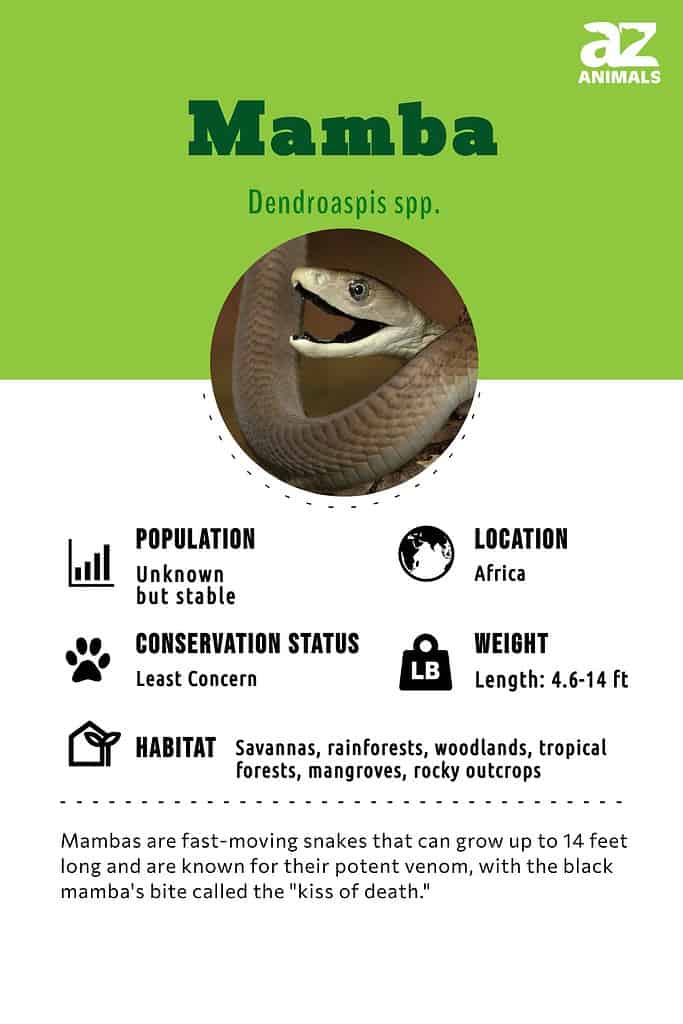
Mambas are venomous, fast-moving snakes found in Africa that can grow up to 14 feet long. Known for their venom and fearsome reputation, they are present in many African stories and legends. They are some of the most venomous snakes in Africa. Three of the species live in trees and are green in color, while the black mamba is land-dwelling and grey to brown in color. The black mamba has the deadliest venom of all mamba species.
👁 Image

4 Amazing Mamba Facts!

  • The black mamba is Africa’s longest venomous snake.
  • An untreated black mamba bite has a 100% mortality rate and is called the “kiss of death” or “seven steps.”
  • The black mamba is one of the fastest-moving snakes in the world, capable of slithering at 12.5 mph.
  • The mamba genus, Dendroaspis, means “tree asp.”
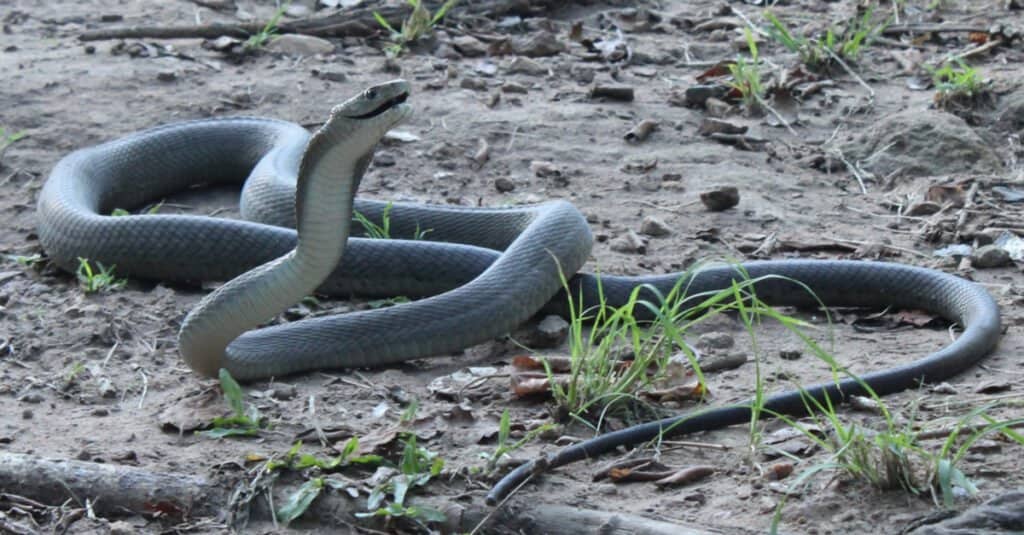
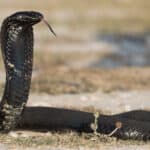
👁 Black mamba in a defensive posture

The black mamba is the longest venomous snake in Africa.

©Cormac Price/Shutterstock.com

Scientific Name

The mamba genus, Dendroaspis, means “tree asp.” Mambas are in the same family as coral snakes and cobras, Elapidae. Elipidae snakes have a pair of fangs in the upper front jaw of their mouths. They are proteroglyphous, meaning “front-fanged.”
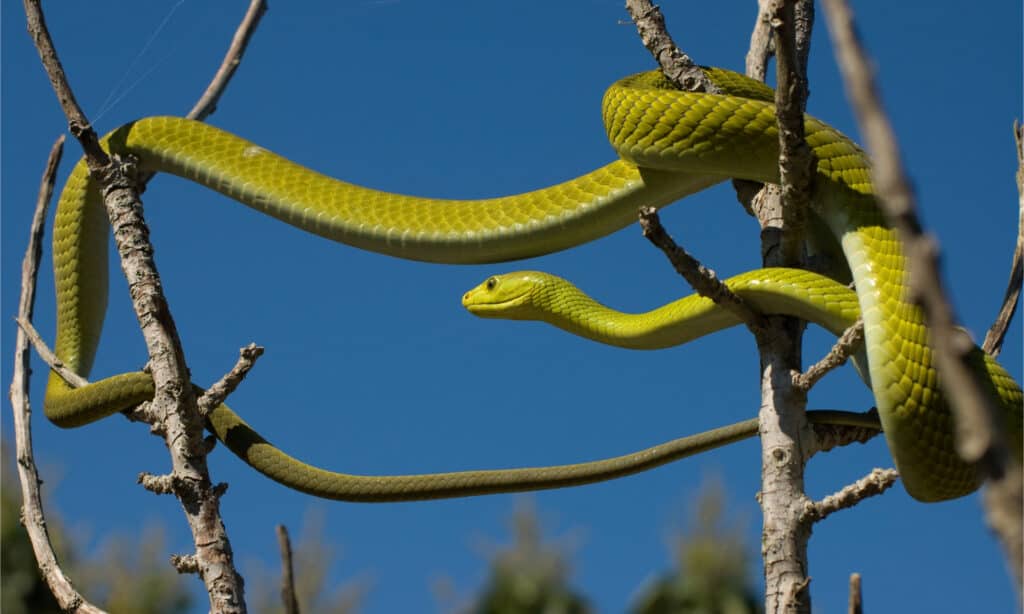
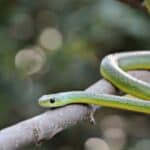
👁 An eastern green mamba stretched out between several branches against a blue sky

The mamba’s genus,

Dendroaspis

, means “tree asp.”

©Heiko Kiera/Shutterstock.com

4 Types of Mamba

There are four species of mamba:

Jameson’s mamba has 2 subspecies: D. j. jamesoni and D. j. kaimosae.

Discover more about the four types of mambas here.
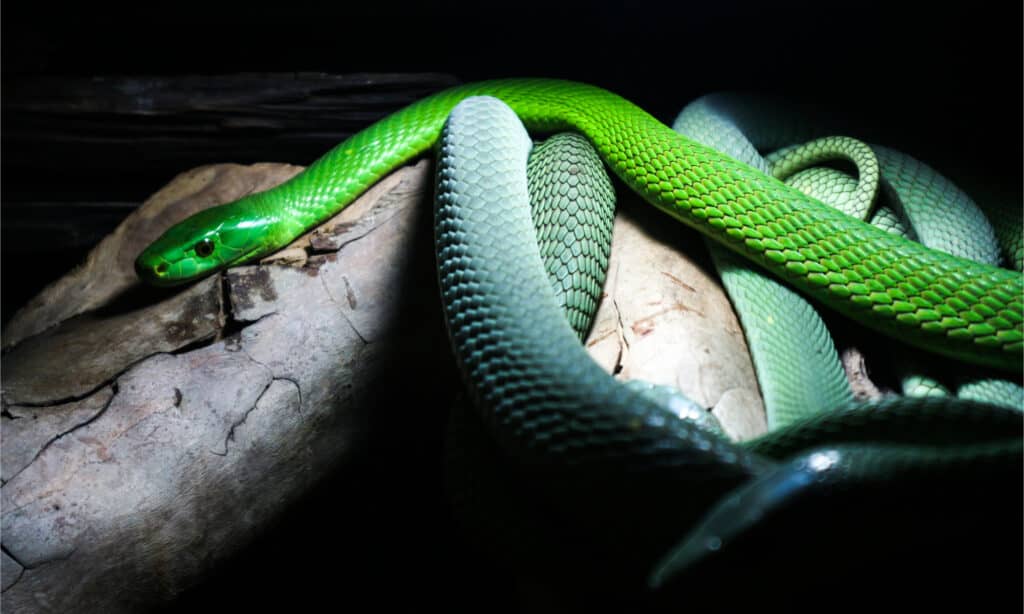
👁 An eastern green mamba on a tree branch at night

The eastern green mamba is one of four types of mamba.

©Marti Bug Catcher/Shutterstock.com

Evolution and Origins

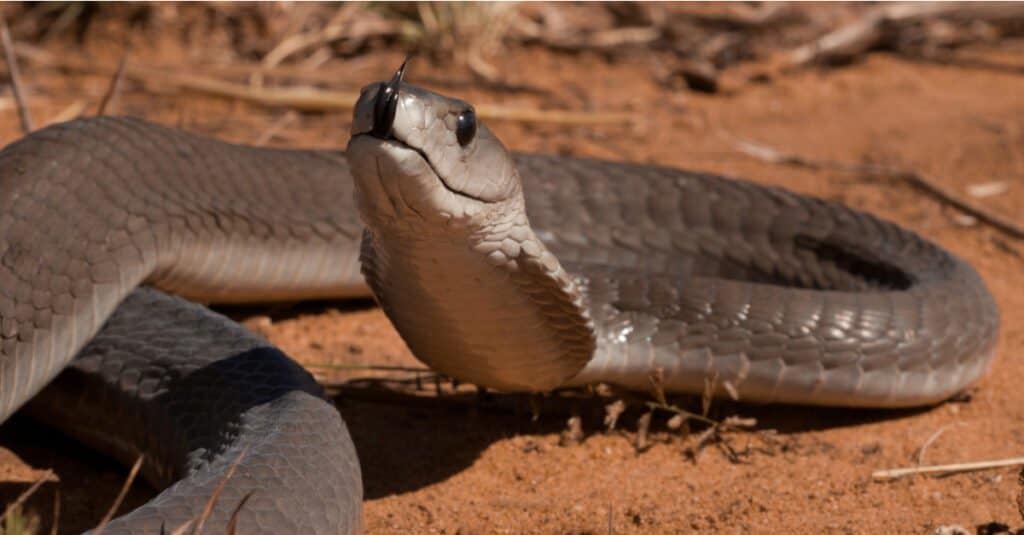
Mambas have evolved to adapt to their environment in a number of ways. Like other species in its Elapidae family, the mamba has developed a hood-like area around its neck that will flare out when it is threatened, making the snake appear larger in an effort to startle and scare off potential predators. Since the mamba is a proteroglyph its fangs are fixed and do not retract into its mouth so the snake’s fangs are shorter than other vipers. A University of Georgia Tech study found that snakes’ scales have evolved to act like hooks to generate friction that moves the reptile forward.
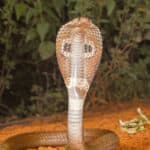
👁 Black mamba

The black mamba’s adaptations include a cobra-like hood used to scare potential predators.

©131346563/Shutterstock.com

Appearance

Mambas are known for their very fast slithering speeds and their ability to raise a long hood when threatened.

How to identify a mamba snake:

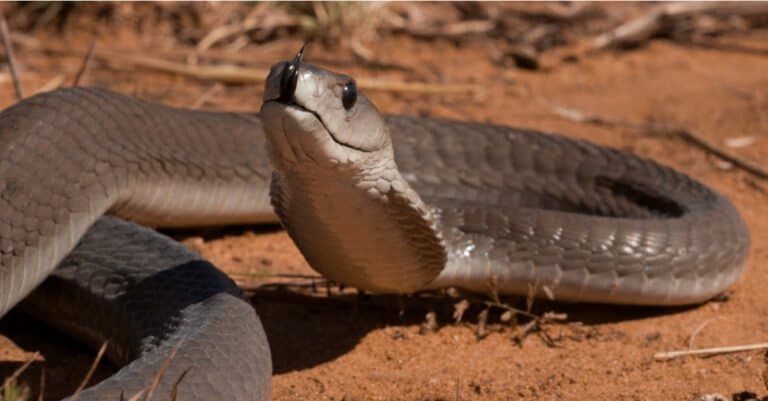
  • The black mamba has a color of grey to dark brown, is over 6.6 ft and up to 14 ft in length, and has a coffin-shaped head and black mouth.
  • The western green mamba has a slender body and a length of 4.6-6.9 ft.
  • The eastern green mamba has a green body and measures more than 6.6 ft long on average.
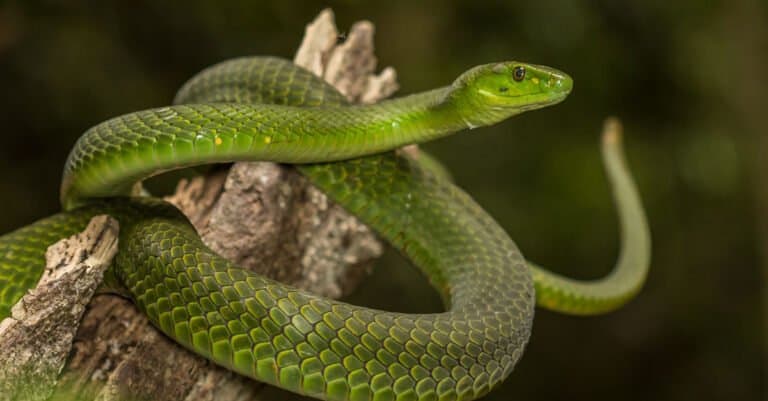
  • Jameson’s mamba has a color of dull green with a cream or yellow belly, a long and narrow head with small eyes, and grows 4.9-7.2 ft in length.
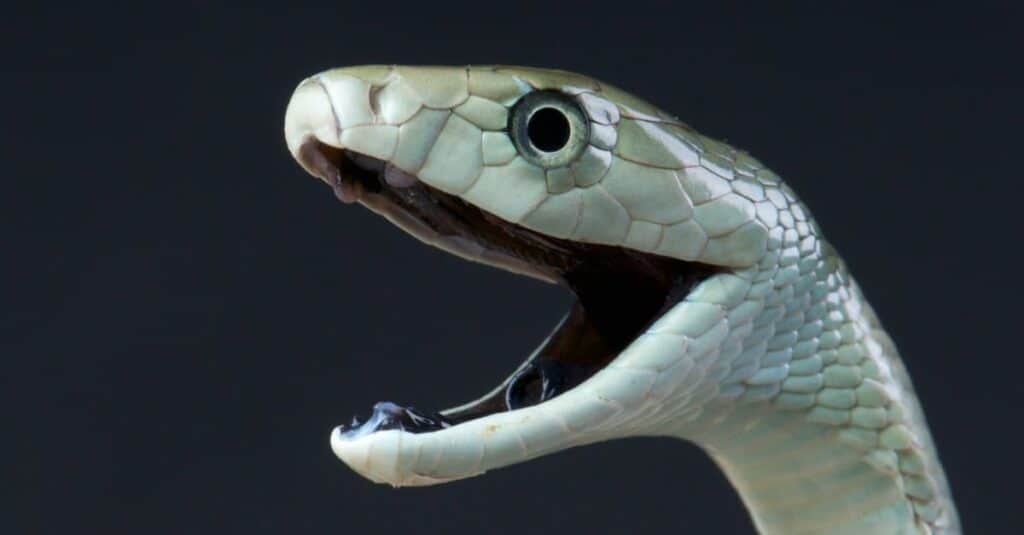
👁 Black mambas are rarely black, and they're actually named for the inside of their mouth.

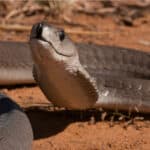
Black mambas are rarely black and are named for the inside of their mouth.

©reptiles4all/Shutterstock.com

Behavior

The best time of year to find any mamba snake species is during the fighting, breeding, and egg-laying seasons, depending on the species and climate of their location. Fighting usually happens in late winter to early spring or during the rainy season, breeding happens in the spring or late fall, and egg-laying happens in the summer or fall. In other words, they are most active during the warmer months. The one season they are not active is the winter when they go into brumation, like a partial sleep for cold-blooded animals. During that time, they go into holes, tree stumps, dens, or caves.

Believe it or not, humans are more predatory of mambas rather than the other way around. However, they are highly aggressive when threatened. The eastern green mamba is the only one that is shy and actively avoids humans. On the other hand, humans have attacked mambas after confusing their slithering for chasing after them instead of fleeing away.
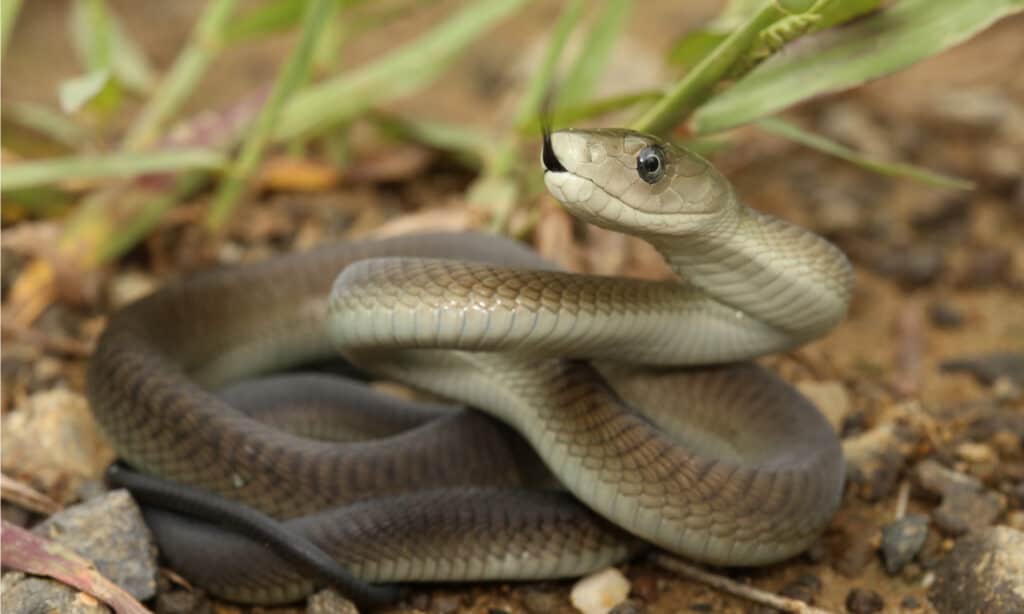
👁 Black Mamba

Mambas are most active during the warmer months of the year.

©NickEvansKZN/Shutterstock.com

Venom: How Dangerous Are Mambas?

All mamba species have deadly venom and three species are nervous and aggressive, while the eastern green mamba is shy of humans. Their front-facing fangs lie flat in their mouths until they are ready to bite.

The western green mamba’s venom can kill with one bite containing neurotoxins, cardiotoxins, and fasciculins. The eastern green mamba’s venom has neurotoxins that if untreated can trigger death by respiratory paralysis in 30 minutes. Jameson’s mamba’s venom has neurotoxins, cardiotoxins, hemotoxins, and mycotoxins, and can kill in 30-120 minutes if left untreated. The black mamba’s bite is called the “kiss of death,” can kill if left untreated and starts causing symptoms in 10 minutes. With a bite from either species, it is up to 12 times the lethal dose in humans and can cause collapse in 45 minutes and death from respiratory failure leading to cardiovascular collapse in 7-15 hours.

If you are bitten by a mamba, seek medical attention immediately and ask for mamba antivenom. Lie down with the wound below the heart, remove any jewelry, and cover the wound with loose, sterile bandages.
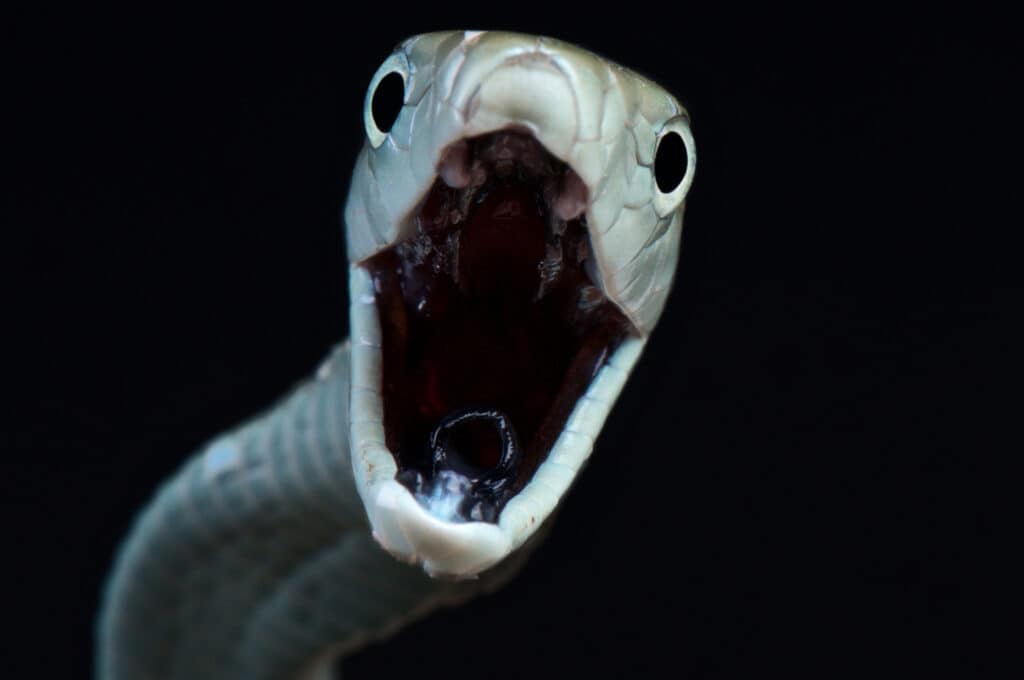
👁 black mamba attacking

The black mamba’s bite is called the “kiss of death.”

©reptiles4all/Shutterstock.com

Habitat

All four mamba species make their habitats in sub-Saharan Africa, each with its own range. The black mamba is land-dwelling (terrestrial) while the other three are tree-dwelling (arboreal).

Jameson’s mamba has a geographic range in Central and West Africa and some parts of East Africa. It has a variety of habitats including rainforests, woodlands, savannahs, and deforested areas up to 7,200 ft. Countries it can be found in are South Sudan, Gabon, Angola, Zambia, Republic of the Congo, Democratic Republic of the Congo, Cameroon, Equatorial Guinea, Nigeria, Kenya, Uganda, Rwanda, Burundi, Tanzania, Central African Republic, Benin, Togo, and Ghana.

The eastern green mamba lives in the coastal areas of southern East Africa, including in Kenya, Tanzania, Malawi, Mozambique, Zimbabwe, Swaziland, and eastern South Africa.

The western green mamba makes its home in coastal tropical rainforests, woodlands, and thickets of western Africa, including in southern Senegal, Gambia, Guinea-Bissau, Guinea, Sierra Leone, Liberia, Côte d’Ivoire, Ghana, Togo, Benin, and southwest Nigeria.

The black mamba is present in many countries in central, eastern, and southern Africa, especially the northern regions of southern Africa and the coastal areas of South Africa. Unlike the other mamba species, it lives on land in various habitats, especially savannahs, open woodlands, and rocky hills. It does not live in deserts. It has populations in Cameroon, northern Republic of the Congo, Central African Republic, northeast Democratic Republic of the Congo, southwestern Sudan, Ethiopia, Eritrea, Djibouti, Somalia, Kenya, eastern Uganda, Rwanda, Burundi, Tanzania, Mozambique, Swaziland, Malawi, Zambia, Zimbabwe, Lesotho, and Botswana to KwaZulu-Natal in South Africa, Namibia, northeastern Angola and the southeastern Democratic Republic of the Congo.
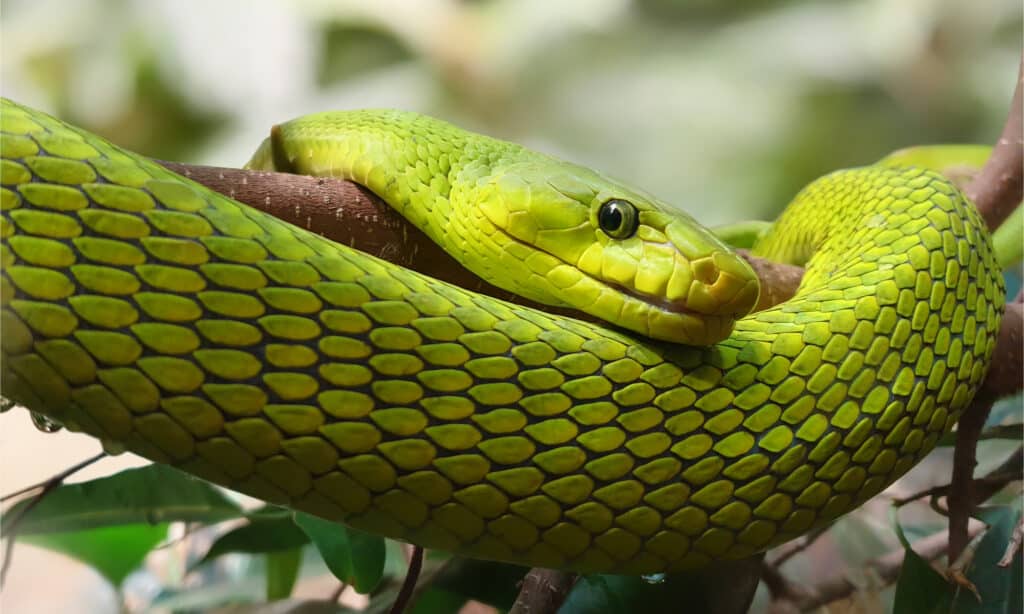
👁 A head shot of an eastern green mamba in a tree

Eastern green mambas are arboreal and live in coastal areas of southern East Africa.

©Henner Damke/Shutterstock.com

Diet

Mambas are diurnal so are active and hunt during the day when they require food, which is only once every couple of weeks.

These snakes are carnivorous and have a preference for live prey, including mammals such as mice, rats, squirrels and African ground squirrels (Xerus), hyraxes, and bush babies. They also eat birds (particularly nestlings and fledglings), frogs, lizards,  spiders, scorpions, centipedes, bats, and other snakes such as the forest cobra. They will consume dead animals if they require food.
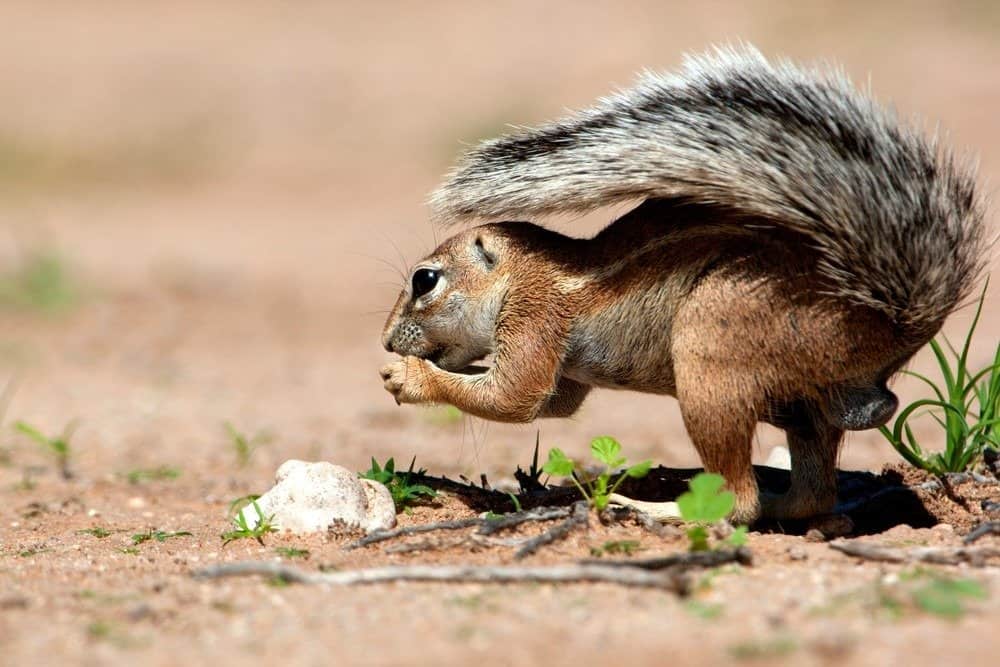
👁 round squirrel (Xerus inauris), in rainy season, Kgalagadi Transfrontier Park, Kalahari desert, South Africa.

Ground squirrels are part of mambas’ diets.

©Gaston Piccinetti/Shutterstock.com

Predators and Threats

The biggest threats to mambas are humans and birds of prey such as secretary birds and brown snake eagles, which aim to break a snake’s neck by swooping down and grabbing it by the back of the head. Secretary birds can be as tall as 4 feet and use their long, powerful legs to step on a mamba’s head and instantly snap its neck.

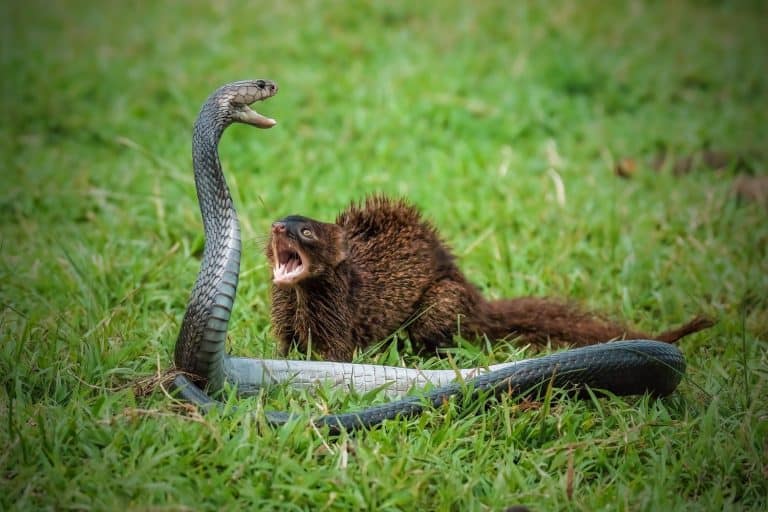
Adult mamba snake species do not have many other predators except for mongooses and honey badgers. Baby mambas are most vulnerable to predators during the egg or young stages of the life cycle.

Their lifespan is about 11 years in the wild, while their lifespan in captivity is about 18 years.
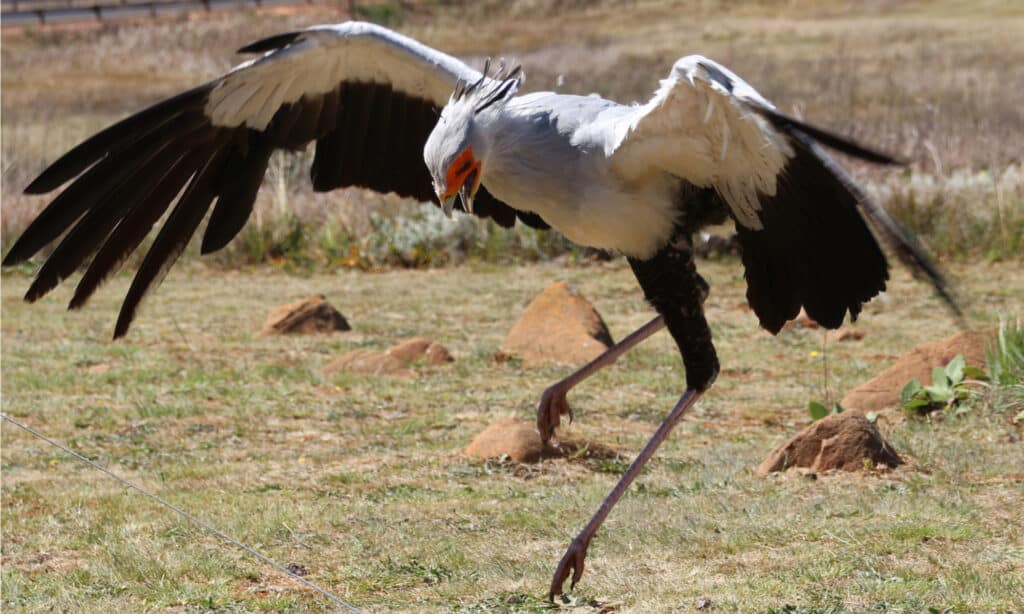
👁 Animals that Hunt Cobras - Secretary Bird

Secretary birds prey upon mambas.

©Mike van Kal/Shutterstock.com

Population and Conservation

The green mamba’s population is unknown and listed by the IUCN Red List as Least Concern, but South Africa lists it as Vulnerable due to habitat destruction and deforestation of its coastal habitats. The western green mamba’s population is stable and listed by the IUCN Red List as Least Concern. Jameson’s mamba population is stable and listed by the IUCN Red List as Least Concern. The black mamba’s population is stable and listed by the IUCN Red List as Least Concern.
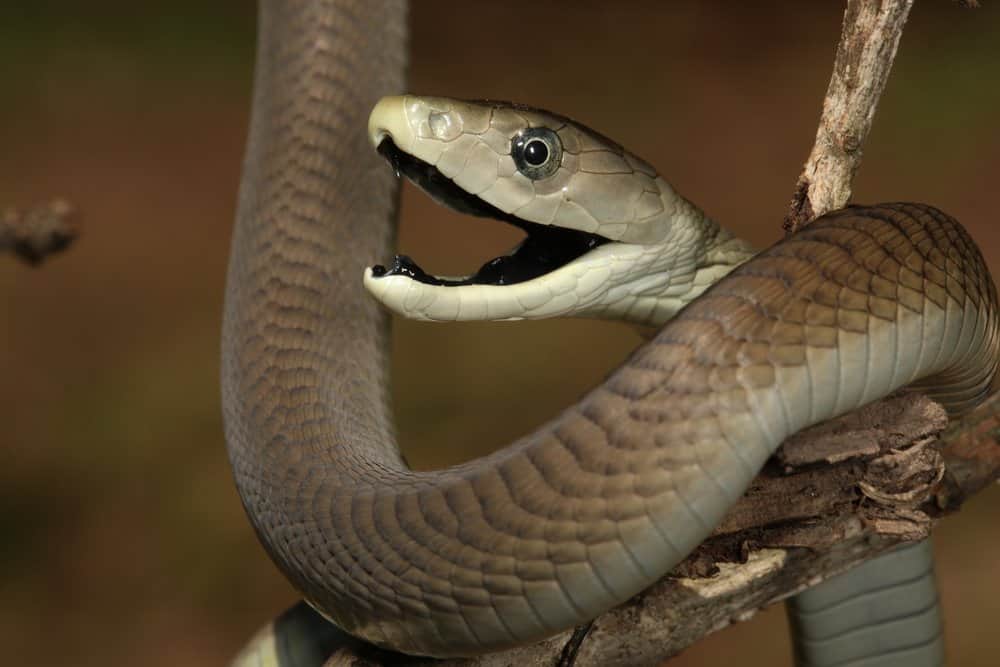
👁 Black Mamba (Dendroaspis polylepis) toughest animal for toxicity - most toxic animal on earth

The black mamba is classified by the IUCN Red List as of Least Concern.

©NickEvansKZN/Shutterstock.com

View all 330 animals that start with M

Sources

  1. https://en.wikipedia.org/wiki/Mamba
  2. https://www.worldatlas.com/articles/the-venomous-mambas-of-africa-how-many-species-are-there.html
  3. https://www.britannica.com/animal/mamba
  4. https://animaldiversity.org/accounts/Dendroaspis_polylepis/
  5. https://reptilescove.com/care/snakes/black-mamba
  6. https://easierwithpractice.com/how-do-you-treat-a-black-mamba-bite/
  7. https://safariavventura.com/en/black-mamba-snake/

About the Author

Austin S.

Growing up in rural New England on a small scale farm gave me a lifelong passion for animals. I love learning about new wild animal species, habitats, animal evolutions, dogs, cats, and more. I've always been surrounded by pets and believe the best dog and best cat products are important to keeping our animals happy and healthy. It's my mission to help you learn more about wild animals, and how to care for your pets better with carefully reviewed products.
Connect:

Thank you for reading! Have some feedback for us?

Contact the AZ Animals editorial team

Related Articles You May Find Interesting

Are There Snake-Infested Lakes in North Carolina? Here’s What You’ll Actually Find


Mamba FAQs (Frequently Asked Questions)

There are four species of mambas: Eastern green mamba (Dendroaspis angusticeps), Western green mamba (Dendroaspis viridis), Jameson’s mamba (Dendroaspis jamesoni), and the black mamba (Dendroaspis polylepis).

Yes, it is a type of snake referring to the genus Dendroaspis.

No, it is in the same family as cobras and coral snakes, but it is probably confused for a viper. Both are venomous and usually brightly-colored snakes.

Yes, when threatened, they are very aggressive. They can bite repeatedly.

Yes, all are venomous, with the black mamba having the deadliest venom of all.

Mambas are active especially during the day (diurnal) but predators who hunt during the day or night, so they hunt and bite their prey to kill them with their venom.

Three out of the four species are very aggressive, especially when threatened, but at first seem to be timid. The eastern green mamba is shy of humans and actively avoids them, using its camouflage to hide in the trees.

All mambas live in Africa. Three of the four species live in trees, while the black mamba lives on the ground.

Mambas eat bush babies, hyrax, birds, bats, rodents, and eggs.

Their lifespan is 11 years in the wild, 18 years in captivity. However, in the wild they die early on in their life cycle if predators eat them while they are still in eggs or too young to move fast enough away from them.