M
Species Profile

Mealybug

Pseudococcidae

Tiny waxy sap-thieves of the plant world
AjayTvm/Shutterstock.com

At a Glance

Family Overview This page covers the Mealybug family as a group. Stats below are general traits shared across the family.
Also Known As Mealy bug, Cochinilla harinosa, Cochenille farineuse, Cocciniglia farinosa, Cochonilha
Diet Herbivore
Activity Cathemeral+
Lifespan 3 years
Weight 2.0E-5 lbs
Status Not Evaluated
Did You Know?

Most mealybugs are only ~0.8-7 mm long as adult females, yet heavy infestations can stunt or kill large plants.

Scientific Classification

Family Overview "Mealybug" is not a single species but represents an entire family containing multiple species.

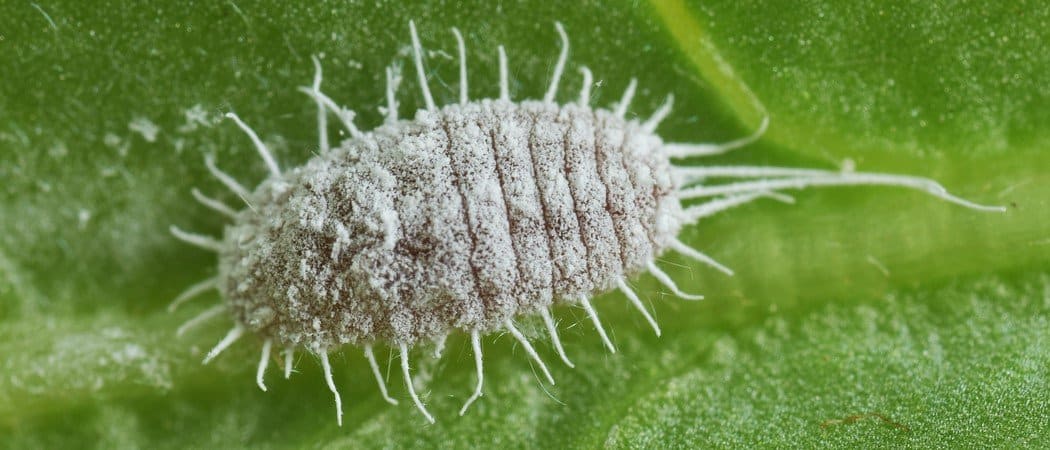
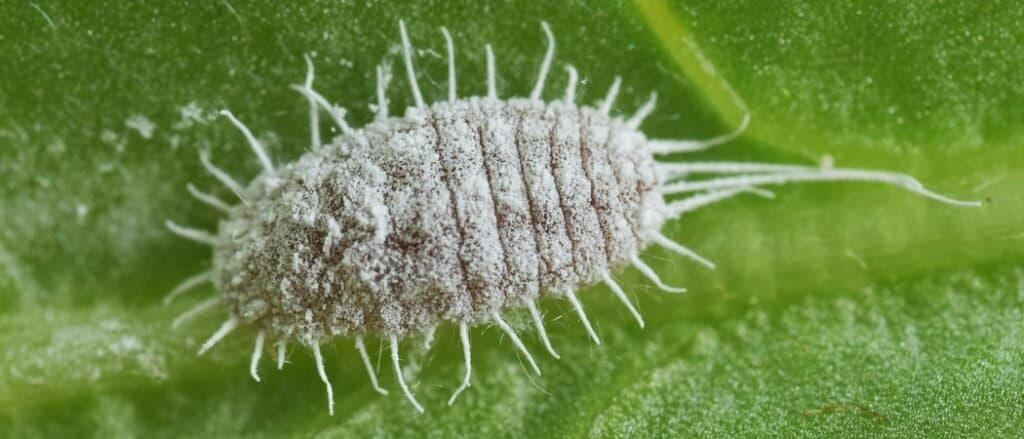
Mealybugs are small, soft-bodied scale insects that feed on plant sap and are typically covered in a white, powdery/waxy secretion. Many species are major agricultural and ornamental-plant pests due to direct feeding damage, honeydew production (leading to sooty mold), and occasional transmission of plant diseases.

Kingdom
Animalia
Phylum
Arthropoda
Class
Insecta
Order
Hemiptera
Family
Pseudococcidae

Distinguishing Features

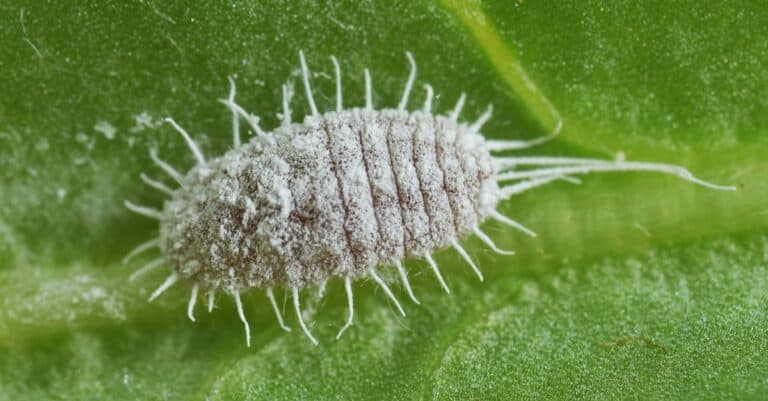
  • Soft-bodied, oval insects with a white mealy/waxy coating
  • Often produce honeydew; sooty mold may develop on plants
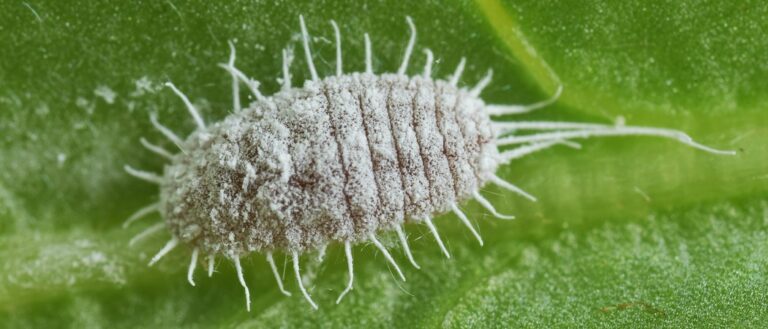
  • Many species have wax filaments around the body margin; some with longer posterior filaments
  • Sap-feeding mouthparts (piercing-sucking) typical of Hemiptera
  • Often found in protected crevices on plants; some occur on roots (soil mealybugs)

Physical Measurements

Males and females differ in size

Weight
0 lbs (0 lbs – 0 lbs)
Tail Length
0 in (0 in – 0 in)
Top Speed
0 mph
crawling

Appearance

Primary Colors
Secondary Colors
Skin Type Soft-bodied hemipterans with a protective mealy/powdery wax secretion; adult females wingless and often oval, while males (when present) are delicate, winged, and wasp-like.
Distinctive Features
  • Adult female mealybugs are typically about 0.1-0.5 cm long (varies by species).
  • Body oval to elongate, visibly segmented; short legs and antennae usually present and functional.
  • Powdery wax coat often with lateral/marginal wax filaments ("fringes"); length and density vary widely among genera and species.
  • Many produce cottony ovisacs or waxy egg masses; others are ovoviviparous/live-bearing depending on species.
  • Plant-sap feeders on stems, leaves, roots, or fruit; typically form aggregations in crevices, under bark, or on roots.
  • Honeydew production is common, frequently supporting sooty mold growth on plant surfaces; intensity varies by host and infestation density.
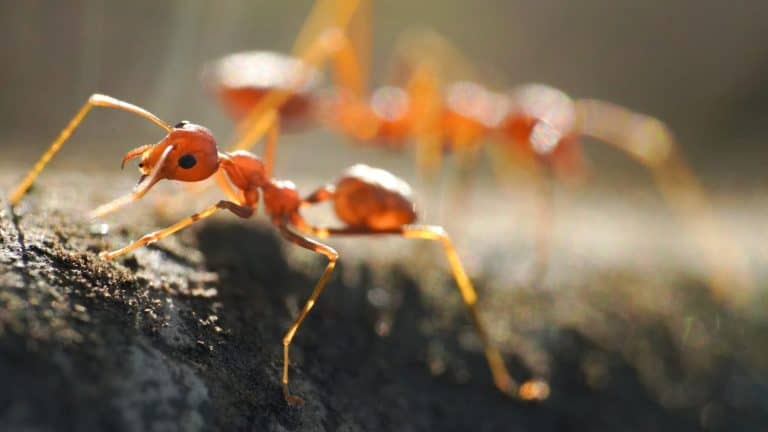
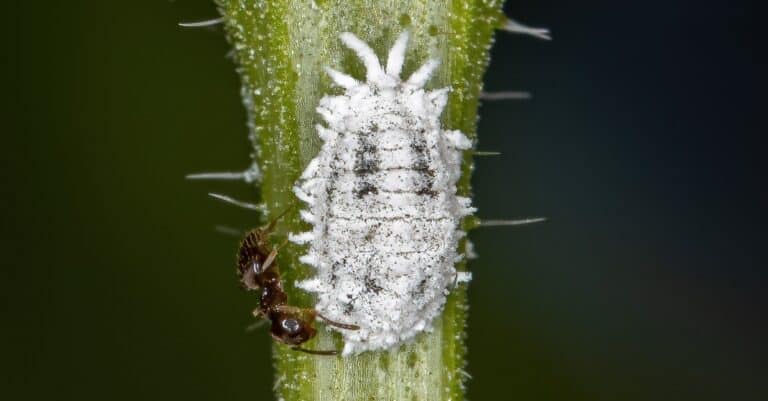
  • Often tended by ants that collect honeydew and may protect colonies; strength of ant associations varies among species and habitats.
  • Life cycle duration varies with species and temperature: from ~1-2 months per generation to several months; multiple generations per year in warm conditions, fewer in cool climates.
  • Adult female lifespan typically weeks to a few months; adult male lifespan usually only days, with total life cycle across species ranging ~30-180+ days.
  • Major agricultural/ornamental pests in several lineages (e.g., Planococcus, Pseudococcus, Maconellicoccus), but many species remain minor or localized herbivores.
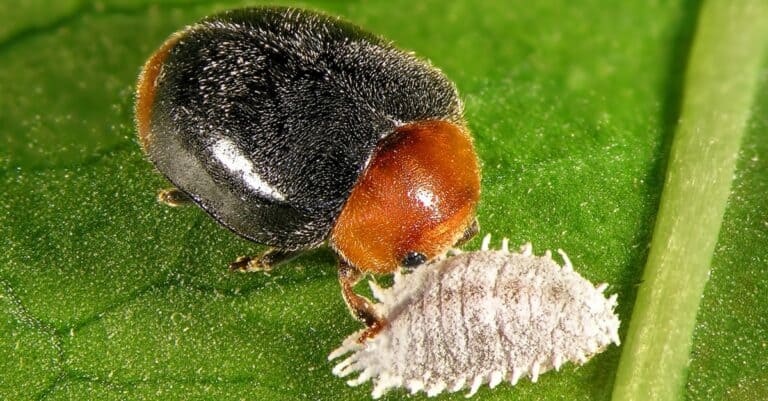
  • Natural enemies (parasitoid wasps, lady beetles, lacewings) commonly attack them; visibility and susceptibility depend on wax thickness and habitat.

Sexual Dimorphism

Sexual dimorphism is strong: females are wingless, oval, wax-covered sap feeders, while males are small, slender, usually winged, and short-lived. Males often do not feed as adults and mainly locate females for mating.

  • Usually winged with a single functional wing pair; delicate, gnat-like appearance.
  • Slender body with reduced mouthparts (often non-feeding as adults).
  • Often bears waxy tail filaments; lacks the bulky wax coat typical of females.
  • Very short adult lifespan (often only a few days).
  • Wingless, soft-bodied, oval to elongate; heavily covered in mealy wax.
  • Persistent sap-feeding adult stage; commonly sedentary or slow-moving.
  • Often produces cottony ovisac or waxy egg mass; high fecundity in many pest species.
  • Longer-lived adult stage (weeks to months, species- and temperature-dependent).

Did You Know?

Most mealybugs are only ~0.8-7 mm long as adult females, yet heavy infestations can stunt or kill large plants.

Their white "powder" is wax: a water-resistant coating plus filaments that can deter predators and pesticides.

Many species excrete honeydew that fuels black sooty mold-often the most visible sign of an infestation.

Males (when present) are usually tiny, short-lived, and winged; females are wingless and do most of the feeding and reproducing.

Some species hide on roots or under bark/leaf sheaths, making them hard to detect and easy to transport on plants.

Ants commonly "tend" mealybugs for honeydew, defending them from predators like a living security detail.

Key pest genera include Planococcus, Pseudococcus, and Maconellicoccus, affecting crops from grapes and citrus to ornamentals.

Unique Adaptations

  • Waxy secretions (powder, filaments, and ovisacs): Reduce desiccation, impede small predators/parasitoids, and can hinder contact insecticides-degree and shape vary widely among genera/species.
  • Phloem-feeding mouthparts: Piercing-sucking stylets allow continuous feeding on plant sap with minimal external damage early on, enabling infestations to build unnoticed.
  • Symbiotic microbes: Like many sap-feeding Hemiptera, mealybugs house obligate bacterial symbionts in specialized tissues to supply essential nutrients missing from phloem sap (patterns vary among lineages).
  • Extreme sexual dimorphism: Many species have sedentary, wingless females and delicate, winged males-an adaptation to plant-bound feeding with mate-finding by mobile males.
  • Camouflage and concealment: White wax can blend with plant fuzz, fungal growth, or bark; some species occur under soil or in root zones where wax and hiding reduce exposure.
  • Honeydew production as an ecological lever: While a waste product, honeydew helps recruit ants and fosters microbial growth (sooty molds), reshaping the plant's micro-ecosystem.

Interesting Behaviors

  • Sap-feeding with long stylets: They tap phloem sap, which is sugar-rich but nutrient-poor-driving constant feeding and honeydew output.
  • Ant mutualisms (variable by species/site): Ants harvest honeydew and may move mealybugs to new shoots, shelter them, or ward off parasitoid wasps and predators.
  • Cryptic lifestyle: Many species cluster in protected plant sites (node crevices, leaf axils, under calyxes, beneath bark) or on roots (root mealybugs), complicating scouting.
  • Ovisac building and egg-laying strategies: Many females produce cottony wax ovisacs; others retain eggs until near-hatch-strategies vary across the family.
  • Crawler dispersal: The first-instar nymphs ("crawlers") are the primary dispersal stage, walking to new feeding sites or hitchhiking on tools, people, animals, or wind currents.
  • Male "brief adult" phase: In species with males, adult males usually don't feed and may live only days, focusing on locating females via chemical cues.
  • Flexible life cycles: Depending on species and climate, populations can have a few generations per year outdoors to many overlapping generations in greenhouses; some overwinter on perennial hosts or in sheltered stages.

Cultural Significance

Mealybugs affect farming, gardening, and trade. As pests of grapes, citrus, tropical fruits, and houseplants, they shape quarantine and pest-control rules and make people inspect, wash, or isolate plants. Ant-tending shows mutualism; honeydew and sooty mold signal sap-feeder outbreaks.

Myths & Legends

Name origin and folk description: English common names like "mealybug" and "cottony"/"woolly" scale reflect long-standing observations that these insects look dusted with flour or wrapped in cotton-imagery repeated in garden writing and older horticultural guides.

In 19th–early 20th-century greenhouse stories, gardening manuals warned that mealybugs—called 'white cotton' pests—would suddenly appear on prized plants, as a warning to check new plants first.

'Ant-cattle' naturalist tradition: Popular nature writing has long compared ants tending sap-feeders (including mealybugs) to herders keeping livestock, a memorable cultural metaphor used in education and storytelling about the hidden dramas on plants.

Mealybug outbreak stories—often from vineyards, citrus groves, and tropical fruit farms—are part of local farm history, remembered as seasons of sticky honeydew and blackened leaves that led to new pest controls.

Conservation Status

NE Not Evaluated (family-level hub)

Has not yet been evaluated against the criteria.

Population Unknown

Looking for a specific species?

Citrus mealybug

Planococcus citri

In agriculture and horticulture, the unqualified common name "mealybug" most often refers to common greenhouse/ornamental infestations, where Planococcus citri is one of the best-known and most frequently encountered species worldwide.

  • Produces conspicuous white wax and honeydew; honeydew supports sooty mold that reduces photosynthesis and marketability of plants/fruit.
  • Highly polyphagous pest on ornamentals and many crops; often thrives in protected cultivation (greenhouses, interiorscapes).
  • Commonly managed with biological control (e.g., Cryptolaemus montrouzieri, Leptomastix dactylopii) plus horticultural oils/soaps and ant control.
  • Disperses effectively via crawler stages on plant material, tools, and trade, contributing to repeated reintroductions.

You might be looking for:

Citrus mealybug

28%

Planococcus citri

A very common greenhouse and citrus pest; white waxy coating; feeds on many ornamentals and crops.

Pink hibiscus mealybug

22%

Maconellicoccus hirsutus

Invasive pest in many regions; causes leaf curling and plant distortion via heavy feeding and honeydew.

Longtailed mealybug

18%

Pseudococcus longispinus

Recognizable by long posterior wax filaments (“tails”); frequent houseplant/greenhouse pest.

Grape mealybug

12%

Pseudococcus maritimus

Vineyard pest; honeydew production promotes sooty mold; can vector plant pathogens.

Ground/soil mealybugs (related group often also called mealybugs)

8%

Rhizoecidae

A different but related family of subterranean scale insects sometimes included under the broad common name “mealybug.”

Life Cycle

Birth 200 nymphs
Lifespan 3 years

Lifespan

In the Wild 1–12 years
In Captivity 1–15 years

Reproduction

Mating System Promiscuity
Social Structure Transient
Breeding Pattern Transient
Fertilization Internal Fertilization
Birth Type Internal_fertilization

Across Pseudococcidae, short-lived mobile males locate sedentary females (often via pheromones) and may mate with multiple females; females typically have brief matings and then oviposit/produce crawlers without male care. Some species show facultative or obligate parthenogenesis.

Behavior & Ecology

Social Colony Group: 50
Activity Cathemeral, Crepuscular
Diet Herbivore Phloem sap from actively growing (tender) plant tissues
Seasonal Hibernates

Temperament

Non-aggressive; avoids confrontation and relies on concealment
Gregarious tendencies at high population densities on suitable host tissues
Generally sedentary; crawler stages disperse more readily than adults
Defensive strategies emphasize waxy coverings, hiding sites, and dropping when disturbed (variable)

Communication

none known
long-range sex pheromones (especially female-produced) for mate location; strength and use vary
contact/short-range chemical cues on plant surfaces and wax for recognition and aggregation Variable
honeydew-mediated mutualisms with ants; ants respond to chemical and reward cues, indirectly shaping grouping
plant-mediated cues: host quality and feeding sites drive clustering more than direct social coordination

Habitat

Biomes:
Tropical Rainforest Tropical Dry Forest Savanna Desert Hot Desert Cold Mediterranean Temperate Grassland Temperate Forest Temperate Rainforest Boreal Forest (Taiga) Tundra Alpine Wetland +7
Terrain:
Plains Valley Hilly Mountainous Plateau Coastal Island Riverine +2
Elevation: Up to 14763 ft 9 in

Ecological Role

Plant-sap-feeding herbivores (often significant agricultural/ornamental pests) that alter plant physiology and mediate honeydew-based interactions in terrestrial ecosystems

Provide honeydew resources that fuel food webs (e.g., ants and other honeydew-feeding insects) and indirectly promote sooty mold growth on plant surfaces Act as prey/hosts supporting predator and parasitoid communities (e.g., lady beetles, lacewings, hoverflies, parasitic wasps) Influence plant health, productivity, and community composition through chronic phloem extraction, toxin injection, and facilitation of secondary infections Occasionally vector plant pathogens (notably some plant viruses) depending on species and host system

Diet Details

Other Foods:
Plant phloem sap Sap Sap from fruits and flower stalks Root and crown phloem sap Vascular plants

Human Interaction

Domestication Status

Wild

Pseudococcidae (mealybugs) are wild, not domesticated. People move them by trade of plants and produce; farmers manage them with chemicals, biological controls, and cultural methods in fields, greenhouses, and gardens. They feed on plant phloem, make waxy coverings and honeydew that causes sooty mold. Crawlers and human transport spread them; ants often tend them.

Danger Level

Low
  • No meaningful direct danger: they do not sting and are not known to be medically important biting insects
  • Minor nuisance indoors/greenhouses; contamination of plants and surfaces with wax and honeydew/sooty mold
  • Possible mild allergies/irritation for some people when handling heavily infested plants or moldy honeydew residues (variable)
  • Indirect risks from pest control: exposure to insecticides or residues if misused during management
  • Economic/food-security impacts via crop and ornamental plant damage (can be substantial though not a direct physical harm)

As a Pet

Not Suitable as Pet

Legality: Mealybugs are usually not treated as pets, but many are regulated as agricultural or quarantine pests. Keeping, moving, or selling live mealybugs or infested plants can be restricted or illegal under local plant health or invasive species rules.

Care Level: Expert Only

Purchase Cost: Up to $10
Lifetime Cost: Up to $50

Economic Value

Uses:
Major agricultural pest across many crops (varies by species and region) Ornamental/houseplant pest; greenhouse and nursery management burden Quarantine/trade impact (inspection, rejection, treatment costs) Integrated Pest Management (IPM) and biological control industry (costs and services) Research/teaching use in entomology, plant-insect interactions, and pesticide testing (limited, context-dependent)
Products:
  • (Negative value) crop yield and quality losses from sap-feeding and plant stress
  • (Negative value) honeydew contamination and sooty mold reducing marketability of fruit/ornamentals
  • (Negative value) plant virus transmission in some species leading to additional losses
  • (Service/industry) demand for biocontrol agents (e.g., parasitoid wasps, predatory lady beetles) and monitoring supplies used against mealybugs
  • (Service/industry) horticultural treatments: systemic/contact insecticides, oils/soaps, sanitation, and exclusion practices

Relationships

Predators 7

Mealybug destroyer lady beetle Cryptolaemus montrouzieri
Green lacewing Chrysoperla carnea
Brown lacewing Hemerobius humulinus
Minute pirate bug Orius insidiosus
Parasitic wasp Leptomastix dactylopii
Parasitic wasp Anagyrus pseudococci
Parasitic wasp Acerophagus papayae

Related Species 5

Soft scales Coccidae Shared Family
Armored scales Diaspididae Shared Family
Felt scales Eriococcidae Shared Family
Giant scales / cottony cushion scale relatives Monophlebidae Shared Family
Aphids Aphididae Shared Order

Ecological Equivalents 5

Animals that fill a similar ecological role in their ecosystem

Aphids Aphididae Plant-sap (phloem) feeders that produce honeydew, commonly engage in ant-tending mutualisms, and serve as major agricultural pests and vectors of plant viruses.
Whiteflies Aleyrodidae Sap-feeding insects that commonly infest ornamentals and crops, produce honeydew that leads to sooty mold, and are often managed with similar IPM tactics such as natural enemies, horticultural oils/soaps, and systemic insecticides.
Soft scale insects Coccidae Occupy a similar niche as sessile or semi-sessile phloem feeders with protective wax coverings; they produce honeydew and frequently associate with ants. Many species are serious woody-plant pests.
Armored scale insects Diaspididae Occupy similar plant-feeding microhabitats on stems and leaves and are often confused with mealybugs in horticulture; they differ by producing little or no honeydew but overlap strongly in host plants and management.
Psyllids Psylloidea Also known as jumping plant lice. Phloem feeders that can cause leaf distortion, produce honeydew that leads to sooty mold in some systems, and occasionally transmit plant pathogens — ecologically analogous pests on many crops.

Types of Mealybug

10

Explore 10 recognized types of mealybug

Citrus mealybug Planococcus citri
Pink hibiscus mealybug Maconellicoccus hirsutus
Longtailed mealybug Pseudococcus longispinus
Grape mealybug Pseudococcus maritimus
Vine mealybug Planococcus ficus
Papaya mealybug Paracoccus marginatus
Cotton mealybug Phenacoccus solenopsis
Striped mealybug Ferrisia virgata
Pineapple mealybug Dysmicoccus brevipes
Spherical mealybug Nipaecoccus viridis
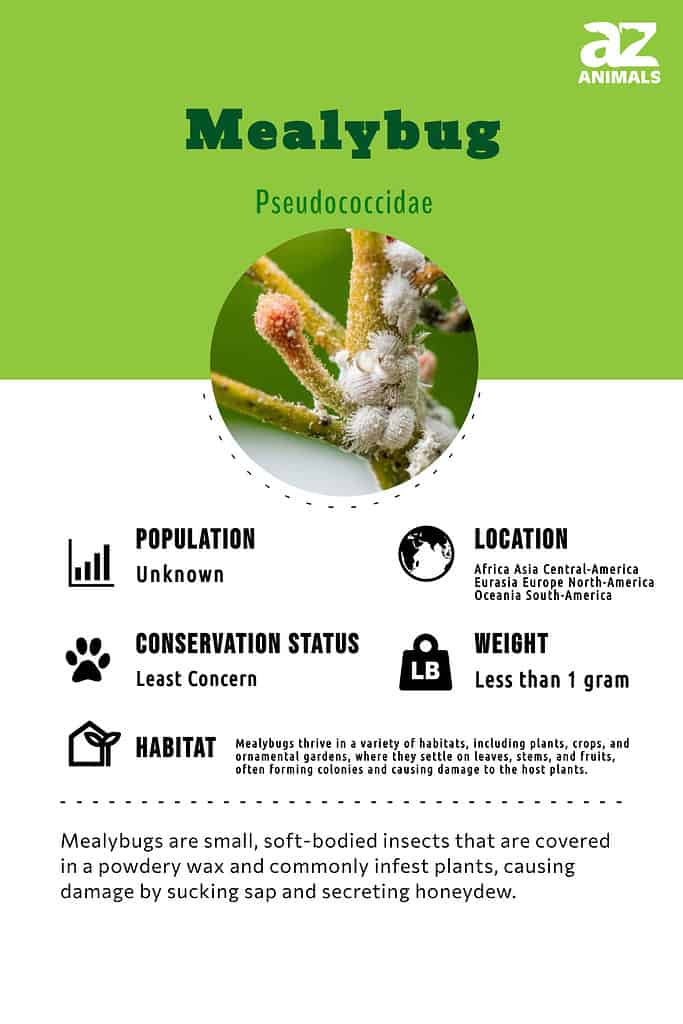
👁 Mealybugs are small, soft-bodied insects that are covered in a powdery wax and commonly infest plants, causing damage by sucking sap and secreting honeydew.
Mealybugs are small, soft-bodied insects that are covered in a powdery wax and commonly infest plants, causing damage by sucking sap and secreting honeydew.

Mealybugs are a type of unarmored scale insect found in warm, moist habitats around the world.

Many species are pests because they cause damage to many plants, both indoors and outdoors. They also transmit plant diseases, inject plant toxins, and cause deformity, leaf drop, and sooty mold as they feed off plant sap.

Mealybugs feed on certain plants and the most common are citrus mealybugs. Other species feed on mango, papaya, grapes, pineapple, cassava, cacti, sugarcane, coffee trees, ferns, gardenias, mulberry, sunflower, and orchids.

5 Incredible Mealybug Facts!
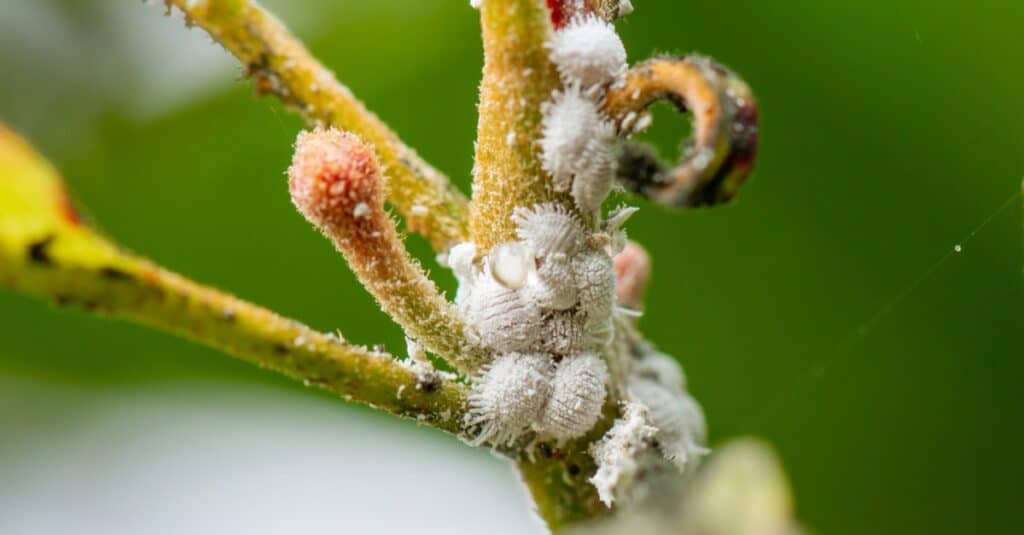
👁 Mealybugs are insects in the family Pseudococcidae.

Mealybugs are insects in the family Pseudococcidae.

©phomphan/Shutterstock.com

  • They have a symbiotic relationship with ants, which protect them from predators while they feed on the honeydew they excrete, and so are only serious when there are ants.
  • The “mealy” in their name comes from the protective, powdery wax layer they excrete while sucking plant juices.
  • Some species even infect carnivorous plants such as Sarracenia (pitcher plants).
  • They prefer to attach to the underside of leaves but can attach to the main body of the plant or its roots. For trees, they crawl under the bark.
  • Instead of the cottony, soft mold other pests produce, mealybugs leave behind a barnacle-like, hard coating.

Evolution and Origins

The geographic range of this mealybug pest was previously documented across southern Europe, the Middle East, and certain regions of northern Africa, while its presence in North America, specifically Pl. ficus, was initially observed in the early 1990s and subsequently in Mexico.

Originally native to North America, Phenacoccus solenopsis, commonly known as the cotton mealybug or Solenopsis mealybug, is a species of mealybug belonging to the family Pseudococcidae. It has expanded its presence to various regions globally and emerged as a significant pest affecting cotton crops.

Further, female mealybugs in their early stages experience three instars or developmental stages and remain mobile throughout their lives, while immature males (nymphs) settle down and construct a white, waxy cocoon.

Species, Types, and Scientific Names
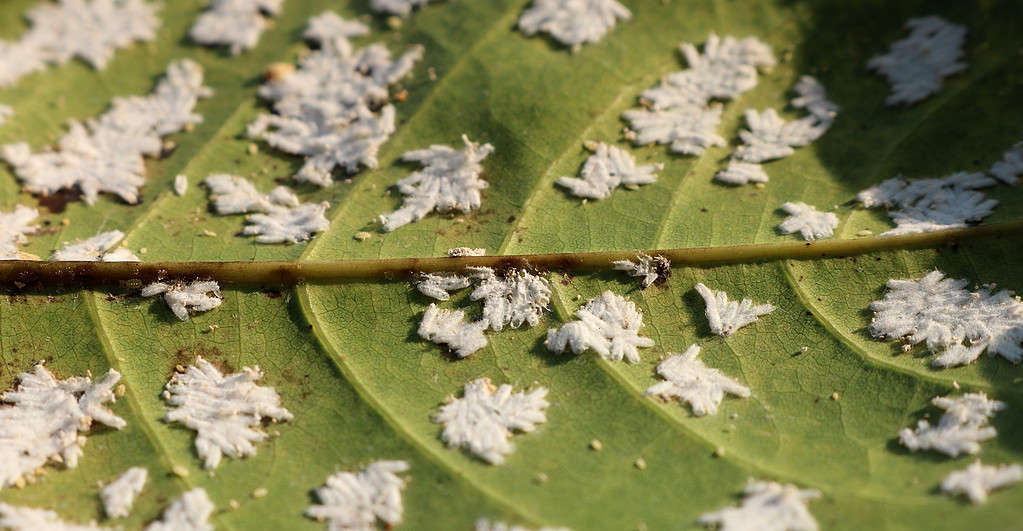
👁 Image

The suborder Sternorrhyncha and the superfamily Coccoidea encompass all 269 genera of mealybugs.

©Scorsby/Shutterstock.com

There are 269 genera of mealybugs. All of them are in the suborder Sternorrhyncha and the superfamily Coccoidea. In the United States, there are approximately 275 species. The most common mealybug species fall into the genera Pseudococcus and Planococcus. The citrus mealybug’s scientific name is Planococcus citri.

  • Planococcus citri
  • Phenacoccus manihoti
  • Pseudococcus
  • Gray pineapple mealybug
  • Antonina
  • Laminicoccus
  • Clavicoccus
  • Phyllococcus

Appearance: How To Identify
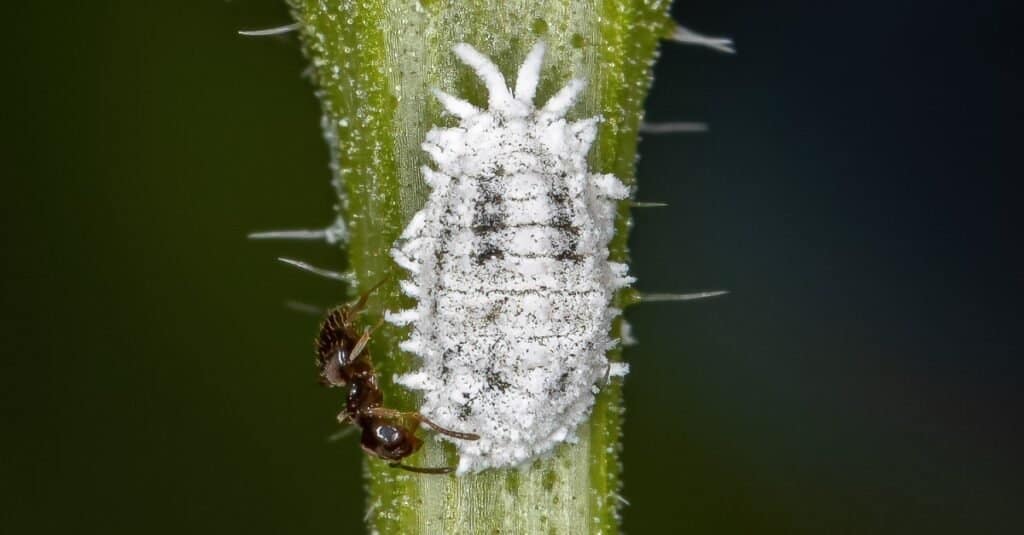
👁 Mealybug with an ant. Ants have a symbiotic relationship with mealybugs.

All mealybugs, which belong to the order Hemiptera, undergo hemimetabolous development or incomplete metamorphosis.

©iStock.com/ViniSouza128

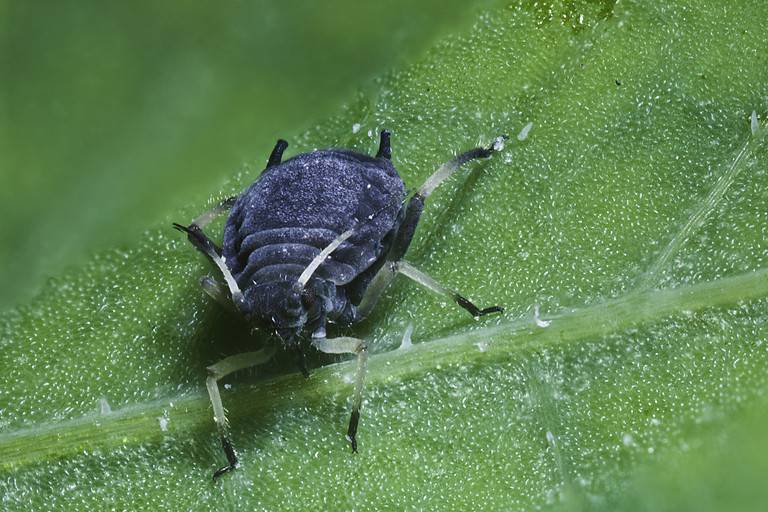
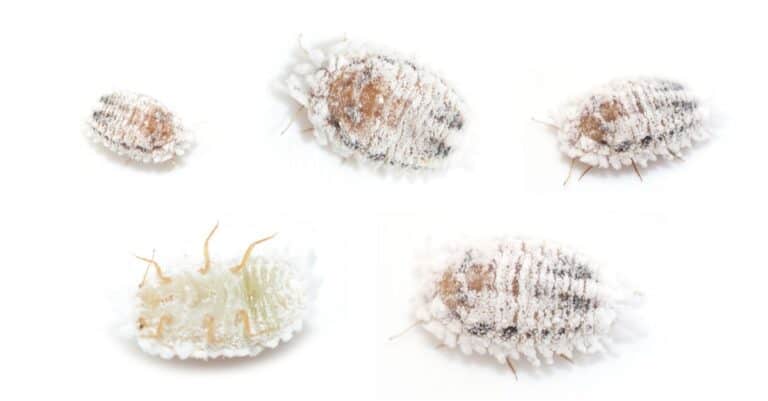
Mealybugs are insects of the order Hemiptera, and all members are hemimetabolous or undergo incomplete metamorphosis. Both sexes go from the egg to the nymph phase. Mealybugs are tiny white bugs that look like fuzzy white stuff on plant stems and leaves. They look similar to other scale insects but do not have a hard shell to cover their soft bodies. They are also flat and waxy, with segmented bodies and an oval shape.

Adult male mealybugs have wings and two long tail filaments, look like gnats or small flies, and are confused for fungus gnats. Mealybugs measure about 2mm long. In colonies, they look like white fuzzy clumps. When they first hatch from eggs, they are yellow in color and molt several times.

Habitat: Where to Find Them

Mealybugs can be found on a variety of host plants indoors, outdoors, and in greenhouses. They make their habitat in warm, moist climates around the world and are most active outdoors during warm, dry weather. Male mealybugs are rarely seen, while adult females look like cotton balls and are especially visible when laying waxy-covered eggs.

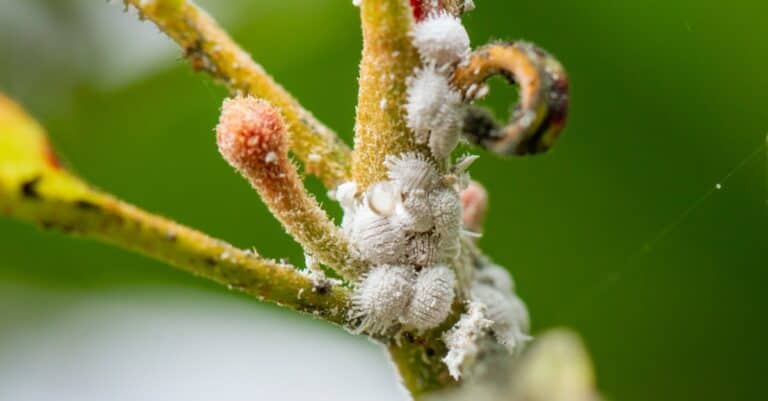
Root mealybugs make their habitat in the soil, so these are not often visible at first. Mealybugs create colonies in somewhat sheltered areas such as the base of stems, between the stem and touching leaves, branch crotches, plant crowns, or between two touching fruits. Mealybug eggs attach to twigs, leaves, or bark.

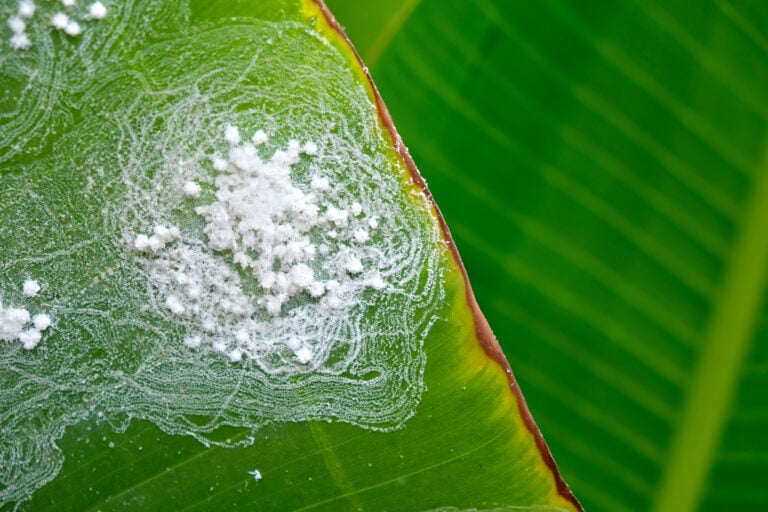
The best way to tell if your plants have an infestation of the scale insect is if there is a cottony, wax-like residue on the leaves of the plants or on the soil, or if there is a sooty black mold from the honeydew mealybugs excrete. Other ways to tell are if there are clumps of waxy-covered eggs, ants crawling up the plants, the plants have lost color, wilted, or have stunted growth, there is leaf drop or yellowing, or the soil has a bluish tint.

Diet

Mealybugs eat all parts of the plant, including the roots. Root mealybugs, who live underground, are in the genus Rhizoecus. Rhizoecus includes the ground mealybug, hibiscus mealybug, and Pritchard’s mealybug. Depending on the species, mealybugs usually have a type of host plant they are common pests of, such as the citrus mealybug or mango mealybug, but actually, eat a range of plants. Pritchard’s mealybug eats the roots of African violets and other plants.

Certain plants are toxic to mealybugs and other pests. However, they are also toxic to animals and children. They are:

  • Snake Plant
  • Jade Plant
  • Cast Iron Palm
  • Madagascar Dragon Tree
  • Chinese Evergreen

Prevention: How to Get Rid of Them

There are some different treatments for getting rid of mealybugs. The least invasive or risky treatment is to use a home remedy or biocontrol. But first, you must isolate the infected plants to prevent the spreading of the scale insect to other plants. You can then use a treatment listed below or in combination:

  • Wash the plants: Wash them under the shower if indoors, or garden hose if outdoors.
  • Use rubbing alcohol: Apply directly to the pests.
  • Use liquid soap spray: Fill a spray bottle with one quart of lukewarm water and a teaspoon of liquid dish soap, Castile, or another liquid soap.
  • Use a neem oil spray: Mix one quart of lukewarm water with one teaspoon of liquid soap and two teaspoons of organic neem oil.
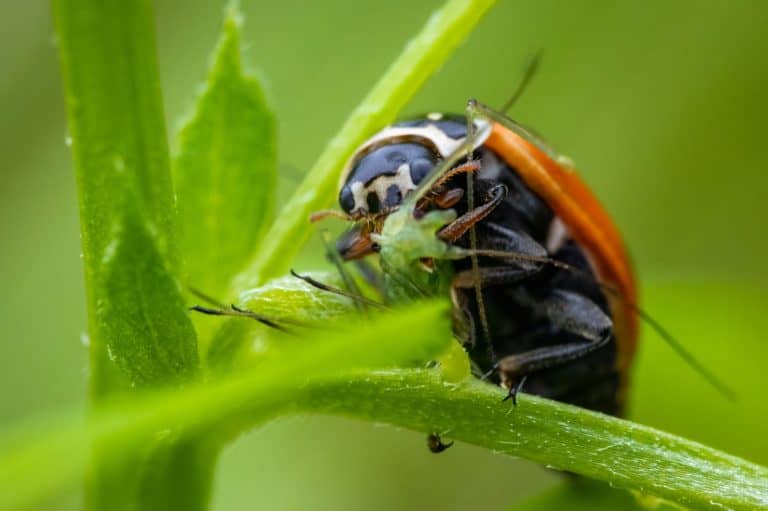
  • Biocontrol: Ladybugs or the larvae of green lacewings are natural predators of mealybugs.

To prevent mealybugs from returning, you’ll want to do a few things:

  • Inspect new plants carefully.
  • Control ants, which aid mealybugs as they feed off their honeydew.
  • Avoid applying nitrogen-containing fertilizer, which encourages mealybug eggs.

If all else fails after repeated attempts, it’s time to resort to pesticides. Cyfluthrin, bifenthrin, permethrin, or diazinon are effective, as are systemic pesticides such as imidacloprid, and compounds such as Flagship (thiamethoxam) and Safari (dinotefuran). Your very last resort is to discard severely infected plants.

View all 330 animals that start with M

Sources

  1. Wikipedia / Accessed October 9, 2021
  2. My Tasteful Space / Accessed October 9, 2021
  3. SFGate / Accessed October 9, 2021
  4. New Pro Containers / Accessed October 9, 2021
  5. Gardener's Path / Accessed October 9, 2021
  6. UC IPM / Accessed October 9, 2021
  7. NC State / Accessed October 9, 2021
  8. Leafy Place / Accessed October 9, 2021
  9. Gardeners Yards / Accessed October 9, 2021
  10. Garden Superior / Accessed October 9, 2021
  11. Animal Diversity Web / Accessed October 9, 2021
  12. Biology of Planococcus citri (Risso) (Hemiptera: Pseudococcidae) on Five Yam Varieties in Storage / Accessed October 9, 2021

About the Author

Rebecca Bales

Rebecca is an experienced Professional Freelancer with nearly a decade of expertise in writing SEO Content, Digital Illustrations, and Graphic Design. When not engrossed in her creative endeavors, Rebecca dedicates her time to cycling and filming her nature adventures. When not focused on her passion for creating and crafting optimized materials, she harbors a deep fascination and love for cats, jumping spiders, and pet rats.
Connect:

Thank you for reading! Have some feedback for us?

Contact the AZ Animals editorial team

Related Articles You May Find Interesting


Mealybug FAQs (Frequently Asked Questions)

Washing plants, using a home remedy such as soap spray or neem oil spray, applying rubbing alcohol, biocontrol using ladybugs or green lacewings, or applying pesticides are all ways to get rid of mealybugs.

Yes, dish soap is a great home remedy that suffocates them to death.

Mealybugs come with new plants, especially tropical houseplants, and transfer to existing plants you have. They can also come from contaminated potting soil and store-bought produce or flowers, or they can already be outdoors in your area. Overwatering, over-fertilizing, and ants attract mealybugs.

Mealybugs spread from new plants, already-infected plants, potting soil, store-bought produce or flowers, and ants.

Yes, plants can recover from mealybugs, especially if you notice the infestation early and take effective means to eliminate them.

No. They don’t bite humans, but their waxy secretions can sometimes cause irritation, redness, and itching for sensitive people.

Mealybugs are a pest that causes a lot of damage and death to plants.

The best way to identify them is by the females’ cottony, waxy eggs, the cottony, waxy segmented bodies of the nymphs, or the winged adult males that look like small gnats.