

M
Species Profile

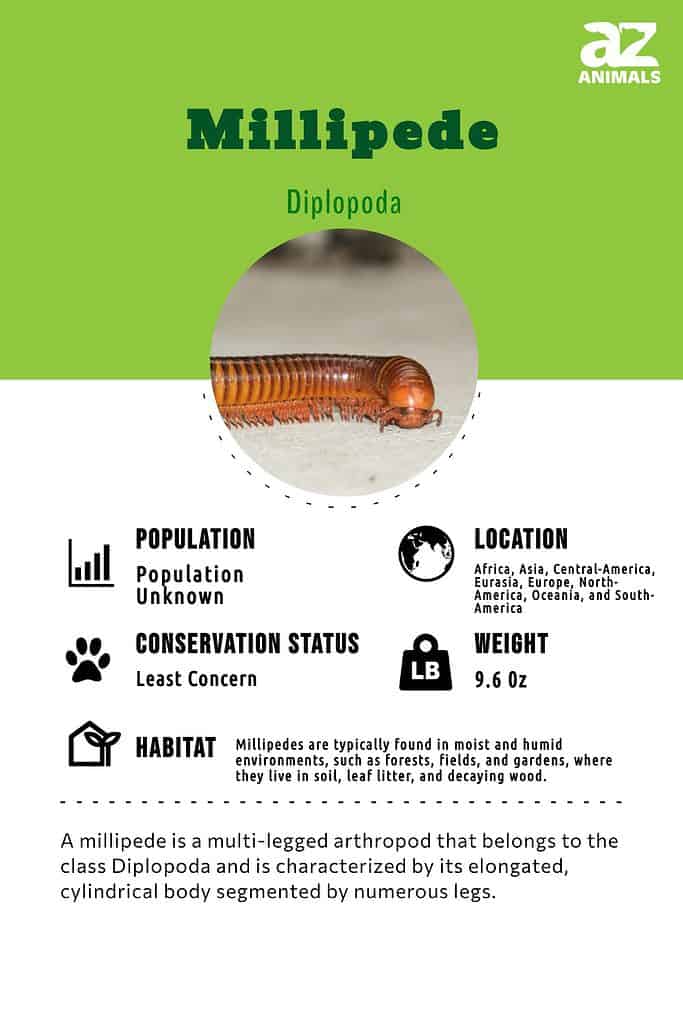
Millipede

Diplopoda

Soil's quiet recyclers with many legs
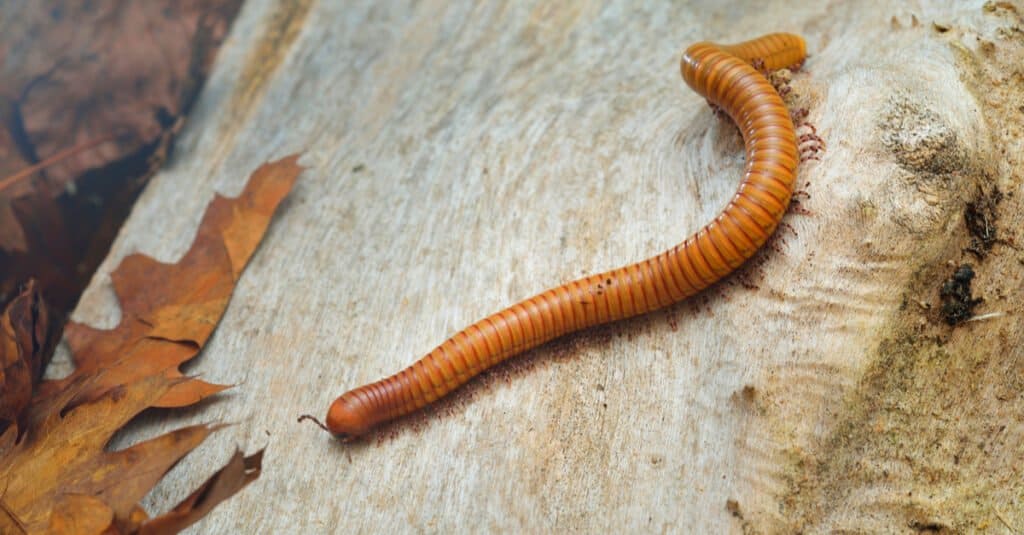
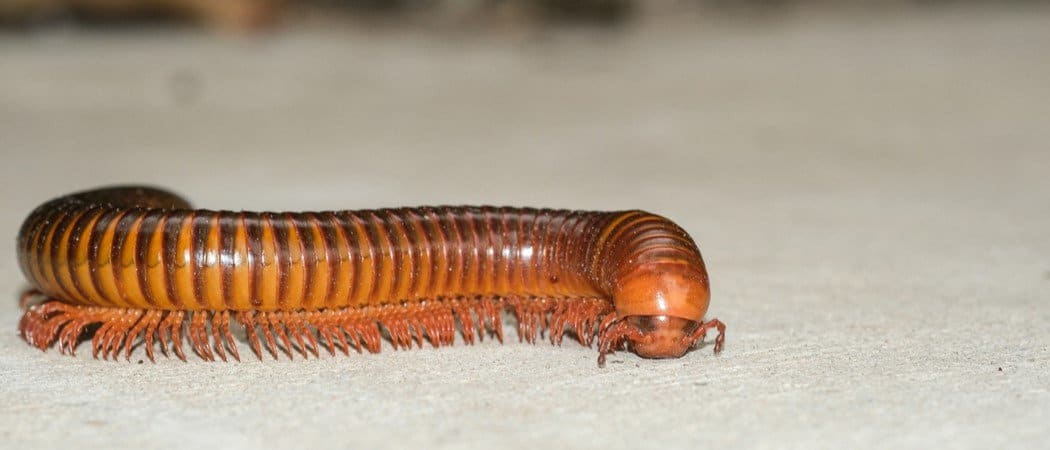
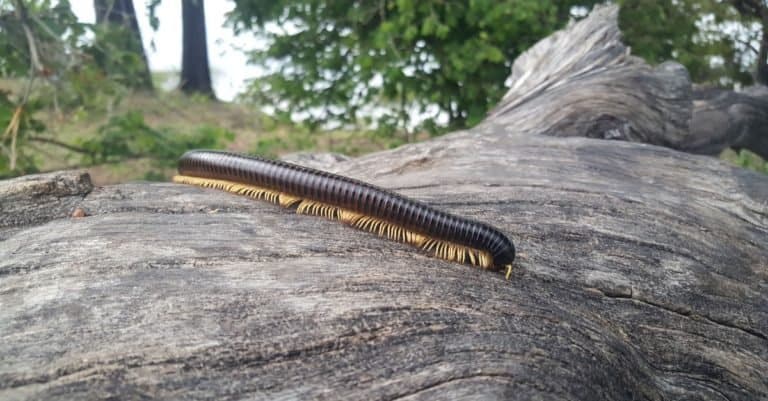
TopFotography/Shutterstock.com

Millipede Distribution

Click a location to explore more animals from that region

Loading map...

Found in 41 countries

๐Ÿ‡ฆ๐Ÿ‡ท Argentina ๐Ÿ‡ฆ๐Ÿ‡บ Australia ๐Ÿ‡ง๐Ÿ‡ท Brazil ๐Ÿ‡จ๐Ÿ‡ฆ Canada ๐Ÿ‡จ๐Ÿ‡ฑ Chile ๐Ÿ‡จ๐Ÿ‡ณ China ๐Ÿ‡จ๐Ÿ‡ด Colombia ๐Ÿ‡ฉ๐Ÿ‡ช Germany ๐Ÿ‡ฉ๐Ÿ‡ฟ Algeria ๐Ÿ‡ช๐Ÿ‡ฌ Egypt ๐Ÿ‡ช๐Ÿ‡ธ Spain ๐Ÿ‡ซ๐Ÿ‡ท France ๐Ÿ‡ฌ๐Ÿ‡ง United Kingdom ๐Ÿ‡ฌ๐Ÿ‡ท Greece ๐Ÿ‡ฎ๐Ÿ‡ฉ Indonesia ๐Ÿ‡ฎ๐Ÿ‡ณ India ๐Ÿ‡ฎ๐Ÿ‡น Italy ๐Ÿ‡ฏ๐Ÿ‡ต Japan ๐Ÿ‡ฐ๐Ÿ‡ช Kenya ๐Ÿ‡ฐ๐Ÿ‡ท South Korea ๐Ÿ‡ฑ๐Ÿ‡ฐ Sri Lanka ๐Ÿ‡ฒ๐Ÿ‡ฆ Morocco ๐Ÿ‡ฒ๐Ÿ‡ฝ Mexico ๐Ÿ‡ฒ๐Ÿ‡พ Malaysia ๐Ÿ‡ณ๐Ÿ‡ด Norway ๐Ÿ‡ณ๐Ÿ‡ต Nepal ๐Ÿ‡ณ๐Ÿ‡ฟ New Zealand ๐Ÿ‡ต๐Ÿ‡ช Peru ๐Ÿ‡ต๐Ÿ‡ฌ Papua New Guinea ๐Ÿ‡ต๐Ÿ‡ญ Philippines ๐Ÿ‡ต๐Ÿ‡ฑ Poland ๐Ÿ‡ท๐Ÿ‡บ Russia ๐Ÿ‡ธ๐Ÿ‡ช Sweden ๐Ÿ‡น๐Ÿ‡ญ Thailand ๐Ÿ‡น๐Ÿ‡ท Turkey ๐Ÿ‡น๐Ÿ‡ฟ Tanzania ๐Ÿ‡บ๐Ÿ‡ฆ Ukraine ๐Ÿ‡บ๐Ÿ‡ฌ Uganda ๐Ÿ‡บ๐Ÿ‡ธ United States ๐Ÿ‡ป๐Ÿ‡ณ Vietnam ๐Ÿ‡ฟ๐Ÿ‡ฆ South Africa

Size Comparison

Human 5'8"
Millipede 0 in

Millipede stands at 0% of average human height.

At a Glance

Class Overview This page covers the Millipede class as a group. Stats below are general traits shared across the class.
Also Known As Thousand-legger, Thousand-legged worm, Many-legged arthropod
Activity Nocturnal+
Lifespan 5 years
Weight 0.1 lbs
Status Not Evaluated
Did You Know?

The "most-legged" known animals are millipedes-some species exceed 1,000 legs (one record is over 1,300).

Scientific Classification

Class Overview "Millipede" is not a single species but represents an entire class containing multiple species.

Millipedes are myriapod arthropods in the class Diplopoda, characterized by a long, segmented body with most segments bearing two pairs of legs. They are primarily detritivores, feeding on decaying plant matter and contributing to nutrient cycling in soils.

Kingdom
Animalia
Phylum
Arthropoda
Class
Diplopoda

Distinguishing Features

  • Diplosegments (apparent body segments often represent fused segment pairs), typically with two pairs of legs per segment
  • Generally slow-moving detritivores; many curl into a spiral when disturbed
  • Chemical defenses are common (e.g., benzoquinones); some species aposematically colored
  • Distinct from centipedes (Chilopoda), which have one pair of legs per segment and are typically predatory

Physical Measurements

Males and females differ in size

Height
โ™‚ 0 in (0 in โ€“ 1 in)
Length
โ™‚ 2 in (0 in โ€“ 1 ft 3 in)
โ™€ 2 in (0 in โ€“ 1 ft 3 in)
Weight
โ™‚ 0 lbs (0 lbs โ€“ 0 lbs)
โ™€ 0 lbs (0 lbs โ€“ 0 lbs)
Top Speed
0 mph
crawling
Poisonous

Appearance

Primary Colors
Secondary Colors
Skin Type Segmented chitinous exoskeleton (often calcified) with a waxy cuticle; texture ranges from smooth and glossy to matte/keeled; some (e.g., bristly millipedes) are softer with conspicuous setae.
Distinctive Features
  • Body length range across class: ~2-4 mm (small bristly forms) to ~30-38 cm (giant spirostreptids).
  • Leg number varies widely: ~30 to 750+ legs; most trunk segments are diplosegments with two pairs.
  • Cylindrical (Julida, Spirostreptida) to dorsoventrally flattened "flat-backed" forms (Polydesmida).
  • Some can tightly enroll into a ball (Glomerida "pill millipedes"), unlike isopod pillbugs/woodlice.
  • Head with one pair of antennae; many have simple eyes (ocelli), while cave species may be reduced/absent.
  • Defensive ozopores (repugnatorial glands) on many segments; secretions can irritate skin/eyes in some species.
  • Typically slow-moving, moisture-seeking detritivores; commonly found under logs, stones, leaf litter, and in soil.
  • Ecology varies: mostly detritivory and fungal feeding; some opportunistic herbivory, occasional omnivory; rare predation reported.
  • Behavior often nocturnal/crepuscular; many burrow or wedge into crevices; humidity dependence varies by habitat.
  • Key difference from centipedes: millipedes usually slower, non-venomous, rounded bodies with two leg pairs per segment; centipedes are flatter, faster, one leg pair per segment, with venom claws.

Sexual Dimorphism

Dimorphism is common but subtle: males often have modified legs (gonopods) and may be slimmer or more active in mate-searching. Females are often slightly larger or more robust, especially when gravid.

โ™‚
  • One or more trunk leg pairs modified into gonopods for sperm transfer.
  • In some groups, relatively slimmer body or longer legs compared with females.
  • Seasonal mate-searching behavior may correspond to more worn or abraded limbs in adults.
โ™€
  • Often slightly larger-bodied or broader in mature individuals, especially when carrying eggs.
  • Some species show greater abdominal/segment distension during reproductive periods.
  • Oviposition-related robustness (more mass in posterior segments) can be apparent in adults.

Did You Know?

The "most-legged" known animals are millipedes-some species exceed 1,000 legs (one record is over 1,300).

They're not insects: millipedes are myriapods (Class Diplopoda), closer to centipedes than to beetles or ants.

Many species can roll into a tight ball (pill millipedes, order Glomerida), but most simply coil into a spiral.

Defensive chemicals vary widely: some release benzoquinones (sharp odor/irritant), and a few can release small amounts of hydrogen cyanide.

Body form differs by order: Julida and Spirostreptida are typically cylindrical; Polydesmida are often "flat-backed" with lateral keels.

Some species appear in huge synchronized "mass movements" or outbreaks, becoming noticeable parts of local natural history.

Unique Adaptations

  • Diplosegments: the hallmark "two pairs of legs per segment" comes from fused embryonic segments, producing double-leg-bearing trunk rings in most of the body.
  • Repugnatorial glands (ozadenes) and ozopores: many species have paired defensive glands opening along the sides, producing lineage-specific chemical cocktails.
  • Volvation (in Glomerida): a mechanical defense where the body forms a near-sealed sphere, protecting legs and underside.
  • Detachable bristles (Polyxenida, bristly millipedes): instead of relying mainly on chemical sprays, these tiny millipedes use barbed setae that can snag predators.
  • Heavy, calcified cuticle in some groups: helps resist desiccation and abrasion during burrowing and life in coarse soil/litter.
  • High segment and leg-number diversity: across the class, trunk segments range from a few dozen to well over 100, and leg counts span from a few dozen to over 1,000.
  • Gut-microbe partnership: many rely on microbial communities to help break down tough plant polymers, aiding decomposition and soil formation.

Interesting Behaviors

  • Detritivore-first lifestyle: across Diplopoda, most species feed on decaying leaves/wood, fungi, and microbe-rich litter-though some also nibble living plants, scavenge, or opportunistically eat soft-bodied prey.
  • Nocturnal and moisture-seeking: many hide in soil, under logs, or in leaf litter by day and forage at night; drought pushes them deeper underground or into sheltered microhabitats.
  • Coiling and curling: when threatened, many species coil to protect softer undersides and legs; pill millipedes (Glomerida) can fully enroll into a ball.
  • Chemical defense displays: individuals may "leak" or spray defensive secretions from lateral glands; some pair this with warning colors (aposematism), while others remain cryptic.
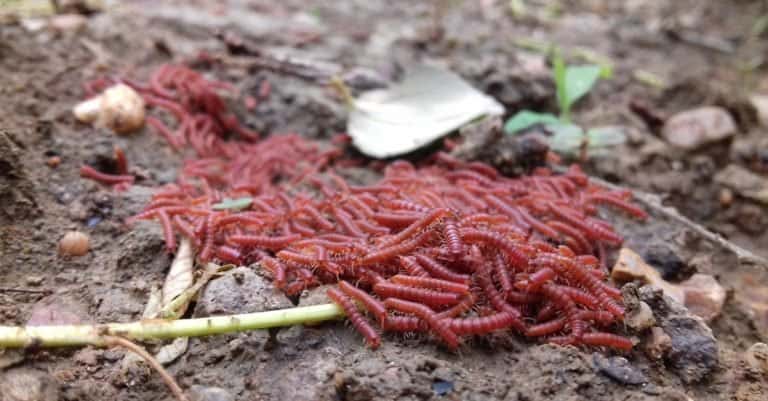
  • Aggregation: millipedes often cluster in favorable humid refuges; in some species, aggregations are linked to mating opportunities or microclimate stability.
  • Courtship and specialized mating: males in many groups use modified legs (gonopods) to transfer sperm; courtship ranges from brief contact to prolonged pairing, varying strongly among orders.
  • Parental investment varies: many lay eggs in soil, but some show egg guarding or construct protective chambers-more common in certain lineages than others.
  • Periodic mass occurrences: in parts of Japan, Parafontaria millipedes can emerge in large numbers in episodic cycles, sometimes becoming a well-known seasonal phenomenon.

Cultural Significance

Millipedes (Diplopoda) stand for "many-ness" and help teach decomposition and soil health. In gardens and compost they are helpful recyclers, though some eat plants. Large Spirostreptida are classroom pets. In Japan, Parafontaria ("train millipedes") mass emergences make rails slippery, so people watch and manage them.

Myths & Legends

Name lore: European vernacular names like "thousand-legger" and the coined word "millipede" (from Latin roots meaning "thousand" and "foot") fed traditional tall-tale imagery of creatures with countless legs-more a cultural exaggeration than a fixed count.

Japan's "train millipede" tradition: recurring mass emergences of Parafontaria in some regions became a local natural-history story passed down as a predictable phenomenon that communities watch for because of impacts on rail traction.

Folk-medicine associations: in parts of Africa and Asia, ethnobiological records describe millipedes being included in traditional remedies (often using dried bodies or expressed oils/secretions), reflecting longstanding cultural pharmacopoeias tied to the animal's strong chemical defenses.

Natural-history curiosity tales: early collectors' cabinets and popular writings in Europe treated "thousand-legged worms" as marvels of the hidden soil world, inspiring exaggerated travelogues and curiosity stories about their numbers and secretions.

Looking for a specific species?

Giant African millipede

Archispirostreptus gigas

This is the species most commonly called "millipede" in popular media and the pet trade, and it is frequently used as a familiar example when people think of large millipedes.

  • Across Diplopoda, adult body size spans roughly ~2 mm (small bristly millipedes, order Polyxenida) to ~30-38 cm in the largest giant millipedes; body form ranges from cylindrical "worm-like" to strongly flattened or even pill-rolling types.
  • Across millipedes (Diplopoda), leg counts vary: many species have a few dozen to a few hundred legs, while some, like Illacme, can have over 1,000; most segments are diplosegments with two pairs.
  • Lifespan across millipedes is variable: small/temperate species may live ~1-3+ years, while many larger species commonly reach ~5-10+ years (often longer in stable captive conditions); development is typically slow with multiple molts.
  • Ecology is dominated by detritivory and microbe-grazing (leaf litter, rotting wood, fungi/biofilms), making millipedes major contributors to soil formation and nutrient cycling; some lineages are more omnivorous or opportunistically scavenging/predatory.
  • Behavior varies but commonly includes humidity-seeking, sheltering in soil/wood/litter, and strong anti-predator defenses (tight coiling, hard exoskeleton, and glandular chemical secretions-composition varies by lineage and can include quinones or cyanogenic compounds in some taxa).

You might be looking for:

Giant African millipede

22%

Archispirostreptus gigas

One of the largest millipedes; common in the pet trade; native to parts of East Africa.

Black-and-gold flat-backed millipede

18%

Apheloria virginiensis

Brightly patterned North American polydesmid millipede with chemical defenses.

Pill millipedes

17%

Glomeridae

Group of millipedes able to roll into a ball (superficially like pillbugs, which are crustaceans).

Greenhouse millipede

16%

Oxidus gracilis

Small, often invasive millipede commonly found in gardens and greenhouses worldwide.

American giant millipedes

14%

Narceus spp.

Large cylindrical millipedes common in eastern North America (genus-level identification often used).

Life Cycle

Birth 100 nymphs
Lifespan 5 years

Lifespan

In the Wild 1โ€“10 years
In Captivity 2โ€“15 years

Reproduction

Mating System Polygynandry
Social Structure Transient
Breeding Pattern Transient
Fertilization Internal Fertilization
Birth Type Internal_fertilization

Across millipedes, mating is typically polygynandrous with both sexes mating multiple times. Males transfer sperm via gonopods during internal fertilization and may guard females briefly; pair bonds are not maintained and parental care is generally absent.

Behavior & Ecology

Social Congregation Group: 5
Activity Nocturnal, Crepuscular, Cathemeral, Diurnal
Diet Detritivore moist, well-rotted leaf litter and decayed hardwood
Seasonal Hibernates

Temperament

Generally non-aggressive and slow-moving; relies on avoidance rather than confrontation.
Strongly thigmotactic; seeks tight contact with substrate and cover for security.
Defensive when handled: curls into a coil, may feign death, or exude repellent secretions.
Chemical defenses vary widely across the class (irritants, quinones, sometimes cyanogenic compounds).
Tolerance of nearby conspecifics is common in humid refuges, enabling temporary aggregations.

Communication

None known in most; occasional stridulation reported in some taxa
Chemical communication via pheromones Mate-finding, recognition, aggregation in some species
Contact chemoreception using antennae and mouthparts during courtship and encounters.
Tactile signaling (antennation, body-to-body contact) important in mating interactions.
Substrate-borne vibrations from movement may convey disturbance locally, not specialized calls.
Chemical cues in secretions and feces can influence local spacing and refuge reuse in some species.

Habitat

Biomes:
Tropical Rainforest Tropical Dry Forest Savanna Desert Hot Desert Cold Mediterranean Temperate Grassland Temperate Forest Temperate Rainforest Boreal Forest (Taiga) Tundra Alpine Wetland +7
Terrain:
Mountainous Hilly Plateau Plains Valley Coastal Island Riverine Volcanic Karst Rocky Sandy Muddy +7
Elevation: Up to 14763 ft 9 in

Ecological Role

Soil/litter decomposer (detritivore) and nutrient-cycling 'shredder' across terrestrial ecosystems; important in forest floors, grasslands, and other moist soil-litter habitats, with diet breadth and degree of opportunism varying among lineages.

accelerates leaf-litter breakdown by shredding detritus releases and redistributes nutrients (N, P, C) back into soils promotes microbial and fungal decomposition by increasing litter surface area contributes to soil formation and aggregation via fecal pellets/frass enhances soil aeration and mixing through burrowing and movement supports detrital food webs by converting coarse litter into finer organic matter

Diet Details

Other Foods:
Leaf litter Rotting wood and bark Decomposing herbaceous plant material Soil organic matter Fungi Algae and biofilms Animal dung Fallen fruit and decaying plant material Live plant tissues +3

Human Interaction

Domestication Status

Wild

Diplopoda (millipedes) have no true domestication like dogs or cats but many species are kept as pets, in classrooms, research, or composting. People maintain captive lines without planned breeding. Millipedes vary widely in size and lifespan, live mostly in moist leaf litter as decomposers, are often nocturnal, and defend by coiling and releasing chemicals.

Danger Level

Low
  • Generally non-aggressive and not venomous; they do not sting and typically cannot injure humans mechanically (rare pinching by very large individuals is usually minor).
  • Defensive secretions can cause skin irritation, redness, blistering, or temporary staining/discoloration; sensitivity varies by person and by millipede lineage/chemistry.
  • Eye exposure to secretions can be painful and potentially serious (chemical conjunctivitis/keratitis risk); prompt rinsing and medical evaluation may be needed.
  • Handling/cleaning enclosures can pose allergy/irritant risks (dust, frass, secretions) and typical terrarium hygiene concerns (mold, mites).
  • In some regions, large aggregations can become nuisance issues (slippery surfaces, indoor intrusion), but direct harm to people is uncommon.

As a Pet

Suitable as Pet

Legality: Keeping millipedes is usually legal, but laws differ by country or state. Rules may ban taking protected natives, require import/export permits, restrict invasive species, or apply agricultural quarantine. Captive-bred pets are often required.

Care Level: Moderate

Purchase Cost: $5 - $100
Lifetime Cost: $50 - $400

Economic Value

Uses:
Ecosystem services (decomposition, nutrient cycling, soil formation) Education and outreach (classroom/terrarium animals) Pet and hobbyist trade (limited but ongoing) Scientific research (soil ecology, chemical defenses, biodiversity) Agriculture/horticulture (minor pest/nuisance impact in some settings)
Products:
  • no major standardized commercial products across the class; limited trade as live specimens for pets/education
  • ecosystem service value via soil health and compost/leaf-litter breakdown (indirect, non-market in most contexts)

Relationships

Predators 10

Centipedes Scolopendra spp.
Ground beetles Carabidae
Rove beetles Staphylinidae
Spiders Lycosidae
Ant Formicidae
Toads and frogs Bufonidae; Ranidae
Lizards Squamata
Shrew Soricidae
Hedgehog Erinaceidae
Thrushes Turdidae

Related Species 5

Centipedes Chilopoda Shared Phylum
Pauropods Pauropoda Shared Phylum
Symphylans Symphyla Shared Phylum
Arachnids Arachnida Shared Phylum
Insects Insecta Shared Phylum

Ecological Equivalents 5

Animals that fill a similar ecological role in their ecosystem

Earthworm Oligochaeta Share a major soilโ€‘engineering and decomposition role: fragmenting organic matter, mixing soil horizons, and accelerating nutrient cycling. Earthworms are typically more reliant on moist soils and lack the chemical defenses that are typical of many millipedes.
Woodlouse Oniscidea Terrestrial detritivores occupying leaf litter and rotting wood; they strongly overlap in microhabitat and diet (decaying plant matter and associated microbes), though woodlice are crustaceans and regulate water balance differently.
Springtails Collembola Common litter and soil microarthropods that feed heavily on fungi, algae, and detritus. They often co-occur with millipedes and participate in the same decomposer food web but are much smaller and have different grazing impacts.
Termites Isoptera Key decomposers of dead wood and plant litter. Like millipedes, they process cellulose-rich material and influence soil formation, though termites are social and often rely on symbiotic microbes to digest cellulose.
Detritivorous beetle larvae Coleoptera Occupy similar decomposer niches in soil and rotting wood and contribute to litter breakdown. Beetle larvae often specialize on particular substrates (e.g., dung, wood, carrion), whereas millipede diets are generally broader within detritus and associated microbes.

Types of Millipede

12

Explore 12 recognized types of millipede

Giant African millipede Archispirostreptus gigas
American giant millipede Narceus americanus
Cyanide millipede (one common North American species) Harpaphe haydeniana
Yellow-spotted millipede Apheloria virginiensis
Pill millipede Glomeris marginata
Bristly millipede Polyxenus lagurus
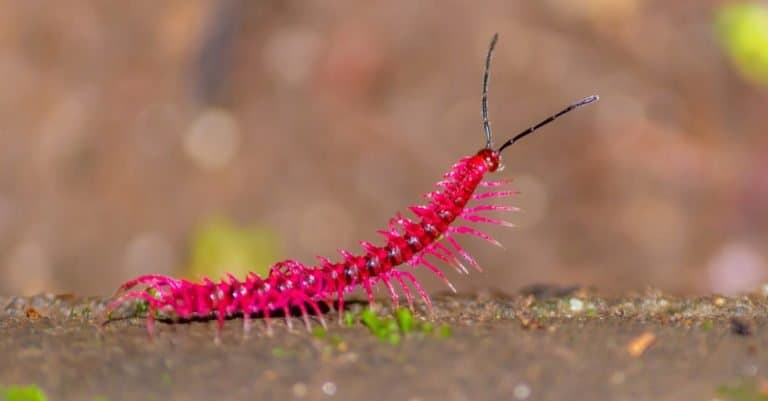
Pink dragon millipede Desmoxytes purpurosea
Greenhouse millipede Oxidus gracilis
Portuguese millipede Ommatoiulus moreleti
Tachypodoiulus millipede Tachypodoiulus niger
The many-legged millipede (extreme leg count) Illacme plenipes
Bumblebee millipede Anadenobolus monilicornis
๐Ÿ‘ Image

The millipede belongs to the phylum of arthropods, falling under the same family as spiders and butterflies.

They arenโ€™t considered to be insects, though they have a hard exoskeleton that protects their body.

Though some species of millipede are poisonous, they are largely without defense against natural predators. They have no pinchers, stingers, or claws to deter the animals that hunt them, and they donโ€™t even bite.

At the most, theyโ€™ll release a toxin that creates an effect that is similar to an allergic reaction.

Centipede vs. Millipede
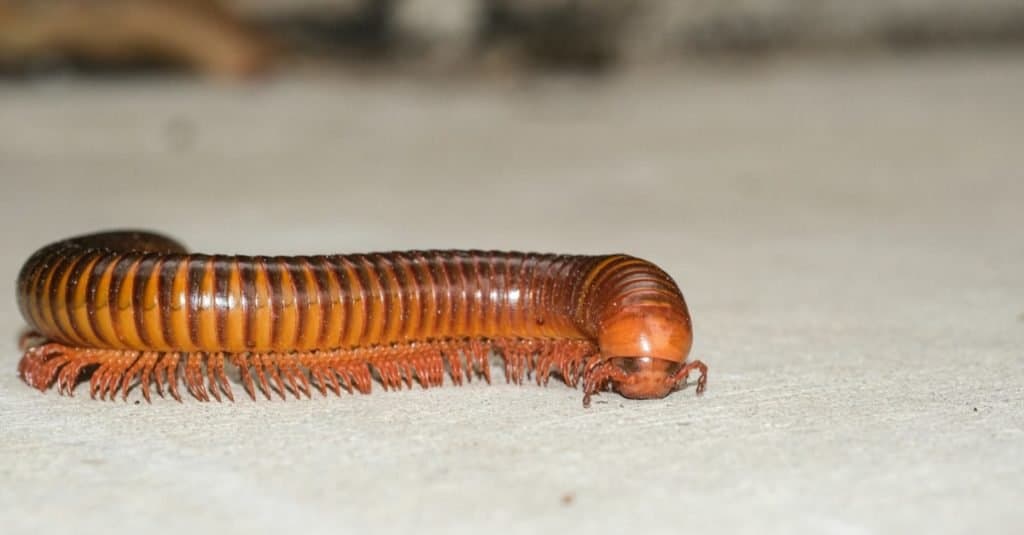
๐Ÿ‘ Big millipede walking on concrete floor.

ยฉTopFotography/Shutterstock.com

Though the millipede and the centipede are easy to confuse, there are a few major differences between them, starting with their classification.

While both the centipede and the millipede are arthropods, only the millipede belongs to the Diplopoda class. The centipede, on the other hand, belongs to the Chilopoda class.

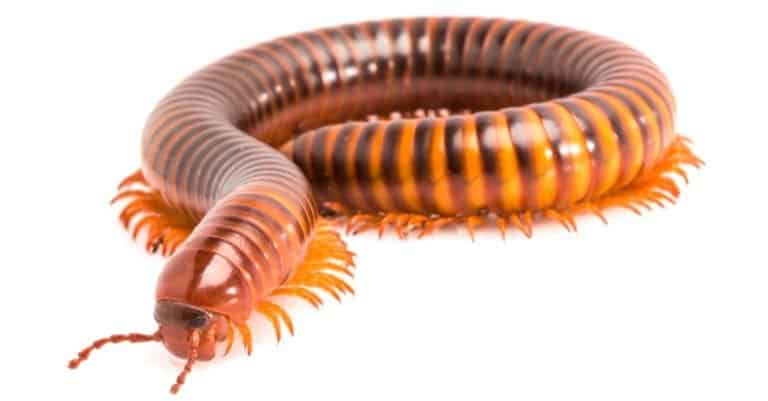
The way that the legs are sectioned along the body differs as well, since millipedes have two pairs per fragment, while centipedes only have one pair. Additionally, the antennae make them easy to differentiate, since millipedes have short antennae (and centipedes have long).

Millipedes prefer the vegetation that they find underground, while some centipedes are so ravenous that theyโ€™ve been known to consume whole frogs. While centipedes bite, millipedes do not.

5 Incredible Millipede Facts!
๐Ÿ‘ Animals With Exoskeletons-Millipede

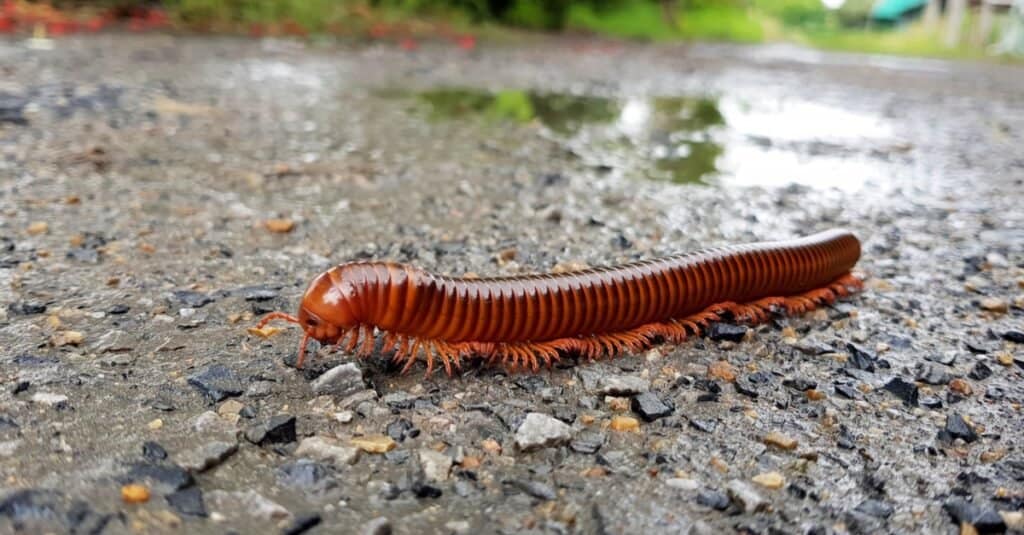
Millipede walking on the ground in the rainy season of Thailand.

ยฉSawangkaew/Shutterstock.com

  • Despite their name, millipedes donโ€™t have anywhere close to 1,000 feet. Instead, they have 100 legs or less on average, though it can have up to 750 legs at the most.
  • Archaeological findings suggest that the millipede was the first animal to walk on land, dating the species back 400 million years. One ancient relative of millipedes grew to 7 feet in length!
  • As the millipede grows, it molts. When they are still young, these molting sessions allow them to grow additional legs each time.
  • Potentially 80,000 species of these animals are alive in the world today, even though researchers and scientists have only identified 12,000.
  • The entire body of the millipede houses the heart of the millipede, and the aorta is located at the head.

Species, Types, and Scientific Name
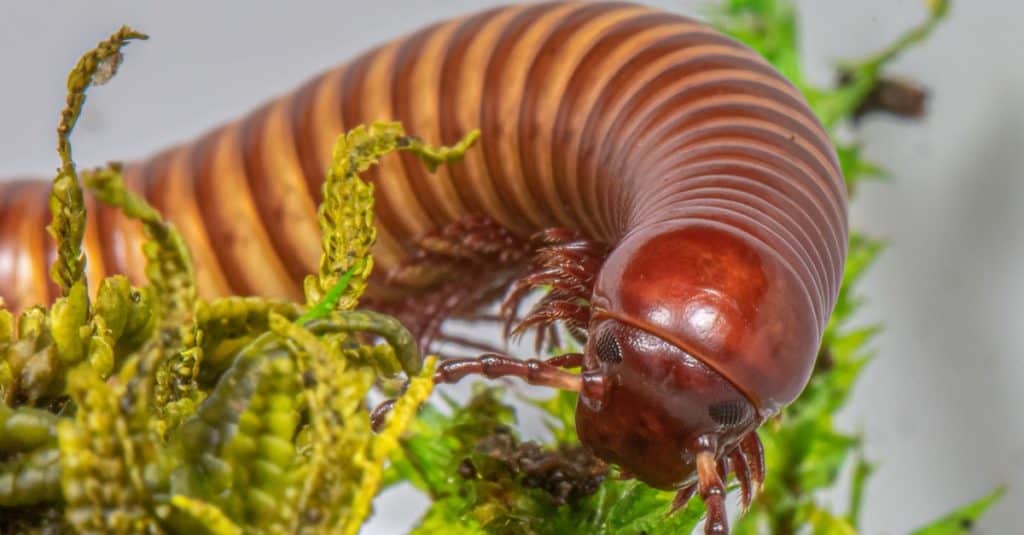
๐Ÿ‘ Texas Giant Gold Millipede close up

ยฉWildPx LLC/Shutterstock.com

These animals are part of the Animalia kingdom classification, falling under the Anthropoda phylum. They donโ€™t quite meet the standards for insect classification, due to the sectioning of their body.

They are much more closely related to the spider, though the millipedeโ€™s class is Diplopoda. Their scientific name is the same as their class โ€“ Diplopoda.

Even though the word โ€œmillipedeโ€ comes from a prefix that suggests that they have 1,000 legs, no recorded millipede has ever had this many.

Their scientific name is much more accurate in the description. โ€œDiplopodaโ€ comes from New Latinโ€™s word โ€œdiplopodus,โ€ which literally translates to โ€œdouble foot.โ€ This interpretation is likely due to the two pairs of legs that each fragment of their body has.

In total, scientists have discovered 12,000 different species, divided amongst 2 subclasses, which are:

  • Penicillata, which has a soft body with bristles along their sides (1 order)
  • Arthropleuridea, which is now extinct and is believed to have breathed through gills (3 orders)
  • Chilognatha, which is divided into two infraclasses that included short-bodied millipedes and millipedes that look fairly similar to the worm
  • Scientists believe that there are as many as 80,000 species of these animals in the world today.

Here is a full list of biological species:

  • Archispirostreptus gigas
  • Polydesmus angustus
  • Greenhouse millipede
  • Eumillipes persephone
  • Pneumodesmus newmani
  • American giant millipede
  • Orthomorpha dentata
  • House Centipede
  • Pseudopolydesmus pinetorum
  • Anoplodesmus cylindricus
  • Apheloria virginiensis
  • Orthomorpha coarctata
  • Yellow-spotted millipede
  • Nannaria swiftae
  • Trichopetalum uncum
  • Brachycybe producta
  • Brachycybe rosea
  • Gosodesmus
  • Rudiloria trimaculata
  • Brachoria dentata
  • Desert millipede
  • Lithobius forficatus
  • Narceus annularis
  • Cylindroiulus latestriatus
  • Cylindroiulus britannicus
  • Polyxenus lagurus
  • Cylindroiulus vulnerarius
  • Trigoniulus corallinus
  • Ophistreptus guineensis
  • Scolopendra dehaani
  • Narceus gordanus
  • Thereuopoda clunifera
  • Scolopendra subspinipes
  • Amazonian giant centipede
  • Scolopendra cingulata
  • Scolopendra morsitans
  • Siphonethus enotatus
  • Motyxia sequoiae
  • Ancistroxenus comans
  • Gyrodrepanum lamprum
  • Brachyiulus lusitanus
  • Paraspirobolus lucifugus
  • Nopoiulus kochii
  • Oriulus venustus
  • Aniulus garius
  • Leptoiulus belgicus
  • Archiboreoiulus pallidus
  • Anoplodesmus saussurii

Evolution and Origins

Millipedes are ancient arthropods that have existed on earth for over 400 million years, long before the dinosaurs. They belong to the class Diplopoda and are known for their long and cylindrical body segmented by multiple legs.

Despite their name, millipedes do not have a thousand legs, with the number of legs varying from species to species, but usually, they have between 30 and 90 legs. Over the course of time, millipedes have undergone evolution to adapt to their environment, and in this article, we will discuss their evolution and origins.

The earliest millipedes were thought to have evolved from a group of ancient arthropods known as the myriapods, which included centipedes, millipedes, and other multi-legged creatures.

These ancient myriapods were believed to have lived in the soil, where they fed on decaying vegetation and dead insects. As they evolved, millipedes developed a thicker and tougher exoskeleton to protect themselves from predators, and their legs grew in number to help them burrow deeper into the soil and avoid danger.

Over time, millipedes continued to evolve, adapting to different environments and ecological niches. Some millipedes developed the ability to produce defensive chemicals, such as hydrogen cyanide, to deter predators, while others evolved a more symbiotic relationship with plants, acting as pollinators and seed dispersers.

Appearance
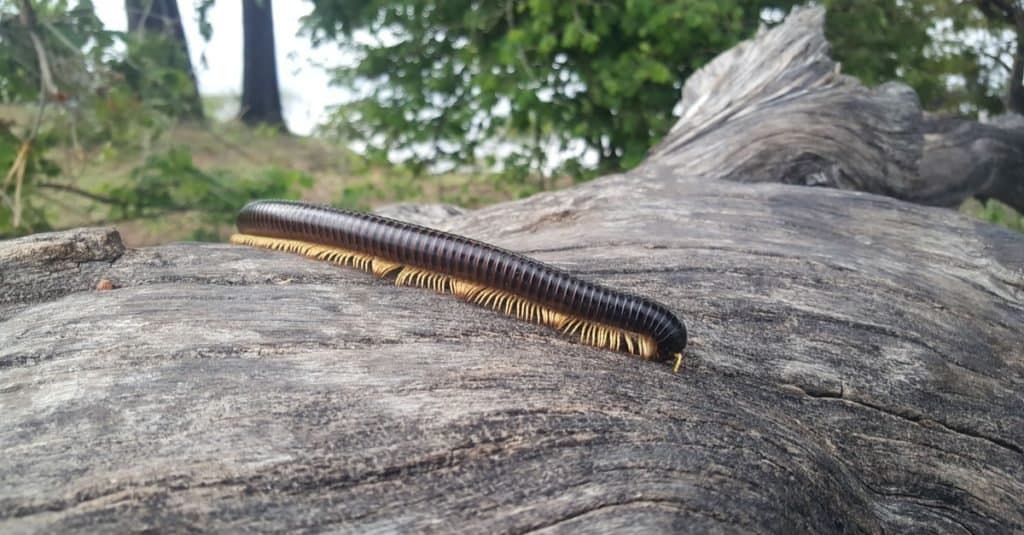
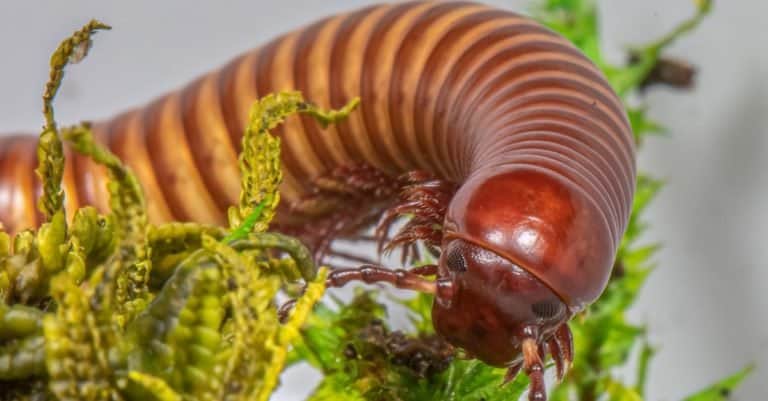
Much like other arthropods, the animal has an exoskeleton, though there is a species of extinct millipedes that have had a soft exterior. As small as 2 mm (or as giant as 35 cm), they are typically either brown or black, broken up by bright colors to indicate that a certain species is poisonous.

Certain species of millipedes can also grow quite large. For example, the African giant black millipede is the largest millipede in the world and can reach up to 15 inches in length! Millipedes also have only a single pair of antennae, its use is unknown.

The legs are an easy way to tell what kind of animal you see. These animals have an average of 100 legs, but there are some giant variations that can have upwards of 750 legs. The legs are jointed, and each section of the animalโ€™s exoskeleton has two pairs.

Habitat

๐Ÿ‘ Largest Millipede - Sonoran Giant Desert Millipede

ยฉAlex Stemmers/Shutterstock.com

Considering how many different species there are, they are found on nearly every continent. They prefer to burrow in their natural habitat, which often consists of warm and moist soil.

Millipedes rarely survive in the house. However, sometimes, garden millipedes become house millipedes after infiltrating the home, especially in extreme weather conditions. Regardless, they cannot survive in the home for long.

Millipedesโ€™ environment must be humid, even if they are kept as a pet in an artificial habitat. The only area that has yet to become the habitat of the millipede is Antarctica.

Diet
๐Ÿ‘ What Do Millipedes Eat
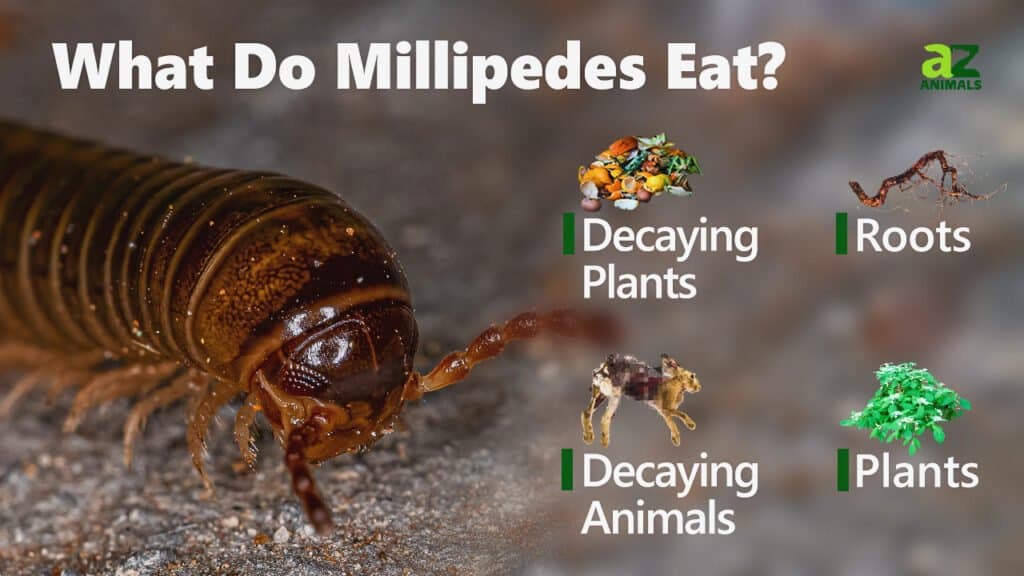
Millipedes eat decaying plant material, leaves or flower buds, other bugs, and fungi.

This animal is a detritivore, which means that it eats dead organic matter in the earth like damp wood pieces, decayed leaves, and other materials that naturally exists in their moist habitat underground.

However, these potential scavengers wonโ€™t allow themselves to go hungry. If the land becomes overly dry or they are unable to consume the detritus that they normally eat, theyโ€™ll go after living plant life to satisfy their appetite.

Fun fact: Did you know that millipedes are detritivores, which means they mostly eat things that have died? Discover more about their diet by reading โ€œWhat Do Millipedes Eat? 9 Surprising Meals!โ€

Prevention

These animals are rather easy to eliminate from the home with either defensive insect sprays or simply picking them up to remove them from the home. They are not dangerous, but they can be quite a pest for a healthy garden.

View all 330 animals that start with M

Sources

  1. Thought Co / Accessed February 18, 2021
  2. How Stuff Works / Accessed February 18, 2021
  3. Wikipedia / Accessed February 18, 2021
  4. Library of Congress / Accessed February 18, 2021
  5. Orkin / Accessed February 18, 2021
  6. Merck Manual / Accessed February 18, 2021

About the Author

Rebecca Bales

Rebecca is an experienced Professional Freelancer with nearly a decade of expertise in writing SEO Content, Digital Illustrations, and Graphic Design. When not engrossed in her creative endeavors, Rebecca dedicates her time to cycling and filming her nature adventures. When not focused on her passion for creating and crafting optimized materials, she harbors a deep fascination and love for cats, jumping spiders, and pet rats.
Connect:

Thank you for reading! Have some feedback for us?

Contact the AZ Animals editorial team

Related Articles You May Find Interesting

Scientists Just Scanned 2,000 Ants in One Week to Create One of the Most Detailed Biodiversity Databases Ever

Scientists Can Now Predict Where the Worldโ€™s Deadliest Scorpions Are Most Likely to Strike


Millipede FAQs (Frequently Asked Questions)

Millipedes are Omnivores, meaning they eat both plants and other animals.

Millipedes belong to the Kingdom Animalia.

Millipedes belong to the phylum Arthropoda.

Millipedes belong to the order Diplopoda.

Millipedes are covered in Shells.

Millipedes are found worldwide.

Millipedes live in moist micro-habitats.

Millipedes prey on decaying plant material, plants, and insects.

Predators of Millipedes include birds, badgers, and rodents.

The average litter size for a Millipede is 500.

Some Millipede species have a poisonous bite!

The scientific name for the Millipede is Diplopoda.

There are 10,000 species of Millipede.

No. While there are some millipede species that release a toxin that causes itchiness and irritation, they have no venom or poison to threaten other animals.

The total number of legs on the millipede varies. There are some species that have as little as 40 legs, while some grow long enough to have 750 legs. In general, most species have about 100 legs or less, and they are broken into two pairs per segment.

A millipede is usually brown or black, and they have a strong exoskeleton to protect them. They have short antennae, two pairs of legs in each segment of the body, and a flat head. If the species is poisonous, the arthropod will have bright colors along its sides as a way to warn others.

Millipedes have two pairs of legs for each segment of their body. They also have a pair of short antennae and are often found in humid areas with moist soil.

A few millipedes wonโ€™t be more than a nuisance. However, if too many are present in outdoor soil, they can cause damage to plant life.

Millipedes are easy to pick up by hand, moving them outside the home. They can also be sprayed with typical insect repellant products, but they arenโ€™t harmful. Defending a home from millipedes by repairing leaks and eliminating debris is much safer.

No. Millipedes lack the venom required to kill a human.