Quick Take
- Mastering 200 songs is the ultimate vocal achievement for mockingbirds to establish their dominant territory.
- The 10-foot vertical limit on nests creates a mandatory constraint that exposes chicks to predators.
- Surprisingly, Galápagos Mockingbirds deviate from standard diets to consume the blood of birds.
- Implementing facial recognition is a necessary scouting stage for mockingbirds to identify recurring threats.
There are 16 to 17 different species of mockingbirds, including the Northern Mockingbird, which lives in the United States, southern Canada, Mexico, and parts of the Caribbean. The rest live further south, from Mexico through Central America, the Caribbean, and South America. Some live on islands and others on the mainland. These birds are mostly the same shape and close to the same size. Most of the species are shades of gray with accents of white. One species is brown on its back, while one species, the Blue Mockingbird, is mostly blue. They are all proficient singers, mastering the songs of other birds and composing tunes of their own. They are also aggressive fighters, ready to take on anyone or anything that invades their territory.
Incredible Mockingbird Facts
- Mockingbirds are omnivores that eat insects and other invertebrates, as well as seeds, fruits, small animals, and carrion.
- These birds are smart. They can remember the faces of people who come too close to their nests, and they aren’t likely to forgive subsequent intrusions.
- Some of the species of mockingbirds are endangered or threatened.
- Many of these birds are named for the places where they are found, while others are named for their appearance.
- The species of the Galápagos Islands were in the Nesomimus genus until 2007, when they were moved to the Mimus genus.
Where to Find Mockingbirds
These songbirds live in the Western Hemisphere. The Mimus varieties range from Mexico through Central and South America. Some live in the Caribbean. Most are named for where they live or what they look like. The Northern Mockingbird, for instance, ranges from southern Canada through the United States and into Mexico and the Caribbean. It has the northernmost range of all the Mimidae species.
The Bahama Mockingbird, not surprisingly, lives in the Caribbean, primarily in the Bahamas. Meanwhile, the Patagonian Mockingbird lives primarily in the Patagonian region of Argentina and Chile. The Chilean Mockingbird lives only in Chile, west of the Andes. The Tropical Mockingbird lives in the tropical regions of Central and South America and on the coast of Brazil. And the critically endangered Socorro Mockingbird lives on the tiny Mexican island of Socorro.
The Galápagos Mockingbird, the endangered Floreana Mockingbird, the vulnerable Española Mockingbird, and the near threatened San Cristobal Mockingbird all live in the Galápagos Islands.
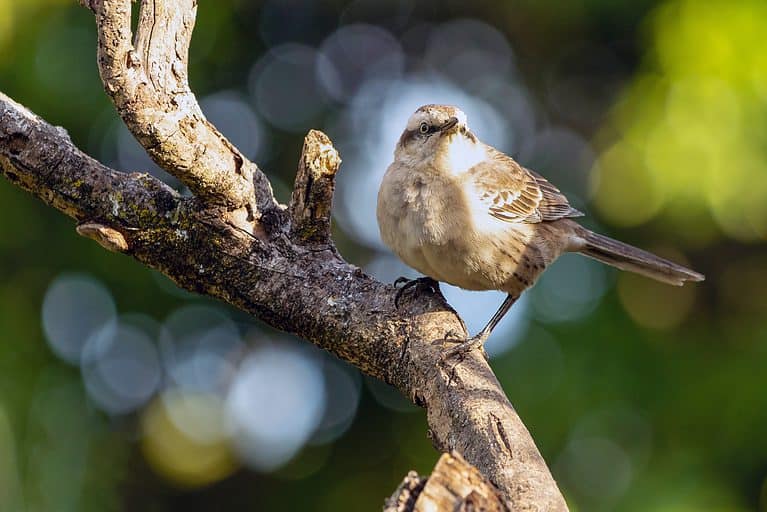
The Chalk-browed Mockingbird, the Brown-backed Mockingbird, the White-banded Mockingbird, and the Long-tailed Mockingbird are all Mimus species native to South America.
The Melanotis genus includes the Blue Mockingbird, which lives in Mexico, and the Blue-and-white Mockingbird, which lives in Mexico and Central America.
Habitat
Mockingbirds inhabit a variety of habitats. They often live in forest edges, but not deep within dense forests. They frequently make their homes in desert scrublands, savannas, and grasslands, amongst shrubs and thickets, farms, open pastures, and parks. Mockingbirds prefer sparse trees and open areas with shrubs, hedges, or other cover. These birds are just as comfortable in rural and remote areas as they are in suburban or even urban settings.
Mockingbird Nests
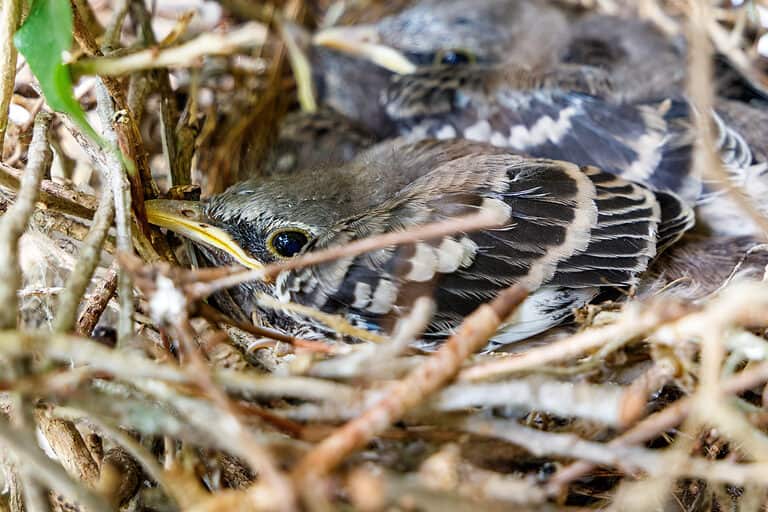
These birds build their nests from materials easily found in their environment. They are generally cup-shaped with a loose base made of twigs. The birds line the nests with whatever softer materials they can find, including grasses, rootlets, cotton or other soft fibers, and even bits of paper.
Classification and Scientific Name
Mockingbirds belong to the Mimidae family. This family also includes catbirds, thrashers, and tremblers, all of which somewhat resemble one another. Mockingbirds all originally belonged to the genus Orpheus, as described by Swainson in 1828. Today, they belong to either the genus Mimus, meaning mimic, or the genus Melanotis, meaning black-eared. Four species from the Galápagos Islands belonged to a separate genus, Nesomimus, for a long time, but they were absorbed into the Mimus genus in 2007.
Within the genus Mimus, there are 14 different species. The Northern Mockingbird, Mimus polyglottos, is the only one that is regularly seen in the United States. This bird’s scientific name is Latin, meaning many-tongued mimic.
Appearance
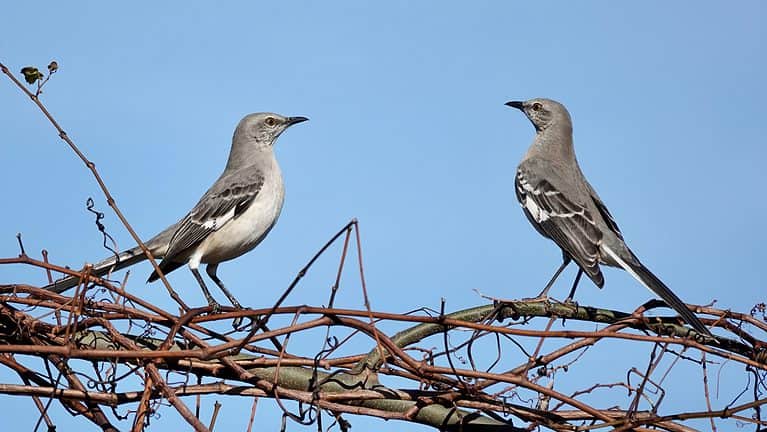
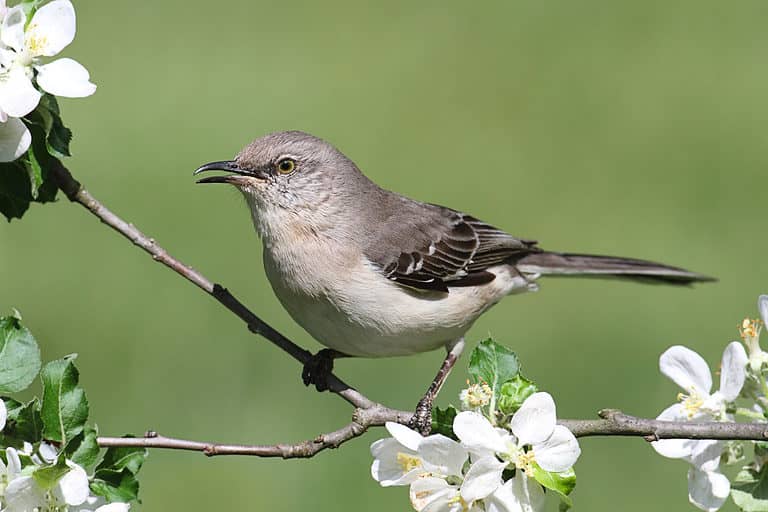
Mockingbirds all look similar, at least with regard to their shape. They are a bit larger than the average passerine, with lengths ranging from about 8 to 11 inches. They have a somewhat sleek appearance, probably due to their long, pointed bills and their tails, which can be as long as the rest of their body. Their legs are on the lengthy side as well. Most of the Mimus species are shades of gray with various markings, including white stripes and bands. The Brown-backed Mockingbird is similar, but it has a brown back.
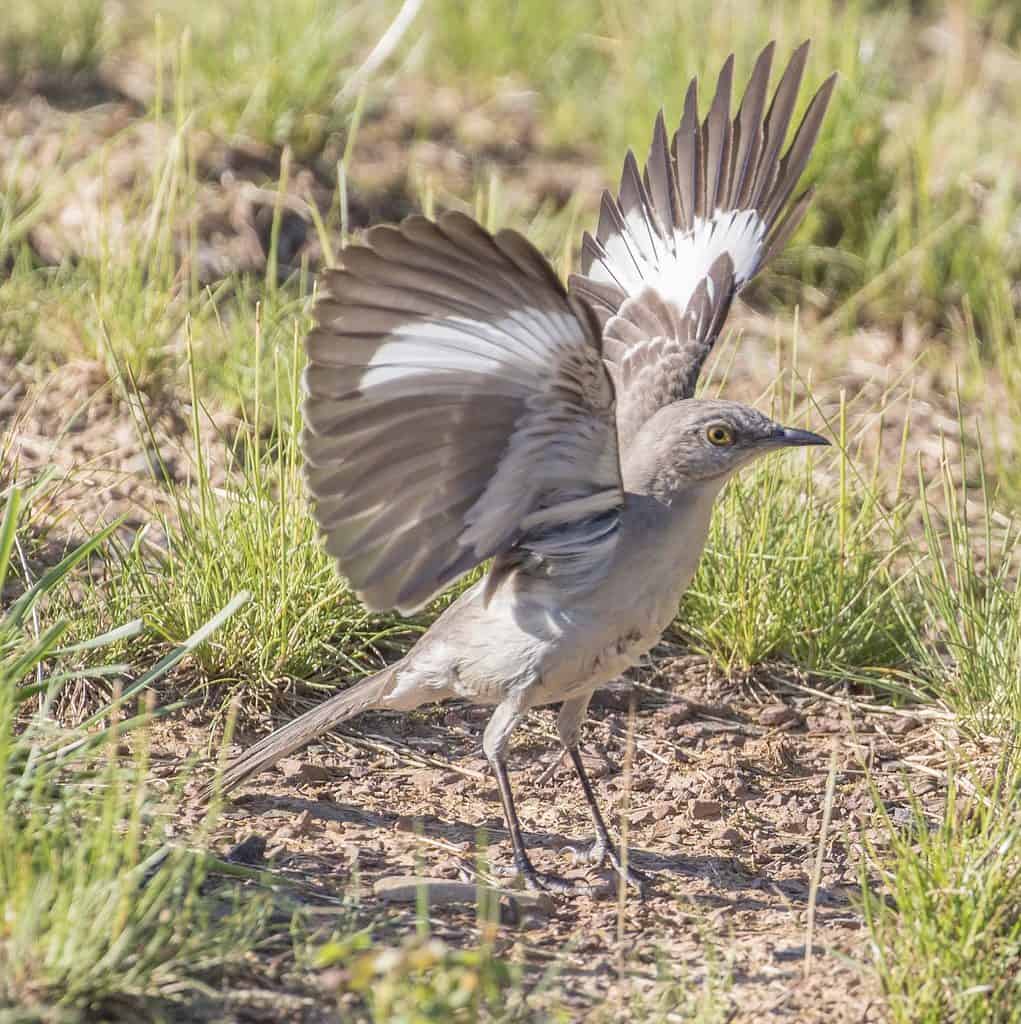
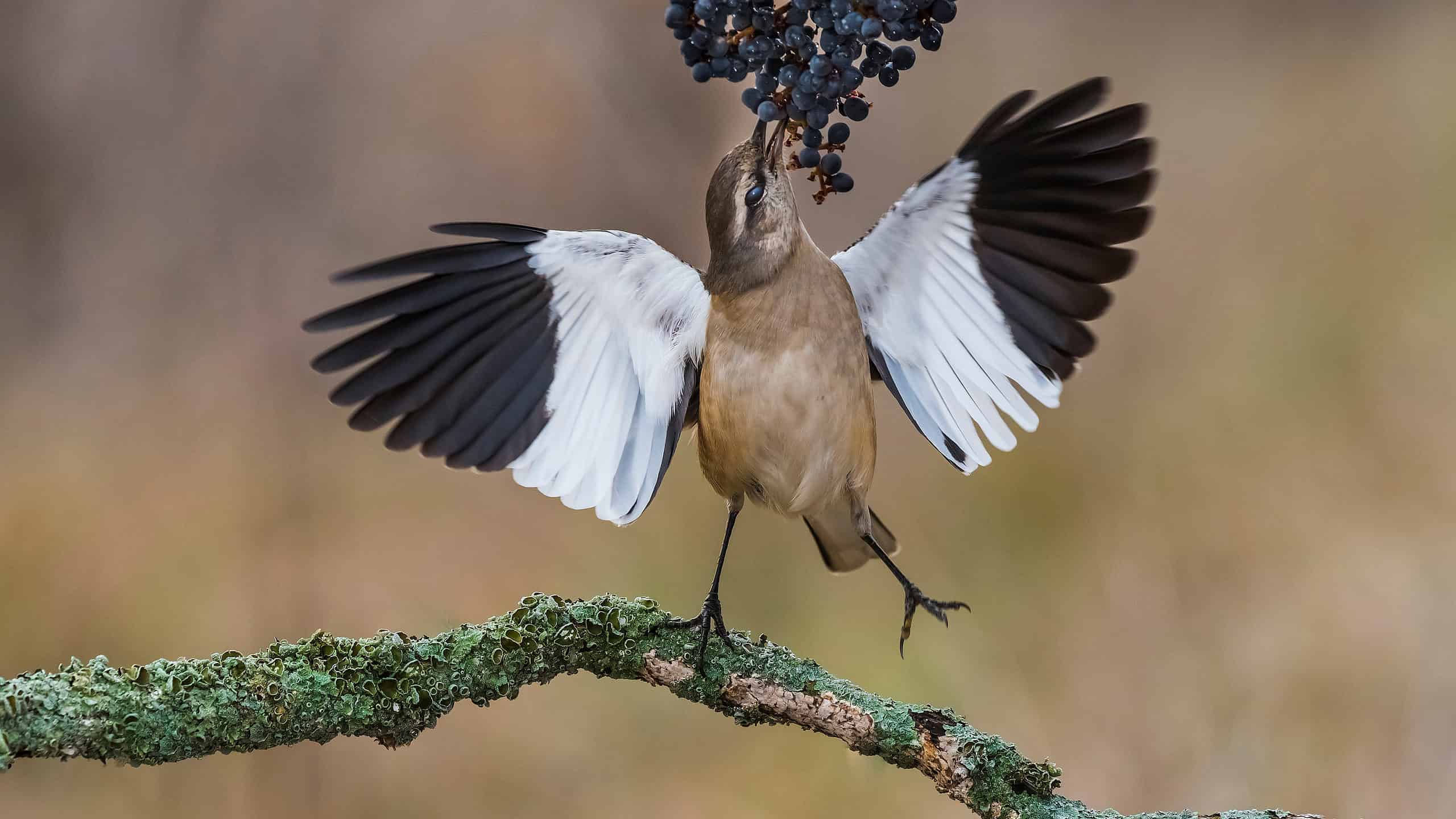
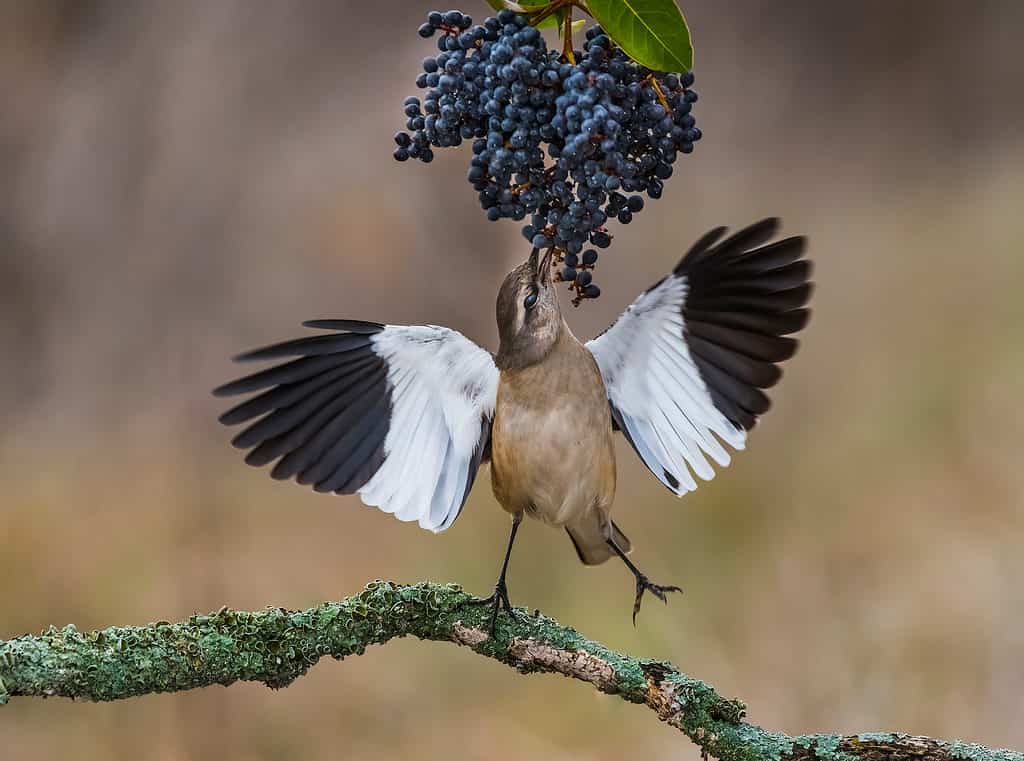
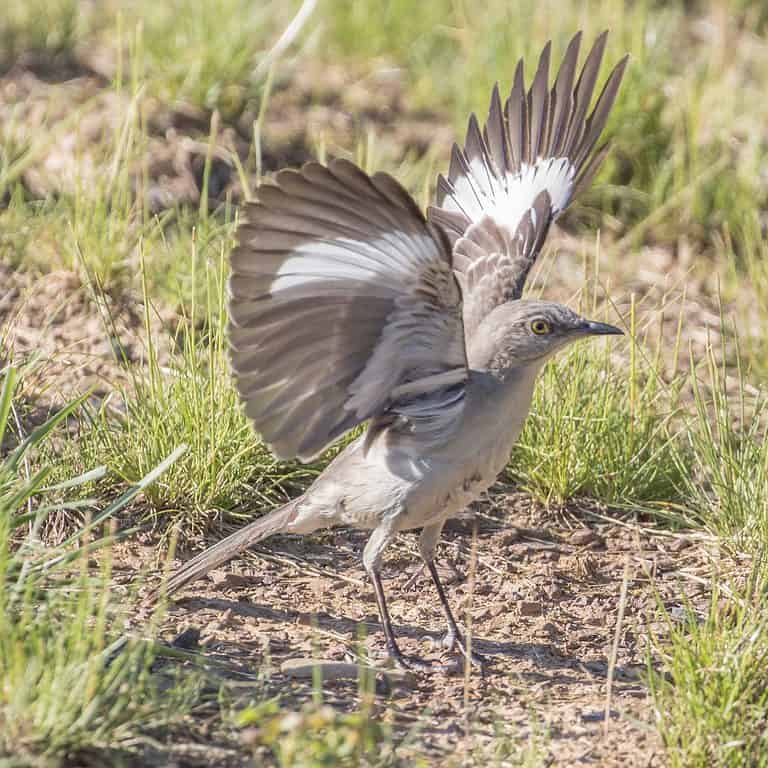
Northern Mockingbird, Mimus polyglottos, strikes a raised-wing display.
©Jenny Gong/Shutterstock.com
The Melanotis varieties are similarly shaped, but they differ in color from the Mimus birds. The Blue Mockingbird is, you guessed it, blue. And the Blue-and-white Mockingbird has blue feathers on its upper parts and white plumage below. Both have black masks that extend from their bills, covering their lores, to well past their eyes.
Behavior
Mockingbirds are known for their songs. They are incredible mimics and can actually learn up to 200 songs! They sing throughout the day, and sometimes into the night. Interestingly, they do not just mimic other birds. They can also mimic such animals as cats, dogs, and even frogs. People have long marveled at the vocal repertoire of these remarkable birds.
Mockingbirds engage in defensive posturing with raised wings and make alarm calls to try to frighten away potential threats. According to Dave Gammon, a professor who studies these birds extensively, the Northern Mockingbird uses different alarm calls specific to different predators. “Specifically, mockingbirds ‘chat’ for the cats, ‘scream’ at the crows, and ‘chuck’ for the snakes,” Gammon explained.
These birds are aggressive, especially when defending their nests. They will even chase other birds and dive bomb humans and other animals to drive them away from their nests. They are also quite intelligent; they can recognize human faces and react more aggressively to people who have invaded their space before.
Mockingbirds do not tend to flock together. They are mostly solitary except when they are engaged in a breeding pair.
Some of these birds migrate, but many, even within the same species, stay in the same place year-round. Some are endemic to very small areas and do not migrate at all.
Diet
Mockingbirds are omnivores. Depending on their location, the widespread species eat a variety of different foods. Northern Mockingbirds eat many types of invertebrates, including insects, spiders, earthworms, crustaceans, snails, and more. They also eat small lizards. During the fall and winter, especially, they eat more seeds, berries, and other fruits, both wild and cultivated.
Some species have a more varied diet than others. Several species eat the eggs of other birds and lizards. A few, such as the Bahama Mockingbird, supplement their diet with nectar. The Socorro Mockingbird eats terrestrial crabs in addition to more common invertebrate prey. And the species native to the Galápagos Islands eat baby turtles, the blood of injured birds, and just about any kind of dead animals they can find.
Reproduction
Mockingbirds form mostly monogamous pairs based on mutual selection. Sometimes the birds are polygynous, and sometimes they switch mates between clutches during a breeding season. These birds build their nests low in trees, usually no higher than 10 feet, and sometimes in a cactus or a shrub. In some species, both males and females work together to build the nest. In other species, the female does the work alone.
The female lays her eggs in the cup-shaped nest with a base of twigs and lined with softer materials. Different species of mockingbirds lay different numbers of eggs. The average seems to be 3 to 4 eggs. Females incubate the eggs, while males often assist with feeding the nestlings. Incubation takes 12 to 13 days in Northern Mockingbirds, and the chicks fledge after about 12 more days. The male cares for the young for a while after they leave the nest, while the female begins building a new nest. This species reaches sexual maturity in about one year and usually has 2 to 4 broods each year. Not as much is known about the reproductive behavior of the other species.
Predators & Threats
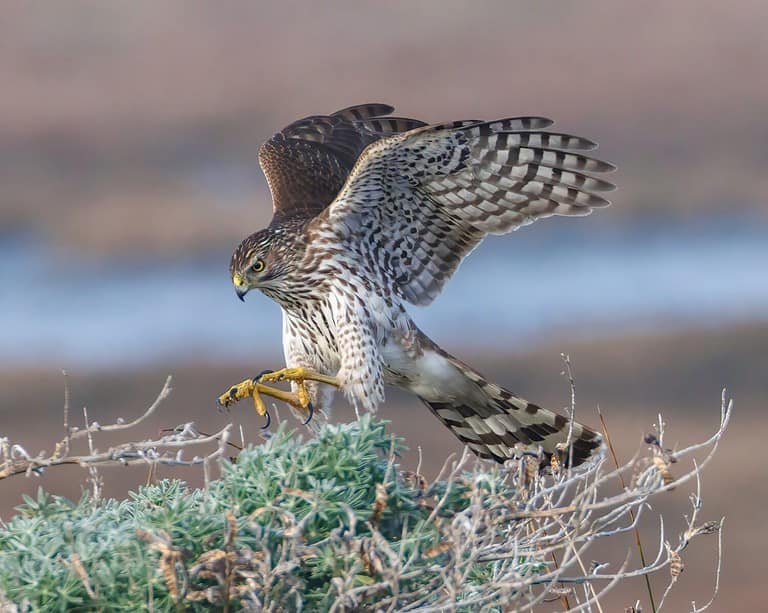
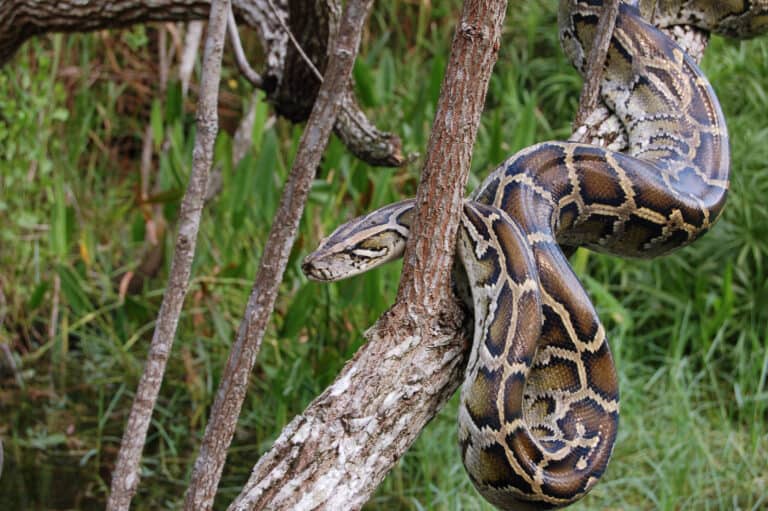
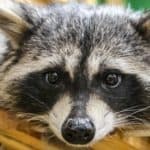
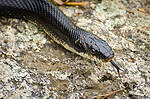
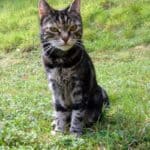
A study from 2011 revealed that cats are the greatest threat to Northern Mockingbirds in urban areas by far. Domestic cats accounted for 70 percent of the attacks in areas with a high human population. Of course, other animals also prey on mockingbirds. Hawks, owls, snakes, and crows are frequent predators. Eggs and chicks are also eaten by several nest predators, including snakes, jays, raccoons, and squirrels.
Other threats include habitat degradation and fragmentation, especially for species with smaller ranges. Storms, fires, and other natural events are particularly threatening to species that live in already troubled ecosystems. Accidents, such as window strikes, can take a toll on birds in urban areas. And human persecution is a factor, perhaps due to the territorial aggressiveness and fruit-loving nature of these birds.
Lifespan & Conservation
Little is known about the lifespan of most of the mockingbird species. The Northern Mockingbird lives approximately 8 years in the wild. It lives as long as 20 years in captivity.
The IUCN Red List for Threatened Species lists the majority of these birds as species of least concern. These species have strong numbers and at least an adequate range to overcome habitat fragmentation and other pressures.
Unfortunately, some of the species are not doing as well. The San Cristóbal Mockingbird is near threatened with a stable population, but has a range limited to a single island. Endemic to two small islands, the Española Mockingbird is vulnerable, with a population of only 600 to 1,700. The Floreana Mockingbird is currently endangered, but has spent much of the last 20 years listed as critically endangered, its population perilously low. And the Socorro Mockingbird is critically endangered, with a tiny range and possibly fewer than 200 mature individuals remaining.