
M
Species Profile

Mojave Ball Python

Python regius

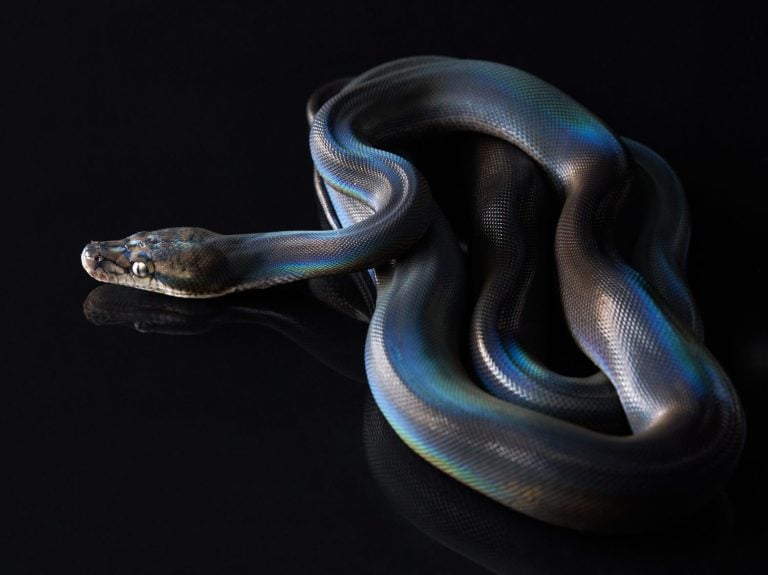
Mojave: creamy contrast, classic calm
Kurit afshen/Shutterstock.com

Mojave Ball Python Distribution

Domesticated Species

Found Worldwide

At a Glance

Domesticated
Also Known As Ball Python, Royal Python, BP
Diet Carnivore
Activity Nocturnal+
Lifespan 12 years
Weight 2.8 lbs
Status Not Evaluated
Did You Know?

"Mojave" is an incomplete-dominant morph: one copy changes the pattern; two copies produce a "Super Mojave."

Scientific Classification

The Mojave Ball Python is a selectively bred captive morph of the Ball Python, valued in herpetoculture for its altered coloration and patterning. It is not a separate species or subspecies; biologically it is the same species as other Ball Pythons.

Kingdom
Animalia
Phylum
Chordata
Class
Reptilia
Order
Squamata
Family
Pythonidae
Genus
Python
Species
Python regius

Distinguishing Features

  • Captive-bred color/pattern morph of Ball Python (same species: Python regius)
  • Typically exhibits a lighter, high-contrast pattern with characteristic side 'keyhole' or alien-head markings altered compared to wild-type
  • Non-venomous constrictor; adult size and behavior are typical of Ball Pythons

Physical Measurements

Males and females differ in size

Length
3 ft 5 in (2 ft 6 in – 4 ft 5 in)
4 ft 7 in (3 ft 7 in – 5 ft 11 in)
Weight
2 lbs (1 lbs – 4 lbs)
4 lbs (3 lbs – 8 lbs)
Tail Length
6 in (4 in – 8 in)
5 in (3 in – 7 in)
Top Speed
1 mph
slithering

Appearance

Primary Colors
Secondary Colors
Skin Type Smooth, glossy, overlapping keratin scales (non-keeled); sheds as a single tubular skin when humidity and hydration are adequate.
Distinctive Features
  • Captive-bred color/pattern morph of Ball Python (Python regius); not a separate species or subspecies.
  • Compared with base species, typically lighter background, cleaner pattern edges, and more cream "flames" along the flanks.
  • Often shows mild "blushing" (lightened areas) across head and dorsal saddles.
  • Part of the Blue-Eyed Leucistic (BEL) complex; certain pairings can produce very light/white offspring with blue eyes (e.g., "super" or BEL combos).
  • Generally the same temperament and body form as standard Ball Pythons: stout, relatively small python, prone to balling when stressed.
  • Health concerns are mostly standard P. regius husbandry-related: obesity from overfeeding, dehydration/retained shed, respiratory infections if too cool/damp, mites, and stomatitis.
  • Not commonly linked to severe morph-associated neurological issues (unlike some morphs); however, responsible breeding is advised, as some BEL-complex lines may show occasional spinal kinks or minor deformities.
  • Care requirements match typical Ball Python care: secure enclosure with tight hides, warm side ~31-33°C, cool side ~26-28°C, humidity ~50-60% (higher during shed), and appropriate prey size/feeding schedule.

Sexual Dimorphism

Females are typically longer and heavier-bodied than males, especially as adults. Males usually have proportionally longer tails with more prominent cloacal spurs and remain slimmer overall.

  • Usually smaller overall adult size and lighter build.
  • Proportionally longer tail past the cloaca; hemipenal bulge may be more noticeable.
  • Cloacal spurs often more prominent.
  • Typically larger and heavier-bodied as adults.
  • Shorter tail proportion relative to body length.
  • May appear broader in the posterior third when reproductively mature.

Did You Know?

"Mojave" is an incomplete-dominant morph: one copy changes the pattern; two copies produce a "Super Mojave."

Mojave is part of the Blue-Eyed Leucistic (BEL) complex-pairing it with certain other BEL-complex morphs can yield blue-eyed, mostly white offspring.

Typical Mojaves show high "blushing" (lighter wash) on the back and cleaner, less busy "alien head" side markings than many wild-type ball pythons.

Like all ball pythons, Mojaves are constrictors and usually prefer ambush hunting over active pursuit.

Their calm temperament and strong feeding response (once established) are major reasons the Mojave morph is popular in herpetoculture.

Despite the name, the Mojave morph isn't from the Mojave Desert; it's a selectively bred color/pattern variant within Python regius.

Unique Adaptations

  • Heat-sensing labial pits detect warm-blooded prey in low light-useful for a mostly nocturnal hunter.
  • Highly flexible skull and jaw ligaments allow swallowing prey wider than the head (typical python adaptation).
  • Efficient metabolism enables long intervals between meals; adults often thrive on appropriately sized prey every 2-4 weeks.
  • Cryptic coloration and pattern (in wild-type animals) supports camouflage in West African grasslands/forest edges; the Mojave morph modifies this pattern for captive aesthetics.
  • Strong constriction behavior quickly restricts prey movement-an energy-efficient hunting strategy for ambush predators.

Interesting Behaviors

  • Defensive "balling": curling tightly with the head protected in the center (the behavior behind the name "ball python").
  • Nocturnal roaming: more active at dusk and night, often exploring along enclosure edges.
  • Scent-tracking: frequent tongue-flicking to sample airborne chemicals with the Jacobson's organ.
  • Ambush posture: sitting motionless in a tight S-curve, ready to strike at passing prey.
  • Thermoregulatory shuttling: moving between warm and cool zones to fine-tune body temperature.
  • "Periscoping": lifting the head/neck to investigate movement or new scents, especially during handling or enclosure changes.

Cultural Significance

In parts of West Africa, ball pythons (Python regius) are treated with respect and tied to spiritual traditions. The Mojave morph is important in global herpetoculture as a basic BEL complex genetic line and a captive-breeding variant, not a separate species.

Myths & Legends

In Dahomey/Benin Vodun, the great serpent Dan (linked to Aido-Hwedo, the rainbow serpent) is a cosmic force of creation that holds up the world and binds sky and earth; serpents are spiritually powerful.

In Ouidah, Benin, the Temple of Pythons keeps live pythons that people honor as sacred protectors; local stories link pythons with blessings, safety, and spiritual authority in the community.

A common tale says Cleopatra wore a small python as jewelry, which people use to explain the alternate name royal python for Python regius, though the real naming history is more complex.

In Greek mythology, the dragon snake Python guarded Delphi until Apollo killed it. Though not about Python regius, this famous snake story helped shape European ideas about pythons.

In West African folktales, pythons and other snakes often act as messengers, guardians, or beings linked to water, fertility, and family lines, showing the deep symbolic meaning of snakes where ball pythons (Python regius) live.

Conservation Status

NE Not Evaluated

Has not yet been evaluated against the criteria.

Population Stable

Life Cycle

Birth 6 hatchlings
Lifespan 12 years

Lifespan

In the Wild 5–20 years
In Captivity 15–47 years

Reproduction

Mating System Polygynandry
Social Structure Managed Domestic
Breeding Pattern Seasonal
Fertilization Internal Fertilization
Birth Type Internal_fertilization

Mojave is a captive-selected color/pattern morph of Python regius (same biology; some lines show neurologic "wobble"). In breeding season, solitary adults are paired; males and females may take multiple mates. Females coil and thermoregulate eggs, then provide no care.

Behavior & Ecology

Social Aggregation Group: 1
Activity Nocturnal, Crepuscular
Diet Carnivore Appropriately sized rats (frozen-thawed)

Temperament

Mostly solitary, secretive ambush predators; individuals vary from shy to tolerant with regular, gentle handling.
Species context: Ball pythons commonly "ball up" when stressed; prolonged stress may reduce feeding.
Breed distinction (Mojave morph): Captive-bred color/pattern variant (incomplete-dominant Mojave gene); behavior and needs match Python regius.
Typical demeanor in captivity: Often calm/tractable once established; juveniles may be more defensive or flighty.
Handling/social needs: Prefer single housing; cohabitation often increases stress, feeding issues, and injury risk.
Care requirements (behavior-linked): Provide tight hides (warm/cool), minimal visual exposure, and consistent routines to reduce fear responses.
Feeding behavior: Ambush-oriented; some individuals are seasonal/finicky-avoid excessive handling around feeding periods.
Health concerns (morph-specific context): Mojave is not strongly linked to severe neurologic syndromes; watch for general BP issues (respiratory infections from low temps/high humidity imbalance, mites, stomatitis).

Communication

hiss Defensive warning
chemosensory tongue-flicking and pheromone detection for prey and mates
body posture: coiling/balling, head hiding, slow withdrawal to signal stress
tactile contact during courtship; males may spur-rub females
thermal sensing and subtle movement patterns to select microhabitats
defensive striking as last-resort communication when threatened

Habitat

Biomes:
Tropical Rainforest Tropical Dry Forest Savanna Mediterranean Temperate Rainforest Wetland
Terrain:
Plains Hilly Riverine
Elevation: Up to 5905 ft 6 in

Ecological Role

Mid-level terrestrial predator (native West/Central African ecosystems); the Mojave morph specifically is a captive-bred variant and does not occupy a distinct wild niche beyond the base species' role when kept in captivity.

Rodent population control Energy transfer within food webs as a mesopredator Potential reduction of crop/pest-associated rodent impacts in native range (species-level)

Diet Details

Main Prey:

Human Interaction

Domestication Status

Semi domesticated

The Mojave morph is a captive-bred color and pattern variant of the Ball Python (Python regius), not a new species. Native to West/Central Africa, ball pythons have been bred since the late 20th century to create many morphs. Mojave reliably passes its look and is used in breeding. Human roles include pets, commercial breeding, shows/retail, education, vets, rescue, and regulation.

Danger Level

Low
  • Defensive bites (usually superficial; more likely during feeding response or stress).
  • Minor scratches from teeth during feeding strikes/handling.
  • Zoonotic risk typical to reptiles (e.g., Salmonella) if hygiene is poor-handwashing and safe food-handling practices reduce risk.
  • Allergic reactions to bedding/feeder rodents in sensitive individuals.
  • Rare constriction risk: ball pythons are generally small, docile constrictors; basic handling precautions still apply (supervise children, avoid handling during feeding).

As a Pet

Suitable as Pet

Legality: Generally legal in much of the United States when captive-bred, but legality varies by state/county/city and by housing rules (e.g., landlord policies). Some jurisdictions restrict certain constrictors by length/species; always verify local exotic animal ordinances and any transport/import rules.

Care Level: Easy

Purchase Cost: $75 - $250
Lifetime Cost: $3,000 - $9,000

Economic Value

Uses:
Pet trade (companion reptiles) Captive breeding/herpetoculture Education and outreach animals Reptile supply/veterinary services (indirect economic activity)
Products:
  • live animals (Mojave morph and Mojave-based combos)
  • breeding stock and hatchlings
  • husbandry goods (enclosures, thermostats, heating, substrate, hides)
  • feeder rodents (frozen/thawed)

Relationships

Predators 6

Martial Eagle Polemaetus bellicosus
Bateleur Terathopius ecaudatus
Nile Monitor Varanus niloticus
African Cobra Naja
Honey Badger Mellivora capensis
Human Homo sapiens

Related Species 8

Ball Python Python regius Shared Species
Burmese Python Python bivittatus Shared Genus
Indian Python Python molurus Shared Genus
Southern African Rock Python Python natalensis Shared Genus
Northern African Rock Python Python sebae Shared Genus
Angolan Python Python anchietae Shared Genus
Reticulated Python Malayopython reticulatus Shared Family
Carpet Python Morelia spilota Shared Family

Ecological Equivalents 4

Animals that fill a similar ecological role in their ecosystem

Ball Python Python regius Wild-type (normal) morph.
Children's Python Antaresia childreni Small-to-medium, primarily nocturnal constrictor that fills a similar small-mammal predator niche and is commonly compared in captivity for similar enclosure size and feeding style; however, it often has a stronger feeding response and different humidity preferences.
Rosy Boa Lichanura trivirgata Compact constrictor that hunts small mammals in crevice- and scrub-type habitats. Shares husbandry themes—secure hides, a thermal gradient, and appropriately sized rodents—though it typically thrives in drier conditions than ball pythons.
Corn Snake Pantherophis guttatus Widely kept rodent-eating snake with comparable prey items and enclosure needs. Often used as a 'similar niche' comparison in captivity, although it is an active colubrid rather than a sit-and-wait python.

Named after the Mojave Desert, the Mojave ball python is a co-dominant base morph of ball python. It was first developed in 2000 by Utah-based breeders Dan and Collette Sutherland at The Snake Keeper, Inc. 

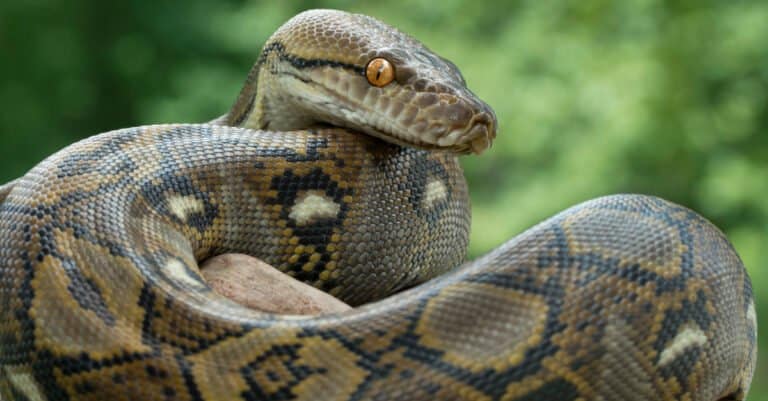
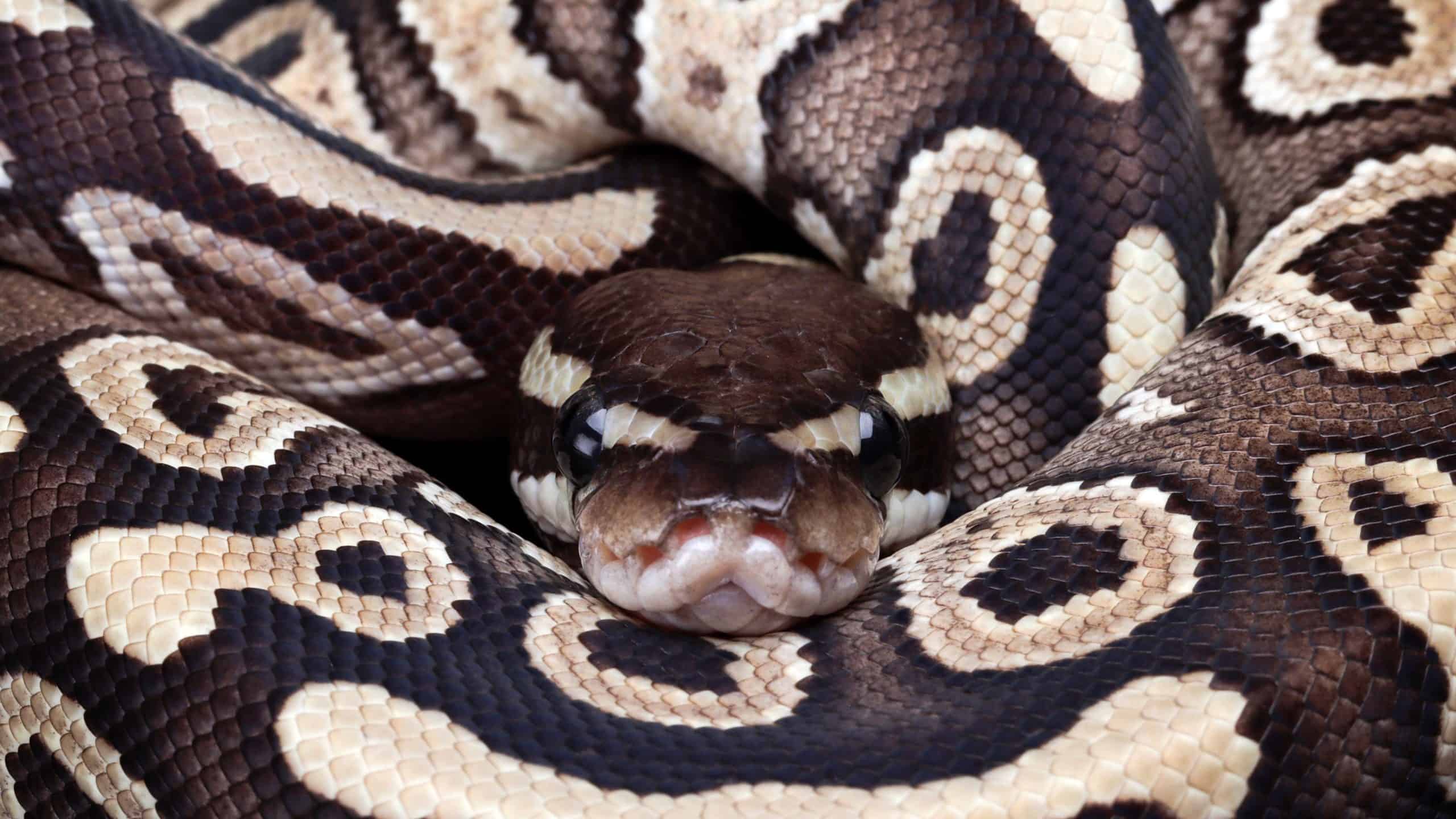
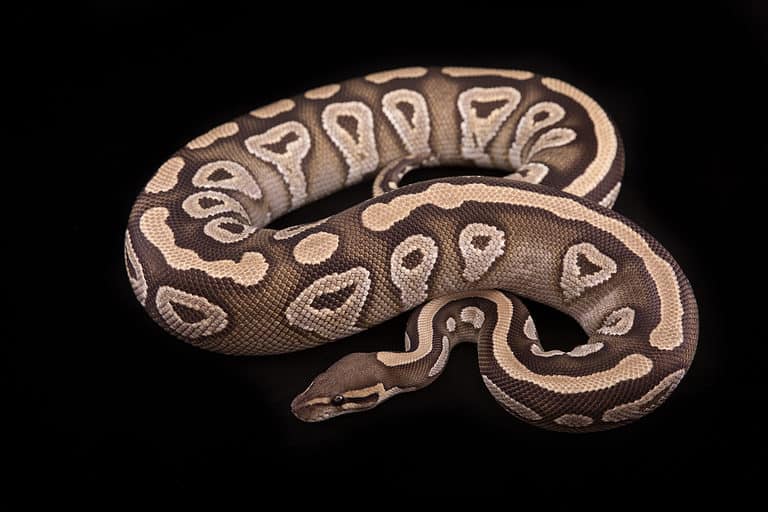
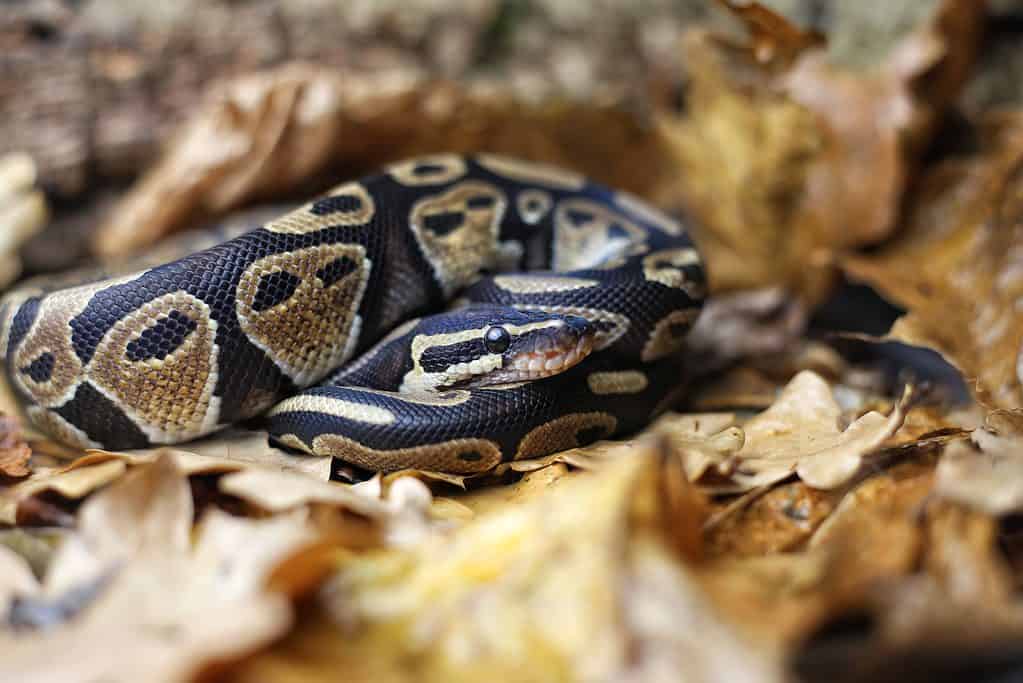
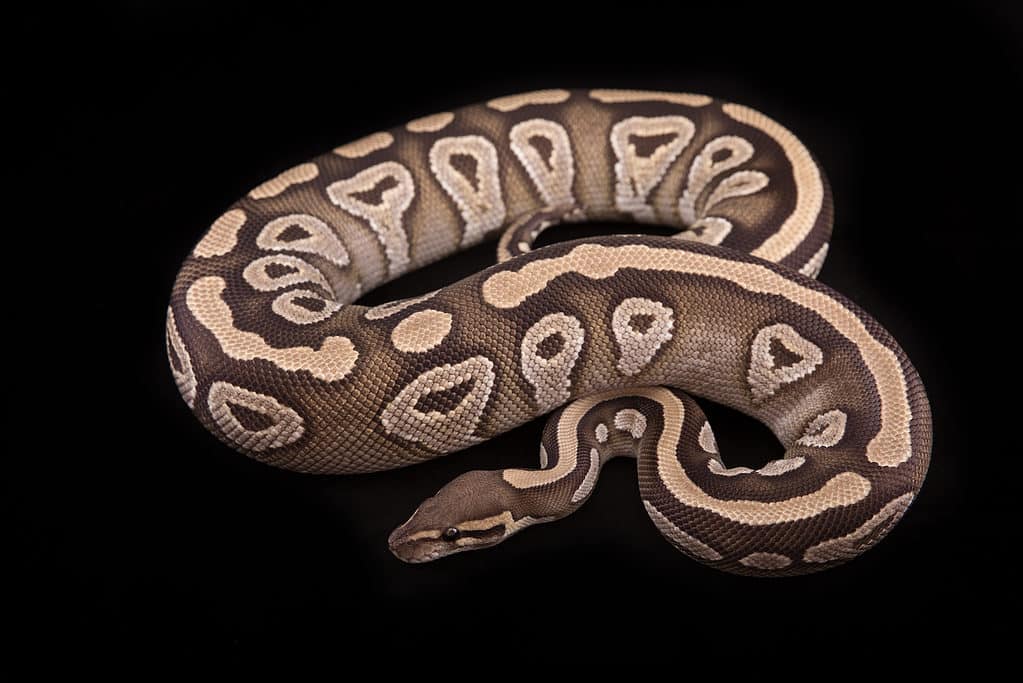
The Mojave trait significantly alters the affected snake’s patterning. Rather than having the usual banded or “alien head” body pattern present in most morphs, the Mojave morph’s patterning resembles lots of large, round, bullseye-like splotches. The splotches are usually tan, gold, or light brown with a very dark brown or black center. 

Their exact coloration can vary, but Mojave ball pythons are usually high-contrast snakes with lots of golden, gray, and dark brown tones. In more recent years, the Mojave morph has been combined with other traits to create designer morphs. These include the Pastel Mojave, Super Mojave, and Firefly Mojave.

5 Amazing Mojave Ball Python Facts!

  • To date, only one Mojave ball python has been found in the wild. This means all existing Mojave ball pythons are likely this snake’s descendants! Base morphs like the Mojave can technically occur in the wild naturally, but this is extremely rare.
  • Based in Utah, the breeders at The Snake Keeper, Inc. named the Mojave morph after the nearby Mojave Desert.
  • The Super Mojave morph was developed in 2003 by breeding two Mojave ball pythons together.
  • Reptile breeders often combine the Mojave morph with other traits to pass on its striking keyhole/bullseye body pattern.
  • While the majority of the Mojave morph’s body is bold and quite colorful, its belly is typically solid white with little to no markings.

Where to Find Mojave Ball Pythons

The standard, wild-type ball python lives throughout western and central Africa in a variety of habitats. It prefers grasslands, savannas, and occasionally sparsely forested areas with open clearings near water. The species has established large populations in countries like Nigeria, Ghana, and Senegal.

The Mojave morph in particular is quite notable for the fact that it has been documented in the wild. Only one individual has actually been confirmed, though. Many reptile breeders suspect all existing Mojave ball pythons are descendants of this one individual snake! While base morphs like the Mojave can randomly occur in the wild, this is exceedingly rare, and very little documentation exists of verified occurrences.

Today, Mojave ball pythons are commonly sold worldwide both online and at events like reptile expos. They are sold by a wide range of dedicated breeders who have since created their own Mojave lines. They cost around $80 to $150. Also, they are one of the least expensive morphs on the market, in part because it has existed for more than 20 years.

Although it was developed back in 2000 and was one of the earliest base morphs to become popular in the exotic pet trade, it remains extremely popular with reptile enthusiasts of all backgrounds and experience levels.

Mojave Ball Python Scientific Name

The ball python’s scientific name is Python regius, which translates to “royal python.” It is one of the smallest species in the python family and has no subspecies. Because all ball python morphs are the same species, they all have the same scientific name and taxonomic classification.

Interestingly, the ball python’s regal moniker refers to how Egypt’s ancient royals are believed to have decorated their bodies with live snakes to boldly show off their status and wealth. Royals like Cleopatra herself likely “wore” baby ball pythons around their wrists as bracelets!

Mojave Ball Python Population and Conservation Status

The IUCN Red List has designated the ball python as near-threatened since 2012. This means the species has experienced a slight decline in population throughout its native range in Africa. However, it is not at immediate risk of going extinct.

The main reasons for the ball python’s near-threatened status are habitat loss and humans hunting the snakes for food and the exotic pet trade. In particular, the increasingly rapid expansion of Africa’s agricultural industry has significantly reduced the ball python’s habitat range. Deforestation for various industries is also a major factor.

How to Identify Mojave Ball Python: Appearance and Description

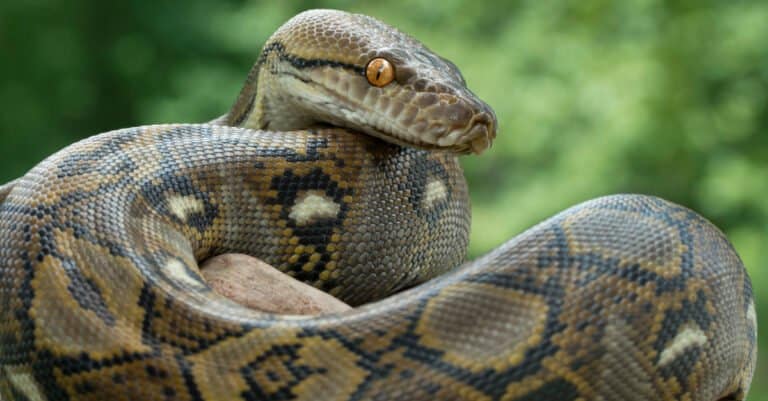
The Mojave morph is one of the more easily recognizable traits due to its very distinct body pattern. Its exact coloration can vary significantly. All Mojave ball pythons, though, have the trademark “Mojave pattern.” That is characterized by large, round splotches with smaller, darker spots in their centers. The splotches are usually tan, gold, grayish, or light brown. Their keyhole or bullseye-like centers are small dark brown or black dots.

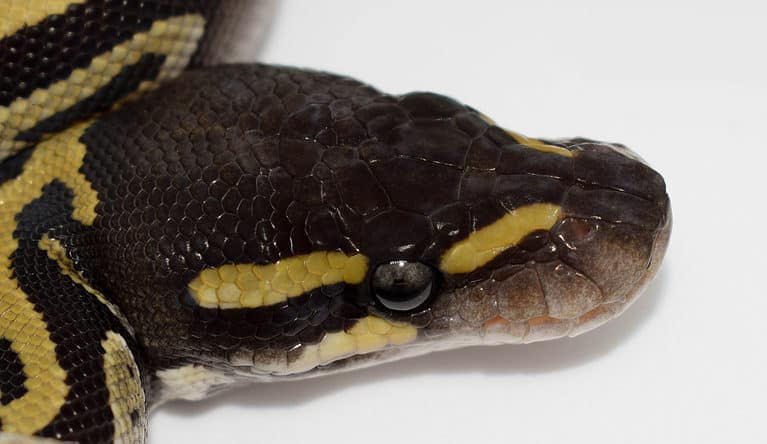
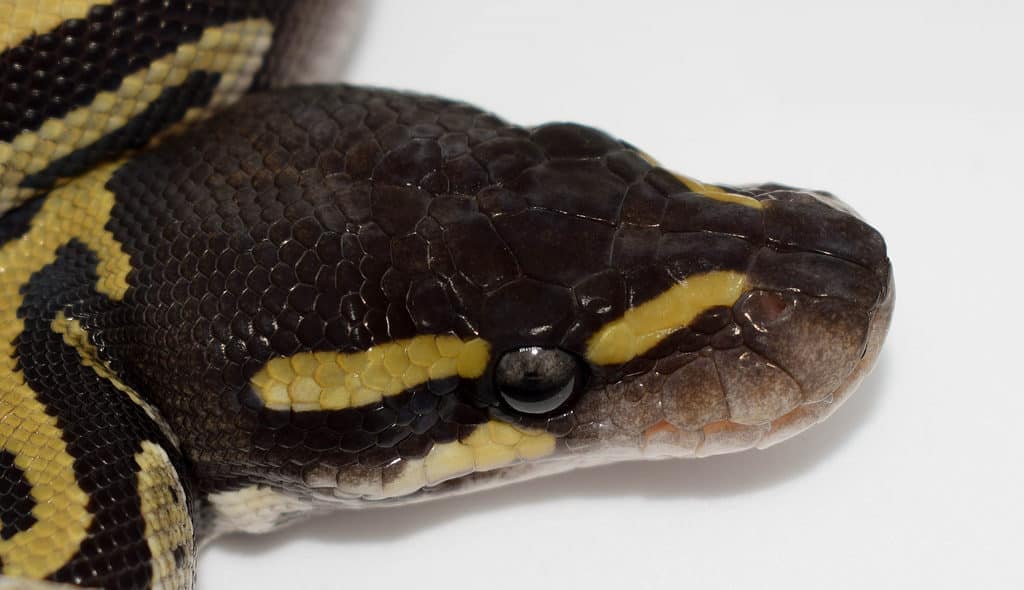
In addition to its bold pattern, the Mojave morph has a few other defining traits. Perhaps the most notable is its high-contrast markings with very little blushing aside from the top of the head. Its bright yellow eye stripes are also especially vibrant and contrast its dark brown head beautifully. Most Mojave ball pythons also have solid white bellies.

In short, these key traits define the Mojave ball python:

  • “Mojave pattern” that resembles lots of large, round bullseyes with dark brown centers extending down the snake’s entire body
  • High-contrast patterning that can vary in color but typically has mainly gold, gray, and dark brown tones
  • Very bright yellow eye stripes in contrast to its mostly dark brown head
  • Very little blushing aside from the pale spot atop the center of the head
  • Solid white belly with no markings

Mojave Ball Python Evolution and History

The Mojave morph is a co-dominant, single-gene base morph developed in 2000 by Dan and Collette Sutherland of The Snake Keeper, Inc., based in Utah. The morph’s name is inspired by the Mojave Desert. Notably, TSK has also developed other popular morphs, such as the Inca and Tri-Stripe varieties.

In more recent years, reptile breeders have combined the Mojave morph with various other traits, such as the Pastel Mojave, Cinnamon Mojave, and Mojave Pied variants. Additionally, in 2003, breeder Wes Harris developed the Super Mojave morph by breeding two Mojave ball pythons together.

The Mojave morph has remained extremely popular despite thousands of new traits hitting the market over the years. Its distinct patterning, minimal blushing, vibrant eye stripes, and high-contrast appearance make it a favorite among reptile breeders looking to pass on the Mojave pattern and “clean up” future offspring’s markings.

Mojave Ball Python Pictures
👁 Mojave Ball Python

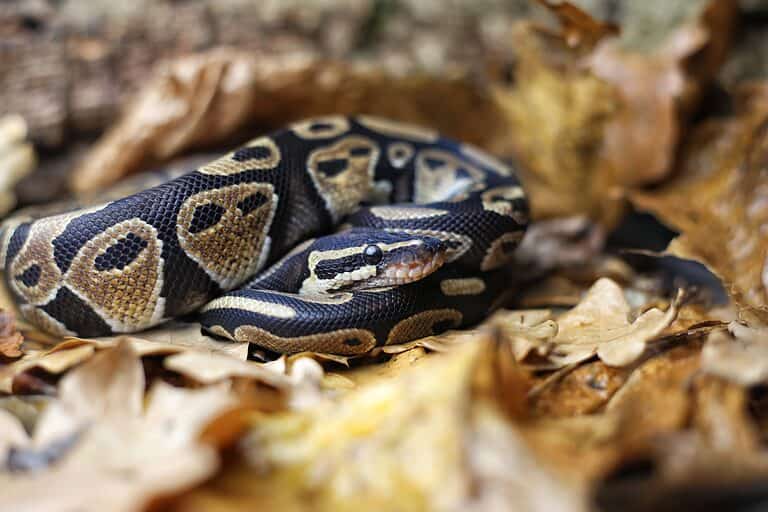
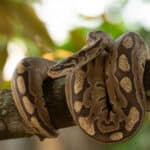
The Mojave ball python is a base morph mutation of the ball python.

©Marina Kehl/Shutterstock.com
👁 Mojave Ball Python 2

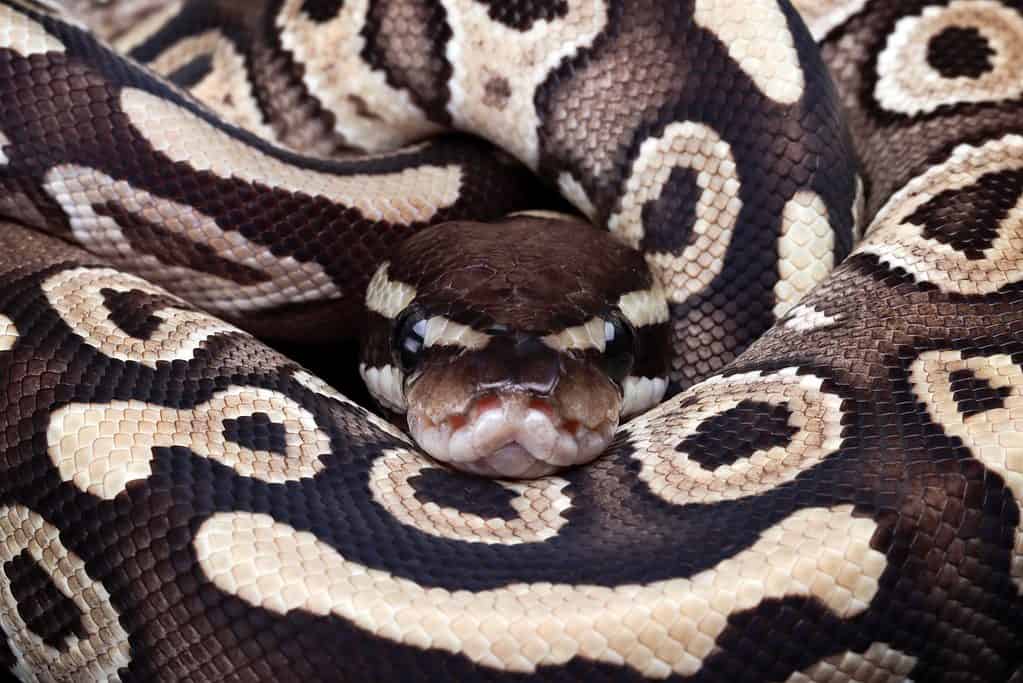
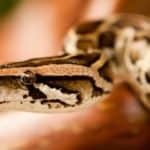
Like all ball pythons, Mojave ball pythons are one of the smallest python species, usually only reaching lengths of five feet.

©Sanne Romijn Fotografie/Shutterstock.com
👁 Mojave Ball Python Close-Up Shot 2

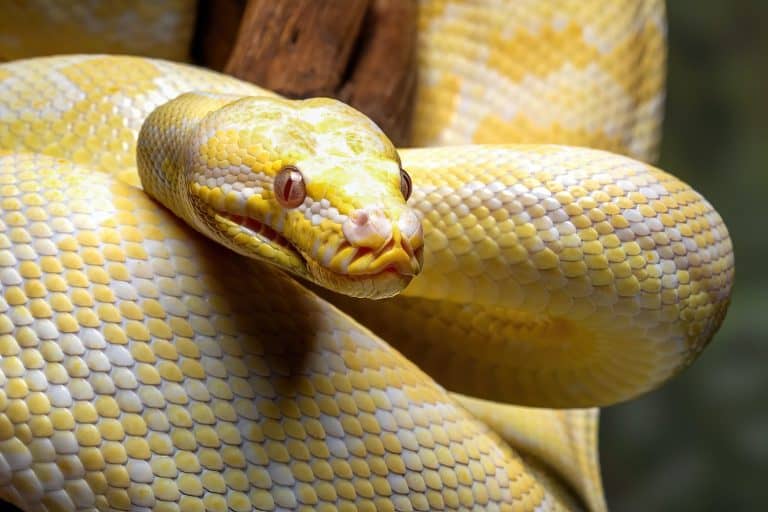
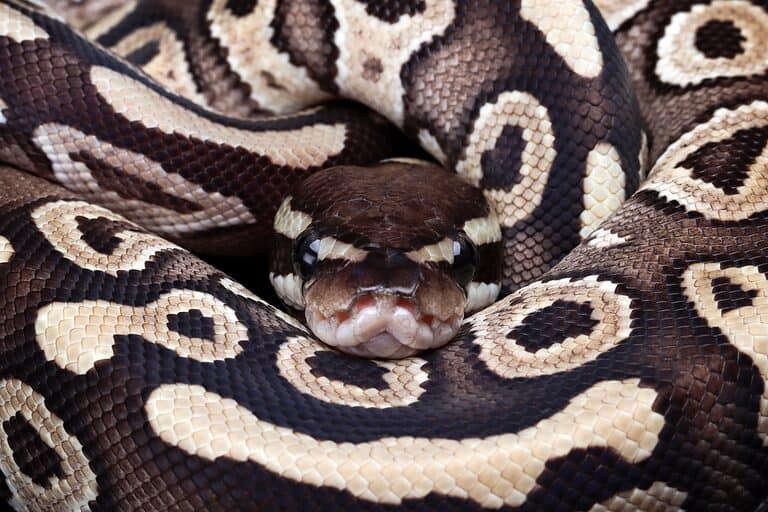
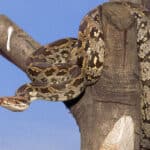
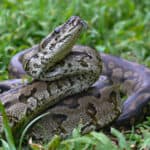
Bred in 2000, the Mojave ball python coloration can vary, but is typically in the range of brown, black, and gold.

©pelsopython/Shutterstock.com

Mojave Ball Python: How Dangerous Are They?

Regardless of the morph, all ball pythons generally possess the same timid, gentle temperament. They are non-venomous and one of the smallest python species, typically reaching only 5 feet in length. They are not considered to be dangerous to humans. In fact, the ball python’s small size and agreeable personality have resulted in it becoming one of the most popular pet reptiles in the world!

Amusingly, the ball python actually gets its common name from its bizarre yet adorable defense mechanism: curling its entire body into a tiny ball. While many snakes will either bite or lift their bodies into a more intimidating posture to scare off predators, ball pythons will usually either flee from a perceived threat or curl up in a ball to make themselves look smaller.

If you are bitten by a ball python, you likely won’t need much medical intervention aside from warm water, soap, and a Band-Aid. Because they have very thin, small, fragile teeth rather than true fangs, their bite is very weak and cannot do much damage to humans.

Mojave Ball Python Behavior and Humans

As we briefly covered earlier, the ball python is one of the most lovable stars of the reptile world for a few key reasons. Most notable is its incredibly gentle yet curious and hardy temperament, making it an enjoyable companion that tolerates handling very well. Since all ball python morphs are the same species, they all tend to have similar personalities. They also share the same care requirements.

Another important trait that makes the ball python so beloved by humans is its small, manageable size. While many other python species can reach well over 20 feet long and weigh more than 100 pounds, ball pythons are far more compact at around 5 feet in length. They also keep very well in captivity and can even live in enclosures as small as 50 to 60 gallons.

Even though ball pythons only became popular pets fairly recently in the mid-1990s, they are now one of the most commonly kept pet reptiles worldwide. Around 4,000 distinct morphs have been developed since 1995, and many more are being created all the time by hundreds of different breeders.

View all 330 animals that start with M

Sources

  1. IUCN Red List / Accessed December 6, 2022
  2. Morph Market / Accessed December 6, 2022
  3. Northwest Reptiles / Accessed December 6, 2022
  4. San Diego Zoo Wildlife Alliance / Accessed December 6, 2022
  5. World of Ball Pythons / Accessed December 6, 2022

About the Author

Hailey Pruett

Hailey "Lex" Pruett is a nonbinary writer at A-Z Animals primarily covering reptiles and amphibians. They have over five years of professional content writing experience. Additionally, they grew up on a hobby farm and have volunteered at animal shelters to gain further experience in animal care. A longtime resident of Knoxville, Tennessee, Hailey has owned and cared extensively for a wide variety of animals in their lifetime, including cats, dogs, lizards, turtles, frogs and toads, fish, chickens, ducks, horses, llamas, rabbits, goats, and more!
Connect:

Thank you for reading! Have some feedback for us?

Contact the AZ Animals editorial team

Related Articles You May Find Interesting


Mojave Ball Python FAQs (Frequently Asked Questions)

Ball pythons are not venomous, no matter what morph they are or the traits they possess. They are members of the python family and are therefore constrictor snakes that do not need venom to take down their prey. Ball pythons also rarely bite thanks to their shy nature and very weak, small teeth.

Ball pythons hunt similarly to most other python species–that is, by lying in wait and ambushing anything small enough that crosses their path. Instead of relying on their venom, they will strike their prey, biting into the animal before quickly coiling their entire body around it as tightly as possible. Once the prey has suffocated, the snake will slowly swallow it whole.

All ball python morphs have the same mild-mannered yet active and curious temperament. They are not aggressive towards humans.

The wild-type ball python is native to central and western Africa, mainly within the Sub-Saharan region. Ball pythons are hardy and can live in various habitats, but they most often frequent savannas, grasslands, and sparsely wooded forests.

All ball python morphs are carnivorous and share the same dietary requirements. They feed mainly on small rodents and birds but will also sometimes hunt small amphibians and fish.

The Mojave morph is one of the most inexpensive and accessible morphs on the market today. A single Mojave ball python averages around $80 to $150. However, Mojave ball pythons with additional traits, like the Super Mojave or Cinnamon Mojave, can be significantly more costly.

Mojave ball pythons are not rare in captivity, as the morph has existed for decades. What’s more, many breeders worldwide now have their own Mojave lines. They are, however, extremely rare in the wild. To date, only one Mojave ball python has been found in its natural habitat.