


M
Species Profile

Mudi

Canis lupus familiaris

Hungary's curly-coated herding spark
marketalangova/Shutterstock.com

Mudi Distribution

Click a location to explore more animals from that region

Origin Location

This map shows the native origin of the Mudi. As a domesticated species, they are now found worldwide.

Loading map...

Found in 1 country

Size Comparison

Human 5'8"
Mudi 1 ft 5 in

Mudi stands at 24% of average human height.

At a Glance

Domesticated
Diet Omnivore
Activity Diurnal+
Lifespan 5 years
Weight 13 lbs
Status Not Evaluated
Did You Know?

The Mudi is one of Hungary's three traditional herding breeds (alongside the Puli and Pumi), but is the rarest internationally.

Scientific Classification

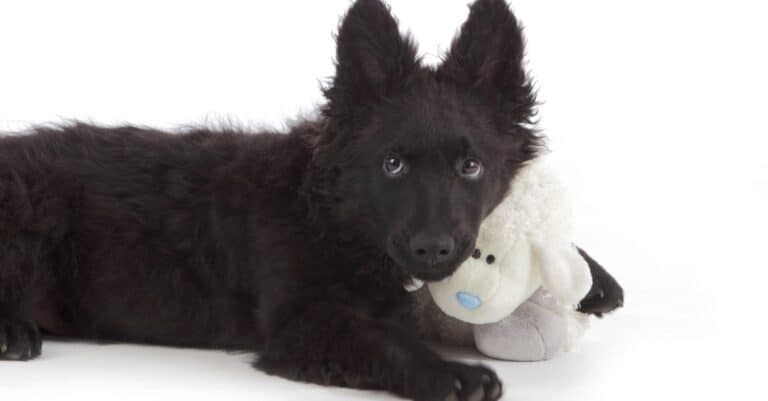
The Mudi is a rare Hungarian herding and farm dog breed developed for stock work (especially sheep and cattle) and general farm utility. It is known for high trainability, agility, alertness, and a strong herding instinct.

Kingdom
Animalia
Phylum
Chordata
Class
Mammalia
Order
Carnivora
Family
Canidae
Genus
Canis
Species
Canis lupus

Distinguishing Features

  • Medium-small to medium herding dog with pricked ears and a wedge-shaped head
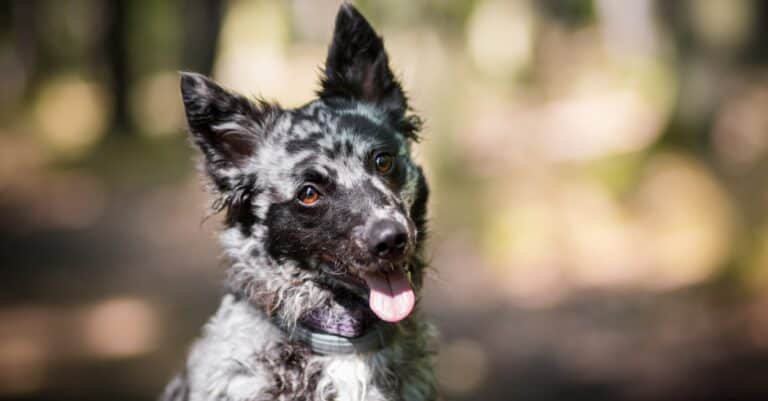
  • Coat often wavy/curly on the body, shorter on the face/legs; tail may be carried in a curve
  • Highly energetic, responsive, and vocal/alert—often used in dog sports (agility, herding trials)

Physical Measurements

Males and females differ in size

Height
1 ft 5 in (1 ft 5 in – 1 ft 6 in)
1 ft 4 in (1 ft 3 in – 1 ft 5 in)
Length
2 ft 4 in (1 ft 12 in – 2 ft 7 in)
Weight
26 lbs (24 lbs – 29 lbs)
21 lbs (18 lbs – 24 lbs)
Tail Length
7 in (2 in – 10 in)
Top Speed
28 mph
running

Appearance

Primary Colors
Secondary Colors
Skin Type Pigmented canine skin under a weather-resistant double coat; pigmentation usually matches coat and nose.
Distinctive Features
  • Rare Hungarian herding and farm utility breed; compact, athletic, and quick-turning.
  • Distinguished from gray wolf (Canis lupus): smaller, domestic build; highly biddable; varied coat colors and patterns.
  • High drive and strong herding instinct; alert, vocal, and responsive to training and cues.
  • Pricked, triangular ears and wedge-shaped head; keen, watchful expression.
  • Coat: medium-length wavy/curly on body; shorter, smoother coat on face and front legs.
  • Differs from Puli: coat is not corded; far less intensive coat maintenance.
  • Differs from Pumi: ears are fully pricked (not tipped); coat tends to be less profusely curly/cork-screwed.
  • Exercise needs: daily vigorous activity plus mental work (agility, herding, scent games).
  • Grooming: weekly brushing; check behind ears and feathering for mats; seasonal shedding expected.
  • Health considerations seen in the breed: hip dysplasia, patellar luxation, epilepsy, and inherited eye disease; prioritize breeder health testing and regular orthopedic/eye exams.
  • Can be reserved with strangers; early socialization helps reduce reactivity and over-guarding tendencies.

Sexual Dimorphism

Males are typically slightly taller and heavier with a broader head and more pronounced neck/forechest. Females are usually finer-boned and lighter, while maintaining the same athletic proportions and ear/coat characteristics.

  • Slightly larger overall frame and heavier bone
  • Broader skull and stronger muzzle
  • More pronounced neck and forechest musculature
  • Slightly smaller, lighter build
  • Narrower head and finer bone structure
  • Often a more refined overall silhouette

Did You Know?

The Mudi is one of Hungary's three traditional herding breeds (alongside the Puli and Pumi), but is the rarest internationally.

It was identified as a distinct breed in the 1930s by Hungarian cynologist Dr. Dezső Fényes, drawing from local farm/herding dogs.

Typical coat pattern: short/smooth on head and legs, with wavy-to-curly hair on the body-practical for outdoor work.

Mudik (plural commonly used by enthusiasts) are famous in dog sports: agility, obedience, rally, and herding trials often suit their fast learning style.

Compared with many breeds, they tend to be "all-purpose" farm dogs-herding, vermin alerting, and property watchfulness.

They can be born in multiple solid colors (black is common), reflecting working-dog selection over show uniformity.

As a domestic dog (Canis lupus familiaris), the Mudi shows how selective breeding can shape wolf-descended canids into specialized livestock partners with strong human responsiveness.

Unique Adaptations

  • Pricked, mobile ears that enhance sound localization-handy for open-country farm work and quick response to stock movement.
  • Weather-shedding coat structure (short on extremities, wavy/curly on body) that balances protection with freedom of motion.
  • Athletic, tight-turning build optimized for rapid direction changes-useful in sheep and cattle work and in agility-style movement.
  • Behavioral "work drive" shaped by selection: sustained attention, responsiveness to human direction, and willingness to repeat tasks.
  • Compared with the gray wolf (the domestic dog's ancestor), Mudik show heightened social attunement to humans and a strong tendency to cooperate under guidance-key to controlled herding rather than independent predation.

Interesting Behaviors

  • Intense "eye + movement" herding: quick darts, flanks, and pressure-and-release work to turn stock.
  • High alertness and rapid barking when something changes-useful on farms, but needs training in modern homes.
  • Fast pattern learning: often anticipates cues; thrives with clear rules to prevent inventing its own "jobs."
  • Strong handler focus during work, yet environmentally vigilant-will check perimeter and return to task.
  • Problem-solving and persistence (e.g., finding gates, routes, or stock that split off).
  • Motion sensitivity: may try to herd running children, bikes, or other pets without early management and outlets.

Cultural Significance

In Hungary, the Mudi is a shepherd dog from the countryside. Unlike the more famous Puli and Pumi, it is a practical farm dog valued for herding, guarding, and adaptability. It is a national working dog legacy rebuilt after war losses.

Myths & Legends

Hungarian stories call the Mudi a "newly found" farm helper: shepherds kept dogs for work, not papers, and only later did dog experts like Dr. Dezső Fényes (1930s) name and describe them.

A common story says the Mudi became rare after World War II when numbers dropped, and postwar efforts to bring them back made people proud to save part of Hungary's rural heritage.

There are no old myths about the Mudi (Canis lupus familiaris). It is a modern Hungarian herding dog from local herding types, first noted in the 20th century, known for intelligence, trainability, and responsiveness.

Naming lore persists because the exact origin of the word "Mudi" is uncertain; this uncertainty has encouraged informal local explanations passed among breeders and handlers as part of the breed's identity.

Conservation Status

NE Not Evaluated

Has not yet been evaluated against the criteria.

Population Stable

Life Cycle

Birth 4 pups
Lifespan 5 years

Lifespan

In the Wild 2–8 years
In Captivity 10–15 years

Reproduction

Mating System Polygyny
Social Structure Managed Domestic
Breeding Pattern Serial
Fertilization Managed Selective
Birth Type Internal_fertilization

Compared with gray wolves' socially monogamous, cooperative packs, Mudi reproduction is typically human-managed: selected stud males may sire multiple litters with different females, with no lasting pair bond. Breeders often time matings and use health screening due to the breed's rarity.

Behavior & Ecology

Social Pack Group: 3
Activity Diurnal, Crepuscular, Cathemeral
Diet Omnivore Animal-based proteins/fats (e.g., beef, lamb, poultry) used as high-value rewards

Temperament

Breed distinction vs base species (gray wolf context): domesticated, highly biddable herder; reduced predation, heightened handler focus.
High energy, fast learner, and problem-solver; excels in agility, herding, and complex cue chains.
Alert and watchful; may be reserved with strangers and quick to alarm-bark if under-socialized.
Strong herding instinct (eye, circling, heeling/nipping); needs training to channel control behaviors safely.
Sensitive and responsive to corrections; best with reward-based training, clear structure, and predictable routines.
Care requirements: daily vigorous exercise plus mental work (scent games, obedience, herding-style tasks).
Common behavior risks: boredom → nuisance barking, reactivity, pacing, or destructive chewing without a job.
Health concerns to monitor (breed-typical): hip dysplasia, patellar luxation, eye disease; epilepsy reported in some lines.
Care/management: early socialization, cooperative care training, and regular joint/eye screening recommended.
HUBS: Herding/farm utility breeds share high trainability and motion sensitivity; individuals vary in sociability and vocality.

Communication

Sharp alert barking Territorial/novel stimuli
Excited yips during play or work
Low growls for boundary-setting or resource guarding
Whines for attention, frustration, or anticipation
Short barks used as working signals during herding
Intense gaze and body-blocking to control movement Herding pressure
Directional circling to gather stock or family members
Muzzle nudges, heeling taps, or controlled nips when over-aroused
Erect posture, forward weight shift, and tail carriage changes to signal arousal
Play bows and fast, bouncy approaches to initiate interaction
Scent investigation and marking; uses olfaction to assess newcomers and territory
Physical contact seeking with trusted humans; leaning and following for affiliation

Habitat

Biomes:
Temperate Forest Boreal Forest (Taiga) Tundra Temperate Grassland Mediterranean Savanna Desert Hot Desert Cold Alpine Freshwater Wetland +5
Terrain:
Plains Hilly Valley Riverine
Elevation: Up to 14763 ft 9 in

Ecological Role

Domestic, human-associated omnivorous mesopredator/scavenger adapted for working partnership (herding/farm utility) rather than independent predation

livestock herding and movement control (sheep/cattle) farmyard guarding/alerting (deterrence of predators and intruders) pest pressure reduction via opportunistic predation on rodents human-mediated nutrient cycling through consumption of provided food and waste

Diet Details

Main Prey:
Small rodents Rabbits and Hares Ground-nesting birds Eggs Insects
Other Foods:
Cooked grains and starches Vegetables Fruits Safe plant fiber sources

Human Interaction

Domestication Status

Domesticated

The Mudi (Canis lupus familiaris) is a rare Hungarian herding farm dog bred for stock work, vermin control, and farm duties. Energetic, quick-learning, agile and alert, it has a strong herding drive (gathering, chasing, sometimes heel-nipping). People use it for farm work, sport, watchdog/service, or as a high-exercise companion; if bored it may bark, be destructive, or chase.

Danger Level

Low
  • Herding behaviors directed at people (chasing, circling, ankle/heel nipping), especially with running children
  • Fear-based reactivity or defensive biting if under-socialized or harshly handled
  • Increased bite risk in high-arousal contexts (leash frustration, barrier reactivity) without consistent training
  • Accidental scratches/knocks from high-speed play and jumping

As a Pet

Suitable as Pet

Legality: Generally legal wherever domestic dogs are permitted; subject to standard local dog licensing/leash laws and housing/insurance policies. Rarely targeted by breed-specific bans, but any generic restrictions on 'working dogs,' 'aggressive dogs,' or size/weight rules can apply depending on jurisdiction.

Care Level: Experienced

Purchase Cost: $1,200 - $3,000
Lifetime Cost: $18,000 - $50,000

Economic Value

Uses:
Herding and farm work Companion animal ownership Dog sports and training services Breeding and rare-breed programs
Products:
  • Livestock herding/handling labor (sheep, cattle)
  • Property utility and alert/watch functions
  • Participation/titles in agility, obedience, rally, herding trials
  • Sale of puppies from health-tested breeding lines
  • Training, boarding, and sport coaching expenditures driven by high activity needs

Relationships

Predators 5

Gray wolf Canis lupus
Eurasian lynx Lynx lynx
Brown bear Ursus arctos
Golden jackal Canis aureus
Golden eagle Aquila chrysaetos

Related Species 7

Gray wolf Canis lupus Shared Genus
Domestic dog Canis lupus familiaris Shared Species
Coyote Canis latrans Shared Genus
Golden jackal Canis aureus Shared Genus
Ethiopian wolf Canis simensis Shared Genus
African wolf Canis lupaster Shared Genus
Red fox Vulpes vulpes Shared Family

Ecological Equivalents 6

Animals that fill a similar ecological role in their ecosystem

Border Collie Canis lupus familiaris Similar working niche: intense herding and high trainability. Compared with many herding dogs, the Mudi is typically more multipurpose farm-utility oriented (stock work and vermin alerting) and is often noted for its very quick responsiveness and alert watchdog tendency.
Australian Kelpie Canis lupus familiaris Shares an athletic, high-drive stock-working role, especially with sheep and cattle. Like Kelpies, Mudis tend to thrive with daily high-intensity exercise and structured training; without this they may develop nuisance behaviors such as excessive barking and destructiveness.
Belgian Malinois Canis lupus familiaris Comparable performance-dog profile: high energy, high biddability, and fast learning. Mudis are usually smaller and more explicitly herding/farm-derived, but they similarly benefit from advanced obedience and sport outlets (agility, herding trials, nosework) and from consistent mental enrichment.
Pumi Canis lupus familiaris Shared Hungarian herding/farm lineage and similar role. Mudis are often described as having a sharper, more 'all-purpose' farm-dog temperament (herding plus guarding/alerting) and a distinct coat type that is wavy/curly with more pronounced variation across the body.
Puli Canis lupus familiaris Another Hungarian herding breed used on livestock. The Puli has a corded coat, whereas the Mudi's coat is typically shorter and wavier/curly and easier to maintain; both breeds can be vocal and require strong socialization to manage wariness toward strangers.
Domestic dog Canis lupus familiaris Bred in Hungary for stock work, the Mudi has a strong herding drive, is quick to learn, highly agile, and has a wavy, weather-tolerant coat. Health concerns include hip dysplasia, patellar luxation, eye disorders, and some epilepsy. Requires daily exercise, mental stimulation, socialization, regular brushing, and recall training.

Quick Take

  • Owners must invest 1500 dollars to complete the achievement of acquiring this breed.
  • The Mudi often suffers from patellar luxation, a condition causing lameness.
  • This herding breed defies maintenance norms by requiring only 1 weekly brushing.
  • Early obedience training is essential to redirect the energy away from digging.

Have you ever heard of the Mudi? If not, it may be because there are possibly only a few thousand of these dogs in the world. Despite being few in population, the Mudi dog has a long list of favorable qualities. This energy-filled dog has an affectionate temperament and a high level of intelligence. It’s a part of the herding group.

This dog’s history dates back to 19th-century Hungary. It descends from the Pumi dog (a sheepdog) and the German Spitz. They were bred to herd sheep for long hours in the expansive fields of Hungary. Today, most of these dogs live in Finland and Hungary, with a few scattered in Europe and North America. Its ability to be laser-focused and alert when keeping a herd of sheep together has made it a good search and rescue dog today. When it is off duty, this dog is playful and affectionate with the family.

👁 A detailed infographic about the Mudi dog breed featuring icons for health, grooming, and behavior alongside silhouettes of adult and puppy dogs.
It’s one of the rarest breeds on Earth and an elite watchdog, but owning this low-maintenance Hungarian treasure comes with a $2,500 price tag. © A-Z Animals

3 Pros and Cons of Ownership

ProsCons
Easy grooming work
A Mudi’s coat is easy to keep in good condition with a simple brushing once a week. Coat colors include black, white, yellow, gray, and brown.
An occasional wanderer
These quick-moving dogs tend to wander away on adventures if a home’s fence isn’t secure.
Compatible with kids
This dog is playful and at ease with children who treat it with respect and care.
Difficult to find and costly
Its sparse population, especially in the United States, can make it difficult to locate a litter of puppies, and the price can be a factor at an average of $1,500 to $2,500 per puppy.
An impressive watchdog
No noise or movement escapes the attention of this pooch. It serves as an impressive watchdog for a household.
An avid digger
This breed loves to dig. If the behavior is not corrected, it can turn an owner’s yard into a collection of holes.
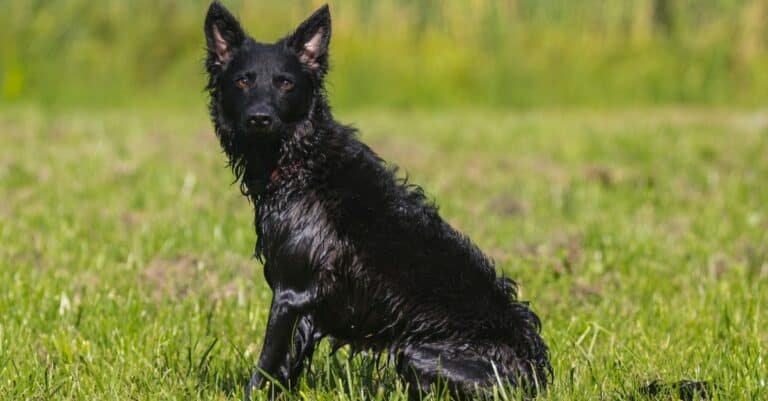
👁 Stunning nice totally black Hungarian Mudi, outside on a sunny summer day with green grass background.

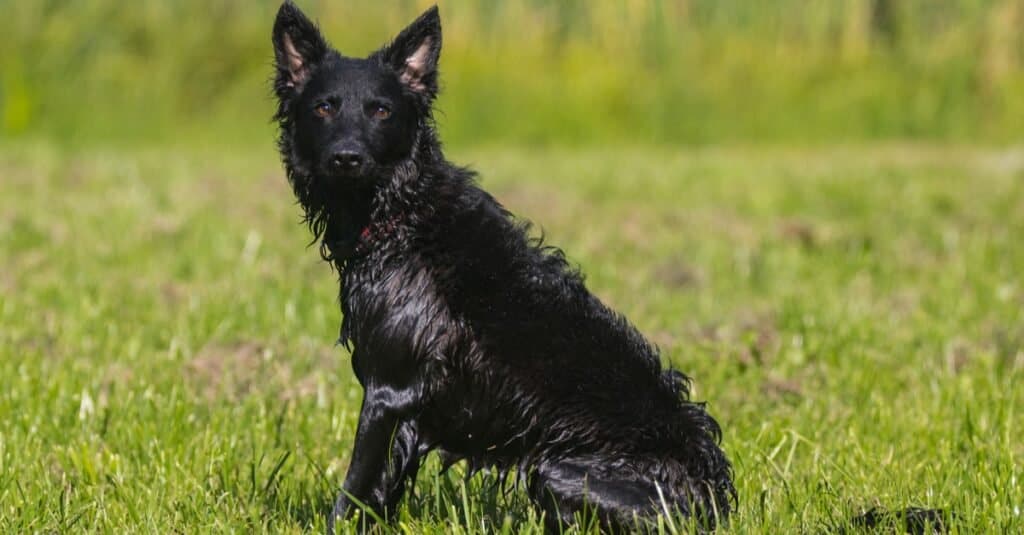
Although Mudis come in a variety of colors and are often brindled, this one is solid black.

©Lisjatina/Shutterstock.com

Size and Weight

An adult male dog grows to a height of 18 inches, measuring from its paw up to its shoulder. Fully grown females can achieve a height of 17 inches. When it comes to weight, an adult male can reach 29 pounds, while a female’s full weight is 24 pounds. When a puppy is eight weeks old, it should register a weight ranging from 8 to 9 pounds. This canine stops growing at 9 to 12 months old.

Common Health Issues

Patellar luxation is a common health issue in this Hungarian dog. This condition happens when the kneecap shifts out of its proper place, resulting in lameness. While it can sometimes resolve itself, a severe case may require physical therapy or surgery. This breed is also vulnerable to elbow dysplasia. A dog with this issue has an elbow joint that doesn’t fit together in the proper fashion. It’s an inherited condition and can be resolved with surgery. Cataracts are another potential medical issue for this canine. They appear as a thin film over the dog’s eyes. Although they can ultimately cause blindness, some dogs function fairly well for years with cataracts before having surgery.

Temperament & Behavior
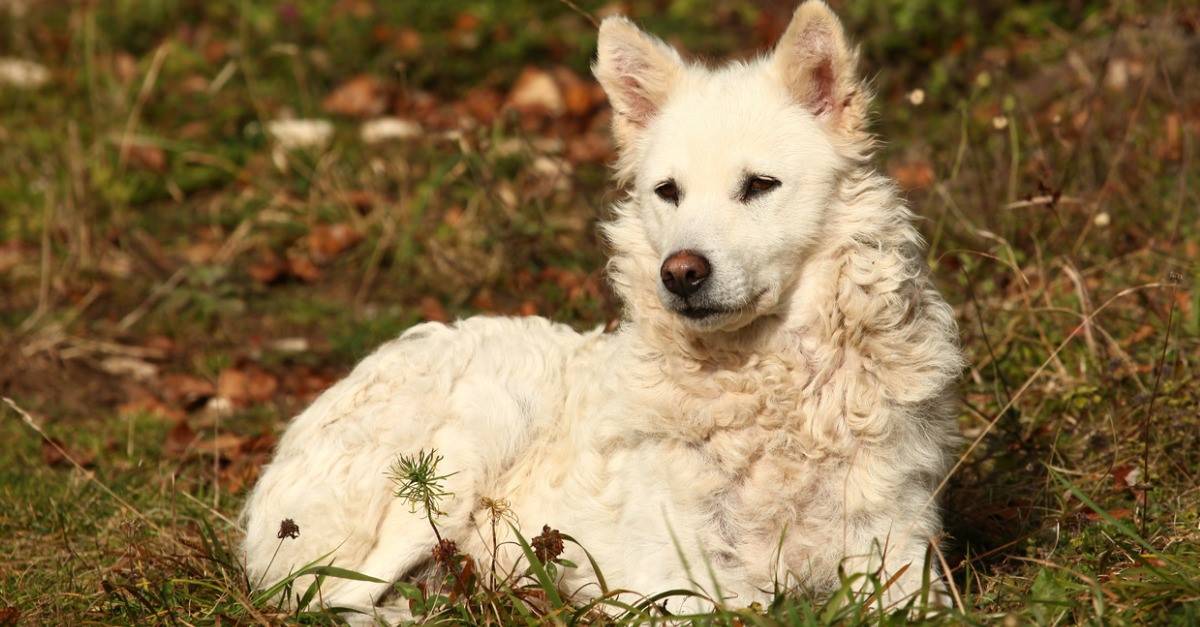
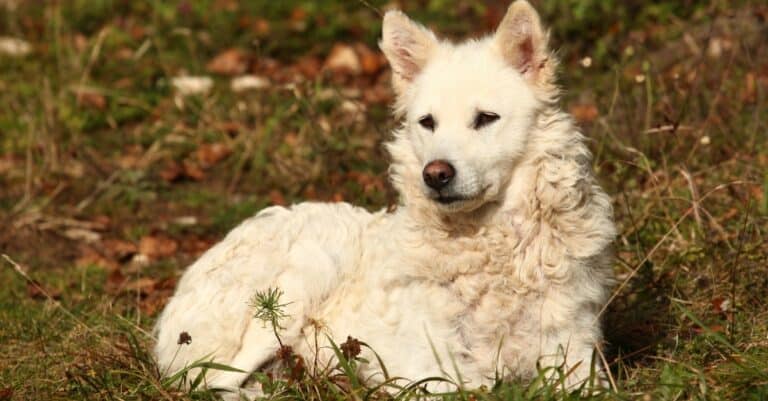
👁 A white Hungarian herding dog, Mudi, lying in a field.

Mudis, like this all-white one, do best on a farm or in a home with a big yard and an active family.

©iStock.com/UroshPetrovic

A Mudi is one of those canines that likes to be on the move. Not surprisingly, that’s one of the most common traits found in a herding dog. A family looking to add a Mudi to their household can expect relaxed, affectionate behavior from this sweet-natured pooch. A big farm or a home with a large yard is the most appropriate place for this pet.

This dog is a really good choice for an energetic family that likes to go camping, visit local parks, attend festivals, and otherwise enjoy other outdoor activities. Its friendly personality makes it welcome at almost any gathering. This pooch is happiest when it’s investigating its surroundings.

Care

Learning all the facts about the diet, healthcare, grooming, and exercise requirements of this pet is the easiest way to excel as its new owner. The basic routine of care differs depending on whether someone owns a puppy or an adult canine. Look at some of the unique needs of each one.

Best Dog Food

The types of nutrients in a puppy or adult dog’s diet can help it to maintain great health. Therefore, it’s important to choose a high-quality dog food that nourishes your Mudi for lifelong health. So, check out some of the basic dietary elements.

Mudi puppy food: Along with supporting its brain and vision health, Omega-3 and 6 fatty acids are responsible for maintaining the healthy skin and coat of this pup. Carbohydrates are essential for every puppy, but are especially critical for active breeds like the Mudi. Lean chicken and turkey are good sources of protein, nourishing this puppy’s muscles, tissue, and joints. Whitefish is another source of protein as well as Calcium. These nutrients are beneficial to a breed vulnerable to knee and elbow issues. These puppies need fiber in their diet to help them properly digest a balanced diet.

Mudi adult dog food: Vitamin E keeps an adult dog’s metabolism working efficiently as it ages. The proper amount of vitamin E also contributes to the continued health of this dog’s eyes. Protein is essential in supporting healthy tissue and muscles in an aging Mudi. Carbohydrates are necessary to provide this dog with all the energy it needs to run and play. Vitamin C helps to fight off respiratory illness and other ailments. The fiber in this dog’s daily diet, along with access to fresh water, helps keep its digestive processes in good working order.

Maintenance and Grooming
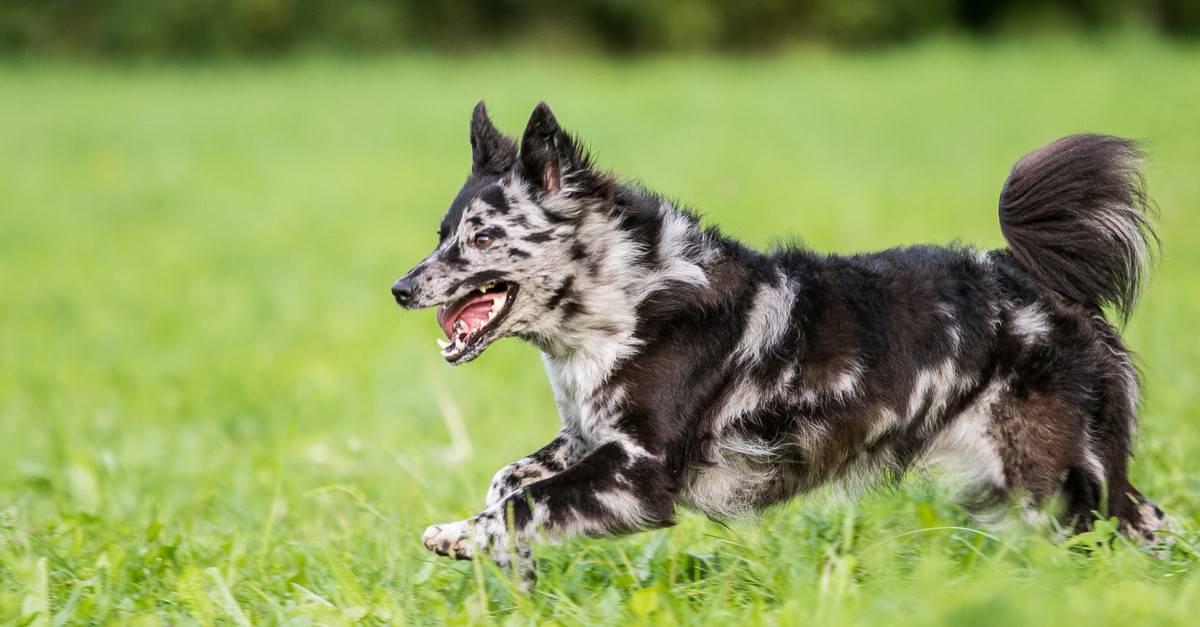
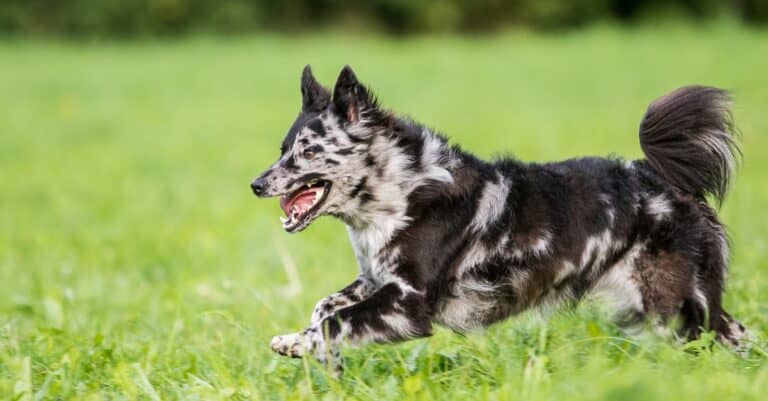
👁 Merle Mudi running on green grass.

Mudis require only a simple grooming regimen and shed only seasonally.

©Aneta Jungerova/Shutterstock.com

One of the many favorable qualities of this pet is its simple grooming regimen. Its short coat of wavy hair needs to be brushed only once each week. It makes sense. These dogs were bred to be hard-working sheepherders. They don’t have the time to stop for a complicated grooming routine!

How much does a Mudi dog shed? These dogs are known to shed on a seasonal basis. A slicker brush is perfect for removing dead and loose hair, especially during those seasonal periods of shedding. Otherwise, a brush with boar’s hair bristles is effective at getting rid of tangles and smoothing its coat of black, brown, gray, and other colors.

Training

Another one of the many pleasant facts about this dog is that it’s easy to train. An alert, focused mind allows it to learn its obedience lessons very quickly. Along with that, this dog is known for its ability to learn fun tricks like shake hands (paws), rollover, play dead, and bow. Teaching a Mudi tricks like this is an easy way for a family to bond with this dog.

Exercise

Running is the favorite exercise of this dog. One that’s trained to come when called can be taken to an open field for a run off-leash. Time spent at the dog park is another option to think about.

An agility course is an entertaining exercise idea. Leaping over jumps, running through tunnels, and climbing ramps is this dog’s idea of a lot of fun.

Ensuring this dog has 60 minutes of exercise daily keeps its mind and body stimulated and healthy. It may even extend its lifespan.

This dog isn’t a good choice for people in apartments. They need a lot of space to stretch their legs.

Puppies

A Mudi puppy needs just as much space as an adult dog to move, stretch its legs, and get its heart pumping. A fenced-in space is ideal for a puppy until it has completed obedience training.
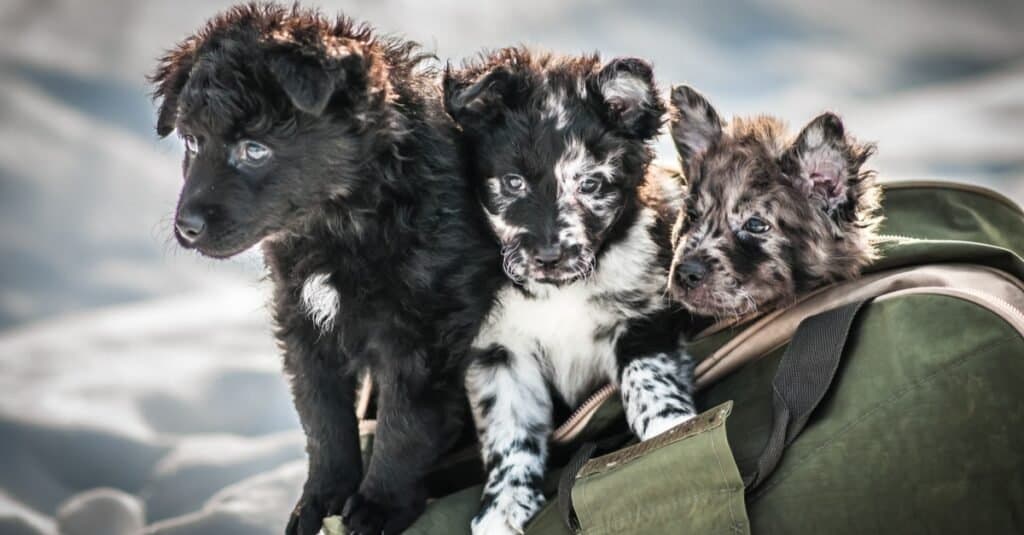
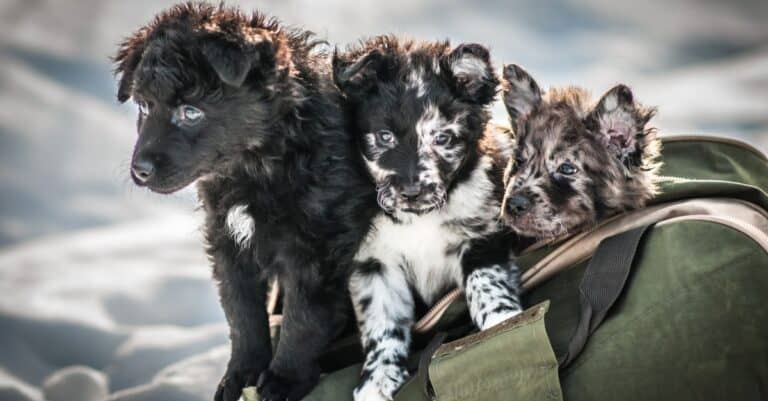
👁 Cute Mudi puppies playing in a bag.

Cute Mudi puppies need a lot of space to run and play, just like the adult Mudi.

©Valkovich Olga/Shutterstock.com

Children

These dogs are indeed appropriate for families with children. However, if this breed is teased or mistreated even in a playful way, there’s a chance it will snap at the young person.

Similar Dogs

A few dogs similar to the Mudi are the Border Collie, Bouvier Des Flandres, and Belgian Shepherd.

  • Border Collie: A lively temperament is something shared by these dogs. They are both herders, but Border Collies are bigger in weight and height.
  • Bouvier des Flandres: Although this dog is much larger both in weight and height, it shares an affectionate temperament and high level of energy with Mudi dogs.
  • Belgian Shepherd: This dog has a lifespan similar to the Mudi and has a lot of coat colors in common with it. But a Belgian Shepherd is a larger breed than the Mudi.
View all 330 animals that start with M

Sources

  1. American Kennel Club / Accessed October 1, 2021
  2. The Spruce Pets / Accessed October 1, 2021
  3. Dog Lime / Accessed October 1, 2021

Thank you for reading! Have some feedback for us?

Contact the AZ Animals editorial team

Related Articles You May Find Interesting

Would You Pay Fifty Thousand Dollars to Clone Your Dog? Here’s How It Works


Mudi FAQs (Frequently Asked Questions)

These canines originated in Hungary in the 19th century. This dog is best known for its herding abilities. In fact, it’s able to herd 500 sheep at one time. Its compact, muscled body allows it to run over long distances, turning quickly to catch up with straying sheep.

It has an affectionate, playful nature earning it a reputation as a good family dog. Its coat can be a variety of colors such as black, brown, gray, white, yellow, and grayish brown.

This dog does best with 60 minutes of exercise each day.

Most breeders charge quite a lot for Mudi puppies. The price is an average of $1,500 to $2,500 per puppy.

The yearly vet budget for this breed should be set between $500 to $1000.

Feeding this dog costs from $50 to $100 each month.

Yes. It’s estimated there are just a few thousand of these dogs in the world. Compare this to 20,000 Golden Retrievers living in the United States alone!

The rarity of this breed is reflected in the cost of puppies. The price for a puppy is an average of $1300.

Yes, these dogs are good with children.

Yes, they do. This is yet another one of those facts that make this breed so endearing.