




N
Species Profile

Neanderthal

Homo neanderthalensis

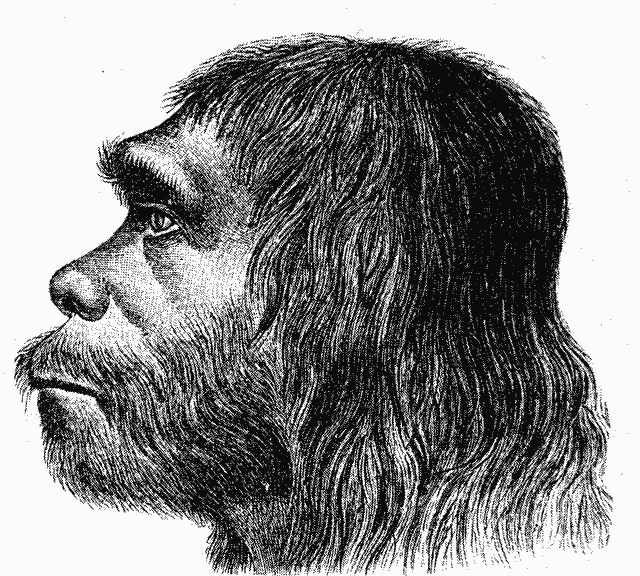
Not cavemen-Ice Age people
Hermann Schaaffhausen - Public Domain

Size Comparison

Human 5'8"
Neanderthal 5 ft 4 in

Neanderthal stands at 94% of average human height.

At a Glance

Wild Species
Also Known As Neandertal, Neandertaler, Neanderthaloid, Caveman
Diet Omnivore
Activity Diurnal+
Lifespan 25 years
Weight 90 lbs
Status Not Evaluated
Did You Know?

Many living people outside most of sub-Saharan Africa carry ~1-2% Neanderthal-derived DNA (Green et al., 2010; Prüfer et al., 2014).

Scientific Classification

Neanderthals were an extinct species of the genus Homo closely related to modern humans, living primarily across Ice Age Eurasia and known from skeletal remains and extensive archaeological evidence (e.g., Mousterian-associated tool traditions). They interbred with anatomically modern humans, contributing ancestry to many present-day human populations outside most of sub-Saharan Africa.

Kingdom
Animalia
Phylum
Chordata
Class
Mammalia
Order
Primates
Family
Hominidae
Genus
Homo
Species
sapiens

Distinguishing Features

  • Robust, stocky postcranial build adapted to cold climates
  • Long, low cranial vault with prominent brow ridges
  • Midfacial projection and large nasal aperture
  • Occipital bun (common cranial feature in many specimens)

Physical Measurements

Males and females differ in size

Height
5 ft 5 in (5 ft 1 in – 5 ft 10 in)
5 ft (4 ft 9 in – 5 ft 3 in)
Weight
172 lbs (132 lbs – 198 lbs)
119 lbs (99 lbs – 154 lbs)
Top Speed
19 mph
running

Appearance

Primary Colors
Secondary Colors
Skin Type Human-like skin with terminal scalp hair and variable body hair; cold-adapted anatomy implies effective insulation via clothing rather than fur.
Distinctive Features
  • Extinct hominin species Homo neanderthalensis; close sister lineage to Homo sapiens with documented interbreeding.
  • Cranium: long, low vault with occipital bun; strong continuous supraorbital torus (brow ridge).
  • Face: midfacial prognathism and very large nasal aperture; expanded paranasal region.
  • Dentition/jaw: retromolar space behind third molar; frequent taurodont molars in samples.
  • Brain size: mean cranial capacity often reported ~1,400-1,500 cm³, overlapping/above recent Homo sapiens averages.
  • Body: very robust postcranium; broad chest (barrel-shaped) and wide pelvis; strong muscle attachment markings.
  • Limb proportions: relatively short distal segments (forearms, lower legs) consistent with cold-climate adaptation (Bergmann/Allen patterns).
  • Stature estimates from skeletal samples: males commonly ~164-168 cm; females ~152-156 cm (varies by sample/method).
  • Body mass estimates often higher than stature suggests (robust build), commonly ~70-85 kg males and ~50-70 kg females (method-dependent).
  • Hands/feet: broad, powerful hands; robust phalanges; generally stocky overall build relative to many recent humans.

Sexual Dimorphism

Sexual dimorphism is present and broadly human-like: males average taller, heavier, and more skeletally robust. Males typically show more pronounced brow ridges and muscle attachment development, while females are smaller and more gracile overall.

  • Greater average stature and body mass; more robust limb shafts and joint sizes.
  • More pronounced supraorbital torus and craniofacial robusticity on average.
  • Stronger muscle attachment markings (entheses) reflecting higher robusticity.
  • Smaller average stature and body mass; relatively more gracile postcranial elements.
  • Less pronounced craniofacial robusticity and brow ridge development on average.
  • Pelvic morphology consistent with obstetric demands; broader birth canal relative to body size.

Did You Know?

Many living people outside most of sub-Saharan Africa carry ~1-2% Neanderthal-derived DNA (Green et al., 2010; Prüfer et al., 2014).

Average cranial capacity is often estimated around ~1,520 cm³ (typical range ~1,200-1,750 cm³), overlapping and sometimes exceeding modern human averages.

Body-mass estimates from skeletal biomechanics suggest ~78 kg for adult males and ~66 kg for adult females (Ruff, Trinkaus & Holliday, 1997).

They made and used birch-bark tar as an adhesive for hafting tools-evidence for controlled heating/pyro-technology (e.g., Königsaue; Kozowyk et al., 2017).

Stable-isotope studies frequently place many Neanderthals at a high trophic level, consistent with heavy reliance on animal protein in cold-steppe settings (e.g., Bocherens et al., 2005).

Some individuals lived into older adulthood for the Pleistocene; classic examples include La Chapelle-aux-Saints 1 (often estimated ~40-50 years) and Shanidar 1 (~35-45 years), showing survival with significant injuries/disability.

Their stone tool tradition is strongly associated with the Mousterian (Levallois and other prepared-core techniques) across much of Ice Age Eurasia.

Unique Adaptations

  • Cold-climate body proportions: relatively short distal limb segments and broad, robust trunks (consistent with Allen's/Bergmann's rules), reducing heat loss compared with long-limbed forms.
  • High skeletal robusticity: thick cortical bone and strong muscle attachment sites reflect high mobility and heavy physical loading in Pleistocene landscapes.
  • Distinctive craniofacial form: midfacial prognathism, large nasal aperture, and an occipital "bun" are common diagnostic traits in many specimens.
  • Large thoracic/pelvic dimensions: wide ribcage and pelvis consistent with high energetic demands and respiratory capacity in cold, physically demanding environments.
  • Retromolar space and dental patterns: characteristic gap behind the last molar in many individuals, plus wear patterns consistent with intensive tool use/food processing.

Interesting Behaviors

  • Cooperative big-game hunting: trauma patterns and weapon evidence suggest frequent close-range encounters with large prey; many sites show systematic carcass processing and marrow extraction.
  • Flexible diets by region/season: alongside meat-heavy isotope signals, dental calculus and residues at some sites preserve plant microfossils and cooked starch evidence, indicating opportunistic plant use in some environments (e.g., Henry et al., 2011).
  • Fire use and cooking/heat management: repeated hearth features at many sites; tar production implies controlled heating and planning.
  • Tool hafting and composite technology: stone points/scrapers mounted to wooden handles using adhesives (tar/resins) to improve leverage and efficiency.
  • Possible symbolic/ornamental behaviors in some contexts: pigment use, modified feathers/talons (e.g., raptor talons at Krapina; debated in detail), and curated objects at certain sites.
  • Care and social support: several skeletons show long-healed injuries and degenerative disease consistent with survival over years, implying group assistance (case-by-case interpretation).

Cultural Significance

Discovered in 1856 in Neander Valley, Germany, Neanderthals (Homo neanderthalensis) changed ideas about being human. They show culture, tools, and interbreeding, replacing the straight progress idea with a branching tree of human lineages in Pleistocene Eurasia.

Myths & Legends

European "Wild Man/Woodwose" traditions: medieval and early-modern folklore across Europe describes shaggy, humanlike forest dwellers living at the margins of society-later often evoked in modern imagination when picturing Ice Age humans.

Caucasus "Almasty" stories: regional folklore recounts a strong, humanlike wild figure in mountain forests; in modern retellings some writers speculate (without evidence) about a "relic hominin," sometimes loosely linked to Neanderthals.

Himalayan "Yeti" legends: narratives of a powerful, humanlike being of the high snows are part of local and global folklore; modern pop-culture occasionally compares such figures to Neanderthals as an Ice Age archetype.

Naming origin as cultural story: the term "Neanderthal" comes from the Neander Valley (after theologian Joachim Neander); the name itself became a cultural symbol-first for primitiveness, then increasingly for a complex, capable close human relative.

Conservation Status

NE Not Evaluated

Has not yet been evaluated against the criteria.

Population Unknown

Life Cycle

Birth 1 infant
Lifespan 25 years

Lifespan

In the Wild 0–50 years

Reproduction

Mating System Data Deficient
Social Structure Aggregation Group
Breeding Pattern Long Term
Fertilization Internal Fertilization
Birth Type Internal_fertilization

Likely lived in small, kin-based bands with female dispersal and possible pair-bonding; mating probably flexible rather than strictly monogamous. Internal fertilization; relationships likely long-term with cooperative care of offspring and injured group members inferred from fossils.

Behavior & Ecology

Social Band Group: 15
Activity Diurnal, Cathemeral
Diet Omnivore Large ungulates (especially deer/reindeer/horse)

Temperament

Highly cooperative within group: coordinated hunting, provisioning, and intensive care for injured individuals.
Risk-tolerant and physically confrontational hunting style suggested by high trauma rates (e.g., Shanidar, La Ferrassie).
Territoriality likely in core ranges, with flexible aggregation and fission-fusion when resources shift.
Behavioral variation by habitat: smaller, more mobile groups in cold-steppe; larger aggregations near rich patches.

Communication

Speech-capable vocal tract suggested by Kebara 2 hyoid similarity to Homo sapiens Arensburg et al., 1989
Shared derived FOXP2 variant consistent with speech/language capacity Krause et al., 2007; Enard et al., 2002
Likely repertoire of affective calls (alarm, contact, infant-directed soothing) supporting coordinated group movement.
Gesture and manual signaling during close-range coordination Hunting, toolmaking, teaching
Facial expression and gaze for social regulation, consistent with Hominidae-like communication systems.
Material signaling via pigments and personal ornaments in some late Neanderthal contexts Site- and time-dependent
Olfactory cues and proximity/touch for bonding and care E.g., grooming-like contact inferred by close living

Habitat

Cave Cliff/Rocky Outcrop Mountain Alpine Meadow Tundra Steppe Grassland Shrubland Woodland Deciduous Forest Coniferous Forest Rocky Shore Coastal Beach River/Stream Lake Wetland +11
Biomes:
Temperate Forest Mediterranean Boreal Forest (Taiga) Tundra Alpine Temperate Grassland Desert Cold Freshwater Wetland +3
Terrain:
Mountainous Hilly Plateau Plains Valley Coastal Riverine Karst Rocky +3
Elevation: Up to 6561 ft 8 in

Ecological Role

High-trophic-level omnivore (often functioning as a large-game predator and occasional scavenger) in Pleistocene Eurasian ecosystems

Regulated large herbivore populations locally via predation/harvest pressure Increased carrion availability and nutrient redistribution through butchery waste left on landscapes Accelerated nutrient cycling by processing carcasses (marrow/grease extraction) and dispersing remains Potentially influenced plant community dynamics through broad-spectrum foraging and use of plant foods (localized impacts)

Diet Details

Main Prey:
Large ungulates Bovids Ibex and chamois Wild boar Megafauna Small game Fish and marine shellfish +1
Other Foods:
Tubers and rhizomes Seeds and nuts Legumes and other edible seeds Fruits and berries Fungi Leafy and woody plant foods and herbs

Human Interaction

Domestication Status

Wild

Neanderthals (Homo neanderthalensis) were never domesticated and went extinct about 40,000 years ago in most places. We know them from fossils and Ice Age archaeological sites across Eurasia. They met modern humans (Homo sapiens), shared some culture, and interbred; DNA studies show Neanderthal genes in many people outside sub-Saharan Africa.

As a Pet

Not Suitable as Pet

Legality: Not applicable/possible: the species is extinct; possession/trade would be limited to legally curated fossil/hominin remains and is generally regulated by national heritage, excavation, and museum laws. Keeping a living individual as a pet is impossible.

Care Level: Expert Only

Purchase Cost:
Lifetime Cost:

Economic Value

Uses:
Scientific research (paleoanthropology, archaeology, ancient DNA) Education and museums Cultural heritage/tourism Media/entertainment and publishing
Products:
  • Museum exhibitions and attendance revenue
  • Academic grants, publications, and comparative datasets (e.g., 3D scans, morphometrics)
  • Heritage-site tourism (guided visits, interpretation centers)
  • Documentaries/books and licensed imagery/replica casts (where permitted)

Relationships

Predators 5

Cave lion Panthera spelaea
Spotted hyena Crocuta crocuta spelaea
Gray wolf Canis lupus
Leopard Panthera pardus
Brown bear Ursus arctos

Related Species 10

Human Homo sapiens Shared Genus
Heidelberg human Homo heidelbergensis Shared Genus
Upright man Homo erectus Shared Genus
Antecessor human Homo antecessor Shared Genus
Hobbit Homo floresiensis Shared Genus
Naledi human Homo naledi Shared Genus
Chimpanzee Pan troglodytes Shared Family
Bonobo Pan paniscus Shared Family
Gorilla Gorilla gorilla Shared Family
Bornean orangutan Pongo pygmaeus Shared Family

Ecological Equivalents 3

Animals that fill a similar ecological role in their ecosystem

Upper Paleolithic / Late Pleistocene modern humans Homo sapiens Highly mobile hunter-gatherers in Late Pleistocene Eurasia used the same prey, toolstone sources, and shelters; they interbred with Homo sapiens, and collagen δ15N and δ13C values indicate diets at high trophic levels similar to top consumers.
Denisovans Closely related ancient Homo group in Pleistocene Eurasia, with genetic evidence of interbreeding with Neanderthals and Homo sapiens. They likely occupied a cold-adapted, hunter-gatherer niche and used a variety of tools, but fossil remains are few.
Spotted hyena Crocuta crocuta spelaea Spotted hyenas were not hominins but were strong competitors and occasional predators and scavengers of medium-to-large ungulates. They often used the same Pleistocene cave sites, and their gnaw marks can be mistaken for Neanderthal site remains.

Although Neanderthals were at the top of the food chain, their demise was likely hastened by a newcomer on the scene: modern humans.

Neanderthals, the oldest extinct relatives to humans, existed between 400,000 and 40,000 years ago. From the time the first Neanderthal fossils were discovered in 1829, the relationships between these hominids and that of the modern humans they were related to has been researched extensively. They appear to have existed concurrently with modern humans, and their eventual extinction may have had a lot to do with the rise and spread of Homo sapiens as a competing species.
👁 Image
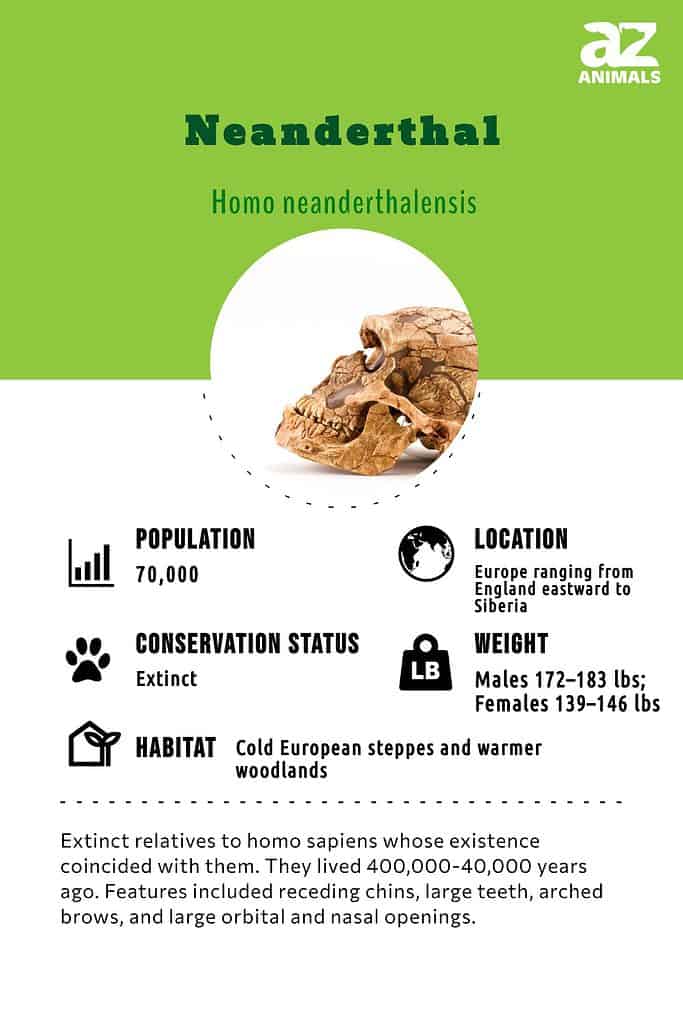
skull of prehistoric man, Skull of neanderthalensis

5 Neanderthal Facts

  • Some of the first Neanderthal fossils were discovered in Germany’s Neander Valley, which is where the name of the species comes from.
  • Extensive evidence suggests that Neanderthals made and used sophisticated tools, deliberately buried their dead, controlled fire, lived in shelters, and engaged in a variety of other advanced social behaviors.
  • The ice age during which Neanderthals lived is likely responsible for many of their physical features, including their wide nostrils and shorter, stockier bodies.
  • Neanderthals and humans likely evolved from a common ancestor that existed between 700,000 and 300,000 years ago; both species belong to the same genus. The oldest neanderthal skeleton dates back to about 430,000 years ago and was discovered in Spain.
  • When modern humans spread into Europe as the ice age advanced, they likely acted as a catalyst for Neanderthals’ extinction.

If you’re looking for more Neanderthal facts, make sure to check out our complete guide on ’10 Incredible Neanderthal Facts.’

Scientific Name

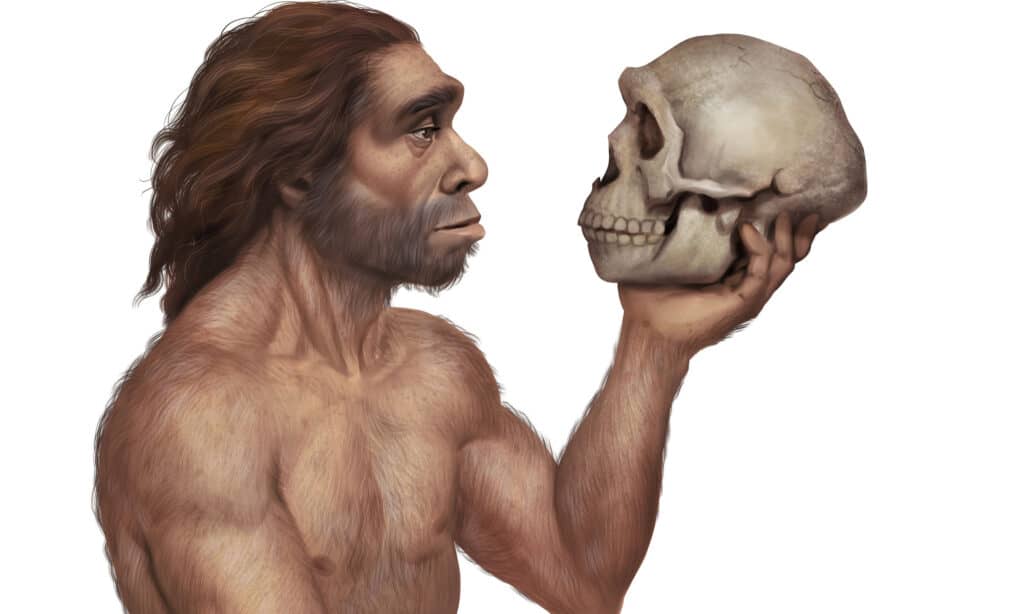
Commonly known as Neanderthals, the scientific name for this species is Homo neanderthalensis. The name is derived from one of the earliest sites where Neanderthal fossils were discovered – the Neander Valley, which is located near modern-day Dusseldorf, Germany. In German, the word tal means “valley.” The word Neanderthaler roughly translates to mean “inhabitant of the Neander Valley.”

The valley in Germany that this species is named for was itself named after Joachim Neander, a German theologian and teacher.
 

👁 Neanderthal Holding Skull

Fossils of Neanderthals were discovered in the Neander Valley, which is located near modern-day Dusseldorf, Germany.

©Roni Setiawan/Shutterstock.com

Types of Humans

While there are no subspecies of Neanderthals (Homo neanderthalensis), this group is a sub-speciessubspecies of multiple groups of ancient humans. Here’s a list of 8 types of extinct humans that walked the Earth up to 300,000 years ago at the same time as homo sapiens:

  • Neanderthals (Homo neanderthalensis) – They were a stocky group of hunters that inhabited Europe’s cold steppes.
  • Denisovans (Denisova hominins)Denisovans lived during the Lower and Middle Paleolithic Period, and are known as the first ancient hominin species revealed only by genes, not by fossil classification. They are named after the Denisova Cave in Russia where the first fossils were found.
  • Homo erectus – The Homo Erectus group lived from 2 million years ago to 250,000 years during the Pleistocene Period. They inhabited Africa, Asia, and possibly Europe. They had proportions like the modern human, an upright stance, and a large chin-less face with protruding brows.
  • Homo rhodesiensis/Homo heidelbergensis – Skulls of the Homo rhodesiensis species were found in sections of Central Africa such as Rhodesia, hence the nickname “Rhodesia Man.” But this has been merged with Homo heidelbergensis, based on a skull found near Heidelberg, Germany with a dubbed “Mauer Jaw,” and later bones found in Spain. These date from 400,00-700,00 years old.
  • Homo naledi – Homo naledi lived during the Middle Pleistocene 335,000–236,000 years ago. Their fossils were found buried in the Rising Star Cave, Cradle of Humankind, South Africa in 2013. They were smaller in stature and body mass and had smaller brains than some other groups.
  • Homo luzonensis – Homo luzonensis were discovered in the Callo Cave in the Philippines on the island of Luzon and lived from 50,000 to 67,000 years ago. They may have been pygmies.
  • Homo floresiensis – This species of ancient humans, dubbed “Flores Man,” lived around 13,000-38,00 years ago. They inhabited the island of Flores in Indonesia and are often referred to as “hobbits” because of their average 3.28 ft stature. They were small-brained but did make fire and use tools.
  • Red Deer Cave People – These ancient humans lived around 17,830 to 11,500 years ago, and lived in the Red Deer Cave in the Yunnan Province in China, named for the fact this group consumed red deer. It’s inconclusive whether or not the fossils represent archaic men or modern homo sapiens.

Evolution

Though the first Neanderthal fossils were found in 1829 in Engis, Belgium, it took 100 years for them to be identified as this unique group. However, fossils found in 1856 in the Neander Valley did provide researchers the opportunity to create that name. It’s thought that Neanderthals evolved outside of Africa, while most other Homo sapiens were located in Africa until approximately 100,000 years ago.

Based on DNA research, Neanderthals are believed to have diverged with more modern human groups around 550,000 years ago. They had adaptations like short limbs and torsos, which aided in their heat conservation in the harshly cold climate. As they breathed in the air, their wide-nosed warmed and humidified the air.

Some researchers believe that the last common ancestor of Neanderthals, and other human groups, were Homo heidelbergensis, fossils of which have been found near Heidelberg, Germany, and Spain and date back as far as 700,000 years.
👁 Image

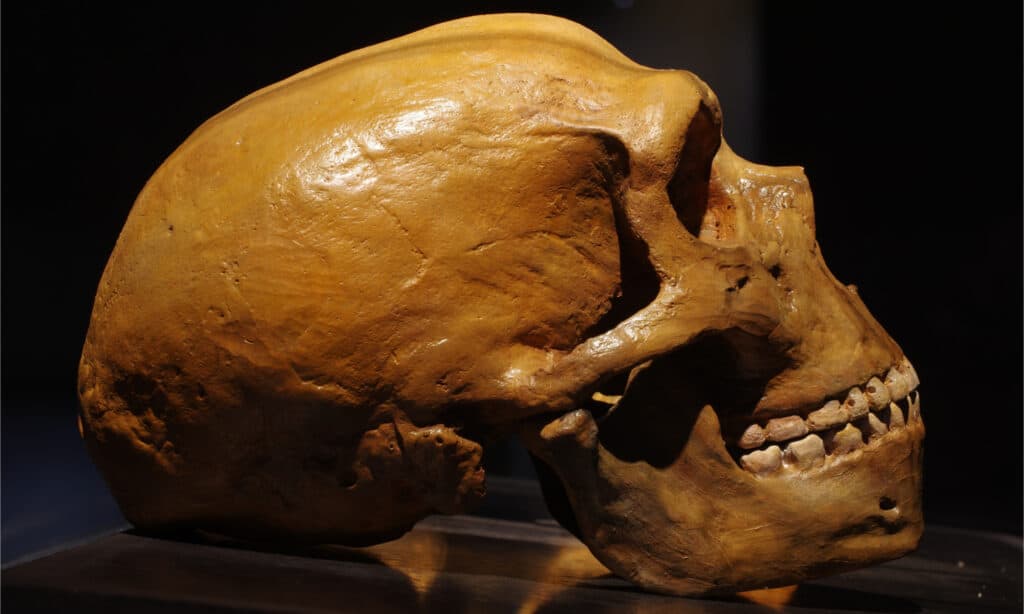
Neanderthals had adaptations like short limbs and torsos, which aided in their heat conservation in the harshly cold climate.

©Vitezslav Halamka/Shutterstock.com

Appearance and Behavior

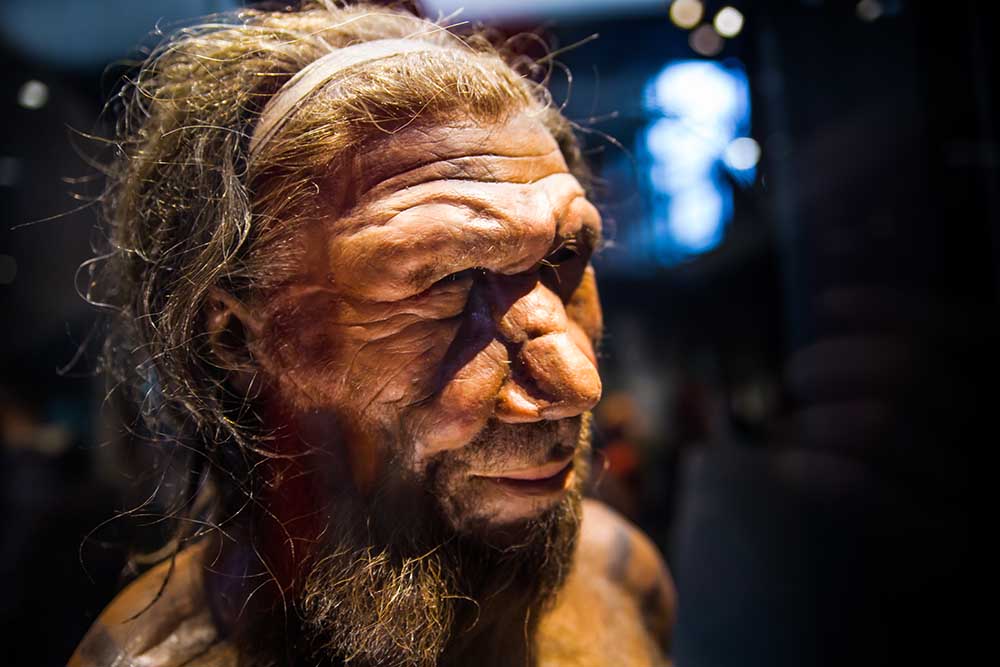
Through the examination of Neanderthal fossils and genetic studies, a great deal is known about how Neanderthals looked and behaved. Their bodies were shorter and stockier than those of modern humans – an adaptation that likely occurred to help them survive in ice-age climates. Male Neanderthals measured an average of 5 feet, 5 inches tall, and weighed an average of 143 pounds. The average Neanderthal woman measured 5 feet, 1 inch tall, and weighed 119 pounds.

Neanderthal skulls were low-vaulted and had large orbital and nasal openings. Their brow ridges were prominently arched, and the occipital region of the skull – near the rear and base – was pronounced to anchor the large muscles of the neck. Their front teeth were larger than modern humans, but their premolars and molars were similar. They also had receding chins.

Neanderthals appear to have had larger diaphragms, which suggests higher lung capacities. Their chests were more pronounced, and their spines were less curved than those of modern humans. Modern Inuit and Siberian Yupiks, who live in Arctic climates, are believed to have similar builds as Neanderthals.

In terms of behavior, Neanderthals likely lived in groups of between 10 and 30 individuals, and these groups probably did not interact often with each other. However, there is some evidence that conflict occurred between groups; many Neanderthal fossils have fractures and other signs of injury.

It is believed that Neanderthal groups moved between certain areas depending on the season and that later generations continued visiting the same locations as their ancestors across extended periods. They were likely ambush hunters, meaning that they probably bided their time before descending upon their prey. Clear evidence of their hunting prowess can be found in finds like sharpened wooden spears and large numbers of the big game remaining at habitation sites.

Neanderthals engaged in the Mousterian stone tool industry and were able to construct sophisticated flake tools that were detached from prepared stone cores. These tools were used for hunting, sewing, and other activities. Based on asymmetries between their left and right arms, they likely hunted by thrusting their weapons rather than throwing them.

These early humans likely had a complex language that was similar to that of modern humans. It is believed that they cared for injured members of their social groups and buried their dead. They also developed non-utilitarian items, including ornamental ones that were dyed with natural pigments, and they were able to sew loosely fitting garments out of animal hides.
👁 denisovan vs neanderthal

A replica of a Neanderthal adult male, based on 40,000 year-old remains found at Spy in Belgium.

©IR Stone/Shutterstock.com

Habitat

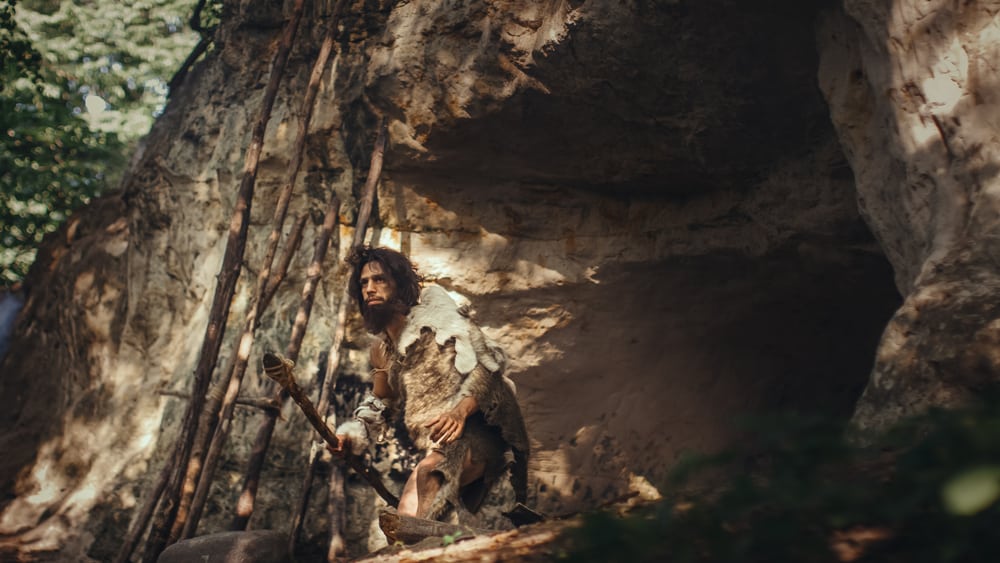
Neanderthals primarily lived in Europe and southwestern to central Asia. Evidence of Neanderthal campsites has been found as far north as Belgium and as far south as the Mediterranean Sea. It is believed that Neanderthals thrived in forested areas that featured abundant limestone caves. Their heyday occurred before and during the last ice age of the Pleistocene Epoch, which was certain to be a very cold and unforgiving environment.

Their hearths were close to their resting and sleeping areas, suggesting that they used the same campsites repeatedly over extended periods of time. They also appear to have had campsites that were specifically used for shorter-term hunting trips, and some of their campsites were likely used on a seasonal basis.
 

👁 Image

It is believed that Neanderthals thrived in forested areas that featured abundant limestone caves.

©Gorodenkoff/Shutterstock.com

Diet

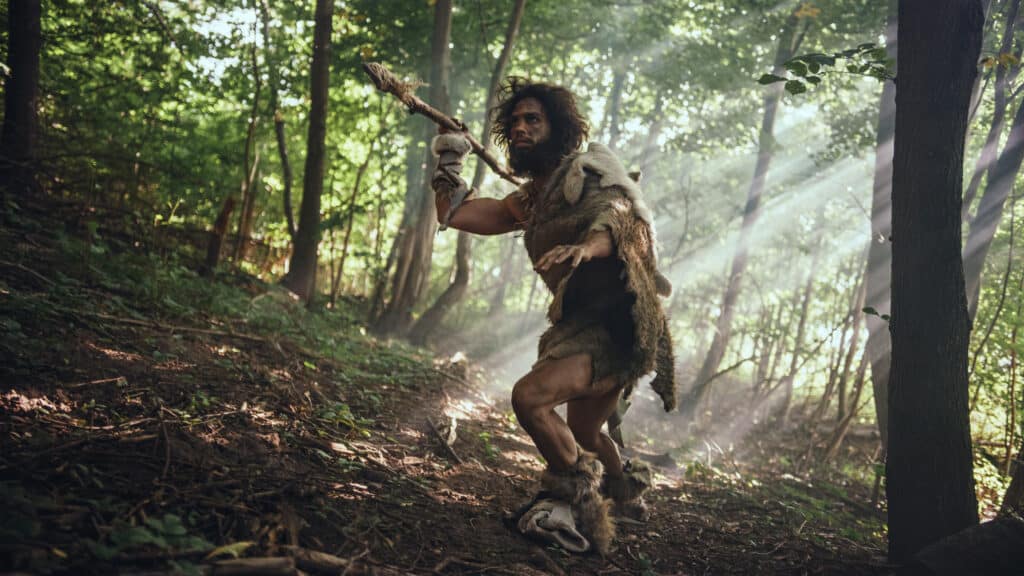
Neanderthals were skilled big game hunters and also ate considerable amounts of plant materials. Because the availability of plant foods dropped during the winter in colder climates, these early humans were likely forced to exploit other options, leading to their preference for meat. They were specialized seasonal hunters, eating whatever was available at the time. In the winter, they likely subsisted largely off of reindeer; in the summer, they primarily consumed red deer.

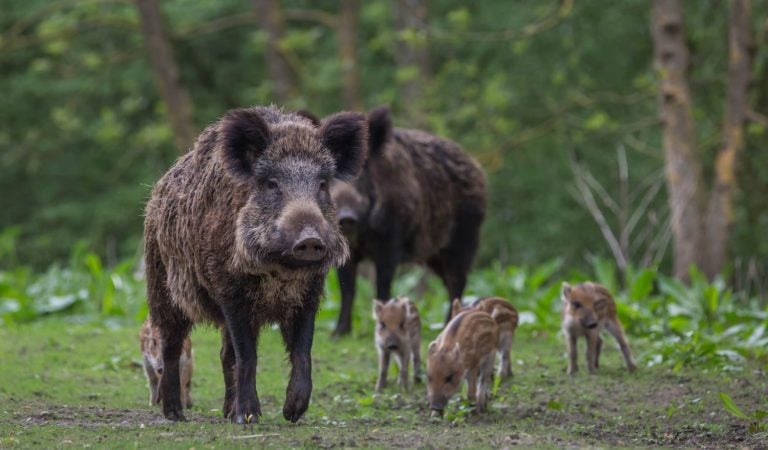
Hoofed animals were the preferred prey of Neanderthals. Besides red deer and reindeer, they probably hunted other Pleistocene megafauna like wild boars, wooly rhinoceroses, ibexes, cave bears, and brown bears. It is also believed that they hunted and consumed tortoises, rabbits, and many species of ground-dwelling birds. In coastal areas, evidence has shown that they also exploited marine resources; it is believed that they consumed shellfish, bluefin tunas, sea urchins, and even dolphins.

Isotopic chemical analyses of Neanderthal fossils have shown that their diets consisted of large amounts of meat. However, plaque in their molar teeth also shows that they consumed plenty of plant materials as well. Primarily forest foragers, Neanderthals likely enjoyed plant foods like mushrooms, moss, and pine nuts. They are also believed to have consumed edible grasses, and it appears that they cooked plants like legumes and acorns through processes like roasting, boiling, and smoking.
 

👁 Primeval Caveman Wearing Animal Skin Holds Stone Tipped Spear Looks Around, Explores Prehistoric Forest in a Hunt for Animal Prey. Neanderthal Going Hunting in the Jungle

Neanderthals primarily hunted hoofed animals, but their prey also included wild boars, wooly rhinoceroses, ibexes, cave bears and brown bears.

©iStock.com/gorodenkoff

Predators and Threats

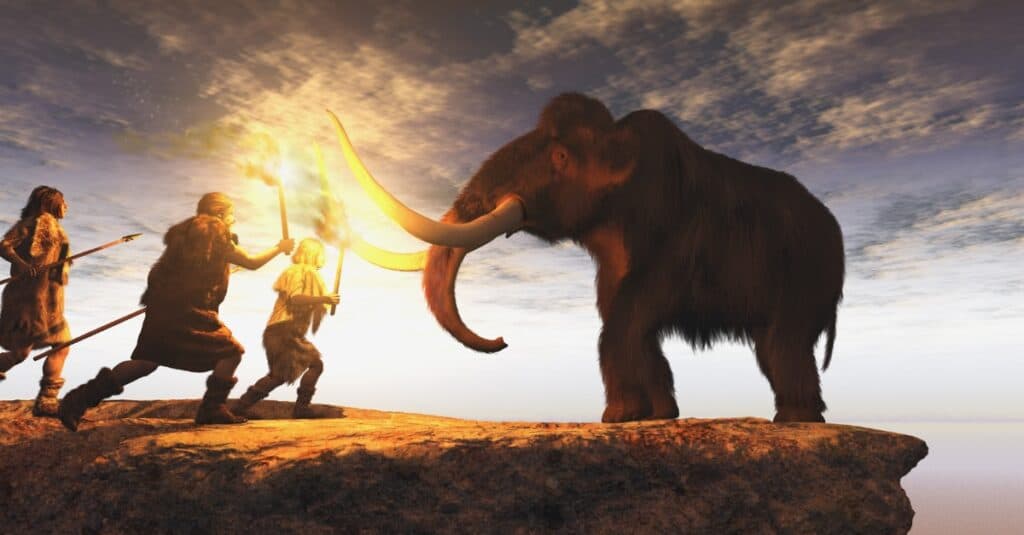
Neanderthals were likely apex predators. Also known as alpha predators and top predators, this means that they were at the top of the food chain. However, it is believed that they had to compete with large ice age predators for their favorite foods. They most likely spent a lot of time fending off cave lions, cave bears, and even leopards to gain access to prey like horses, wild cattle, and deer.

Interestingly enough, Neanderthals may have been threats to themselves. Evidence shows that the species engaged in cannibalism, and undisputed examples of this are abundant. However, their precise reasons for engaging in cannibalism are not known. They may gave done so for ritualistic purposes, or they may have engaged in pre-burial de-fleshing. Neanderthals also may have resorted to cannibalism during extended periods of food shortage or during times of war.

Ultimately, Neanderthals’ biggest threat probably came from modern humans. Both species – Homo neanderthalensis and Homo sapiens — appear to have evolved from a common ancestor that existed roughly 700,000 to 300,000 years ago. Both species are believed to have existed simultaneously for a period of approximately 30,000 to 50,000 years. Although evidence shows that they likely interbred with modern humans, Neanderthals were a distinct branch of the human family tree.

It is believed that modern humans were able to outperform and outcompete Neanderthals but didn’t necessarily exterminate them. As forested areas gave way to open steppes and grasslands during periods of climate change, modern humans were given a leg up over Neanderthals. Therefore, Homo sapiens likely indirectly contributed to the extinction of Homo neanderthalensis.
 

👁 How old is the oldest neanderthal - prehistoric mammoth encounter

Neanderthals probably spent a lot of time fending off cave lions, cave bears and leopards to gain access to prey like horses, wild cattle and deer.

©Esteban De Armas/Shutterstock.com

Reproduction, Babies and Lifespan

It is believed that the majority of Neanderthals – roughly 80 percent – died well before the age of 40. The mortality rate for infants was also very high and is estimated to have been around 43 percent.

Because the total Neanderthal population never grew too large, these early humans likely engaged in high levels of interbreeding. This means that parents were likely typically close relatives. The resulting genetic abnormalities likely contributed to the high infant mortality rates.

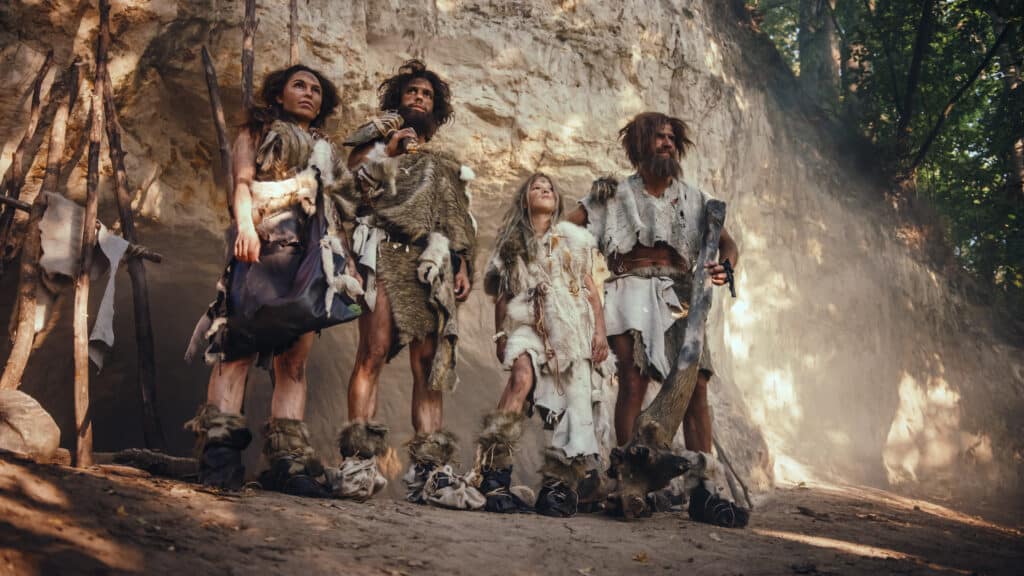
Evidence shows that Neanderthals likely mated with Homo sapiens. In particular, the “love child” of a Neanderthal and modern human that was discovered in Portugal likely existed roughly 24,500 years ago. Modern Europeans typically have about 2 percent Neanderthal DNA, which also supports the idea that modern humans interbred with Neanderthals.

Neanderthal babies faced harsh environments; many that survived past childbirth still likely perished at young ages. It appears that infants were weaned by their mothers around the age of 2.5 years, and they were likely then required to go to work immediately as hunters or gatherers. Evidence shows that Neanderthal infants frequently suffered from lead poisoning. At birth, their brains were sized similarly to those of modern human infants, but their brains grew more quickly and became larger during childhood.
 

👁 Neanderthal Family

Evidence shows that Neanderthals likely mated with

Homo sapiens

. They also likely took part in high levels of interbreeding.

©iStock.com/gorodenkoff

Population

The modern population of Neanderthals is zero. Even when they existed, they descended from a very small population with an exceedingly small effective population – the number of members who can bear children – of roughly 3,000 to 12,000 individuals.

DNA analyses have shown that Neanderthal populations likely varied over time. Estimates of population sizes include 1,000 to 5,000 total individuals; 5,000 to 9,000 total individuals; or even 3,000 to 25,000 total individuals at one time. The population may have steadily increased up to around 50,000 total individuals before declining into extinction.

Ultimately, the highest total number of Neanderthals is believed to still have been 10 times smaller than that of contemporary populations of modern humans in Western Europe. Their populations were likely kept low due to the Boserupian Trap, which means that population growth was limited by the scarcity of food.

View all 98 animals that start with N

Sources

  1. David Burnie, Dorling Kindersley (2011) Animal, The Definitive Visual Guide To The World's Wildlife / Accessed November 10, 2008
  2. Tom Jackson, Lorenz Books (2007) The World Encyclopedia Of Animals / Accessed November 10, 2008
  3. David Burnie, Kingfisher (2011) The Kingfisher Animal Encyclopedia / Accessed November 10, 2008
  4. Richard Mackay, University of California Press (2009) The Atlas Of Endangered Species / Accessed November 10, 2008
  5. David Burnie, Dorling Kindersley (2008) Illustrated Encyclopedia Of Animals / Accessed November 10, 2008
  6. Dorling Kindersley (2006) Dorling Kindersley Encyclopedia Of Animals / Accessed November 10, 2008
  7. David W. Macdonald, Oxford University Press (2010) The Encyclopedia Of Mammals / Accessed November 10, 2008

About the Author

Abby Parks

Abby Parks has authored a fiction novel, theatrical plays, short stories, poems, and song lyrics. She's recorded two albums of her original songs, and is a multi-instrumentalist. She has managed a website for folk music and written articles on singer-songwriters, folk bands, and other things music-oriented. She's also a radio DJ for a folk music show. As well as having been a pet parent to rabbits, birds, dogs, and cats, Abby loves seeking sightings of animals in the wild and has witnessed some more exotic ones such as Puffins in the Farne Islands, Southern Pudu on the island of Chiloe (Chile), Penguins in the wild, and countless wild animals in the Rocky Mountains (Big Horn Sheep, Mountain Goats, Moose, Elk, Marmots, Beavers).
Connect:

Thank you for reading! Have some feedback for us?

Contact the AZ Animals editorial team

Related Articles You May Find Interesting


Neanderthal FAQs (Frequently Asked Questions)

Evidence strongly suggests that Neanderthals were omnivores and likely consumed both animals and plants. It is believed that they may have originally favored plants but turned to meat during periods when plants weren’t able to grow.

Neanderthals and humans are believed to have descended from a common ancestor that existed between 700,000 and 300,000 years ago. They both belong to the same genus — Homo — and they appear to have inhabited the same areas of Western Asia for approximately 30,000 to 50,000 years. Although they interbred with non-African modern humans, Neanderthals formed a distinct branch on the human family tree. This means that humans and Neanderthals are different species.

The two species share many similarities, but Homo sapiens were better able to adapt to different environments. Their brains were more complex, allowing them to develop advanced tools and to compete more effectively for resources.

Neanderthals and modern humans shared a common ancestor until about 430,000 years ago. That ancestor, Homo heidelbergensis, likely became split into two branches — Homo neanderthalensis and Homo sapiens — due to a single, major environmental event that caused them to rapidly increase in body size. Their heads likely lengthened quickly during this period. However, it’s equally plausible that the split happened through accretion, or a slow evolution, that involved roughly four stages.

Evidence suggests that Neanderthals likely had a complex spoken language. In particular, their vocal tracts may have been similar to those of modern humans. However, their flattened cranial bases are similar to those of two-year-old modern humans, suggesting that they may have been incapable of forming vowels.

A basic Neanderthal definition is as follows: Neanderthals are the closest extinct human relative. Contrary to what many believe, they did not evolve to become modern humans; rather, their evolution split apart from a common ancestor that they shared with Homo sapiens between 700,000 and 300,000 years ago. They existed between 400,000 and 40,000 years ago, when they became extinct.

Neanderthals belong to the Kingdom Animalia.

Neanderthals belong to the phylum Chordata.

Neanderthals belong to the class Mammalia.

Neanderthals belong to the family Hominidae.

Neanderthals belong to the order Primates.

Neanderthals belong to the genus Homo.

Neanderthals are covered in Smooth skin.

Neanderthals were found worldwide near rivers.

Neanderthals ate vegetables, fruit, and fish.

Predators of Neanderthals included bears, lions, and tigers.

Neanderthals roamed Asia and Europe for around 100,000 years!

The scientific name for the Neanderthal is Homo Sapiens Neanderthalensis.

Neanderthals lived for 35 to 50 years.

Little is known about Denisovans compared to Neanderthals, but scientists estimate that Denisovans had wider skulls and larger molars compared to Neanderthals. They also lived in different locations, though their territories did overlap.

The main differences between a Neanderthal skull and a human skull include their shape and size. Although they were humans like us, Neanderthals belonged to a separate species known as Homo neanderthalensis.