



N
Species Profile

Nightjar

Caprimulgidae

Built for twilight insect-hunting
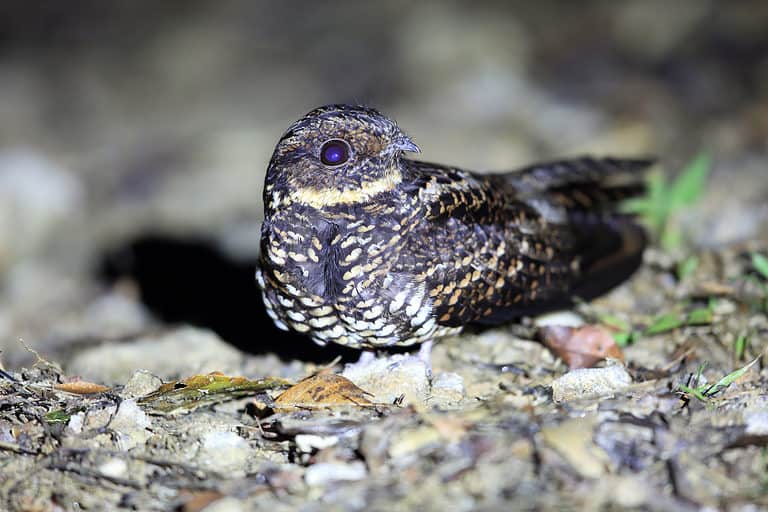
feathercollector/Shutterstock.com

Nightjar Distribution

Click a location to explore more animals from that region

Loading map...

Found in 42 countries

๐Ÿ‡ฆ๐Ÿ‡ท Argentina ๐Ÿ‡ฆ๐Ÿ‡บ Australia ๐Ÿ‡ง๐Ÿ‡ท Brazil ๐Ÿ‡จ๐Ÿ‡ฆ Canada ๐Ÿ‡จ๐Ÿ‡ฑ Chile ๐Ÿ‡จ๐Ÿ‡ณ China ๐Ÿ‡จ๐Ÿ‡ด Colombia ๐Ÿ‡จ๐Ÿ‡ท Costa Rica ๐Ÿ‡ฉ๐Ÿ‡ช Germany ๐Ÿ‡ช๐Ÿ‡ฌ Egypt ๐Ÿ‡ช๐Ÿ‡ธ Spain ๐Ÿ‡ช๐Ÿ‡น Ethiopia ๐Ÿ‡ซ๐Ÿ‡ท France ๐Ÿ‡ฌ๐Ÿ‡ง United Kingdom ๐Ÿ‡ฌ๐Ÿ‡ท Greece ๐Ÿ‡ฌ๐Ÿ‡น Guatemala ๐Ÿ‡ฎ๐Ÿ‡ฉ Indonesia ๐Ÿ‡ฎ๐Ÿ‡ฑ Israel ๐Ÿ‡ฎ๐Ÿ‡ณ India ๐Ÿ‡ฎ๐Ÿ‡ท Iran ๐Ÿ‡ฎ๐Ÿ‡น Italy ๐Ÿ‡ฏ๐Ÿ‡ต Japan ๐Ÿ‡ฐ๐Ÿ‡ช Kenya ๐Ÿ‡ฐ๐Ÿ‡ฟ Kazakhstan ๐Ÿ‡ฑ๐Ÿ‡ฐ Sri Lanka ๐Ÿ‡ฒ๐Ÿ‡ฆ Morocco ๐Ÿ‡ฒ๐Ÿ‡ฝ Mexico ๐Ÿ‡ฒ๐Ÿ‡พ Malaysia ๐Ÿ‡ต๐Ÿ‡ฆ Panama ๐Ÿ‡ต๐Ÿ‡ช Peru ๐Ÿ‡ต๐Ÿ‡ฌ Papua New Guinea ๐Ÿ‡ต๐Ÿ‡ญ Philippines ๐Ÿ‡ต๐Ÿ‡ฑ Poland ๐Ÿ‡ต๐Ÿ‡น Portugal ๐Ÿ‡ท๐Ÿ‡บ Russia ๐Ÿ‡ธ๐Ÿ‡ฆ Saudi Arabia ๐Ÿ‡น๐Ÿ‡ญ Thailand ๐Ÿ‡น๐Ÿ‡ท Turkey ๐Ÿ‡น๐Ÿ‡ฟ Tanzania ๐Ÿ‡บ๐Ÿ‡ธ United States ๐Ÿ‡ป๐Ÿ‡ณ Vietnam ๐Ÿ‡ฟ๐Ÿ‡ฆ South Africa

At a Glance

Family Overview This page covers the Nightjar family as a group. Stats below are general traits shared across the family.
Also Known As Goatsucker, Nighthawk, Whip-poor-will, Poorwill
Activity Nocturnal+
Lifespan 5 years
Weight 0.2 lbs
Status Not Evaluated
Did You Know?

Size varies widely across the family: roughly ~15-40+ cm long, with wingspans about ~35-80 cm (small desert species to large "eared" nightjars).

Scientific Classification

Family Overview "Nightjar" is not a single species but represents an entire family containing multiple species.

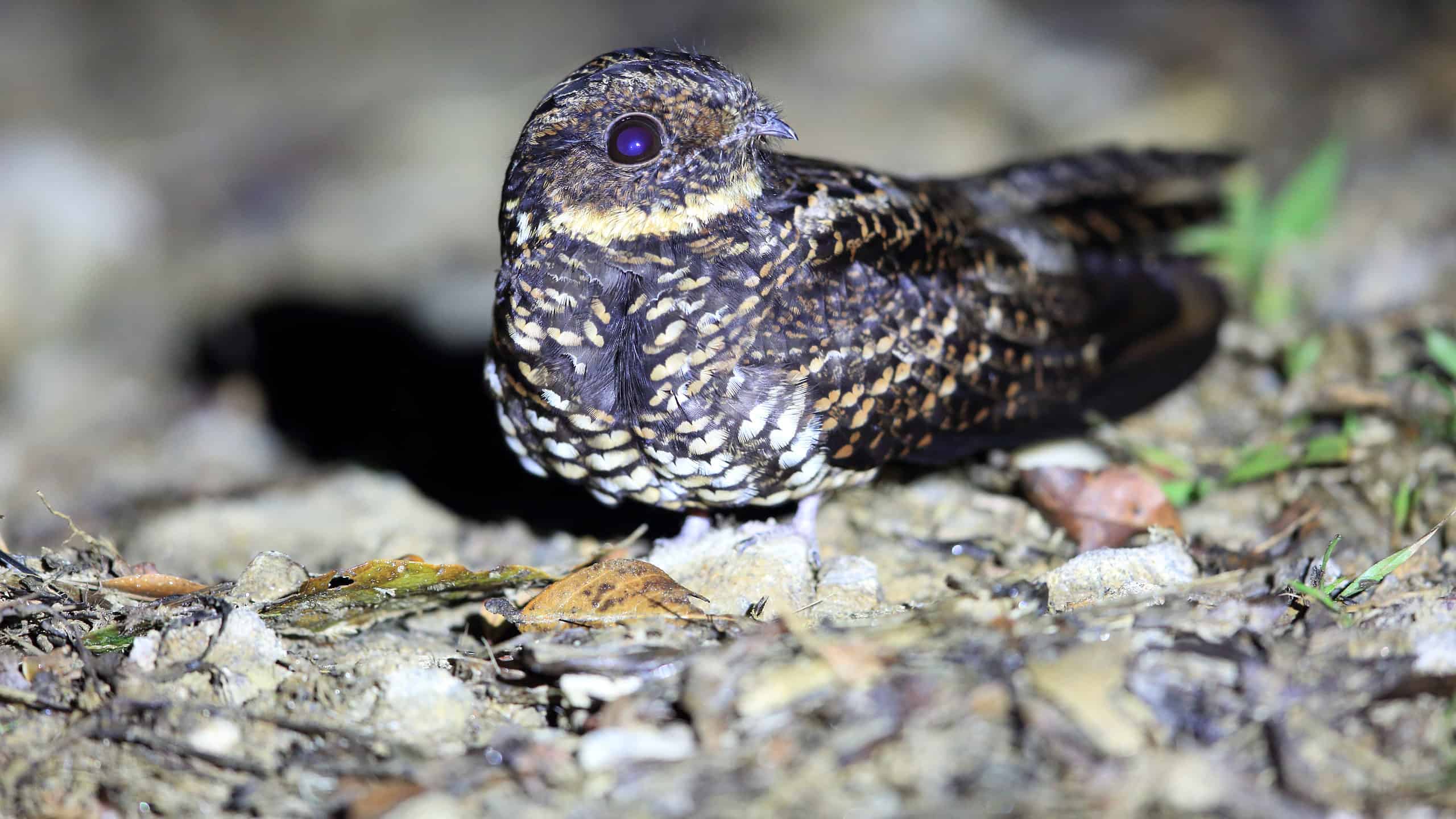
Nightjars (family Caprimulgidae) are nocturnal/crepuscular insectivorous birds with cryptic plumage, large gapes and bristles around the mouth, and buoyant, silent flight adapted for catching flying insects.

Kingdom
Animalia
Phylum
Chordata
Class
Aves
Order
Caprimulgiformes
Family
Caprimulgidae

Distinguishing Features

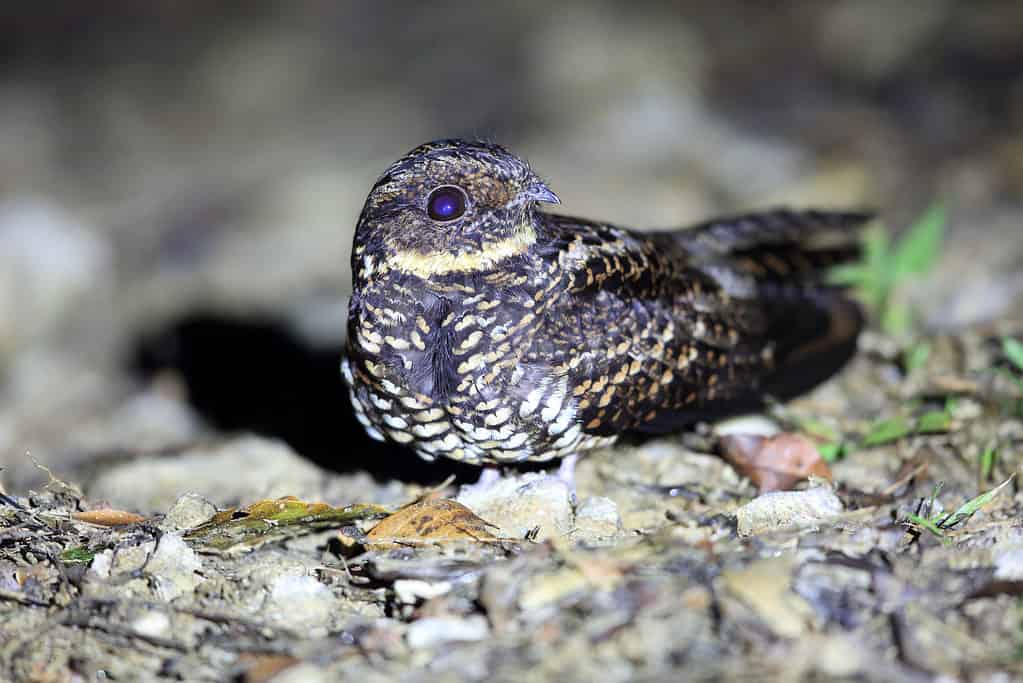
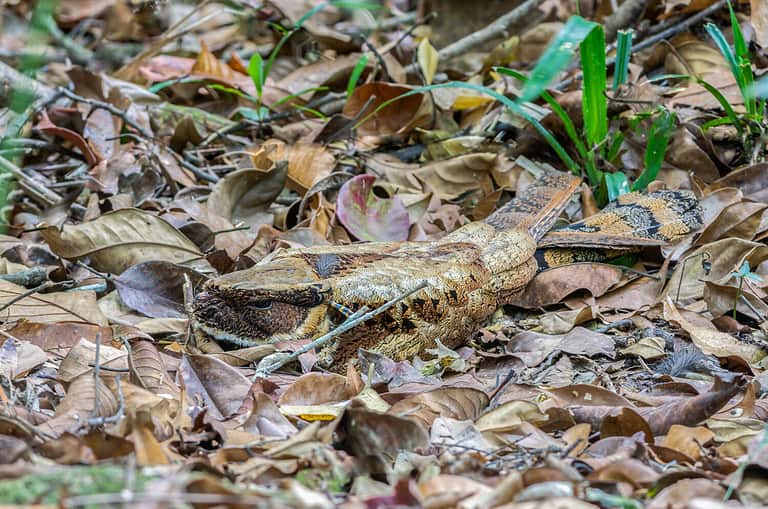
  • Strong camouflage; often roost motionless on the ground or lengthwise along branches
  • Very wide gape for catching insects on the wing; often with rictal bristles
  • Crepuscular to nocturnal activity; characteristic calls (e.g., churring)
  • Long wings and soft plumage enabling quiet flight
  • Typically lay eggs directly on bare ground or leaf litter with minimal or no nest structure

Physical Measurements

Males and females differ in size

Length
โ™‚ 10 in (6 in โ€“ 1 ft 5 in)
โ™€ 9 in (6 in โ€“ 1 ft 4 in)
Weight
โ™‚ 0 lbs (0 lbs โ€“ 0 lbs)
โ™€ 0 lbs (0 lbs โ€“ 0 lbs)
Tail Length
โ™‚ 5 in (2 in โ€“ 8 in)
โ™€ 4 in (2 in โ€“ 8 in)
Top Speed
37 mph
flying

Appearance

Primary Colors
Secondary Colors
Skin Type Feathered body with soft, velvety plumage; bare skin mostly limited to legs/feet and around the gape.
Distinctive Features
  • Measurements (family range): roughly 14-41 cm length; ~30-75 cm wingspan; ~0.02-0.2 kg mass, from smallest to largest members.
  • Lifespan: commonly ~3-10 years in the wild; some species can exceed 15 years, rarely approaching ~20 with banding records.
  • Very large gape and wide mouth; often with rictal bristles aiding insect capture and protecting eyes.
  • Large eyes and short bill; head appears broad and flat in many species.
  • Long, pointed wings in many taxa for buoyant, efficient flight; some have more rounded wings in forested habitats.
  • Flight typically silent or very quiet due to soft plumage and feather structure; supports low-light hunting.
  • Crepuscular/nocturnal aerial insectivores ("insect-hawking"); diet dominated by moths, beetles, and flying ants; proportions vary regionally.
  • Day roosting on ground, branches, or leaf litter; posture and plumage strongly emphasize concealment.
  • Ground-nesting or nesting on bare substrate with minimal nest structure; clutch size and timing vary across climates.
  • Global distribution across tropics and temperate zones; habitats range from deserts and savannas to woodlands and forest edges.
  • Variation across the family: some species are strongly migratory while others are resident; activity can extend into daylight in some open-country forms; tail streamers and wing markings vary markedly among lineages.

Sexual Dimorphism

Sexual dimorphism is usually subtle: males of many species show clearer white wing or tail patches and slightly higher-contrast patterning. Females are typically duller or more buff-toned, though some species show little visible difference.

โ™‚
  • More distinct white patches on primaries and/or tail in many species.
  • Often slightly higher contrast between dark barring and pale mottling.
  • In some species, longer tail streamers or more pronounced tail patterning.
โ™€
  • White wing/tail patches reduced, absent, or cream/buff rather than bright white.
  • Overall plumage often warmer buff or more evenly mottled.
  • Patterning may appear softer, aiding incubation camouflage on ground sites.

Did You Know?

Size varies widely across the family: roughly ~15-40+ cm long, with wingspans about ~35-80 cm (small desert species to large "eared" nightjars).

Most lay eggs directly on bare ground or leaf litter-typically 1-2 eggs-relying on camouflage rather than a built nest.

Lifespans are usually a few years in the wild, but banding recoveries show some species can reach ~15-20 years.

Some species "hawk" insects in buoyant flight; others forage by short sallies from the ground or a perch-many mix both strategies.

Many nightjars have a comb-like "pectinate" middle-toe claw used in grooming around the face bristles.

Their calls can carry far at night-churrs, whistles, and repeated phrases (like the famous "whip-poor-will") often define a species more than its looks.

The family spans habitats from deserts and savannas to temperate heaths, forest edges, and even cities-some are long-distance migrants, others year-round residents.

Unique Adaptations

  • Extra-wide gape for scooping insects in flight, enhanced by rictal bristles around the mouth that likely help funnel prey and protect the eyes/face.
  • Soft, fringed wing feathers in many species that reduce flight noise-useful when approaching insect swarms and avoiding detection.
  • Cryptic plumage and posture: mottled browns, grays, and buffs, plus a flattening "freeze" response, make roosting birds nearly invisible on bark, sand, or leaf litter.
  • Large eyes and visual sensitivity tuned to low light; paired with a wide field of view for detecting prey and predators at twilight.
  • Pectinate (comb-edged) claw on a middle toe in many species, used for grooming facial bristles and plumage-an unusual feature among birds.
  • Minimalist ground-nesting (often no nest structure) paired with eggs and chicks that blend into the substrate-effective across open heathlands, savannas, and forest edges.

Interesting Behaviors

  • Crepuscular/nocturnal activity: most feed at dusk, dawn, or moonlit nights; a minority are more active in full darkness, and some in open habitats can feed well after sunrise.
  • Aerial insectivory with variation: many patrol on the wing for moths, beetles, and flying ants/termites; others sit-and-sally from roads, logs, or low branches; a few frequently forage low over water or clearings.
  • Daytime roosting strategies: commonly roost motionless on the ground, along a branch, or lengthwise on logs-often choosing sun-dappled spots that enhance camouflage.
  • Nest defense and distraction: adults may hiss, clap wings, perform "broken-wing" displays, or lead predators away; some use threat displays that emphasize the wide mouth.
  • Acoustic courtship: males of many species advertise territories with repeated calls; some add wing-claps or booming sounds during display flights (behavior and sound vary strongly by species and habitat).
  • Seasonal movements: temperate-breeding nightjars in Eurasia and North America often migrate long distances; many tropical species are resident or only locally nomadic, tracking rains and insect pulses.

Cultural Significance

Nightjars (Caprimulgidae) are called 'voices of dusk.' Their sudden night calls and hiding by day led to names like 'goatsucker.' Whip-poor-wills and churring nightjars mark seasons and harvest, and sometimes are seen as omens near homes and graveyards.

Myths & Legends

In Europe, old folk stories said nightjars (Caprimulgidae) went to goat pens at night and 'sucked' milk, sometimes making animals sick. Ancient writers like Pliny told this, and names mean 'goatsucker.'

Spanish and Latin American stories: in rural folklore, nightjars were blamed for attacking goats or livestock at night-an echo of the goatsucker motif that persists in popular storytelling and naming.

In Appalachian and North American country folk tales, the whip-poor-will's repeated night call near a house was seen as an omenโ€”often said to predict death or bad luck, a night 'messenger.'

Indigenous North American traditions (varied by nation) that treat the whip-poor-will/nightjar's night voice as a spirit-associated presence-sometimes a carrier of messages, sometimes a warning sound heard near liminal places at night.

In British and Irish countryside lore, the "fern owl" (old name for the European Nightjar) was an owl-like bird seen at dusk in heaths and bracken; its churring call linked to haunted, fairy-night scenes.

People in many places make stories from nightjar calls (Caprimulgidae). Calls like 'whip-poor-will' or 'poor-will' are heard as pleading, warning, or as ways to count time.

Conservation Status

NE Not Evaluated (family-level): IUCN assesses Caprimulgidae mainly at the species level; across the family, statuses span mostly Least Concern with multiple Near Threatened/Vulnerable species, fewer Endangered/Critically Endangered taxa, and some Data Deficient endemics. Overall trends are mixed, with many populations declining.

Has not yet been evaluated against the criteria.

Population Unknown

Protected Under

  • Many Caprimulgidae species are protected under national wild bird protection laws (varies by country)
  • EU Birds Directive (Directive 2009/147/EC) protects listed nightjar species and their habitats within the EU
  • Migratory bird protection frameworks in North America (e.g., Migratory Bird Treaty Act in the United States; analogous protections in Canada)
  • Site-based protection through national parks, reserves, and Important Bird and Biodiversity Areas (IBAs), where implemented

Looking for a specific species?

European nightjar

Caprimulgus europaeus

Often treated as the archetypal 'nightjar' in English usage (especially across Europe) and is one of the best-known, widely cited members of Caprimulgidae.

  • Nocturnal/crepuscular aerial insectivore with a very wide gape and rictal bristles used in prey capture.
  • Exceptionally cryptic plumage; commonly roosts and nests on the ground relying on camouflage.
  • Distinctive dusk/night vocalizations and wing-clap display flights during breeding season.
  • Long-distance migrant in much of its range, tracking seasonal insect abundance.

You might be looking for:

European Nightjar

22%

Caprimulgus europaeus

A widespread Palearctic nightjar known for its churring song and crepuscular flight.

Common Nighthawk

20%

Chordeiles minor

A North American species often seen hawking insects at dusk; despite the name, it is a nightjar.

Common Poorwill

16%

Phalaenoptilus nuttallii

North American nightjar notable for entering torpor (including prolonged hibernation-like states).

Tawny Frogmouth (often confused with nightjars)

10%

Podargus strigoides

A nocturnal Australasian bird related within Caprimulgiformes but in a different family (Podargidae).

View Profile

Life Cycle

Birth 2 chicks
Lifespan 5 years

Lifespan

In the Wild 1โ€“20 years
In Captivity 2โ€“25 years

Reproduction

Mating System Monogamy
Social Structure Socially Monogamous
Breeding Pattern Seasonal
Fertilization Internal Fertilization
Birth Type Internal_fertilization

Across nightjars, pairs are typically socially monogamous during a breeding season, with males defending display/foraging territories and courtship flights. Polygyny and extra-pair mating occur in some species; both parents often share incubation and chick care.

Behavior & Ecology

Social Pair Group: 2
Activity Nocturnal, Crepuscular, Cathemeral
Diet Insectivore Flying insects-especially moths and beetles (often taken during dusk/night aerial foraging).
Seasonal Migratory 3,728 mi

Temperament

Cryptic and wary; often relies on freeze-and-camouflage rather than fleeing.
Generally non-aggressive outside breeding; territoriality varies by species and habitat.
Territorial during breeding in many species; others show looser spacing where prey is abundant.
Tolerance for nearby conspecifics can increase at communal roosts or concentrated food patches.
Risk-averse around nests; distraction displays and quiet withdrawal are common defensive strategies.

Communication

Repetitive churring/trilling songs used for mate attraction and territorial advertisement.
Whistled or sharp contact calls between mates or between adults and young.
Alarm notes and scolding calls, typically brief and low-amplitude.
Nestling begging calls, variable in intensity and timing across species.
Aerial display flights (booms, swoops) that function as territorial and courtship signals.
Wing-clapping/wing-snapping sounds in some species during display or pursuit.
Visual signaling with contrasting white wing/tail patches, highly variable among species.
Posture and orientation on ground/perch to reduce detection; camouflage is a primary 'signal' strategy.
Bill snapping and gape displays at close range, especially when threatened near nest/roost.

Habitat

Biomes:
Tropical Rainforest Tropical Dry Forest Savanna Desert Hot Desert Cold Mediterranean Temperate Grassland Temperate Forest Temperate Rainforest Boreal Forest (Taiga) Alpine Wetland +6
Terrain:
Plains Hilly Plateau Valley Mountainous Coastal Island Riverine Rocky Sandy Muddy Karst Volcanic +7
Elevation: Up to 13123 ft 4 in

Ecological Role

Nocturnal/crepuscular aerial insect predator (mid-upper trophic consumer) across diverse terrestrial habitats.

suppression of nocturnal flying insect populations (including many agricultural/forestry pest groups such as moths and beetles) potential reduction of nuisance insects in some settings (e.g., midges and mosquitoes where locally abundant) energy transfer from insect biomass to higher predators (nightjars are prey for owls, raptors, and mammalian predators) bioindicator value: sensitivity to changes in insect abundance, light pollution, and habitat structure can reflect ecosystem condition

Diet Details

Main Prey:
Moths Beetles Flies and midges True bugs Winged ants and termites Caddisflies Grasshoppers and katydids Aerial arthropods +2

Human Interaction

Domestication Status

Wild

Nightjars (Caprimulgidae) are wild birds with no domesticated lines and have not been bred by people for pets, farms, or labs. Human contact is mainly indirectโ€”habitat loss, fewer insects, and light pollutionโ€”or accidental, like disturbance of ground nests, collisions, and road deaths. Handling is short-term (rehab or scientific banding), not long-term captive breeding.

Danger Level

Low
  • Minimal direct danger; may scratch/peck when handled during rescue/rehab
  • Potential (generally low) zoonotic risk common to wild birds when handling feces/parasites without hygiene
  • Indirect safety risks: collisions/near-misses when birds forage along roads at dusk; drivers may swerve

As a Pet

Not Suitable as Pet

Legality: Nightjars (Caprimulgidae) are usually illegal to keep as pets. They are often protected; you need permits for licensed care, scientific study, or approved education programs. Rules differ by country; moving them may be restricted.

Care Level: Expert Only

Purchase Cost: Up to $200
Lifetime Cost: $2,000 - $15,000

Economic Value

Uses:
Ecosystem services Ecotourism/recreation Education/outreach Scientific research and monitoring Cultural value
Products:
  • Natural pest control via consumption of nocturnal flying insects (benefit varies with local insect communities and nightjar abundance)
  • Birdwatching/ecotourism value (night walks, guided listening for calls, spotlight-free viewing)
  • Use in environmental impact assessment and monitoring (bioacoustic surveys, indicator of insect and habitat health)
  • Educational/interpretive programming in licensed facilities (typically non-releasable individuals)
  • Cultural/folklore references (non-material value; sometimes historically negative myths)

Relationships

Predators 10

Great horned owl Bubo virginianus
Tawny owl Strix aluco
Peregrine falcon Falco peregrinus
Eurasian sparrowhawk Accipiter nisus
Red fox Vulpes vulpes
Raccoon Procyon lotor
Domestic cat Felis catus
Corvids Corvidae
Rats Rattus spp.
Garter snakes Thamnophis spp.

Related Species 7

European nightjar Caprimulgus europaeus Shared Family
Common nighthawk Chordeiles minor Shared Family
Common poorwill Phalaenoptilus nuttallii Shared Family
Eastern Whip-poor-will Antrostomus vociferus Shared Family
Potoos Nyctibiidae Shared Order
Frogmouths Podargidae Shared Order
Owlet-nightjars Aegothelidae Shared Family

Ecological Equivalents 5

Animals that fill a similar ecological role in their ecosystem

Swift Apodidae Overlap in aerial insectivory (hawking flying insects), although swifts are primarily diurnal and remain airborne for much longer periods.
Swallows and martins Hirundinidae Similar prey base (flying insects) and foraging in open airspace. Differ by being mostly diurnal and typically nesting in cavities or structures (including man-made) rather than on the ground.
Bats Chiroptera Convergent niche as nocturnal aerial insectivores that exploit insect swarms at dusk and during the night. Competition can occur where both taxa hunt the same emergent insects.
Owls Strigiformes Share nocturnal/crepuscular activity and reliance on low-light sensory adaptations. Owls are often predators and competitors, occupying a broadly similar nighttime hunting niche.
Rollers Coraciidae Some ecological overlap in open-country insect hawking/sallying. Rollers are aerial salliers in open habitats, are diurnal, and use perches more prominently.

Types of Nightjar

26

Explore 26 recognized types of nightjar

European nightjar Caprimulgus europaeus
Red-necked nightjar Caprimulgus ruficollis
Egyptian nightjar Caprimulgus aegyptius
Indian nightjar Caprimulgus asiaticus
Jungle nightjar Caprimulgus indicus
Large-tailed nightjar Caprimulgus macrurus
Savanna nightjar Caprimulgus affinis
Fiery-necked nightjar Caprimulgus pectoralis
Freckled nightjar Caprimulgus tristigma
Grey nightjar Caprimulgus jotaka
Sykes's nightjar Caprimulgus mahrattensis
Madagascar nightjar Caprimulgus madagascariensis
Long-tailed nightjar Caprimulgus climacurus
Standard-winged nightjar Caprimulgus longipennis
Pennant-winged nightjar Caprimulgus vexillarius
Sombre nightjar Caprimulgus fraenatus
Pauraque Nyctidromus albicollis
Great eared nightjar Lyncornis macrotis
Eastern whip-poor-will Antrostomus vociferus
Chuck-will's-widow Antrostomus carolinensis
Mexican whip-poor-will Antrostomus arizonae
Puerto Rican nightjar Antrostomus noctitherus
Common poorwill Phalaenoptilus nuttallii
Common nighthawk Chordeiles minor
Lesser nighthawk Chordeiles acutipennis
Nacunda nighthawk Chordeiles nacunda

The nightjars (Caprimulgidae) are a family of nocturnal birds with flat heads, long wings, and large eyes. These birds have a mottled coloring that camouflages them against tree bark, making them difficult to spot. They live all over the globe, except for Antarctica and highly arid deserts. They primarily inhabit open country areas where they spend their days resting in hiding spots and their nights hunting for flying insects. Find out everything there is to know about the nightjars, including where they live, what they eat, and how they behave.

5 Amazing Nightjar Facts

  • Nightjars donโ€™t build a nest. Instead, they lay their eggs directly on the ground.
  • There are 98 nightjar species across 20 genera.
  • Males make a clapping sound with their wings while defending their territories or courting a female.
  • They use their huge mouths to swallow insects whole.
  • Many nightjar species are declining due to human disruption.

Where to Find the Nightjar

Nightjars live on every continent except Antarctica, inhabiting hundreds of countries, such as the United States, Colombia, Italy, Kenya, and the United Kingdom. They live in a wide range of habitats from sea level to the mountains, residing in rainforests to deserts. But they prefer open country areas with some vegetation. These birds are difficult to spot as they blend in with their environment and only come out at night. Listen for their creepy hollow notes as they sit perched or dart out to grab a flying insect.

Nightjars are one of the few birds that donโ€™t build a nest structure. Instead, they lay their eggs directly on the leaf-covered ground. They use their unique coloring to camouflage it and their young. 

Classification and Scientific Name

The nightjar (Caprimulgidae) belongs to the Caprimulgiformes order in the Caprimulgidae family. They are also called nighthawks and bugeaters; the term โ€œnightjarโ€ is typically used in Europe, while the New World species are referred to as โ€œnighthawks.โ€ There are 98 nightjar species across 20 genera, including the spotted nightjar, common nighthawk, and Madagascar nightjar. 

Size, Appearance, & Behavior

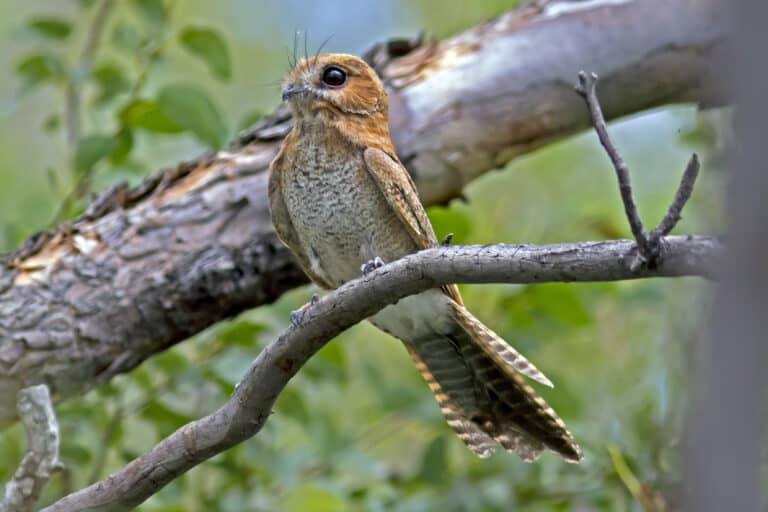
Nightjars are medium-sized nocturnal birds (some are crepuscular), measuring around 12 inches long and weighing 0.7 to 6.6 ounces, with a 20-inch wingspan. They have long wings, short legs, tiny bills, large eyes, and flat heads. Their coloring is a mottled brown, gray, black, and white, perfectly camouflaged with the tree bark. 

Most nightjar species are nocturnal, resting in dense vegetative hiding places during the day and hunting at night. These birds are relatively solitary, but they form pairs during the breeding season, and some mate for life. Their vocalizations can vary, some sounding like monotonous hollow notes and others producing short trills. Males may also make a clapping sound with their wings when defending their territories or courting a female. They are excellent fliers, catching insects while cruising through the air. They are agile and buoyant fliers, but their exact speed is unknown.
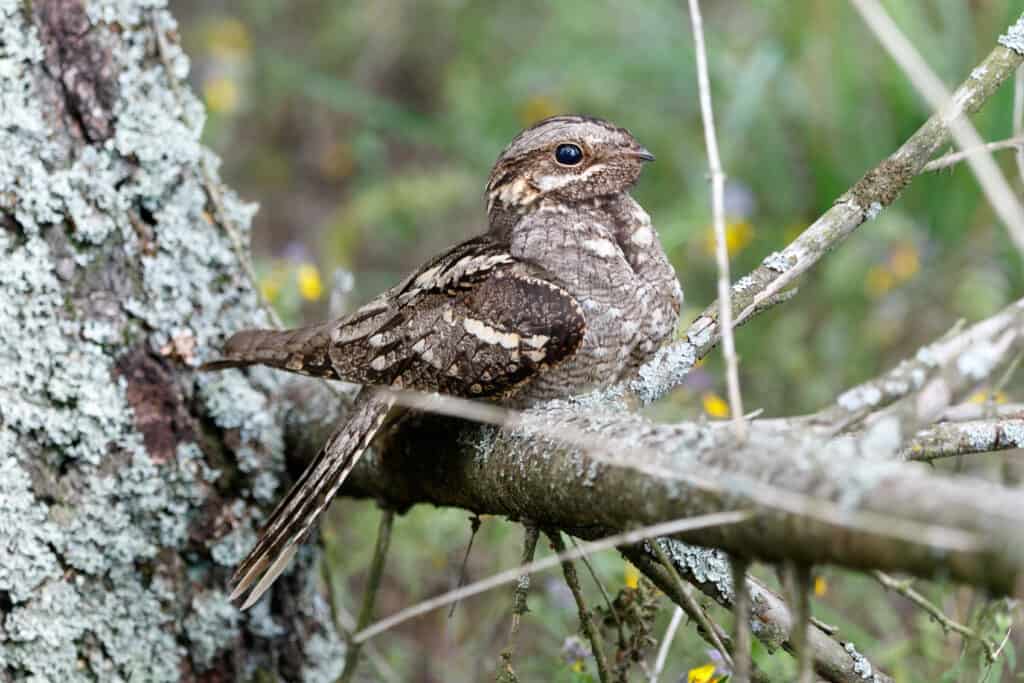
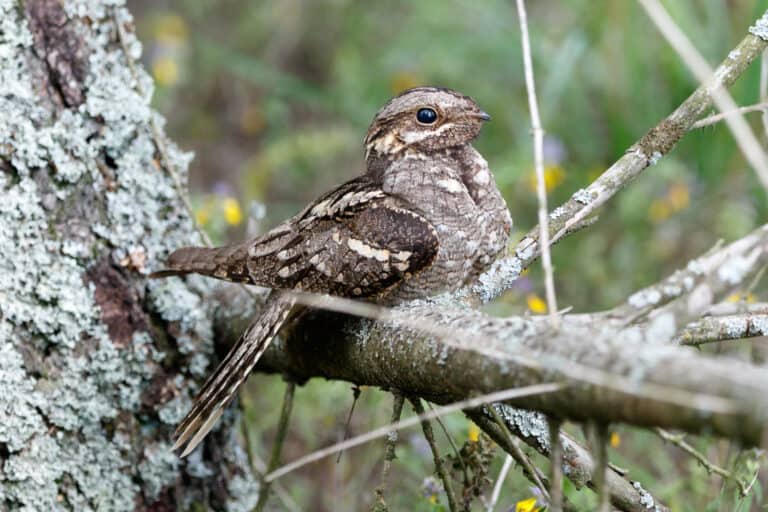
๐Ÿ‘ European nightjar in a tree

This European nightjar is mottled brown and grey, allowing it to camouflage perfectly with the tree bark.

ยฉiStock.com/Vassiliy Vishnevskiy

Migration Patterns and Timing

Nightjars are migratory birds that begin traveling at the beginning of autumn. Research shows they synchronize their travel with the moonโ€™s phases, indicating their migration patterns are associated with the lunar cycle. Many species breed in northern regions and migrate to warmer climates during winter. For instance, the European nightjar spends its spring and summer in Northern Europe and its winter in Sub-Saharan Africa.

Diet

Nightjars are insectivores that hunt at night.

What Does the Nightjar Eat?

Their diet consists primarily of flying and swarming insects, such as ants, flies, mosquitoes, moths, grasshoppers, beetles, midges, and caterpillars. They will occasionally eat spiders, millipedes, centipedes, and small snails. These birds hunt at night from a perch, dashing out to grab insects in mid-air and swallowing them whole with their gaping mouths. 

Predators, Threats, and Conservation Status

Several nightjar species are threatened or vulnerable, such as the red-necked and Puerto Rican nightjars. Their biggest threats include habitat loss, road collisions, and nest predators. These birds nest on the ground, making them vulnerable to predators, and roost near roads, increasing their susceptibility to mortality from motor vehicles.

What Eats the Nightjar?

Nightjars are ground-nesting birds and have many nest predators that prey on their eggs and young. They are vulnerable to red foxes, martens, hedgehogs, weasels, domestic dogs, crows, magpies, jays, owls, and snakes. Nightjars are known for their distraction displays, where they feign injuries to lure predators away from their nests. But these birds mainly use camouflage to conceal themselves.

Reproduction, Young, and Molting
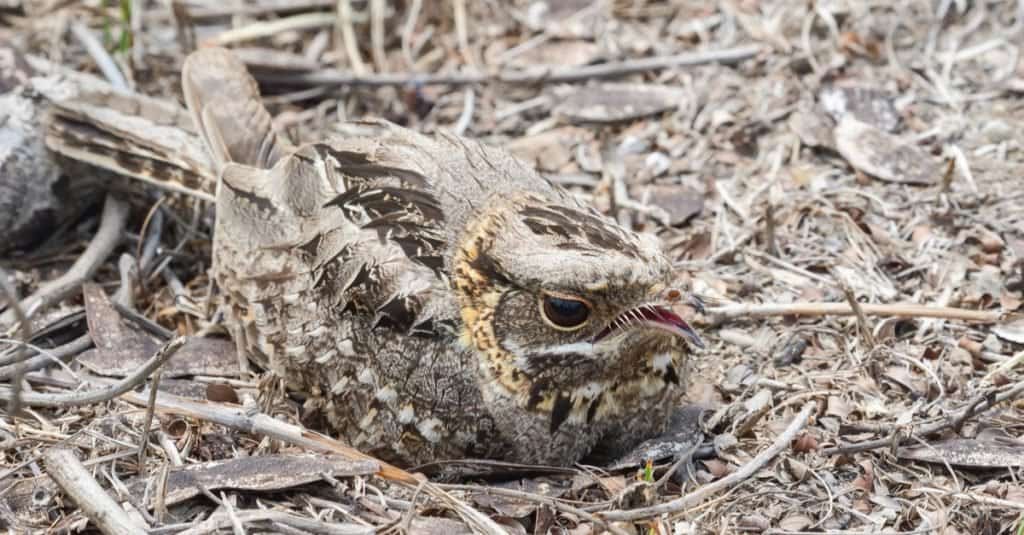
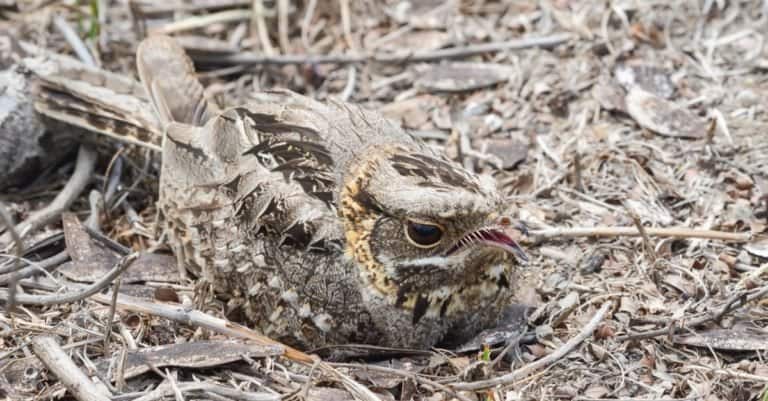
๐Ÿ‘ Animals With Camouflage: Nightjar

Indian Nightjar (Caprimulgus asiaticus) is sitting in her nest on the ground.

ยฉMRS. NUCH SRIBUANOY/Shutterstock.com

Most nightjar species are monogamous. Some may even mate for life, while others stay together for one breeding season. Their reproductive season begins during the spring and lasts until late summer, depending on the region. Females lay one to four white or cream-colored eggs and incubate them for 16 to 30 days. The young fledge the nest around 16 to 21 days and become fully independent in just over one month. Most species become sexually mature around one year and live an average of 12 years. 

Population

The global nightjar population is unknown, but the European nightjar alone is estimated to have between 3 and 6 million mature individuals. Many nightjar species have decreasing numbers primarily due to human disruption.

View all 98 animals that start with N

Sources

  1. IUCN Redlist / Accessed November 1, 2022
  2. Science Direct / Accessed November 1, 2022
  3. Online LIbrary / Accessed November 1, 2022
  4. New Scientist / Accessed November 1, 2022

About the Author

Niccoy Walker

Niccoy is a professional writer for A-Z Animals, and her primary focus is on birds, travel, and interesting facts of all kinds. Niccoy has been writing and researching about travel, nature, wildlife, and business for several years and holds a business degree from Metropolitan State University in Denver. A resident of Florida, Niccoy enjoys hiking, cooking, reading, and spending time at the beach.
Connect:

Thank you for reading! Have some feedback for us?

Contact the AZ Animals editorial team

Related Articles You May Find Interesting


Nightjar FAQs (Frequently Asked Questions)

There are six nightjar species in America, including the common nighthawk, common poorwill, buff-collared nightjar, chuck-willโ€™s-widow, Eastern whip-poor-will, and Mexican whip-poor-will.

Nightjars and nighthawks come from the same family but nighthawks have smaller heads, pointier wings, and fly for longer periods.

Nightjars live all over the globe, except for Antarctica and very arid desert regions. They inhabit a wide range of habitats but are most commonly associated with the open country.

They have long wings, short legs, tiny bills, large eyes, and flat heads. Their coloring is a mottled brown, grey, black, and white, perfectly camouflaged with the tree bark.

Their diet consists primarily of flying and swarming insects, such as ants, flies, mosquitos, moths, grasshoppers, beetles, midges, and caterpillars.

Several nightjar species are threatened or near-threatened, such as the red-necked and Puerto Rican nightjars.

Most nightjar species are monogamous. Some may even mate for life, while others stay together for one breeding season.