
O
Species Profile

Otter

Lutrinae

Built for water, born to hunt
fred goldstein/Shutterstock.com

Otter Distribution

Click a location to explore more animals from that region

This map shows coastal regions where Otter are found.

Loading map...

Found in 126 countries

๐Ÿ‡ฆ๐Ÿ‡ช United Arab Emirates ๐Ÿ‡ฆ๐Ÿ‡ซ Afghanistan ๐Ÿ‡ฆ๐Ÿ‡ฑ Albania ๐Ÿ‡ฆ๐Ÿ‡ฒ Armenia ๐Ÿ‡ฆ๐Ÿ‡ด Angola ๐Ÿ‡ฆ๐Ÿ‡ท Argentina ๐Ÿ‡ฆ๐Ÿ‡น Austria ๐Ÿ‡ฆ๐Ÿ‡ฟ Azerbaijan ๐Ÿ‡ง๐Ÿ‡ฆ Bosnia and Herzegovina ๐Ÿ‡ง๐Ÿ‡ฉ Bangladesh ๐Ÿ‡ง๐Ÿ‡ช Belgium ๐Ÿ‡ง๐Ÿ‡ฌ Bulgaria ๐Ÿ‡ง๐Ÿ‡ฎ Burundi ๐Ÿ‡ง๐Ÿ‡ด Bolivia ๐Ÿ‡ง๐Ÿ‡ท Brazil ๐Ÿ‡ง๐Ÿ‡น Bhutan ๐Ÿ‡ง๐Ÿ‡ผ Botswana ๐Ÿ‡ง๐Ÿ‡ฟ Belize ๐Ÿ‡จ๐Ÿ‡ฆ Canada ๐Ÿ‡จ๐Ÿ‡ฉ Democratic Republic of Congo ๐Ÿ‡จ๐Ÿ‡ฌ Republic of Congo ๐Ÿ‡จ๐Ÿ‡ญ Switzerland ๐Ÿ‡จ๐Ÿ‡ฎ Cรดte d'Ivoire ๐Ÿ‡จ๐Ÿ‡ฑ Chile ๐Ÿ‡จ๐Ÿ‡ฒ Cameroon ๐Ÿ‡จ๐Ÿ‡ณ China ๐Ÿ‡จ๐Ÿ‡ด Colombia ๐Ÿ‡จ๐Ÿ‡ท Costa Rica ๐Ÿ‡จ๐Ÿ‡ฟ Czech Republic ๐Ÿ‡ฉ๐Ÿ‡ช Germany ๐Ÿ‡ฉ๐Ÿ‡ฏ Djibouti ๐Ÿ‡ฉ๐Ÿ‡ฐ Denmark ๐Ÿ‡ฉ๐Ÿ‡ฟ Algeria ๐Ÿ‡ช๐Ÿ‡จ Ecuador ๐Ÿ‡ช๐Ÿ‡ช Estonia ๐Ÿ‡ช๐Ÿ‡ฌ Egypt ๐Ÿ‡ช๐Ÿ‡ท Eritrea ๐Ÿ‡ช๐Ÿ‡ธ Spain ๐Ÿ‡ช๐Ÿ‡น Ethiopia ๐Ÿ‡ซ๐Ÿ‡ฎ Finland ๐Ÿ‡ซ๐Ÿ‡ท France ๐Ÿ‡ฌ๐Ÿ‡ฆ Gabon ๐Ÿ‡ฌ๐Ÿ‡ง United Kingdom ๐Ÿ‡ฌ๐Ÿ‡ช Georgia ๐Ÿ‡ฌ๐Ÿ‡ญ Ghana ๐Ÿ‡ฌ๐Ÿ‡ฒ Gambia ๐Ÿ‡ฌ๐Ÿ‡ณ Guinea ๐Ÿ‡ฌ๐Ÿ‡ท Greece ๐Ÿ‡ฌ๐Ÿ‡น Guatemala ๐Ÿ‡ฌ๐Ÿ‡ผ Guinea-Bissau ๐Ÿ‡ญ๐Ÿ‡ท Croatia ๐Ÿ‡ญ๐Ÿ‡บ Hungary ๐Ÿ‡ฎ๐Ÿ‡ฉ Indonesia ๐Ÿ‡ฎ๐Ÿ‡ช Ireland ๐Ÿ‡ฎ๐Ÿ‡ฑ Israel ๐Ÿ‡ฎ๐Ÿ‡ณ India ๐Ÿ‡ฎ๐Ÿ‡ถ Iraq ๐Ÿ‡ฎ๐Ÿ‡ท Iran ๐Ÿ‡ฎ๐Ÿ‡ธ Iceland ๐Ÿ‡ฎ๐Ÿ‡น Italy ๐Ÿ‡ฏ๐Ÿ‡ด Jordan ๐Ÿ‡ฏ๐Ÿ‡ต Japan ๐Ÿ‡ฐ๐Ÿ‡ช Kenya ๐Ÿ‡ฐ๐Ÿ‡ฌ Kyrgyzstan ๐Ÿ‡ฐ๐Ÿ‡ญ Cambodia ๐Ÿ‡ฐ๐Ÿ‡ต North Korea ๐Ÿ‡ฐ๐Ÿ‡ท South Korea ๐Ÿ‡ฐ๐Ÿ‡ฟ Kazakhstan ๐Ÿ‡ฑ๐Ÿ‡ฆ Lao People's Democratic Republic ๐Ÿ‡ฑ๐Ÿ‡ฐ Sri Lanka ๐Ÿ‡ฑ๐Ÿ‡ท Liberia ๐Ÿ‡ฑ๐Ÿ‡น Lithuania ๐Ÿ‡ฑ๐Ÿ‡ป Latvia ๐Ÿ‡ฑ๐Ÿ‡พ Libya ๐Ÿ‡ฒ๐Ÿ‡ฆ Morocco ๐Ÿ‡ฒ๐Ÿ‡ฉ Moldova ๐Ÿ‡ฒ๐Ÿ‡ช Montenegro ๐Ÿ‡ฒ๐Ÿ‡ฌ Madagascar ๐Ÿ‡ฒ๐Ÿ‡ฒ Myanmar ๐Ÿ‡ฒ๐Ÿ‡ณ Mongolia ๐Ÿ‡ฒ๐Ÿ‡ฝ Mexico ๐Ÿ‡ฒ๐Ÿ‡พ Malaysia ๐Ÿ‡ฒ๐Ÿ‡ฟ Mozambique ๐Ÿ‡ณ๐Ÿ‡ฆ Namibia ๐Ÿ‡ณ๐Ÿ‡ฌ Nigeria ๐Ÿ‡ณ๐Ÿ‡ฑ Netherlands ๐Ÿ‡ณ๐Ÿ‡ด Norway ๐Ÿ‡ณ๐Ÿ‡ต Nepal ๐Ÿ‡ด๐Ÿ‡ฒ Oman ๐Ÿ‡ต๐Ÿ‡ฆ Panama ๐Ÿ‡ต๐Ÿ‡ช Peru ๐Ÿ‡ต๐Ÿ‡ญ Philippines ๐Ÿ‡ต๐Ÿ‡ฐ Pakistan ๐Ÿ‡ต๐Ÿ‡ฑ Poland ๐Ÿ‡ต๐Ÿ‡น Portugal ๐Ÿ‡ท๐Ÿ‡ด Romania ๐Ÿ‡ท๐Ÿ‡บ Russia ๐Ÿ‡ท๐Ÿ‡ผ Rwanda ๐Ÿ‡ธ๐Ÿ‡ฆ Saudi Arabia ๐Ÿ‡ธ๐Ÿ‡ฉ Sudan ๐Ÿ‡ธ๐Ÿ‡ช Sweden ๐Ÿ‡ธ๐Ÿ‡ฌ Singapore ๐Ÿ‡ธ๐Ÿ‡ฎ Slovenia ๐Ÿ‡ธ๐Ÿ‡ฐ Slovakia ๐Ÿ‡ธ๐Ÿ‡ฑ Sierra Leone ๐Ÿ‡ธ๐Ÿ‡ณ Senegal ๐Ÿ‡ธ๐Ÿ‡ด Somalia ๐Ÿ‡ธ๐Ÿ‡พ Syria ๐Ÿ‡น๐Ÿ‡ญ Thailand ๐Ÿ‡น๐Ÿ‡ฏ Tajikistan ๐Ÿ‡น๐Ÿ‡ฒ Turkmenistan ๐Ÿ‡น๐Ÿ‡ณ Tunisia ๐Ÿ‡น๐Ÿ‡ท Turkey ๐Ÿ‡น๐Ÿ‡ผ Taiwan ๐Ÿ‡น๐Ÿ‡ฟ Tanzania ๐Ÿ‡บ๐Ÿ‡ฆ Ukraine ๐Ÿ‡บ๐Ÿ‡ฌ Uganda ๐Ÿ‡บ๐Ÿ‡ธ United States ๐Ÿ‡บ๐Ÿ‡พ Uruguay ๐Ÿ‡บ๐Ÿ‡ฟ Uzbekistan ๐Ÿ‡ป๐Ÿ‡ช Venezuela ๐Ÿ‡ป๐Ÿ‡ณ Vietnam ๐Ÿ‡พ๐Ÿ‡ช Yemen ๐Ÿ‡ฟ๐Ÿ‡ฆ South Africa ๐Ÿ‡ฟ๐Ÿ‡ฒ Zambia ๐Ÿ‡ฟ๐Ÿ‡ผ Zimbabwe

Size Comparison

Human 5'8"
Otter 12 in

Otter stands at 17% of average human height.

At a Glance

Family Overview This page covers the Otter family as a group. Stats below are general traits shared across the family.
Also Known As Sea otter, River otter, Giant otter, Marine otter, Water marten, Water weasel
Diet Carnivore
Activity Diurnal+
Lifespan 12 years
Weight 45 lbs
Status Not Evaluated
Did You Know?

Lutrinae includes about 13 living species, from tiny Asian small-clawed otters to hefty sea otters and long giant otters.

Scientific Classification

Family Overview "Otter" is not a single species but represents an entire family containing multiple species.

Otters are semi-aquatic to fully marine mustelids (subfamily Lutrinae) adapted for swimming and foraging in water, with streamlined bodies, dense insulating fur, and webbed feet in many species. They are carnivorous predators feeding mainly on fish and aquatic invertebrates, and they occur on every continent except Antarctica (with the sea otter occupying coastal marine habitats).

Kingdom
Animalia
Phylum
Chordata
Class
Mammalia
Order
Carnivora
Family
Mustelidae

Distinguishing Features

  • Elongate, streamlined mustelid body with short legs and strong tail for propulsion
  • Dense, water-repellent underfur (especially extreme in sea otters) for insulation
  • Adaptations for aquatic hunting: vibrissae (whiskers) for detecting prey movements; webbing in many species
  • Carnivorous diet centered on fish/crustaceans/mollusks; some species use tools (notably sea otters)
  • Playful/curious behavior is common, but they are effective predators

Physical Measurements

Males and females differ in size

Height
โ™‚ 1 ft 4 in (10 in โ€“ 1 ft 12 in)
โ™€ 1 ft 2 in (8 in โ€“ 1 ft 12 in)
Length
โ™‚ 3 ft 9 in (2 ft 2 in โ€“ 5 ft 11 in)
โ™€ 3 ft 7 in (1 ft 12 in โ€“ 5 ft 11 in)
Weight
โ™‚ 26 lbs (7 lbs โ€“ 99 lbs)
โ™€ 22 lbs (4 lbs โ€“ 66 lbs)
Tail Length
โ™‚ 1 ft 6 in (10 in โ€“ 2 ft 4 in)
โ™€ 1 ft 4 in (8 in โ€“ 2 ft 2 in)
Top Speed
19 mph
running

Appearance

Primary Colors
Secondary Colors
Skin Type Very dense, water-repellent double-layer fur with thick underfur; sensitive vibrissae-bearing muzzle skin; streamlined body with small external ears and robust tail.
Distinctive Features
  • Body size range across Lutrinae: ~0.6-1.8 m total length; ~2-45 kg mass (small-clawed to large sea/giant otters).
  • Lifespan varies widely: often ~7-15 years in wild; up to ~20-25+ years in captivity for some species.
  • Elongate, flexible mustelid body with short legs; strong shoulders for swimming and prey handling.
  • Powerful, muscular tail used for propulsion and steering; tail shape/length varies among genera.
  • Feet commonly webbed; degree of webbing and claw reduction varies (e.g., small-clawed specialists).
  • Dense fur is the primary insulation; especially critical in cold water and marine habitats (sea otter).
  • Large, highly sensitive whiskers (vibrissae) aid prey detection in turbid water and at night.
  • Behavior/ecology: ranges from solitary/loosely social river otters to highly social groups (giant otters) and marine "rafts" (sea otters).
  • Foraging: primarily fish and aquatic invertebrates; some specialize more on crustaceans/mollusks; sea otters famously use tools, others rarely do.
  • Habitats span freshwater rivers, lakes, wetlands, mangroves, and coastal marine/kelp forests; denning in banks, burrows, vegetation, or rocky shore refuges.

Sexual Dimorphism

Males are typically larger and more robust than females (often ~10-30% heavier), with broader heads/necks. Otherwise, coat color and markings are usually similar; dimorphism strength varies among species and populations.

โ™‚
  • Greater average body mass and length
  • Broader skull and neck musculature
  • May have larger territories and wider-ranging movements in some species
โ™€
  • Smaller, more slender build on average
  • Mammary development evident during nursing
  • Often more den-focused during pup rearing

Did You Know?

Lutrinae includes about 13 living species, from tiny Asian small-clawed otters to hefty sea otters and long giant otters.

Size across otter species ranges roughly from about 2-45 kg in body mass and about 0.6-1.8 m in total length (including tail), depending on species.

They live on every continent except Antarctica-occupying freshwater rivers, lakes, wetlands, and (for sea otters) coastal oceans.

Otter fur is among the most insulating in mammals; sea otters in particular rely on ultra-dense fur rather than blubber to stay warm.

Whiskers (vibrissae) are highly sensitive "underwater feelers," helping detect prey movements in murky water.

Tool use is best documented in sea otters, which can crack open-shell prey with stones or other hard surfaces.

Many species use communal "latrines" (spraint sites) for scent-marking and communication-useful to researchers tracking populations.

Unique Adaptations

  • Streamlined bodies and powerful tails: tails provide major propulsion and steering; hindfeet are often webbed for efficient swimming (degree varies by species).
  • Dense, water-repellent fur: a key shared trait-otters have extremely high hair density compared with most mammals, supporting life in cold water (most extreme in sea otters).
  • Valvular ears and nostrils: can close during dives; paired with strong underwater vision and tactile hunting via whiskers.
  • High oxygen stores and dive ability: relatively large lungs and efficient diving physiology support repeated submergence while foraging (dive depth/time vary widely by species and habitat).
  • Dexterous forepaws: especially pronounced in sea otters and small-clawed otters, enabling prey manipulation, crevice foraging, and (in sea otters) tool use.
  • Thermoregulation strategies differ: sea otters rely heavily on fur and high metabolism, while many freshwater otters combine fur insulation with behavioral warming (sun/rest sites) and habitat choice.

Interesting Behaviors

  • Constant grooming and "fur-fluffing": across otters, clean, well-aligned fur traps air for insulation; sea otters may spend a large portion of the day maintaining their coat.
  • Play and sliding: many species repeatedly slide down muddy/snowy banks-likely a mix of efficient travel, social bonding, and practice of movements.
  • Diverse social systems: some are mostly solitary or in small family groups (many river otters), while others form strong cooperative groups (giant otters) or floating "rafts" (sea otters).
  • Flexible hunting styles: hunting can be solo, pair-based, or cooperative; diets range from fish-dominant feeding to heavy use of crabs, clams, sea urchins, and other invertebrates (especially sea otters).
  • Central-place foraging and resting: denning in riverbank burrows/vegetation (freshwater species) versus resting at sea-often anchored in kelp (sea otters).
  • Communication is multi-channel: scent marks, body postures, touch, and a wide vocal repertoire (chirps, whistles, growls) vary by species and sociality.
  • Parental care varies: mothers typically provide intensive care; in more social species, additional group members may help guard or provision young.

Cultural Significance

Otters (Lutrinae) are seen as playful and clever. Once hunted for pelts, they are now used as indicator species of healthy waters. Sea otters eat sea urchins, help kelp forests, and are symbols of restoring water habitats.

Myths & Legends

Norse mythology (Prose Edda): the tale of "Otter's Ransom," where Loki kills an otter that is actually a dwarf in otter form; the compensation involves a cursed ring and ensuing tragedy.

Tlingit tradition (Northwest Coast): the "land-otter man," a shape-shifting being linked to forests and shorelines that can lure or transform people.

Japanese folklore: river otters appear in regional supernatural traditions as mischievous shapeshifters and tricksters associated with rivers and deceptive encounters.

Irish folklore: the "water hound" is a legendary creature, often described with otter-like or semi-aquatic features and linked to lakeside danger tales.

Christian hagiographic lore (Northumbria): stories about St. Cuthbert describe otters warming and drying his feet after nocturnal prayers in the cold sea, portraying otters as compassionate attendants of a holy person.

Conservation Status

NE Not Evaluated at subfamily (Lutrinae) level; individual species range from Least Concern (LC) to Endangered (EN), with some Data Deficient (DD) taxa.

Has not yet been evaluated against the criteria.

Population Unknown

Protected Under

  • CITES (many otter species listed in Appendix I and/or II; listings vary by species and country)
  • National and subnational wildlife protection laws across much of Europe, Asia, Africa, and the Americas (protections vary by species and jurisdiction)
  • Regional frameworks in some areas (e.g., EU Habitats Directive protections for Eurasian otter populations; country-specific protected-area and hunting-regulation measures)

Looking for a specific species?

Eurasian otter

Lutra lutra

Often meant by the unqualified common name "otter" in much of Europe and widely used as a baseline in general references; it is also among the most broadly distributed otter species across Eurasia.

  • Across the otter subfamily, body mass ranges from about 2 to 45 kg and length from 0.70 to 1.8 m. Smallest: Asian small-clawed otters; longest: giant otter; heaviest: sea otter.
  • Group-wide lifespan range: commonly ~6-20+ years in the wild (species- and threat-dependent), with captive lifespans sometimes reaching ~25-30 years; longevity varies substantially among species and habitats.
  • Shared adaptations across otters: streamlined bodies, very dense fur (especially in species lacking thick blubber), and strong swimming ability; degree of webbing and time spent in water varies from riverine to fully marine.
  • Most otters are semi-aquatic predators that eat fish and aquatic invertebrates. Social life varies: many river otters are mostly alone, while giant otters and sea otters live in close family groups or rafts.
  • Otter diets differ by species and place: some eat mostly fish, while sea otters and small-clawed otters often eat many benthic invertebrates. Sea otters commonly use tools, though not all do.

You might be looking for:

Sea Otter

28%

Enhydra lutris

Large marine otter of the North Pacific; famous for tool use and dense fur.

View Profile

Eurasian Otter

22%

Lutra lutra

Widespread Palearctic freshwater/coastal otter; common reference species in Europe and Asia.

North American River Otter

20%

Lontra canadensis

Common freshwater otter across North America; often meant by โ€œriver otterโ€ in the U.S./Canada.

View Profile

Giant Otter

15%

Pteronura brasiliensis

Largest living otter; social, Amazon/Orinoco basins; conservation concern.

View Profile

Asian Small-clawed Otter

15%

Aonyx cinereus

Smallest otter species; noted for reduced claws and dexterous forepaws.

Life Cycle

Birth 2 pups
Lifespan 12 years

Lifespan

In the Wild 6โ€“23 years
In Captivity 10โ€“27 years

Reproduction

Mating System Polygyny
Social Structure Solitary
Breeding Pattern Transient
Fertilization Internal Fertilization
Birth Type Internal_fertilization

Across otters, breeding is usually polygynous with short-term associations: males range widely and may mate with multiple females, sometimes defending access seasonally. Females typically rear pups alone; a few species form stable family groups with more monogamous pairing.

Behavior & Ecology

Social Romp Group: 6
Activity Diurnal, Nocturnal, Crepuscular, Cathemeral
Diet Carnivore Fish and aquatic invertebrates (family-wide staple; emphasis ranges from fish-dominant diets to invertebrate-dominant diets in some coastal/marine populations)

Temperament

Playful and exploratory, especially juveniles; frequent social play supports skill learning
Bold around food resources yet cautious of disturbance; wariness varies with hunting pressure
Highly persistent foragers; strong prey-focus in water with rapid pursuit and manipulation
Intraspecific aggression occurs during territorial disputes and mating, but tolerance rises in groups
Behavior varies widely: from mostly solitary riverine species to highly social cooperative hunters
Size and life-history diversity is large across the otter subfamily (about 2-45 kg; about 8-25+ year lifespan)

Communication

Chirps and whistles for contact and cohesion, especially between mothers and pups
Growls, snarls, and screams during conflict, mating competition, or predator encounters
Soft coos or murmurs during close social interactions and grooming
High-pitched distress calls from pups or trapped individuals
Scent marking with spraints and anal gland secretions; signals identity, status, and territory
Latrrine-site use in many species; concentrated marking aids social spacing and information sharing
Visual displays: upright postures, head-bobbing, open-mouth threats, and piloerection
Tactile contact: grooming, wrestling, and in some species resting while holding paws
Water-surface cues: splashing, tail slaps, and bubble streams used in play or agitation

Habitat

Biomes:
Freshwater Marine Wetland Tropical Rainforest Tropical Dry Forest Savanna Mediterranean Temperate Forest Temperate Rainforest Boreal Forest (Taiga) Tundra Alpine +6
Terrain:
Riverine Coastal Island Valley Plains Hilly Mountainous Rocky Sandy Muddy +4
Elevation: Up to 13123 ft 4 in

Ecological Role

Aquatic and riparian mesopredators to top predators that link aquatic and terrestrial food webs; in some coastal systems (notably where sea otters occur) they function as keystone predators by strongly shaping nearshore community structure.

Regulation of fish and invertebrate populations (including limiting some pest or outbreak dynamics) Trophic cascades in coastal ecosystems (e.g., suppression of sea urchins supporting kelp forest persistence where present) Energy and nutrient transfer between aquatic habitats and shore/riparian zones via prey remains and latrine sites Biodiversity support through structuring prey communities and habitat effects Bioindicator value: presence/health can reflect water quality, contaminant loads, and prey base condition

Diet Details

Main Prey:
Fish Crustaceans Mollusks Echinoderms Amphibians Reptiles Aquatic insects and large aquatic invertebrates Birds and eggs Small mammals +3

Human Interaction

Domestication Status

Wild

Otters (Lutrinae) are not domesticated. People can hand-raise or tame some individuals, but otters keep wild needs: high activity, strong prey drive, and territorial behavior. They do not follow a domestication path like dogs or cats. Some captive-bred otters exist for zoos, shows, or conservation, but that is not domestication.

Danger Level

Moderate
  • Bites and lacerations if handled, cornered, or habituated/food-conditioned (strong jaws and sharp teeth)
  • Aggressive defensive behavior near pups/den sites or in captivity
  • Zoonotic disease risks from wildlife contact (e.g., parasites/bacteria) and contaminated water exposure
  • Rare but possible attacks on swimmers/divers in close proximity, typically defensive rather than predatory
  • Public-safety issues from habituated animals approaching people (especially where feeding occurs)

As a Pet

Not Suitable as Pet

Legality: Otters are generally not legal as private pets in many places. Where allowed, they need licensed zoos, wildlife rehabilitators, or special permits; trade and transport are often controlled by national laws and CITES, and proof of legal origin is required.

Care Level: Expert Only

Purchase Cost: Up to $20,000
Lifetime Cost: $30,000 - $150,000

Economic Value

Uses:
Ecotourism and wildlife viewing Zoo/aquarium exhibition and education Conservation funding and ecosystem indicator value Scientific research (behavior, ecology, physiology) Historical and illegal fur trade impacts Fisheries and aquaculture conflict costs
Products:
  • Tourism revenue (guided viewing, protected-area visitation)
  • Educational programming and media content
  • Non-lethal management tools and monitoring programs
  • (Historically) pelts/fur garments; currently regulated/illegal in many contexts
  • Research outputs (data, publications, conservation planning)

Relationships

Predators 8

Killer Whale Orcinus orca
Great white shark Carcharodon carcharias
American alligator Alligator mississippiensis
Nile crocodile Crocodylus niloticus
Harpy eagle Harpia harpyja
Bald eagle Haliaeetus leucocephalus
Leopard Panthera pardus
Jaguar Panthera onca

Related Species 6

Weasels and stoats Shared Family
Martens and fishers Martes spp.; Pekania pennanti Shared Family
Wolverine Gulo gulo Shared Family
European badger Meles meles Shared Family
Honey badger Mellivora capensis Shared Family
American mink Neogale vison Shared Family

Ecological Equivalents 5

Animals that fill a similar ecological role in their ecosystem

Seals Phocidae Share an aquatic carnivore niche in coastal waters (especially overlapping with sea otters): pursuit/foraging in water, fish and invertebrate diets, and vulnerability to large marine predators. Differ strongly in anatomy and life history (fully aquatic versus semi-aquatic in most otters).
Mink Neogale vison They occupy similar riparian habitats and prey bases (fish, amphibians, crustaceans). They often compete where ranges overlap; minks are generally smaller and more strictly shoreline-oriented than many otters.
Fishing cat Prionailurus viverrinus A mammalian predator specialized for wetlands and for catching fish and crustaceans; parallels otter foraging ecology but differs by being a felid and typically hunting from the waterโ€™s edge rather than by swimming-dominant pursuit (varies by otter species).
Water mongoose Atilax paludinosus Wetland and river-edge carnivore that feeds heavily on aquatic prey (crabs, fish, amphibians). Fulfills a similar trophic role in parts of Africa, though it is less adapted for prolonged swimming than most otters.
Caimans and crocodiles Alligatoridae and Crocodylidae In many tropical systems they are major aquatic meso- to apex predators, competing for fish and other aquatic prey; they also frequently prey on otters (the dominant role can flip depending on species and size).

Types of Otter

13

Explore 13 recognized types of otter

Sea otter Enhydra lutris
Eurasian otter Lutra lutra
Hairy-nosed otter Lutra sumatrana
Smooth-coated otter Lutrogale perspicillata
North American river otter Lontra canadensis
Neotropical otter Lontra longicaudis
Marine otter Lontra felina
Southern river otter Lontra provocax
African clawless otter Aonyx capensis
Asian small-clawed otter Aonyx cinereus
Spotted-necked otter Hydrictis maculicollis
Giant otter Pteronura brasiliensis
Congo clawless otter Aonyx congicus

โ€œGiant otters are notorious chatterboxesโ€œ


Just like many people, there are giant otters that are considered chatterboxes for their species. Though they canโ€™t form words, they have a vocabulary that consists of 22 recognizable noises. Each noise is used to address a different type of situation. This is how giant otters effectively communicate with each other.
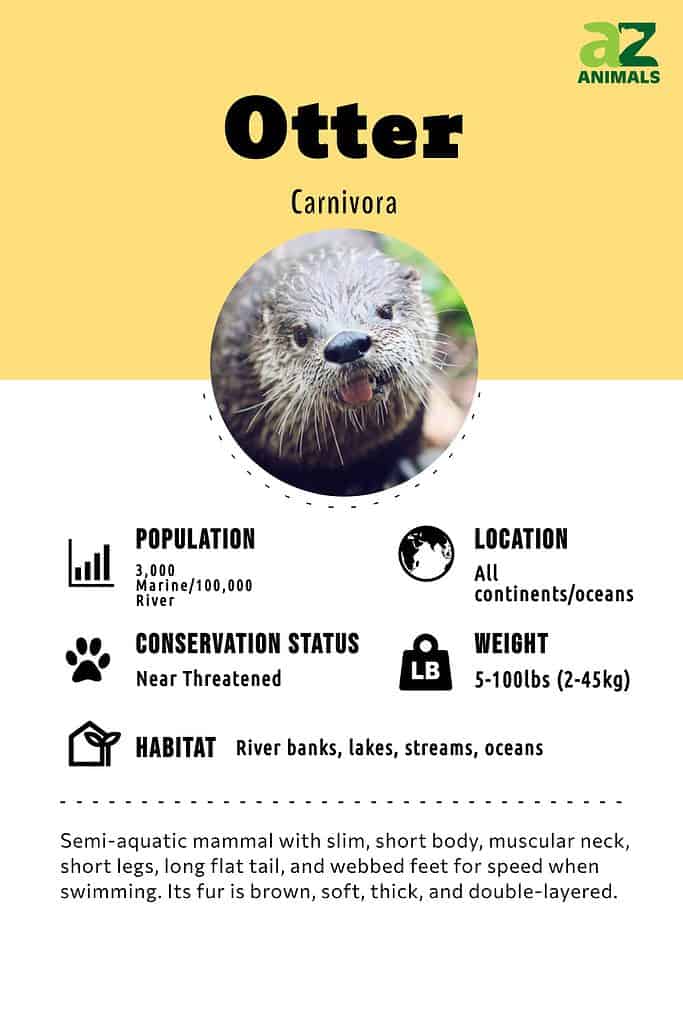
 

5 Otter Facts

  • Otters are animals with thick fur that helps them float in the water
  • Otters often use rocks to crack open food
  • The male otter bites the female when they are breeding
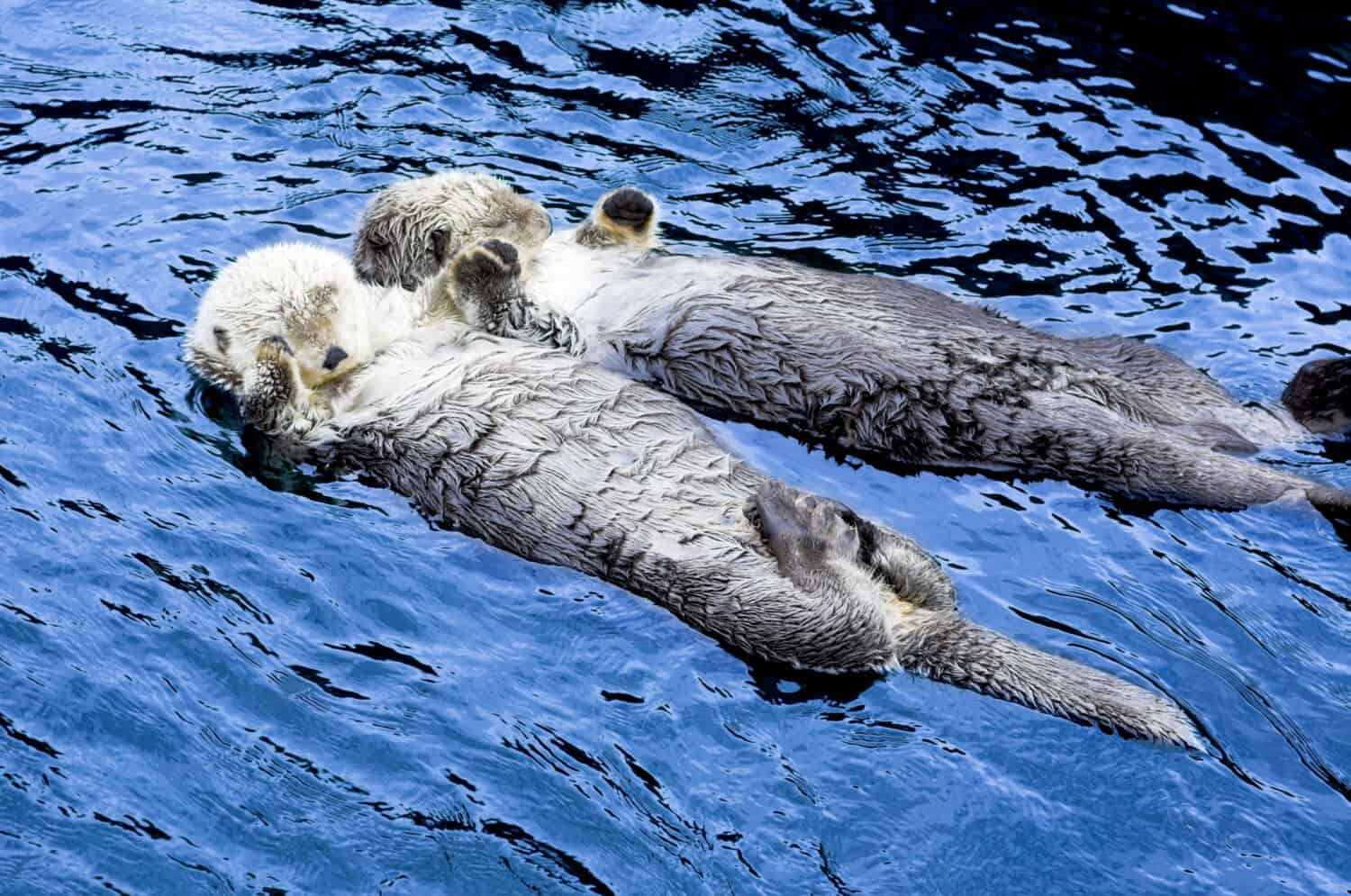
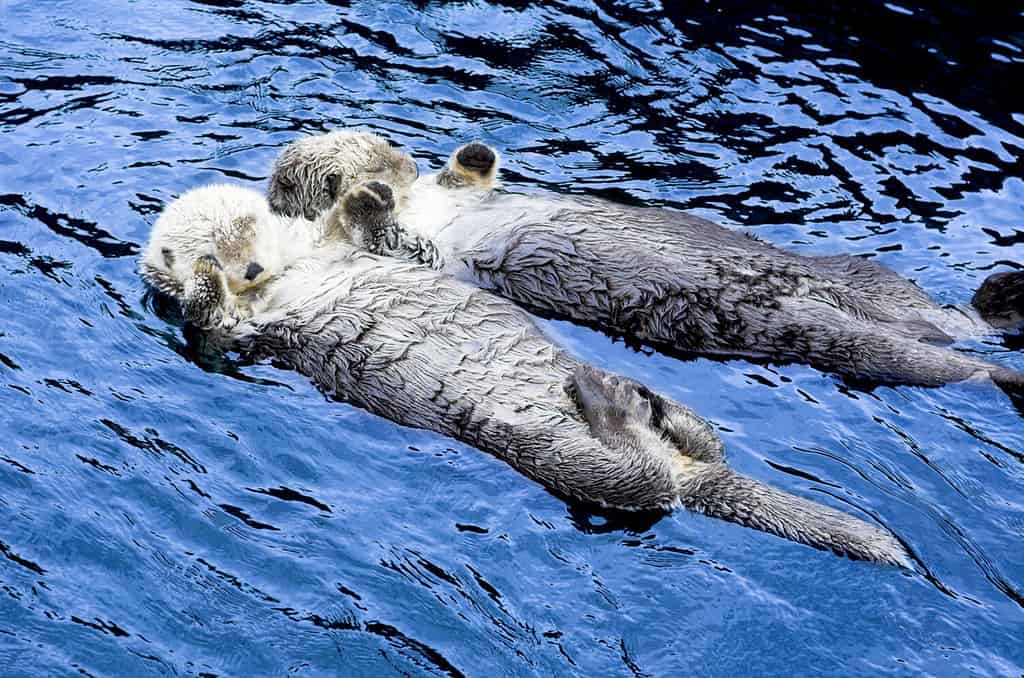
  • While eating and resting, otters often hold hands

Types of Otters

  • Asian Small-clawed Otter (Aonyx cinereus) โ€“ Native to South China and India, and Southeast Asia. Other names: oriental small-clawed otter, Asian short-clawed otter, ash otter. Listed Vulnerable.
  • Smooth-coated Otter (Lutrogale perspicillata) โ€“ Native to India and Southeast Asia. Other names: Indian smooth-coated otter, Asian otter. Listed Vulnerable.
  • Hairy-nosed Otter (Lutra sumatrana) โ€“ Native to Vietnam,Thailand, Malaysia, Indonesia, Borneo and Cambodia. Other names: Sumatran otter. Listed Endangered.
  • Spotted-necked Otter (Hydrictis maculicollis) โ€“ Native to Central Africa. Other names: speckled-throated otter, spot-necked otter. Listed Near Threatened.
  • African Clawless Otter (Aonyx capensis) โ€“ Native to Central and Southern Africa. Other names: Cape clawless otter, white-cheeked otter. Listed Near Threatened.
  • Congo Clawless Otter (Aonyx congicus) โ€“ Native to the Congo, Africa. Other names: white-cheeked otter. Listed Near Threatened.
  • Eurasian Otter (Lutra lutra) โ€“ Native to Eurasia and Southeast Asia. Other names: old world otter, river otter. Listed Near Threatened.
  • North American River Otter (Lontra canadensis) โ€“ Native to North America. Other names: northern river otter, river otter. Listed Least Concern.
  • Sea Otter (Enhydra lutris) โ€“ Native to the Northeast Pacific. Other names: sea beaver, Kamtchatka otter. Listed Endangered.
  • Giant Otter (Pteronura brasiliensis) โ€“ Native to South America. Other names: ariranha, river wolf, water dog. Listed Endangered.
  • Marine Otter (Lontra felina) โ€“ Native to the west coast of South America. Other names: huallaca, chingungo, sea cat. Listed Endangered.
  • Southern River Otter (Lontra provocax) โ€“ Native to Argentina and Chile, South America. Other names: huillin, little Patagonian wolf, Chilean otter. Listed Endangered.
  • Neotropical Otter (Lontra longicaudis) โ€“ Native to Central and South America. Other names: water dog, taira, water cat, South American river otter, long-tailed otter, little water wolf. Listed Near Threatened.

Scientific Name
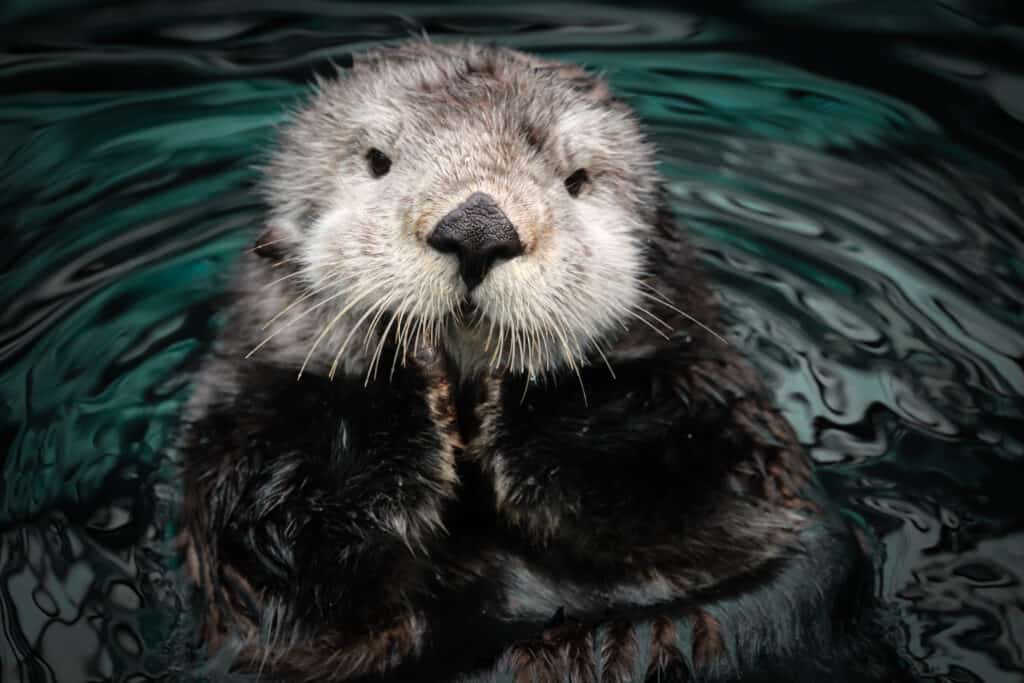
๐Ÿ‘ otter

Otters are under the Carnivora. The scientific names vary by otter.

ยฉnvphoto/Shutterstock.com

The classification otters fall under is Mammalia, and otters fall under the Carnivora order. They belong to the weasel family, and its subfamily is the Lutrinae.

In total, there are 13 different species of otters. While the giant is the largest, its polar opposite is the small-clawed. Two species of otters are water animals known as sea otters and marine otters. The other 11 species are river otters.

The first use of the term โ€œriver otterโ€ dates back to 1913, as it appears in a book by Joseph Grinnell. They were listed as being among the wild animals to be found in California. The same year marks when California declared the sea otter a โ€œfully protected animal.โ€ Dating back over a century, otters used to be referred to as land otters as opposed to river otters.

Evolution

Otters, members of a group that includes minks, badgers, and weasels, differ from other mustelids because they donโ€™t create dens or burrows and can live their whole lives in water. Even more unique is the sea otter, which some researchers believe is a relative to the earless seal. The sea otter, along with the African clawless otter, oriental small-clawed otter, European otter, and African speckle-throated otter, share a 5 million-year-old ancestor.

Based on fossil findings, the Enhydra lineage became confined to the Northern Pacific region around 2 million years ago, and the extinct Enhydra macrodonta and the modern sea otter, Enhydra lutris, evolved. Todayโ€™s modern sea otter evolved in Russia and Japan, then spread to Alaska, the North American coast, and the Aleutian Islands.

Appearance & Behavior
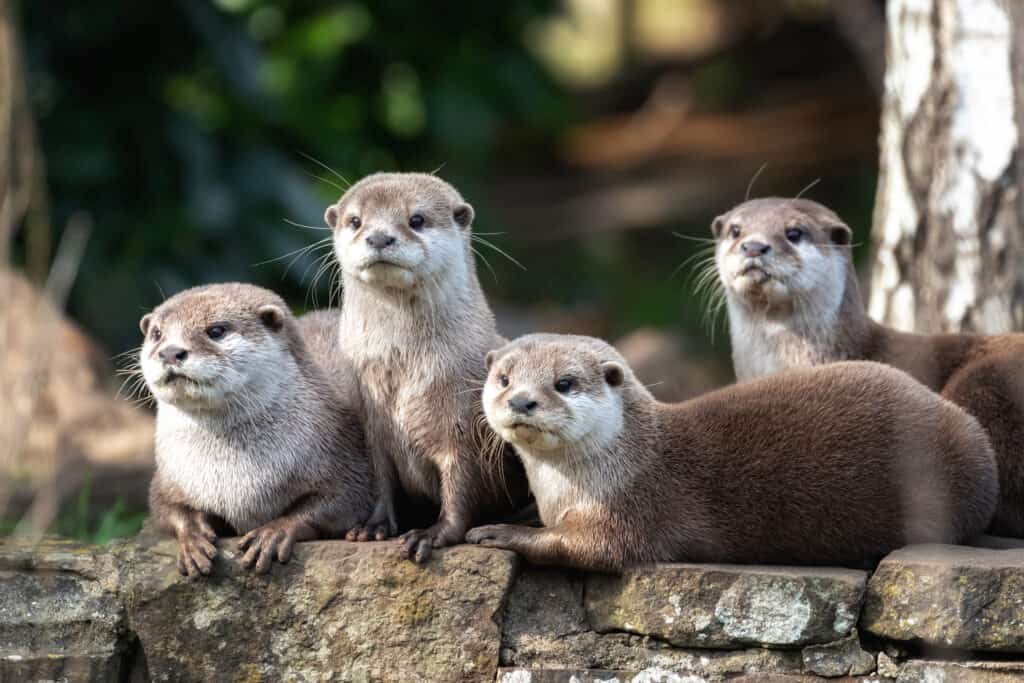
๐Ÿ‘ otters

Otters are social creatures and enjoy being together. They live as families that consist of a mother and her offspring.

ยฉiStock.com/Rixipix

Otters are animals that are known for being slim and short. They have muscular necks and short legs. Their long, flat tails and four webbed feet help them swim faster. They have short noses and ears, and their fur is brown, soft, and thick. Their outer fur varies in its shade of brown, with the fur underneath being lighter. Having two layers of fur keeps them warm and dry. On each square inch of their body, they may have as much as one million hairs.

The smallest of these animals weighs six pounds (or eight times more than the average can of soup,) and as the largest of the breed, sea otters weigh 99 pounds (or 10 times more than the average cat.)The typical otter is between two and six feet long. In comparison, a full-sized bed is 10 feet in length.

In the Southern Pacific Ocean, the worldโ€™s smallest otters, Chungungos, can be found. The worldโ€™s largest otter to date was found in the Big Fish, a body of water in Maine. While most otters are an average size of 40 inches (or half Michael Jordanโ€™s height), this one was 76 inches long, making it approximately as tall as Michael Jordan is.

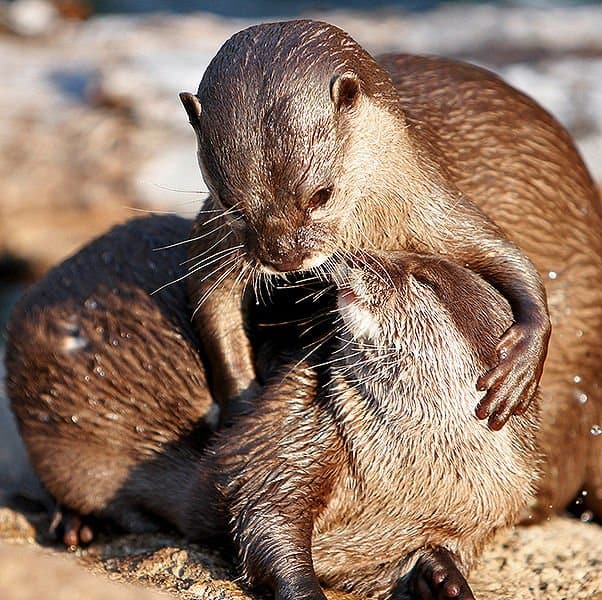
Otters enjoy being together. They live as families that consist of a mother and her offspring. When they are not eating or sleeping, they can be seen playing and often choose the bank of a river to turn into their sliding board.

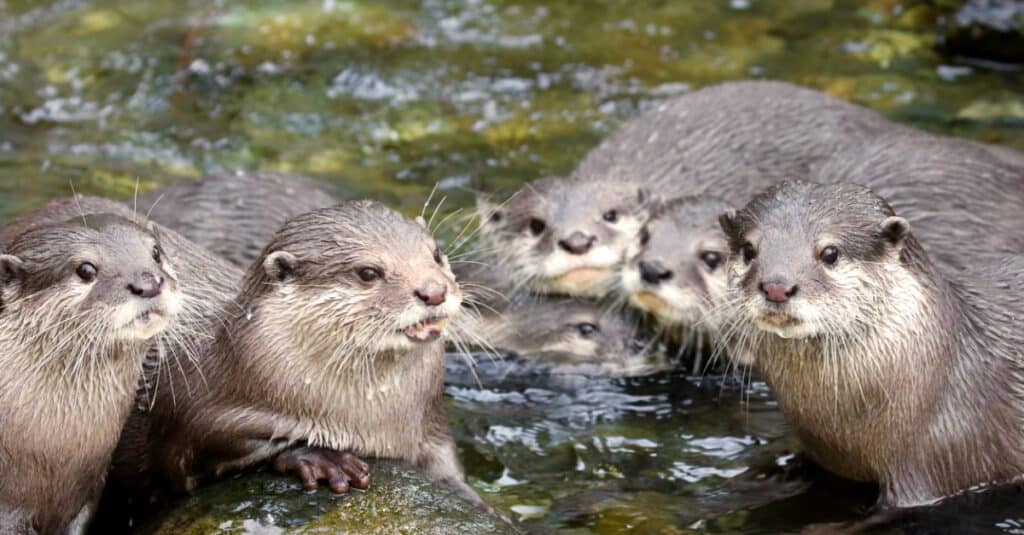
Groups of otters that are in the water are referred to as rafts. When they are in a group but out of the water, they can be referred to as a bevy, romp, or lodge. Adult otters may become defensive if they feel like their offspring is being threatened.
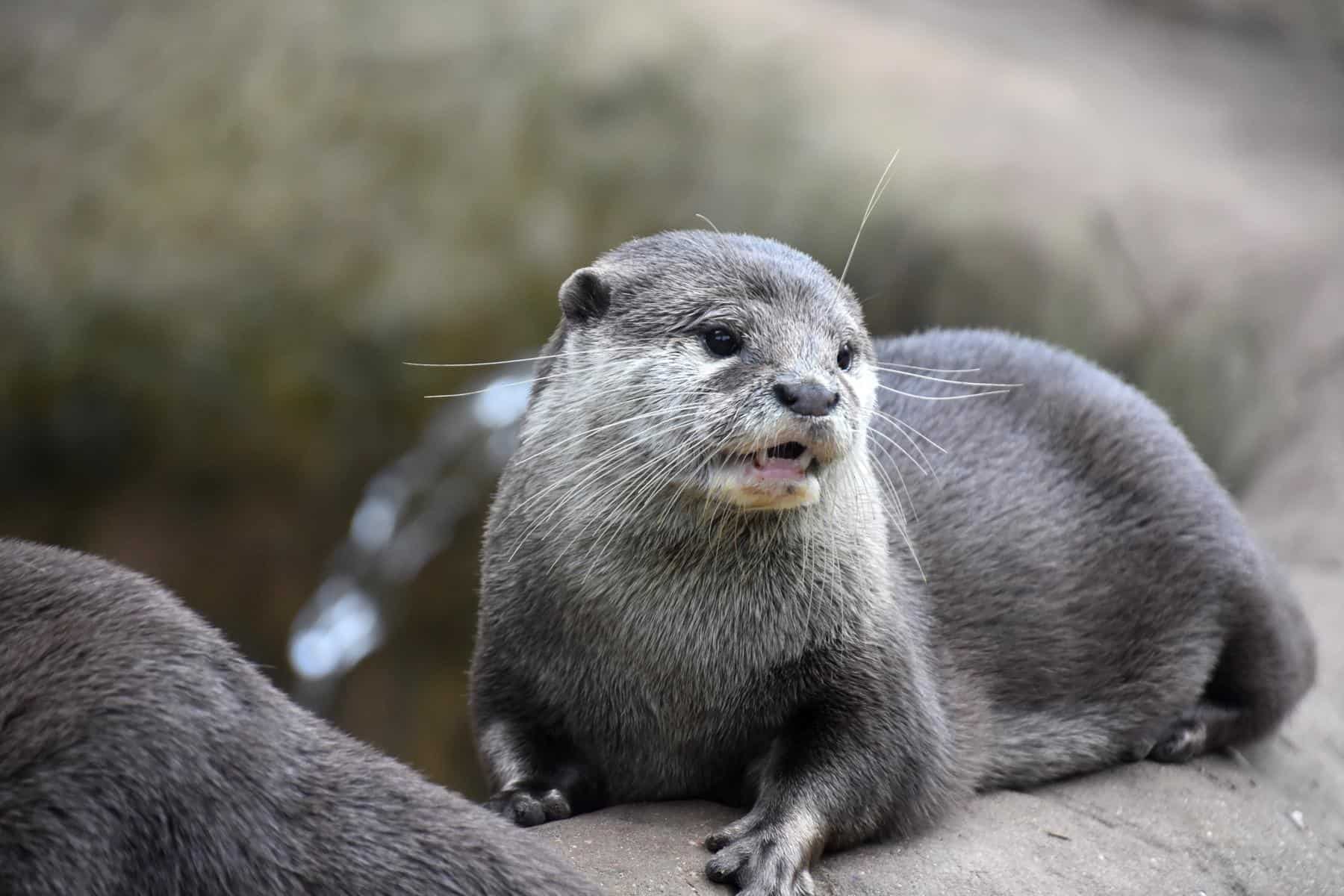
๐Ÿ‘ Otter sitting on a rock
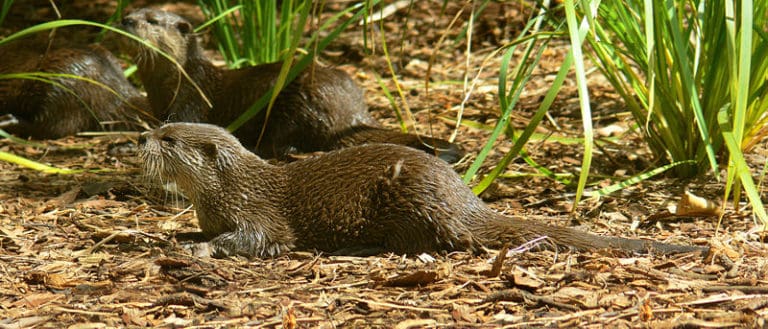
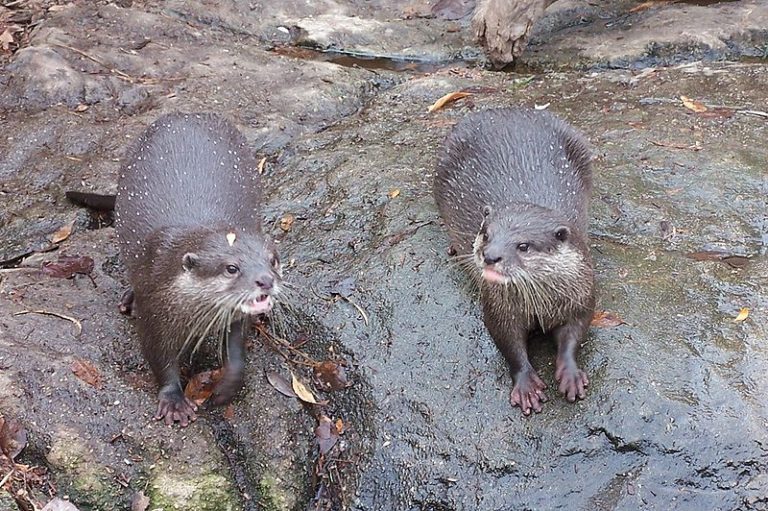
A group of otters out of the water is called a bevy, romp, or lodge.

Habitat

There are many places in the world where otters live. They prefer a wet habitat and often make their home on coastlines, lakes, oceans, and freshwater rivers. Most choose to live in dens that beavers and other similar animals build. These dens are found underground and include various inner chambers that keep them dry.

When it comes to sea otters, water is their preferred habitat to land. They make their home on central Californiaโ€™s coast, as well as Alaska and Russiaโ€™s Pacific Coasts. Otters will often retreat to giant kelp forests away from shore.
 

Diet
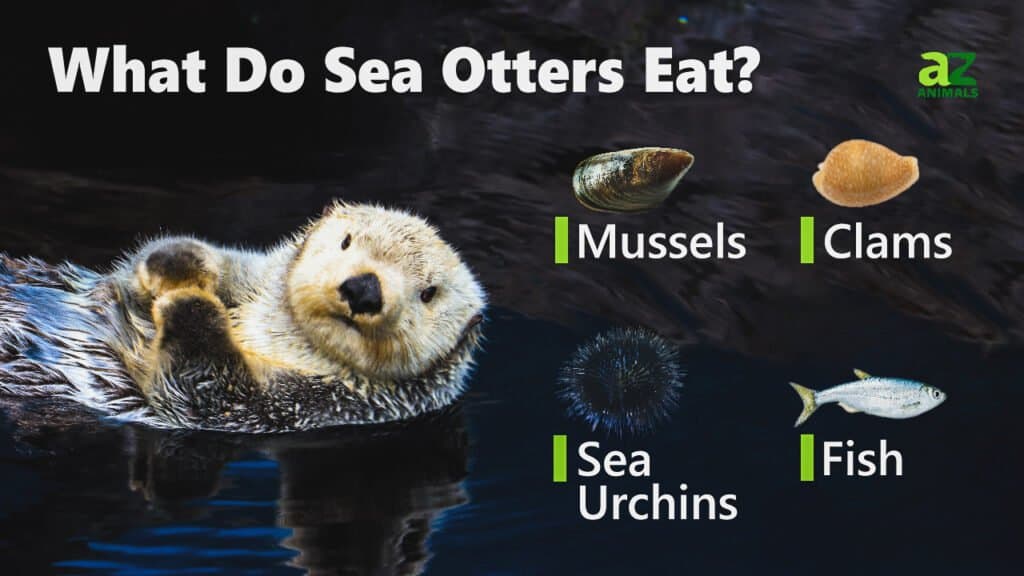
๐Ÿ‘ What Do Sea Otters Eat
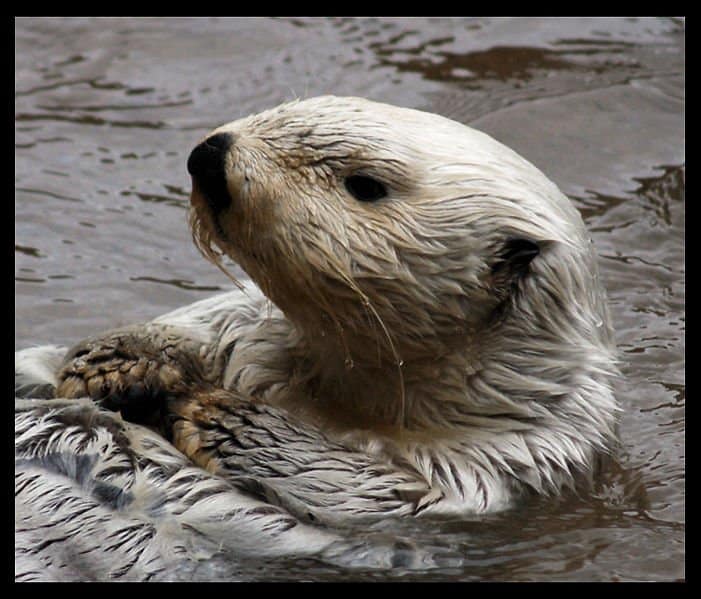
The diet of a sea otter is typically composed of mussels, clams, sea urchins, and fish.

As carnivores, otters eat a diet consisting of meat. The different types of otters have different diets. Marine animals are the preferred choice of sea otters. This means they eat snails, mussels, and crabs, as well as other types of marine animals. A sea otter will eat about 25% of their weight. in marine animals per day. River otters have a different diet. They prefer birds and small mammals. Their diet is mostly made up of fish, frogs, crayfish, and crabs. For a complete list of what otters eat, check out our โ€œWhat Do Otters Eatโ€ page.

Predators & Threats

The biggest threat to otters is people because hunting them is a common activity. It is so common that certain species have been greatly depleted as a result. People have been hunting these animals for a long time. When they started, homemade weapons and arrows were used. As killing them became more popular, hunters started to set traps and shoot the otters that fell into them. These days, most people only use traps to catch an otter.

Commercial fishermen have been hunting this animal for a long time. The reason is that the natural diet of an otter means fewer marine animals for fishermen to catch. Some fishermen catch them without meaning to because the otters enter their fishing nets.
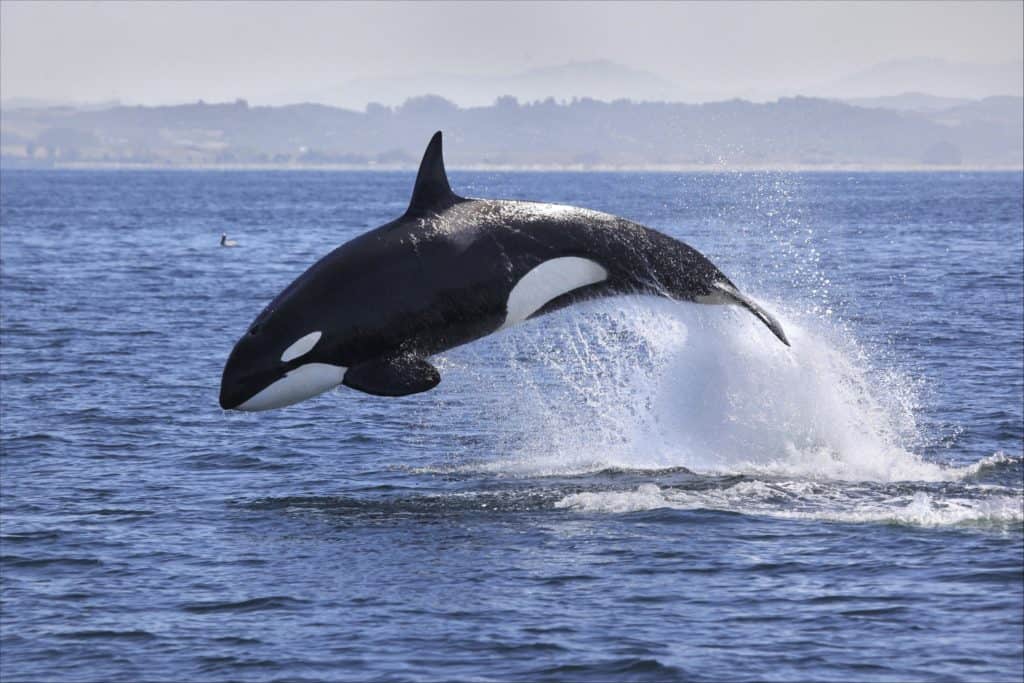
๐Ÿ‘ Killer whale breaching

The killer whale is numbered among the predators that threaten otters.

ยฉTory Kallman/Shutterstock.com


Land and water predators are also a threat. Coyotes pose a danger to them, and so do eagles. In some parts of the world, water lions are a threat to otters. Another significant threat is killer whales and sharks. In areas with swampland, another threat is crocodiles and alligators. Those that live in the wild are often hunted by bobcats.

Due to the many predators of otters, there are several species that are in danger of becoming extinct. This is because the loss of habitat and air/water pollution are having a negative effect on them. The IUCN Red List includes water-based otters on their list of animals that are endangered.

In Asia, the existence of otters is threatened because of the illegal trading of them. The only type of otters not in danger of extinction are those that live in the waters of North America.
 

Reproduction, Babies, And Lifespan

When an otter is between the ages of two and three, they are old enough to reproduce. Those in different regions of the world mate for different reasons. In ideal conditions, they can reproduce multiple times during their reproductive season. Those conditions are an abundance of food and a comfortable place to reproduce.

North American otters mate from late into winter and through the beginning of the spring season. Not all otters breed in the same way. Some breeds take longer to have babies than others. When the egg is fertilized in a pregnant otter something happens called delayed implantation. This means that the egg wonโ€™t become attached to the motherโ€™s womb until the environment is suitable for an otter to give birth. These are the otters that are pregnant for 63 to 65 days before giving birth.

When a male is ready to reproduce, he will seek out a female companion. Males and females do not generally grow up together. The only exception is that when they are babies, the males will stay with their mothers.

In some cases, females will be able to reproduce again immediately after giving birth. Yet this is not a common practice. Females would rather nurse their babies to adulthood before having more. If a mother loses one of her babies, she may not want to wait to reproduce again. She may choose to do it right away. The only exception to this is if the mother otter lives in an environment that isnโ€™t stressful.

During the mating season, males go to where they know the females will be. A male cannot mate with a female until she approves of doing so. Sometimes, a male will find another female if they feel one wonโ€™t approve.

๐Ÿ‘ What Do River Otters Eat?

At four months old, pups can begin to eat solid foods. This is when they start learning how to hunt.

ยฉiStock.com/Mirko_Rosenau


Some otter species are monogamous, while others are polygamous. If a female sea otter wants to mate with a specific male, she will roll around and play with them. Playing together releases the female hormone needed for reproduction. Sometimes, a male sea otter will bite his female companionโ€™s nose if he wants to reproduce with her.

These activities are done on dry land. River otters and sea otters mate in the water. Once babies have been conceived, the mother otter is pregnant for different amounts of time, according to her species. The shortest pregnancy is 60 days, while the longest is nine months.

When they are born, a mom will give birth to between one and six pups. If they have a water birth, it takes place on kelp. Babies may also be born in an otterโ€™s den. Until new pups are one month old, they cannot see. They depend on their mother for everything. A pup will not leave their den until they are able to see. After they gain the ability to see, the mother will teach them how to swim in the water.

Certain types of otter babies are born with growing teeth and all of their fur. When they are born, their average weight is five ounces, about the same as a baseball.

At four months old, pups can begin to eat solid foods. This is when they start learning how to hunt. Pups are so fragile that 32% of them wonโ€™t survive until their first birthday. Even adult female otters donโ€™t always survive long enough to be able to mate.

If held in captivity, an otter can reach the age of between 15 and 20 years old. Those that live in the wild have a much shorter lifespan. Those that live in the water have an average life span of between eight and nine years.

Baby otters are also called whelps and kits, in addition to pups.

Population

Water-dwelling otters have declined in population. Within the previous 45 years, the population has dropped to less than half of what it was. However, the population has increased over the last two decades in South Dakota. Between 1998 and 2000, 34 otters were placed into the Big Sioux. As of 2006, the last time it was counted, the population in South Dakota was 100.

View all 87 animals that start with O

Sources

  1. David Burnie, Dorling Kindersley (2011) Animal, The Definitive Visual Guide To The World's Wildlife / Accessed November 10, 2008
  2. Tom Jackson, Lorenz Books (2007) The World Encyclopedia Of Animals / Accessed November 10, 2008
  3. David Burnie, Kingfisher (2011) The Kingfisher Animal Encyclopedia / Accessed November 10, 2008
  4. Richard Mackay, University of California Press (2009) The Atlas Of Endangered Species / Accessed November 10, 2008
  5. David Burnie, Dorling Kindersley (2008) Illustrated Encyclopedia Of Animals / Accessed November 10, 2008
  6. Dorling Kindersley (2006) Dorling Kindersley Encyclopedia Of Animals / Accessed November 10, 2008
  7. David W. Macdonald, Oxford University Press (2010) The Encyclopedia Of Mammals / Accessed November 10, 2008

About the Author

Abby Parks

Abby Parks has authored a fiction novel, theatrical plays, short stories, poems, and song lyrics. She's recorded two albums of her original songs, and is a multi-instrumentalist. She has managed a website for folk music and written articles on singer-songwriters, folk bands, and other things music-oriented. She's also a radio DJ for a folk music show. As well as having been a pet parent to rabbits, birds, dogs, and cats, Abby loves seeking sightings of animals in the wild and has witnessed some more exotic ones such as Puffins in the Farne Islands, Southern Pudu on the island of Chiloe (Chile), Penguins in the wild, and countless wild animals in the Rocky Mountains (Big Horn Sheep, Mountain Goats, Moose, Elk, Marmots, Beavers).
Connect:

Thank you for reading! Have some feedback for us?

Contact the AZ Animals editorial team

Related Articles You May Find Interesting

A Little Known Mussel Is Disappearing and It Could Impact Entire Rivers


Otter FAQs (Frequently Asked Questions)

Since otters eat meat, they fall into the category of carnivores.

There are times when otters can be dangerous. If humans approach their babies, they will aggressively protect the pups. If they want to, they can overpower smaller children as well as most pets. They carry rabies and can transfer it to people or to pets.

In general, otters are not overly friendly to people. Though they may seem that way, it is not always the case.

At times, a river otter will eat an alligator. If they find themselves near one, an otter may attack an alligator because it sees it as food.

Otters often attack marine animals with hard shells so they can eat them.

Otters are known for being smarter than many other animals. Some people even believe that they are smarter than dolphins.

It is not unusual for otters to mate for life. They are known to remain with their otter partner for their whole life, just like human couples do.

Otters belong to the Kingdom Animalia.

Otters belong to the phylum Chordata.

Otters belong to the class Mammalia.

Otters belong to the family Mustelidae.

Otters belong to the order Carnivora.

There are several genus groups for otters. River otters belong to Lutra, while sea otters belong to Enhydra.

Otters are covered in Fur.

Otters live in river banks, lakes, and streams.

Otters prey on fish, crabs, and frogs.

Predators of Otters include birds, foxes, and wolves.

The average litter size for an Otter is 3.

There are 13 different Otter species worldwide.

The scientific name for an Otter varies by species.

Otters can live for 15 to 25 years.

Both animals belong to the Mustelidae family. However, they donโ€™t belong to the same subfamily; Otters belong to the Lutrinae subfamily while minks belong to the Mustelinae subfamily. Besides otter and minks differ in size, range, and swimming patterns.

The key differences between seals and otters are size, family, and their method of thermoregulation. Seals are larger than otters, weighing a lot more than them and growing much longer. Although seals and otters are often believed to be related, the truth is that they belong to completely different families.