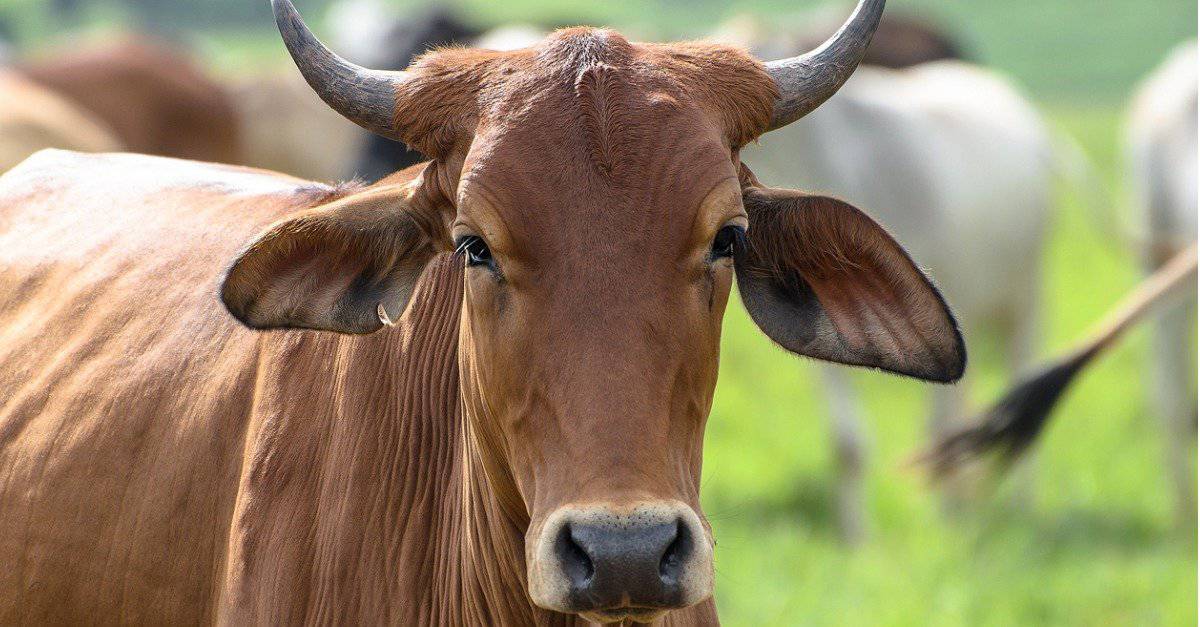
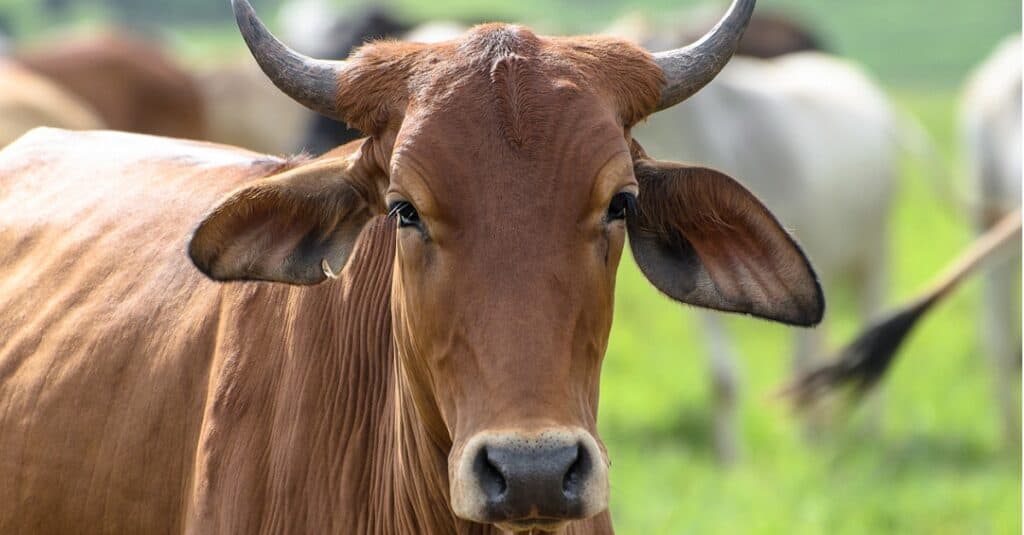





The ox is the heavy-duty machinery of the animal world.
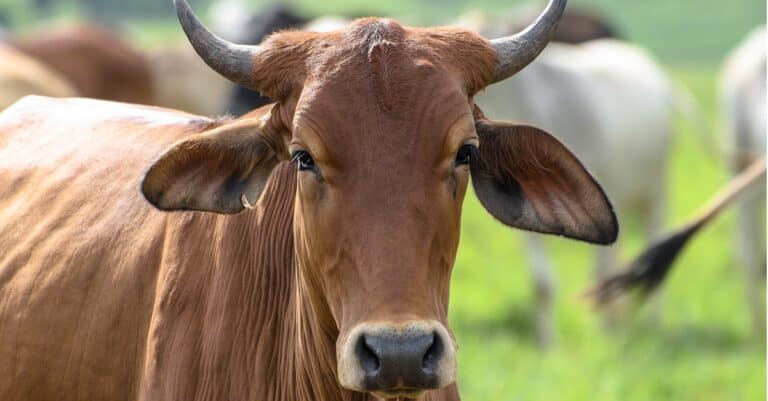
An ox, by definition, is any male bovine that is used for work. Usually, only mature males (over 4 years of age) from the largest breeds of domesticated cattle are trained for work, and these males are castrated to keep them docile. Certain cattle are purposely bred to be oxen.
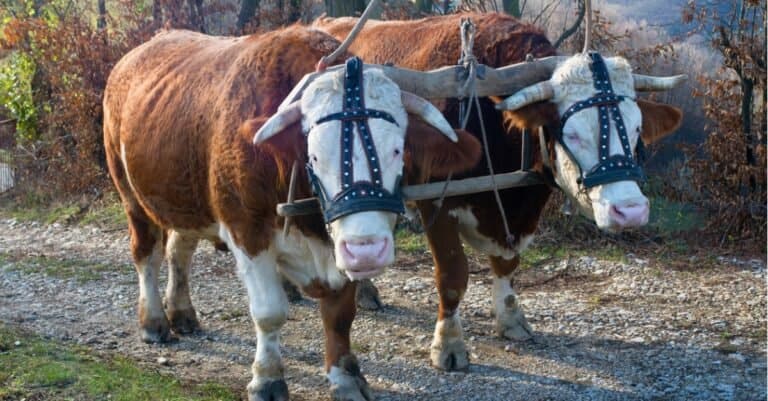
Also called a bullock, the ox is used to plow, transport, and power operations that thresh and grind grain or produce irrigation. They are usually put to work in pairs. Pairs are added as needed, based on the job. Teams of oxen might go over ten pairs.
5 Incredible Facts!
Here are five great things you should know about these industrious animals.
- Oxen have an intimidating look, but they are not predators. They’re bred to be around humans. They are herbivores that only eat plants, grains, and grasses.
- Like horses, oxen wear shoes. The bullock footwear is smaller than the equine shoe because the ox has cloven hooves that require two shoes on each foot.
- The musk ox is only a cousin of the domestic ox. The musk ox is a wild animal found only in the Arctic. It has heavy fur that helps it cope with freezing temperatures.
- In many Asian communities, the ox is historically revered as a loyal, honorable creature that has served its human masters for over 6,000 years.
- Each pair gets fitted with a yoke to pull cargo. The yoke gets fastened over the animal’s neck.
Scientific Name
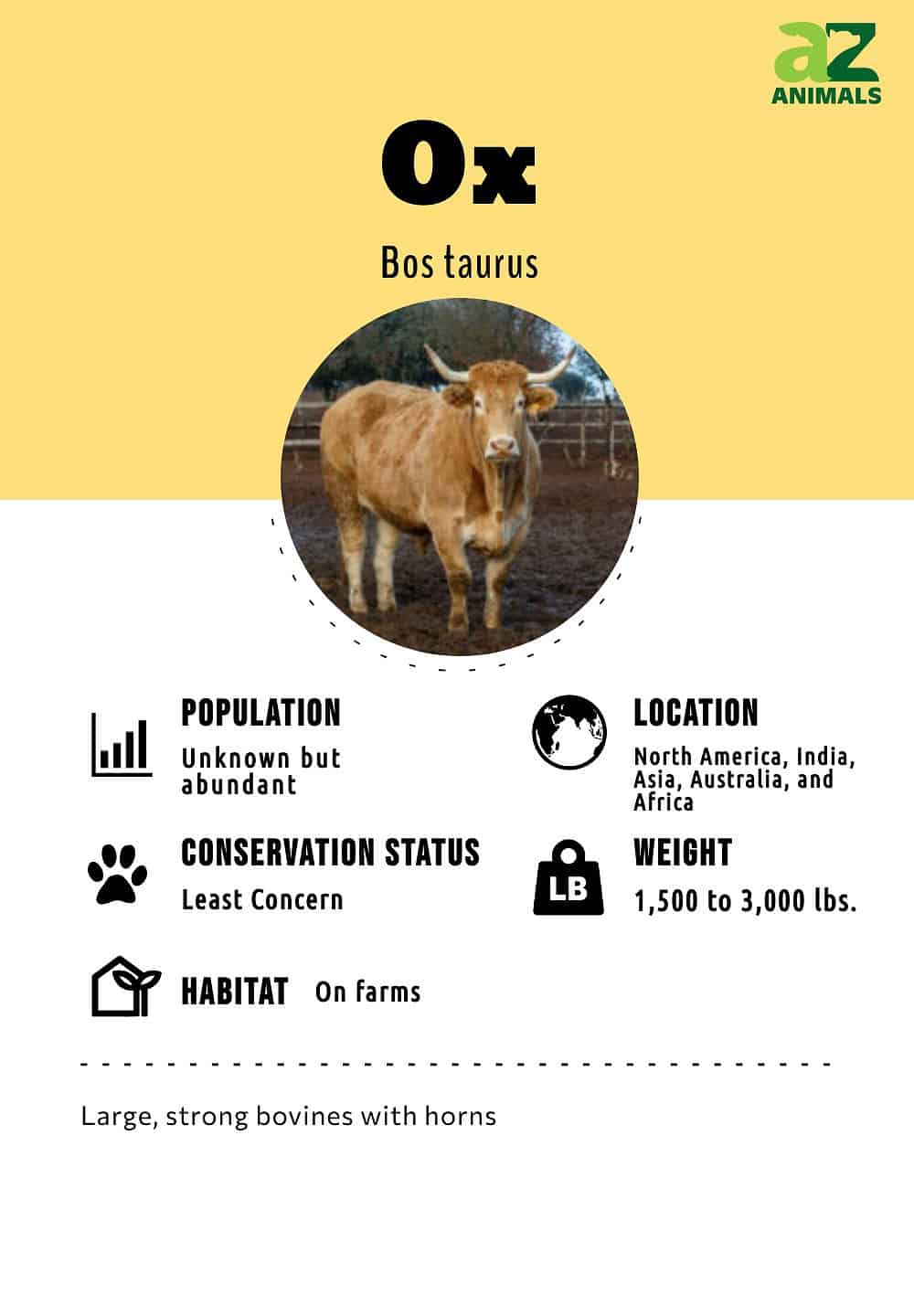
The ox is a large, hoofed ungulate with two horns classified as Bos taurus or B. taurus primigenius within the Bovidae family. Its ancestry depends on the type of cattle bred over the centuries in a certain location to create draft animals.
Appearance and Behavior
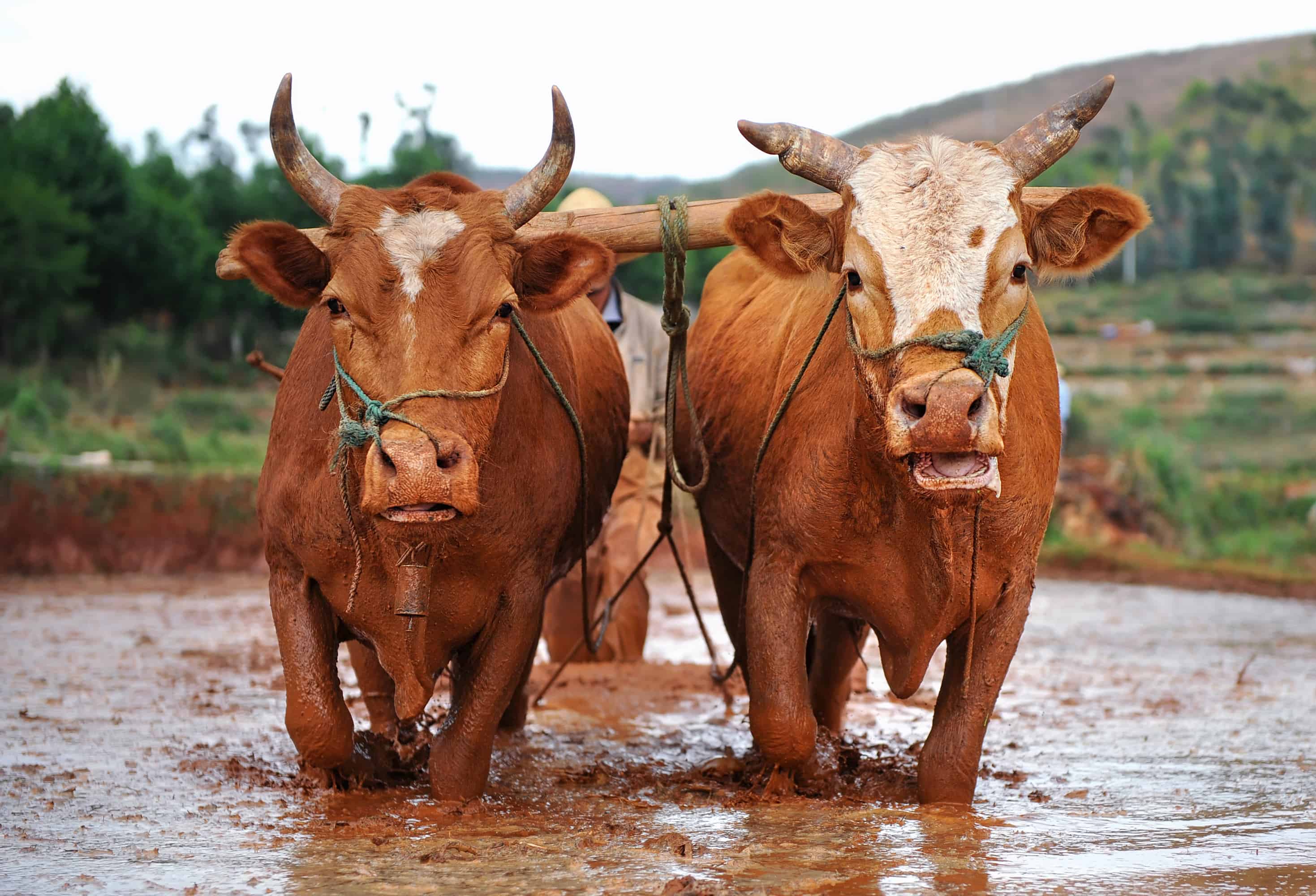
Two oxen yoked together to work in a field as they have done for 6,000 years.
©Hung Chung Chih/Shutterstock.com
What is an ox and how does it behave? Bullocks are draft animals that have a history as laborers dating back to 6000 B.C. They are powerful creatures of great size, making them perfect for pulling carts and wagons, plowing, and powering millstones for grinding grain.
This steer is a quiet, peaceful animal. That has more to do with its castration than anything, which greatly impacts impulse and temperament. Except for its large size, it pose no threat to humans.
The term “dumb as an ox” is a misconception, likely attributed to the ox’s quiet, slow nature. Some say oxen may be as smart as dogs. Oxen show signs of remembering places and people. They are adaptable and easily trained. They also perform chores without much supervision.
In many East Asian communities, the ox is considered a comforting creature, a source of reliability, strength, conscientiousness, and loyalty, inspiring confidence. According to the Chinese lunar calendar, anyone born in the Year of the Ox will have a sense of peace with oneself, trust, and patience. It’s also believed they’re bull-headed (pun intended!) and opinionated.
What is the Difference Between an Ox and a Buffalo?
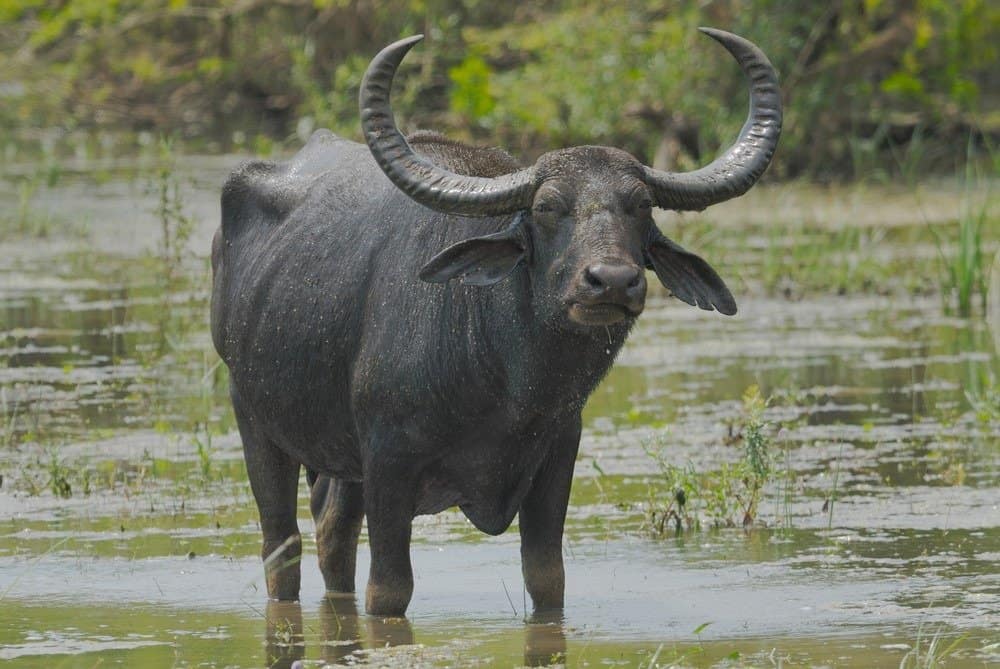
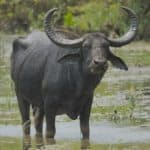
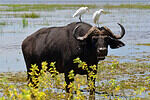
A water buffalo is bigger than an ox and has a thicker coat.
©Hugh Lansdown/Shutterstock.com
The most obvious difference between the buffalo and the ox is easily spotted. When it comes to size, the buffalo is noticeably larger. It has a thicker coat than the ox. Also, while you can find the ox in different regions of the world, over 95 percent of the buffalo populace resides in Asia. [Note: we are talking about African and Asian buffaloes like the water buffalo, not the American bison.]
The two animals are both laborers. Buffaloes are used as pack animals, carrying heavy loads. Oxen also use their strength for powering machines, for irrigation tasks, and to skids logs in dense forests.
Buffaloes work in teams, while oxen work in pairs. Of the two mammals, oxen do lighter work compared to buffaloes. Also, Oxen are the more social of the two animals. Not so friendly, buffaloes are livestock and a portion of the population is wild.
The average weight of the ox is a mighty 1,500 to 3,000 pounds! On the other hand, while larger than the ox, the buffalo weighs in at around a ton, or 2,000 pounds.
Habitat
While there are wild oxen, the majority of the populace live in human-built habitats. The structures are usually sheds, stables, and open fields where they graze and walk freely. Here, the animals get fed and cleaned, rest, and congregate in small groups and herds.
Predators & Threats
When threatened, oxen will form a circle, especially around the young. They then use their horns to defend the herd. Bears and wolves are the ox’s only predators. The ox is a herbivore, so it grazes on a diet of grass, grain, and other vegetation only.
Reproduction, Babies, and Lifespan
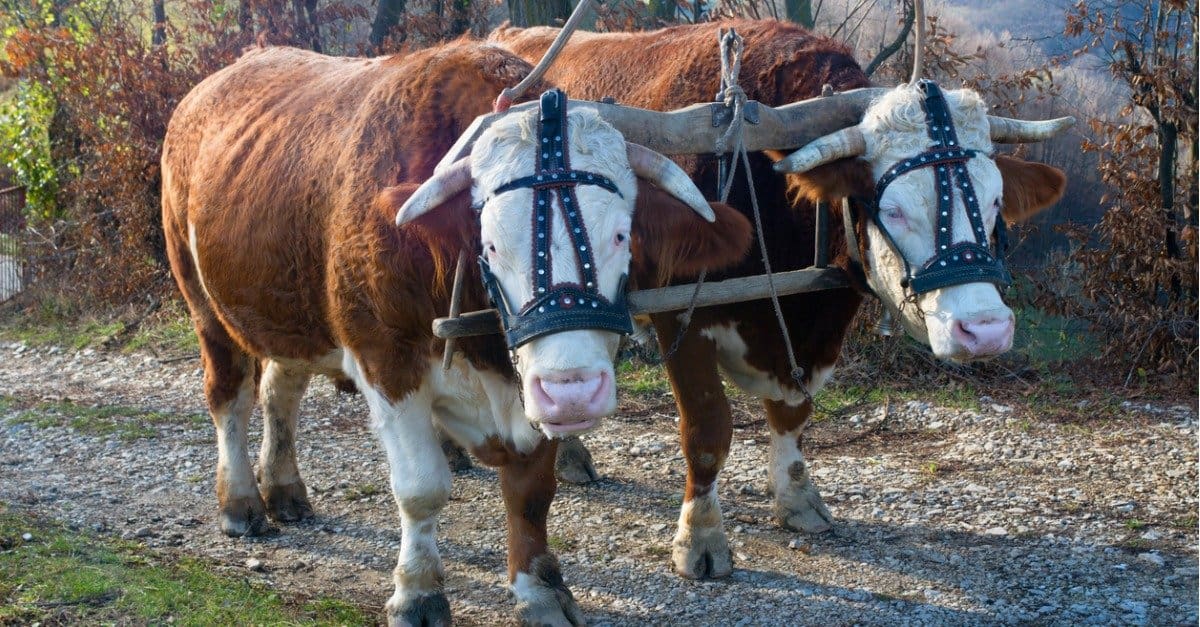
The working ox is a steer with a lifespan of about 20 years.
©iStock.com/tadija
Oxen do not reproduce naturally since the male bovines are castrated early. For reproduction, the female cattle are artificially inseminated or a herd bull with desirable traits is reserved. The lifespan of this animal is a little over 20 years. At the end of that time, the animal may be used for food.
Population and Conservation Status
Oxen are considered to have sufficient numbers such that they are not endangered. While oxen are adaptable, their numbers probably have less to do with survival and more to do with the human need for the ox.
Organizations that monitor the risk of species endangerment haven’t seen much reason to keep an eye on oxen. The IUCN categorizes the species as of “Least Concern,” a clear indicator that the ox is plentiful and going nowhere any time soon.