



P
Species Profile

Pika

Ochotona

Small body. Big whistle. Bigger grit.
ArtMechanic - Public Domain

At a Glance

Genus Overview This page covers the Pika genus as a group. Stats below are general traits shared across the genus.
Also Known As Rock rabbit, Coney, Mouse hare, Whistling hare
Diet Herbivore
Activity Diurnal+
Lifespan 3 years
Weight 0.32 lbs
Status Not Evaluated
Did You Know?

Ochotona is the only living genus in the pika family (Ochotonidae); rabbits and hares are in a different family (Leporidae).

Scientific Classification

Genus Overview "Pika" is not a single species but represents an entire genus containing multiple species.

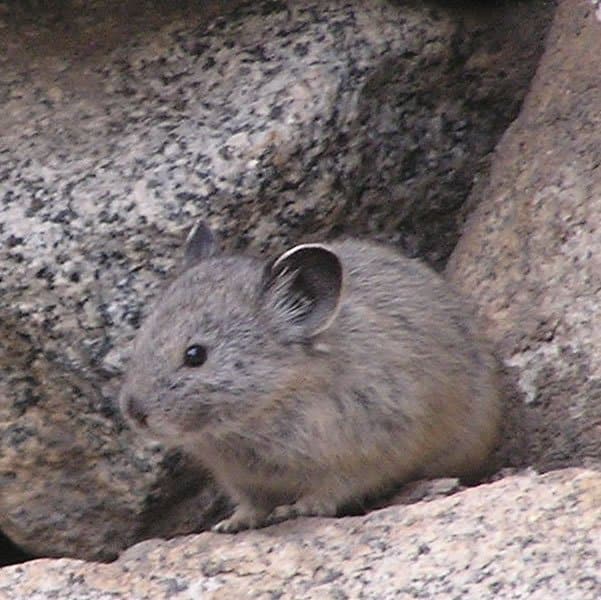
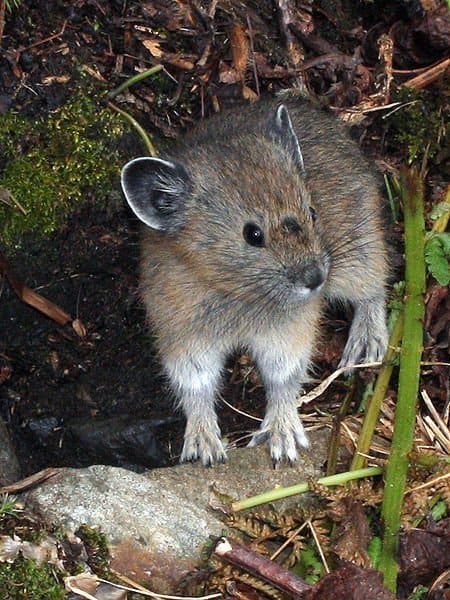
Pikas are small lagomorph mammals (relatives of rabbits and hares) in the genus Ochotona. They are characterized by compact bodies, short limbs, rounded ears, and an absence of an external tail. Many species are noted for high-pitched alarm calls and, in some regions, for gathering and drying vegetation into ‘haypiles’ for winter.

Kingdom
Animalia
Phylum
Chordata
Class
Mammalia
Order
Lagomorpha
Family
Ochotonidae
Genus
Ochotona

Distinguishing Features

  • Small rabbit-relative with rounded ears and no visible tail
  • High-pitched vocalizations (alarm calls) common
  • Many species cache vegetation (haypiles) for overwintering
  • Often associated with rocky talus or high-elevation environments (species-dependent)

Physical Measurements

Males and females differ in size

Height
3 in (2 in – 5 in)
Length
7 in (5 in – 9 in)
7 in (5 in – 10 in)
Weight
0 lbs (0 lbs – 1 lbs)
Tail Length
0 in (0 in – 0 in)
0 in (0 in – 1 in)
Top Speed
19 mph
running

Appearance

Primary Colors
Secondary Colors
Skin Type Thick, dense insulating fur over skin; short limbs with furred feet; external tail essentially absent (only a small tuft/skin nub).
Distinctive Features
  • Genus-wide size range: head-body length ~12-25 cm; mass ~0.07-0.35 kg (smallest to largest species extremes).
  • Rounded ears and compact body typical of Ochotona; proportionally shorter ears and no visible tail compared with rabbits/hares.
  • Dense pelage and high surface insulation support cold, windy alpine and steppe climates; many species show strong heat sensitivity and seek cool refuges.
  • Two broad ecotypes occur across the genus: talus/rock-dwelling pikas vs burrowing/steppe pikas; many species fall clearly into one, but ecology varies by region.
  • Foraging is typically close to cover; diet is mainly grasses, forbs, sedges, and shrubs, varying with local plant communities and season.
  • Many species give high-pitched alarm calls and maintain small, defended home areas; sociality ranges from more territorial/solitary to more tolerant colonies depending on species and habitat.
  • Food caching varies widely: many talus species build conspicuous dried 'haypiles' for winter, while several burrowing species cache less or rely more on winter foraging under snow.
  • Lifespan varies across species and context: commonly ~3-7 years in the wild, with reported maxima around ~8-10+ years; captive longevity can reach roughly ~10-12 years in some cases.
  • Seasonal molts are common; some populations become notably paler/grayish in winter for camouflage and thermal benefits.

Did You Know?

Ochotona is the only living genus in the pika family (Ochotonidae); rabbits and hares are in a different family (Leporidae).

Across the genus, many species don't hibernate-some survive winter by stockpiling dried plants in "haypiles."

Pikas are famous for sharp alarm calls; in rocky habitats, their whistles can echo across talus slopes.

Not all pikas live in rocks: several species are burrowers that inhabit open steppe or alpine meadows and may be more colonial.

Pikas are heat-sensitive; many species restrict activity to cool parts of the day and use shade/crevices to avoid overheating.

Their common name in China translates to "mouse-rabbit," reflecting their small size and rabbit-like ancestry.

Unique Adaptations

  • Compact, tailless body plan: Short limbs, rounded ears, and an almost invisible tail reduce heat loss and snagging in tight rock/burrow spaces.
  • Non-hibernating cold strategy: Dense fur, high metabolism, and food storage (in many species) allow winter survival without true hibernation.
  • Crevice-and-burrow thermoregulation: Rock fissures and burrows provide buffered microclimates-cooler in summer, warmer in winter-critical for heat-sensitive species.
  • Lagomorph digestion (cecotrophy): Like rabbits and hares, pikas re-ingest nutrient-rich cecal pellets to extract more energy and vitamins from fibrous plants.
  • Broad habitat flexibility across the genus: Species occur from sea level tundra/forest edges to high alpine zones (>5,000 m in parts of Asia), with corresponding shifts in behavior and sociality.

Interesting Behaviors

  • Haymaking (variable): Many rock-dwelling species cut, carry, and dry vegetation into haypiles for winter; burrowing species may rely more on underground stores and winter foraging, and haypiling can be reduced or absent depending on species and habitat.
  • Vigilant calling: Individuals often perch on rocks or at burrow entrances to scan for predators and give rapid alarm calls; call structure and call rates vary among species and populations.
  • Territoriality vs colonial living: Talus pikas are often strongly territorial around crevices and haypiles, while several burrowing/steppe species can form looser colonies with more social tolerance.
  • Daily timing shifts with temperature: Many pikas show activity peaks in cooler morning/evening hours; in hot periods they retreat underground or into rock fissures.
  • Central-place foraging: In many species, foraging radiates from a home crevice/burrow, with repeated trips to favored plant patches and back to shelter or storage sites.
  • Scent marking and latrines: Pikas commonly use scent (and in some cases communal latrines) to communicate occupancy and reduce conflict; specifics vary among species.

Cultural Significance

Pika (Ochotona) live across the Holarctic, including the Tibetan Plateau. On high grasslands they affect herders and animals: seen as livestock competitors, prey for raptors and carnivores, and they change soils and plants with burrows and grazing. In China called 'mouse-rabbit.'

Myths & Legends

The English word "pika" comes from Russian "pika," likely from Turkic roots. Another Russian folk name, often "squeaker," describes their sharp calls on rocky slopes and steppes.

"Mouse-rabbit" in East Asia: A traditional Chinese folk name translates to "mouse-rabbit," a cultural label rather than a scientific one that captures their in-between appearance and behavior.

In older English and some Bible translations, 'coney' meant small rock-living mammals. Later study links the animal in the Bible to hyraxes, but people also called pikas (Ochotona) 'coneys' or 'rock rabbits'.

In western North America early naturalists called the American pika (Ochotona) the "little chief hare." This folk nickname came from seeing it sit upright like a guard on talus, not from one myth.

Conservation Status

NE Not Evaluated (genus-level)

Has not yet been evaluated against the criteria.

Population Unknown

Looking for a specific species?

American pika

Ochotona princeps

In English-language usage, "pika" most commonly refers to the American pika, especially in North America where it is widespread in mountain talus habitats and frequently discussed in ecology and climate-sensitivity contexts.

  • Genus-level context: pikas (Ochotona) are small lagomorphs across North America and Asia; species limits and counts vary by authority (~30-35 species) and ongoing revisions.
  • Across the genus, typical head-body length is about 12-23 cm and mass about 70-320 g (smallest to largest species); all have compact bodies, short limbs, rounded ears, and no obvious external tail.
  • Lifespan varies widely by species and conditions: many wild populations average only a few years, while maximum recorded longevity across the genus is roughly in the high single digits, with captive individuals sometimes living longer.
  • Across Ochotona, many species make sharp alarm calls. They eat mainly grasses, forbs, and sedges. Winter ways include haypiles or using snow and foraging; social life ranges from territorial to colonial or burrow-based.
  • Pikas are generally cool-climate adapted; many species are sensitive to heat stress and rely on rock crevices/burrows and activity timing to manage temperature (degree and vulnerability vary strongly among species and habitats).

You might be looking for:

American Pika

35%

Ochotona princeps

A talus-slope and alpine meadow pika of western North America; well known for collecting ‘haypiles’.

Collared Pika

15%

Ochotona collaris

Northern North American pika of Alaska and northwestern Canada, typically in rocky alpine habitats.

Plateau Pika

15%

Ochotona curzoniae

A burrowing pika of the Tibetan Plateau; an ecologically important grassland species.

Northern Pika

10%

Ochotona hyperborea

A widespread Asian pika occurring in Siberia and parts of northern East Asia, often in rocky habitats.

Daurian Pika

8%

Ochotona dauurica

A steppe-associated pika found in parts of Mongolia, China, and adjacent regions, often in open grasslands.

Life Cycle

Birth 3 kits
Lifespan 3 years

Lifespan

In the Wild 1–7 years
In Captivity 2–10 years

Reproduction

Mating System Polygynandry
Social Structure Solitary
Breeding Pattern Seasonal
Fertilization Internal Fertilization
Birth Type Internal_fertilization

Across Ochotona, adults are typically territorial and interact mainly during the breeding season. Mating often involves overlapping home ranges with multiple mates possible, though some populations form social pairs; females usually provide most parental care.

Behavior & Ecology

Social Colony Group: 10
Activity Diurnal, Crepuscular, Cathemeral
Diet Herbivore Nutrient-rich forbs (leafy herbaceous plants/wildflowers), with grasses/sedges used more heavily when forbs are scarce (varies by species and habitat).

Temperament

Vigilant and wary; rapid retreat to rock crevices or burrows when threatened
Territoriality common, especially in talus species; boundary disputes and chasing occur
Social tolerance ranges from low (solitary talus forms) to higher (colonial burrowers)
Energetic foragers with frequent scanning; risk-avoidant in open areas
Seasonally driven urgency in food gathering (including haying in many, but not all, species)

Communication

high-pitched alarm calls; call structure varies by species and predator context
short contact calls between neighbors or colony members
agitated chirps/squeaks during territorial disputes and chases
distress screams when seized or during intense aggression
softer courtship/mating calls in some species, often seasonal
scent marking with urine and fecal pellets to advertise territory and identity
rubbing/chinning on rocks or vegetation near runways; intensity varies among species
visual signaling via upright postures, head-bobbing, and rapid retreats to refuges
use of latrine sites in many species, especially around territory boundaries
tactile interactions in colonies (nose-to-nose sniffing, brief body contact), more common in burrowing forms

Habitat

Mountain Cliff/Rocky Outcrop Alpine Meadow Tundra Grassland Steppe Shrubland Coniferous Forest Deciduous Forest Woodland Desert +5
Biomes:
Alpine Tundra Boreal Forest (Taiga) Temperate Grassland Temperate Forest Desert Cold
Terrain:
Mountainous Plateau Hilly Valley Plains Rocky
Elevation: Up to 19685 ft 1 in

Ecological Role

Primary/secondary consumer (small-bodied herbivore) and key prey item in montane, steppe, and rocky-slope ecosystems; effects on plant communities and nutrient flow vary by species and habitat (talus specialists vs burrowing/steppe forms).

Vegetation clipping/pruning that can influence plant community composition and regrowth Seasonal caching (haypiles) that redistributes plant biomass and nutrients across microsites Nutrient cycling via feces/urine concentration near refuges and cache sites Occasional seed movement/redistribution through gathering and caching plant material Supports food webs as abundant prey for raptors, mustelids, canids, and other predators Burrowing (in some species) contributes to soil disturbance/aeration and microhabitat creation

Diet Details

Other Foods:
Grasses Sedges and rushes Forbs and herbaceous wildflowers Leaves, petioles, and tender stems Flowers and developing seedheads Shrub browse Bark Mosses and lichens Fungi Fruits, berries and seeds +4

Human Interaction

Domestication Status

Wild

Ochotona (pikas) are not domesticated. People study them, watch or photograph them in mountain parks, and sometimes hunt them for meat or pelts in parts of Asia. Some burrowing types are seen as pests on grazing land and have been poisoned. Their conservation status varies by species; many alpine populations are sensitive to warming.

Danger Level

Low
  • bites/scratches if handled (typically minor)
  • potential zoonotic disease/flea exposure from wild individuals (risk varies by region; avoid handling without training/PPE)
  • allergic reactions to dander/urine in close-contact settings (uncommon because they are rarely kept)

As a Pet

Not Suitable as Pet

Legality: Pika (Ochotona) are generally not legal or not available as pets in many places. Laws vary by country or state. Many are protected; permits are needed for research, rehab, or zoos. Taking from the wild is usually illegal or restricted.

Care Level: Expert Only

Purchase Cost:
Lifetime Cost: $5,000 - $25,000

Economic Value

Uses:
Scientific research and environmental indicator value Ecotourism/wildlife viewing (mountain parks and reserves) Local subsistence/traditional use (limited, region-dependent) Human-wildlife conflict management (some species viewed as rangeland pests)
Products:
  • non-consumptive value (research data, monitoring/indicator use)
  • tourism/recreation value (wildlife observation)
  • limited regional products: meat and pelts in some local contexts (not widespread genus-wide)

Relationships

Predators 9

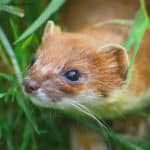
Stoat Mustela erminea
Least weasel Mustela nivalis
Sable Martes zibellina
Red fox Vulpes vulpes
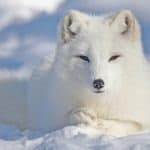
Arctic fox Vulpes lagopus
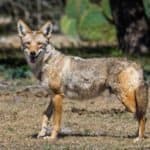
Coyote Canis latrans
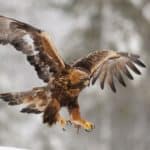
Golden eagle Aquila chrysaetos
Red-tailed hawk Buteo jamaicensis
Eurasian eagle-owl Bubo bubo

Related Species 6

Collared pika Ochotona collaris Shared Genus
American pika Ochotona princeps Shared Genus
Plateau pika Ochotona curzoniae Shared Genus
European hare Lepus europaeus Shared Order
European rabbit Oryctolagus cuniculus Shared Order
Snowshoe hare Lepus americanus Shared Order

Ecological Equivalents 5

Animals that fill a similar ecological role in their ecosystem

Hoary marmot Marmota caligata Shares alpine/subalpine habitats. An herbivorous mammal that relies on short growing seasons and copes with long winters (different strategy: hibernation versus pika caching).
Yellow-bellied marmot Marmota flaviventris Often co-occurs in mountain meadows and talus edges; exhibits similar herbivory and predator-avoidance behaviors in open, rocky terrain.
Montane voles Microtus montanus Small-bodied herbivores in cool grassland and alpine systems; occupy analogous talus/montane microhabitats and serve comparable roles as prey for raptors and carnivores, though they are more burrowing and grassland-focused than most pikas.
Ground squirrels Urocitellus spp. Diurnal, alarm-calling mammals of open habitats in montane and alpine zones; they overlap in predators and seasonal constraints, as ground squirrels typically hibernate.
Rock hyrax Procavia capensis Unrelated but ecologically convergent: a rock-dwelling herbivore that uses boulder fields for refuge and thermoregulation, occurring in warm, arid regions rather than cold alpine zones.

Types of Pika

25

Explore 25 recognized types of pika

American pika Ochotona princeps
Collared pika Ochotona collaris
Steppe pika Ochotona pusilla
Plateau pika Ochotona curzoniae
Northern pika Ochotona hyperborea
Alpine pika Ochotona alpina
Daurian pika Ochotona dauurica
Pallas's pika Ochotona pallasi
Afghan pika Ochotona rufescens
Royle's pika Ochotona roylei
Large-eared pika Ochotona macrotis
Ladakh pika Ochotona ladacensis
Nubra pika Ochotona nubrica
Ili pika Ochotona iliensis
Gansu pika Ochotona cansus
Chinese red pika Ochotona erythrotis
Hoffmann's pika Ochotona hoffmanni
Kozlov's pika Ochotona koslowi
Forrest's pika Ochotona forresti
Glover's pika Ochotona gloveri
Tibetan pika Ochotona thibetana
Thomas's pika Ochotona thomasi
Corean (Korean) pika Ochotona coreana
Silver pika Ochotona argentata
Black-lipped pika Ochotona nigritia

Parts of the Northern Hemisphere are home to the Pika. Even though they resemble a rat, their closest relatives in the animal kingdom are hares and rabbits. One of the ways you can tell you are looking at a Pika is that they don’t have tails. Their bodies are small and round.

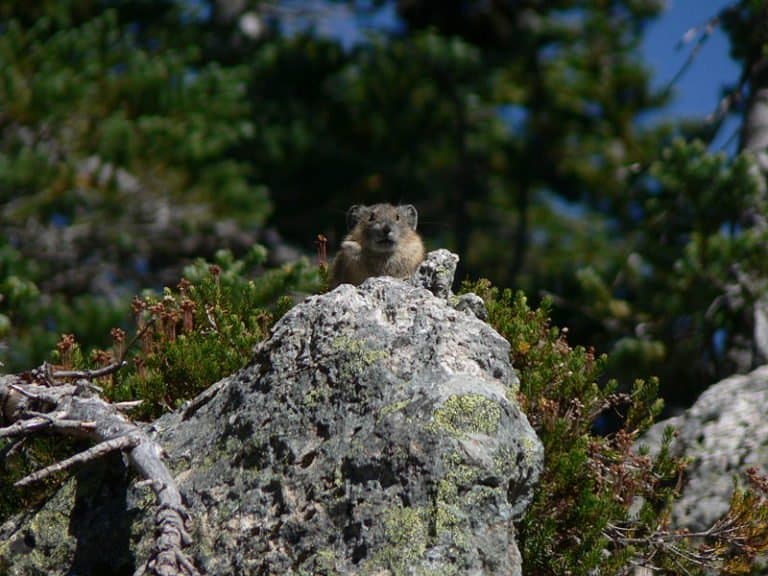
At Rocky Mountain National Park, Pika live up high in the trees. The park is one of the few places on Earth where two subspecies of the animal are found. One of those species calls the southern hemisphere home while the other one calls the northern hemisphere home.

Four Pika Top Facts

  • The American Pika represents climate change
  • Pika is an animal that is closely related to the rabbit
  • Pika prefers solitude to company
  • They warn each other of predators nearby
👁 Image

Scientific Name

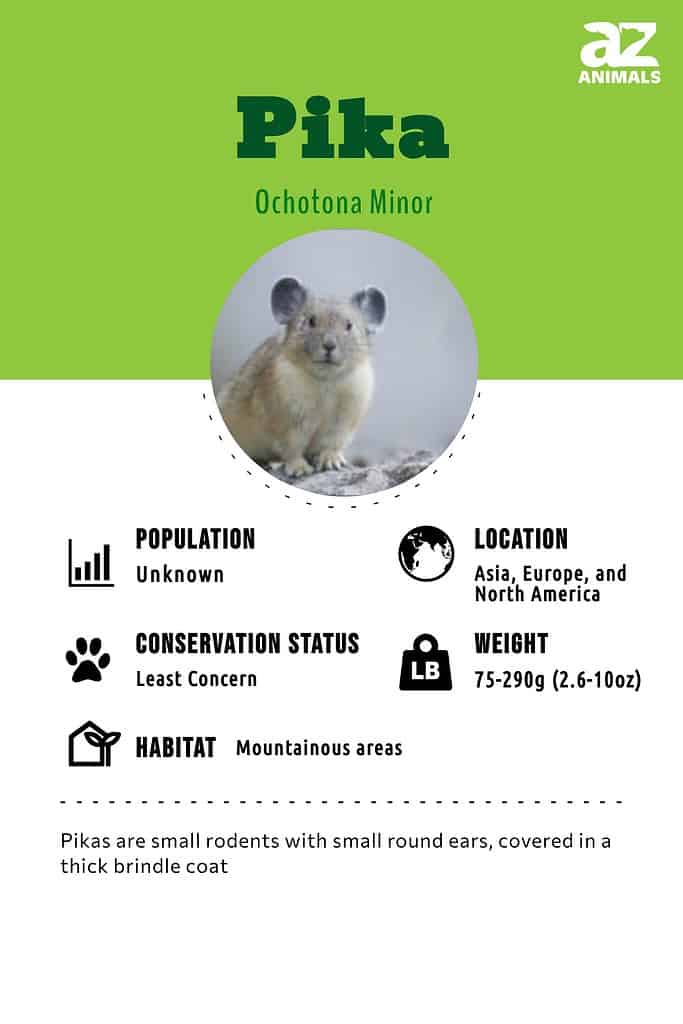
The scientific name of the Pika is Ochotona Minor. It is part of the Mammalia class and the Ochotinade family. American Pikas are a part of the lagomorph group and are also its smallest members.

The word Pika dates back to the years between 1820 and 1830. A German naturalist used it to describe the noise made by the Russian Pika, which means to squeak. Since Pikas make a sound that is shrill, the word is used to describe the animal.

Appearance & Behavior
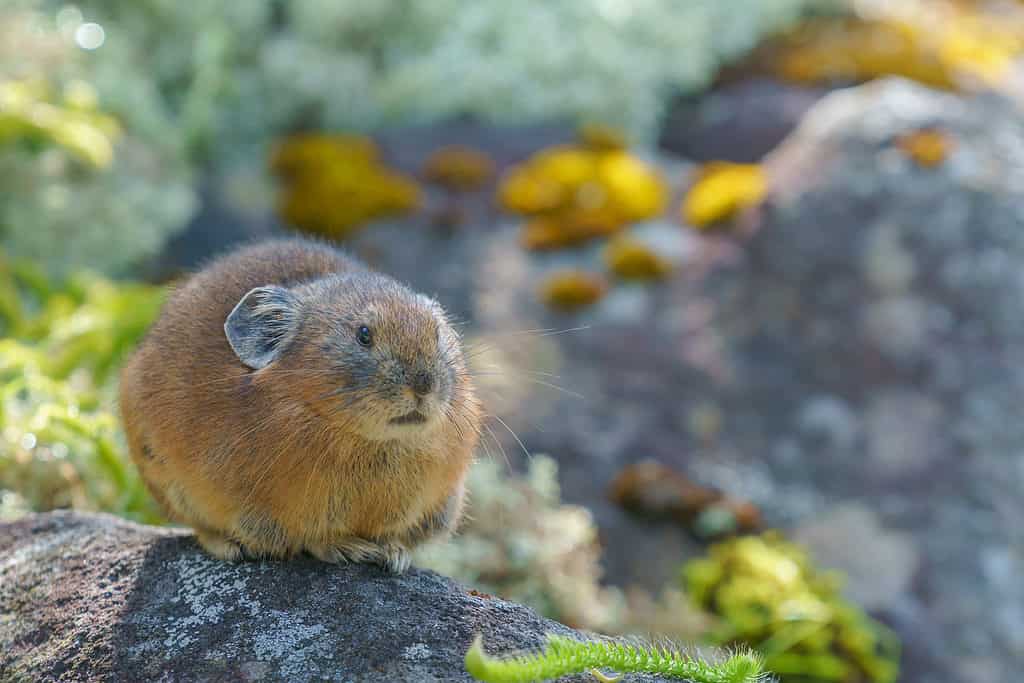
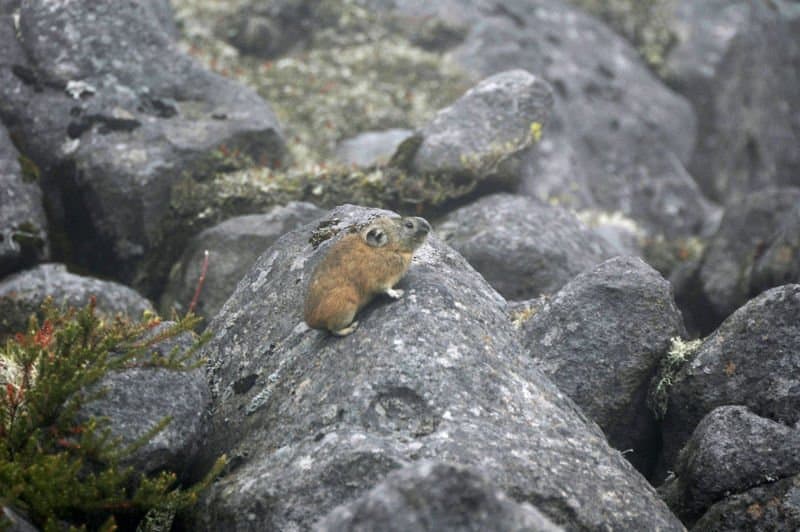
👁 A Northern Pika in Hokkaido, Japan

Pikas’ thick coat of fur means they are unable to withstand elevated temperatures during a prolonged period

©stock_shot/Shutterstock.com

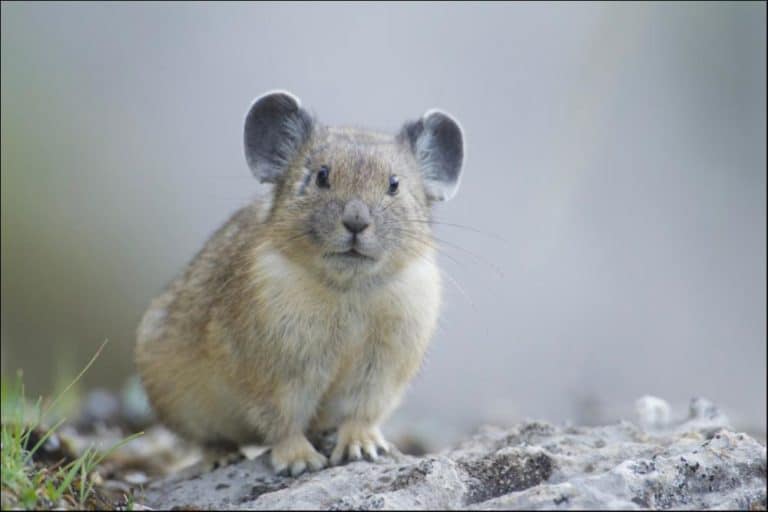
A Pika’s body is small and short. It has large, round ears. The average Pika is seven or eight inches long. In comparison, a bowling pin is twice as tall as a Pika. They weigh between 2.6 oz and 10 ounces, making them about the same weight as a hamster.

Either black or brown in color, a Pika has thick fur so that they don’t get cold during the winter months. The dark color of their fur helps them blend in with the rocks found in their natural surroundings.

When the weather warms up a Pika’s coat of fur thins out so they don’t get too hot in the sun. However, in extreme heat, their fur is still thick enough that they may suffer.

Pikas are animals that live close to each other and in colonies. Within their colonies, each one has its own den. They warn each other if a predator is nearby and alert each other by whistling. This is the reason that Pikas have large ears.

Evolution

As lagomorphs, pikas are cousins to hares and rabbits, even though it may not seem like it at a first glance. That is due to the fact that they belong to the order Ochotonidae while the latter belong to the family Leporidae, both of which form the order Lagomorpha.

Their evolution as part of the order is shrouded in mystery. However, scientists have recently come to believe that they are the descendants of the Anagaloidea which lived between 56 – 66 million years ago during the Paleocene Era. As a result, they may also be considered to be the distant relatives of elephant shrews.

The ancestors of pikas, however, appeared in Asia during the Eocene between 34 – 66 million years ago and the Oligocene, between 23 – 34 million years ago. Pikas are generally divided into burrowers which are highly social, and rock dwellers which are territorial.

Types

There are 34 species of pikas including:

  • American pika (O. princeps): Medium-sized as far as pikas go, this species has a maximum length of 8.5 inches. Towards the southern range of its habitat, it can be found at elevations of 8,200 feet. 
  • Chinese red pika (O. erythrotis): The largest pika subspecies, the rodent is capable of growing to 12 inches. It tends to have a red coat in summer and a grey coat in winter.
  • Forrest’s pika (O. forresti): Capable of living at elevations of over 14,000 feet, the rodent is capable of growing to over 7 inches. It can be found in the Himalayas in southwestern China and has a dark coat in summer which lightens to gray in winter.
  • Glover’s pika (O. gloveri): Recognizable by its gray-brown coat, this rodent is capable of growing up to 8.7 inches in length. Another species which is endemic to China, it can be found in Sichuan, Tibet, Qinghai, and Yunnan. The small mammal is capable of living at elevations of 5,600 feet and can even be found as high as 13,800 feet.
  • Pallas’s pika (O. pallasii): The tiny mammal which has a light-colored coat in summer which darkens in winter, is capable of growing to almost 10 inches and weighing 200 grams. It is found in western Mongolia and is known to play a key role in seed dispersal.

Habitat

There are only certain places in the world where you can find a Pika. They are found in a few places in Europe, Asia, and North America.  Mountain meadows are generally located close to where Pikas live, as they often live on cliffs.

Some Pikas live at low altitudes, like those living in California’s Lava Bed National Monument. Other states the Pika lives in are:

  • New Mexico
  • Montana
  • Nevada
  • Wyoming
  • Utah
  • Colorado
  • Oregon
  • Washington
  • Idaho

Pikas can also be found in Western Canada.

Diet
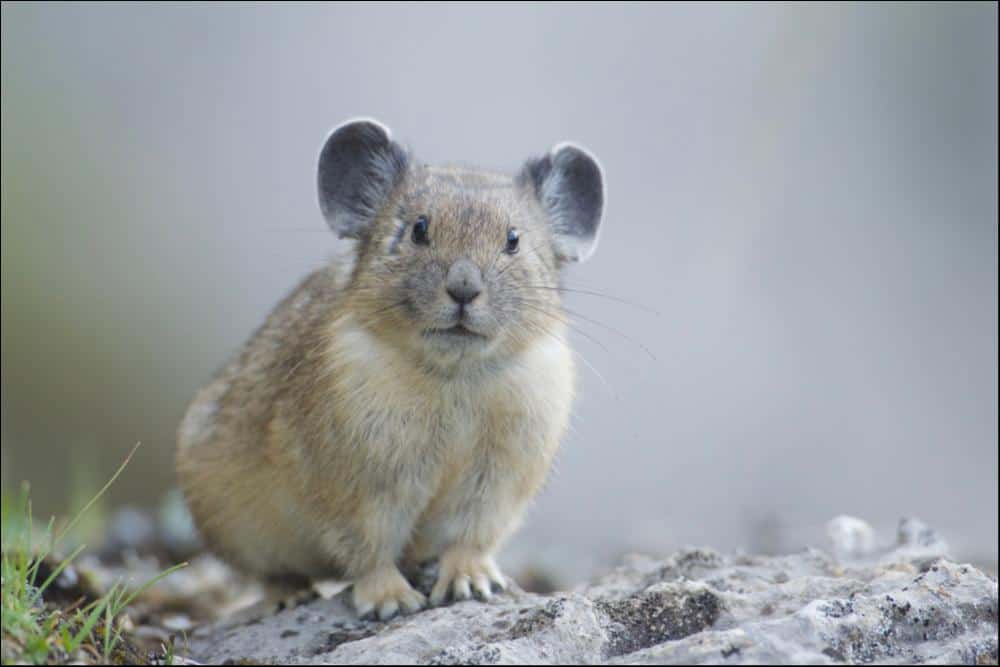
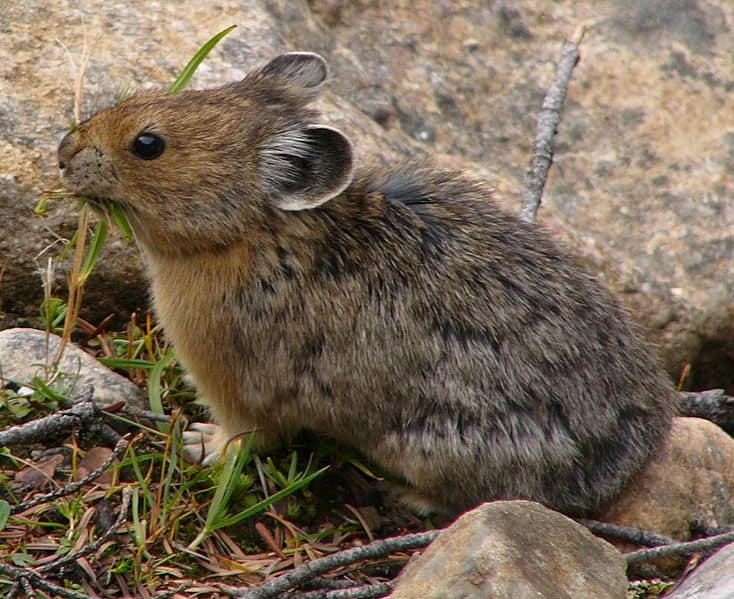
👁 Pika (Ochotona Minor) standing on a rock looking super cute
Pikas are herbivores and store food during the summer in preparation for winter

Pikas are herbivorous animals so their diet consists mainly of vegetables. During the day they will hunt for berries and seeds, but also thistles, grass, and weeds. Living in places with rocky mountain formations they collect food over the summer so that they aren’t hungry all winter.

Predators & Threats
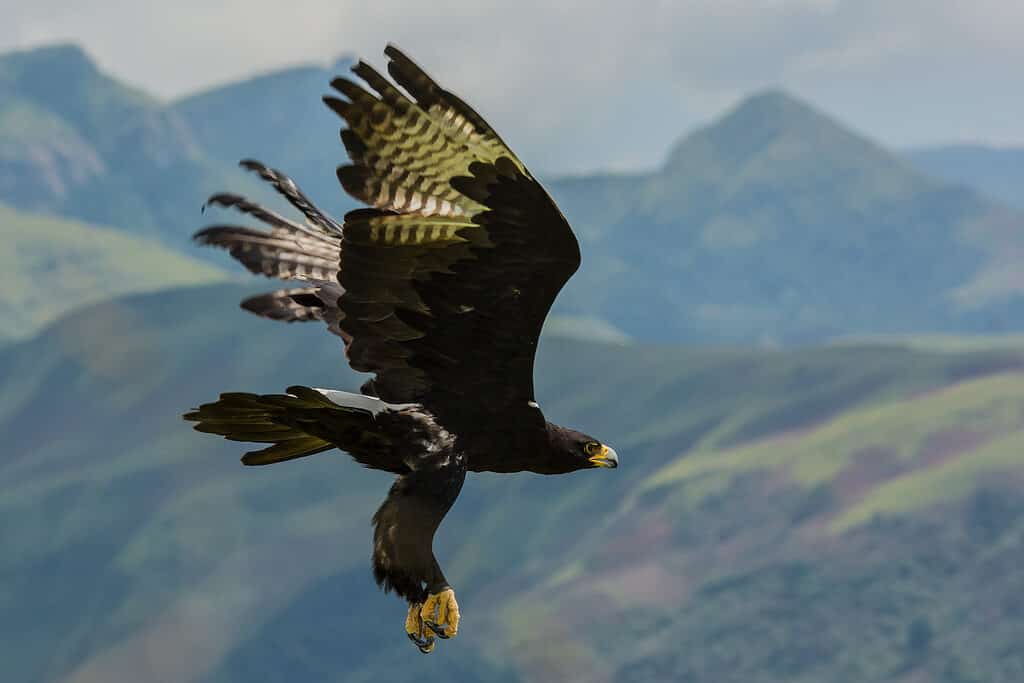
👁 Black eagle soaring, showing it's yellow bill and talons.

Eagles occasionally prey on pikas

©Eleanor Esterhuizen/Shutterstock.com

Since they are so small Pikas like to live away from other animals. But they are still vulnerable to predators. Weasels are their most common threat. Others include cats, birds of prey, foxes, eagles, coyotes, and dogs.

It isn’t just predators that are a threat to the Pika. Increasingly warm weather is decreasing the Pika population. When the outside air temperature is 77 degrees Fahrenheit, Pikas cannot survive longer than six hours. They are in danger of becoming extinct if the world continues to get warmer.

Reproduction, Babies, and Lifespan

👁 Image

Pikas have a gestation period of one month and may give birth to as many as six young

©Sevenstar – Public Domain

The breeding period for Pikas takes place during the earliest part of the spring. It is not unusual for them to have another breeding period during the summer. When they are ready to breed, a Pika animal will stay in one territory and another Pika animal will be in another territory. The two Pikas will call to each other, which starts the process of breeding.

Pikas carry babies inside them for one month before the babies are born. The average size of a litter of Pikas is three. However, they may only have two babies or they may have as many as six.

For the first month of a Pika’s life, they must remain with their mother. By the time they are three months old, they are considered an adult. When they become one year old, they are old enough to breed. The average lifespan of a Pika is six years. However, due to circumstances out of their control some only live for half that amount of time.

Population

Because of global warming, animal activists have been trying to get Pikas declared in danger of extinction. As of 2020, this has not happened. Pikas used to live in 29 different places all over California. Now they only live in 11 of those 29 places. This has caused concern among those who are interested in their well-being.

Pikas used to live in Zion National Park in Utah, but can no longer be found there. While some do still live in The Great Basin (located between Wasatch Mountains, in Utah, and both the Cascade Mountains and the Sierra Nevadas), a study showed that there was 44% fewer Pikas in that area than there used to be. In both Nevada and Oregon, the Pika population is believed to be only 1/3 of what it previously was.

Full Species List

  • Afghan pika
  • American pika
  • Alpine pika 
  • Chinese pika
  • Collared pika
  • Daurian pika 
  • Flat-headed pika
  • Forrest’s pika
  • Gaoligong pika
  • Gansu pika 
  • Glover’s pika
  • Helan Shan pika 
  • Hoffmann’s pika
  • Kazakh pika
  • Korean pika
  • Manchurian pika
  • Moupin pika
  • Ili pika
  • Koslov’s pika
  • Ladak pika
  • Large-eared pika
  • Nubra pika
  • Pallas’ pika
  • Plateau pika
  • Qionglai pika
  • Royle’s pika
  • Sacred pika
  • Siberian pika
  • Sijin pika
  • Steppe pika
  • Tsing-ling pika
  • Turuchan pika
  • Turkestan red pika
  • Yellow pika
View all 247 animals that start with P

Sources

  1. David Burnie, Dorling Kindersley (2011) Animal, The Definitive Visual Guide To The World's Wildlife / Accessed October 21, 2009
  2. Tom Jackson, Lorenz Books (2007) The World Encyclopedia Of Animals / Accessed October 21, 2009
  3. David Burnie, Kingfisher (2011) The Kingfisher Animal Encyclopedia / Accessed October 21, 2009
  4. Richard Mackay, University of California Press (2009) The Atlas Of Endangered Species / Accessed October 21, 2009
  5. David Burnie, Dorling Kindersley (2008) Illustrated Encyclopedia Of Animals / Accessed October 21, 2009
  6. Dorling Kindersley (2006) Dorling Kindersley Encyclopedia Of Animals / Accessed October 21, 2009
  7. David W. Macdonald, Oxford University Press (2010) The Encyclopedia Of Mammals / Accessed October 21, 2009

About the Author

A-Z Animals Staff

AZ Animals is a growing team of animals experts, researchers, farmers, conservationists, writers, editors, and -- of course -- pet owners who have come together to help you better understand the animal kingdom and how we interact.
Connect:

Thank you for reading! Have some feedback for us?

Contact the AZ Animals editorial team

Related Articles You May Find Interesting

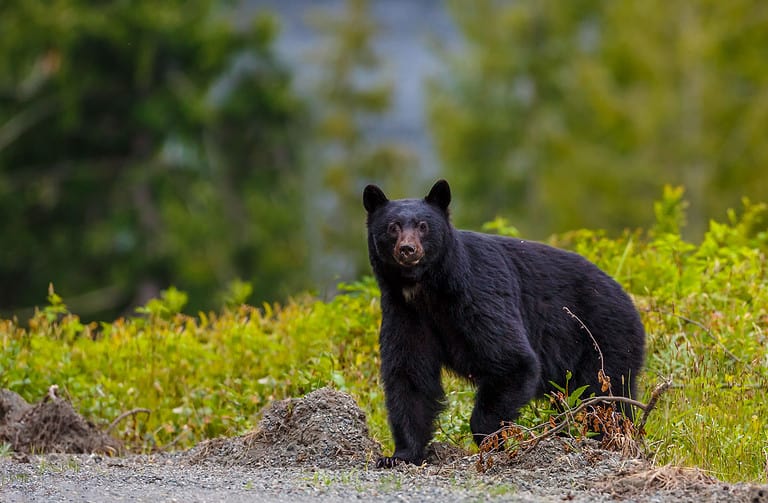
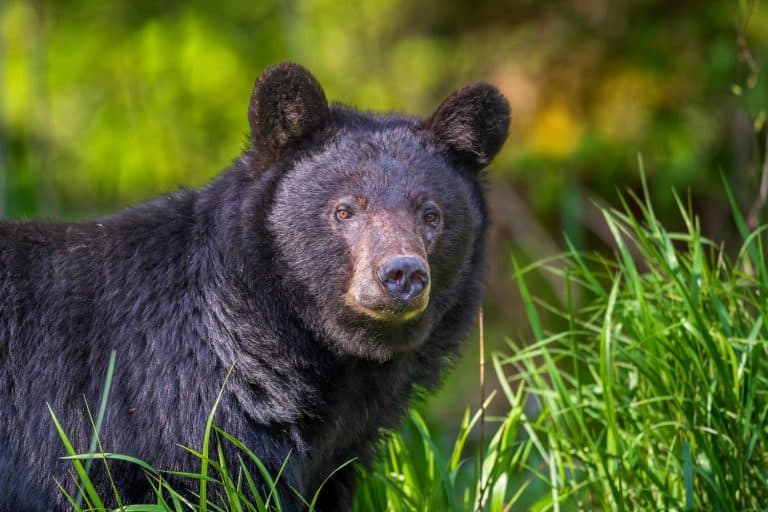
The Growing Black Bear Population Spreading Across New Hampshire Forests


Pika FAQs (Frequently Asked Questions)

Since PIka are not domesticated animals it is not safe to hold them in captivity. They are not used to being near people. A Pika may react negatively when approached by a person.

No. Pika are not an animal that should be kept as a pet. They need to live in certain conditions that cannot be provided by living in a home with people. A better choice in pets would be an animal related to a Pika, such as a rabbit.

As a member of the lagomorph group, a Pika is not a rodent even though many people feel it looks like one. It is a small animal that thrives in conditions rodents do not live in.

Pika are Herbivores, meaning they eat plants.

Pika belong to the Kingdom Animalia.

Pika belong to the phylum Chordata.

Pika belong to the class Mammalia.

Pika belong to the family Ochotonidae.

Pika belong to the order Lagomorpha.

Pika belong to the genus Ochotona.

Pika are covered in Fur.

Pika live in mountainous areas.

Pikas prey on grasses, weeds, and thistles.

Predators of Pika include weasels, eagles, and dogs.

The average litter size for a Pika is 3.

Pika are found in mountainous regions and rocky areas.

The scientific name for the Pika is Ochotona Minor.

Pika can live for 3 to 6 years.

A Pika can travel at speeds of up to 15 miles per hour.