

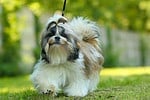
P
Species Profile

Pugapoo

Canis lupus familiaris

Curly charm, puggy heart.
Brook Robinson/Shutterstock.com

Pugapoo Distribution

Click a location to explore more animals from that region

Origin Location

This map shows the native origin of the Pugapoo. As a domesticated species, they are now found worldwide.

Loading map...

Size Comparison

Human 5'8"
Pugapoo 11 in

Pugapoo stands at 16% of average human height.

At a Glance

Domesticated
Also Known As Pug-a-Poo, Pugoodle, Pugapoodle, Pugpoo, Pugdoodle
Diet Omnivore
Activity Diurnal+
Lifespan 5 years
Weight 10 lbs
Status Not Evaluated
Did You Know?

Not a standardized kennel-club breed: "Pugapoo" is an informal mixed-breed name, so appearance and temperament can differ a lot between individuals.

Scientific Classification

A small companion dog cross between a Pug (brachycephalic toy breed) and a Poodle (often Toy or Miniature). As a mixed breed, traits (coat type, shedding, muzzle length, size, temperament) can vary widely between individuals.

Kingdom
Animalia
Phylum
Chordata
Class
Mammalia
Order
Carnivora
Family
Canidae
Genus
Canis
Species
lupus

Distinguishing Features

  • Designer crossbreed: Pug ร— Poodle (Toy/Miniature commonly used)
  • Variable coat: can be curly/wavy (more Poodle-like) or short/smoother
  • Facial shape varies from moderately short muzzle to more elongated
  • Typical small size; companion-oriented temperament common

Physical Measurements

Males and females differ in size

Height
โ™‚ 12 in (10 in โ€“ 1 ft 2 in)
โ™€ 11 in (9 in โ€“ 1 ft 1 in)
Length
โ™‚ 1 ft 8 in (1 ft 5 in โ€“ 1 ft 12 in)
โ™€ 1 ft 7 in (1 ft 4 in โ€“ 1 ft 11 in)
Weight
โ™‚ 18 lbs (13 lbs โ€“ 24 lbs)
โ™€ 14 lbs (10 lbs โ€“ 20 lbs)
Tail Length
โ™‚ 6 in (4 in โ€“ 7 in)
โ™€ 5 in (3 in โ€“ 6 in)
Top Speed
19 mph
running

Appearance

Primary Colors
Secondary Colors
Skin Type Typical domestic dog skin; may be sensitive/allergy-prone. Facial wrinkles (Pug-influenced) can retain moisture and require routine cleaning and drying.
Distinctive Features
  • Designer cross (Pug x Poodle); not a standardized kennel-club breed, so appearance varies widely.
  • Small companion build; may be compact and stocky (Pug-like) or finer-boned (Poodle-like).
  • Muzzle length ranges from brachycephalic to moderately short; shorter muzzles increase breathing and heat-risk concerns compared with typical domestic dogs.
  • Coat ranges from short/dense to curly/wavy; shedding and "hypoallergenic" tendency are unpredictable between individuals.
  • Ears often soft and folded; eyes can appear prominent, increasing injury and dryness risk.
  • Tail may be tightly curled (Pug-like) or carried high with looser curl (Poodle-like).
  • Health watch: brachycephalic obstructive airway issues, overheating risk, eye injuries, dental crowding, patellar luxation, hip dysplasia, skin allergies/ear infections, and obesity.
  • Care needs: consistent dental care, weight management, moderate daily exercise, heat avoidance, and coat/ear maintenance; curly coats need regular brushing and professional grooming to prevent matting.
  • Wrinkle care (if present): gently clean facial folds and keep dry to reduce dermatitis and odor.

Sexual Dimorphism

Sexual dimorphism is usually subtle: males tend to be slightly larger and more muscular, while females often appear a bit finer-boned. Coat type and facial length vary more by individual genetics than by sex.

โ™‚
  • Often marginally heavier with broader chest and head.
  • May develop more pronounced neck/shoulder musculature.
  • Intact males may show stronger territorial marking behaviors.
โ™€
  • Often slightly smaller with a narrower waist and lighter frame.
  • May appear more refined through the muzzle and limbs.
  • Spaying can reduce hormonally driven coat changes and roaming behaviors.

Did You Know?

Not a standardized kennel-club breed: "Pugapoo" is an informal mixed-breed name, so appearance and temperament can differ a lot between individuals.

Coat can range from short and shedding (more Pug-like) to curly/wavy and lower-shedding (more Poodle-like)-but "hypoallergenic" is never guaranteed.

Muzzle length is a key variable: some inherit the Pug's short face (more snoring/heat risk), others have a longer "poodle" muzzle and easier breathing.

Many inherit the Poodle's trainability and the Pug's people-focused, comedic "clown" style-often making a highly social companion.

Size usually tracks the Poodle parent (Toy/Mini) but can vary; adult weight commonly falls in the small-dog range rather than a fixed standard.

Because both parent breeds are companion-oriented, many Pugapoos prefer being near their humans and may be prone to separation stress if under-socialized.

Unique Adaptations

  • Domestic-dog traits vs the base species (gray wolf, Canis lupus): neotenous (juvenile-like) social behavior, strong human bonding, and tolerance for dense human environments.
  • Potential for a more moderate face than a pure Pug in some individuals, which can improve airflow and heat tolerance-though others remain brachycephalic.
  • Coat variability allows some individuals to better tolerate cooler weather (denser/curly coats), while short-coated individuals may need warmth support.
  • High social learning capacity: Poodle-derived biddability can make cue-training and household routines easier than in many primitive-type dogs.
  • Mixed ancestry sometimes spreads genetic risk across lines, but inherited conditions from either parent breed can still occur (no guaranteed "hybrid vigor").

Interesting Behaviors

  • "Velcro dog" tendencies: follows favorite person room-to-room and seeks lap time.
  • Play styles may blend Pug wrestling/bouncing with Poodle-style fetch and object play.
  • Snorts, grunts, or noisy breathing can occur in shorter-muzzled individuals, especially with excitement or heat.
  • Alert barking can appear (often more than a typical Pug), influenced by Poodle lines and individual temperament.
  • Food motivation is common; many respond well to reward-based training but also gain weight easily if overfed.
  • Zoomies and short bursts of energy, followed by strong cuddle/nap preference-especially in warmer weather.
  • Pawing or "boxing" for attention (a common small companion-dog attention-seeking behavior).

Cultural Significance

Pugapoo, a Pug and Poodle mix, grew popular in the late 1900s and 2000s as a small, friendly companion often hoped to shed less fur. Pug and Poodle parents bring palace, lapdog, and water-retriever pasts.

Myths & Legends

Chinese imperial tradition prized small pug-type dogs (ancestors of modern Pugs) as palace companions; their wrinkled faces were often admired and carefully groomed in court life.

A famous Pug legend in European history tells of "Pompey," said to have saved William of Orange by alerting him to assassins-helping cement the Pug as a symbol associated with the House of Orange.

In parts of Europe, Poodles were celebrated in stories and art as clever water dogs-renowned for retrieving from cold water and working closely with people, contributing to their enduring image as exceptionally intelligent companions.

18th-century Europe saw Pugs featured in art and society as fashionable lapdogs; their presence in portraits and salons helped build the enduring "comic companion" reputation that influences how Pug mixes are perceived today.

Modern "designer-dog" naming (including "-poo" crosses) functions as a contemporary cultural tradition: informal names signal desired traits (small size, companion temperament, potentially lower shedding) rather than a formal, standardized breed origin story.

Conservation Status

NE Not Evaluated

Has not yet been evaluated against the criteria.

Population Stable

Life Cycle

Birth 3 pups
Lifespan 5 years

Lifespan

In the Wild 2โ€“10 years
In Captivity 10โ€“15 years

Reproduction

Mating System Polygynandry
Social Structure Managed Domestic
Breeding Pattern Transient
Fertilization Internal Fertilization
Birth Type Internal_fertilization

Reproduction is typically human-managed selective pairing. Females cycle into estrus and accept one or more males; copulation involves a copulatory tie and internal fertilization. Pair bonds are not maintained, and breeding pairings are usually temporary and repeated across seasons.

Behavior & Ecology

Social Pack Group: 4
Activity Diurnal, Crepuscular
Diet Omnivore Small-breed, complete-and-balanced kibble or wet food centered on animal protein (e.g., chicken or turkey), often in smaller kibble pieces to suit a short/variable muzzle.

Temperament

HUBS: Companion-focused, human-oriented "household pack" behavior; individual variation is high across mixes.
Breed distinction vs base species: far less territorial hunting behavior; selectively bred for sociability and companionship.
Often affectionate "velcro dog"; seeks lap contact, proximity-following, and frequent social reassurance.
Playful, clownish tendencies common (Pug influence); may use pawing and face-nudging to initiate interaction.
High trainability potential (Poodle influence) but can show stubborn streak; responds best to positive reinforcement.
Sensitivity to tone and conflict; may shut down with harsh corrections or inconsistent handling.
Moderate energy: enjoys short bursts of play and walks; may become sedentary without structured routines.
Social with other dogs when well-socialized; may be overly friendly or excitable in greetings.
Can show separation-related distress (barking, pacing, destructive chewing) if under-enriched or left alone abruptly.
Alertness varies: some are quiet, others are frequent "alert barkers," especially in apartments.
Prey/chase drive variable; may chase small animals depending on Poodle-line traits and early exposure.
Health-linked behavior: possible heat intolerance and reduced exercise tolerance if brachycephalic traits are strong.
Common health concerns to monitor: BOAS/airway issues, eye irritation, obesity, dental crowding, allergies.
Other concerns seen in parent lines: patellar luxation, hip dysplasia, ear infections (floppy/curly coat), PRA.
Care needs: coat varies (low-shed curls to shedding coat); routine brushing, professional trims as needed.
Care needs: weight control, daily mental enrichment, early socialization, and gentle conditioning for handling/grooming.

Communication

barking Alert, attention-seeking, play
whining Frustration, anxiety, solicitation
grumbling/growling Play or discomfort; context-dependent
howling Uncommon, may mimic sounds
snorting/snuffling Especially with brachycephalic traits
snoring Rest; can signal airway narrowing if excessive
close following/leaning and lap-sitting to maintain social contact
pawing, nose-nudging, and licking to solicit attention
tail wagging and whole-body wiggles during affiliative greetings
play bows and bouncy approach to invite play
facial expressions and eye contact; may "stare" for cues or rewards
scent marking and sniffing routines during walks; communication through urine/feces odors
freezing/avoidance, tucked tail, or lip-licking as stress signals
jumping up or spinning when over-aroused; managed through impulse-control training

Habitat

Biomes:
Temperate Forest Temperate Grassland Boreal Forest (Taiga) Tundra Mediterranean Desert Hot Desert Cold Tropical Dry Forest Tropical Rainforest Alpine Wetland +5
Terrain:
Plains Coastal Hilly Mountainous Plateau Valley Island +1
Elevation: Up to 14763 ft 9 in

Ecological Role

Domestic companion omnivore; ecologically a human-subsidized consumer that can act as a small mesopredator/scavenger when free-ranging.

companionship and social support for humans deterrence/alerting via barking opportunistic control of small pests (rodents/invertebrates) in some settings nutrient cycling via waste contribution (managed in urban environments)

Diet Details

Main Prey:
Dog food Animal protein Dog treats Dog-safe fruits and vegetables
Other Foods:
Fruits Vegetables Starches and grains Grasses

Human Interaction

Domestication Status

Domesticated

Canis lupus familiaris (domestic dog). The Pugapoo (Pug ร— Poodle) is a modern pet cross made in recent decades by crossing Pugs and Poodles on purpose. It may show Pug short-face breathing and heat risks and Poodle curly, low-shed coat and easier to train. People keep them as pets, for grooming, vet care, rescue, therapy, and apartment or separation problems.

Danger Level

Low
  • minor bites/scratches (typically fear, pain, or poor handling-related; risk increases without early socialization)
  • allergen exposure (dander/saliva; "low-shedding" does not guarantee hypoallergenic)
  • zoonotic/parasite risks if preventive care is neglected (fleas, ticks, intestinal parasites)
  • trip/fall hazards in the home due to small size

As a Pet

Suitable as Pet

Legality: Generally legal to own as a pet where domestic dogs are permitted. Restrictions may apply in specific jurisdictions or housing contexts (breed/size rules, leash laws, vaccination/licensing requirements, and insurance policies). Not typically subject to wild/exotic animal laws.

Care Level: Moderate

Purchase Cost: $500 - $2,500
Lifetime Cost: $18,000 - $45,000

Economic Value

Uses:
Companion animal/pet industry Veterinary services Grooming and coat care Training/behavior services Pet supplies (food, crates, toys, enrichment) Insurance/boarding/daycare Breeding and adoption/rescue
Products:
  • purchase/adoption fees for puppies and rehomed adults
  • routine veterinary care (vaccines, parasite prevention, dental cleanings)
  • brachycephalic-related care (airway evaluation, heat-stress prevention products)
  • grooming appointments (clips, bathing, ear hair/ear cleaning when needed)
  • specialty diets and weight-management programs
  • training classes and private behavior consultations
  • pet insurance policies and wellness plans
  • boarding/daycare services

Relationships

Predators 6

Coyote Canis latrans
Gray wolf Canis lupus
Large raptors Accipitridae
Large owls Strigidae
American alligator Alligator mississippiensis
Large constrictor snakes Pythonidae/Boidae

Related Species 8

Domestic dog Canis lupus familiaris Shared Species
Pug Canis lupus familiaris Shared Species
Poodle Canis lupus familiaris Shared Genus
Gray wolf Canis lupus Shared Species
Coyote Canis latrans Shared Genus
Golden jackal Canis aureus Shared Genus
Red fox Vulpes vulpes Shared Family
Raccoon dog Nyctereutes procyonoides Shared Family

Ecological Equivalents 5

Animals that fill a similar ecological role in their ecosystem

Cavapoo Canis lupus familiaris Similar niche as a small, people-focused companion designer cross; tends toward a cuddly temperament and has variable coat and shedding depending on Poodle influence.
Maltipoo Canis lupus familiaris Comparable size and companion role. Often sought for lower-shedding coats, but with similarly variable grooming needs and potential for small-dog dental issues.
French Bulldog Canis lupus familiaris Overlaps strongly in the urban companion niche and shares brachycephalic airway and heat-sensitivity concerns seen in Pug-influenced mixes (though Pugapoo muzzle length can vary).
Shih Tzu Canis lupus familiaris Small companion breed with frequent grooming needs. Similar owner experience around coat care and eye/skin sensitivities, though Pugapoo coat type is variable.
Domestic dog Canis lupus familiaris Pugapoo (a Pug ร— Poodle crossbreed, Canis lupus familiaris). A small companion dog with variable size, muzzle, and coat; affectionate and intelligent but sometimes stubborn. Watch for breathing, eye, joint, dental, skin, and weight issues.

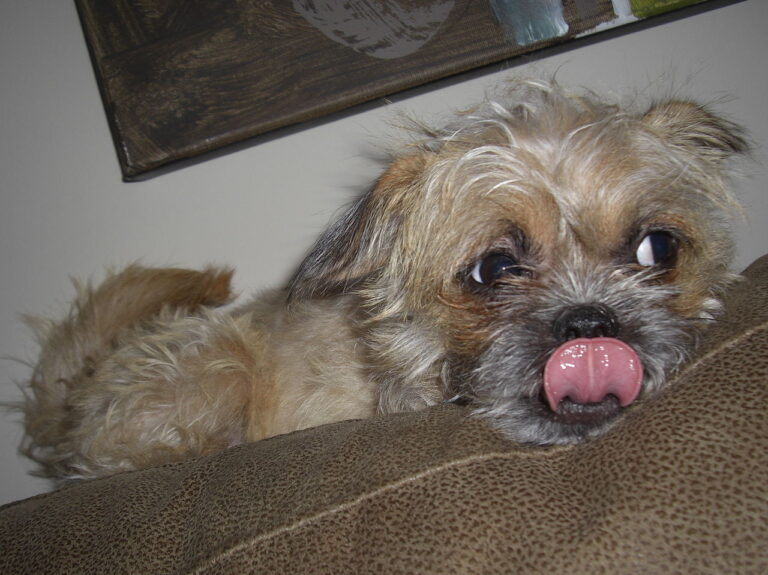
The pugapoo is a cross between two different dog breeds: the pug and the poodle. The appearance can vary widely based on what traits it inherits from each parent, but in general, most individuals have a moderately sized snout, droopy ears, and a slim physique. The coat of fur, which can vary from a smooth to curly texture, comes in several different colors, including apricot, white, and black, and the tail can be either curly or straight.

Due to how genes are passed down from one generation to another, the pugapoo will not inherit traits equally from both of its parents; some traits may be more dominant than others. In fact, the same litter may contain wildly different-looking dogs. This can result in very unpredictable traits.

While the poodle and the pug may not seem to have much in common, both breeds are well-regarded for their friendly and affectionate nature.

The pug and the poodle are incredibly popular in the United States, even as the pugapoo mix itself is not well-known at all. Fortunately, the pugapoo has become more common in the 21st century and can be bought for a relatively low cost.

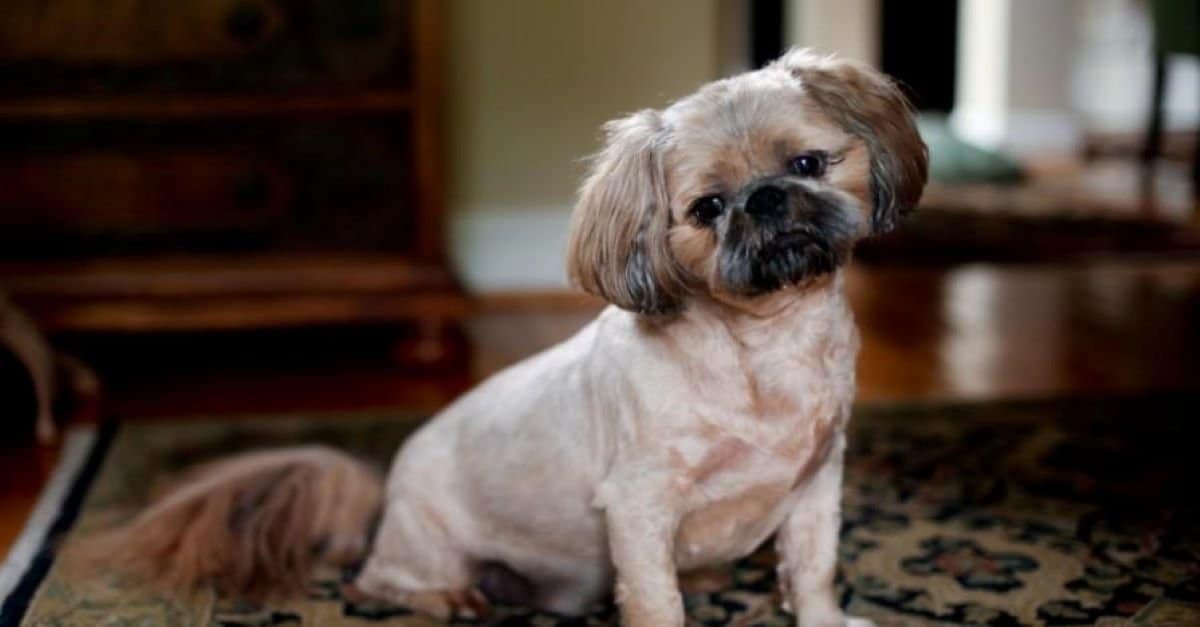
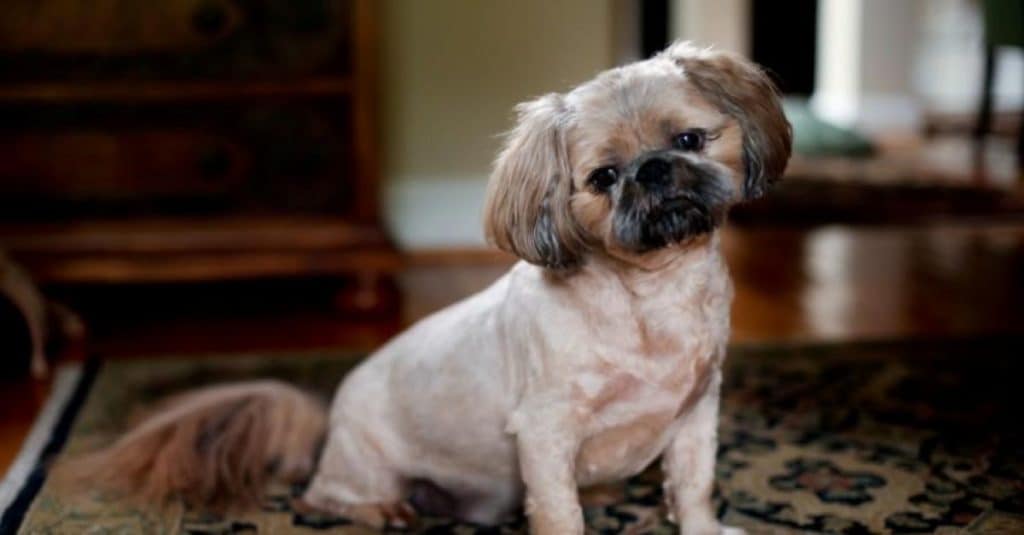
๐Ÿ‘ Pugapoo sitting in the living room

The pugapoo loves interacting with people. Ideally, it should always have a companion around to care for it.

ยฉBrook Robinson/Shutterstock.com

3 Pros and Cons of Owning a Pugapoo

ProsCons
Friendly nature: The pugapoo loves interacting with people. Ideally, it should always have a companion around to care for it.Separation anxiety:
Since the pugapoo desires constant companionship, it should not be left alone for long periods of time.
Adaptable: The pugapoo can adapt to a wide variety of different living situations.Stubbornness:
The pugapoo may inherit a bit of a stubborn streak from a pug parent. Some individuals may be worse than others.
Intelligent and playful: This dog has a big and expressive personality. Itโ€™s endlessly curious and playful.Breathing difficulties:
If your pugapoo has inherited a short snout, then it may have some difficulties breathing when overexerting itself.

Size and Weight

The pugapoo is a small- to medium-sized dog that rarely grows larger than 15 inches at the shoulder height. Hereโ€™s a more complete breakdown of its size:

Height (Male):8 to 15 inches
Height (Female):8 to 15 inches
Weight (Male):10 to 30 pounds
Weight (Female):10 to 25 pounds

Evolution and Origins

The origins of pugs can be traced back to 400 B.C., and they are considered an ancient breed of dog that was primarily bred in China to serve as companion animals for the wealthy, as most historians concur.

The origin of Pugs can be traced back to the Han dynasty of China, around 206 B.C. to 200 A.D., and some experts speculate that they are closely related to the Tibetan Mastiff, having been kept as companion animals for the wealthy emperors of China, who provided them with luxurious living quarters and even military protection.

Pugapoo is a mixed breed of pugs and poodles. These dogs are affectionate, sociable, and eager to please, making them wonderful companions at their finest. Despite their physical differences, the Pug and Poodle breeds share a fondness for humor, often entertaining their owners with their playful behavior.

Common Health Issues
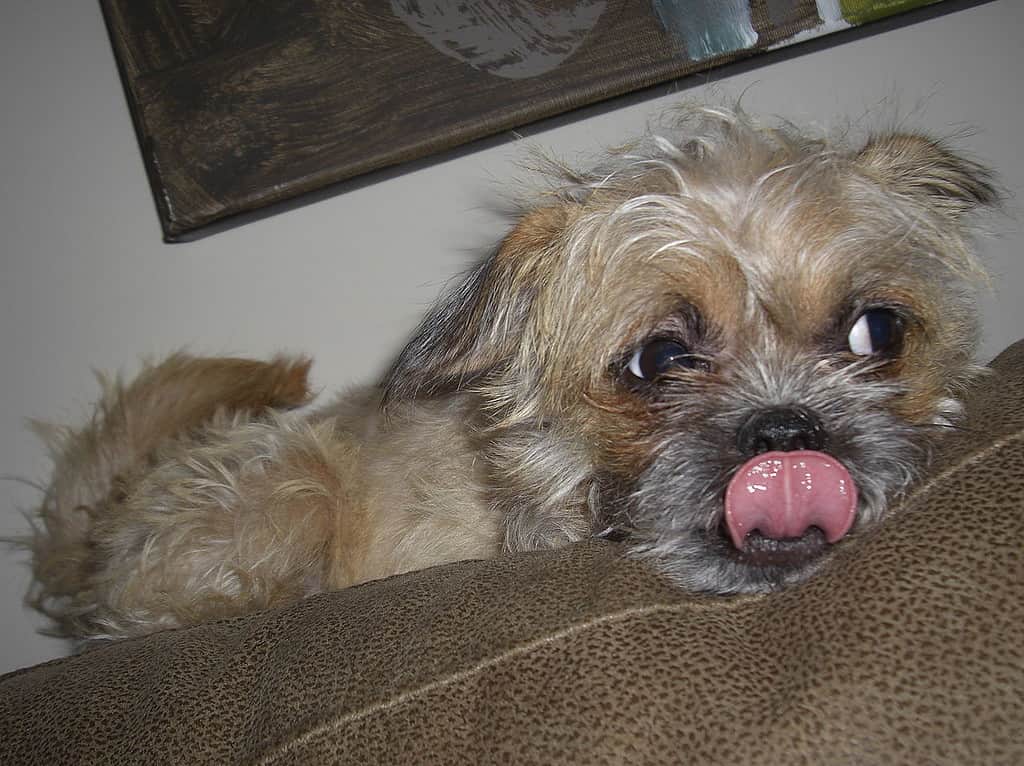
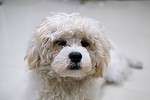
๐Ÿ‘ white pugapoo sitting on the floor

This dog has a big and expressive personality. Itโ€™s endlessly curious and playful.

ยฉRachelegreen / CC BY-SA 3.0, Wikimedia Commons โ€“ Original / License

For many different dog mixes, including the pugapoo, there is unfortunately little population-wide data about the most common health problems. Even closely related dogs may have different health vulnerabilities, depending on how the genes fall. Nevertheless, the most common health problems are likely the same as the poodle and the pug.

That means it may be prone to Addisonโ€™s disease (in which the body doesnโ€™t produce enough steroid hormones, causing fatigue, dizziness, and low blood pressure), patellar luxation (in which the kneecaps regularly move out of their normal location), and diabetes. If the pugapoo inherits a shorter snout, then it may also have some of the same breathing difficulties as the pug.

Other common health problems include cancer, retinal degeneration, allergies, and ear infections. Despite popular belief, a mix is not necessarily healthier than a purebred dog. The health problems are just more unpredictable.

But if the pugapoo doesnโ€™t develop any life-threatening conditions, then it can enjoy a relatively long life of some 12 to 14 years.

Temperament

Just like everything else about this dog, the pugapoo is likely to have a blend of different personality traits from its two parent breeds. Since both the pug and the poodle tend to have an affectionate and outgoing personality, the pugapoo is likely to exhibit the same traits as well. It enjoys making friends with almost anyone.

There is a downside to this exuberant personality, however. If the pugapoo doesnโ€™t receive enough attention, then it may try to entertain itself. This can lead to some annoying or destructive behavior like chewing, digging, or barking. That is why the pugapoo should always have enough activities to do during the day. The good news is that it can adapt to both apartment and house living. There are no particular space requirements for this mix.

How to Take Care of a Pugapoo

Depending on what personality and physical traits it inherits, the pugapoo is generally a low to moderate-maintenance dog that should not cost too much to own. Because there is no standard for this type of dog, every individual pugapoo may be slightly different in its requirements; though, as a puppy, it may need extra health checkups and plenty of training.

The Best Dog Food

A full-grown pugapoo only requires about a cup of high-quality dog food per day. It does have the tendency to become overweight, which might exacerbate its chances of developing diabetes, so it is a good idea to restrict the amount of food if it seems like your dog is packing on weight. The amount of food may vary slightly based on the dogโ€™s age, natural size, and activity level.

Maintenance and Grooming

Both the curly and smooth coat pugapoos do not tend to shed very often. However, whereas the smooth coat variety only requires a light daily brushing, the curly-haired variety also needs careful grooming every four to six weeks to prevent matting and skin infections from developing. There is no particular reason you canโ€™t clip the fur yourself, but for the best results, you should have a professional take care of the dog. Itโ€™s also a good idea to give your dog daily teeth brushings to prevent dental problems.

Training

The pugapoo is a highly trainable mix that responds well to many commands, but if your dog happens to inherit some of the stubbornness of the typical pug, then the training sessions may require some extra patience and consistency to get the most out of them. Food-based training is a good way to motivate your dog to do what you want.

Exercise

The pugapoo requires some 30 to 60 minutes of exercise a day, preferably in the form of outdoor walks or brief playtime periods. Some individual dogs may be athletic enough to participate in agility and obedience competitions. But if your dog has inherited a short snout from the pug, you may need to exercise particular care about letting it work out too much on a hot day, since it can cause health problems. If your dog appears to be panting hard, then itโ€™s time to give it a rest. You should always carry plenty of water with you on a hot day as well.

Pugapoo Puppies

Since there is no standard, pugapoo puppies can vary quite a bit in appearance and temperament even within the same litter. For best results, you should always buy your puppies from a reputable breeder who screens for health problems. It is also a good idea to train and socialize your dog as early as possible so it develops good behavior as a full-grown adult.
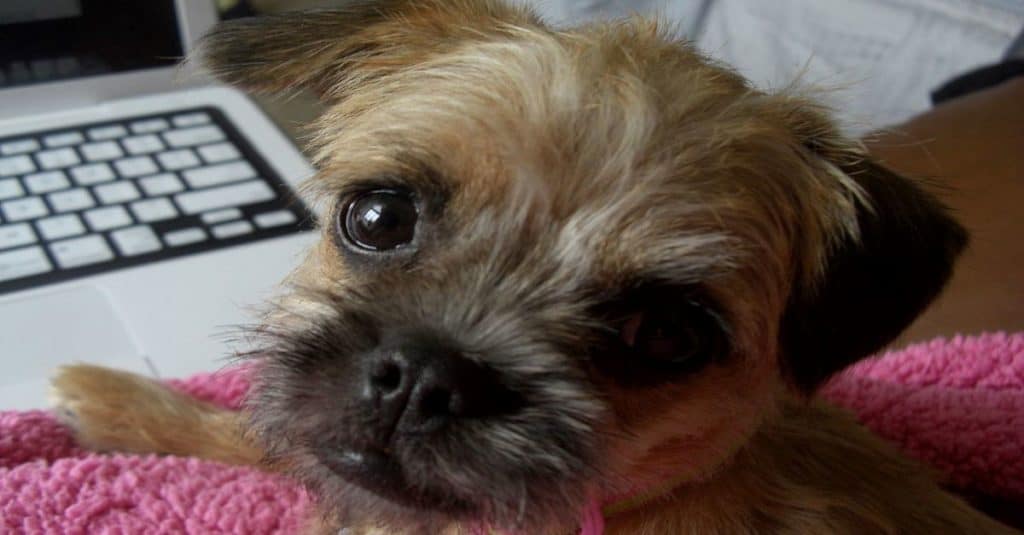
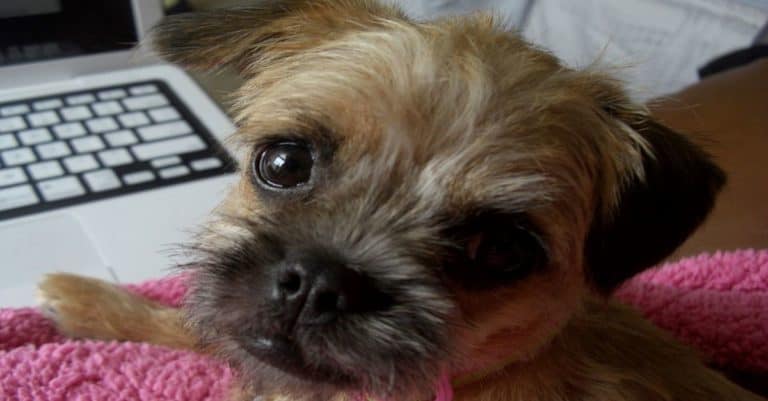
๐Ÿ‘ Pugapoo puppies can be very tiny

The pugapoo can adapt to a wide variety of different living situations.

ยฉRachelegreen, CC BY-SA 3.0, via Wikimedia Commons โ€“ Original / License

Pugapoos and Children

The pugapoo is an all-around great family dog. It is very friendly and gentle with children of almost all ages. However, because of its smaller size, the pugapoo might not tolerate any rough play. That is why it might be a good idea to wait until the children are old enough to take responsibility for the dog before inviting it into the home. But you should keep in mind that every dog is different and might respond to children in different ways.

Dogs Similar to the Pugapoo

If youโ€™re looking for a pure-breed dog, then the most obvious place to start is with the original breeds that produce the pugapoo.

  • Pug: The pug is one of the quintessential small dogs. It has a small, square body, a short snout, a light brown or black fur color, and a small tail that curls back over the body. The pug is friendly, affectionate, and a bit of a clown, but although highly trainable, it also has a stubborn streak. Many of these traits may be present in the pugapoo as well.
  • Poodle: The poodle is the national dog of France (although it actually originated from Germany) and one of the most popular in the entire world. It also ranks among the most intelligent, athletic, and elegant dog breeds. The long tufts of curly hair, which are colored black, white, gray, brown, apricot, or red, usually require professional grooming every month or two.
  • Boston Terrier: Originating in the United States, the Boston Terrier is a small non-sporting dog with a short snout, big eyes, and a tuxedo-shaped coat of fur. Black, brindle, and seal (black with a sort of red tinge) are the most common coat colors for this breed. The reason itโ€™s on this list is because, like the poodle and pug, the Boston Terrier is gentle, friendly, and trainable.
View all 247 animals that start with P

Sources

  1. Dogzone / Accessed March 2, 2021
  2. Wagwalking / Accessed March 2, 2021

About the Author

Ashley Haugen

Ashley Haugen is the editor of A-Z Animals. She's a lifelong animal lover with an affinity for dogs, cows and chickens. When she's not immersed in A-Z-Animals.com (her favorite editorial job of her 25-year career), she can be found on the hiking trails of Middle Tennessee or hanging out with her family, both human and furry.
Connect:

Thank you for reading! Have some feedback for us?

Contact the AZ Animals editorial team

Related Articles You May Find Interesting


Pugapoo FAQs (Frequently Asked Questions)

A pugapoo is a cross between a poodle and a pug. Its physical and behavioral characteristics can vary widely depending on what set of genes it inherits, but some of the most common traits include friendliness, alertness, and a keen, eager mind.

Because there are no established pugapoo standards, this dog comes with a wide variety of different physical characteristics. The most common traits are a medium-sized snout, droopy ear, a slim physique, and either a curly or straight coat with some combination of black, white, and brown fur. The tail may be straight or curled back against the body. This dog is either small- or medium-sized, standing no more than 15 inches at the shoulders.

The pugapoo has an average life expectancy of some 12 to 14 years.

You should feed a full-grown adult pugapoo about a cup of food per day. This amount may vary slightly with the dogโ€™s size, age, and activity level.

No, the pugapoo is not completely hypoallergenic, but it is also a rather light shedder.