
P
Species Profile

Pygmy python

Antaresia perthensis

Small python, big Pilbara survivor
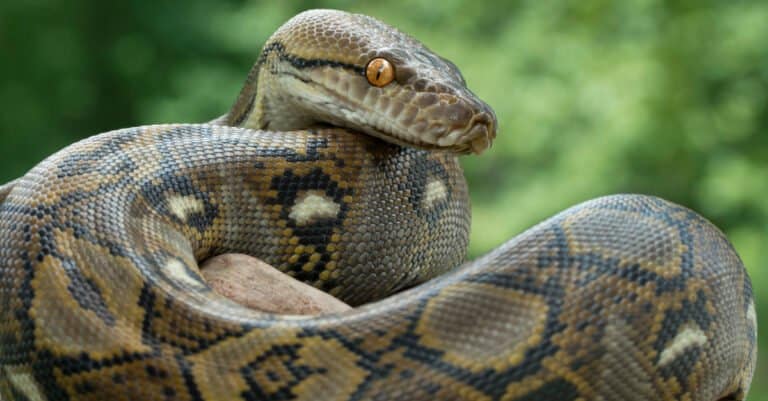
reptiles4all/Shutterstock.com

Pygmy python Distribution

Click a location to explore more animals from that region

Endemic Species
Loading map...

Found in 1 country

At a Glance

Wild Species
Diet Carnivore
Activity Nocturnal+
Lifespan 10 years
Weight 0.15 lbs
Status Least Concern
Did You Know?

It's one of the smallest python species: adults are typically ~50-60 cm total length (occasionally up to ~70 cm).

Scientific Classification

Antaresia perthensis is a very small-bodied Australian python commonly known as the Pygmy Python. It is a non-venomous constrictor in the family Pythonidae and is among the smallest python species.

Kingdom
Animalia
Phylum
Chordata
Class
Reptilia
Order
Squamata
Family
Pythonidae
Genus
Antaresia
Species
perthensis

Distinguishing Features

  • Very small adult size for a python (notably smaller than many other Pythonidae)
  • Australian Antaresia-type build: relatively slender python with a small head
  • Often described with fine spotting or mottling depending on locality and individual variation
  • Non-venomous; subdues prey by constriction

Physical Measurements

Males and females differ in size

Length
1 ft 6 in (1 ft 2 in – 1 ft 10 in)
1 ft 10 in (1 ft 6 in – 1 ft 12 in)
Weight
0 lbs (0 lbs – 0 lbs)
Tail Length
3 in (3 in – 4 in)

Appearance

Primary Colors
Secondary Colors
Skin Type Dry, smooth, glossy overlapping keratin scales; enlarged ventral scutes for locomotion; heat-sensing labial pits typical of Pythonidae.
Distinctive Features
  • Species is Antaresia perthensis (Pygmy Python), a very small Australian python; often confused with A. childreni, A. maculosa, and A. stimsoni in hobby/trade.
  • Adult total length typically ~40-70 cm; among the smallest pythons (reported maxima ~80 cm in the literature) (e.g., Cogger 2014; Wilson & Swan 2021; Uetz et al., The Reptile Database).
  • Head only slightly broader than neck; short, blunt snout; vertical pupils and conspicuous heat-sensing pits along the labial scales.
  • Camouflage coloration suited to arid/semi-arid Pilbara region substrates; commonly shelters in rock crevices, termite mounds, and ground debris, emerging largely at night to ambush prey.
  • Non-venomous constrictor: seizes prey and coils to subdue; diet dominated by small mammals and reptiles; oviparous with maternal brooding/incubation behavior typical of pythons (general Pythonidae biology; reported for Antaresia spp.).

Sexual Dimorphism

Females are typically larger-bodied and heavier than males at maturity, while males often show proportionally longer tails and more prominent cloacal spurs. Differences are subtle in coloration; pattern and ground color largely overlap between sexes.

  • Usually smaller overall body length and mass at adulthood.
  • Proportionally longer tail; cloacal spurs often more pronounced (Pythonidae trait).
  • Typically larger and heavier-bodied; greater girth especially when reproductive.
  • Shorter tail relative to body length; cloacal spurs usually less prominent.

Did You Know?

It's one of the smallest python species: adults are typically ~50-60 cm total length (occasionally up to ~70 cm).

Despite the name "perthensis," it's an inland NW Western Australia species (Pilbara/northern Gascoyne), not a Perth-area python.

Often confused with other Antaresia ("childreni," "stimsoni," "maculosa"); A. perthensis is the Pilbara arid-zone specialist in this group.

Like other pythons, it has heat-sensing labial pits that help detect warm prey in the dark (Pythonidae trait).

Females lay small clutches typical of dwarf pythons (commonly reported around ~5-10 eggs in husbandry/field accounts for Antaresia; species-level figures are limited).

It's a sit-and-wait predator that can take prey surprisingly large relative to its head by "walking" its jaws forward (python cranial kinesis).

Non-venomous: it subdues prey by rapid coil-and-constrict behavior, then swallows head-first.

Unique Adaptations

  • Arid-zone microhabitat specialization: small body and crevice use reduce water loss and overheating risk in semi-arid landscapes.
  • Labial heat pits (Pythonidae): infrared sensitivity improves prey detection at night and in low-visibility crevices.
  • Highly flexible skull/jaws (python cranial mechanics): enables swallowing comparatively large prey for its size.
  • Cryptic patterning: mottled browns help it blend with Pilbara rocks and spinifex litter.
  • Low-energy lifestyle: ambush predation and long sheltering bouts suit environments where prey can be patchy.

Interesting Behaviors

  • Nocturnal/crepuscular activity: spends hot daylight hours hidden, emerges in cooler evening/night conditions typical of arid-zone snakes.
  • Shelter fidelity: frequently uses tight refuges (rock crevices, cracks, burrows) that buffer extreme Pilbara temperature swings.
  • Ambush hunting: waits near likely prey pathways (around rocks/spinifex edges), striking quickly and constricting.
  • Thermal choice behavior: shifts between microhabitats (sun-warmed rock vs. deep crevice) to regulate body temperature rather than long-distance movement.
  • Reproductive brooding (python-typical): females coil around eggs and can thermoregulate to stabilize incubation temperatures (well documented in Pythonidae; direct field data for this species are sparse).
  • Post-feeding inactivity: after a meal, it remains sheltered while digestion raises metabolic heat (a common python pattern).

Cultural Significance

The pygmy python (Antaresia perthensis) is not often named in popular culture, but pythons and large snakes are important across Australia. In many Aboriginal traditions, ancestral snakes shape waterways, rain, and sacred places, and small snakes are respected.

Myths & Legends

Rainbow Serpent traditions (pan-Australian): ancestral serpents are said to have traveled the land in the Dreaming, carving rivers and waterholes; living snakes can be seen as reminders of these creative powers.

Wagyl/Waugal (south-west Western Australia, Noongar tradition): a great serpent associated with creating and inhabiting waterways and springs, emphasizing the sacredness of water places.

Wanampi (Western Desert traditions): serpent beings associated with waterholes and rain; disturbing their places can bring consequences, reflecting cultural rules for caring for scarce water sources.

Julunggul (Arnhem Land/Yolngu traditions): a powerful rainbow-serpent figure linked with water, fertility, and the cycles of life-part of a wider complex of snake-based creation narratives in northern Australia.

Conservation Status

LC Least Concern

Widespread and abundant in the wild.

Population Unknown

Protected Under

  • Western Australia Biodiversity Conservation Act 2016 (native fauna protection provisions)
  • Environment Protection and Biodiversity Conservation Act 1999 (EPBC Act) - not listed as threatened, but covered by general wildlife and environmental protections

Life Cycle

Birth 6 hatchlings
Lifespan 10 years

Lifespan

In the Wild 7–15 years
In Captivity 15–25 years

Reproduction

Mating System Data Deficient
Social Structure Solitary
Breeding Pattern Seasonal
Fertilization Internal Fertilization
Birth Type Internal_fertilization

Species-specific data on mate numbers and pair-bonding are not well documented. Adults are solitary and likely meet only briefly during the breeding season; reproduction is via internal fertilization, and females lay and brood eggs without help from other adults.

Behavior & Ecology

Social Den Group: 1
Activity Nocturnal, Crepuscular
Diet Carnivore Small lizards (particularly geckos/skinks) and small rodents (reported as primary prey categories in field guides and python natural-history summaries).

Temperament

Generally secretive and non-aggressive; relies on crypsis and retreat into tight shelters.
Defensive responses when disturbed: tight coiling, head-hiding, hissing, occasional strike.
Adult total length typically about 50-60 cm; reported maximum about 70 cm.
Captive longevity commonly reported ~15-20 years; wild longevity not well quantified (Barker & Barker, pythons).

Communication

Hiss produced by forced exhalation when threatened; no true vocal calls.
Chemical communication via tongue-flicking and vomeronasal organ; pheromones important in mate-searching.
Tactile cues during courtship (body alignment, cloacal contact) and during copulation.
Substrate vibration sensitivity used to detect approaching animals; posture changes signal defensive intent.

Habitat

Biomes:
Desert Hot Savanna
Terrain:
Plains Coastal Rocky Sandy
Elevation: Up to 2296 ft 7 in

Ecological Role

Small-bodied terrestrial mesopredator in arid/northwestern Australian rocky habitats.

Regulates local populations of small vertebrates (notably geckos/skinks and rodents), contributing to trophic balance. Transfers energy from abundant small prey to higher trophic levels (as prey for raptors, larger snakes, and carnivorous mammals). Contributes to biodiversity maintenance by predation pressure that can limit localized small-mammal population surges in suitable habitat patches.

Diet Details

Main Prey:
Small lizards Small mammals Small birds and nestlings

Human Interaction

Domestication Status

Wild

Pygmy Python (Antaresia perthensis) is wild, not domesticated. It is studied in northwest Australia in rocky, dry areas. It is kept in zoos or by hobbyists less often than other Antaresia species because of its small range and export rules. Adults are about 40–60 cm, lay ~5–8 eggs, and can live 15–20+ years in captivity.

Danger Level

Low
  • Non-venomous; may bite defensively-typically superficial puncture/laceration risk due to small size.
  • Zoonotic disease risk common to reptiles if hygiene is poor (e.g., Salmonella exposure).
  • Allergy/asthma triggers possible from bedding/dander/feeder insects/rodents.
  • Escape risk: small body size can enable escapes; may lead to property damage (minor) or local animal control interactions.

As a Pet

Suitable as Pet

Care Level: Moderate

Purchase Cost: $200 - $700
Lifetime Cost: $1,500 - $5,000

Economic Value

Uses:
Pet trade (captive-bred reptiles) Education/outreach animals (zoos, nature centers) Scientific research (arid-zone ecology, reptile physiology, husbandry) Wildlife tourism (indirect, through herpetofauna interest)
Products:
  • live animals (captive-bred)
  • husbandry supplies and services (enclosures, heating, feeders, veterinary care)

Relationships

Predators 6

Gould's Monitor Varanus gouldii
Perentie Varanus giganteus
Brown Falcon Falco berigora
Wedge-tailed Eagle Aquila audax
King Brown Snake Pseudechis australis
Feral cat Felis catus

Related Species 7

Children's Python Antaresia childreni Shared Genus
Spotted Python Antaresia maculosa Shared Genus
Stimson's Python Antaresia stimsoni Shared Genus
Kimberley Rock Python Antaresia saxacola Shared Genus
Carpet Python Morelia spilota Shared Family
Woma python Aspidites ramsayi Shared Family
Olive Python Liasis olivaceus Shared Family

Ecological Equivalents 5

Animals that fill a similar ecological role in their ecosystem

Stimson's Python Antaresia stimsoni Very similar ecology and behavior: a small-bodied, nocturnal Australian python that uses rock crevices and termite mounds and takes small vertebrate prey (primarily small mammals and lizards). It often overlaps in arid and semi-arid habitats and exhibits a comparable ambush/crevice-hunting strategy.
Kimberley Rock Python Antaresia saxacola Occupies a rock-associated niche (crevice-dwelling; nocturnal hunting around rocky outcrops). Displays a comparable foraging mode and refuge use, with a small-vertebrate diet typical of Antaresia.
Spotted Python Antaresia maculosa Similar trophic role as a small-to-medium nocturnal constrictor that feeds on small mammals (including rodents) and reptiles. Uses shelters such as rock piles and crevices and hunts by ambush during warm seasons.
Woma Python Aspidites ramsayi Not closely similar in size (the Woma Python is much larger), but occupies a broadly similar arid-zone, terrestrial constrictor niche, preying on small mammals and reptiles and using shelters (burrows/crevices), with a largely nocturnal or crepuscular activity pattern in hot climates.
Gould's Monitor Varanus gouldii Ecological analogue as a small-vertebrate predator in the same arid, rocky landscapes. Although a diurnal lizard rather than a snake, it exploits similar prey bases (small reptiles and mammals) and overlapping microhabitats (rocky ground, burrows), creating potential prey and competitor interactions.

Also known as the anthill python, the pygmy python is the smallest python in the world.

This snake makes its home in the Pilbara region of northwest Australia. It’s one of four species in the Antaresia genus, also known as Children’s pythons.

Amazing Facts About the Pygmy Python

  • They often den together in termite mounds with other species including king brown snakes and Stimson’s pythons.
  • The Pygmy python is only about 6 inches long when it hatches and maxes out at 20 inches as an adult.
  • They’re solitary except during breeding season when males follow the females’ pheromone trails.

Where to Find a Pygmy Python

Pygmy pythons live in the Pilbara region of Western Australia – the hottest and dryest part of the continent. They are nocturnal and spend their days sheltering under Spinifex grasses, inside termite mounds, or under crevices in rock outcrops. In fact, they spend the majority of the daylight hours hidden in a shelter to keep out of the blazing sun.

These snakes often share large termite mounds with several other species that include Stimson’s/Children’s python, black-headed pythons, Pilbara geckoes, and others.

Termite mounds offer protection from extreme daytime heat and a consistent temperature during the daylight hours. The temperature inside can reach 100 degrees Fahrenheit, which is a nearly perfect temperature for many of the cold-blooded species that use the mounds.

Diet & Reproduction

Scientists don’t know much about these snakes’ behavior in the wild. They’re tiny and difficult to observe. However, they have been seen eating small geckos; presumably, as they grow, they take progressively larger prey. They are good climbers that can be found in the branches of shrubs and small trees but seem to spend a lot of time underground.

Pygmy pythons are similar to other small snakes in that multiple males and females move about together. Scientists believe that this “pairing behavior” occurs because the females are leaving a pheromone trail that the males follow.

After mating, females lay 2-6 eggs and curl around them to help incubate the eggs until hatching. The eggs hatch after about 2 months in captivity, so it’s probably similar in the wild. The hatchlings are independent after hatching and the mother doesn’t appear to offer any further help or protection.

Pygmy Python Scientific Name

The Antaresia genus is named after Antares, a red giant star in the constellation Scorpio. Their specific name, perthensis, refers to Perth, but Stull made this mistake made in 1932 when he first described it. He thought that the type specimen had come from Perth. However, the species doesn’t occur there at all.

Pygmy Python Population and Conservation

This species is widespread, even though it has a relatively small range compared to other Australian python species. According to the IUCN Redlist of Threatened Species, they’re an animal of “least concern” and have a stable population. Australia stopped allowing the export of their native species in 1999. However, before their government banned export, enough were already in the collections of breeders in other countries that they became readily available to snake enthusiasts.

Pygmy pythons are listed under Appendix II of CITES and occur in several protected areas within their range. The biggest threats they have are encounters with people and vehicles, and the snakes are the unfortunate victims in these situations.

Identifying the Pygmy Python: Appearance and Description

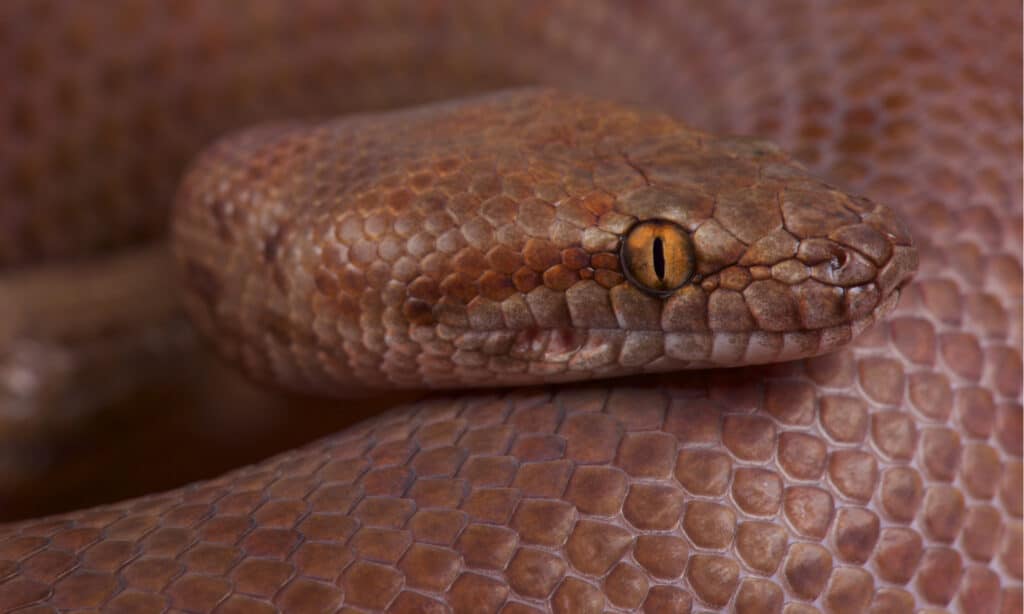
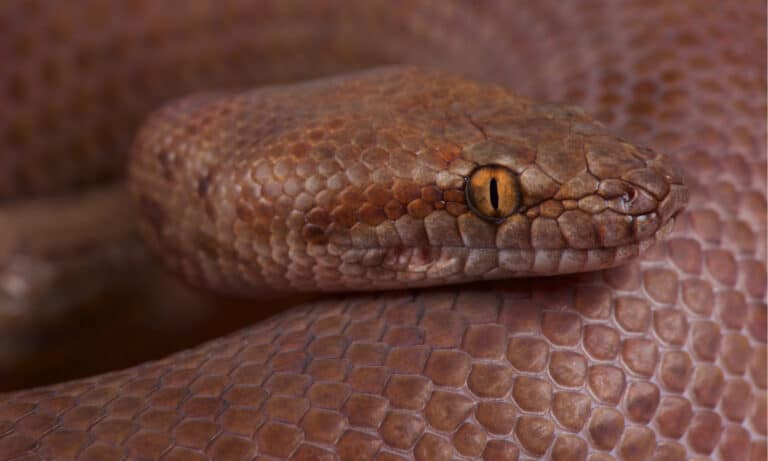
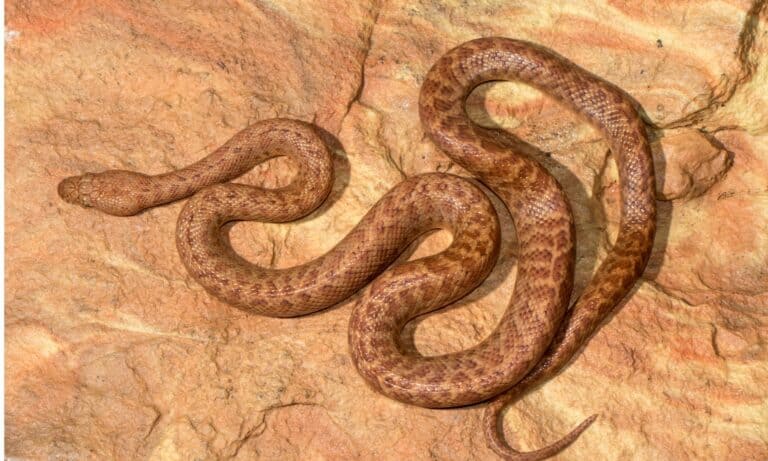
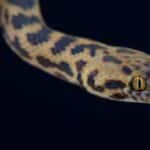
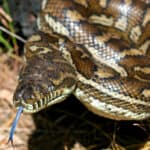
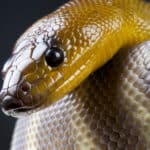
Pygmy pythons only grow to about 20 inches long, making them the smallest python in the world. They tend to have a reddish head and redder base color than their sister species, the Children’s python and spotted pythons. As juveniles, these snakes have irregularly shaped spots that tend to fade as the snakes mature.

These snakes have large symmetrical scales on their distinctly python-shaped heads. Their eyes are usually similar to their body in color and have elliptical pupils. Like most pythons, pygmy pythons have heat-sensing labial pits that help them find prey in the dark. Their scales are smooth and glossy, with an iridescent sheen in the sunlight.
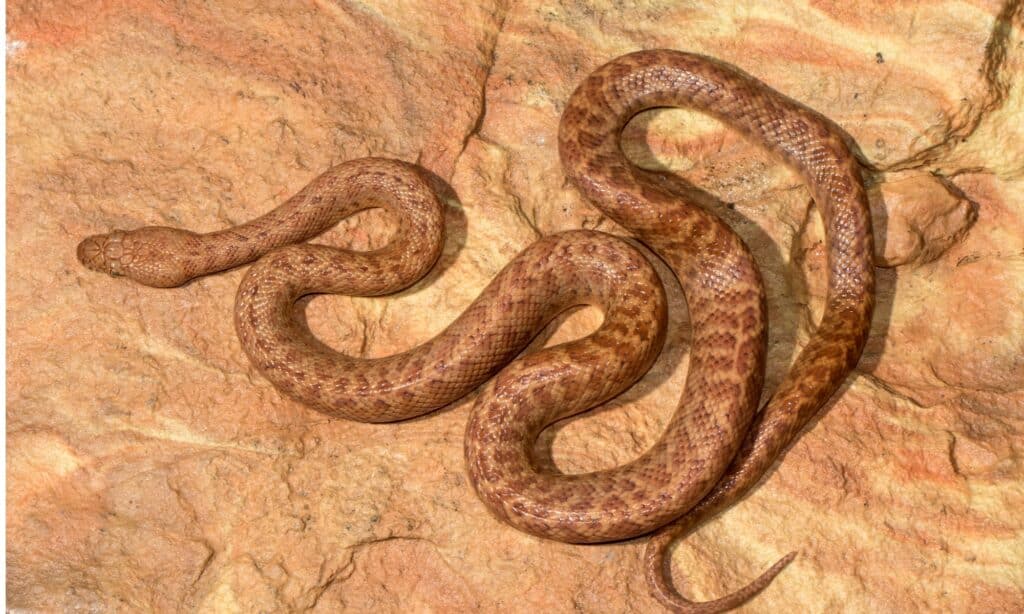
👁 Pygmy python on rock

This species often takes shelter in large termite mounds with other snake species.

©iStock.com/Ken Griffiths

Pictures and Videos of Pygmy Pythons
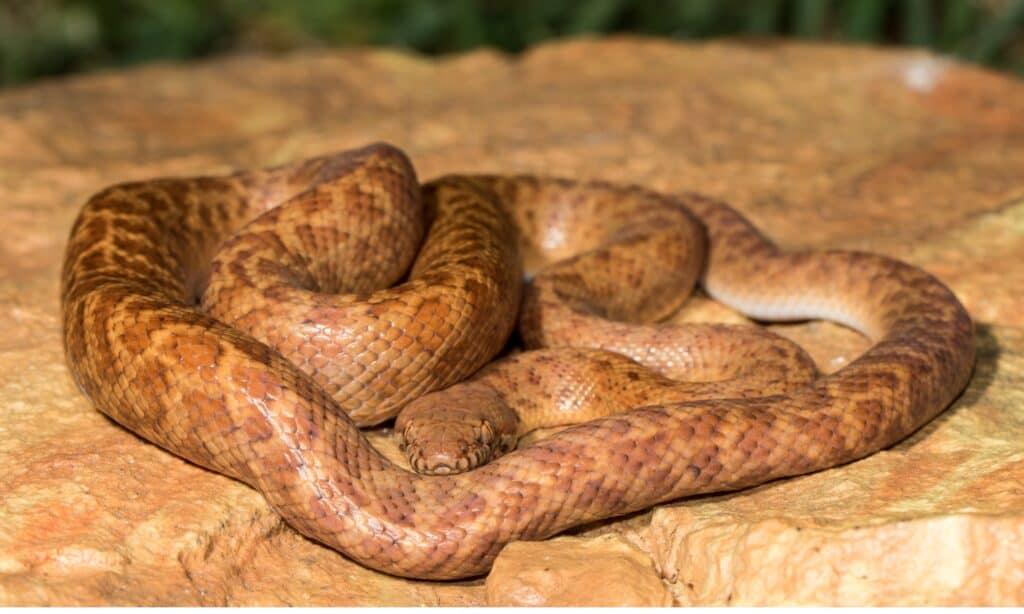
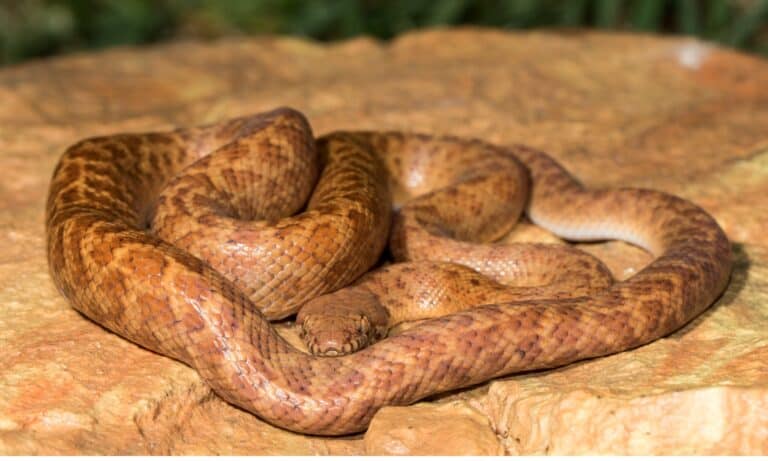
👁 Anthill python

Also called anthill pythons, these snakes sometimes travel in small groups.

©iStock.com/Ken Griffiths

👁 Pygmy Python

This species is the smallest python in the world.

©reptiles4all/Shutterstock.com

Are Pygmy Pythons Dangerous?

Given their tiny size and the fact that pygmy pythons are not venomous – there’s no danger from them. This species is not likely to bite and their mild-mannered disposition makes them very pleasant to handle. Even though these pythons are small, they do help limit the population of animals that can become pests.

Pygmy Python Behavior and Humans

While rare in the pet trade outside of Australia, pygmy pythons are terrific first snakes. Their living requirements are pretty easy to replicate and they’re somewhat tolerant of not-quite-perfect conditions.

These snakes are difficult to get started after they hatch, however, because in nature they feed on cold-blooded prey. The hatchlings often don’t want to eat mice and breeders have to teach them. As a result, this is often a more expensive breed, because a responsible breeder takes several months with the hatchlings to be sure they’re eating well.

Similar Animals

Check out a few other pythons to learn more about these amazing creatures.

View all 247 animals that start with P

Sources

  1. Pygmy Python | IUCN Redlist of Threatened Species / Published February 20, 2017 / Accessed June 11, 2022
  2. Damien Esquerré, Stephen C. Donnellan, Carlos J. Pavón-Vázquez, Jéssica Fenker, J. Scott Keogh, Phylogeography, historical demography and systematics of the world’s smallest pythons (Pythonidae, Antaresia), Molecular Phylogenetics and Evolution, Volume 161, 2021, 107181, ISSN 1055-7903, https://doi.org/10.1016/j.ympev.2021.107181. / Published August 1, 2021 / Accessed June 11, 2022
  3. Pygmy Python | Reptile Database / Accessed June 11, 2022
  4. CITES Listing / Accessed June 12, 2022
  5. Perth Zoo / Accessed June 12, 2022

About the Author

Gail Baker Nelson

Gail Baker Nelson is a writer at A-Z Animals where she focuses on reptiles and dogs. Gail has been writing for over a decade and uses her experience training her dogs and keeping toads, lizards, and snakes in her work. A resident of Texas, Gail loves working with her three dogs and caring for her cat, and pet ball python.
Connect:

Thank you for reading! Have some feedback for us?

Contact the AZ Animals editorial team

Related Articles You May Find Interesting


Pygmy python FAQs (Frequently Asked Questions)

No, these snakes are nonvenomous constrictors, that kill their prey by squeezing the life out of it.

They’re ambush predators that also actively forage in cracks and crevices at night when the heat of the day subsides.

No, they’re probably one of the most easy-going snakes, even in the wild.

Only in the Pilbara and Gascoyne regions of Western Australia. They have a really small range that overlaps with that of the Children’s python.

Some individuals have been observed feeding on geckos (Gehyra pilbaria) in the tunnels of large termite mounds. Much of their diet is based on assumptions in comparison to other snakes of their genus and is thought to include small skinks and mammals.