
R
Species Profile

Rock Python

Python sebae

Big. Silent. Africa's rock python.
Chris Graf/Shutterstock.com

Rock Python Distribution

Click a location to explore more animals from that region

Loading map...

At a Glance

Wild Species
Also Known As African python, Rock python, African rockpython
Diet Carnivore
Activity Nocturnal+
Lifespan 15 years
Weight 90 lbs
Did You Know?

Adults commonly reach ~3-5 m total length; exceptional individuals are documented to at least 6 m (e.g., Branch field guides; Spawls & Branch).

Scientific Classification

A very large, nonvenomous constrictor python native to sub-Saharan Africa, among the heaviest snakes in the world. It kills prey by constriction and is an ambush predator.

Kingdom
Animalia
Phylum
Chordata
Class
Reptilia
Order
Squamata
Family
Pythonidae
Genus
Python
Species
Python sebae

Distinguishing Features

  • Very large-bodied python with bold blotched patterning
  • Nonvenomous; kills prey by constriction
  • Heat-sensing labial pits typical of pythons
  • Often found near water and capable swimmer

Physical Measurements

Males and females differ in size

Length
โ™‚ 10 ft 6 in (6 ft 7 in โ€“ 16 ft 5 in)
โ™€ 13 ft 1 in (9 ft 10 in โ€“ 19 ft 8 in)
Weight
โ™‚ 66 lbs (22 lbs โ€“ 154 lbs)
โ™€ 77 lbs (44 lbs โ€“ 121 lbs)
Tail Length
โ™‚ 1 ft 6 in (10 in โ€“ 2 ft 6 in)
Top Speed
1 mph
slithering

Appearance

Primary Colors
Secondary Colors
Skin Type Dry keratinized reptile scales; dorsals typically smooth and glossy; enlarged ventral scutes for traction; heat-sensing labial pits along upper lip typical of Pythonidae.
Distinctive Features
  • Very large, heavy-bodied constrictor; adults commonly ~3-5 m total length; exceptional reports near ~6 m (species accounts in major field guides/monographs).
  • Broad, triangular head distinct from neck; dark post-ocular stripe and crown markings.
  • Labial (heat-sensing) pits along supralabial scales used for ambush predation at night.
  • Thick muscular body with large ventral scutes; capable of powerful constriction and long fasting.
  • Vestigial hindlimb spurs beside cloaca (more conspicuous in males).
  • Oviparous; females coil around eggs and may brood by muscular shivering thermogenesis (well-documented pythonid trait).
  • Frequently associated with water (riverine forest, wetlands, lake margins) across sub-Saharan Africa; coloration blends with leaf litter and rocks.

Sexual Dimorphism

Females average larger and heavier than males, while males tend to have longer tails and more prominent cloacal spurs. Dimorphism is mainly in body size and spur development rather than coloration.

โ™‚
  • Relatively longer tail length beyond the cloaca.
  • More prominent cloacal (pelvic) spurs used during courtship.
  • Typically smaller overall body mass than similarly aged females.
โ™€
  • Larger average total length and substantially greater mass at maturity.
  • More robust mid-body girth, especially when gravid.
  • Often shows abdominal distension and tighter scale spacing when carrying eggs.

Did You Know?

Adults commonly reach ~3-5 m total length; exceptional individuals are documented to at least 6 m (e.g., Branch field guides; Spawls & Branch).

Among the heaviest African snakes; large adults can weigh tens of kilograms, with very bulky bodies compared with most pythons.

Has heat-sensing labial pits along the lips that detect warm-blooded prey - classic Pythonidae equipment for night hunting.

Females lay large clutches (commonly ~20-50 eggs; large females can produce up to ~100) and physically guard the nest.

Brooding females coil tightly around eggs and can raise egg temperature via muscular "shivering" thermogenesis - well documented in pythons and reported in African rock pythons.

A sit-and-wait predator: it often anchors near game trails or water edges, striking and then constricting prey to death.

Captive longevity is commonly reported at ~20-30+ years (zoo/husbandry records); wild lifespan is shorter and less precisely quantified.

Unique Adaptations

  • Infrared detection via labial pit organs (Pythonidae): improves targeting of warm prey in low light and helps locate optimal strike points.
  • Highly kinetic skull and expandable jaws: flexible ligaments and mobile jaw bones allow swallowing prey far wider than the head.
  • Massive axial musculature: generates constriction pressures and allows powerful swimming and climbing despite very large body size.
  • Cryptic patterning: blotched coloration breaks up the outline in reeds, leaf litter, and rocky or sandy riverbanks-effective for sit-and-wait hunting.
  • Egg brooding with behavioral thermoregulation: coiling posture and, in some cases, heat production help maintain embryo development conditions without external incubation.
  • Physiological "feast-and-fast" metabolism: can dramatically ramp digestive performance after feeding and then downshift during long fasting periods - typical of large pythons.

Interesting Behaviors

  • Ambush predation: remains motionless for long periods (often near water, animal paths, or burrows), then launches a rapid strike and immediately throws coils around the prey.
  • Constriction strategy: tightens coils in response to prey movement; in large constrictors this can cause rapid circulatory collapse rather than "suffocation" alone (physiology studies on big constrictors broadly).
  • Semi-aquatic hunting: readily swims and may wait at water margins for drinking mammals and waterbirds; can stay submerged for extended periods when disturbed.
  • Nest defense: females remain with the clutch, guarding against predators and staying in a tight coil posture that also stabilizes humidity/temperature around eggs.
  • Feeding cadence: after large meals, individuals may fast for weeks to months while digesting, relying on highly upregulated digestive organs typical of large pythons.
  • Seasonal activity: in many regions activity increases in warmer/wetter periods; individuals bask to elevate body temperature for digestion and reproduction.
  • Opportunistic diet: takes mammals and birds (from rodents to medium/large antelope calves and domestic poultry); large adults may occasionally take dangerous prey (e.g., porcupines) with injury risk.

Cultural Significance

In parts of West and Central Africa, the African Rock Python (Python sebae) is feared and honored. Treated as clan totems or river/forest spirits, they are often spared or moved and kept in snake shrines linked to kingship, water, and fertility.

Myths & Legends

Benin (Ouidah) serpent-shrine traditions tell of sacred pythons that protect the town/people - stories describe pythons as guardians whose presence brings safety and whose harm risks misfortune.

In Fon/Dahomey stories, the serpent Dan, sometimes a rainbow or sky snake, holds up the world and links earth and sky. Big pythons, like the African Rock Python (Python sebae), are its living echo.

West African Anansi folktales often show Anansi tricking a great African rock python (Python sebae) by measuring its length, showing the python's huge size and its feared place in the forest.

In parts of southern Africa, African Rock Python (Python sebae) or big river pythons appear in river-spirit stories as giant snakes living in deep pools, demanding respect and shaping rules about water places.

Conservation Status

NT Near Threatened

Likely to qualify for a threatened category in the near future.

Population Decreasing

Protected Under

  • CITES Appendix II (Python sebae)
  • National wildlife legislation in many range states (levels of protection vary)
  • Occurs in numerous protected areas (e.g., national parks and reserves) across its sub-Saharan African range

Life Cycle

Birth 40 hatchlings
Lifespan 15 years

Lifespan

In the Wild 10โ€“20 years
In Captivity 15โ€“30 years

Reproduction

Mating System Polygynandry
Social Structure Solitary
Breeding Pattern Seasonal
Fertilization Internal Fertilization
Birth Type Internal_fertilization

Solitary adults aggregate briefly in the cool/dry season; males actively trail females and may compete for access. Both sexes likely mate with multiple partners (internal fertilization). Females lay ~20-50 eggs (reported up to ~100) and brood them ~60-90 days.

Behavior & Ecology

Social No formal group (temporary breeding pair; maternal nesting association) Group: 1
Activity Nocturnal, Crepuscular, Cathemeral
Diet Carnivore Mammals-especially rodents and small to medium ungulates (e.g., cane rats and duikers)
Seasonal Hibernates

Temperament

Primarily ambush-oriented and secretive; spends long periods inactive in cover or near water.
Defensive when approached: may hiss, coil, and strike; large adults can be dangerous.
Seasonally increased male activity during breeding; males may engage in ritualized combat for mates (reported in Python sebae accounts, e.g., Barker & Barker).
Maternal nesting females show elevated defensiveness while brooding eggs until hatching (~65-80 days).

Communication

hissing
Chemical communication via tongue-flicking and vomeronasal organ Pheromones for mate finding/recognition
Tactile courtship (body alignment, rubbing, tail/vent contact) to coordinate copulation.
Male-male combat postures (raising anterior body, pushing/wrestling) as competitive signaling.
Visual/postural threat displays (tight coiling, head elevation) to deter predators/handlers.
Substrate vibration/impact cues during movement or striking may function in close-range deterrence.

Habitat

Biomes:
Tropical Rainforest Tropical Dry Forest Savanna Freshwater Wetland
Terrain:
Plains Valley Riverine Hilly Rocky Coastal
Elevation: Up to 7545 ft 11 in

Ecological Role

Large apex/mesopredator in many sub-Saharan habitats (savanna, woodland, wetlands), regulating vertebrate prey communities.

Population control of rodents and other small-to-medium mammals (potentially limiting crop-raiding rodents and disease reservoirs) Removes vulnerable individuals from prey populations (selective predation on young/weak) Links aquatic and terrestrial food webs when hunting near water and taking semiaquatic prey Provides carrion/food resources to scavengers when large prey items are partially consumed or abandoned

Diet Details

Main Prey:
Rodents Hyrax Small to medium antelopes Warthog piglets Primates Ground-nesting birds Reptiles Snakes and small crocodilians Domestic animals +3

Human Interaction

Domestication Status

Wild

African Rock Python (Python sebae) is wild, not domesticated. People have long hunted it for skins and meat and kill it near homes out of fear and for livestock losses. There is no evidence of selective breeding. Captive keeping and occasional breeding are husbandry, and escapes/releases cause sporadic nonnative records (e.g., Florida).

Danger Level

High
  • Physical injury from defensive bites (large recurved teeth; deep lacerations, infection risk)
  • Constrictor hazard: large adults can overpower humans, especially children or small adults, during feeding mistakes or handling; documented serious attacks exist for large African pythons
  • Zoonotic risk typical of reptiles (e.g., Salmonella) from improper hygiene
  • Secondary risks during removal/relocation (falls, vehicle accidents, improper restraint)
  • Conflict-related risk near homes/farms where snakes are cornered or provoked

As a Pet

Not Suitable as Pet

Legality: Laws differ by country and state. African rock python (Python sebae) is on CITES Appendix II. In the US it's listed as injurious wildlife under the Lacey Act (2012); many places require permits or ban keeping as pets.

Care Level: Expert Only

Purchase Cost: $150 - $800
Lifetime Cost: $10,000 - $30,000

Economic Value

Uses:
Wildlife trade (leather/skins) Bushmeat/subsistence use Traditional medicine/curio trade Pet trade (high-risk large constrictor) Ecotourism/education (zoos, guided wildlife viewing) Ecosystem services (rodent control locally) Human-wildlife conflict costs (livestock/poultry losses; snake removal)
Products:
  • python leather goods (belts, shoes, bags) from legally/illegally sourced skins
  • meat (local consumption in parts of range)
  • live animals for the exotic pet market (mostly juveniles)
  • display/education animals in zoos and wildlife centers
  • wildlife control/relocation services in areas of conflict

Relationships

Predators 7

Nile crocodile Crocodylus niloticus
Leopard Panthera pardus
Spotted hyena Crocuta crocuta
Lion Panthera leo
Martial eagle Polemaetus bellicosus
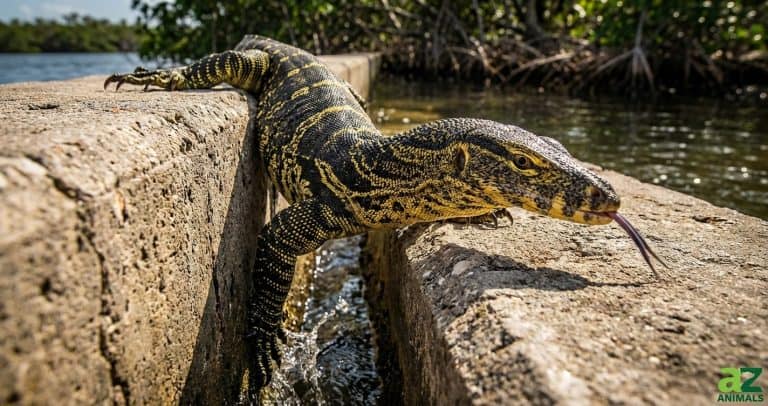
Nile monitor Varanus niloticus
Human Homo sapiens

Related Species 7

Southern African python Python natalensis Shared Genus
Ball python Python regius Shared Genus
Angolan python Python anchietae Shared Genus
Burmese python Python bivittatus Shared Genus
Indian python Python molurus Shared Genus
Reticulated python Malayopython reticulatus Shared Family
Amethystine python Simalia amethistina Shared Family

Ecological Equivalents 5

Animals that fill a similar ecological role in their ecosystem

Nile crocodile Crocodylus niloticus Shares rivers, floodplains, and wetlands with the African rock python (Python sebae). Both are large ambush predators that eat waterbirds and medium-sized mammals. Adult Python sebae are heavy, nonvenomous constrictors (~3โ€“5 m) that can live for decades.
Leopard Panthera pardus Both are ambush hunters of medium-to-large mammals in savanna and woodland. Leopards and Python sebae share prey such as small antelope and primates, can compete, and leopards sometimes eat large pythons at kills or while the pythons are basking.
Nile monitor Varanus niloticus Often found near water; both species eat birds, eggs, and small mammals. Nile monitors raid reptile and python nests and eat young pythons, while large Python sebae can kill and eat big lizards.
African rock python Python natalensis In southern Africa, it fills nearly the same role as Python sebae: a large, sit-and-wait constrictor that takes mammals and birds. Their ranges are mostly separate or adjacent.
African lion Panthera leo Not a close ecological match: lions are social, cursorial hunters. However, both use habitats with large carcasses and abundant ungulates. Lions may kill large snakes and influence prey dynamics; they also congregate near waterholes and vegetative cover where Python sebae ambushes.

โ€œThe largest snake in Africa!โ€œ

Itโ€™s huge, itโ€™s beautiful and though itโ€™s nonvenomous, the African rock python is a reptile to be respected. Who needs venom when you have coils that can crush the life out of a grown goat and jaws that can unhinge to swallow it whole? Read on to learn more about this amazing beast.

5 Incredible Rock Python Facts!

Here are five amazing facts about these snakes.

  • These jumbo-sized pythons have been known to weigh over 200 pounds. Most weigh about 121 pounds.
  • Pythons from central and western Africa tend to have brighter colors than those from north, south and east Africa.
  • The one time adult rock pythons are in danger from natural predators such as hyenas is after theyโ€™ve had a large meal and have to stay in one place to digest.
  • The Luo people, who live in Kenya, worship unaggressive rock pythons as harbingers of fertility.
  • Unlike most snakes, the rock python has two lungs that work. Finding two working lungs helps positively identify one.
๐Ÿ‘ Image
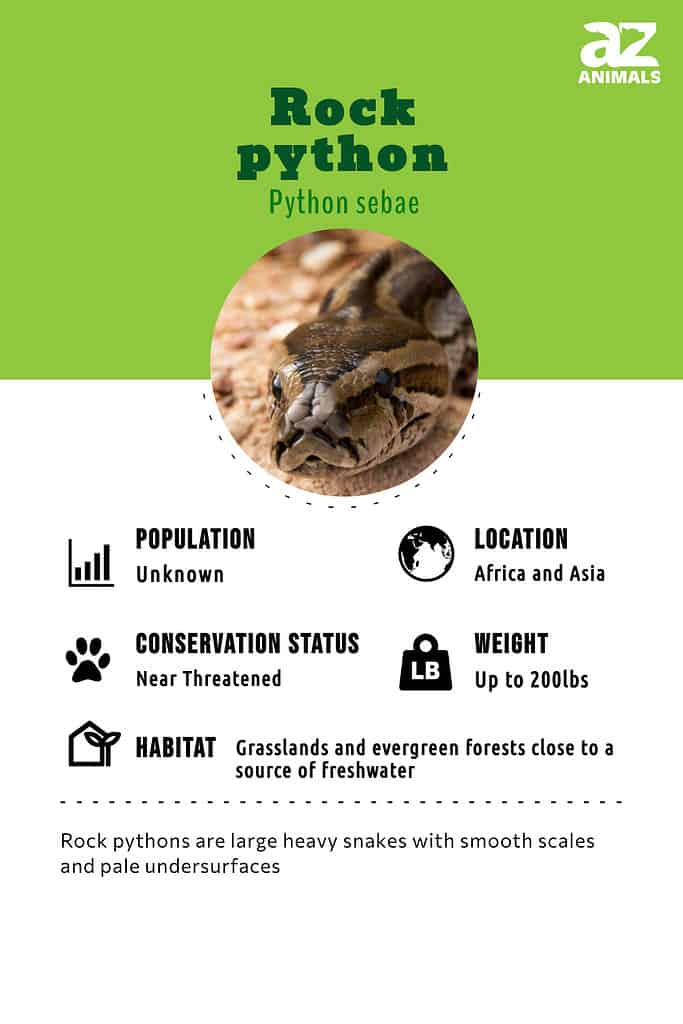
Pictorial summary of the rock python

Where To Find Rock Pythons

๐Ÿ‘ Southern African Rock Python

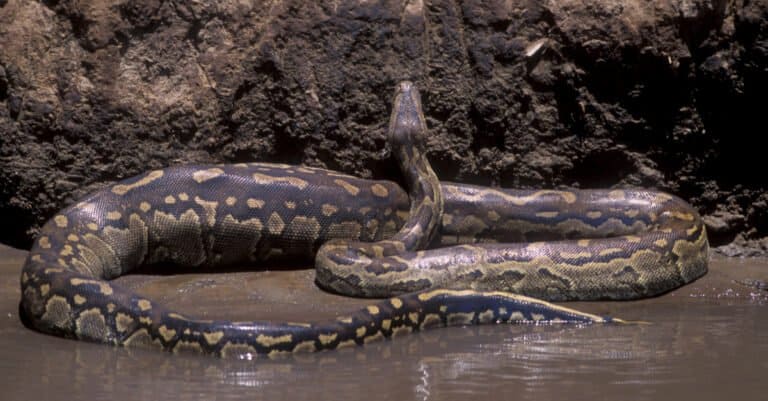
Rock Pythons prefer open grassland or humid verdant forests close to freshwater

ยฉBruce Crossey/Shutterstock.com

Rock pythons are found in many locations in sub-Saharan Africa, as long as it is not too dry, as it would be in a desert, or too cold as it would be high on a mountain. Their preferred habitats are open savannas and moist evergreen forests near bodies of freshwater, and they get their name because they are often found on outcroppings.

Scientific Name

The African rock pythonโ€™s scientific name is Python sebae. Python is taken from the Greek nake for the serpent-like monster killed by the god Apollo. Sebae comes from Albertus Seba, a Dutch zoologist. There are two subspecies of P. sebae. They are the following:

  • P. subae subae
  • P. subae natalensis

The Different Types of Rock Python
๐Ÿ‘ Image

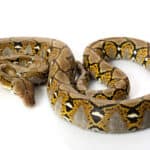
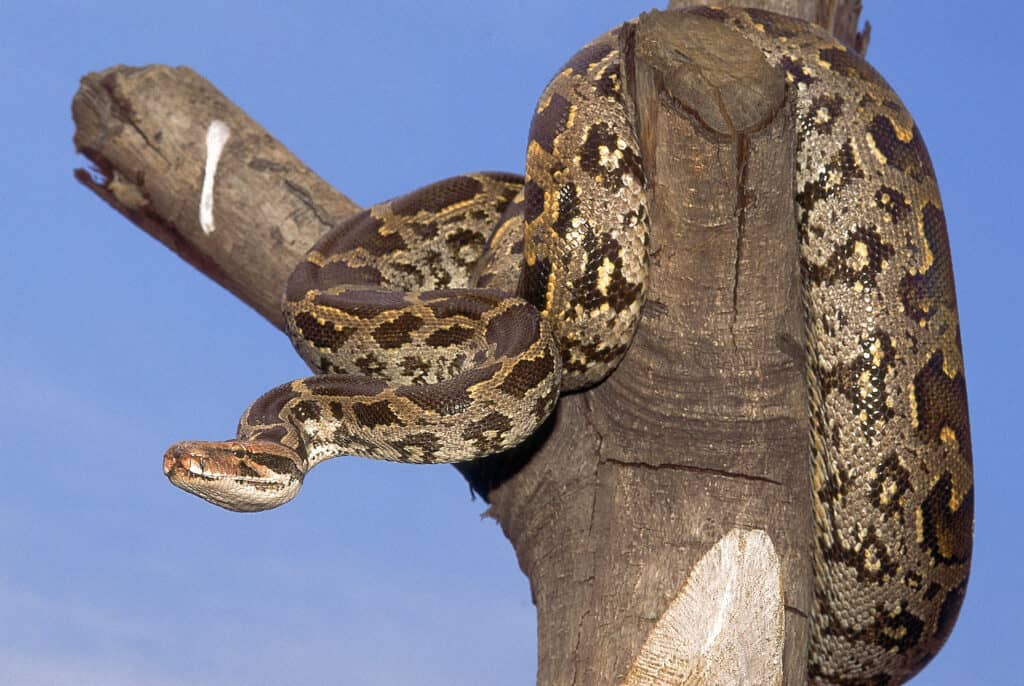
Indian Rock pythons are smaller than their African counterparts and are elusive by nature

ยฉiStock.com/ephotocorp

The two African rock python subspecies are the northern African rock python, P. sebae sebae which is found in western and central Africa, and the southern African rock python which is found in scattered locations around southern Africa, from Namibia to the coasts of Tanzania and Mozambique. The southern python is the smaller and less colorful of the two.

The African rock python and its subspecies arenโ€™t the only types of these snakes. Python molurus is also known as the Indian or Asian rock python. It is smaller in size than the African rock python and lives in India, Pakistan, Bhutan, Bangladesh, and southern Nepal, and some believe there are pythons in Myanmar. The Indian rock python also differs from the African rock python in that it is timid.

Evolution
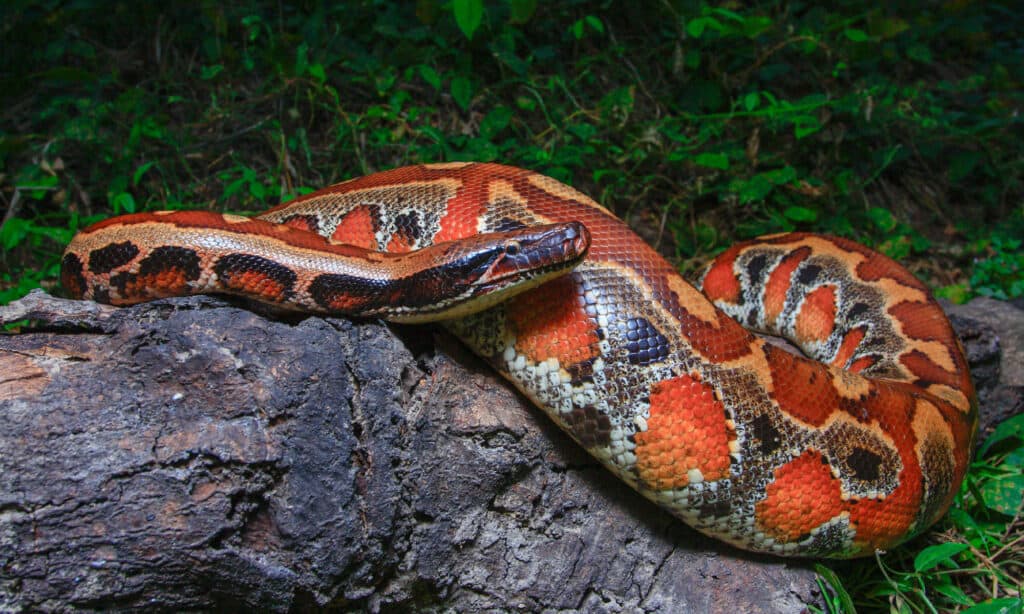
๐Ÿ‘ Red Blood Python / Python curtus brongersmai

Blood pythons as well as species such as Indian, Burmese, and Angolan pythons are some of the rock pythonโ€™s closest relatives

ยฉdwi putra stock/Shutterstock.com

Rock pythons are considered true pythons and are members of the genus Python, a distinction they share with 10 other species. Their closest relatives include the Angolan python, the ball python, the blood python, the Borneo python, the Burmese python, the Indian python, the Myanmar short-tailed python, and the Sumatran short-tailed python.

They also belong to the wider Pythonidae family which itself consists of 10 general including:

  • Water pythons: Known as the genus Liasis, these snakes can be found in Indonesia, New Guinea, and Australia.
  • Tree pythons: Also referred to as the genus Morelia, they can be found in Australia, Indonesia, and New Guinea.
  • White-lipped pythons: Members of the Leiopython genus, they can be found in Papua New Guinea.

Population and Conservation Status 

Though the number of wild African rock pythons hasnโ€™t been evaluated, the reptileโ€™s conservation status is near threatened. This is largely due to poaching for its meat and its hide. The snake is also under some pressure from habitat loss.

Appearance and Description 
๐Ÿ‘ Image
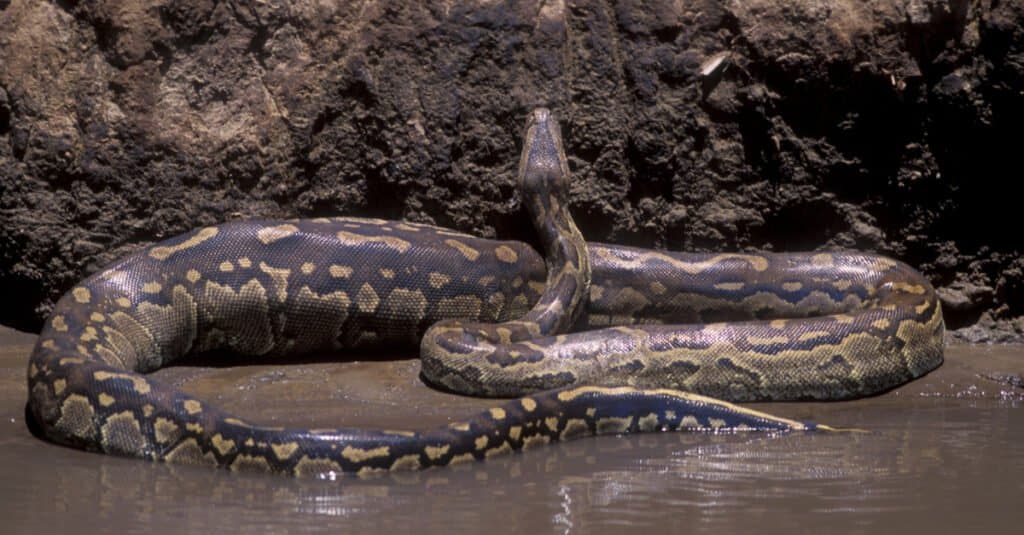
The rock python can grow up to 25 feet

ยฉzaferkizilkaya/Shutterstock.com

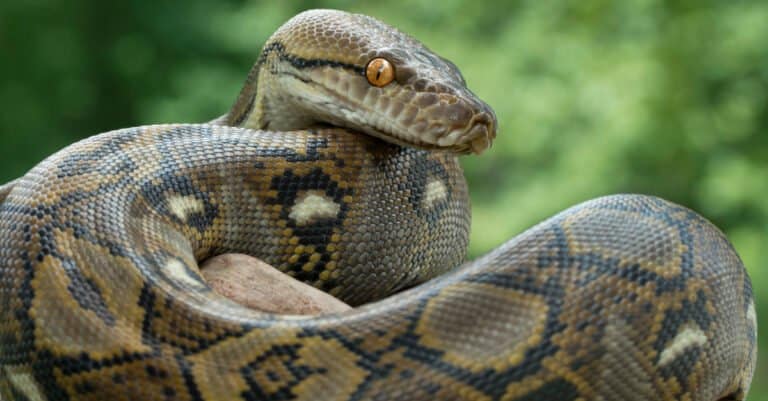
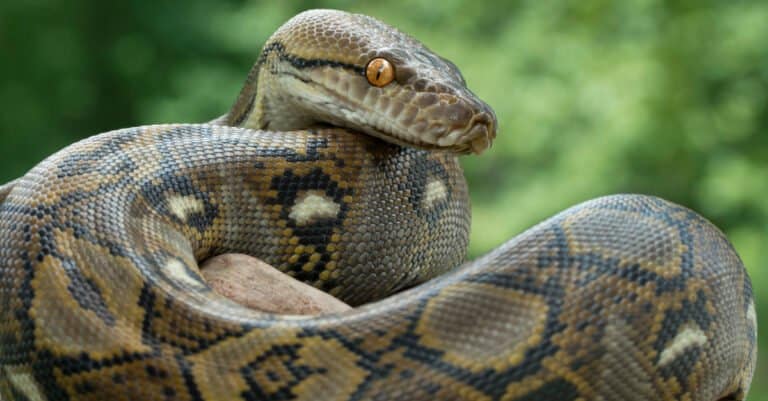
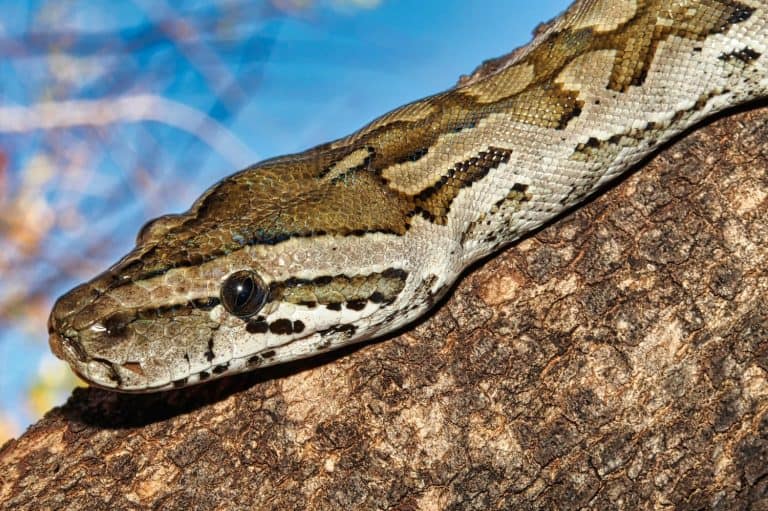
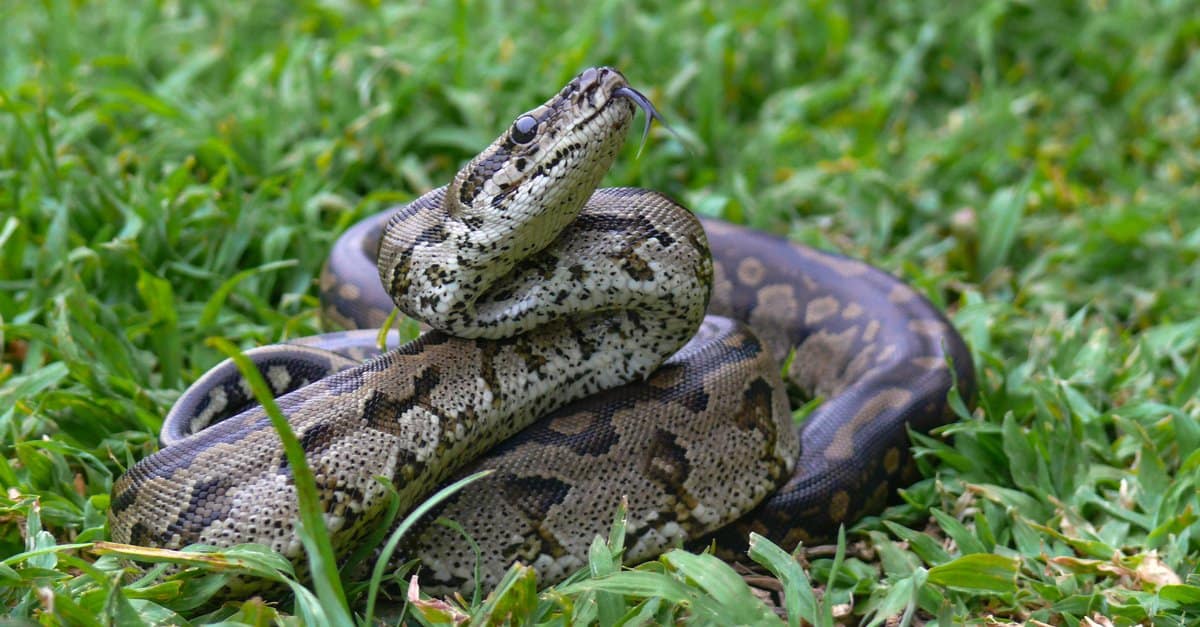
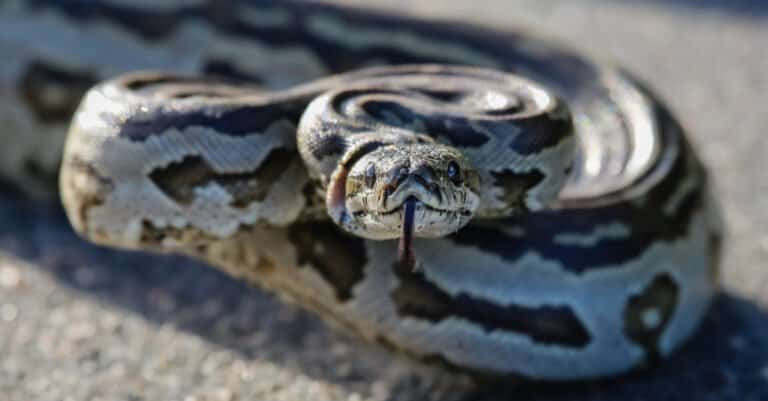
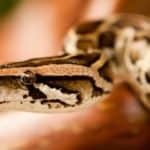
An adult P. sebae is a huge animal, ranging from nearly 10 feet to over 20 feet in length, and females are bigger than males. It is not just long but has a robust body that can contribute to it weighing close to 200 pounds or more. It has a small, v-shaped head with a spearhead-shaped pattern on top. The body is grayish-brown, grayish-green, or yellowish with darker blotches edged in white, and the scales are smooth. The belly of the snake is white and speckled with black.

These beautiful patterns and colors make the snake vulnerable to hunters who want its hide for leather. On closer examination, a person might discover pelvic spurs. These are what is left of the hind legs snakes got rid of eons ago. The presence of pelvic spurs is another aid in the identification of a python.

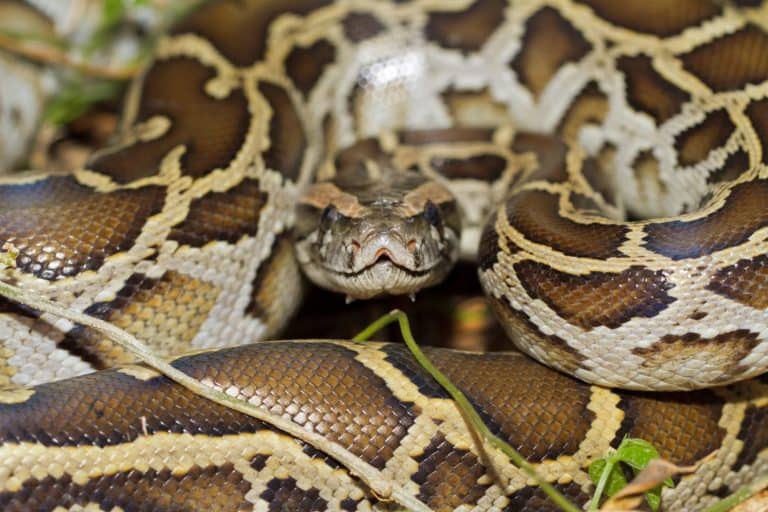
Rock Python vs Burmese Python

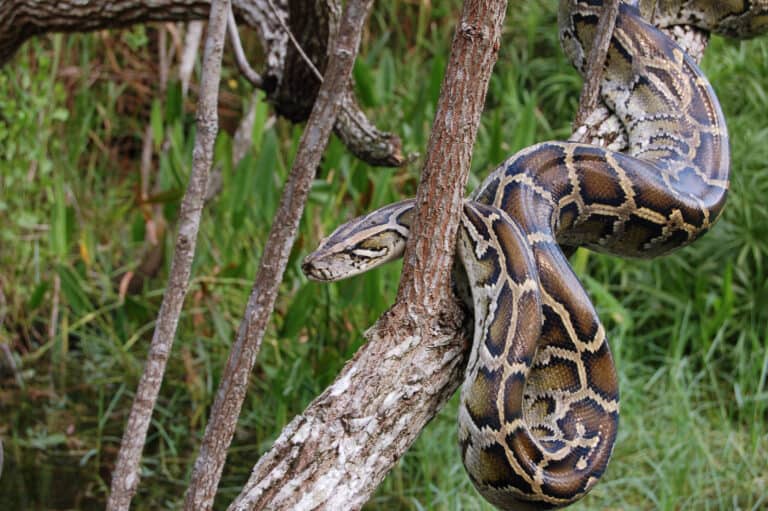
Differentiating the rock and Burmese pythons can be challenging because they do look somewhat alike. One means of identification of the Burmese python is that its hide is made of brown blotches edged in black. The blotches on the rock python are edged in white and are sometimes not as distinct and merge together more than the blotches of the other python. The Burmese python, P. bivittatus is also smaller in size than P. sebae and rarely gets over 18 feet long. Though it is considered bad-tempered, the Burmese python is still not as aggressive as the rock python. Though both python mothers incubate and guard their eggs, the Burmese python โ€œshiversโ€ to produce heat for her eggs, while the rock python doesnโ€™t

Venom: How Dangerous Are They?

๐Ÿ‘ Image
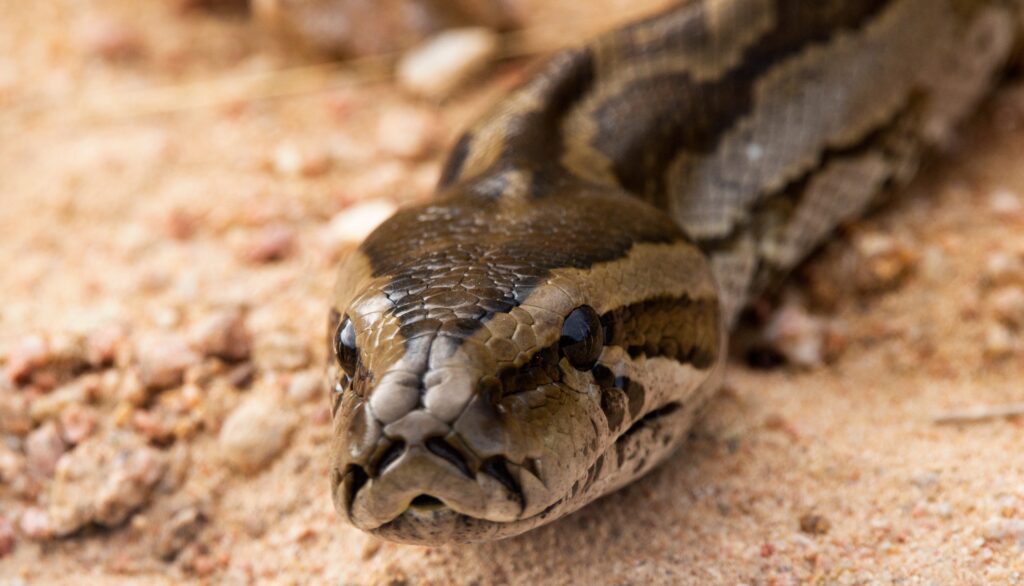
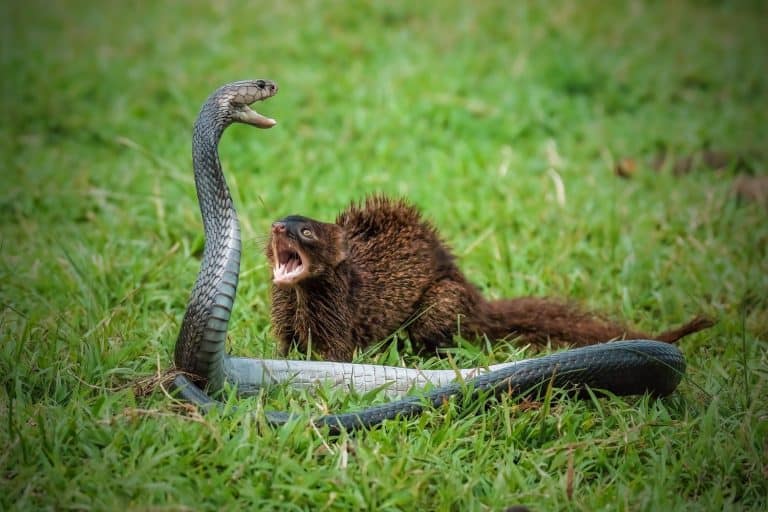
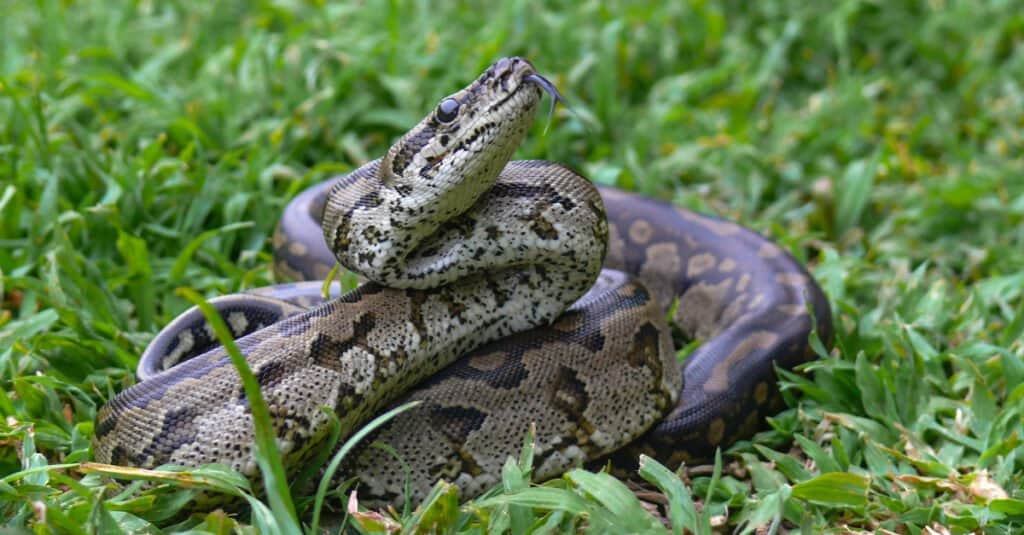
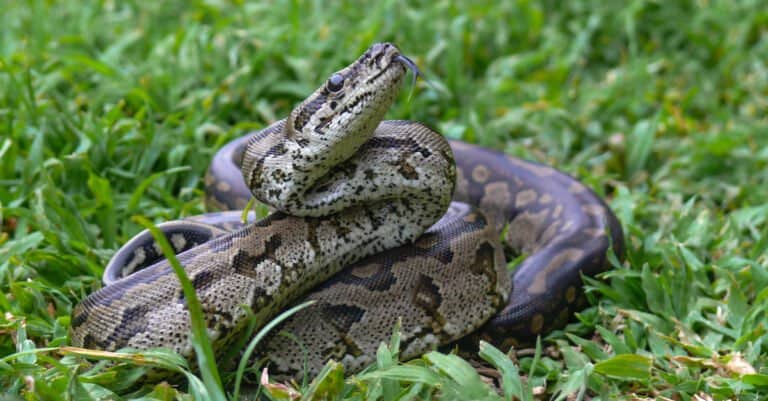
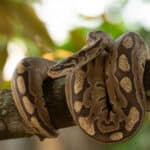
Rock pythons are nonvenomous. However, their immense strength makes them extremely dangerous to humans

ยฉChris Graf/Shutterstock.com

These snakes are nonvenomous, but they can grow to be so big and powerful that itโ€™s not safe for an inexperienced person to be around them. Even experienced people are sometimes attacked.

Behavior and Humans
๐Ÿ‘ Image

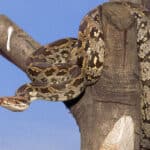
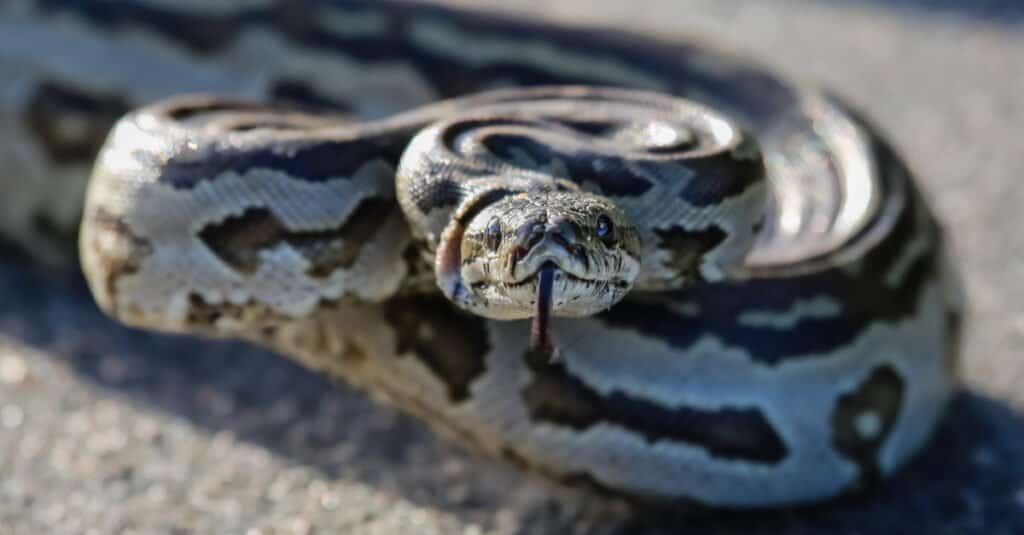
Rock pythons are hunted for their skins and may also be kept as pets by reptile enthusiasts

ยฉUwe Bergwitz/Shutterstock.com

As with most types of snakes, P. subae is solitary save for the mating season. Despite their great size, they can climb trees well. Theyโ€™re also good swimmers and sometimes have fish as part of their diet. They are mostly nocturnal predators, though they might bask in the sun to warm up during the day. Younger snakes are more active at sunup and just after sundown and seek shelter in a tree cavity or under a rock outcropping.

These snakes are ready to breed when theyโ€™re between three and five years old, which is when females are about 8.86 feet long, and males are about 5.9 feet long. They have a lifespan as long as 30 years in captivity.

The snakes mate in the late fall to late winter or early spring. Both males and females stop eating at this time, and the female wonโ€™t eat again until her eggs hatch. Sheโ€™ll lay them about three months after mating in an abandoned burrow, a cave, a hollow tree, or a termite mound. A clutch can contain from 20 to as many as 100 surprisingly large, hard-shelled eggs. Sheโ€™ll guard them until they hatch, which is 65 to 80 days after they were laid. Hatchlings are independent at birth. Some mothers take no more care of their babies, while others guard them for as long as two weeks. This is very unusual behavior for a snake.

Though big rock pythons are capable of killing humans, this is very rare. Humans, however, frequently kill rock pythons for their meat and their hides. Some people try to keep these animals as pets. Juvenile pythons are beneficial for they eat rats and other pests before they move on to larger fare as they grow.

Similar Animals

View all 180 animals that start with R

Sources

  1. Wikipedia / Accessed January 23, 2022
  2. ITIS / Accessed January 23, 2022
  3. Florida Museum / Accessed January 23, 2022
  4. Lincoln Park Zoo / Accessed January 23, 2022
  5. Toronto Star / Accessed January 23, 2022
  6. National Geographic / Accessed January 23, 2022

About the Author

Dana Mayor

I love good books and the occasional cartoon. I am also endlessly intrigued with the beauty of nature and find hummingbirds, puppies, and marine wildlife to be the most magical creatures of all.
Connect:

Thank you for reading! Have some feedback for us?

Contact the AZ Animals editorial team

Related Articles You May Find Interesting


Rock Python FAQs (Frequently Asked Questions)

Rock pythons are not venomous, but that doesnโ€™t mean theyโ€™re not dangerous. They are aggressive predators and strike out when they feel threatened. They have large, curved teeth that deliver painful bites that can become infected, and their coils can suffocate or cut off blood circulation.

Like all snakes, the python has a Jacobsonโ€™s organ that allows it to pick up chemical signals produced by potential prey. They also have pits along their mouth that can detect heat given off by warm-blooded animals. Once the prey is detected, the reptile follows it or waits for it to come within range. Then, it will strike, grab the animal with its teeth and wrap its coils around it. Pythons donโ€™t crush their prey but suffocate it until it dies from heart failure. Then, the python swallows it whole.

Rock pythons are famous for being aggressive. Despite this, it is rare for one to kill a human.

Rock pythons live in the savannas and forests of sub-Saharan Africa.

A snake as big and powerful as a rock python has a variety of prey as its diet. Juveniles eat rats and other small-sized animals. Adults eat everything from antelopes, to monkeys to crocodiles to livestock. As they are cold-blooded, these snakes donโ€™t need to eat as regularly as most mammals do, and at least one snake went over two years between meals.

A rock python, Python subae, is a very large snake that lives in various locations and warm, moist habitats around Africa. It is not venomous but kills its prey through constriction.

The largest animal ever eaten by a rock python was a 150-pound hyena. The incident was recorded in 2017. Previously, the largest record of a rock python meal was a 130-pound impala.

Rock pythons do not make good pets. They grow much too large, can deliver a nasty bite, and to care for them properly is expensive. If they escape or are released into the wild, they can do damage to the ecosystem as an invasive species.

Rock pythons have been known to eat lion cubs. However, this is rare because the cubs are usually protected by the adults in the pride.

They are good swimmers and can even stay underwater for a surprisingly long time.

Smaller humans have, once in a great while, been eaten by these snakes. This is one reason why P. sebae shouldnโ€™t be kept as a pet.

The greatest differences between a rock python and a Burmese python are their size and distribution.