







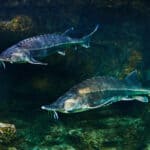
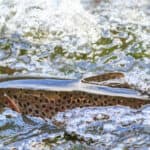
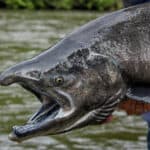
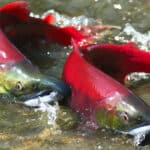
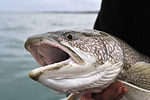
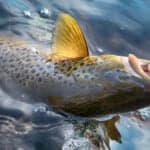
Every year, when conditions are right, the salmon undertakes a remarkable journey upstream to reproduce with others and create the next generation of fish. This is accompanied by a massive physical transformation in which its color and body shape change to suit its new habitat. Many never make it. Carnivores, birds of prey, and even humans all capture these fish for their oily meat, which is high in omega-3 fatty acids and protein.
3 Incredible Salmon Facts
- Great sense of smell: The remarkable sense of smell allows salmon to find the same spawning grounds each year. It seems to record the memory of the ground’s scent from the moment it starts migrating to the ocean as a juvenile fish. The sockeye salmon can even sense changes in the planet’s magnetic field.
- Mythological creature: The salmon fish is an important figure in some Celtic, Irish, and Norse mythology. One legend states that Loki transformed himself into a salmon to escape punishment from the other gods.
- Multi-phase maturation: The salmon passes through several life stages on the way to adulthood. The first stage is called a fry. After growing about an inch, it becomes a parr and develops black camouflage splotches over its body. After growing several inches, it becomes a smolt, loses its splotches, and returns to the sea.
Classification and Scientific Name
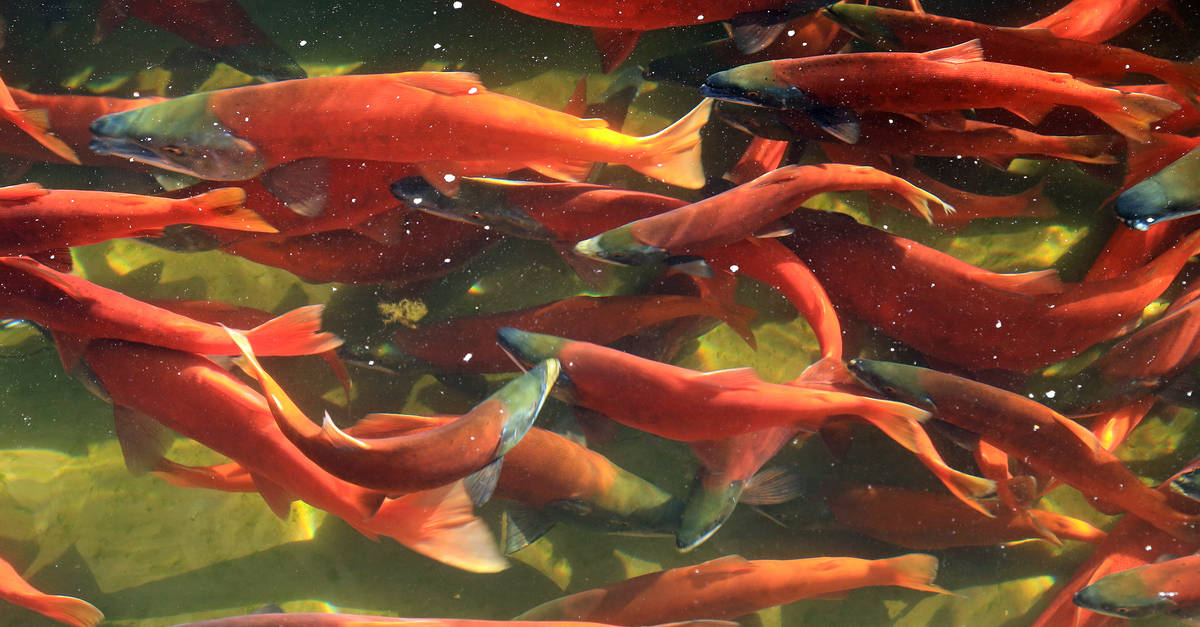
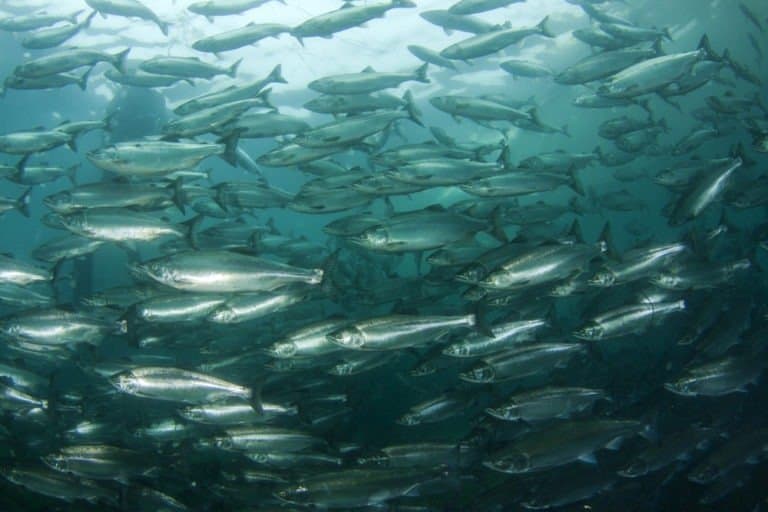
These Sockeye salmon are members of the family Salmonidae and one of eight species of true salmon from the North Pacific.
©JCA Images/Shutterstock.com
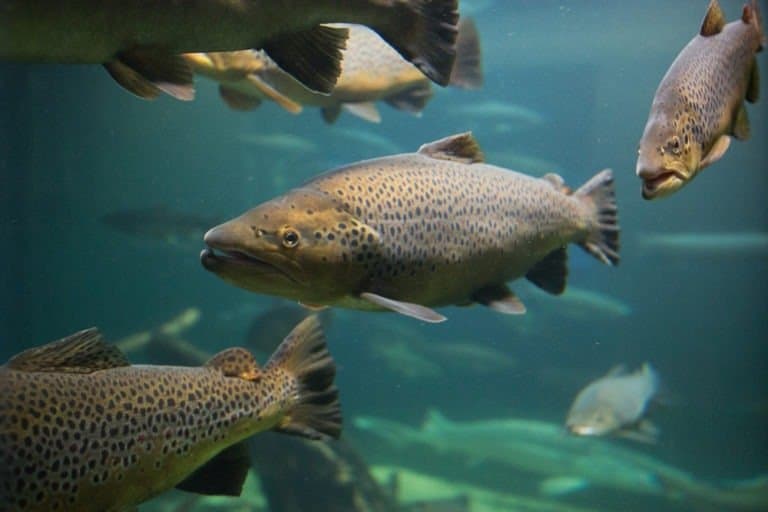
Salmon is a group of fish that belongs to the family of Salmonidae. The name comes to us in English from the Latin word salmo. This, in turn, might have been based on an older word that means “to leap.” It is important to note that not every member of the family Salmonidae is a true salmon because this family also includes trout, char, and whitefish.
Species
The Salmonidae family of fish is divided into two different genera. The genus Salmo includes only the Atlantic salmon. The genus Oncorhynchus includes all of the various Pacific salmon. There are currently around eight species of true salmon (seven of them Pacific), plus four other species of “fake” salmon, including the entirely freshwater Danube salmon, which is actually more trout-like. Here are a few examples of true salmon:
- Chinook Salmon: This species is endemic to the rivers and coasts of Alaska, China, Japan, Siberia, and the American and Canadian Pacific. The name itself is derived from the Chinook people of the Pacific Northwest, but other common names include the king salmon and the spring salmon.
- Atlantic Salmon: This species has a massive range around Canada, Greenland, Europe, and the northern United States.
- Sockeye Salmon: Sporting a bright red coloration, the sockeye is endemic to the Northern Pacific Ocean.
Appearance
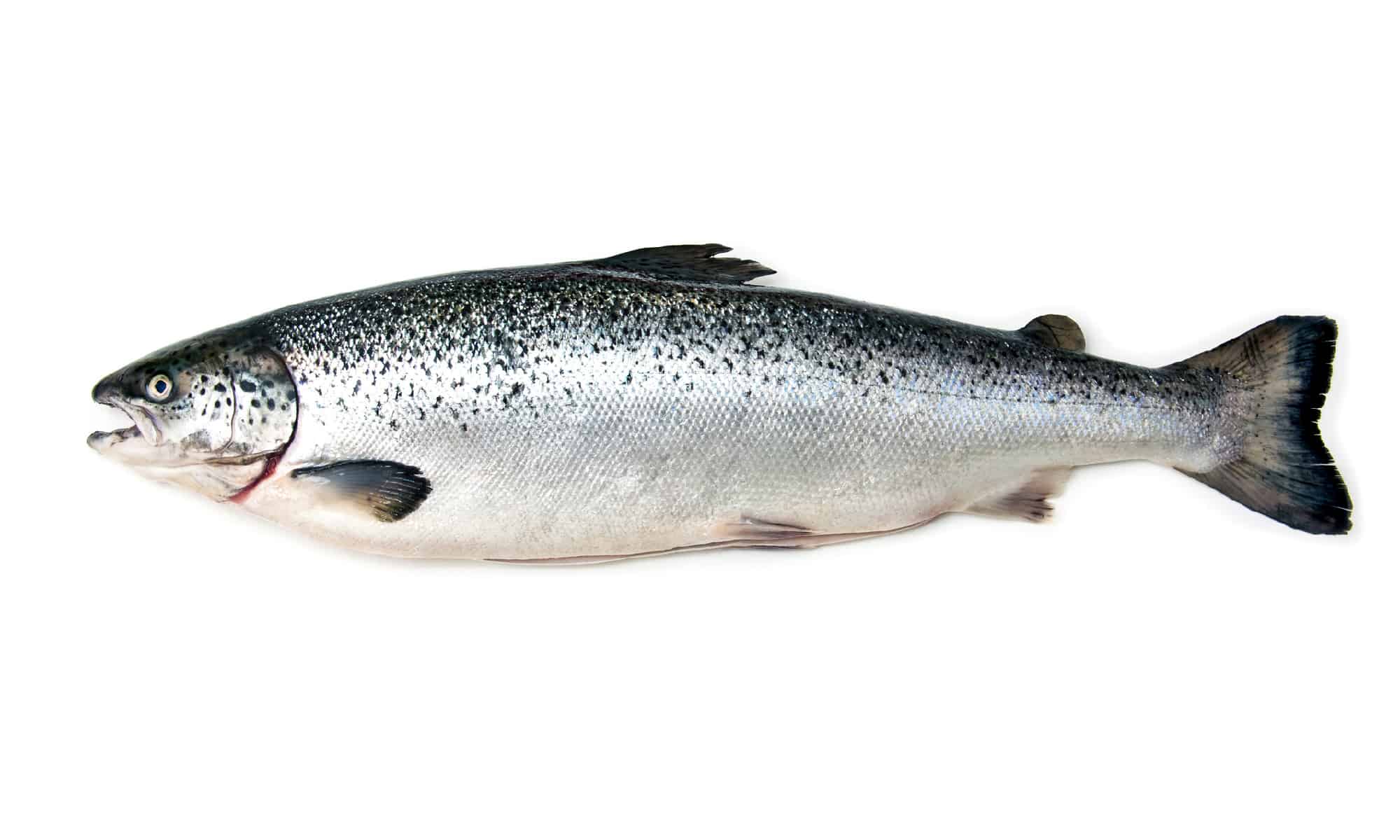
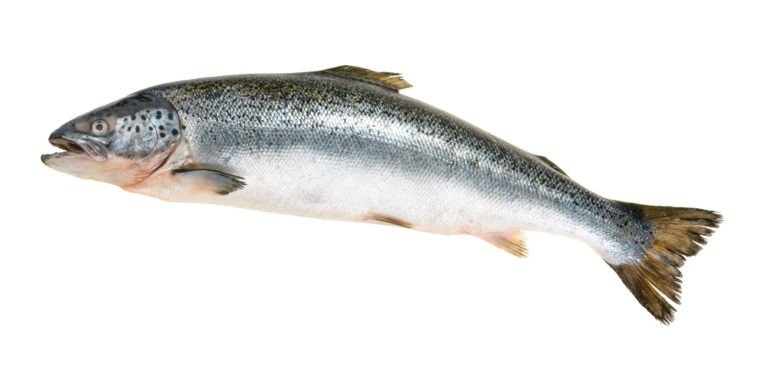
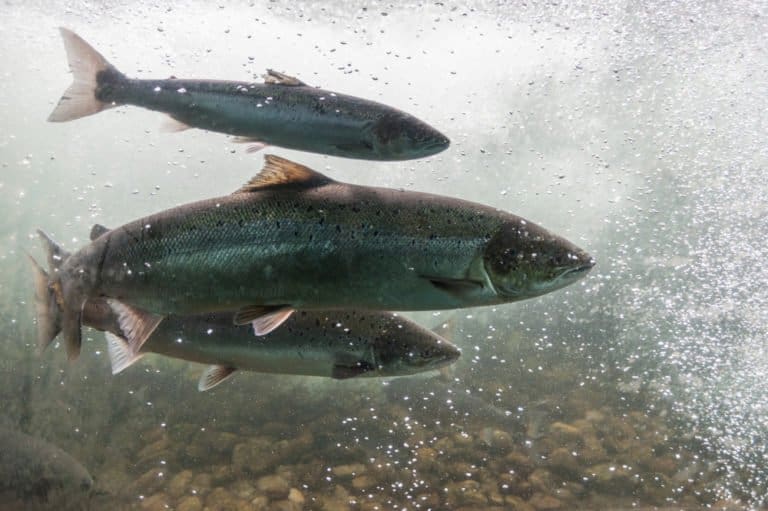
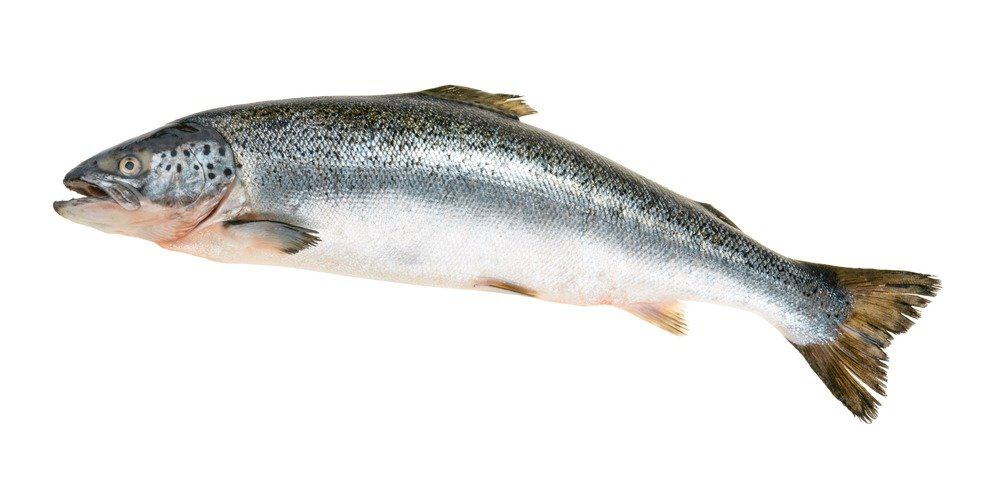
This Atlantic salmon demonstrates the long body and various fins of its genus, including the shimmering silver appearance.
©iStock.com/EddWestmacott
The salmon is a long fish with a pointed or hooked beak, two sets of paired fins on the pelvis and side, and four single fins around the body. Throughout most of the year, it sports a shimmering silver appearance with pockets of blue, red, green, pink, or purple, but as spawning season approaches, the scales transform into all manner of bright colors. Some species may also undergo physical changes such as growing a hump, a curved jaw, or canine teeth.
An adult weighs an average of around 10 to 20 pounds, but there is considerable variation around this number. The pink salmon weighs no more than 3 to 6 pounds, while the appropriately named king salmon (the Chinook) weighs more like 23 pounds. The largest specimen ever observed was a Chinook that weighed 126 pounds and measured almost 5 feet long. The largest one ever caught was an 82-pound behemoth from Sitka, Alaska.
Habitat
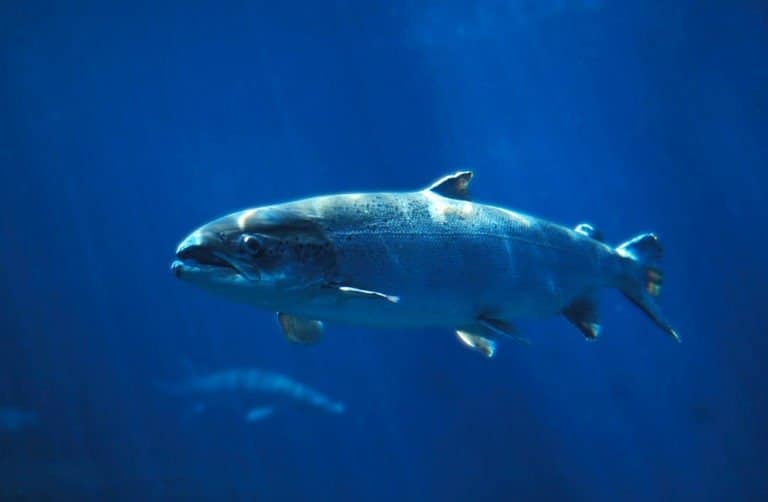
The salmon spends most of its life in saltwater oceans, but returns to freshwater sources to spawn.
©azure1/Shutterstock.com
This fish has adapted an anadromous lifestyle, which means it spends its life in saltwater oceans but then returns to freshwater sources (usually the place of its birth) to spawn. The greatest concentration is found in the North Pacific, but it is endemic to the North Atlantic as well. The salmon has also been introduced into several non-native regions, including the Great Lakes in North America and Patagonia in South America.
Predators and Prey
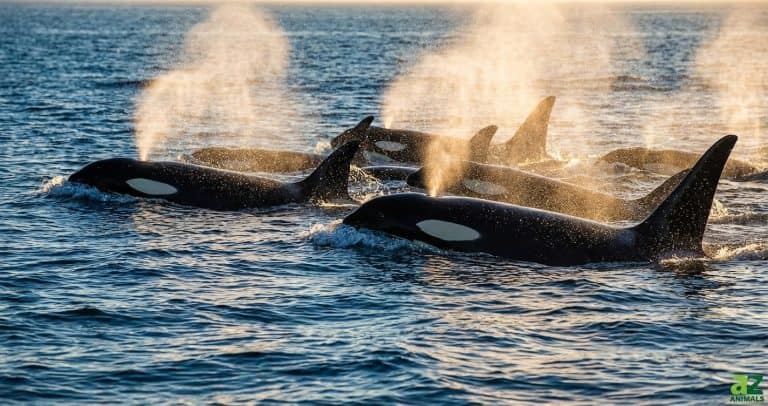
This fish’s diet consists of worms, squid, crustaceans (like krill), and other fish. In turn, it is a common source of food for many carnivores, including bears, seals, killer whales, sharks, otters, kingfishers, eagles, and humans. The salmon actually plays a critical role in the ecosystem by transferring resources from the nitrogen-rich ocean to inland areas.
Reproduction and Lifespan
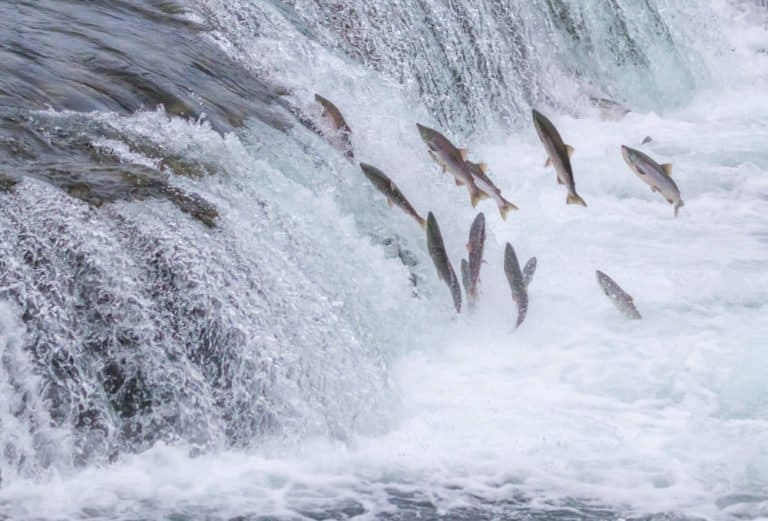
Driven by instinct, the salmon’s life revolves around an annual schedule that culminates with the spawning season in the late summer or fall, when they move upstream. Most species stick closely to the sea, but some populations of Chinook or king salmon undertake an epic journey of more than 2,000 miles up the Yukon River. They fight through the water, leaping and bounding against the direction of the river.
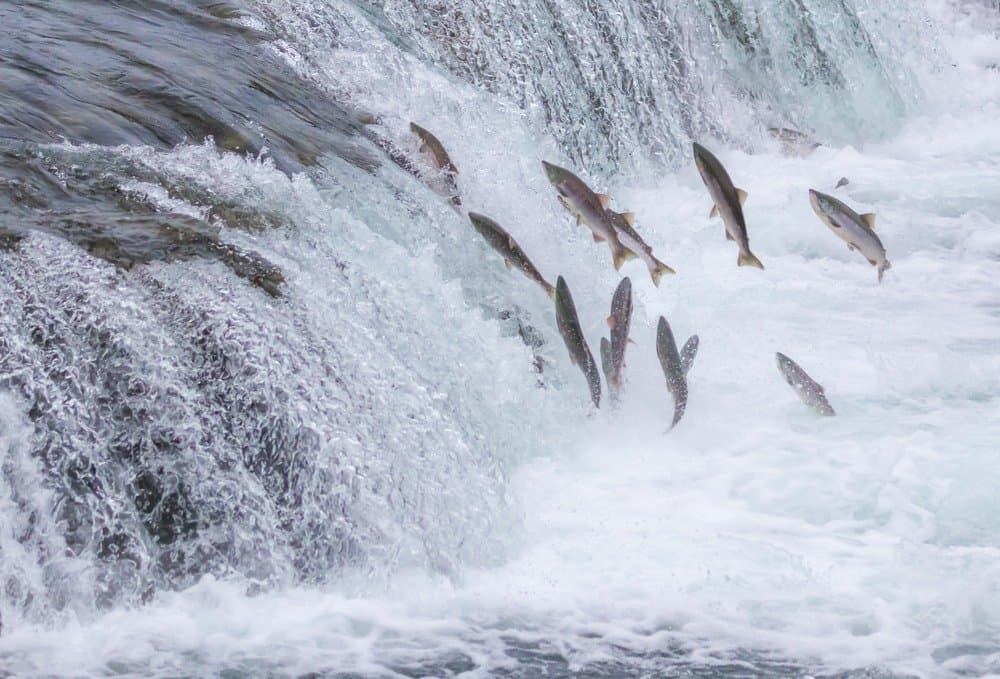
Salmon make a colossal effort to swim upstream to their spawning site, where their eggs will be laid and fertilized.
©Sekar B/Shutterstock.com
To produce offspring, the female will dig a hole in the gravel with her tail and then lay thousands of eggs. The male will come by and release his sperm into the water to fertilize the eggs. Incubation takes 60 to 200 days, depending on the temperature of the surrounding water. Once they hatch, the young fry will then consume what remains of the yolk and emerge from the gravel. It may dally for a few years in the same spawning location before heading back to the sea, but some species return almost immediately after they hatch. The life expectancy is between two and seven years, but four or five years is the average.
Fishing and Cooking
Due to its abundance, the quality and nutrition of its meat, and the ease of catching it, salmon is among the most popular fish worldwide, frequently ranking alongside tuna, tilapia, and cod in global consumption. Every year, millions of pounds of salmon are caught in the Pacific, with pink salmon often making up the largest share, followed by chum and sockeye salmon, though the exact proportions vary annually. Both the Atlantic salmon and the Chinook salmon are primarily caught by recreational and sport fishermen.
This fish has a rather oily taste due to the abundance of healthy fats in its skin. The intensity of the taste depends on its color. The lighter meat has a mild taste, while the redder meat has a much stronger taste. It is popular to smoke, bake, and fry. In terms of nutrition, it is a good source of protein and omega-3.
Farmed vs. Wild
There is now more farmed salmon than wild salmon, with farmed salmon accounting for about 70% of the global market as of 2025, primarily due to increased demand and the scalability of aquaculture. Farmed salmon are selectively bred to mature faster, while wild salmon take 2 to 8 years to fully mature. Farmed salmon generally has higher fat content, including more omega-3 fatty acids, while wild salmon is leaner and lower in calories. The nutritional quality can vary depending on diet and farming practices.
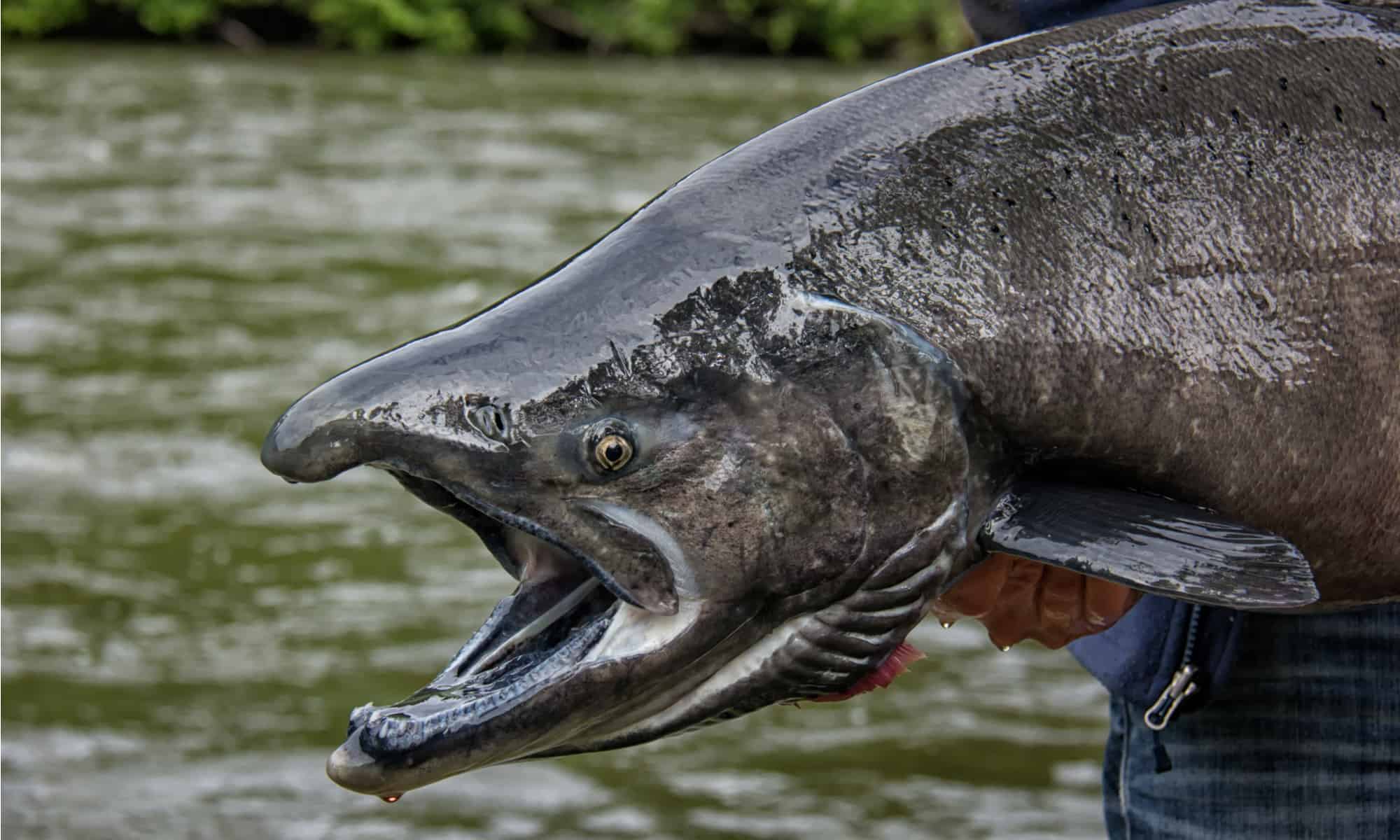
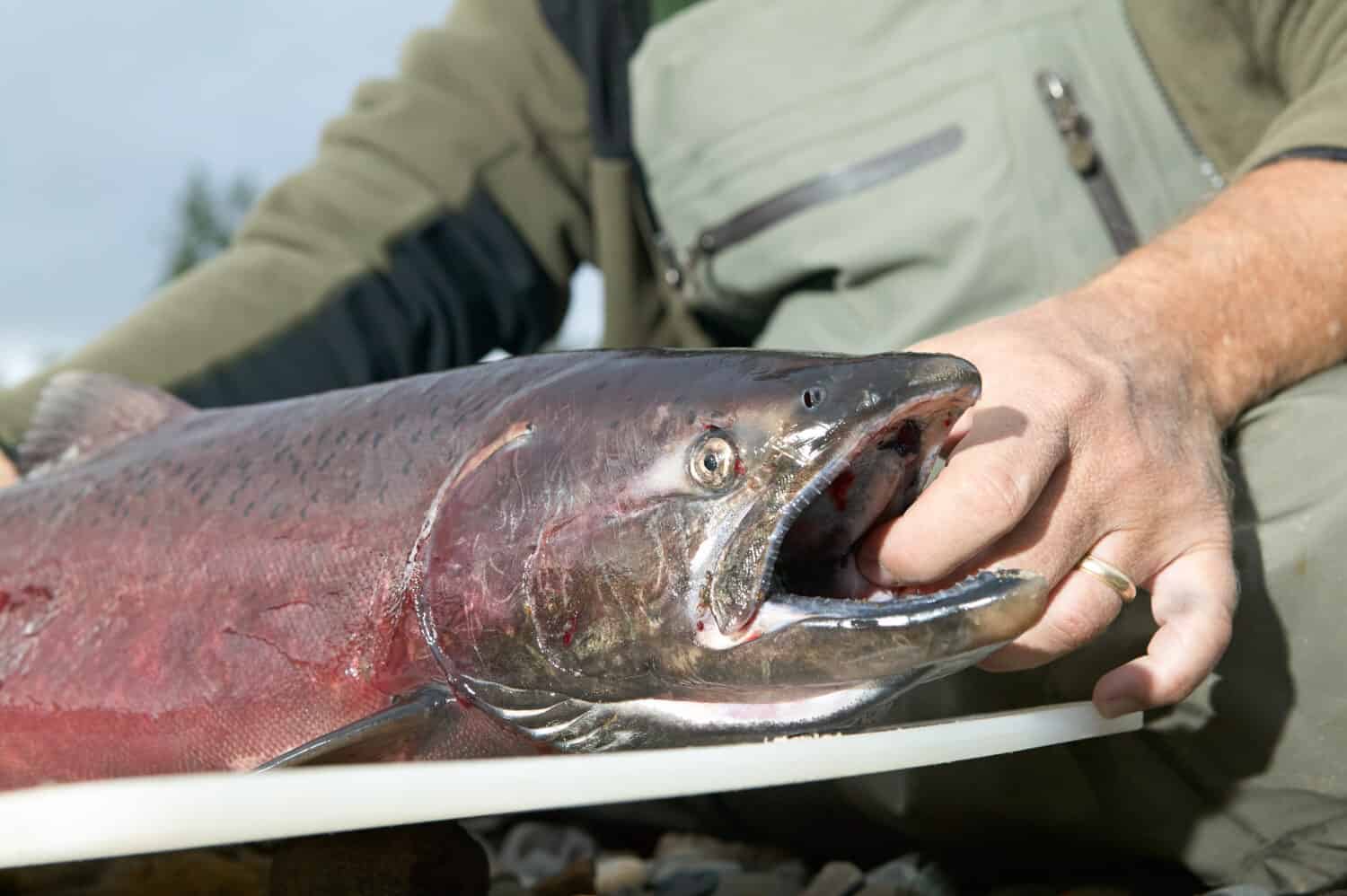
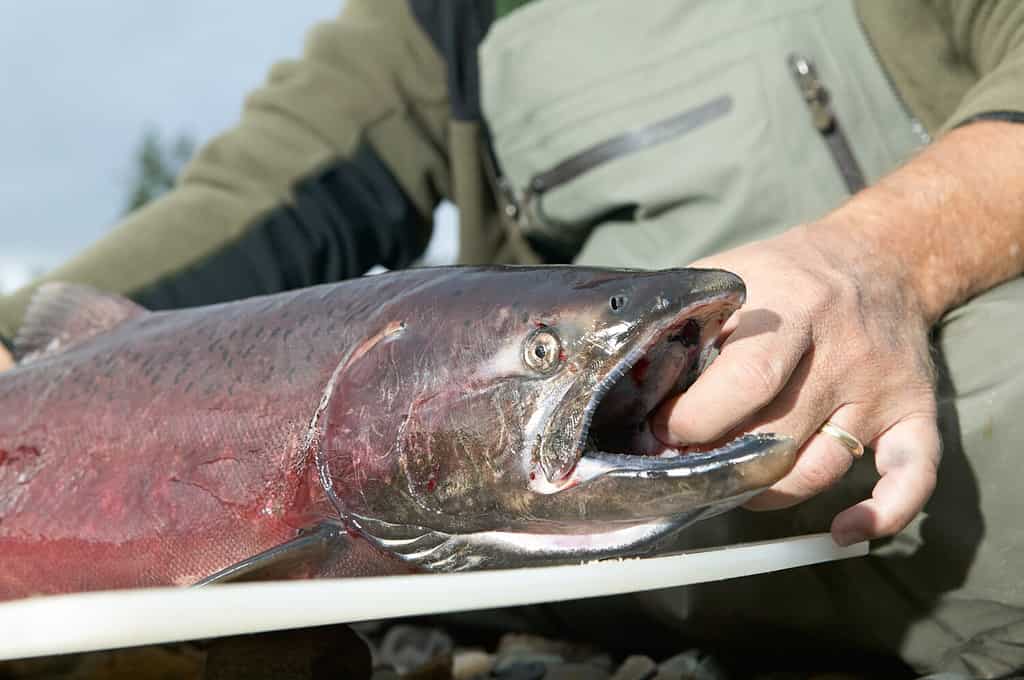
A black streak along the gum line of a Chinook Salmon gives it the alternate name of blackmouth, but it is still a true salmon.
©Martin Rudlof Photography/Shutterstock.com
Population
This is one of the most abundant types of fish in the world’s oceans. Recent reports indicate that pink salmon numbers in the North Pacific have continued to increase, making them the most abundant salmon species in the region, though precise current population estimates vary. The combination of favorable oceanic conditions and well-managed hatcheries has bolstered numbers, even as many other types of fish are declining. Alaska hatcheries release some 1.8 billion pink salmon fry each year, while Asian hatcheries add another 3 billion. This fish is so prolific in the Pacific that some scientists worry it may threaten other fish species by outcompeting them for food.
Most species are listed as of least concern, but if there is any danger at all from human activity, it’s due to pollution, overfishing, and dam construction. The Danube salmon (Hucho hucho), although not a true salmon, is currently classified as Vulnerable.