

S
Species Profile

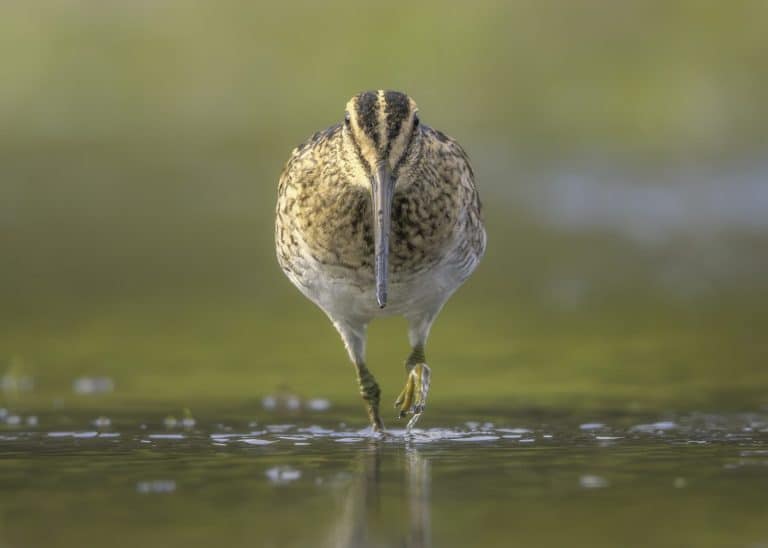
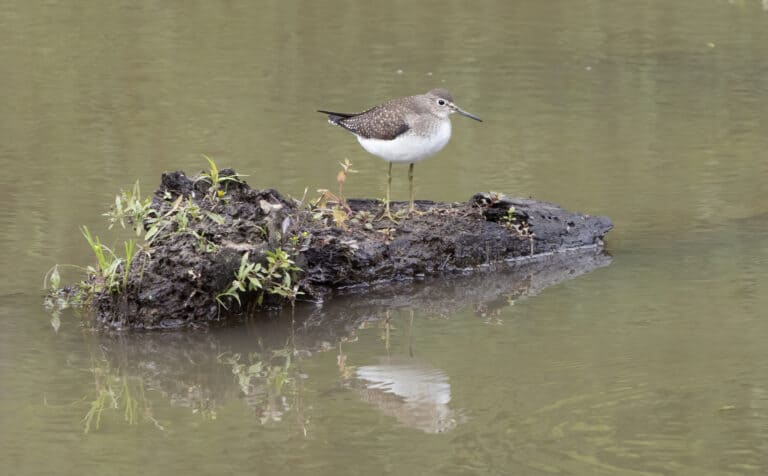
Sandpiper

Scolopacidae

Built for mudflats and megamigrations
iStock.com/Paolino Massimiliano Manuel

Sandpiper Distribution

Click a location to explore more animals from that region

Loading map...

Found in 64 countries

๐Ÿ‡ฆ๐Ÿ‡ช United Arab Emirates ๐Ÿ‡ฆ๐Ÿ‡ท Argentina ๐Ÿ‡ฆ๐Ÿ‡บ Australia ๐Ÿ‡ง๐Ÿ‡ฉ Bangladesh ๐Ÿ‡ง๐Ÿ‡ช Belgium ๐Ÿ‡ง๐Ÿ‡ท Brazil ๐Ÿ‡จ๐Ÿ‡ฆ Canada ๐Ÿ‡จ๐Ÿ‡ฑ Chile ๐Ÿ‡จ๐Ÿ‡ฒ Cameroon ๐Ÿ‡จ๐Ÿ‡ณ China ๐Ÿ‡จ๐Ÿ‡ด Colombia ๐Ÿ‡ฉ๐Ÿ‡ช Germany ๐Ÿ‡ฉ๐Ÿ‡ฐ Denmark ๐Ÿ‡ช๐Ÿ‡จ Ecuador ๐Ÿ‡ช๐Ÿ‡ฌ Egypt ๐Ÿ‡ช๐Ÿ‡ธ Spain ๐Ÿ‡ซ๐Ÿ‡ฎ Finland ๐Ÿ‡ซ๐Ÿ‡ท France ๐Ÿ‡ฌ๐Ÿ‡ง United Kingdom ๐Ÿ‡ฌ๐Ÿ‡ญ Ghana ๐Ÿ‡ฌ๐Ÿ‡ฑ Greenland ๐Ÿ‡ฌ๐Ÿ‡ท Greece ๐Ÿ‡ฎ๐Ÿ‡ฉ Indonesia ๐Ÿ‡ฎ๐Ÿ‡ช Ireland ๐Ÿ‡ฎ๐Ÿ‡ฑ Israel ๐Ÿ‡ฎ๐Ÿ‡ณ India ๐Ÿ‡ฎ๐Ÿ‡ธ Iceland ๐Ÿ‡ฎ๐Ÿ‡น Italy ๐Ÿ‡ฏ๐Ÿ‡ต Japan ๐Ÿ‡ฐ๐Ÿ‡ช Kenya ๐Ÿ‡ฐ๐Ÿ‡ท South Korea ๐Ÿ‡ฐ๐Ÿ‡ฟ Kazakhstan ๐Ÿ‡ฑ๐Ÿ‡ฐ Sri Lanka ๐Ÿ‡ฒ๐Ÿ‡ฆ Morocco ๐Ÿ‡ฒ๐Ÿ‡ฒ Myanmar ๐Ÿ‡ฒ๐Ÿ‡ณ Mongolia ๐Ÿ‡ฒ๐Ÿ‡ฝ Mexico ๐Ÿ‡ฒ๐Ÿ‡พ Malaysia ๐Ÿ‡ฒ๐Ÿ‡ฟ Mozambique ๐Ÿ‡ณ๐Ÿ‡ฆ Namibia ๐Ÿ‡ณ๐Ÿ‡ฌ Nigeria ๐Ÿ‡ณ๐Ÿ‡ฑ Netherlands ๐Ÿ‡ณ๐Ÿ‡ด Norway ๐Ÿ‡ณ๐Ÿ‡ต Nepal ๐Ÿ‡ณ๐Ÿ‡ฟ New Zealand ๐Ÿ‡ด๐Ÿ‡ฒ Oman ๐Ÿ‡ต๐Ÿ‡ช Peru ๐Ÿ‡ต๐Ÿ‡ฌ Papua New Guinea ๐Ÿ‡ต๐Ÿ‡ญ Philippines ๐Ÿ‡ต๐Ÿ‡ฐ Pakistan ๐Ÿ‡ต๐Ÿ‡ฑ Poland ๐Ÿ‡ต๐Ÿ‡น Portugal ๐Ÿ‡ท๐Ÿ‡บ Russia ๐Ÿ‡ธ๐Ÿ‡ฆ Saudi Arabia ๐Ÿ‡ธ๐Ÿ‡ช Sweden ๐Ÿ‡ธ๐Ÿ‡ฌ Singapore ๐Ÿ‡ธ๐Ÿ‡ณ Senegal ๐Ÿ‡น๐Ÿ‡ญ Thailand ๐Ÿ‡น๐Ÿ‡ท Turkey ๐Ÿ‡น๐Ÿ‡ผ Taiwan ๐Ÿ‡น๐Ÿ‡ฟ Tanzania ๐Ÿ‡บ๐Ÿ‡ธ United States ๐Ÿ‡ป๐Ÿ‡ณ Vietnam ๐Ÿ‡ฟ๐Ÿ‡ฆ South Africa

Size Comparison

Human 5'8"
Sandpiper 9 in

Sandpiper stands at 13% of average human height.

At a Glance

Family Overview This page covers the Sandpiper family as a group. Stats below are general traits shared across the family.
Also Known As Snipe, Woodcock, Curlew, Godwit, Dowitcher, Ruff, Peeps, Stint
Diet Omnivore
Activity Diurnal+
Lifespan 10 years
Weight 1.3 lbs
Status Not Evaluated
Did You Know?

Scolopacidae spans tiny "peeps" (~12-15 cm) to large curlews (~60-66 cm) with dramatically different bill shapes for different prey depths.

Scientific Classification

Family Overview "Sandpiper" is not a single species but represents an entire family containing multiple species.

Scolopacidae are medium-to-small shorebirds characterized by probing bills, strong migratory behavior, and foraging on invertebrates in mud, sand, marshes, tundra, and shorelines. In everyday English, โ€œsandpiperโ€ often informally refers to many small scolopacid species, especially in the genus Calidris.

Kingdom
Animalia
Phylum
Chordata
Class
Aves
Order
Charadriiformes
Family
Scolopacidae

Distinguishing Features

  • Typically slender to medium-length bills adapted for probing mud/sand (shape varies widely among genera)
  • Longish wings and strong migratory flight; many species travel thousands of kilometers
  • Foraging behavior includes pecking and probing; often in flocks during migration and winter
  • Cryptic brown/gray nonbreeding plumage common; many species show brighter breeding plumage patterns

Physical Measurements

Males and females differ in size

Height
โ™‚ 10 in (4 in โ€“ 1 ft 12 in)
Length
โ™‚ 11 in (5 in โ€“ 2 ft 2 in)
โ™€ 10 in (5 in โ€“ 2 ft 2 in)
Weight
โ™‚ 0 lbs (0 lbs โ€“ 3 lbs)
โ™€ 0 lbs (0 lbs โ€“ 3 lbs)
Tail Length
โ™‚ 3 in (2 in โ€“ 6 in)
โ™€ 3 in (1 in โ€“ 6 in)
Top Speed
56 mph
flying

Appearance

Primary Colors
Secondary Colors
Skin Type Dense contour feathers and flight feathers; bare keratinized bill and scaly bare legs/feet, sometimes with lobed toes in phalaropes.
Distinctive Features
  • Overall size range across family: ~12-70 cm length; ~25-110 cm wingspan; ~0.02-1.3 kg mass (small Calidris to large curlews/godwits).
  • Bill diversity is extreme: short straight picking bills to very long probing bills; many are slightly downcurved or upcurved, with sensitive tips for detecting prey.
  • Leg length varies from short (snipes/woodcocks) to very long (godwits/large sandpipers), reflecting different wading depths and foraging zones.
  • Plumage typically emphasizes camouflage: mottled/scalloped upperparts and paler underparts; some taxa develop bold rufous/black breeding patterns.
  • Many have relatively long, pointed wings suited to sustained migration; some show white wing bars or rump patterns used in flight identification.
  • Feeding adaptations include tactile probing in mud/sand, rapid surface pecking, and (in phalaropes) swimming and spinning to upwell prey.
  • Habitat use spans tidal mudflats, estuaries, shorelines, marshes, inland wetlands, tundra, and grassland edges; some are more pelagic outside breeding (phalaropes).
  • Migration ecology is a hallmark: many species undertake long-distance flyway migrations with large staging aggregations; a subset are short-distance migrants or more resident depending on region and species.
  • Lifespan varies widely: typical wild longevity often ~3-15 years, with documented maxima in some species exceeding ~20-30 years.
  • Body shape ranges from plump, cryptic, big-headed snipes to sleek, long-necked godwits/curlews; most share a streamlined shorebird silhouette.

Sexual Dimorphism

Dimorphism varies by lineage. Many species are subtly dimorphic, with females often larger and longer-billed (notably in curlews/godwits and some sandpipers); others show sex-role reversal with more colorful females and more incubating males (phalaropes).

โ™‚
  • Often slightly smaller overall; bill may be shorter than female in several lineages.
  • In many species, males show slightly brighter or more contrasting breeding plumage.
  • In phalaropes, males are plainer and more cryptic during breeding season.
โ™€
  • Often larger-bodied with longer bill/wing in several groups, aiding deeper probing.
  • In some taxa, females show richer rufous/chestnut or stronger patterning in breeding season.
  • In phalaropes, females are more colorful and contrasting than males.

Did You Know?

Scolopacidae spans tiny "peeps" (~12-15 cm) to large curlews (~60-66 cm) with dramatically different bill shapes for different prey depths.

Many species migrate thousands of kilometers along major flyways (Americas, East Atlantic, East Asian-Australasian), timing stops to peak food on mudflats.

Phalaropes are unusual among shorebirds: they often swim while feeding, and in some species females are brighter and males do most incubation.

Some sandpipers forage in tightly synchronized flocks, flashing light/dark wing patterns that can confuse predators and coordinate movement.

Bills are packed with sensory receptors near the tip in many species, helping them detect prey by touch/vibration while probing mud.

Breeding strategies vary widely: from monogamy to polygyny and polyandry, with different levels of parental care across genera.

Several species show extreme site fidelity-returning to the same staging or breeding areas year after year if habitat remains intact.

Unique Adaptations

  • Wide bill/leg diversity for niche-splitting: short, straight bills (many Calidris "peeps") vs. long, upcurved/downcurved bills (godwits/curlews) and varied leg lengths reduce competition by targeting different prey depths and microhabitats.
  • Tactile foraging tools: many have highly innervated bill tips and flexible upper mandibles that improve prey detection and handling in soft substrates.
  • Long-distance flight physiology: high aerobic capacity and the ability to rapidly build and burn fat stores support marathon migrations between staging sites.
  • Countershaded and seasonally changing plumage: many switch from cryptic nonbreeding tones (for coastal camouflage) to more patterned breeding plumage suited to tundra/grassland display and territory defense.
  • Salt and water balance strategies: frequent coastal feeding requires efficient osmoregulation; many also exploit freshwater sites to reduce salt load when available.
  • Swimming specialization (phalaropes): lobed toes and buoyant plumage allow open-water spinning/pecking behavior that concentrates planktonic prey at the surface.

Interesting Behaviors

  • Probing and "sewing-machine" feeding: many species repeatedly insert the bill into wet sand/mud, then extract worms, insect larvae, mollusks, or crustaceans; longer-billed godwits/curlews often reach deeper prey than short-billed sandpipers.
  • Tidal commuting: flocks shift between intertidal feeding grounds at low tide and safe high-tide roosts, often traveling in waves as water levels change.
  • Aerial flocking and rapid turns: small sandpipers frequently fly in dense, coordinated groups; flock structure and timing can change with predator pressure and wind.
  • Breeding displays: snipes perform dramatic "winnowing" flights, producing a vibrating sound with tail feathers; many sandpipers use song flights, ground scrapes, or ritualized postures.
  • Role reversal (in some phalaropes): females may compete for mates; males often incubate and tend chicks, while females may seek additional mates.
  • Habitat breadth with strong preferences: across the family, species specialize from rocky shores to estuaries, freshwater marshes, grasslands, and Arctic tundra; some are generalists, others tightly tied to particular shorelines or salinity regimes.

Cultural Significance

Sandpipers (Scolopacidae) signal seasons by timing with tides, insect blooms, and migration. They matter to birdwatchers and wetland conservationโ€”mudflats and estuaries are key stop-and-feed sitesโ€”and in many cultures their calls and migrations mean travel and yearly renewal.

Myths & Legends

Indigenous New Zealand stories say the bar-tailed godwit comes and goes with the seasons; people note its long ocean migration and use its return as a sign that the seasons are changing.

In Irish and Scottish Gaelic stories, the curlew's sad call is seen as an omen. People link its sound in remote bogs and moors to warnings, sorrow, or wind-carried laments.

In Japan, sandpipers and snipes appear in classical poetry as evocative marsh birds; their presence and calls are used as seasonal imagery, especially for autumn wetlands and nighttime solitude.

The North American 'snipe hunt' was a famous camping and rural prank in the 19thโ€“20th centuries, based on the real bird's shy, zigzag flushing from marshes and turned into a joking cultural idea.

European hunting lore long treated snipes as challenging quarry; the phrase "sniper" traces back to skilled snipe-shooters, a historical naming story linking the bird to marksmanship traditions.

Conservation Status

NE Not Evaluated at the family (hub) level. Across Scolopacidae, IUCN statuses span from Least Concern to Critically Endangered (and a few possibly extinct), with many long-distance migrants showing broad declines. Notable at-risk members include Spoon-billed Sandpiper (CR) and several highly threatened curlews/snipe/sandpipers.

Has not yet been evaluated against the criteria.

Population Decreasing

Protected Under

  • Convention on Migratory Species (CMS/Bonn Convention) - many species listed
  • African-Eurasian Migratory Waterbird Agreement (AEWA) - many species covered
  • Ramsar Convention on Wetlands - key sites used by many species
  • EU Birds Directive - protection and site designation for EU populations
  • Migratory Bird Treaty Act (United States) / Migratory Birds Convention Act (Canada) - most native species protected
  • National and regional hunting regulations and protected-area networks along major flyways

Looking for a specific species?

Common Sandpiper

Actitis hypoleucos

Among birds explicitly and widely named "sandpiper" in everyday English (especially across Europe, Africa, and Asia), and commonly encountered along inland and coastal shorelines; the name matches the group label directly, even though "sandpiper" informally covers many small Scolopacidae (notably Calidris) in general speech.

  • Family context: Scolopacidae spans very small to very large shorebirds; many are long-distance migrants that connect Arctic/temperate breeding grounds to coastal and inland wetlands worldwide.
  • Typical scolopacid feeding is invertebrate-focused; many species probe or pick prey from mud, sand, wrack, marsh edges, and shallow water (with notable variation-e.g., phalaropes often feed while swimming).
  • Commonly uses shorelines of rivers, lakes, and coasts, reflecting the family's broad habitat use beyond just ocean beaches.
  • Ground-nesting and reliance on open habitats make many sandpipers sensitive to disturbance, habitat loss, and changes to wetland hydrology.

You might be looking for:

Common Sandpiper

22%

Actitis hypoleucos

A small Eurasian wader often seen bobbing along freshwater and coastal margins.

Spotted Sandpiper

18%

Actitis macularius

Common North American sandpiper; breeding adults show distinctive dark spots on the underparts.

Dunlin

14%

Calidris alpina

Widespread migratory โ€˜peepโ€™; often in large flocks on mudflats and beaches.

Least Sandpiper

12%

Calidris minutilla

Very small North American shorebird; frequently forages on muddy edges with other small sandpipers.

Red Knot

10%

Calidris canutus

Long-distance migrant noted for coastal staging events and reddish breeding plumage.

Life Cycle

Birth 4 chicks
Lifespan 10 years

Lifespan

In the Wild 3โ€“35 years
In Captivity 5โ€“40 years

Reproduction

Mating System Monogamy
Social Structure Socially Monogamous
Breeding Pattern Seasonal
Fertilization Internal Fertilization
Birth Type Internal_fertilization

Behavior & Ecology

Social Flock Group: 50
Activity Diurnal, Crepuscular, Nocturnal, Cathemeral
Diet Omnivore Benthic invertebrates-especially worms and small crustaceans from mudflats, sand, marshes, and shallow wetlands
Seasonal Migratory 7,456 mi

Temperament

Diverse family: size ~12-66 cm, mass ~0.02-1.3 kg; lifespan up to 30+ years (species-dependent).
Generally alert and wary; strong anti-predator vigilance, with rapid takeoffs and coordinated flocking.
Often gregarious outside breeding season but territorial around nest sites and key feeding patches.
Behavior varies widely: from cryptic, solitary breeders to colonial or loosely clustered tundra nesters.
High migratory drive; many undertake long-distance movements with strong stopover fidelity.
Risk-sensitive foraging: probing, pecking, and tactile feeding; shifts with tides, weather, and predation pressure.

Communication

Sharp contact calls to maintain flock cohesion in flight and at roosts
Alarm calls and scolding notes against predators near nests or feeding areas
Courtship songs/calls during aerial displays; intensity varies from subtle to conspicuous
Chick/parent calls for brood coordination; brood vocal activity often increases under threat
Aerial display flights (circling, dives) and wing/tail postures during courtship and territoriality
Visual signals using contrasting plumage, head-bobbing, and body orientation in close interactions
Synchronized flock maneuvers as social cohesion and predator-avoidance signaling
Roosting spacing, stance changes, and bill-pointing as low-level threat or displacement cues

Habitat

Biomes:
Marine Wetland Freshwater Tundra Alpine Boreal Forest (Taiga) Temperate Forest Temperate Grassland Mediterranean Savanna Tropical Rainforest Tropical Dry Forest Desert Hot Desert Cold +8
Terrain:
Coastal Island Riverine Plains Valley Plateau Mountainous Muddy Sandy Rocky +4
Elevation: Up to 16404 ft 3 in

Ecological Role

Mobile predators of benthic and aquatic invertebrates that link marine/estuarine, freshwater, and tundra food webs; also important prey for larger birds and mammals, and significant vectors of nutrient/energy transfer along migratory flyways.

Regulation of invertebrate populations in intertidal flats, marshes, and wetlands Bioturbation and sediment mixing through probing, which can influence benthic community structure Nutrient cycling and cross-ecosystem transport via long-distance migration and deposition at stopovers Support of higher trophic levels as abundant prey for raptors and other predators Minor/occasional seed movement via ingestion and transport of small seeds/plant material

Diet Details

Main Prey:
Aquatic and terrestrial insects Marine and freshwater worms Small crustaceans Mollusks Intertidal and shore invertebrates Small vertebrates
Other Foods:
Seeds and grains Berries and other small fruits Aquatic plant material Algae, biofilm and diatoms Plant detritus

Human Interaction

Domestication Status

Wild

Scolopacidae (sandpipers, snipes, woodcocks, curlews, godwits, phalaropes) are wild birds with no true domesticated forms. People have hunted some (notably snipes, woodcocks, some curlews and godwits), collected eggs, and now enjoy birdwatching and wildlife photography. Humans also manage wetlands and protect migratory stopover sites for them.

Danger Level

Low
  • Physical injury is uncommon; minor scratches/pecks can occur if handled (e.g., during rescue/rehab)
  • Zoonotic/health risks are generally low but include potential exposure to avian influenza viruses, Salmonella/Campylobacter, and external parasites-primarily for hunters, bird handlers, or rehab personnel
  • Environmental hazards are more relevant than direct danger: people can be injured accessing mudflats/tidal areas (soft mud, tides) during recreation or research
  • Aviation hazard: some species form flocks; collision (bird strike) risk near airports can pose indirect danger to humans (mitigated via wildlife management)

As a Pet

Not Suitable as Pet

Legality: Keeping sandpipers (Scolopacidae) as pets is usually illegal or highly limited because they are protected. Permits may be allowed for wildlife rescue, research, education, or zoos; international trade is regulated.

Care Level: Expert Only

Purchase Cost:
Lifetime Cost: $2,000 - $30,000

Economic Value

Uses:
Recreation & tourism (birdwatching, wildlife photography, guided shorebird festivals) Subsistence and regulated sport hunting (especially snipes/woodcocks; limited for some other taxa depending on region and law) Ecosystem services (invertebrate predation; indicators of wetland/coastal health) Science & conservation (migration research, banding/ringing programs, habitat-restoration funding) Indirect economic impacts (airport bird-strike risk management; coastal/wetland land-use conflicts)
Products:
  • Non-consumptive: ecotourism services, guiding, optics/photography-related spending in hotspots
  • Consumptive (where legal): game meat from certain species (notably snipes/woodcocks); historically feathers/skins and eggs in some areas (now largely restricted/illegal)
  • Conservation outputs: funding mechanisms and mitigation projects tied to wetland protection and migratory stopover management

Relationships

Predators 8

Peregrine Falcon Falco peregrinus
Merlin Falco columbarius
Northern Harrier Circus hudsonius
Great Black-backed Gull Larus marinus
Parasitic Jaeger Stercorarius parasiticus
Arctic Fox Vulpes lagopus
Red Fox Vulpes vulpes
Raccoon Procyon lotor

Related Species 5

Plovers and Lapwings Charadriidae Shared Order
Avocets and stilts Recurvirostridae Shared Family
Oystercatchers Haematopodidae Shared Order
Gulls, terns, and skimmers Laridae Shared Family
Thick-knees Burhinidae Shared Order

Ecological Equivalents 5

Animals that fill a similar ecological role in their ecosystem

Plovers Charadriidae Share the same open shorelines and mudflats and overlap in foraging areas. Plovers typically rely more on visual pick-and-run feeding, while many scolopacids probe substrates.
Avocets and stilts Recurvirostridae Occupy similar shallow-water and shoreline habitats and exploit aquatic invertebrates using different feeding mechanics (sweeping bills, longer legs).
Oystercatcher Haematopodidae Co-occur on rocky and sandy coasts and share intertidal prey bases (mollusks and crustaceans), though oystercatchers are generally larger and more specialized on bivalves.
Herons and egrets Ardeidae Use many of the same wetlands and shorelines and overlap in prey (fish and invertebrates); however, herons tend to focus more on vertebrate prey and typically hunt by stalking.
Ibises and spoonbills Threskiornithidae They share marshes, mudflats, and shallow wetlands and overlap in probing for invertebrates, though ibises and spoonbills are typically larger and target different prey sizes and water depths.

Types of Sandpiper

61

Explore 61 recognized types of sandpiper

Least Sandpiper Calidris minutilla
Semipalmated Sandpiper Calidris pusilla
Western Sandpiper Calidris mauri
Sanderling Calidris alba
Dunlin Calidris alpina
Red Knot Calidris canutus
Purple Sandpiper Calidris maritima
Pectoral Sandpiper Calidris melanotos
Baird's Sandpiper Calidris bairdii
Stilt Sandpiper Calidris himantopus
Rock Sandpiper Calidris ptilocnemis
Curlew Sandpiper Calidris ferruginea
Broad-billed Sandpiper Calidris falcinellus
Sharp-tailed Sandpiper Calidris acuminata
Long-toed Stint Calidris subminuta
Little Stint Calidris minuta
Temminck's Stint Calidris temminckii
Spoon-billed Sandpiper Calidris pygmaea
Great Knot Calidris tenuirostris
Ruff Calidris pugnax
Buff-breasted Sandpiper Calidris subruficollis
Surfbird Aphriza virgata
Ruddy Turnstone Calidris virgata
Black Turnstone Arenaria melanocephala
Spotted Sandpiper Actitis macularius
Common Sandpiper Actitis hypoleucos
Upland Sandpiper Bartramia longicauda
Red-necked Phalarope Phalaropus lobatus
Red Phalarope Phalaropus fulicarius
Wilson's Phalarope Phalaropus tricolor
Short-billed Dowitcher Limnodromus griseus
Long-billed Dowitcher Limnodromus scolopaceus
Asiatic Dowitcher Limnodromus semipalmatus
Marbled Godwit Limosa fedoa
Hudsonian Godwit Limosa haemastica
Bar-tailed Godwit Limosa lapponica
Black-tailed Godwit Limosa limosa
Whimbrel Numenius phaeopus
Long-billed Curlew Numenius americanus
Eurasian Curlew Numenius arquata
Bristle-thighed Curlew Numenius tahitiensis
Little Curlew Numenius minutus
Slender-billed Curlew Numenius tenuirostris
Common Snipe Gallinago gallinago
Wilson's Snipe Gallinago delicata
Great Snipe Gallinago media
Pin-tailed Snipe Gallinago stenura
Eurasian Woodcock Scolopax rusticola
American Woodcock Scolopax minor
Greater Yellowlegs Tringa melanoleuca
Lesser Yellowlegs Tringa flavipes
Solitary Sandpiper Tringa solitaria
Willet Tringa semipalmata
Common Redshank Tringa totanus
Common Greenshank Tringa nebularia
Spotted Redshank Tringa erythropus
Green Sandpiper Tringa ochropus
Wood Sandpiper Tringa glareola
Marsh Sandpiper Tringa stagnatilis
Terek Sandpiper Xenus cinereus
Tuamotu Sandpiper Prosobonia parvirostris

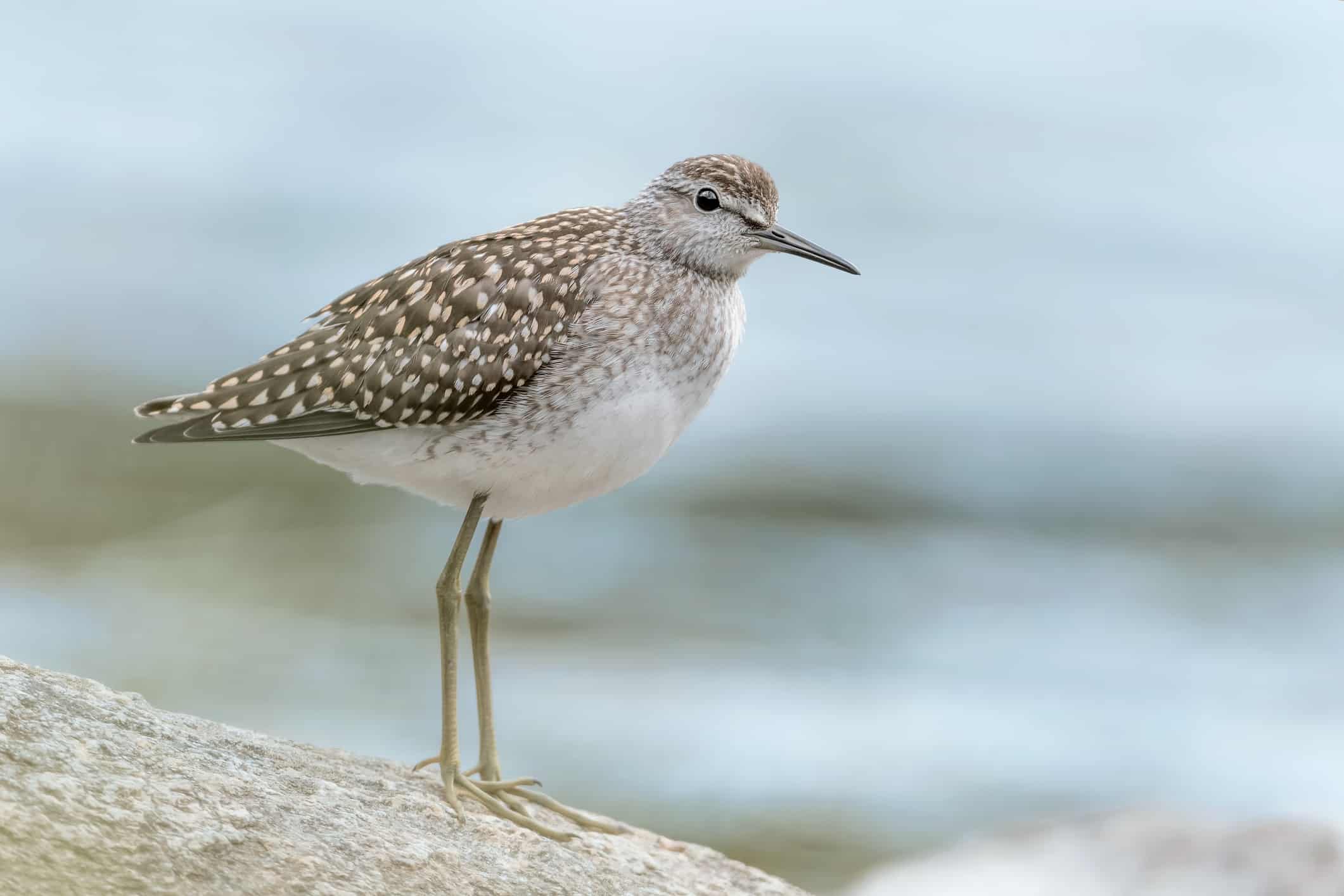
Picture a sandpiper. You might be imagining a small bird with long legs, a rounded head with a medium to long bill, and a long and somewhat slender body. Perhaps it is gray or brown, mostly white, or some combination of colors. Youโ€™re probably imagining a shorebird, strolling along and occasionally poking its bill in the sand to catch prey.

All over the world, with the exception of Antarctica, birds of similar description exist. Almost 100 different species are members of the family Scolopacidae, and all are considered sandpipers. Some fit the description above quite precisely, while others vary. This family includes birds named curlews, snipes, godwits, woodcocks, dowitchers, sandpipers, and more. If youโ€™ve been near the shore, youโ€™ve probably seen them. Letโ€™s get to know more about these remarkable birds.

Incredible Sandpiper Facts

  • Nearly 100 species of sandpipers are recognized, though some are extinct.
  • Regardless of their names, all members of the family Scolopacidae are considered sandpipers.
  • Sandpipers range in weight from just one ounce to three pounds.
  • A Bar-tailed Godwit, a sandpiper from the Limosa genus, holds the record for the longest non-stop migration.
  • Sandpipers are considered a traditional food for some Indigenous people of North America.
  • Some sandpipers leave the incubation and raising of chicks to the fathers.

Where to Find Sandpipers

Sandpipers can be found all over the world, on every continent except Antarctica. Many varieties live exclusively on or near the shore. Others live in grasslands or wetlands. Most prefer to at least have access to water sources. They may be found in open places such as farms, airports, and even golf courses. Some, such as the American Woodcock, spend their time in both open and wooded habitats.  
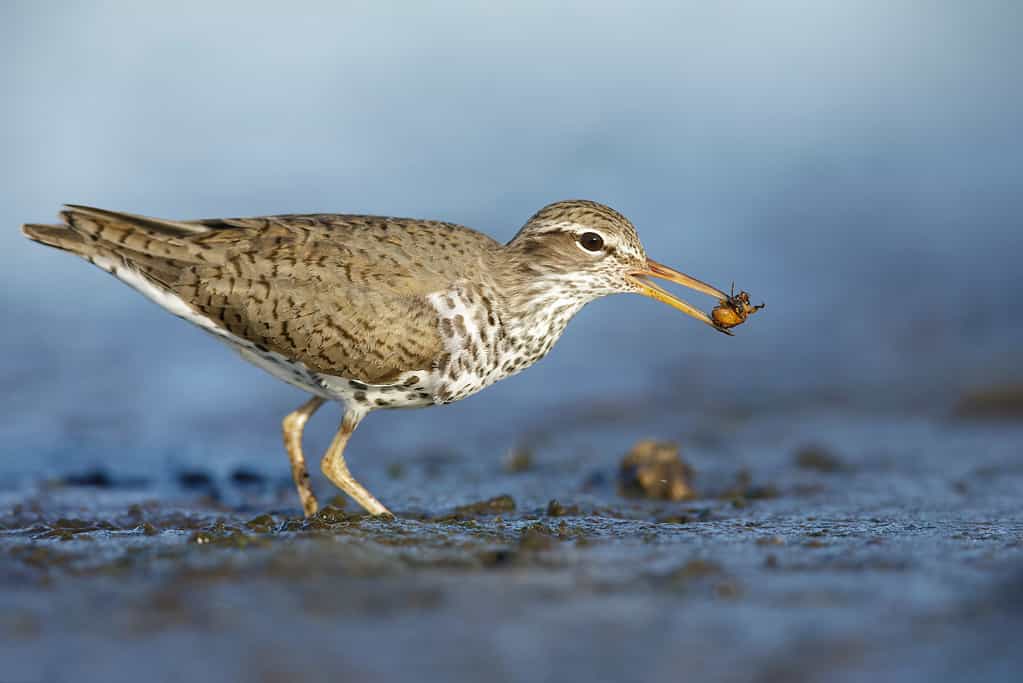
๐Ÿ‘ spotted sandpiper feeding

The most diverse family of shorebirds in the USA is the sandpiper family. Here is the spotted sandpiper feeding.

ยฉAgami Photo Agency/Shutterstock.com

Sandpiper Nests

Sandpiper nests vary based on the individual species and their preferred habitat. They make their nests on the ground, but the location and composition can differ considerably. Some of these birds nest only next to the shore. Their nests may be simply a scratch in the soil or sand. Others make nests in open areas in a tuft of grass. And some choose to conceal their nests under shrubs, tall grasses, or logs.

Classification and Scientific Name

The one thing that all sandpipers have in common is their family name. They are all members of the Scolopacidae family. Within that family are 15 currently named genera, each genus having between one and more than 20 species. Several known species are extinct. Some are vulnerable, threatened, or endangered. The list below includes each currently named genus.

Calidris

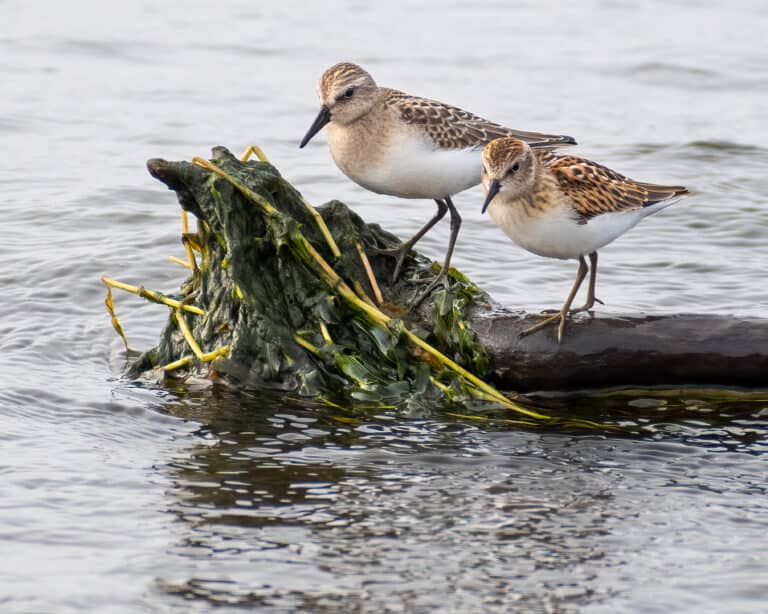
This is the largest genus within the family, with at least two dozen different species, including several named sandpipers, some called stints, knots, the Sanderling, the Surfbird, the Ruff, and the Dunlin. These birds are mostly brown or gray, with small to medium-length bills. They breed in the Arctic and migrate long distances, forming mixed flocks on the shore with large numbers of birds.  

Gallinago

The second largest genus within the family includes only snipes. Many of the 18 species currently assigned to this genus live in South America or eastern Asia, but they can be found across much of the world. These medium-sized sandpipers are mostly brown and well-camouflaged with long, narrow bills.

Tringa

This large genus includes the yellowlegs, the greenshanks, the redshanks, the tattlers, and a few named sandpipers. As one might guess by their names, several of these species have brightly colored legs. Some of the birds in this genus nest in trees, unlike most other sandpipers.

Numenius

Includes nine species of curlews. These birds have long, thin bills that are curved slightly downward. They are wading birds that use their bills to feed in the mud or soft ground.

Limosa

This genus includes four living species of godwits, along with a few identified extinct species. These long-billed, long-legged birds often feature ruddy coloration on their underparts.

Arenaria

The two known species in this genus are the Ruddy Turnstone and the Black Turnstone. These short-billed sandpipers breed on the Arctic tundra and change color with the seasons. They fly fast, up to 47 miles per hour, and migrate long distances.

Prosobonia

Includes the Polynesian sandpipers, of which only the endangered Tuamotu Sandpiper of French Polynesia is still alive. This short-billed sandpiper is one of the smallest, reaching lengths of about 6 inches.

Limnodromus

Includes three species called dowitchers. The Long-billed Dowitcher and Short-billed Dowitcher both live primarily in North America. The Long-billed Dowitcherโ€™s range stretches northwest into Siberia, while the Short-billed Dowitcher migrates as far south as Brazil. The Asian Dowitcher, meanwhile, breeds in far northern Asia and migrates as far as Australia.

Scolopax

Includes the woodcocks, medium-sized, stocky sandpipers with short legs and medium bills. Only two species are not endemic to island habitats. The American Woodcock and the Eurasian Woodcock have large ranges and stable populations. Some of the island woodcocks, however, are near threatened or vulnerable.

Coenocorypha

This genus includes the Austral snipes, which are small, brown sandpipers with medium bills and brown eye lines. These birds live on the islands of New Zealand and are under significant pressure from introduced species.

Phalaropus

Includes the phalaropes, three unique species of sandpipers that are drawn to salty lakes and the open sea. These birds practice serial polyandry, with males taking on incubation and care of the chicks, much like the Rhea.

Actitis

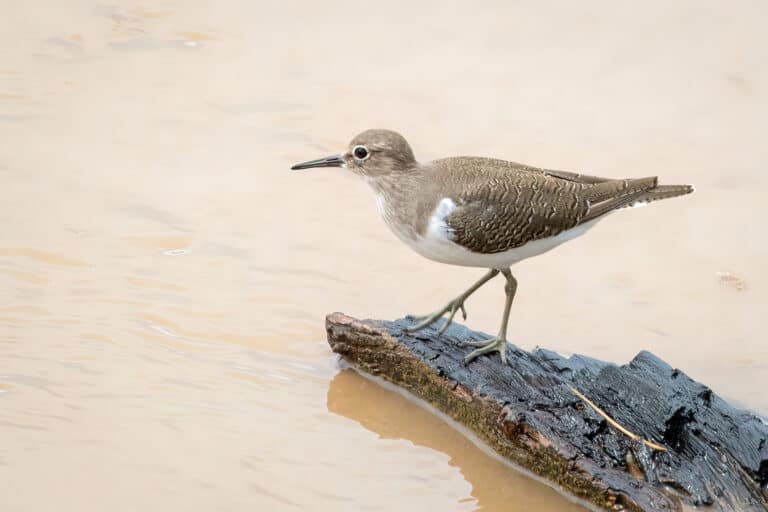
Includes just two species, the Common Sandpiper, Actitis hypoleucos, of Eurasia, and the Spotted Sandpiper, Actitis macularia, of North America. The two species are similar in shape but differ in coloration. Both have long legs and medium bills, and prefer to nest near fresh water.

Bartramia

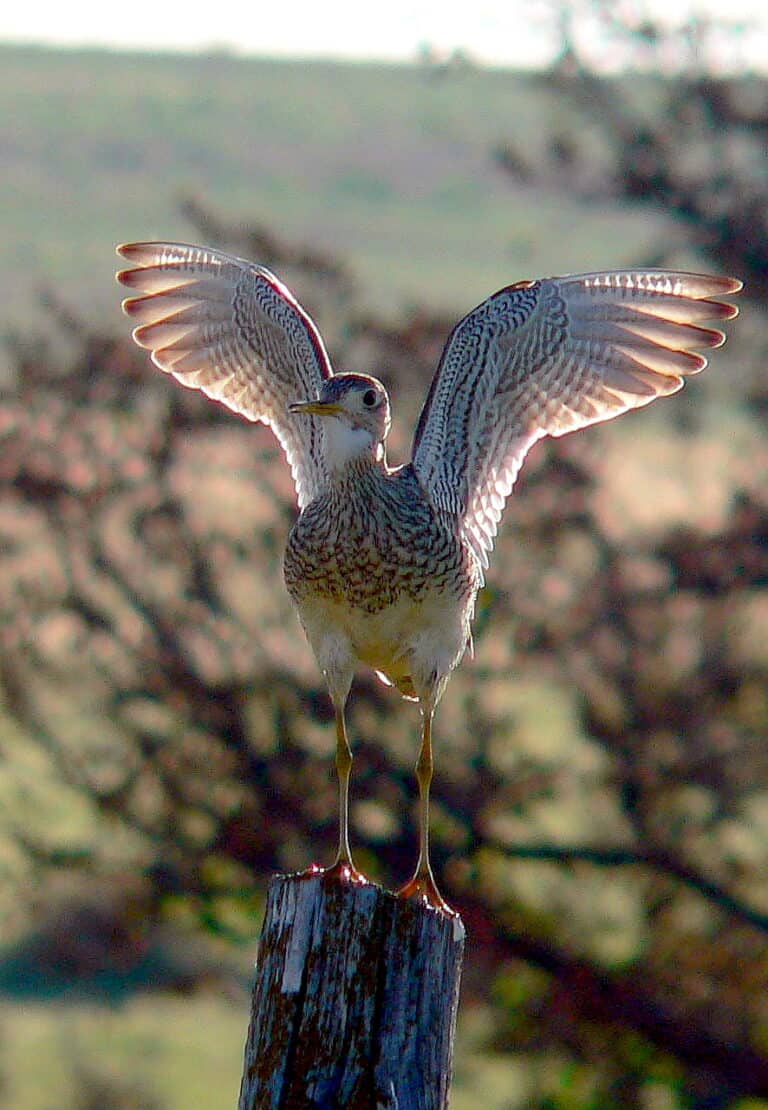
Includes the Upland Sandpiper, Bartramia longicauda, a species that can be found from Alaska to Argentina, but mostly inhabits the United States east of the Rocky Mountains.

Lymnocryptes

Includes only the Jack Snipe, Lymnocryptes minimus, the smallest of the snipes. This sandpiper breeds in wetlands and tundra of northern Europe and Asia, and migrates as far south as Sub-Saharan Africa.

Xenus

Includes only the Terek sandpiper, Xenus cinereus. This sleek, gray bird breeds near the water in northern Russia, Belarus, Latvia, and Finland. It migrates as far as the shores of southern Africa, Madagascar, New Zealand, and Australia.

Sandpiper Appearance

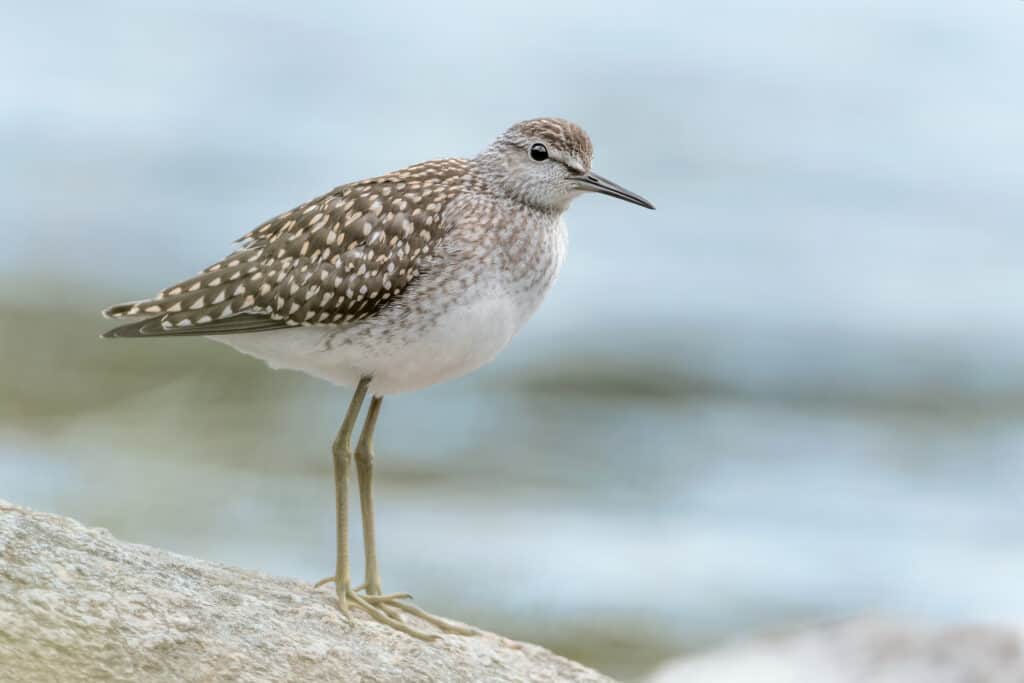
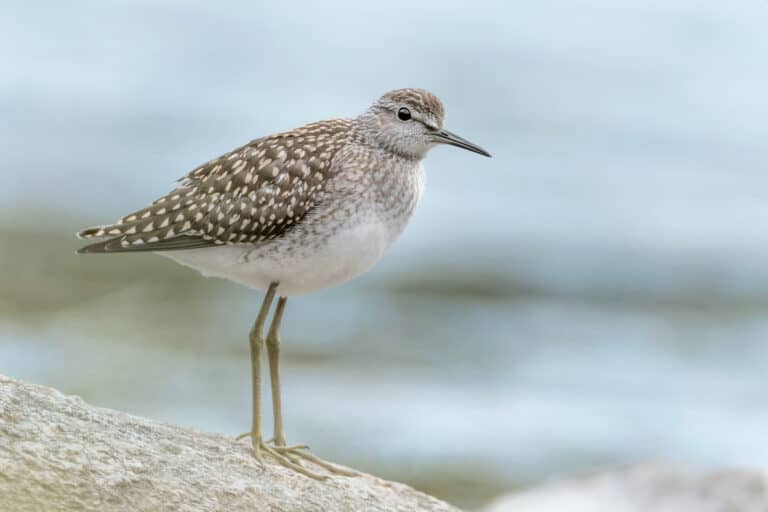
The general description of a sandpiper might be a small to medium-sized bird with long legs and a medium to long bill. It would have a slender neck, a rounded head, and a short tail. It would likely have gray or brown feathers, probably with a lighter underside, and likely with markings to provide camouflage. The legs might be dark or brightly colored.
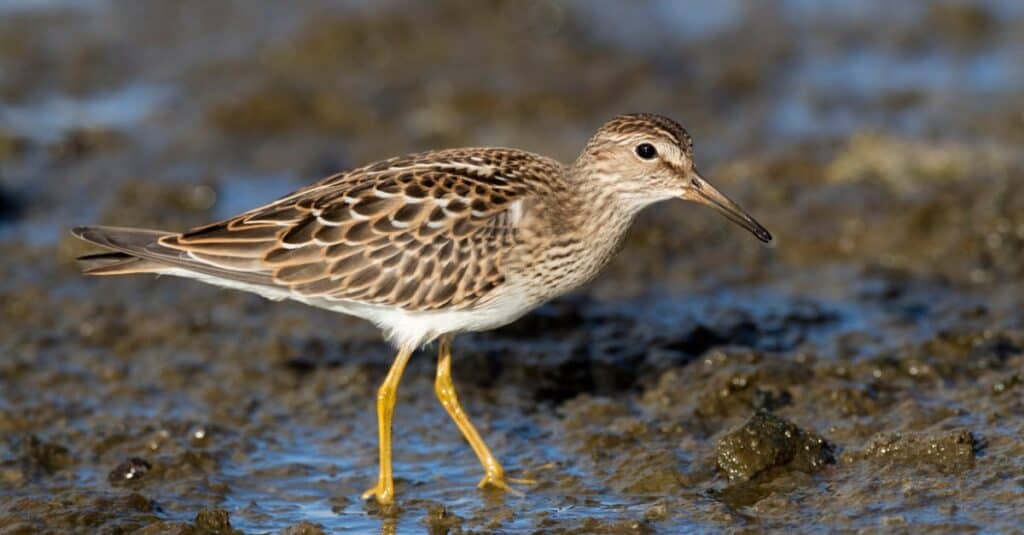
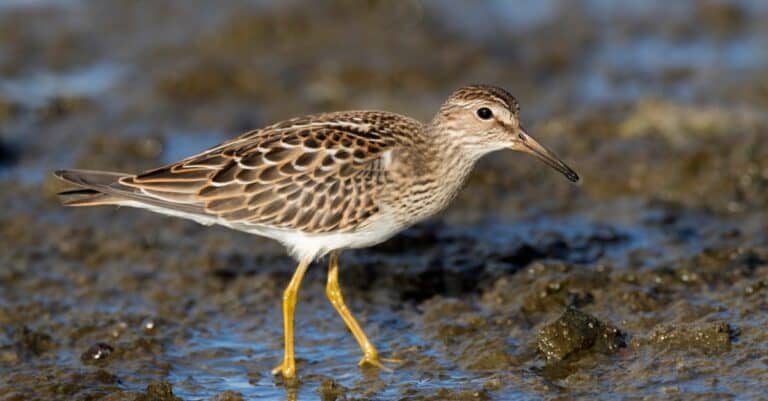
๐Ÿ‘ Birds that migrate the longest: Pectoral Sandpiper

This Pectoral Sandpiper (Calidris melanotos) is a typical representative of the Scolopacidae family.

ยฉAgami Photo Agency/Shutterstock.com

The actual description of different sandpiper species varies widely. Colors, sizes, bill lengths and shapes, leg lengths, and other characteristics all depend on the individual species or subspecies.

The smallest, the Least Sandpiper or Calidris minutilla, averages about 5.5 inches in length and weighs around 1 ounce. By comparison, the largest sandpipers are huge. The Eurasian Curlew, Numenius arquata, can weigh up to 3 pounds, and the Far Eastern Curlew, Numenius madagascariensis, reaches weights of 2.5 pounds, a length of up to 26 inches, and a 43-inch wingspan. The Far Eastern Curlewโ€™s bill alone can reach 7.9 inches in length, more than two inches longer than the Least Sandpiper.

Sandpiper Behavior

Because the sandpiper family includes so many birds, it is impossible to succinctly describe their behavior. For example, some sandpipers are endemic to small islands and do not migrate at all. Other sandpipers migrate thousands of miles each year. In fact, the world record for the longest non-stop migration reportedly happened in 2022. A Bar-tailed Godwit, Limosa lapponica, tagged with a GPS tracking chip, traveled 8,435 miles from Alaska to Tasmania without stopping.

Sandpipers are generally social, although some species are more solitary. Many of the species in the Scolopacidae family live and migrate together in either large or small flocks. The Semipalmated Sandpiper, Calidris pusilla, migrates in flocks of up to 200,000 individuals from the Arctic to coastal Central and South America. Many sandpipers, particularly during migration, can be found in similarly large, mixed flocks made up of several species. Birds from some species, however, prefer to go it alone, only interacting for reproductive purposes.

Sandpipers can be very aggressive and territorial, depending both on the species and the availability of resources. Both males and females are apt to display territorial behavior if food is scarce. In areas where food is more plentiful, nest sites are likely to be closer together, and the birds are less likely to show aggression toward others.

Diet

Sandpipers eat mostly invertebrates, including insects, larvae, spiders, crabs, shrimp, and all sorts of small crustaceans. They also eat small fish, frogs, and pretty much anything else they can catch.

Different sandpiper species have different-sized bills with different adaptations. They also employ different methods of feeding, from pecking at the surface to poking their bills deep in the mud, or even scooping their bills through the water to catch prey. Many species of sandpipers can forage in the same area thanks to their different feeding mechanisms.

During migration, sandpipers must eat large quantities of food to support their long journeys. Some of these birds double their weight at feeding grounds in the north before embarking on migrations stretching thousands of miles.

Sandpiper Reproduction

The reproductive habits of members of the sandpiper family vary widely. On one end of the spectrum are species that form monogamous pairs. On the other hand, some species are polygamous, polyandrous, practice serial polyandry, or engage in a variety of other behaviors. One might say that when it comes to sandpiper reproduction, the birds do whatever works best for their situation.

This applies to nesting behavior as well. Most sandpipers nest on the ground, but some nest in trees. Most nest in open places, but others try to hide their nests in foliage or under rocks or logs.

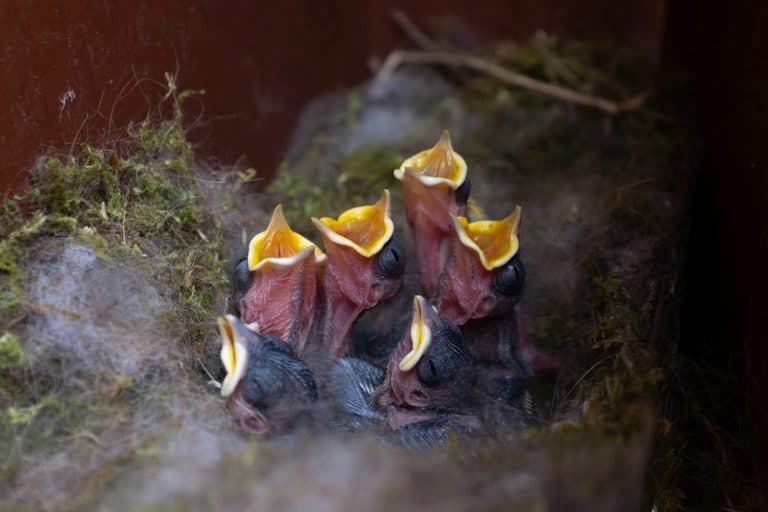
Sandpipers may have multiple clutches each year. The number of eggs per clutch varies, but generally, it is around three or four. Sandpiper chicks are precocial, meaning that they are up and walking around almost immediately after they hatch. At least one parent, sometimes the male, watches over and protects the young until they fledge, usually within the first month after hatching. The chicks, however, typically feed themselves by following the parent around and pecking at the ground to catch their own prey.
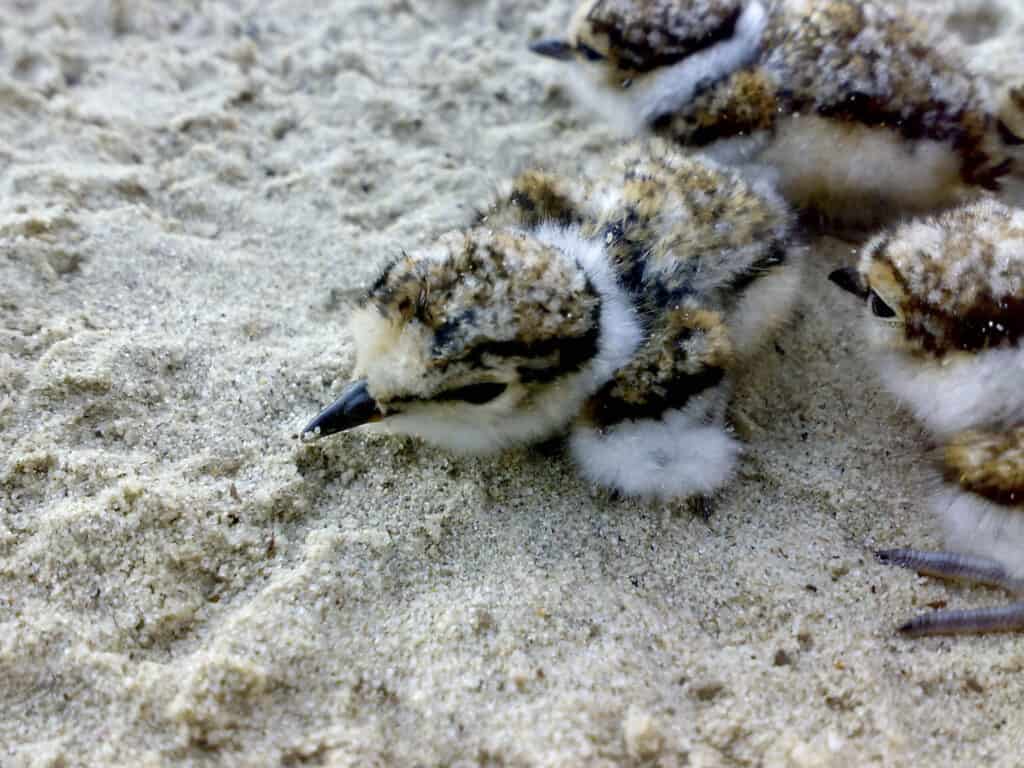
๐Ÿ‘ Image

Baby sandpipers can feed themselves.

ยฉiStock.com/Leonid Eremeychuk

Predators

Sandpipers can fly, but they spend much of their time on the ground searching for prey. As such, they can make attractive targets for predators. They are often simultaneously being hunted while they hunt. Birds of prey such as eagles, owls, and Peregrine Falcons, and mammalian predators such as foxes, bears, wolves, ermines, wolverines, and other weasels prey on sandpipers. Crows, gulls, and cats are likely to attack chicks, while smaller birds, mice, rats, and even deer may eat their eggs.

Lifespan

The average lifespan of sandpipers varies depending on the species. Some of the more common species live around 10 years or more in the wild. Aside from threats from predators, changes to habitat are among the biggest issues these birds face. As coastal climates change, the sandpipers that live on the shores face new challenges, especially with regard to their food supply.

Habitat loss along migration routes can cause problems for the sandpipers that migrate long distances. Pollution of waterways is a threat. Another issue, particularly harmful to species that are endemic to small areas, is the introduction of non-native species like rats and cats.

A Taste for Sandpipers

Sandpipers are considered a traditional food of Indigenous people of North America, including the Cree and the Salish. The birds were cooked in a variety of fashions, including roasted, fried, and boiled. European settlers also reportedly had a taste for sandpipers and hunted them on the plains. As the birdsโ€™ numbers diminished, hunting regulations were put in place. These regulations have helped some species to recover.

View all 385 animals that start with S

Sources

  1. NPR - Associated Press / Accessed December 31, 2022
  2. PBS - Nature / Accessed January 1, 2023
  3. Harriet V. Kuhnlein and Murray M. Humphries / Accessed December 31, 2022

About the Author

Tavia Fuller Armstrong

Tavia Fuller Armstrong is a writer at A-Z Animals where her primary focus is on birds, mammals, reptiles, and chemistry. Tavia has been researching and writing about animals for approximately 30 years, since she completed an internship with the U.S. Fish and Wildlife Service. Tavia holds a Bachelorโ€™s Degree in Biology with a wildlife emphasis from the University of Central Oklahoma. A resident of Oklahoma, Tavia has worked at the federal, state, and local level to educate hundreds of young people about science, wildlife, and endangered species.
Connect:

Thank you for reading! Have some feedback for us?

Contact the AZ Animals editorial team

Related Articles You May Find Interesting


Sandpiper FAQs (Frequently Asked Questions)

The general description of a sandpiper might be a small to medium sized bird with long legs and a medium to long bill. It would have a slender neck, a rounded head and a short tail. It would likely have gray or brown feathers, probably with a lighter underside, and likely with markings to provide camouflage. The legs might be dark or brightly colored.

Sandpipers vary widely in size by species. The smallest, the Least Sandpiper weighs about 1 ounce and is about 5.5 inches long. The largest sandpipers, the Eurasian Curlew and the Far Eastern Curlew, can weigh up to 3 pounds and attain lengths of up to 26 inches, respectively.

Sandpipers are generally fast flyers. Wilsonโ€™s Snipe is one of the fastest, reaching speeds of up to 60 miles per hour.

Nearly 100 species are in the Scolopacidae family of sandpipers. They go by many names, including sandpipers, godwits, snipes, curlews, dowitchers, phalaropes, woodcocks, tattlers, yellowlegs, greenshanks, redshanks, turnstones, the Sanderling, the Surfbird, the Ruff, and the Dunlin.

Sandpipers are phenomenal migrating birds. Some species can migrate more than 8,000 miles without stopping!

Sandpipers live all over the world, with the exception of Antarctica. With nearly 100 species in the Scolopacidae family, sandpiper species can be found in just about every country, usually near shores or inland water sources.

Many sandpipers migrate, sometimes long distances. Some members of the sandpiper family, including godwits, can fly thousands of miles without stopping. Other sandpipers migrate only short distances, or do not migrate at all. Some are endemic to small islands and spend their whole lives there.

Sandpipers eat mostly invertebrates, including insects, larvae, spiders, crabs, shrimp, and all sorts of small crustaceans. They also eat small fish, frogs, and pretty much anything else they can catch.

Most sandpipers lay around 4 eggs per clutch, and may lay multiple clutches per year.

Sandpipers are precocial birds. Chicks leave the nest immediately and follow their caregiving parent around. They feed themselves and fledge within the first month after they hatch.

The lifespan of sandpipers varies depending on the species, but many live around 10 years in the wild.

Several varieties of sandpipers are rare. They are vulnerable, near threatened or endangered. Some have gone extinct in modern history. Many, however, are listed as species of least concern by the IUCN Red List and are not considered rare.