
S
Species Profile

Savu Python

Malayopython reticulatus

Reticulated: the island-spanning giant
iStock.com/dwi septiyana

At a Glance

Wild Species
Also Known As Reticulated Python, Retic, Retic Python, Indonesian Reticulated Python, Asian Reticulated Python
Diet Carnivore
Activity Nocturnal+
Lifespan 15 years
Weight 100 lbs
Status Least Concern
Did You Know?

Longest-snake status: reliably measured individuals reach at least 6.95 m total length; larger claims (>8 m) exist but are often poorly documented in the scientific record.

Scientific Classification

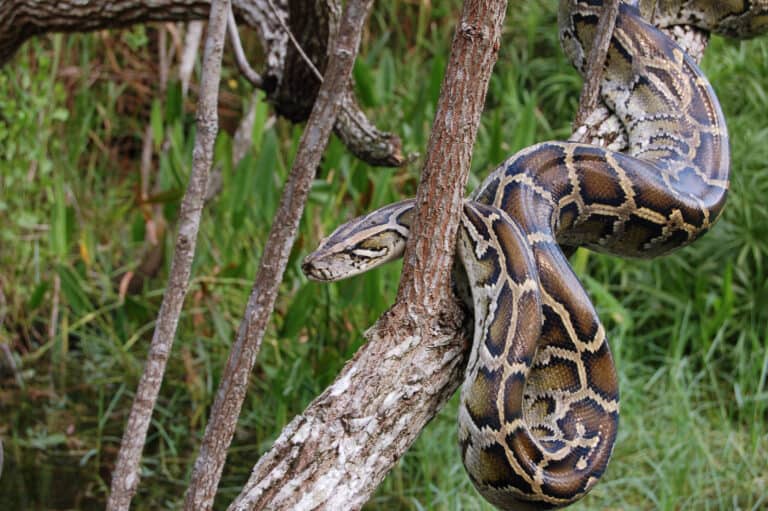
The reticulated python is one of the world’s longest snakes and a widespread Southeast Asian python. “Savu Python” typically denotes a geographically sourced (locality) population/morph from Savu/Sabu Island within Indonesia’s Lesser Sunda Islands, rather than a taxonomically separate species or subspecies.

Kingdom
Animalia
Phylum
Chordata
Class
Reptilia
Order
Squamata
Family
Pythonidae
Genus
Malayopython
Species
Malayopython reticulatus

Distinguishing Features

  • Large, heavy-bodied python with a net-like (reticulated) dorsal pattern
  • Heat-sensing labial pits typical of pythons
  • Locality animals may show consistent size/pattern tendencies, but these are not diagnostic taxonomic characters on their own

Physical Measurements

Males and females differ in size

Length
9 ft 10 in (6 ft 7 in – 14 ft 9 in)
14 ft 9 in (9 ft 10 in – 21 ft 4 in)
Weight
33 lbs (15 lbs – 77 lbs)
88 lbs (33 lbs – 198 lbs)
Tail Length
1 ft 2 in (9 in – 1 ft 10 in)
1 ft 8 in (10 in – 2 ft 4 in)
Top Speed
3 mph
slithering

Appearance

Primary Colors
Secondary Colors
Skin Type Smooth, glossy, overlapping keratin scales with noticeable iridescence; large ventral scutes for locomotion and climbing.
Distinctive Features
  • Potential confusion: Lesser Sunda region also includes Malayopython timoriensis; verify provenance and diagnostic morphology/genetics before labeling.
  • Adult size (species-level): commonly ~3.0-5.0 m total length; exceptionally larger individuals documented, with widely cited maximum ~6.95 m.
  • Robust, laterally compressed body with powerful musculature; capable swimmer and competent climber.
  • Heat-sensing labial pits along upper/lower lips; enlarged head scales and distinct postocular stripe common.
  • Color/pattern highly variable across range; Savu/Sabu specimens may appear more golden and cleaner-lined, but variation overlaps other localities.
  • Behavioral display: may inflate body, hiss loudly, and strike defensively; adults often calmer with regular handling in captivity.

Sexual Dimorphism

Females are typically longer and heavier-bodied than males at maturity, while males usually have proportionally longer tails and more prominent cloacal spurs. Differences are gradual and overlap, so sexing often requires probing or popping.

  • Proportionally longer tail beyond the cloaca.
  • Cloacal spurs often more prominent (used during courtship).
  • Generally slimmer build at similar total length.
  • Typically attain greater total length and mass than males.
  • Shorter tail proportion relative to body length.
  • Broader mid-body girth, especially when reproductively active.

Did You Know?

Longest-snake status: reliably measured individuals reach at least 6.95 m total length; larger claims (>8 m) exist but are often poorly documented in the scientific record.

Reproductive output is huge: typical clutches are ~15-80 eggs; exceptionally large clutches near ~100 eggs have been reported for the species.

Maternal care: females coil around eggs and can generate heat by muscular "shivering," helping stabilize incubation temperatures (a hallmark behavior of pythons).

They're excellent swimmers and can naturally disperse among islands-one reason the species is widespread across Southeast Asia.

"Savu/Sabu python" is a locality/trade label for animals sourced from Savu/Sabu (Lesser Sunda Islands, Indonesia), not a formally recognized subspecies.

Regional confusion: in the Lesser Sunda region, people sometimes mix up M. reticulatus with the smaller, distinct Timor python Malayopython timoriensis (different species).

Unique Adaptations

  • Infrared detection via labial pits: heat-sensing pits along the lips help locate warm-blooded prey in dim light.
  • Extreme cranial kinesis: highly mobile skull bones and stretchy jaw ligaments allow swallowing prey much wider than the head.
  • Backward-curving teeth: recurved teeth act like hooks to prevent prey from backing out during capture.
  • Expandable body wall: ribs and skin expand dramatically, accommodating very large meals and enabling long fasting intervals afterward.
  • Camouflage "reticulation": the net-like pattern breaks up the body outline in dappled forest light and leaf litter.
  • Salt-and-freshwater tolerance typical of many large SE Asian snakes: supports frequent use of coastal, riparian, and swampy habitats.

Interesting Behaviors

  • Ambush predation: typically lies motionless along game trails, forest edges, and waterways, striking and immediately constricting prey.
  • Ontogenetic shift: juveniles are more arboreal (tree-climbing) and take smaller prey; larger adults become more terrestrial and take mammals and birds.
  • Aquatic hunting and travel: readily swims and may hunt near water, aiding movement between mangroves, riverbanks, and coastal habitats.
  • Constrict-and-swallow sequence: constriction rapidly restricts blood flow/respiration; then the snake "walks" its jaws over prey using alternating jaw movements.
  • Maternal brooding: the female coils tightly around the clutch and remains with it through incubation, reducing egg desiccation and deterring predators.
  • Defensive displays: loud hissing, S-shaped neck coiling, and rapid strikes; when handled, powerful muscular "rolling" can make restraint difficult.

Cultural Significance

Reticulated pythons in Southeast Asia, including Indonesia, are known near farms, forests, and waterways. They are used for leather, sometimes food, and eat rodents. "Savu/Sabu python" is a place name used in trade, not a formal species; Timor python (Malayopython timoriensis) is a different, usually smaller species.

Myths & Legends

Iban (Borneo) tradition tells of Nabau, a colossal serpent/dragon often described with python-like qualities, associated with rivers, storms, and spiritual power; its presence can signal danger or sacred potency.

Philippine mythology features Bakunawa, a gigantic serpent/dragon said to swallow the Moon (explaining eclipses); communities traditionally made noise and light to drive it away-an enduring serpent legend in island Southeast Asia.

In Javanese and Balinese Hindu-Buddhist tradition, serpent beings appear as powerful guardians of water, fertility, and hidden treasure; serpent imagery is common in temple art and protective architecture across Indonesia.

Malay folktales about the Reticulated Python (Malayopython reticulatus) from Savu/Sabu tell of giant snakes seen as forest protectors or spirit beings; meetings are seen as signs needing respect and care.

Conservation Status

LC Least Concern

Widespread and abundant in the wild.

Population Decreasing

Protected Under

  • CITES Appendix II (international trade regulated via permits/quotas)
  • Indonesia Law No. 5/1990 on Conservation of Living Resources and Their Ecosystems (framework for wildlife protection and use)
  • Indonesia Government Regulation No. 8/1999 on Utilization of Wild Plants and Animals (regulates harvest/use)
  • National harvest/export quota system administered by Indonesia's Ministry of Environment and Forestry (for trade management)

Life Cycle

Birth 40 hatchlings
Lifespan 15 years

Lifespan

In the Wild 10–20 years
In Captivity 15–30 years

Reproduction

Mating System Promiscuity
Social Structure Solitary
Breeding Pattern Transient
Fertilization Internal Fertilization
Birth Type Internal_fertilization

Solitary adults form brief breeding associations; males trail pheromones, court and may fight rivals, and both sexes can mate with multiple partners in a season. After internal fertilization, females lay ~25-107 eggs and brood/guard them alone until hatching.

Behavior & Ecology

Social Aggregation Group: 1
Activity Nocturnal, Crepuscular
Diet Carnivore Rodents (Rattus spp.)

Temperament

Primarily solitary, ambush predator; remains motionless for long periods, striking rapidly at close range (Greene 1997).
Defensive behavior includes tight coiling, head hiding, and loud hissing; biting more likely when restrained (Barker & Barker 2008).
Juveniles typically more reactive and defensive than large adults; adults often rely on crypsis and threat display (Greene 1997; Barker & Barker 2008).
Reproduction-related social interactions: males locate females via pheromones and may engage in male-male combat during mating season (Shine et al. 2001; Barker & Barker 2008).
Across the species' range: activity is mostly nocturnal and crepuscular; some daytime basking occurs in cooler conditions (Barker & Barker 2008).
Longevity: maximum recorded longevity 23.0 years in captivity (AnAge database; Tacutu et al. 2018+, accessed 2026-01).

Communication

Hissing produced by forced exhalation when threatened; functions as a close-range deterrent Greene 1997
Chemoreception via tongue-flicking and vomeronasal organ; follows pheromone trails during mate searching Shine et al. 2001
Tactile signaling during courtship Chin rubbing, body alignment) and during male-male combat (pressing/wrestling) (Barker & Barker 2008
Vibration/substrate cues: detects approaching animals through ground-borne vibrations and body-contact mechanoreception Young 2003
Visual postures: elevated head/neck, S-shaped strike posture, and body inflation as threat displays at close range Greene 1997

Habitat

Biomes:
Tropical Rainforest Tropical Dry Forest Savanna Freshwater Wetland Marine
Terrain:
Coastal Island Riverine Plains Hilly Valley Muddy Sandy +2
Elevation: Up to 4265 ft 1 in

Ecological Role

Large constricting predator (mesopredator to apex predator depending on island/community context) that regulates vertebrate prey populations and links terrestrial and riparian food webs.

Population control of rodents and other small mammals (potentially reducing crop loss and disease-vector abundance) Predation pressure that can influence community structure of small-medium vertebrates (top-down effects) Nutrient redistribution via episodic feeding/defecation after large meals, moving nutrients across habitats (e.g., riparian to terrestrial)

Diet Details

Main Prey:
Rodents Shrews and other small mammals Bats Birds Civets and other small carnivorans Primates Ungulates Reptiles +2

Human Interaction

Domestication Status

Wild

Malayopython reticulatus (including Savu/Sabu locality animals) is not domesticated. It is a wild species harvested and traded: large-scale skin trade, local use for meat and parts, live capture for the pet trade (Savu/Sabu labeled), conflicts with poultry and livestock, and kept in zoos. Some studies cover parts of Indonesia, but peer-reviewed Savu data are scarce.

Danger Level

High
  • Potentially lethal constriction: large individuals are capable of killing an adult human; rare but well-documented incidents occur, especially in rural areas within the native range.
  • Bites and deep lacerations from large recurved teeth; high infection risk without prompt wound care.
  • Handling/capture risk: rapid strike and powerful wrapping behavior; highest risk during feeding, breeding season agitation, or when stressed.
  • Child/pet risk: smaller humans and pets are at substantially higher risk even from medium-sized individuals.
  • Occupational hazard: hunters, skin processors, animal control, and keepers face elevated injury risk.

As a Pet

Not Suitable as Pet

Legality: Legality varies. Reticulated Python (Malayopython reticulatus) is on CITES Appendix II, so trade needs permits. Many places call it a dangerous wild animal and ban or require permits, cages, and care rules.

Care Level: Expert Only

Purchase Cost: $150 - $2,500
Lifetime Cost: $10,000 - $40,000

Economic Value

Uses:
Leather/skins (fashion industry) Meat and local consumption Live animal trade (pet trade; including locality-marketed lines like Savu/Sabu) Pest control/ecosystem services (rodent predation near human settlements) Zoo/education
Products:
  • Tanned python leather (belts, shoes, bags, accessories)
  • Fresh/frozen meat in some local markets
  • Hatchlings/juveniles sold in the reptile hobby (including locality-identified 'Savu/Sabu' animals)
  • Byproducts in some areas (e.g., fat/oil used in local traditional practices-highly variable by region)

Relationships

Predators 6

Human Homo sapiens
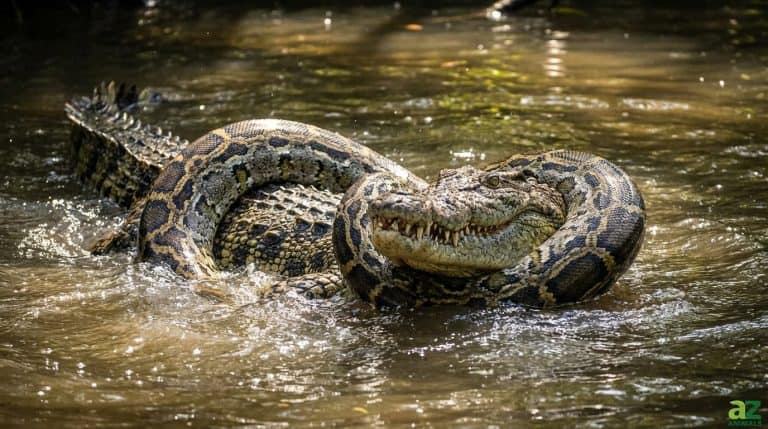
Saltwater Crocodile Crocodylus porosus
Siamese Crocodile Crocodylus siamensis
King Cobra Ophiophagus hannah
Water monitor Varanus salvator
Crested Serpent Eagle Spilornis cheela

Related Species 7

Timor Python Malayopython timoriensis Shared Genus
Burmese Python Python bivittatus Shared Family
Blood Python Python brongersmai Shared Family
Short-tailed Python Python curtus Shared Family
Borneo Short-tailed Python Python breitensteini Shared Family
Indian Python Python molurus Shared Family
Ball Python Python regius Shared Family

Ecological Equivalents 5

Animals that fill a similar ecological role in their ecosystem

Timor Python Malayopython timoriensis Closest ecological match in the Lesser Sundas: a large island ambush constrictor that hunts rats, birds, and small to medium mammals, using rocky and wooded edges. Often compared to Savu (Sabu) reticulated pythons (Malayopython reticulatus).
Burmese Python Python bivittatus Reticulated pythons (Malayopython reticulatus) are large, semi-aquatic ambush constrictors that eat mammals and birds, often near water and in human-occupied areas. They are sit-and-wait hunters and strong swimmers that use river edges. Adults often reach 3–6 m, with some approaching 7 m, overlapping Burmese python size.
African Rock Python Python sebae Functional equivalent on another continent: a large, opportunistic ambush constrictor capable of taking prey ranging from rodents to medium ungulates and occasionally domestic animals; occupies a similar predator–prey role near wetlands, forest edges, and agricultural mosaics.
King Cobra Ophiophagus hannah Shares the large-snake apex predator role in Southeast Asian forests and forest edges. Unlike pythons, it actively hunts and is one of the few snakes in the same area that eat other snakes, including young pythons.
Water Monitor Varanus salvator Shares riparian and mangrove–settlement edge habitats across much of Indonesia, overlaps strongly in prey (eggs, birds, rodents) and scavenging opportunities; can compete for similar-sized prey items and is also a predator of python eggs and juveniles.

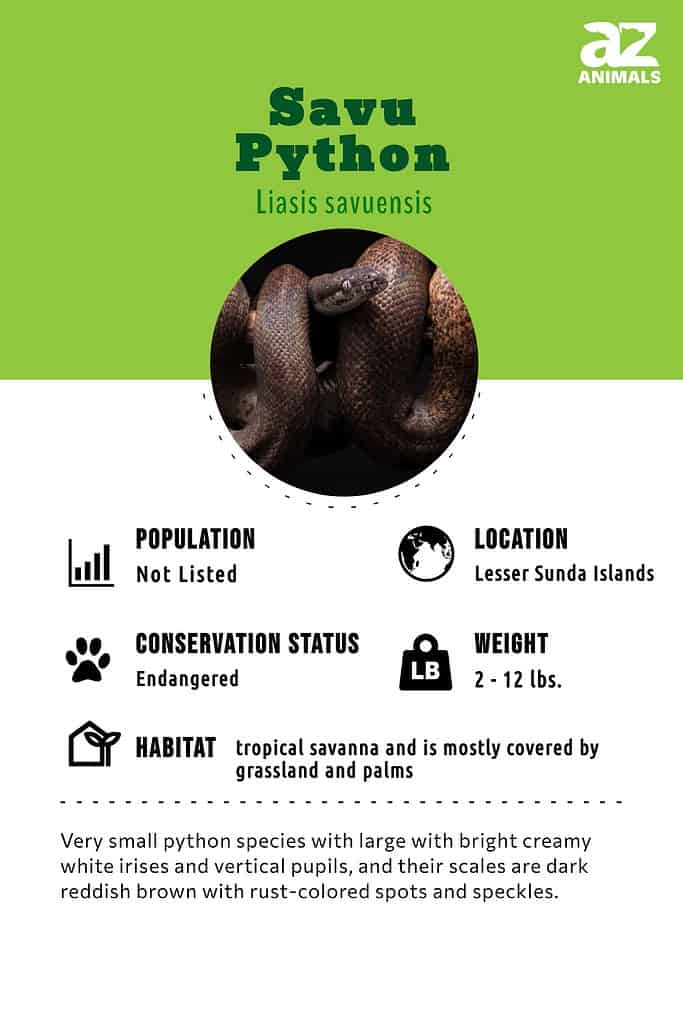
The Savu python is one of the smallest pythons in the world and lives on a 60-square-mile island.

If this petit snake’s distinctive eye color doesn’t catch your attention, its size and ease of handling will. This species was first imported into the United States in the mid-1990s and, since then, has become popular with snake owners.

Incredible Savu Python Facts

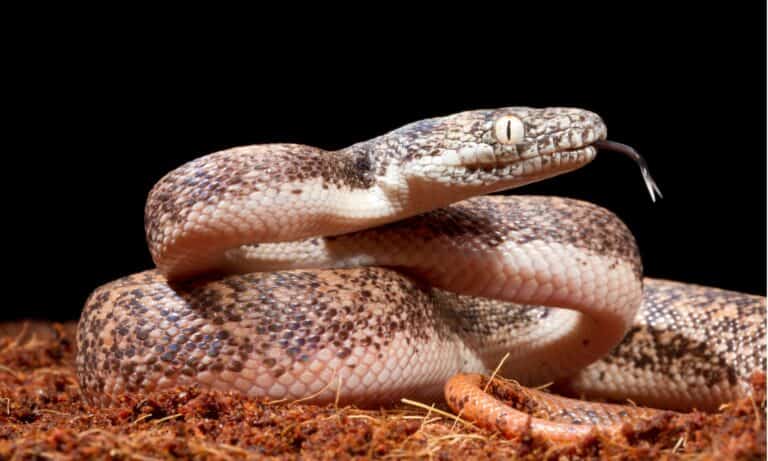
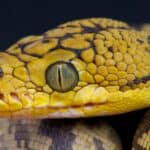
  • Savu pythons have bright white eyes, leading to one of their common names, the white-eyed python.
  • These snakes are small and only reach 3.5-4.5 feet long.
  • They only live on one of the Lesser Sunda Islands, which are off the north coast of Australia.
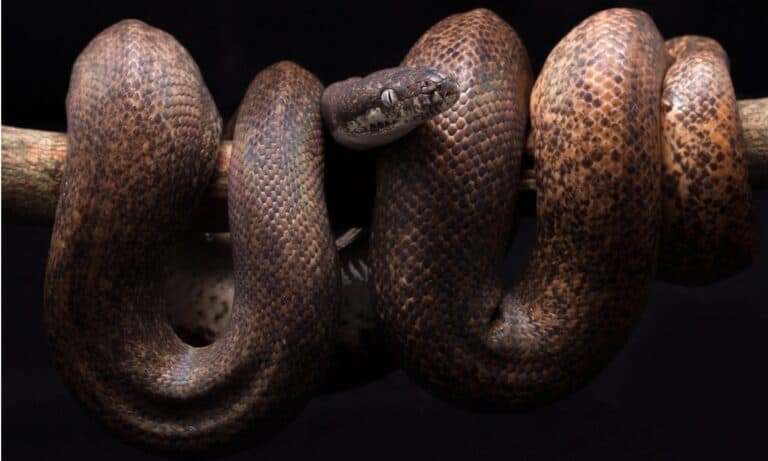
  • Savu pythons change color as they age, sometimes darkening to the point of being black.
👁 Image

Scientific Name and Classification

Savu pythons are members of the Pythonidae family. They’re nonvenomous constrictors that are cousins to the olive python (L. olivaceous), a much larger python native to northern Australia.

They were first described in 1956 as a subspecies of Macklot’s python (Liasis mackloti). In 2004, researchers presented genetic evidence to support the idea that the Savu python isn’t a subspecies but, instead, a species. There is still a bit of disagreement on this, and some still refer to it as a subspecies. However, most sources classify it as a species in its own right: Liasis savuensis. The genus name may be related to the word lias, which is a type of blue limestone. The specific name, savuensis, references the island to which they’re native. They have a few common names, including freckled python, white-eyed python, and by locals as sanca mata putih.
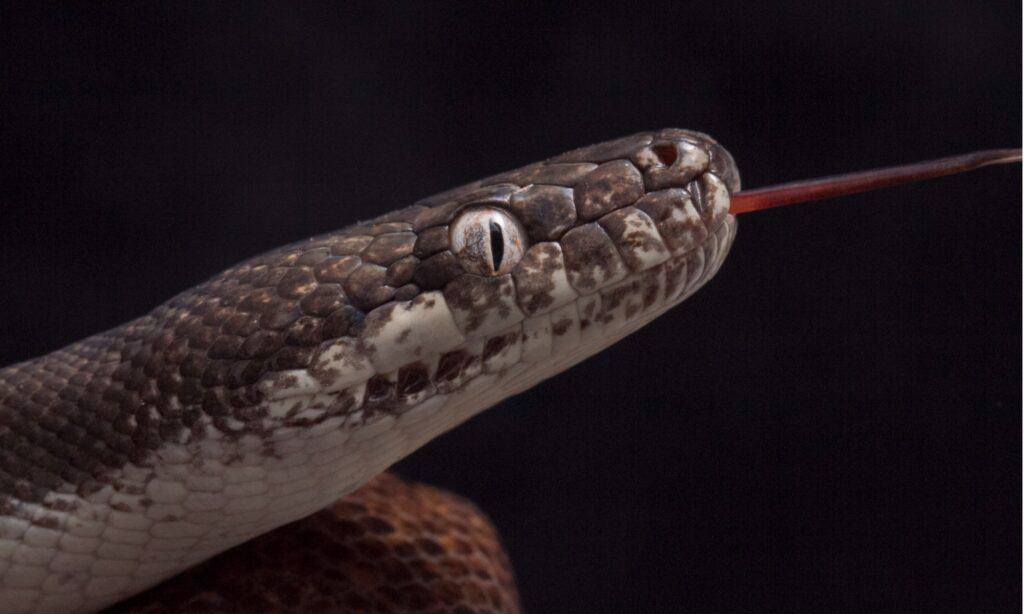
👁 Savu python's white eyes are distinctive

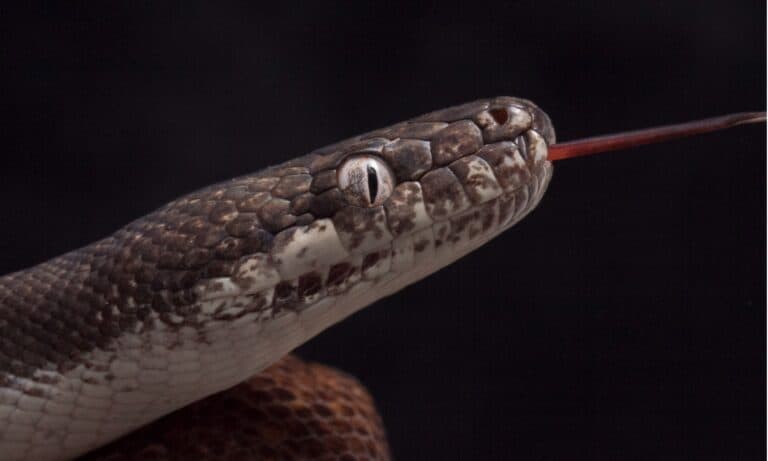
The savu python’s eyes give rise to another of its names: the white-eyed python.

©iStock.com/dwi septiyana

Appearance

This snake is one of the smallest python species in the world. While a few rare individuals may reach five feet long, the Savu python usually ranges between 3.5 and 4.5 feet long. It is slender and has highly iridescent, smooth, and shiny scales down the length of its body. The scales on the snake’s head are large and somewhat shield-shaped, diminishing into smaller scales as you approach the neck.

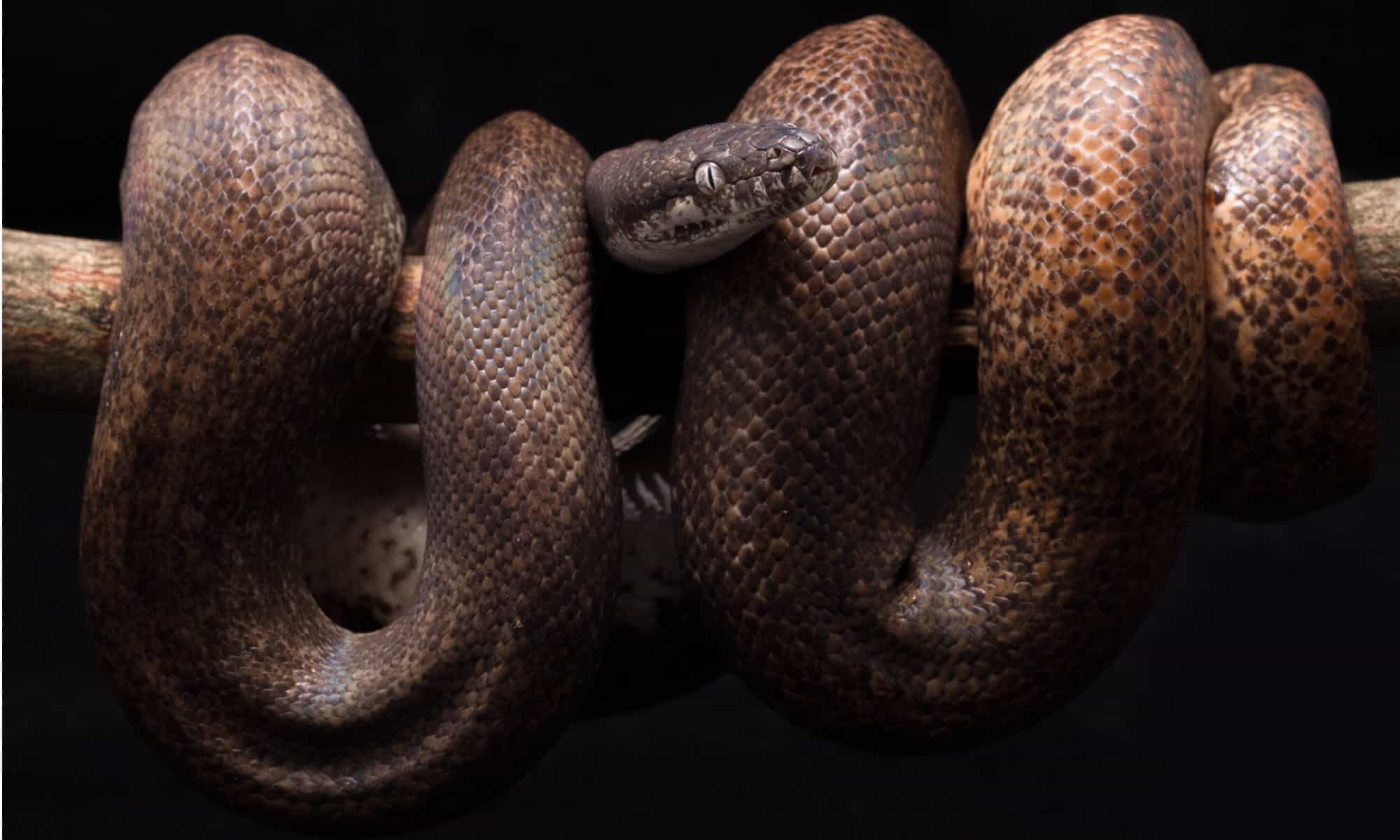
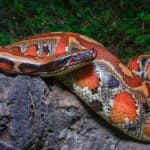
When they hatch, these snakes range from bright reddish brown to orange; as they mature, their bodies change dramatically to a dark reddish brown with rust-colored spots and speckles. Their bellies and under their chins are cream-colored and sometimes have freckles or spots but are mostly clear. You’ll sometimes see a nearly black Savu python or one that retained some of its reds as an adult.

However, their most distinctive feature is their eyes, which is where they get one of their names – the white-eyed python. They are large with bright creamy white irises and vertical pupils.
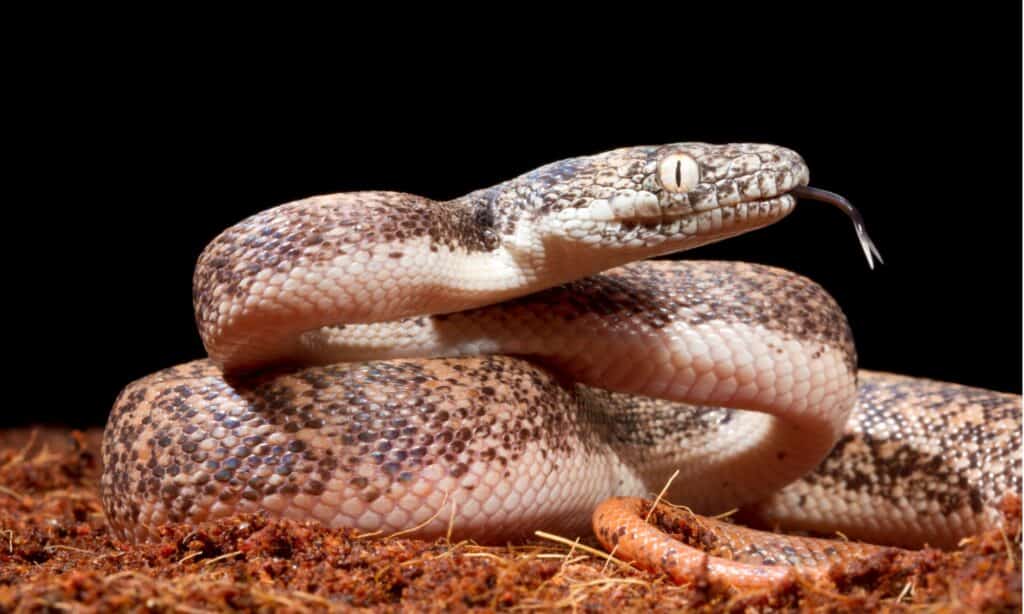
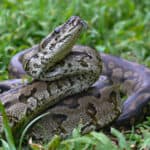
👁 Young savu python

Pythons, like this young White-eyed python, pull their heads into an S shape when they feel threatened.

©iStock.com/David Kenny

Behavior

This python is newer to science, so there’s a lot we don’t yet know. Savu pythons are relatively docile and aren’t inclined to bite. Some sources say that they can be cranky, but those may be referring to Macklot’s python, which can be cranky and gets quite a bit bigger. These snakes are active foragers and are often found cruising through rock crevices and in the underbrush looking for food.

These snakes are crepuscular, meaning they’re most active during dawn and dusk. They are terrestrial and somewhat fossorial; they do not spend much time in the trees. Even though most of the primary forests have been converted to agricultural use, Savu pythons seem to have adapted fairly well.

History and Evolution

Pythons’ ancestors, just like other snakes, were actually legged reptiles, similar to lizards and reptiles that spent more time in and near water. At some point, they either lost their legs or became vestigial, as they became more and more unused. It is fascinating to know that some species evolved to have legs and then evolved to lose them! For whatever reason, snakes found a way to survive and thrive because they were lower to the ground.

Pythons were previously classified with boas, but modern research has shown that the pythons and boas are separate species due to convergent evolution in different parts of the world, much like monkeys evolved differently in Africa and South America while having shared ancestors. Some of the major differences are that boas give birth to live young, and pythons lay eggs. Pythons also have their heat-sensing pits on their labial scales, and boas have them in between their labial scales.

The Savu Pythons are much smaller than some of the other types of pythons. Historically, it must have been more and more advantageous as a breed for them to be smaller. Smaller offspring became more adept at hunting and surviving on Savu, which is why this particular snake has the look and size that it does today.

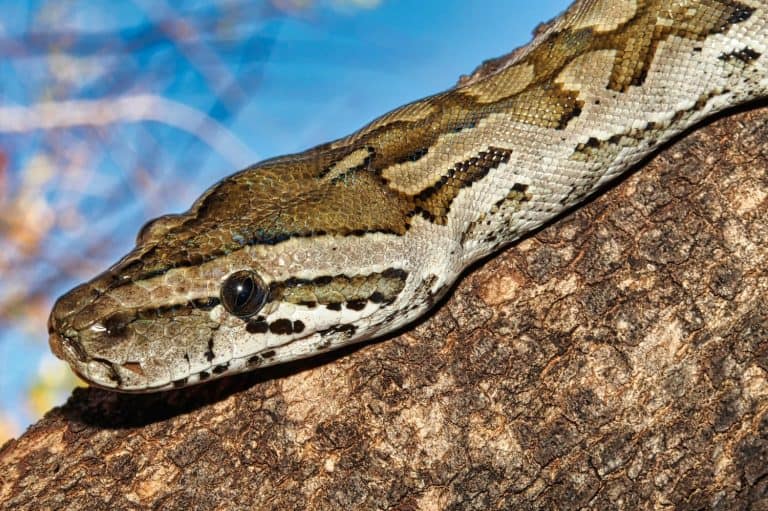
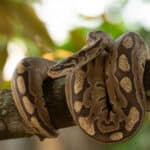
👁 Mature savu python on branch

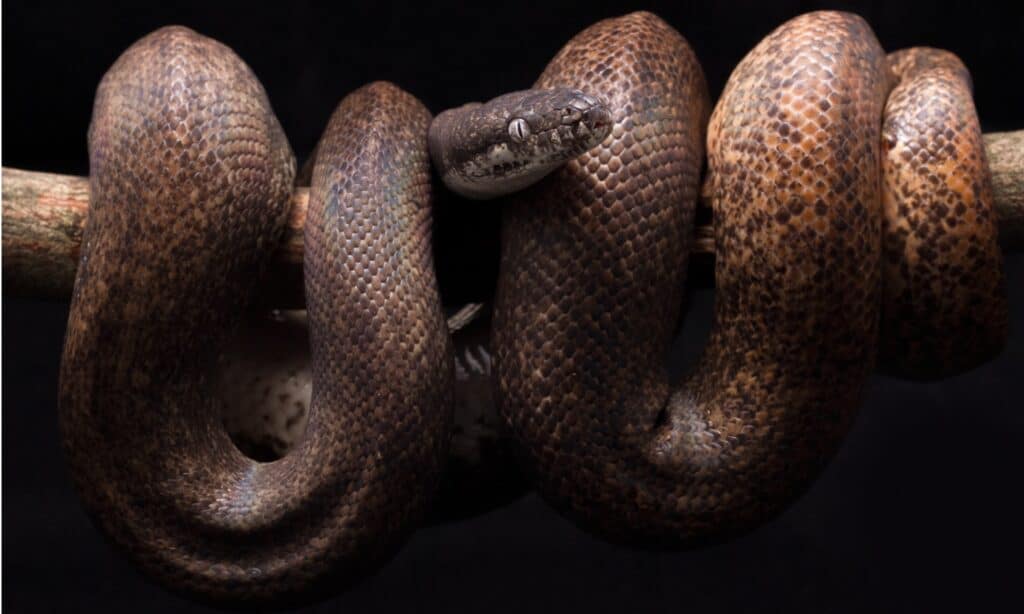
As Savu pythons mature, they go through an ontogenic change from the brilliant reds and oranges of youth to the darker red-brown you see here.

©iStock.com/dwi septiyana

Habitat and Diet

These pythons are only found on Savu, an island that spans about 60 square miles, in the Lesser Sunda Islands. It’s possible that they’re also on Raijua, which is only a couple of miles from Savu, but no one has confirmed this. These snakes don’t specialize in any one part of the island; they seem to be generalists and inhabit all areas of the island.

Savu pythons are tolerant of a fairly wide range of humidity and temperature. The hot, dry winds that blow in from Australia really suck the humidity out of the air. Yet, these snakes can take it.

Savu is a tropical savanna and is mostly covered by grassland and palms. It has months of dry weather every year because of the dry winds from Australia. The rest of the island is farmland and rock outcrops that display Savu’s volcanic past. The python inhabits all of these areas, but it seems to prefer areas near freshwater, including rice fields. They’re also fond of rocky areas and can be found foraging in those crevices for prey. Savu pythons eat various small animals like rodents and birds.

Predators, Threats, Conservation, and Population

The main predators of Savu pythons are birds of prey and possibly carnivorous mammals.

Savu pythons are listed as endangered on the IUCN Redlist of Threatened Species. They only occur on one of the Lesser Sunda Islands and, as such, are vulnerable to extinction in the wild. The number of adult individuals appears to be decreasing, and the species is already rare. De Lang in 2011 recommended further research into the population of the species and its ecology.

With a natural range that’s so small, it’s easy to see how this snake could become endangered or even extinct in the wild. Savu pythons are listed under CITES Appendix II, but the demand for these snakes in the pet trade is ever-increasing. Also of note is that the CITES database doesn’t differentiate between Savu pythons (L. savuensis) and Macklot’s python (L. mackloti). As a result, we really don’t know how many individuals of this species were taken, and it continues to be heavily harvested for export.

These snakes were once more readily available from breeders, but ball pythons and all their color morphs took off in popularity. However, Savu pythons are becoming popular again, so we’ll probably see more captive-bred individuals on the market for sale.

Reproduction, Babies, and Lifespan

In the wild, Savu pythons probably breed in June-July. Several weeks after mating, the females lay clutches of 3-8 eggs which must incubate for about 60-70 days. Like other pythons, females coil around their eggs until they hatch. They’re easy to breed in captivity and make great pet snakes.

When they hatch, babies are ready to take care of themselves, and after their first shed cycle, they’ll head out from their hatching spot on their own. In captivity, they can live over 20 years; in the wild, that number is probably closer to 10-15 years.

View all 385 animals that start with S

Sources

  1. Savu Python | IUCN Redlist of Threatened Species / Published August 6, 2019 / Accessed July 26, 2022
  2. Liasis mackloti | Reptile database / Accessed July 28, 2022

About the Author

Gail Baker Nelson

Gail Baker Nelson is a writer at A-Z Animals where she focuses on reptiles and dogs. Gail has been writing for over a decade and uses her experience training her dogs and keeping toads, lizards, and snakes in her work. A resident of Texas, Gail loves working with her three dogs and caring for her cat, and pet ball python.
Connect:

Thank you for reading! Have some feedback for us?

Contact the AZ Animals editorial team

Related Articles You May Find Interesting

👁 Image
Articles

Inside the 120,000 Square Foot Learning Center Transforming a Utah Aquarium


Savu Python FAQs (Frequently Asked Questions)

This terrestrial species eats rodents, frogs, lizards, and sometimes ground-nesting birds.

Like other snakes, they’re ambush predators. So they are likely to find a nice hiding place to coil up and wait for their food. However, they are fairly active and are likely to forage as well.

Only on the island of Savu. They may be on Raijua, but that’s not been confirmed.

They can be a little snippy when you take them out of their enclosure, but they settle down quickly.

Actually, yes, there were more available from breeders before ball pythons and all their morphs became popular.