S
Species Profile

Scaleless Ball Python

Python regius

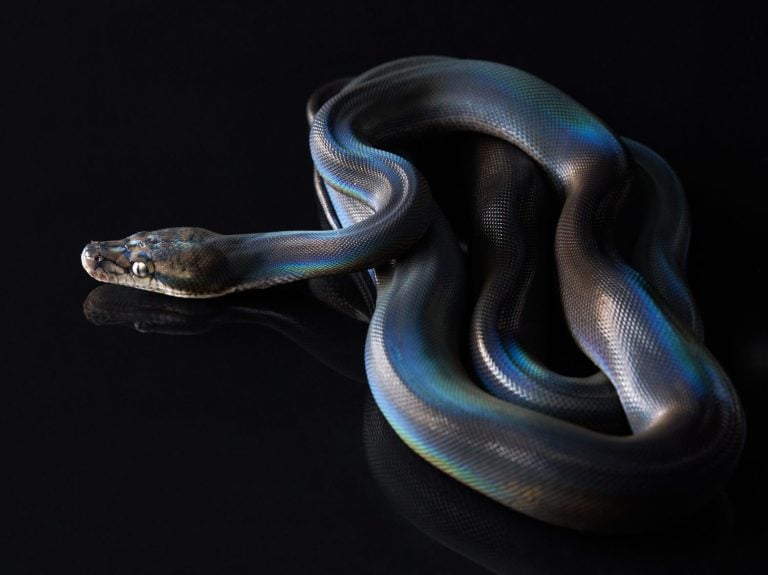
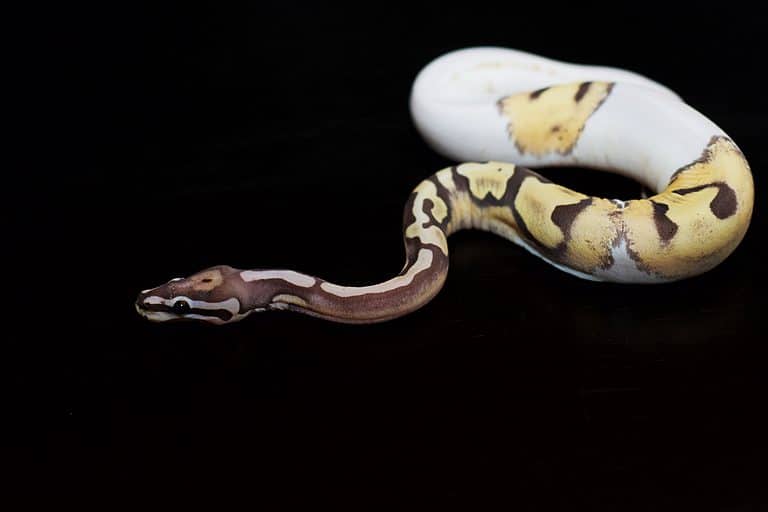
Same royal python-sleek, scaleless shine
Keung/Shutterstock.com

At a Glance

Wild Species
Also Known As Ball Python, Royal Python, BP
Diet Carnivore
Activity Nocturnal+
Lifespan 12 years
Weight 3.5 lbs
Did You Know?

Adults are typically 0.9-1.5 m long; large females can reach ~1.8 m (females average larger than males).

Scientific Classification

The Scaleless Ball Python is a captive-bred morph/variant of the Ball Python (Python regius), a small-to-medium constrictor native to West and Central Africa and widely kept as a pet.

Kingdom
Animalia
Phylum
Chordata
Class
Reptilia
Order
Squamata
Family
Pythonidae
Genus
Python
Species
Python regius

Distinguishing Features

  • Trait is absence or strong reduction of scales (smooth-looking skin), sometimes with retained scales on parts of the body depending on line
  • Same overall body plan and behavior as Ball Python: stout-bodied, relatively small python, non-venomous constrictor
  • Captive morph designation; not a formal zoological rank (not a subspecies/breed in the taxonomic sense)

Physical Measurements

Males and females differ in size

Length
3 ft 3 in (2 ft 4 in – 3 ft 11 in)
4 ft 9 in (3 ft 11 in – 5 ft 11 in)
Weight
3 lbs (2 lbs – 4 lbs)
4 lbs (3 lbs – 7 lbs)
Tail Length
6 in (4 in – 7 in)
Top Speed
1 mph
slithering

Appearance

Primary Colors
Secondary Colors
Skin Type Scaleless morph (captive-bred variant of Python regius): body largely lacks normal dorsal/ventral scales; head shields usually present; skin feels smooth/soft and can be more abrasion-prone under captive conditions.
Distinctive Features
  • Not a separate taxon: "Scaleless Ball Python" is a captive-bred morph/variant of Python regius (no formal subspecies/species status).
  • Adult total length typically ~90-150 cm; large individuals reported to ~180 cm (e.g., Barker & Barker, 2006).
  • Captive longevity commonly 20-30+ years; maximum recorded longevity 47.6 years in captivity (AnAge: de Magalhães & Costa, 2009).
  • Typical behavior: mostly nocturnal/crepuscular, secretive, terrestrial; shelters in burrows/termite mounds; defensive 'balling' posture is characteristic (species ecology described across West/Central Africa literature, e.g., Luiselli and colleagues).
  • Labial heat-sensing pits present along upper/lower lips (Pythonidae trait), aiding prey detection in low light.
  • Scaleless trait increases husbandry sensitivity: greater risk of minor abrasions, dehydration, and thermal/contact burns; requires careful substrate and humidity management compared with fully scaled conspecifics.

Sexual Dimorphism

Females are typically longer and heavier-bodied than males, while males tend to have proportionally longer tails. Males also usually show more prominent cloacal spurs, reflecting reproductive anatomy and tail musculature.

  • Usually smaller overall body size; slimmer build at maturity
  • Proportionally longer tail beyond the cloaca
  • Cloacal spurs typically larger/more prominent
  • Typically larger/heavier-bodied adults
  • Proportionally shorter tail beyond the cloaca
  • Often broader mid-body girth, especially when mature or gravid

Did You Know?

Adults are typically 0.9-1.5 m long; large females can reach ~1.8 m (females average larger than males).

The classic defense is "balling up," tucking the head under coils-this behavior gives the species its common name.

They have heat-sensing labial pits that detect warm prey in darkness (a shared trait across many pythons).

Wild ball pythons are mainly nocturnal/crepuscular ambush predators that often hunt rodents along savanna-forest edges.

Typical clutches are about 3-11 eggs; the female coils around them and can raise egg temperature via muscular "shivering" thermogenesis.

Captive lifespans commonly reach 20-30+ years; with excellent care some individuals exceed 40 years.

"Scaleless" is a captive-bred morph/variant (not a subspecies): it alters the skin's scalation but does not change the animal's species identity (Python regius).

Unique Adaptations

  • Labial heat pits (thermoreception): specialized sensory organs along the lips that detect infrared radiation-useful for night hunting and targeting warm-blooded prey.
  • Highly kinetic skull: flexible jaw joints and movable skull bones allow swallowing prey much wider than the head.
  • Backward-curved teeth: help grip prey during the initial strike and while repositioning for swallowing.
  • Constrict-and-hold physiology: strong axial muscles and circulatory effects of constriction rapidly incapacitate small mammals.
  • Camouflage patterning in wild-type P. regius: blotched browns and blacks break up the outline in leaf litter and grass.
  • Scaleless morph trait (captive variant): reduced/absent dorsal body scales (ventral belly scutes are typically still present). This can increase risk of abrasions, dehydration, and thermal injury, so scaleless individuals generally need smoother furnishings, carefully regulated heat sources, and reliable humidity compared with normally scaled ball pythons.

Interesting Behaviors

  • Balling defense: when threatened, the snake tightly coils into a sphere with the head protected in the center; it may remain motionless for extended periods.
  • Ambush hunting: typically waits in cover (burrow entrances, grass tussocks, rodent runs) and strikes rapidly, then constricts prey with body coils.
  • Scent tracking: frequent tongue-flicking to deliver odor particles to the vomeronasal (Jacobson's) organ; used to follow prey trails and locate mates.
  • Seasonal breeding rhythms: in much of its native range, mating activity often aligns with cooler/drier periods; males roam more while females are more sedentary.
  • Maternal incubation behavior: the female remains coiled around eggs, adjusting posture to regulate temperature and humidity; she generally does not feed during brooding.
  • Burrow association: commonly uses mammal burrows or termite mounds as refuges (a behavior seen across several African python species).
  • Scaleless-morph husbandry-linked behaviors: individuals may seek higher humidity hides and may rub less effectively during shedding, so keepers often observe more frequent soaking or prolonged pre-shed hiding when conditions are too dry.

Cultural Significance

In parts of West Africa (notably southern Benin), royal pythons (Python regius) are revered in Vodun and kept in sanctuaries and temples. Worldwide they shape herpetoculture: captive breeding made many color and scaleless morphs, causing pet, education, and ethics debates.

Myths & Legends

Fon and Ewe Vodun stories of Benin and Togo tell of Dan (Da/Aido-Hwedo), a serpent linked to the rainbow and earth; its coiled body holds or circles the world, and pythons are treated as sacred.

In Ouidah, Benin, the Temple of Pythons treats pythons as protective and spiritually important; harming them is forbidden, and they are often kept, honored, and released in community religious life.

West African stories linking pythons to royalty helped give the English name "royal python" to Python regius. It is seen as calm, kingly, and curls into a protective ball instead of striking.

Conservation Status

NT Near Threatened

Likely to qualify for a threatened category in the near future.

Population Stable

Life Cycle

Birth 6 hatchlings
Lifespan 12 years

Lifespan

In the Wild 10–20 years
In Captivity 20–47 years

Reproduction

Mating System Polygynandry
Social Structure Solitary
Breeding Pattern Seasonal
Fertilization Internal Fertilization
Birth Type Internal_fertilization

Ball pythons are solitary and pair only briefly during the breeding season. Males actively search for females and may engage in male-male combat; both sexes can mate with multiple partners. Females coil to incubate eggs, then provide no post-hatch care.

Behavior & Ecology

Social Solitary Group: 1
Activity Nocturnal, Crepuscular
Diet Carnivore Small rodents-especially murid rats (e.g., Mastomys spp.; in captivity commonly mice and rats).
Seasonal Hibernates

Temperament

HUBS: Secretive, shelter-oriented ambush constrictor; routine solitary behavior with seasonal breeding encounters.
Common defensive strategy is tight coiling/"balling" with head concealed; may hiss if threatened (Greene, 1997).
Generally low overt aggression; individuals vary from shy/avoidant to defensive, especially when disturbed in refuge.
Captive-bred morphs (including scaleless) typically show similar social behavior; handling history affects reactivity.

Communication

Hissing: forceful exhalation during defensive/agonistic encounters; primary audible signal.
Chemical cues: tongue-flicking to vomeronasal organ for prey, predator, and mate-related odors Halpern, 1992; Mason, 1992
Sex pheromones likely mediate mate location and courtship initiation, as in many snakes Mason, 1992
Tactile courtship: body alignment and rubbing/pressing during mating attempts; contact is brief and goal-directed.
Posture-based signals: defensive balling, head withdrawal, and body tension communicate threat sensitivity/avoidance.
Mechanosensory sensing of substrate vibration/airborne movement supports detecting nearby animals in low light.

Habitat

Biomes:
Savanna Tropical Dry Forest Tropical Rainforest Wetland
Terrain:
Plains Plateau Valley Riverine
Elevation: Up to 4921 ft 3 in

Ecological Role

Nocturnal terrestrial mesopredator in West/Central African savanna-forest mosaics and agricultural edges.

Regulates small-mammal (rodent) populations, potentially reducing crop damage and limiting rodent-borne disease risk locally Contributes to trophic energy transfer by converting small-mammal and bird biomass into predator biomass Provides prey resource for larger predators (raptors and carnivorous mammals) through juvenile and occasional adult predation events

Diet Details

Main Prey:
Small rodents Small mammals Small birds

Human Interaction

Domestication Status

Wild

The Ball Python (Python regius) is a wild African species, not truly domesticated. The Scaleless morph is a captive-bred trait made by selective breeding in the pet trade. Ball pythons are widely kept because they are calm and curl into a ball. Scaleless snakes need more careful care, with higher risk of dehydration, skin damage, and burns.

Danger Level

Low
  • Bites: usually superficial but can cause puncture wounds and infection risk; more likely during feeding response.
  • Zoonoses: Salmonella and other enteric bacteria transmission via fecal contamination/handling; risk reduced by hygiene.
  • Allergic reactions: possible to dander/mites/feeder rodents.
  • Constrictor injury: ball pythons are not considered a serious constriction hazard to healthy adults due to their typical adult size, but supervision is still recommended with children.
  • Scaleless morph-specific welfare risk (indirect human interaction hazard): improper heat sources can cause contact burns more easily due to reduced scalation; handling on rough surfaces can cause abrasions.

As a Pet

Suitable as Pet

Legality: Ball Python (Scaleless morph) (Python regius): Often legal in much of the U.S. and many countries if captive-bred, but laws differ—some places ban or limit constrictors, require permits, or control trade. Check local rules.

Care Level: Moderate

Purchase Cost: $300 - $3,000
Lifetime Cost: $5,000 - $15,000

Economic Value

Uses:
Pet trade (primary) Captive breeding and genetics/morph market Education/outreach animals (zoos, schools, private programs) Veterinary services and herpetoculture supply industry International live-animal trade for the pet industry; in parts of its native range it is also used locally for meat and skins (and other traditional uses), and it may be killed in human-snake conflict/wildlife control.
Products:
  • live animals (pet and breeding stock)
  • enclosures/heating/thermostats/substrates (ancillary market)
  • feeding rodents (ancillary market)
  • education programming/handling demonstrations
  • Python skin/leather goods for certain large python species (not a primary product of Python regius in many markets).

Relationships

Predators 8

Nile Monitor Varanus niloticus
Savannah Monitor Varanus exanthematicus
Secretarybird Sagittarius serpentarius
Bateleur Terathopius ecaudatus
Martial Eagle Polemaetus bellicosus
Honey Badger Mellivora capensis
Slender Mongoose Galerella sanguinea
African Civet Civettictis civetta

Related Species 8

Burmese Python Python bivittatus Shared Genus
African Rock Python Python sebae Shared Genus
Southern African Rock Python Python natalensis Shared Genus
Indian Python Python molurus Shared Genus
Reticulated Python Malayopython reticulatus Shared Family
Green Tree Python Morelia viridis Shared Family
Carpet Python Morelia spilota Shared Family
Children's Python Antaresia childreni Shared Family

Ecological Equivalents 5

Animals that fill a similar ecological role in their ecosystem

Ball Python Python regius Same species and ecology as the scaleless morph. A ground-dwelling, crepuscular and nocturnal ambush constrictor from the West and Central African savanna-forest mosaic that shelters in burrows and termite mounds, coils into a ball to defend itself, and feeds mainly on small mammals.
Kenyan Sand Boa Eryx colubrinus Small-to-medium, largely terrestrial and cryptic constrictor that specializes on small mammals. Uses burrows and loose substrate for concealment and employs a sit-and-wait predation strategy on rodents, typically in more arid habitats.
African House Snake Boaedon fuliginosus West and Central African, rodent-focused snake frequently associated with human-modified habitats (villages and farms) and nocturnal foraging. Overlaps strongly in prey base and human-commensal encounter context, despite being a colubrid rather than a python.
African Wolf Snake Lycophidion capense Nocturnal, ground-dwelling predator that uses cover and crevices and often takes small vertebrate prey. Shares cryptic, shelter-oriented activity patterns in overlapping African habitats.
Spotted Thick-tailed Gecko Hemitheconyx caudicinctus A burrow- and shelter-using West African terrestrial reptile that occupies similar savanna-edge microhabitats and refugia (rodent burrows and ground cover). Not a predator competitor, but serves as a niche-overlap comparator for microhabitat use and activity period.

“A rather controversial morph due to its extra-sensitive skin, the scaleless ball python has completely smooth skin with no visible scales aside from the ones on its eyes.”

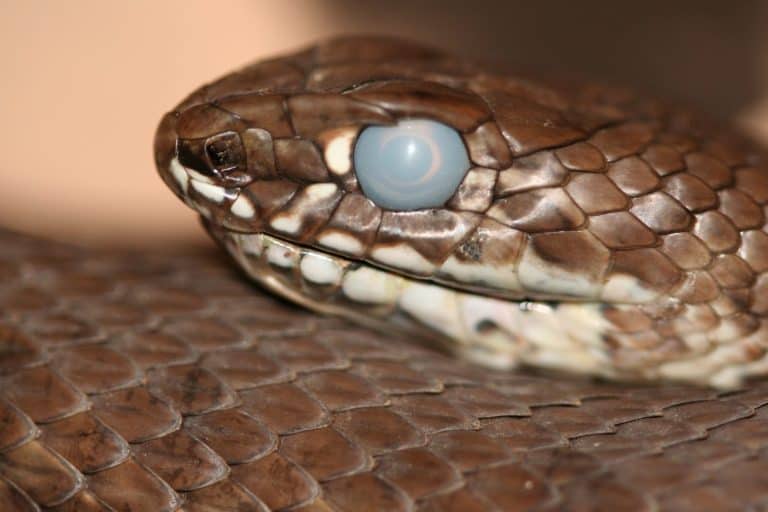
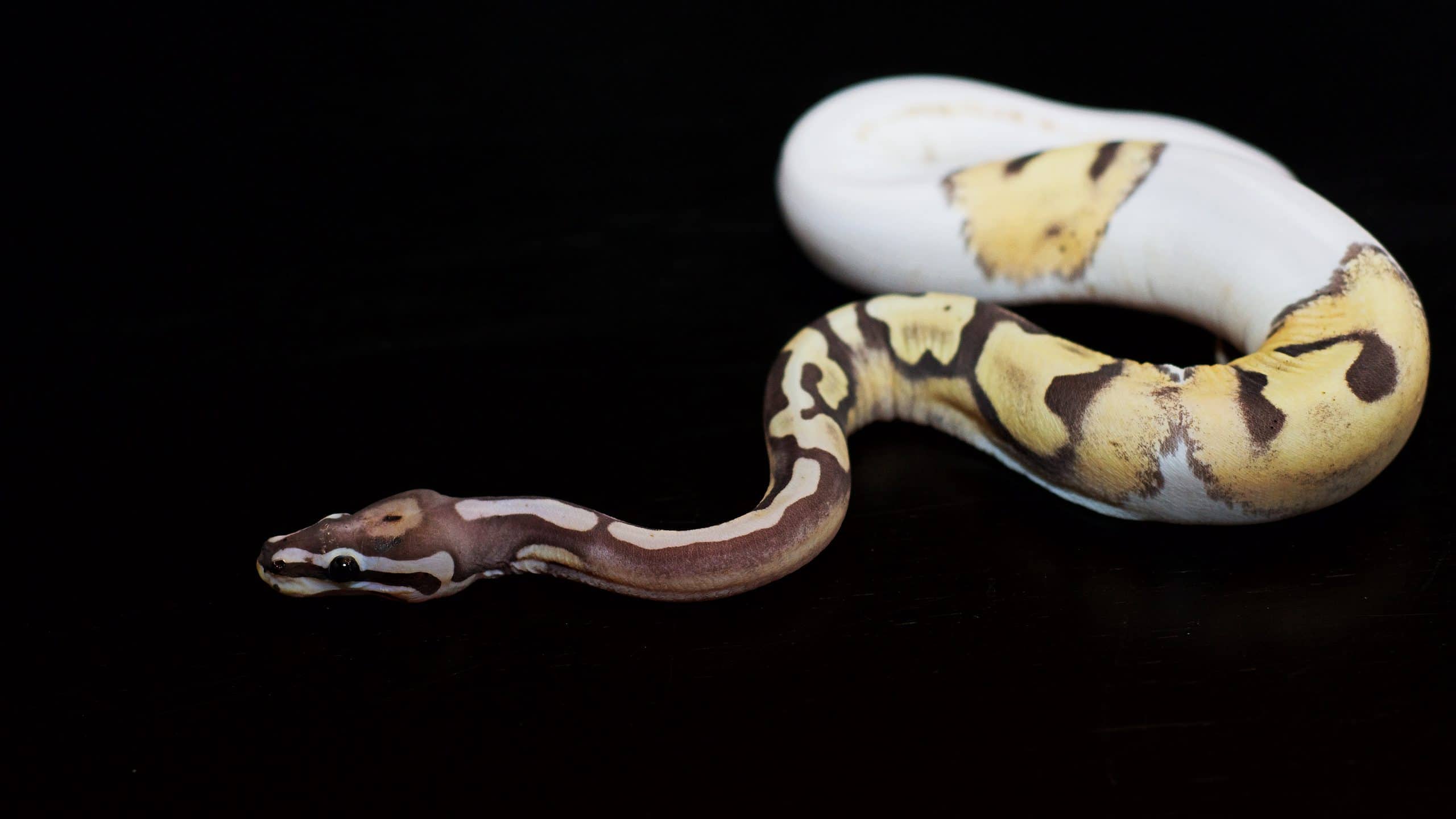
Scaleless ball pythons are, as their name suggests, entirely smooth-skinned from head to tail, save for a single ocular scale covering each eye. They lack the usual textured head and body scales of most other ball python morphs. This results in not only a change in the texture of the snake’s skin, but also a more sleek appearance overall. Additionally, the snake’s body pattern and coloration tends to be more vibrant and have higher contrast than that of morphs with scales.

While incredibly popular, the scaleless morph has also become somewhat controversial. This is because it has more sensitive skin than typical scaled ball pythons. As a result, it is common for scaleless ball pythons to develop skin issues. Such issues are particularly along the belly, including burns and difficulty shedding. However, many reptile owners note that, with proper care and extra attention to account for this skin sensitivity, they are overall just as healthy as most other morphs.

Most scaleless ball pythons have the same overall color and pattern as standard wild-type ball pythons. In recent years, though, breeders have developed more color variants to further highlight the morph’s vibrant, high-contrast appearance.

3 Amazing Scaleless Ball Python Facts!

  • Scaleless ball pythons in the wild have been recorded. They are incredibly rare, though, due to the morph’s highly sensitive and vibrant skin. In general, scaleless snakes are not well-equipped for surviving in the wild.
  • Even scaleless ball pythons actually do have just two scales on their bodies. They have one ocular scale to protect each eye from irritants like sand and dirt.
  • High, consistent humidity and soft substrate are essential for scaleless ball pythons to shed properly in captivity. This is because they are more prone to cuts, burns, and bruises than other morphs.

Where to Find Scaleless Ball Pythons

The standard, “wild-type” ball python is native to Sub-Saharan Africa. It most commonly lives in western and central African countries such as Nigeria, Ghana, and Cameroon. An incredibly hardy reptile, it can thrive in a wide range of habitats and climates. However, it generally prefers warm, humid weather and mainly resides in savannas, grasslands, and sparse forests with open clearings near large bodies of water.

As we touched on briefly above, it’s extremely rare to find scaleless ball pythons living in the wild. Although most morphs can technically occur naturally, the scaleless variety is among the rarest of them all. Thanks to their soft, sensitive skin and more vibrant coloration, they are much more vulnerable to the elements and predation. This makes it incredibly rare for adult scaleless pythons to locate and breed with one another in a non-controlled setting.

Despite being a fairly new morph, scaleless ball pythons have quickly become very popular amongst reptile keepers. However, because they are quite complicated to breed, they are also one of the more expensive morphs on the market.

If you’re interested in buying a scaleless ball python, you can expect to pay at least $1,500 or so for a single snake due to their rarity. Many unique color variants like the scaleless pinstripe, piebald, and Mojave can cost well into the thousands or even over $10,000 in some cases.

Scaleless Ball Python Scientific Name

All ball python morphs, including the scaleless morph, belong to the same species and are not classified into distinct subspecies. Because of this, they all share the same taxonomic classification and scientific name: Python regius, or “royal python.” 

Notably, the ball python’s rather regal scientific name is likely thanks to its docile and hardy nature. Ancient Egyptian royals were often recorded and depicted draping live snakes around their wrists and necks as fashion accessories. Ball pythons are modest in size and tolerate handling. Because of that, important figures like Cleopatra likely “wore” them to flaunt their wealth and social status.

Scaleless Ball Python Population and Conservation Status

The ball python has been classified as near-threatened by the IUCN Red List since 2012. 

Extinction is not currently an imminent threat to the species. Despite that, its native populations across much of central and western Africa have declined slightly in recent years. 

Several key threats have contributed to the species’ diminishing numbers, most notably Africa’s agricultural and logging industries. Habitat loss due to deforestation is becoming increasingly common. Ball pythons are also vulnerable to the exotic pet trade and are sometimes also hunted and sold for food.

Although scaleless pythons can technically exist in the wild, they are extremely rare. Due to their vibrant skin and lack of protective scales, they are at an increased risk of predation, skin issues, and difficulty shedding properly. Currently, no data exists on this particular morph’s numbers in the wild.

How to Identify Scaleless Ball Python: Appearance and Description

The scaleless ball python morph is achieved by breeding two scaleless head morph ball pythons together. Scaleless head ball pythons, as their name implies, lack scales mainly on and around their heads. This is why the scaleless morph is also sometimes referred to by reptile breeders as the super scaleless head morph.

While the scaleless morph’s color and pattern can vary wildly, identifying a scaleless python is fairly straightforward thanks to their distinct skin texture and appearance. Rather than having textured, bumpy skin accented by lots of small, interlocking scales, the scaleless morph’s skin is entirely smooth from head to tail. Even the ventral or belly scales are absent. The only scales present on the snake’s entire body are two small ocular scales on each eye.

Additionally, due to its super-smooth skin, the morph’s color and patterning tend to be especially bold and bright. Reptile breeders have developed many specific color and pattern variations of the fully scaleless morph in recent years. These include the pastel, piebald, Enchi, and Mojave scaleless morphs.

To sum up, the scaleless morph is defined by these key traits:

  • Entirely smooth skin from head to tail, aside from an ocular scale covering each eye
  • More vibrant and well-defined color/patterning than scaled ball pythons
  • Very soft texture to the skin overall

Scaleless Ball Python Evolution and History

The scaleless ball python morph is one of the more recent designer morphs to enter the reptile breeding scene. It was developed in 2013 by reptile breeder Brian Barczyk at BHB Enterprises.

However, the scaleless morph technically first emerged in 2010, when BHB Enterprises developed and bred snakes with the scaleless head gene. These ball pythons had smooth heads with no scales aside from the ocular scales covering each eye. However, the majority of the rest of the snakes’ bodies were covered in typical scales.

Barczyk and BHB Enterprises developed and popularized the fully scaleless morph around three years after the scaleless head morph’s initial success. By carefully breeding pythons with the scaleless head gene together, it became possible for them to create fully scaleless babies. Many other scaleless morphs of varying colors and patterns emerged over the following years. These include the scaleless pinstripe, pastel, and pied morphs.

Scaleless Ball Python Pictures
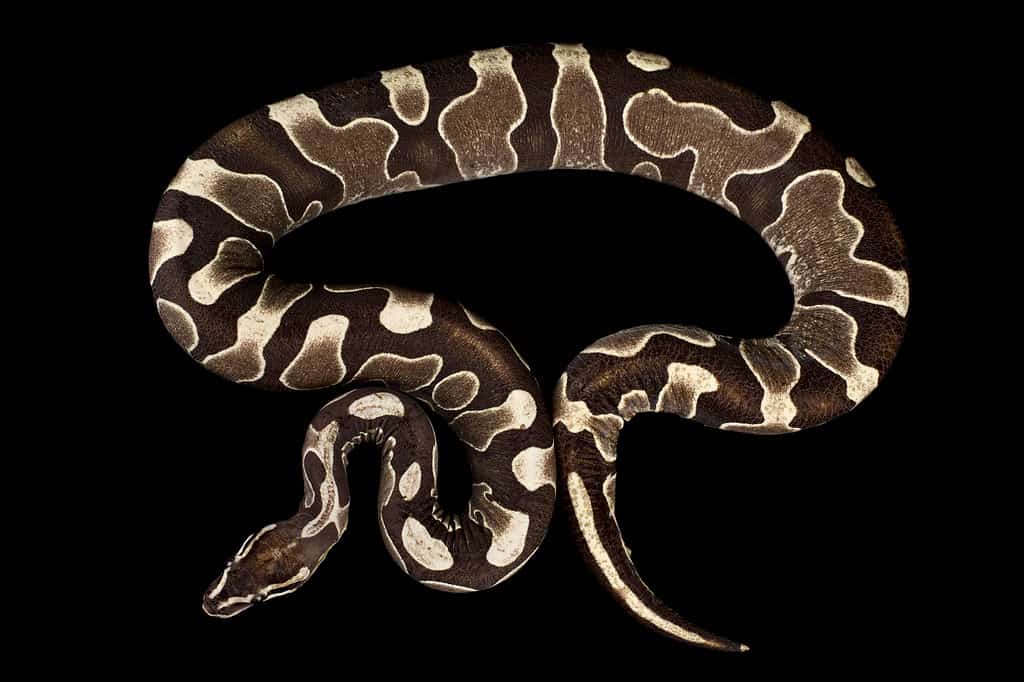
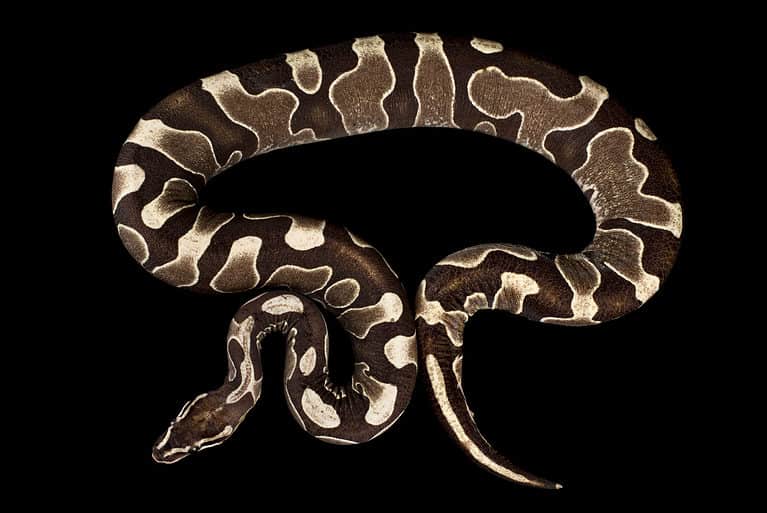
👁 Scaleless Ball Python 2

Scaleless ball pythons are similar to other ball python morphs; however, they are completely scaleless, except for a single scale above each eye.

©reptiles4all/Shutterstock.com

👁 Scaleless Ball Python 1

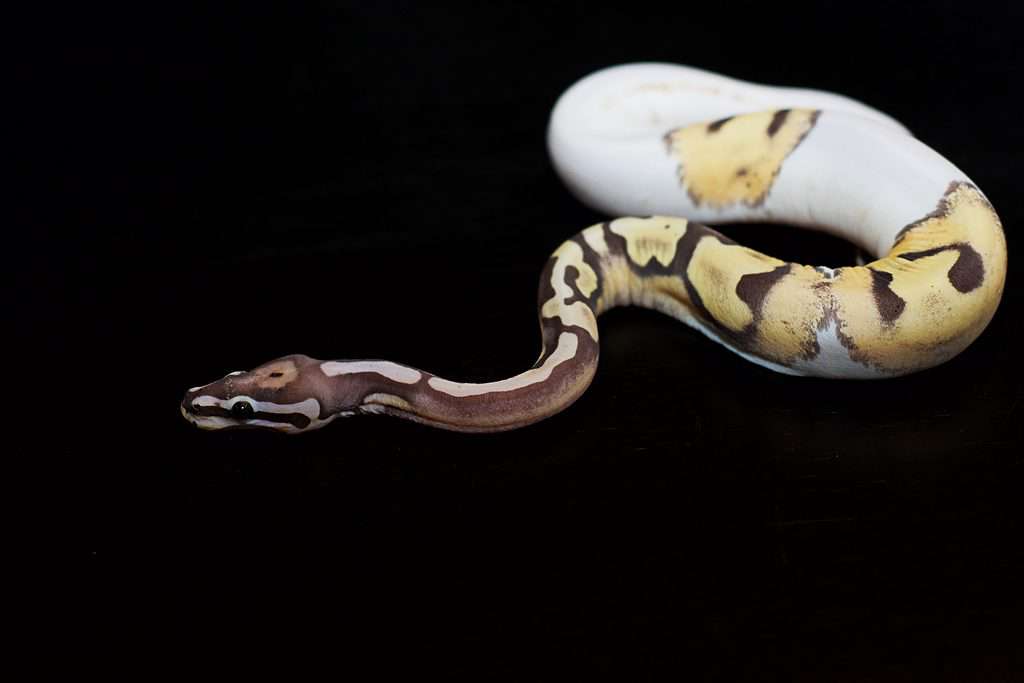
The scaleless morph is achieved by breeding two scaleless head ball pythons. They are easy to identify, due to their unique skin texture.

©Keung/Shutterstock.com

Scaleless Ball Python: How Dangerous Are They?

All ball python morphs generally share the same docile, gentle temperament, including the scaleless morph. Although they are constrictor snakes, they are one of the smallest, least aggressive members of the python family and are incapable of hunting animals much larger than an average rodent. In fact, the species’ common name, “ball” python, is a reference to its tendency to coil its body into a tight ball when threatened or startled.

Rather than being considered dangerous to humans, the ball python has become one of the most popular pet reptiles in the world! Its small size, cute appearance, and hardy, non-aggressive nature have made it a favorite amongst beginner and expert reptile enthusiasts alike.

It is worth noting, however, that the scaleless morph in particular is slightly more fragile than other varieties due to its uniquely textured and sensitive skin. Some pet owners note snakes of this particular morph can initially be somewhat more fearful and resistant to handling.

Scaleless Ball Python Behavior and Humans

As detailed above, the ball python’s uniquely gentle, inquisitive temperament has significantly contributed to its popularity in the exotic pet trade. Additionally, its small size and manageable care requirements make it an accessible and rewarding pet for both beginner and expert reptile keepers.

While many snake species commonly kept as pets are challenging or even dangerous to handle directly, the ball python is both hardy and calm enough to tolerate and even enjoy small amounts of human interaction. Still, early and consistent socialization whenever possible are essential to gradually and gently acclimate the snake to handling.

Since the mid-1990s, reptile breeders all around the world have developed more than 4,000 unique ball python morphs. The scaleless variety in particular is one of the few morphs that affects not only the snake’s patterning and coloration but also its skin texture. However, because their skin is also more sensitive than that of other morphs, babies and juveniles can be more timid and resistant to handling.

View all 385 animals that start with S

Sources

  1. BHB Reptiles / Accessed February 17, 2023
  2. IUCN Red List / Accessed February 17, 2023
  3. Morph Market / Accessed February 17, 2023
  4. San Diego Zoo / Accessed February 17, 2023
  5. World of Ball Pythons / Accessed February 17, 2023

About the Author

Hailey Pruett

Hailey "Lex" Pruett is a nonbinary writer at A-Z Animals primarily covering reptiles and amphibians. They have over five years of professional content writing experience. Additionally, they grew up on a hobby farm and have volunteered at animal shelters to gain further experience in animal care. A longtime resident of Knoxville, Tennessee, Hailey has owned and cared extensively for a wide variety of animals in their lifetime, including cats, dogs, lizards, turtles, frogs and toads, fish, chickens, ducks, horses, llamas, rabbits, goats, and more!
Connect:

Thank you for reading! Have some feedback for us?

Contact the AZ Animals editorial team

Related Articles You May Find Interesting


Scaleless Ball Python FAQs (Frequently Asked Questions)

Ball pythons, regardless of the morph, are not venomous. All members of the python family are constrictor snakes that do not need to rely on venom to take down their prey.

Most python species, including the ball python, hunt in a similar fashion: stalking their prey quietly from a distance and ambushing them at the right moment. After latching onto their prey with their teeth, a ball python will quickly coil their entire body around the animal and tighten their muscles until the prey suffocates. After killing their prey, the snake then typically swallows the animal whole.

All ball python morphs share a similarly gentle yet timid temperament. In general, they are not considered to be aggressive. In fact, some scaleless ball pythons are slightly more skittish than usual due to their extra-sensitive skin compared to that of other morphs with scales.

Virtually all scaleless ball pythons are born and bred in captivity. While, like most morphs, they can technically be born outside of captivity, this is extremely rare. Furthermore, their sensitive yet vibrant skin makes them more vulnerable to predators.

All ball python morphs are fully carnivorous. They prey on a wide range of small animals, primarily rodents, birds, and amphibians. Additionally, depending on their proximity to water, they will sometimes hunt small fish. In captivity, most reptile owners feed their ball pythons captive-bred “feeder” mice and rats.

The scaleless morph is somewhat controversial due to its sensitive skin. Without the usual protective scales, the morph’s skin is more prone to health issues like burns, cuts, abrasions, bruises, and difficulty shedding properly.

It is essential for pet owners to regularly assess their scaleless ball pythons’ skin in captivity for any irregularities and alert a veterinarian of any sudden changes. With proper care and careful attention to enclosure temperatures and humidity, most thrive in captivity and have similar lifespans and outcomes to their scaled counterparts.

Because it is a more recent designer morph that can be quite challenging to breed in captivity, the scaleless variety tends to be one of the most expensive. Prices can vary significantly from $1,500 to $10,000 depending on the snake’s exact color, pattern, and traits.

Yes, they are fairly rare in the exotic pet trade due to being extremely rare in the wild and difficult to breed in captivity. Additionally, their sensitive, scaleless skin requires slightly more specialized care than most other morphs. Finally, they tend to be in consistently high demand thanks to their distinct, visually striking appearance.