

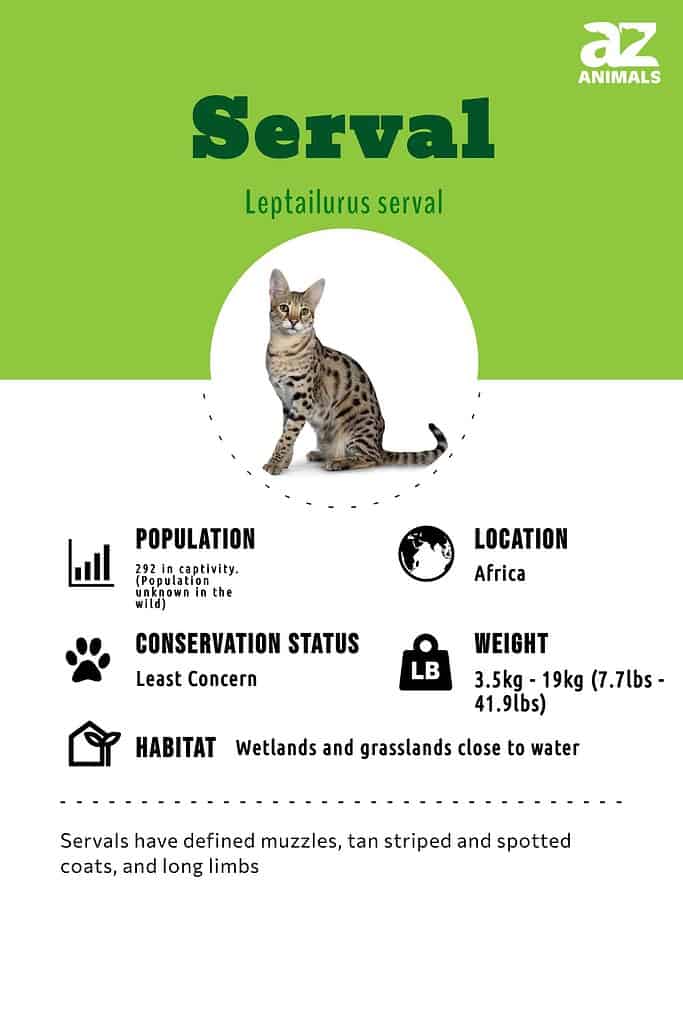
S
Species Profile

Serval

Leptailurus serval

The wetland pouncer with radar ears
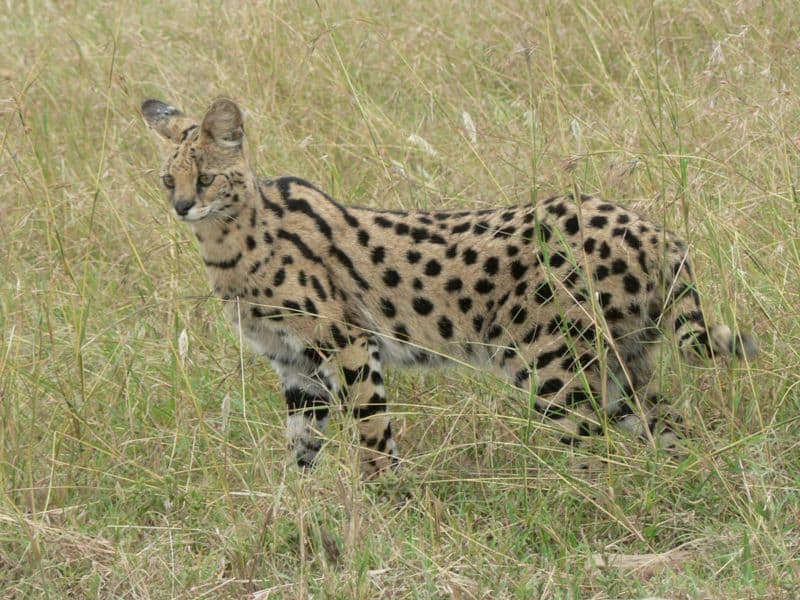
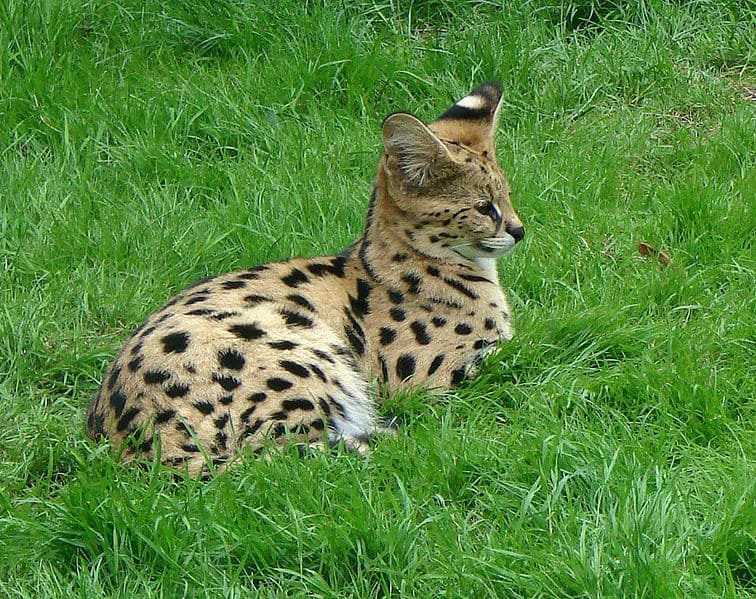
Self, CC BY-SA 2.5, via Wikimedia Commons

Serval Distribution

Click a location to explore more animals from that region

Loading map...

Found in 39 countries

๐Ÿ‡ธ๐Ÿ‡ณ Senegal ๐Ÿ‡ฌ๐Ÿ‡ฒ Gambia ๐Ÿ‡ฌ๐Ÿ‡ผ Guinea-Bissau ๐Ÿ‡ฌ๐Ÿ‡ณ Guinea ๐Ÿ‡ธ๐Ÿ‡ฑ Sierra Leone ๐Ÿ‡ฑ๐Ÿ‡ท Liberia ๐Ÿ‡จ๐Ÿ‡ฎ Cรดte d'Ivoire ๐Ÿ‡ฌ๐Ÿ‡ญ Ghana ๐Ÿ‡น๐Ÿ‡ฌ Togo ๐Ÿ‡ง๐Ÿ‡ฏ Benin ๐Ÿ‡ง๐Ÿ‡ซ Burkina Faso ๐Ÿ‡ฒ๐Ÿ‡ฑ Mali ๐Ÿ‡ณ๐Ÿ‡ช Niger ๐Ÿ‡ณ๐Ÿ‡ฌ Nigeria ๐Ÿ‡จ๐Ÿ‡ฒ Cameroon ๐Ÿ‡ฌ๐Ÿ‡ถ Equatorial Guinea ๐Ÿ‡ฌ๐Ÿ‡ฆ Gabon ๐Ÿ‡จ๐Ÿ‡ฌ Republic of Congo ๐Ÿ‡จ๐Ÿ‡ฉ Democratic Republic of Congo ๐Ÿ‡จ๐Ÿ‡ซ Central African Republic ๐Ÿ‡น๐Ÿ‡ฉ Chad ๐Ÿ‡ธ๐Ÿ‡ธ South Sudan ๐Ÿ‡บ๐Ÿ‡ฌ Uganda ๐Ÿ‡ท๐Ÿ‡ผ Rwanda ๐Ÿ‡ง๐Ÿ‡ฎ Burundi ๐Ÿ‡ฐ๐Ÿ‡ช Kenya ๐Ÿ‡น๐Ÿ‡ฟ Tanzania ๐Ÿ‡ช๐Ÿ‡น Ethiopia ๐Ÿ‡ธ๐Ÿ‡ด Somalia ๐Ÿ‡ฆ๐Ÿ‡ด Angola ๐Ÿ‡ฟ๐Ÿ‡ฒ Zambia ๐Ÿ‡ฒ๐Ÿ‡ผ Malawi ๐Ÿ‡ฒ๐Ÿ‡ฟ Mozambique ๐Ÿ‡ฟ๐Ÿ‡ผ Zimbabwe ๐Ÿ‡ง๐Ÿ‡ผ Botswana ๐Ÿ‡ณ๐Ÿ‡ฆ Namibia ๐Ÿ‡ฟ๐Ÿ‡ฆ South Africa ๐Ÿ‡ธ๐Ÿ‡ฟ Eswatini ๐Ÿ‡ฑ๐Ÿ‡ธ Lesotho

Size Comparison

Human 5'8"
Serval 1 ft 11 in

Serval stands at 34% of average human height.

At a Glance

Wild Species
Diet Carnivore
Activity Crepuscular+
Lifespan 10 years
Weight 18 lbs
Status Least Concern
Did You Know?

Size: head-body 59-92 cm; tail 20-45 cm; shoulder height ~54-62 cm (long-legged for a cat).

Scientific Classification

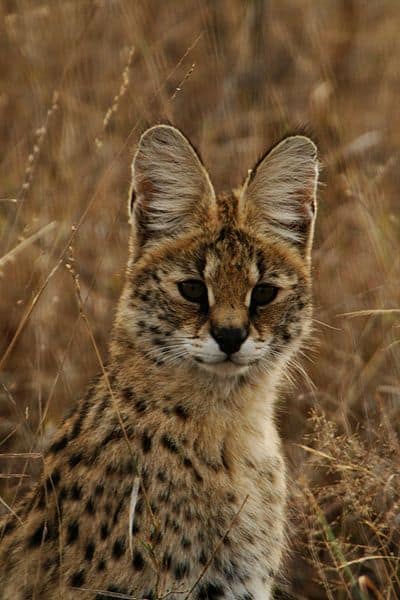
The serval is a medium-sized African wild cat characterized by long legs, a slender build, very large ears, and a golden coat marked with black spots and stripes. It is a specialized hunter of small mammals and birds, often using high pounces to capture prey in tall grass.

Kingdom
Animalia
Phylum
Chordata
Class
Mammalia
Order
Carnivora
Family
Felidae
Genus
Leptailurus
Species
serval

Distinguishing Features

  • Very large ears relative to head size (excellent hearing)
  • Long legs and tall, slim body adapted to hunting in tall grass
  • Spotted-and-striped coat pattern; black bars often visible on neck/shoulders
  • Short tail compared to many other small cats
  • High pounce hunting behavior, especially for rodents

Physical Measurements

Males and females differ in size

Height
โ™‚ 1 ft 12 in (1 ft 9 in โ€“ 2 ft 2 in)
โ™€ 1 ft 10 in (1 ft 9 in โ€“ 1 ft 12 in)
Length
โ™‚ 3 ft 6 in (2 ft 7 in โ€“ 4 ft 6 in)
โ™€ 3 ft 3 in (2 ft 7 in โ€“ 3 ft 11 in)
Weight
โ™‚ 30 lbs (20 lbs โ€“ 40 lbs)
โ™€ 21 lbs (15 lbs โ€“ 26 lbs)
Tail Length
โ™‚ 1 ft 1 in (8 in โ€“ 1 ft 6 in)
โ™€ 12 in (8 in โ€“ 1 ft 4 in)
Top Speed
50 mph
running

Appearance

Primary Colors
Secondary Colors
Skin Type Short, dense fur; sleek and close-lying with minimal underfur in warm climates.
Distinctive Features
  • Long legs and high shoulder height (54-62 cm) aiding wetland/grassland stalking and pouncing (Kingdon 2015).
  • Very large ears with black backs and pale ocelli; acute hearing for rodent detection (Sunquist & Sunquist 2002).
  • Head-body length 59-92 cm; tail length 20-45 cm; slender, lightly built torso (Nowak 2005; Kingdon 2015).
  • Adult mass: males typically 9-18 kg, females 7-12 kg; athletic build optimized for high vertical pounces (Sunquist & Sunquist 2002).
  • Spots are solid (not rosetted) and often merge into stripes on neck/shoulders; tail distinctly ringed black (Kingdon 2015).
  • Lifespan: ~10 years in the wild; up to ~20 years in captivity (Nowak 2005; Sunquist & Sunquist 2002).
  • Behavioral association: solitary, mainly crepuscular/nocturnal; specialized small-mammal hunter using high pounces in tall grass/wetlands (IUCN: Thiel 2015).

Sexual Dimorphism

Males are larger and heavier than females, with slightly longer body length and a more robust neck/shoulder build; coat coloration and spotting/striping patterns are otherwise very similar between sexes.

โ™‚
  • Heavier average mass (commonly 9-18 kg) with broader shoulders and thicker neck ruff impression.
  • Slightly longer head-body length within the species range (upper end more often male).
โ™€
  • Lighter average mass (commonly 7-12 kg) with a more gracile overall frame.
  • Often slightly narrower head and shoulders; patterning comparable to males.

Did You Know?

Size: head-body 59-92 cm; tail 20-45 cm; shoulder height ~54-62 cm (long-legged for a cat).

Mass: typically ~7-18 kg, with males averaging larger than females.

Hunting success is often reported around ~50%-very high for a wild felid-thanks to precision listening and vertical pouncing.

A serval can leap roughly up to ~3 m vertically to snatch birds or strike prey from above.

Gestation lasts about 66-77 days; litters are usually 1-3 kittens (occasionally up to 4).

Lifespan: commonly ~10-12 years in the wild; up to ~20-22 years has been recorded in captivity.

The domestic "Savannah cat" was developed by hybridizing a serval with a domestic cat, reflecting the serval's iconic look (but servals themselves are fully wild).

Unique Adaptations

  • Very long legs and a high shoulder height (~54-62 cm) allow efficient movement and visibility in tall grass and reedbeds.
  • Exceptionally large ears relative to head size enhance directional hearing-crucial for detecting rodents moving under dense cover.
  • Spotted-and-striped golden coat provides disruptive camouflage in dappled grassland light and wetland vegetation.
  • Light, slender build supports explosive vertical leaps (reported up to ~3 m) used for both rodent pounces and bird captures.
  • Long neck and small head improve strike precision when pinning prey beneath the forepaws.
  • Broad diet tolerance (rodents, birds, reptiles, amphibians, insects) helps the species exploit patchy wetland/grassland prey pulses.

Interesting Behaviors

  • High "pounce" hunting: the serval pauses, listens, then springs upward and forward to land with forepaws on prey hidden in grass or reeds.
  • Crepuscular to nocturnal activity is common; in protected areas with low disturbance, individuals may also hunt by day.
  • Solitary lifestyle: adults generally travel and hunt alone except during mating and when females rear kittens.
  • Rodent-and-bird specialization: frequent patrols along grassy edges, marsh margins, and drainage lines where small mammals concentrate.
  • Scent marking and territorial signaling: urine spraying, cheek rubbing, and scratch marks help maintain spacing between individuals.
  • Opportunistic wetland foraging: will take frogs, insects, and fish-like aquatic prey when available, reflecting strong ties to marshy habitats.
  • Quiet, stalk-and-listen strategy: long pauses with ears swiveling independently to pinpoint prey before the strike.

Cultural Significance

The serval (Leptailurus serval), an African wild cat of wetlands and grasslands, is a symbol for reedbed and marsh protection, common in wildlife tourism and education, and seen in the hybrid Savannah cat; it remains a wild cat with special hunting skills.

Myths & Legends

Name origin: "serval" is commonly traced through European usage to Portuguese (serval/cerval), often interpreted as "deer-like," a nod to its long legs and bounding, antelope-like pounce.

Early European accounts from Africa called the serval (Leptailurus serval) a "marsh lynx" or "leopard-like cat" because its spotted coat and wetland habits led to tales of a small, secretive 'reed leopard.'

The serval (Leptailurus serval), with its bold look and skill at jumping, helped start the Savannah cat in the late 20th century and is often shown as a 'wild-looking' pet in media.

Conservation Status

LC Least Concern

Widespread and abundant in the wild.

Population Decreasing

Protected Under

  • CITES Appendix II (international trade regulated)
  • Legal protection or hunting/trapping regulation varies by range state; enforcement and permitting differ among countries

Life Cycle

Birth 2 kittens
Lifespan 10 years

Lifespan

In the Wild 7โ€“12 years
In Captivity 12โ€“23 years

Reproduction

Mating System Polygyny
Social Structure Solitary
Breeding Pattern Transient
Fertilization Internal Fertilization
Birth Type Internal_fertilization

Servals are solitary; males hold large territories overlapping several females and mate opportunistically during female estrus. Associations are brief, with no pair bond; after ~66-77 days gestation females rear 1-3 kittens alone.

Behavior & Ecology

Social Solitary Group: 1
Activity Crepuscular, Nocturnal, Diurnal
Diet Carnivore Rodents (Muridae), typically grass rats and other small savanna rodents; multiple field diet studies report rodents as the dominant prey category (often the majority of prey items and biomass) for Leptailurus serval.

Temperament

Strongly territorial; frequent scent-marking and patrol behavior reported for both sexes (Sunquist & Sunquist, 2002).
Typically avoids conspecific encounters; interactions are brief and often aggressive if boundary disputes occur (Nowak, 1999).
Home ranges may overlap, especially male-female; direct social cohesion remains low (IUCN Red List: Leptailurus serval accounts).
Across populations, the core pattern is solitary hunting; activity shifts more diurnal where disturbance is low and more nocturnal near humans.
Life history context: litter size commonly 1-4 (often 2); maternal association is the main multi-individual unit (Sunquist & Sunquist, 2002).
Longevity context: reported ~10 years in the wild; up to ~20 years in captivity (species accounts in major mammal references, e.g., Nowak, 1999; Sunquist & Sunquist, 2002).

Communication

meow-like calls Adult contact/low-intensity
purr Affiliative; especially mother-kittens
growl Agonistic warning
hiss/spit Close-range threat
high-pitched yowl/scream Distress or intense aggression, reported in felid accounts
chirp/chatter Short-range excitement/contact; described in serval behavioral descriptions
urine spraying and scent marking on vegetation Primary territorial signaling; Sunquist & Sunquist, 2002
feces deposition at conspicuous sites Latrine-like marking reported in felids
scratching and claw marks on substrates Visual/olfactory marking
facial rubbing and body scent transfer Chemical communication
posture and tail/ear displays Threat and intent signaling at close range

Habitat

Biomes:
Savanna Wetland Freshwater Tropical Dry Forest Temperate Grassland
Terrain:
Plains Hilly Plateau Valley Riverine Coastal
Elevation: Up to 12467 ft 2 in

Ecological Role

Mesopredator specializing in small mammals and birds in savanna, grassland, and wetland food webs.

Regulates rodent populations (potentially reducing crop-damaging rodents near agricultural edges) Influences prey behavior and spatial distribution (top-down effects on small-mammal communities) Links wetland and grassland trophic pathways via predation on amphibians and occasional aquatic prey Provides carrion resources indirectly (prey remains) that subsidize scavengers and decomposers

Diet Details

Main Prey:
Small mammals Birds Reptiles Amphibians Large insects and other invertebrates Fish and aquatic prey

Human Interaction

Domestication Status

Wild

Serval (Leptailurus serval) is a wild African cat not domesticated. People keep it in zoos, exotic collections, captive breeding for pets, and for hybrids like the Savannah cat. Historically taken for fur. They face habitat loss, road deaths, snaring, killing over poultry, and some legal or illegal trade.

Danger Level

Moderate
  • Bites and deep scratches (sharp canines/claws) during handling, restraint, or if startled
  • Increased injury risk with intact adults (territorial/aggressive defensive behavior in captivity)
  • Zoonotic/parasite risks typical of wild carnivores (e.g., fleas/ticks; enteric pathogens) if hygiene and veterinary protocols are inadequate
  • Public-safety risk from escapes (pursuit/attack on pets and potential injury to people attempting capture)

As a Pet

Not Suitable as Pet

Legality: Legality of keeping a serval (Leptailurus serval) varies by place. International trade is mostly under CITES Appendix II. In the U.S. it depends on state/local rules; many countries require licenses or ban them.

Care Level: Expert Only

Purchase Cost: $5,000 - $15,000
Lifetime Cost: $25,000 - $80,000

Economic Value

Uses:
Ecotourism/wildlife viewing Zoos and education Captive breeding/exotic pet trade (regulated/illegal depending on jurisdiction) Historical fur/skin trade Scientific research and conservation programs Hybrid breeding (Savannah cat industry influence)
Products:
  • tourism revenue from wildlife reserves and guided safaris
  • zoo exhibition value and educational programming
  • live-animal sales in regulated exotic markets (where legal)
  • pelts/skins (historical and occasionally illegal trade)
  • use as a progenitor species in Savannah cat hybrid breeding programs

Relationships

Predators 8

Leopard Panthera pardus
Lion Panthera leo
Spotted hyena Crocuta crocuta
African wild dog Lycaon pictus
Nile crocodile Crocodylus niloticus
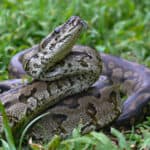
African rock python Python sebae
Martial eagle Polemaetus bellicosus
Crowned eagle Stephanoaetus coronatus

Related Species 5

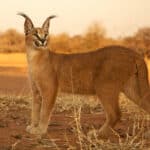
Caracal Caracal caracal Shared Family
African golden cat Caracal aurata Shared Family
African wildcat Felis lybica Shared Family
Black-footed cat Felis nigripes Shared Family
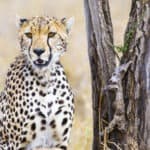
Cheetah Acinonyx jubatus Shared Family

Ecological Equivalents 4

Animals that fill a similar ecological role in their ecosystem

Caracal Caracal caracal Similar medium-sized African felid that hunts small-to-medium prey, overlaps in savanna and woodland mosaics, and uses ambush/pounce tactics. The serval, Leptailurus serval, favors wetlands and grassland, has long legs and large ears, often leaps 2โ€“3 m, and has a body length of 59โ€“92 cm and a mass of 7โ€“18 kg.
African wildcat Felis lybica They overlap across African savannas and edges; both are active at night, at dawn, or at dusk and hunt small prey such as rodents and birds. The serval prefers wetter grasslands, listens for prey and makes high pounces; the African wildcat stalks and rushes.
Black-footed cat Felis nigripes Both hunt small mammals, mainly rodents and small birds. The black-footed cat prefers arid, open areas, while the serval prefers tall grass and wetter habitats and hunts using its long legs and high pounces.
Jungle cat Felis chaus The jungle cat and the serval (Leptailurus serval) play similar ecological roles: long-legged cats of reedbeds and wet grasslands near water that primarily eat rodents and birds. The jungle cat occurs in Asia and the Middle East, while the serval fills this role in sub-Saharan Africa.
๐Ÿ‘ Image

Classification and Evolution
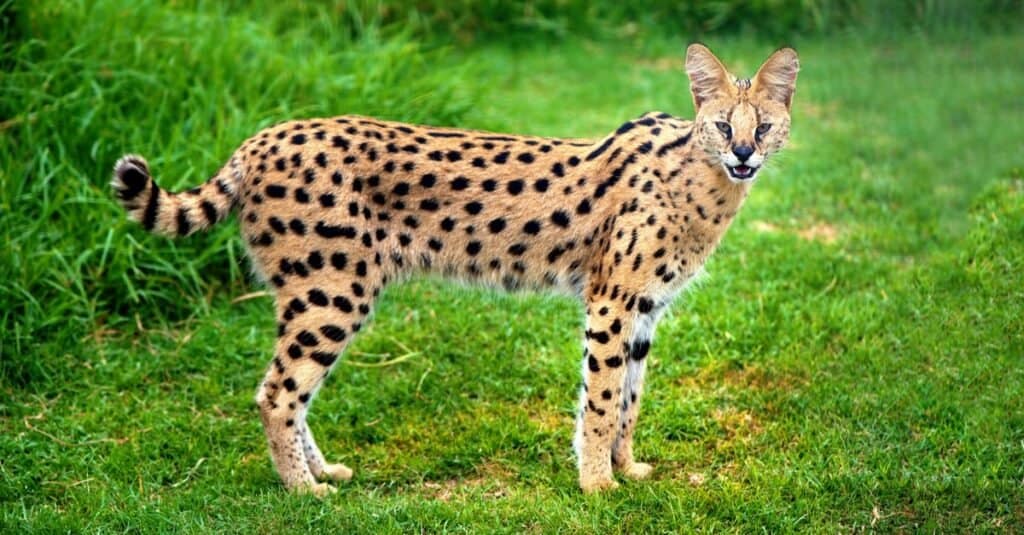
๐Ÿ‘ Maddest Angriest Cats - Serval

In spite of the spots on their coats which make them look like miniature cheetahs, servals are closely related to African golden cats and caracals

ยฉHoward Klaaste/Shutterstock.com

Servals are pretty unique since they are rather fond of water. As a matter of fact, they make it a point of duty to remain close to it regardless of whether they happen to live in savannahs, forests, or marshes.

Like most felines, they enjoy a rather keen sense of hearing and are actually capable of swiveling their ears in the direction of sound. They also have sharp eyes and excellent vision in low-light conditions.

These speckled, striped miniature predators are considered to be part of the Caracal lineage which first emerged on the evolutionary scene 8.5 million years ago. According to experts, the ancestor of modern day servals made its way to Africa between that period and 5. 6 million years ago. The closest relatives of these wild felines are African golden cats and caracals.

Anatomy and Appearance
๐Ÿ‘ Image

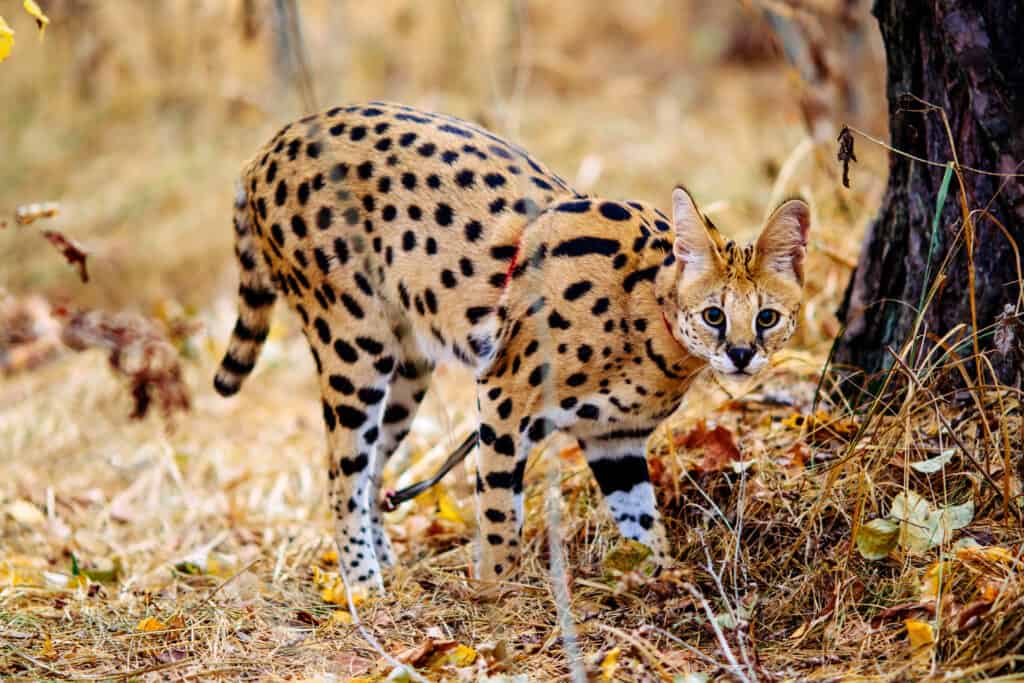
Servalsโ€™ long limbs and long neck make it easy for them to see when standing in tall grass

ยฉPRESSLAB/Shutterstock.com

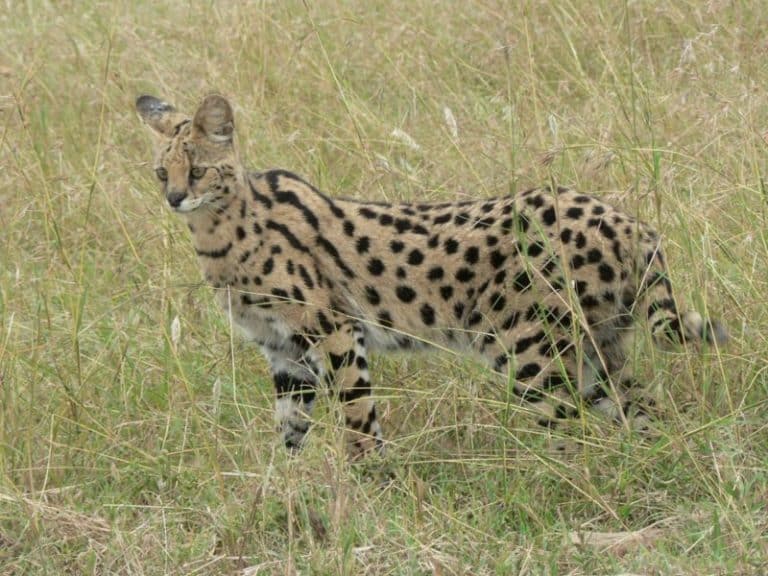
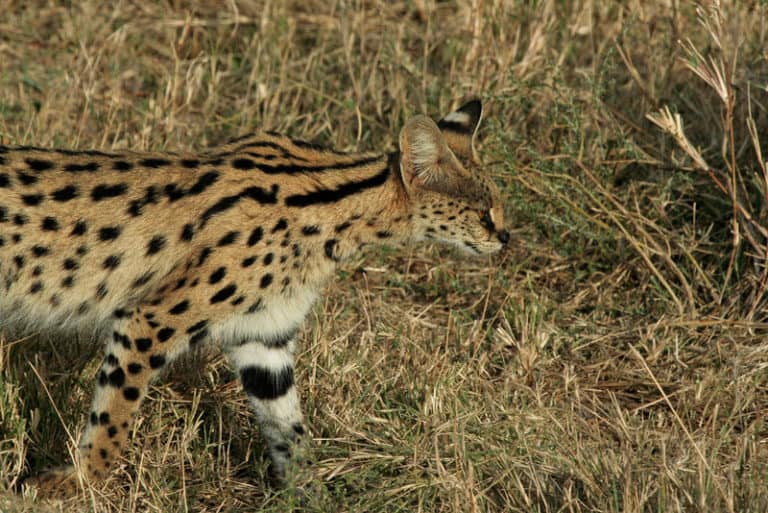
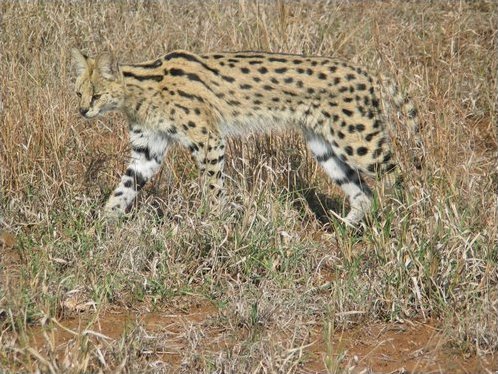
The Serval is an animal with yellowish or orange colored fur that is covered with both dark spots and stripes (the size and placement of which vary wildly between individuals), that helps to camouflage the Serval into the long grass. Markings start on the top of the head, running between the ears and down the neck and forming four distinct stripes which break into spots upon reaching the shoulders. The Servalโ€™s relatively short tail is banded with black rings and ends in a black tip. Servals have quite long necks in comparison to their body size which when coupled with their long legs, enables their head to be up to 75cm off the ground which helps the animal to both see and hear clearly whilst hiding in long grass. Like all other felines (with the exception of the Cheetah) the Serval is able to pull back its claws into protective pouches of skin in their feet which means that they are able to keep their claws sharp to hunt with as they are not being blunted when moving around.

Distribution and Habitat
๐Ÿ‘ Image

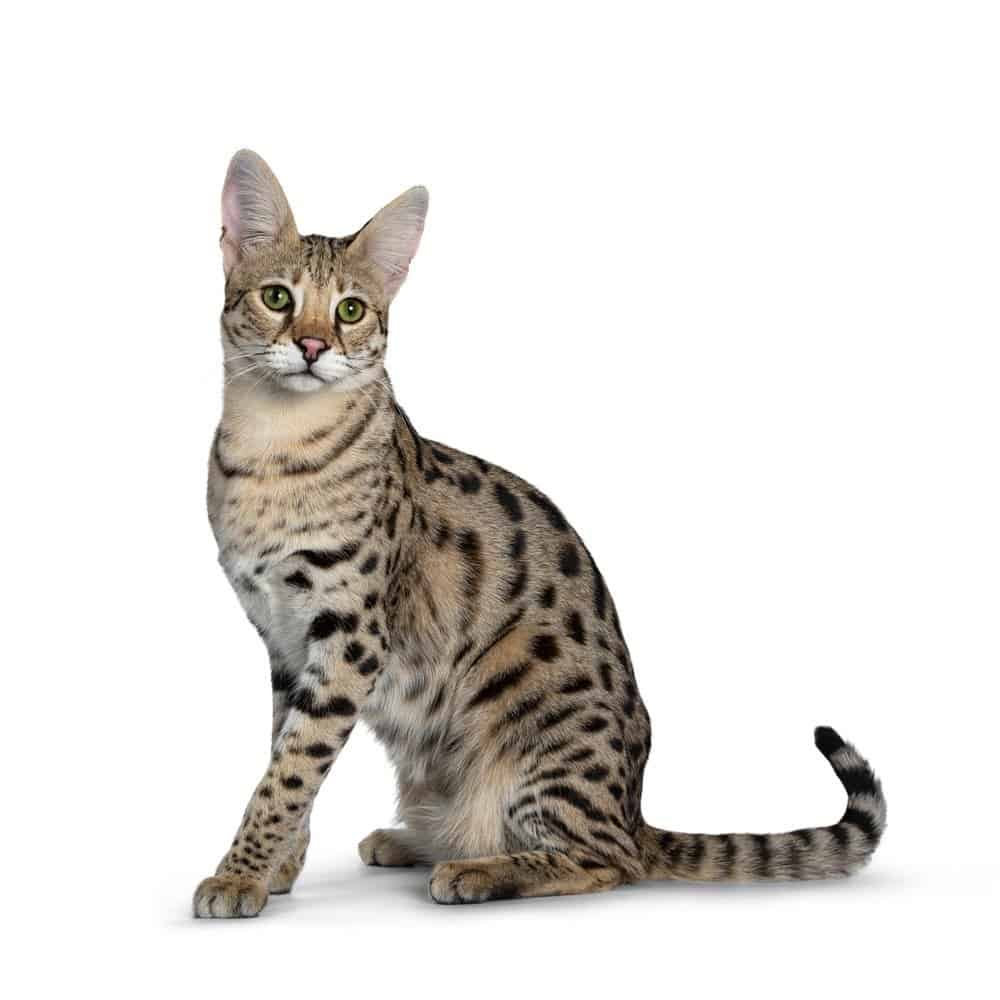
Servals are highly adaptable and are at home in forests, bamboo thickets, marshes, and stream banks

ยฉNynke van Holten/Shutterstock.com

Historically, the Serval would have once been found throughout Africa but is today mainly confined to areas south of the Sahara. The Serval has a relatively wide range throughout central and southern parts of Africa where it is most commonly found in reed beds and rushes through fringe wetlands and in grasslands that have a good source of water. Although wetlands are preferred, Servals are fairly adaptable animals and can be found in a range of other habitats within their home range too including forests, bamboo thickets, marshes, and along streams providing that there is a good supply of food and plenty of water.

Behavior and Lifestyle
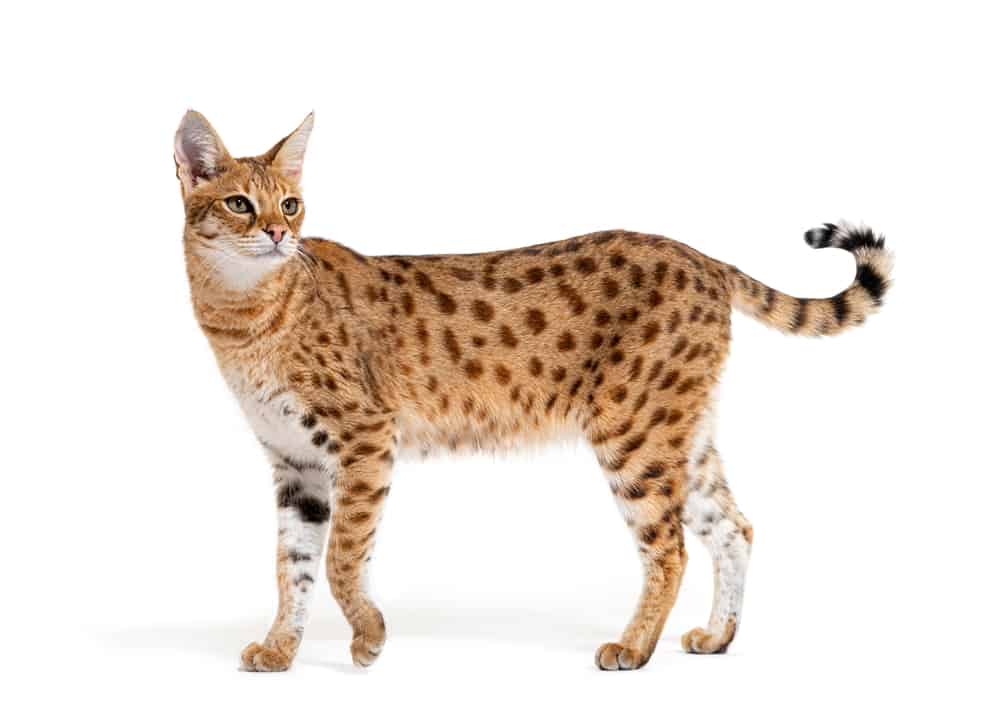
๐Ÿ‘ f1 Savannah cat

Servals are solitary and rather territorial

ยฉEric Isselee/Shutterstock.com

The Serval is a solitary animal that leads a crepuscular lifestyle, meaning that it is most active in the early morning and evening. Servals are highly territorial animals that roam throughout a home range of between 12 and 20 square kilometers that is marked with scents such as urine or scratch marks on trees and on the ground. Like numerous other feline species around the world, the range of a male Serval overlaps those of as many females as possible with which he can mate with (females however do not share parts of their territories with other females). Servals are incredibly adaptable animals that are not just good at climbing trees to escape danger but unlike many cats, will happily also wade into the water to catch their prey which they do by powerfully pouncing on their victim and catching it with their front paws.

Serval Reproduction and Life Cycles
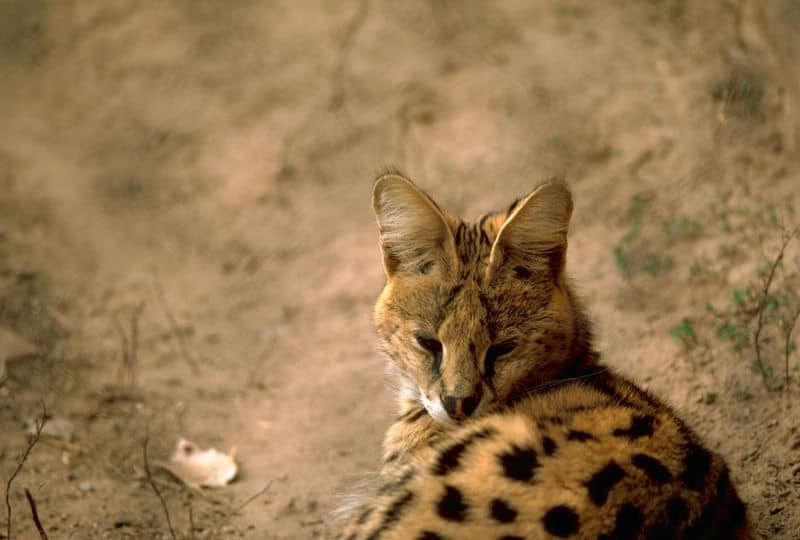
๐Ÿ‘ Image

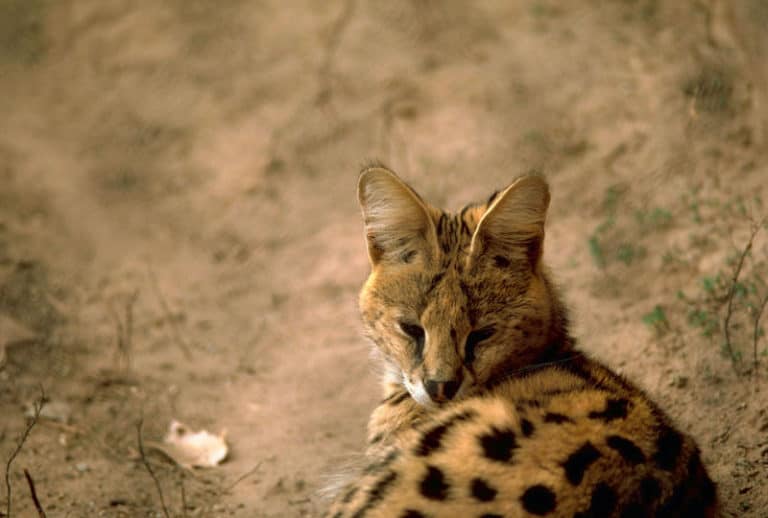
Servals have a lifespan of 10-12 years in the wild although they can live much longer in captivity

ยฉStolz, Gary M โ€“ Public Domain

Although there is no set breeding season for Servals, more mating tends to occur in the spring when a female will seek out and court the male for a few days. After mating, female Servals establish a safe den in dense vegetation where she gives birth to between one and three kittens, that are born after a gestation period that lasts for 73 days. Young Servals are born blind and weigh just 250g but within the first two weeks, their eyes open and they double in size. Female Servals suckle their young until they are weaned at 5 months when they begin to accompany her when hunting for food but donโ€™t tend to leave her for at least a year. Once independent, the kittens must find a territory to call their own which can take young males up to two years. Servals are thought to live for an average of 10-12 years in the wild with oldest recorded individual having reached the age of 23.

Diet and Prey
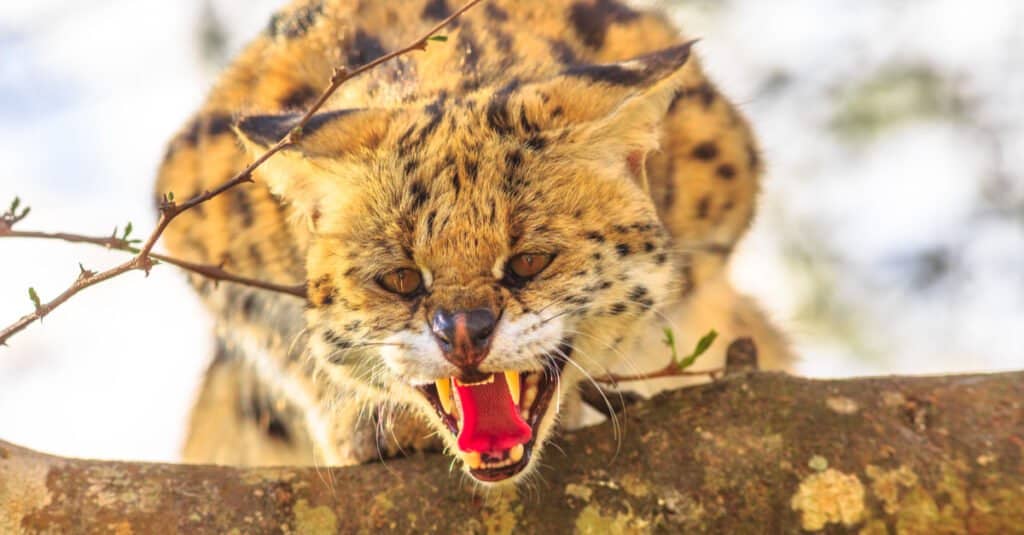
๐Ÿ‘ Do Serval Cats Make Good Pets - Serval Cat

Servalsโ€™ diet consists mainly of small rodents, fish, and birds. They have however been known to attack poultry and even dogs

ยฉBenny Marty/Shutterstock.com

The Serval is a carnivorous animal that hunts and eats small animals in order to survive. Servals primarily hunt rats and other small rodents along with fish and frogs in the water, large insects and small birds, which they are able to catch both on the ground and by leaping into the air. Servals detect their prey either by sniffing the air or by waiting and listening silently using their large ears. Once found, they lower their bodies towards the ground and slowly move towards it which is known as stalking. Once the Serval is close enough to its victim it pounces on it, catching the animal with its front paws. The long, back legs of the Serval are incredibly powerful and allow them to leap up to four meters horizontally and more than a meter up into the air. Although they donโ€™t normally attack livestock, in areas that are close to habitation they have been known to take poultry and rarely can also attack dogs.

Predators and Threats
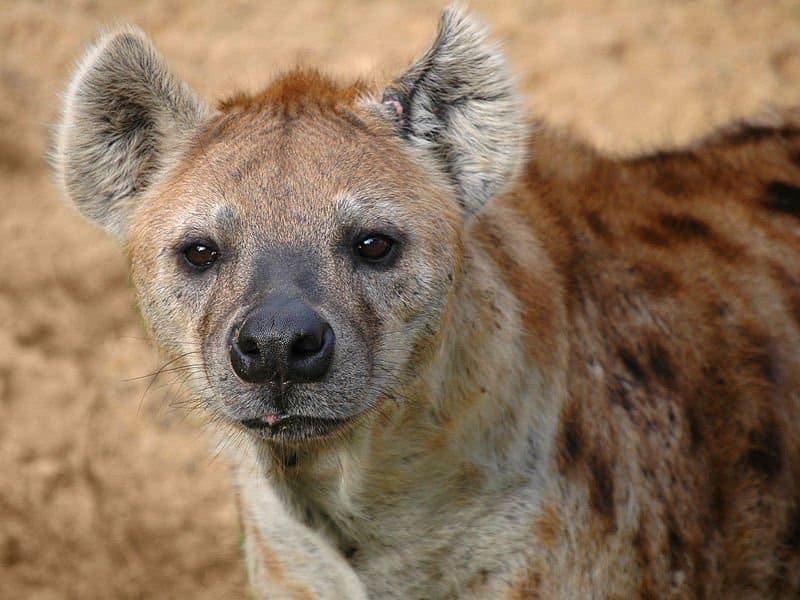
๐Ÿ‘ Hyena looking for prey

Hyenas constitute one of the greatest threats to servals

ยฉMarieke Kuijpers / Creative Commons โ€“ Original

Due to the relatively large size and stealthy nature of the Serval, they have no common natural predators within their native environments with Leopards and Hyenas posing the biggest threat to them (not just from attack but also over competing for both food and territories). The biggest threat to Servals throughout Africa is people that are known to kill them for their fur which is highly sought after particularly in West Africa. They are also at risk from being shot by farmers who fear for their livestock and are threatened by habitat loss in a number of areas throughout their natural range.

Interesting Facts and Features
๐Ÿ‘ Scariest Cats - Serval

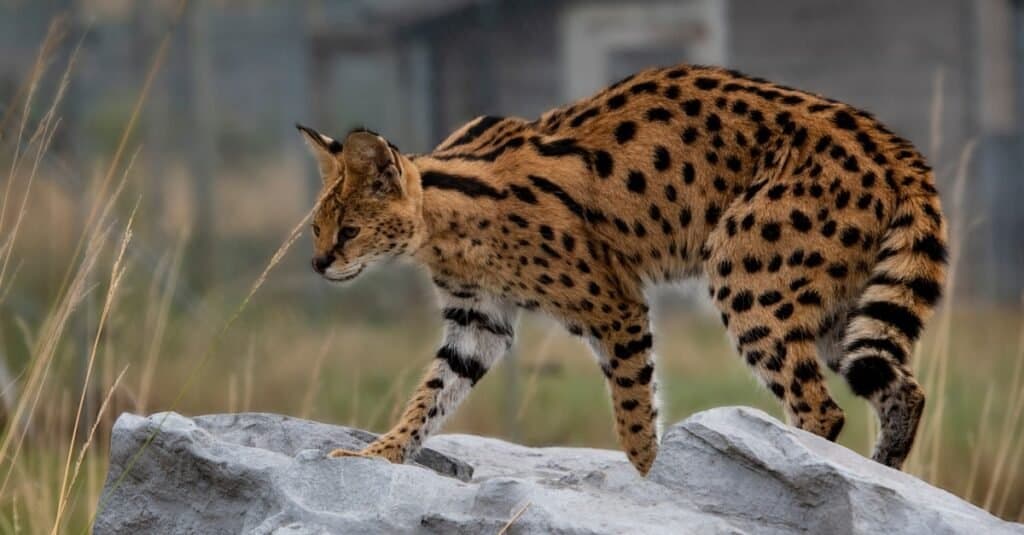
Servalsโ€™ fondness for rodents means they play a key role in the ecosystem keeping their populations in check

ยฉJoanne_Charnwood/Shutterstock.com

Although Servals eat a variety of different prey, nearly 94% of their diet is comprised of small rodents such as rats, mice and shrews which means that they play a vital role in their local eco-systems keeping rodent numbers down. The large dish-like ears of the Serval allow them to sense the vibrations of rodents that are even underground and once detected, the Serval will dig its prey out using its sharp claws. The placement and size of the spots and stripes varies from one individual to the next however, those Servals that are found in grassland habitats tend to have larger black spots than those found in more forested areas to ensure they are well-camouflaged into their surroundings. Female Servals are known to change their lifestyles in order to accommodate for the fact that they have young and have to find food more often than normal. However, before they are old enough to join her out hunting, the kittens wait restlessly for her in the den and will often try and follow their mother who must distract them before leaving to hunt.

Relationship with Humans
๐Ÿ‘ Image

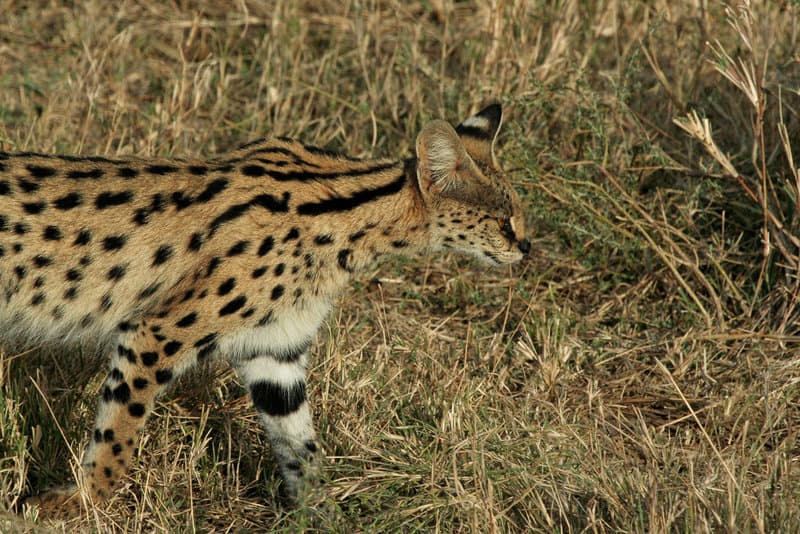
Servals generally thrive in areas far from human habitation

ยฉSchuyler Shepherd (Unununium272), CC BY-SA 2.5, via Wikimedia Commons โ€“ Original / License

Servals were once found throughout the African continent but are today extinct from the very south and in many parts of the north, primarily because they have been hunted for their pelts. They have also been captured and sold into the exotic pet trade and have even been cross-bred with domestic cats to produce smaller but similar-looking felines. Servals tend to survive more successfully in areas away from human settlements but when this is not possible, they are known to change their habits such as hunting at night rather than at dawn and dusk to minimize disturbance. Although they are not commonly known to actually attack livestock, they are often persecuted by farmers that fear for their domestic animals which has led to population decline particularly in certain areas.

Serval Cats as Pets

Serval cats can be found in the exotic pet trade, but they should not be kept as domestic pets. The primary reasons to not own a serval are:

1.) Many are captured by the illegal wildlife trade, so buying one can support illegal practices no matter the intention.

2.) Servals are wild animals and not domesticated, which makes them poor pets.

3.) Servals are illegal to own in most states.

Conservation Status and Life Today
๐Ÿ‘ Image

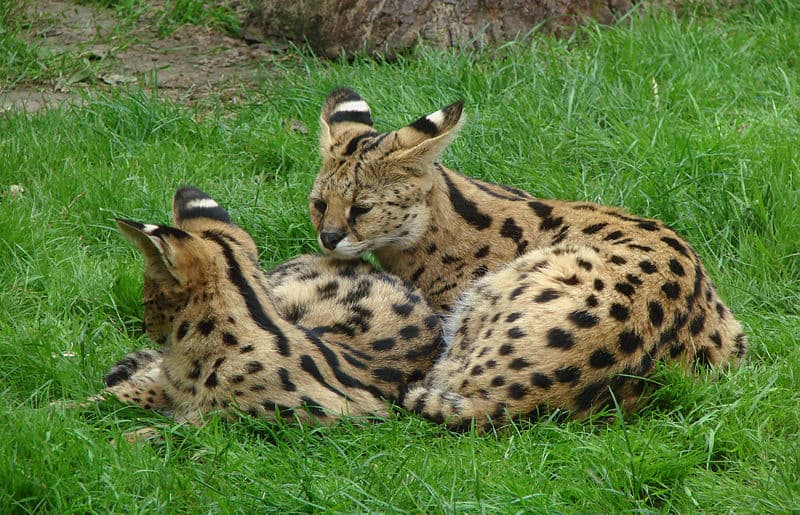
Captive-bred servals have been released into the wild to stabilize dwindling populations

ยฉVassil โ€“ Public Domain

Today, the Serval is listed by the IUCN as an animal that is of Least Concern from becoming extinct in its natural environment in the near future due to the fact that they are widespread and populations in many places are stable. However, they are now extinct from certain areas and have been declared locally Critically Endangered in the north where only a handful of small populations still exist. The reintroduction of captive-bred Servals has occurred in a number of regions to try to stabilize dwindling populations but the ongoing loss of their unique wetland habitats is causing concern to conservationists over the future of the Serval in Africa. Although the hunting of them is now prohibited in many African countries, pelts are still traded and in high numbers in some areas.

View all 385 animals that start with S
How to say Serval in ...
Bulgarian
ะกะตั€ะฒะฐะป
Danish
Serval
German
Serval
English
Serval
Spanish
Serval
French
Serval
Hebrew
ืกืจื•ื•ืืœ
Hungarian
Szervรกl
Italian
Serval
Japanese
ใ‚ตใƒผใƒใƒซ
Latin
Leptailurus
Dutch
Serval
English
Serval
Polish
Serwal
Portuguese
Serval
Swedish
Serval
Turkish
Serval
Chinese
่—ช่ฒ“

Sources

  1. David Burnie, Dorling Kindersley (2011) Animal, The Definitive Visual Guide To The World's Wildlife / Accessed December 24, 2008
  2. Tom Jackson, Lorenz Books (2007) The World Encyclopedia Of Animals / Accessed December 24, 2008
  3. David Burnie, Kingfisher (2011) The Kingfisher Animal Encyclopedia / Accessed December 24, 2008
  4. Richard Mackay, University of California Press (2009) The Atlas Of Endangered Species / Accessed December 24, 2008
  5. David Burnie, Dorling Kindersley (2008) Illustrated Encyclopedia Of Animals / Accessed December 24, 2008
  6. Dorling Kindersley (2006) Dorling Kindersley Encyclopedia Of Animals / Accessed December 24, 2008
  7. David W. Macdonald, Oxford University Press (2010) The Encyclopedia Of Mammals / Accessed December 24, 2008
  8. Serval Information / Accessed December 24, 2008
  9. About Servals / Accessed December 24, 2008
  10. Serval Conservation / Accessed December 24, 2008

About the Author

Dana Mayor

I love good books and the occasional cartoon. I am also endlessly intrigued with the beauty of nature and find hummingbirds, puppies, and marine wildlife to be the most magical creatures of all.
Connect:

Thank you for reading! Have some feedback for us?

Contact the AZ Animals editorial team

Related Articles You May Find Interesting


Serval FAQs (Frequently Asked Questions)

Servals are Carnivores, meaning they eat other animals.

Servals belong to the Kingdom Animalia.

Servals belong to the class Mammalia.

Servals belong to the phylum Chordata.

Servals belong to the family Felidae.

Servals belong to the order Carnivora.

Servals are covered in Fur.

Servals belong to the genus Leptailurus.

Servals live in sub-Saharan Africa.

Servals live in wetlands and grasslands close to water.

Predators of Servals include humans, leopards, and hyenas.

The average number of babies a Serval has is 2.

Servals can leap more than 1 meter into the air!

The scientific name for the Serval is Leptailurus serval.

Servals can live for 10 to 20 years.

There are 10 species of Serval.

The biggest threats to the Serval are habitat loss and hunting.

The Serval is also called the African serval.

A Serval can travel at speeds of up to 40 miles per hour.

The main difference between a caracal and a serval is that caracals are golden brown, have black ear tufts, and occupy a larger range. Servals are yellow with black spots, donโ€™t have ear tufts, and occupy a smaller range than the caracal.

The key differences between the ocelot and the serval are their size, appearance, lifespan, habitat, diet, and habits.

The most significant differences between serval and savannah cats are their appearance, size, behavior, attack, and defense mechanism. The savannah cat is a hybrid of the serval and the domestic cat and is thus a domesticated cat. They both belong to the Felidae family, which houses other small cats, including the cheetah, the caracal, and the golden cat.

While the serval and the cheetah might look indistinguishable because of their fur coloration, we can differentiate these cats through their size, morphology, and behavior. Moreover, both cats belong to the same Felidae family, which houses the caracal,  golden cat, and savannah cat.