



S
Species Profile

Spider Monkey

Ateles

Fifth-tail flyers of the rainforest
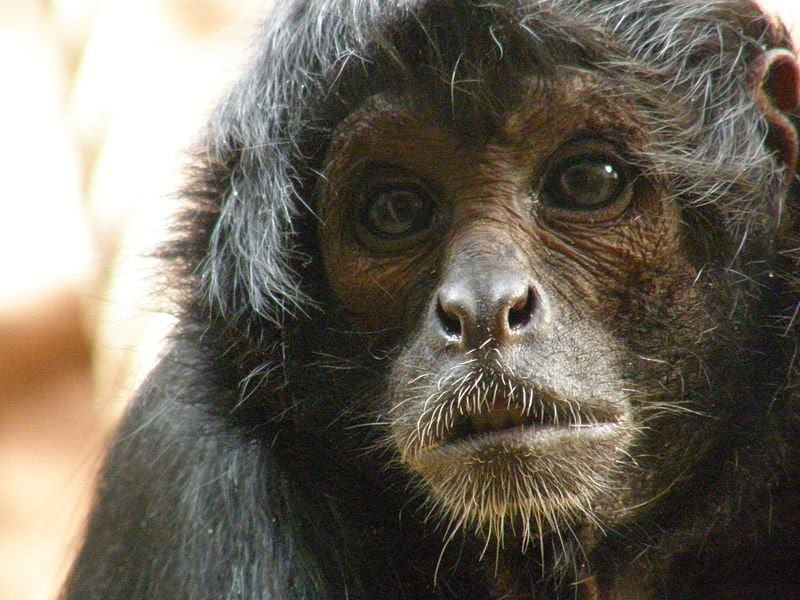
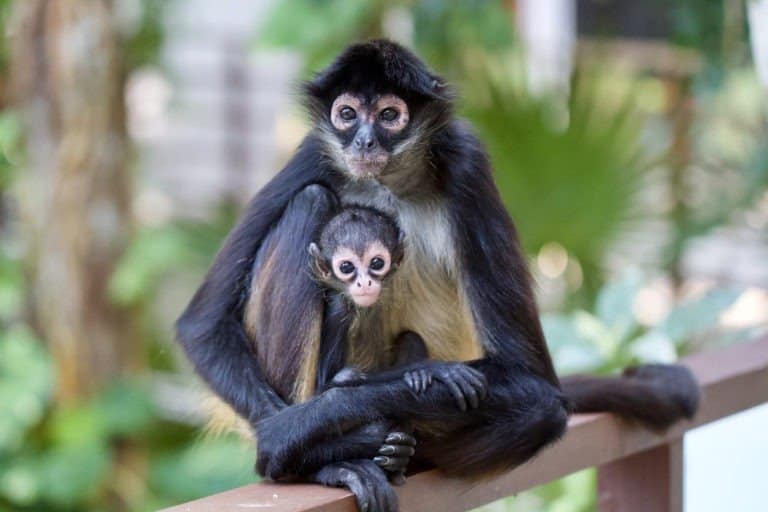
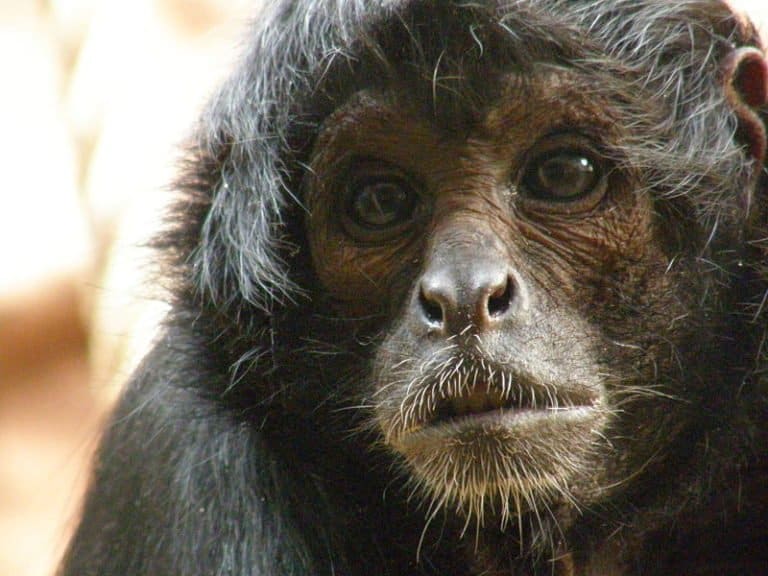
frank wouters from antwerpen, belgium , België , Belgique, CC BY 2.0, via Wikimedia Commons

At a Glance

Genus Overview This page covers the Spider Monkey genus as a group. Stats below are general traits shared across the genus.
Also Known As mono araña, macaco-aranha, singe-araignée, Spinnenaffe, scimmia ragno
Diet Frugivore
Activity Diurnal
Lifespan 22 years
Weight 11 lbs
Status Not Evaluated
Did You Know?

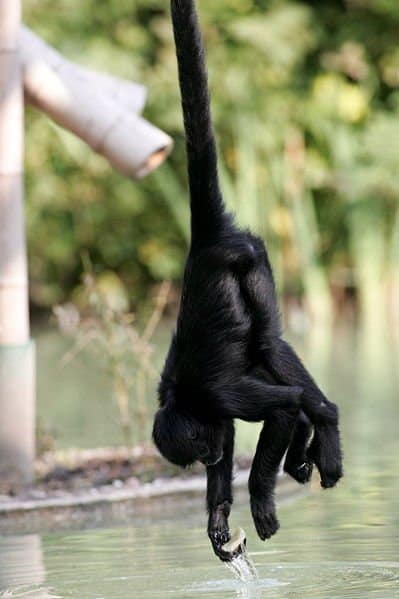
Their prehensile tail is strong enough to support the whole body and has a sensitive, fingerprint-like pad near the tip for gripping.

Scientific Classification

Genus Overview "Spider Monkey" is not a single species but represents an entire genus containing multiple species.

Spider monkeys (genus Ateles) are large, arboreal New World monkeys known for long limbs, hook-like hands with a reduced/absent thumb, and an exceptionally strong prehensile tail used as a fifth limb.

Kingdom
Animalia
Phylum
Chordata
Class
Mammalia
Order
Primates
Family
Atelidae
Genus
Ateles

Distinguishing Features

  • Highly prehensile tail with a naked tactile pad near the tip
  • Very long arms and legs adapted for brachiation and climbing
  • Reduced or absent thumb (especially in Ateles), aiding arm-swinging locomotion
  • Largely frugivorous diet with important roles in seed dispersal

Physical Measurements

Males and females differ in size

Length
4 ft 1 in (3 ft 4 in – 4 ft 12 in)
Weight
19 lbs (13 lbs – 26 lbs)
15 lbs (11 lbs – 20 lbs)
Tail Length
2 ft 6 in (1 ft 8 in – 3 ft)
2 ft 6 in (2 ft 1 in – 2 ft 11 in)
Top Speed
19 mph
running

Appearance

Primary Colors
Secondary Colors
Skin Type Short-to-medium dense fur over body; bare facial skin; prehensile tail underside has a hairless, thickened tactile pad.
Distinctive Features
  • Measurements (genus-wide ranges): head-body length ~34-63 cm; tail length ~63-89+ cm; adult mass ~6-11+ kg (varies by species, sex, locality).
  • Lifespan (range across genus): typically ~20-27 years in the wild; commonly ~30-40 years in captivity with variation by species and care.
  • Extremely long limbs and narrow torso create the characteristic "spider-like" silhouette in the canopy.
  • Hook-like hands with reduced or absent thumb; specialized for suspensory locomotion and rapid climbing.
  • Very long, muscular prehensile tail used as a fifth limb; underside has a friction pad for gripping branches.
  • Highly arboreal and diurnal; most travel and feeding occur in mid-to-upper canopy, often avoiding ground travel.
  • Locomotion emphasizes brachiation/suspensory movement and tail-assisted climbing; degree varies with forest structure and disturbance.
  • Ecology: strongly frugivorous overall, but diet shifts seasonally and by habitat; leaves, flowers, and seeds increase when fruit is scarce.
  • Social system often fission-fusion with flexible subgrouping; group size, cohesion, and ranging patterns vary among species and sites.
  • Major seed dispersers for many large-fruited trees; ecological impact varies with local abundance and hunting pressure.
  • Conservation threats across the genus: habitat loss/fragmentation and hunting; sensitivity is generally high due to slow reproduction and large home ranges.

Sexual Dimorphism

Sexual dimorphism is generally subtle in body size, with overlap between sexes. Sexing can be difficult because females have an elongated clitoris resembling a penis; males are distinguished by testes and overall genital shape.

  • Often slightly heavier or more robust in some species/populations, but with strong overlap.
  • External testes present; genital profile differs from females despite similar overall appearance.
  • Enlarged, pendulous clitoris ("pseudo-penis") can closely resemble male genitalia.
  • In some taxa/populations, females may match or exceed males in body size.

Did You Know?

Their prehensile tail is strong enough to support the whole body and has a sensitive, fingerprint-like pad near the tip for gripping.

Across the genus, thumbs are reduced or absent, helping form a hook-like hand optimized for fast swinging (brachiation).

They're among the most fruit-focused primates in the Americas; when fruit is scarce, many species shift more toward young leaves and other fallback foods.

Spider monkeys often live in large "communities" that split into smaller foraging parties-social life changes hour by hour with food availability.

They can travel long daily distances through the canopy, making them important long-range seed dispersers for many tree species.

Genus name origin: Ateles comes from Greek for "imperfect," referencing the reduced thumb.

Conservation pressure is widespread across the genus: habitat loss/fragmentation and hunting commonly reduce populations and isolate groups.

Unique Adaptations

  • Exceptionally strong prehensile tail with a bare, tactile gripping surface near the tip-functionally a fifth limb for suspension and precise grasping.
  • Reduced/absent thumb and elongated fingers create a "hook grip," improving efficiency and safety during rapid canopy travel.
  • Long limbs and flexible shoulder joints suited to below-branch locomotion and large gaps between trees.
  • Light, agile build for arboreal life; they are among the most canopy-adapted of the Atelidae (the howler, woolly, and spider monkey family).
  • Color vision typical of many New World monkeys: variation occurs within populations (some individuals, especially females, may have trichromatic vision), aiding fruit selection.
  • Large home ranges and high mobility-an ecological strategy tied to tracking patchy, seasonal fruit resources.

Interesting Behaviors

  • Brachiation and tail-assisted climbing: they swing hand-over-hand, often using the tail as a stabilizer, brake, or anchor while reaching for fruit.
  • Fission-fusion social dynamics: a larger community shares a home range, but individuals form temporary subgroups that change with fruit abundance and social ties.
  • Fruit tracking and memory: they repeatedly visit seasonal fruiting trees and may adjust travel routes as resources shift across the landscape.
  • Seed dispersal by wide-ranging foraging: they swallow many fruits and later deposit intact seeds far from the parent tree, often with nutrient-rich droppings.
  • Vigilance and predator response: groups may give alarm calls, cluster, or retreat higher into the canopy when threatened (responses can vary by habitat and predator community).
  • Seasonal diet flexibility (varies by species and site): typically strongly frugivorous, but many increase leaf/flower intake when fruit is limited.
  • Social communication: frequent tactile contact (grooming, embraces), visual signals, and calls help maintain bonds in a fluid social system.

Cultural Significance

Across Mesoamerica and Amazonia, spider monkeys (Ateles) appear in art, stories, and daily life. They have been kept as pets, hunted for food, and now act as symbols for forest protection and nature tourism. Ancient images link them (and howlers) to art, performance, and social life; they live in treetops.

Myths & Legends

In the Maya creation story called "The Council Book," the hero twins turn their jealous older half-brothers into monkeys. Later Maya stories and art link those monkey figures with music, dance, and writing.

In Maya calendar tradition, the monkey day sign (often shown as a howler or spider monkey) links to crafts, creativity, and performance; monkey figures appear in Classic-period pottery and murals in these roles.

In the Aztec 260-day ritual calendar, the "Monkey" day sign is connected with play, dance, and artistic skill, reflecting a broader Mesoamerican association of monkeys with creative energy.

In Amazonian and Indigenous Latin American oral traditions, spider monkeys (Ateles) are often clever tricksters or people turned into monkeys—stories that explain moves like fast climbing, loud calls, or taking fruit in the canopy.

Spanish common names meaning "spider monkey" reflect a long naming tradition that compares their long limbs and suspended movement to a spider-an enduring cultural analogy in regional storytelling and travel accounts.

Conservation Status

NE Not Evaluated (IUCN does not assess the genus Ateles as a whole; individual species range from Vulnerable to Critically Endangered)

Has not yet been evaluated against the criteria.

Population Decreasing

Protected Under

  • CITES Appendix II (Ateles spp.)
  • National wildlife protection laws and hunting regulations across range states (vary by country and enforcement)
  • Occurrence in multiple national parks, biosphere reserves, and Indigenous/community conserved areas (coverage and effectiveness vary)

Looking for a specific species?

Geoffroy's spider monkey (black-handed spider monkey)

Ateles geoffroyi

In English-language zoo, media, and educational contexts, "spider monkey" is very commonly used to refer to Geoffroy's spider monkey, especially across Central America and southern Mexico where it is a prominent, well-known Ateles.

  • Highly arboreal primate specialized for suspensory movement, using a powerful prehensile tail as a functional fifth limb
  • Typically shows fission-fusion social dynamics: larger communities split into smaller foraging subgroups
  • Primarily frugivorous and an important seed disperser in Neotropical forests
  • Notable hand anatomy with reduced/absent thumb that supports efficient brachiation and climbing
  • Threatened in many areas by habitat loss/fragmentation and hunting pressure

You might be looking for:

Geoffroy's spider monkey

22%

Ateles geoffroyi

Central American species; agile canopy-dweller with a highly prehensile tail.

Brown-headed spider monkey

16%

Ateles fusciceps

Chocó region and adjacent areas; heavily affected by habitat loss and hunting.

Brown spider monkey

14%

Ateles hybridus

Northern Colombia/Venezuela; among the most threatened Ateles.

White-bellied spider monkey

12%

Ateles belzebuth

Northwestern Amazon and adjacent regions; notable pale underside in many populations.

Black spider monkey

12%

Ateles paniscus

Guianas and parts of the Amazon; darker pelage overall.

Peruvian spider monkey

10%

Ateles chamek

Southwestern Amazon; often treated as distinct from related Amazonian forms.

Variegated (white-fronted) spider monkey

8%

Ateles marginatus

Brazil; restricted distribution, vulnerable to deforestation.

Muriquis (woolly spider monkeys)

6%

Brachyteles spp.

Close relatives in the same family (Atelidae) sometimes confused with spider monkeys.

Life Cycle

Birth 1 infant
Lifespan 22 years

Lifespan

In the Wild 15–30 years
In Captivity 25–45 years

Reproduction

Mating System Polygynandry
Social Structure Aggregation Group
Breeding Pattern Transient
Fertilization Internal Fertilization
Birth Type Internal_fertilization

Across Ateles, mating typically occurs in fission-fusion, multi-male/multi-female communities. Females commonly mate with multiple males; males compete for access and pursue estrous females, with little stable pair-bonding and variable mate-guarding by population.

Behavior & Ecology

Social Troop Group: 25
Activity Diurnal
Diet Frugivore Ripe fruits (especially figs and other soft, energy-rich canopy fruits)

Temperament

Highly social yet flexible, shifting between cohesive and dispersed subgroups
Generally cautious and vigilant; wariness increases in hunted or disturbed habitats
Often tolerant within preferred partners, but can show feeding-related aggression
Active, exploratory, and opportunistic in travel routes and feeding choices
Female sociality varies widely among species and sites, from loose to strongly bonded

Communication

Contact whinnies to coordinate spacing during fission-fusion travel
Barks and short alarm calls in response to predators or disturbance
Screams and squeals during conflicts or high arousal encounters
Grunts and soft calls during close social interactions
Long-distance calls to advertise location between widely separated subgroups
Facial expressions and body postures to signal intent and reduce conflict
Branch shaking and loud locomotor displays for spacing, excitement, or intimidation
Prehensile-tail gestures and tactile contact during affiliative interactions
Scent-related behaviors such as urine rubbing/washing on hands, feet, or tail
Visual tracking and following of preferred partners to maintain subgroup cohesion

Habitat

Biomes:
Tropical Rainforest Tropical Dry Forest Wetland
Terrain:
Mountainous Hilly Plateau Valley Riverine
Elevation: Up to 9842 ft 6 in

Ecological Role

Primary canopy frugivores and major long-distance seed dispersers in Neotropical forests (with seasonal flexibility toward leaves/flowers).

Long-distance seed dispersal (including for large-seeded canopy trees) Forest regeneration and maintenance of plant diversity via dispersed seed shadows Linking forest patches through movement-driven propagule transport Nutrient cycling through fruit processing and fecal deposition Influencing plant community dynamics by preferentially feeding on certain fruiting species

Diet Details

Other Foods:
Ripe canopy fruits Unripe fruit Seeds Young leaves and leaf buds Flowers Nectar Plant tissues +1

Human Interaction

Domestication Status

Wild

Spider monkeys (Ateles) are wild, not domesticated. Adults ~6–10+ kg, tails ~60–90 cm; lifespan ~20–30 years in the wild. They live in trees, use a strong prehensile tail, mostly eat fruit, and form groups that split and join. Humans hunt, keep or trade them, and destroy habitat. Many are protected by CITES and face conservation threats.

Danger Level

Moderate
  • Bites and lacerations (can be severe due to strong jaws/canines), especially during capture/handling or in stressed captive situations
  • Zoonotic disease transmission risk in either direction (e.g., gastrointestinal pathogens, respiratory infections), heightened with close contact or pet keeping
  • Injury risk from powerful pulling/striking and unpredictable behavior when cornered; juveniles can mature into difficult-to-control adults
  • Public-safety hazards associated with escape or improper containment (falls, aggressive encounters, property damage)

As a Pet

Not Suitable as Pet

Legality: Keeping spider monkeys (Ateles) is usually illegal or strictly limited. International trade is regulated under CITES Appendix II. Many native countries ban private ownership; U.S. rules vary and welfare and safety laws often make ownership impractical.

Care Level: Expert Only

Purchase Cost: $5,000 - $20,000
Lifetime Cost: $100,000 - $300,000

Economic Value

Uses:
Ecotourism and wildlife viewing Conservation funding and protected-area value Scientific research and education (non-commercial value) Illegal wildlife trade (live animals, especially juveniles) Subsistence/illegal hunting for meat in some regions Ecosystem services (seed dispersal supporting forest regeneration)
Products:
  • guided wildlife tourism experiences
  • research data and educational programming
  • zoo/ex-situ conservation exhibition value
  • bushmeat (illegal or regulated depending on jurisdiction)
  • live-animal sales in illicit markets
  • conservation grants and ecosystem-service benefits via forest regeneration

Relationships

Predators 6

Harpy eagle Harpia harpyja
Crested eagle Morphnus guianensis
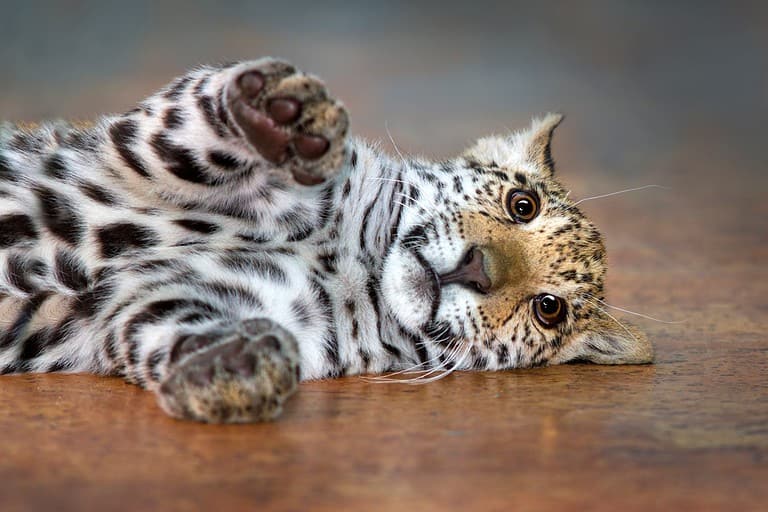
Jaguar Panthera onca
Puma Puma concolor
Ocelot Leopardus pardalis
Boa constrictor Boa constrictor

Related Species 3

Howler monkeys Alouatta Shared Family
Woolly monkeys Lagothrix Shared Family
Muriquis Brachyteles Shared Family

Ecological Equivalents 4

Animals that fill a similar ecological role in their ecosystem

Capuchin monkey Cebinae Often occupy Neotropical forests and canopy strata, overlapping in fruit-based diets and opportunistic invertebrate foraging. Capuchins are generally more extractive/omnivorous and less specialized for suspensory locomotion.
Woolly monkey Lagothrix spp. Large-bodied, arboreal, primarily frugivorous primates that frequently overlap in range and habitat with Ateles and occupy similar roles as major seed dispersers. They differ in locomotion and in some social and feeding details.
Muriquis Brachyteles spp. Ecologically comparable canopy-dwelling atelids with suspensory locomotion and fission–fusion social tendencies; they overlap in fruit and leaf use and face similar constraints from habitat fragmentation.
Kinkajou Potos flavus Arboreal frugivore in many of the same forests. Uses canopy fruit resources and can overlap in use of fruiting trees, but is nocturnal and not a primate.

Types of Spider Monkey

8

Explore 8 recognized types of spider monkey

White-bellied spider monkey Ateles belzebuth
Black-faced black spider monkey (Peruvian spider monkey) Ateles chamek
Brown spider monkey Ateles hybridus
Geoffroy's spider monkey (black-handed spider monkey) Ateles geoffroyi
Red-faced spider monkey Ateles paniscus
White-fronted / Ecuadorian spider monkey Ateles fusciceps
White-cheeked spider monkey Ateles marginatus
Yellow-breasted spider monkey Ateles xanthosternos

The spider monkey is among the most proficient climbers in the world.
👁 Image

With its long limbs and tail, this species leaps and bounds from one branch to another in a graceful display of aerial control. It is intelligent, caring, and agile, but also loud and aggressive. Because of hunting and habitat loss, the entire genus is threatened by the specter of extinction. Considerable effort has gone to preserving the last of the spider monkey populations.

3 Spider Monkey Facts

  • Although they normally walk on all four legs, spider monkeys have adapted heavily for an arboreal lifestyle. Their movement between trees is a true spectacle. They do not climb carefully up and down trees. Instead, they leap or drop from one tree to another.
  • Their prehensile tails have small, hairless tips and grooves that are kind of like fingerprints.
  • The spider monkey can breed very well in captivity. Many zoos and conservation organizations have their own breeding programs to keep this animal alive.

For more facts on spider monkeys, click here.
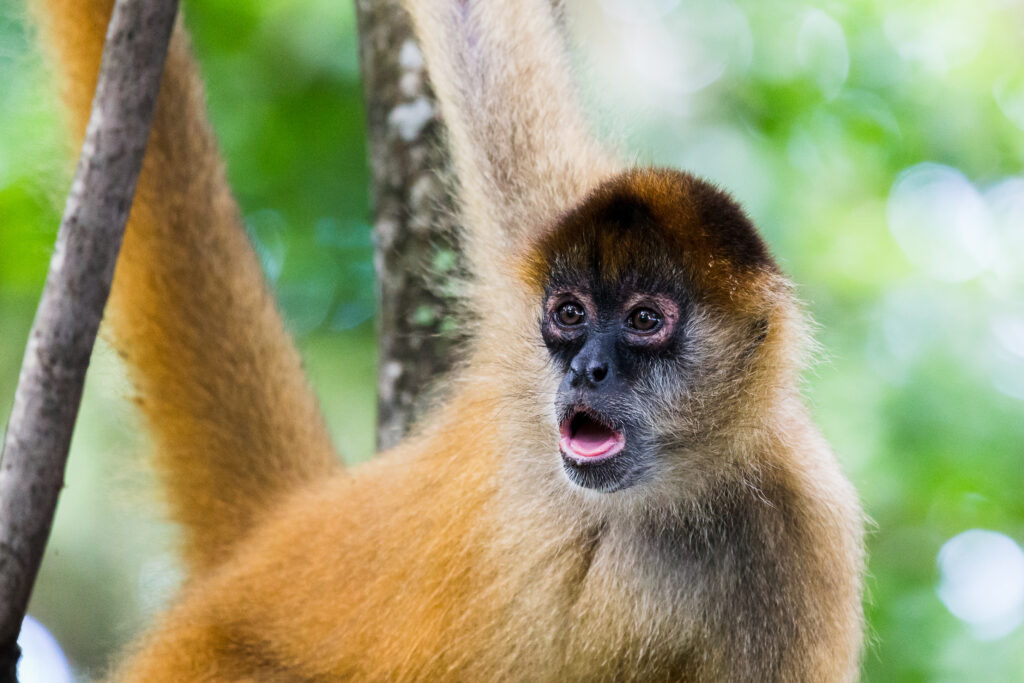
👁 A brown Spider monkey stares into the distance next to the beach in Guanacaste, Costa Rica.

Spider monkeys are adept at leaping or dropping from one tree to another.

©Jason Wells/Shutterstock.com

Scientific Name

This primate belongs to a genus of animals that goes by the scientific name Ateles. This word roughly translates to “incomplete” in Greek, referring to the monkey’s reduced or incomplete thumbs.

The spider monkey genus belongs to the family Atelidae, which also includes howler monkeys and woolly monkeys. This is the only family of primates in the world with full prehensile tails.

Woolly, howler, and spider monkeys are just a few animals that make up the group known as the New World monkeys. As the name implies, these monkeys evolved and flourished in the New World of the Americas. Compared to the Old World monkeys of Asia and Africa, they tend to have a smaller size, flatter nose, and different skeletal structure. The New World and Old World monkey last shared a common ancestor some 40 million years ago, when their evolutionary lineages split apart, going their separate ways.
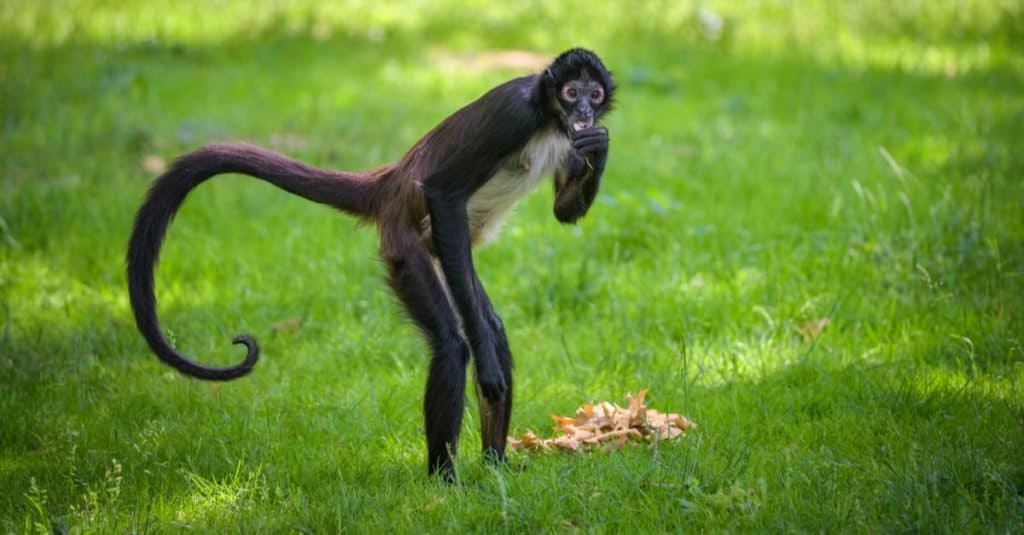
👁 Longest Tail: The Black Spider Monkey

Spider monkeys belong to the world’s only family of primates with full prehensile tails.

©Nick Fox/Shutterstock.com

Evolution and History

The spider monkey’s ancestors are believed to be species alive during the Pleistocene Epoch. Fossils dating back millions of years reveal that they were present in Cuba and Spain.

There are different theories about how spider monkeys evolved, with some believing they are most closely related to woolly spider monkeys (Brachyteles) and that their unique musculoskeletal system was developed after departing from populations of woolly monkeys (Lagothrix) in South America. However, this theory has not been supported by fossil evidence.

Molecular evidence in recent times supports a theory that it was during the middle to late Miocene Epoch that New World monkeys in the family Atelidae separated into three types: spider monkeys, woolly spider monkeys, and woolly monkeys.

The evolutionary path of spider monkeys is difficult to trace due to fossils providing inconclusive evidence, such as the shape and size of their dental elements possibly being the result of their diet and not an adaptation.

7 Types of Spider Monkeys

While scientists hold differing beliefs about the exact number and designations of subspecies of spider monkeys, it’s generally understood that this genus contains seven living species, most of which are named for their color or country of origin, and seven subspecies.

  • Red-faced spider monkey (Ateles paniscus): Also known as the Guiana spider monkey or red-faced black spider monkey, this species lives in the rainforests in northern Brazil, Suriname, Guyana, French Guiana, and Venezuela. It is under threat from hunting and habitat loss and classified as vulnerable on the IUCN Redlist.
  • White-fronted spider monkey (Ateles belzebuth): Found in the north-western Amazon in Colombia, Ecuador, Venezuela, Peru, and Brazil, this endangered species is also called the white-fronted or long-haired spider monkey. The Peruvian, brown and white-cheeked spider monkeys used to be considered subspecies of this monkey but are now classed as different species.
  • Peruvian spider monkey (Ateles chamek): As its name indicates, this species that also goes by the black-faced black spider monkey lives in Peru, as well as in Brazil and Bolivia, and its main habitat is lowland forests, occupying the canopy and the sub-canopy.
  • Brown spider monkey (Ateles hybridus): This critically endangered species is notable for its pale blue eyes, an unusual color for spider monkeys. Also known as the variegated spider monkey, it makes its home in forests in Colombia and Venezuela. While some scientists identify this monkey as having two subspecies (Ateles hybridus hybridus and Ateles hybridus brunneus), molecular studies have not supported this and so have not designated any subspecies.
  • White-cheeked spider monkey (Ateles marginatus): Found in the Brazilian Amazon, this species has been classified as endangered due to their population declining from habitat loss caused in part by the expansion of soybean agriculture in the region. Some of the indigenous peoples think of this spider monkey as a delicacy so it also faces the threat of being hunted for food.
  • Geoffroy’s spider monkey (Ateles geoffroyi): There are at least five subspecies of this monkey also known as the black-handed spider monkey and Central American spider monkey. Populations are located in Panama, Costa Rica, Nicaragua, Guatemala, Honduras, El Salvador, Belize and Mexico. It is endangered due to habitat loss, hunting and being caught to sell as pets.
  • Black-headed spider monkey (Ateles fusciceps): Some primatologists believe this monkey is a subspecies of Geoffroy’s spider monkey, while others disagree. Present in Colombia, Ecuador, and Panama, it has two subspecies and is listed as endangered due to hunting and habitat loss.

Geoffroy’s spider monkey has five subspecies:

  • Hooded spider monkey (Ateles geoffroyi grisescens): Native to Panama and possibly found in a small area of Colombia, this monkey has long, tawny fur.
  • Mexican spider monkey (Ateles geoffroyi vellerosus): This critically endangered subspecies is native to Mexico, Guatemala, Honduras, Nicaragua, and El Salvador.
  • Yucatan spider monkey (Ateles geoffroyi yucatanensis): This monkey’s status as a subspecies of Geoffroy’s spider monkey is under dispute and some class it as a junior synonym of the Mexican spider monkey. Also called by its Mayan name “Ma’ax,” the deforestation (due to livestock farming, palm oil developments and mining) of its habitats in the forests of Mexico, Guatemala, Belize, El Salvador, and Honduras has led to the decline and fragmentation of its population.
  • Nicaraguan spider monkey (Ateles geoffroyi geoffroyi): This monkey makes its home in Nicaragua and neighboring regions of Costa Rica, including the Guanacaste peninsula, and is thought by some to be a separate subspecies.
  • Ornate spider monkey (Ateles geoffroyi ornatus): Also called the brilliant spider monkey, common spider monkey, and red spider monkey. Other names for this monkey include Panama spider ape and Azuero spider monkey, which were once considered distinct subspecies.

The black-headed spider monkey has two subspecies:

  • Brown-headed spider monkey (Ateles fusciceps fusciceps): This monkey can be found in Ecuador’s tropical and subtropical humid forests 330-5,580 feet above sea level. Scientists who do not classify the black-headed spider monkey as a separate species think of this monkey and the Colombian spider monkey as subspecies of Geoffroy’s spider monkey.
  • Colombian spider monkey (Ateles fusciceps rufiventris): This monkey can be identified by its coloring of being wholly black with some white on its chin. Its habitats are forests, humid forests, and cloud forests up to 6,600-8,200 feet above sea level.
👁 Image

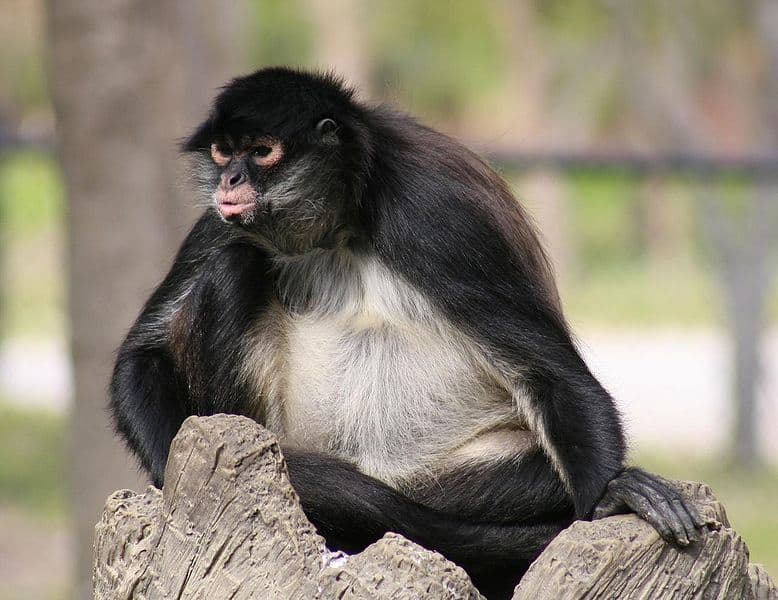
The Mexican spider monkey is a subspecies of Geoffroy’s spider monkey.

©Alex Lee / CC BY 2.0 – Original / License

Appearance

These animals are among the largest of the otherwise small New World monkeys with a weight anywhere between 13 and 24 pounds. This is about the weight of a small domesticated dog but with a much longer tail. Males tend to be slightly larger the females overall.

Other important features of the spider monkey include the incredibly long arms, the flat nose, eye rings, and the rough hair, which is usually a combination of black, white, brown, or tan.
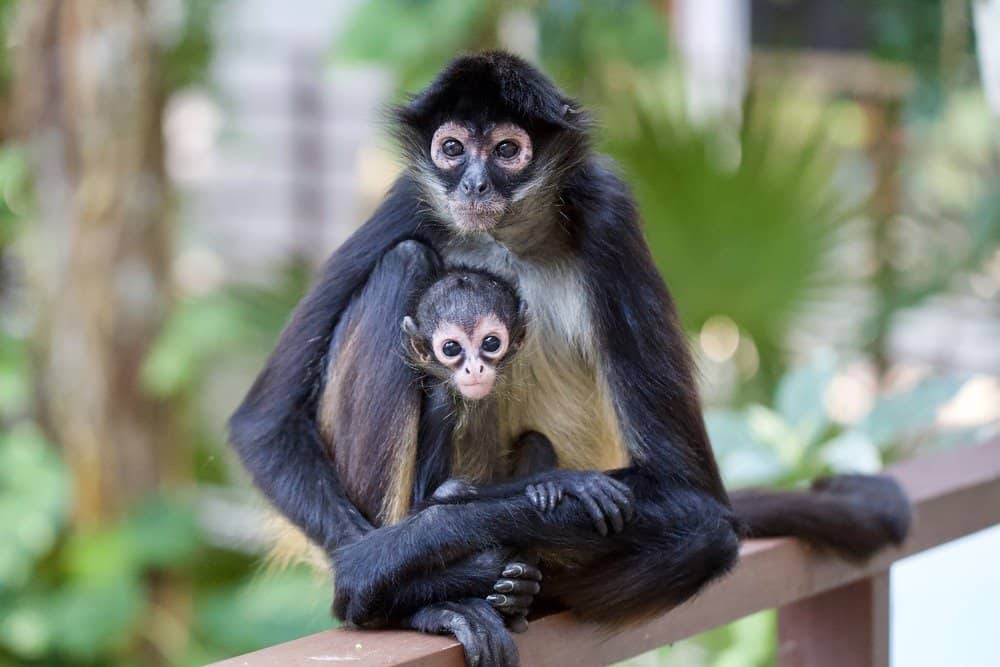
👁 Spider monkey mother and baby

Spider monkeys are recognizable for their flat noses, eye rings, and rough hair.

©StanBullett/Shutterstock.com

Spider Monkey Prehensile Tail

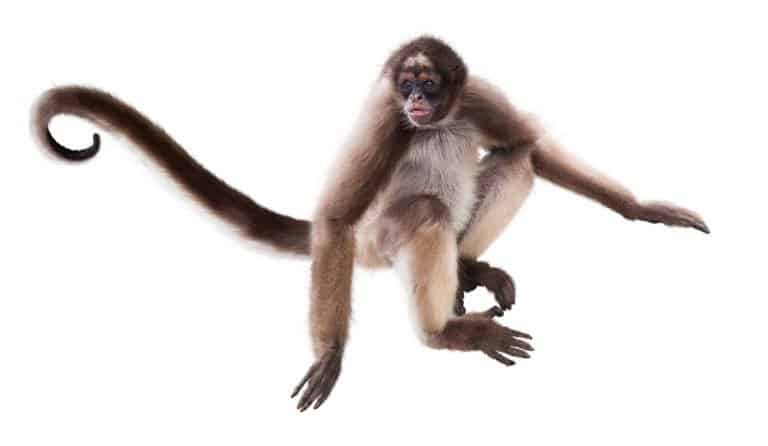
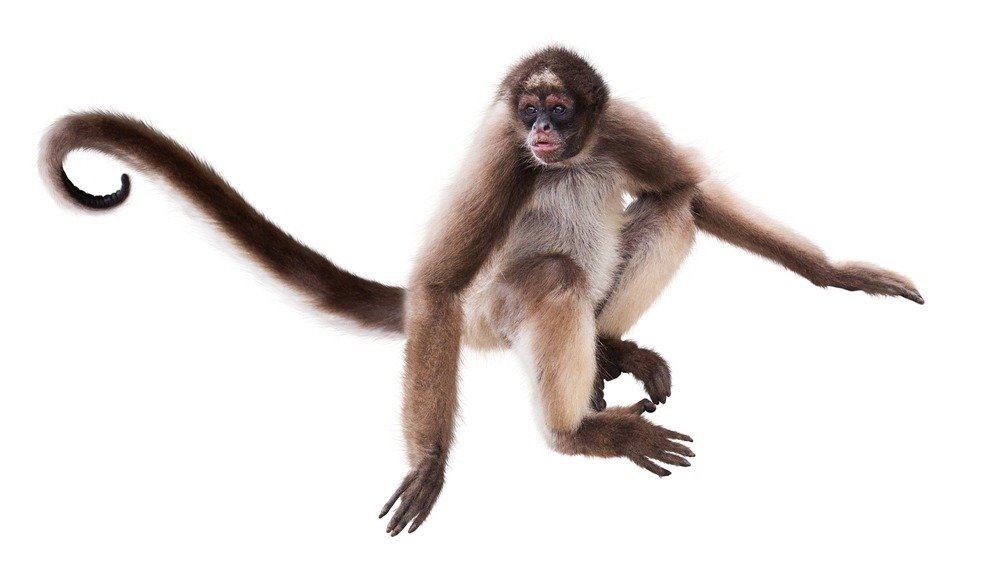
One of the most prominent and important characteristics of this primate is the massive prehensile tail. Despite (or even because of) the nearly non-existent thumbs, the tail provides the main means through which it can cling to branches and grab objects. The tail itself is much larger than the body, reaching between 20 and 40 inches. By comparison, the body stretches about 14 to 26 inches from head to rump.
👁 Spider monkey prehensile tail

©BearFotos/Shutterstock.com

Behavior

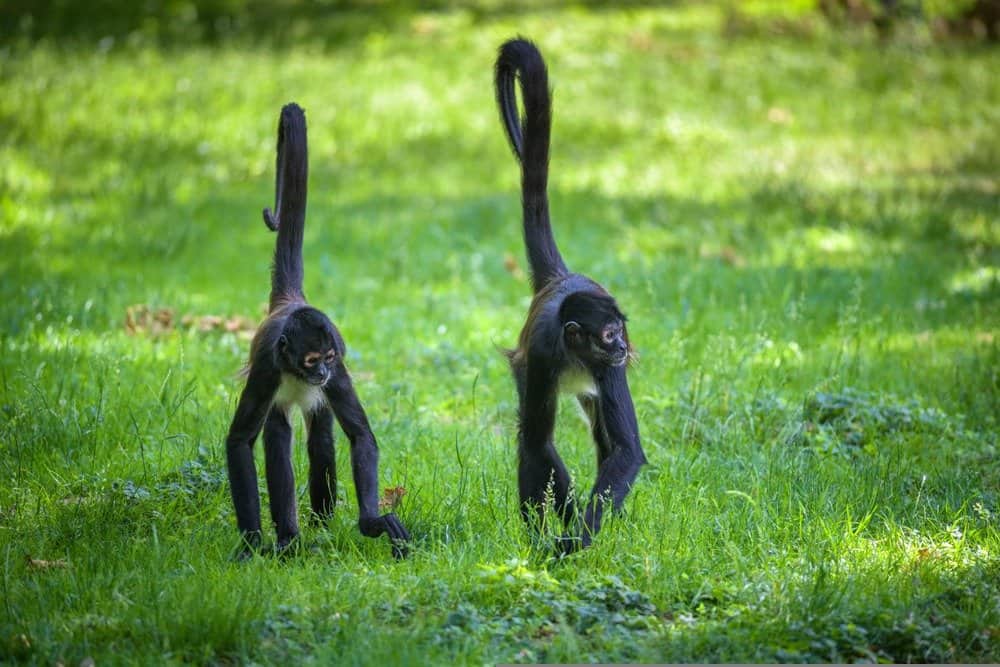
These creatures are highly social animals that gather together into large troops of somewhat related individuals. These troops tend to be small, but gatherings of around 50 monkeys have been observed. These troops break up into smaller groups throughout the day to forage and sleep, especially if it’s the case that food is scarce, but they are usually close enough within reach to aid each other against threats. Feeding typically starts in the morning hours and continues throughout the day, while they sleep in trees during the night. The troop doesn’t appear to have a definitive structure, but it is believed that a single female plans out the group feeding activities for the day.

Males tend to stay with one group their entire lives, while females leave the group to find fortune elsewhere. Since many of these male monkeys are related to each other, the bond between them is particularly strong, while the bond between females is comparatively weaker. This is actually the opposite behavior of many monkey species in which the female is usually the one to stay with the group permanently.

To communicate with each other, these primates have a massive range of vocalizations, including barks, howls, screams, and a kind of whinnying noise that resembles a horse. This is combined with all manner of different postures and facial features. For example, spider monkeys make a fierce display of aggression that’s designed to scare off threats and intruders. They do this by shaking the branches with their legs and emitting a screeching sound. A lot of this is just bluster, however, because it’s not backed up by real force. If this gambit doesn’t work, then the troop may split up and run away to divert the attention of the predator. Grooming, usually an important aspect of primate social behavior, is less critical to spider monkey behavior, possibly due to the reduced thumbs. Instead, they scratch themselves with their hands and feet to remove dirt and parasites.

It is believed that these creatures are among the most intelligent of the New World monkeys. Their brains are larger than the closely related howler monkey, at least among monkeys of a similar size. This intelligence may help them with social interactions and foraging behavior. By remembering the exact location of the many different fruits they regularly consume, it greatly improves their survival odds in the wild.
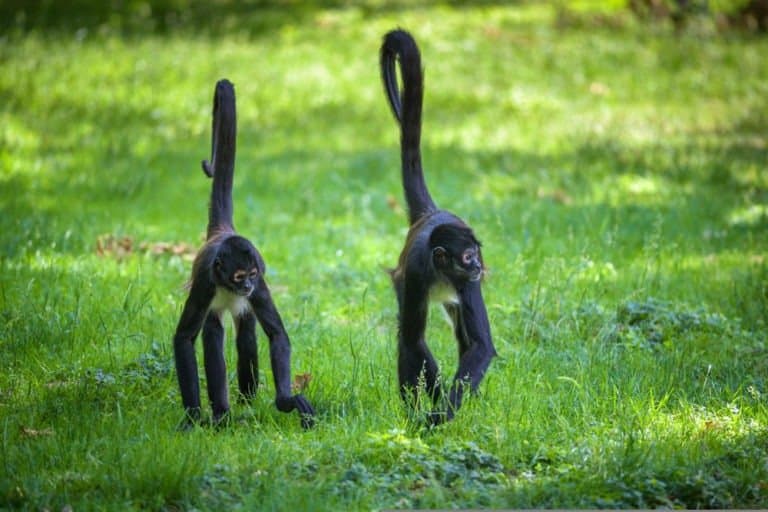
👁 Spider monkeys walking in grass

Spider monkeys are highly social animals.

©Nick Fox/Shutterstock.com

Habitat

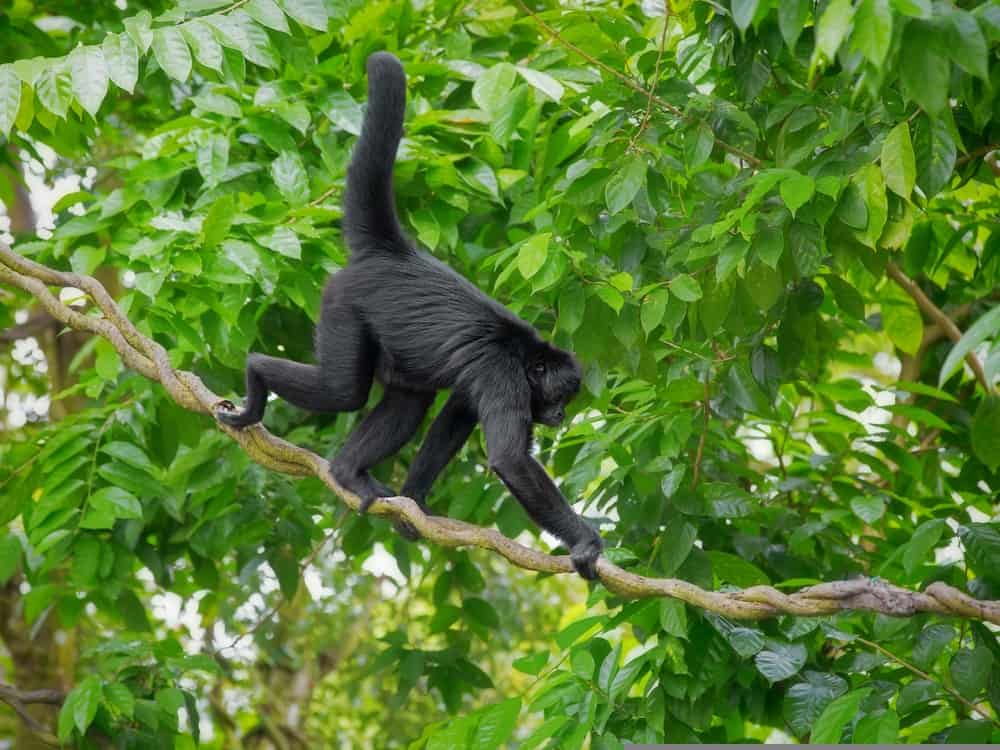
This primate species occupies a large stretch of land between the Amazon rainforest, Central America, and parts of Mexico. Most of the seven species of spider monkeys are largely concentrated in Brazil, Colombia, Venezuela, and bits of Peru. Geoffroy’s spider monkey is the northern-most species, appearing all the way up the coast of central Mexico. Each species generally prefers to reside in the middle layers of rainforests and other woodlands, often near rivers and streams.
👁 Spider monkey in tree

Spider monkeys typically live in rainforests and other woodlands.

©Kjersti Joergensen/Shutterstock.com

Diet

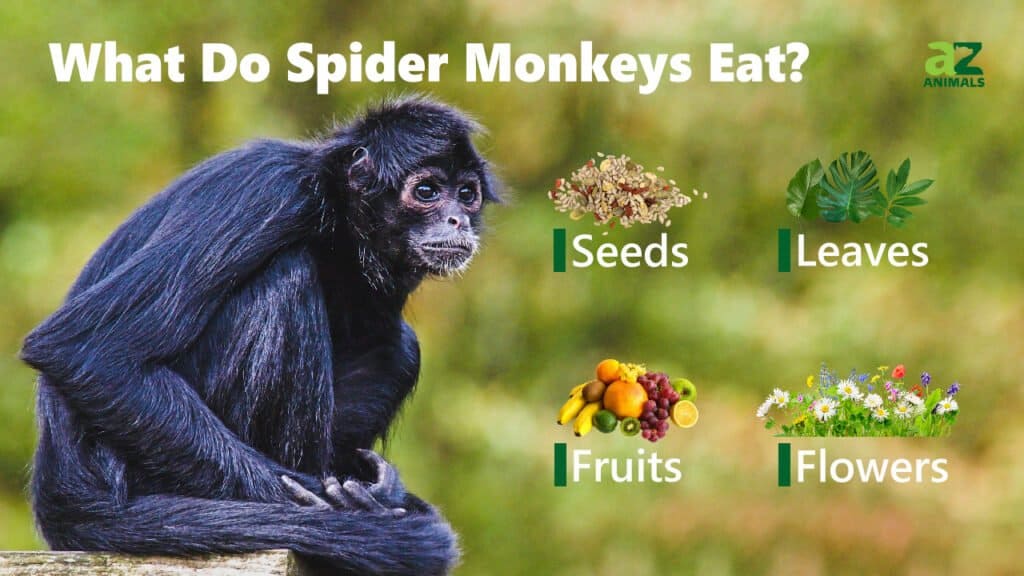
The diet of these creatures consists primarily of fruits, nuts, and flowers. This is supplemented with the meat of spiders and insects. The spider monkey will spend a great deal of the day foraging in small groups. It will pick through the trees, looking for hidden morsels. Some monkeys may eat fruits from more than 100 different species of plants over their lives.

For a complete analysis of the spider monkey’s diet, make sure to read ‘What Do Spider Monkeys Eat?’
👁 What Do Spider Monkeys Eat (1)
Spider monkeys spend a large part of the day foraging in small groups for food.

Predators and Threats

The main predators are pumas, jaguars, snakes, and the occasional eagle. The arboreal lifestyle offers a degree of protection against predators, but some of these animals are adept at climbing trees, and birds of prey can sometimes catch an unaware spider monkey from above. If it wanders down to the forest floor, then the spider monkey is far more vulnerable to predation. It has few natural defenses except for its climbing ability.

These creatures have traditionally been hunted as a source of food. Their raucous and noisy behavior often makes them easy to find in the dense forests. But habitat loss from logging and agriculture is the main threat endangering what remains of the spider monkey populations. This has wiped out much of the natural forests on which it relies, fragmenting the remaining populations. The spider monkey is also vulnerable to several diseases. The rate at which the spider monkey is susceptible to malaria has made it a valuable subject of study by human researchers.
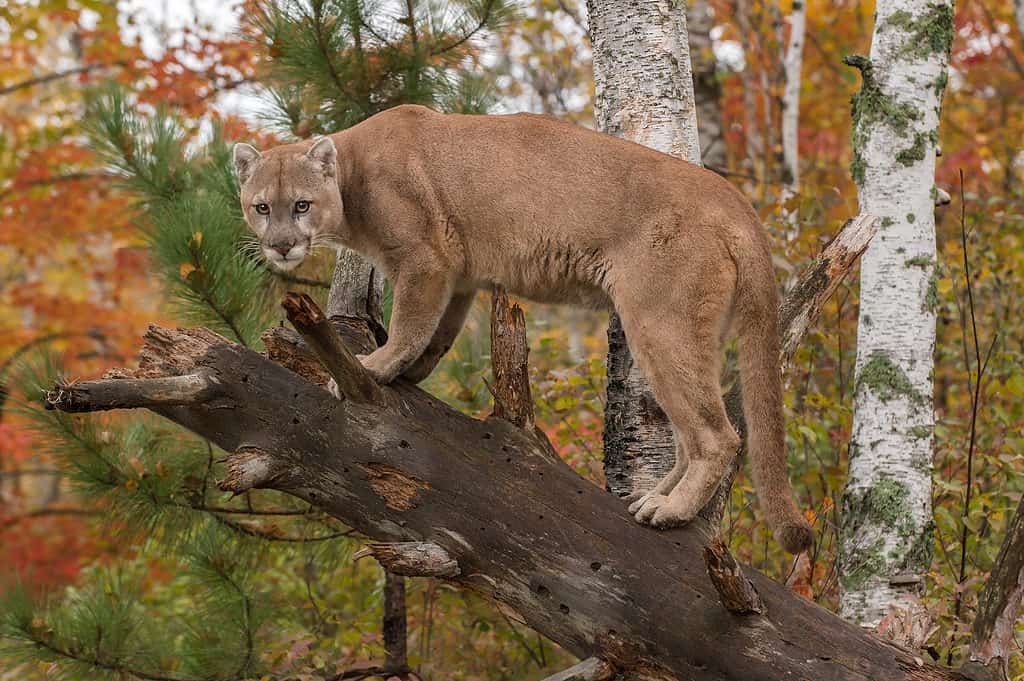
👁 Mountain lion standing on thick tree branch

One of the spider monkey’s predators is the puma, which can hunt them in trees due to their climbing abilities.

©Geoffrey Kuchera/Shutterstock.com

Reproduction, Babies, and Lifespan

This animal has a breeding season that lasts all year round. The female monkey has wide latitude to choose which male she wants to mate with. However, males can be quite aggressive, sometimes killing the unrelated child of a female it is currently mating with.

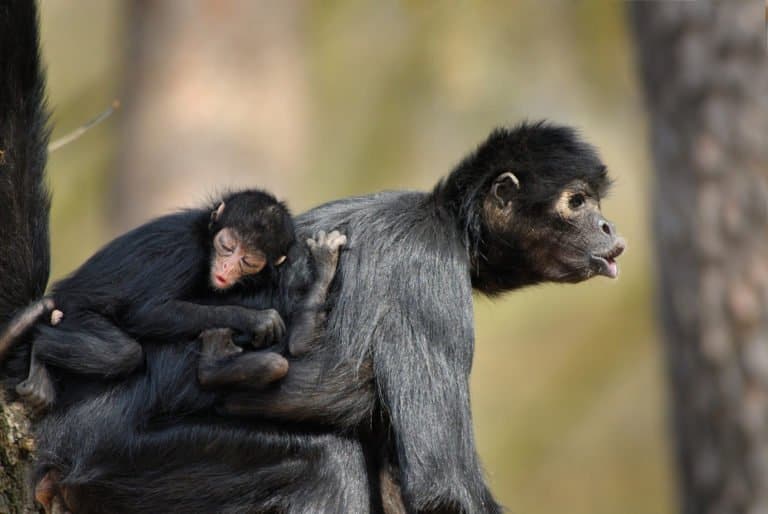
The mother will carry the unborn baby for a gestation period of up to 232 days. Upon giving birth, she will often isolate herself from the rest of the troop. Because this birth and development process is quite taxing on the mother, she will produce only a single child about every two to five years. Rarely will she produce twins. The baby monkey will rely on the mother for nursing and protection for about a year after birth. She alone is responsible for the care of her offspring and does not receive any help from the other males and females of the troop. The child will cling to her back and wrap its tail around her own tail or body for protection while she is foraging.

Because of the extra development time needed to learn social cues and other valuable information, this animal has a relatively long maturity time. It will only start breeding after about five years of age. The typical lifespan of the spider monkey is 20 to 27 years. In captivity, where they are largely free from the pressure of predators, disease, and hunting, they can live up to 40 years.
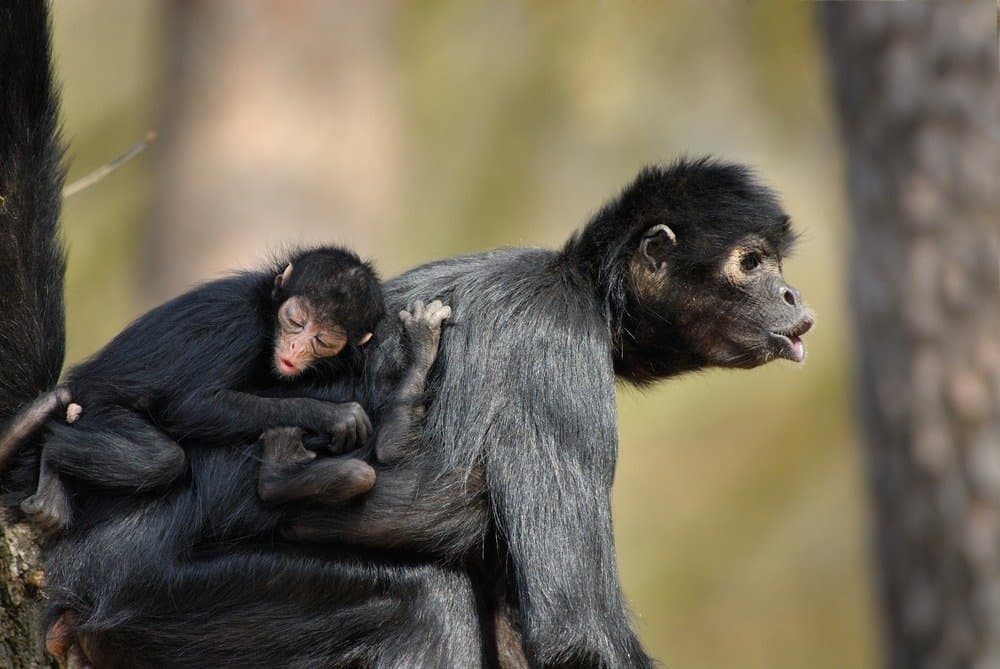
👁 Spider monkey mother and baby

A baby monkey will depend on its mother for nursing and protection for around a year after it is born.

©Eric Gevaert/Shutterstock.com

Population

This primate species is among the most endangered and precarious groups of primates in the world. According to the IUCN Red List, which is perhaps the most comprehensive source for the conservation status of animals in the world, five of the seven species are endangered, while the brown spider monkey is critically endangered. The red-faced spider monkey is in relatively better health compared to the other species. It is only listed as vulnerable to extinction. It is not entirely clear how many mature individuals are left in the wild, but numbers appear to be in decline across the board. Protection of existing forests and reclamation of old habitats will be critical for their continued survival.

Spider Monkeys in Zoos

Because of their loud behavior and playful, energetic nature, these creatures are a popular exhibit in many zoos across the United States. Geoffroy’s black-handed spider monkey is a prime sight at the Los Angeles Zoo and the St. Louis Zoo. Other species of spider monkeys can be found at the Alexandria Zoo in Louisiana, Connecticut’s Beardsley Zoo, the Central Florida Zoo and Botanical Gardens, Zoo Boise, the Nashville Zoo, the Little Rock Zoo in Arkansas, the Potter Park Zoo in Lansing, Michigan, and many others. Most of these zoos work with wildlife conservation organizations to preserve the spider monkey and rehabilitate numbers. This is helped by the fact that they are relatively easy to breed in captivity.
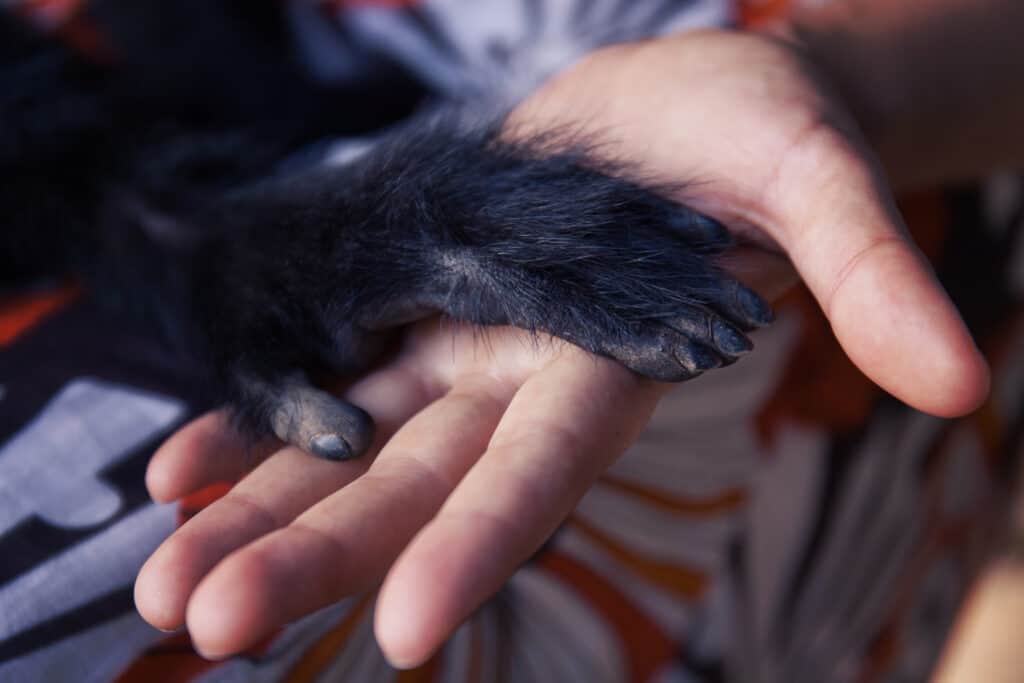
👁 Money hand on top of a human's hand

Many zoos work with wildlife conservation organizations to preserve the spider monkey population.

©iStock.com/alexandragl1

View all 385 animals that start with S

Sources

  1. Britannica
  2. National Geographic
  3. Thought Co.

About the Author

Catherine Gin

Catherine Gin has more than 15 years of experience working as an editor for digital, print and social media. She grew up in Australia with an alphabet of interesting animals, from echidnas and funnel-web spiders to kookaburras and quokkas, as well as beautiful native plants including bottlebrushes and gum trees. Being based in the U.S. for a decade has expanded Catherine's knowledge of flora and fauna, and she and her husband hope to have a hobby farm and vegetable garden in future.

Thank you for reading! Have some feedback for us?

Contact the AZ Animals editorial team

Related Articles You May Find Interesting

Would You Pay Fifty Thousand Dollars to Clone Your Dog? Here’s How It Works

👁 Image
Articles

The National Zoo Just Welcomed Its First Elephant Calf in 25 Years—and She Needs a Name


Spider Monkey FAQs (Frequently Asked Questions)

Spider monkey describes any New World monkey species that belongs to the genus Ateles. It is characterized by the long limbs, dexterous prehensile tail, male-centered social structure, and high intelligence.

The spider monkey has a long, spindly appearance with a mixture of white, black, and brown fur. For obvious reasons, this resemblance to a spider has inspired people to give it the current moniker. Compared to many other New World monkey species, it is relatively large in size.

Spider monkeys spend most of their time living in the trees of dense rainforests. They are highly adapted for this arboreal lifestyle, so their habitat doesn’t change much from region to region. This also makes them vulnerable to habitat loss.

Spider monkeys are omnivorous animals that split their diet between plant matter (such as fruits and nuts) and meat (such as insects and spiders).

Six of the seven species are either endangered or critically endangered. The other species is just vulnerable to extinction.

Spider monkeys belong to the Kingdom Animalia.

Spider monkeys belong to the phylum Chordata.

Spider monkeys belong to the class Mammalia.

Spider monkeys belong to the family Atelidae.

Spider monkeys belong to the order Primates.

Spider monkeys belong to the genus Ateles.

Spider monkeys are covered in hair.

Predators of spider monkeys include humans, eagles, and jaguars.

The average number of babies a spider monkey has is 1.

Spider monkeys are found in the tropical jungles of South America.

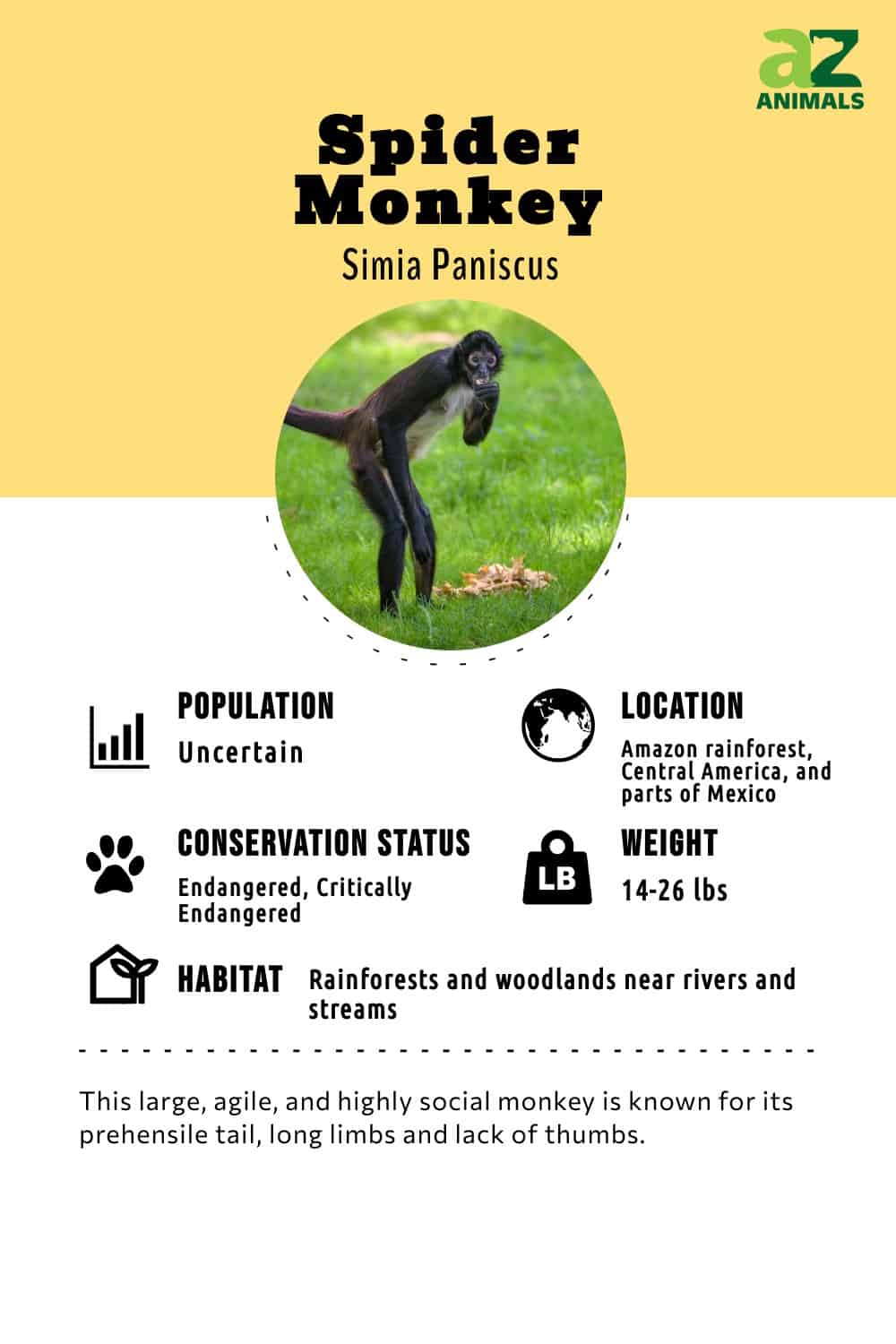
The scientific name for the spider monkey is Simia Paniscus.

Spider monkeys can live for 15 to 27 years.

A spider monkey can travel at speeds of up to 35 miles per hour.

The main differences between spider monkeys and howler monkeys are their size, intelligence, and vocalization.

The main differences between a spider monkey and a squirrel monkey are size, the presence of a prehensile tail, and their appearance.