S
Species Profile

Squirrel

Sciuridae

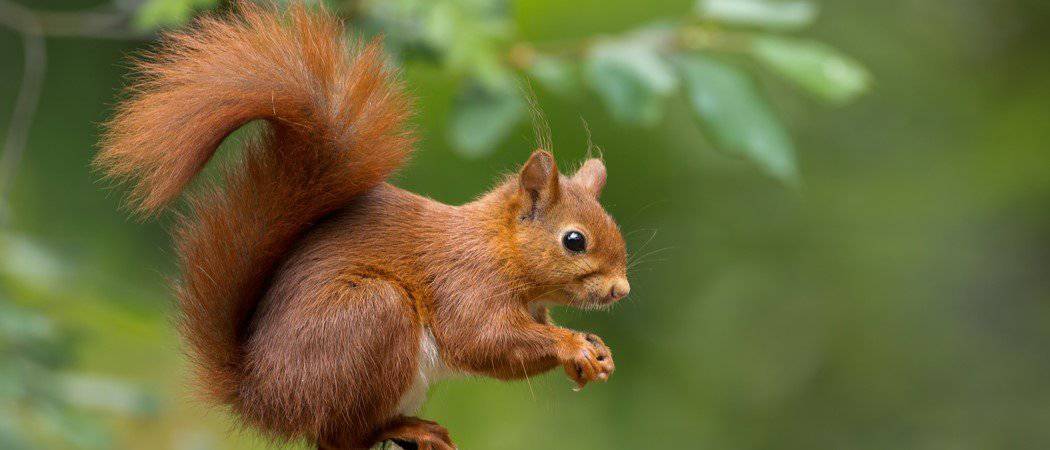
From treetops to tunnels-Sciuridae!
Menno Schaefer/Shutterstock.com

Squirrel Distribution

Click a location to explore more animals from that region

Invasive Species
Loading map...

Found in 44 countries

๐Ÿ‡ง๐Ÿ‡ท Brazil ๐Ÿ‡ง๐Ÿ‡น Bhutan ๐Ÿ‡จ๐Ÿ‡ฆ Canada ๐Ÿ‡จ๐Ÿ‡ฉ Democratic Republic of Congo ๐Ÿ‡จ๐Ÿ‡ฑ Chile ๐Ÿ‡จ๐Ÿ‡ฒ Cameroon ๐Ÿ‡จ๐Ÿ‡ณ China ๐Ÿ‡จ๐Ÿ‡ด Colombia ๐Ÿ‡จ๐Ÿ‡ท Costa Rica ๐Ÿ‡ช๐Ÿ‡จ Ecuador ๐Ÿ‡ช๐Ÿ‡ธ Spain ๐Ÿ‡ช๐Ÿ‡น Ethiopia ๐Ÿ‡ซ๐Ÿ‡ฎ Finland ๐Ÿ‡ซ๐Ÿ‡ท France ๐Ÿ‡ฌ๐Ÿ‡ญ Ghana ๐Ÿ‡ฌ๐Ÿ‡น Guatemala ๐Ÿ‡ฎ๐Ÿ‡ฉ Indonesia ๐Ÿ‡ฎ๐Ÿ‡ช Ireland ๐Ÿ‡ฎ๐Ÿ‡ณ India ๐Ÿ‡ฎ๐Ÿ‡ท Iran ๐Ÿ‡ฎ๐Ÿ‡น Italy ๐Ÿ‡ฏ๐Ÿ‡ต Japan ๐Ÿ‡ฐ๐Ÿ‡ช Kenya ๐Ÿ‡ฐ๐Ÿ‡ท South Korea ๐Ÿ‡ฐ๐Ÿ‡ฟ Kazakhstan ๐Ÿ‡ฒ๐Ÿ‡ณ Mongolia ๐Ÿ‡ฒ๐Ÿ‡ฝ Mexico ๐Ÿ‡ฒ๐Ÿ‡พ Malaysia ๐Ÿ‡ณ๐Ÿ‡ฌ Nigeria ๐Ÿ‡ณ๐Ÿ‡ด Norway ๐Ÿ‡ณ๐Ÿ‡ต Nepal ๐Ÿ‡ต๐Ÿ‡ฆ Panama ๐Ÿ‡ต๐Ÿ‡ช Peru ๐Ÿ‡ต๐Ÿ‡ญ Philippines ๐Ÿ‡ต๐Ÿ‡ฑ Poland ๐Ÿ‡ท๐Ÿ‡บ Russia ๐Ÿ‡ธ๐Ÿ‡ช Sweden ๐Ÿ‡น๐Ÿ‡ญ Thailand ๐Ÿ‡น๐Ÿ‡ท Turkey ๐Ÿ‡น๐Ÿ‡ฟ Tanzania ๐Ÿ‡บ๐Ÿ‡ฌ Uganda ๐Ÿ‡บ๐Ÿ‡ธ United States ๐Ÿ‡ป๐Ÿ‡ณ Vietnam ๐Ÿ‡ฟ๐Ÿ‡ฆ South Africa

At a Glance

Family Overview This page covers the Squirrel family as a group. Stats below are general traits shared across the family.
Also Known As Tree squirrel, Ground squirrel, Flying squirrel, Chipmunk, Marmot, Prairie dog, Groundhog, Woodchuck
Diet Omnivore
Activity Diurnal+
Lifespan 5 years
Weight 10 lbs
Status Not Evaluated
Did You Know?

Sciuridae ranges from some of the smallest rodents (pygmy squirrels ~10-20 g) to large marmots that can exceed ~5 kg and reach ~8 kg in exceptional cases.

Scientific Classification

Family Overview "Squirrel" is not a single species but represents an entire family containing multiple species.

Squirrels (family Sciuridae) are rodents characterized by strong hind limbs, sharp incisors, and (in many species) prominent bushy tails. The group spans arboreal (tree) squirrels, terrestrial ground squirrels, burrowing prairie dogs, large marmots, and gliding flying squirrels.

Kingdom
Animalia
Phylum
Chordata
Class
Mammalia
Order
Rodentia
Family
Sciuridae

Distinguishing Features

  • Rodent dentition with continuously growing incisors
  • Generally agile locomotion; many species climb well; flying squirrels glide using a patagium
  • Food caching (scatter-hoarding or larder-hoarding) is common in many tree squirrels
  • Diverse social systems: solitary/territorial tree squirrels to highly social prairie dogs
  • Diet typically includes seeds, nuts, fruits, buds, fungi; some opportunistic animal matter

Physical Measurements

Males and females differ in size

Height
โ™‚ 6 in (2 in โ€“ 12 in)
Length
โ™‚ 1 ft 4 in (4 in โ€“ 3 ft 5 in)
โ™€ 1 ft 5 in (5 in โ€“ 3 ft 5 in)
Weight
โ™‚ 1 lbs (0 lbs โ€“ 22 lbs)
โ™€ 1 lbs (0 lbs โ€“ 22 lbs)
Tail Length
โ™‚ 8 in (2 in โ€“ 1 ft 12 in)
โ™€ 7 in (2 in โ€“ 1 ft 12 in)
Top Speed
20 mph
running

Appearance

Primary Colors
Secondary Colors
Skin Type Dense fur with underfur and guard hairs; seasonal molts common; many have bushy or plush tails; flying squirrels possess a furred patagium (gliding membrane) between limbs.
Distinctive Features
  • Family-wide size range (smallest to largest): ~0.015-0.025 kg up to ~8-10 kg; head-body ~6-75 cm; tail ~3-60 cm.
  • Sharp, ever-growing incisors and strong jaw musculature for gnawing hard foods.
  • Locomotion diversity: arboreal climbers/leapers, terrestrial runners, burrowers, and gliders (flying squirrels).
  • Tail functions vary: balance in trees, signaling, thermoregulation, and as a blanket during rest.
  • Many species cache food (scatter- or larder-hoarding); intensity varies by habitat and season.
  • Diet broad: seeds/nuts, buds, fruits, fungi, and opportunistic insects/eggs; proportions vary by species and locality.
  • Activity patterns mostly diurnal, but many flying squirrels are nocturnal/crepuscular.
  • Thermoregulation strategies vary: many ground squirrels and marmots hibernate/enter torpor; many tree squirrels remain active year-round.
  • Social structure ranges from solitary (many tree squirrels) to highly social colonies (prairie dogs, some marmots/ground squirrels).
  • Reproduction generalization: typically 1-2 litters/year, often 1-8 young; varies with latitude, food, and subgroup.
  • Global distribution broad: across the Americas, Europe, Asia, and Africa; absent naturally from Australia and Antarctica.
  • Habitats span forests, savannas, grasslands, deserts, alpine meadows, and urban parks; burrow depth and nesting sites vary accordingly.
  • Cheek pouches occur in several lineages (notably chipmunks), aiding rapid food transport.
  • Lifespan varies widely: commonly ~2-12 years in the wild (often lower in small species), with some reaching ~15+; captivity records in some squirrels can approach ~20+ years.

Sexual Dimorphism

Sexual dimorphism is usually subtle across Sciuridae: males are often slightly larger or heavier, and breeding males show prominent scrotal testes. In some social ground squirrels and prairie dogs, size differences can be more noticeable, but many species appear similar.

โ™‚
  • Often slightly larger body mass or head size, depending on species.
  • Breeding males show visible scrotal testes; seasonal swelling typical.
  • May bear more frequent scars or worn fur in strongly territorial populations.
โ™€
  • Often slightly smaller overall size in many species, though overlap is large.
  • Prominent nipples and enlarged mammary area during lactation.
  • May show increased body condition during pregnancy in seasonal breeders.

Did You Know?

Sciuridae ranges from some of the smallest rodents (pygmy squirrels ~10-20 g) to large marmots that can exceed ~5 kg and reach ~8 kg in exceptional cases.

Not all "squirrels" live in trees: the family includes burrowing ground squirrels, prairie dogs, and marmots, as well as gliding flying squirrels.

Many species plant forests unintentionally: forgotten cached seeds and nuts can germinate, aiding woodland regeneration.

Chipmunks are squirrels too-one of the easiest-to-spot branches of the family thanks to their bold body stripes and (often) cheek pouches.

Some sciurids hibernate (many ground squirrels and marmots), while many tree squirrels stay active through winter; most flying squirrels are primarily nocturnal.

Squirrel tails are multi-tools: balance beams in trees, rudders in glides (for flying squirrels), blankets for warmth, and flags for communication.

Squirrels occur naturally across the Americas, Europe, Asia, and Africa (absent from Australia and Antarctica, though some species are introduced elsewhere).

Unique Adaptations

  • Ever-growing incisors (Rodentia hallmark): chisel-like front teeth grow continuously and are kept sharp by gnawing-essential for opening hard nuts, bark-feeding, and excavation.
  • Powerful hind limbs and flexible joints: enable leaping and rapid acceleration; many tree squirrels can rotate hind feet to improve grip and descend head-first.
  • Tail versatility across subgroups: used for balance in arboreal species, as a thermal wrap in cold conditions, as a signal flag during disputes, and as added control during glides or jumps.
  • Burrowing specializations in ground squirrels/prairie dogs/marmots: strong forelimbs and claws, tunnel systems with multiple entrances, nesting chambers, and emergency bolt-holes to reduce predation risk.
  • Cheek pouches in many chipmunks (and some relatives): allow rapid collection and transport of seeds to caches without repeated trips.
  • Hibernation physiology (many ground squirrels and marmots): seasonal fattening, metabolic suppression, and physiological tolerance of low body temperatures for winter survival.
  • Gliding membrane (patagium) in flying squirrels: an elastic skin membrane from wrist to ankle increases surface area for controlled glides; large eyes and nocturnal sensory adaptations are common in these lineages.

Interesting Behaviors

  • Food caching (hoarding): widespread across the family, ranging from scatter-hoarding (many tree squirrels) to larder-hoarding (some ground squirrels/chipmunks). Individuals use spatial memory and smell to recover stores; forgotten caches can sprout.
  • Alarm calling and "sentinel" behavior: many ground-dwelling sciurids give distinctive calls for aerial vs. terrestrial predators; prairie dogs can have notably complex, context-specific alarm calls.
  • Social living varies dramatically: many tree squirrels are relatively solitary outside breeding, while prairie dogs form dense colonies with family groups; marmots often have social colonies with shared vigilance.
  • Seasonal dormancy: many ground squirrels and marmots undergo hibernation with reduced body temperature and metabolism; others use shorter torpor bouts. In contrast, many tree squirrels remain active year-round.
  • Acrobatic locomotion: arboreal squirrels sprint along branches and can descend head-first by rotating their ankles; ground forms excel at digging and rapid dashes between burrow entrances.
  • Gliding (flying squirrels): nocturnal species launch from trees using a furred membrane (patagium) to glide between trunks; they adjust direction mid-air and "brake" before landing.
  • Territory and scent marking: many species use cheek glands, urine, and other scent cues to mark routes, food sites, or breeding status; tail-flicks and vocalizations add visual/auditory signals.

Cultural Significance

Squirrels (Sciuridae) are common across much of the Northern Hemisphere and beyond. They symbolize saving food, agility, and woodland life. They appear in children's stories and parks; prairie dogs and marmots mark grassland and mountain ecosystems. They help spread seeds but can be pests, eating crops or chewing structures.

Myths & Legends

Norse mythology: Ratatoskr, a squirrel, runs up and down the world-tree Yggdrasil carrying messages (and insults) between the eagle above and the serpent Nรญรฐhรถggr below-an emblem of restless communication and mischief.

In the Ramayana, a small squirrel helps Rama's army build a bridge to Lanka by carrying pebbles. Rama gently strokes the squirrel, leaving stripes as a blessing for its devotion.

Many Native North American stories say chipmunk stripes are claw marks from a bear or other strong animal after a chase. The origin tale also teaches humility and respect.

Russian folklore tradition popularized by Pushkin: in "The Tale of Tsar Saltan," a wondrous squirrel cracks golden nuts with emerald kernels-an image rooted in fairy-tale motifs of magical abundance and prosperity.

European folktale motif (various regions): squirrels appear as woodland messengers or clever gatherers whose hidden stores reveal secrets of the forest, reinforcing themes of foresight and the rewards of preparation.

Conservation Status

NE Not Evaluated (family-level assessments are not typically assigned; Sciuridae species span a wide range from Least Concern to Critically Endangered, with some Data Deficient taxa-especially localized endemics).

Has not yet been evaluated against the criteria.

Population Unknown

Protected Under

  • Protected areas and habitat protections in many range countries (coverage and enforcement vary widely among regions and species).
  • CITES applies to a limited subset of Sciuridae taxa; most species are not internationally listed, but trade restrictions exist for some country- or genus-specific cases.
  • U.S. Endangered Species Act listings include several squirrel taxa/populations (e.g., Delmarva fox squirrel historically listed; other localized forms receive legal protection).
  • EU Habitats Directive includes certain threatened ground-squirrel taxa (e.g., European ground squirrel) and supports site-based protection and management in parts of Europe.
  • National endangered-species and wildlife-protection laws (e.g., in India, China, and Southeast Asian countries) protect selected threatened or endemic squirrel species and restrict hunting/collection.

Looking for a specific species?

Eastern gray squirrel

Sciurus carolinensis

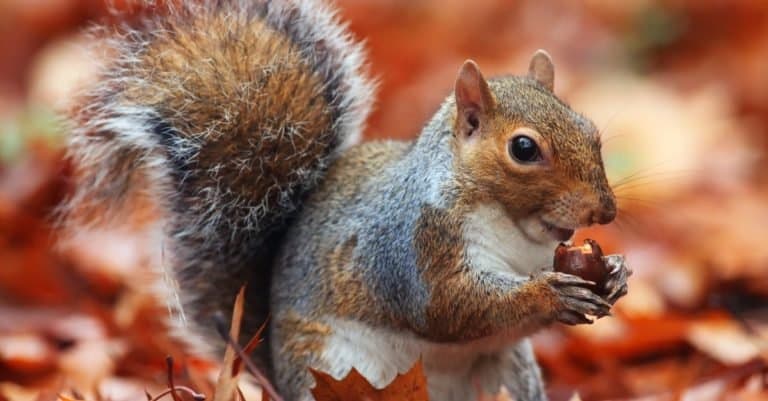
In many English-speaking North American contexts, the unqualified common name "squirrel" most often refers to the ubiquitous, highly visible Eastern gray squirrel in parks, neighborhoods, and deciduous forests.

  • Common in urban/suburban parks and mature hardwood forests; notable for adaptability to human-dominated landscapes.
  • Primarily eats mast (acorns/nuts), buds, and seeds, but is opportunistically omnivorous (e.g., fungi, insects, occasional eggs).
  • Caches thousands of nuts seasonally (scatter-hoarding), influencing seed dispersal and forest regeneration.
  • Uses tree cavities and leaf nests (dreys); activity is typically diurnal with seasonal shifts.
  • Introduced populations exist outside its native range in some regions, where it can affect native squirrel species via competition.
View Eastern gray squirrel Profile

You might be looking for:

Eastern gray squirrel

22%

Sciurus carolinensis

Common North American tree squirrel, often seen in urban parks and forests.

View Profile

Red squirrel (Eurasian red squirrel)

16%

Sciurus vulgaris

Widespread across Europe and northern Asia; typically smaller and often reddish in color.

View Profile

American red squirrel

12%

Tamiasciurus hudsonicus

Small, territorial North American tree squirrel of coniferous and mixed forests.

Eastern chipmunk

10%

Tamias striatus

Striped, ground-dwelling sciurid common in eastern North America.

View Profile

Yellow-bellied marmot

8%

Marmota flaviventris

Large ground squirrel (marmot) of western North America, noted for hibernation.

Black-tailed prairie dog

8%

Cynomys ludovicianus

Colonial ground-dwelling sciurid of North American grasslands.

Southern flying squirrel

7%

Glaucomys volans

Small nocturnal flying squirrel that glides between trees in eastern North America.

Indian palm squirrel (three-striped palm squirrel)

6%

Funambulus palmarum

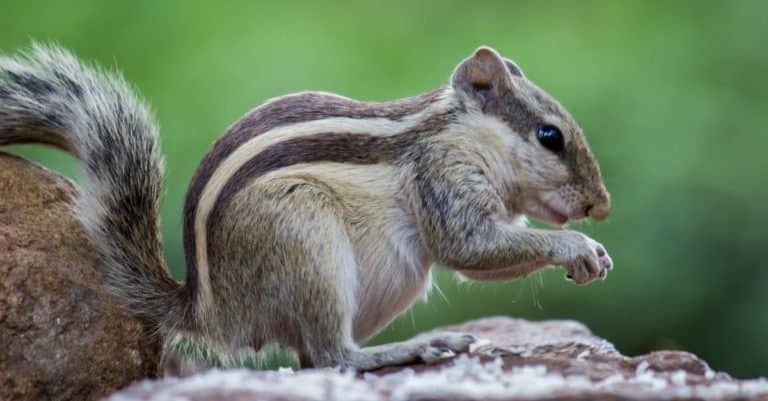
Common South Asian squirrel frequently found around human habitation.

View Profile

Prevost's squirrel

5%

Callosciurus prevostii

Strikingly colored Southeast Asian tree squirrel.

Arctic ground squirrel

4%

Urocitellus parryii

High-latitude ground squirrel known for extreme hibernation physiology.

Life Cycle

Birth 4 kits
Lifespan 5 years

Lifespan

In the Wild 1โ€“18 years
In Captivity 2โ€“24 years

Reproduction

Mating System Polygynandry
Social Structure Solitary
Breeding Pattern Transient
Fertilization Internal Fertilization
Birth Type Internal_fertilization

Across Sciuridae, mating is typically multi-male/multi-female with brief associations, intense male competition, and estrus "mating chases." Females often mate with several males per season; paternal care is rare. Sociality varies, from solitary tree squirrels to colonial ground squirrels.

Behavior & Ecology

Social Colony Group: 10
Activity Diurnal, Nocturnal, Crepuscular, Cathemeral
Diet Omnivore Energy-rich nuts and seeds ("mast"; e.g., acorns, hickory nuts, pine seeds), with strong seasonal reliance where available
Seasonal Hibernates

Temperament

Alert
Wary
Opportunistic
Food-motivated
Territorial in many arboreal species
Highly social in several colonial ground squirrels
Seasonally aggressive during breeding
Juvenile-playful

Communication

alarm calls Chirps, whistles, barks
chatters and trills
squeaks and screeches during conflicts
low growls or grunts at close range
species-specific signature calls in some prairie dogs
tail flicking/flagging as visual signals
upright postures and foot stamping in some ground squirrels
scent marking with cheek, oral, or gland secretions
nose-to-nose greeting and allogrooming in social species
chasing displays and territorial boundary patrolling

Habitat

Biomes:
Tropical Rainforest Tropical Dry Forest Savanna Desert Hot Desert Cold Mediterranean Temperate Grassland Temperate Forest Temperate Rainforest Boreal Forest (Taiga) Tundra Alpine Wetland Freshwater +8
Terrain:
Mountainous Hilly Plateau Plains Valley Coastal Island Riverine Volcanic Karst Rocky Sandy Muddy +7
Elevation: Up to 17060 ft 5 in

Ecological Role

Widespread mid-level consumers (primarily plant-based omnivores) that strongly influence vegetation dynamics and food webs across forests, grasslands, and alpine systems; roles differ among arboreal, burrowing, and gliding lineages.

Seed predation and seed dispersal via scatter-hoarding (some cached seeds/nuts are forgotten and germinate) Forest regeneration shaping (influencing which tree species recruit during/after mast events) Fungal spore dispersal and support of mycorrhizal networks via fungivory (notably in flying squirrels) Soil mixing/aeration and nutrient redistribution through burrowing (ground squirrels, prairie dogs, marmots) Providing prey biomass for predators (raptors, mustelids, canids, felids, snakes), linking plant production to higher trophic levels

Diet Details

Main Prey:
Insects and other arthropods Bird eggs and nestlings Small vertebrates Carrion
Other Foods:
Hard mast Seeds and cones Fruits and berries Fungi Green plant matter Buds, flowers, and catkins Bark, cambium, and twigs Sap, nectar and tree exudates Cultivated foods +3

Human Interaction

Domestication Status

Wild

Sciuridae (tree squirrels, ground squirrels, chipmunks, marmots, prairie dogs, flying squirrels) are not domesticated. People have long hunted, trapped, kept them in zoos, research colonies, rehab centers, or sometimes privately where legal. Many get used to city life, but that is habituation, not true domestication; conflicts with homes, gardens, feeders are common.

Danger Level

Moderate
  • bites and scratches (especially when cornered, habituated, or handled; risk increases with attempted capture/feeding)
  • zoonotic disease exposure (risk varies by region and species; can include ectoparasite-borne pathogens such as plague in some prairie dog/ground squirrel systems, and other infections such as tularemia or leptospirosis in some contexts)
  • parasites and allergens (fleas, ticks, mites; allergic reactions possible)
  • property damage (gnawing, attic nesting, garden/crop losses, bark stripping, and electrical infrastructure damage leading to fires/outages)
  • traffic and human-wildlife conflict incidents in urban/suburban settings

As a Pet

Not Suitable as Pet

Legality: Rules differ by country, state, and species. Many places ban or limit keeping squirrels and other sciurids (flying squirrels, prairie dogs); permits or licensed wildlife rehabilitators, educators, or research facilities may be allowed. Check local laws and health rules.

Care Level: Expert Only

Purchase Cost: Up to $500
Lifetime Cost: $2,000 - $15,000

Economic Value

Uses:
Ecosystem services (seed dispersal/forest regeneration; mycorrhizal fungal dispersal) Ecotourism/urban wildlife viewing Hunting and subsistence food (regional) Fur/trapping (historical and regional) Biomedical and behavioral research (some species) Pest control and infrastructure management (nuisance mitigation costs)
Products:
  • game meat (regional, where legal/used)
  • fur pelts (regional/historical)
  • educational programming and wildlife rehabilitation services
  • scientific data/models from laboratory or field research populations

Relationships

Predators 15

Goshawk Accipiter gentilis
Cooper's hawk Accipiter cooperii
Red-tailed hawk Buteo jamaicensis
Great horned owl Bubo virginianus
Tawny owl Strix aluco
Fox Vulpes
Coyote Canis latrans
Wolf Canis lupus
American marten Martes americana
Stoat Mustela erminea
Weasels Mustela spp.
Bobcat Lynx rufus
Canada lynx Lynx canadensis
Domestic cat Felis catus
Large snakes Pantherophis spp.; Pituophis spp.; Boa spp.

Related Species 9

Tree squirrels Sciurus Shared Family
Red squirrel Sciurus vulgaris Shared Family
Eastern gray squirrel Sciurus carolinensis Shared Family
Chipmunks Shared Family
Ground squirrels Shared Family
Prairie dog Cynomys Shared Family
Marmots Marmota Shared Family
Flying squirrels Shared Family
Giant squirrels Ratufa Shared Family

Ecological Equivalents 5

Animals that fill a similar ecological role in their ecosystem

Dormice Gliridae Small arboreal rodents that primarily eat nuts and seeds and exhibit similar caching and nesting behavior in many forest ecosystems; however, dormice are not members of the family Sciuridae.
Tree shrews Tupaia spp. Small, agile, mostly arboreal/scansorial mammals that use similar forest strata and consume overlapping diets (fruit and invertebrates), despite being in a different order.
Sugar glider Petaurus breviceps Gliding mammals occupying a similar nocturnal arboreal niche to flying squirrels; both use patagia to glide between trees and rely to varying degrees on tree exudates and invertebrates.
Woodrats Neotoma spp. Rodents that commonly cache plant material and occupy rocky and woodland habitats that can overlap with those of ground squirrels and chipmunks, resulting in similar resource-use patterns.
Small arboreal primates Callitrichidae In some tropical forests, small arboreal primates overlap with giant squirrels in fruit and seed use and in predator-avoidance strategies, though they are not closely related.

Types of Squirrel

20

Explore 20 recognized types of squirrel

Eastern gray squirrel Sciurus carolinensis
Eurasian red squirrel Sciurus vulgaris
American red squirrel Tamiasciurus hudsonicus
Douglas squirrel Tamiasciurus douglasii
Eastern chipmunk Tamias striatus
Siberian chipmunk Eutamias sibiricus
Woodchuck (groundhog) Marmota monax
Alpine marmot Marmota marmota
Hoary marmot Marmota caligata
Black-tailed prairie dog Cynomys ludovicianus
Gunnison's prairie dog Cynomys gunnisoni
California ground squirrel Otospermophilus beecheyi
Thirteen-lined ground squirrel Ictidomys tridecemlineatus
European ground squirrel Spermophilus citellus
Arctic ground squirrel Urocitellus parryii
Southern flying squirrel Glaucomys volans
Northern flying squirrel Glaucomys sabrinus
Siberian flying squirrel Pteromys volans
Indian giant squirrel Ratufa indica
Prevost's squirrel Callosciurus prevostii

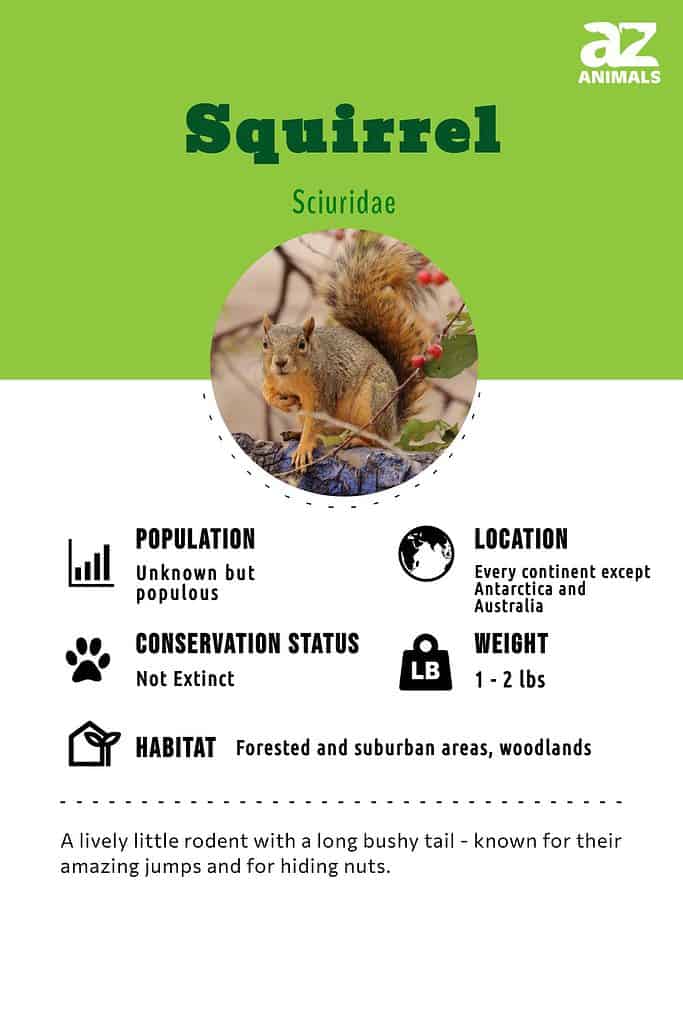
A squirrel is a small rodent with a full and bushy tail, and they are found all over the world.
๐Ÿ‘ Image

Types and Species

There are more than 200 species of squirrels all over the world. They are mostly categorized into three different types โ€“ ground squirrels, tree squirrels, and flying squirrels.

The various types are differentiated by their size and where they live. According to reports, squirrels are found on every continent except Antarctica and Australia. They go by the scientific name Sciuridae.

Some of the common types of squirrels include the Indian giant squirrel, the Western grey squirrel, and the American red squirrel. With the right habitat and care, you can also keep a squirrel as a pet.

In this article, we will focus mainly on tree squirrels โ€“ but the squirrel family is actually much larger than you think. Groundhogs, chipmunks and prairie dogs are also squirrels! More information about squirrel species can be found at the end of this article.

Evolution

The earliest fossil evidence for squirrels was found in western North America and dated to around 36 million years ago. Six million years later โ€“ fossil records indicate that squirrels appeared in Europe. During that time the Berring Strait land bridge provided passage for many different species โ€“ including squirrels โ€“ from North America. Squirrels show up in African fossil records shortly after it collided with Eurasia about 18-20 million years ago. After that, squirrels evolved and adapted to their diverse environments โ€“ into the over 200 species known today.

7 Incredible Squirrel Facts!

Here are some of the interesting facts about squirrels:

  • There are over 200 species, and they can be found almost anywhere.
  • A squirrel is a rodent, and they have a surprisingly trusting personality.
  • Squirrels are planners! When the winter season nears, they gather and store food in different locations as a survival tactic.
  • A squirrel is a very intelligent animal that uses different sounds to communicate with other squirrels.
  • Along with these vocalizations, these animals will signal each other with their tails.
  • Squirrels do not like some smells and are repellent to them, like white pepper, garlic, and black pepper.
  • The most commonly used term for a group or gathering of squirrels is a scurry.
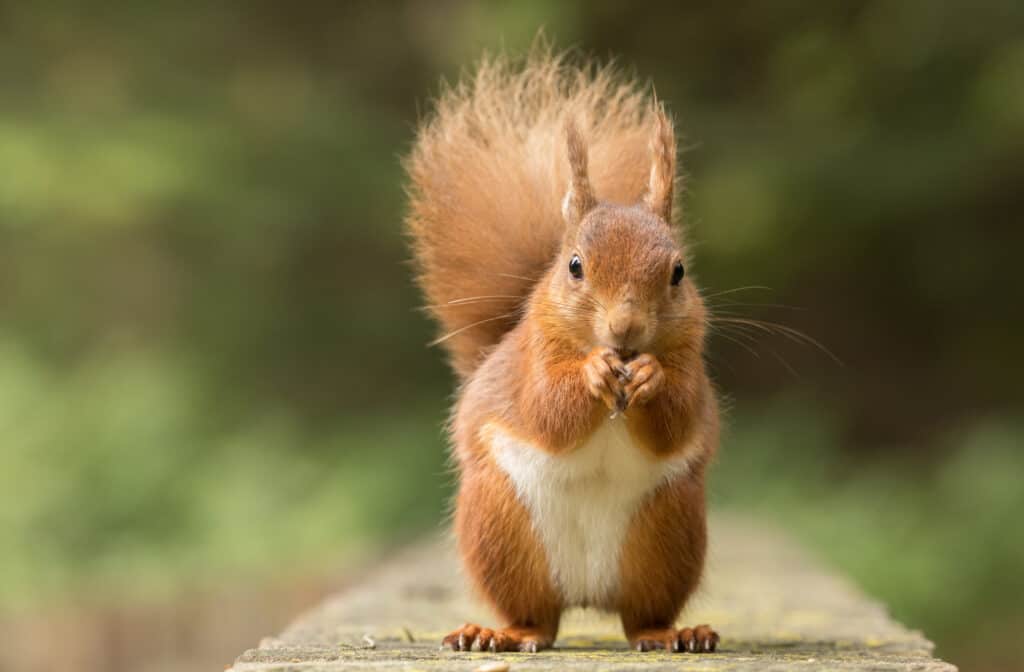
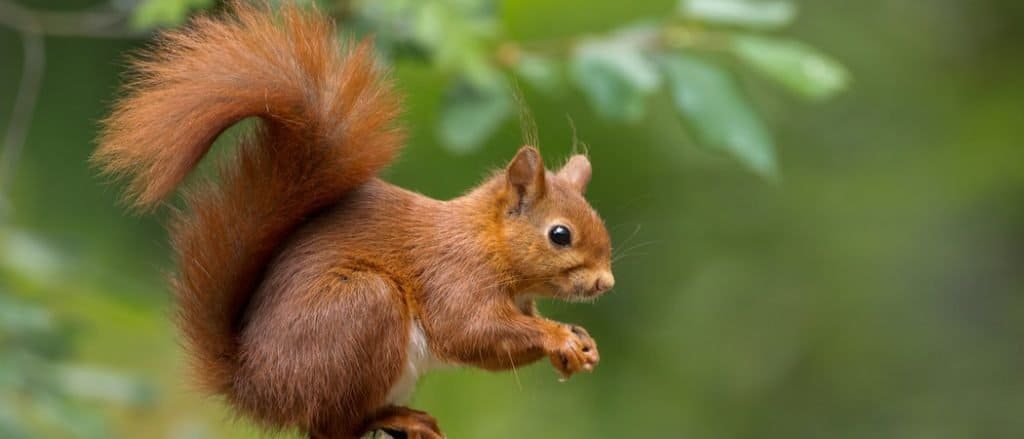
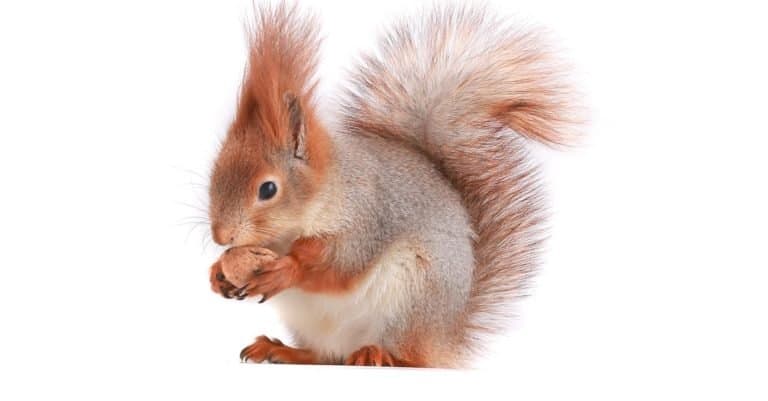
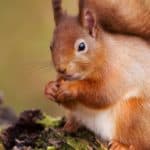
๐Ÿ‘ A red squirrel center frame with its hand at its mouth as if eating. The squirrel is standing on. a sidewalk, or some other long, narrow expanse of concrete. Background is blurry green.

Squirrels are small, nimble rodents with bushy tails.

ยฉAndrew Swinbank/Shutterstock.com

Scientific Name

Squirrels go by the scientific name Sciuridae and belong to the kingdom Animalia and phylum Chordata. Their class is called Mammalia and the order is called Rodentia. The suborder is called Sciuromorpha, and the family is called Sciuridea too, just like the scientific name.

The word Sciuridae is from the Latin word Sciurus, which means squirrel. The Latin root comes from a combination of two Greek words โ€“ skia (shade) and oura (tail).

Appearance

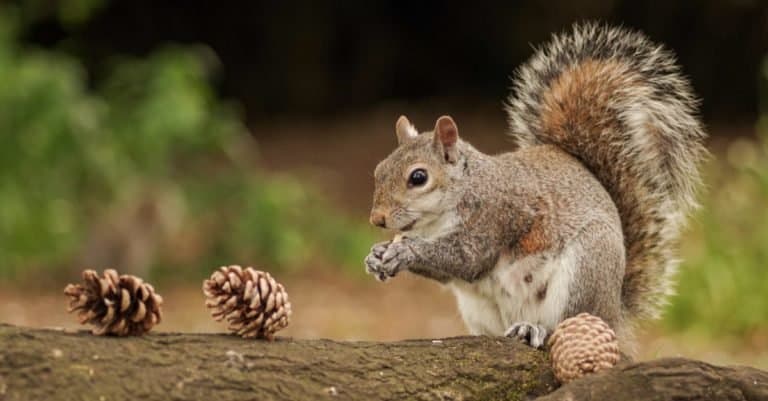
These animals are small-sized, nimble rodents. Their bodies are slender, and they have large eyes and bushy tails. Their fur is short and silky and is very soft too. However, the thickness of the fur depends as well as varies from species to species. The fur comes in a variety of colors including grey, brown, yellow, red, black, and white. The color of the squirrels also depends on the type of squirrel.

Most species have small yet pointed ears with tiny, sharp claws, giving them the leverage that they need to climb trees quickly and with ease. The smallest squirrel is only 10 cm long while some of the largest squirrels in the world can have bodies of 30 to 50 cm in size. Their tails are even bigger, reaching a length of up to 60 cm in some species.

The average squirrel weighs 1 -1.5 pounds. The Indian giant squirrel is about 1.5 โ€“ 2 kg (3.3 โ€“ 4.4 lbs), featuring beautiful rust and black fur coat. Interestingly, a solid black coat is considered very rare in squirrels.
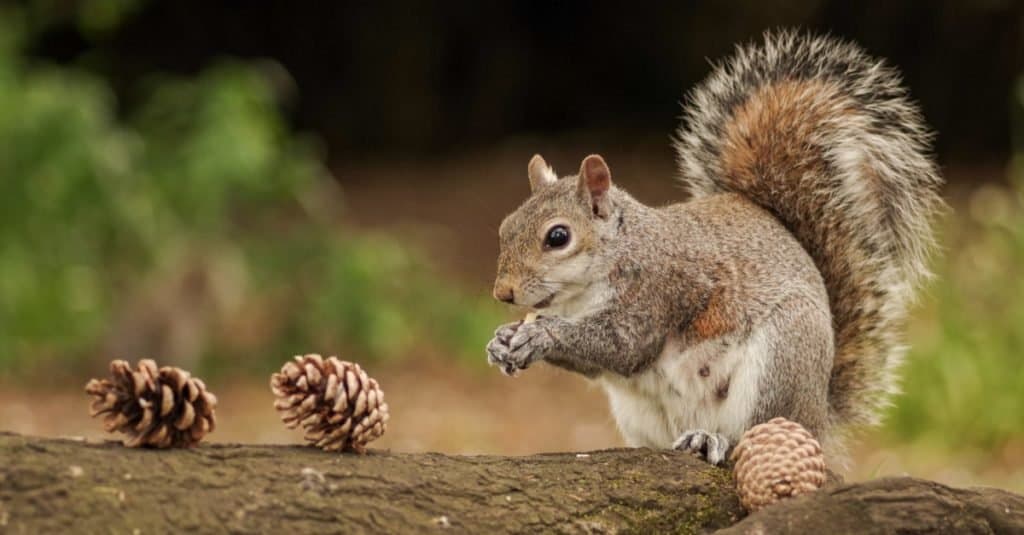
๐Ÿ‘ Cute squirrel in the park

Squirrels prefer to store nuts in a variety of hiding places and tend to remember where they were hidden.

ยฉPhotoEvtim/Shutterstock.com

Behavior

These rodents are warm and fuzzy animals, easily giving over their trust to humans. They can also be kept as a pet. They can come to eat from your hand if they trust you enough. They are also very intelligent, and their brain is known to be dedicated to visual functions.

As trusting as they may be, they might stare at a person to judge if the person is safe or unsafe for them. They will quickly climb up a tree in case they sense any danger at all. They are also known to be noisy animals and vocalize their thoughts by chattering, barking, purring, and screaming โ€“ especially during mating season.

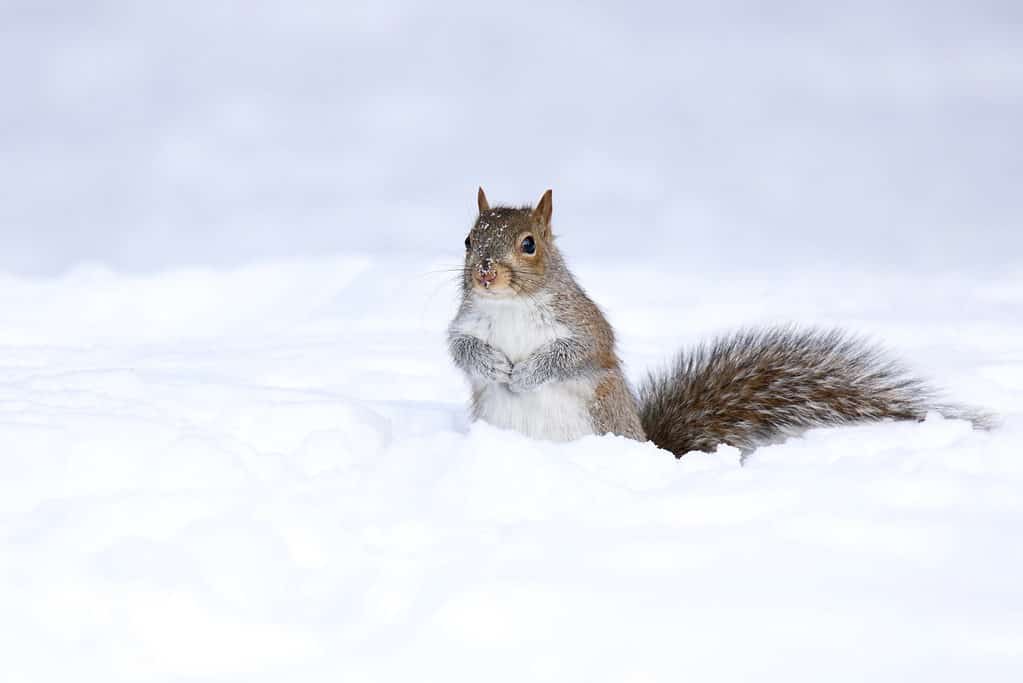
๐Ÿ‘ Eastern Gray Squirrel in snow

Eastern Gray Squirrel is out looking for food in winter snow.

ยฉiStock.com/suefeldberg

To warn others of impending danger or potential suspicion, these rodents will wag their tails. They also prepare well for the winter when food may not be as plentiful. They prefer to store nuts, seeds, and other food items, but they wonโ€™t store everything in the same place. Instead, they choose different spots so that they can go back to them when the weather conditions turn harsh. They usually dig burros and rest in them to protect themselves from the cold as well as harsh conditions.

These animals are most active during the day and during the dawn and at dusk. Flying squirrels, on the other hand, are known to be usually active during the night. They do not like the smell of white pepper, black pepper, and garlic, giving you an easy and non-toxic repellent to keep these critters away.
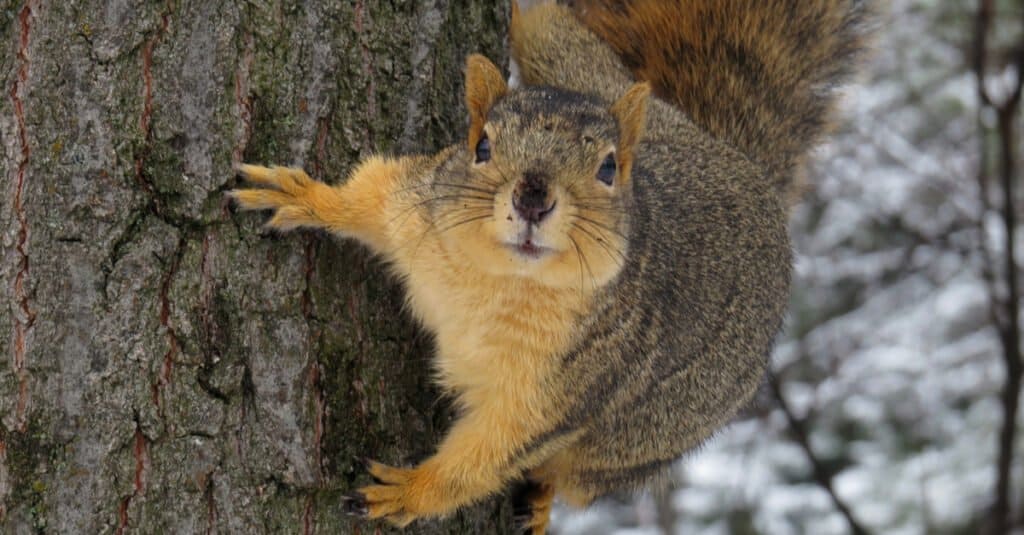
๐Ÿ‘ close up of a fox squirrel

You can usually spot a squirrel wherever there are trees.

ยฉNico Giuliani/Shutterstock.com

Habitat

Reports suggest that these animals can be found on every continent except Australia and Antarctica. Different species can be found in different areas of the world. However, these animals can be found mostly in mature or nearly mature forests, especially in woodland areas (including the Indian giant squirrel).

They usually nest on walnut, oak, pecan, hickory, maple, elm, and mulberry trees, giving them plenty of places to rest. Tree squirrels especially live in wooded areas and (as their name suggests) prefer living in the trees. Meanwhile, ground squirrels live on the ground, digging tunnels and burros to travel underground. These burrows are also used to nest during the winter season.

These animals create their nests themselves with the help of twigs and leaves that they go around collecting. The inside lining of their nests is grass and leaves. Their nests are called dreys and they usually place along branches or on buildings.

Some species might not end up making their own nests and could temporarily take shelter in holes and stumps. There are usually two types of nests that the animals make. They either make open nests that are used for sleeping or covered ones that are used for birthing as well as raising babies.
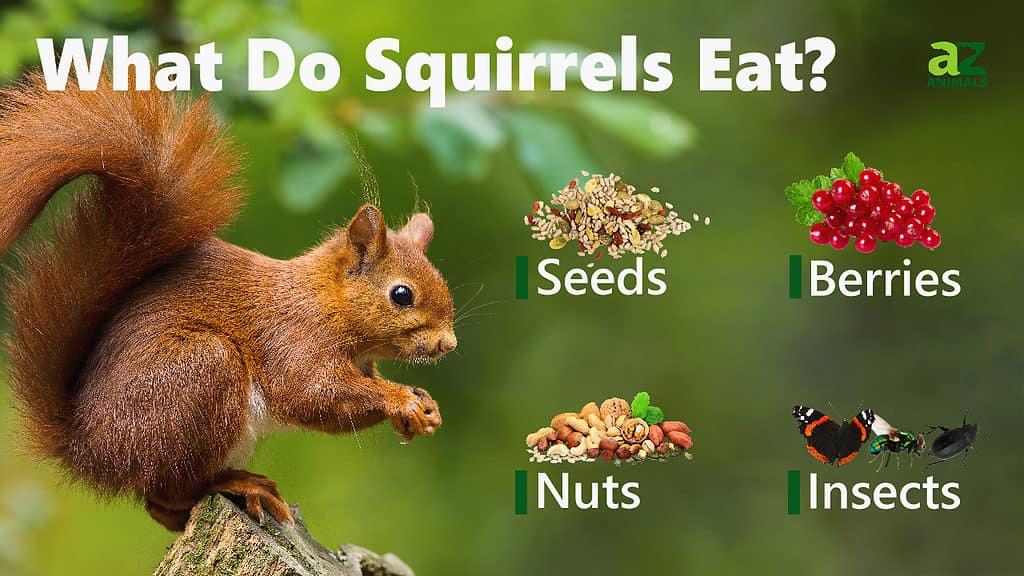
๐Ÿ‘ Image

Diet

Squirrels primarily eat seeds, nuts, fungi, and fruit. Apart from that they also feed on other plant matter. Some species are also omnivorous in times when food is not plentiful. However, they donโ€™t feed on other mammals and are not so predatory. Instead, these animals take to feeding on eggs, insects, and some small invertebrates. For a complete list of foods squirrels eat, check out our โ€œWhat Do Squirrels Eat?โ€ page.

Predators and Threats

These rodents face threats from human activities like industrialization and deforestation which ultimately leads to their habitat loss and eradicates their population slowly. Habitat loss is also facilitated by urbanization as well as wildfires. There are also certain plants that threaten the natural habitat of the animal.

The Western grey squirrel was earlier considered a threatened species due to a disease that took much of its population. It also was put at risk for the many road accidents that killed these animals. The population has since recovered.

What Eats Squirrels?

Some of the common predators of these animals include red foxes, domestic cats, wild cats, dogs, badgers, polecats, and weasels. Large carnivorous birds like eagles also prey on squirrels.
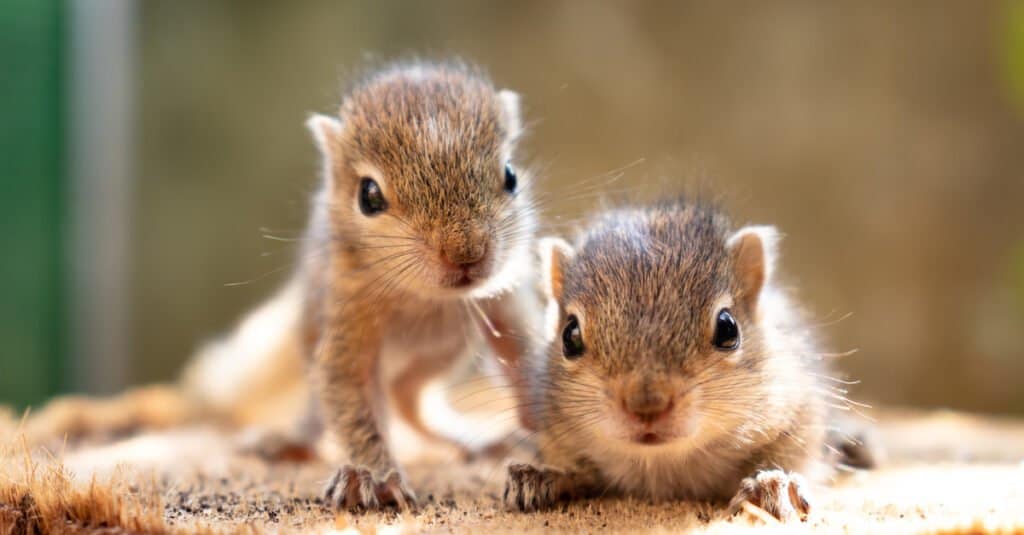
๐Ÿ‘ baby-squirrel-siblings

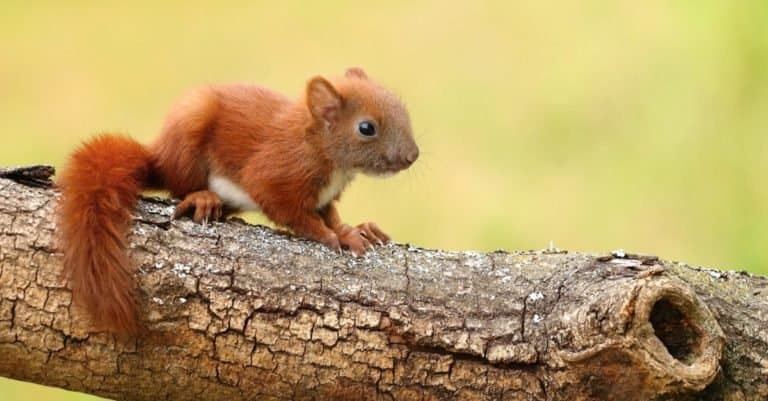
Squirrel babies are born blind and hairless and arenโ€™t weaned until they are 6-10 weeks old.

ยฉNilanka Sampath/Shutterstock.com

Reproduction, Babies, and Lifespan

These animals breed once or twice every year. They have a gestation period of 3 to 6 weeks, but it depends on the particular species. This rodent can mate as early as 1 year old, eventually having two litters of young. One of the litters is typically born at the end of spring, while the other is born at the end of summertime.

The babies open their eyes at 4 weeks of age. When they are 6 weeks old, they usually start venturing out of their nests. The babies are born blind and hairless, not weaning from their mothers until they are about 6 to 10 weeks old. Baby squirrels are known to thrive most easily when they have the care of their mothers, giving them the best chance of survival.

The lifespan of the animal varies from species to species. In the wild, the lifespan can range from 5 to 10 years.
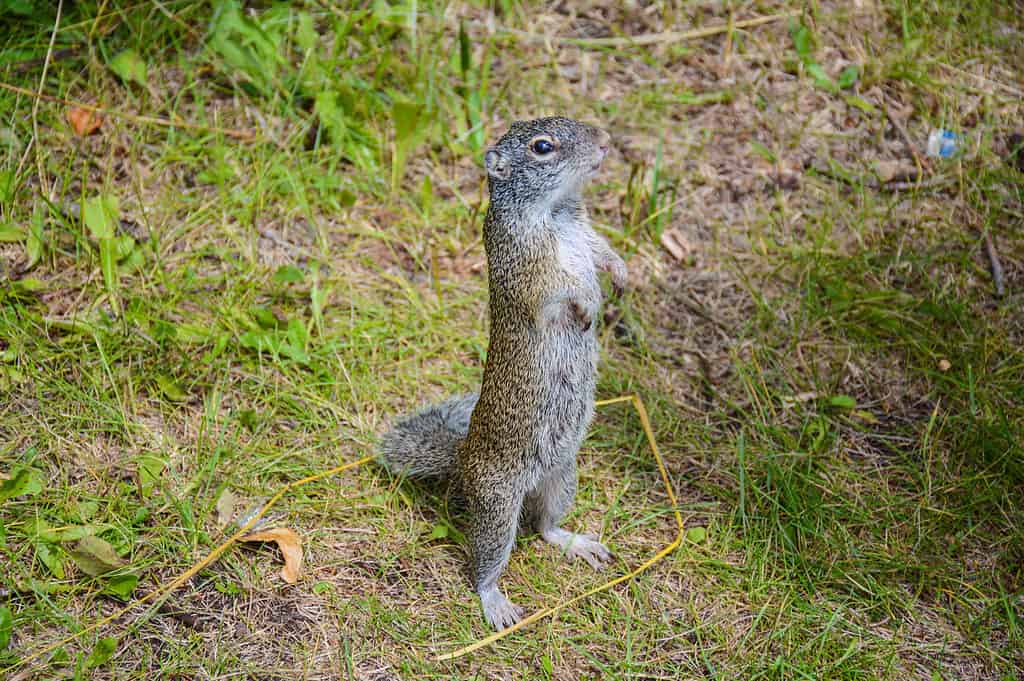
๐Ÿ‘ Alertness, Animal Wildlife, Animals In The Wild, Color Image, Cute

Squirrels are always on the alert for danger and are quick to warn others of the threat vocally.

ยฉiStock.com/Jeff439

Population

While the exact population of these animals that exist around the world is unknown, there are more than 200 species of squirrels. Most of them can be divided up by their method of travel, including ground squirrels, tree squirrels, and flying squirrels. However, the latter actually glides through the air, rather than flying.

Though the Western-grey squirrel was considered a threatened species at one time, the population has recovered.

More Squirrel Species

There are over 200 species of squirrels, here are a few of those:
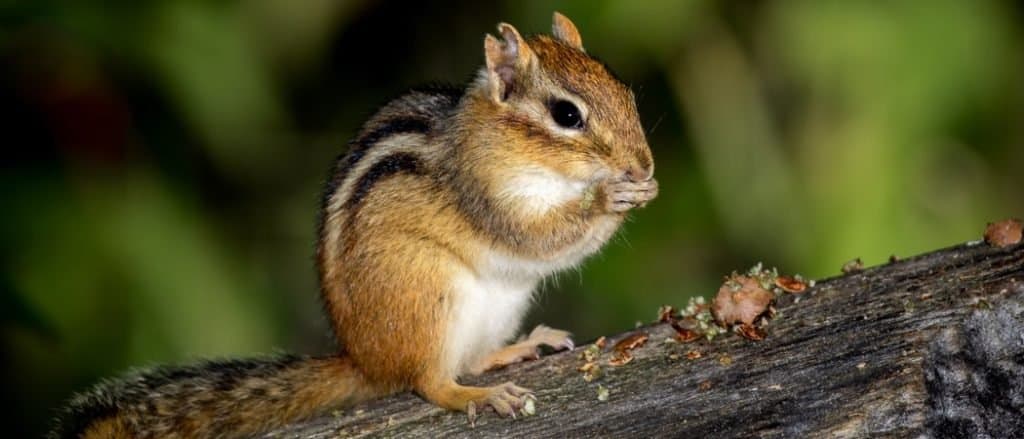
๐Ÿ‘ Trapping Chipmunks

Chipmunks are tiny ground squirrels.

ยฉRT Images/Shutterstock.com

  • Chipmunks โ€“ Small, striped rodents found in North America. The Siberian chipmunk is found in Asia. These little ground squirrels play an important role in forest ecosystems by harvesting and distributing tree seeds. They also help trees by eating fungi and by dispersing truffle spores.
  • Western grey squirrels โ€“ Can be found in Washington, Oregon, California and Nevada.
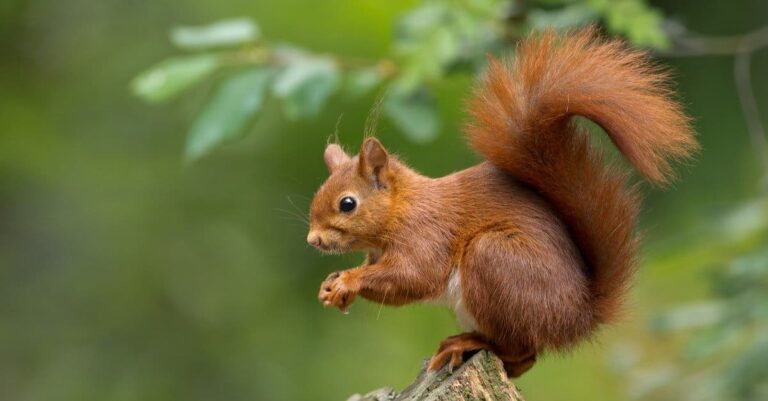
  • Red โ€“ A species of tree squirrel common throughout Europe and Asia.
  • Fox โ€“ Larger than the more common grey squirrel, these squirrels can be found in the eastern, central and southeastern portions of the United States.
  • American Red โ€“ Also known as โ€œpine squirrelโ€, the American Red can be found anywhere in the United States that has an abundance of conifer trees.
  • Southern Flying โ€“ A flying squirrel that can be found in the northern and southern sections of the eastern United States.
  • Northern Flying โ€“ This little flying squirrel is smaller than itโ€™s southern cousin and resides in the northwestern United States.
  • Douglas โ€“ Found on Pacific coastal states in the U.S., the Douglas is the other โ€œpine squirrelโ€ โ€“ along with the American Red.
  • Abertโ€™s โ€“ This unusual squirrel is dark grey with a white belly and tail. It also has elongated, black-tipped ears and can be found in Arizona, New Mexico and Colorado.
  • White-tailed antelope โ€“ These little ground squirrels look like their chipmunk cousins โ€“ except their stripes end at their necks. They can be found in New Mexico, Colorado, Oregon, Arizona, Idaho, Utah, Nevada and southern California.
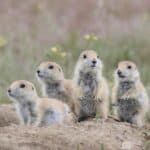
  • Black-tailed prairie dog โ€“ Native to the grasslands of North America, these little members of the squirrel family inhabit shortgrass prairies where they live in vast underground burrows. They have a matriarchial social structure where everyone chips in to help the colony. Prairie dogs have an impressive set of vocalizations that they use to send messages to each other.
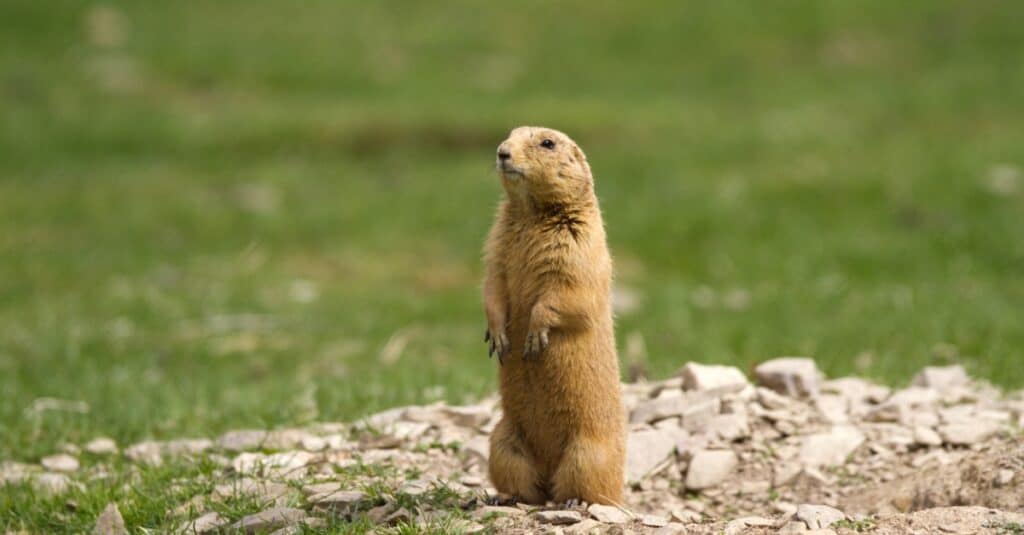
๐Ÿ‘ animals that eat young: prairie dog

The black-tailed prairie dog is the most common species of a prairie dog to eat their young.

ยฉiStock.com/ViktorCap

  • Indian giant โ€“ Also known as Malabar Giant squirrel, this large multi-colored tree squirrel lives in forests and woodlands in India. One of the worldโ€™s largest squirrels, the Indian giant can weigh up to 4 pounds and comes in a one, two or three-toned color scheme. Colors are whitish, creamy beige, buff, tan, rust, reddish-maroon, brown, dark seal brown or black.
  • Texas antelope โ€“ These tiny Texans look like chipmunks but with one difference โ€“ their stripes donโ€™t extend to their heads and their tails are frequently held over their backs.
  • Prevostโ€™s squirrel โ€“ Also called, Asian tri-colored squirrel, this colorful little rodent can be found in the forests of the Thai-Malay Penninsula, Sumatra, Borneo and nearby smaller islands. Their fur has three distinct bands of jet-black, white and reddish-brown.
  • Arizona grey โ€“ A grey tree squirrel who dwells in the canyons and valleys surrounded by mixed forests in eastern Arizona and northern Mexico.
  • Mohave ground โ€“ These little ground squirrels can only be found in the Mohave Dessert in California. They are known for the cute little โ€œpeepโ€ sound they make.
  • Pallaโ€™s โ€“ Also known as the red-bellied tree squirrel, this grey and red squirrel is native to China, India, and Southeast Asia.
  • Northern Idaho ground โ€“ This little ground squirrel is considered threatened. Smaller than most ground squirrels, its fur is grayish brown with reddish brown spots. It has a short tail, tan feet and ears, and a creamy white eye ring. This rare squirrel eats large quantities of grass seed, stems and leaves.
  • Smithโ€™s bush โ€“ Also known as the yellow-footed tree squirrel, this squirrel is native to woodlands of the southern Afrotropics. Its coloration varies with its range โ€“ some being pale grey โ€“ some pale brown. Its head and legs are a dark rusty color. Their chests tend to be yellowish to buff.
  • Groundhog โ€“ Also known as woodchucks, groundhogs are members of a subspecies of the squirrel family known as marmots. They are extremely intelligent, forming complex social networks, form kinship with their young and communicate vocally. They work together to burrow tunnels where they sleep, hibernate and live. These large rodents live all over the eastern United States, across Canada and into Alaska.
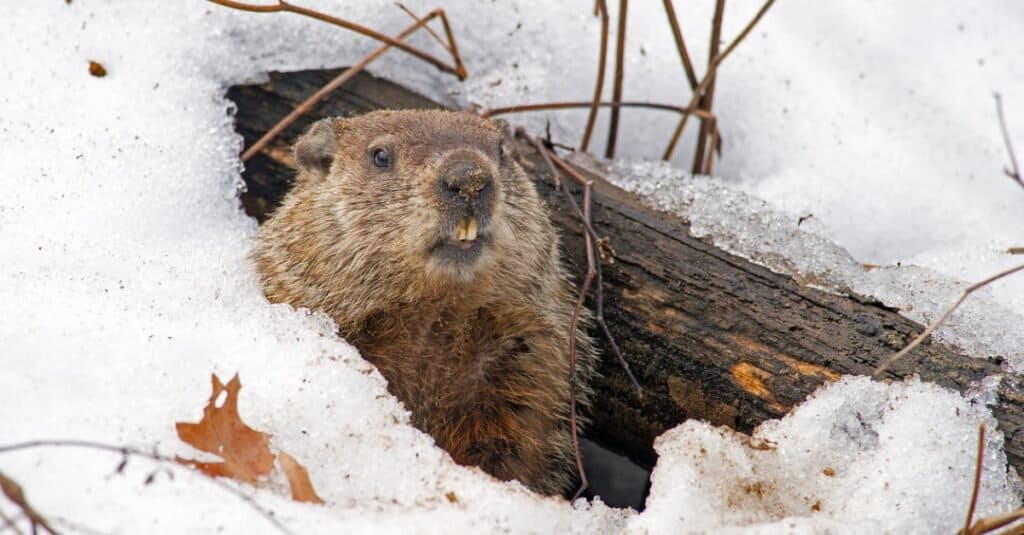
๐Ÿ‘ groundhog coming out of burrow in the snow

Groundhog coming out of burrow in the snow

ยฉiStock.com/BrianEKushner

Other squirrel species are:

Cape ground squirrel, Least pygmy, Grizzled giant, Wyoming ground, Humboltโ€™s flying, Rock squirrel, Varigated, Mexican grey, Round-tailed ground, Beldingโ€™s ground, Merriamโ€™s ground, Piute ground, Yellow-pine chipmunk, Yellow-bellied marmot, Thirteen-lined ground, Columbian ground, Washington ground, Richmondโ€™s, Allenโ€™s, Caucasian, Collies, Deppeโ€™s, Fiery, Black Giant, Mexican fox, Red-tailed, Japanese and Peterโ€™s.

In the Zoo

Squirrels can be kept in zoos, though an experienced owner can also keep them as a pet. Zoos in nearly every state have exhibited squirrels, making them easy to find. However, if you donโ€™t want to go to the zoo, you might just need to venture to a local forest to find them.

Similar to Squirrels

View all 385 animals that start with S

Sources

  1. Live Science / Accessed March 18, 2021
  2. One Kind Planet / Accessed March 18, 2021
  3. Pest World / Accessed March 18, 2021
  4. Animals Network / Accessed March 18, 2021
  5. The Wildlife Center of Virginia / Accessed March 18, 2021
  6. The Big Green K / Accessed March 18, 2021
  7. Oxford Academic / Accessed March 18, 2021

About the Author

Lisha Pace

After a career of working to provide opportunities for local communities to experience and create art, I am enjoying having time to write about two of my favorite things - nature and animals. Half of my life is spent outdoors, usually with my husband and sweet little fourteen year old dog. We love to take walks by the lake and take photos of the animals we meet including: otters, ospreys, Canadian geese, ducks and nesting bald eagles. I also enjoy reading, discovering books to add to my library, collecting and playing vinyl, and listening to my son's music.

Thank you for reading! Have some feedback for us?

Contact the AZ Animals editorial team

Related Articles You May Find Interesting


Squirrel FAQs (Frequently Asked Questions)

While the usual diet of a squirrel is made up of nuts, seeds, and fruits, some of them are also omnivorous and can eat eggs, insects, and other small vertebrates when the food is scarce.

Squirrels belong to the Kingdom Animalia.

Squirrels belong to the phylum Chordata.

Squirrels belong to the class Mammalia.

Squirrels belong to the family Sciuridae.

Squirrels belong to the order Rodentia.

Squirrels are covered in Fur.

Squirrels live in woodlands and dense forests.

Squirrels eat fruit, seeds, and insects.

Predators of Squirrels include snakes, coyotes, and weasels.

The average number of babies a Squirrel has is 3.

Squirrels are small rodents found in woodlands worldwide!

The scientific name for the Squirrel is Sciuridae.

Squirrels can live for 2 to 8 years.

A Squirrel can travel at speeds of up to 16 miles per hour.

You can feed the squirrel baby diluted milk, a few drops of curd, and glucose.

Squirrel poop largely resembles rat poop. However, they are larger, barrel-shaped pellets and are dark-brown in color.

Squirrels are repellent towards smells of white pepper, black pepper, and garlic โ€“ they find them very unpleasant.

If a squirrel is staring at you, it is highly possible that it is judging if you are safe or unsafe. If it finds anything suspicious, the squirrel can quickly climb u the tree to protect itself.

Squirrels are affectionate and are very trusting. If they trust you, they can come to eat from your hand as well. However, whether or not they are dangerous is unclear. Some say that they do carry diseases that they can pass to humans. Therefore, it is always better to stay protected and take precautions while coming in contact with squirrels.

The major differences between squirrel poop vs rat poop include size, shape, and color. Rat poop is both longer and thicker than squirrel poop. However, the two are relatively close in size, so it may seem similar to the untrained eye.

The greatest differences between a newborn squirrel vs rat are their size, head shape, and toenail color. A newborn squirrel is likely to be larger than a rat, and it will initially weigh more than a rat.

The greatest differences between a ground squirrel vs tree squirrel are their size, color, and habitat. Ground squirrels are larger than tree squirrels on the whole. Ground squirrels can reach weights of 18lbs and lengths of nearly 3ft on average, but tree squirrels only tip the scales at a quarter of that weight.

The main differences between a gopher and a squirrel include their appearance, diet, habitat, behavior, and damage.